Click the link to read the article on the Water Education Colorado website (Jerd Smith):
March 20, 2025
Fort Morgan has never fully owned its water supplies. The small farm town on the Eastern Plains has always leased its water from whomever had some to spare.
But with the late February settlement of a lawsuit that will allow construction of the $2 billion Northern Integrated Supply Project, or NISP, to move forward, Fort Morgan’s 10,564 residents will rest easier, knowing that for the first time, they will own the water that flows from their taps, according to City Manager Brent Nation.
“It has been our intention all along to own our water,” Nation said. “With this settlement, we can finally move forward. It’s a good thing for us.”
Fifteen water districts and cities in northern Colorado have banded together to build the massive project, which will take water from the Cache la Poudre River and create two dams and reservoirs and a sprawling pipeline system.
Participants include Fort Collins-Loveland Water District, Erie, Fort Morgan, Left Hand Water District, Central Weld County Water District, Windsor, Frederick, Lafayette, Morgan County Quality Water District, Firestone, Dacono, Evans, Fort Lupton, Severance and Eaton.
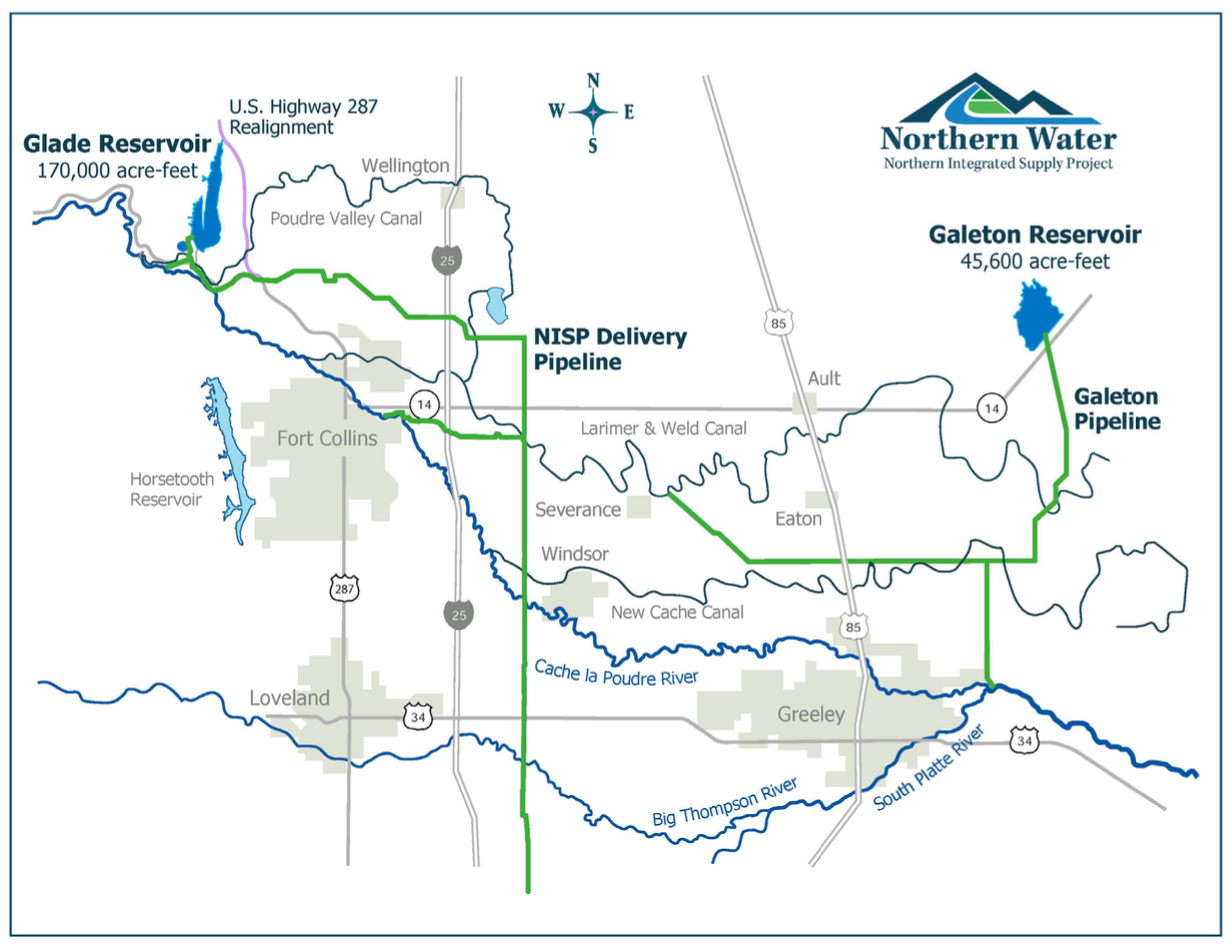
When completed, sometime after 2030, according to Northern Water, which is NISP’s sponsor, it will deliver 40,000 acre-feet of water annually to some 80,000 families. One acre-foot equals nearly 326,000 gallons, enough to serve two to four urban households each year.
But before then, and for years to come, the settlement will begin reshaping and restoring the Poudre.
Why the fuss?
Concern over the river has been rising for years.
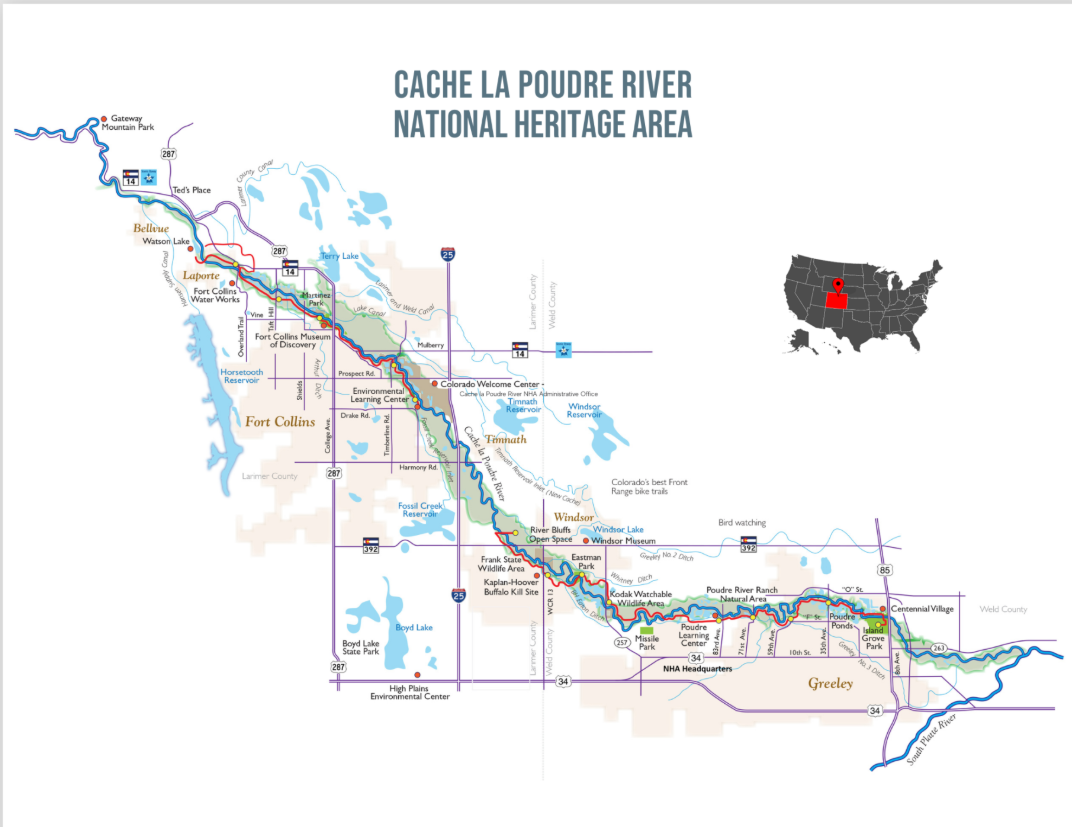
According to Save the Poudre, nearly 400,000 acre-feet of water flow out of Poudre Canyon, but some 300,000 acre-feet are taken out by farmers and others almost immediately, leaving the river shallow, stressed and over heated as it flows more than 100 miles to its confluence with the South Platte River east of Greeley.
According to the settlement agreement, the $100 million will pay to move water diversion points farther downstream, leaving more water in the river as it flows east, rather than taking the water out higher up and reducing its flows.
Water-sharing arrangements between cities and farmers will be written to enhance recreation and stream improvements. New fish and boat passages will be installed around existing dams on the river. A new network to track the health of the river, its temperature and water quality, will also be added…
New dams and reservoirs must go through extensive permitting and environmental reviews to win approval from federal and state regulators. It took NISP about 15 years to win its final permit. That permit already includes requirements that will help the river, according to Northern spokesperson Jeff Stahla.
Under the federal permit, for instance, one-third of the total water delivered by the project must be delivered at specific volumes to boost stream flows in the winter and in the summer to aid fish and cool water temperatures, Stahla said.
Help delivered through the new settlement will come in addition to the federal and state requirements.
“It’s going to make a significant difference to the Poudre,” Northern Water General Manager Brad Wind said.
The settlement has also taken a lot of the heat out of the rooms where water planners and environmentalists…fought for more than a decade…
Dan Luecke is a well-known hydrologist and environmentalist who led the successful fight to stop Two Forks dam southwest of Denver in the 1980s. That too was a long, tortured battle, which largely ended when the U.S. Environmental Protection Agency, with backing from the White House, rejected the proposal in 1990. There was no financial settlement then, Luecke said. But the $100 million Poudre agreement, though not as large as others in the American West, such as the $450 million Klamath River settlement, is noteworthy.
“$100 million is a pretty substantial number. It’s impressive in my mind,” Luecke said. “And the complexity of it, that they have to pump water in these reservoirs and use long pipelines to get the water back out to the urban areas. … It’s monumental.” (Luecke is a board member of Water Education Colorado, which founded Fresh Water News.)
The Fort Collins-Loveland Water District, which serves parts of both cities, is the largest participant in the NISP project, and will pay hundreds of millions of dollars for its share of the project and the settlement. And that’s OK with Stephen Smith, a member of the district’s board.
The Fort Collins-Loveland Water District, which serves parts of both cities, is the largest participant in the NISP project, and will pay hundreds of millions of dollars for its share of the project and the settlement. And that’s OK with Stephen Smith, a member of the district’s board.
“I feel comfortable with that,” Smith said, adding that he was speaking as a private individual, not a board member. “This money is going to go into the Poudre. If the money were going to buy off Save The Poudre, that would be a negative to me, but to have this six-member committee and to have an opportunity to put $100 million into the river, I consider that to be outstanding, I couldn’t be happier.”