
by Robert Marcos, photojournalist
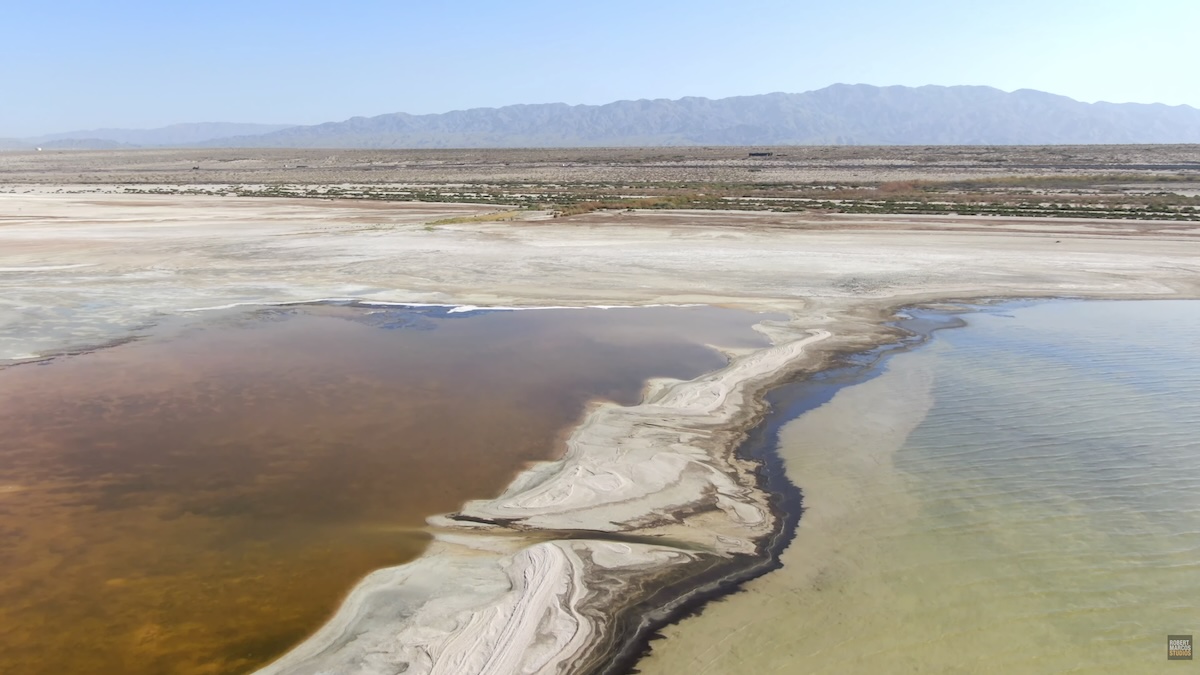
The Salton Sea is a paraodox for a multitude of reasons. The most striking is that the Salton Sea can exist only as long as the Imperial Valley continues to drain 1.3 million acre feet of salt and pesticide-laden runoff into it, annually. That’s exactly how much the Sea loses to evaporation every year. But paradoxically – the better the Imperial Irrigation District becomes at conserving Colorado River water, the faster the Salton Sea will dry up.1
The Imperial Valley functions as a critical “winter salad bowl” for the United States, yet this massive agricultural output creates a severe environmental health paradox for its residents. While intensive farming produces millions of tons of vegetables, it relies on practices like agricultural burning and heavy pesticide application that release fine particulate matter and toxic chemicals into the air. This pollution is compounded by a shrinking Salton Sea, which acts as a basin for agricultural runoff; as it dries, it exposes toxic lakebed dust containing arsenic and pesticides that wind then carries into local communities. Consequently, children in the Imperial Valley suffer from asthma at rates nearly double the California state average, with roughly one in five children diagnosed—a direct cost of the region’s agricultural success borne by its most vulnerable residents.2
The Salton Sea’s Top 10 Contradictions
- It’s a vital yet highly-polluted refuge: The Sea acts as a critical Pacific Flyway habitat for millions of birds, yet it is highly contaminated with agricultural toxins, heavy metals, and selenium.
- Sustained by Wastewater: The lake requires constant inflow of polluted farm drainage (tailwater) to survive; restricting this agricultural runoff is necessary for water quality but speeds up its drying.
- Agriculture vs. Air Quality: Farming irrigation sustains the lake, but as water efficiency increases, less water reaches the sea, accelerating the exposure of dry lakebed (playa) and the resulting toxic dust storms.
- Species Management vs. Habitat Collapse: State agencies work to protect endangered species, but the increasing salinity is killing the fish and food sources those species need.
- Environmental Destruction as Restoration: Major restoration projects often involve breaking up existing, albeit shrinking, habitats to create smaller, managed ponds.
- Terminal Lake Reality: It is a closed basin that cannot flush itself, meaning all contaminants from decades of agriculture are trapped and concentrated indefinitely.
- Water Transfers vs. Regional Health: The Quantification Settlement Agreement (QSA) transfers water to urban areas, reducing inflows to the sea and damaging local communities’ health for external economic gain.
- Natural vs. Artificial Conflict: It is managed as a wildlife refuge but was created entirely by a catastrophic engineering failure of a canal, resulting in a fragile “artificial” ecosystem.
- Salinity vs. Stability: Efforts to reduce nutrient inflow (to curb algae) can lead to faster shrinking, while allowing nutrients causes massive fish die-offs and odor.
- The “Green” Paradox: Developing the area for green energy—namely lithium extraction—requires long-term stability in a region deemed too dangerous for human health due to toxic air.