Study: Something’s gotta give on the #RioGrande: #ClimateChange and overconsumption are drying up the Southwest’s “other” big river — Jonathan P. Thompson (LandDesk.org)

Sandhill cranes and some mallard ducks roost on a sandbar of the Rio Grande River at sunset on Jan. 22, 2025 in Albuquerque, New Mexico. Copyright Credit © WWF-US/Diana Cervantes.

Click the link to read the article on The Land Desk website (Jonathan P. Thompson):

November 21, 2025

🥵 Aridification Watch 🐫

The Colorado River and its woes tend to get all of the attention, but the Southwest’s “other” big river, the Rio Grande, is in even worse shape thanks to a combination of warming temperatures, drought, and overconsumption. That’s become starkly evident in recent years, as the river bed has tended to dry up earlier in the summer and in places where it previously had continued to carry at least some water. Now Brian Richter and his team of researchers have quantified the Rio Grande’s slow demise, and the conclusions they reach are both grim and urgent: Without immediate and substantial cuts in consumption, the river will continue to dry up — as will the farms and, ultimately, the cities that rely on it.

The Rio Grande’s problems are not new. Beginning in the late 1800s, diversions for irrigation in the San Luis Valley — which the river runs through after cascading down from its headwaters in the San Juan Mountains — sometimes left the riverbed “wholly dry,” wrote ichthyologist David Starr Jordan in 1889, “all the water being turned into these ditches. … In some valleys, as in the San Luis, in the dry season there is scarcely a drop of water in the riverbed that has not from one to ten times flowed over some field, while the beds of many considerable streams (Rio la Jara, Rio Alamosa, etc.) are filled with dry clay and dust.”


Rio Grande Streamflow Mystery: Solved? — Jonathan P. Thompson


San Luis Valley farmers gradually began irrigating with pumped groundwater, allowing them to rely less on the ditches (but causing its own problems), and the 1938 Rio Grande Compact forced them to leave more water in the river. While that kept the water flowing through northern and central New Mexico, the Rio Grande’s lower reaches still occasionally dried up.

Then, in the early 2000s, the megadrought — or perhaps permanent aridification — that still plagues the region settled in over the Southwest. [ed. emphasis mine] Snowpack levels in the river’s headwaters shrank, both due to diminishing precipitation and climate change-driven warmer temperatures, which led to runoff and streamflows 17% lower than the 20th century average, according to the new study. And yet, overall consumption has not decreased.

“In recent decades,” the authors write, “river drying has expanded to previously perennial stretches in New Mexico and the Big Bend region. Today, only 15% of the estimated natural flow of the river remains at Anzalduas, Mexico near the river’s delta at the Gulf of Mexico.” Reservoirs, the river’s savings accounts, have been severely drained to the point that they won’t be able to withstand another one or two dry winters. As farmers and other users have increasingly turned to groundwater pumping, aquifers have also been depleted. The situation is clearly unsustainable.

Something’s gotta give on the Rio Grande, and while we may be tempted to target Albuquerque’s sprawl, drying up all of the cities and power plants that rely on the river wouldn’t achieve the necessary cuts.
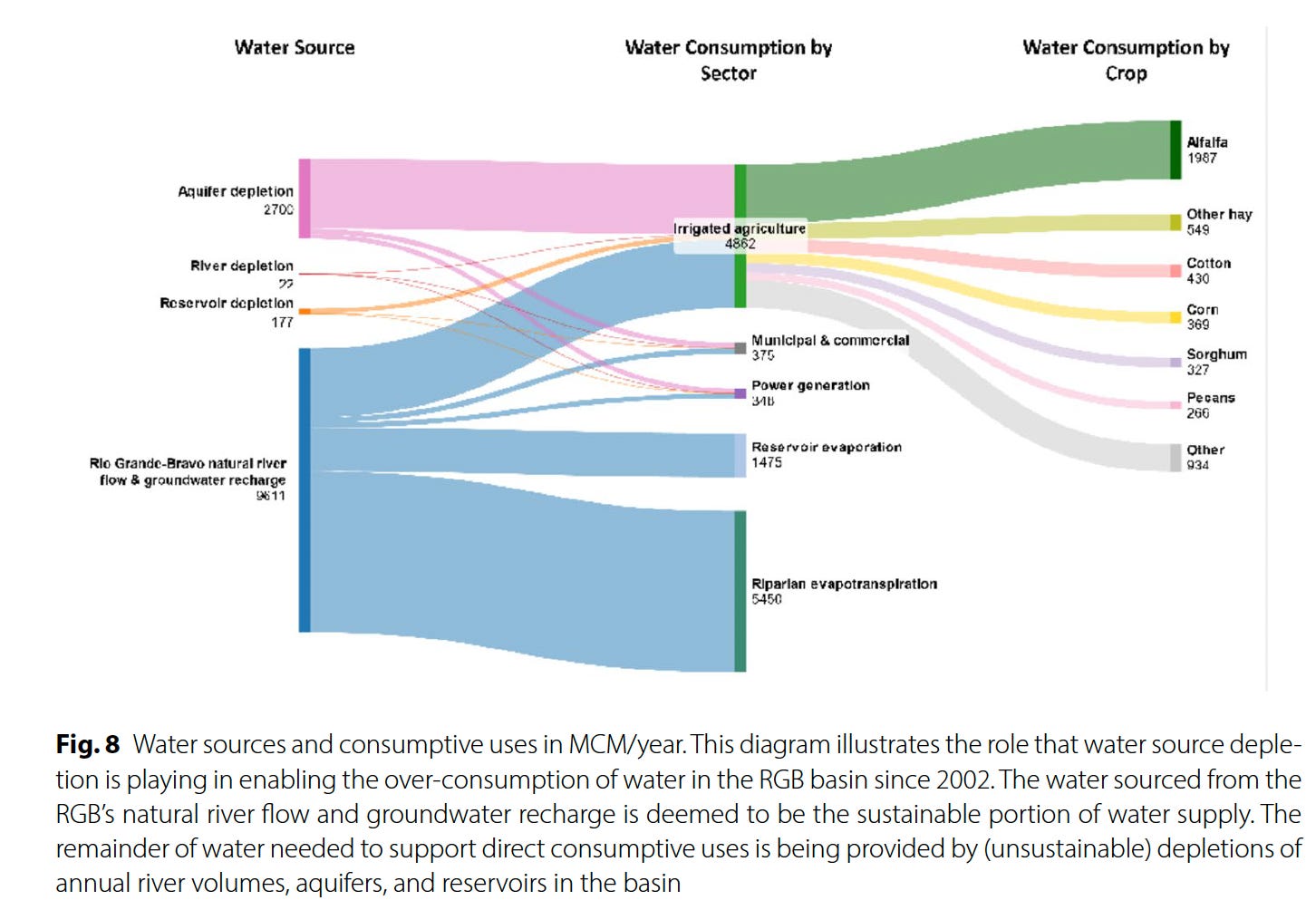
Source: “Overconsumption gravely threatens water security in the binational Rio Grande-Bravo basin” by Brian Richter et al.

It will come as little surprise to Western water watchers that agriculture is by far the largest water user on the Rio Grande — taking up 87% of direct human consumption — and that alfalfa and other hay crops gulp up the lion’s share, or 52%, of agriculture’s slice of the river pie. This isn’t necessarily because alfalfa and other hays are thirstier than other crops, but because they are so prevalent, covering about 433,000 acres over the entire basin, more than four times as much acreage as cotton.
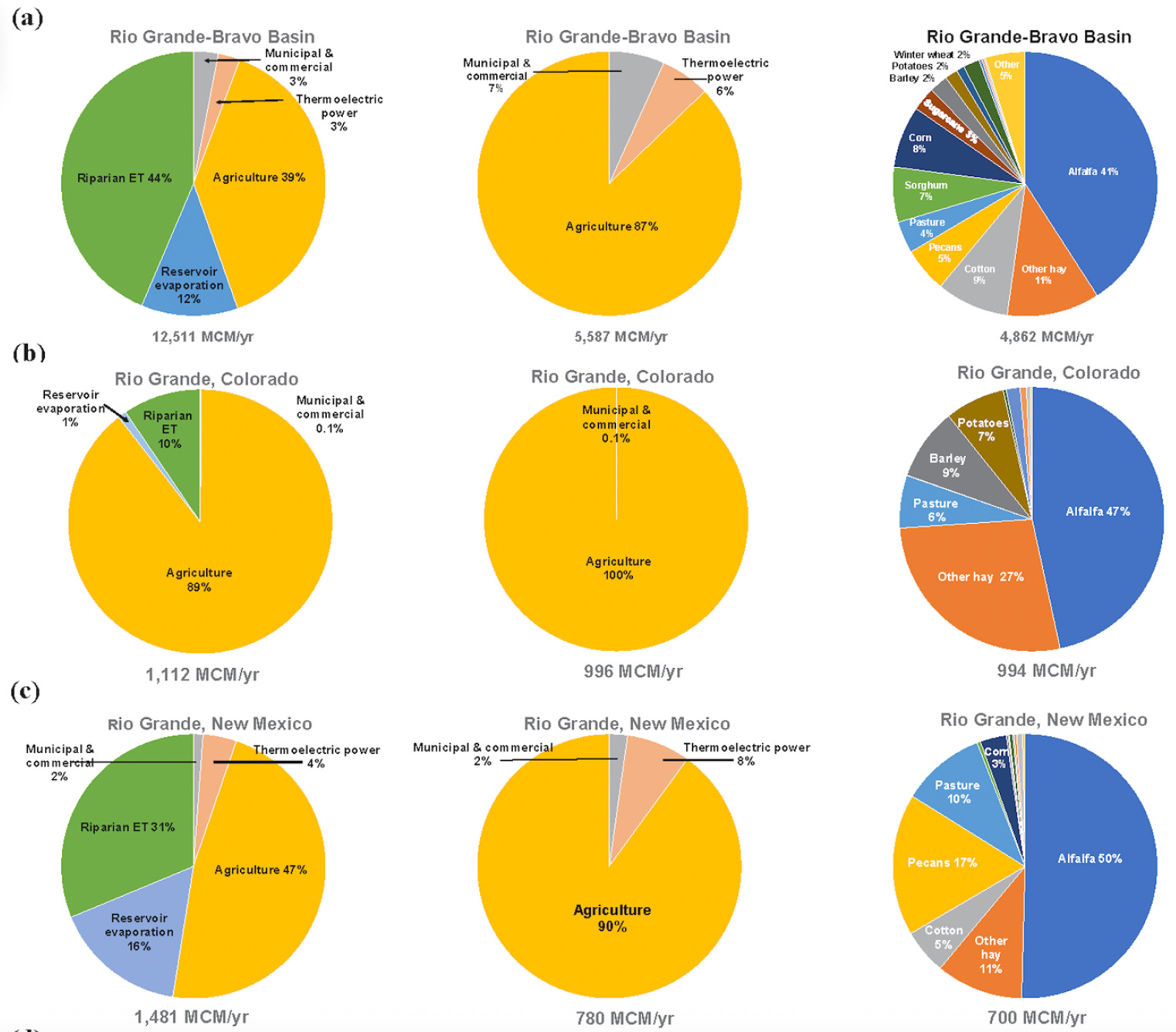
Source: Overconsumption gravely threatens water security in the binational Rio Grande-Bravo basin

This kind of math means farmers are going to have to bear the brunt of the necessary consumption cuts — either voluntarily or otherwise. In fact, they already have: Between 2000 and 2019, according to the report, Colorado lost 18% of its Rio Grande Basin farmland, New Mexico lost 28%, and the Pecos River sub-basin lost 49% (resulting in a downward trend in agricultural water consumption). Some of this loss was likely incentivized through conservation programs that pay farmers to fallow their fields. But it was also due to financial struggles.

Yet even when farmers are paid a fair price to fallow their fields there can be nasty side effects. Noxious weeds can colonize the soil and spread to neighbors’ farms, it can dry out and mobilize dust that diminishes air quality and the mountain snowpack, and it leaves holes in the cultural fabric of an agriculture-dependent community. If a field’s going to be dried up, it should at least be covered with solar panels.


Think like a watershed: Interdisciplinary thinkers look to tackle dust-on-snow — Jonathan P. Thompson


Another possibility is to switch to crops that use less water. This isn’t easy: Farmers grow alfalfa in the desert because it’s actually quite drought tolerant, doesn’t need to be replanted every year, is less labor-intensive than other crops, is marketable and ships relatively easy, and can grow in all sorts of climates, from the chilly San Luis Valley to the scorching deserts of southern Arizona.


Alfalfaphobia? Jonathan P. Thompson


Still, it can be done, as a group of farmers in the San Luis Valley are demonstrating with the Rye Resurgence Project. This effort is not only growing the grain — which uses less water than alfalfa, is good for soil health, and makes good bread and whiskey — but it is also working to create a larger market for it. While it’s only a drop in the bucket, so to speak, this is the sort of effort that, replicated many times across the region, could help balance supply and demand on the river, without putting a bunch of farmers out of business.

Photo credit: The Rye Resurgence Project

***

Oh, and about that other river? You know, the Colorado? Representatives from the seven states failed to come up with a deal on how to manage the river by the Nov. 15 deadline. The feds had mercy on them, giving them until February to sort it all out. I’m not so optimistic, but we’ll see. Personally, I think the only way this will ever work out is if the Colorado River Compact — heck, the entire Law of the River — is scrapped, and the states and the whole process is started from scratch, this time with a much better understanding of exactly how much water is in the river, and with the tribal nations having seats at the table.


⛏️ Mining Monitor ⛏️

There are a bunch of wannabe uranium mining companies out there right now, locating claims and acquiring and selling claims and touting their exploratory drilling results. But there are only a small handful of firms that are actually doing anything resembling mining. One of them is the Canada-based Anfield, which just broke ground on its Velvet-Wood uranium mine in the Lisbon Valley, even without all of the necessary state permits. 

Now Anfield says it has applied for a Colorado permit to restart its long-idle JD-8uranium mine. The mine is on one of a cluster of Department of Energy leases overlooking the Paradox Valley from its southern slopes, and was previously owned and operated by Cotter Corporation. The mine has not produced ore since at least 2006. Anfield says it will process the ore at its Shootaring Mill near Ticaboo, Utah, which has yet to get Utah’s green light.


🏠 Random Real Estate Room 🤑

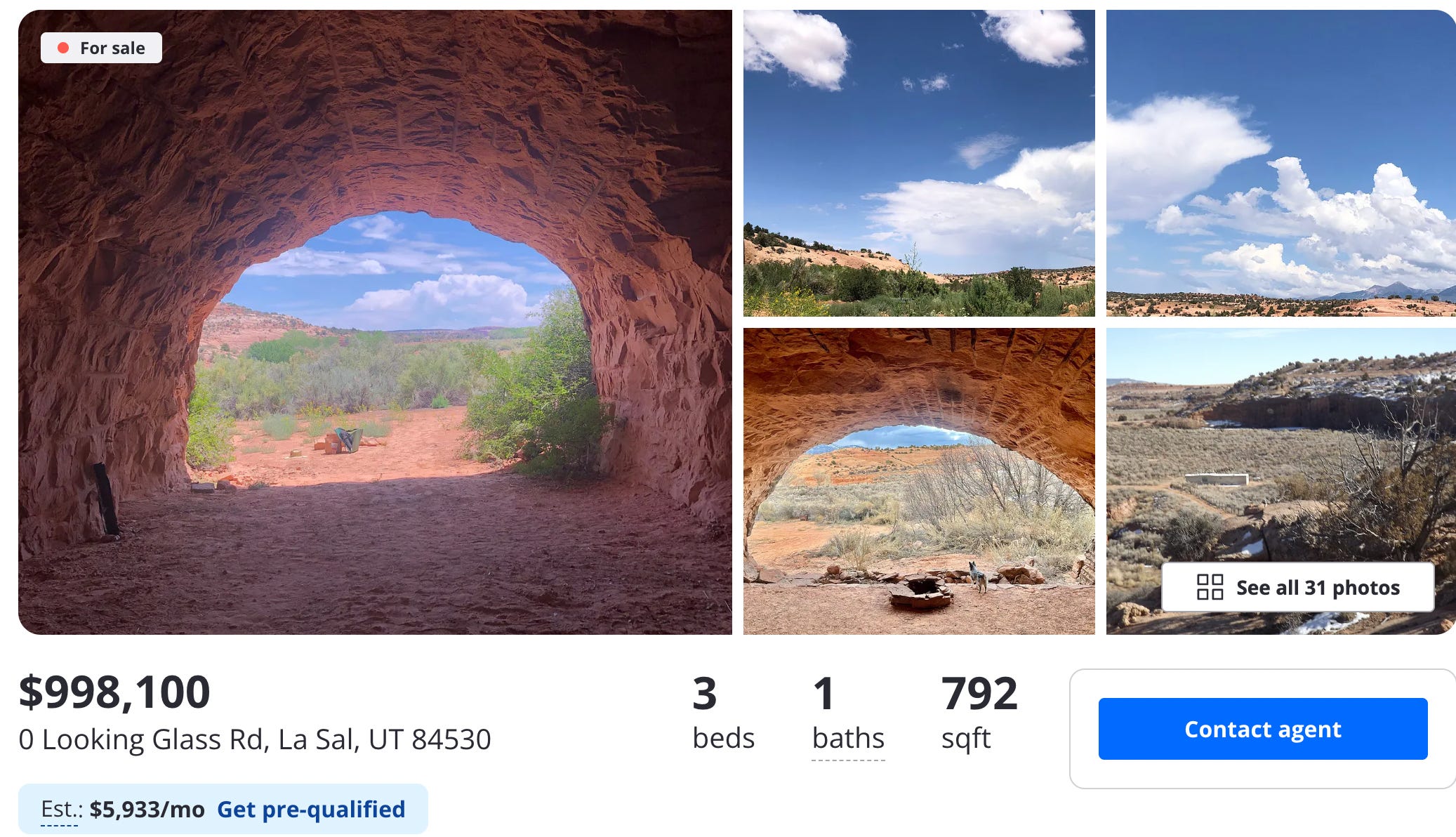
Look! Affordable housing near Moab! Sure, it’s a cave, but it’s only $99,000. Oh, what’s that? $998,000? They’re selling a cave for a million buckaroos? But of course they are. To be fair, it’s not just a cave. It’s several of them, plus a trailer. Crazy stuff.
📸 Parting Shot 🎞️

A work train in the Animas River gorge just below Silverton. Jonathan P. Thompson photo.
Rio Grande and Pecos River basins. Map credit: By Kmusser – Own work, Elevation data from SRTM, drainage basin from GTOPO [1], U.S. stream from the National Atlas [2], all other features from Vector Map., CC BY-SA 3.0, https://commons.wikimedia.org/w/index.php?curid=11218868

The big data center buildup: An AI server farm tsunami threatens to overwhelm the West’s power grid and water supplies — Jonathan P. Thompson (High Country News)

Welcome to the Landline, a monthly newsletter from High Country News about land, water, wildlife, climate and conservation in the Western United States. Sign up to get it in your inbox. Screenshot from the High Country News website.

Click the link to read the article on the High Country News website (Jonathan P. Thompson):

November 25, 2025

This is an installment of the Landline, a monthly newsletter from High Country News about land, water, wildlife, climate and conservation in the Western United States. Sign up to get it in your inbox.

In early November, Texas-based New Era Energy & Digital announced plans to build a “hyperscale,” meaning massive, AI-processing data center complex in Lea County, New Mexico, the epicenter of the Permian Basin oil and gas drilling boom. The campus will be so big, and use so much power, that, if and when it is built, it will come with its own nuclear and gas power plants, with a mind-blowing combined generation capacity of about 7 gigawatts. That’s like piling the West’s largest nuclear and natural gas plants — Palo Verde and Gila River, both near Phoenix — on top of one another, and then adding another 800 megawatts. That kind of power could electrify something like 5.3 million homes, though these power plants’ output presumably will all go toward more pressing requirements: processing movie streaming, doomscrolling, social media posting and, especially, AI-related activities. [ed. emphasis mine]

Despite the enormity of this proposal, it has received very little news coverage. This is not because anyone is trying to keep it secret, but rather because such announcements have become so common that it’s hardly worth mentioning every new one. New Era’s hyperscale server farm and others like it are still a long way from generating and then devouring their own electricity. But even if only a fraction of the current proposals succeed, they will transform the West’s power grid, its landscapes and its economies as significantly as the post-World War II Big Buildup, when huge coal plants and hydroelectric dams sprouted across the region to deliver power to burgeoning cities via high-voltage transmission lines.

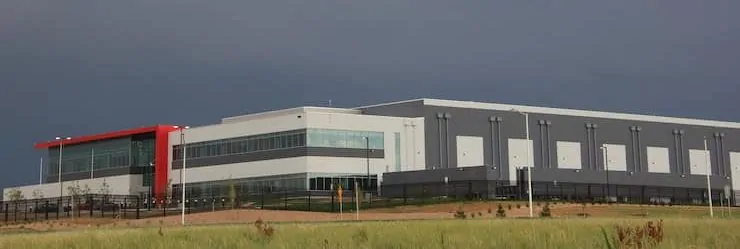
Data center construction at 49th & Race, Denver. Photo credit: Allen Best

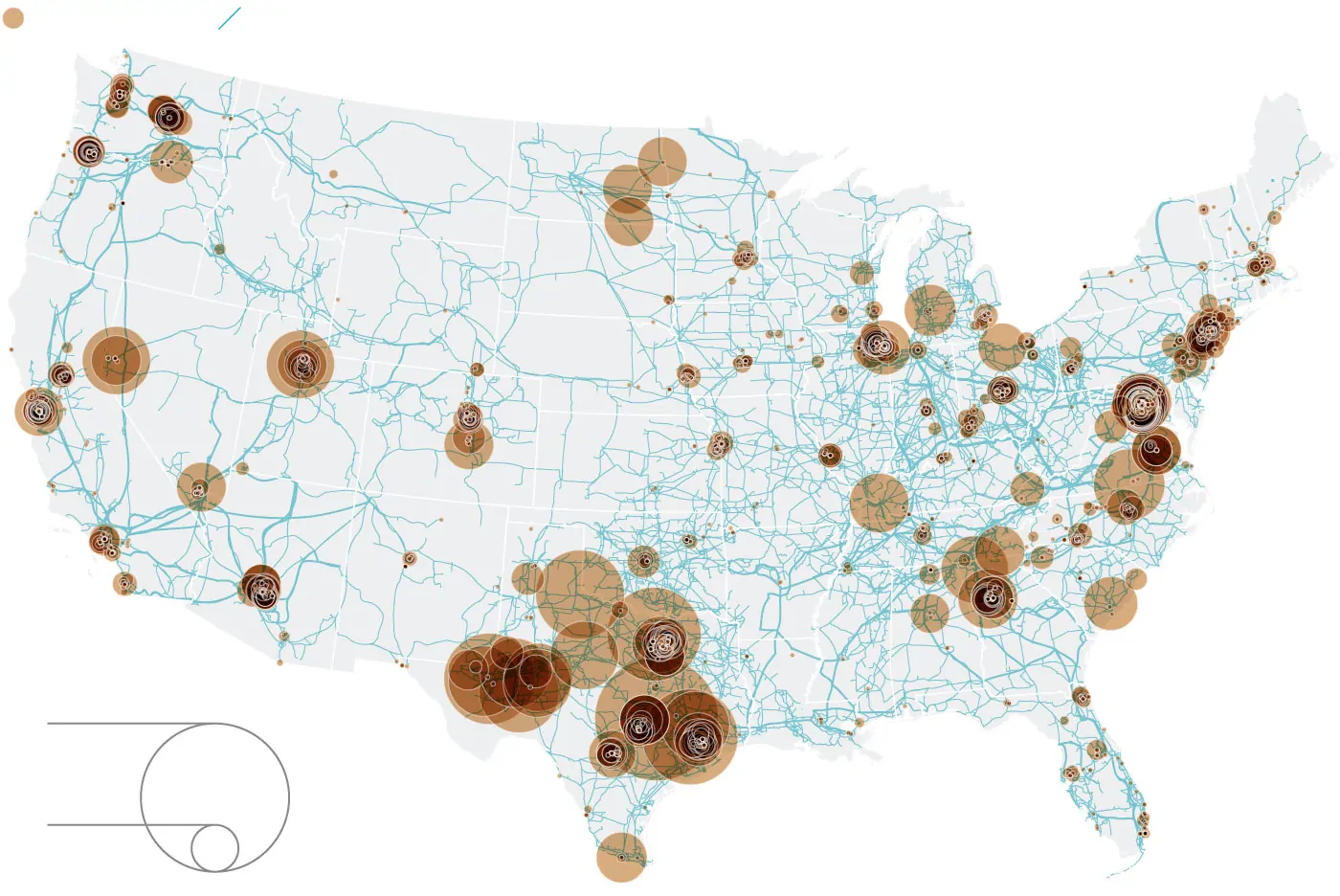
In fact, this transformation is already underway. A new report from the nonprofit NEXT 10 and University of California Riverside found that, in 2023, data centers in California pulled 10.82 terawatt-hours of electricity — 1 terawatt equals 1 trillion watts — from the state’s grid, or about enough to power 1 million U.S. households. This resulted in about 2.4 million tons of carbon emissions, even with California’s relatively clean energy mix. (On more fossil fuel-reliant grids, the emissions would have been twice that, or even more.) These same centers directly and indirectly consumed about 13.2 billion gallons of water for cooling and electricity generation. In Silicon Valley, more than 50 data centers accounted for about 60% of one electricity provider’s total load, prompting the utility to raise its customers rates to fund the transmission and substation upgrades and new battery energy storage the facilities required.

These facilities are also colonizing cities and towns far from Big Tech’s Silicon Valley epicenter. Over 100 data centers — structures that resemble big-box stores overflowing with row after row of computer processors — have already sprung up in Phoenix-area business parks, and the planned new ones could increase Arizona’s total power load by 300% over current levels, according to utilities. Recently, Arizona Public Service announced it would keep burning coal at the Four Corners Power Plant beyond its scheduled 2031 retirement to help meet this growing demand.

Data center developments around the West include:

  • NorthWestern Energy signed on to provide up to 1,000 MW of power — or nearly all of the utility’s generating capacity — to Quantica Infrastructure’s AI data center under development in Montana’s Yellowstone County.
  • The 290-mile Boardman-to-Hemingway transmission project under development in Idaho and Oregon was initially designed to serve about 800,000 PacifiCorp utility customers. But in October it was revealed that the line now will deliver all of its electricity to a single industrial customer in Oregon, most likely a new data center.
  • In September, an NV Energy executive told a gathering in Las Vegas that tech firms are asking the utility to supply up to 22,000 megawatts of electricity for planned data centers. Since the utility has largely moved away from coal, this new load would likely be met by generation from existing and planned natural gas facilities, along with proposed utility-scale solar installations.
  • Xcel Energy expects to spend about $22 billion in the next 15 years to meet new data centers’ projected power demand in Colorado, potentially doubling or even tripling legacy customers’ rates. Xcel and the state’s public utilities commission are currently working to reverse the planned closure of a coal plant due to projected data center-associated electricity shortages.
  • Wyoming officials are doing their best to lure data centers and cryptocurrency firms to the state, and it seems to be working. This summer, Tallgrass proposed building an 1,800 MW data center, along with dedicated gas-fired and renewable power facilities, near Cheyenne. It would add to Meta’s facility in Cheyenne and the 1,200 MW natural gas-powered Prometheus Hyperscale data center under development in Evanston. Observers say electricity demand from these centers could transform the physical and regulatory utility landscape and potentially drive up costs for “legacy” customers.
  • New Mexico utilities are struggling to meet growing demand from an increasing number of data centers while also complying with the state’s Energy Transition Act’s requirements for cutting greenhouse gas emissions.
  • Doña Ana County approved tax incentives for Project Jupiter, a proposed $165 billion data center campus in Santa Teresa in the southeastern corner of New Mexico. Developers have indicated they plan on building dedicated power generation, though they have not yet disclosed the energy sources.
  • Numerous companies are eyeing Delta, Utah, as a site for new data centers, drawn by the area’s relatively cheap land, existing agricultural water rights and the fact that it’s home to the Intermountain Power Project, a colossal coal plant built during the original Big Buildup in the years after World War II. The plant is scheduled to be converted to run on natural gas and, ultimately, hydrogen, but Utah lawmakers want at least one of its units to continue to burn coal. They just need a buyer for the dirty power it would produce, and data centers could fit the bill. Fibernet MercuryDelta is looking to construct the 20 million-square-foot Delta Gigasite there, and Creekstone Energy plans to manage 10 gigawatts of capacity there, with power coming from coal, solar and natural gas.
The Intermountain Power Project plant in Delta, Utah. The plant was scheduled to be converted away from coal, but Utah lawmakers want it to continue to burn coal. They need a buyer for the dirty power, and data centers could fit the bill. By Doc Searls from Santa Barbara, USA – 2014_11_21_lhr-lax_330, CC BY 2.0, https://commons.wikimedia.org/w/index.php?curid=38536818

The Western power grid is interconnected but also divided into 38 balancing authorities, or grid operators. Nearly every one of them is expected to see an increase in data center-driven demand over the next decade or so as the Big Digital Buildup gains steam, and few of them are currently equipped to meet that demand. In fact, the North American Electricity Reliability Corp. warned this month that growing data center-driven power demand is increasing the risk of outages this winter in parts of the West. Therefore, many of the largest data centers are going to need to generate their own power, while utilities also will have to scramble to add generating capacity and associated infrastructure as quickly as possible to serve the region’s on-grid facilities. The costs of that new infrastructure will be borne by each utility’s ratepayers.

How will the needed power be generated?

There’s simply no way utilities and developers can meet the projected demand with solar and wind, alone. So, utilities are already making plans to keep existing coal plants running past previously scheduled retirement dates, and to build new natural gas plants and even nuclear reactors. Yes, nukes: Google, Switch, Amazon, Open AI and Meta are all looking to power proposed facilities with the new — so new they have yet to be developed — crop of small, modular and advanced reactors, if and when they are finally up and running.

Can data centers be “sustainable”?

These developments will have environmental consequences, some more than others. Fossil fuel burning feeds climate change and pollutes the air, and oil and gas drilling and coal mining ravage landscapes; utility-scale solar and wind facilities can harm wildlife habitat and often require hundreds of miles of new transmission lines to move the power around; and nuclear power comes with unique safety hazards and a nagging radioactive waste problem, while the uranium mining and milling industry risks reenacting its deadly Cold War legacy. Even a facility that gets all of its power from solar and batteries is still using resources that, without the extra demand, would otherwise be replacing fossil fuels on the grid. And, unless it has a closed-loop air-cooled system, the data center will still consume water for cooling, usually from municipal drinking water systems.

Wyoming-based Prometheus Hyperscale has made waves with its ambitious and seemingly visionary talk of building “sustainable” data centers with dedicated clean energy generation, water recycling and efficient cooling systems that would capitalize on the cold in the Northern Rockies. It’s even talked about harnessing the heat from the servers to warm greenhouses and shrimp-farming operations. Maybe, one day, the power will be supplemented by nuclear micro-reactors. But so far, the company’s walk is not exactly matching its talk. In the beginning, at least, the facility will run on natural gas, and Prometheus says it will offset carbon emissions by paying another company to capture and sequester carbon dioxide from biofuel plants in Nebraska.

Is resistance futile?

Resistance to the imminent server farm tsunami and its outsized energy and water use is widespread, but because these are local projects considered on local levels, battling them can feel a bit like playing whack-a-mole. After Tucson-area residents defeated the city’s plan to annex the proposed Project Blue data center, which would have enabled it to use treated wastewater for cooling, the developers simply moved the project into the county and planned to use an air-cooling system, which requires less water but more energy. When opposition continued, the firm committed to investing in enough renewable energy on Tucson Electric Power’s grid to offset all of its electricity use.

Also working against the resistance is the fact that many local governments and utilities actually welcome the onslaught. Data centers can bring jobs and tax revenues — assuming the state, county or municipality doesn’t exempt them from taxes — to economically distraught areas. Meanwhile, utilities are champing at the bit to sell more of their product and raise rates to pay for the needed additional infrastructure. When announcing all the data centers headed for Nevada, NV Energy executive Jeff Brigger noted that the utility is “excited to serve this load.”

While much of the opposition to data centers is based on their environmental impacts and the effects they might have on utility rates and on the communities where they’re built, the notion of AI itself is also a factor. It’s one thing to see a lot of water or power used to grow food, for instance, but quite another to see coal power plants continue to run simply so that a computer can write a high school essay or answer an inane question or draw a picture or even serve as a companion of sorts. To be fair, AI does have potentially significant and positive applications, such as diagnosing medical conditions and crunching large quantities of data to find, say, possible cures for cancer or solutions to geopolitical problems.

But before it goes about changing the world, maybe AI ought to start with itself and figure out how to do its thing without using so much energy and water.

How about just closing Comanche 3 for good?: Environmental groups outline their views about what is best in wake of Colorado #coal plant’s latest — and extended — outage — Allen Best (BigPivots.com)

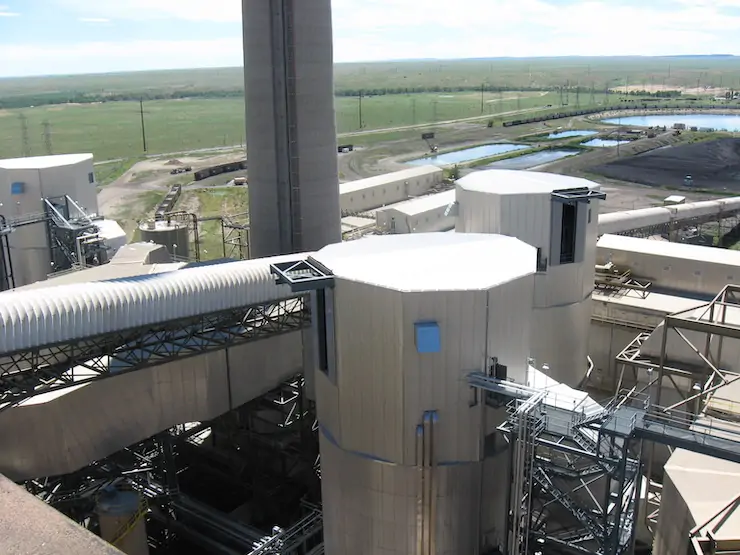
Comanche 3 in 2010. Photo credit: Allen Best/Big Pivots

Click the link to read the article on the Big Pivots website (Allen Best):

November 21, 2025

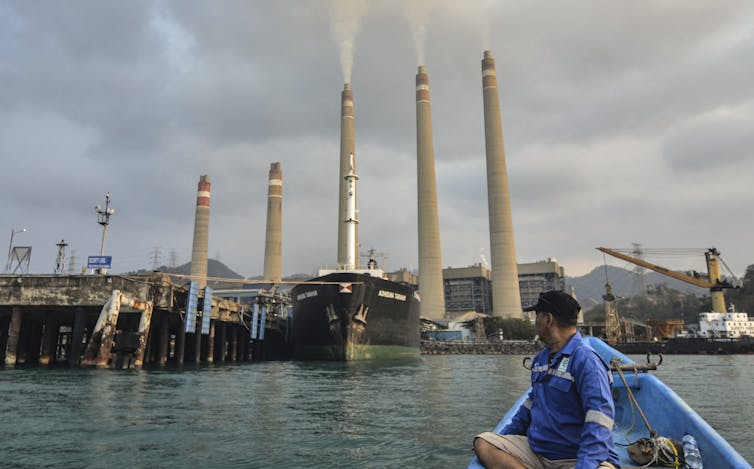
Comanche 3, the trouble-plagued coal-fired power plant in Pueblo, went down on Aug. 12. Xcel Energy, the unit’s operator and primary owner, says it can’t be restored to service until June 2026.

This will be the third extended outage since 2020 for the coal plant, Colorado’s largest and newest unit.

Might the best thing for Xcel’s customers be if the plant remained dormant? Don’t try to repair it, whatever is wrong this time. Instead, save the money and just continue operating the much older and more reliable — but soon to be retired — Comanche 2?

Several environmental groups have advanced that idea in response to a proposal by Xcel and three state agencies to keep Comanche 2 operating for a full year beyond its current planned retirement at the end of December.

That plan on the table would leave both coal-burning units operating in the second half of 2026, point out the Sierra Club and Natural Resources Defense Council. They would provide more power than needed and will also generate pollution at levels greater than acceptable.

Western Resource Advocates, the City of Boulder and others have similar things to say. They also embrace an alternative plan. That plan would have the state’s Public Utilities Commission give Comanche 3 a hard look in coming months instead of waiting until next summer.

“The question must be asked whether any further reliance on Comanche at this juncture is prudent,” says Boulder in its filing with the PUC yesterday. “Ratepayers continue to bear the consequences of (Xcel subsidiary) Public Service’s failings when it comes to Comanche 3. At some point, the bleeding must stop.”

In asking to keep the plant open, Xcel insists that it is vulnerable to having too little generating capacity. It is at risk of having resource inadequacy. The basics of any utility are to keep the lights on, with only rare outages. The environmental groups do not disagree, but they do question whether Xcel — in concert with a trio of state agencies — have over-stated the case.

Western Resource Advocates also questions what is causing the “resource adequacy” about which Xcel has been fretting.

“The proposed extension to the retirement of Comanche 2 and the unplanned, extended outage of Comanche 3 represent extreme circumstances that may result in tens of millions of dollars in unexpected cost and increased emissions above levels previously expected,” the Boulder-based WRA says in a filing with the PUC.

“Further, the proposed variance calls into question whether the company has strained its resource capacity position — at the expense of all existing customers — by soliciting and accepting new large-load interconnections.”

Large loads are commonly understood to consist mostly of data centers.

Pueblo County, along with the city and economic development group there, take a contrary point of view. They want to see the coal plants operating without question. They insist that the coal-fired power production from both units will be needed to power the steel mill in Pueblo. The plant is formally called Rocky Mountain Steel.

That’s partly accurate. However, the steel plant in 2023 went on-line with the Bighorn Solar Project, which has a capacity of 300 megawatts and can, on a net-basis, deliver almost all the electricity needed at the steel plant. The steel plant also operates when the sun does not shine, of course.

As part of their long-standing complaint, the Pueblo interests say that they badly need the coal jobs at Comanche. “Approximately one out of every four residents receive SNAP benefits compared to the state average of one in 10,” says Pueblo.

In 2018, Xcel and other parties at the negotiating table agreed that Comanche 2 would be retired by the end of 2025. The PUC commissioners stamped their approval on the agreement. That agreement assumed more or less steady operations of Comanche 3. The assumption was misguided.

Comanche 3 was down for an average 91 days each year during its first decade. Then came 2020, an outage that extended about a year and into 2021. Another outage soon followed. A 2021 PUC staff report found that the actual cost of energy from Comanche 3 had been nearly 50% higher than expected when the unit was proposed almost 20 years before.

The proposal has the backing of the Polis administration, including the Colorado Energy Office, the Office of the Utility Consumer Advocate, and the PUC trial staff. The petition with the PUC was filed Nov. 10 by Attorney General Phil Weiser.

The petitioners said that keeping Comanche 2 operating for a year was the “most cost-effective approach to providing needed electricity for the system” as identified by Xcel.

Given the outage of Comanche 3, say the environmental groups, they do not object to Comanche 2 remaining open for a year longer. They do, however, see problems with the proposal by Xcel.

First, the solution is “far broader than the problem it tries to solve,” says the Sierra Club and NRDC. If both Comanche 2 and 3 are operating, they will produce more power — and pollution — than had been planned.

They also point to a “glaring contraction” in the petition by Xcel and the state agencies. They see an imminent need to justify continued operation of Comanche 2 yet propose to delay starting a litigated proceeding at the PUC until next June to investigate all options for dealing with a near-term need.

This is getting the cart before the horse, they say. “Given the long history of forced outages at Comanche 3, its repeated cost overruns, and the fact that it is already slated to retire by 2031,” the PUC commissioners should weigh in before Xcel decides whether to repair Comanche 3.

The alternative plan advocated by the environmental community would keep Comanche 2 operating for a full year — but place limits on the operations of the unit coupled with that of Comanche 3, whenever it returns to service. “This allows the same total amount of generation from the two units as if Comanche 3 were available for all of 2026.”

Comanche Generating Station. Photo credit: Allen Best/Big Pivots

#COP30 Backpedals on #Climate Action: Offering no new plans to cut fossil fuels, the UN’s climate conference failed to produce a roadmap to stop #GlobalWarming — Bob Berwyn (InsideClimateNews.org)

The convention center in Belem, Brazil, where COP30, the United Nations annual climate talks, took place over the past 12 days. Credit: Bob Berwyn/Inside Climate News

November 22, 2025

BELÉM, Brazil—After negotiators at COP30 retreated from meaningful climate action by failing to specifically mention the need to stop using fossil fuels in the final conference documents published Saturday, the disappointment inside the COP30 conference center was as pervasive as the diesel fumes from the generators outside the tent.

This year’s United Nations Framework Convention on Climate Change was billed as the “COP of Truth” by host country Brazil, but it could go down in history “as the deadliest talk show ever,” said Harjeet Singh, founding director of the Satat Sampada Climate Foundation in India and strategic advisor to the Fossil Fuel Non-Proliferation Treaty Initiative.

COP30 was yet another “theater of delay” with endless discussions, and the creation of yet more administrative duties, “solely to avoid the actions that matter—committing to a just transition away from fossil fuels and putting money on the table,” he said.

A draft text released Nov. 18 clearly spelled out the need to transition away from fossil fuels, but in the final version, the language was watered down, merely acknowledging that “the global transition towards low greenhouse gas emissions and climate-resilient development is irreversible and the trend of the future.”

After setting out ambitious targets ahead of the climate talks, COP30 President André Corrêa do Lago, the secretary for climate, energy and environment in Brazil’s Ministry of Foreign Affairs, acknowledged the disappointment. 

“We know some of you had greater ambitions for some of the issues at hand. I know the youth civil society will demand us to do more to fight climate change,” he said during the opening of the final plenary.

Do Lago pledged to press for more action during his upcoming year as the COP president.

“I, as president of COP30, will therefore create two roadmaps, one on halting and reversing deforestation and another on transitioning away from fossil fuels in a just, orderly, and equitable manner,” he said.

That was not enough for some leading climate scientists. 

“Implementation requires concrete roadmaps to accelerate the phase out of fossil fuels, and we got neither,” said Johan Rockström, director of the Potsdam Institute for Climate Impact Research in Germany.

Indigenous climate activists marched on Friday through the conference hall at COP30 in Belem, Brazil, to protest continued fossil fuel exploitation on Indigenous lands. Credit: Bob Berwyn/Inside Climate News

During the closing plenary, a representative from Colombia said that her country refused to accept parts of the decision as written. “Denying the best available science not only puts the climate regime at risk, but also our own existence. Which message are we sending the world, Mr. President?”

In a post on X, Colombian President Gustavo Petro elaborated, saying, “I do not accept that in the COP 30 declaration. It is not clearly stated, as science says, that the cause of the climate crisis is the fossil fuels used by capital. If that is not said, everything else is hypocrisy.”

He noted that life on the planet is only possible “if we separate from oil, coal, and natural gas as a source of energy … Colombia opposes a COP 30 declaration that does not tell the scientific truth to the world.”

After several similar objections, do Lago suspended the plenary to consult with the UNFCCC secretariat about how to proceed, since the entire process is built on consensus. And while consensus isn’t the same as unanimity, the U.N.’s climate body has faced repeated criticism in recent years for ignoring the pleas of smaller countries amid the rush to finalize COP agreements.

But apparently there was enough consensus to proceed.

Looking for bright spots, former Irish President Mary Robinson, now a member of The Elders, a group of global leaders that works to address issues, including climate change, said the deal is far from perfect, but it shows that countries can still work together “at a time when multilateralism is being tested.”

Robinson said the COP30 outcome includes concrete steps toward establishing a mechanism to ensure no countries are left behind in the transition away from fossil fuels.

“We opened this COP noting the absence of the United States administration,” she said. “But no one country, present or absent, could dampen the ‘mutirao’ spirit,” or collective effort.

Given the recent rise of global political tensions, she said Belém “revealed the limits of the possible, but also the power of the determined. We must follow where that determination leads.”

In another of the final documents, COP30 emphasized “the inherent connection between pursuing efforts to limit the global temperature increase to 1.5 °C and pursuing just transition pathways,” and that such a pathway leads to “more robust and equitable mitigation and adaptation outcomes.”

The conference’s adoption of a just transition mechanism was hailed as a huge win by the Climate Action Network International, an umbrella group that represents hundreds of local, regional and national grassroots organizations working on climate justice. In a statement, the group called it “one of the strongest rights-based outcomes in the history of the UN climate negotiations.”

The outcome could have been even better with stronger leadership from the European Union, which publicly advocated for more ambition, but opposed key provisions in closed-door negotiations, several observers said.

“With the U.S. absent, the European Union had a chance to lead; instead, they stepped into the vacuum as the primary obstructionist,” said Singh, including opposition to language on fossil fuel phaseout timetables.

He said the European Union member countries were “playing a cynical blame game while the planet burns.” Decisions made at this and previous COPs provided the tools needed to address the crisis, but the political will and the money to implement them are still lacking.

#Colorado Basin River Forecast Center Water Year in Review, An Overview of Operational Changes, Improvements, and Investigations over the course of Water Year 2025 #ColoradoRiver #COriver #aridification

Click the link to read the report on the NOAA website. Here’s an excerpt:

1.2.2 Water Year 2025 Snowpack Accumulation and Water Supply Forecast Evolution

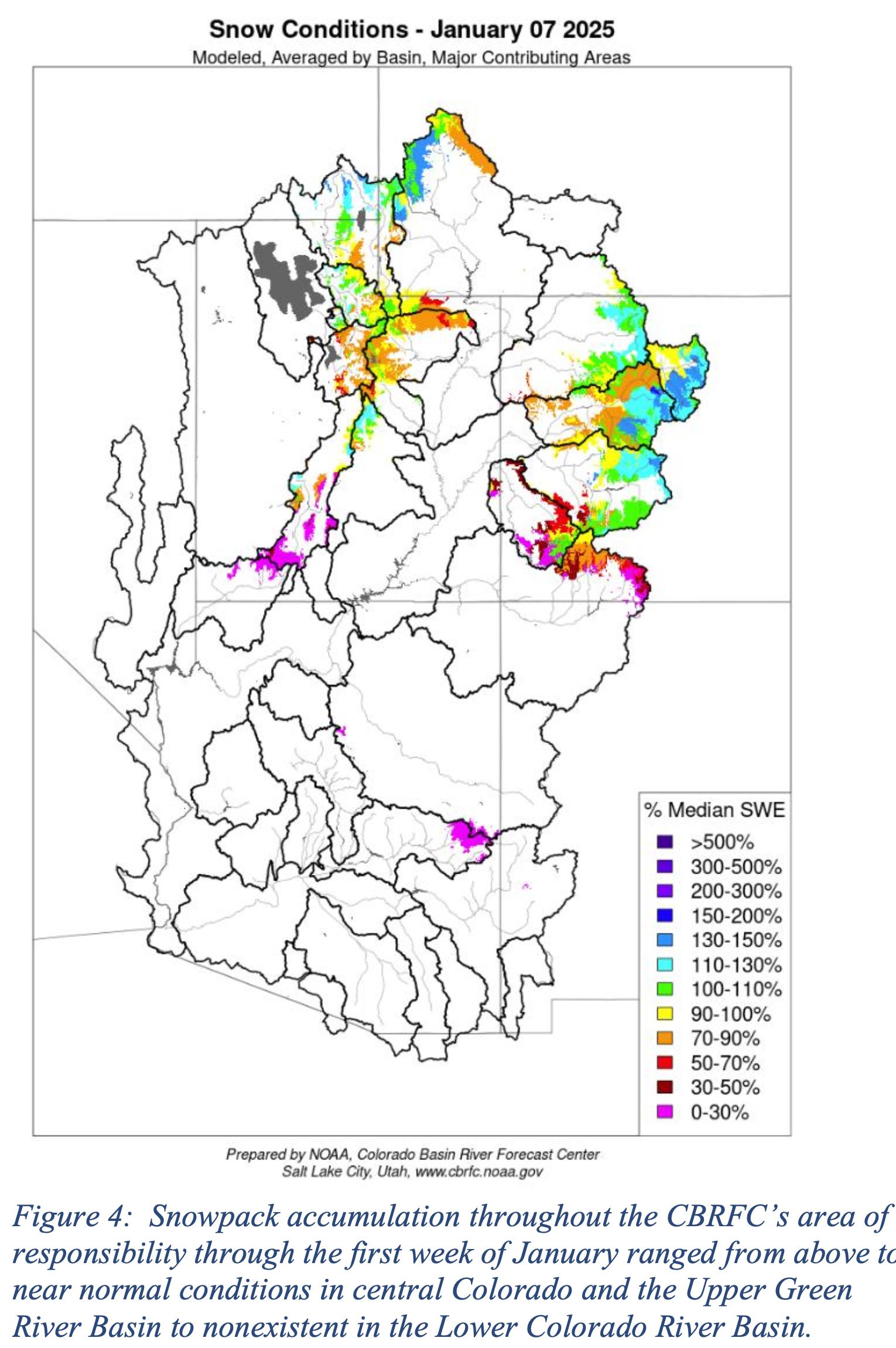
Early season snowpack accumulation through the first week of January throughout the Upper Colorado River Basin and Great Basin ranged from near to slightly above normal throughout much of central Colorado and the headwaters of the Green River Basin and much of far northwestern Utah. Snowpack accumulation values were below normal in the San Juan and Dolores River Basins. In the Lower Colorado River Basin, early season snowpack accumulation was essentially non-existent, with the highest snowpack amounts observed in the northern portion of the Virgin River Basin at 10% of average. Other areas were at, or very close to, 0% of normal (Figure 4).

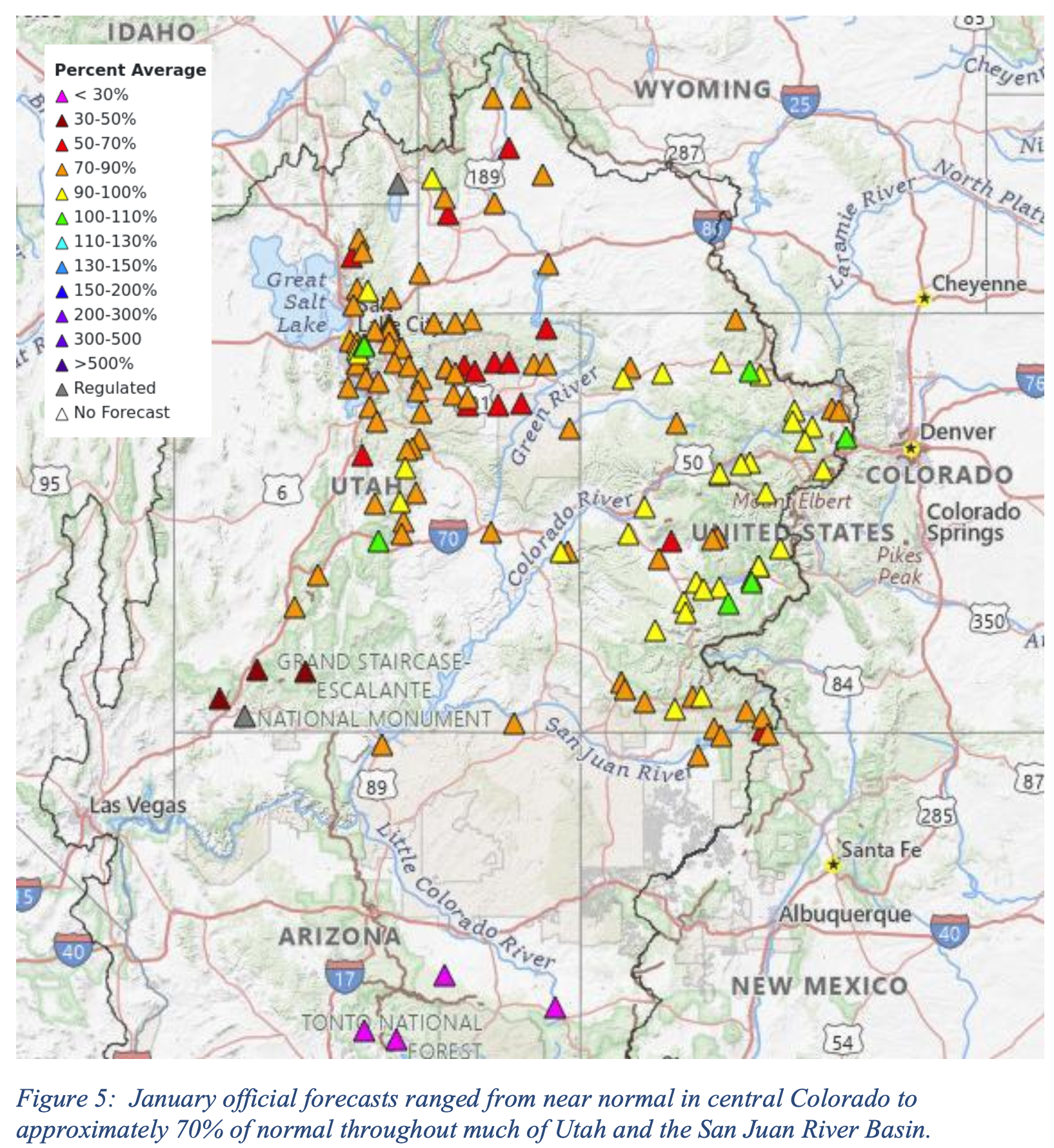
Snowpack is a dominant driver of seasonal water supply forecasts. As a result of relatively near normal snowpack conditions throughout much of the Upper Colorado River Basin and Great Basin regions and generally dry soil moisture conditions, official January Forecasts ranged from near average throughout much of the wetter portions of Colorado to approximately 70% of average throughout much of Utah and the San Juan River Basin (Figure 5).

Generally dry conditions continued through February, with numerous NRCS SNOTEL stations located in the southern portion of the Upper Colorado River Basin and Great Basin regions their lowest precipitation accumulation on record for the December through February period. These record setting conditions corresponded with generally well below average water year precipitation values from October through February (Figure 6).

It is important to note that while some areas saw beneficial It is important to note that while some areas saw beneficial precipitation, particularly in the Green River Basin, warmer than normal temperatures at the end of January and into early February resulted in snowmelt at lower elevation zones (Figure 7).

These generally dry conditions resulted in below normal water supply forecasts throughout the CBRFC’s area of responsibility. Snowpack accumulation over the Colorado River Basin and Great Basin region typically peaks near April 1st. Snowpack conditions varied throughout the Colorado River and Great Basin regions, but were generally near to slightly above average in the northern portions of the Green and Yampa River Basins, and Colorado River headwaters. Drier conditions were apparent throughout much of the Gunnison and San Juan River Basins, as well as central and southern Utah. Lower Colorado River Basin snowpack conditions remained essentially at zero. Many NRCS SNOTEL locations indicated snow water equivalent (SWE) amounts that were near average (Figure 8).

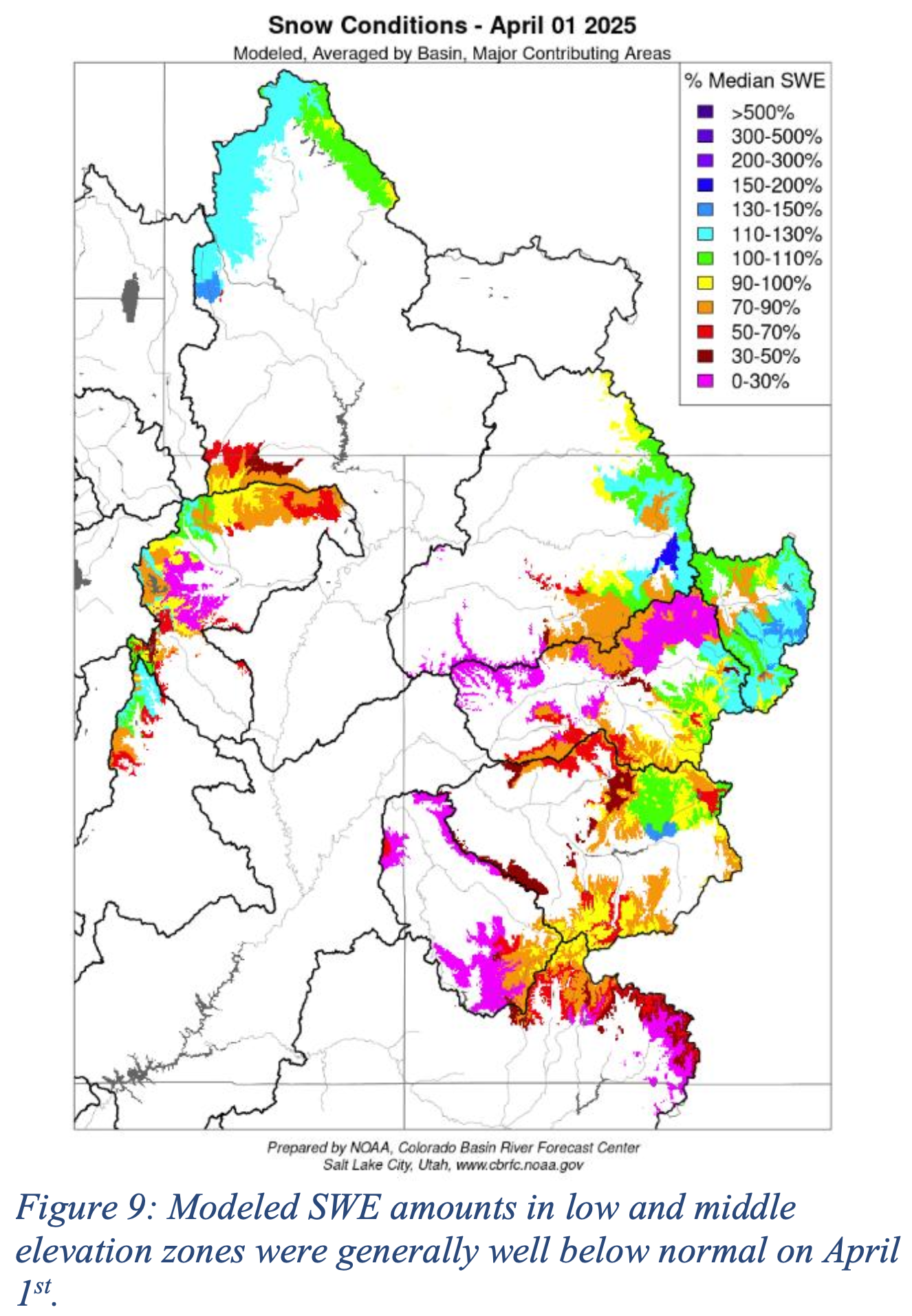
However, while peak SWE values at NRCS SNOTEL locations generally located at higher elevations indicated near normal peak snowpack conditions, CBRFC modeled SWE at lower and middle elevation zones over major contributing areas showed below to well below normal SWE conditions (Figure 9).

As a result of generally below normal SWE conditions and dry soil moisture conditions, April official forecasts ranged from near normal in portions of the Colorado River Headwaters, to approximately 50% of normal in the Dolores and San Juan River Basin. The official April forecast for Lake Powell was 67% of normal.

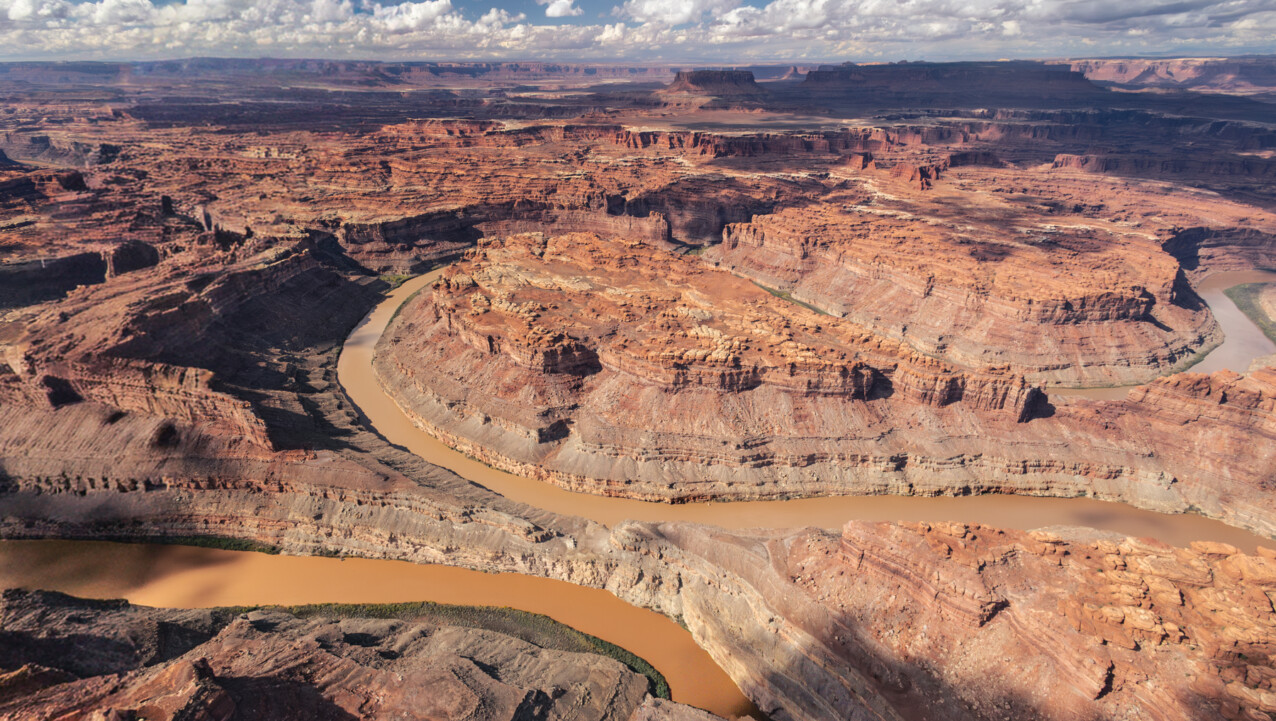
Colorado River “Beginnings”. Photo: Brent Gardner-Smith/Aspen Journalism

The #ColoradoRiver is Not Going to Wait for Politics — John Berggren (WesternResourceAdvocates.org) #COriver #aridification

Photo credit: Lighthawk

Click the link to read the article on the Western Resource Advocates website (John Berggren):

November 21, 2025

The states that share the Colorado River have failed to agree on how to protect it, leaving 35 million people without a clear path forward. We still have a chance to protect the river – but we must act now. Our communities need a plan that responds to climate change, proactively prepares for water shortages, promotes conservation across the Basin, and protects river health.

  • One in 10 Americans depend on a healthy Colorado River. For the last two years, their future has been hotly debated behind closed doors.
  • The states that share the river have failed to agree on how to protect it, missing a critical deadline to provide a plan for managing the river – leaving our communities high and dry.
  • It’s time to put the river before politics. Our communities need results and a plan that saves water across the West.

One in 10 Americans, along with countless fish and wildlife, depend on a healthy Colorado River. For years, our future has been hotly debated by a handful of state officials behind closed doors. The river has faced escalating threats from climate change and unsustainable water demands. River flows are declining, and our two major reservoirs are less than one-third full. That is why it was so disappointing when officials finally emerged from two years of negotiations empty-handed.

The guidelines for managing the Colorado River expire in 2026, and the Bureau of Reclamation has been working with the Basin states, Tribes, and stakeholders on a new plan for the dry years ahead. Reclamation gave the states until Nov. 11 to outline their framework for the new guidelines with the details due Feb. 14.

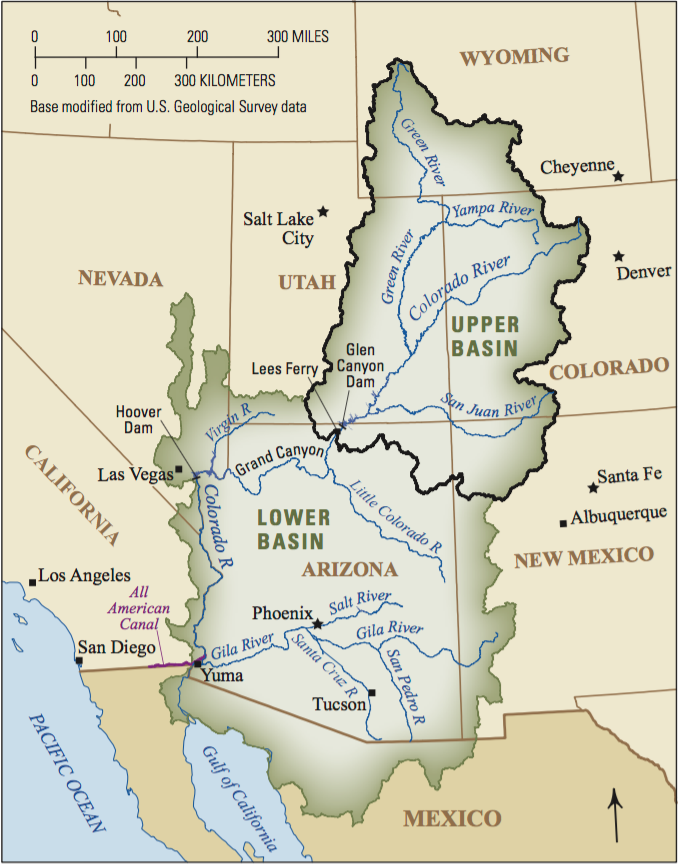
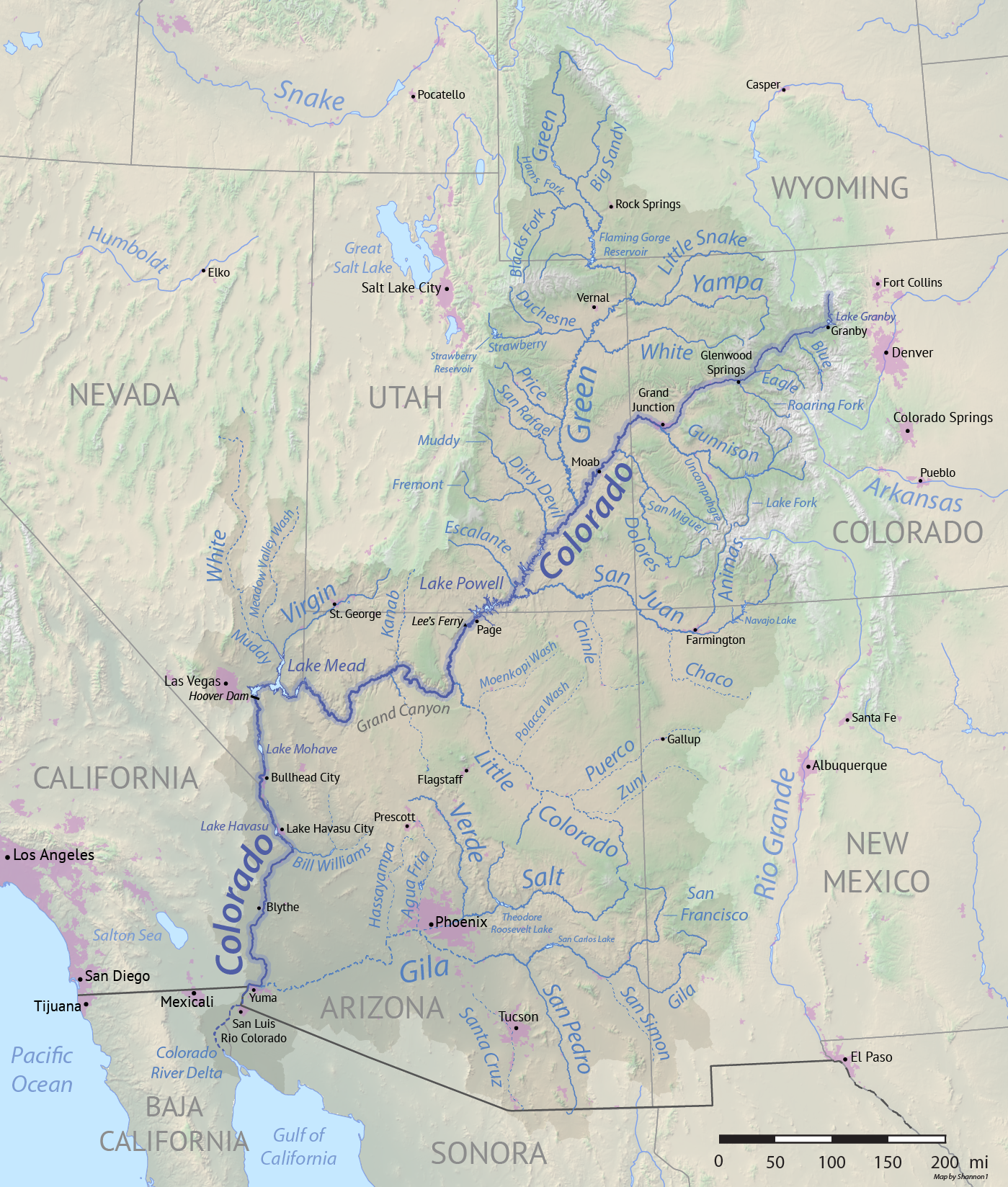
Map of the Colorado River drainage basin, created using USGS data. By Shannon1 Creative Commons Attribution-Share Alike 4.0

What is the hold up? The Colorado River Basin states are divided into two camps — the Lower Basin (Arizona, California, and Nevada) and the Upper Basin (Colorado, New Mexico, Utah, and Wyoming). The two Basins are at odds over a variety of fundamental issues, including who should take water shortages, how much these should be, and whether shortages are mandatory or voluntary. The Lower Basin has agreed to take the majority of the shortages in most years, but there is significant disagreement over who bears responsibility for the remaining shortages. Both Basins argue that the other is responsible. The threat of interstate litigation over the river looms large. These court battles would take decades to resolve, cost millions of dollars, and plunge the region into a state of uncertainty — all while the river system continues to crash.

The states held numerous confidential meetings in an attempt to reach an agreement while communities throughout the West anxiously awaited the outcome. On Nov. 11, the states released a joint statement that offered a commitment to continue negotiating, but little else.

The Colorado River is not going to wait for process or politics. Drought and climate change are reshaping the West. The window to secure the river’s future is closing fast. 

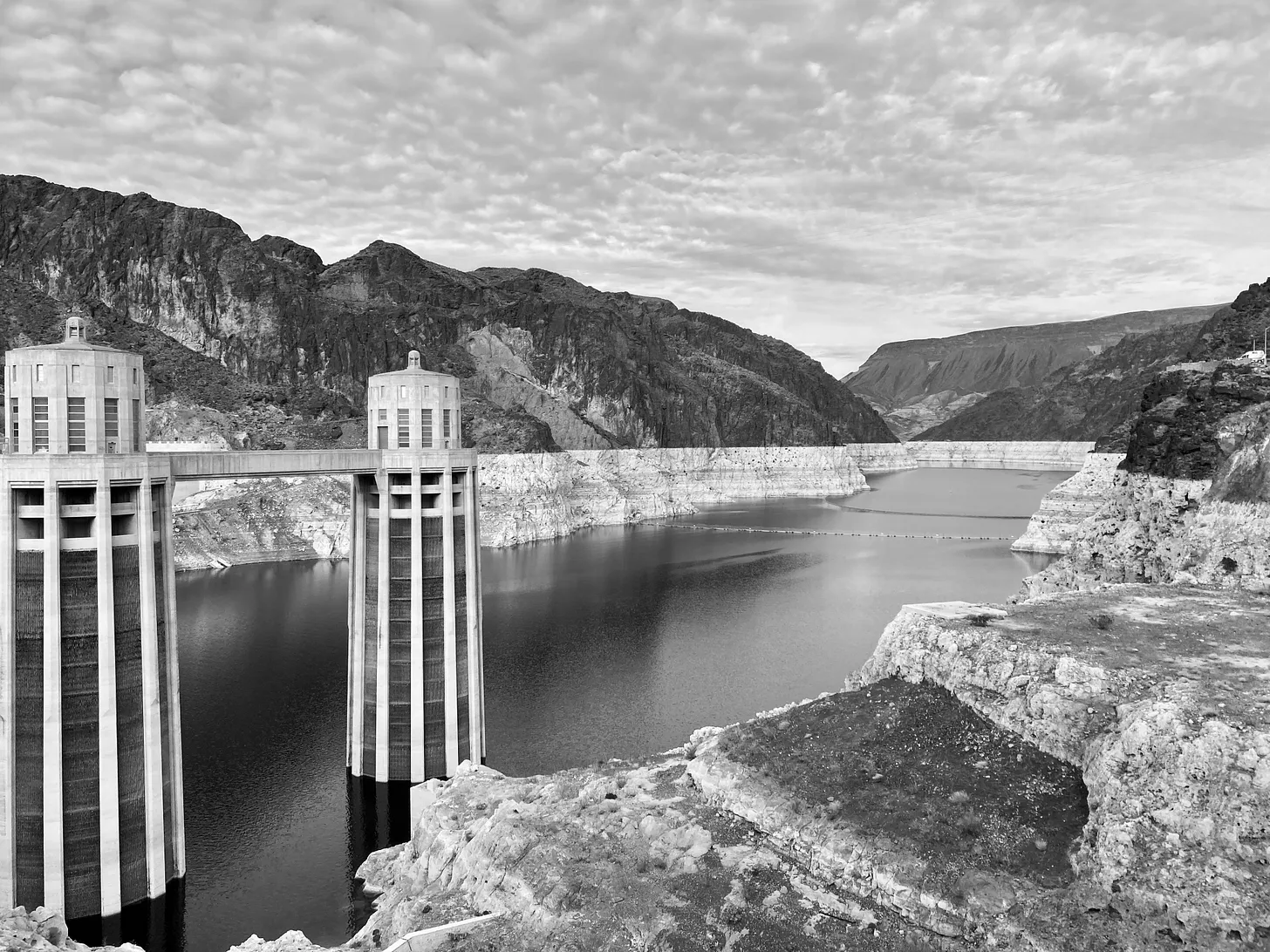
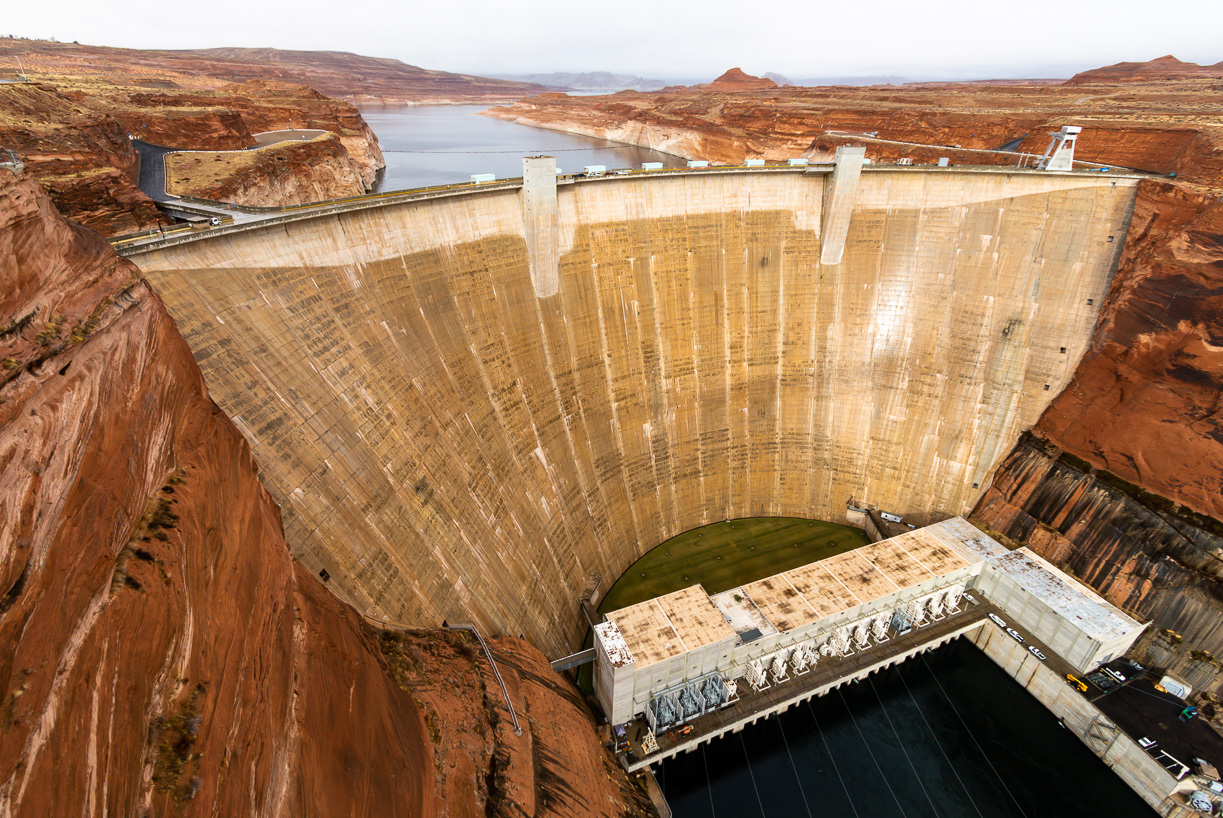
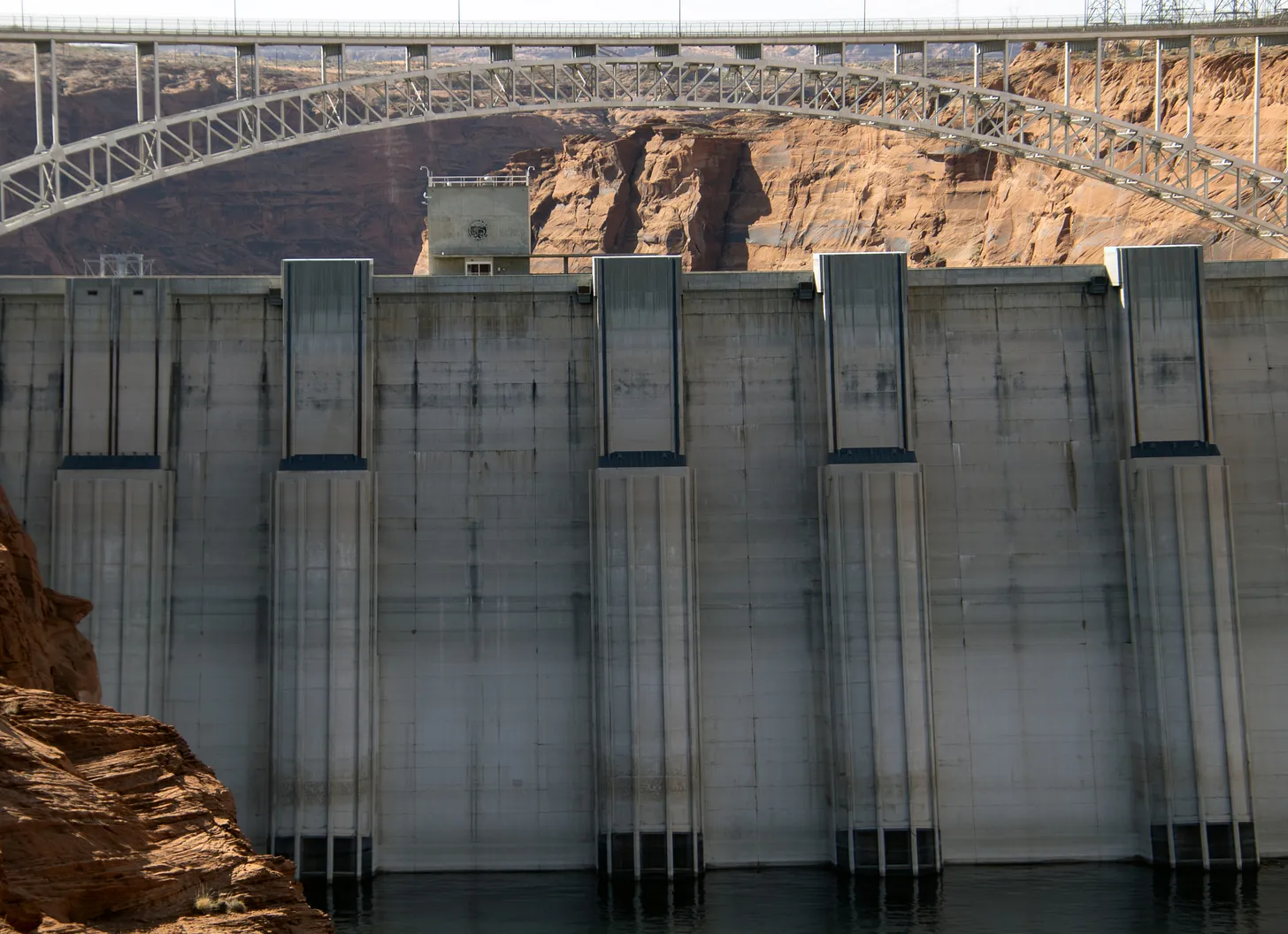
Decision makers need to start making real progress. If we have another dry year like this one, water demands could exceed the river’s natural flow by 3.6 million acre-feet, which is enough water to sustain over 7 million families for an entire year. Such a shortfall could mean water levels in Lake Powell drop so low that Glen Canyon Dam can no longer produce hydropower and it raises serious concerns about whether the dam can safely operate at all.

This problem is too big for one state or sector to solve on its own. Everyone in the Basin must do more to save water and protect the river. Every drop matters.

Decision makers are trying to solve a complex problem with difficult trade-offs, but the challenges will only grow with each passing day.  We simply can’t do our best work if we wait until the last minute. A plan that is hastily put forward at the eleventh hour leaves little room for public input or creative solutions. Instead, it risks perpetuating a status quo that hasn’t been working for anyone.

We must allow time to incorporate input from the 30 Basin Tribes, many of whom have long been excluded from key negotiations and lack access to clean water. We also need to leave room to build in solutions that protect the health of the river that sustains the West.

The future of our region — from families in Denver to raft guides in Moab to communities on the Navajo Nation to farmers in Yuma — depend on a healthy river.

We need a plan for the dry years ahead, and we need it now. While state negotiations remain important, the Bureau of Reclamation cannot let the ongoing impasse stand in the way of meaningful solutions.  Reclamation must press on and work with Tribes and stakeholders across the West to develop robust and equitable guidelines that protect the river we all depend on.

At WRA we are continuing to advocate for policies that:

  • Base management decisions on the best available science, including how much water is actually flowing in the river
  • Expand water conservation efforts across the Basin and create flexible water storage accounts so that we can store water to protect river health and meet our needs in dry years
  • Ensure Tribes have meaningful opportunities to shape decisions on the river and can access their fair share of the river’s water
  • Invest in projects to maintain the river’s infrastructure, incentivize water conservation, build water security, and restore irreplaceable fish and wildlife habitat
  • Enable ongoing collaboration across the region
  • Adopt policies that prioritize the health of the river so that future generations can build a life in the West
Photo credit: Lighthawk

The next few months will determine the future of the river for years to come. By the end of this year, Reclamation is expected to publish a draft environmental impact statement analyzing alternatives for managing the river. This will be followed by a public comment period where you can make your voice heard. Reclamation’s final record of decision is expected late next summer.

We are up against hard deadlines enforced by the federal government and Mother Nature. The clock is ticking. We still have a chance to protect the river — but we must act now.

The #Colorado Water Conservation Board Approves Historic Agreement to Safeguard #ColoradoRiver Water Rights — Lindsay DeFrates (Colorado River District) #COriver #aridification

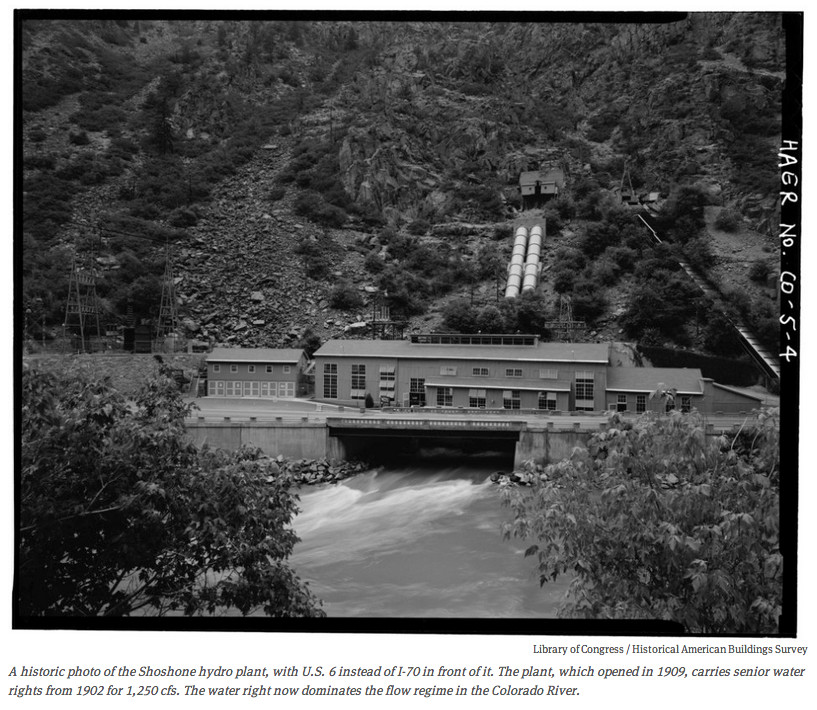
This historical photo shows the penstocks of the Shoshone power plant above the Colorado River. A coalition led by the Colorado River District is seeking to purchase the water rights associated with the plant. Credit: Library of Congress photo

Click the link to read the release on the Colorado River District website (Lindsay DeFrates):

The acceptance of the Shoshone water rights marks a landmark partnership between the State of Colorado and the western slope.

Today, Wednesday, November 19, the Colorado Water Conservation Board (CWCB) voted unanimously to accept the joint offer by the Colorado River District and Public Service Company of Colorado (PSCo) of a perpetual interest in the use of the Shoshone Water Rights for instream flow purposes.

Once confirmed by water court, this acquisition will create the largest environmental water right in the state’s history and permanently protect the historic flow of the Colorado River.

“The importance of today’s vote cannot be overstated as a legacy decision for Colorado water and the western slope. It secures an essential foundation for the health of the Colorado River and the communities it sustains,” said Andy Mueller, General Manager of the Colorado River District. “We continue to be impressed by, and thankful for, the broad coalition of voices that have come together in support of protecting the Shoshone Water Rights. Without them, we would not have been able to meet this historic milestone.”

Today, the CWCB demonstrated its deep commitment to Colorado’s water security by taking bold, permanent action to protect our namesake river. We are proud to stand with the State and with our many partners across the West Slope in securing these flows for the benefit of all Coloradans,” said Sen. Marc Catlin, president of the Colorado River District Board of Directors. “This agreement strengthens water security for hundreds of communities within our state and represents a proactive, durable solution for the 40 million people who rely on the Colorado River downstream. The Shoshone Water Rights Preservation Project keeps the river as whole as possible, keeping water in its natural basin and safeguarding this lifeline for generations to come.”

The board’s decision today was the final step in the instream flow acquisition process that began with the formal offer in May 2025. Following a contested hearing in September – requested by four Front Range water entities – the Colorado River District and PSCo granted the CWCB additional time to continue deliberations and fully consider the historic proposal and partnership at their November meeting.

35 entities filed for party status in support of the Shoshone Water Rights ISF proposal. These include West Slope towns and counties, water districts, as well as local and regional non-profits. Over 400 positive public comments were also submitted over the summer.

“Today’s decision by the CWCB is a tremendous step forward for the health of the Colorado River and the communities that rely on it,” said Senator Dylan Roberts. “The Shoshone Permanency effort reflects years of collaboration and a shared commitment to protecting our headwaters, and I’m grateful to all the partners who brought us to this point. There is still important work ahead, but this vote positions Colorado to take advantage of the years of effort and protects these flows for generations to come.”

“The Shoshone water rights are a lifeline for western Colorado,” said Mesa County Commissioner Bobbie Daniel. “Our farmers, ranchers, recreation enthusiasts, and energy producers depend on this water, and we are proud to see the CWCB support this project. These flows are the future of our families and communities, and now, more than ever, it is critical that we are doing everything we can to protect them.”

Xcel Energy provided the following statement: “Xcel Energy recognizes the significant collaboration and effort that brought us to today’s decision by the Colorado Water Conservation Board. We appreciate the engagement from all parties throughout this process and look forward to continuing the work ahead. This agreement represents an important step in ensuring reliable, clean energy for the communities we serve while supporting responsible stewardship of Colorado’s water resources.”

The CWCB also issued their own press release, which is available on their website here: https://cwcb.colorado.gov/category/news-articles

In December 2023, the Colorado River District and Public Service Company of Colorado (PSCo), a subsidiary of Xcel Energy, entered into a $99 million Purchase and Sale Agreement (PSA) to acquire the historic Shoshone Water Rights, senior (1902) and junior (1929) non-consumptive rights that stabilize flows on the upper Colorado River. The PSA is the product of decades of work by the statewide Shoshone Water Right Preservation Coalition.

To close the transaction, the PSA requires four conditions: execution of an Instream Flow Agreement with the CWCB (approved today), receipt of a water court decree approving the change of water rights, securing commitment of full project funding ($99 million), and approval from the Colorado Public Utilities Commission. So far, the Shoshone Water Rights Coalition has secured commitments of over $57 million from West Slope entities, the State of Colorado, and the Colorado River District’s Community Funding Partnership. The Bureau of Reclamation awarded the project $40 million through the Inflation Reduction Act Funds in January 2025 – those funds remain under review by the current administration.

Today’s CWCB decision fulfills that critical Instream Flow Agreement requirement, moving the project significantly closer to final completion and the permanent protection of the Shoshone flows.  The River District, PSCo, and the CWCB will be initiating the water court process to add instream flow use to the Shoshone water rights. The River District and its full coalition of supporters will also be turning their focus on fully securing the previously awarded federal funds.

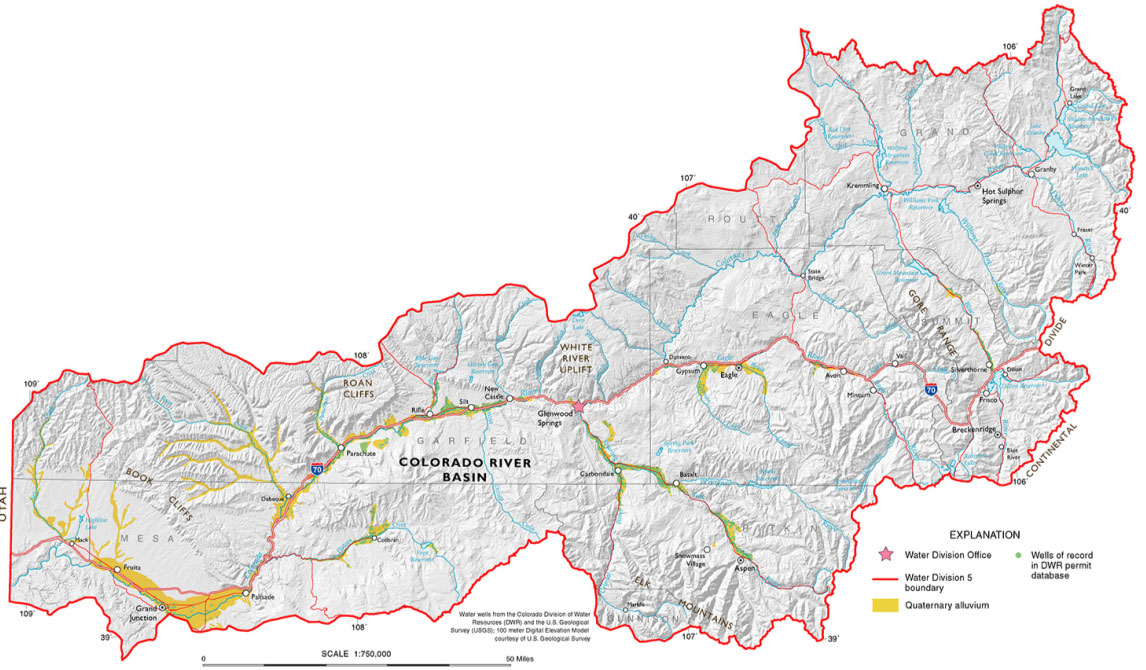
Colorado River Basin in Colorado via the Colorado Geological Survey

The #Colorado Water Conservation Board votes yes on Shoshone: The #ColoradoRiver District will retain some control over management of powerful water rights — Heather Sackett (AspenJournalism.org) #COriver #arification

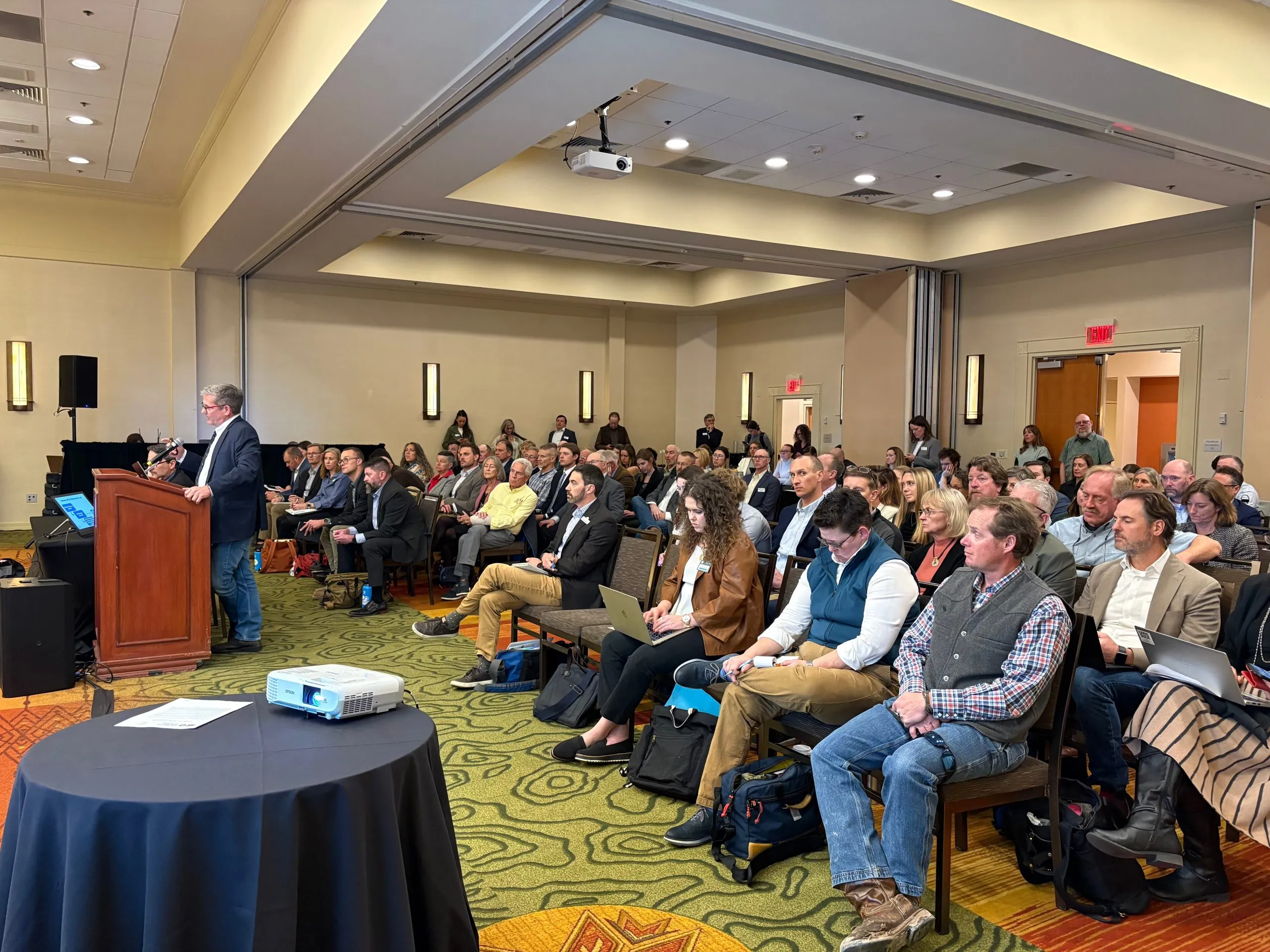
River District General Manager Andy Mueller speaks to the Colorado Water Conservation Board in front of a packed house Wednesday. The board voted unanimously to accept water rights tied to the Shoshone hydropower plant to benefit the environment. CREDIT: HEATHER SACKETT/ASPEN JOURNALISM

Click the link to read the article on the Aspen Journalism website (Heather Sackett):

November 20, 2025

In a historic move Wednesday evening, the state water board voted unanimously to accept water rights tied to the Shoshone hydropower plant, a major step toward securing those flows in perpetuity for the Western Slope.

The Colorado Water Conservation Board said the Shoshone water rights, which are some of the oldest and most powerful on the mainstem of the Colorado River, can be used to benefit the environment. 

“The Shoshone acquisition makes a lot of sense to me, and I’m very proud to be a part of the work that everybody’s put into it,” said Mike Camblin, who represents the Yampa, White and Green river basins on the CWCB. “I hope that our children and our grandchildren look back and realize we made the right decision on this.”

The Glenwood Springs-based Colorado River Water Conservation District plans to purchase the Shoshone water rights for $99 million from Xcel Energy, but the district first needed the approval of the CWCB, which is the only entity in the state allowed to hold instream-flow water rights to benefit the environment. Because the water is returned to the river after it runs through the hydroplant’s turbines, downstream cities, irrigators, recreators and the environment all benefit.

River District General Manager Andy Mueller called it a fantastic day in Colorado history. 

“I think that was the right decision for the Colorado River and the right decision for our whole state,” Mueller said. “I think the state for generations to come, centuries in the future will benefit from having that water in the Colorado River.”

Importantly, the instream-flow agreement approved by the board says that the Western Slope, along with the CWCB, will retain some control over exercising the rights. The River District and its constituents drew a hard line in the sand regarding this point and said they would walk away from the deal if they had to cede control solely to the CWCB.

Though not totally unprecedented, co-management is a departure from the norm, as the CWCB has never shared management of an instream-flow water right this large or this powerful with another entity. 

In attendance at Wednesday’s CWCB meeting in Golden were representatives of ditch companies, elected officials and water managers from across the River District’s 15-county area. Some of the attendees said during their public comments that if the River District didn’t retain some control over the water rights, they would pull their funding and withdraw their support from the Shoshone campaign. 

Mesa County Commissioner Bobbie Daniel said the joint-management proposal is a safeguard that ensures that Western Slope interests are not pushed aside. Mesa County has committed $1 million toward the purchase of the water rights.

“The Shoshone call is one of the great stabilizing forces on the river, a heartbeat that has kept our valley farms alive, our communities whole and our economy steady, even in lean years,” Daniel said. “If a joint management is not adopted, Mesa County will withdraw its support for this acquisition. It’s not out of anger or politics, but because anything less would fail the people that we serve.”

The Shoshone hydropower plant in Glenwood Canyon has some of the oldest and most powerful nonconsumptive water rights on the Colorado River. A broad coalition of Western Slope entities support the River District purchasing the rights. CREDIT: HEATHER SACKETT/ASPEN JOURNALISM

Blow to the Front Range

The CWCB’s decision was a blow to Front Range water providers, who objected to the River District’s having a say over how to manage the water rights, even though they supported the overall goal of protecting flows for the environment. Denver Water, Northern Water, Aurora Water and Colorado Springs Utilities argued that the CWCB has exclusive authority over the rights, according to state statute. 

Critically, because the Shoshone plant’s water rights — one that dates to 1902 for 1,250 cubic feet per second and another that dates to 1929 for 158 cfs — are senior to many other water users, they have the ability to command the flows of the Colorado River and its tributaries upstream all the way to the headwaters. This means that the owners of the rights can “call out” junior Front Range water providers with younger water rights that take water across the Continental Divide via transmountain diversions and force them to cut back. 

The fact that Front Range water providers take about 500,000 acre-feet annually from the headwaters of the Colorado River is a sore spot for many on the Western Slope, who feel the growth of Front Range cities has come at their expense. These transmountain diversions can leave Western Slope streams depleted. 

The Shoshone call pulls water west much of the time. But the Front Range parties wanted assurances that during extreme droughts or emergency situations, the call would be “relaxed,” allowing them to take more water to their cities’ millions of customers. 

Alex Davis, assistant general manager with Aurora Water, said the CWCB should retain the ability to relax the call as a “backstop” under extremely rare circumstances. 

“It is asking that in those emergency situations, the board has the ability to step in and say: We’re going to do what we think is best for the state of Colorado,” Davis said.

The agreement approved by the board lays out a collaborative process to consider a call relaxation, with a stakeholder panel of water managers from both sides of the divide. The specific wording of this agreement was hashed out during Wednesday’s meeting, with lawyers representing the CWCB and River District conferencing to tweak language and make edits.

Colorado Water Conservation Board member representing the Arkansas River basin Greg Felt, left, talks with River District General Manager Andy Mueller Wednesday after the board voted to accept the Shoshone water rights for instream flow purposes. The move represents a major step toward securing those rights in perpetuity for the Western Slope. CREDIT: HEATHER SACKETT/ASPEN JOURNALISM

The CWCB had been set to decide on the Shoshone rights at its meeting in September, but the River District granted an eleventh-hour 60-day extension so they could address issues raised by the board and try to negotiate a consensus with the Front Range parties. 

Despite all the detailed arguments laid out by the parties, thousands of pages of technical and legal documents, and hours of testimony and public comment over the September and November CWCB meetings, the board’s scope of decisionmaking remained narrow: Should the CWCB accept a perpetual interest in the Shoshone water rights and will these rights preserve the natural environment to a reasonable degree? 

In the end, the board decided yes, and also determined that it did, in fact, have the authority to allow the River District to co-manage the Shoshone water rights alongside it.

“I really think it’s pretty incredible that there’s no objection to the environmental aspects of this flow and the purpose of this water right for environmental purposes,” said CWCB Director Taylor Hawes, who represents the mainstem of the Colorado River where the Shoshone plant is located. “(The River District is) donating that water right. It seems like they should have a say. And while I realize this case is unique, I don’t see anything in the statute or the rules that prohibits us from doing this.”

But the fight to keep Shoshone flowing west is not over for the River District. The CWCB, River District and the water rights’ current owner, Xcel, now plan to file a joint application in water court to make the deal official by adding the instream-flow use to the water rights. 

The water court process will decide another contentious issue that is sure to again highlight disagreement between the Western Slope and Front Range as they compete for the state’s dwindling water resources: precisely how much water is associated with the water rights, a number based on the plant’s past use.

“I also very much understand the concerns of both sides of the divide in not wanting the other side to have a windfall,” Hawes said. “That has been kind of the heart of all of this. And I hope we can all trust that the water court’s process will give us a result where we don’t have to worry about that. Everyone’s concerns will be addressed in that process.”

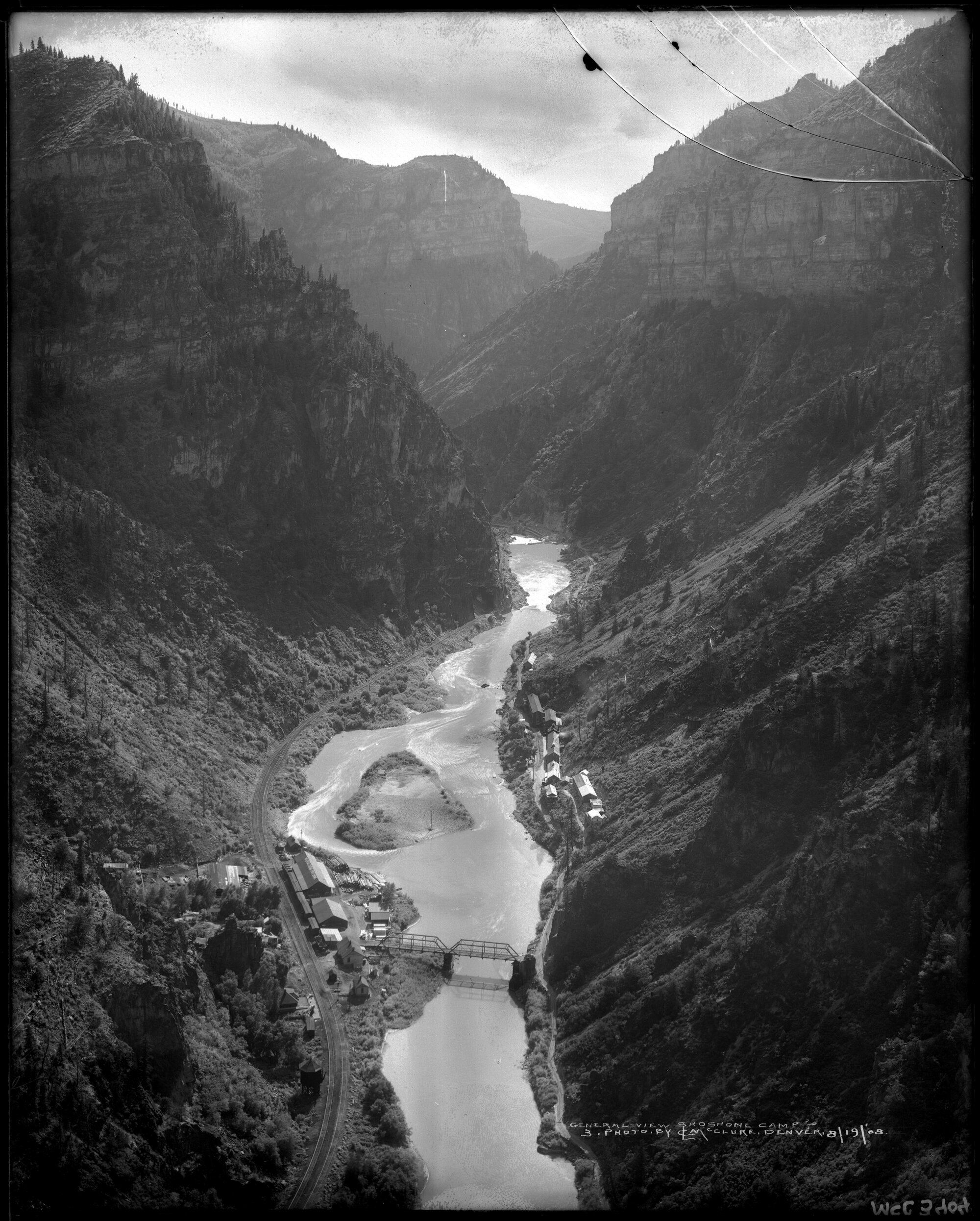
View of Shoshone Hydroelectric Plant construction in Glenwood Canyon (Garfield County) Colorado; shows the Colorado River, the dam, sheds, a footbridge, and the workmen’s camp. Creator: McClure, Louis Charles, 1867-1957. Credit: Denver Public Library Digital Collections

The #Colorado Water Conservation Board says “yes” to $99M Western Slope plan for Shoshone Power Plant’s water rights — Shannon Mullane (Fresh Water News) #ColoradoRiver #COriver #aridification

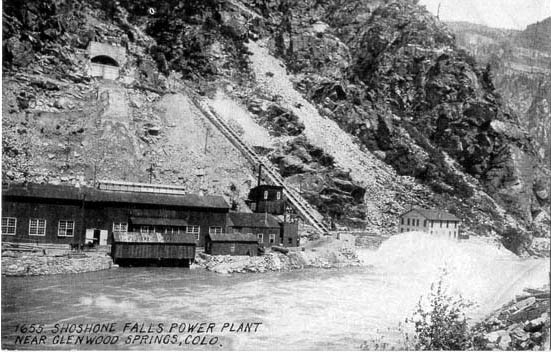
Shoshone Falls hydroelectric generation station via USGenWeb

Click the link to read the article on the Water Education Colorado website (Shannon Mullane):

November 20, 2025

 In a momentous decision for the Western Slope, state water officials unanimously approved a controversial proposal to use two coveted Colorado River water rights to help the river itself.

Members of the Colorado Water Conservation Board voted to accept water rights tied to Shoshone Power Plant into its Instream Flow Program, which aims to keep water in streams to help the environment.

The decision Wednesday is a historic step forward in western Colorado’s yearslong effort to secure the $99 million rights permanently. But some Front Range water providers pushed back during the hearings, worried that the deal could hamper their ability to manage the water supply for millions of Colorado customers.

For the state, the two water rights will be a crown jewel in its five-decade environmental effort to help river ecosystems. It’s one of several steps in the agreement process, and it could take years before the river feels that environmental benefit.

“The Shoshone acquisition makes a lot of sense to me, and I’m very proud of the work that everybody’s put into it,” said Mike Camblin, who represents the Yampa and White river basins on the Colorado Water Conservation Board. “I hope that our children and our grandchildren look back at this and realize we made the right decision.”

Over 100 Colorado water professionals and community members gathered in Golden for a six-hour hearing about the environmental proposal, brought forward by the Colorado River District, which represents 15 counties on the Western Slope.

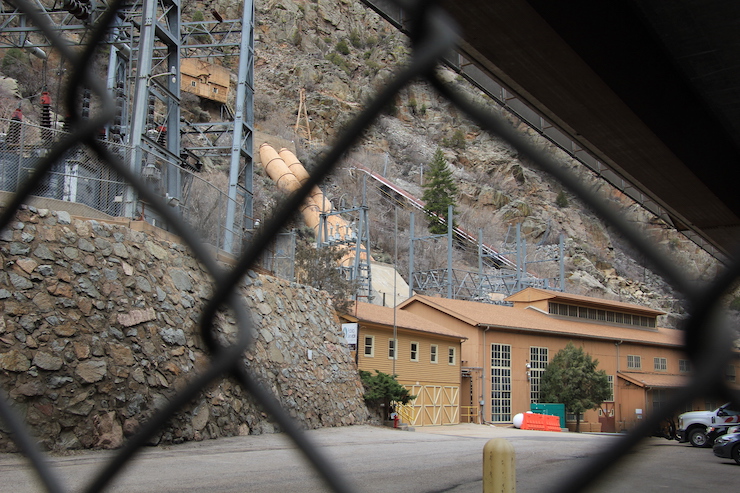
The small hydropower plant off Interstate 70 near Glenwood Springs has used Colorado River water to generate electricity for over a century. But the aging facility has a history of maintenance issues, and Western Slope water watchers have long worried about what happens to the rights if it were to shut down for good.

The Colorado River District wants to add the environmental use as part of a larger plan to maintain the “status quo” flow of water past the power plant, regardless of how long it remains in operation.

Western Slope communities, farms, ranches, endangered species programs and recreational industries have become dependent on those flows over the decades and broadly supported the district’s proposal.

From left, Hollie Velasquez Horvath, Kathy Chandler-Henry, and Andy Mueller, general manager of the River District, at the kickoff event Tuesday [December 19, 2023] for the Shoshone Water Right Preservation Campaign in Glenwood Springs. CREDIT: HEATHER SACKETT/ASPEN JOURNALISM

“I’m good. I’m much more relaxed now,” Andy Mueller, the district’s general manager, said after the vote Wednesday. “The reality is, we have set up our state, through this instream flow agreement, for success for centuries on the Colorado River.”

Some powerhouses in Colorado water support the general permanency effort but oppose parts of the agreement. Northern Water, Colorado Springs Utilities, Denver Water and Aurora Water said the proposal would give the Colorado River District too much sway in decisions that would impact them.

These water managers and providers are responsible for delivering reliable water to millions of people, businesses, farms and ranches across the Front Range. Any change to Shoshone’s water rights could have ripple effects that would affect over 10,000 upstream water rights, including some held by Front Range water groups.

The negotiations over the agreement continued throughout the meeting. Board members had about 24 hours to review a stack of documents marked with tweaked phrasing and proposed edits.

Both sides are concerned that the other could get a water windfall through the agreement, said Taylor Hawes, who represents the Colorado River on the board. Those concerns can be addressed in the next step of the process: Water Court.

“That has been the heart of all of this,” Hawes said. “I hope we can all trust that the water court’s process will give us a result where we don’t have to worry about that.”

Who will control the flow of water?

The Colorado Water Conservation Board was supposed to make its final ruling on the environmental use proposal in September. Then Public Service Company of Colorado, the Xcel subsidiary that owns the rights, and the Colorado River District filed an 11th-hour extension to delay until the meeting Wednesday.

That’s, in part, because they needed more time to address a central conflict in the agreement: Who makes the final decisions when managing the powerful rights?

Shoshone uses two rights to access the Colorado River: one for 1,250 cubic feet per second that dates back to 1905, and a right to 158 cubic feet per second that dates back to 1940.

They amount to a big chunk of water. Plus, these rights can be used year-round, and they supersede more recent, junior rights like several held by Front Range water providers.

Under the agreement, the water rights will be co-managed by the Colorado River District and the Colorado Water Conservation Board.

Western Slope parties were adamant about this. Several speakers said they would pull their funding, and there would be no agreement if the River District did not have a say in how the water rights would be used.

“If joint management is not adopted, Mesa County will withdraw its support for this acquisition,” Bobbie Daniel, Mesa County Commissioner, said. “It’s not out of anger or politics, but because anything less would fail the people that we serve.”

The Front Range groups said the state should make the final decision if Colorado River District staff and CWCB staff disagreed over how to manage the water rights. They argued the board has exclusive authority under state law.

Alex Davis with Aurora Water said her team was pushing for a “hammer” — an entity, preferably the state, that could force water providers on either side of the Continental Divide to come to the negotiating table or that could make the final decision, especially in times of crisis.

Aurora pulls about 25,000 acre-feet of water from the Western Slope, through mountain tunnels and into its water system each year, she said. (An acre-foot of water is about what two to three  households use in a year.) But when Shoshone is using its 1905 water right to its fullest, nearly all of Aurora’s transmountain diversions are turned down or turned off.

The city might want to ask Shoshone to use less water to provide some relief in an emergency. The agreement seems to give the Colorado River District a veto, Davis said.

“By the River District having that decision-making power, it may lead to less incentive on the West Slope side in those emergency situations,” Davis said in an interview with The Sun. “That’s what we were worried about.”

Colorado Water Conservation Board members decided to continue with the co-management approach, saying they were not giving up authority or working outside of state statute by doing so.

Mueller said the agreement is a win for the river and the entire state. It will protect endangered fish and a critical 15-mile stretch of habitat near Grand Junction. It includes exceptions that will protect cities during multi-year droughts and emergency situations, he said.

“The CWCB and the River District can act together for the best interest of the state,” Mueller said in an interview. “We’ll have to earn some trust in that realm over the years, but I’m quite convinced we can do it.”

About that $99 million bill…

The Colorado River District has entered into a $99 million agreement with Xcel Energy to buy the Shoshone water rights.

The state’s decision to accept Shoshone’s water rights into its environmental program met one of four key closing conditions of that purchase agreement, Amy Moyer, chief of strategy for the Colorado River District, said.

The deal still needs approval by Colorado’s Public Utilities Commission. It’ll be weighed in Water Court, where Western Slope and Front Range representatives will wade through another thorny issue: What has Shoshone’s “status quo” water use been over the last century?

The Colorado River District and its Western Slope supporters need to pay up. Although they’ve pulled together over half the asking price, they’re still waiting to hear about whether a request for federal funding will be approved.

If the deal passes those hurdles, then the resulting purchase and instream flow agreement will go on indefinitely. It will provide more predictability for water users across the state, and it will continue to factor into how Colorado communities grow, officials said Wednesday. “We’re making some very far-reaching decisions here,” Nathan Coombs, the board’s Rio Grande Basin representative, said. “I still think this is the right choice right now with the information we have.”

More by Shannon Mullane

Photo: 1950 “Public Service Dam” (Shoshone Dam) in Colorado River near Glenwood Springs Colorado.

The #Colorado Water Conservation Board Votes to Advance Shoshone Water Rights #ColoradoRiver #COriver #aridification

Shoshone Hydroelectric Plant back in the days before I-70 Library of Congress

Click the link to read the release on the Colorado Water Conservation Board website:

November 19, 2025, Golden, CO – This evening, the Colorado Water Conservation Board (CWCB) voted to approve the long-anticipated Shoshone water rights acquisition, to secure two water rights associated with the Shoshone Power Plant, including one of the state’s most significant Colorado River water rights, for permanent instream flow protection. The vote launches the next phase of the process, including water court, and begins the work of preserving and improving the 2.4-mile reach of the Colorado River between the Shoshone Power Plant Diversion Dam and Tunnel and the Shoshone Power Plant Discharge Outlets.

“Securing one of the state’s most significant Colorado River water rights for permanent instream flow protection is a momentous achievement,” said Lauren Ris, CWCB Director. “This outcome reflects a tremendous amount of work, from extensive technical analysis and stakeholder engagement to thorough regulatory review and legal preparation. This careful evaluation ensures our investment delivers long-term benefits for the river and for Coloradans.”

The agreement passed on a unanimous vote, with two directors recused. The decision follows the Colorado River District’s authorization of an extension from the September hearing to the November Board meeting, allowing additional time for review of the information presented and continued efforts to achieve a negotiated resolution of contested issues. 

“I want to thank all the people who have worked so hard to inform this decision for the Board and the diverse range of stakeholders who earnestly engaged,” said Dan Gibbs, Executive Director, Colorado Department of Natural Resources. “Acquiring the Shoshone water rights for instream flow use is a once-in-a-lifetime opportunity to preserve and improve the natural environment of the Colorado River. But I also want to stress that the state is committed to ensuring that the historical use of the water rights is maintained at the status quo and we are committed to participating in any process to settle and resolve these issues for all water users. I am confident in our ability as a state and as a water community to come together in a way that is beneficial to all.”

Over the last two months, the CWCB and the Colorado River District met with Front Range entities and other interested parties to work toward resolving the issues raised at the September hearing. The next step in the process is the filing of an application in water court, for approval of the change of water rights to include instream flow use in a way that will not cause injury to decreed water rights.

This milestone follows significant commitments from the Colorado River District, local partners, and the CWCB, including the State’s $20 million Projects Bill contribution, to secure the long-term future of the Shoshone water rights.

This map shows the 15-mile reach of the Colorado River near Grand Junction, home to four species of endangered fish. Map credit: CWCB

USDA looks to expand public lands grazing: Plus: Data Center Watch, Mining Monitor, Messing with Maps 1940 edition — Jonathan P. Thompson (LandDesk.org)

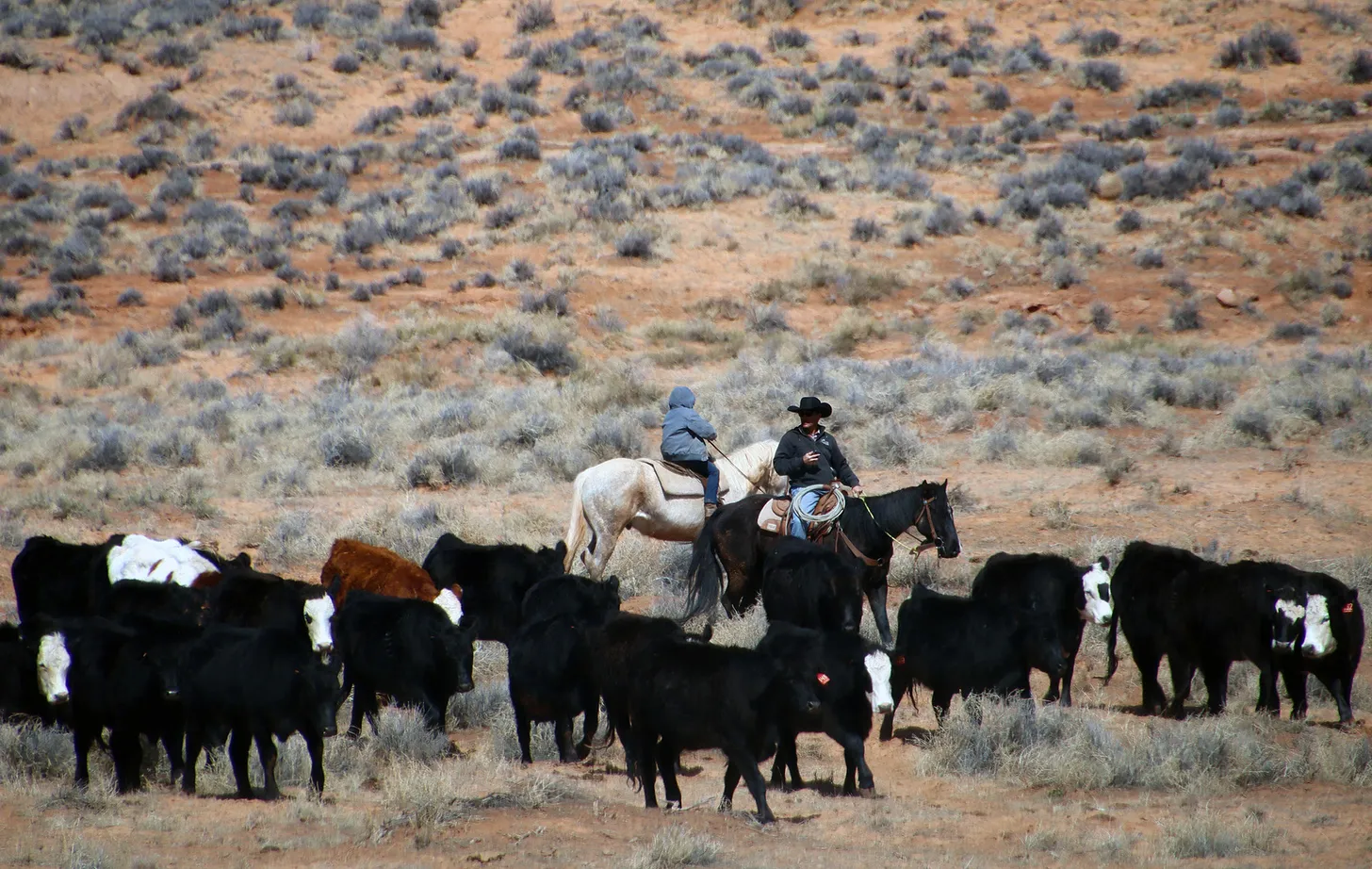
Running cattle near Valley of the Gods in Bears Ears National Monument. Jonathan P. Thompson photo.

Click the link to read the article on The Land Desk website (Jonathan P. Thompson):

November 14, 2025

I promised a while back to take a closer look at the U.S. Department of Agriculture’s plan to “Fortify the American Beef Industry.” I did, and my conclusion is that it’s a bunch of bunk. Okay, maybe not all of it: There are some parts about enforcing “Product of USA” labeling, and about supporting small processors by reducing overtime and holiday inspection fees and so forth that could be helpful to your friendly, local meat processor. 

Curiously, however, the plan’s main emphasis is on grazing on both Forest Service and Bureau of Land Management public lands, even though this makes up only a tiny portion of the U.S. beef industry. It’s almost as if the plan was driven by an ideological agenda rather than a practical one. Oh, and look at that: The Public Lands Council is taking credit for essentially formulating the grazing section of the plan! (h/t to Western Watersheds Project)

The plan will “streamline and expand grazing on federal lands, elevate grazing as an administration priority, and provide direct relief and support to American ranchers.” The plan endeavors to return livestock to vacant grazing allotments and promises to ensure that the number of livestock grazing on public lands remains steady or increases. The plan also aims to diminish protections for wild predators — including endangered ones — and make it easier for ranchers to collect taxpayer subsidies when a wolf or bear is suspected of killing their cattle.

It’s difficult to imagine how public lands grazing can be made any easier. After all, the feds have charged a measly $1.35 per month for a cow-calf pair to graze on the public’s forage for years, which is the congressionally mandated minimum. And while the “Bureau of Livestock and Mining” might go back and forth on the “mining” part of the monicker, it has retained its livestock-friendly reputation through every administration, Republican or Democratic. The agency regularly bends over backwards to accommodate livestock operations, and it often has been unable or unwilling to remove livestock from cattle-trampled lands to allow them to recover — even in “protected” areas such as national monuments.

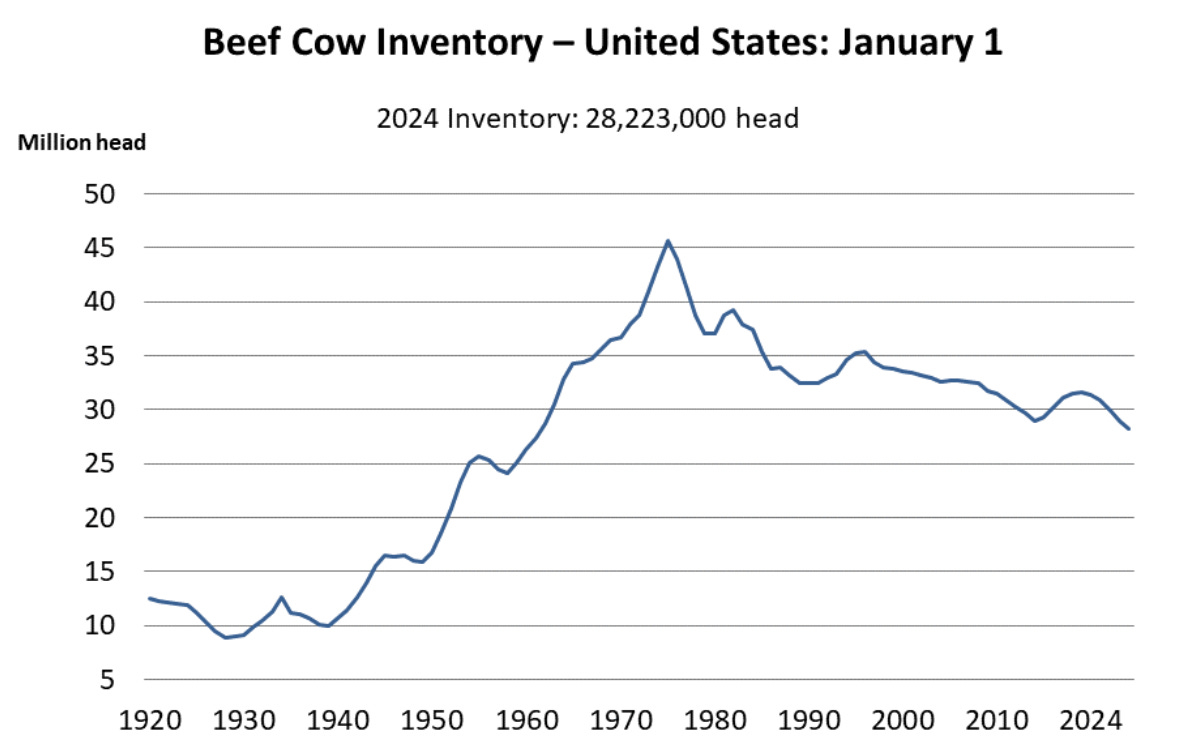
The administration is hoping to fill up the estimated 24 million acres of vacant grazing allotments and to bolster the number of cattle grazing on public lands, but it’s not clear how that would happen. It’s not like active allotments are bursting at the seams with too many cattle: In many cases, ranchers run far fewer cattle than authorized simply because they have fewer cattle to graze and because the industry is putting more cattle on feed. U.S. beef cattle inventories have declined by more than 30% since the 1970s (along with per capita consumption), but the number of beef cows in feedlots has ballooned.

Source: USDA National Agricultural Statistics Service.

Allotments may be vacant not because the BLM or Forest Service cancelled the lease, but because the forage is of marginal quality, due to drought or overgrazing or just not great grass growing conditions, or a conservation group bought out the lease from a willing seller. 

Even if the plan did increase the number of cattle on public lands, it wouldn’t make a big difference to the industry as a whole, because public lands provide less than 2% of all of the forage consumed by the nation’s 27.9 million head of beef cattle. 

Sending more cattle out into desert lands to eat what’s left of the native grasses and trample more sensitive places isn’t going to “fortify” the American beef industry. It will merely perpetuate the age-old and culturally embedded practice of giving grazing incredible leeway on public lands, while benefitting only a handful of chosen livestock operators.


The West’s Sacred Cow — Jonathan P. Thompson


I’m not an absolutist on the issue; I don’t believe that all public lands grazing should be outlawed. But it should be limited to appropriate places and at appropriate levels, and should be halted before it wrecks a particular landscape. Plus, ranchers should pay a reasonable amount for the thousands of pounds of taxpayers’ forage their cattle consume each month, along with a bit extra for the externalities, with which public lands grazing is rife. This sensible type of management simply is not occurring presently, as can be witnessed on just about any tract of active BLM “rangeland” in the Four Corners Country, where fragile desert streambeds are being sullied and valuable cryptobiotic crusts decimated by herds of thousand-pound beasts.

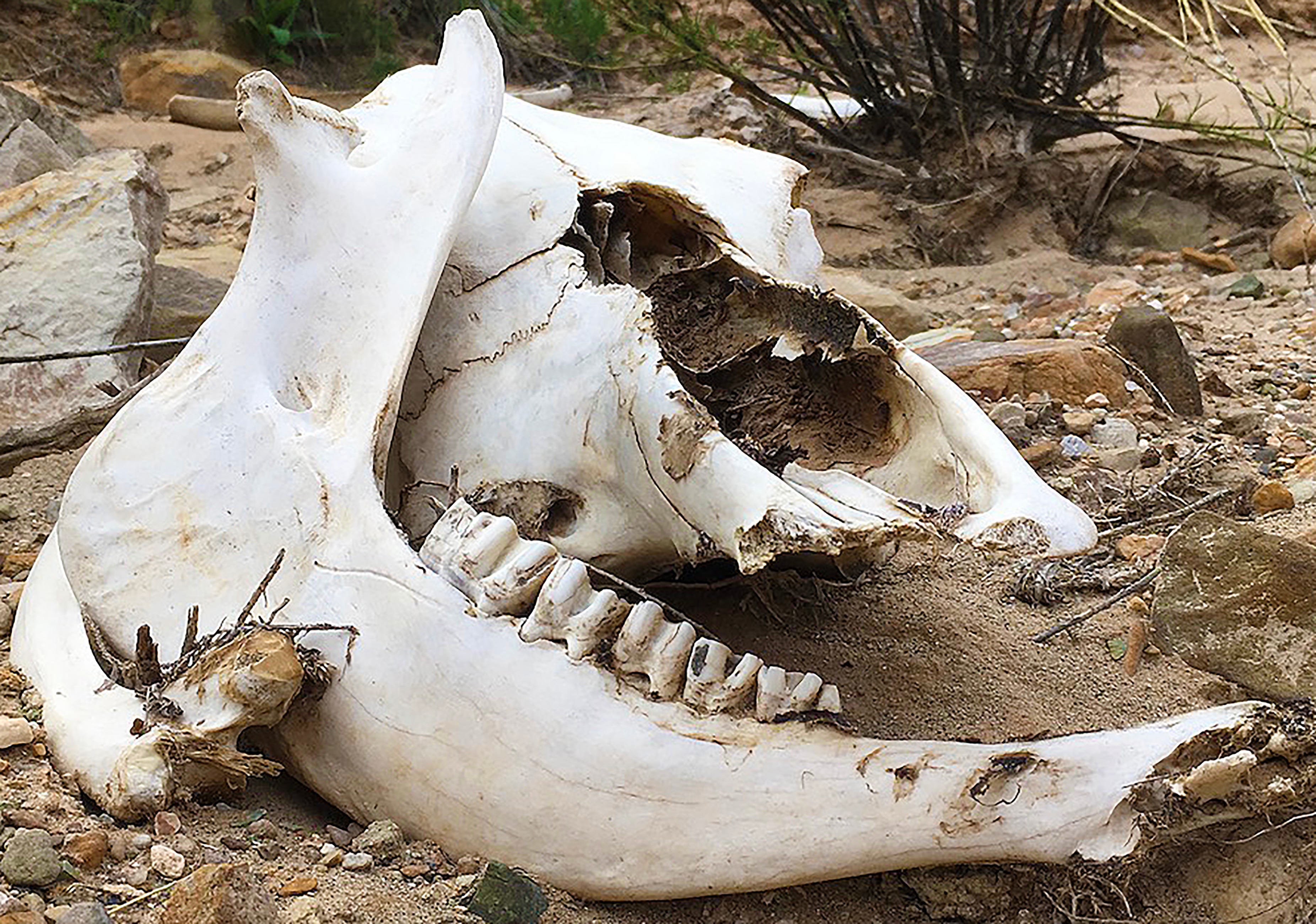
Jonathan P. Thompson photo.

***

If the administration was really interested in helping these ranchers, it would support a “just transition” away from public lands grazing, which is on the decline despite the government’s efforts to prop it up. That would include backing the Voluntary Grazing Permit Retirement Act, which was recently reintroduced in Congress by Rep. Adam Smith, a Washington Democrat.

The legislation would allow conservation groups to buy out federal grazing allotments from willing ranchers and livestock operators, after which the BLM or USFS would permanently retire the allotment. 

While private entities can and do buy out leases currently, there is no guarantee that the leases will remain cattle-free, which is what would allow the administration to re-cow some of those vacant leases mentioned above. The proposed legislation would fix that, making the retirement permanent. The resulting certainty would encourage conservation groups to invest more in the buyouts, which would benefit the ranchers, who may be looking to get out of the business or out of a specific grazing allotment.

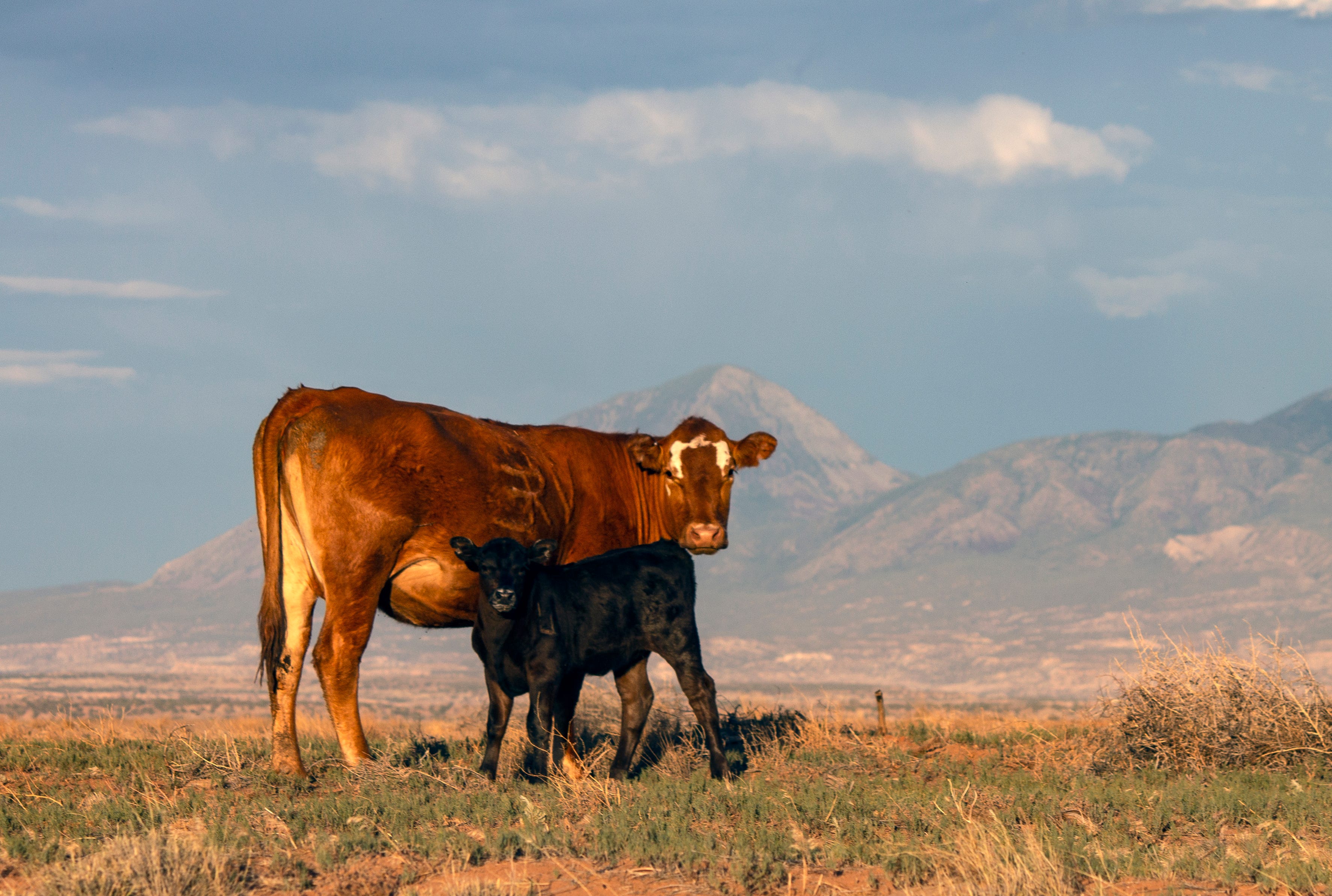
A cow in the desert. Jonathan P. Thompson photo

🤖 Data Center Watch 👾

Certain aspects of the film Eddington just keep jumping off the screen into real life. The movie, if you haven’t seen it, is about a small town in southern New Mexico where a gargantuan tech firm, SolidGoldMagiKarp, has chosen to site a data center during the height of the COVID epidemic. There’s also a conflict between a mask-denying sheriff and a slightly more high-falutin’, charismatic mayor (who supports the data center and its purported economic benefits). A lot of drama ensues — most of it not directly related to the data center — which leads into a bloody, over-the-top machine-gun battle, which, it turns out, does have ties to the data center (which ultimately gets built, because: big money).

So far data centers haven’t provoked warfare of the kind in the movie. But they are spurring a lot of conflict in the desert over their potential water and power use. There’s Project Blue in southern Arizona, which promises to add enough electricity from renewable sources to Tucson Electric Power’s grid to offset its projected enormous power use, but a lack of specifics invites skepticism. Project Jupiter, the gargantuan data center campus planned for Santa Teresa, New Mexico, says it will generate its own power, but hasn’t specified how — except that it’s not likely to use nuclear reactors because they couldn’t come online quickly enough.

Now there’s another proposal, this one for New Mexico’s Permian Basin. New Era Energy & Digital wants to build a hyperscale, AI-processing data center complex in Lea County. It, too, will build dedicated generation: A whopping 2,000 megawatts of capacity from gas, and 5,000 MW from nuclear, according to a Power magazine report. That’s an insanely huge amount of electricity. Palo Verde nuclear plant near Phoenix has a nameplate capacity of 3,937 MW and Diablo Canyon in California has 2,236 MW of capacity.

Take a moment to digest that: This proposed data center would gobble up more electricity than two of the West’s largest power plants combined could generate, which is enough to power some 2 million homes. These numbers are terrifying, but they also strain belief and reinforce the suspicion that the AI-data center boom is actually just a hype-inflated bubble that’s poised to burst before most of these facilities are ever built. 

If New Era does advance its plan, it’s likely to encounter resistance (along with support) of the kind that could spark some cinematic conflict. A natural gas plant of that size could burn methane from oil wells that might otherwise have been flared off, but it will also emit carbon dioxide and other pollutants. And the nuclear reactors will produce radioactive waste, which likely would be stored onsite, something that even those accustomed to oilfield pollution might not be too enthusiastic about.

Meanwhile, the firm’s only disclosure about potential water use for cooling is that it chose the location in part for its “abundant water supply,” which is odd given the fact that the Ogallala aquifer on which the region depends is being depleted rapidly. The only kind of water that’s abundant in those parts is produced water, the briny, contaminated liquid waste that comes up from oil wells at a rate of at least four barrels of water to each barrel of oil.


⛏️ Mining Monitor ⛏️

Anfield Resources went ahead and broke ground on its Velvet-Wood uranium mine in the Lisbon Valley in southeastern Utah last week, and claims it will be producing ore by the middle of next year. That’s despite the fact the firm has yet to submit its plans for a water treatment plant to state regulators. Also, the state has not approved Anfield’s proposed reopening of its Shootaring mill near Ticaboo, Utah, which is where the ore would be processed. Anfield officials told the Moab Times-Independent that they are unlikely to send ore to the White Mesa Mill near Blanding.

***

Atomic Minerals says it has received Bureau of Land Management approval to drill more exploratory holes at its Harts Point Uranium Project just outside Bears Ears National Monument and adjacent to the Indian Creek climbing area and the Needles District of Canyonlands National Park. The new drill holes will be just over two miles from the Dugout Ranch and Canyonlands Research Center.

***

The Trump administration has added 10 new minerals to the U.S. Geological Survey’s critical minerals list, including copper, potash, and uranium. This doesn’t automatically mean a whole lot, but it will potentially give federal and state agencies and regulators yet another reason to fast-track mining proposals.


🗺️ Messing with Maps 🧭

One of the reasons I like looking at old maps and including them in these dispatches is that they provide a snapshot of how people, or at least the mapmakers, saw the region. Usually I put maps here that are at least a century old, simply because the changes they reveal are so dramatic. 

When someone posted this 1940 Rand McNally map of Utah on Facebook the other day, the most remarkable thing at first glance was that it included the proposed Escalante National Monument (which is why they posted it). But as I looked more closely, I realized that this map was made just as the West was about to go through a major transformation. Over the ensuing few decades the population of the region would explode as the post-war migration and uranium, coal mining, oil and gas, power plant building, and dam building booms swept across the West. 

Roads were built, small communities virtually vanished, and the landscapes and cultures were altered — along with the maps. These outtakes from the old map gives a glimpse of what the place was. For best viewing, click on the image and it will take you to the website. Click again and it should show you a larger version.

  • On the top outtake, notice the proposed Escalante National Monument, which would have stretched from Moab down to what is now Page, Arizona. By this time the proposal had been whittled down from the original concept, which also would have included much of what is now Bears Ears and Grand Staircase-Escalante National Monuments and Canyonlands and Capitol Reef National Parks. 
    Also note what is absent. The town of Page didn’t yet exist, because it was created to house workers building Glen Canyon Dam (construction began in 1956). Highway 95 followed a different route over Comb Ridge and ended at Natural Bridges NM. And the Moki Dugway road wouldn’t be built until the 1950s.
In western Colorado, especially, there were a lot of communities (probably very small, but big enough to include on a map) that no longer exist, including: Renaraye, McElmo, Ruin Canyon, Spargo, Ackmen, and Gladel. Ackmen basically relocated to Pleasant View after highway 666 (now 491) bypassed the older town; and Gladel is now Slick Rock. Egnar, meanwhile, does not appear on the map.

On the bottom map, note that I-15 didn’t yet exist, and the major artery through southwestern Utah, Hwy 91, bypassed the Virgin River Gorge south of St. George. I have to say, I really wish they hadn’t built an interstate through that lovely canyon. Also notable: Hildale, Utah/Colorado City, Arizona was simply Short Creek back then, and was on the Arizona side of the line (possibly where “Old Colorado City” is now?).

Muddied waters in Glenwood Canyon: Purchase of Shoshone hydroelectric water rights might get snagged by messy realities of state water law — Oliver Skelly (BigPivots.com) #ColoradoRiver #COriver #aridification

Shoshone Hydroelectric Plant. Photo/Allen Best

Click the link to read the article on the Big Pivots website (Oliver Skelly):

November 18, 2025

Colorado water transfers rarely come easily. State water law ensures that every last drop of water is accounted for, litigated, and litigated some more.

It is no surprise then that the attempted Shoshone purchase by the Colorado River Water Conservation District has snagged on a couple of thorny legal and policy issues. Whether those issues will prove fatal to the purchase will be taken up at a meeting tomorrow afternoon, Nov. 19, in Golden.

The Shoshone rights

The transferred water rights from Xcel Energy to the Glenwood Springs-based River District have huge implications. Xcel uses the water rights for hydroelectric production at the Shoshone plant in Glenwood Canyon. The hydro plant produces relatively little power. As in real estate, though, location matters entirely.

Xcel’s water rights of 1902 and 1929 are senior to most other water rights upstream of Glenwood Canyon. They are also high-volume water rights, at 1,250 and 158 cubic feet per second, respectively. Additionally, they are entirely non-consumptive, meaning that all water taken out of the river (to spin the turbines) soon returns to the river for downstream use. As such, they have tremendous power to influence flows along the entirety of the Colorado River through Colorado.

If Xcel were to cease making electricity there, junior users upstream could divert more water. Many of those users would be the state’s transmountain diversions, which extend from Rocky Mountain National Park to Independence Pass. They benefit farmers and now mostly cities from Fort Collins to Colorado Springs. Any water that is diverted to the Front Range, however, is water that does not flow westward.

Because of this, both the River District and the Front Range diverters have had their eyes on those water rights for decades. What happens at Shoshone matters greatly both on the Western Slope, where the river naturally flows, and on the Front Range, where some of the river is now diverted.

Will the River District get that water right? It plans to keep the senior, high-volume hydropower water rights but also add an environmental instream flow right to the original decree, a class of water right approved by state legislators in 1973.

The district has already inked a purchase-and-sale agreement with Xcel and has raised $57 million of the $99 million price. It has been promised an additional $40 million from the Bureau of Reclamation, although the Trump administration has now frozen that money.

The Colorado Water Conservation Board (CWCB), a state agency responsible for water policy and funding, plays several major roles. In addition to agreeing to contribute $20 million, the CWCB has the sole authority under state law to own instream flow rights. For this deal to work, the River District also needs the agency’s board approval. That approval would seem to be a given because of the board’s commitment of $20 million to the purchase. But there are complications. 

Not so simple

You are likely not shocked that Front Range water providers have not been thrilled with this pending transfer. In June, they asked the CWCB to hold a hearing to express their concerns.

At a September 19th meeting held on the campus of Fort Lewis College in Durango, the two primary parties testifying fell along predictable geographical lines: the Front Range (water providers) and the Western Slope (River District). CWCB staff also presented findings.

The question before the CWCB was a simple one: Does the acquisition “preserve the natural environment to a reasonable degree?” If the answer is yes, the water right is suitable as an instream flow right. By law, the board must consider 11 factors when making this determination. These factors are found in the instream flow law’s implementing regulations and range from whether this transfer will cause injury to other water users, the impact on interstate water compacts, and the cost of the transaction.

At the hearing, a host of messy realities surfaced. The first came after the CWCB staff presentation on the environmental importance of the 2.4-mile instream flow segment (i.e., whether the acquisition would in fact “preserve the natural environment to a reasonable degree”) in Glenwood Canyon.

The Front Range and Western Slope parties then trumpeted the many but competing public benefits afforded by the Shoshone rights: rafting in Glenwood Canyon, orchard irrigation at Palisade, hospitals in Aurora.

Public interest…in Colorado?

Nearly all other Western states have incorporated some form of public interest requirement during water transfers. Although a difficult term to pin down, public interest reviews involve the consideration of public goods, such as healthy rivers or recreational amenities. The presiding bodies, when evaluating transactions, must weigh the private interests against the broader public benefits (or lack thereof).

Colorado has no requirement. In 1995, the Colorado Supreme Court found the public interest theory conflicts with the prior appropriation doctrine. Without any legislative developments or a judicial about-face, that is that.

So, if we don’t have a public interest review, why the parade of testimony?

The most obvious answer is politics. When seeking approval (or denial) from an administrative body, it’s not a bad bet to show pretty pictures and tell compelling stories. But “politics” in this context can also be seen as a sub-in for those public interest principles.

The eighth factor governing the CWCB’s deliberations requires consideration of the “effect of the proposed acquisition on the maximum utilization of the waters of the state.” Maximum utilization and the public interest, although not direct parallels, both share a principle of the “greatest good.”

This backdoor introduction of the public interest gave listeners a glimpse of what the judicially disapproved principle might look like in Colorado water transfers.

Whose right is it, anyway?

That introduction at the hearing spurred perhaps the trickiest legal and policy issue of the day: Who has authority to enforce the instream flow agreement? That is, who can make the legal call instructing other water users to forgo their diversion so that the instream flow right gets its full water allocation. Is that a Western Slope political entity, the River District, or the statewide agency, the CWCB?

And if it is the CWCB, does it have authority to grant its enforcement power to the River District? While the law appears to say yes, the River District can be granted authority, there is enough ambiguity in the 1973 law to perhaps send this to Colorado Supreme Court.

The policy question, however, quickly returned parties to the realm of the public interest.

The Front Range parties, arguably the most averse to any sniff of public interest requirements, ironically now found themselves supporting the idea that the broader public benefits should be under consideration.

They contended that the CWCB should preserve its discretion to use and operate the instream-flow right. That, they said, would be sound public policy. Or if you will, “in the public interest.”

Meanwhile, the River District, as the purchasing party and longstanding practitioners of Colorado water law, understandably wants to get what they are paying for: full control over exercising their water rights. Retaining enforcement powers under the agreement was, in fact, “the one sword that the West Slope” was prepared to fall on.

Filings from both parties on Monday suggest that there is ongoing disagreement on this issue, meaning the CWCB will have a big decision to make.

The Colorado River flows through Glenwood Springs, paralleled by Interstate 70 and the Union Pacific tracks, at sunset in March 2024. Photo credit: Allen Best

Can’t you just compromise?

The next display of messiness came when it was time for the Board to apply the 11 factors.

To those listening, it was quickly apparent that such a contested hearing had not been before these board members before. Few of the directors seemed to understand how each factor was to be applied to the proposal in front of them. Although no fault of the board members, the misalignment between their understanding of their roles and the consequences of the decision to be made felt almost incommensurate.

That unpreparedness may have resulted in the Board’s parting directive to the parties to “compromise”: surely a favorable idea aimed at inspiring creative strategies and good faith negotiating.

But in the adversarial world of Colorado water law, what might result from this directive?

Such directives are common enough in water disputes. Recently, in the case of the Gross Reservoir expansion, a federal court, the 10th Circuit, told Denver Water and Save the Colorado to do the same.

In matters of purely Colorado domain, however, such directives are normally reserved as an outcome of the water court process. Ordering it before litigation seemed premature, perhaps even subversive.

The parties’ reactions were revealing here. The Front Range interests will certainly see it as a tally in their favor because it suggests the River District needs to move away from its hardline position. Perhaps their aversion to the public interest doctrine is not so set in stone, after all.

For the River District, it is hard not to imagine some frustration. This was a contracted-for acquisition under Colorado’s longstanding, private property water rights regime. But here, too, the water is muddy. Recall that the CWCB is providing 20% of the purchase price. What kind of leverage, tacit or otherwise, does that commitment provide?

Nov. 19th hearing

These are all difficult questions, and they are being asked amidst a backdrop of high stakes, interstate Colorado River negotiations. Answering them will be no easy feat, and as the filings on Monday indicate, those questions remain unanswered. Whether it is indeed a “compromise” at the CWCB meeting on Wednesday, Nov. 19, or back to the drawing board for the River District is anyone’s guess. But the uncomfortable positions and contortions on display at the contested hearing gave an insightful glimpse into the messy realities of today and stress tests of the future for Colorado water law.

Oliver Skelly is a 2025 graduate of the University of Colorado Law School, a former river guide, and follower of Western water happenings. He has worked at various law practices around Colorado and is now clerking for a judge on the Western Slope.

Colorado transmountain diversions via the State Engineer’s office

Federal Water Tap, November 17, 2025: Bureau of Reclamation Cancels Fall High-Flow Experiment at Glen Canyon Dam — Brett Walton (circleofblue.org)

Click the link to read the article on the Circle of Blue website (Brett Walton):

November 17, 2025

The Rundown

  • Because of the government shutdown, the Bureau of Reclamation cancels a high-volume water release from Glen Canyon Dam meant to rebuild Colorado River beaches.
  • Department of Energy research lab announces a funding opportunity to develop cheaper wastewater treatment for coal power plants.
  • Economic disaster declaration approved for an Illinois county where a harmful algal bloom in July resulted in a ‘do not drink’ water advisory.
  • The Bureau of Land Management is scheduled this week to publish a final environmental impact statement for a proposed groundwater pipeline in Utah.
  • Hydropower generation at federal dams in the western states was below average in fiscal year 2025.

And lastly, House Democrats from Illinois ask the EPA to release lead pipe replacement funds.

“Using federal funds as leverage against communities based on political considerations represents a dangerous abuse of power that undermines public trust and puts lives at risk. The longer we wait, the higher the long-term health, educational, and economic costs will climb, with costs being borne disproportionately by low-income and marginalized communities who have the least political power to demand faster action.” – Letter from seven Illinois representatives to Lee Zeldin, the EPA administrator, asking him to release federal funds for lead pipe replacements.

By the Numbers

River Mile 46.5: Estimated location, as of November 14, of the leading edge of the saltwater “wedge” in the Mississippi River in southern Louisiana. The wedge – salt water that pushed upriver due to weak water flow – has retreated 10 miles in the last three weeks.

88: Percent of average hydropower generation at federal dams overseen by the Western Area Power Administration in fiscal year 2025.

In context: Two-Decade Hydropower Plunge at Big Colorado River Dams

November 2012 High Flow Experiment via Protect the Flows

News Briefs

Glen Canyon Dam High-Flow Release Canceled
Due to the government shutdown, the Bureau of Reclamation canceled a planned high-volume release of water from Glen Canyon Dam.

“This decision is based on the current lapse in appropriations, which has created uncertainty concerning necessary resources,” said Wayne Pullan, director of the Upper Colorado Basin Region, in a letter dated October 31.

High-flow releases are typically carried out when downstream sediment conditions are ripe for rebuilding Colorado River beaches. The last such release was in April 2023.

Pullan said that conditions in spring 2026 will probably be conducive to a high-flow release.

Illinois Harmful Algal Bloom
The Small Business Administration approved an economic disaster declaration for Coles County, Illinois, for a harmful algal bloom in July that resulted in residents being told not to drink their tap water.

The disaster declaration allows small businesses that were hurt by the do-not-drink order to receive low-interest loans. Small businesses in six contiguous counties are also eligible.

Microcystin, a neurotoxin produced by the algae, was found in the treated water above safety limits in the town of Mattoon. The town issued two do-not-drink orders in a week. Businesses closed and residents bought bottled water.

Mattoon’s water comes from Lake Paradise, the source of the algae.

Studies and Reports

Keeping Coal Going
The National Energy Technology Laboratory, a Department of Energy research arm, is offering $50 million in federal funding for projects to develop wastewater treatment systems for coal power plants.

It is the largest part of a $100 million funding announcement intended to improve the “efficiency, effectiveness, costs, emissions reductions, and environmental performance of coal and natural gas use.”

For wastewater treatment, the goal is to reduce discharges and generate useful, money-making byproducts.

Applications are due January 7, 2026.

On the Radar

Senate Hearings
On November 19, the Senate Committee on Environment and Public Works will hold a hearing on PFAS cleanup and disposal.

Also that day, the Senate Energy and Natural Resources Committee will discuss BLM land use planning.

Utah Rivers map via Geology.com

Utah Groundwater Supply Pipeline
The BLM is due to release an environmental impact statement on November 21 for the Pine Valley Water Supply Project, a scheme to pump groundwater in southwest Utah’s Beaver County and move it to neighboring Iron County for municipal supply and irrigation water.

Proposed by the Central Iron County Water Conservancy District, the project includes 15 wells to supply 15,000 acre-feet of groundwater per year, 70 miles of pipeline, and a 200-acre solar field.

In context: Big Water Pipelines, and Old Pursuit, Still Alluring in Drying West

Federal Water Tap is a weekly digest spotting trends in U.S. government water policy. To get more water news, follow Circle of Blue on Twitter and sign up for our newsletter.

Can the world quit coal? — Stacy D. VanDeveer (TheConvesation.com)

A fisherman looks at the Suralaya coal-fired power plant in Cilegon, Indonesia, in 2023. Ronald Siagian/AFP via Getty Images

Stacy D. VanDeveer, UMass Boston

As world leaders and thousands of researchers, activists and lobbyists meet in Brazil at the 30th annual United Nations climate conference, there is plenty of frustration that the world isn’t making progress on climate change fast enough.

Globally, greenhouse gas emissions and global temperatures continue to rise. In the U.S., the Trump administration, which didn’t send an official delegation to the climate talks, is rolling back environmental and energy regulations and pressuring other countries to boost their use of fossil fuels – the leading driver of climate change.

Coal use is also rising, particularly in India and China. And debates rage about justice and the future for coal-dependent communities as coal burning and coal mining end.

But underneath the bad news is a set of complex, contradictory and sometimes hopeful developments.

The problem with coal

Coal is the dirtiest source of fossil fuel energy and a major contributor of greenhouse gas emissions, making it bad not just for the climate but also for human health. That makes it a good target for cutting global emissions.

A swift drop in coal use is the main reason U.S. greenhouse gas emissions fell in recent years as natural gas and renewable energy became cheaper.

Today, nearly a third of all countries worldwide have pledged to phase out their unabated coal-burning power plants in the coming years, including several countries you might not expect. Germany, Spain, Malaysia, the Czech Republic – all have substantial coal reserves and coal use today, yet they are among the more than 60 countries that have joined the Powering Past Coal Alliance and set phase-out deadlines between 2025 and 2040.

Several governments in the European Union and Latin America are now coal phase-out leaders, and EU greenhouse gas emissions continue to fall.

Progress, and challenges ahead

So, where do things stand for phasing out coal burning globally? The picture is mixed. For example:

  • The accelerating deployment of renewable energy, energy storage, electric vehicles and energy efficiency globally offer hope that global emissions are on their way to peaking. More than 90% of the new electricity capacity installed worldwide in 2024 came from clean energy sources. However, energy demand is also growing quickly, so new renewable power does not always replace older fossil fuel plants or prevent new ones, including coal.
  • China now burns more coal than the rest of the world combined, and it continues to build new coal plants. But China is also a driving force in the dramatic growth in solar and wind energy investments and electricity generation inside China and around the world. As the industry leader in renewable energy technology, it has a strong economic interest in solar and wind power’s success around the world.
  • While climate policies that can reduce coal use are being subject to backlash politics and policy rollbacks in the U.S. and several European democracies, many other governments around the world continue to enact and implement cleaner energy and emissions reduction policies.

Phasing out coal isn’t easy, or happening as quickly as studies show is needed to slow climate change.

To meet the 2015 Paris Agreement’s goals of limiting global warming to well under 2 degrees Celsius (3.6 Fahrenheit) compared to pre-industrial times, research shows that the world will need to rapidly reduce nearly all fossil fuel burning and associated emissions – and it is not close to being on track.

Ensuring a just transition for coal communities

Many countries with coal mining operations worry about the transition for coal-dependent communities as mines shut down and jobs disappear.

No one wants a repeat of then-Prime Minister Margaret Thatcher’s destruction of British coal communities in the 1980s in her effort to break the mineworkers union. Mines rapidly closed, and many coal communities and regions were left languishing in economic and social decline for decades.

Two men put coal chunks into a sack with a power plant in the background.
Two men collect coal for cooking outside the Komati Power Station, where they used to work, in 2024, in Komati, South Africa. Both lost their jobs when Eskom closed the power plant in 2022 under international pressure to cut emissions. Per-Anders Pettersson/Getty Images

But as more countries phase out coal, they offer examples of how to ensure coal-dependent workers, communities, regions and entire countries benefit from a just transition to a coal-free system.

At local and national levels, research shows that careful planning, grid updates and reliable financing schemes, worker retraining, small-business development and public funding of coal worker pensions and community and infrastructure investments can help set coal communities on a path for prosperity.

A fossil fuel nonproliferation treaty?

At the global climate talks, several groups, including the Powering Past Coal Alliance and an affiliated Coal Transition Commission, have been pushing for a fossil fuel nonproliferation treaty. It would legally bind governments to a ban on new fossil fuel expansion and eventually eliminate fossil fuel use.

The world has affordable renewable energy technologies with which to replace coal-fired electricity generation – solar and wind are cheaper than fossil fuels in most places. There are still challenges with the transition, but also clear ways forward. Removing political and regulatory obstacles to building renewable energy generation and transmission lines, boosting production of renewable energy equipment, and helping low-income countries manage the upfront cost with more affordable financing can help expand those technologies more widely around the world.

Shifting to renewable energy also has added benefits: It’s much less harmful to the health of those who live and work nearby than mining and burning coal is.

So can the world quit coal? Yes, I believe we can. Or, as Brazilians say, “Sim, nós podemos.”

Stacy D. VanDeveer, Professor of Global Governance & Human Security, UMass Boston

This article is republished from The Conversation under a Creative Commons license. Read the original article.

#Utah, 6 other states hopeful to secure new #ColoradoRiver deal after missing key deadline — The Deseret News #COriver #aridification

Rebecca Mitchell, John Entsminger, Estevan Lopez, Gene Shawcroft, JB Hamby, Tom Buschatzke at the Getches-Wilkinson Center/Water and Tribes Initiative Conference June 6, 2024. Photo credit: Rebecca Mitchell

Click the link to read the article on the Deseret News website (Carter Williams). Here’s an excerpt:

November 12, 2025

Utah and the six other Colorado River states reached a tentative agreement to continue working together on a plan to share the river’s water, but failed to secure a consensus plan ahead of an important Tuesday deadline. Utah, Arizona, California, Colorado, Nevada, New Mexico and Wyoming, all of which rely on the river for water, agreed to continue to meet until they have a “framework solution” by mid-February 2026, said Gene Shawcroft, chairman of the Colorado River Authority of Utah.

“We were able to have enough of a framework put together that the federal government agrees with us that the framework can be continued to be refined in order for us to have a deal by the middle of February,” he told reporters in a negotiations update briefing on Wednesday…

The basin states have had agreements in place on how Colorado River water has been allocated for over a century, and the post-2026 plan seeks to be the largest operational update since a 2007 plan to address how water is stored and pulled from Lake Powell and Lake Mead, the nation’s two largest reservoirs. Its users agree that prolonged drought and low reservoir conditions remain persistent challenges facing the river, but there’s still division on how to handle the discrepancy between water needs and what’s available in the system within one of the fastest-growing regions of the country. Lower Basin states have called for mandatory reductions during dry years. In a public letter to Interior Secretary Doug Burgum on Tuesday, Arizona Gov. Katie Hobbs and other Arizona leaders called it “alarming” that Upper Basin states, including Utah, “have repeatedly refused to implement any volume of binding, verifiable water supply reductions.”

[…]

Upper Basin states don’t believe those types of cuts are necessary because they use less water than Lower Basin states, largely because of how water rights are allocated, favoring senior rights holders like California, Shawcroft said. These are the types of arguments still holding up a long-term deal.

“The major sticking point is there’s a whole lot less water in the system than we anticipated, or there’s historically been,” he said. “The question is, how do you divide a pie that’s significantly smaller than it has been, when everyone’s used to getting that big piece of the pie?”

The Colorado River Compact divided the basin into an upper and lower half, with each having the right to develop and use 7.5 million acre-feet of river water annually. (Source: U.S. Geological Survey via The Water Education Foundation)

Massive #solar project moves forward: Alamosa County commissioners hope it will lead to power grid improvements — AlamosaCitizen.com

Credit: Illustration by The Citizen

Click the link to read the article on the Alamosa Citizen website:

November 12, 2025

an Alamosa County Commissioners meeting on Wednesday.

NextEra Energy is planning a maximum 600 megawatt solar plant and 600 megawatts of solar storage off Lane 2N between County Road 104 and County Road 108 in the central part of unincorporated Alamosa County.

So massive is the project that Alamosa County Commissioners are hoping it will help to convince state officials about the importance of increasing transmission capacity to move power in and out of the Valley.

As it stands, Colorado’s power grid currently isn’t equipped to support this size of the proposed new plant, which NextEra Energy is calling its “Spud Valley” solar project. The company plans to connect its Alamosa County project to the existing Public Service Co. and Xcel Energy substation that is adjacent to the site.

A single megawatt can power around 160 homes, so 600 megawatts has the equivalent power for tens of thousands of homes. Plus, Spud Valley includes just as much solar storage.

The Spud Valley project would be located on four square miles with 10 different land owners either selling or leasing property to NextEra Energy. The project is located in Subdistrict 1 of the Rio Grande Water Conservation District and a section of Alamosa County that has been rapidly reducing its agricultural output due to water constraints from the declining unconfined aquifer.

NextEra Energy is hoping to begin construction by the middle of 2027 and have the plant operational in 2028, according to company officials as they gained approval from Alamosa County on waivers to certain regulations within the required 1041 permit that didn’t apply to the project. Final steps with Alamosa County will be taken in 2026 and notice given for a public hearing.

“This is substantially larger than anything now,” Alamosa County Land Use Director Richard Hubler told the county commissioners. He said he hopes the project positively impacts the discussion around increasing the San Luis Valley’s transmission capacity.

Xcel Energy actively manages the power grid. When demand for power is high across the state, power generated in the Valley is transmitted out to meet the state’s demand. Given the size of the Spud Valley project, the power grid would have to be further developed to be able to handle the amount of solar from the new Alamosa County operation.

“This is a massive project and so it changes the balance of power more or less,” Hubler said.

The Spud Valley site is adjacent to the 30 megawatt Alamosa Solar Generating Facility managed by Whetstone Power.

Screenshot from Google maps of vicinity for new solar plant

No deal on #ColoradoRiver: Seven states fail to reach agreement by feds’ Nov. 11 deadline — Heather Sackett (AspenJournalism.org) #COriver #aridification

Lake Mead and the big “bathtub ring” as seen from next to Hoover Dam. Jonathan P. Thompson photo.

Click the link to read the article on the Aspen Journalism website (Heather Sackett):

November 12, 2025

Water managers from the seven states that share the Colorado River have blown a deadline given to them by the federal government to come up with a rough plan on how the drought-stricken river will be shared in the future.

The Upper Basin (Colorado, New Mexico, Utah and Wyoming) still cannot find agreement with the Lower Basin (California, Arizona and Nevada) about how the nation’s two largest reservoirs — Lake Powell and Lake Mead — will be operated and how cuts will be shared in dry years.

In June, Scott Cameron, the U.S. Bureau of Reclamation’s acting assistant secretary for water and science, said federal officials would need to know the broad outlines of a plan from the states by Nov. 11. Despite frequent meetings in recent months, negotiators were unable to hammer out a deal by Tuesday, leaving future management for the water supply for 40 million people in the Southwest cloaked in uncertainty. 

Instead, the states, the Interior Department and the federal Bureau of Reclamation released a short joint statement Tuesday afternoon, noting that serious and ongoing challenges face the Colorado River.

“While more work needs to be done, collective progress has been made that warrants continued efforts to define and approve details for a finalized agreement,” the statement reads. “Through continued cooperation and coordinated action, there is a shared commitment to ensuring the long-term sustainability and resilience of the Colorado River system.” 

Wahweap Marina at Lake Powell when water levels were at near-historic lows in 2021. The seven states and the federal government must figure out how to share the Colorado River after the current guidelines expire in 2026. CREDIT: HEATHER SACKETT/ASPEN JOURNALISM

Environmental groups disappointed

The failure to come up with a plan by the deadline has sparked criticism from the basin’s environmental groups. 

“I’m really disappointed with how yesterday played out; the states did not have anything to meet the Nov. 11 deadline,” said John Berggren, a regional policy manager with Western Resource Advocates. “The fact that they didn’t have a basic framework for how to manage the system after 2026 is really unfortunate, and I think they missed a good chance to put forward something that we can all consider and examine as a basin.” 

Representatives from the seven states have been in talks for two years about how to manage the river after the current guidelines expire. After a long standoff without much progress throughout 2024, state representatives in June offered a glimmer of hope for a way forward, floating a concept for sharing the river based on natural flows at Lee Ferry, the dividing line between the Upper and Lower basins, instead of water demand. But that hope evaporated like water off Lake Mead, with negotiators reportedly deadlocked again by the end of the summer.  

A statement from environmental groups Great Basin Water Network and Living Rivers called the Nov. 11 deadline arbitrary and ineffectual, and said the inaction symbolizes the overall dysfunction on the river and in government. They chastised the states and federal government for the lack of transparency and lack of public participation surrounding negotiations.

“The states don’t deserve the kid-glove treatment any longer,” Kyle Roerink, executive director of the Great Basin Water Network, said in a prepared statement. “They have a behavioral problem as much as they do a hydrology problem. Any entity that wants to increase use is unfit to manage our most precious resource.”

A group of influential environmental organizations, including American Rivers, National Audubon Society, Environmental Defense Fund, The Nature Conservancy, Theodore Roosevelt Conservation Partnership, Trout Unlimited and Western Resource Advocates, released a joint statement Wednesday saying that they were deeply disappointed the states did not find consensus and that federal leadership will be essential. 

The statement called for solutions that ground management decisions in the best available science, expand conservation programs, modernize infrastructure and ensure that Native American tribes — which have underutilized rights to a large share of the river’s water — play a meaningful role in shaping the river’s future.

“We understand the extraordinary complexity of this challenge and the difficult tradeoffs the states are working hard to navigate — but the river isn’t going to wait for process or for politics,” the statement said. “Drought, intensified by increasingly extreme conditions, is reshaping the basin, and the window to secure the river’s future and move beyond crisis-driven policymaking is closing fast.”

Udall/Overpeck 4-panel Figure Colorado River temperature/precipitation/natural flows with trend. Lake Mead and Lake Powell storage. Updated through Water Year 2025. Note the tiny points on the annual data so that you can flyspeck the individual years. Credit: Brad Udall

Since the turn of the century, the Colorado River basin has been locked in the grip of a megadrought. Climate change has robbed Western rivers of their flows, with the basin seeing a 20% decline from the 20th century average, according to scientists. Those factors, as well as unrelenting water demands, have pushed Lake Powell and Lake Mead to record-low levels in recent years and thrown river management into crisis mode. 

The current negotiations between the seven states are aimed at replacing the 2007 Interim Guidelines, which lay out how the reservoirs will be operated and shortages shared, and which expire at the end of 2026. New guidelines would need to be in place by the beginning of the next water year, Oct. 1, 2026, leaving little time to complete the required National Environmental Policy Act (NEPA) review process.

The 2007 guidelines set annual Powell and Mead releases based on reservoir levels and do not go far enough to prevent them from being drawn down during consecutive dry years. In 2022, Lake Powell flirted with falling below a critical elevation to make hydropower, and may be headed there again next year if conditions don’t improve.

(Left to right) John McClow, Rebecca Mitchell, Gene Shawcroft, Tom Bucshatzke at the Colorado Water Congress 2022 Annual Summer Conference. Colorado representative Becky Mitchell, second from left, and Arizona representative Tom Buschatzke, farthest right, speak on a panel at Colorado Water Congress in 2022. The positions of the two states have emerged as one of the main sources of disagreement between the Upper Basin and Lower Basin. CREDIT: HEATHER SACKETT/ASPEN JOURNALISM

Sticking points

Over the past few months, the positions of two of the states — Colorado and Arizona — have emerged as one of the main sources of disagreement. Water from the Colorado River has fueled the exponential growth in recent decades of Arizona’s cities, which are the economic and political powerhouse of the state, along with some of the most productive farmland in the basin. But Arizona’s reliance on the junior water rights of the Central Arizona Project means it is first on the chopping block for cuts. 

Arizona representatives have said that the deepest cuts should be shared basinwide, including by the Upper Basin. Gov. Katie Hobbs and other state lawmakers said in a Nov. 11 letter to Interior Secretary Doug Burgum that Arizona’s Colorado River allocation is important to the nation’s growth and independence and that Colorado River reliability is a matter of national security. The letter highlighted how the state plays a critical role in manufacturing semiconductors and information-technology products. 

“With such high stakes for Arizona and the nation, we find it alarming that the Upper Basin states have repeatedly refused to implement any volume of binding, verifiable water supply reductions,” the letter reads. “This extreme negotiating posture — four of the seven basin states refusing to participate in any sharing of water shortages — has led to a fundamental impasse that is preventing the successful development of a seven-state consensus plan for the management of the Colorado River.”

The Lower Basin has committed to a 1.5 million acre-foot reduction, which accounts for evaporation and transit losses.

This shows that Colorado’s Western Slope is the biggest supplier of water to the Colorado River. Source: David F. Gold et al, Exploring the Spatially Compounding Multi‐Sectoral Drought Vulnerabilities in Colorado’s West Slope River Basins, Earth’s Future (2024). DOI: 10.1029/2024EF004841

Water managers from Colorado — which is the de facto leader of the Upper Basin with a 51.75% share of the water allocated to the four Upper Basin states — have pushed back on the notion that their states should contribute to cutbacks in water use since their water users already suffer shortages in dry years and the four states have never used their entire allocation of the river, while the Lower Basin overuses its share. Colorado representative Becky Mitchell has repeatedly said that any cuts the state makes must be voluntary, not mandatory.

However, the Upper Basin states have been experimenting for years with conservation programs that pay water users to cut back, most recently in 2023 and 2024 with the federally funded System Conservation Pilot Program. In a proposal submitted in March 2024, the Upper Basin states offered up a potential conservation pool in Lake Powell of up to 200,000 acre-feet a year, and most water users accept that some type of future conservation program for the Upper Basin is inevitable

What happens now?

Federal officials had previously set a second deadline of Feb. 14, 2026, for the states to present details of a plan. They have repeatedly said that if the seven states fail to come up with an agreement, Reclamation will exercise its authority to protect critical reservoir levels. That could include releases from upstream reservoirs to prop up Powell and Mead, including releasing water from Colorado’s Blue Mesa Reservoir on the Gunnison River. 

Reclamation is moving forward with its NEPA process and said in early October that it plans to have a draft environmental impact statement by the end of the year. Representatives from the bureau were not available for comment Wednesday due to the government shutdown. Cameron has said that the alternatives analyzed in the EIS will be broad enough that they would capture any seven-state agreement, which they could then plug in as the preferred alternative — assuming the states come up with something.

“The basin states remain committed to collaboration grounded in the best available science and respect for all Colorado River water users,” Mitchell said in a prepared statement. “We are taking a meaningful step toward long-term sustainability and demonstrating a shared determination to find supply-driven solutions.”

Map of the Colorado River drainage basin, created using USGS data. By Shannon1 Creative Commons Attribution-Share Alike 4.0

#ColoradoRiver: States miss their deadline on a deal, but they’re still talking, #Utah and the federal government aren’t giving details or a new timeline — Annie Knox (UtahNewsDispatch.com) #COriver #aridification

Udall/Overpeck 4-panel Figure Colorado River temperature/precipitation/natural flows with trend. Lake Mead and Lake Powell storage. Updated through Water Year 2025. Note the tiny points on the annual data so that you can flyspeck the individual years. Credit: Brad Udall

Click the link to read the article on the Utah News Dispatch website (Annie Knox):

November 11, 2025

Utah and six other states along the Colorado River blew past their deadline Tuesday to reach a new deal on managing the dwindling river, but negotiations aren’t over. 

“We will continue to engage with our partners across the Basin to develop a framework that protects water users and the system as a whole,” Utah Gov. Spencer Cox said Tuesday afternoon on the social media site X. 

The river contributes 27% of Utah’s water supply, and provides water to 40 million people across the U.S. and Mexico. Drought, overuse and hotter temperatures tied to climate change have all combined to shrink its flow. 

The federal government had said it would step in and make its own plan if states failed to reach broad consensus by Tuesday, but the states agree they don’t want that to happen, Cox said.

“While the Basin States did not finalize an agreement today on post-2026 Colorado River operations, our commitment to a state-led path remains,” the governor said. 

The U.S. Department of the Interior did not respond to questions from Utah News Dispatch Tuesday evening about the timeline and whether it would intervene. The current agreement runs through late 2026. 

The federal agency and Utah’s negotiator Gene Shawcroft issued the same prepared statement, saying the talks yielded “collective progress.” They did not give any details on sticking points. 

The seven states, the Department of the Interior and the U.S. Bureau of Reclamation, which manages water in the West, all “recognize the serious and ongoing challenges facing the Colorado River,” their statement says. “Prolonged drought and low reservoir conditions have placed extraordinary pressure on this critical water resource that supports 40 million people, tribal nations, agriculture, and industry.” 

They said the states and federal agencies share a commitment to ensuring the river’s long-term sustainability. 

“While more work needs to be done, collective progress has been made that warrants continued efforts to define and approve details for a finalized agreement,” the statement says. 

The four Upper Basin states — Utah, Colorado, New Mexico and Wyoming — and the Lower Basin states of Nevada, Arizona and California presented competing plans to the federal government last year. 

The Upper Basin states have sought to fend off mandatory cuts in dry years, saying they generally use much less than they’re allocated. The Lower Basin states have insisted that all seven absorb cuts in dry years. 

In part to prepare for the possibility of mandatory cuts, Utah has been investing in measuring and monitoring water use in recent years. 

In 2023, the Legislature set aside $1 million for a Colorado River measurement infrastructure project and $650,000 in ongoing yearly funding, according to the Utah Division of Water Rights.

Map of the Colorado River drainage basin, created using USGS data. By Shannon1 Creative Commons Attribution-Share Alike 4.0

The Metropolitan Water District of Southern #California issues statement on continued efforts to negotiate new rules for #ColoradoRiver operations #COriver #aridification

Click the link to read the release on the Metropolitan Water District of Southern California website:

Nov. 12, 2025

Metropolitan General Manager Deven Upadhyay issues the following statement regarding the seven Colorado River Basin states continued efforts to reach consensus on post-2026 rules governing operation of the Colorado River: 

“The only path to developing a sustainable Colorado River is through collaboration and consensus. We are grateful that the seven states that rely on the river remain at the table, along with the federal Department of Interior, but more work needs to be done, and quickly.

“The work ahead will require every state and water user to look beyond just their own needs and work toward the greater good of the Southwest. If reductions in water use are shared equitably across the Basin, no one state or sector will bear the burden alone.

“Metropolitan remains committed to forging such a consensus, and we look forward to the opportunity to participate in the ongoing discussions in a meaningful way. An agreement that includes tools allowing for smart water management, like flexible storage in Lake Mead and opportunities for shared investments across states, will minimize the pain of living with the new, lower flows of the Colorado River. If we focus on building solutions – rather than legal arguments – we can develop new guidelines that allow water users to have access to the water they need, when they need it most.”

“Metropolitan is preparing to live with less imported water in urban Southern California, building on decades of lower water use. But we cannot solve the problem alone. We cannot lose our access to the Colorado River entirely. Our region – home to half of the people and half of the economic activity in the Basin – relies on the river. And we are committed to its success.”

Learn more about Metropolitan and the Colorado River.

Built to Fail: Rules at UN Climate Talks Favor the Status Quo, Not Progress: Experts say stifling bureaucratic procedures that are disconnected from the #ClimateCrisis have consistently stalled COP negotiations — Bob Berwyn (InsideClimateNews.org) #COP30

This section of the Colorado River at the boat launch near Corn Lake dipped to around 150 cfs in lake August 2025. Known as the 15-mile reach, this stretch of river should have at least 810 cfs to meet the needs of endangered fish. CREDIT: HEATHER SACKETT/ASPEN JOURNALISM

By Bob Berwyn

November 12, 2025

This article originally appeared on Inside Climate News, a nonprofit, non-partisan news organization that covers climate, energy and the environment. Sign up for their newsletter here.

Frustration about slow progress at the United Nations climate talks boiled over this week. After hours under the equatorial sun at COP30 in Belém, Brazil, scores of protesters pushed past security guards Tuesday evening and briefly occupied parts of the negotiating area, calling for an end to mining and logging in the Amazon, among other demands.

The clash symbolized a deeper tension at the heart of the U.N. climate summits. The people demanding change are often outside the gates while those with power inside are bound by rules that slow progress to a crawl.

UNFCCC officials said two people suffered minor injuries and that parts of the venue were temporarily closed for cleanup and security checks. The U.N. and local police are investigating the protests and the talks resumed on schedule Wednesday morning. 

On Instagram, a group calling itself Juventude Kokama OJIK posted a video of the Blue Zone occupation and called it an act against exclusion.

“They created an ‘exclusive’ space within a territory that has ALWAYS been Indigenous, and this violates our dignity,” the group wrote. “The demonstration is to say that we will not accept being separated, limited, or prevented from circulating in our own land. The territory is ancestral, and the right to occupy this space is non-negotiable.”

The Tuesday tumult was a stark contrast to normal proceedings at the annual conference, where delegates with swinging lanyards and beeping phones usually file meekly through the metal detectors and past the espresso kiosks as if they’re heading to an office supply expo rather than negotiations to avert catastrophic climate collapse.

Somehow, that urgency rarely crept inside, partly because the United Nations Framework Convention on Climate Change runs the annual meetings like a corporate conference, said Danielle Falzon, a sociologist at Rutgers University whose research on the climate talks draws on dozens of interviews with negotiators and other participants from both developed and developing countries at most COPs since 2016. 

In the UNFCCC setting, she said, success is measured by how long you stay in the room, how polished your presentation is, how fluent you are in bureaucratic English—and how well you can pretend that the world isn’t burning outside.

“I’d like to go to the negotiations and see people taking seriously the urgency and the undeniability of the massive changes we’re seeing,” she said. “I’d like to see them break through the sterilized, shallow, diplomatic language and talk about climate change for what it actually is.”

For all its talk of unity, the climate summit has struggled to deliver because the talks mirror the global inequalities they are meant to fix, Falzon said. Based on her research, COP hasn’t made much progress because it still fails to serve the countries that have contributed least to the problem but are suffering the most from it.

The negotiations, she said, are dominated by well-staffed teams from wealthy, developed nations that can afford to be everywhere at once. Smaller delegations from less-developed countries often can’t even attend the dozens of overlapping meetings.

“Everyone is exhausted but people from smaller delegations are just trying to keep up,” she said. That exhaustion, she added, shapes the talks themselves: those with the most capacity set the pace and define the terms, while the rest simply try not to fall behind.

“You can’t just pretend that all countries are equal in the negotiating space,” she said.

The imbalance is built into the institution, she said. The U.N. climate process was designed to keep everyone at the table, not to shake it. That makes it resilient, but also resistant to change, and she said her multiyear study of the talks shows the system values consensus and procedure over outcomes and the appearance of progress over actual results. 

“Much of what’s called success at COP now is the creation of new texts, new work programs, rather than real climate action,” she said. After 30 years of meetings, the pattern delivers new agendas, new acronyms and new promises that keep the gears grinding but rarely move the needle on emissions, she added.

Most people involved in the climate talks see the need for change, but Falzon said that institutions are built to preserve themselves.

How (Not) to Talk About Climate

Part of the paralysis Falzon describes stems from a reluctance to speak plainly about the emergency it exists to address, said Max Boykoff, a climate communications researcher at the University of Colorado Boulder.

“The problems associated with climate change were first framed as scientific issues all the way back in the 1980s, and that has become the dominant way we understand a changing climate,” Boykoff said. “But that has crowded out other ways of knowing; emotional, experiential, aesthetic, or even just visceral ways of understanding that something’s not right.”

The experts at COP “tend to focus on what can be measured and reported, on outputs and deliverables, which shapes the negotiations themselves,” he said. “The cadence of those encounters becomes ritualized to their detriment.”

A quick look at some of the daily notifications from COP30 displays what Boykoff describes, with invitations to a High-Level Ministerial on Multilevel Governance” or “The Launch of the Plan to Accelerate Multilevel Governance and the Operationalization of the Coalition for High Ambition Multilevel Partnerships.” 

Such language, he said, reflects a culture that prizes precision and hierarchy over connection and clarity. It’s a diplomatic shorthand that signals professionalism while numbing urgency, and it narrows the space for creativity, emotion, or reflection, he added.

Boykoff said the only way to move beyond the rituals of repetition may be to break them. 

“What we really need,” he said, “is to shake it up, to create spaces that let people reflect, feel, and engage in new ways. Because if we keep doing the same thing year after year, we shouldn’t expect different results.”

Falzon said the technocratic UNFCCC language reflects the dominance at the talks of an “old world hierarchy in which rich countries set the agenda, poor countries fight to be heard, and the system keeps reproducing the conditions it’s supposed to fix. 

“It’s not just the negotiations that are unequal,” she said. “The whole thing mirrors the inequalities of the world it’s meant to change.” 

Colorado River talks hit crunch time. What’s at stake for California water? — Rachel Becker (CalMatters.org)

sUdall/Overpeck 4-panel Figure Colorado River temperature/precipitation/natural flows with trend. Lake Mead and Lake Powell storage. Updated through Water Year 2025. Note the tiny points on the annual data so that you can flyspeck the individual years. Credit: Brad Udall

By Rachel Becker, CalMatters

November 10, 2025

This story was originally published by CalMatters. Sign up for their newsletters.

The clock is ticking down to a federal deadline Tuesday for California and six other Western states to reach the broad strokes of a deal portioning out supplies from the parched Colorado River. 

Officials at the U.S. Bureau of Reclamation, the federal stewards for the river under the Department of the Interior, have threatened to impose their own plan if the states can’t agree how to manage the river after 2026, when the river’s current rulebook expires. 

Dire projections that another dry year could send the basin’s major reservoirs plummeting to alarmingly low levels have ramped up the urgency, and the tensions

But, after two years of fraught negotiations, the states remain at an impasse. Those in the river’s lower basin — California, Arizona, and Nevada — are clashing with Colorado, Wyoming, Utah and New Mexico upstream. A key point of contention is how much each basin must scale back their use of the overtapped river as climate change further squeezes supplies. 

“We’ve been in a holding pattern, and we need to land this plane by Tuesday,” J.B. Hamby, California’s chief negotiator as chairman of the Colorado River Board of California, told CalMatters. 

California’s dependence on the Colorado River raises the stakes. The state takes more than half of the power generated at Lake Mead’s Hoover Dam, and more water from the main stem than any other in the basin. Half a million acres of alfalfa, winter vegetables and other crops in the Imperial Valley all rely on the Colorado River, which also supplies urban Southern California via the Metropolitan Water District. 

But California has also been relatively impervious to shortages on the river, with senior water rights long seen as bulletproof. Now, the questions hanging over the last days of negotiations are — how real is the threat of missing the deadline? And what exactly would the consequences be for California?

Blown deadlines on the Colorado River

For decades, federal officials have threatened to intervene if states in the Colorado River basin fail to reach agreement. The threat — and the inevitable lawsuits water suppliers fear would follow — have motivated major deals that now govern the river’s operations. 

Actual federal intervention is far rarer — though the U.S. government has stepped in in the past, on a smaller scale. 

In the early 2000s, Southern California was forced to stop using surplus Colorado River water when other states began clamoring for their fair share. The Interior Department set a deadline of December 31st, 2002 for California’s water agencies to cut a deal weaning themselves off the surplus water, or face immediate cutbacks.  

The Imperial Irrigation District — by far the biggest user of Colorado River water in California — balked. So the Interior Secretary cut California’s supplies, leading to court battles and, ten months later, a deal. 

But deadlines and threats seem to have lost their teeth in recent years, when states in the Colorado River basin have blown deadline after deadline, with little federal response. 

Last week, Arizona Governor Katie Hobbs urged the Trump administration to be more assertive. “As we approach critical deadlines, we need the Trump administration to step in, exert leadership and broker a deal,” she said in remarks prepared for a water conference. 

Elizabeth Koebele, a political science professor at the University of Nevada, Reno, said negotiations may have become too contentious for deadlines to matter. She attributed it to fracturing relationships between the basin states as devastatingly dry conditions on the river ratchet up the stakes. 

“We have less water, and it’s caused more rippling problems,” Koebele said. “You’re cutting a smaller pie, for more people.” 

A strike against storage

The Veteran’s Day deadline isn’t the final deadline; it’s an interim milestone as federal officials race to lock in a plan before the current rulebook expires.

Scott Cameron, now acting head of the Bureau of Reclamation, said at a conference in June that in the absence of a deal, Interior Secretary Doug Burgum was prepared to take charge as water master. The position gives him the power to declare the river in shortage and call for cutbacks in the lower basin. 

But the Trump administration declined to specify what exactly it might do. “At this stage, all parties should remain focused on the difficult but necessary work required to reach a seven-state agreement,” an unidentified Interior Department spokesperson said, in an emailed statement.

If there is still no plan by late 2026, the rulebook could revert to one from the 1970s, according to an analysis by Arizona State University’s Kyl Center for Water Policy.  

That worries Metropolitan Water District’s Bill Hasencamp, because it would upend Metropolitan’s ability to continue banking water in the Colorado River basin’s Lake Mead, the largest reservoir in the country, for dry spells. 

The water giant imports water from Northern California and from the Colorado River to supply 19 million people in six Southern California counties. 

Right now, Hasencamp, manager of Colorado River resources at Metropolitan, says that the district has socked away about 1.5 million acre-feet of water in the reservoir over the last 20 years. It’s enough to supply 4.5 million households for a year. 

Metropolitan saves Colorado River water in Lake Mead when water from Northern California reservoirs is abundant, and draws on these stores when state supplies dry up. But, under the 1970s-era rules, suppliers would no longer be able to add water to this savings account. Metropolitan would need to use its banked stores over the next ten years, or risk losing the water. 

Hasencamp estimates that banked water could disappear more quickly if California faces greater cuts.

“Under a new regime, the feds — if things get dry enough — could cut us back,” Hasencamp said. “We could access that storage, but we might need it to offset cuts on the river that could come to us. So it’s a very undesirable situation.” 

Ultimately, experts agree that the most undesirable situations, and the greatest risks to the basin states, will likely come from nature itself. 

The Colorado River is in the grips of a megadrought; Brad Udall, a senior water and climate research scientist at Colorado State University’s Colorado Water Institute, called August’s projections for reservoirs Lake Powell and Mead “beyond awful.”

Udall said the latest projections for the reservoirs remain dire. One scenario shows “both Powell and Mead entering uncharted territory by (the) end of Water Year 2026,” Udall said in an email. 

“That’s the new reality,” Cameron, the acting head of Reclamation, said at a meeting in Arizona over the summer. “There are real risks to both the lower basin states and the upper basin states if we don’t collectively do something differently than we’ve done in the past.”

This article was originally published on CalMatters and was republished under the Creative Commons Attribution-NonCommercial-NoDerivatives license.

Map credit: AGU

The #ColoradoRiver is nearly out of time — and excuses: If the seven basin states can’t lead, Washington and the courts will — James Eklund (BigPivots.com) #COriver #aridification

People at Lake Powell May 25, 2022. Photo credit: Allen Best/Big Pivots

Click the link to read the article on the Big Pivots website (James Eklund):

November 11, 2025

If the seven basin states can’t lead, Washington and the courts will. The West deserves better than to surrender its future out of inertia and pride.

The River at a Crossroads

Today, November 11, the seven states that share the Colorado River face a deadline they’re unlikely to meet. The Department of the Interior has asked them to agree on the bones of a post-2026 management plan — the rules that will decide who gets cut, when, and by how much as the river keeps shrinking.

If they fail, Washington will write the rules for them. And if Washington falters, unelected judges will. Either way, the West loses control of its own destiny. That’s not leadership; that’s abdication.

The Lower Basin is braced for federal action. The Upper Basin is bracing for blame. Both are right to be worried — and both are missing the point. The river doesn’t care about politics or priority dates. It only responds to snow, sun, and science.

Udall/Overpeck 4-panel Figure Colorado River temperature/precipitation/natural flows with trend. Lake Mead and Lake Powell storage. Updated through Water Year 2025. Note the tiny points on the annual data so that you can flyspeck the individual years. Credit: Brad Udall

Hydrology Has Changed; Leadership Hasn’t

We built the Colorado River system for a climate that no longer exists. Reservoirs that once promised endless growth now sit half-empty — Lake Powell at roughly 29%, Lake Mead near 31%. The math is unforgiving: less water is coming in than going out.

Yet our governance still pretends otherwise. The Law of the River — that tangled mix of compacts, decrees, and deals — assumes a river of at least 16.5 million acre-feet. Nature is now giving us perhaps 12, maybe less. We’re overdrawn every year, and the overdraft is accelerating.

This isn’t a failure of hydrology; it’s a failure of adaptation. The West has always been proud of its self-reliance, but we’re behaving like a bureaucracy waiting for someone else to make the hard call. We need leaders, not hall monitors.

And if you want to know what failure of adaptation looks like, glance halfway around the world. Tehran, Iran, a city of more than eight million, is on the brink of evacuation. Its reservoirs are nearly dry, some below 10% capacity. Rainfall has fallen 40%  below average. Iran’s president recently warned that if the skies don’t open, the capital may have to be moved. Moved. Imagine Washington, D.C. abandoned because the Potomac went dry. That’s not science fiction — that’s what happens when water governance waits too long to face reality. The Colorado River isn’t there yet, but the trajectory rhymes. Tehran is a mirror we should study before it shows our reflection.

The Blame Game vs. Shared Responsibility

At Arizona State University’s recent Law of the Colorado River: The View from the Lower Basin conference, one thing was clear: the Lower Basin has its legal arguments loaded and ready. So does the Upper Basin. Both are preparing for a fight neither side can win.

Arizona’s governor calls the Upper Basin’s stance extreme; the Upper Basin counters that it can’t conserve water that isn’t there. California points to its billions in saved water and asks why others won’t match it. Colorado replies that it’s already living within its snowpack. Every argument is technically correct — and collectively disastrous.

Finger-pointing won’t refill a reservoir. The real crisis isn’t between the basins; it’s between the past and the future. The river is shrinking faster than our imagination.

The Case for State-Led Solutions

We know how to do this. We’ve done it before. In 2019, when both Lakes Mead and Powell were circling the drain, the Basin States pulled together the Drought Contingency Plan. It wasn’t perfect, but it kept the system alive long enough for the recent recovery years to matter. That’s proof we can still ride together when it counts.

Utah and Wyoming are finally taking first steps toward real demand-management programs — voluntary, compensated conservation that could bank water in Powell. They’re six years too late, but they’re at least facing forward. The Lower Basin, to its credit, has cut deeply — usage there is down to about 5.9 million acre-feet, the lowest since 1983. The economies of Phoenix, Las Vegas, and Los Angeles didn’t collapse. They adapted. That’s the model.

A state-led deal is the only way to keep Western hands on the reins. Federal control would be blunt; court control, brutal. Every day we delay, we invite both. The West should never outsource its destiny to Washington or to a judge in black robes who’s never stood in an irrigation ditch with a shovel.

The Call of the Saddle

This river built the modern West. It carved our canyons, powered our farms and ranches, lit our cities, and defined our sense of possibility. But it can’t survive our paralysis.

The next agreement — whatever we call it — won’t be about dividing abundance. It will be about managing scarcity with grace and intelligence. That means each state giving up a little sovereignty to save the system that sustains us all. It means governors and commissioners finding the courage to sign something imperfect but real.

Our basin remembers how to ride — hell, we practically invented it. The horse is saddled. The trail is narrow. And the storm is moving in fast.

Either we climb back on together, or we’ll watch someone else take the reins.

L to R, Anne Castle, Don Coram, James Eklund, and Jim Pokrandt

James Eklund is a Colorado water lawyer, rancher, former director of the Colorado Water Conservation Board, and formerly Colorado’s Colorado River principal. He advises public and private clients across the West on water, land, and natural-resources issues at Taft/ Sherman & Howard.

Map of the Colorado River drainage basin, created using USGS data. By Shannon1 – Own work, CC BY-SA 4.0, https://commons.wikimedia.org/w/index.php?curid=65868008

President Trump picks Steve Pearce to run Bureau of Land Management: Also: Drill, baby, drill continues during shutdown; appropriately sited #solar — Jonathan P. Thompson (LandDesk.org)

Stone and evening light, Bears Ears National Monument, Utah. Jonathan P. Thompson photo.

Click the link to read the article on The Land Desk website (Jonathan P. Thompson):

November 7, 2025

🌵 Public Lands 🌲

The Trump administration has nominated Steve Pearce, a hard-right Republican and former congressman from New Mexico, to lead the Bureau of Land Management. Pearce’s political career was infused with hostility toward public lands and the BLM, so, as one would expect for these guys, Trump chose him to oversee those lands and head up the same agency.

Pearce has opposed new national monument designations, is a fan of drilling public lands, has tried to weaken or eliminate the Endangered Species Act, lied about wolves in an effort to defund the Mexican wolf recovery program, received a 4% score from the League of Conservation Voters. … the list goes on.

A hat button expresses a sentiment common in parts of the rural West — and among the folks the Trump administration picks to run the Bureau of Land Management. Jonathan P. Thompson photo.

You may remember that Trump’s first pick to helm the BLM didn’t work out so well. Soon after his inauguration, he nominated oil and gas lobbyist Kathleen Sgamma to fill the post and carry out his “energy dominance” agenda on public lands. But Sgamma pulled out after it was revealed that in the days following the Jan. 6, 2021, riots and invasion of the U.S. Capitol, Sgamma wrote that she was “disgusted by the violence” and “President Trump’s role in spreading misinformation that incited it.”

Meanwhile, Trump’s first-term pick, William Perry Pendley, was never confirmed due to his checkered past, and was found to unlawfully be serving as acting director.

If confirmed, Pearce would probably be involved in determining whether the Trump administration will revoke a ban on new oil and gas leasing within 10 miles of Chaco Culture National Historical Park’s boundary. The Biden administration implemented the ban on the urging of Pueblo leaders to keep drilling away from the park and Chacoan-era Great Houses that surround it, but to which the national park protections do not extend.

The Navajo Nation initially supported the leasing moratorium, as well, but under the Buu Nygren administration reversed itself after allotment owners within the buffer zone protested, saying the ban would indirectly hamper drilling on their allotments and cut into their royalty income.

Project 2025, the extreme right-wing’s playbook for the Trump administration, called for revoking the leasing moratorium, and doing so certainly fits with Trump’s “energy dominance” and “drill, baby, drill” agenda. Late last month the Interior Department informed tribal leaders it was moving forward with and sought their input on possibly re-opening the land to the oil and gas industry.


Indigenous leaders call for oil and gas leasing reform — Jonathan P. Thompson


Meanwhile, the BLM is busy auctioning off oil and gas leases on public land in the Greater Chaco Region just outside the buffer zone around the park.

This week (yes, during the government shutdown), the agency leased about 3,100 acres of land to oil and gas companies in the San Juan Basin. This was regardless of multiple formal and informal protests opposing the lease sale, including ones from environmental groups, the Torreon/Star Lake Chapter of the Navajo Nation, and Sovereign Energy, a Pueblo women-led organization committed to advancing tribal energy sovereignty and protecting sacred landscapes.

“The BLM’s continued approval of lease sales in and around the Ojo Encino, Torreon/Star Lake, and Counselor Chapters not only perpetuates harm to frontline communities,” Sovereign Energy wrote, “but also demonstrates a systemic failure to uphold federal trust and treaty responsibilities. These lands are not vacant or disposable — they are the living homelands of Indigenous peoples with profound cultural and ceremonial importance.”

One parcel received no bids, while the bidders on five others will pay just $10 to $12 per acre for the exclusive right to drill them. A seventh parcel, in Rio Arriba County, received a high bid of $501 per acre.

The agency is planning a June auction to lease a 160-acre parcel and a 671-acre parcel in the Greater Chaco Region. The larger tract is a few miles northeast of Lybrook and the other one is about seven miles southeast of Lybrook in piñon-juniper-strewn hills.

***

The federal government shutdown may be depriving thousands of workers of paychecks, imperiling food stamps and other benefits, and leading to delayed and cancelled flights nationwide, but it isn’t stopping the Trump administration from implementing its “drill, baby, drill” agenda.

The BLM has issued 628 drilling permits for federal lands since the shutdown began, according to the Center for Western Priorities’ oil and gas tracker, including 530 in New Mexico, of which seven were issued by the Farmington Field Office for drilling in the San Juan Basin (the rest were for the much busier Permian Basin).

Rig counts remain relatively low, which indicates that oil and gas companies are snatching up as many drilling permits as they can while the getting is good, but may not use them anytime soon.


A Delta County hayfield (freshly cut in early November(!!!!), with the Garnet Mesa Solar Project in the background.

🔋 Notes from the Energy Transition 🔌

Parts of the agriculture-heavy Delta County in western Colorado could certainly be described as pastoral or idyllic, with the rows of vineyards and fruit orchards beautifully framing the West Elk and Ragged Mountains in the background. In summer (and even in November, this year), hay bales sit in freshly cut green fields and sparkling yellow and flame-orange cottonwoods rise up along stream and ditch banks. 

So when I heard a couple years back that the Delta County commissioners had put the kibosh on a proposed utility-scale solar project, in part because it would defile prime agricultural land and views, I was somewhat sympathetic. It would, indeed, be atrocious to wipe out a viable orchard to make way for a sea of solar panels. That said, I was a bit flabbergasted, too, since Delta County is normally pro-private property rights to a fault (I doubt they’d deny an industrial-scale feedlot or chicken farm or, for that matter, a coal mine), and because the region needs new, clean energy sources to replace and displace natural gas and coal generation. 

Eventually the county relented — in part because the proponents agreed to design the project to allow for sheep grazing — and approved the project. Now the Garnet Mesa solar project is complete. I went and checked it out last week, and it wasn’t until I actually saw it that I understood where, exactly, it is — and how my concerns about it wrecking idyllic farmland were misplaced.

Don’t get me wrong: Garnet Mesa has a distinct, spare sort of beauty to it. Its wide-open spaces afford lovely views of Grand Mesa and the other mountains in the distance, and there is an occasional irrigated hayfield here and there (along with patches of the aforementioned cottonwoods). But the ash-gray soil has very high levels of selenium, making growing things difficult, and the whole area has long been a sort of sacrifice zone and dumping place for dilapidated single-wides, old cars, and various other detritus. 

It is the kind of place, in other words, that a developer might expect to be able to put up a solar project — even a really big one — without much resistance, especially on private land that hadn’t been in agriculture for years, if ever. But these days it seems that there’s a sort of knee-jerk opposition to almost any solar development, large or small, on relatively undisturbed public lands or long-abused private lands. And that’s really too bad.


Meditations on solar, Joshua trees, and the movement to kill clean energy — Jonathan P. Thompson


Certainly developers, even of “clean energy,” should not be given carte blanche to build wherever they see fit. And they absolutely should look to brownfields, industrial rooftops, parking lots, and other already-developed areas to put their energy installations, first. But the fact is, we’re never going to be able to generate enough clean energy to displace coal and natural gas without some utility-scale installations on land that isn’t a rooftop or a parking lot. 

Admittedly, the Garnet Mesa project is striking looking, and I have to agree with a friend’s description of it as “totally industrial.” But it’s also got its own aesthetic appeal to it, it doesn’t mar the long-distance vistas, and the fact that those panels are generating enough power to electrify some 18,000 homes without burning or emitting anything is super cool, if you ask me.

Garnet Mesa solar project. Photo credit: Jonathan P. Thompson

📖 Reading (and watching) Room 🧐
  • Krista Langlois has a nice and heartbreaking piece in High Country News reflecting on the ICE raids in Durango, the subsequent protests, and the violent response to the protesters. 
  • Jerry Redfern continues his strong reporting for Capital & Main on oil and gas industry misdeeds in New Mexico’s San Juan Basin with a story about the Hodgson ranching family that is butting heads with Hilcorp Energy. The Hodgsons used to have a decent working relationship with the oil companies, but when Hilcorp moved in and acquired ConocoPhillips’ assets, things went downhill. Now, the Hodgsons — along with their neighbors Don and Jane Schreiber — are pushing back and trying to get Hilcorp to clean up their act. It isn’t an easy row to hoe by any means.
  • NM LAWS coalition is hosting a screening of Annie Ersinghaus’s new documentary, The Land of Sacrifice: The Burden of New Mexico’s Oil and Gas Extraction on Nov. 22, from 5 p.m. to 6:30 p.m. at the Totah Theater in Farmington. After the film, there will be a Q&A with a panel of local experts and advocates. Check out the trailer below.
  • I just finished watching The LowdownSterlin Harjo’s new tv series, and I gotta say: It’s really damned good. I highly recommend it.

⛏️ Mining Monitor ⛏️

I recently joined Kate Groetzinger and Aaron Weiss of Center for Western Priorities to talk uranium mining and the so-called nuclear renaissance. You can listen to our discussion here or, if you don’t mind looking at my made-for-radio mug, you can watch it by clicking on the image below.

📸 Parting Shot  🎞️
A climber enjoys an unusually warm late-October day in Unaweep Canyon. Jonathan P. Thompson photo.

President Biden’s ban on mining claims near #Arizona national park could be revoked — AZCentral.com

An image of the ruins of Chetro Ketl in Chaco Canyon (New Mexico, United States); shown is the complex’s great kiva. By National Park Service (United States) – Chaco Canyon National Historical Park: Photo Gallery, Public Domain, https://commons.wikimedia.org/w/index.php?curid=1536637

Click the link to read the article on the AZCentral website (Arlyssa D. Becenti). Here’s an excerpt:

November 7, 2025

Key Points

  • The Bureau of Land Management informed Navajo President Buu Nygren that it intends to revoke a ban on new mining claims and mineral leases on more than 300,000 acres surrounding Chaco Canyon.
  • Then-President Joe Biden withdrew the land from mining and mineral activity in 2023, a move meant to protect land and cultural resources in the region.
  • The ban on new activity upset many people who live near the canyon and who rely on mineral leases or mining claims for income. The issue has also divided tribal leaders in Arizona and New Mexico.

The Bureau of Land Management is moving to revoke a 2023 order that had prevented new mining claims and mineral leases for 20 years on more than 300,000 acres of public land surrounding Chaco Culture National Historical Park. In a letter to Navajo Nation President Buu Nygren, the BLM’s Farmington Field Office said it would initiate government-to-government consultation to fully revoke Public Land Order 7923, which was issued under former President Joe Biden. The order withdrew approximately 336,404 acres of public land in a 10-mile radius surrounding Chaco Culture National Historical Park in New Mexico from new mining claims and mineral leasing, while preserving valid existing rights. It has been controversial among many Navajo Nation members living near the area who rely heavily on gas and oil leasing of their property…That decision has also created tension between the Navajo Nation and Pueblo tribes that share deep cultural and ancestral connections to Chaco Canyon.

Dinosaurs, big rains, thin #snowpack, oh my — Jonathan P. Thompson (LandDesk.org)

Bisti Badlands in the San Juan Basin of northwestern New Mexico. The area has yielded many important fossil finds. Jonathan P. Thompson photo.

Click the link to read the article on The Land Desk website (Jonathan P. Thompson):

November 4, 2025

The San Juan Basin in northwestern New Mexico and southwestern Colorado is known for producing oodles of fossil fuels over the last century. But it is really so, so much more than that: An epicenter of cultures, lovely landscapes, and geological wonders. It is also a hotspot for fossils, some of which recently have yielded new information about the dinosaurs’ last days on earth. 

While it’s generally accepted that non-avian dinosaurs were wiped out by an asteroid some 66 million years ago, researchers have long debated whether the big reptiles were doing well leading up to the cataclysmic event, or were already in decline and headed for extinction. A study published last month in Sciencebased on the fossil record of the San Juan Basin, finds that a diverse array of dinosaurs were actually flourishing at the end of the Cretaceous period. Had it not been for that asteroid, they might have stuck around for quite a bit longer. 

The authors sum up their findings:

Pretty cool stuff. Read the study here


And that’s not all for San Juan Basin dinosaur news! In September, a team of researchers announced they had identified a new species of duck-billed dinosaur in northwestern New Mexico. The Ahshiselsaurus, an herbivore, weighed up to nine tons and spanned up to 35 feet from bill to tail. 

In a news release, the New Mexico Department of Cultural Affairs notes that the bones that led to the identification were unearthed in 1916 in what is now the Ah-shi-sle-pah Wilderness in San Juan County. “In 1935, the fossils were classified as belonging to another hadrosaurid called Kritosaurus navajovius. However, this new research identified distinctions between these fossils and all known hadrosaurids, including several key differences in the animal’s skull.”


Cottonwood trees in full autumn splendor in the Paradox Valley, Colorado. Jonathan P. Thompson photo.

🥵 Aridification Watch 🐫

This past weekend, my sister held the annual garlic-planting and apple cider-making ritual at her farm in the North Fork Valley in western Colorado. Folks from all around gather to help put thousands of garlic cloves into the ground. At the same time, a handful of us crank the handle and toss apples into the 125-year-old cider press that my ancestors brought to the Animas Valley from Pennsylvania in the early part of the century. 

It was a lovely day, with an intensely blue, cloudless sky and high temperatures in the 60s. We felt lucky to have such conditions in early November, but they weren’t wildly abnormal. Though a few places in the region set daily high temperature records, at least as many also set daily low temperature records as the mercury dipped down to around 22° F, even in the lowlands, overnight.

More striking to me was when I stopped in Silverton on the trip back to Durango to take a bike ride on the new trails on Boulder Mountain. That mountain biking is even an option in Silverton in early November is a little odd. That the trails were bone dry at 10,600 feet in elevation is even odder. And that I was not just warm, but downright hot and sweaty in just short sleeves and shorts felt downright weird.

A cursory look at the data reveals that this has been one of the wettest — and least snowiest — starts to a water year on record, at least in southwestern Colorado. The huge, flood-spawning rains of October pushed the accumulated precipitation levels up into record high territory. But most of that liquid abundance fell as rain, not snow, even at high elevations. And the warm temperatures that followed has deteriorated what little snowpack existed. It’s striking to see only a thin layer of white painting its designs on north-facing slopes at 12,000 or 13,000 feet. And without a radical shift in weather (which is certainly possible), it’s hard to imagine ski areas opening by Thanksgiving.

Still, we’re only about one month into the 2026 Water Year, so it’s far too early to draw any conclusions from the data. Last year started out as one of the snowier seasons on record, before fading out into a pretty sparse snow year.

North-facing peaks in the San Juan Mountains, late October 2025. There’s snow, but a lot less than one would expect. Jonathan P. Thompson photo.

📖 Reading Room 🧐

  • Nick Bowlin and ProPublica just published an extensive investigation into oil and gas field “purges,” which is when injecting produced wastewater underground forces toxic water to spew out of old wells in mind-blowing volumes, killing vegetation and trees and contaminating the earth.|
    Bowlin’s investigation focuses on Oklahoma — where regulators are doing little to address it — but these purges occur anywhere that produced wastewater is injected into the ground as a way to dispose of it, which is to say every oil and gas field from Wyoming to New Mexico. Each barrel of oil pulled from the ground is accompanied by anywhere from three to 30 barrels of brackish wastewater that can be contaminated with an assorted soup of hazardous chemicals. This means that hundreds of billions of this stuff must be disposed of each year, usually by deep injection.
    As oil production continues, and as more and more wells are “orphaned” or abandoned without being plugged, the purge problem will only grow worse. 
  • KUNC’s Alex Hagar has a nice, good-news piece on how beavers are returning to Glen Canyon and its tributary canyons as Lake Powell’s water levels recede. It’s yet more evidence that if — when — Lake Powell disappears, the canyons it and ecosystems it drowned will eventually recover, and may do so far more quickly than might be expected.

🔋Notes from the Energy Transition 🔌

Those of you who watch Denver television will certainly recognize longtime Denver 7 weather forecaster. He retired a little while back and has taken on a sort of second career advocating for a Super Grid — an integrated, nationwide, direct current, underground power grid designed to move power from where it’s generated to where it’s needed when it’s needed. 

It’s a cool idea, but also a very, very ambitious one. Instead of rehashing all of the details, I’ll let you watch this video of his presentation, which gives a very informative overview of the whole energy situation.

Rainfall brings #ColoradoRiver drought relief, but concerns for next year’s water supply remain —  Cassie Sherwood (WaterDesk.org) #COriver #aridification

The Colorado River fills Glen Canyon, forming Lake Powell, the nation’s second-largest reservoir. The reservoir could drop to a new record low in 2026 if conditions remain dry in the Southwestern watershed. (Alexander Heilner/The Water Desk with aerial support from LightHawk)

Click the link to read the article on The Water Desk website (Cassie Sherwood):

November 4, 2025

This story is produced and distributed by The Water Desk at the University of Colorado Boulder’s Center for Environmental Journalism. 

Heavy autumn rains brought relief to drought-plagued portions of the Southwest, but across the Colorado River basin ongoing water supply concerns still linger amid tense policy negotiations and near record-low reservoir storage.  

Even after accounting for the heavy rain, 57% of the Colorado River watershed remains in severe drought, according to the U.S. Drought Monitor. More than 11% of the basin is in extreme drought. 

A less than average upcoming snow season combined with a dry spring or early summer in 2026 could create conditions for another low runoff year. The Colorado River’s headwaters saw a weak snowpack last winter, which contributed to one of the worst spring runoff seasons on record in 2025. Drought conditions spread and worsened into summer throughout the southern Rocky Mountains. 

Peter Goble, Colorado’s assistant state climatologist, explained that the recent rainfall “certainly recharged soils,” in some watersheds. 

Flows on the Animas River at Durango. Water Year 2026 is shown in black in comparison to past years. From https://climate.colostate.edu/drought/#streamflow

Streamflow in the Animas River and Rio Grande increased significantly following the October rains and flooding. Rain in southwest Colorado, particularly around Pagosa Springs, brought flooding that damaged homes and downtown businesses. Rain gauges near the San Juan Mountains recorded 7 to 10 inches of precipitation from October 9-15. 

“We would love to see this rain come over a more steady incremental period,” Goble said. “But oftentimes it is these flooding events that kind of put the kibosh on a drought more locally.” 

The flooding erased drought designations on the Drought Monitor map in those localized areas, but basinwide drought conditions tell a different story. Dry soils, depleted reservoirs and winter weather forecasts continue to cause water managers to worry.

Even with the recent rain, soils in many parts of the Colorado River basin remain dry. Soil absorbs moisture almost like a sponge. When the soil moisture is low, spring runoff soaks into the soil, saturating the ground first. Soils that are more saturated lead to more water filtering into streams and reservoirs when runoff occurs, making the process more efficient. 

“We’re still going to need a good snowpack in order to be set up nicely, but this (rain) improves our outlook for the efficiency of that snowpack,” Goble said.

La Niña causes the jet stream to move northward and to weaken over the eastern Pacific. During La Niña winters, the Southwest tends to see warmer and drier conditions than usual. Since La Niña conditions are more common during the negative phase of the Pacific Decadal Oscillation, a negative PDO is likewise associated with warmer, drier conditions across the Southwest. (Image credit: NOAA)

Federal forecasts show the possibility of a mild La Niña through February. The climate pattern occurs when Pacific Ocean waters cool down and alter global weather conditions. La Niña patterns often impact the amount of snowpack accumulation in the coming year. The southern part of Colorado is often drier in a La Niña year while northern areas, around Steamboat Springs, typically see snowier conditions. 

The stakes for an above average runoff next year are high. The two biggest reservoirs in the country, Lake Powell and Lake Mead have steadily declined over the last 25 years. Powell is currently at 29% of its capacity and Lake Mead is at 32%. A lessened runoff could push them dangerously low.

While the rain slightly alleviates local drought, it’s “only a drop in the bucket when it comes to refilling Lake Powell and Lake Mead,” Goble said. “We’re still going to see those regional water shortages persist.” 

Glen Canyon Dam holds back the waters of Lake Powell, which has reached critically low levels in the last three years. The reservoir serves downstream water use in Arizona, California, Nevada and Mexico. (Mitch Tobin/The Water Desk)

If water levels continue to decline in these larger reservoirs, the dams’ infrastructure is threatened and the hydropower turbines can’t be used. Lake Powell, for example, has different outlets installed so water can be released in low conditions, however they are not designed to be the main outlet source. New federal projections show it’s possible Powell’s levels could drop low enough to cease hydropower production as early as October 2026, if conditions remain dry.

“They could reach levels they have never reached before and potentially reach catastrophic levels,” said John Berggren, regional policy manager for Western Resource Advocates.  

In response to extremely low water conditions, it’s possible water from upstream reservoirs in Colorado, Wyoming and New Mexico could be released to support Powell’s hydropower turbines. 

“We are seeing a new normal because of climate change, because of aridification,” Eric Kuhn said, former general manager of the Colorado River District, on the state’s Western Slope. In 2022, the basin saw similar drought conditions. 

“We are back where we were just a few years later,” Kuhn said. “The system is slipping away.” 

The basin states are also engaged in negotiations for new operating guidelines for the Colorado River, set to be in place by 2027. Given the ongoing drought conditions, water experts say the two reservoirs cannot wait for new guidelines.

“Don’t forget the short term problem while you are focused on a long-term agreement,” Kuhn said. A recent research paper, co-authored by Kuhn, highlights the need for urgent consumptive cuts basinwide. “We have got to figure out what’s going to happen next year if next year happens to be dry.”

Map of the Colorado River drainage basin, created using USGS data. By Shannon1 Creative Commons Attribution-Share Alike 4.0

#Arizona Governor Katie Hobbs rips Upper Basin States’ ‘extreme negotiating position’ on #ColoradoRiver — Tucson.com #COriver #aridification

Udall/Overpeck 4-panel Figure Colorado River temperature/precipitation/natural flows with trend. Lake Mead and Lake Powell storage. Updated through Water Year 2024. Credit: Brad Udall

Click the link to read the article on the Tucson.com website (Tony Davis). Here’s an excerpt:

November 5, 2025

Gov. Katie Hobbs blasted officials of the four Upper Colorado River Basin states for what she called their “extreme negotiating position” in refusing to offer curbs on their water use to help save the depleted river.

“This river is shared by seven states, and it benefits seven states. Therefore there must be water conservation efforts in all seven states within the Colorado River Basin,” Hobbs said Wednesday in Tucson at a gathering of the National Water Resources Association Meeting Leadership Forum.

Arizona Governor Katie Hobbs. Photo credit: Arizona Office of the Govenor

“Yet as I stand before you today, after years of negotiations and meeting after meeting after meeting, and time running short to cut a deal, we have yet to see any offer or real, verifiable plan to conserve water from the four Upper Basin States who rely upon this shrinking river,” Hobbs said in a talk at Loew’s Ventana Canyon resort on the northeast side…

The seven states this century have been using far more river water for farms, homes and businesses than is provided by Mother Nature, with the overuse now reaching 3.6 million acre-feet a year, or more than one-fourth of the river’s annual average flow. Those annual flows have declined at least 20% since the turn of the century due to drought and human-caused climate change, many scientists have said. The Upper Basin states have so far not retreated from their position that they see no reason to conserve any additional water because they say many of their farmers, in particular, have already suffered many shortages in recent years when flows in the river and its tributaries aren’t enough to satisfy demand. The Upper Basin states also note that they use significantly less water than they have rights to use under the 1922 Colorado River Compact, while the Lower Basin states typically use more than their allocated rights, particularly when evaporation of water in the Lower Basin’s stretch of river and its tributaries is considered…In a brief interview Wednesday, Hobbs noted that Arizona has one of the fastest growing economies in the US and that could be undercut by an unfavorable CAP allotment. Hobbs went on to say the state maintaining a leadership role in the chip manufacturing industry is not only an economic issue, but also one of national security because some of the most advanced computer chips in the U.S. are being manufactured here. In her speech Hobbs said, “We see time and time again, Arizona, California and Nevada coming to the table, offering significant water cutbacks, and seeing nothing from the Upper Basin.

Fig. 1. The Colorado River Basin covers parts of seven U.S. states as well as part of Mexico. Credit: U.S. Geological Survey

‘Burning Money’: Dept. of Energy Directs $100 Million to Modernize Declining Coal Plants

Craig station. Photo credit: Allen Best/Big Pivots

The funding represents Trump’s latest attempt at coal revitalization, but updating the nation’s aging facilities would cost billions, experts say.

By Anika Jane Beamer

November 3, 2025

This article originally appeared on Inside Climate News, a nonprofit, non-partisan news organization that covers climate, energy and the environment. Sign up for their newsletter here.

The U.S. Department of Energy has announced up to $100 million in federal funding for projects modernizing the nation’s remaining coal plants, nearly half of which were slated to close by 2030. 

The investment, a fraction of what would be needed for a comprehensive upgrade, is unlikely to make coal power more affordable, energy experts and anti-coal advocates say.

On Friday, U.S. Secretary of Energy Chris Wright issued the Notice of Funding Opportunity, calling for applications to design, implement, or test refurbishments and retrofit systems that allow coal plants to “operate more efficiently, reliably, and affordably.” 

The announcement outlined three key areas for development projects: advanced wastewater management systems, systems that enable plants to switch between coal and natural gas, and advanced “co-firing” systems that allow simultaneous combustion of both fuel types.

The funding comes just a month after the department announced $625 million to “expand and reinvigorate” America’s coal industry. 

That investment already included $350 million to recommission closed coal power plants or modernize plants and $100 million for the three development areas outlined in Friday’s announcement. The DOE did not respond to questions about why additional funds were announced just a month later.

Trump’s investments in coal are a drop in the bucket of what would realistically be needed to revamp the plants, said Michelle Solomon, a manager in the electricity program at Energy Innovation, a nonpartisan energy and climate policy research firm based in San Francisco.

“Those types of retrofits for a single plant can cost hundreds of millions of dollars,” said Solomon. “To do that for every plant in the coal fleet, you’re looking at billions of dollars. And you’d be putting those billions of dollars into clunkers. Literally burning that money.”

In April, following Trump’s “Beautiful Clean Coal” executive order, the Department of Energy rolled out a series of actions intended to reinvigorate American coal production. The department reinstated the National Coal Council as a federal advisory committee, offered long-term financing for coal infrastructure, designated coal as a critical material and mineral and ended a moratorium prohibiting new coal mining leases on federal land.

“You’d be putting those billions of dollars into clunkers. Literally burning that money.”— Michelle Solomon, Energy Innovation

Last week’s funding announcement advances Trump’s commitment to restore U.S. energy dominance, the official press release read. 

“For years, the Biden and Obama administrations relentlessly targeted America’s coal industry and workers, resulting in the closure of reliable power plants and higher electricity costs,” U.S. Secretary of Energy Chris Wright said in the report. “Thankfully, President Trump has ended the war on American coal and is restoring common sense energy policies that put Americans first.”

Yet Trump’s attempt to save coal from the brink is unlikely to succeed.

In 2001, coal made up half of the electricity generated by utility-scale facilities in the United States. Today, it accounts for less than a fifth of generated power; the decline reflects the changing energy landscape.

The decline of coal energy is due to rising coal prices and the proven cost-effectiveness of alternative energy sources, including solar, wind and natural gas, said Solomon. 

Analysis by Energy Innovation found that coal prices increased 28 percent between 2021 and 2024, while inflation rose only 16 percent in that time.

At 99 percent of U.S. coal plants—209 out of 210—it would be cheaper to replace energy with new wind and solar than to keep them operating, a 2023 Energy Innovation analysis found.

The Sierra Club has led the charge to close power plants in the U.S. through their decades-long “Beyond Coal” campaign. The new coal funding is “just the latest Trump administration action that harms people and the planet,” Sierra Club climate policy director Patrick Drupp wrote in a statement to Inside Climate News.

“Their pro fossil fuel agenda is intent on keeping deadly and expensive coal plants alive while Americans foot the bill and suffer the public health damage,” Drupp added.

Trump’s emergency orders to keep operating multiple coal plants slated for retirement have cost ratepayers tens of millions of dollars in the last year alone.

A 90-day emergency order requiring continued operation of Consumers Energy’s J.H. Campbell coal plant in Michigan has generated an additional $80 million in costs since May. The company has said that it will seek payment from ratepayers across the Midwest, in accordance with the cost-collection process set by the U.S. Department of Energy.

Trump has repeatedly argued that coal is critical to improving the reliability of the American energy grid amid surging power demand. But the reliability of coal plants may be overstated.

Between 2013 and 2024, forced-outage rates (excluding planned outages for maintenance) for coal exceeded those for other major sources of electricity, including gas, nuclear and hydroelectric power, according to a report by the North American Electric Reliability Corporation.

Most coal plants in the U.S. were built before 1990. Keeping those plants running as they age requires more and more money, leading utilities to schedule retirement dates for nearly half of all plants.

Solomon uses the analogy of car ownership to explain the decline of coal energy in the U.S. “If you have a car that has 250,000 miles on it, very little is going to bring that car back to new,” she said. “You can only do so much when the infrastructure is that old.”

Correction: This story was updated Nov. 4, 2025, to reflect that inflation rose 16%, not 6%, between 2021 and 2024, according to Energy Innovation’s analysis.

Uranium Monitoring, Testing and Modeling Continue — Northern Water E-Waternews October 2025

Map from Northern Water via the Fort Collins Coloradan.

From email from Northern Water:

Northern Water and Chimney Hollow participants are committed to keeping our customers, stakeholders and end users, as well as the general public, informed as we gather additional information on the discovery of uranium at the Chimney Hollow Reservoir construction site. Collecting data and modeling are crucial steps in the development of mitigation strategies, and we are actively working to learn more by evaluating test results from field investigations and modeling scenarios.   

Before making mitigation decisions, we want to make sure we have all the information to evaluate operational and treatment options. We are following a rigorous process, starting with geochemical characterization and scoping studies, to inform mitigation alternatives analyses and ultimately select a final approach. Following these steps allows us to make informed decisions, evaluate trade-offs and determine the best path forward.   

Northern Water has been testing how the uranium minerals leach into water and what concentration to expect when the reservoir fills and its operation begins. To allow time for additional data collection and investigations to advance, we have elected not to fill the reservoir as quickly as initially planned. A small amount of water (less than 2 percent of total capacity) will be moved into Chimney Hollow Reservoir in November 2025. During this time, additional water quality data will be collected and used to evaluate the performance of model simulations, and required dam safety monitoring will begin. Even as the reservoir fills, no water will be released as further assessments are underway and mitigation options continue to be evaluated.  

Because the mineralized uranium is coming from materials quarried at the site, excess (unused) rock from construction has been buried under a layer of water-sealing clay. The clay cap will effectively minimize uranium leaching from these materials.  

We expect uranium leaching from the dam to decrease over time because there is a finite quantity of soluble uranium at the site. The duration of the leaching process is not yet fully understood and will depend on how the reservoir is operated over time. While the discovery of mineralized uranium has caused Northern Water and the Chimney Hollow participants to modify our plans, it is an issue that can be safely managed. The new reservoir remains an important part of securing water supply needs for Northern Colorado and its future. Please visit the Water Quality page on our website for more information and a list of Frequently Asked Questions.

Michael Mann to Bill Gates: You can’t reboot the planet if you crash it — Bulletin of Atomic Scientists

Bill Gates poses with Rick Perry in 2019, during Perry’s tenure as Secretary of Energy under the first Trump administration. (Public Domain)

Click the link to read the article on the Bulletin of Atomic Scientists website (Michael Mann):

October 31, 2025

“I suppose it is tempting, if the only tool you have is a hammer, to treat everything as if it were a nail.” Thus wrote the famous psychologist Abraham Maslow in 1966.

If Maslow were around today, I imagine he might endorse the corollary that if your only tool is technology, every problem appears to have a technofix. And that’s an apt characterization of the “tech bro”-centered thinking so prevalent today in public environmental discourse.

There is no better example than Bill Gates, who just this week redefined the concept of bad timing with the release of a 17-page memo intended to influence the proceedings at the upcoming COP30 international climate summit in Brazil. The memo dismissed the seriousness of the climate crisis just as (quite possibly) the most powerful Atlantic hurricane in human history—climate-fueled Melissa—struck Jamaica with catastrophic impact. The very next day a major new climate report (disclaimer: I was a co-author) entitled “a planet on the brink” was published. The report received far less press coverage than the Gates missive. The legacy media is apparently more interested in the climate musings of an erstwhile PC mogul than a sober assessment by the world’s leading climate scientists.

Gates became a household name in the 1990s as the Microsoft CEO who delivered the Windows operating system. (I must confess, I was a Mac guy). Microsoft was notorious for releasing software mired with security vulnerabilities. Critics argued that Gates was prioritizing the premature release of features and profit over security and reliability. His response to the latest worm or virus crashing your PC and compromising your personal data? “Hey, we’ve got a patch for that!”

That’s the very same approach Gates has taken with the climate crisis. His venture capital group, Breakthrough Energy Ventures, invests in fossil fuel-based infrastructure (like natural gas with carbon capture and enhanced oil recovery), while Gates downplays the role of clean energy and rapid decarbonization. Instead, he favors hypothetical new energy tech, including “modular nuclear reactors” that couldn’t possibly be scaled up over the time frame in which the world must transition off fossil fuels.

Most troublingly, Gates has peddled a planetary “patch” for the climate crisis. He has financed for-profit schemes to implement geoengineering interventions that involve spraying massive amounts of sulfur dioxide into the stratosphere to block out sunlight and cool the planet. What could possibly go wrong? And hey, if we screw up this planet, we’ll just geoengineer Mars. Right Elon?

Such technofixes for the climate, in fact, lead us down a dangerous road, both because they displace far safer and more reliable options—namely the clean energy transition—and because they provide an excuse for business-as-usual burning of fossil fuels. Why decarbonize, after all, if we can just solve the problem with a “patch” later?

Here’s the thing, Bill Gates: There is no “patch” for the climate crisis. And there is no way to reboot the planet if you crash it. The only safe and reliable way out when you find yourself in a climate hole is to stop digging—and burning—fossil fuels. [ed. emphasis mine]

It was arguably Gates who—at least in part—inspired the tech-bro villain Peter Isherwell in the Adam McKay film “Don’t Look Up.” The premise of the film is that a giant “comet” (a very thinly veiled metaphor for the climate crisis) is hurtling toward Earth as politicians fail to act. So they turn to Isherwell who insists he has proprietary tech (a metaphor for geoengineering, again thinly veiled) that can save the day: space drones developed by his corporation that will break the comet apart. Coincidentally, the drones are designed to then mine the comet fragments for trillions of dollars’ worth of rare metals, that all go to Isherwell and his corporation. If you haven’t seen the film (which I highly recommend), I’ll let you imagine how it all works out.

For those who have been following Gates on climate for some time, his so-called sudden “pivot” isn’t really a “pivot” at all. It’s a logical consequence of the misguided path he’s been headed down for well over a decade.

I became concerned about Gates’ framing of the climate crisis nearly a decade ago when a journalist reached out to me, asking me to comment on his supposed “discovery” of a formula for predicting carbon emissions. (The formula is really an “identity” that involves expressing carbon emissions as a product of terms related to population, economic growth, energy efficiency, and fossil fuel dependence). I noted, with some amusement, that the mathematical relationship Gates had “discovered” was so widely known it had a name, the “Kaya identity,” after the energy economist Yōichi Kaya who presented the relationship in a textbook nearly three decades ago. It’s familiar not just to climate scientists in the field but to college students taking an introductory course on climate change.

If this seems like a gratuitous critique, it is not. It speaks to a concerning degree of arrogance. Did Gates really think that something as conceptually basic as decomposing carbon emissions into a product of constituent terms had never been attempted before? That he’s so brilliant that anything he thinks up must be a novel discovery?

I reserved my criticism of Gates, at the time, not for his rediscovery of the Kaya identity (hey—if can help his readers understand it, that’s great) but for declaring that it somehow implies that “we need an energy miracle” to get to zero carbon emissions. It doesn’t. I explained that Gates “does an injustice to the very dramatic inroads that renewable energy and energy efficiency are making,” noting peer-reviewed studies by leading experts that provide “very credible outlines for how we could reach a 100 percent noncarbon energy generation by 2050.”

The so-called “miracle” he speaks of exists—it’s called the sun, and wind, and geothermal, and energy storage technology. Real world solutions exist now and are easily scalable with the right investments and priorities. The obstacles aren’t technological. They’re political.

Gates’ dismissiveness in this case wasn’t a one-off. It was part of a consistent pattern of downplaying clean energy while promoting dubious and potentially dangerous technofixes in which he is often personally invested. When I had the chance to question him about this directly (The Guardian asked me to contribute to a list of questions they were planning on asking him in an interview a few years ago), his response was evasive and misleading. He insisted that there is a “premium” paid for clean energy buildout when in fact it has a lower levelized cost than fossil fuels or nuclear and deflected the questions with ad hominem swipes. (“He [Mann] actually does very good work on climate change. So I don’t understand why he’s acting like he’s anti-innovation.”)

This all provides us some context for evaluating Gates’ latest missive, which plays like a game of climate change-diminishing bingo, drawing upon nearly every one of the tropes embraced by professional climate disinformers like self-styled “Skeptical Environmentalist” Bjorn Lomborg. (Incidentally, Lomborg’s center has received millions of dollars of funding from the Gates Foundation in recent years and Lomborg recently acknowledged serving as an adviser to Gates on climate issues.)

Among the classic Lomborgian myths promoted in Gates’ new screed, which I’ll paraphrase here, is the old standby that “clean energy is too expensive.” (Gates likes to emphasize a few difficult-to-decarbonize sectors like steel or air travel as a distraction from the fact that most of our energy infrastructure can readily be decarbonized now.) He also insists that “we can just adapt,” although in the absence of concerted action, warming could plausibly push us past the limit of our adaptive capacity as a species.

He argues that “efforts to fight climate change detract from efforts to address human health threats.” (A central point of my new book Science Under Siegewith public health scientist Peter Hotez is that climate and human health are inseparable, with climate change fueling the spread of deadly disease). Then there is his assertion that “the poor and downtrodden have more pressing concerns” when, actually, it is just the opposite; the poor and downtrodden are the most threatened by climate change because they have the least wealth and resilience.

What Gates is putting forward aren’t legitimate arguments that can be made in good faith. They are shopworn fossil fuel industry talking points. Being found parroting them is every bit as embarrassing as being caught—metaphorically speaking—with your pants down.

For years when I would criticize Gates for what I consider to be his misguided take on climate, colleagues would say, “you just don’t understand what Gates is saying!” Now, with Donald Trump and the right-wing Murdoch media machine (the Wall Street Journal editorial board and now an op-ed by none other than Lomborg himself in the New York Post) celebrating Gates’ new missive, I can confidently turn around and say, “No, you didn’t understand what he was saying.”

Maybe—just maybe—we’ve learned an important lesson here: The solution to the climate crisis isn’t going to come from the fairy-dust-sprinkled flying unicorns that are the “benevolent plutocrats.” They don’t exist. The solution is going to have to come from everyone else, using every tool at our disposal to push back against an ecocidal agenda driven by plutocrats, polluters, petrostates, propagandists, and too often now, the press. [ed. emphasis mine]

This graph shows the globally averaged monthly mean carbon dioxide abundance measured at the Global Monitoring Laboratory’s global network of air sampling sites since 1980. Data are still preliminary, pending recalibrations of reference gases and other quality control checks. Credit: NOAA GML

The nation’s energy dominance falters: President Trump is killing clean energy, and it’s not even helping fossil fuels — Jonathan P. Thompson (High Country News) #renewable

Welcome to the Landline, a monthly newsletter from High Country News about land, water, wildlife, climate and conservation in the Western United States. Sign up to get it in your inbox. Screenshot from the High Country News website.

Click the link to read the article on the High County News website (Jonathan P. Thompson):

October 30, 2025

Amid all of Donald Trump’s haphazard policymaking and chaos-mongering, one part of his agenda has remained remarkably consistent throughout both terms: the quest for something he calls “energy dominance.” While Trump probably thinks he coined the concept, only the name is new; it’s really merely a macho rebranding of what was traditionally known as “energy independence,” the desire to produce the nation’s energy domestically rather than import it from potential adversaries. The yearning for energy independence became a focus back during the Nixon era, when geopolitical tensions sparked overlapping energy crises. Ever since, it’s been pursued by every administration, both Democratic and Republican.

So, yes, even cardigan-wearing, thermostat-adjusting Jimmy Carter was an energy dominance guy, maybe even the most successful one. Same goes for Presidents Obama and Biden. What distinguishes Trump — despite all of his regulatory rollbacks, his “Drill, Baby, Drill” and “Mine, Baby, Mine” and “Beautiful Clean Coal” rhetoric and various “emergency” orders — is that his push for dominance has not only been ineffective, it has actually served to weaken the domestic energy industry and has even diminished its ability to produce the power needed to keep modern society running.

If Trump really cared about energy dominance, independence or abundance, he would use all of the tools at his disposal to “win” this war. Even an energy warrior who didn’t give a hoot about pollution or the climate would insist on keeping the fastest-growing energy sources — wind and solar with battery backup — in the nation’s arsenal, along with nuclear, geothermal, hydropower and natural gas, simply for practical reasons, relying on what previous administrations have called an “all-of-the-above” approach.

Instead, Trump has essentially discarded the most promising and effective energy technologies by eliminating federal tax credits for wind power and both rooftop and utility-scale solar, shuttering new wind projects on federal land and in federal waters, subjecting proposed utility-scale solar on federal land to additional scrutiny and red tape, and canceling the Solar for All program that aimed to bring clean energy and energy self-reliance to lower-income families. More recently, the administration clawed back over $7 billion in Biden-era funding for clean energy and grid-reliability projects, many of which were in Western states and all of which came from states that favored Kamala Harris over Trump in the 2024 election.

Meanwhile, Trump’s administration is trying to prop up the decrepit and rusty weapons of old, i.e. fossil fuels, and putting them on the front lines in the apparent hope that they don’t crumble away before his term ends.

The administration plans to fork out about $625 million in subsidies in hopes of revitalizing the flagging coal industry and has rolled back myriad regulations (also a form of subsidy) on coal-fired power plants. It has also opened 13 million acres of public land across the West to new coal leasing and overturned Biden-era bans on new leasing in the Powder River Basin in Wyoming and Montana. At the same time, it has inexplicably canceled funding for carbon capture projects aimed at prolonging nearby coal plants’ lives.

Trump is clearly not looking to achieve energy dominance, but rather to exercise his countless grievances and realize some historical fantasy — while, of course, helping fossil fuel executives rake in a few more bucks while they still can. It’s a sort of qualified bid for coal and oil dominance, so long as it benefits red-leaning states.

But so far, even that’s not going too well.

Earlier this month, the Bureau of Land Management held its first coal lease sale in over a decade on public land in the Powder River Basin. There was only one would-be buyer, the Navajo Transitional Energy Company, which bid just $186,000 for a tract containing about 167 million tons of coal — meaning about one-tenth of one cent per ton. That’s in contrast to sales in 2012 that brought in over $1 per ton. The feds rejected the bid on the grounds that it didn’t comply with the Mineral Leasing Act since it didn’t fetch fair market value. The Interior Department promptly canceled another sale in the Powder River Basin for 441 million tons of coal just days before it was scheduled to take place. And a third sale, this one on public lands in southwestern Utah, attracted only one low bid as well; and it, too, was rejected.

One of the generating units at the power plant at Kemmerer, Wyo., is being shut down this year [2017] to reduce emissions that are causing regional haze. 2009 photo/Allen Best

And just days after the administration announced its plans to pour taxpayers’ cash into the coal industry, PacifiCorp, the largest grid operator in the Western U.S., doubled down on its plans to convert its Naughton coal plant in Wyoming to run on natural gas. Idaho Power actually proposed a rate decrease for its customers after it cut costs by shutting down a unit at a Nevada coal plant. Meanwhile, no utility anywhere has seriously proposed building any new coal plants, mainly because it is simply an obsolete, expensive and dirty technology.

The president’s continual desire to “Drill, Baby, Drill” is experiencing a failure to launch, as well. The BLM has handed out drilling permits like Shriners throwing candy to the crowd at a parade, continuing to do so at an alarming rate despite the government shutdown. During the first six months of Trump’s term, the administration issued 2,660 permits to drill on public lands — about 524 per month. That eclipses Biden’s biggest year of 2023, when he issued 317 per month and garnered the disdain of climate activists.

And yet, drill rig counts, the most accurate indicator of the industry’s enthusiasm and a good barometer of future crude oil and natural gas production levels, have remained stagnant during Trump’s term. In fact, they’re significantly lower than they were a year ago, shortly before Trump was elected. That’s due in part to low oil prices, which is something Trump has pushed for (and maybe prodded Saudi Arabia and other OPEC members to encourage by increasing their own oilfield pumping), but also because Trump’s disorderly trade wars are sowing confusion, while his tariffs on steel and aluminum are raising costs for drillers.

The most recent Federal Reserve Bank of Dallas survey of oil and gas executives revealed how poorly Trump’s policies are playing out in the oilfields. Most of the executives surveyed said that Trump’s regulatory rollbacks and federal royalty reductions would bring down their “break-even” costs only slightly, and that they would not appreciably increase production.

Generally speaking, optimism is in short supply in the oilpatch these days.

“It’s going to be a bleak three-plus years for the oilpatch,” one executive said, in a survey that was designed to be anonymous to encourage a candid response. Another noted: “After Liberation Day, we cut our drilling budget in half from 10 wells to five wells.”

And yet another declared, “We have begun the twilight of shale. Several multibillion-dollar firms that have previously been U.S.-onshore-only are making investments in foreign countries and riskier (waterborne) geologies.” They went on to question what will happen to the hundreds of thousands of abandoned and orphaned wells when the drilling boom ends, noting, “Society will not treat us kindly unless we do our part to clean up after we are gone.”

Area of the Arctic National Wildlife Refuge coastal plain, looking south toward the Brooks Range. By U.S. Fish and Wildlife Service – images.fws.gov (image description page), Public Domain, https://commons.wikimedia.org/w/index.php?curid=5787251

Last week, the Trump administration moved to reopen 1.56 million acres on the Arctic National Wildlife Refuge’s coastal plain to oil and gas leasing, just as he did in 2017 at the outset of his first term. The first lease sale in the refuge was held in 2021, just days before Biden was inaugurated, but it attracted only low bids — none from major oil companies — with most of the leases going to an Alaska state agency. Another auction in January 2025 drew no bids at all. The industry simply isn’t all that interested.

Just as Biden’s heightened regulations on oil and gas drilling didn’t slow drilling or production, Trump’s determined deregulation is unlikely to speed it up. Nor will his hostility toward solar and wind kill their momentum: Firms are bringing utility-scale projects online at a rapid rate and financing new proposals despite the lack of federal incentives. Federal policies can serve to mitigate energy development’s impacts or perhaps bolster the companies’ profits somewhat, but they are only one of many factors that influence how much and at what rate development occurs. All the political rhetoric in the world won’t help; so-called energy dominance simply cannot be willed — or forced — into existence.

Deadline closing in for #Utah and 6 other states hammering out a new water plan: Upstream and downstream states have less than two weeks to power through sticking points — Annie Knox (UtahNewsDispatch.com) #ColoradoRiver #COriver #aridification

The Colorado River is pictured where if flows near Hite, just beyond the upper reaches of Lake Powell, on Friday, Sept. 19, 2025. (Photo by Spenser Heaps for Utah News Dispatch)

Click the link to read the article on the Utah News Dispatch website (Annie Knox):

October 31, 2025

Utah and six other states along the Colorado River are pushing up against a deadline to figure out as a group how to manage the river and its reservoirs. 

If they can’t reach an agreement by Nov. 11, the federal government is set to intervene and make its own plan. The existing agreement expires at the end of next year. 

“There’s still hope,” Marc Stilson, principal engineer for the Colorado River Authority of Utah, said Thursday. “They’re working hard, and they’re close.” 

The upstream Upper Basin states — Utah, Colorado, New Mexico, and Wyoming — and the Lower Basin states of Nevada, Arizona and California pitched competing plans to the federal government last year. 

Now, in the home stretch of negotiations, the seven states are working through questions including which reservoirs would be managed under the new agreement, how they’ll measure water use and whether the plan will include mandatory cuts to water allocations, Stilson said. 

The Upper Basin states have resisted the idea of mandatory cuts in dry years, saying they typically use much less than their yearly allocation. 

Lower Basin states have said all seven should share water cuts during dry years under the new plan, warning if they don’t, downstream states could face cuts that aren’t feasible for them to absorb, the Nevada Current reported

The river provides water to 40 million people across the U.S. and Mexico, and contributes 27 percent of Utah’s water supply. Hotter temperatures tied to climate change have mixed with drought and overuse to reduce its flow. 

Utah isn’t waiting to prepare for potentially significant changes to how it manages water, said Michael Drake, deputy state engineer with the Utah Division of Water rights. 

It’s been investing in expanding its use of tools to better measure and monitor water use since 2023, Drake told reporters Thursday. 

That year, the Legislature poured $1 million into a Colorado River measurement infrastructure project and approved $650,000 in annual funding to monitor water use, according to the division. 

Whether the state ends up facing cuts as part of the new plan or just working toward new targets, Drake said, it sees a need “to be able to manage water better, and you can’t regulate what you can’t measure.”

“As we get close here, I think reality is starting to hit and so we want to put out the messaging, you know, we can do this,” Drake told Utah News Dispatch. 

He noted the possibility of forced cuts is troubling to many of the state’s farmers. 

“What we’re going to be asking people to do is to see water running in a stream, and to not take it, to leave it there,” Drake said. “It’s a hard pill to swallow.”

Scott Thayn, who farms alfalfa and the grain sorghum in unincorporated Carbon County, agreed.

“If something happens with this new treaty and they drop it 10, 15, 20%,” Thayn said, “most of the years we’re going to be hurting.”

Map credit: AGU

Real action puts the Upper Basin at the forefront of #ColoradoRiver solutions — The Upper Colorado River Commission #COriver #aridification

Colorado River “Beginnings”. Photo: Brent Gardner-Smith/Aspen Journalism

Click the link to read the release on the Upper Colorado River Basin Commission website:

October 28, 2025

With new agreements and programs and decades of responsible management, the Upper Basin is preparing for future Colorado River operations

The Upper Colorado River Commission (UCRC) is highlighting the real and measurable actions being taken by the Upper Division States — Colorado, New Mexico, Utah and Wyoming — to live within the means of the Colorado River and secure a sustainable future. The Upper Basin is adapting to a drier, more variable river system.

The Upper Basin exemplifies responsible, supply-based water management through an innovative provisional accounting agreement with the Bureau of Reclamation, coupled with decades of intensive water management and uncompensated mandatory reductions. These actions lay a transparent foundation for post-2026 Colorado River operating rules.

For more than 20 years, the Upper Division States have taken real actions, including fulfilling Drought Contingency Plan commitments, modernizing measurement systems, accounting for and reporting of all consumptive uses, implementing aggressive conservation programs, supporting advancements in irrigation efficiency and enforcing mandatory reductions through strict water rights administration. These actions go beyond the obligations in the 1922 Colorado River Compact, reflecting a shared commitment to the long-term stability of the Colorado River.

The new provisional accounting framework, now underway across the Upper Basin, will enable transparent, real-time documentation of voluntary reductions. Moving forward, this technical backbone will ensure future river operations continue to be grounded in facts.

“The Upper Basin is developing solutions that work not only for the Upper Basin but for the entire Colorado River system,” said Chuck Cullom, UCRC Executive Director. “The Upper Basin states and water users are already taking verifiable, on-the-ground actions to live within the river’s means.”

State Leadership in Action

Colorado: Strategic Reductions and Long-Term Investments

Colorado is leading with deep, uncompensated reductions and forward-looking investments to continue to adapt its water systems to a drier future. Farmers and municipalities adjust operations to match real supply, while the state funds millions in watershed health and data-driven conservation programs. Highlights include:

  • Investing $22 million in headwaters and watershed restoration.
  • Launching a diversion measurement installation program, which will provide no-cost structures to increase accuracy and transparency in water use and management on the Western Slope.
  • Committing $25 million in new CWCB conservation and resiliency grants and $110 million in Water Plan grants.
  • Implementing strict water rights administration, with the Dolores Project operating at just 30% of normal supply, the Ute Mountain Ute Farm and Ranch Enterprise receiving only half its typical allocation and senior water rights dating to the 1800s being curtailed.
  • Exploring temporary, voluntary, compensated conservation and strategic upstream releases.
  • Reducing municipal demands through turf removal, water recycling, rate restructures, public education and aggressive conservation. Denver Water has seen more than a 40% reduction in residential per capita use and a 16% reduction in total deliveries despite growing more than 29% since 2000. Colorado Springs has seen a 41% reduction in residential per capita water use and about a 20% drop in total water deliveries despite growing 39% since 2000.

“Colorado water users are taking deeper cuts than required under the Compact. This is not because they’re being paid to, but because they must,” said Commissioner Becky Mitchell. “These are real impacts happening right now, and we’re coupling them with smart investments to prepare for the future.”

New Mexico: Innovative Partnerships and Data-Driven Leadership

New Mexico has long been at the forefront of adaptive management, integrating advanced measurement networks and modeling tools to support efficient operations and now provisional accounting projects. Highlights include:

  • Jicarilla Apache Nation’s 20,000-acre-foot lease and strategic Navajo Reservoir releases (2024–2026) to balance flexibility and supply.
  • Implementing the 2023 Water Security Planning Act for regional scarcity planning and funding prioritization.
  • Establishing the Strategic Water Reserve statute to balance Compact deliveries and environmental needs.
  • Installing a river measurement network and implementing Active Water Resource Management initiatives.
  • Developing the San Juan RiverWare model to enable precise tracking of diversions, return flows and conservation gains.
  • Municipal partners, including Albuquerque and Santa Fe, are leading the nation’s urban conservation by achieving significant per-capita use reductions under a joint conservation MOU. Albuquerque has cut residential per-capita use by 32% and total deliveries by 17%, despite 40% population growth since 2000.

“New Mexico has built the partnerships and tools that make transparent management possible,” said Commissioner Estevan Lopez. “We’ve been planning for a drier river for decades, and now we’re implementing those tools to lead by example.”

Utah: Operational Adaptation and Demand Reduction

Utah is aligning operations and policy to hydrologic conditions, applying provisional accounting principles to on-the-ground management. Highlights include:

Launching a $5 million, two-year Demand Management Pilot Program in 2025-2026 to compensate agricultural producers for temporarily and voluntarily reducing consumptive use in the Colorado River system in Utah (estimated total conservation of ~20,000-30,000 acre-feet).

  • Leveraging $1 billion state conservation appropriations to expand statewide turf conversion and municipal conservation programs: More than 7 million sq. ft. already converted, saving 200+ million gallons annually.
  • Developing an operational accounting and forecasting model of the Colorado River and its subbasins in the state to serve as a planning tool to evaluate impacts of drought mitigation measures, including demand management based on actual supply.
  • Employing state-of-the-art satellite-based, remote sensed Open ET data to measure consumptive water use from field to basin scale
  • Pioneering the first Airborne Snow Observatories (ASO) flights in Utah in the Uintah Mountain headwaters to inform reliable water supply forecasting.
  • Implementing a farm-scale subsurface drip irrigation (SDI) pilot program to compare water consumption of a study alfalfa field using SDI against a sprinkler irrigated field.
  • Partnering with Utah State University and agricultural producers to develop irrigation management plans that identify suitable water conservation methods and programs for individual producers.

“Even our most senior users are taking deep cuts,” said Commissioner Gene Shawcroft. “We’re integrating provisional accounting into operations and moving toward rules rooted in reality, not history.”

Wyoming: Conservation and Transparency at Scale

Wyoming is demonstrating what large-scale, uncompensated reductions look like in practice while developing the technical foundation for provisional accounting and long-term conservation.

Highlights include:

  • In 2025, regulating off water rights to 164,000 acres, which were mandatory and uncompensated reductions.
  • Enforcing necessary reductions even though Wyoming has only developed about 30% of what it was promised under the Compact.
  • Securing $15 million in state and federal funding for consumptive use research and drought resilience.
  • Coordinating releases from Fontenelle Reservoir in August 2025 to study transit losses in the Green River and to advance accurate water accounting.
  • Promoting irrigation efficiency and long-term conservation across the Green River Basin.
  • Pursuing legislation to implement a voluntary, compensated conservation program.
  • Developing operational models for tracking and optimization of uses on the Upper Green River and tributaries.

“Wyoming’s regulation of water rights is real, mandatory and necessary when faced with dry hydrology,” said Commissioner Brandon Gebhart. “Wyoming has, and continues to investigate and implement, meaningful tools to help our water users and the entire system to deal with the hydrologic circumstances we are facing.”

About the Upper Colorado River Commission (UCRC)

The UCRC is an interstate administrative agency made up of duly appointed representatives from the four Upper Division States — Colorado, New Mexico, Utah and Wyoming.

Map of the Colorado River drainage basin, created using USGS data. By Shannon1 Creative Commons Attribution-Share Alike 4.0

What’s holding up the #ColoradoRiver negotiations? Experts break down the sticking points — Shannon Mullane (Fresh Water News) #COriver #aridification

The back of Glen Canyon Dam in 2023 when the surface level was about 3,522 feet above sea level. Jonathan P. Thompson photo.

Click the link to read the article on the Water Education Colorado website (Shannon Mullane):

October 30, 2025

Seven states in the Colorado River Basin are days away from a Nov. 11 deadline to hash out a rough idea of how the water supply for 40 million people will be managed starting in fall 2026. And they’re still at loggerheads over what to do.

The rules that govern how key reservoirs store and release water supplies expire Dec. 31. They’ll guide reservoir operations until fall 2026, and federal and state officials plan to use the winter months to nail down a new set of replacement rules. But negotiating those new rules raises questions about everything from when the new agreement will expire to who has to cut back on water use in the basin’s driest years.

And those questions have stymied the seven state negotiators for months. In March 2024, four Upper Basin states — Colorado, New Mexico, Utah and Wyoming — shared their vision for what future management should look like. Three Lower Basin states — Arizona, California and Nevada — released a competing vision at the same time. The negotiators have suggested and shot down ideas in the time since, but they have made no firm decisions.

This shows that Colorado’s Western Slope is the biggest supplier of water to the Colorado River. Source: David F. Gold et al, Exploring the Spatially Compounding Multi‐Sectoral Drought Vulnerabilities in Colorado’s West Slope River Basins, Earth’s Future (2024). DOI: 10.1029/2024EF004841

As the clock ticks down, onlookers have been increasingly frustrated and critical of the lack of progress in the closed-door negotiations.

“They seem to have been stuck basically on the same stuff for the last two-plus years,” said Jim Lochhead, former CEO/manager for Denver Water, the state’s largest water provider. “Part of why it’s so frustrating is they keep circling around to the same conversations over and over again.”

The Department of the Interior is managing the process to replace the set of rules, established in 2007, that guide how key reservoirs — lakes Mead and Powell — store and release water.

The federal agency plans to release a draft of its plans in December and have a final decision signed by May or June. If the seven states can come to agreement by March, the Department of the Interior can parachute it into its planning process, said Scott Cameron, acting head of the Bureau of Reclamation, during a meeting in Arizona in June.

Colorado River Storage Project map. Credit: Reclmation

If they cannot agree, the feds will decide how the basin’s water is managed. The federal government already has significant authority in the Lower Basin. But federal officials have also said they could leverage their authority over federal water projects in the Upper Basin, like Blue Mesa and the Colorado River Storage Project, to manage water in coming years.

The states could also take the matter to court, which could take decades to resolve and would put water management in the hands of judges instead of Colorado River communities, experts say.

“I think, if the definition of failure is that they don’t come to an agreement, we’ll know on Nov. 11,” said Sarah Porter, director of the Kyl Center for Water Policy at Arizona State University. “My sense is that they’ve all tried really hard.”

So what exactly is holding up progress? [Shannon Mullane] reached out to nine water professionals, from state negotiators to water experts, to break down the sticking points.

Water cuts in the Upper Basin (yes, that includes Colorado)

One of the top sticking points in the negotiations is whether the four Upper Basin states will commit to making firm water cuts or conservation goals during the basin’s driest years, experts said.

Colorado, New Mexico, Utah and Wyoming officials say the states regularly do not use their full legal allocation of Colorado River water, about 7.5 million acre-feet per year. The four states’ usage usually hovers closer to 4.5 million acre-feet per year and can fall to 3 million acre-feet in drier years, according to Upper Basin accounting.

They’re already cutting off junior water users early in dry years, like 2022. Water sharing is based on “first in time, first in right,” which means more recent, or junior, water rights are cut off before older, senior rights.

The officials argue that they’re already cutting back, and using less than their share, so why commit to cutting more? Conserving more water is also dependent on how much water is flowing through rivers and streams in any given year, Commissioner Becky Mitchell, Colorado’s governor-appointed negotiator, said.

Rebecca Mitchell, John Entsminger, Estevan Lopez, Gene Shawcroft, JB Hamby, Tom Buschatzke at the Getches-Wilkinson Center/Water and Tribes Initiative Conference June 6, 2024. Photo credit: Rebecca Mitchell

“We cannot conserve water that is not there,” she said.

In March 2024, the states proposed voluntary, temporary cuts, but that doesn’t work for the Lower Basin officials.

The downstream states proposed in March 2024 that they could take the first cuts — up to 1.5 million of their 7.5 million-acre-foot legal allocation — if reservoir storage is 38% to 69% of its capacity. After that, the Upper Basin and Lower Basin could evenly split additional cuts, according to the Lower Basin proposal.

That was a nonstarter for the Upper Basin officials, who balked when the Lower Basin asked them to cut up to 1.2 million acre-feet, or about a quarter to a third of the typical water use in the upstream states. Some of the Upper Basin states also say they do not currently have the legal authority to impose mandatory water cuts within their states when it comes to interstate water sharing agreements. [ed. emphasis mine]

This is one of two major disagreements in the negotiations, according to California Commissioner JB Hamby. The other is how and when water is released from the Upper Basin at Glen Canyon Dam to the Lower Basin, he said.

“There’s been lots of proposals bandied about back and forth between the basins and the feds,” Hamby said. “We’re not any closer at this point in time because those are the two most critical sticking points.”

Arizona officials declined to comment for the story. Nevada’s representative did not respond to requests for comment.

The political sticking point

Each of the seven negotiators is accountable to their home state. They have to be able to sell a deal to their water users and state lawmakers in a way that feels like a win, Porter of Arizona State University said.

In Arizona, Commissioner Tom Buschatzke must strike a deal that water users and the state legislature can get behind.

“There may be a situation where no deal is better than trying to sell a deal to your water users that you know they will utterly hate,” Porter said.

There are certain nonstarters for Arizona: Everyone expects to see water cuts for communities, like Phoenix, that rely on the Central Arizona Project, a 336-mile federal system that supplies Colorado River water to the most populated regions in Arizona. But it’s hard to see a benefit for Arizona in a deal with no water, or not enough water, for the project, Porter said.

And water users can sue if they don’t like the seven-state deal or if senior water users are asked to cut back on water to help junior water users. That would run counter to how the legal priority system has worked for over a century. Such lawsuits would tie up Colorado River water management in court for years, Porter said. [ed. emphasis mine]

Udall/Overpeck 4-panel Figure Colorado River temperature/precipitation/natural flows with trend. Lake Mead and Lake Powell storage. Updated through Water Year 2024. Credit: Brad Udall

“We’re really on the precipice of significant new, bigger shortages, and so the likelihood of a water user bringing legal action because of cuts outside of the priority system … is much higher than it was in 2019,” Porter said.

In past meetings, Cameron of the Bureau of Reclamation has called on water users to be more flexible so their state commissioners have room to negotiate.

“I urge you to continue to work with Tom (Buschatzke), embrace his leadership and give him the freedom to maneuver to strike an appropriate deal with his six colleagues in the other states,” Cameron said during an Arizona Reconsultation Committee meeting in June.

In Colorado, Mitchell said she is still working closely with water users within the state.

“We have firmly sat in the negotiating room with the principles we have always had,” she said. “That is something I have promised Coloradans: The principles that we developed are still the principles that I am taking into the room with me. Those are factored in as we are negotiating.”

What experts want to see

Water experts and professionals have been stuck on the outside of the closed-door negotiations, waiting on updates with greater frustration as the deadline draws near.

Now the states have less than two weeks to agree, at a high-level, on how to manage the water supply for millions of people, two countries, 30 Native American tribes, key food supplies and multibillion-dollar industries.

“They have the most thankless task that anyone in the Colorado basin could have,” Porter said.

Lochhead, formerly of Denver Water, said it seems impossible to reach any kind of comprehensive agreement before Nov. 11. They might be able to reach a conceptual outline, he said. They might be able to find a way forward if they were less entrenched in the Upper Basin versus Lower Basin dynamic, he added.

Jennifer Pitt and Brad Udall at the Getches-Wilkinson Center/Water and Tribes Initiative conference June 5, 2025. Photo credit: Allen Best/Big Pivots

Jennifer Pitt, Colorado River Program Director for the National Audubon Society, suggested that states work toward making the most out of water supplies instead of legal questions that are tough to resolve.

“Once the rules of the game become clear, people are going to lean hard into those solutions,” she said. “And there are many of them.”

John Berggren, regional policy manager for Western Resource Advocates, said the basin needs to see compromise as a win, not a loss. Officials need to educate their constituents that compromising empowers people to choose their destiny, instead of having courts or the federal government dictate it for the basin.

“A compromise is not a bad thing,” Berggren said. “Coming to agreement, coming to the table is actually a good thing for us.”


10 sticking points

The Colorado River water experts and negotiators highlighted 10 key sticking points:

  1. The term of the agreement: The negotiators have weighed different options for how long the new agreement should last and whether there should be a short-term period for states to ramp up conservation programs and water use reductions. This is a lower-level sticking point where states might be able to find consensus more easily.
  2. Reservoir management: The states have also debated which reservoirs will be managed under the new agreement. The Lower Basin wants to include upstream reservoirs, including Blue Mesa Reservoir in Colorado. The Upper Basin only wants Lake Mead and Lake Powell involved and worries that including upstream reservoirs will change how water flows through the basin or encourage Lower Basin overuse.
  3. Rebuilding reservoir storage: Commissioner Mitchell of Colorado was adamant that the new plan needs to prioritize rebuilding reservoir storage, since key reservoirs — Lake Mead and Lake Powell — are falling closer to critical levels. Commissioner Hamby of California said the states can figure out how to handle reservoir storage, and other issues, like water cuts, pose a greater challenge.
  4. Operating Lake Mead and Lake Powell: The current operational rules are mainly based on reservoir levels and river forecasts. When Lake Mead reaches a certain water level, it triggers adjustments in Lake Powell. The state officials agree these rules did not work. Colorado wants to prioritize the health of Lake Powell and base operations on real water levels — not forecasts. The states almost came to an agreement on how to do this earlier in the summer, but the idea was re-shelved.
  5. Cutting back on water: This is a particularly thorny issue. Would the Upper Basin commit to firm water conservation goals or mandatory cuts? Is the Lower Basin doing enough to address the Upper Basin’s concerns about overuse in the three downstream states? Officials in both basins say large cutbacks to their water supply would be an existential threat to their communities now and in the future.
  6. Basic accounting: The states disagree on key numbers. How does each state count its water use, shortages and conservation efforts? How much water is the Upper Basin supposed to send down to Mexico, or is that the Lower Basin’s job? How do downstream states count water use from tributaries, like the Gila River?
  7. 100-year-old issues: The states are also bolstering their legal arguments when it comes to unclear language in the Colorado River Compact of 1922, which laid out how the two basins were supposed to share water. Does it say the four upstream states are required to deliver a certain amount of water to the three downstream states? Or does it say the upstream states aren’t supposed to cause the water deliveries to go below a certain level? Some Upper Basin lawyers say they can argue that climate change, not the states’ water use, is the cause.
  8. Distrust: The basin states have thrown plenty of barbs at each other during the negotiations. Each has accused the other of gaming the system in some way. Lower Basin and Upper Basin officials have said other states could time reservoir releases from lakes Mead or Powell to benefit their state. The Lower Basin has questioned whether the Upper Basin has inflated shortage calculations. The Upper Basin has long complained about Arizona’s practice of taking Colorado River water out of Lake Mead and storing it underground.
  9. Group dynamics: The basin has split into Team Lower Basin and Team Upper Basin. Could states make more progress if they operated more independently, threw out ideas, formed coalitions and convinced others to join?
  10. In-state politics: Even if the state officials can work out the details of an agreement, they still have to take it home and convince their states it’s a good idea. That can be complicated. In Colorado alone, there are decades-old conflicts over water between the Western Slope and Front Rangefarmers and citiestribal and non-tribal water users.

More by Shannon Mullane

Map of the Colorado River drainage basin, created using USGS data. By Shannon1 Creative Commons Attribution-Share Alike 4.0

Exploring #Colorado’s untapped geothermal energy potential — Charles Ferrer (University of Colorado #Boulder)

Map of Western US geotthermal areas via the USGS

Click the link to read the article on the University of Colorado website (Charles Ferrer):

October 21, 2025

A major question looms over Colorado’s energy future: why does geothermal energy — a natural renewable resource — remain virtually untapped? 

Professor Bri-Mathias Hodge. Photo credit: University of Colorado Boulder

Professor Bri-Mathias Hodge, based in the Department of Electrical, Computer & Energy Engineering, along with Assistant Teaching Professor Shae Frydenlund from the Center for Asian Studies, will examine the technological and social barriers that have held back geothermal development in Colorado.

Geothermal energy comes from the natural heat stored beneath the Earth’s surface. It’s harnessed by tapping underground reservoirs of steam or hot water to produce electricity or provide direct heating.

Colorado is home to significant geothermal areas including the areas of Mount Princeton Hot Springs, Waunita Hot Springs and the San Luis Valley — yet no geothermal power plants currently operate in the state. That could soon change, thanks to growing collaboration among researchers, energy companies and policymakers.

Assistant Teaching Professor Shae Frydenlund. Photo credit: University of Colorado Boulder

“We know there is an abundant amount of geothermal energy potential in our state,” said Hodge, who brings two decades of experience in renewable energy integration and power systems simulation. “What we need is a better understanding of the social, economic and regulatory factors that influence its development.”

Bridging technology and community

Frydenlund’s work with Indigenous communities in Indonesia, some of whom oppose geothermal projects due to environmental justice concerns, sparked an interdisciplinary collaboration with Hodge.

“I became very interested in bringing together physical science and social science perspectives,” Frydenlund said, “and to understand why a place as geothermal-rich as Colorado hasn’t tapped into this natural resource.”

Her research, together with Geography Professor Emily Yeh, revealed that struggles over geothermal projects emerge in and through the politics of indigeneity, land tenure and uneven development.

“There are concerns over land rights, sacred territories, livelihoods and environmental justice,” she said. “We need to bring those perspectives as we think about using geothermal here.” 

To capture both the human and technical sides of geothermal development, the CU Boulder team will combine tools, such as power systems modeling, spatial statistics and GIS mapping along with community forums, surveys and interviews. Gaining community input will be integral for this project. 

One of their main goals is to create an interactive map tool of Colorado showing potential geothermal sites, layered with data on social and technological factors.

“Just because an area has strong potential doesn’t mean it’s a good place to develop geothermal energy,” Frydenlund said. “If it’s not culturally appropriate or desired by the community, resources can be wasted and projects can fail.”

The issue isn’t unique to Colorado. 

“We’ve seen this already in the U.S.,” Hodge said. “Hawaii has been a leader in decarbonization goals and has great geothermal resources. Yet, there’s very little being developed there because you have to be mindful of the traditions in Hawaiian culture.” 

The planning phase for the project includes three major steps: campus-wide town halls to connect with geothermal experts, identifying industry and community partners across the state and gathering preliminary data through stakeholder engagement. Between January and March 2026, Frydenlund will conduct fieldwork at six sites across Colorado, including Steamboat Springs, Buena Vista and Sterling Ranch in the South Metro area. 

Building toward carbon neutrality

Geothermal exploration speaks directly to CU Boulder’s goal of carbon neutrality by 2050 and the Western Governors Association’s Heat Beneath Our Feet initiative, which announced $7.7 million in funding in May 2024 to advance geothermal technology in Colorado. 

Geothermal technologies can operate at multiple scales from single buildings to community thermal networks to large-scale power generation.

“What’s really interesting from a power systems standpoint is that geothermal affects not only electricity supply, but also demand,” Hodge said. “If ground-source heat pumps became widespread, Colorado’s power grid could shift from a summer to a winter peak system.”

However, these technological advances alone can’t drive an increased transition to geothermal. 

“Understanding the intimate relationships that people have with land and with energy and with each other will make for a much richer picture of what kind of future geothermal energy has in this state,” Frydenlund said. 

The project is funded by a Research & Innovation Office New Frontiers Grant.

Geothermal Electrical Generation concept — via the British Geological Survey

Will data centers show up in #Colorado’s rural areas? — Allen Best (BigPivots.com)

Data construction at 49th & Race, Denver. Photo credit: Allen Best

Click the link to read the article on the Big Pivots website (Allen Best):

October 23, 2025

Data centers in Colorado have been almost exclusively located along the Front Range, more narrowly yet between Colorado Springs and Boulder County.

In other words, they have arrived at exactly those places within the state that have prosperous economies, jurisdictions even struggling with the challenges imposed by growth.

Might data centers make their way to rural areas of Colorado?

Leaders of several electrical cooperatives offer mixed responses. Some report getting interest already, others not.

Tri-State Generation and Transmission Association, Colorado’s second largest electrical provider, hopes to prime the pump. It has filed a proposal with the Federal Energy Regulatory Commission for a tariff that it believes will interest developers. It’s called HILT, which stands for high-impact load tariff. It is designed for demands of 45 megawatts or more.

Meanwhile, several state legislators continue to hone bills they expect to introduce into the next legislative session. In the last legislative session, one bill proposed incentives for data center development in some locations. Others thought that the state needed guardrails to ensure  that other customers — as well as land and especially water resources — are not imperiled. (Look for a deeper story on that in coming days in Big Pivots).

“Absolutely,” said Duane Highley, the chief executive of Tri-State, in an interview with Big Pivots on Oct. 7 when asked about potential for data centers in places like Craig or Fort Morgan. “Our members have actually had quite a bit of interest across our entire footprint. So definitely not just the urban areas.”

The Westminster-based cooperative provides wholesale power to 40 electrical cooperatives and public power districts in Colorado and three adjoining states.

“Some of our high-elevation members get a lot of interest because of the cool air and less need for cooling a data center,” he said. This, he added, is particularly true in Wyoming, where Tri-State has 10 member cooperatives. It supplies electricity to 16 cooperatives in Colorado.

Tri-State does not deliver electricity to Craig and Hayden, although it does operate three coal-burning units at Craig. It plans a gas-fired power plant there after the coal units get retired. The first unit is scheduled to retire later this year and the final two before the end of 2028.

At 6,200 feet in elevation, Craig is consistently cooler than the Front Range. It is often below zero during winter nights, sometimes far below.

“I guess Craig would be an excellent spot,” said Highley. He cited the existence of a “really big substation” as well as transmission.

“So if anybody wants to start a conversation around Craig, we will have the tariff in place to allow that to happen. ”

Highley reported that Tri-State has had four gigawatts of requests on its system from data centers. Tri-State has a generating capacity of 2.5 gigawatts from Wyoming to Arizona. Not all that demand will materialize, Highley hastened to add. “A lot of them are just shopping, but I have to think that some part of that is real.”

A spot check by Big Pivots of electrical cooperatives in Colorado reveals little of substance — yet.

“We really haven’t had any inquiries about data centers in the Mountain Parks service territory to date,” said Virginia Harman, the chief executive of Granby-based Mountain Parks Electric. “That doesn’t mean they won’t happen.”

In Buena Vista, Jon Beyer, the general manager of Sangre de Cristo Electric, has the same report. “We are not getting any inquiries anywhere in the Arkansas Valley. Land prices are pretty expensive, and electrical infrastructure is probably not robust enough for stuff of that size. Finding employees is a challenge as well,” he said.

“Coops along the Front Range — Poudre Valley, United Power, Mountain View, maybe even San Isabel, I would guess they have all received inquiries, folks kicking the tires.”

In western Colorado, Delta-Montrose Association has at least heard a little bit of interest via upstream electrical providers but “nothing to take to the bank,” said Kent Blackwell, the chief administrative officer. “The fact that we have even heard any out there is shocking to me, this far removed from urban centers.”

Different sizes

Data centers do come in different sizes and flavors. Micro data centers generally are those in places of 5,000 square feet or less. Small comes in at 20,000 square feet. Hyper-scale data centers are classified as those with over 100,000 square feet and consuming 100 megawatts.

QTS, Colorado’s most high-profile data center, seems not to have divulged its square footage but has a 67-acre campus in Aurora, near the intersection of I-70 and E-470, and a demand of 177 megawatts. However, it still ramping up, with a 10-year expansion.

The QTS hypescale data center in Aurora occupies a campus of 67 acres and is still ramping up. Photo credit: Allen Best/Big Pivots

Many data centers are even larger. Meta (Facebook) has a data center in Oregon that covers 4.6 million square feet. A data center in Inner Mongolia covers 10.7 million square feet.

These definitions and other information, by the way, come in part from Google AI reports (which makes those of us who are actual providers of diminished relevance — or at least uncompensated.) They could be wrong — as AI often is. Of course, newspapers were never wrong, were they?

Tri-State’s Highley said he has talked with developers covered by non-disclosure agreements. “I can’t share who they are, but I’ll just say I’m inspired by them,” he said. “They have a lot of money, and they do have the ability to execute. I also believe they’re shopping multiple locations at once, and so it’s a little bit of competition.”

Will this new HILT tariff from Tri-State — assuming it is approved by FERC — become a model for others? Highley said he got a call from a White House office in late September. The individual had lots of questions about Tri-State’s FERC filing. The individual had read Tri-State’s FERC filing in detail.

“Why do you care so much? Why are you calling me?” Highley asked. ” And he said, ‘Because I think this tariff that you filed could set a precedent for the industry nation-wide.”

Highley said he has not noticed another large-load tariff approved at FERC, although he has seen two that were rejected. “I don’t think we have it perfect, but we think we’re moving down a good path. We had input from developers and from our own co-op members to design this.”

Stranded assets?

Will this interfere with Tri-State’s plans to decarbonize? It expects to be at 50% carbon free electricity by year’s end and 70% by 2030. No, said Highley. Tri-State can meet new demand with solar, wind and battery storage. It also plans another natural gas plant near Craig, pending approval by the Colorado Public Utilities Commission.

Tri-State and its members would also allow data center developers to produce part of their own generation. That tariff is called bring-your-own-resource, or BYOR. A developer might have better access to supply chains, Highley said. “Again, some of these hyper-scalers have such a big checkbook they can buy their way to the front of the line. ”

HIghley said the Tri-State’s tariff will ensure that it has the capacity to back up the data center developer while getting properly compensated, so no other members subsidize the project.

A September presentation by Matt Fitzgibbon, Tri-State’s vice president of planning and analytics, tells a slightly nuanced story. A slide deck reported “limited potential” for stranded assets resulting in financial risk to Tri-State and its members while enabling “economic development across our members’ systems at an unprecedented level and pace.”

This gets at the heart of one concern about data centers, as illustrated in the Xcel filing with the Colorado Public Utilities Commission last year. How much of the prospective demand from data centers is real? And if it is not real, who will be left holding the bag if a utility spends gobs of money building new generating capacity? How much risk will be put on ratepayers, in the case of Xcel, or in the case of cooperatives, members?

In Durango, Chris Hansen, the chief executive of La Plata Electric since November, foresees data centers arriving in more rural parts of Colorado.

“We have had significant discussions with three different data center operators who are interested in southwest Colorado,” he reported. “We are making sure that we are open for business and communicating our opportunities in the near term, in the next 24 months, and those requiring more lead time of three, four or five years.”

Data centers, he said, “are most focused on low cost of power and availability of water for cooling. Those are very high on their list.”

And Colorado’s sales tax policy will not make it a higher cost for developers when they are buying hundreds of millions of dollars for chips. “That is something that is relevant for them as they make their decisions.”

Hansen said he believes that data center demand can be met in ways that are highly beneficial to existing customers and the electrical system more broadly.

Some rural places could be limited by lack of sufficient fiber connectivity to more urban areas. Hansen acknowledges that but points out that data centers can have different needs. As for southwest Colorado, it is well connected.

Delta-Montrose’s Blackwell sees his cooperative being in a good position to interest data center developers. It has fiber connectivity to Denver, Salt Lake City and Albuquerque. “A Facebook, an Amazon — the big data centers will want direct fiber connectivity.”

A map published last week by the Wall Street Journal using Department of Energy information showed data centers across the United States. Texas has, well, Texas-sized dots and maybe bigger. Virginia, with its data center alley, is well represented. But you see almost no dots of any size in the Rocky Mountain states beyond the urban areas with the exception of Cheyenne.

Hansen said he believes electrical cooperatives are positioned to meet demand that investor-owned utilities in urban areas cannot.

“Larger investor-owned utilities around the country are not in great position to meet demand. That is the trend I am seeing. Rural co-ops can move fast, as they don’t have to necessarily go through PUCs. Those things help make rural areas more attractive.”

Lots of shopping, little commitment

In Southwest Colorado, the data developers have been looking to get started at 50 to 100 megawatts. If things go well, they might want to grow to data centers of a gigawatt or more.

Data centers come in different flavors, said Hansen. Some data centers do have flexibility in their need for electricity, while others must respond immediately to needs of their consumers.

Then there is the bring-your-own power approach. The Wall Street Journal article on Oct. 15, “AI Data Centers, Desperate for Electricity, Are Building Their Own Power Plants,” noted the problems of building transmission and other infrastructure.

“Tech companies in the AI race need power, and lots of it. They aren’t waiting around for the archaic U.S. power grid to catch up,” reports Jennifer Hlller.

Data centers long took power for granted, a consultant told the Journal. “But that’s no longer possible given the city-sized amounts of electricity needed to train AI models. One data center can devour as much electricity as 1,000 Walmart stores, and an AI search can use 10 times the amount of energy as a Google search,” Hiller said.

Hence, they have taken to building their own power generating sources, often gas plants.

The downside to that, as Hansen pointed out, is that the data center developers could still need the reliability of the broader grid. “It’s a balancing act,” he said.

While Hansen in Durango has just started getting inquiries from data center developers, Mark Gabriel, chief executive of Brighton-based United Power, has been fielding inquires for two or three years.

The electrical cooperative covers 900-plus square miles from the foothills of the Rockies to the oil and gas territory of the Wattenberg Field. But it also serves land near DIA as well as along the fast-developing I-76 and I-25 corridors.

As such, United has been getting lots of “tire kickers.” Now, says Gabriel, United actually expects something to come of the talk. Two operators with large load demands have committed to the $650,000 up-front fees, two more are in active negotiations, and several others are talking with United.

“We anticipate at least one to come to fruition,” said Gabriel.

Federal Water Tap, October 27, 2025: Rising Corn Production, Rising Ethanol Production — Brett Walton (circleofblue.org)

Map of the Mississippi River Basin. Made using USGS data. By Shannon1 – Own work, CC BY-SA 4.0, https://commons.wikimedia.org/w/index.php?curid=47308146

Click the link to read the article on the Circle of Blue website (Brett Walton):

The Rundown

  • USDA forecasts the largest U.S. corn planting, by acreage, since the Great Depression, and record production.
  • At the same time, the EIA notes that U.S. ethanol exports are at a record high, pushing ethanol production higher even as domestic consumption is flat.
  • Salt water continues to move up the Mississippi River.
  • EPA intends to approve a carbon sequestration permit for a company operating in eastern Indiana.

And lastly, a Senate committee advances a bill on water research and forecasting.

“Recent weather events across the country have highlighted the need for advanced water prediction.” – Excerpt from a Senate committee report on a bill that would expand the responsibility of the National Water Center, a federal program that uses computer modeling to forecast river flows and levels. “These models are crucial for predicting and managing water-related hazards and enabling timely and informed decision-making by emergency managers and water resource planners,” the Commerce, Science, and Transportation Committee noted. It voted to send the Water Research Optimization Act to the full Senate.

By the Numbers

River Mile 56: Estimated location, as of October 24, of the saltwater “wedge” pushing up a weakened Mississippi River. The Army Corps of Engineers just completed an underwater dam at river mile 64, in southern Louisiana, to impede the salty water’s upstream movement. Because it is denser than fresh water, the salt wedge moves along the river bottom. The wedge travels upstream when the river is weakened by drought. Two weeks ago the wedge was at mile 53.

News Briefs

Carbon Sequestration Permit
The EPA says it intends to issue a permit to One Carbon Partnership that would allow the company to inject carbon dioxide deep underground at a site in eastern Indiana.

Indiana and other midwestern states are centerpieces in a regional expansion of carbon dioxide pipelines and underground storage.

This carbon sequestration project would be located in Randolph County and store carbon generated by the Cardinal Ethanol production facility. One Carbon, a joint venture between Cardinal Ethanol and Vault44.01, a carbon-capture specialist, will be required to monitor the Class VI injection well so that the carbon does not pollute aquifers used as drinking water.

The injection zone is between 3,100 and 3,659 feet deep.

The EPA is taking public comments on its proposed permit approval through December 8. Submit them here.

Studies and Reports

Rising Ethanol Production
The Energy Information Administration reports that U.S. ethanol production has exceeded its pre-pandemic peak. Rising output is not due to domestic consumption, which is flat.

Exports instead are fueling the industry.

At the same time, U.S. corn production, a main input for the ethanol industry and a major source of groundwater demand in the High Plains, is breaking new ground.

The U.S. Department of Agriculture forecasts that corn plantings, by acreage, in 2025-26 will be the largest since the Great Depression. Production is expected to be around 16.8 billion bushels, which would be roughly equal to this year’s record output.

The two trend lines point to ethanol production remaining “near record highs” in 2026, according to the EIA forecast.

On the Radar

Carbon Sequestration Hearing
The EPA will hold a public meeting on December 4 in Winchester, Indiana, to take comments on the proposed carbon injection project.

The meeting is from 5:30 p.m. to 9:00 p.m. at Winchester Community High School Commons.

Federal Water Tap is a weekly digest spotting trends in U.S. government water policy. To get more water news, follow Circle of Blue on Twitter and sign up for our newsletter.

#Colorado tops nation in electric vehicle sales: Almost one-third of all new car sales from July through September were for EVs or plug-in hybrids — Allen Best (BigPivots.com)

Click the link to read the article on the Big Pivots website (Allen Best):

October 23, 2025

It’s another one of those good news, bad news stories.

First, the bad news. The federal government withdrew its tax credits of up to $7,500 for purchase or lease of a new EV (and $4,000 for a used EV). Congress made that decision in early July, as part of the One Big Beautiful Act. The deadline was Oct. 1.

The good news is that the deadline spurred Coloradans to set a new record for purchases of EVs. From July through September, 32.4% of new vehicle sales in Colorado were EVs or plug-in hybrids. Colorado led the nation, slight ahead of California.

Colorado now has surpassed 210,000 EV registrations. To put that into perspective, then-Gov. John Hickenlooper in 2018 declared a goal of 940,000 registered EVs in Colorado by 2030.

The state has a long way to go. But it does have momentum.

This chart from the Colorado Automobile Dealers Association shows how the sales of EVs and plug-in hybrids has grown during the last five years in Colorado. Sales of EVs dropped in the first six months of this year but leaped to a record in response to the imminent federal deadline.

In a statement issued by his office, Gov. Jared Polis heralded the sales. “Coloradans and the free market are saying loud and clear that affordable, clean and efficient electric vehicles are here to stay,” he said. Those electric cars, he said, save money while improving air quality.

First road charge for Coyote Gulch’s Leaf in Granby May 19, 2023. Note the Colorado Energy Office’s logo below the connectors on the unused charger.

We hear less about range anxiety. We still don’t have high-speed charging stations to match the “filling stations” created in the 20th century. However, the state as of early October, had 1,487 high-speed charging ports at 458 locations around Colorado. They can be found from Cortez to Holyoke, and from Dinosaur to Lamar.

And the number of EVs is, in some places, reaching a tipping point.

Travis Madsen, transportation manager for the Southwest Energy Efficiency Project, reports a trip to New Mexico recently along Interstate 25. At Pueblo, he stopped to recharge. For the first time ever anywhere in his experience, he had to wait. All the ports were busy.

Madsen also had good news. From July through September, a record 167 new fast-charging ports were installed in Colorado.

Will this momentum continue?

Madsen doesn’t expect sales to remain above 30% during the next few quarters. He does hope that public awareness has grown about the value of EVs regardless of federal tax credits. EVs still generally cost more, but they require less maintenance and can be fueled far more cheaply, especially at home. Department of Energy data show that current EVs are 2.6 to 4.8 times more efficient at traveling a mile compared to a gasoline internal combustion engine, according to the Natural Resources Defense Council.

To help maintain momentum, the state on Nov. 3 will raise Vehicle Exchange Colorado rebates from the existing $6,000 to $9,000 for new EV purchases and leases. For used EV purchases and leases, the prices will rise from $4,000 to $6,000. The program aims to enable income-qualified Coloradans to access EVs. Maybe that will include writers.

Screenshot

Mediation ordered for Denver Water, environmental group over turbulent Gross Dam project — Michael Booth (Fresh Water News)

The middle section of the dam is arched to give the dam strength as water pushes up against the structure. Photo credit: Denver Water.

Click the link to read the article on the Water Education Colorado website (Michael Booth):

October 23, 2025

Denver Water and Save the Colorado must enter mediation at the end of the month to see if a deal is possible on the mid-project challenge to the water utility’s $531 million dam raising underway at Gross Reservoir in Boulder County, according to an order from the U.S. Court of Appeals.

A federal trial judge initially halted construction on the nearly finished dam, saying the U.S. Army Corps of Engineers permits for Denver Water violated U.S. environmental laws and that the water level at Gross could not be raised. Judge Christine Arguello later lifted the injunction on construction, for safety reasons, while Denver Water appealed the permit issues to the 10th Circuit Court of Appeals.

The 10th Circuit will take briefs from both sides of the dam dispute in November, and is now ordering a mediation session for Oct. 30. The conference is to “explore any possibilities for settlement” and lawyers for both sides are “expected to have consulted with their clients prior to the conference and have as much authority as feasible” on settlement questions, the court order says.

Construction has continued since the injunction was lifted, with Denver Water pouring thousands of tons of concrete to raise the existing dam structure on South Boulder Creek. Denver Water has argued it needs additional storage on the north end of its sprawling water delivery system for 1 million metro customers, to balance extensive southern storage employing water from the South Platte River basin.

Denver Water’s collection system via the USACE EIS

Save the Colorado and coplaintiffs the Sierra Club, WildEarth Guardians and others argue too much water has already been taken from the Colorado River basin on the west side of the Continental Divide, and that the forest-clearing and construction at Gross is further destructive to the environment. Gross Reservoir stores Fraser River rights that Denver Water owns and brings through a tunnel under the divide into South Boulder Creek.

“We look forward to having a constructive conversation with Denver Water to find a mutually agreeable path forward that addresses the significant environmental impacts of the project,” Save the Colorado founder Gary Wockner said.

When securing required project permits from Boulder County, Denver Water had previously agreed to environmental mitigation and enhancements for damages from Gross construction. But Save the Colorado and co-plaintiffs sued to stop the project at the federal level, and Arguello agreed that the Army Corps had failed to account for climate change, drought and other factors in writing the U.S. permits.

Denver Water declined comment Tuesday on the mediation order.

The halt and restart of the Gross Dam raising came in what has turned out to be a tumultuous year for major Colorado water diversion and storage projects.

While the Gross Dam decisions were underway, Wockner was finishing negotiations with Northern Water over $100 million in environmental mitigation funding to allow the $2.7 billion, two-dam Northern Integrated Supply Project to move forward. Once the 15 communities and water agencies subscribed to NISP water shares saw the increasing price tag, some began pulling out.

Northern Water reviewed the scale of NISP with engineers, then said it planned to move forward at the previously announced scale. The consortium’s board has asked all 15 initial members to indicate by Dec. 31 where they stand with the project and its price tag.

More by Michael Booth

Roller-compacted concrete will be placed on top of the existing dam to raise it to a new height of 471 feet. A total of 118 new steps will make up the new dam. Image credit: Denver Water.

#ColoradoRiver users are at a crossroads as two looming decisions hang over the West’s future: — The #Aspen Times #COriver #aridification #CRD2025

Colorado River “Beginnings”. Photo: Brent Gardner-Smith/Aspen Journalism

Click the link to read the article on The Aspen Times website (Ali Longwell). Here’s an excerpt:

October 8, 2025

The Shoshone water rights acquisition and negotiations on post-2026 Lake Powell and Mead operations dominate conversations at the Colorado River District’s annual water seminar

Western Slope elected officials, water managers, engineers, and conservationists met in Grand Junction on Friday, Oct. 3, all focused on one thing: the uncertain future of the Colorado River.

“Water users, as a lot, tend to crave certainty, and that certainty seems more and more elusive these days,” said Peter Fleming, general counsel for the Colorado River District, at this year’s annual seminar hosted by the River District.

While the seminar broached many of the challenges and opportunities facing those who rely on the Colorado River, most discussions came back to two looming decisions that will dictate how the future looks for the 40 million people, seven states, two counties, and 30 tribal nations that rely on the waterway.  This includes the River District’s proposed $99 million acquisition of the Shoshone water rights and the interstate negotiations over the post-2026 operations of Lake Powell and Lake Mead. Both decisions will have ramifications for all Colorado River users — including agriculture, recreation, and municipal water — but are stalled by competing interests, be it political, geographic, or otherwise…The River District is currently working through a multi-year process to purchase the Shoshone water rights from Xcel Energy for $99 million. The rights — established in the early 1900s — are the oldest, non-consumptive water rights on the Colorado River…The Shoshone water right is currently tied to the hydroelectric power plant in Glenwood Canyon, which returns 100% of the water used to produce electricity to the river. However, he said that uncertainty surrounding the plant’s longevity, given its age and location — which he called an “area of great geohazard” — led the River District to seek acquisition of the rights. Under the proposed acquisition, Xcel would continue to operate the plant…The district intends to purchase the right and reach an instream flow agreement with the Colorado Water Conservation Board — the only entity that can hold an instream flow water right in Colorado. Doing so would maintain the status quo of the river, the River District claims. Defining what the status quo looks like, though, has led to disagreements between the West Slope entity and East Slope water providers…

Water allocation on the Colorado River dates back to the 1922 compact agreement, which divided the river between the upper and lower basins. Right now, it’s not the compact, but the 2007 operational guidelines for Lake Powell and Lake Mead that are being renegotiated. While the four Upper Basin states — Colorado, New Mexico, Utah, and Wyoming — rely predominantly on snowpack for water supply, the Lower Basin states — Arizona, Wyoming, and Nevada — rely on releases from Lake Powell and Lake Mead. The 2007 guidelines for the two reservoirs, which govern how they store and release water, are set to expire in 2026. The seven states have until Nov. 11 to try and reach a consensus on the reservoirs’ post-2026 operations; otherwise, the federal government will step in and impose its own plan. 

Becky Mitchell, who has been negotiating on Colorado’s behalf, said on Friday that she is “hopeful” for this seven-state consensus “because the alternative is not great.”  “I think we’ve kicked the can and we’re at the end of the road,” Mitchell said…Throughout the negotiations, the Lower Basin states have advocated for basin-wide water use reductions. The Upper Basin states, however, have pushed back on the idea, claiming they already face natural water shortages. 

“In Western Colorado, it happens every year,” [Andy] Mueller said. 

Click here for Coyote Gulch’s Bluesky posts from the seminar (Click on the “Latest” tab.)

Fig. 1. The Colorado River Basin covers parts of seven U.S. states as well as part of Mexico. Credit: U.S. Geological Survey

What’s the ‘hub-bub’ about at the #Colorado State University Spur campus? — Allen Best (BigPivots.com

CSU Spur at dusk October 14, 2025. Photo credit: Allen Best/Big Pivots

Click the link to read the article on the Big Pivots website (Allen Best):

October 17, 2025

We heard about Colorado’s warming but uncertain climate. We heard about research projects. But what exactly is this new Climate Hub all about?

Colorado State University has created a Climate Hub that is to be based at its Spur campus in the heart of what used to be industrial Denver. This is on the grounds of the National Western Complex.

This is north of downtown Denver, near Colorado’s transportation hub: the intersection of Interstates 70 and I-25. When I first visited the National Western, no interstate highways existed anywhere. That dates me. I can vaguely remember my grandfather, a farmer/rancher from northeastern Colorado, boosting me up atop a fence to see all the cattle. I suspect that some were his.

The cattle have all disappeared except during the Stock Show each January. You can still smell a bit of manure, though, when walking from the parking lot to the Hydro Building, one of four major and architecturally interesting buildings erected on this new campus so far. A certain amount of research goes on at this campus. A correspondent from Gardner, a hamlet in south-central Colorado, mentioned that he had just mailed water and soil samples that he needed tested to the laboratory in the Hydro Building. Denver Water operates its lab there.

As for this event, I suspect it would fall under the label of “marketing.” I was there for the full two hours of presentations and heard much that was interesting but left without understanding exactly what was new.

CSU undeniably has its fingers in what the Climate Hub, at its website, calls “a defining challenge of our time.”

Russ Schumacher, the state climatologist, a professor at CSU, was an obvious choice for leading off a program like this. He recapped the climate report issued in 2024: We have already warmed an average 1.5 degrees Fahrenheit, he said. The 10 warmest years in Colorado’s recorded history going back to the 1870s have been in the 21st century. Last year was the fourth warmest, but this year, not as warm — but still in the top 20 on record.

And much more warming is in store, between 1 and 4 degrees Fahrenheit by 2050, given current emissions trajectories.

“Precipitation is more complicated,” he explained. “If you look at long-term trends, it hits hard, too, but you see a lot of ups and downs.”

Flooding will worsen, as will wildfires. We can also expect more heat waves and droughts.

Oh yummy. Somebody other than Russ, with his happy persona, could leave you very depressed.

The Climate Hub “explainer” meeting on Oct. 14 on the CSU Spur campus. Photo credit: Allen Best/Big Pivots

But then, that’s the story at CSU. They are figuring out solutions. Debby-downer is not the vibe.

For example, there was no talk of converting the world into vegetarians. Instead, Dr. Sara Place, who is an associate professor of feedlot systems (yes, I’m not making this up), talked about the effort to reduce the methane from the burping of cattle. It’s burps, not farts, that produce this significant component of our greenhouse problem. They constitute 3.1% of total U.S. greenhouse gas emissions.

The takeaway static from the cows-burping presentation was that 80% of the methane emissions come from cattle grazing on grass, not cattle chowing down in feedlots as they fatten up for the conveyor belt to the butchery. And yes, solutions are being devised, although I am at a loss to explain any of this.

Somewhat similarly, we got a peek at the research that has been underway at CSU now for a number of years to tighten up the methane emissions leaking from our “natural” gas infrastructure. “You can’t manage what you don’t measure,” said Dr. Dan Zimmerle.

And still other research, some of it global in scale, is underway, a bit difficult to summarize in something less than, well, maybe a 10,000-word tome. And some of it very Colorado-centric. One presenter asked if any of those in the room had been to Sterling? To Eads? (These are towns in eastern Colorado). My hand was only among a few raised in the room.

This was all part of an explanation about a new concept called digital twins. They can observe what is happening in the field from laboratories.

Surprising, though, was a tag-team effort to peel us back from the narrow confines of what we think we know to imagine possible futures. It was a marked departure from the usual conveyor belt of facts and exhortations at climate meetings.

Courtney Schultz, director of the CSU Climate Initiative, quoted an author, Jim Dater, who had said that the future cannot be predicted. The only useful ideas about the future should (at first) appear to be ridiculous.

Only later did I think about science itself. Some of the big ideas, such as plate tectonics, were originally seen as ludicrous, to be laughed out of the room.

We were asked by Lynn Badia, a professor of English, to engage in what she called speculative storytelling.

We were quickly induced to exercise some of this outside-our-boxes imagining. Can’t say that anything I imagined for Olde Town Arvada in 2050 was all that imaginative. High(er) rises? Fewer blue skies. The next round, I got a little more adventurous: glasses that you could wear that would allow you to see the essence of the person you were looking at.

Again, only later, did I ponder smart phones. Twenty-five years ago could I see people wandering down sidewalks, sauntering across streets, seemingly mindless of traffic or, for that matter, anything else around them, their faces scrunched close to little boxes in their hands? We call them smart phones, and sometimes I seem them in droves — and just down the street.

“Have you exaggerated the possible changes to the point of absurdity?” Badia asked us.

It was fun. I am so accustomed to trying to verify facts, not to imagine the future.

Others in attendance that I consulted afterward echoed my read on the event. CSU wants to make its presence better known and the willingness to work with the private sector. That already exists with the methane-testing center. Zimmerle said they were working with many oil and gas companies trying to respond to increasing regulation by the Colorado Department of Public Health and Environment. A member of the Climate Central team talked about providing help to Fort Collins Utilities.

One individual pointed to two themes: (a) the value of collecting, analyzing and making available substantive data; and (b) a growing partnership between universities and the private sector, filling in the new gap caused by the termination of the federal government as a research partner.

You can also see that at the CSU Climate Hub website in its statement that it “partners with diverse groups to co-create impactful solutions.”

The Legacy building, which is located across the street from the Hydro and Terrra buildings on the CSU Spur campus in Denver, appears to be ready for imminent occupancy. Photo credit: Allen Best/Big Pivots

As we left the Hydro building, I paused to study the latest edifice — a word I use with deliberation — that is soon to be available for public occupation. Just down the street, though, were train cars, perhaps containing crude oil. Who knows.

When I first moved from the mountains to Denver in 1998, I remember the vacant field west of the train tracks at Union Station. Nothing there. A place of homeless people, maybe. Now? The folks from Aspen and Vail have built luxury real estate. Some of the units overlook the train tracks that to this day are used by coal trains exporting carbon from the coal pits of Wyoming to distant power plants.

I could not then imagine the scene observable today at Union Station. Frankly, it has been very hard for some people to imagine the end of the fossil fuel era. But I may live long enough to see the end of those coal trains. I can imagine that.

Friday quick takes: Energy impotence? Uranium. Floods and reservoirs — Jonathan P. Thompson (LandDesk.org)

The West Elk coal mine near Somerset, Colorado. It’s the largest coal producer in the state. Jonathan P. Thompson photo.

Click the link to read the article on The Land Desk website (Jonathan P. Thompson):

October 17, 2025

🔋Notes from the Energy Transition 🔌

President Donald Trump’s quest for what he calls energy dominance has run into a few snags, many of which are of his own making. Let’s set aside, for a moment, the fact that the term “energy dominance” doesn’t really make sense (What is energy dominating? Or are we dominating energy? Or …????). Let’s assume that it’s just an insecure male’s version of energy independence (so woke!), or just a dumb term for producing enough energy to keep all the data centers running. 

In that case, don’t you think you’d want to use all of the tools — or weapons, if you prefer — at your disposal? Certainly any reasonable person, even one who doesn’t care about pollution or greenhouse gas emissions, would do that, pushing for more solar, wind, battery storage, hydropower, and geothermal, in addition to nuclear and natural gas. But as has been shown over and over, Trump tends to let his personal whims — along with a desire to crush everything that he thinks Democrats favor — erase rationality. 

As a result, he has waged war on the most promising energy sources (i.e. solar and wind), while trying to dust off the old, dying ones (i.e. fossil fuels) and prop them up on the battle lines in hopes they won’t fall down too soon. Well, it’s not working out so well. 

Oil and gas drilling is continuing on federal lands, although at a much slower pace than during the Biden administration, even though Trump has handed out drilling permits like candy at a parade. That’s in part due to low oil prices, and in part due to higher drilling costs: Trump’s tariffs have increased the price of pipe and other materials used on the rigs.

The number of rigs actively drilling has stayed somewhat steady over the last nine months, but rig counts remain below what they were in 2023 and 2024 and there are no signs that Trump’s “drill, baby, drill” rhetoric is having the desired effect. Source: Baker Hughes, Land Desk graphic.

But the most obvious failure is playing out in the administration’s bid to revitalize the flagging coal industry. Let’s take a look:

  • After the administration and congressional Republicans made much ado about rescinding Biden-era moratoria on new federal coal leasing, the Interior Department rushed to auction off parcels containing hundreds of millions of tons of coal in Montana, Wyoming, and Utah. They flopped:
    • In Montana, the Navajo Transitional Energy Company bid $186,000 for a tract containing an estimated 167 million tons of coal adjacent to its Spring Creek Mine in the Powder River Basin. That’s a mere 1/10 of one cent per ton. Contrast that with other Powder River Basin leases in 2012 that brought in more than $1/ton. The feds rejected the bid, saying it was below fair market value. 
    • The dismal result prompted the Bureau of Land Management to cancel the 441-million-ton West Antelope coal lease sale in Wyoming. 
    • And then the Interior Department rejected a single lowball bid for a lease containing about 6 million tons of federal coal in Utah. 
    • On a somewhat related note: After the Trump administration announced it would subsidize the coal industry to the tune of $625 million, PacifiCorp said it would go forward with its plans to convert the Naughton coal plant in Wyoming to run on natural gas.

You’d think that maybe the administration would get a hint and adjust their strategy accordingly. Yeah, right.


A warning sign in the Lisbon Valley. Jonathan P. Thompson photo.
⛏️ Mining Monitor ⛏️

Last week, Anfield Energy announced that Utah regulators had approved its proposed Velvet Wood uranium mine in the Lisbon Valley. “Permitting Complete, Construction to Follow,” the company’s press release says, adding that they expected to break ground within 30 days. The project was the first beneficiary of Trump’s accelerated “energy emergency” permitting, and the BLM completed its environmental review in a mere 13 days. 

The company may be jumping the gun a bit. The Utah Division of Oil, Gas, and Mining actually gave only tentative approval to the project, conditioned upon the company posting a $539,000 bond. And it specifies that no ground disturbance can happen until the project gets other applicable agencies’ go-ahead. 

But as Sarah Fields of Uranium Watch points out, Anfield has not yet received approvals from other state agencies for its radon ventilation shafts, wastewater treatment plant, or its air quality permit.


Trump “emergency” fast-tracks Utah uranium mine — Jonathan P. Thompson


Paradox Valley.

***

Anfield — or at least its PR team — is busy as of late. They also announced that they had completed the first phase of exploratory drilling at the defunct JD-7 uranium mine in the Paradox Valley. While these announcements are a dime-a-dozen, I was a bit intrigued by this one, because the JD-7 is like a poster child of the follies of the last uranium “boom.” It’s an open pit, a gaping wound overlooking the valley, but never actually produced any uranium because the “boom” busted before it even really began. Somehow I’m not convinced that this time will be much different.


A day in Uranium Country — Jonathan P. Thompson


🥵 Aridification Watch 🐫

As one might expect, the recent rains and resulting flooding boosted reservoir levels. Navajo Reservoir saw its surface level jump considerably (rising about 10 feet) due to all that water in the San Juan River. However, it’s still lower than it was this time last year.

Source: Lake Navajo Water Database

Lake Powell, which is much, much bigger, only added 1.28 feet to its surface level, and remains 32 feet below what it was on this date last year. But as the following graph shows, the big water is still making its way into the reservoir, so its level could keep climbing.

📸 Parting Shot 🎞️
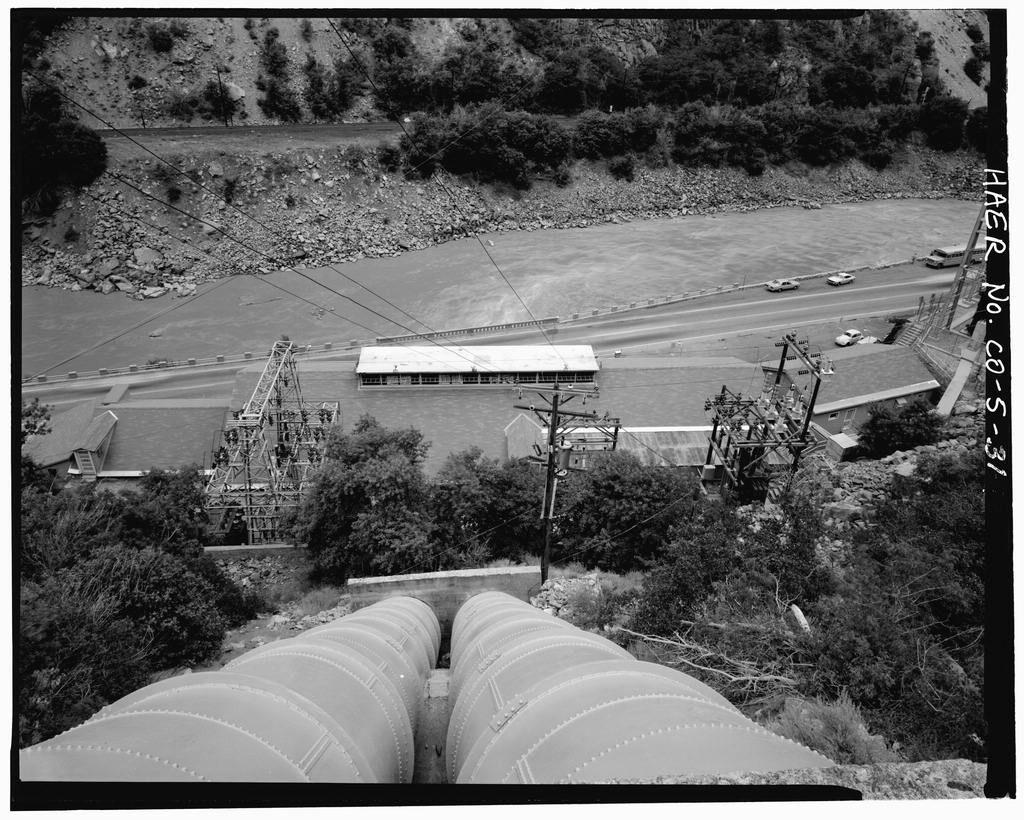
I’m on the road right now, making my way from southern Oregon to southwestern Colorado via a circuitous route. And no, I’m not in the Silver Bullet (I’ll reveal the purpose of the trip later, along with more details about Land Desk transportation). I don’t have my good camera with me, but I’ve tried to get some snapshots anyway.

Gravestones in City Cemetery, Yreka, California. Photo credit: Jonathan P. Thompson
Snow and water in the eastern Sierras. Jonathan P. Thompson photo.
Basin and Range country along Hwy 50. Photo credit: Jonathan P. Thompson

Romancing the River: In Pursuit of the Real 1922 Compact — George Sibley (SibleysRivers.com) #ColoradoRiver #COriver #arididfication

Click the link to read the article on the Sibley’s Rivers website (George Sibley):

October 15, 2025

Wonk warning: I’ll be explicating the chart above. If this sort of thing bores you, or just gets you more, not less confused about what’s going on with the river today as the negotiators for post-2026 system management continue to negotiate with a November 11 deadline, then I’d say take a break until next post, when I’m going to try to explain why I call this stuff ‘Romancing the River.’

For those reading on here, remember my purpose from earlier posts: to show a reasonably equitable division of the consumptive use of the Colorado River waters among the seven states and Mexico, with no ‘temporary’ division into competitive Upper and Lower Basins – the Compact they really wanted to do in 1922. I present the table above as just a draft effort in that direction; there will be arguments about some of the specific figures, but the method to the madness might have some merit.

All the consumptive use information is from Bureau of Reclamation records accessible online, or from other cited historical documents going back to the 1922 Compact. The Bureau publishes consumptive use records every five years – eventually. (Figures for 2016-2020, for example, still have ‘Coming soon!’ where one would click to get them.) All quantities are expressed in millions of acre-feet (maf) or thousands (kaf).

To just jump into it, here’s a column-by-column explication of the chart. I suggest clicking on the image above to get an enlargable view of the table. If nothing else, this table is kind of a history-in-numbers of the Colorado River in the 20th century CE. (It is important to remember too that, thanks to the 1952 McCarran Amendment, all the Indian tribal rights are negotiated intrastate, although suits and appeals go to the federal courts – a separate set of challenges from what the seven states are trying to negotiate right now.)

Column 1, River Users: I make no reference to the Upper and Lower Basin, but it does make sense to distinguish between the ‘hot desert’ states below the canyon region, and the ‘cold (orographic) desert’ states above the canyons, due to the significant difference in system losses – evaporation, transpiration, bank and aquifer storage and other losses. We will start with some analysis of those lines in the table, one for each set of desert states (considerably higher for the subtropical ‘hot desert’ region than the higher and cooler ‘cold (or steppe) desert’ region.

System Losses, Structural Deficit and Surpluses: These constitute the river’s wild card. Natural system losses were listed in the paragraph above – all the natural things that happen to water mixed with sun, wind and thirsty ground. Storage reservoirs are built on snowmelt rivers to increase the amount of water available for use through a longer period of time, storing the two-month snowmelt flood for use through the rest of the year. But increasing in reservoirs the amount of water available for use does not increase the amount of water; in fact, it decreases that, as the stored water spreads out in reservoirs under a desert sun that can evaporate annually as much as six acre-feet per acre off of open water in the lower Colorado River.

This was completely ignored in the Colorado River Compact, despite the fact, that as Eric Kuhn and John Fleck pointed out in their book Science Be Dammed, there were scientists who tried to advise the commissioners. Today, with two huge reservoirs, another half dozen big reservoirs and a lot of little ones, along with around 600 miles of large open aqueducts meandering through the hot deserts, somewhere between 12 and 16 percent of the river is lost to the system under the sun and wind.

The compact commissioners, thinking they had an 18 maf river, believed that evaporation would be covered by the surplus they anticipated above and beyond the quantities consumed by the seven states and Mexico. That was actually the case, well into the 1980s. But as more users materialized in the states above the canyons, and the Central Arizona Project began to draw from the mainstem, the ‘structural deficit’ from ignoring the system losses began to draw down the big reservoirs. These natural system losses were estimated at around 800,000 af annually from the mainstem for the states below the canyons, and between 400,000 and 500,000 from Powell and the other Colorado River Storage Project reservoirs.

Another element in the structural deficit was consistent provision for Mexico’s treaty allotment of 1.5 maf per year. The compact made the Upper and Lower Basin each responsible for half of whatever portion of that allotment which was not covered by surplus flow (up to 750 kaf). Beginning in 1971, however, under a 1970 reservoir management agreement, the Bureau began releasing the Upper Basin’s full half of the 1.5 maf each year, whether it was a ‘surplus year’ or not. A similar arrangement was not made for the Lower Basin share of the Mexican allotment; the Bureau apparently has just continued to charge it to ‘surplus’ – along with the Lower Basin’s system losses – whether or not there was actually that much surplus. These ‘structural deficits’ were almost as responsible for the big 21st-century reservoir drawdown as was the ‘millennial drought.’ A figure of around 2 maf was established for these natural and cultural commitments: 1.5 maf for the ‘hot desert’ states, 1.2 maf for the ‘cold desert’ states – those states having consistently delivered their 750 kaf share for Mexico (leaving the 450 kaf in the table). The three states below the canyons have apparently agreed to accept responsibility for their 1.5 maf after 2026, although they are not saying much yet about how that consumption will be divided up.

Back now to the columns.Column 2, Authorized Allotments: These are based on the 18 million acre-feet (maf) river we all believed we were working with back in the 1920s. The Colorado River Compact allotted 7.5 maf to each of its Basins. The Boulder Canyon Project Act made the Bureau water-master for the Lower Basin states, and set their individual allotments, contested by Arizona but confirmed by the U.S. Supreme Court in the last Arizona v. California case (BCPA/SC). The Mexican allotment was set by the 1944 two-rivers treaty. And in 1948, the four Upper Basin states created the Upper Colorado River Compact. Knowing by then that it was not an 18 maf river, they gave themselves percentages ‘of whatever’s left’ (OWL) after compact obligations to the downriver states and their share of the Mexican treaty obligation were fulfilled. This column shows what that ‘% OWL’ would be if those states actually got 7.5 maf regularly. The cold-desert states have never even come close to those figures.

Column 3: This column shows the allotments for the 14.5 maf average of the river’s ‘natural’ flows for the 1930-2000 period, the period when all of the river’s major development took place. All of the ‘averaging’ fell on the states above the canyons. Allotments for Mexico and the three states below the canyons were legally and physically ‘set in concrete’ at 9 maf – legally by the Supreme Court affirmation of the BCPA allotments, and physically by the two big linked reservoirs, Mead and Powell. The four states above the canyons took their floating percentages from what nature provided, or didn’t – estimated natural flows for that period ranged between 5 and 24 maf. The average ‘of whatever’s left’ (OWL) after the obligatory quantity was sent to the states below the canyon and Mexico was assumed to range between 5 and 6 maf – if no attention was paid to the structural deficit and system losses. And for most of that period, there were no worries there; the states above the canyon were not using that much water until the substantial transmountain diversions (100 percent depletions) were completed. The table figures for those states (unlike the figures for the states below the canyons) amounted to wishful thinking for a future that will never happen.

Column 4 gets real: a compilation of three columns with five-year consumptive use averages for three periods, covering the time when the physical development of the river storage and delivery systems was being completed, and consumptive use of the river was approaching full development too – but just on the edge of the trauma of the ‘millennial drought’ (which may last for a millennium) and the near-collapse of the storage system.  The attempt at normal distribution for the 2001-2005 period might be considered just beyond that edge – like the roadrunner cartoons, when Wiley Coyote runs a few yards into the air beyond a cliff – then looks down…. These dates are bookended by two ‘reservoir coordination’ elements in the ‘Law of the River’: the 1970 ‘Criteria for the Coordinated Long-range Operation of Colorado River Reservoirs’ and the 2007 ‘Interim Guidelines’ for coordinated operation of the Powell and Mead Reservoirs, set to expire next year.

The Bureau’s five-year compilation tables include, for the first time maybe, the system losses/structural deficit.

Something worth noting: California’s consumptive use during this 35-year period started well above the state’s 4.4 maf compact allotment, and then declined, while uses for all the other states were increasing. This is because California’s major users had decided, before Hoover Dam was even started, that they would ‘borrow’ 800,000 af of unused Upper Basin water until the Upper Basin needed it. They would, in other words, grow on borrowed water. The Bureau of Reclamation allowed this, because they assumed that the Colorado River would eventually be augmented by even greater public works from some larger river basin. Optimism is a sunny thing. On the strength of this, the Metropolitan Water District on the Southern California coast built its 250-mile aqueduct to carry twice the 500,000 af that was their share of California’s 4.4 maf allotment. They began decreasing their ‘borrowed’ usage during this 35-year period, in anticipation of the 2006 California Limitation Act – thanks mostly to the California State Water Project exporting water from Northern California.

Arizona’s jump in usage between 1971-75 and 1991-95 was due to the completion of the Central Arizona Project. To give a more accurate picture of ‘the completed river system,’ only its 1991-95 and 2001-2005 figures were used in compiling Column 5.

Column 5: A compiled average for the three five-year periods – resulting in the 14.5 maf river of 1930-2000.

Column 6: An attempt to divvy up the system losses/structural deficit (SLD) between the seven states and Mexico. My operating assumption is that the ‘hot desert’ states and the ‘cold desert’ states should share these losses proportionally to their consumptive use. This meant creating percentages of the 9.0 maf of decreed use for the four entities below the canyons; the four entities above the canyons were already operating on percentages.

I’m sure the state (guess which one) with a lot of pre-compact ‘senior’ water will object vehemently to this concept, wanting all the junior users to absorb those losses. This is a misapplication of the appropriation doctrine, in my estimation; it was set up for resolving differences among specific users, not for the resolution of major river management issues related to natural phenomena like evaporation and riparian storage, or natural and cultural changes like a warming climate. These issues fall equally on all users, everyone’s fault and responsibility. But such rational and moral arguments will probably not dent California’s resolve of seniority uber alles.

Column 7 just adds those proportionate shares of the system losses/structural deficit to the consumptive use averages for the seven states and Mexico in Column 5, leaving the system losses/structural deficit lines empty. This is not increasing the amount of water for each state; it is increasing the amount of consumption each has to manage. This column, I’m arguing, is the seven-way equitable division of consumptive use that the Compact commissioners wanted to create in 1922, but lacked the information about both the river and their futures to develop. Now, a century later, that future is here, like it or not, and we’re sadder but wiser in knowing the river.

There’s probably an error at the bottom of this column; instead of 0.00 in the ‘Surplus or Drain’ column, it should probably be ‘-2.00 maf’: the difference between the 14.5 maf 20th-century river and the 12.5 maf early 21st-century river. This was the frightening drawdown of the early 21st century decades.

Column 8 then uses the Column 7 figures to calculate what percentage of the 14.5 maf river each of the eight entities ‘owns.’

Column 9 then applies those percentages to the 12.5 maf Colorado River of the 21st century – and subtracts from each state’s total consumption its share of system losses and structural deficit – thus showing what each state will actually have with which to try to do what it is doing today with its presumed allotment for consumptive use of the 14.5 maf river of bygone days. Read it and weep. (Note that I’ve put the 1.5 and 0.45 maf system losses/structural deficit numbers back in Column 9 to remind you that they have not disappeared from the system; they’ve just been re-collated from those portions of the individual states’ total consumptive uses.)

I would welcome comments and criticisms of this work. I do believe it is the kind of pinning down of numbers we need to finally do for the Colorado River, if we are going to go into the post-2026 era with our eyes open. ‘Woke,’ you might say.

By my next post, there will probably either be a new management plan for the river in the messy agonies of birthing – or there won’t. If there is, I would wager a six-pack that they will drag along the old two-basin cold-war division. And I’d wager further that the ratio of total consumptive use for the four ‘states’ below the canyons to the four states above the canyons will be between within a few points either way of 70-30. Is that ‘equitable’? Given the amount and productivity of land under cultivation, and the number of people gathered in large metropolitan ganglia, and the location of most of the Indian nations, it probably is. But – it’ll probably be another point of discussion.

Map of the Colorado River drainage basin, created using USGS data. By Shannon1 Creative Commons Attribution-Share Alike 4.0

Release: #ColoradoRiver Water Supplies Cut in Upper Basin — Matt Moseley and Kendra Westerkamp (Upper Colorado River Commission) #COriver #aridification

Photo credit: Upper Colorado River Commission

Click the link to read the release on the Upper Colorado River Commission website:

October 8, 2025

As the Upper Division States negotiate ways to equitably and sustainably manage the Colorado River’s future supplies, their water users face the harsh reality of living within the river’s 21st-century limits.

This year, in New Mexico, the San Juan Chama project received 31% of their normal Colorado River water supply, a 69% reduction, which is used by Albuquerque and Santa Fe, as well as for agricultural purposes.

“The San Juan-Chama Project contractors are absorbing unavoidable natural hydrologic shortages and have had to learn how to operate under constrained supplies, higher costs, and mounting climate pressures,” said Diane Agnew, the Albuquerque-Bernalillo County Water Utility Authority’s Water Rights Program Manager. “This ongoing uncertainty in water availability is placing significant strain on water users, challenging infrastructure investments, and disrupting water management strategies that are critical to our communities and economy.”

In Colorado, the Dolores Water Conservancy District’s water users faced cuts of up to 44%. Thousands of acres remain fallowed both on the Ute Farm & Ranch and north towards Dove Creek.

“Our farmers are left with year-by-year gambles with last-second planning going late into May and limiting farmers’ abilities to make long-term, successful crop rotation planning,” said Ken Curtis, GM of the Dolores Water Conservancy District. “The Dolores snowpack is disappearing, and the historic runoff has dropped by even greater magnitudes. Water is no longer reliably available.”

2025 marks the fifth year out of the last eight years with shortages impacting the Conservancy District. Many acres have remained fallow since 2021, when available project water supplies dropped to zero. Local farmers did not have the time and resources to bring fields back into production prior to this current shortage — all of their shortages are uncompensated and involuntary.

The District supplies water to the Ute Mountain Ute Tribe’s Farm and Ranch Enterprise. The Tribe was forced to turn off irrigation spigots to 60% of their land and lay off farm workers. The crop plan for 2025 only included the existing, high-value alfalfa needed to sustain the Farm & Ranch Enterprise [FRE].

“We [FRE] are merely surviving, not adapting,” said FRE irrigation manager Michael Vicente when responding to his view of the historic drought. Severe water shortages in Utah’s Uintah Basin, driven by Colorado River cuts, are forcing ranchers to reduce cattle herds, raising production costs and straining the local economy.

“Spring runoff was dismal at best. Early 1900s era water rights only received a week or two of natural flow delivery. Shortages were so severe that in some basins, they even affected senior 1861 water rights.

These shortages are directly impacting cattle production,” said Dan Larsen, Board Member at the Colorado River Authority of Utah. “Ranchers are being forced to cut back their herds, which not only raises costs for producers but also ripples through our entire local economy.”

Hydrologic shortage is also impacting Utah’s Demand Management Pilot Program, which is exploring voluntary, compensated water conservation in the Colorado River system in Utah. For example, the Central Utah Water Conservancy District enrolled 4,500 acre-feet of water in the program; however, the water rights held by the District were cut in priority on June 8, much earlier than the typical mid-summer cut, resulting in only around 900 acre-feet being delivered to the Program.

Agricultural producers are weighing potential impacts from hydrologic shortage on their operations as they consider participating in conservation-related pilot programs Nick Sampinos, a farmer along the Price River, said “Persistent drought conditions are a constant challenge, however, the Utah Demand Management Pilot Program has provided us with much needed assistance and set the stage for economic sustainability of our farming operation well into the future.”

In Wyoming, historic drought and Colorado River shortages have driven the Black’s Fork River down to a 1891 priority date, forcing the state to regulate off water rights to more than 52,000 irrigated acres in 2025 in that drainage alone.

“This year, more than 163,000 acres of irrigation were shut off in Wyoming’s portion of the Green River Basin,” said Kevin Payne, Division IV Superintendent of the Wyoming State Engineer’s Office. “This is an extraordinary reduction with serious impacts on producers and rural communities across southwest Wyoming.”

The Upper Basin has consistently used less than its legal entitlement through strict water administration. The four states of the Upper Basin remain committed to continued work in implementing and expanding water management initiatives, including accounting for conservation-related activities in 2026.

The Upper Basin’s sacrifices aren’t abstract; they carry real human and economic consequences. As Colorado River negotiations continue, Upper Basin leaders are clear: river operations must adapt to the actual supply and prioritize rebuilding storage to restore resiliency.


About the Upper Colorado River Commission (UCRC):

The UCRC is an interstate administrative agency made up of duly appointed representatives from the four Upper Division States of Colorado, New Mexico, Utah and Wyoming.

Map credit: AGU

Federal Water Tap, October 13, 2025: Underwater Dam again Built across #MississippiRiver in #Louisiana — Brett Walton (circleofblue.org)

Map of the Mississippi River Basin. Made using USGS data. By Shannon1 – Own work, CC BY-SA 4.0, https://commons.wikimedia.org/w/index.php?curid=47308146

Click the link to read the article on the Circle of Blue website (Brett Walton):

October 13, 2025

The Rundown

  • Army Corps, for fourth consecutive year, authorizes an underwater dam to keep salt water from moving up the Mississippi River in Louisiana.
  • A cold-water flow experiment at Glen Canyon Dam to disrupt non-native fish downstream will end within a week.
  • Senate passes a defense spending authorization bill with water-related provisions.

And lastly, EPA sits on a “forever chemical” toxicity assessment, ProPublica finds.

“Do not make American families pay the price for Trump’s war on affordable American energy.” – Sen. Martin Heinrich (D-NM) speaking on the Senate floor to rally votes to end President Trump’s national energy emergency. Heinrich and his Democratic colleagues faulted the White House for increasing electricity prices by cancelling wind and solar projects and fully supporting data center developments, which consume large quantities of electricity. Yet, the Democrats’ effort to repeal the emergency declaration failed.

In context: Data Center Energy Demand Is Putting Pressure on U.S. Water Supplies

By the Numbers

River Mile 53.1: Approximate location of the front of the saltwater “wedge” that is pushing up the Mississippi River, in southern Louisiana, according to the Army Corps of Engineers. If the wedge moves far enough upriver it will endanger drinking water supplies for communities that draw from the river. Chloride concentrations are higher in the trailing sections of the wedge. The Corps estimates that the point at which they exceed EPA drinking water standards is 15 to 25 miles behind the wedge front.

News Briefs

Saltwater Barrier
The Army Corps of Engineers, for the fourth consecutive year, has authorized the construction of an underwater dam across the bottom Mississippi River as a way of keeping salt water from the Gulf of Mexico from moving upriver and spoiling municipal water supplies.

A contractor is building the dam at river mile 64. As of October 10, the front of the saltwater wedge was estimated at river mile 53.1.

Salt water intrudes when river flows are too feeble to push it out. These low-flow conditions have happened in the late summer or early fall every year since 2022.

Because salt water is heavier than fresh, the intrusion happens along the bottom of the river, which is why the temporary earthen dam is placed across the river bed.

If salt water moves too far upstream, it will contaminate the water supply for communities whose intake pipes extend into the river. In 2023, the Army Corps barged 153 million gallons of fresh water to communities in southern Louisiana that were affected by the saltwater intrusion.

Senate Passes Defense Spending Bill
The Senate passed a bill that authorizes defense spending for fiscal year 2026. The bill also has a number of water-related provisions.

It requires the Defense Department to conduct a pilot wastewater surveillance study at four or more military installations. The goal is to test wastewater for substances that would identify drug use among service members or the presence of infectious disease. (Wastewater surveillance grew in prominence as a testing tool during the Covid pandemic.)

It establishes a working group on “advanced nuclear” technologies that could power desalination facilities.

It requires a report on energy and water use for any data center built or expanded on military property.

It repeals a moratorium on the burning of PFAS substances, including firefighting foam.

The bill includes an amendment from Sen. Tim Kaine (D-VA) that requires NASA to pay for new drinking water wells for the Eastern Shore town of Chincoteague. The town’s existing wells were contaminated with PFAS when the land was owned by the Navy. That land has since been transferred to NASA.

Studies and Reports

EPA Sits on ‘Forever Chemical’ Report
An EPA report on the toxicity of PFNA – one of the thousands of PFAS in circulation – was ready to be published in mid-April, ProPublica reports. But the agency has not yet released it.

PFNA is one of six PFAS that the Biden administration decided to regulate in drinking water. The Trump administration announced in May that it would attempt to reverse that decision for four of the chemicals – including PFNA.

On the Radar

Glen Canyon Dam Flow Experiment
The Bureau of Reclamation began releasing cool water from the depths of Lake Powell in mid-August.

The cold water is meant to disrupt smallmouth bass spawning downstream of Glen Canyon Dam. Smallmouth bass are a non-native species that federal agencies and their partners are attempting to rein in to protect threatened native species like the humpback chub.

The cold-water flow experiment is set to end by October 20.

Because the cold-water flows bypass Glen Canyon Dam’s turbines, the dam has been producing less power. That means more power purchased on the market. According to the Western Area Power Administration, which markets federal hydropower, purchased power expenses are “significant.” WAPA opposed the cold-water release plan, arguing the end date should be October 1, which would reduce purchased power costs.

Sales of hydropower fund the operation and maintenance of Glen Canyon Dam.

Federal Water Tap is a weekly digest spotting trends in U.S. government water policy. To get more water news, follow Circle of Blue on Twitter and sign up for our newsletter.

I was wrong about President Trump, okay!?: But I was right about “governance by spite” — Jonathan P. Thompson (LandDesk.org)

Carrizo Sunrise. Jonathan P. Thompson photo.

Click the link to read the article on The Land Desk website (Jonathan P. Thompson):

October 7, 2025

🤯 Trump Ticker 😱

I was wrong, and woefully so. I want to apologize for that and let you know how remorseful I am: I dearly, dearly wish that I was right. But alas …

See, back in November I wrote a dispatch about what to expect from the incoming Trump administration, particularly concerning public lands and the environment. It actually turned out to be fairly accurate on the public lands stuff, but there was this one offending paragraph that, I fear, may have lulled some of my readers into complacency (when they should have been preparing to resist). Here it is:

Oh, boy. Trump has been in office for less than nine months, and already he’s checked off all of the boxes that naive little me figured (and hoped) he would never dare even attempt. He and Goebbels-clone Stephen Miller and friends are going full-on fascist and trampling on the First Amendment and the U.S. Constitution in general, they are prosecuting political opponents, they are using the “Department of War” to target the “enemy within,” they are suing and bullying the media for reporting the truth and making fun of him, and they have engaged in a brutal — and performative — intimidation and terror campaign against immigrants and anyone who “looks” like they might be an immigrant. Making it even worse, the President of the United States treats it all like some sort of joke, acting like a pre-pubescent middle school bully while posting stupid videos portraying he and Russell Vought (a primary architect of Project 2025, which Trump disavowed during the campaign) as the grim reaper out to destroy America’s democracy (and the economy).

So, yeah, I was way off. Apologies for my naivety.

But I was right about one thing. I predicted Trump would practice governance by spite. He has, and done it to the extreme. Not only are his words malicious, but so are his policies, fueled by a lust for vengeance. His tariffs are aimed at punishing other countries (even though they ultimately only punish American consumers and businesses — even his beloved oil and gas industry).

His quest for “Energy Dominance” is anything but that. Sure, he’s trying to help out his fossil fuel tycoon buddies, but I think he’s even more interested in retribution against the “libs” and the environmentalists that takes the form of an all-out assault on the environment, the climate, public lands — and everyone who cherishes or depends on these things. If he wanted to bolster energy, he would have at least stood aside and let the burgeoning solar and wind do their thing alongside fossil fuels by taking an “all of the above” approach. Instead, he has done everything possible to stifle these energy sources, simply because they are cleaner than coal and gas. He shut down the Solar for All program, thus denying thousands of low- and middle-income families access to rooftop solar and a smidgeon of their own energy independence and lower utility bills. Where’s the dominance in that?

And now the Trump administration has canceled some $8 billion in federal funding for clean energy, efficiency, and grid reliability projects across the nation, many of them in the West. And while one might think that this is just another assault on clean energy (which it is), or maybe a way to slash expenses to pay for tax cuts for billionaires (that, too), it’s primarily motivated by, yet again, revenge: The cuts were limited to states that voted for Kamala Harris in the 2024 election.

Yes, you read that correctly. While funding was zeroed out for blue states, identical projects in neighboring red states were left untouched. He is doing this to punish Democrat-leaning states, but the victims end up being small and large businesses that banked on those funds, the folks who work for those firms, the environment, and ultimately folks like you and me who will see our utility bills increase (because someone has to pay for those grid upgrades). And guess what? You won’t be saved just because you’re in a red congressional district.

This is not normal, nor is it politics as usual.

In fact, the funding that the Trump administration is taking away from individuals, organizations, and businesses, was allocated by the Infrastructure Investment and Jobs Act and the Inflation Reduction Act, both of which Congress passed during the Biden administration. The vast majority of the funding from those bills went to Republican states and districts that voted for Trump in 2024. The funded projects created thousands of new jobs across the country and added up to billions in investment in communities in the Phoenix area, along Colorado’s Front Range, in Nevada, and elsewhere.

I’m not saying all of these projects were wonderful, or that they’d all succeed. Some were full on boondoggles, others would inflict more harm than good. But the funding was approved by Congress, and the organizations that received them were banking on them, had invested a great deal of their own money into the funded projects, and had built up workforces. For the administration to then take back the money, some of which had already been spent, for purely political, vindictive reasons, is both wrong and cruel.

And if you think that this is just for a bunch of solar panels, think again. Here’s a list of some of the biggest projects that were defunded (which includes some funds that Trump had previously cancelled).

  • $2.2 billion: Amount rescinded for hydrogen fuel production and distribution hubs in California and the Pacific Northwest.
  • $250 million: Amount clawed back from the Confederated Tribes of the Warm Springs Reservation of Oregon to fund transmission and power grid upgrades.
  • $70 million: Amount rescinded from Xcel Energy to install 1,000 megawatt-hour iron-air battery energy storage systems in Colorado and Minnesota.
  • $50 million: Amount rescinded from the Tribal Energy Consortium’s Ignacio, Colorado-based program aimed at reducing methane emissions from tribal owned and operated oil and gas wells and facilities located on tribal lands.
  • $326 million: Amount rescinded from Colorado State University for a projectdesigned to develop methods for reducing methane emissions from oil and gas wells.
  • $15 million: Amount rescinded from Kit Carson Electric Cooperative in northern New Mexico for a grid resilience project.
  • $6.6 million: Amount rescinded from Navajo Transitional Energy Company for studying and developing a carbon capture retrofit project for the Four Corners coal-burning power plant in New Mexico.

Hundreds of millions of dollars more are being clawed back from Portland General Electric, Southern California Edison, Tri-State Generation and Transmission, the Imperial Irrigation District, and the Electric Power Research Institute — the list goes on and on. But it never extends to similar projects in red states.

Even as Energy Secretary Chris Wright was announcing the funding cuts, for example, his department went forward with a $2.23 billion loan for Lithium Americas and its contentious Thacker Pass mine in Nevada (which voted Republican in the last presidential election). In exchange, the administration took a 5% equity stake in both the company and in the firm. Never mind that the project is opposed by the Reno-Sparks Indian Colony, the Burns Paiute Tribe, and the Summit Lake Paiute Tribe, as well as by numerous environmental groups, and that the price of lithium is lower than it’s been since 2021. Go figure.


🌵 Public Lands 🌲

As expected (and as I correctly predicted would happen), the Trump administration is busy unraveling environmental protections and resource and travel management plans for public lands around the West. The most recent targets include:

  • The Bureau of Land Management’s Rock Springs resource management planwhich covers about 3.6 million acres of public lands in southwestern Wyoming, including the Red Desert. A solid, common-sense plan was first released about two years ago that aimed to push energy and other development away from the most sensitive areas. It was years in the making, and was a compromise. And yet, Wyoming’s right-wing was up in arms, saying it was too restrictive. That prompted the BLM to go back to the drawing board and incorporate more public input. They came back with a far less restrictive plan, a compromised compromise, I guess you could call it. That’s not enough for the current administration and their industry donors, however: The BLM is going to revise it again, this time to bring it in line with Trump’s “Unleashing American Energy” agenda. More details and commenting instructions here
  • The BLM is “reassessing” the off-road route designations in its Labyrinth/Gemini Bridges travel plan that includes about 300,000 acres of slickrock-covered public lands near Moab. The new plan was issued late in 2023, and left a whopping 800 miles of roads and trails opened to motorized travel. The off-road-vehicle lobby sued to overturn the plan, but were shot down in court. You have until Oct. 24 to comment on this one.

During water year 2025, drought moved into and intensified throughout most of the Interior West. Source: U.S. Drought Monitor.

🥵 Aridification Watch 🐫

The 2025 water year has come to an end (on Sept. 30), and while we know it was a fairly lousy one for most of the Western U.S., the data is now beginning to come in letting us know just how lousy it was. Some of the stats aren’t updated yet, and may not be for a while, thanks to the government shutdown and the Trump administration’s fear of the word “climate.” 

For the most part, the water year started out quite nicely, precipitation wise, with above “normal” amounts of rain and snow falling in October and November. But that was followed by a severe lack of snow, a dry, warm spring, and a late-to-arrive monsoon. The snowpack deteriorated, spring runoff was weak, and drought intensified under the hot, dry sun of summer, with only a bit of relief finally arriving in September. 

Resulting low streamflows led to a 33-foot drop in Lake Powell’s surface level during the water year. Here are the charts and the numbers:

  • 8.08 million acre-feet: Total Lake Powell inflows, water year 2024 (Unregulated inflows = 7.98 MAF)
  • 3,578 feet: Lake Powell’s surface elevation on Oct. 1, 2024
  • 5.14 million acre-feet: Total flows into Lake Powell during the 2025 water year. (Unregulated inflows = 4.69 MAF)
  • 3,545 feet: Lake Powell’s surface elevation on Oct. 1, 2025
  • 11.96 MAF: Inflows during water year 2023
  • 21.65 MAF: Inflows during water year 1984 (the highest since Glen Canyon Dam was completed in 1963). 
  • 9.85%: Percent of the Western U.S. that was experiencing severe to exceptional drought at the beginning of the 2025 water year.
  • 44.12%: Percent of the Western U.S. that was experiencing severe to exceptional drought at the end of the 2025 water year.


🤯 Annals of Inanity 🤡

You just can’t make this stuff up. MAGA-world is rife with conspiracies about the Charlie Kirk killing last month, which is hardly surprising. I guess it’s tough for some folks to believe that some 22-year-old Mormon kid from a Republican, gun-loving family could assassinate a right-wing entertainer and provocateur on his own. He must have had help from that ever-elusive Antifa (which is not an organization, but simply a shortening of the term anti-fascist). Or maybe it was Mossad — a favorite theory among a certain sect of the right wing. 

But then there’s Candace Owens, MAGA podcaster and Crazytown mayoral candidate. She’s raising the possibility that Phil Lyman was involved in the plot to assassinate Kirk. Yes, that Phil Lyman: the former San Juan County Commissioner who gained notoriety after leading an ATV ride — with Ryan Bundy and his “militia” buddies making a cameo — down Recapture Canyon just days after the Bunkerville standoff. Lyman has since swerved further and further into MAGA-land, served as a Utah state representative, received a pardon from Trump, and hurled some conspiracy-laden accusations of his own after losing the gubernatorial election to Gov. Spencer Cox. 

I tried to listen to Owens’ argument and alleged evidence (including the link, with a suggestion not to click on it) regarding Lyman and couldn’t make any sense of it. But I guess Owens’s following is big enough for folks to take it kind of seriously. Even Cox, whom Lyman has assailed with accusations of his own, took to social media to defend his right-wing rival. Meanwhile, I’ll be making some popcorn while I wait to see how this one plays out.

#Renewable Energy and Weather — Peter Goble (#Colorado Climate Center)

Click the link to read the article on the Colorado Climate Center website (Peter Goble):

October 8, 2025

A recent email query about renewable power got me thinking about where we produce renewable power and why. The reasons are complicated. However, the weather is critical in determining where we generate renewable energy such as solar and wind power. I’ll be candid enough to say that I like renewable power, but my goal for this blogpost is not to comment on the merits of generating electricity one way or another. My goal is simply to share a couple maps from the National Renewable Energy Laboratory and discuss why we see the patterns we do. 

Solar Power: Solar power production potential is determined by geographic factors such as latitude altitude, and weather. Figure 1 below, from the National Renewable Energy Laboratory shows “Global Horizontal Solar Irradiance” across the Contiguous United States. For practical purposes, we can think of this as “solar power production potential,” or even more simply “how much sunlight do you get?”

Figure 1: Global Horizontal Irradiance across the Contiguous United States. Source: National Renewable Energy Laboratory.

Perhaps the most obvious pattern in Figure 1 is the difference between the northern and southern United States. The “Sun Belt” is aptly named. The southern United States receives more direct sunlight than the northern United States because it is closer to the equator. Northern states are blessed with nice, long summer days with plenty of sunshine hours, but sunlight pierces the atmosphere at a more direct angle at lower latitudes. Even within Colorado, we can see a difference in solar power potential from south-to-north. Areas like the Four Corners, San Luis Valley, and Comanche Grasslands (all in southern Colorado listed west-to-east respectively) stand out as sunny areas.

Altitude is an important factor as well. Even under clear skies, not all sunlight that passes through the top of earth’s atmosphere makes it to the surface. Some is scattered by particulates and some is absorbed by water vapor, dust, or ozone. Sunlight is thus less intense at lower elevations. Therefore, all else being equal, high elevation areas will have more solar power production potential than low elevation areas. You have probably felt this either hiking in our Colorado mountains or traveling down to sea level. The sun feels more intense on the skin, and it is easier to burn at higher altitudes.

Why is it that Colorado’s highest elevations do not show as high of solar production potential as the valleys? Weather. Our mountains are more likely to be shrouded by clouds due to orographic lift: As air is forced over our mountain ranges it must rise. As air rises it cools. As air cools, the water vapor in the air condenses, forming clouds, and oftentimes, rain or snow. One obvious example of the role of weather in solar power generation potential can be seen looking at Oregon. Western Oregon has a wealth of onshore airflow from the Pacific Ocean, bringing thick, low clouds and drizzle, which block sunlight. Eastern Oregon is high desert. The Cascade Mountain Range blocks clouds and moisture from moving inland. As a result, solar power production potential is much higher in eastern Oregon than western Oregon. While it is less obvious in Colorado than Oregon, some of our driest and least cloudy locations stand out. For instance, the San Luis Valley (south-central Colorado) is known as “The Land of the Cold Sunshine.” This area receives less than 10″ of precipitation annually, and has some of our highest solar power production potential in the state.

Wind Power: We can also take a look at wind power production potential across the United States, and dissect some of the drivers behind it. Figure 2 shows annual average wind speeds at 10 meters (~33ft) above ground level across the contiguous United States. A few patterns jump out here: 1. If we look at the western United States (including Colorado), higher elevation terrain does have higher average wind speeds. 2. The middle of the country is windy. 3. The east side of the Rocky Mountains is windy, including in Colorado. 4. Oh boy, our poor neighbors to the north (sorry, Wyoming)! 

Figure 2: Average wind speeds at 10 meters above ground level. Source: National Renewable Energy Laboratory For what it’s worth, most wind turbines are much taller than 10 meters, thus a better reference height would be more appropriate for looking at wind power. NREL does produce maps at higher reference heights. I chose a low reference height because it is closer to the weather as we feel it.

Winds with height: On average, we do see wind speeds increase with height. This is due to increased pressure gradients, decreased friction, and reduced air density. However, Figure 2, which shows average windspeeds, does not tell the whole story. Our mountain air is only ~70-80% as dense as sea level air, so it takes stronger gusts to produce the same amount of force. Turbines at higher elevations will not generate as much power for a given windspeed as turbines at lower elevations.

The middle of the country: Figure 2 also clearly shows the “wind belt” is the high plains and southern plains around 100 degrees longitude (North Dakota down to west Texas). This area is frequently subject to sharp boundaries between air masses, or fronts. As a result, it is often windy. The terrain roughness is also an important factor. It is easier to get frequent high winds over open grasslands than forests. Eastern Colorado can be thought of as part of this wind belt, and has a relatively smooth, grassy surface with few obstacles.

East side of the Rockies: If we look at Colorado in Figure 2 we see that higher elevations are winder, but we can also see that there is an increase in winds east of the Continental Divide. There is both a sharp increase in wind speeds at high elevations immediately east of the Divide, and higher average wind speeds more generally across the eastern Colorado Plains. Our prevailing wind direction in Colorado is most commonly west-to-east, especially from October through April. Thanks to our old friend gravity, air traveling uphill slows down, and air traveling downhill speeds up. We call the days when air races down the eastern side of the Rocky Mountains downslope wind days. These blustery days are usually unseasonably warm, but can be cold if the air is coming from the north or northwest. Cross-mountain airflow does not automatically create downslope winds. Sometimes air in the valleys is too cold and dense to be forced out of the way by air moving over the Rockies. On these days we more commonly see wavy streaks of clouds instead of strong surface winds. In fact, you may also notice in Figure 2 that Denver and surrounding areas are somewhat protected, sitting in the Platte River Valley. Denver has plenty of windy days, but sometimes the strong winds pass overhead without completely mixing down to the surface.

Windy Wyoming: I love the way southern Wyoming from Cheyenne to Casper stands out in Figure 2. Southern Wyoming is the closest thing to a gap in the Rocky Mountains, so when changing weather crosses the Rockies, air gets forced through southern Wyoming like a wind tunnel. The impacts of these gap winds bleed into Colorado. For instance, Wellington is windier than Fort Collins or Denver on average. Gap winds, combined with downslope winds, also are a factor in southeastern Colorado. There are high wind warning signs on I-25 south of Pueblo as winds race down the leeward side of the Sangre de Cristos, and shoot through the gap between the Sangre de Cristos and Wet Mountains. You will see many wind turbines in this area too.

Nature sets the initial conditions for where solar and wind power can be most readily generated. Overall, Colorado experiences both plenty of sunshine and plenty of wind. Some parts of our state are especially well positioned for one or the other. Our southern valleys have strong solar production potential due to a combination of relatively low latitude, high altitude, and clear skies. Our eastern plains have strong wind production potential due to frequent exposure to strong weather fronts, relatively smooth, grassy terrain, and being downwind of the Rocky Mountains.

Limiting the #ColoradoRiver conflict: Nine recommendations from advocacy groups — Jonathan P. Thompson (LandDesk.org) #COriver #aridification

Click the link to read the article on The Land Desk website (Jonathan P. Thompson):

October 3, 2025

It’s the beginning of a new water year, and to mark the occasion, Great Basin Water Network and its partners, including the Glen Canyon Institute and Living Rivers, released a list of recommendations for how to “limit the Colorado River Conflict.”

The primary “conflict” in this case is the growing rift between supply and demand: The Colorado River’s collective users are pulling more water out of the system than the system can supply. That leads to other conflicts, most notably between the Upper and Lower Basins and between the states within each basin, over who should bear the brunt of the necessary cuts in consumption of at least 2 million to 4 million acre-feet per year. The states have until mid-November to come up with a post-2026 plan, though it’s not clear what will happen if they miss the deadline.

It may seem like a straightforward mathematical problem with a simple solution: Divide the necessary cuts up proportionally between all seven states. For example, if all seven states cut their 2022 consumptive use by 15%, it would add up to about 1.57 million acre-feet and seems equitable. But the history of consumption and diversion, along with the so-called Law of the River, made up of the 1922 Colorado River Compact and other subsequent compacts, agreements, and legal decisions, thoroughly muddy the water, so to speak.

Let’s go through the proposed solutions and I’ll elaborate a bit more there:

Recommendation 1: Forgo New Dams and Diversions

This is a no-brainer. Reality and nature are forcing the Colorado River’s users to pull less water out of the river, not more, and every dam and diversion built upstream of Lake Powell will result in less water reaching the reservoir, which is currently less than one-third full.1

And yet, there are myriad proposals for new dams and diversions in the Upper Basin, from the Lake Powell Pipeline to the Green River Pipeline. (Check out GBWN’s interactive map here). While some of these projects are, pardon the pun, mere pipe dreams, others are serious proposals.

The project’s proponents justify them by pointing out that the Colorado River Compact allocated the Upper Basin 7.5 million acre-feet of water from the river each year (or half of the presumed 15 MAF in the river2), yet together those states use only about 4.5 MAF annually, meaning, in theory, they have another 3 MAF at their disposal. Furthermore, the Upper Basin has complied with another Compact provision requiring them to “not cause the flow of the river at Lee Ferry to be depleted below an aggregate of 75,000,000 acre-feet for any period of ten consecutive years.”3

Thing is, there’s not 15 MAF of water in the river, nor was there even back when the Compact was signed, so the 7.5 MAF figure is essentially meaningless. Furthermore, the Upper Basin has met its downstream delivery obligations only by significantly draining Lake Powell, so it isn’t by any stretch of the imagination sustainable.

Rec. 2: All States Need Curtailment Plans

The Lower Basin has a curtailment schedule, or a plan for when cutbacks need to be made, by how much, and who needs to make them, all based on the Law of the River and water right priority dates. For example, when Lake Mead’s surface level falls below 1,050 feet, releases from the dam are reduced, and the Lower Basin goes to Tier 2a cutbacks, which includes Arizona giving up 400,000 acre-feet, Nevada forgoing 17,000 acre-feet, and so on. California’s cuts don’t kick in at this level because it has the most senior rights.

The Upper Basin doesn’t have this sort of curtailment schedule. Again, they can justify this by saying they aren’t using their legal allocation, and they are meeting downstream delivery obligations, so why bother with curtailment? In fact, current Upper Basin plans call for more consumption, not less. But again, consumption is exceeding supply, period, so everyone is going to need to cut back. Best to do it in an orderly fashion.

Rec. 3: The “Natural Flow” Plan Won’t Work Until There Are Better Data

Federal and state officials need to bolster data collection on the Colorado River and more precisely monitor consumption. Without that, there’s no way that the “Supply Driven” or “Natural Flow” plan will work.

What that proposal does, by the way, is divide the river up according to what’s actually in the river. The Upper Basin would release from Glen Canyon Dam a percentage of the rolling three-year average of the “natural flow” — an estimate of what flows would be without any upstream diversions — at Lee Ferry. While this plan has been deemed “revolutionary” and a major “breakthrough,” there are still a lot of sticking points, like what percentage would each basin receive, and whether there would be a minimum delivery obligation and what that might be.

But none of that matters without an accurate estimate of the natural flow.

One of the biggest data gaps concerns evaporation. While evaporation from Lake Powell and a handful of other reservoirs is estimated and factored into the Upper Basin’s consumptive use, the same is not true for the Lower Basin — or for many other sources of evaporation. 

The report says: 

Rec. 4: Alter Glen Canyon Dam to Protect the Water Supply of 25 Million People

Virtually all of the water released from Glen Canyon Dam currently goes through the penstocks and the hydroelectric turbines, thereby generating power for the Southwest’s grid. That becomes no longer possible when the reservoir’s surface level drops below 3,490 feet, or minimum power pool. In that event, water could only exit through the lower river outlets, which are not designed for long-term use, and could fail catastrophically.

The groups call on the feds to alter the dam to remedy the situation, and specifically suggest drilling bypass tunnels around the dam to release water, which effectively would turn the dam into a “run-of-the-river” facility, meaning reservoir outflows would equal inflows and there would be no storage capacity. 

Other possibilities include operating the dam as a “run-of-the-river” facility when its surface drops to 3,500 in elevation (thus allowing the turbines to continue operating), or re-engineering the river outlets for long-term use and possibly to feed into the turbines.

Rec 5: Curtailing Junior Users to Serve Tribes

This is not a radical concept by any means. It simply is saying that the 30 some tribal nations in the Colorado River Basin should get the water to which they are entitled, just like any other senior water rights holders. 

Rec. 6: Tackle Municipal Waste and Invest in Reuse Basinwide

Another pretty obvious one. The report recommends following Southern Nevada Water Authority’s lead on this, which makes sense, given that they’ve managed to cut overall consumptive use even as the Las Vegas-area population has boomed.


Decoupling consumption from population on the Colorado River — Jonathan P. Thompson


Rec. 7: Protect Endangered Species

Native fish populations, including the humpback chub, Colorado River pikeminnow, and razorback sucker, have declined significantly in the age of large-scale dams and diversions and mass non-native fish stocking. They’ve avoided extinction, in part thanks to federal programs (funded in part by revenues from Glen Canyon Dam hydropower sales), thus far, but remain imperiled. The humpback chub, in particular, is threatened by smallmouth bass escaping from Lake Powell due to lower water levels; the non-natives prey on the native fish below the dam and in the Grand Canyon.

The report calls on federal agencies to consider abandoning storage in Lake Powell, drilling diversion tunnels, and going to a run-of-the-river scenario. Short of that, they urge management changes, including fish screens and sediment augmentation.

Rec. 8: Make Farms Resilient to New Realities

It might surprise some observers that this report never once mentions hay, alfalfa, livestock, or even golf courses, and does not suggest banning any specific crops. Rather, it calls for agricultural adaptation, economic diversification (including installing solar on some fields), and building more resilience and demand flexibility into operations.

The report recognizes the important role farms play in the Colorado River Basin. They are the largest consumers of water with some of the most senior water rights, meaning they will be “vital for stabilizing water supplies in times of drought and feeding the nation in the winter months for decades to come.” But also, wildlife and ecosystems such as the Salton Sea have come to depend on agricultural runoff and even leaky ditches. Shutting off irrigation altogether will have potentially dire environmental consequences.

Farmers’ adaptation must be supported by federal, state, and local governments, and, “these farmers must be able to choose how to adapt for the future themselves. They know their land and business models the best.”


Think like a watershed: Interdisciplinary thinkers look to tackle dust-on-snow — Jonathan P. Thompson


Rec. 9: Stabilize Groundwater Decline

This is a big one, but also a very difficult issue, because as Colorado River consumption is reduced, farmers and cities and other users tend to turn to groundwater pumping. And, since groundwater and surface water are intimately connected, this can lead to further declines in the Colorado River system (along with other impacts such as the earth actually sinking as aquifers are depleted). A study from earlier this year found that groundwater supplies in the Colorado River Basin are declining by about 1.3 million acre-feet per year.

The report urges state and federal governments to put a tighter leash on groundwater pumping — in parts of Arizona it goes unregulated and virtually unmonitored — and begin managing it “with the understanding that it is all one conjunctive source.”

I asked Glen Canyon Institute Executive Director Eric Balkan whether adopting these suggestions would require tossing the Colorado River Compact into the rubbish bin of history. “I don’t think this means throwing out the compact,” he replied. “But it does mean adapting to the river we have, not the one assumed in the compact.”

And that means changing or throwing out many of the terms of the compact. The 7.5 MAF division becomes obsolete, as does the 75 MAF-every-ten-years downstream delivery obligation. In fact, it’s hard to see how a fixed downstream delivery obligation is possible under the new reality; rather it would be a percentage of the natural flow. And without that sort of delivery obligation, Glen Canyon Dam loses one of its primary purposes. 

“Glen Canyon Dam was built in the era of excess water to meet a specific accounting obligation,” Balkan said. “Today, there is no more excess water and the accounting obligation is going away. So let’s start the conversation about the post Lake Powell future.”


Screenshot from Carbon Mapper’s carbon dioxide and methane plume visualizer. This shows the north side of Bloomfield, New Mexico, and the methane plumes (blue) and carbon dioxide plumes (red) emanating from the Blanco Hub Complex, a major natural gas processing, refining, pipeline, and storage network.

🗺️ Messing with Maps 🧭
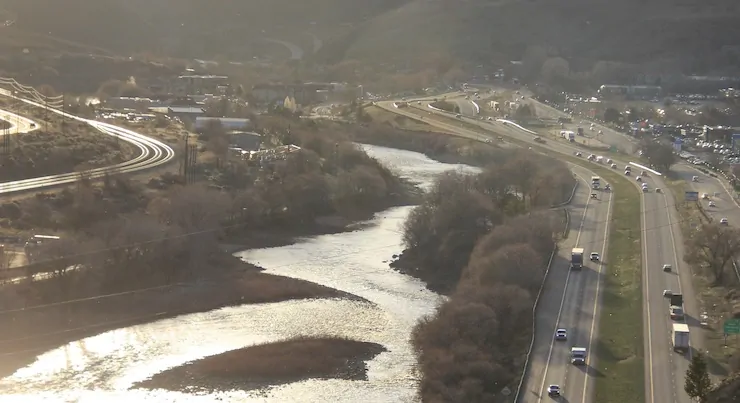
Today’s featured cartography is a fascinating and alarming interactive mapvisualizing methane and carbon dioxide emissions from oil and gas wells, coal power plants, coal mines, cattle feedlots, landfills, and, sometimes, from the bare ground.This one is unique because it shows the actual plumes, not just symbols representing emissions, which somehow makes it more real and scary. 

It’s a bit frightening not only because it reveals so many sources of greenhouse gases, but also because we know that if a leaky oil and gas well is oozing methane, it’s also probably emitting volatile organic compounds and other nasty pollutants that can harm human health. The map includes the date(s) the images were made along with the rate of emissions.

Cattle feedlots and methane plumes in California’s Central Valley. Source: Carbon Mapper.
⛈️ Wacky Weather Watch⚡️

Last month, the skies opened up over Globe and Miami, Arizona, dumping nearly four inches of rain and triggering calamitous flash-flooding that killed three people, wrecked homes, and carried away cars and multiple propane tanks from an LP gas distribution facility. 

Miami and Globe are dyed-in-the-wool mining towns. Miami’s little downtown seems on the brink of being swallowed up by Freeport-McMoran’s massive Miami copper mine, while Globe, with its stately brick and stone buildings, was clearly the more prosperous of the two sister communities. They’re both pretty gritty in an appealing (to me) way in that they defy the manicured suburban sprawl ubiquitous on the other side of the Superstitions. They sit down in drainages that are almost always dry, except when a lot of rain falls on the arroyo-etched, sparsely vegetated hills. In this case, the flooding was made worse by a nearby wildfire burn scar. 

Pinal Creek, which runs through Globe, ballooned from a dusty trickle to a 5,670 cfs torrent on Sept. 27. The San Carlos River east of Globe did much the same thing after nearly a year of complete dryness. The big water wreaked havoc, destruction, and death. Adding to the tragedy: Many residents reportedly didn’t have flood insurance.


1 One might argue that dams merely store excess water from wet years so that it can be used in dry years and so they don’t really count as a diversion or an increase in consumption. The problem on the Colorado River, however, is not a lack of storage, it’s a lack of water. Even huge water years like 2023 failed to even get close to filling up the system’s two largest reservoirs: Lakes Powell and Mead. If you build more upstream dams, then even less water will reach those reservoirs.

2 The Colorado River Compact actually assumes that there is an average of 18 million acre-feet per year, and allocates 7.5 MAF to the Upper Basin and 7.5 MAF to the Lower Basin, but also adds the option of increasing the Lower Basin’s allocation to 8.5 MAF. This still leaves room, theoretically, up to 2 MAF for Mexico. Even back in 1922, however, the river didn’t actually deliver that much water. 

3 During the 10-year period from 2015 to 2024, the Upper Basin delivered about 84 MAF to the Lower Basin, meaning they’ve lived up to their obligation and then some.

New Study Shows Disruption of Ocean Currents That Stabilize the Global #Climate: Clam shell growth rings contain clues about the looming potential for a tipping point into climate collapse — Bob Berwyn (InsideClimateNews.org)

A line of national flags waves in the arctic wind. 15 Institutes from 14 different countries participate in research at the East Greenland Ice-Core project. Photo courtesy of Tyler Jones.

Click the link to read the article on the Inside Climate News website (Bob Berwyn):

October 3, 2025

A new study analyzing chemical traces in the growth rings of clam shells reinforces growing concerns about the stability of a key North Atlantic Ocean current that helps keep the global climate livable. 

The findings, published on Thursday in Science Advances, examined changes in the ocean south of Greenland during the last 150 years and found that the inflow of freshwater has been disrupting the subpolar gyre, which distributes ocean heat, since the 1950s.

The research is another sign that climate heating caused mainly by fossil fuel pollution is pushing the climate toward dangerous tipping points, out of the “safe operating space” for humans, said lead author Beatriz Arellano-Nava, a University of Exeter climate researcher. 

A weakening or shutdown of the subpolar gyre and related currents would weaken the northward transport of ocean heat from the tropics to higher latitudes, with different impacts by region. The tropics would experience more extreme heat on land and even worse ocean heatwaves than those already killing billions of marine organisms, from sea stars to sea birds. Sea level rise in most of the tropics would also accelerate from thermal expansion, with warming oceans swelling higher onto shorelines.

Meanwhile, there would likely be regional cooling in the North Atlantic, Arellano-Nava said, and more extremes in Europe: hotter summers, colder winters and worse flooding and droughts, as well as shifts in global precipitation patterns. 

The full range of impacts is not well studied, and the intensity would depend on how much the various parts of the current system weaken. A 2024 study raised the stakes, showing that the impacts of a full-scale shutdown of the heat-carrying currents in the North Atlantic could unleash climate chaos in the Northern Hemisphere.

Several of Arellano-Nava’s recent research projects, including the new study, focus on identifying early warning signs of climate tipping points, which are basically irreversible changes to Earth’s systems such as ocean currents, glaciers, coral reefs or forests. Trying to find early warning signs is crucial because once major tipping points are breached, it’s too late to take action, she said.

The research focused on the North Atlantic Ocean southeast and southwest of Greenland, known as a subpolar gyre. There, winds drive a large, “three-dimensional circulation structure in which water is transported down into the deep ocean in a spiral,” said Anders Levermann, head of complexity science at the Potsdam Institute for Climate Impact Research. 

The gyre, he said, “is a central part of the deep water formation that keeps the Atlantic Meridional Overturning Current (AMOC) running.” The AMOC is a complex system of currents that shunts warm and cold water horizontally and vertically between the Arctic and Antarctic.

The Atlantic Meridional Overturning Circulation carries cold water from near Greenland (blue line) southward along the seafloor toward Antarctica, while currents nearer the surface transport warmer water northward. Credit: NASA/Goddard Space Flight Center Scientific Visualization Studio

Levermann was not an author on the new study, but he contributed to key tipping-point research in 2007 showing that, “theoretically, the subpolar gyre in the North Atlantic can tip from a strong state to a much weaker one, which is basically off.” 

The new study confirmed these findings through an analysis of the width and chemical composition of growth rings in clams and other bivalves. 

“In response to anthropogenic climate change, both systems are at risk of passing a tipping point,” the authors of the new paper wrote, noting that the collapse would weaken the northward transport of ocean heat with regional cooling in the north Atlantic, more frequent weather extremes in Europe and shifts in global precipitation patterns.

“Bivalve records are really amazing,” Arellano-Nava said. “They are like the tree rings of the sea. They offer a continuous, annually resolved record of ocean conditions.”

Varying oxygen isotopes show changes in seawater linked to temperature and the influence of different water masses, which helps show the changes in ocean circulation, she said. The width of the growth rings tells scientists about temperature, the supply of food to the seabed and circulation dynamics that bring nutrients, she added.

The changes in the rings are clear once a tipping point has been crossed, she said, explaining that during a transition to a colder climate period in the Northern Hemisphere a few hundred years ago, the shift of oxygen isotope values reflected colder conditions and a stronger influence of Arctic waters. And the growth bands became narrower, indicating both lower temperatures and reduced food availability. 

Levermann, the Potsdam Institute researcher, said the new paper is remarkable because it provides direct evidence that vital ocean circulations can shift into a new state under current oceanic and atmospheric conditions, not just in a theoretical model or under vastly different ancient climate conditions.

“To find such recent evidence for tipping in a large oceanic system is worrisome and supports the increasingly large literature on tipping points from Antarctica to Greenland and the Amazon rain forest,” he said.

Tim Lenton, director of the Global Systems Institute at the University of Exeter, is a co-author of the new study and a longtime tipping points researcher. He said a collapse of deepwater formation in the subpolar gyre “could itself be seen as an early warning of a tipping point in the AMOC.”

In a paper published Wednesday in the journal Nature Geoscience, Lenton and co-authors documented destabilization toward tipping points in several other vital systems, including the Greenland ice sheet, the Amazon rainforest and the South American monsoon system.

Adding the subpolar gyre to the list means yet more potential for significant impacts to communities and ecosystems that haven’t really been examined yet, Arellano-Nava said.

“What’s the impact for food security, for how our societies are organized at the moment, because we know that a shutdown of the subpolar gyre could cause more extreme weather events in Europe and surrounding regions, and also changes in global precipitation patterns that we haven’t really studied in detail,” she said.

“The problem with tipping points is that you may not observe any noticeable changes until an abrupt transition occurs, and then it’s too late.”

Federal Water Tap October 6, 2025: First Government Shutdown Since 2018 — Brett Walton (circleofblue.org)

American beaver, he was happily sitting back and munching on something. and munching, and munching. By Steve from washington, dc, usa – American Beaver, CC BY-SA 2.0, https://commons.wikimedia.org/w/index.php?curid=3963858

Click the link to read the article on the Circle of Blue website (Brett Walton):

October 6, 2025

The Rundown

  • GAO assesses FEMA’s extreme heat assistance.
  • State Department’s “America First” global health strategy does not directly mention water, sanitation, or hygiene.
  • EPA extends deadline for coal power plants to comply with water pollution standards.
  • USGS investigates how beavers change a watershed in northwest Oregon.

And lastly, a North Carolina senator urges Congress to fund FEMA’s disaster response.

“But for every community that is back on its feet, there are still several communities that are on their knees or flat on their back. In fact, there are some communities that we wonder whether or not they ever will come back.” – Sen. Thom Tillis (R-NC) speaking on the Senate floor on October 1 to mark the one-year anniversary of Hurricane Helene, which wreaked the western part of his state.

The state budget office for North Carolina estimated that the record-breaking storm caused at least $53.8 billion in direct and indirect damage. Tillis complained that Congress was not adequately funding recovery efforts through FEMA. The current government shutdown, he said, added an obstacle just when hurricane risk is peaking. “FEMA simply doesn’t have the funding needed to respond to a major disaster.”

By the Numbers

$1.4 Billion: FEMA’s account balance for major disasters, as of August 31.

News Briefs

Shutdown
The federal government closed its operations on October 1, except for those necessary for public safety or funded outside the annual budgeting process.

Agencies have posted their shutdown plans. The Bureau of Reclamation notes that dam operators and water treatment plant operators are exempted from furloughs.

Coal Help
During an event to promote the most polluting fossil fuel for generating electricity, Lee Zeldin, the EPA administrator, announced several measures to help the coal industry, which is having trouble competing with cheaper, cleaner power sources.

Zeldin finalized or proposed extending the compliance deadline for new water pollution standards for coal-fired power plants.

final rule gives coal plants six more years to decide whether they will stop operating by the end of 2034. Once they decide, they are allowed to continue operating under less-strict pollution standards.

The agency justified the extensions by pointing to rising electricity demand due to AI. “A significant number of facilities need more time to understand how their operations fit within a changing landscape of local and regional demand,” the agency wrote. Zeldin has made AI promotion a pillar of his term as EPA administrator.

Studies and Reports

Extreme Heat Disasters
A U.S. president has never declared an extreme heat disaster, the GAO reports.

But such a declaration is allowed under the Stafford Act, the federal statute that governs disaster response.

GAO, the watchdog arm of Congress, assessed FEMA’s role in assisting states and tribes with extreme heat.

The report found “limited assistance.” Less than 1 percent of FEMA’s climate resilience grants from 2020 to 2023 were directed to projects addressing extreme heat.

If a disaster declaration were requested and approved, FEMA could provide bottled water or set up cooling shelters.

Beavers in Oregon
The U.S. Geological Survey published a multi-part study that examined how beavers influence water quality and hydrology in the Tualatin River basin of northwest Oregon. More than 600,000 people live in the basin.

The studies found that beaver dams trap sediment, can increase water temperatures in unshaded ponds, and in some cases dampen stream flows during small storms. The findings are important for water managers, whose treatment processes are affected by water quality changes.

On the Radar

Global Health Strategy Missing WASH
The State Department published an “America First” global health strategy – but it does not directly mention water, sanitation, or hygiene.

A foundation for public health, the WASH trio is absent from the 40-page strategy, which emphasizes instead American safety and prosperity.

An overriding goal is to prevent disease outbreaks abroad from reaching U.S. soil. Yet the strategy also acknowledges that disease outbreaks can cause political instability in their country of origin. Good health, in this sense, makes for good politics.

“Given that instability can be a breeding ground for national security threats, targeted U.S. health foreign assistance has helped preempt those threats from emerging.”

Federal Water Tap is a weekly digest spotting trends in U.S. government water policy. To get more water news, follow Circle of Blue on Twitter and sign up for our newsletter.