Here’s the release from the Colorado River District:
Our snow is our water. The snow that we ski and ride becomes the water that quenches crops and communities. As winter begins, we’re all wondering what our water future holds and how will it impact us.
Join the Colorado River District at noon, Wednesday, Dec. 16, for Water With Your Lunch: Our Snow and Our Water, where we’ll hear forecasts for snowpack and water supply and discuss the economic impact of snow and water on the West Slope. Presenters will also address long-term changes that are becoming visible in Colorado’s mountain snowpack. Understanding how snowfall, water and our livelihoods are connected is vital to understanding actions we can take to protect our West Slope water and sustain our West Slope economies.
Joel Gratz, founding meteorologist at Open Snow, will present how he makes forecasts and the possible impacts of a La Nina weather pattern, which can give us an idea of what the pattern of snowfall in Colorado will likely be this winter. Paul Miller, a service coordination hydrologist at the National Weather Service’s Colorado Basin River Forecast Center, will talk about how his agency translates snowpack measurements into water supply forecasts and how factors like soil moisture influence the water we get from snow.
Then we’ll learn more about the impact that snow – or lack of it – has on the Western Slope economy. From powder days at ski areas to flowing water for agricultural irrigation, snow and water power jobs on the West Slope. We’ll learn more about the economic value of snow in West Slope agriculture and recreation from two speakers: Todd Hagenbuch, a Colorado State Extension Agent in Routt County, and Alan Henceroth, chief operating officer at Arapahoe Basin Ski Area.
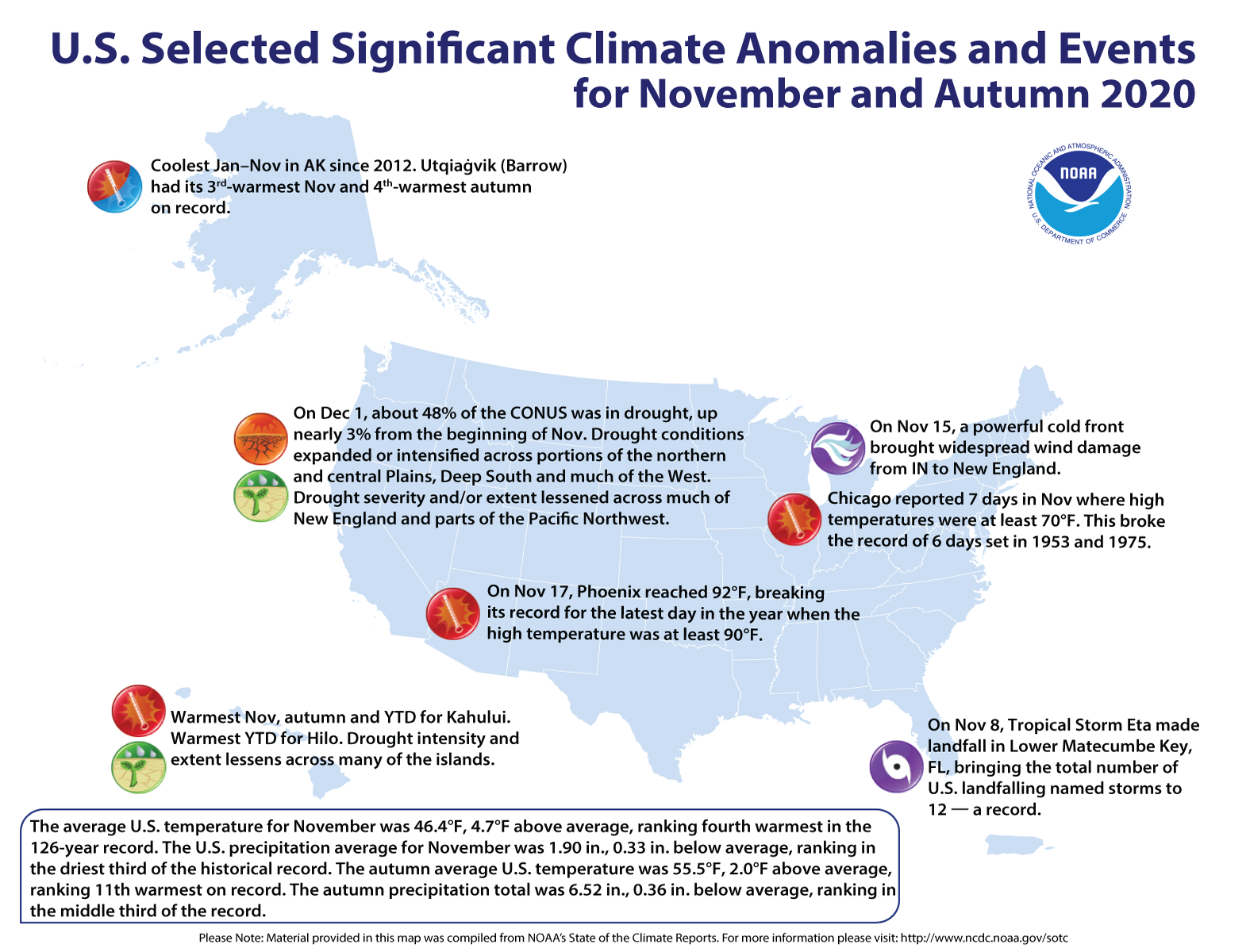
Fourth-warmest November and year-to-date for the contiguous U.S.; most active Atlantic hurricane season on record
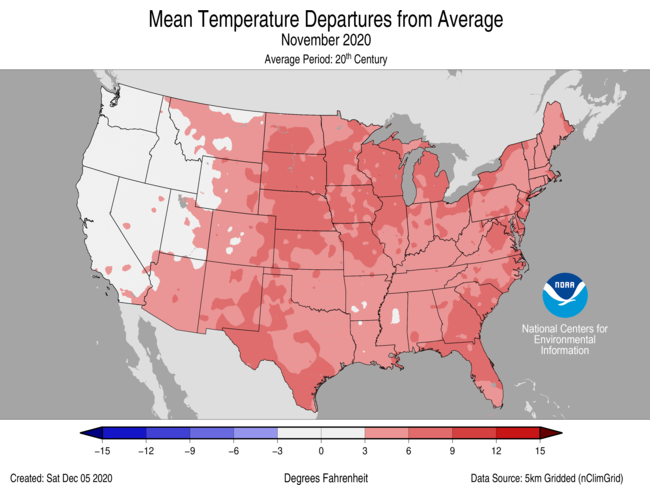
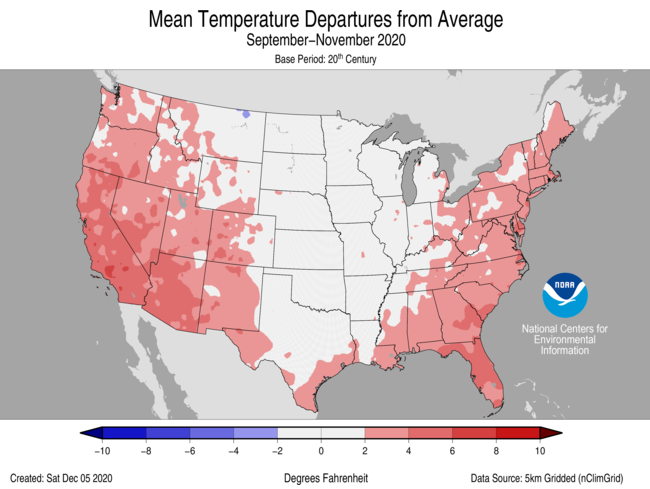
For November, the contiguous U.S. average temperature was 46.4°F, 4.7°F above the 20th-century average, ranking fourth warmest in the November record. During meteorological autumn (September-November), the average temperature for the Lower 48 was 55.5°F, 2.0°F above average, ranking 11th warmest in the historical record. For the year to date, and with one month remaining in the calendar year, the contiguous U.S. temperature was 56.1°F, 2.3°F above the 20th-century average. This ranked fourth warmest in the January-November record. The four warmest January-November periods on record have all occurred since 2012.
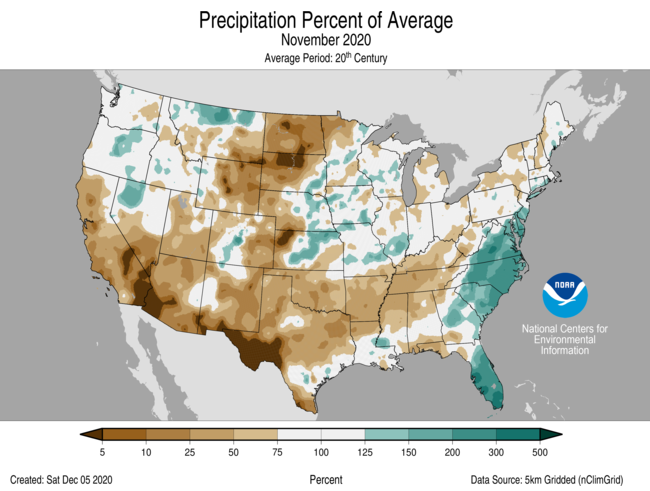
The November precipitation total for the contiguous U.S. was 1.90 inches, 0.33 inch below average, ranking in the driest third of the 126-year period of record. The autumn precipitation total across the Lower 48 was 6.52 inches, 0.36 inch below average, ranking in the middle third of the historical record. The year-to-date precipitation total across the contiguous U.S. was 28.26 inches, 0.67 inch above the long-term average, also ranking in the middle third of the January-November record. This was the driest year-to-date period since 2012.
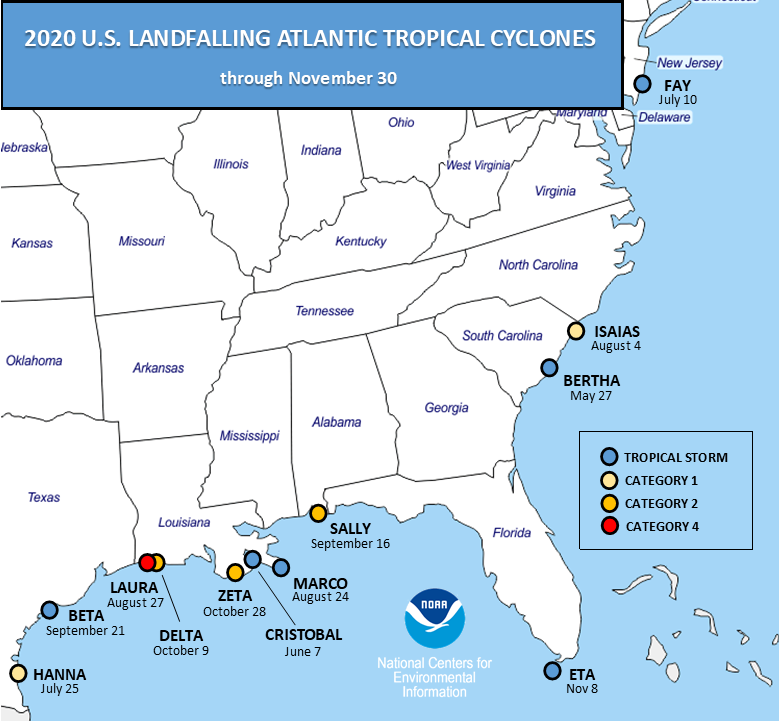
Above-average tropical activity across the Atlantic Basin continued into November as one tropical storm and two major hurricanes formed. By the end of November, and the official ending of the Atlantic hurricane season, 30 named storms formed during 2020, which breaks the 2005 record of 28 for the most storms in a single season. Category 5 Hurricane Iota formed during November and was the most intense Atlantic hurricane of the season.
This monthly summary from NOAA National Centers for Environmental Information is part of the suite of climate services NOAA provides to government, business, academia, and the public to support informed decision-making.
November Temperature
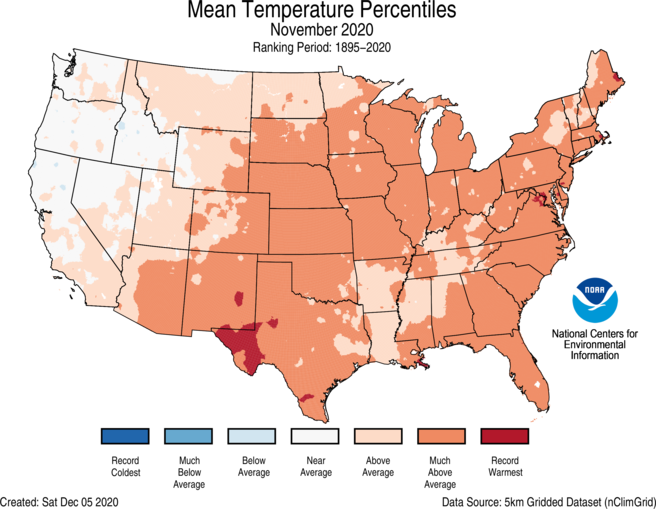
Above-average November temperatures were observed across most of the Lower 48. New Mexico, South Carolina, Maryland and Delaware each had their second-warmest November on record with nine additional states from the South to the Northeast ranking among their warmest five Novembers.
Near-average temperatures occurred across portions of the West and Northwest. No notable regions of below-average temperatures were present across the Lower 48 during November.
The Alaska average November temperature was 14.3°F, 2.6°F above the long-term mean, ranking in the middle third of the 96-year period of record for the state. Above-average temperatures were present across portions of the North Slope and West Coast. Below-average temperatures were observed across the Southeast Interior, Northeast Gulf and the Panhandle. Utqiaġvik (Barrow) had its third-warmest November on record.
November Precipitation
A trough of low pressure in the middle of November contributed to above-average precipitation across portions of the Northwest, central Plains, western Great Lakes, Southeast and mid-Atlantic states.
Precipitation received from Tropical Storm Eta helped North Carolina rank 10th wettest for November.
Below-average precipitation occurred across parts of the West, northern Rockies, much of the northern Plains and from portions of the South to the Northeast. North Dakota ranked 11th driest for the month.
In Alaska, statewide precipitation ranked in the wettest third of the historical record. Above-average precipitation occurred across portions of the North Slope, West Coast, Bristol Bay, Northeast Interior and South Panhandle regions. Precipitation across the rest of the state was near average for the month.
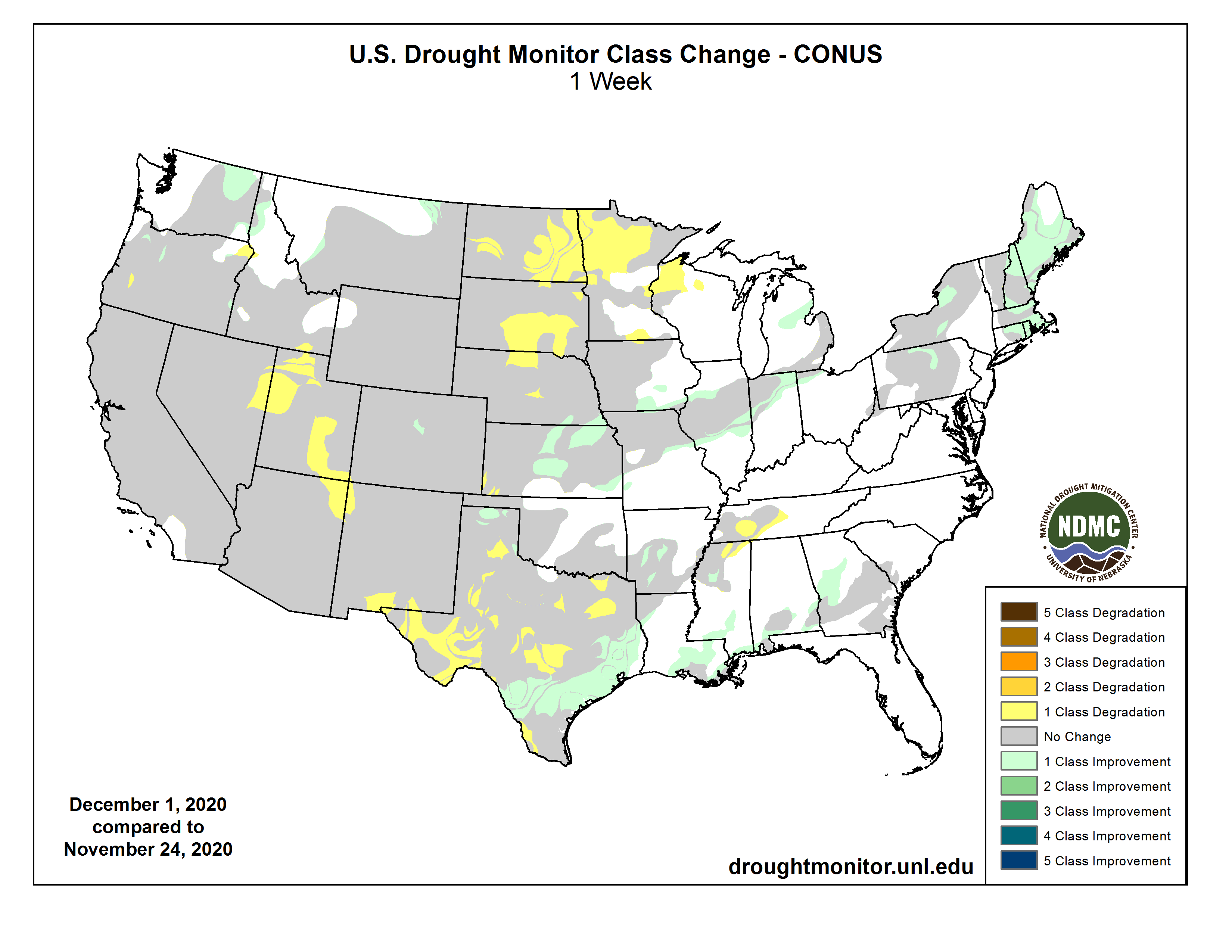
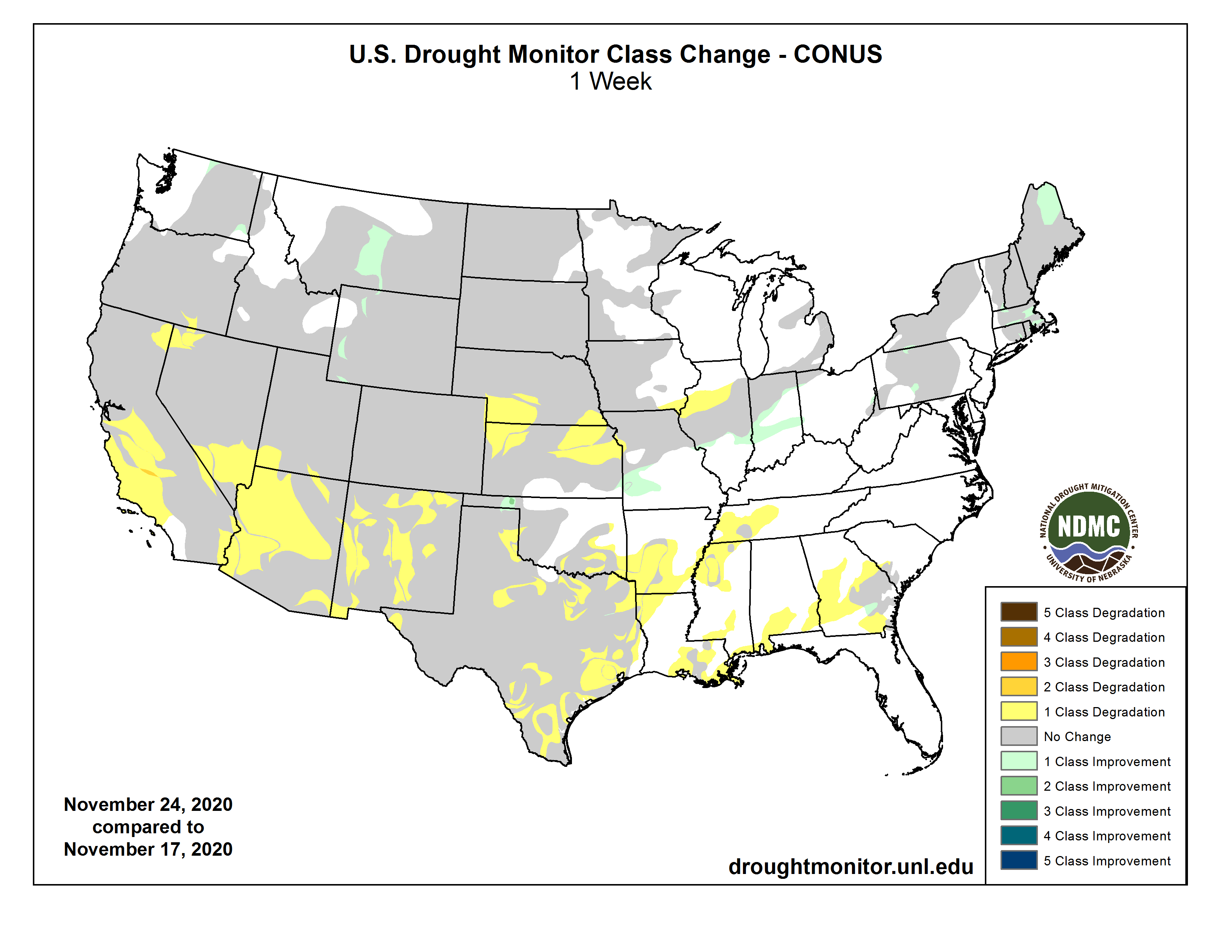
According to the December 1 U.S. Drought Monitor report, approximately 48 percent of the contiguous U.S. was in drought, up nearly 3 percent from the beginning of November. Drought conditions expanded or intensified across portions of the northern and central Plains, Deep South and much of the West. Drought severity and/or extent lessened across much of New England and Hawaii and parts of the Pacific Northwest.
November Extremes
Through November 30, and the official end of the Atlantic hurricane season, several records were tied or broken.
Thirty named storms formed in the Atlantic, which breaks the previous record of 27 set in 2005. The 13 hurricanes and 6 major hurricanes in 2020 are both the second most on record behind 2005 (15 and 7, respectively).
Twelve named U.S. storm continental landfalls occurred during 2020. This tops the 11 landfalls set through October 31 and breaks the previous annual record of nine landfalls set in 1916.
Six hurricanes made U.S. landfall, tying 1886 and 1985 for the most U.S. hurricane landfalls in a single season.
Category 4 Hurricane Eta made landfall near Puerto Cabezas, Nicaragua, on November 3 with winds of 140 mph. Eta weakened over land and eventually re-emerged into the Caribbean, making landfall in Cuba and eventually on the Lower Matecumbe Key in Florida as a tropical storm.
Only two weeks after Eta’s landfall, category 5 Hurricane Iota reached peak intensity of 160 mph before weakening and making landfall along the northeast coast of Nicaragua as a Category 4 hurricane on November 16 and only 15 miles south of the location of Eta’s landfall. This was the first November on record to have two major Atlantic hurricanes.
Iota was the only Category 5 storm during 2020, the strongest hurricane of the season and only the second Category 5 storm on record to form during November. The Cuba Hurricane of 1932 made landfall on November 8 and had 175 mph peak winds.
Hurricane Iota was the second-strongest November hurricane on record for the Atlantic and was the strongest Atlantic hurricane on record to occur so late in the calendar year.
This was a record fifth consecutive year with at least one Category 5 storm in the Atlantic.
Five Category 4 and 5 storms formed in the Atlantic during 2020, tying with 1933, 1961, 1999 and 2005 for the record.
Autumn (September-November) Temperature
Above-average autumn temperatures spanned much of the West and from the Deep South to New England. California and Florida ranked warmest on record.
Near-average temperatures for autumn were observed across much of the northern and central Plains as well as the western Great Lakes.
The Alaska statewide average temperature for autumn was 28.4°F, 2.5°F above average, ranking in the warmest third of the historical record. Northern and western portions of the state had above-average temperatures while portions of the Panhandle had temperatures that were below average for the season. In large part due to the loss and thinning of sea ice along Alaska’s northern coast, Utqiaġvik had its fourth-warmest autumn on record.
Autumn (September-November) Precipitation
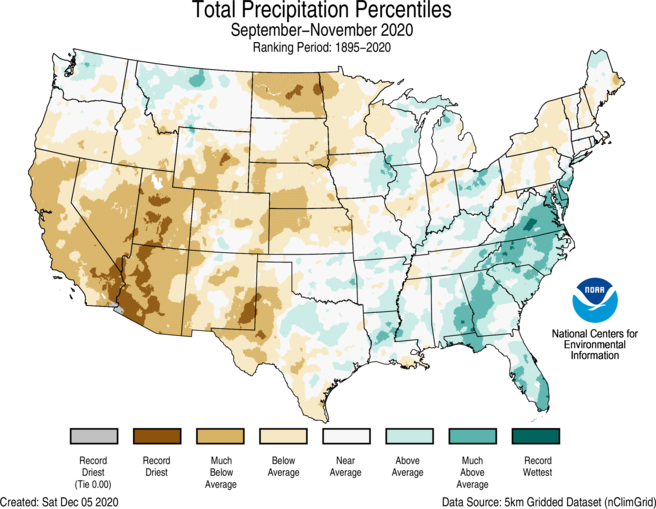
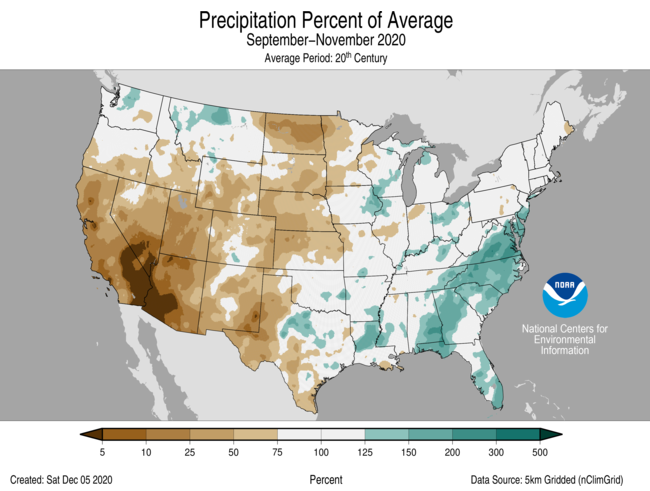
Above-average precipitation was observed across the Southeast and mid-Atlantic as well as portions of the Northwest, South, Ohio Valley and Great Lakes. Virginia ranked fourth wettest on record.
Below-average precipitation was observed across much of the West, the northern and central Plains and across parts of the Northeast. Utah and Arizona ranked driest on record for autumn with three additional states in the West and northern Plains ranking among their driest five autumns on record.
Precipitation across Alaska during autumn ranked in the driest third of the historical record. Above-average precipitation occurred across portions of the North Slope, Northeast Interior and Bristol Bay regions while the Northeast Gulf and Panhandle regions had below-average precipitation for the season.
Year-to-date (January-November) Temperature
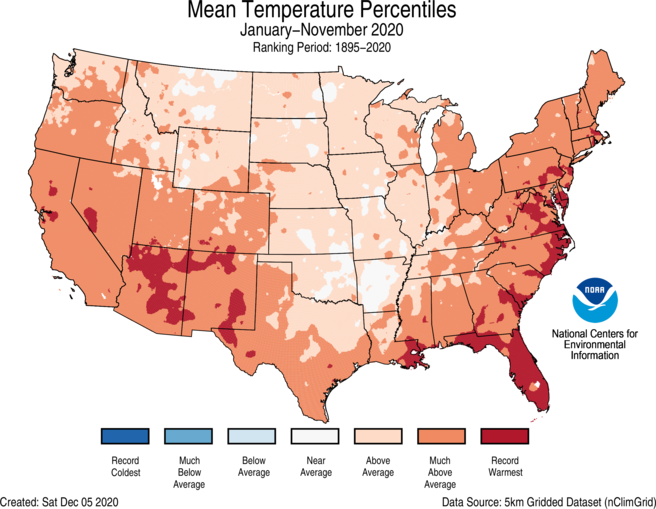
Above-average year-to-date temperatures were observed across much of the Lower 48 with Florida, Virginia, Maryland, Delaware and Rhode Island ranking warmest on record.
Near-average temperatures were observed in pockets across the northern Rockies, northern Plains as well as the southern Plains.
It was the coolest January-November across Alaska since 2012. Year-to-date statewide temperatures ranked near average in Alaska with above-average temperatures observed across the northern and western portions of the state. Below-average temperatures were present across portions of the interior regions.
Year-to-date (January-November) Precipitation
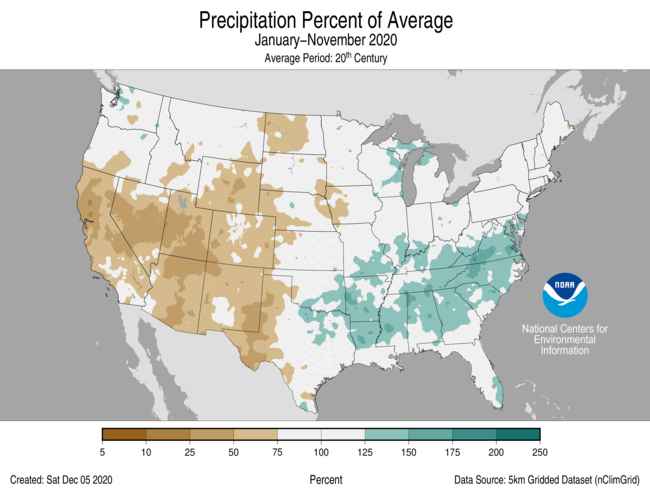
Above-average January-November precipitation occurred in parts of the Northwest, Great Lakes and from the southern Plains to the mid-Atlantic. North Carolina ranked wettest on record while Virginia ranked third wettest for this 11-month period.
Below-average precipitation occurred across much of the West, northern Plains and the Northeast. Utah ranked driest on record while six additional western states ranked among their driest five January-November periods.
January-November precipitation in Alaska was above average across the interior regions, Bristol Bay and portions of the Panhandle. Drier-than-average conditions were present across the Aleutians as well as the central Gulf and northwest Panhandle.
Wall Street has begun trading water as a commodity, like gold or oil. The country’s first water market launched on the Chicago Mercantile Exchange this week with $1.1 billion in contracts tied to water prices in California, Bloomberg News reported.
The market allows farmers, hedge funds, and municipalities to hedge bets on the future price of water and water availability in the American West. The new trading scheme was announced in September, prompted by the region’s worsening heat, drought, and wildfires fueled by climate change. There were two trades when the market went live Monday.
“Climate change, droughts, population growth, and pollution are likely to make water scarcity issues and pricing a hot topic for years to come,” RBC Capital Markets managing director and analyst Deane Dray told Bloomberg. “We are definitely going to watch how this new water futures contract develops.”
Proponents argue the new market will clear up some of the uncertainty around water prices for farmers and municipalities, helping them budget for the resource. But some experts say treating water as a tradable commodity puts a basic human right into the hands of financial institutions and investors, a dangerous arrangement as climate change alters precipitation patterns and increases water scarcity.
“What this represents is a cynical attempt at setting up what’s almost like a betting casino so some people can make money from others suffering,” Basav Sen, climate justice project director at the Institute for Policy Studies, told Earther. “My first reaction when I saw this was horror, but we’ve also seen this coming for quite some time.”
Nathan Fey, seen here paddling the Lower Dolores River. The lower Dolores River depends on a deep snowpack for boating releases from McPhee Reservoir. (Photo courtesy Nathan Fey)
FromThe Cortez Journal (Jim Mimiaga) via The Durango Herald:
Sorry skiers, ranchers and kayakers: Weather observers see no relief in sight for a persistent drought that has gripped the Four Corners.
A strong La Niña weather pattern has helped shift the jet stream farther north, which keeps storms from reaching the Four Corners, officials said.
“It’s the strongest La Niña in 10 years,” said Jim Andrus, a weather observer for the National Weather Service. “Even when we do get storms that dip down our way, they are weak at most.”
[…]
The long-term forecast for the Four Corners is below-normal precipitation and above-normal temperatures, said Norv Larson, a meteorologist with the National Weather Service.
High pressure and a dry air mass are generally blocking storms from reaching and forming in the area, he said…
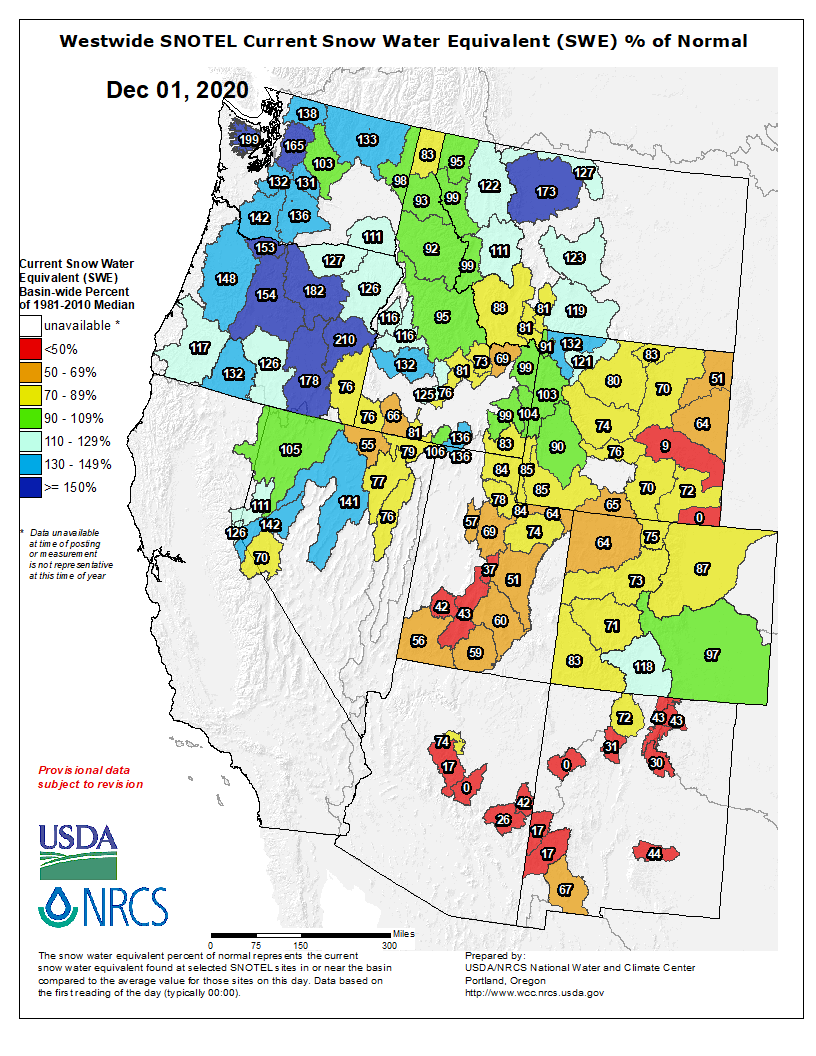
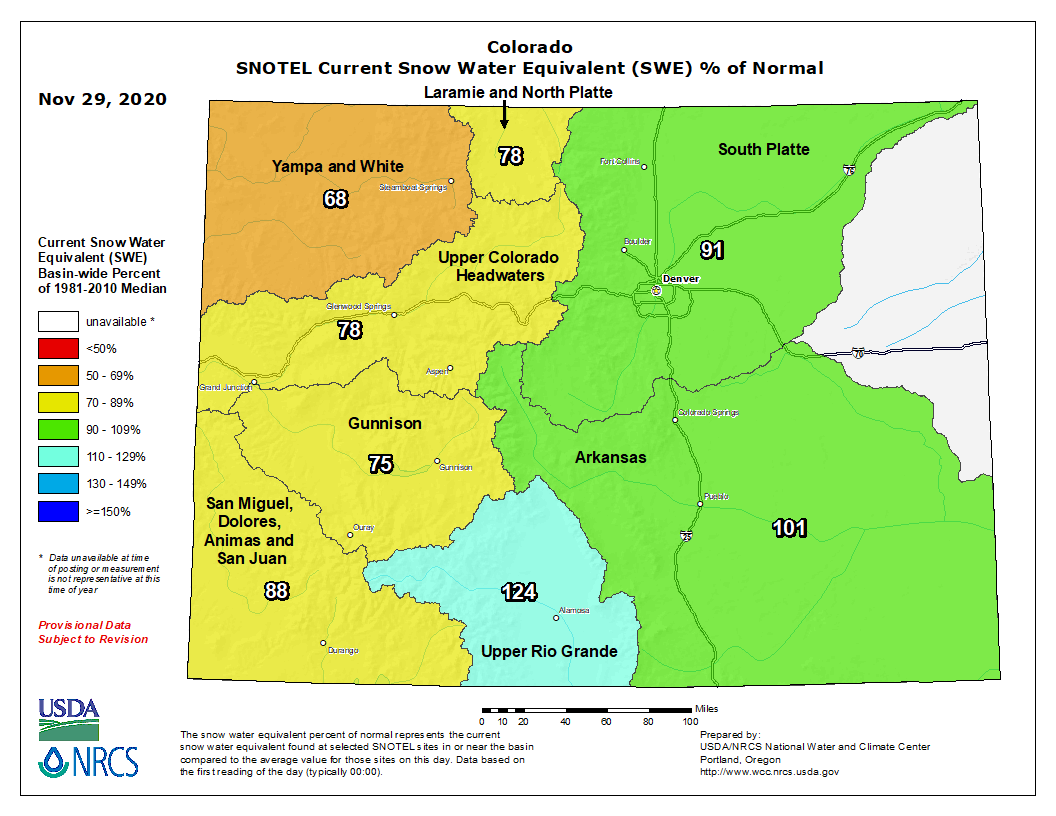
Colorado snowpack basin-filled map December 9, 2020 via the NRCS.
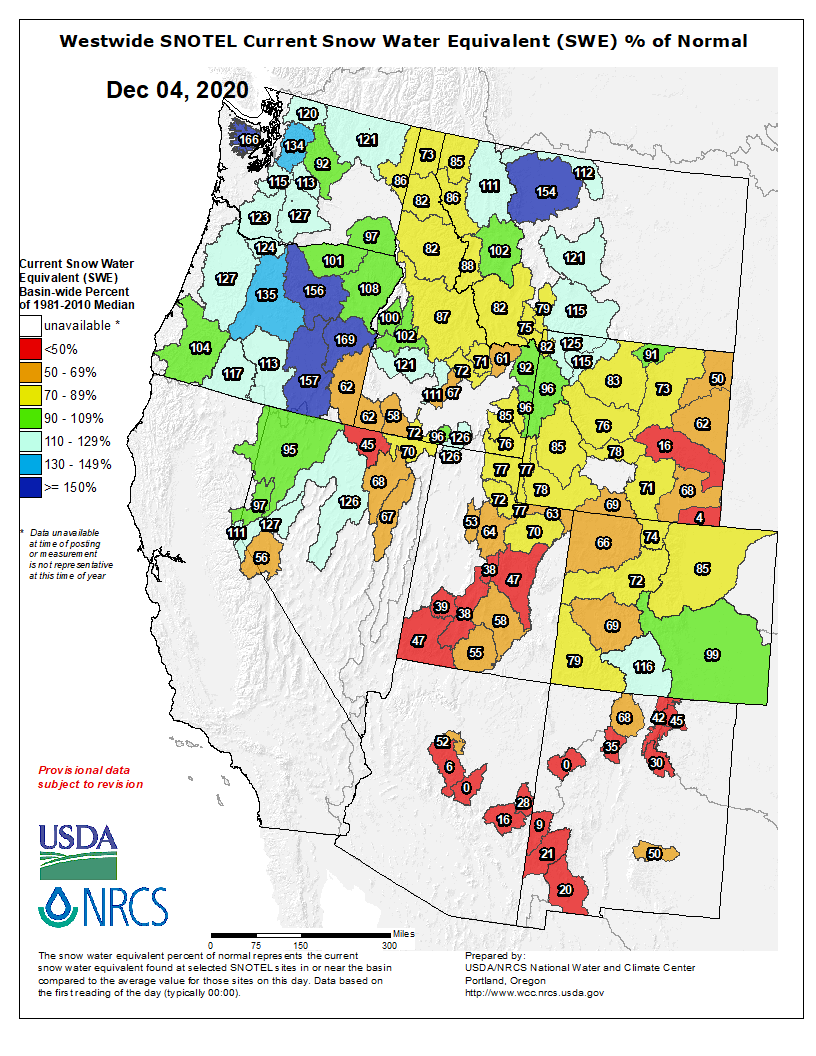
Snowpack is well below average in Southwest Colorado.
Snotel stations in the mountains that measure snowfall, show the Dolores and San Miguel river basins are 48% of normal as of Dec. 7.
The Animas River Basin is at 38% of normal, and the Gunnison River Basin is at 53% of normal.
The Telluride Ski Resort reports a 21-inch base, and Purgatory Resort has a 16-inch base.
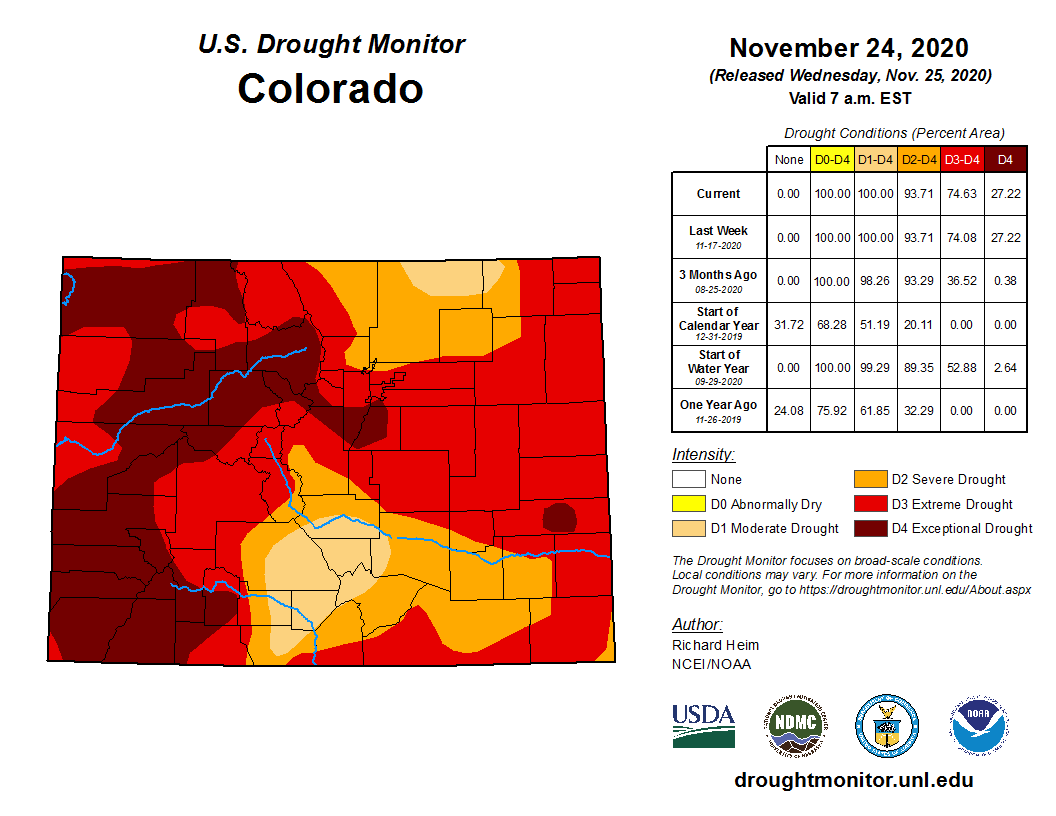
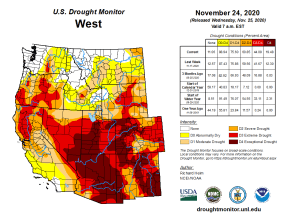
As of Dec. 3, Southwest Colorado and most of the Western Slope were in “exceptional” drought, the worst level out of five, according to the U.S. Drought Monitor. Most of Utah and Arizona also were in exceptional drought.
Contrary to the common phrase, fire and water actually do mix – and there’s often a direct connection between the two.
This year in particular, wildfires have gripped Colorado with historic magnitude. And while we often think of property damage and air quality as the most immediate consequences of severe wildfire, rivers and drinking water supplies are often wildfire casualties as well.
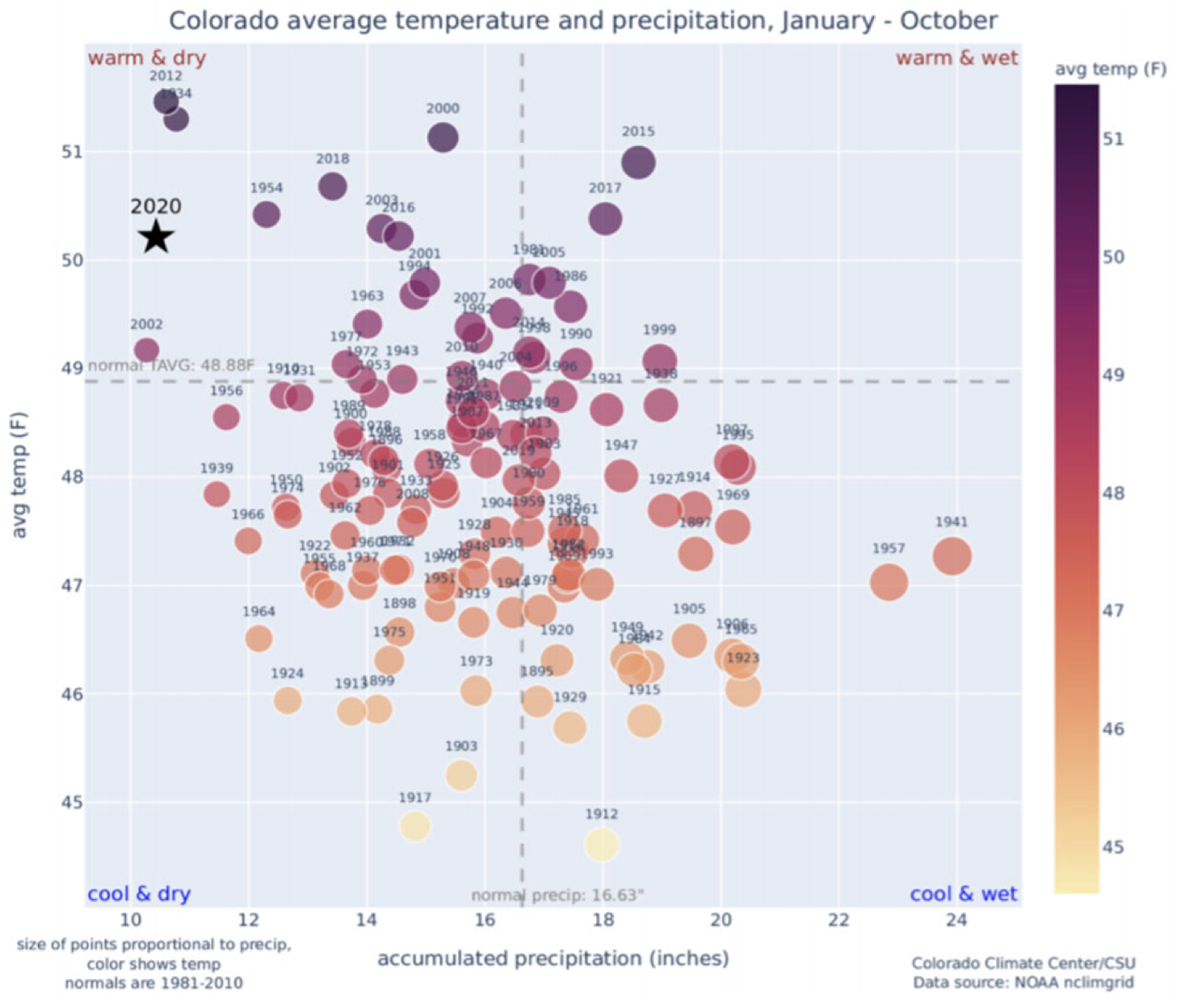
2020 was Colorado’s third-driest water year on record and one of our warmest, with the hottest August since record-keeping began in 1895. Models show that climate change and historic drought will continue to affect the Colorado River Basin and increase the severity and frequency of wildfires.
Abby Burk brings a lifetime love of rivers, particularly of the Colorado River and its tributaries. As the western rivers regional program manager for Audubon Rockies. Photo credit: Audubon Rockies
To combat this, we must strive to bolster the resiliency of both land and water, including our rivers and streams, to support our communities that rely upon them.
The good news is that Coloradans across the state recognize the need to invest in our rivers.
Voters this year approved two ballot measures that will generate additional funding to support the St. Vrain and Left Hand Water Conservancy District as well as the Colorado River Water Conservation District. The measures will generate a combined $8 million per year to support healthy rivers, local agriculture, watershed health and water quality across both districts.
That local funding will support the types of solutions and water-management projects outlined in Colorado’s Water Plan. The plan, finalized in 2015, provides a blueprint to address the gap between water supply and demand across the state.
And now we have a critical opportunity to build on that work – and voters’ recent mandates – by making updates to the Water Plan. These updates will provide a chance to identify and recommend a path towards a healthy, secure water future.
“From extreme drought to extreme fires, 2020 highlights the need for us to build our climate resilience and protect the watersheds that sustain our streams, farms and cities. Finding these opportunities and identifying the state of the science is at the heart of the Colorado Water Plan Update,” says Colorado Water Conservation Board Director Rebecca Mitchell.
Wildfire-related impacts on river health are significant, including post-fire floods, debris flows, erosion, and the threat of toxic debris flowing into our rivers and water supply. Laurie Rink of the Middle Colorado Watershed Council says that key stakeholders have expressed the need for coordinated planning and response to Colorado’s wildfires.
“Immediate focus will be on post-fire recovery and rehabilitation to reduce post-fire hazards, such as flooding and erosion. Longer-term efforts can turn towards planning for and implementing future fire risk mitigation throughout the watershed,” Rink says.
Healthy rivers flow from healthy watersheds. We must broaden the river health conversation beyond the river channel itself, to include the entire “riverscape,” comprised of the streams, floodplain, and vegetation surrounding them.
Riverscapes support bird and wildlife habitat, as well as ecological services that directly influence water quality and quantity. Nearly 80% of Colorado’s clean, reliable drinking water comes from these forested watersheds. But significant data gaps exist around watershed health, and without current science, the effort to create projects and management plans to protect Colorado’s rivers is daunting.
Ensuring that Colorado’s riverscapes and forests can recover from future wildfires at a landscape scale is crucial. Implementing proven wildfire mitigation strategies such as forest treatments and prescribed fires, as well as investing in the health of our rivers and streams, will promote increased resilience to climate change and mitigate the effects of wildfires on water supplies and communities.
Colorado Water Plan website screen shot November 1, 2013
Colorado’s Water Plan strives to develop stream management plans for at least 80% of rivers and streams across the state, as well as 80% of critical watersheds with watershed protection plans, all by 2030.
Current, accurate, scientific data is crucial for the development of these stream management and watershed plans. Fortunately, river health assessments can inform locally driven projects to protect or improve conditions and empower communities to develop tailored resilience strategies and track river health over time.
It’s essential that an updated Water Plan provide funding and guidance for addressing river health information gaps.
While rivers connect all Coloradans, so does drought and wildfire in 2020. When we invest in the health of our rivers, we are also investing in future resilience to climate change and associated disruptions to our rural heritage and Colorado lifestyle.
Abby Burk is the Western Rivers Regional Program Manager for Audubon Rockies.
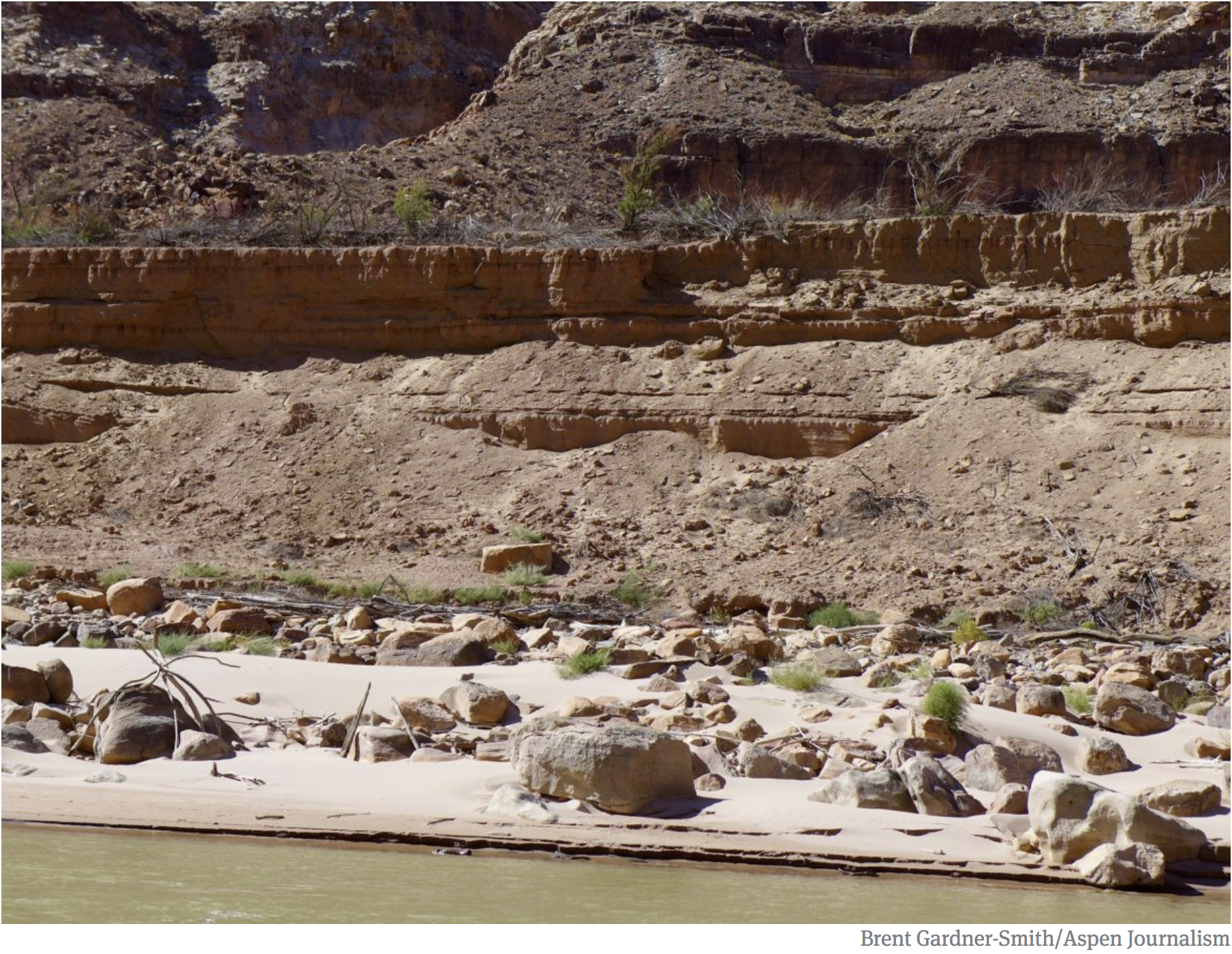
Colorado River “Beginnings”. Photo: Brent Gardner-Smith/Aspen Journalism
Meadows, forests and mountain ridges create the high alpine landscapes of Niwot Ridge in the Rocky Mountains, 25 miles northwest of Boulder. Forty percent of the City of Boulder’s water is sourced from the Green Lakes Valley within Niwot Ridge, which the researchers analyzed in this study. (Credit: William Bowman)
From the University of Colorado (Kelsey Simpkins):
A long-term trend of ecological improvement is appearing in the mountains west of Boulder. Researchers from CU Boulder have found that Niwot Ridge—a high alpine area of the Rocky Mountains, east of the Continental Divide—is slowly recovering from increased acidity caused by vehicle emissions in Colorado’s Front Range.
Their results show that nitric and sulfuric acid levels in the Green Lakes Valley region of Niwot Ridge have generally decreased over the past 30 years, especially since the mid-2000s. The findings, which suggest that alpine regions across the Mountain West may be recovering, are published in the Journal of Geophysical Research: Biogeosciences.
This is good news for the wildlife and wildflowers of Rocky Mountain National Park to the north of Niwot Ridge, which depend on limited levels of acidity in the water and soil to thrive. Colorado’s Rocky Mountains are also the source of a lot of water for people living in the Mountain West, and the integrity of these ecosystems influences both the quantity and the quality of this water.
“It looks like we’re doing the right thing. By controlling vehicle emissions, some of these really special places that make Colorado unique are going back to what they used to be,” said Jason Neff, co-author on the paper and director of the Sustainability Innovation Lab at Colorado (SILC).
Meadows, forests and mountain ridges create the high alpine landscapes of Niwot Ridge in the Rocky Mountains, 25 miles northwest of Boulder. Forty percent of the City of Boulder’s water is sourced from the Green Lakes Valley within Niwot Ridge, which the researchers analyzed in this study. (Credit: William Bowman)
Almost every area in the world, including Colorado’s Rocky Mountains, has been affected in the past 200 years by increased acidic nutrients, like nitrogen, contained in rain and snow. Nitrogen oxides, like nitrate, are produced primarily from vehicles and energy production. Ammonium is a main ingredient in common agricultural fertilizers.
Nitrogen is a fundamental nutrient required in ecosystems. But when nitrogen levels increase too much, this changed soil and water chemistry can make it difficult for native plants to thrive or even survive—leading to a cascade of negative consequences.
In the summer, the sun heats up the Eastern flanks of the Front Range, causing the warmer air to rise—bringing nitrogen from cars, industry and agriculture with it. As this air cools, it forms clouds over the Rocky Mountains and falls back down as afternoon thunderstorms—depositing contaminants, explained Neff.
In the 1970s, so-called “acid rain” hit East Coast ecosystems much harder than the Mountain West, famously wiping out fish populations and killing trees across large swaths of upstate New York. But scientists are still working to understand how increased levels of acidic nutrients affect the alpine region and how long these ecosystems take to recover.
To fill this gap of knowledge, the researchers analyzed data from 1984 to 2017 on atmospheric deposition and stream water chemistry from the Mountain Research Station, a research facility of the Institute of Arctic and Alpine Research (INSTAAR) and CU Boulder located on Niwot Ridge. They found that around the early 2000s, levels of nitric and sulfuric acid stopped increasing in the Green Lakes Valley. In the mid-2000s they started decreasing.
Their findings were not all good news, however. Levels of ammonium from fertilizer have more than doubled in rainfall in this area between 1984 and 2017, indicating a need to continue monitoring this agricultural chemical and its effects on the mountain ecosystem.
From field work to statistics
This work builds on decades of field work by Colorado researchers at CU Boulder and beyond.
Niwot Ridge is one of 28 Long Term Ecological Research (LTER) Network sites in the U.S., funded by the National Science Foundation. Its 4 square miles stretch from the Continental Divide down to the subalpine forest, 25 miles northwest of Boulder. Researchers at CU Boulder, as well as Colorado State University and the United States Geological Survey, have been collecting data here since the mid-1970s, hiking through snow, sleet and rain to get it.
In the 80s, 90s and 2000s they worked to bring attention to increasing acidification in Colorado mountain ecosystems as a need for pollution regulation in the Front Range.
This new research was made possible by these dedicated scientists, stresses Neff.
“We used water quality modeling and statistical approaches to analyze the long-term datasets that Niwot researchers have been collecting for decades,” said Eve-Lyn Hinckley, a co-author on the paper and fellow of INSTAAR. “The data are available for anyone to download. Our modeling approaches allowed us to evaluate the patterns they hold in a rigorous way.”
Since 1990, Bill Bowman, director of the Mountain Research Station and a professor of ecology and evolutionary biology, has been looking into how nutrients like nitrogen affect plants in mountain ecosystems. He’s found that alpine environments are unique in how they respond to these nutrients.
“It’s a system that is adapted to low nutrients, as well as a harsh climate and a very short growing season—and frost in the middle of the season. These are very slow growing plants. And they just simply can’t respond to the addition of more nitrogen into the system,” said Bowman, also a fellow in INSTAAR.
He has also found that these ecosystems recover quite slowly, even after acidic elements like nitrogen are no longer being added. But like Neff, who completed his undergraduate honors thesis with Bowman in 1993 using Niwot Ridge data, he sees this research as encouraging.
Even if it’s slow going, they said, these results show that the ecosystem has a chance to recover.
“We still have air quality issues in the Front Range. But even with those air quality issues, this research shows that regulating vehicle and power plant emissions is having a big impact,” said Neff.
Additional authors on this paper include lead author John Crawford of the Institute of Arctic and Alpine Research (INSTAAR) and CU Boulder.
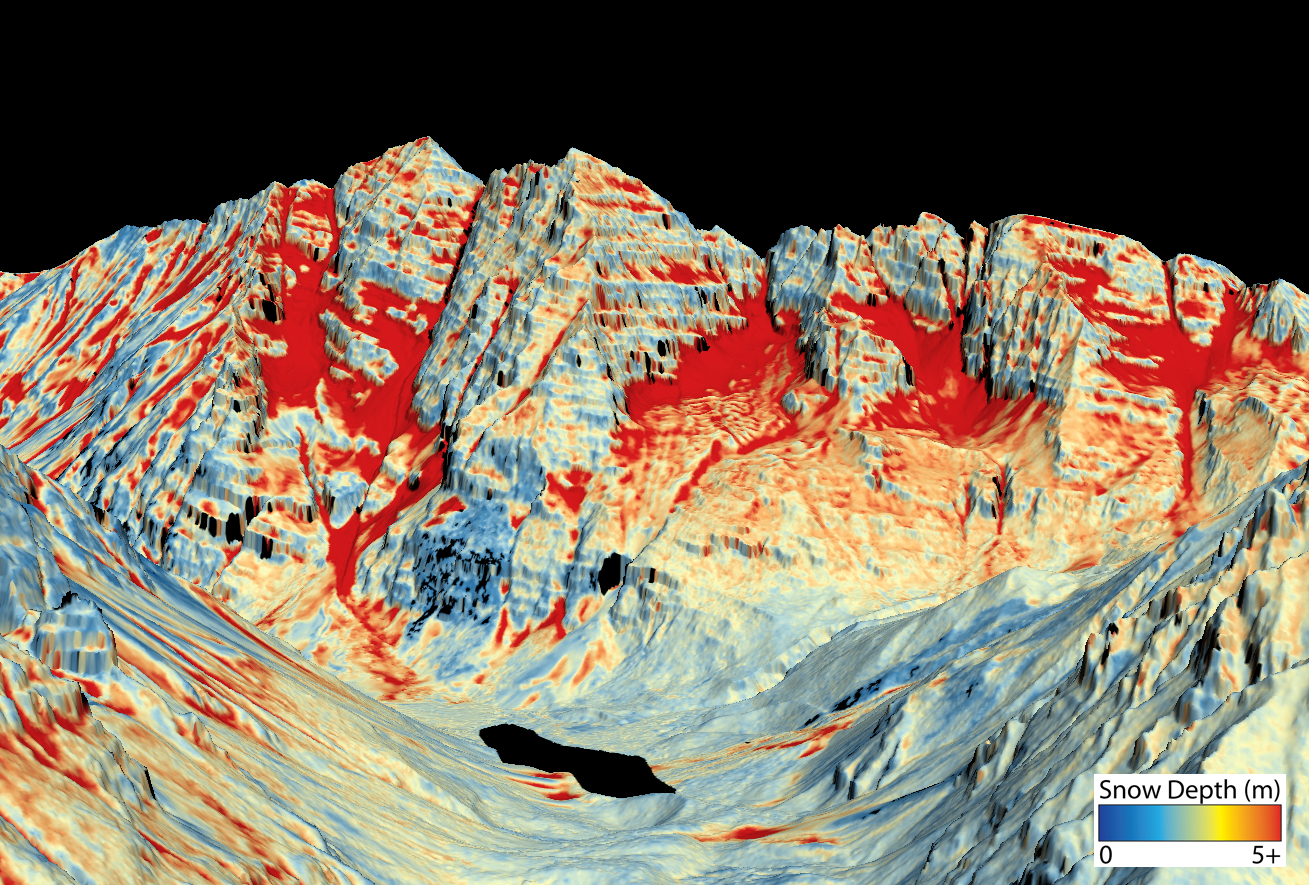
This map shows the snowpack depth of the Maroon Bells in spring 2019. The map was created with information from NASA’s Airborne Snow Observatory, which will help water managers make more accurate streamflow predictions. Jeffrey Deems/ASO, National Snow and Ice Data Center
Front Range water providers are hoping to expand a program that uses a new technology they say will revolutionize water management in Colorado. But for now, the expensive program isn’t worth it for smaller Western Slope water providers.
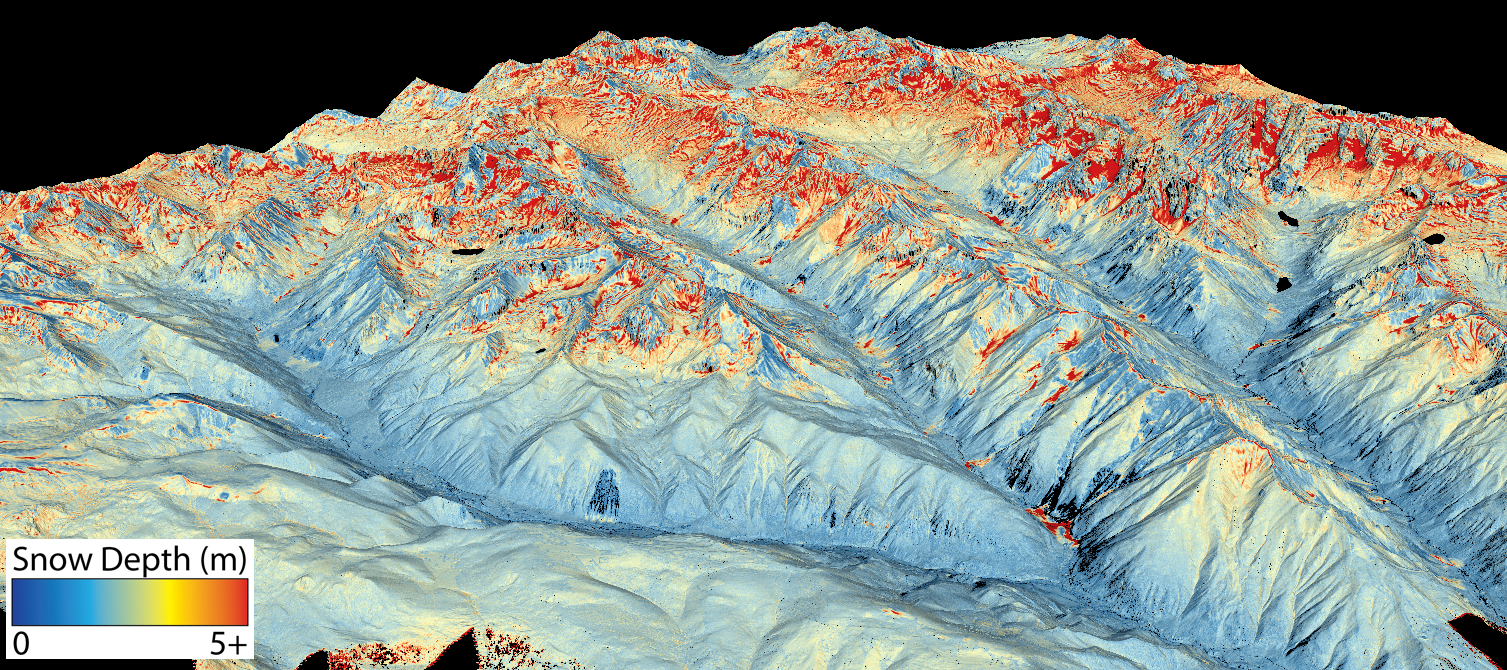
The Northern Colorado Water Conservation District is seeking state grant money to expand the Colorado Airborne Snow Observatory program. The ASO program uses remote-sensing lasers on airplanes known as LiDAR, which stands for light detection and ranging, to precisely measure snow depth…
The technology creates a much clearer picture of how much water is contained in the snowpack and has been used in pilot studies in the Gunnison River basin and for Denver Water.
But these flights have been scattered and lack consistent funding. A geographically expanded program with consistent funding would revolutionize water management in Colorado, according to the grant application.
“This technology is kind of a no-brainer when it comes to helping us understand what water we have to work with each year,” said Laurna Kaatz, the climate science, policy and adaptation program manager for Denver Water. “We know ASO adds value and is kind of the game-changer in water management.”
Denver Water, which provides water to 1.4 million people along the Front Range, is the ASO expansion project manager, while Northern Water is the fiscal agent. The Colorado, South Platte, Metro, Gunnison and Arkansas basin roundtables have each committed $5,000 toward the project.
The project would not fund the flights themselves but would be used to develop an expanded, collaborative, well-funded plan to identify which basins to fly each year.
A flight from NASA’s Airborne Snow Observatory gathers data about the snowpack above Dillon Reservoir on a flight. Information gathered from the flight helped Denver Water manage reservoir operations. Photo courtesy of Quantum Spatial
SNOTEL limitations
Important data points that water managers and streamflow forecasters use for measuring snowpack — and the water contained in that snowpack, known as snow-water equivalent (SWE) — are snow-telemetry (SNOTEL) sites, a network of remote sensing stations throughout Colorado’s mountainous watersheds that collect weather and snowpack information. But they provide just a snapshot of conditions at one location.
“A large amount of SWE is in that high-elevation snow band, which doesn’t get captured by the SNOTEL program,” said Steve Hunter, utilities resource managers for the city of Aspen.
In the spring of 2019, Denver Water learned just how valuable ASO technology is in predicting runoff. Data from a June ASO flight showed there was about 114,000 acre-feet of water in the snow above Dillon Reservoir, Denver Water’s largest storage pool, even though SNOTEL sites, at about 11,000 feet, registered as melted out already. The water provider increased outflows from Dillon so they could make room for the coming snowmelt and avoid downstream flooding.
“I think this is going to revolutionize water management in the West,” Kaatz said. “If you have the ability to have more information and we know that it’s accurate information, it is gold in the water industry.”
This map shows the snowpack depth of Castle and Maroon valleys in spring 2019. The map was created with information from NASA’s Airborne Snow Observatory, which will help water managers make more accurate streamflow predictions. Jeffrey Deems/ASO, National Snow and Ice Data Center
Expensive technology
ASO technology was developed by NASA and researchers at the National Snow and Ice Data Center at the University of Colorado Boulder. But the technology is expensive — between $100,000 and $200,000 per flight, according to Kaatz — and still not worth it for smaller Western Slope municipal water providers who don’t have to carefully coordinate the operation of large reservoirs.
The city of Aspen and the Eagle River Water & Sanitation District are part of the collaborative workgroup helping to create the ASO program expansion plan. Other entities include Colorado Springs Utilities, city of Fort Collins, city of Boulder, city of Greeley, Thornton Water, Pueblo Water, Aurora Water, city of Westminster, Ruedi Water Power and Authority, and the Colorado River Water Conservation District.
Hunter said more data is better when it comes to managing Aspen’s water supply, which comes from Castle and Maroon creeks. The city is trying to install a SNOTEL site and another stream gauge in its watershed. Hunter said the collaborative workgroup has also been exploring ways to sustainably fund an expanded ASO program.
“Airborne measurements of both snow depth and density to come up with your SWE is a great alternative, but it’s cost prohibitive,” Hunter said. “If they have this great technology but nobody can use because nobody can afford it, that doesn’t help anybody.”
Water managers for Eagle River Water & Sanitation District, which supplies water to the Vail Valley, said that although they are participating in the workgroup meetings and find the science interesting and useful, the expense is not something they can bite off right now. Their reservoirs are small and mostly used for augmentation, not to supply municipal water.
“I think there’s value in the whole system and understanding the water that’s available,” said Len Wright, the senior water resources engineer for Eagle River Water & Sanitation District. “But we don’t have anything that would justify the expense right now.”
Northern Water and Airborne Snow Observatories, Inc. will each contribute $5,000 worth of in-kind services to the project. Also, Denver Water will contribute $10,000 in-kind and the collaborative workgroup will give $24,000 of in-kind services. The Colorado Water Conservation Board is being asked for $20,000 from the statewide Water Supply Reserve Fund account and is scheduled to consider the grant application at its March meeting.
Aspen Journalism is a local, nonprofit, investigative news organization covering water and rivers in collaboration with The Aspen Times and other Swift Communications newspapers. This story ran in the Dec. 5 edition of The Aspen Times.
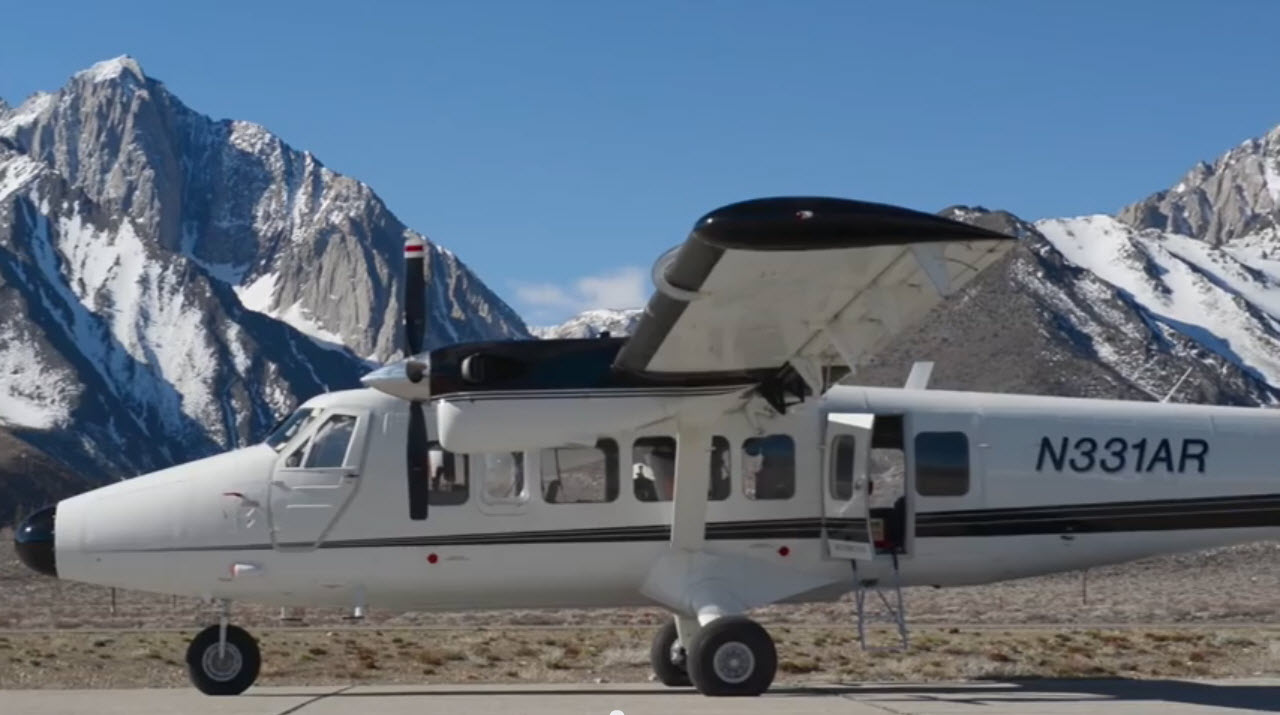
One of the two Twin Otter aircraft used by the Airborne Snow Observatory mission to study snowpack in the Western U.S. Credit: NASA
Ephemeral streams are streams that do not always flow. They are above the groundwater reservoir and appear after precipitation in the area. Via Socratic.org
From the EHS Daily Advisor (Lisa Whitley Coleman):
In November, the EPA asked the 10th Circuit Court of Appeals in Colorado to restore its definition of waters that are protected by the Clean Water Act (CWA)…
“The territorial seas and traditional navigable waters,”
“Perennial and intermittent tributaries to those waters,”
“Certain lakes, ponds, and impoundments,” and
“Wetlands adjacent to jurisdictional waters.”
The final definition “provides clear exclusions for many water features that traditionally have not been regulated, and defines terms in the regulatory text that have never been defined before,” according to the EPA. “Congress, in the Clean Water Act, explicitly directed the Agencies to protect ‘navigable waters.’ The Navigable Waters Protection Rule regulates the nation’s navigable waters and the core tributary systems that provide perennial or intermittent flow into them.”
In July, final changes to the rule were published by the EPA to implement section 401 of the CWA that many characterized as gutting a 50-year history of state and tribal water quality regulation.
“This section allows states and tribal nations to protect health and human safety within their geographic boundaries by making permitting decisions related to the discharge of waste into state waterways,” according to a press release published by the Washington State Office of the Attorney General. The press release went on to say that the rule would “handicap states’ abilities to regulate water quality.”
In July, Washington Attorney General Bob Ferguson filed suit against the EPA and the Army Corps of Engineers in the U.S. District Court for the Northern District of California. The case is co-led by New York and California and was joined by Colorado, Connecticut, Illinois, Maine, Maryland, Massachusetts, Michigan, Minnesota, Nevada, New Jersey, New Mexico, North Carolina, Oregon, Rhode Island, Vermont, Virginia, Wisconsin, and the District of Columbia.
The lawsuit alleges that the new rule “unlawfully violates the plain language, intent and established case law interpreting the Clean Water Act.”
“The final rule forces states to issue permits based on an incomplete review of what effects industries will have on waterways,” according to the Washington attorney general’s press release. “States will only be able to consider a narrow range of impacts these projects have on water quality, even when the consequences cause far-reaching and even irreversible environmental damage. The rule also limits the amount of information industry must provide, unreasonably reduces the amount of time states have to make decisions or deny permits and attempts to grant the federal government oversight of projects rather than states.”
Environmental and conservations groups estimate the final rule leaves 50% of U.S. wetlands and millions of miles of streams unprotected, according to the Milwaukee Journal Sentinel…
Colorado
Colorado met with success in the U.S. District Court for the District of Colorado, where an injunction was granted to stop the rule within the state. “The court found that Colorado met the bar for preliminary injunction and agreed to freeze the rule until the litigation plays out,” according to E&E News.
Colorado’s case says the new rule is “significantly narrower” than prior WOTUS definitions and is “inconsistent with case law on the scope of the CWA and abandons the ‘significant nexus’ test laid out in U.S. Supreme Court Justice Anthony Kennedy’s concurring opinion in the 2006 case Rapanos v. United States,” according to Law Week Colorado. “According to this test, wetlands or non-navigable bodies of water fall under the CWA if they ‘significantly affect the chemical, physical and biological integrity of other covered waters more readily understood as ‘navigable.’”
The 10th Circuit convened a remote three-judge panel to hear the EPA’s motion to overturn the injunction, during which Deputy Assistant Attorney General for the U.S. Department of Justice Jonathan Brightbill “argued the rules were narrowed to provide clarity in the wake of three Supreme Court cases.”
“Against this thoughtful interpretation of navigable waters and in light of the Supreme court precedent, including the SWANCC decision which definitively holds there is a stopping point to the term navigable waters short of the Interstate Commerce Clause, Colorado points only to generalized objective provisions of the Clean Water Act,” Brightbill said in a Courthouse News Service article, referring to the 2001 case Solid Waste Agency of Northern Cook County v. U.S. Army Corps of Engineers.
Representing the state of Colorado, State Solicitor General Eric Olson emphasized that important protections are missing from the new WOTUS definition.
Bobby Ray Baldock, senior U.S. Circuit judge, pointed out that Colorado could correct the issue with legislative measures.
“Olson explained that Colorado is one of 48 states that previously relied on the federal permitting system and that the new rule was implemented during a state legislative session shortened by Covid-19,” according to Courthouse News. “We absolutely agree we could put in a regulatory regime that could fill that gap, but we can’t do that in 60 days, which is all that they gave us under the rule,” Olson said.
U.S. Circuit Judge Carolyn McHugh disagreed. “That’s self-inflicted because the Colorado approach has been there will be no dredge-and-fill permits,” McHugh countered, according to Courthouse News. “The [federal] response was you’ve known since the executive order was signed, isn’t that fair notice?”
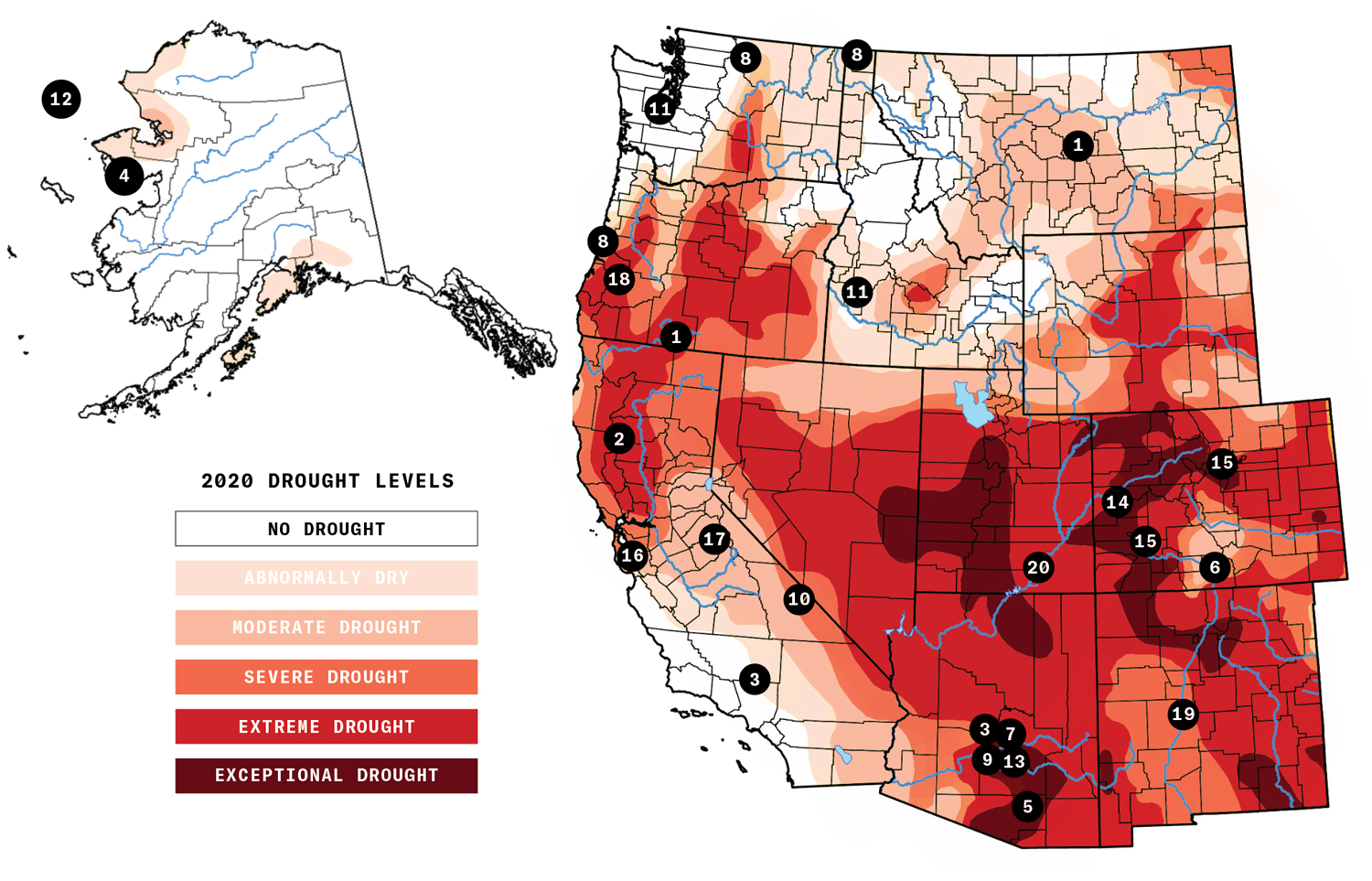
A massive drought developed over much of the western United States during 2020. The dry conditions fueled historic wildfires, many of which set new all-time records for size in states including Colorado and California. As of early December, several large cities in the west have recorded less than 10 inches of water for the year, and some are under 5 inches, such as Phoenix and Las Vegas.
West Drought Monitor December 1, 2020.
High Plains Drought Monitor December 1, 2020.
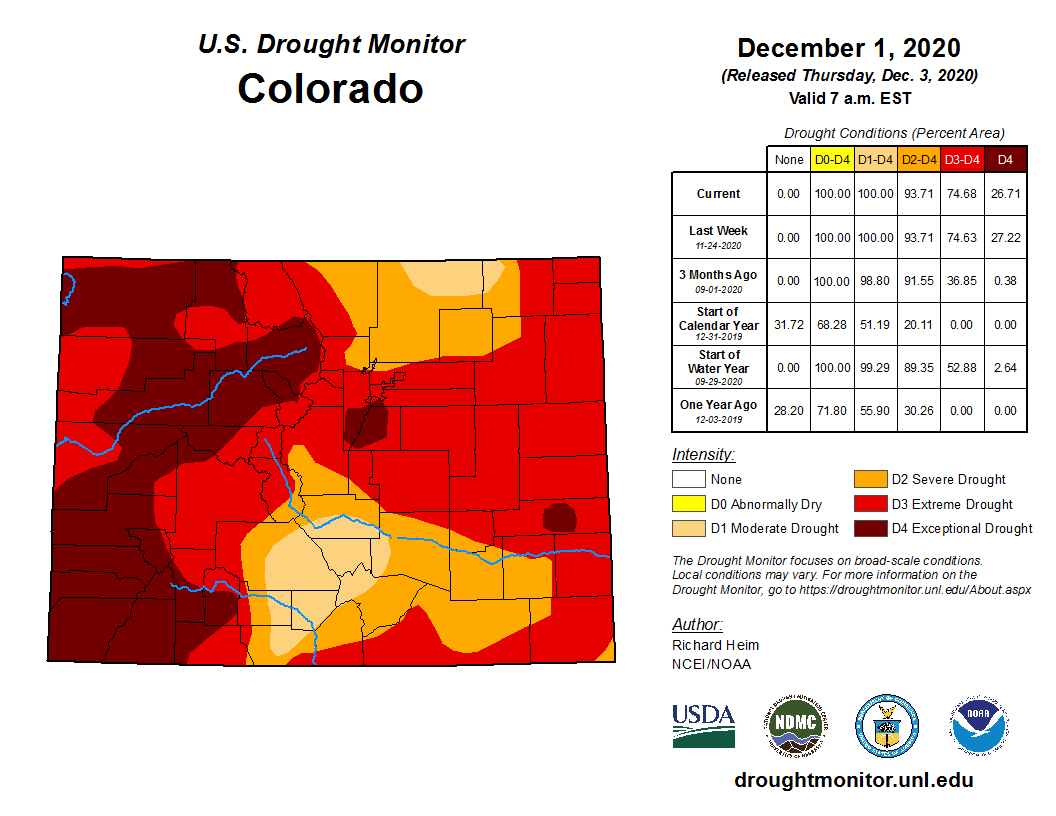
Colorado Drought Monitor December 1, 2020.
When the U.S. Drought Monitor released their weekly report in early December nearly 3/4 of the state of Colorado was classified as being in either extreme or exceptional drought. The rest of the state is in either moderate or severe drought.
At the official weather station for Denver, which is located at Denver International Airport, 8.17 inches of rain and melted snow was measured between January 1 and December 6. That lands 2020 in 5th place on the list of top 5 driest years since records began in 1872…
t’s pretty safe to assume that Denver will end in the top 10 driest years in recorded history based off the current weather trend. There is also a decent chance it will hold the current position on the top 5 list.
The Cameron Peak fire soon after it started on Aug. 13, 2020. By Sept. 11, the fire had grown to more than 102,000 acres (now >200,000 acres) and was not expected to be considered out until Oct. 31. Photo credit: InciWeb via The Colorado Sun
One year ago, exactly zero parts of Colorado were officially designated as being abnormally dry or in drought. What a difference a year makes.
Now, even as the ski season starts up, every corner of our state is facing drought conditions. As the effects of unchecked climate change continue to worsen, these conditions, which previously would have been considered extreme, are sadly becoming the new normal, and the impacts are wide ranging.
As Coloradans know all too well, these hot, dry conditions played a significant role in fueling wildfires that tragically steal away lives, communities and our beloved natural landscapes. Images from recent months of families fleeing burning homes and beleaguered firefighters waging battle while air tankers swoop overheard are pictures that we won’t soon forget.
Some of these record-breaking wildfires — like Cameron Peak — are still burning, even as it snows. Last year, the Fern Creek Fire burned all winter, in a place where fire has not occurred in 500 years.
The impacts of these disasters stretch well beyond the fire lines, and have downstream effects on our precious rivers and waterways.
Colorado’s mountains supply water to seven downstream states and the wildfires can directly impact the quantity and quality of that water. This problem is likely to only worsen in the years and decades ahead, which is why we need to take action now to safeguard our water supplies and ensure that our state’s vital natural resources are protected.
This may seem like a daunting problem, but there is so much that our society can do. Fortunately, voters know that protecting our water is critical. Colorado voters are notoriously anti-tax, but on Nov. 3, voters in 23 Colorado counties approved two ballot measures to protect our water and rivers. That follows 2019, where statewide voters approved a measure to provide as much as $29 million annually to implement Colorado’s Water Plan. Similar local county measures were enacted in 2016 and 2018.
The results are clear: Coloradans are aware of the threats facing our water supplies and are willing to dedicate state resources toward preserving and protecting them.
The dollars from these measures are critical and will go a long way toward protecting our water for future Coloradans, but only if we leverage them in the right ways and build on a coalition. This is an all-hands-on-deck moment, and if we’re serious about tackling these issues we need to marshal all of the support we can find and elicit the help of as many stakeholders as possible.
The federal government can help by funding water conservation efforts by both cities and the agricultural sector, who have both been largely leading the charge. It also can help support natural water storage and build on “natural infrastructure,” i.e. natural or naturalized areas that are strategically managed to conserve the ecosystem’s protective functions while also providing economic and societal benefits.
What does that mean in layman’s terms? It means providing jobs to restore healthy forests. It means safeguarding the wetlands and streams that naturally clean our water, provide firebreaks, and support the wildlife and scenery for which our state is famous. We know these techniques can work, we just need the resources to properly implement them.
And the only way to protect enough forests, wetlands and streams at a big enough scale to make a difference is to layer public funds with other sources of funding in creative ways. The innovative Environmental Impact Fund under development in southwest Colorado is a perfect example of such creativity.
This fund is the result of years of partnerships and collaboration that have brought all stakeholders together with local leadership — homeowners, water providers, agriculture, hikers and agencies. They are working together to combine and leverage funding so that they can protect forests and water resources in a coordinated and cost-efficient way that provides jobs, reaches economies of scale, and protects the community and its water for people, agriculture and nature.
Finally, let’s not forget that all of this helps implement Colorado’s Water Plan, which is currently marking its fifth anniversary. The plan was developed with input from community leaders and residents throughout the state. The resulting plan outlines solutions to address the gap between our finite water supplies and demand, while setting a goal of achieving 400,000 acre-feet of municipal and industrial water conservation savings by 2050. It also outlines steps for maintaining our vital agricultural economy, which bolsters our communities while supplying food and fiber around the world.
Studies show that the entire American Southwest is on the precipice of a historic megadrought, which means that our climate and ecosystems are entering into uncharted territory. The future is already here: We must act now to help our communities and environment navigate future wildfires and intensifying drought.
Protecting Colorado’s rivers and streams today means acting to protect future generations of Coloradans. But we’re Coloradans. We have proven that water is an issue that unites us, and we are poised to lead the nation on creative and effective solutions to address this issue head-on.
Jill Ozarski is a program officer in the Environment Program focusing on the Colorado River initiative for the Walton Family Foundation.
There’s new evidence about the extent of pollution from PFAS compounds—the so-called “forever chemicals”—that were used in non-stick cookware and many other products like firefighting foam and food packaging. PFAS has been linked to suppressed immune function, cancers, and other human health issues. Now, the compounds have been found in a mosquito pesticide, Anvil 10+10, which has been widely applied across the country and could be contaminating water supplies with the toxins.
Mosquito abatement | Credit: Don McCullough/Creative Commons via H2O Radio
Anvil is sprayed from helicopters, airplanes, and trucks and is used in at least 25 states from Massachusetts to California. A group known as Public Employees for Environmental Responsibility (PEER) found PFAS in Anvil samples, and as the Boston Globe reports, the state of Massachusetts confirmed the pesticide contains the compounds. Given the widespread use of the pesticide over the years, specialists say it’s likely that the chemicals have leached into groundwater and other water sources.
The Clarke company, which makes the product, said no PFAS ingredients are used in the formulation of Anvil, but acknowledged the chemicals could have been introduced though manufacturing or packaging. Officials at EPA, who’ve been criticized for delaying new standards to reduce PFAS exposure, said they were looking into the findings and plan to conduct their own analysis.
A representative of PEER said it’s frightening that we do not know how many other pesticides, insecticides, or even disinfectants contain PFAS.
Food & Water Watch executive director Wenonah Hauter declared that these findings shock the conscience and that states likely have unknowingly contaminated communities’ water with PFAS hidden in pesticides, and she charged that, once again, the EPA has failed to protect the American people from harmful pollution.
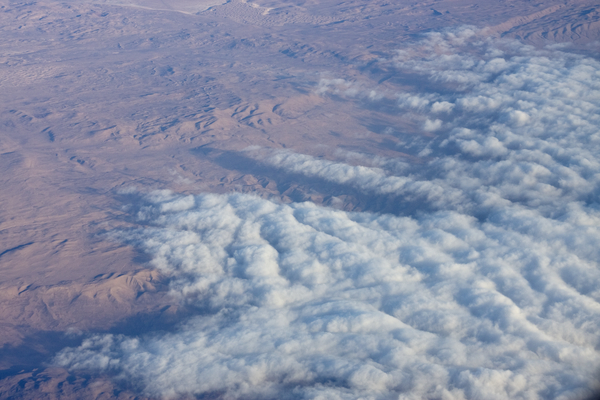
Marine stratocumulus clouds from the Pacific Ocean stream atop Chile’s Atacama Desert. Marine stratocumulus cover vast swaths of the tropical and subtropical oceans, where they reflect large amounts of sunlight and provide an overall cooling effect on climate. New global climate models are showing the potential for more global warming than long thought, perhaps due to a reduction in low-level clouds such as marine stratocumulus. Image credit: NCAR/UCAR Image and Multimedia Gallery.
The Intergovernmental Panel on Climate Change (IPCC) has opened a meeting in hybrid format to consider essential business as work on the Sixth Assessment Report advances amid the challenges of the COVID-19 pandemic.
Representatives of the IPCC’s 195 Member countries, meeting in the 53rd Session of the Panel, will convene for the first time in a format combining exchanges in writing and online discussions, as a face-to-face meeting remains impossible.
The main business of the 53rd Session will be to agree the IPCC budget for the coming year. This Session of the Panel will reconvene in early 2021 to consider other urgent business matters.
The Panel is meeting as members of the IPCC Bureau and authors continue their work on AR6. The pandemic has led to delays of 3-4 months in some of the milestones for the preparation of AR6 this year, and the release dates of the report remain under review.
In a letter to delegates opening the Session, IPCC Chair Hoesung Lee thanked the Secretariat for finding a way to hold a meeting that was consistent with the IPCC Principles and Procedures and did not disadvantage any delegates on the basis of connectivity or time zones.
“Their determination to keep the business of the IPCC flowing smoothly parallels the huge efforts and creativity of the Working Groups and their authors and Technical Support Units to advance work on the Sixth Assessment Report despite the pandemic,” he said.
The Intergovernmental Panel on Climate Change (IPCC) is the UN body for assessing the science related to climate change. It was established by the United Nations Environment Programme (UNEP) and the World Meteorological Organization (WMO) in 1988 to provide political leaders with periodic scientific assessments concerning climate change, its implications and risks, as well as to put forward adaptation and mitigation strategies. In the same year the UN General Assembly endorsed the action by the WMO and UNEP in jointly establishing the IPCC. It has 195 member states.
Thousands of people from all over the world contribute to the work of the IPCC. For the assessment reports, IPCC scientists volunteer their time to assess the thousands of scientific papers published each year to provide a comprehensive summary of what is known about the drivers of climate change, its impacts and future risks, and how adaptation and mitigation can reduce those risks.
The IPCC has three working groups: Working Group I, dealing with the physical science basis of climate change; Working Group I, dealing with impacts, adaptation and vulnerability; and Working Group III, dealing with the mitigation of climate change. It also has a Task Force on National Greenhouse Gas Inventories that develops methodologies for measuring emissions and removals.
IPCC assessments provide governments, at all levels, with scientific information that they can use to develop climate policies. IPCC assessments are a key input into the international negotiations to tackle climate change. IPCC reports are drafted and reviewed in several stages, thus guaranteeing objectivity and transparency.
About the Sixth Assessment Cycle
Comprehensive scientific assessment reports are published every 6 to 7 years; the latest, the Fifth Assessment Report, was completed in 2014 and provided the main scientific input to the Paris Agreement.
At its 41st Session in February 2015, the IPCC decided to produce a Sixth Assessment Report (AR6). At its 42nd Session in October 2015 it elected a new Bureau that would oversee the work on this report and Special Reports to be produced in the assessment cycle. At its 43rd Session in April 2016, it decided to produce three Special Reports, a Methodology Report and AR6.
The IPCC also publishes special reports on more specific issues between assessment reports.
Global Warming of 1.5°C, an IPCC special report on the impacts of global warming of 1.5 degrees Celsius above pre-industrial levels and related global greenhouse gas emission pathways, in the context of strengthening the global response to the threat of climate change, sustainable development, and efforts to eradicate poverty was launched in October 2018.
Climate Change and Land, an IPCC special report on climate change, desertification, land degradation, sustainable land management, food security, and greenhouse gas fluxes in terrestrial ecosystems was launched in August 2019, and the Special Report on the Ocean and Cryosphere in a Changing Climate was released in September 2019.
In May 2019 the IPCC released the 2019 Refinement to the 2006 IPCC Guidelines on National Greenhouse Gas Inventories, an update to the methodology used by governments to estimate their greenhouse gas emissions and removals.
The contributions of the three IPCC Working Groups to the Sixth Assessment Report are currently under preparation. The concluding Synthesis Report is due in 2022.
The website includes outreach materials including videos about the IPCC and video recordings from outreach events conducted as webinars or live-streamed events.
Most videos published by the IPCC can be found on our YouTube channel.
The IPCC is currently in its Sixth Assessment cycle, during which the IPCC will produce the Assessment reports of its three working groups, three special reports, a refinement to the methodology report and the Synthesis report. The Synthesis Report will be the last of the AR6 products, due for release in 2022.
According to IPCC procedures the Synthesis Reports (SYRs) should “synthesise and integrate materials contained within the Assessment Reports and Special Reports” and “should be written in a non-technical style suitable for policymakers and address a broad range of policy-relevant but policy-neutral questions approved by the Panel”. They are composed of two sections, a Summary for Policymakers (SPM) of 5 to 10 pages and a longer report of 30 to 50 pages.
The writing of AR6 SYR will be based on the content of the three Working Groups Assessment Reports: WG1 – The Physical Science Basis, WG2 – Impacts, Adaptation and Vulnerability, WG3 – Mitigation of Climate change, and the three Special Reports: Global Warming of 1.5°C, Climate Change and Land, The Ocean and Cryosphere in a Changing Climate.
It might also take into account issues considered in other global assessment (such as Intergovernmental Platform for Biodiversity and Ecosystem Services and UN Environment’s Sixth Global Environment Outlook), if those issues are also addressed in the above-mentioned reports.
AR6 SYR will be finalized in the first half of 2022 in time for the first global stocktake under the Paris Agreement.
East Troublesome Fire. Photo credit: Brad White via The Mountain Town News
FromThe Sky-Hi News (Amy Golden) via The Summit Daily:
Formal damage assessments for structures in the county have been completed after the East Troublesome Fire scorched through nearly 200,000 acres in northern Grand County. According to those reports, 555 structures were destroyed, nine buildings suffered major damage and 34 sustained minor damage.
Among the buildings destroyed, 366 were residential and 189 were outbuildings. More than 200 were people’s primary residences.
Two surveys went out — one to evacuees and one to homeowners — to begin connecting those in need of a place to stay with those willing to lease out their home. Darland said more than 190 homeowners signed up to offer their houses to the roughly 50 families who responded needing some sort of housing.
However, many of these homes are only available through the spring. Darland and the county are working with community partners like Snow Mountain Ranch and Sun Communities to find a longer-term solution while seeking funding from state and federal sources…
Ten buildings belonging to businesses were also destroyed in the fire.
That includes buildings at C Lazy U Ranch, Winding River Ranch and Highland Marina. Two longtime outfitters in the area — Dave Parri’s Outfitting & Guide Service and Samuelson Outfitters — have also suffered heavy losses.
Three generations of the Samuelson family have operated in the Troublesome Basin for more than half a century. Cathy Samuelson and her husband Richard “Sambo” Samuelson lost most of the 2020 hunting season because of the fire and two of their camps were destroyed. Two employees lost their homes in the fire as well…
East Troublesome Fire and Cameron Peak Fire map via Inciweb December 7, 2020.
Acreage-wise, the fire burned almost 15% of the land in Grand County. With tourism and recreation being Grand’s primary economic driver, the burn scar over public lands — spanning Bureau of Land Management, US Forest Service and Rocky Mountain National Park — could hamper tourism for years to come.
The county said many ranches have reported a significant or total loss of hay intended for winter feeding of livestock. Damages and impacts associated with agricultural land and operations are ongoing.
The burned lands incorporated significant grazing leases held by local producers, and impacts to agriculture irrigation supply and delivery are being assessed…
In a letter to the Colorado Department of Public Safety, the estimated costs of the county’s response has been roughly $352,000 as of Nov. 12. Those expenses include $80,000 for staff, logistics and emergency protective actions in the Office of Emergency Management; $150,000 for evacuations and emergency protective actions for the Grand County Sheriff; and $76,000 in overtime for county government employees…
Before the East Troublesome Fire, the county had been battling the nearly 15,000-acre Williams Fork Fire for over a month. Other fires the county responded to during this dry year included the Dice Hill Fire just on the other side of the Summit County line and the Deep Creek Fire outside Kremmling.
Debris removal from the East Troublesome Fire will likely be too much for the county to handle alone. Grand has estimated that debris could exceed over 30,000 cubic yards and cost more than $27 million to haul off…
Water’s depths
Various watersheds hit by the fire — including the Poudre River, North Fork of the Big Thompson River, North Fork Colorado River, Three Lakes, Willow Creek and the East Troublesome Creek — are expected to feel the effects for a long time.
These impacts will reach far beyond Grand County, which supplies water to major cities on the northern Front Range. Northern Water provides water to more than a million people, which is equal to 615,000 irrigated acres in northern Colorado.
“Sedimentation, debris flows and water contamination will threaten drinking water supplies for years to come,” the commissioners said.
Other environmental impacts like erosion and forest health are only just beginning to be evaluated.
Hazard tree removal is another concern, as fire damage has made many trees in the burn area a falling hazard. The Colorado State Forester estimates over 1,000 trees will need to be removed in county right of ways…
Estimates peg the overall damage from the fire at nearly $200 million. That amount could go up as the aftermath grows clearer.
A burnt sign on Larimer County Road 103 near Chambers Lake. The fire started in the area near Cameron Peak, which it is named after. The fire burned over 200,000 acres during its three-month run. Photo courtesy of Kate Stahla via the University of Northern Colorado
From the University of Northern Colorado (Kate Stahla):
Ash darkens the sky. The sun is completely blacked out. Everything has an eerie orange glow. Cinders rain down and cover every surface with soot. This isn’t some apocalyptic movie or dystopian future. This is real life on the Colorado Front Range.
2020 has been an active fire year. Four of Colorado’s top five wildfires burned this year. Air quality on the front range has been dire, especially considering the ongoing respiratory pandemic. Now that the two largest fires of the summer are now both sitting at 100% containment, Colorado must face its increasingly flammable future.
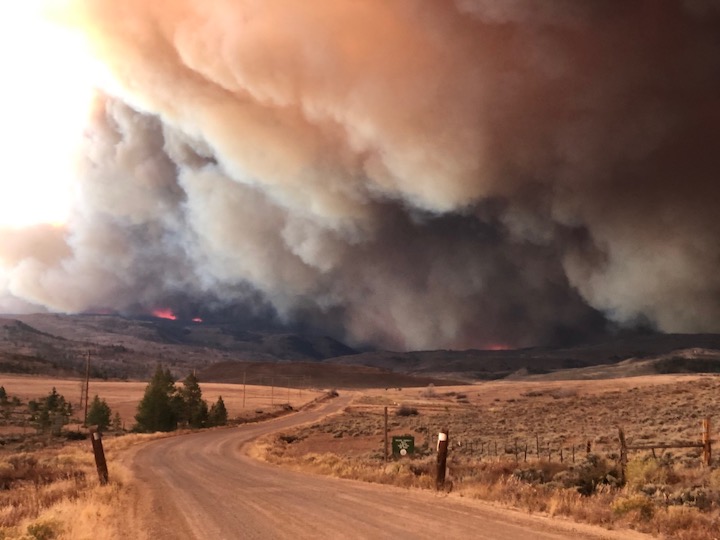
The Cameron Peak fire started Aug. 13 in the mountains near Chambers Lake. It smoldered for months until a mid-October wind storm propelled it into becoming the largest wildfire in Colorado history. By the time fire crews completely contained it, on Dec. 3, it had burned up over 200,000 acres.
The East Troublesome fire has an even more explosive story. The fire was reported near Parshall Oct. 14 and contained Nov. 30, but in that short span grew to be the state’s second-largest fire. The fire grew by over 87,000 acres between Oct. 21 and 22, destroyed parts of Grand Lake and threatened Granby and Estes Park.
These fires were a consequence of the long-term drought and pine beetle epidemic that Colorado is facing. According to the official incident report for the East Troublesome fire, between 60-80% of trees burned had already been killed by pine beetles. That, combined with dry and windy conditions, created a perfect storm for fire conditions.
The outlook isn’t good for fires in the future. Many of the areas that were not burned are littered with downed and dead trees. According to the University of Nebraska-Lincoln, the entire state of Colorado is experiencing some form of drought. Some of the hardest hit areas are the headwaters of the Colorado and Cache la Poudre rivers — right where the fires started.
These watersheds are vital to the survival of the Front Range. Water from the Colorado river is pumped into the Big Thompson and supplies farms and cities throughout Northern Colorado. The Poudre river provides water and recreation to Fort Collins and Greeley. Because of the fires at their headwaters, flash floods and ash contamination are now more likely.
Ash and smoke blotted out the sky and directly impacted air quality on the Front Range. People were advised to stay inside and avoid exercising. Temperatures under the ash plumes could be 10 degrees lower than under the sun. UNC students, already coping with a deadly respiratory virus, also had to contend with dangerous levels of smoke. Callista Gallegos, a UNC student, had a difficult time facing both at once.
“Half the time I couldn’t go outside because I would not be able to breathe, so I was literally stuck inside and it was awful,” she said.
This year’s fire season is now over, but it contains lessons for the future. Colorado has been grappling with the effects of climate change for a while. Four of Colorado’s top five wildfires burned this year, and all of Colorado’s top ten wildfires have burned since 2000. Whether or not worse things are to come depends entirely on what actions are taken now.
Here’s the release from the Environmental Protection AgencyK:
Aggressively addressing per- and polyfluoroalkyl substances (PFAS) in the environment continues to be an active and ongoing priority for the U.S. Environmental Protection Agency (EPA). Today, the agency is announcing two important steps to address PFAS. First, EPA issued a memorandum detailing an interim National Pollutant Discharge Elimination System (NPDES) permitting strategy for addressing PFAS in EPA-issued wastewater permits. Second, EPA released information on progress in developing new analytical methods to test for PFAS compounds in wastewater and other environmental media. Together, these actions help ensure that federally enforceable wastewater monitoring for PFAS can begin as soon as validated analytical methods are finalized.
“Better understanding and addressing PFAS is a top priority for EPA, and the agency is continuing to develop needed research and policies,” said EPA Administrator Andrew Wheeler. “For the first time in EPA’s history, we are utilizing all of our program offices to address a singular, cross-cutting contaminant and the agency’s efforts are critical to supporting our state and local partners.”
“Managing and mitigating PFAS in water is a priority for the Office of Water as we continue our focus on meeting 21st century challenges,” said EPA Assistant Administrator for Water David Ross. “These actions mark important steps in developing the underlying science and permitting techniques to address PFAS in wastewater where the discharge of these chemicals may be of concern.”
EPA’s interim NPDES permitting strategy for PFAS provides recommendations from a cross-agency workgroup on an interim approach to include PFAS-related conditions in EPA-issued NPDES permits. EPA is the permitting authority for three states (Massachusetts, New Hampshire, New Mexico), the District of Columbia, most U.S. territories including Puerto Rico, Indian Country, and certain federal facilities. The strategy advises EPA permit writers to consider including PFAS monitoring at facilities where these chemicals are expected to be present in wastewater discharges, including from municipal separate storm sewer systems and industrial stormwater permits. The PFAS that could be considered for monitoring are those that will have validated EPA analytical methods for wastewater testing, which the agency anticipates being available on a phased-in schedule as multi-lab validated wastewater analytical methods are finalized. The agency’s interim strategy also encourages the use of best management practices where appropriate to control or abate the discharge of PFAS and includes recommendations to facilitate information sharing to foster adoption of best practices across states and localities.
In coordination with the interim NPDES permitting strategy, EPA is also providing information on the status of analytical methods needed to test for PFAS in wastewater. EPA is developing analytical methods in collaboration with the U.S. Department of Defense to test for PFAS in wastewater and other environmental media, such as soils. The agency is releasing a list of 40 PFAS chemicals that are the subject of analytical method development. This method would be in addition to Method 533 and Method 537.1 that are already approved and can measure 29 PFAS chemicals in drinking water. EPA anticipates that multi-lab validated testing for PFAS will be finalized in 2021. For more information on testing method validation, see https://www.epa.gov/cwa-methods.
Background
EPA continues to make progress under its PFAS Action Plan to protect the environment and human health, including:
Highlighted Action: Drinking Water
In December 2019, EPA accomplished a key milestone in the PFAS Action Plan by publishing a new validated method to accurately test for 11 additional PFAS in drinking water. Method 533 complements EPA Method 537.1, and the agency can now measure 29 chemicals.
In February 2020, EPA took an important step in implementing the agency’s PFAS Action Plan by proposing to regulate PFOA and PFOS drinking water.
EPA also asked for information and data on other PFAS substances, as well as sought comment on potential monitoring requirements and regulatory approaches.
In November 2020, EPA issued a memo detailing an interim National Pollutant Discharge Elimination (NPDES) permitting strategy for PFAS. The agency also released information on progress in developing new analytical methods to test for PFAS compounds in wastewater and other environmental media.
The recommendations provide a starting point for making site-specific cleanup decisions and will help protect drinking water resources in communities across the country.
In July 2020, EPA submitted the Interim Guidance on the Destruction and Disposal of PFAS and Materials Containing PFAS to OMB for interagency review. The guidance would:
Provide information on technologies that may be feasible and appropriate for the destruction or disposal of PFAS and PFAS-containing materials.
Identify ongoing research and development activities related to destruction and disposal technologies, which may inform future guidance.
EPA is working on the proposed rule to designate PFOA and PFOS as hazardous substances under CERCLA. In the absence of the rule, EPA has used its existing authorities to compel cleanups.
Highlighted Action: Monitoring
In July 2020, EPA transmitted the Unregulated Contaminant Monitoring Rule 5 (UCMR 5) proposal to the Office of Management and Budget (OMB) for interagency review. EPA anticipates proposing nationwide drinking water monitoring for PFAS that uses new methods that can detect PFAS at lower concentrations than previously possible.
Highlighted Action: Toxics
In September 2019, EPA issued an advanced notice of proposed rulemaking that would allow the public to provide input on adding PFAS to the Toxics Release Inventory toxic chemical list.
In June 2020, EPA issued a final regulation that added a list of 172 PFAS chemicals to Toxics Release Inventory reporting as required by the National Defense Authorization Act for Fiscal Year 2020.
In July 2020, EPA issued a final regulation that can stop products containing PFAS from entering or reentering the marketplace without EPA’s explicit permission.
Highlighted Action: Scientific Leadership
EPA continues to compile and assess human and ecological toxicity information on PFAS to support risk management decisions.
EPA continues to develop new methods to test for additional PFAS in drinking water.
The agency is also validating analytical methods for surface water, groundwater, wastewater, soils, sediments and biosolids; developing new methods to test for PFAS in air and emissions; and improving laboratory methods to discover unknown PFAS.
EPA is developing exposure models to understand how PFAS moves through the environment to impact people and ecosystems.
EPA is working to develop tools to assist officials with the cleanup of contaminated sites.
In July 2020, EPA added new treatment information for removing PFAS from drinking water.
Highlighted Action: Technical Assistance
Just as important as the progress on PFAS at the federal level are EPA efforts to form partnerships with states, tribes, and local communities across the country.
EPA has provided assistance to more than 30 states to help address PFAS, and the agency is continuing to build on this support.
These joint projects allow EPA to take the knowledge of its world-class scientists and apply it in a collaborative fashion where it counts most.
Highlighted Action: Enforcement
EPA continues to use enforcement tools, when appropriate, to address PFAS exposure in the environment and assist states in enforcement activities.
EPA has already taken actions to address PFAS, including issuing Safe Drinking Water Act orders and providing support to states. See examples in the PFAS Action Plan.
To date, across the nation, EPA has addressed PFAS in 15 cases using a variety of enforcement tools under SDWA, TSCA, RCRA, and CERCLA (where appropriate), and will continue to do so to protect public health and the environment.
Highlighted Action: Grants and Funding
Under this Administration, EPA’s Office of Research and Development has awarded over $15 million through dozens of grants for PFAS research.
In May 2019, EPA awarded approximately $3.9 million through two grants for research that will improve the agency’s understanding of human and ecological exposure to PFAS in the environment. This research will also promote a greater awareness of how to restore water quality in PFAS-impacted communities.
In September 2019, EPA awarded nearly $6 million to fund research by eight organizations to expand the agency’s understanding of the environmental risks posed by PFAS in waste streams and to identify practical approaches to manage potential impacts as PFAS enters the environment.
In August 2020, EPA awarded $4.8 million in funding for federal research to help identify potential impacts of PFAS to farms, ranches, and rural communities.
Highlighted Action: Risk Communications
EPA is working collaboratively to develop a risk communication toolbox that includes multimedia materials and messaging for federal, state, tribal, and local partners to use with the public.
Susan Greene talks mental health during drought in today’s The Colorado Sun. Click through and read the whole article. Here’s an excerpt:
Week after rainless week throughout the growing season has wounded not just local farmland, but also on the emotional landscape
Here in Kiowa County, farmers have always relied on whatever moisture happens to fall from the sky rather than on irrigation. In August, this 1,300-person community bordering on Kansas was the first part of Colorado where drought conditions surpassed “extreme” to a level meteorologists call “exceptional.”
That designation – which since has hit wide swaths of the West Slope – stands out on the drought map as a big brown pock.
Colorado Drought Monitor December 1, 2020.
Week after rainless week throughout this year’s growing season, it festered like a wound not just on local farmland, but also on the emotional landscape.
“It’s horrible, just horrible, the ways drought can affect the human mind,” says Jimmy Brown, a third-generation farmer in Eads whose wheat and grain sorghum crops withered this year, just like those of his neighbors. “I doubt there’s a person here whose mental health hasn’t been affected by it.”
The Eastern Plains have had dry spells. Some old-timers remember Dust Bowl conditions in the 1930s. Their children weathered extreme drought in the mid-1950s, and their children’s children endured acute dryness in 2002 and 2012. Each generation has taught the next to take the long view because they have learned that wishing – or praying – for rain doesn’t make it happen.
Yet nobody here can remember a year so parched that little grew higher than their work boots. No one recalls ground so dry that even the bindweed stopped growing. Nobody had seen so many rain clouds roll in late afternoons during monsoon season, only to watch them keep rolling eastward without bursting…
Brown, in addition to farming, serves as Kiowa County’s elected coroner and lone funeral director. He’s not a mental health expert, but is more tuned in than most to how locals are feeling. With drought, he says, comes uncertainty, even among majority of growers who carry insurance compensating them for the losses. With uncertainty come powerlessness, irritability and dread.
Rancher and fly-fishing guide Paul Bruchez raises cattle on 6,000 acres near Kremmling. Bruchez has taken an active role in Colorado River issues ever since his family suffered from a critical water shortage during the 2002 drought. Photo credit: Russ Schnitzer via Aspen Journalism
Politico (Annie Snider) takes a deep dive featuring Paul Bruchez and the efforts to keep water in the Colorado River. Click through and read the whole thing. Here’s an excerpt:
The power politics of the Colorado River have long pitted families like Paul Bruchez’s against big cities. Under pressure from climate change, they might be finding a path out.
Paul Bruchez’s family has ranched cattle in Colorado for five generations. And twice in his lifetime, his generation has nearly become the last.
The first time, it was the city of Denver that squeezed them out. By the 1990s, when Bruchez was still in high school, the city’s fast-growing suburbs had swept north and totally surrounded their roughly 2,000 acres in Westminster. Bruchez’s father had taken dirt roads to get to school, but by the time Bruchez was a teenager development had engulfed the family homestead so completely that at one point the city needed to send a police escort to help move their harvest equipment safely between fields on what were by then city roads. Running a full-scale farm operation in the middle of a city soon became untenable and the family opted to cut a land deal with the city and start fresh on the other side of the Rocky Mountains.
The second time, it was a drought. Their new land near Kremmling, a small ranching community 100 miles to the west, had one particularly appealing feature for a family that needed hay to feed its cattle: the Colorado River literally ran through it. The ice-cold mountain runoff from the river’s headwaters in Rocky Mountain National Park would feed their land through a network of ditches, offering plentiful water to grow 2,000 acres of hay. And for a family of fly fishermen, it had another attraction. The lush cottonwood trees lining the main stem of the river promised cool water and insects, a spot where trout would bite.
They had one good year before the ditches went dry.
The drought hit while Bruchez was in college and his father was facing a battle with cancer, and it nearly bankrupted the family. It marked the beginning of Bruchez’s mission to secure the future of not just his family’s operation, but the very West that made cowboys like him…
Technically, families like Bruchez’s have the upper hand in water disputes. The whole Western water system is built on a roughly 150-year-old legal regime that gives priority access to whoever put the water to use first. Farmers and ranchers led the settlement of the West, giving them the most “senior” rights and ensuring that they get their water before newer users like sprawling suburbs. Some 70 percent of the Colorado River’s flow is consumed by agriculture.
But as climate change keeps squeezing the water supply, the ranchers’ position is growing more precarious. They are far less powerful and wealthy than the cities that need water, which have often swooped in and bought out farms for their water rights. It is inevitable, now, that large amounts of water will have to leave agriculture in order to sustain cities and suburbs in the far-drier future; the question is simply whether it can be done in a way that keeps agriculture on the landscape.
Over the past century, Denver, Boulder and other cities on Colorado’s dry Front Range have steadily bought up farmers’ water rights on the wet, western slope of the Rockies and built massive, transmountain tunnels to ship the water to thirsty city dwellers. Today, roughly 65 percent of the water that would naturally flow into Grand County, where Kremmling sits, is diverted elsewhere. Many farm and ranch families nurse a grudge to this day, holding tight to the old Mark Twain adage that “whiskey is for drinking; water is for fighting.”
But Bruchez’s twin near-disasters and his path to recovering from them led him to a different conclusion: that in the long term, financial and climatic forces are aligned against agriculture, and ranchers and farmers are likely to lose if they don’t find a way to make themselves part of the solution.
Instead of seeing agriculture and new suburbanites as locked in a zero-sum struggle over who gets the West’s diminishing water, Bruchez has spent the past two decades hatching a series of projects to help ranchers by making common cause with sportsmen, environmental groups and even some big city water officials and lawyers.
Now, Bruchez has emerged as a leading voice for agriculture in Colorado as the state explores a controversial new scheme to manage its own, internal water usage—almost certainly by paying farmers to forgo using their water—in a bid to avoid a nightmare scenario in which river flows dip so low that the terms of a 1922 river compact force junior users like cities to be abruptly cut off. It’s an idea that has been knocking around water policy circles across the West for years without action, but that could be called into place quickly if the river’s flows continue to shrink rapidly.
Bruchez, 39, is as comfortable on a Zoom conference call with state water managers as he is riding horseback with a neighbor to steer cattle away from a quickly spreading forest fire, and in between he steals quiet moments to cast a line into the nearby river, in search of a rainbow or brown trout. What drives him is not just a desire to protect his family’s way of life, but to prove that farmers and ranchers aren’t just part of a mythical Western past but can be a part of the solution to weathering climate change and preserving the environment for the future.
Click here for posts on Coyote Gulch that mention Paul.
Rancher and fly fishing guide Paul Bruchez (Source: Russell Schnitzer, used with permission via the Water Education Foundation)
This mowed hay field is part of Reeder Creek Ranch, owned by the Bruchez family near Kremmling. Little data exists on the impacts of reducing irrigation water on higher elevation pastures like this one, but Paul Bruchez and a group of local ranchers have volunteered their fields for a study that will help scientists learn more about what happens to pastures that receive less irrigation water. Photo credit: Paul Bruchez via Aspen Journalism
Rancher and fly fishing guide Paul Bruchez’s daughter and nephew sit in a hay field at the family ranch near Kremmling. Bruchez is helping spearhead a study among local ranchers, which could inform a potential statewide demand management program. Photo credit: Paul Bruchez via Aspen Journalism
Funds provided by grants and landowners near Kremmling, Colorado, have facilitated improvements such as this back stabilization project. (Source: Paul Bruchez)
Restoration work along the Colorado River reestablished a riverbank more conducive to irrigation access. (Source: Paul Bruchez)
Banks erosion along the Colorado River near Kremmling, Colorado, affected the ability of irrigators to convey water through ditches. (Source: Paul Bruchez)
Channel and habitat improvement projects along the Upper Colorado River promote irrigation systems and soil and water quality near Kremmling, Colorado. (Source: Paul Bruchez)
Stream improvements on the Upper Colorado River have been going on for five years, the result of a collaborative effort by ranchers and others near Kremmling, Colorado, and Trout Unlimited. (Source Paul Bruchez)
Strategic placement of rocks promotes a more natural streamflow that benefits ranchers and fish. (Source: Paul Bruchez)
So far, Mother Nature hasn’t gifted Colorado with much snow overall, and that’s following a dry summer that has left Montrose and other counties locked in exceptional drought. Because it is early enough in the winter season, though, water users and hydrologists aren’t panicking.
“It’s concerning, but we’ve survived before. We’ll survive again,” Steve Anderson, manager of the Uncompahgre Water Users Association, said. “It’s a lot easier to run the project when you’ve got lots of ammunition. I certainly hope we get some snowpack this winter, and we’ll go from there.”
The water users association, or UVWUA, stores its water rights allocations in Ridgway and Taylor Park reservoirs. This past spring, it was faced with a “hole,” when, because of less snow and colder weather in the high country, there was not enough water to feed the project in April. The association at the time took some from its storage to meet contracts; it was able to meet demands for its irrigation season.
As of Monday, Ridgway Reservoir held 52,185 acre-feet of water and sat at an elevation of about 6,837. Taylor Park stood at 67,491 acre-feet and about 9,308 elevation, according to U.S. Bureau of Reclamation data.
“We don’t have a full reservoir, but we’re awfully close at Taylor,” Anderson said.
The big bucket for the Aspinall Unit, Blue Mesa Reservoir, was at 7,464 elevation and 399,755 acre-feet on Monday. It’s sitting lower than what BuRec would like and the hope is for a winter of at least average precipitation.
“If we have another year like this year, operations will be challenging,” BuRec hydrologist Ryan Christianson said.
Normally, the bureau is releasing water from Blue Mesa to hit winter targets, but is about 25 feet below where hydrologists like to be for the winter.
When it comes to how full Blue Mesa is, though, at 48%, that’s typical for the lower part of the year.
Currently, there are about 2 inches of snow-water equivalent as the snowpack starts to build for the season. Over the course of a winter, there is typically 15 to 20 inches and it is not unusual to have only a few inches at this time of year, Christianson said.
The basin is about 15% of average for its typical median peak for snowpack, which tends to peak-out in early April. The basin has several months to catch up; however, below-average runoff is anticipated.
FromThe Grand Junction Daily Sentinel (Dennis Webb):
Preliminary data from the Natural Resources Conservation Service Colorado Snow Survey program pegged the statewide snowpack level at 82% of median on Tuesday.
Powderhorn had hoped to open the day after Thanksgiving Day but temperatures were too warm before then for it to make snow with its new system. But it’s now saying on its website that the Bill’s Run and Peacemaker trails will be open top to bottom thanks to its new system making snow “when Mother Nature has refused to cooperate.”;
[…]
NRCS data for snow measurement sites helps explain the challenges Powderhorn and some other Colorado resorts are facing. At Grand Mesa sites, measurements of snow-water equivalent are around half of average, with snow depths ranging from 5 to 14 inches.
Snowpack as of Tuesday was 73% of median for the Upper Colorado River Basin in Colorado and 71% in the Gunnison River Basin. Snowpack levels in basins in the state range from a low of 65% of median in the Yampa/White basins to 118% in the Upper Rio Grande Basin. That runs a bit counter to expectations for this winter, a La Niña winter characterized by below-average surface water temperatures in the equatorial eastern Pacific Ocean. Such winters tend to result in more snow in northern Colorado than southern Colorado.
Only one week ago today, the state’s snowpack was at 97% of median. The level of drop since then reflects not just a dry pattern in recent days but how quickly the percentage can change early in the snowpack season when overall accumulations are relatively low. Snowpack levels in the state generally don’t peak until sometime in early April.
Brian Domonkos, NRCS snow survey supervisor in Colorado, said he believes about 40% of the state’s snowpack typically accumulates by Jan. 1. This year’s snowpack is off to a slow start in a season where water-watchers hope to see it exceed average peak accumulation because of the drought that currently is gripping the entire state. Much of western Colorado, including eastern and southern Mesa County, is in exceptional drought, the worst category, according to the U.S. Drought Monitor.
That results in poor soil moisture, which means when the snow melts next year, more of it will be soaked into the ground and less will reach streams, just as happened this year when a fairly average snowpack in Colorado resulted in below-average runoff because of dry ground. This year, “the spigot turned off in April and May and then it got warm into June,” and that was followed by a monsoon season that failed to produce appreciable moisture, said Jim Pokrandt with the West Slope’s Colorado River District…
Warmer temperatures in the summer and fall aggravated things. That has further heightened the desire for an above-average snowpack this winter for the sake of farmers and ranchers, municipal utilities and others dependent on Colorado River water flows, given the inadequate runoff seen this past year.
As I’ve said before, average isn’t good enough anymore,” Pokrandt said…
Pokrandt said it’s still early in the snowpack season, too early to panic about how things may shape up. For the short term, though, there are no big storms on the horizon…
Longer term, the federal Climate Prediction Center is forecasting below-average precipitation in Colorado over the next 30 days. The same goes for its 90-day outlook for southern Colorado, whereas it is forecasting an equal chance of above- or below-average precipitation over that timeframe for northern Colorado.
Here’s the Westwide SNOTEL basin-filled map for December 4, 2020.
Westwide SNOTEL basin-filled map December 4, 2020 via the NRCS.
The drought that kept its grip on Pitkin County and most of Colorado all summer is now reaching into early winter.
November was the eighth month this year that precipitation at the Aspen Water Treatment Plant was below average…
There’s not much relief at least over the next weeks, [Kris Sanders] said. Expect generally dry conditions with an occasional storm…
The La Niña weather pattern that’s in place generally favors precipitation in the Northern Rockies. Colorado is in the transition zone, with conditions generally drier farther to the south. That leaves Aspen in a toss-up area.
The weather report filed by the Aspen Water Department for November detailed the lack of snow last month.
“There was 14 inches of snowfall recorded at the Water Treatment Plant, noticeably below the average of 21.8 inches,” the report said. “This correlated with below average total precipitation with 1.76 inches of moisture measured. The average is 1.99 inches.”
The dry conditions have affected ski season already. Aspen Highlands will be forced to open later than planned due to sparse snow cover, Aspen Skiing Co. announced Thursday.
January, March, May and July through November all fell short of par. Only February, April and June exceeded average.
For the calendar year, the water plant has received 17.95 inches of precipitation. The average is 20.62, according to data recorded by the water department. That’s a decrease of 8.7%.
The water plant tends to get decent precipitation due to its elevation at 8,148 feet. The farther downvalley, the drier conditions have been this year. At the National Weather Service station at Aspen-Pitkin County Airport, for example, only 8.5 inches of precipitation has fallen year-to-date, well below the average of 16.19 inches.
Graph of Roaring Fork snowpack December 4, 2020 via the NRCS.
The snowpack at the headwaters of the Roaring Fork River was at 69% of median Thursday.
Colorado Drought Monitor December 1, 2020.
The latest map released Thursday by the U.S Drought Monitor showed the western half of Pitkin County remains in the “exceptional drought” category, the highest possible. The eastern half of the county is considered in “extreme drought.” Almost all of Eagle and Garfield counties also are in the “exceptional drought” classification.
The outlook for December is for below average precipitation and above average temperatures for all of Colorado, according to the National Oceanic and Atmospheric Administration’s Climate Prediction Center Long Range Forecasts.
The three-month outlook indicates temperatures will be warmer than average for Colorado. Aspen and the Central Rocky Mountains have an equal chance of precipitation being above or below average.
“Observe, brainstorm, research, build and communicate.” That is what the brilliant young scientist and inventor Gitanjali Rao told actor and activist Angelina Jolie about her process, over Zoom, from her home in Colorado, during a break in her virtual schooling. Just 15 years old, Rao has been selected from a field of more than 5,000 nominees as TIME’s first ever Kid of the Year. She spoke about her astonishing work using technology to tackle issues ranging from contaminated drinking water to opioid addiction and cyberbullying, and about her mission to create a global community of young innovators to solve problems the world over. Even over video chat, her brilliant mind and generous spirit shone through, along with her inspiring message to other young people: don’t try to fix every problem, just focus on one that excites you. “If I can do it,” she said, “anybody can do it.”
This portion of the 58-mile mainstem of the Gunnison River just south of Whitewater has been designated as critical habitat for the Colorado pikeminnow and razorback sucker, which are two species of endangered fish. Programs aimed at reducing salt and selenium in the waterway are showing signs of success. Photo credit: Natalie Keltner-McNeil via Aspen Journalism
State water-quality officials will soon evaluate whether two water-improvement programs in the Gunnison River basin have successfully reduced a chemical that is toxic to endangered fish.
The Colorado Department of Public Health and Environment’s Water Quality Division is analyzing five years of data on selenium levels in the Gunnison, where heightened selenium and salinity have harmed Colorado pikeminnow and razorback sucker populations.
If selenium levels stay at or below the state standard of 4.6 micrograms per liter in any of the segments of river that are analyzed by division staff, those segments will be reclassified from a water body that threatens aquatic life to one that meets state water-quality standards, said Skip Feeney, assessment workgroup leader for the Water Quality Control Division.
After analyzing selenium data, the division will submit a proposal after the first of the year to the CDPHE Water Quality Control Commission recommending a status change if necessary, Feeney said.
“Our goal is to provide an accurate, defensible proposal to the commission and let the commission make an informed decision,” Feeney said. In an October interview, he said he didn’t yet know “what the water-quality status is looking like.” He added: “That’s just part of the process — we’re just getting started.”
Reclassifying the river has been a goal since the establishment nearly a dozen years ago of the Selenium Management Program, a collaboration among government agencies, nonprofits and stakeholders.
Observers have found elevated selenium levels throughout the basin, but a key river segment of focus is the main stretch of the lower Gunnison that winds for 58 miles from Delta to the confluence with the Colorado River in Grand Junction. This section, which begins at the confluence with the Uncompahgre River, was designated in 1994 as essential to pikeminnow and razorback survival by the U.S. Fish and Wildlife Service.
A map showing the main segment of the Gunnison River, between Delta and its confluence with the Colorado River, which has been designated as essential habitat for two endangered fish species. Map via Aspen Journalism
Historically, this segment, which runs through the basin’s most populated and developed corridor, has contained selenium levels toxic to the two species of fish, according to Dave Kanzer, deputy chief engineer for the Colorado River Water Conservation District and a member of the Selenium Management Program.
During the last regulation cycle, which used data gathered from multiple different entities from 2010 to 2015, the calculated level for selenium in the mainstem of the Gunnison was 6.7 micrograms per liter, a level that is 2.1 micrograms above the state standard, according to MaryAnn Nason, the communications and special-projects unit manager at CDPHE.
Yet, the past five years of U.S. Geological Survey data show that selenium levels have stayed below 4.6 micrograms. Each yearly average was below 4.6, with the average for all five years sitting at 3.2, according to an analysis by Aspen Journalism.
Kanzer cautioned that the calculation using only USGS data was “not directly applicable to the CDPHE listing methodology” — because it doesn’t take into account all available data — but he said “it does tell a good story.”
To calculate the final selenium load for each segment in the Gunnison River, CDPHE is analyzing data from the past five years from the USGS; Colorado River Watch, an environmental advocacy organization; the state; and United Companies, a Grand Junction-based construction company that is required by the state to monitor selenium levels near the gravel pits that the company operates.
These are hills of exposed Mancos shale in Delta County. Selenium is a natural element found in the soil type that is common in the Uncompahgre and Grand valleys. Photo credit: Natalie Keltner-McNeil/Aspen Journalism
Selenium’s origins and pathway to the rivers
Selenium is a natural element found in Mancos shale, a soil common throughout the Uncompahgre and Grand valleys in the Gunnison River basin. When irrigators transport water to and through their farms in open canals, selenium dissolves in the water and either percolates into groundwater or gets carried into drainage ditches that discharge into the Gunnison.
“Where we have good flows of water, (selenium) concentrations are not an issue because of dilution,” Kanzer said. “But smaller tributaries, smaller water areas or backwater areas where you don’t have good circulation, you get selenium that can accumulate in the ecosystem, really in the sediment and in the food web.”
Colorado pikeminnow and razorback sucker exist only in the Colorado River basin, said Travis Schmidt, a research ecologist for the Wyoming-Montana Water Science Center. The species are able to swim between the Colorado and Gunnison rivers with the aid of a fish passage at the Redlands Diversion Dam on the lower Gunnison, accumulating selenium and transferring the element to their offspring.
Selenium gathers in fish tissues when females ingest algae or smaller fish. It then is transferred to offspring during the egg-laying process, Schmidt said.
“Selenium replaces sulfur in protein bonds, so anything that lays an egg can transfer a lot of selenium to its progeny,” he said.
Once transferred to fish eggs, the element causes neurological, reproductive and other physiological deformities in a significant proportion of both species of fish, Schmidt said. A study that analyzed fish-tissue samples collected by federal and state agencies from 1962 to 2011 found that 63% of Colorado pikeminnows and 35% of razorback suckers exceeded healthy selenium tissue concentrations in the upper Colorado River basin.
Delta County farmer Paul Kehmeier kneels by gated pipes in his family’s alfalfa field. He received funding to replace an unlined canal with the pipes in 2014 from the U.S. Department of Agriculture’s Natural Resources Conservation Service. Piping unlined canals, which is one of the primary methods used to prevent salt and selenium from leaching into the water supply, is critical to the protection of endangered fish in the Gunnison and Colorado river basins. Photo credit: Natalie Keltner-McNeil/Aspen JournalismAspinall Unit
’A happy, fringe benefit of salinity control’
Selenium was first addressed by the Fish and Wildlife Service in 2009 in a document written for the Bureau of Reclamation. The document analyzed the effects of the Aspinall Unit — a series of three dams on the upper Gunnison River — on Colorado pikeminnow and razorback sucker recovery. In the document, the service concluded that in order to comply with the Endangered Species Act, the Bureau of Reclamation had to increase spring flows downstream of the Aspinall Unit and initiate a management program to reduce selenium in the Gunnison. As a result, the Selenium Management Program was founded in 2009.
“It’s a two-prong type of plan,” Kanzer said of the program’s goals.
The first objective is to meet the state standard for dissolved selenium throughout the Gunnison River basin, particularly for the 58-mile main segment, Kanzer said. The second goal is to help transition the pikeminnow and razorback sucker from endangered populations to self-sustaining populations, Kanzer said.
Program members help irrigators obtain funding from the Bureau of Reclamation and Department of Agriculture, said Lesley McWhirter, the environmental and planning group chief for the bureau’s Western Colorado Area Office. Individual farmers can apply for funding for on-farm irrigation projects through the Department of Agriculture, and ditch companies can apply for funding projects that deliver water to farms through the Bureau of Reclamation’s Salinity Control Program.
The goal of the salinity program, which was started in 1974, is to reduce salt loading into the Colorado River basin. The program awards grants to ditch companies every two to three years. In the last grant cycle, in 2019, the Bureau of Reclamation awarded 11 ditch companies a combined $37 million to line irrigation systems. Of the 11 companies, eight are located in Mesa, Montrose and Delta counties, where the Gunnison River runs, according to McWhirter.
Mancos shale is rich in salt and selenium. So, when farmers receive funding to reduce salt loads, selenium often decreases as well. This is exemplified by a USGS analysis that found selenium loads had decreased by 43% from 1986 to 2017 and by 6,600 pounds annually from 1995 to 2017.
“The selenium control is a happy, fringe benefit of salinity control,” said Delta County farmer Paul Kehmeier.
Delta County farmer Paul Kehmeier stands atop a diversion structure that was built as part of a project to improve irrigation infrastructure completed between 2014 and 2019. Kehmeier served as manager for the ditch-improvement project, which was 90% funded by the Bureau of Reclamation and serves 10 Delta County farms with water diverted from Surface Creek, a tributary of the Gunnison River. Lining and piping ditches, the primary methods used to prevent salt and selenium from leaching into the water supply, are critical to the protection of endangered fish in the Gunnison and Colorado river basins. Photo credit: Natalie Keltner-McNeil/Aspen Journalism
CDPHE plans to submit proposal in January
CDPHE plans to submit its proposal to the Water Quality Control Commission in early January, Nason said.
If the main segment of the Gunnison River is found to have selenium levels below the state standard, it would mean the Selenium Management Program is closer to obtaining the dual goals of fish protection and selenium reduction, Kanzer said.
Even if the main segment of the Gunnison is reclassified, the Selenium Management Program will continue efforts to reduce selenium in the Gunnison basin, Kanzer said. These efforts include data gathering and analysis and facilitating meetings among government agencies, nonprofits and stakeholders.
The Colorado pikeminnow and razorback sucker depend on the entire Gunnison basin, so other segments containing toxic selenium levels require reduction efforts. If any new research shows that fish are harmed by selenium at levels lower than 4.6 micrograms per liter, the state could lower the selenium standard, reclassifying segments of the Gunnison as a danger to aquatic life, Kanzer said.
“The jury’s still out — we’re still trying to understand what levels are acceptable and not acceptable,” he said. “There’s always room for refinement of that standard, and that dialogue is ongoing.”
After the division submits its proposal to the commission, the proposal will be released to stakeholders and anyone who has applied to receive hearing notices or track Colorado’s regulations. The public can submit their own proposals or comments by emailing the commission. In May, the commission will review all proposals and comments to make a decision on the river segment’s 2020 status, Feeney said.
This story ran in the Dec. 3 edition of The Aspen Times.
Click on a thumbnail graphic below to view a gallery of drought data from the US Drought Monitor.
US Drought Monitor December 1, 2020.
West Drought Monitor December 1, 2020.
High Plains Drought Monitor December 1, 2020.
Colorado Drought Monitor December 1, 2020.
Click here to go to the US Drought Monitor website. Here’s an excerpt:
This Week’s Drought Summary
A couple Pacific weather systems, in the form of shortwave troughs or closed lows, moved in the jet stream flow across the contiguous U.S. (CONUS) during this U.S. Drought Monitor (USDM) week. The weather systems brought rain or snow to the coastal Pacific Northwest, dried out as they traversed an upper-level ridge over the West, then picked up Gulf of Mexico and Atlantic moisture as they moved across the southern Plains to East Coast. An inch or more, with locally over 3 inches, of precipitation fell over the coastal and Cascade ranges, with up to an inch over parts of the northern Rockies. Otherwise, most of the West was dry. Only a few areas in the Northwest and southern Rockies had more than a quarter inch of precipitation. East of the Rockies, bands of an inch or more of precipitation, with locally 2 inches or more, fell across Kansas to the Great Lakes and along the Ohio River to northeast Ohio. Widespread 2+ inches of rain fell from coastal Texas to the Carolinas, and from Virginia to New England. A large shield of half an inch or more of precipitation surrounded these bands and extended from the southern and central Plains to the East Coast, and from the southern Great Lakes to Gulf of Mexico Coast. Generally the 1+ inch bands of precipitation were wetter than normal, while the areas with less than that were below normal. Much of the northern Plains to Upper Mississippi Valley was dry. Improvement in drought conditions occurred where precipitation was above normal, while drought expanded or intensified in some areas where dryness continued. Temperatures were near to cooler than normal across much of the West, southern Plains, and Lower Mississippi Valley, and warmer than normal in the northern Plains, South Texas, Great Lakes, Gulf Coast, and East Coast. Maps of 7-day, 14-day, and 28-day USGS streamflow measurements are consistent in showing below-normal streamflow from northern California, Nevada, and southern Idaho to the Four Corners states; and across southwest Nebraska to western Texas. They consistently show below-normal streamflow over central Texas, central Illinois to northern Indiana, and western Pennsylvania to western New York. The satellite-based Vegetation Health Index shows stressed vegetation across the California valleys and southern California, the Southwest, parts of the central Plains and Ohio Valley, and especially in southeastern New Mexico to western Texas. Where VegDRI is still in season, it shows drought across the Southwest and west Texas and parts of the Northeast (Maine). Where QuickDRI is still in season, it shows very dry conditions from southeastern Wyoming and western Nebraska, southward across Colorado, New Mexico, and western Kansas. The KBDI shows significantly dry conditions in California, Nevada, Utah, Arizona, New Mexico, and Texas, and a few spots in eastern Wyoming, western Nebraska, northern Florida, southern Alabama, and southern Georgia. NIFC maps show large wildfires still burning in California, and several in Oklahoma, central Appalachians, and a few elsewhere. Evapotranspiration (EDDI) for the last week has been high in California and the Southwest to the southern Plains, in the northern Plains, and in southern Alabama and Georgia. The EDDI shows high evapotranspiration across California and the Southwest, Great Plains, and Southeast to Northeast at the 2- to 3-week time scales, and across much of the West and Plains, Midwest, and Northeast at the 1- to 9-month time scales. USGS real-time groundwater level data show low groundwater at points across the West, in northern Indiana, southern Georgia, and parts of the Northeast, and a couple gauges in southern Alaska. NASA GRACE satellite-based groundwater estimates show low groundwater across most of the West to central and southern High Plains, most of New York to New England, much of Texas, and parts of North Dakota, Pennsylvania, Virginia, Alabama, Georgia, and Florida. Soil moisture is dry across the West from California to the southern and central Rockies, in the southern and central High Plains (especially southwest Nebraska and northwest Kansas), in North Dakota, across Nebraska and Iowa, across central Illinois to northern Indiana, parts of Pennsylvania and New York, and (for some indicators) most of New England (CPC, NLDAS, UCLA/VIC models; satellite-based AAFC/SMOS, GRACE, NASA/SPoRT analyses). SNOTEL snowpack (SWE percentiles) is above normal in Washington, Oregon, the Sierra Nevada, and parts of the other western states, but it is below normal across much of Utah and other parts of Idaho, Montana, Wyoming, Nevada, Colorado, and New Mexico. But this is early in the snow season and normal amounts are low. The Standardized Precipitation Index (SPI) shows dry conditions in various places at different time scales. These include North Dakota to Wyoming, northeast Texas to the Tennessee Valley, and parts of the West (at the 1-month time scale); California to the central and southern Rockies, much of the Great Plains, northern Missouri to northern Indiana, and parts of the Northeast (2 to 4 months); California to the central and southern Rockies, much of the Great Plains, Iowa, northern Indiana to Ohio and Michigan, most of Northeast (6 to 12 months); parts of Pacific Northwest (9 to 12 months); and the Southwest to southern and central High Plains, and parts of Pacific Northwest, Texas, Iowa, Indiana, and the Northeast (24 months). When the desiccating effects of hot temperatures are included, the Standardized Precipitation Evapotranspiration Index (SPEI) shows more intense drought conditions over the SPI dry areas than indicated by the SPI…
Central and eastern parts of Kansas, and strips in northeast and southeast Nebraska, received half an inch or more of precipitation, with over 2 inches falling in northeast Kansas. Parts of Colorado also received above-normal precipitation. But the rest of the High Plains region was dry. Moderate to severe drought shrank in southeast Nebraska and northeast Kansas, but moderate to severe drought expanded in parts of the states from North Dakota to Kansas. Extreme drought expanded slightly in southwest Kansas and was introduced in central North Dakota. Exceptional drought shrank slightly in central Colorado. According to USDA reports, half to two-thirds of the topsoil moisture was short to very short in all of the High Plains states except Colorado, where 83% of the topsoil moisture was short to very short. USDA statistics show that 38% of the winter wheat was in poor to very poor condition in Colorado. In Nebraska and Kansas, the winter wheat statistics were 26% and 22%, respectively, poor to very poor. Nationwide, the U.S. winter wheat condition index was the lowest since 2012…
Even though over 2 inches of precipitation fell locally in the coastal Pacific Northwest, it was still below normal. Only small parts of Montana, Arizona, and New Mexico were wetter than normal this week. The rest of the West had little to no precipitation, or what precipitation that fell was below normal. Abnormal dryness contracted in parts of Washington and northern Idaho where the indicators reflected improving conditions in recent weeks, and drought improved in a few parts of Oregon and worsened in other parts. Severe to exceptional drought expanded in Utah, with exceptional drought expanding in parts of Nevada, Arizona, and Colorado. Extreme and exceptional drought expanded in parts of New Mexico. Parts of northeast Nevada received precipitation this USDM week, but it was still below normal. The failure of the summer monsoon resulted in record dryness to the Southwest states, and record heat over warm season increased evapotranspiration, resulting in record SPEI values over the last 3 to 6 to 9 months. The SPEI values were not only record, they exceeded previous records by huge margins. The expansion of exceptional drought reflected this prolonged dryness. According to USDA reports, topsoil moisture was short to very short across 82% of New Mexico, 81% of Utah, 75% of California, 54% of Montana, 47% of Idaho, 42% of Oregon, and 35% of Nevada. In Oregon, 20% of the winter wheat crop is in poor to very poor condition. Jiggs Reservoir, in northeast Nevada, is nearly dry…
Western parts of Texas remained dry this week, while half an inch or more of rain fell across the rest of the region. Two inches or more fell across parts of southern Texas to Mississippi. Abnormal dryness to exceptional drought contracted in southern Texas, abnormal dryness shrank in Louisiana and Mississippi, and moderate drought was reduced in Arkansas. But moderate to extreme drought expanded in other parts of Texas which were drier than normal for the week, and exceptional drought grew in west Texas. Abnormal dryness and moderate drought expanded in northern Mississippi and western Tennessee where this week’s rainfall was below normal. According to USDA reports, topsoil moisture was short or very short across 61% of Texas, 43% of Oklahoma, and 20% of Mississippi; 34% of the winter wheat was in poor to very poor condition across Texas…
Looking Ahead
The jet stream will continue to be active during the next couple weeks, sending a parade of Pacific weather systems into the CONUS, while an upper-level ridge continues to hold sway over the West. For December 3-7, the coastal portions of the Pacific Northwest will receive precipitation, although not as much as this past week with generally less than an inch predicted by the models. The forecast has about an inch of precipitation falling along the Kansas-Oklahoma border, over parts of east Texas, from southern Louisiana to the Mid-Atlantic coast, and across New England. Two inches or more are progged from Delaware to southern New England. An envelope of an inch or less of precipitation should surround these wetter areas, from the western Great Lakes to the Atlantic Coast, and from the Ohio Valley to Gulf Coast. Most of the West, Texas, central to northern Great Plains, and Midwest have little to no precipitation expected. Temperatures are predicted to be warmer than normal from the central and northern Plains to East Coast, and below normal over the interior West. The outlook for December 8-12 is mostly dry. Odds favor below-normal precipitation across most of the CONUS, with only a strip from the Rockies to northern and central High Plains, as well as Alaska, having odds favoring wetter-than-normal conditions. Odds favor warmer-than-normal temperatures across most of the West, Plains, Midwest, and Northeast, with below-normal temperatures likely across parts of the Southeast and central Alaska.
Just for grins here’s a gallery of early December US Drought Monitor maps for the past few years.
Here at the confluence of the Big Thompson and South Platte rivers near Greeley, a new conservation effort is underway. It restores wetlands and creates mitigation credits that developers can buy to meet their obligations under the federal Clean Water Act to offset any damage to rivers and wetlands they have caused. Credit: Westervelt Ecological Services
Developers often dropped by unannounced at the Allely farm to ask if the family would consider selling their 70-acre property south of Greeley at the confluence of the Big Thompson and South Platte rivers. The answer was always no — the Allelys did not want their land, which had been in the family since in the early 1960s, to be developed, now or in the future.
So when staff from Westervelt Ecological Services first approached the Allelys about creating a habitat preservation program on their farm roughly three years ago, the family was skeptical. But over the course of many months and long conversations, they began to warm to the idea and eventually agreed.
Instead of selling their property to the highest bidder or leaving it to the next generation, the family established a conservation easement — a permanent agreement to never develop the land — and, for a fee, allowed Westervelt to create the new Big Thompson confluence mitigation bank. The project broke ground in late October.
Now, a developer who disrupts wetlands or streams elsewhere along the Front Range and in parts of eastern Colorado can offset that impact by buying credits generated from floodplain and ecosystem restoration work completed on the Allelys’ land. Purchasing credits from this new mitigation bank allows developers to meet their obligations under the federal Clean Water Act.
“It’s a very important piece of property to us as a family,” said Zach Allely, the fifth-oldest of the six children who grew up on the farm. “If there’s an opportunity for us to say, ‘No, this is a place where native fauna, native flora can thrive forever,’ we’ll take that.”
Mitigation banks, explained
Mitigation banks are not new in Colorado — there are some 21 pending, approved, sold-out or suspended throughout the state, according to the U.S. Army Corps of Engineers’ database — but this is the first new mitigation bank approved on the Front Range in 20 years.
Across the country, mitigation banks have become more popular since 2008, when the U.S. Environmental Protection Agency and the U.S. Army Corps of Engineers expressed a preference for mitigation banks (over other types of mitigation) and offered clearer guidance, standards and timelines for these projects.
Mitigation banks like this one are a byproduct of the federal Clean Water Act, first enacted in 1948 as the Federal Water Pollution Control Act and then expanded and reorganized in 1972. More specifically, they relate to Section 404 of the act, which aims to protect the country’s wetlands from the discharge of dredged or fill materials during the construction of dams, levees, highways, airports and other development projects.
Under Section 404, developers must take steps to avoid and minimize damage to wetlands and streams by adjusting the scope, location, design and type of project they wish to undertake. After avoidance and minimization, they must turn to a third mitigation type: compensatory mitigation.
Under compensatory mitigation, developers can restore, establish, enhance or preserve wetlands at the project site or somewhere else nearby. But this type of work isn’t always practical or possible, which is where mitigation banks come into play. Instead of going to all that trouble, a developer can pay for someone else to do the heavy lifting at a different, nearby location.
A mitigation banker, in this case Westervelt, pays for the upfront costs of finding a suitable piece of land, gaining approval from the right regulatory agencies, and doing the actual mitigation work. Then, depending on the scope and size of the project, the banker can sell a certain number of credits to offset the impacts of future development within the bank’s general vicinity.
Restoring historical floodplain
Today, crews are hard at work on the Allely property, re-establishing the historical floodplain to help restore the ecosystem for plants and animals and improve flood resiliency for nearby communities.
This restoration work also creates 34.76 wetland credits and 460 stream credits — released in phases — that developers, public agencies, mining companies and others can buy to help mitigate the unavoidable damage their projects will cause to other Colorado wetlands and streams.
Lucy Harrington, the Rocky Mountain region director for Westervelt Ecological Services, declined to say how much the company is charging for credits from the new 72.4-acre bank, citing variable pricing and bulk discounts.
But the Colorado Department of Transportation, which regularly buys credits from mitigation banks across the state, recently paid $200,000 for a credit from the new bank to help offset the impact of its Central 70 highway improvement project, said Becky Pierce, CDOT’s wetlands program manager.
To find potential mitigation bank sites, Westervelt staffers perform geographic information system (GIS) analyses that take into account a property’s proximity to streams, hydrology, oil and gas infrastructure, and proximity to other conserved properties, among other factors, Harrington said.
The company, which opened its newest regional office in Centennial in 2016, also looks at community-identified areas for wetland restoration and conservation, as was the case with the new Big Thompson confluence bank. Westervelt staff worked with the Middle South Platte River Alliance to understand local priorities and identify possible sites for the new bank. The alliance helped introduce Westervelt to the Allely family.
“It’s really a confluence of technical work, relationship-building and a little bit of luck, to be perfectly honest,” Harrington said.
Westervelt and other mitigation bankers often buy property outright. But in this case, Westervelt paid the Allely family an undisclosed amount to use their land for the mitigation bank and, in return, the Allelys protected the property in perpetuity with a conservation easement, which comes with its own tax benefits and incentives. Westervelt and the Allelys also established a long-term endowment for the site’s management with the National Fish and Wildlife Foundation.
After creating a detailed plan and getting approval from regulatory agencies like the U.S. Army Corps of Engineers, U.S. Fish and Wildlife Service, Colorado Parks and Wildlife and others, Westervelt began work.
Credits going fast
The company has released its first round of credits, which includes 8.69 wetland acres and 115 functional feet of stream credits. So far, the company has sold more than half of the wetland credits, Harrington said.
“Any project, whether it’s a highway widening that may cross a river, home development that may affect ephemeral or perennial drainage, a Walmart parking lot that’s expanding, a pipeline going in, any of those development items that could impact wetlands and streams, instead of having to provide a wetland offset themselves can just come to us, write a check and just walk away,” Harrington said. “We take on all the liability of the site in perpetuity.”
Meanwhile, the Allely family knows that their property will never be developed and is instead being restored to its historical conditions. They can also still access the land under the conservation easement, which is held by the nonprofit land trust Colorado Open Lands.
Staff at Colorado Open Lands say they hope the success of the Big Thompson mitigation bank will inspire other landowners to conserve their land.
“It’s just another tool, another way for us to look at getting creative about protecting open space in Colorado,” said Carmen Farmer, conservation project manager with Colorado Open Lands. “Traditionally, we protect land throughout the state using state tax credits and federal tax deductions and incentives. Sometimes the traditional model doesn’t necessarily pencil out for landowners. This is another way for us to go about incentivizing landowners to help protect their properties and make sure they’re compensated for doing so.”
Sarah Kuta is a freelance writer based in Longmont, Colorado. She can be reached at sarahkuta@gmail.com.
Coyote Gulch’s Leaf charging in the Town of Kremmling Town Park August 21, 2017.
Here’s the release from the Natural Resources Defense Council (Gina McCarthy):
After 50 years, what does the future of the U.S. Environmental Protection Agency hold?
By a margin of more than 6.2 million votes, Americans elected Joe Biden president, largely on his promise to help unite the country and restore the public’s faith in our democracy.
It’s a tall order, but he can make a good start on both by setting the U.S. Environmental Protection Agency (EPA) back on track. Few arms of the government touch all of us more directly or have suffered more harm under Donald Trump.
It was 50 years ago, on December 2, 1970, when Richard Nixon, a Republican president, established the EPA to protect the public from runaway pollution that damaged our health and put our communities at risk.
Since then, the agency has become the worldwide gold standard for environmental protection, dramatically reducing the air pollution, water contamination, and toxic chemicals that make us sick, even as our economy has nearly quadrupled.
The public benefits have been huge. Reductions in air pollution alone saved Americans up to $3.8 trillion just this year, preventing up to 370,000 premature deaths and more than 30 million lost days of work or school. Those benefits accrue to all of us, Republicans and Democrats alike.
The Trump administration, though, has turned the EPA mission on its ear—protecting polluters, not people.
The administration has tied the agency’s hands, crippled or eliminated commonsense safeguards, curbed enforcement of environmental laws, and turned its back on climate change, the central environmental crisis of our time.
Biden has made it clear that polluters have had their day—every day that Team Trump has been in office. Their time’s up. Biden’s EPA will get back to protecting people and restoring the agency to the mission it was founded on 50 years ago.
That begins with naming what I like to call an “Anthony Fauci of the environment” to head the EPA; someone who, whether they’re a scientist or not, has unassailable credibility among scientists, advocates, and the public.
Much as the Trump administration has put our health at heightened and needless risk by ignoring the science behind the coronavirus pandemic and dismissing experts like Dr. Fauci, it has also recklessly disregarded the truth about environmental hazard and harm.
The next EPA administrator must make it clear from the start that sound science, public health, and the rule of law will guide agency actions and decisions. We need an environmental champion who makes equity a core agency value, listens and learns from public comments and concerns, and puts protecting our people’s health, communities, and future first.
That means taking action on climate change now since the last administration squandered four years we couldn’t afford to lose.
The Biden administration is going to hit the ground running. Biden has named former secretary of state John Kerry to oversee international climate policy; former deputy secretary of state Antony Blinken as Secretary of State; and senior foreign service officer Linda Thomas-Greenfield as U.S. ambassador to the United Nations.
This marks a clear return to U.S. climate leadership, at home and abroad. It puts effective climate action at the top of the agenda. And it sends the message to our friends and allies around the world that they can once again take us at our word and depend on our partnership in the vital effort to confront a global crisis that demands global solutions.
That’s 180 degrees from where we’ve spent the past four years.
The Trump administration rolled back vital standards and rules the EPA had put in place to clean up the cars, trucks, and dirty power plants that generate nearly two-thirds of the U.S. carbon pollution that’s driving climate change. We need a new generation of even more ambitious standards now to cut our carbon footprint in half by 2030, as the science tells us we must.
That’s how EPA actions can support the $2 trillion Biden has pledged to invest in energy efficiency, electric vehicles, wind and solar power, modern electricity distribution and storage, and other clean energy infrastructure. Congress should work with Biden from day one to make a substantial down payment on this investment as part of a broader economic recovery package.
When the pandemic hit, there were 3.4 million Americans working in the clean energy sector, making 25 percent more, on average, than the national median wage. Clean energy investment can help to ensure the strong, durable recovery we need, creating millions more good jobs in every community in the country.
Biden has pledged to structure public investment in clean energy in a way that protects low-income communities, people of color, tribal nations, and other vulnerable groups from climate impacts that fall disproportionately on those least able to cope with them. Under his plan, these groups will also receive the benefits of clean energy—better health, improved quality of life, and good jobs—by receiving at least 40 percent of clean energy investment.
Hand in glove with clean energy is the need to conserve more of our public lands and oceans, and to reinstate clean water protections the Trump administration dismantled. By strengthening wetlands, forests, and croplands, we can enhance their natural capacity to absorb carbon from the atmosphere and lock it away in healthy soils.
Fifty years after the EPA was born, we are positioned to restore the agency to being the gold standard for public health and environmental protection, as it was created to be. We have elected a new president with the strongest plan we’ve ever seen to fight the climate crisis in a way that helps to build a healthier, more prosperous, more equitable future for everyone.
This plan shouldn’t divide us into red state or blue. It should unite us, as American people, confident in the road ahead and sure of our ability to travel it together.
From the Water Education Foundation (Gary Pitzer):
Western Water Spotlight: draft assessment of 2007 interim guidelines expected to provide a guide as talks begin on new river operating rules for the iconic southwestern river
At full pool, Lake Mead is the largest reservoir in the United States by volume, but two decades of drought have dramatically dropped the water level behind Hoover Dam as can be seen in this photo. (Source: U.S. Bureau of Reclamation)
Twenty years ago, the Colorado River Basin’s hydrology began tumbling into a historically bad stretch. The weather turned persistently dry. Water levels in the system’s anchor reservoirs of Lake Powell and Lake Mead plummeted. A river system relied upon by nearly 40 million people, farms and ecosystems across the West was in trouble. And there was no guide on how to respond.
So key players across the Basin’s seven states, including California, came together in 2005 to attack the problem. The result was a set of Interim Guidelines adopted in 2007 that, according to a just-released assessment from the Bureau of Reclamation, mostly worked. Stressing flexibility instead of rigidity, the guidelines stabilized water deliveries in a drought-stressed system and prevented a dreaded shortage declaration by the federal government that would have forced water supply cuts.
Carly Jerla, one of the review’s authors. (Source: U.S. Bureau of Reclamation)
Those guidelines, formally called “Interim Guidelines for Lower Basin Shortages and the Coordinated Operations for Lake Powell and Lake Mead,” are set to expire in 2026 As stakeholders in the Colorado River Basin — including water agencies, states, Native American tribes and nongovernmental organizations — prepare to renegotiate a new set of river operating guidelines, Reclamation’s assessment is expected to provide a guide for future negotiations.
“We find that the guidelines were largely effective,” said Carly Jerla, modeling and research group manager with the Bureau of Reclamation’s Lower Colorado River region and one of the report’s authors. However, the Interim Guidelines could not solve all of the challenges brought by what has become a two-decade-long drought in the Basin. Said Jerla: “We saw risk getting too high and needed additional assets.”
Preserving Lake Mead
With the guidelines as a foundation, those assets arrived in 2019 through drought contingency plans for the Upper and Lower Basin – voluntary reduction commitments that built a firewall against the likelihood of Lake Mead dropping to critically low levels.
Chris Harris, executive director of the Colorado River Board of California, said the guidelines achieved their objective, considering that the drought has essentially persisted since 2000. Even with the severity and longevity of the drought, the guidelines kept the two reservoirs at about 50 percent of capacity since 2007.
“To my mind that’s a pretty good marker that we were generally successful,” Harris said.
Matt Rice, who directs American Rivers’ Colorado Basin Program, argues that future river operating guidelines should factor in environmental considerations. (Source: American Rivers)
Reclamation’s review of the Interim Guidelines was released for public comment in October. It is expected to be finalized in December. After that, discussions are expected to begin to hammer out a new set of operating rules that would be ready to take effect when the existing guidelines expire in 2026.
Reclamation’s review, which was required under the guidelines, focused solely on how effectively the Interim Guidelines managed water shortages and storage in Lake Powell and Lake Mead. It did not include existing environmental management programs such as the Glen Canyon Dam Adaptive Management Program that are independent of the guidelines. The 2026 guidelines should take a broader view, said Matt Rice, director of American Rivers’ Colorado River Basin Program.
“Not just looking at the two big buckets [reservoirs], but how do we ensure the river is healthy and has water for its environmental needs,” he said.
“How do we ensure that communities are considered, certainly the tribes, and how do we evaluate additional future demands, projects like the Lake Powell pipeline (a proposed project to deliver Lake Powell water to Southern Utah).”
Ensuring Tribal Participation
Tribal water rights are a key consideration to future Colorado River water use. Ten federally recognized tribes in the Upper and Lower Basins have reserved water rights, including unresolved claims, to divert about 2.8 million acre-feet of water per year from the river and its tributaries, according to Reclamation’s 2018 Tribal Water Study. These tribes anticipate diverting their full water rights by 2040.
Reclamation’s review emphasizes the need for listening to all voices, most notably tribes. Tribal representatives were largely overlooked in the development of the 2007 Interim Guidelines and tribes want to make sure their voices are heard when the next set of operating rules are drawn up.
“We hope that the review will remind Reclamation of the importance that Indian tribes have played in the stewardship of the Colorado River and underscore the importance of meaningful and sustained participation of the Lower Basin tribes in any future guidelines development regarding management of the Colorado River,” Jon Huey, chair of the Yavapai-Apache Nation in Arizona, wrote in a letter to Reclamation.
Jerla said Reclamation recognizes how important it will be to include the tribes in future discussions.
“We definitely heard that loud and clear,” she said. “I think the critical role that tribes have played in the activities since the Guidelines … their desire to be more involved and more included, they will absolutely be a key part of efforts going forward, no question.”
Balancing Water Uses
There is inherent tension in balancing Colorado River water uses between the two basins. Part of the problem is users in the Lower Basin can use Lake Mead as a bank account, having water released downstream to them as they need it. Lake Powell, on the other hand, sits at the bottom of the Upper Basin’s drainage and water that flows into Powell is largely beyond reach of Upper Basin users.
Lake Powell, behind Glen Canyon Dam, shows the effects of persistent drought in the Colorado River Basin. (Source: U.S. Bureau of Reclamation)
“The guidelines have been partially successful in that they have achieved their principal objective of preventing Lower Basin shortage, as well as establishing a Lower Basin conservation mechanism and avoiding litigation in the Basin,” said Amy Haas, executive director of the Upper Colorado River Commission. “However, from the standpoint of the coordinated operations of Lakes Powell and Mead, a secondary objective of the Guidelines, they have come up short.”
Haas pointed out that between 2015 and 2019, Lake Powell was required to release 9 million acre-feet of water annually under the Guidelines, even with poor inflows into Powell and below-average hydrology in the Upper Basin watershed. That’s more than has historically been required.
“Meanwhile, Lake Mead elevations have not substantially increased under the Guidelines due in large part to overuse in the Lower Basin, also known as the structural deficit,” she said. “These issues must be addressed in the post-2026 operational criteria.”
Protecting the Colorado River
Drought wreaked havoc on the Colorado River Basin between 2000 and 2004, with record dryness that depleted the combined storage of Lake Powell and Lake Mead. Conditions worsened quickly. At the beginning of the 2000 water year, the review said, the combined storage in Lake Powell and Lake Mead was 55.7 million acre-feet. After the worst five-year period of inflow on record ended in 2005, that storage fell to 29.7 million acre-feet – a striking loss of nearly half of the water in the two anchor reservoirs.
Something new had to be done. The business-as-usual approach of determining drought conditions for the Basin on a yearly basis was not going to provide long-term stability or prevent conflict under such historic dryness.
“Failing to develop additional operational guidelines would make sustainable Colorado River management extremely difficult,” Reclamation’s review said.
The Interim Guidelines in 2007 opened the door for Lower Basin water users and Mexico to get creative about how water is managed and used. One example that grew out of the guidelines is Intentionally Created Surplus, allowing downstream parties to bank water in Lake Mead that they could draw upon later.
“One result of this new flexibility was that critical Lake Mead elevations could be protected through the conservation of this water in the lake,” said Tom Buschatzke, director of the Arizona Department of Water Resources. “The Basin states, meanwhile, continued to seek ways to protect reservoir levels and the health of the Colorado River system.”
The Colorado River Compact divided the basin into an upper and lower half, with each having the right to develop and use 7.5 million acre-feet of river water annually. (Source: U.S. Geological Survey via The Water Education Foundation)
Saving Intentionally Created Surplus water in Lake Mead turned out to be a critical drought response tool, said Reclamation’s Jerla, ensuring that the lake’s water level did not drop to where water users would be required to take cuts.
Reclamation’s review of the Interim Guidelines notes that there are other areas of interest beyond its scope that should be considered in future discussions, such as impacts of river operations to environmental, recreational and hydropower resources, and more meaningful engagement of Basin partners, stakeholders, tribes and states.
The review notes that since the Interim Guidelines were adopted, Reclamation has expanded its long-term modeling assumptions and worked to identify appropriate methods for analyzing uncertainty.
“Even though the true probability of any combination of conditions … cannot be assessed, a wider range of hydrology and demand assumptions and attention to those ranges … are useful for supporting a common understanding of system vulnerability,” the review says.
The Next Set of Guidelines
The 2007 Interim Guidelines have set the table for the next version of a Colorado River operations agreement. In retrospect, things have generally occurred as expected, Jerla said.
“In terms of where the reservoirs landed, what types of releases Powell made and how successful the Intentionally Created Surplus mechanism became, that is all within the range of what we were projecting,” Jerla said. “It’s informative to know that now and use that thinking about how risk influenced our decisions and how that translates into the next set of action levels.”
Sustaining Lake Mead for the benefit of downstream water users in the Lower Colorado River Basin has been a key objective of the 2007 Interim Guidelines and the 2019 Drought Contingency Plans. (Source: Lighthawk via The Water Desk)
The Interim Guidelines instilled a degree of greater cooperation and innovation on the river and that has fostered partnerships, initiatives and actions that demonstrate what can be done in a Basin that is steadily getting drier.
“Those things have to continue,” Jerla said, adding that Reclamation’s review is one of many sources officials will consult as they draft the next set of guidelines.
Rice, with American Rivers, said he’s optimistic about the prospects of a broad group of stakeholders building the next set of Interim Guidelines.
“I am not suggesting that it’s going to be easy or straightforward by any means,” he said. “We certainly hope there will be greater participation from more stakeholders. The tribes are at the top of the list, but also nongovernmental organizations, which traditionally have not been part of these interbasin negotiations.”
The talks are likely to be frank and will explore thorny issues related to equitable water management.
Amy Haas, executive director of the Upper Colorado River Commission, says the Lower Basin’s structural deficit must be addressed. (Source: UCRC)
Arriving at a satisfactory operational plan beyond 2026 means the Lower Basin’s structural deficit has to be addressed and balancing releases between Lake Powell and Lake Mead should be revisited to reflect actual hydrology, said Haas, with the Upper Colorado River Commission. “Also, the new guidelines should contain a mechanism whereby operations can be adapted and adjusted to meet changing conditions, something the current guidelines are not equipped to do.”
How the next set of river operating guidelines will take shape remains to be seen, but Reclamation’s review suggests the 2007 Interim Guidelines proved their worth in showing how water users can work together and think creatively, lessons that will be invaluable for the future.
The 2007 Interim Guidelines, the review said, “created the operational stability that became the platform for the collaborative decision-making that protected the Colorado River system from crisis.”
Glenwood Springs is spending more than $10 million on repairs and upgrades to water supply infrastructure following Grizzly Creek Fire.
The Grizzly Creek Fire was not even 10% contained. Jumbo jets still were dousing flames as firefighting teams from across the country scrambled to protect Glenwood Springs and a critical watershed above the Colorado River. And teams of scientists were in Glenwood Canyon, too, battling alongside firefighters.
Those hydrologists, biologists, geologists, archaeologists and recreation specialists are still there, even after the flames are gone, waging a behind-the-scenes battle to protect water and natural resources…
Burned Area Emergency Response — or BAER — teams typically come in when a fire is 50% contained to assess damage and create a multi-year restoration plan. Roberts and the Grizzly Creek Fire BAER crew were on the ground when less than 10% of the fire was contained as both forest and fire managers recognized threats to water supplies. In less than three weeks, they had a map detailing where the Grizzly Creek Fire burned hottest, which helped the Colorado Department of Transportation identify areas where rockfall hazards increased in the fire.
In a twist on the BAER assessment — which usually focuses on protecting resources after a fire — the team helped build an emergency communication plan that helped firefighters in the canyon, and identified areas where they could swiftly take cover in the event of rockfall or a sudden rainstorm that could sweep debris and rocks off canyon walls…
It was this early assessment that sparked an urgent plea for help from Glenwood Springs. As firefighters battled back flames on the western edge of the wildfire, the city’s leaders rallied politicians far and wide to acknowledge damage to the city’s water supply infrastructure. Barely three weeks after the wildfire sparked along Interstate 70 in Glenwood Canyon, the city had a list of immediate work needed to protect the city’s watershed.
Sen. Michael Bennet prodded the U.S. Department of Agriculture’s Natural Resource Conservation Service (NRCS) to unleash millions from the federal Emergency Watershed Protection program. Glenwood Springs was first in line, with a clear message that spring snowmelt, or even a rainstorm, could cripple the city’s water supply…
It didn’t take long for Glenwood Springs to identify immediate repairs and upgrades to protect water systems from expected sediment and debris flowing from scorched canyon walls. First on the list were intake systems on Glenwood Canyon’s Grizzly and No Name creeks. The city also needed an upgrade to a backup water intake on the Roaring Fork River, should the systems in the canyon go down. And finally, the city is eager to finish a long-planned bridge that could help residents flee a wildfire on the south end of town.
By early September, less than a month after the Grizzly Creek Fire started, the city had a list of $86 million in projects. And the money started flowing almost immediately.
The city secured more than $1 million from the NRCS’s Emergency Watershed Program for projects to protect intake infrastructure on No Name and Grizzly creeks, high above the Colorado River…
The Grizzly Creek Fire jumped Grizzly Creek north of Glenwood Canyon. (Provided by the City of Glenwood Springs)
The city asked the NRCS for wiggle room on the requirement that municipalities pay 25% of the total grant. The service agreed to an 80-20 split, which meant the city needed a little less than $200,000 to protect the structures that funnel millions of gallons of water a day into the city’s water treatment plant.
Work on the Grizzly Creek intake started first, with helicopters ferrying workers 3.8 miles up the drainage. The workers put in steel plates to protect the diversion and valve systems from debris that could clog the intake during the next big rain or spring melt. They stabilized the banks upstream and downstream of the intake, which required flying 11 cubic yards of cement up the drainage.
New plating at the Glenwood Springs water intake on Grizzly Creek was installed by the city to protect the system’s valve controls and screen before next spring’s snowmelt scours the Grizzly Creek burn zone and potentially clogs the creek with debris. (Provided by the City of Glenwood Springs)
The team finished in October and then turned to No Name Creek, where intake diversions and valves are accessible by truck. That work included similar protections as Grizzly Creek, plus a concrete wall to keep debris from hitting a city structure on No Name Creek.
The No Name work also included upgrades to a 1962 tunnel near the bottom of the creek, with new strainers and filters designed to remove bulky sediment before water reaches the treatment plant. The No Name work is ongoing but will be completed before the spring melt.
In addition to the intake repairs and upgrades, Glenwood Springs this month secured an $8 million loan from the Colorado Water Conservation Board. The money was among the first awarded through the board’s 2020 Wildfire Impact Loan program, which streamlines funding for municipalities racing to protect watersheds after a wildfire. The program offers 30-year loans with no payment necessary for the first three years.
The $8 million will help design and construct new pipelines from the city’s pump station on the Roaring Fork River, which delivers water uphill to the Red Mountain Water Treatment Plant. Glenwood Springs has two water sources: the intake systems on No Name and Grizzly creeks and the pumps on the Roaring Fork River. The Roaring Fork water is a backup in case either of the intakes on the creeks above the Colorado River go down. But the intakes in Glenwood Canyon and the pumps on the Roaring Fork cannot run at the same time, and the city is building a second pipeline into the Red Mountain Water Treatment Plant so the two sources can deliver water simultaneously, if needed.
“This will give us a lot of resiliency moving into the future. Not just fire resiliency, but it gives us a lot of water resource resiliency,” said Matt Langhorst, the public works director for Glenwood Springs. “Having one water source is not acceptable. We need two or three and this would give us three.”
Glenwood Springs is applying for a Department of Local Affairs grant for the pipeline running from the Roaring Fork River, which would reduce its loan amount from the CWCB.
A third project, still part of that $8 million from the Colorado Water Conservation Board, will plan and construct a concrete basin above the Red Mountain Water Treatment plant that will mix water coming from the Grizzly Creek and No Name intakes with the water from the Roaring Fork River. The mixing basin helps remove sediment and creates a consistent type of water so technicians do not need to overhaul various treatment processes to accommodate different sources of water.
A fourth project — and the biggest — would upgrade the entire Red Mountain Water Treatment Plant, which has not been updated since 1977. An upgraded plant, with new technology, would be able to more quickly and efficiently remove sediment from higher volumes of incoming water…
Sprinkling special-made seeds
The Colorado Water Conservation Board’s emergency loan program was developed in response to the 2013 floods. The idea was to get emergency funds approved by the board ahead of time so communities do not have to wait through a prolonged application and review process. The board’s emergency loan program distributed $23 million in emergency watershed protection funding following the devastating floods in September 2013…
With the fire climbing out the canyon by the middle of September and the risk to crews reduced through communication plans and safety maps, Roberts’ BAER team of specialists started their work on emergency stabilization and long-term restoration.
They created a second burn severity map along with a satellite-derived data map of vegetation in the burn zone. The U.S. Geological Survey’s Landslide Hazards Program also created a similar map identifying areas where debris flow could be heaviest during a rainstorm.
The BAER team started hiking into the canyon, sometimes driving up to the top of the canyon and dropping in from above, and sometimes hiking up. They scoured the soil in burn areas for organic, woody debris and intact roots, which raise the likelihood of natural recovery. Roberts said new plants already are pushing through the charred topsoil.
“What we have seen to date is there is a lot of that organic material and native seed left in the soil that is allowing a lot to come back,” Roberts said, describing a patchy burn in a “mosaic” pattern. “We see good potential for recovery.”
[…]
Roberts and her team assisted the natural recovery process, sprinkling seeds as soon as rain and snow dampened the soil. They walked all the fire suppression lines where bulldozers hastily cleared entire swaths of forest and yanked out non-native weeds that took root. And they threw seeds everywhere.
Roberts collected native grass seed from the nearby Flat Tops to create a seed mix for Glenwood Canyon. The mix will produce resilient grasses that help stabilize soil and combat invasive weeds. The team’s reseeding of suppression lines is nearing completion as the snow piles deeper. The stabilization work will continue into next summer.
Emergency trail and road stabilization will pick up in the spring, when Roberts will move into the restoration phase, which includes aggressive mitigation to prevent non-native weeds and monitoring vegetation growth.
Researchers with Utah State University also joined Roberts in the field and launched a year-long study of how the Grizzly Creek Fire impacts runoff and erosion. The researchers expect the data — gathered from USGS gauges upstream and downstream of the burn zone as well as monitoring equipment inside the canyon — will help better calibrate the models used to predict debris flow in areas burned by wildfire.
Latino voters, regardless of partisan differences, support legislation that makes real and lasting climate progress while also growing the economy, according to a new poll from Latino Decisions and Environmental Defense Fund Action.
Scientists have warned time is running out to change course to avoid the worst impacts of climate change, but Esther Sosa, diverse partners project manager with Environmental Defense Action Fund, said too often the focus has been on saving starving polar bears on melting icebergs.
The group’s new poll finds Colorado’s Latino residents — from communities located disproportionately in the shadows of refineries and coal-fired power plants — support policies to reduce pollution by switching to clean energy sources.
“We don’t talk enough about the people whose health and quality of life are harmed,” Sosa said. “The poll found that Latino voters understand the connection between a clean environment and their health.”
The poll says across the political spectrum, more than 90% of Colorado Latino voters want drinking water to be protected from contamination, and 82% want environmental protections reinstated that were rolled back under the Trump administration.
While the administration took steps to prevent job loss in the fossil-fuel sector, nearly 8 in 10 Latino voters want the next president and Congress to jump-start the post-COVID economy through long-term investments in clean energy, including wind and solar.
Latinos earning less than $50,000 a year who lost jobs due to the coronavirus pandemic are more likely to support investments in clean-energy jobs. Sosa said Latino voters understand communities that have long relied on the fossil-fuel sector for good-paying jobs need other options…
Sosa said the poll contradicts long-held assumptions that working-class communities of color aren’t interested in environmental issues. She said it also confirms that communities forced to live in areas subject to air and water pollution, through redlining and other policies, care deeply about the environment and are concerned about further exposure to the worst impacts of climate change.
Click here to read the update (Megan Holcomb & Tracy Kosloff):
Water Year 2020 has concluded as the 12th warmest water year on record in Colorado since 1895. The winter months presented near normal temperatures with warmer temperatures occurring throughout summer months. Water Year 2020 was the third driest water year on record, trailing only 2002 (driest) and 2018 (2nd driest). October temperatures were above normal and precipitation was below average for the majority of the month, despite a strong cold snap that hit the state just before Halloween. So far in November, eastern Colorado has experienced above average temperatures that are likely to continue, while several decent storms blanketed the mountains, resulting in average snowpack for this time of year in western Colorado. On November 30th, Governor Polis activated Phase 3 of the State Drought Mitigation and Response Plan along with a Municipal Water Impact Task Force to help water providers coordinate and prepare for a potential multi‐year drought.
Colorado Drought Monitor November 24, 2020.
A critically hot spring, high winds, dry summer, and multiple monsoon seasons with poor to no moisture have contributed to 2020’s record breaking fires. The three largest wildfires in Colorado history occurred in the summer and fall of 2020. Historically, Colorado’s largest wildfires occur in June following poor winter snowpack and an early springtime melt out. However, the Cameron Peak and East Troublesome fires experienced rapid and intense expansion in October ‐ a completely unprecedented phenomenon.
The Nov. 25 U.S. Drought Monitor logged 27% of the state in D4 (exceptional) drought conditions; D3 (extreme) drought in 47% of the state; D2 (severe) covering 19%; and D1 (moderate) drought covering 6% of the state.
The 90‐day Standardized Precipitation Index (SPI) (August 19 to Nov 16) values continue to show drier than normal conditions across the state.
The ENSO forecast predicts that moderate La Niña conditions will last through the winter. La Niña generally means an increase in moisture to the north and less to the south. Historically this pattern leads to snowier winters in the northern Rockies and less precipitation to the south.
The NOAA Climate Prediction Center three month outlook maps indicate an increased chance for above average temperatures over the winter with an equal chance (e.g. unclear trend) of precipitation.
Statewide reservoir storage is currently at 82% of average. Storage in the northern half of the state is near average while the southern basins range
Municipal water providers continue to report increased demands and most municipalities report normal to slightly below normal storage. Water providers are closely monitoring conditions due to the likelihood of extended drought to prepare for a dry spring.
FromThe High Country News [November 26, 2020] (Jonathan Thompson):
In September, President Donald Trump visited fire-ravaged California and declared that the wildfires that had already burned across millions of acres were the result of forest mismanagement, not a warming climate. “When trees fall down after a short period of time, they become very dry — really like a matchstick. No more water pouring through, and they can explode,” he said. “Also leaves. When you have dried leaves on the ground, it’s just fuel for the fires.”
Trump is right about one thing: Global warming isn’t the only reason the West is burning. The growing number of people in the woods has increased the likelihood of human-caused ignitions, while more than a century of aggressive fire suppression has contributed to the fires’ severity. In addition, unchecked development in fire-prone areas has resulted in greater loss of life and property.
Yet, much as California Gov. Gavin Newsom told Trump, it’s impossible to deny the role a warming planet plays in today’s blazes. “Something’s happening to the plumbing of the world,” Newsom said. “And we come from a perspective, humbly, where we submit the science is in and observed evidence is self-evident that climate change is real, and that is exacerbating this.”
The accompanying graphic includes a few examples of the evidence Newsom mentioned. But then, you only have to step outside for a moment and feel the scorching heat, witness the dwindling streams, and choke on the omnipresent smoke to know that something’s way off-kilter, climate-wise.
But during his September stop outside Sacramento, California, under a blanket of smoke, Trump merely grinned and shrugged it off, again asserting that scientists don’t know what’s happening with the climate. And, anyway, he said: “It’ll start getting cooler. You just watch.”
1. Lewistown, Montana, (70 degrees Fahrenheit) and Klamath Falls, Oregon, (65 degrees) set high-temperature records for the month of February. 2. California had its driest February on record. 3. In April, parts of southern Arizona and California saw the mercury climb past 100 degrees Fahrenheit for multiple days in a row, shattering records. 4. Nome, Alaska, experienced its warmest May since record-keeping began in the early 1900s. 5. Seven large fires burned across more than 75,000 acres in Arizona during May, and in early June, lightning ignited the Bighorn Fire in the Santa Catalina Mountains near Tucson, ultimately torching 120,000 acres. A week later, the Bush Fire broke out in Maricopa County and became the fifth largest in the state’s history. 6. On July 10, Alamosa, Colorado, set a temperature record for a monthly low (37 degrees Fahrenheit). Later that day, it set another record for the monthly high (92 degrees). 7. Phoenix, Arizona, set an all-time record for monthly mean temperature in July (98.3 degrees), only to see that record fall in August (99.1 degrees Fahrenheit). The temperature in the burgeoning city exceeded 100 degrees on 145 days in 2020 — another record. 8. Westwide in August, 214 monthly and 18 all-time high-temperature records were tied or broken, including in Porthill, Idaho (103 degrees), Mazama, Washington (103 degrees) and Goodwin Peak, Oregon (101 degrees). 9. By the end of October, Phoenix had experienced 197 heat-associated deaths — about five times the yearly average during the early 2000s. 10. In Death Valley National Park, the mercury hit 130 on Aug. 16, breaking the previous all-time record set in 2013. 11. Across the Western U.S., hundreds of monthly and all-time high-temperature records were broken in August, including in several places in Idaho and Washington, where the mercury climbed above 100 degrees. 12. Warm temperatures in Alaska caused ice on the Chukchi Sea to melt, leaving record-tying amounts of open sea. 13. During monsoon season (June through August), Phoenix received just 1 inch of rain, or about 37% of average, and then received no precipitation at all in September or October. 14. Grand Junction, Colorado, experienced its driest July and August on record. On July 31, lightning ignited the nearby Pine Gulch Fire, which grew to 139,000 acres, making it (briefly) the largest in state history, only to be eclipsed by the 207,000-acre Cameron Peak Fire in the northern part of the state. 15. Colorado’s wildfire season was not only its most severe on record, but most of the fires also burned far later in the year than normal. In mid-October, when Colorado’s mountains would normally be covered with snow, the East Troublesome Fire west of Boulder tore through high-elevation forests and homes to become the state’s second-largest fire ever. Shortly thereafter, the Ice Fire broke out at nearly 10,000 feet above sea level in what was once known as the “asbestos forest” near Silverton, burning over 500 acres. 16. A dry thunderstorm that generated more than 8,000 recorded lightning strikes hit Central and Northern California in late July, igniting multiple megafires. The resulting August Complex became the largest fire in state history, and together with the SCU Lightning Complex, the LNU Lightning Complex and the North Complex fires, it burned across more than 2 million acres, destroyed 5,000 structures and killed 22 people. 17. Smoke from California’s fires spread across the region, causing particulate matter to build up to levels that were hazardous to health and significantly diminishing solar energy output. 18. In September, several fires were sparked in Oregon’s tinder-dry forests. Fueled by high winds, they went on to burn more than 1 million acres and 4,000 homes. 19. In August the Rio Grande in New Mexico shrank to the lowest mean monthly flow since 1973. Other rivers in the region, including the Colorado, Green and San Juan, ran at far-below-average levels throughout the summer. 20. As of early November, Lake Powell’s surface elevation had declined by 35 feet since the same date in 2019, and summer hydroelectric output from Glen Canyon Dam’s turbines was 13% below the previous summer’s. Sources: National Interagency Fire Center; CalFire; Maricopa County; National Weather Service; National Centers for Environmental Information; National Water Information System (USGS); Energy Information Administration; Oregon Department of Forestry; Environmental Protection Agency; Western Regional Climate Center; United States Drought Monitor
Jonathan Thompson is a contributing editor at High Country News. He is the author of River of Lost Souls: The Science, Politics and Greed Behind the Gold King Mine Disaster. Email him at jonathan@hcn.org
FromThe Grand Junction Daily Sentinel (Dennis Webb):
State water officials are hoping early next year to roll out a draft demand management proposal to help in evaluating the concept as a possible response to managing Colorado River water supplies in times of drought.
Creating a framework of what the program could look like isn’t meant to tie hands and say what the Colorado Water Conservation Board thinks it should look like, CWCB staff member Amy Ostdiek told the board in its meeting earlier this month. Rather, it’s aimed at giving everyone involved the ability to have something to respond to, with the hope of perhaps creating a better draft or a new concept, she said…
The CWCB, which sets state water policy, says demand management would involve temporary, voluntary and compensated reductions in consumptive use of Colorado River Basin water. This is expected to entail use reductions in municipal, agricultural and other uses, with agricultural cuts resulting from measures such as short-term fallowing of fields.
The idea is drawing particular scrutiny from entities such as the Western Slope’s Colorado River District due to concerns about potential economic impacts on agriculture-based communities. A recent study commissioned by a work group including the district found that the secondary economic impacts of paying western Colorado farmers to temporarily fallow fields could be similar to the secondary benefits from the spending of those payments. But it said the dollars from payment spending would flow to different businesses, perhaps shifting to larger towns and cities from smaller, ag-based towns.
Among other criteria for going forward, a demand management program would have to be found to be feasible by every Upper Basin state. This means looking at things such as availability of funding, whether a program would comply with state and federal laws, how it would be administered, etc.
The CWCB began evaluating the concept by establishing work groups involving experts and stakeholders from around the state looking at issues surrounding demand management.
With their input now in hand, the agency is taking the next step in investigating the concept. That will entail considering if it is achievable in terms of things such as funding, worthwhile when it comes to questions such as how much water would be stored, and ultimately advisable to pursue in Colorado.
CWCB plans to continue its evaluation in a public, collaborative way, involving water users, tribal entities, nongovernment organizations and other stakeholders in commenting on the draft proposal, Ostdiek said.
Becky Mitchell, the CWCB’s director, told the board at its meeting that fires and drought affected every Coloradan this year.
She said that with the climate changing and drought becoming more frequent and intense, it would be irresponsible for the CWCB not to look at every tool available to respond, including demand management.
Here’s the release from the Colorado Water Conservation Board:
As severe drought conditions have persisted across 100% of Colorado for over 15 weeks, Governor Jared Polis directed a shift from Phase 2 to Phase 3 (full activation) of the State Drought Mitigation and Response Plan.
This includes convening the Municipal Water Impact Task Force, chaired by staff from the Colorado Water Conservation Board (CWCB) and Department of Local Affairs, with the objective of coordinating with water providers to prepare for anticipated drought-related challenges well into 2021.
“Now with three drought task forces activated going into the winter season, the state will have time to coordinate with agriculture, municipal, and other sectors across the state to develop a plan for mitigation of drought-related impacts starting in spring of 2021,” said CWCB Director Rebecca Mitchell. “Climate outlooks for 2021 indicate that drought conditions are likely to continue into the next year, so it is important that we are proactively thinking about mitigation and that we remain hopeful for strong winter snowpack statewide.”
The Municipal Water Task Force will join the Drought Task Force and the Agricultural Impact Task Force, which were activated in June. Drought condition summaries are released monthly from water and climate specialists on the Water Availability Task Force.
Colorado Departments of Agriculture and Natural Resources are seeking public input about drought impacts in communities across the state. Submit personal and local accounts of drought, including agricultural impacts, on the Virtual Drought Tour platform.
For updates and background on Colorado drought, visit the CWCB website.
Here’s the release from Colorado State University:
Reagan Waskom via Colorado State University
Reagan Waskom, director of the Colorado Water Center, is retiring after over 30 years of service with Colorado State University. Waskom is a member of CSU’s Department of Soil and Crop Sciences, where he has worked on water-related research and outreach programs, in addition to overseeing the Extension Water Outreach program.
The Colorado Water Center is one of 54 Water Resources Research Institutes created by the Water Resources Act of 1964, which collectively form the National Institutes for Water Resources. As a division in the Office of Engagement and Extension, the Center aims to connect all water expertise in Colorado’s higher education system with research and education needs of the state’s water managers and users, building on the rich water history at Colorado State University.
“CSU has a long history in water-related research, education and outreach, areas that grow increasingly critical to our world every day,” said President Joyce McConnell. “Reagan’s deep wisdom and expertise as the director of the Colorado Water Center has been matched by his humanistic, thoughtful approach to this work. We are grateful to him for his incredible research and leadership, and we will continue the strong engagement he has modeled with the many water faculty, students, stakeholders and users across the state.”
“Reagan is a respected water expert and leader. Colorado has benefitted from his expertise, CSU is better from his service, and our future conversations on water are strong with our Center leadership and researchers,” said Blake Naughton, vice president of Engagement and Extension.
Gimbel interim director
With Waskom’s retirement, Jennifer Gimbel, currently a senior water policy scholar, will serve as interim director of the Water Center. At the center, Gimbel’s focus is on Colorado River issues and developing curriculum and teaching an interdisciplinary graduate class on Western water issues.
Gimbel was the principal deputy assistant secretary for water and science for the U.S. Department of Interior from 2014 to 2016, during which time she oversaw the department’s water and science policies and was responsible for the Bureau of Reclamation and U.S. Geological Survey. She also served as director of the Colorado Water Conservation Board from 2008 to 2013. She brings unique skills and experience working with the water community at the state, regional and federal level, as well as a proactive and creative approach to problem-solving. She has a bachelor of science and Juris Doctorate from the University of Wyoming and a master of science from the University of Delaware, and has authored numerous articles and presentations on state and federal water law.
Supporting Gimbel in this role, Julie Kallenberger will serve as associate director, assisting in leading and ensuring execution of research and education programs, outreach activities, communications and operations in support of the center’s mission. She will work directly with the center’s senior research scientists, CSU Extension water specialists, and water experts to advance knowledge and solutions to priority water challenges. Since 2008, Kallenberger has served as a water education specialist. She holds a bachelor of science degree from South Dakota State University and a master of science from CSU.
Additional information on the search for the next director of the Water Center will be available in 2021.
North America’s sagebrush steppe ecosystem is home to more than 350 species of plants and animals, many of which live nowhere else. It sustains the water supply, economies, and culture of Western communities. But a deadly invader threatens to send it all up in flames. Learn how cheatgrass and other invasive weeds threaten this ecosystem’s very existence and what we must do to save it: https://rockies.audubon.org/sagebrush/cheatgrass-fire
New research reveals a creeping, permanent dryness expanding across the United States. It’s much more than “drought,” and researchers hope more accurate descriptions will spur critical action.
After nearly two decades of declining water flows into the Colorado River Basin, scientists have decided the word drought doesn’t cut it anymore. We need different terms, they say, to help people fully grasp what has happened and the long-term implications of climate change — not just in the Southwest, but across the country.
The term that’s caught the most attention lately is “megadrought.”
It’s not a new word, but it’s one that’s come sharply into focus in recent months, following a study published this April in the journal Science that found the North American Southwest has experienced an abnormally severe drought over the past two decades — its second driest stretch in 1,200 years.
Archaeological evidence has linked previous decades-long megadroughts to several historical societal collapses, including the Mayan civilization and Kublai Khan’s Yuan dynasty in China.
Let that sink in a minute if you need to.
The researchers, led by A. Park Williams of the Lamont-Doherty Earth Observatory of Columbia University, say this prolonged megadrought — which reached from Oregon and Idaho down to northern Mexico — would likely have been just a bad drought if not for climate change. The increase in temperatures from our burning of fossil fuels supercharged naturally varying conditions, creating one of the worst megadroughts in human history.
“The new study provided a nice basis to what many of us have felt now for a number of years,” says Brad Udall, a senior water and climate research scientist at Colorado State University, who was not involved in the research. “The basin has really entered a fundamentally different period than what we experienced during the 20th century.”
Lake Mead in 2017. Photo: Karen, (CC BY-NC-ND 2.0)
That may not come as a surprise to those who have noticed that the Colorado River’s biggest reservoirs, Lake Mead and Lake Powell, are now sitting half-empty.
But linking modern reality to the megadroughts of history is something new — and researchers say this and other changes to our language matter for the future.
Brad Udall: Here’s the latest version of my 4-Panel plot thru Water Year (Oct-Sep) of 2019 of the #coriver big reservoirs, natural flows, precipitation, and temperature. Data goes back or 1906 (or 1935 for reservoirs.) This updates previous work with @GreatLakesPeck
Hot Drought
The current megadrought in the Southwest is defined not so much by declining precipitation — although that did have an effect too — but by increasing temperatures from climate change. That’s going to continue to climb as long as we keep burning greenhouse gases.
Udall and Jonathan Overpeck, dean of the School for Environment and Sustainability at the University of Michigan, have spent more than a decade studying the effect of this warming on the Colorado River, a crucial water source in the West. The river irrigates 5 million acres of farmland, provides water to 40 million people in seven states — including in the West’s biggest cities like Los Angeles, Phoenix and Denver — and helps keep the lights on in the “city of lights,” among other towns.
This exploitation has come at an ecological cost, though. Thanks to diversions for our various human uses, the river now runs dry before it reaches the sea. More water rights have been allotted than nature can provide, which is undoubtedly a management issue (although a complex one to solve), but in the last two decades this is being more acutely felt.
In part that’s because less water is running off into the basin.
Udall and Overpeck found in a 2017 study published in Water Resources Research that Colorado River flows between 2000 and 2014 were 19% below normal. Reduced rainfall was partially responsible. But on average, they found, about one-third of the runoff decline resulted from warming temperatures from human-caused climate change.
Snowmelt is an important part of the freshwater system in the Colorado River Basin. Photo: NASA/ Thaddeus Cesari
Higher temperatures from this “hot drought,” as it’s also called, means more evaporation from water bodies and soil, more evapotranspiration from plants and more sublimation from snow. For the West, where water resources are stretched thin already, this can have far-reaching economic and ecological consequences.
Which brings us to another proposed change in the way we describe things.
In a 2018 paper the Colorado River Research Group, which includes Udall and Overpeck, called for new language to describe the scientific reality on the ground. The term “drought,” they wrote, wasn’t accurate.
“Aridification,” they argued, was a more fitting description.
The semantics here are important.
Aridification, they explained, “describes a period of transition to an increasingly water scarce environment — an evolving new baseline around which future extreme events (droughts and floods) will occur.”
Or more simply: Drought is temporary. Aridification is permanent.
This reinforces the fact that climate change isn’t a distant phenomenon, but one that’s already underway and causing life-altering changes. Depending on where you live, it’s causing more severe floods, destructive hurricanes, prolonged droughts or lengthened fire seasons.
And it’s here to stay, given our current course. The “new normal” of climate change could, like megadroughts, be felt for decades.
“We’ve been wanting to make the case that this is not a normal drought,” says Udall. “A drought implies that some kind of return to normalcy will occur in the near future, and that’s not what we’ve seen and not what the science tells us is likely to happen.”
Aridification Creep
This isn’t a problem contained to just the Colorado River basin or the Southwest, either.
Warmer summer temperatures are likely to reduce flows in other key western rivers, including the Columbia River in the Pacific Northwest, and rivers across California’s Sierra Nevada, other research has shown. And warming temperatures are driving similar changes further east, too.
A new study in the Proceedings of the National Academy of Sciences examined flows in the Missouri River, the country’s longest river, which cuts through the Midwest. The researchers, led by USGS scientist Justin Martin, found that during the first decade of the 2000s the Upper Missouri River Basin had drought conditions “unmatched over the last 1,200 years.”
The culprit? Warming temperatures from climate change that reduced runoff from snowfall in Rocky Mountain headwater streams that feed the Missouri.
Same story, different river.
But while that paper did occasionally use the term “megadrought,” it mostly characterized what’s happening in the Missouri as a “severe drought.”
Framing the problem in that manner, some say, may not be enough to convey the seriousness of the situation or to inspire action from water managers and the public.
To change the narrative, we have to change the framing, Udall and Overpeck argue in a new commentary published in the Proceedings of the National Academy of Sciences, in response to the Missouri River study. Thinking of what’s happening on the Missouri, and other rivers across the West, as a drought, they wrote, ignores the real and long-term effect that warming temperatures will have on our rivers.
“This translates into an increasingly arid Southwest and West, with progressively lower river flows, drier landscapes, higher forest mortality, and more severe and widespread wildfires,” they wrote, “not year on year, but instead a clear longer-term trend toward greater aridification, a trend that only climate action can stop.”
And that gets to about the only good news in any of the recent research. We know what’s causing the problem. We just need to do something about it.
A first step is making sure changes in water-management policy reflect scientific reality, and that’s where using language for planning that matches the task at hand becomes crucial.
Colorado River drought contingency plans signing ceremony in May 2019. Photo: U.S. Bureau of Reclamation
Water managers traditionally use the past as a guide by examining the hydrologic record to calculate important baselines for the average high and low flows, the size of possible floods and the length of probable droughts.
But that’s all changing now “because the future is no longer going to look like the past,” says Eric Kuhn, the former general manager of the Colorado River Water Conservation District and coauthor of the book Science Be Damned: How Ignoring Inconvenient Science Drained the Colorado River. Now, he says, “water managers are trying to move forward in what we call ‘deep uncertainty’” — a process that requires planning for any number of plausible futures, including a very dry one.
We will get a chance to see what this looks like at the basin-scale as a seven-year process to renegotiate how the Colorado River is shared among its many uses is now underway.
Whether those at the table take to heart the scientific findings about the prognosis for “aridification” and “megadrought” will have big ramifications on the future ecological, economic and political health of the Colorado River basin.
Outside the basin the larger work continues as well.
“The sooner emissions of greenhouse gases to the atmosphere are eliminated,” Udall and Overpeck concluded, “the sooner the aridification of North America will stop getting worse.”
The Pagosa Springs area experienced multiple winter storms over the past week and is forecasted for more snowfall starting Thursday through Saturday, according to the National Weather Service.
According to the U.S. Department of Agriculture National Water and Climate Center’s snowpack report, the Wolf Creek summit, at 11,000 feet of elevation, had 10.6 inches of snow water equivalent as of 11 a.m. on Nov. 24.
That amount is 145 percent of the Nov. 24 median for the site.
The San Miguel, Dolores, Animas and San Juan River Basins were at 103 percent of the Nov. 24 median in terms of snow pack.
[River Report]
According to the U.S. Geological Survey, the San Juan River was flow- ing at a rate of 113 cfs in Pagosa Springs as of 11 a.m. on Tuesday Nov. 24.
Based on 84 years of water records, the average flow rate for this date is 84 cfs.
The highest recorded rate for this date was in 1987 at 321 cfs. The lowest recored rate was 29 cfs, recorded in 1968.
Colorado snowpack basin-filled map November 29, 2020 via the NRCS.
During a meeting on Nov. 16, the San Juan Water Conservancy District (SJWCD) Board of Directors approved the deactivation of a loan the district currently has with the Colorado Water Conservation Board (CWCB).
According to SJWCD President Al Pfister, the reasoning behind the decision is the state budget situation.
“The state was asking us whether we wanted to deactivate our existing loan of $1.9 plus million that we had applied for and had been approved contingent upon us getting a mill levy approved to pay for that,” Pfister explained during the meeting. “It’s been three years since that was initially approved and, I’ll say, standard procedure is to, basically, after three years of actions have been taken, they deactivate those loans.”
Pfister noted that he told CWCB that the district was fine with deactivating its loan at this time but, by doing this, it would not preclude the district from applying in the future.
“I just want to clearly emphasize that this does not in any way mean that we are not going to pursue a reservoir project in the future,” SJWCD board member John Porco added.
In conversations with CWCB representatives, Pfister explained that the CWCB indicated that CWCB would not take this decision to mean that SJWCD was not pursuing its San Juan River Headwaters Project…
The motion to approve the CWCB loan deactivation was approved unanimously by the SJWCD board.
In a follow-up interview on [November 23, 2020], Pfister explained that the loan that was deactivated was to enable the SJWCD to purchase additional lands that were needed to complete the district having ownership of the pool basin for the San Juan River Headwaters Project.
Additionally, the loan was for environmental work for the land exchange, Pfister added.
Water from the Colorado River irrigates farmland in the Grand Valley. The state of Colorado is looking into how to fund a program that would pay irrigators to reduce their consumptive use in order to send water downstream to a savings account in Lake Powell.Photo credit: Brent Gardner-Smith/Aspen Journalism
The state of Colorado will embark on the second phase of studying a potential water-savings plan, this time by developing a draft framework to test how the structure and design of such a program could work.
The Colorado Water Conservation Board approved at its regular meeting Nov. 18 a Step II Work Plan for its investigation into the feasibility of a demand-management program.
“People in my basin, including myself, are very excited to get down the road of this next phase,” said CWCB board member Jackie Brown, who represents the Yampa, White and Green river basins. “I think it will bring us a lot of certainty with where we end up on this really heavy issue.”
Since June 2019, eight workgroups composed of water experts from different sectors around the state have been hashing out the potential benefits, downsides and challenges of a voluntary and temporary program that would pay water users to cut back in order to leave more water in the Colorado River. The workgroups tackled eight subject areas: law and policy; monitoring and verification; water-rights administration and accounting; environmental considerations; economic considerations and local government; funding; education and outreach; and agricultural impacts. A ninth workgroup, led by the Interbasin Compact Committee, focused solely on equity.
Their work is now done. The results of a year’s worth of meetings, in-depth discussions and workshops resulted in a 200-page report, released in July.
A project management team, made up of state officials from the CWCB, the Division of Water Resources and the attorney general’s office, will now take the input from the workgroups and use it to begin Step II. The overarching goals of this phase are to figure out if demand management would be achievable, worthwhile and advisable for Colorado.
“Ultimately, again, the question is: Is demand management a feasible tool to protect Colorado water users against the risks and impacts of a potential curtailment, and can we create some additional benefits as well?” said Amy Ostdiek, CWCB deputy section chief for interstate, federal and water information.
At the heart of a potential demand-management program is a reduction in water use in an attempt to send water downstream to Lake Powell to bolster levels in the giant reservoir and meet 1922 Colorado River Compact obligations. If Colorado does not meet its obligation to deliver water to the lower basin, it could face mandatory cutbacks, known as curtailment.
Under such a program, agricultural water users could get paid to temporarily fallow fields and leave more water in the river, in order to fill a 500,000 acre-foot pool set aside in Lake Powell as a modest insurance policy. But developing a program raises many thorny questions such as how to create a program that is equitable and doesn’t result in negative economic impacts to agricultural communities.
In Step II, the project management team, with the help of consultants SGM, CDR Associates and WestWater Engineering, will develop a draft “strawman” framework of a demand-management program. Step II does not include a large-scale pilot program, but it leaves the door open to develop one in the future, potentially in collaboration with other upper-basin states. Ostdiek said the project management team should have the initial draft framework ready for the board to look at early next year.
CWCB Director Rebecca Mitchell reminded board members that demand management is just one tool — but an important one — that the state is looking at to deal with looming water shortages.
“When we look at the challenge of a changing climate or a changing hydrology and the frequency and drought and the intensity of drought, it would be irresponsible of us not to look at every tool available,” she said. “I think this is the next, right, appropriate step.”
Aspen Journalism is a local, nonprofit, investigative news organization covering water and rivers in collaboration with The Aspen Times and other Swift Communications newspapers. This story ran in the Nov. 27 edition of The Aspen Times.
Image of wolf from a game camera, taken Oct 15, 2020, in Moffat County. Photo courtesy: Defenders of Wildlife via Colorado Parks and Wildlife
Here’s the release from Colorado Parks and Wildlife (Rebecca Ferrell):
On November 3, Colorado voters passed Proposition #114 – The Restoration of Gray Wolves, a measure directing the Colorado Parks and Wildlife Commission to develop a plan to reintroduce gray wolves west of the Continental Divide. The passage of Proposition 114 has led to increased interest in wolves in Colorado, specifically, the wolf pack previously confirmed to be present in Moffat County.
The gray wolf remains under the management control of the U.S. Fish and Wildlife Service until at least January 4, 2021, when the proposed removal of Endangered Species Act (ESA) protections would take effect. At this time, CPW continues to monitor the area and take sighting reports and game camera images from citizens, sportspersons and others on the ground.
“The federal delisting discussion has caused some confusion in the state about the status of gray wolves in Colorado,” said Dan Prenzlow, director of Colorado Parks and Wildlife. “Regardless of the USFWS listing status, gray wolves remain listed as a state endangered species, and killing a wolf in Colorado for any reason other than self-defense remains illegal.”
While protected under the ESA, killing a wolf in Colorado can result in federal charges, including a $100,000 fine and a year in prison, per offense. As the gray wolf remains a state endangered species, severe penalties will still apply when CPW regains management control in the state.
Wolves are elusive in nature, making visual confirmation more challenging than some other species. Despite this, game camera images, as well as tracks and fur, have been detected in the field throughout the summer and into November.
“As recently as last week we have confirmed the presence of wolves in Moffat County via pictures and recorded howling. Staff will continue monitoring the area as part of our overall wildlife management and conservation duties, and we will share information when we have updates or can help clear up any misunderstanding of wolf activity in Colorado,” said Prenzlow.
The public is urged to contact CPW immediately and fill out a report if they see or hear wolves or find evidence of any wolf activity in Colorado. The Wolf Sighting Form can be found on the CPW website.
At the November 19, 2020, Colorado Parks and Wildlife Commission meeting, the commission discussed their next steps in undertaking the planning efforts directed by Proposition 114. To stay updated on wolves in Colorado, visit the wolf management page of our website.
This $2+ billion project would pump 28 billion gallons of water 2,000 feet uphill across 140 miles of desert to provide just 160,000 residents in Southwest Utah with more water. Graphic credit: Utah Rivers Council
Last month, the Utah Division of Water Resources reported that water conservation efforts have helped meet growing population needs while postponing the need for water development projects.
While state officials primarily referred to water projects in northern Utah, the southwest corner of the state has also seen its own successes with conservation efforts during an ongoing drought, according to local water officials…
The state has launched several water conservation projects in recent years that Adams gave credit to Utah’s citizens and private sectors for embracing…
State conservation efforts have included the creation of regional water conservation goals and plans, water efficiency projects, the “Slow the flow” information campaign, rebates and the metering of secondary water sources…
Local efforts
In Southern Utah, Zachary Renstrom, the general manager of the Washington County Water Conservancy District, said the district has seen its own success with water conservation over the years thanks to collective efforts of the community. Much of that success, Renstrom said, has come through educating the public…
According to the latest data available from the Utah Division of Water Resources, Washington County’s per capita water use decreased 7.5% from 2010 to 2018…
Under regional water conservation goals – which includes Washington and Kane counties – the region is slated to reduce water use 14%, with 262 gallons per capita by 2030 and ultimately 22%, with 237 gallons per capita by 2065. The regional plan uses 305 gallons per capita per day as a baseline.
The water district either oversees, or is a partner in, several water conservation efforts and programs…
This includes demonstration gardens like the Red Hills Desert Garden, water-efficient landscape workshops, local media campaigns, the “Save the Towel” partnership with local hotels and spas, requiring water conservation plans from municipal customers, water-smart rebates and several other programs…
Has water conservation postponed the need for the Lake Powell Pipeline?
As with other water projects, some question whether conservation efforts in Southern Utah delayed the need for the Lake Powell Pipeline. Renstrom said they have but won’t for much longer.
“We’ve gotten to the point that we’ve conserved a big chunk of water already, and we’re still 10 years out from the pipeline,” Renstrom said. “When we start projecting 10 years out, it shows we’re going to get to a critical situation that will require us to have the Lake Powell Pipeline.”
[…]
Recently state and local water officials asked the Bureau of Reclamation to slow its timeline for the potential approval of the pipeline due to concerns raised by neighboring states that also rely on the Colorado River for water. The additional time will be used to review concerns and address them in a revised environmental study related to the project…
Drought and climate change
Pipeline aside, Renstrom said the climate is expected to become increasing dry with monsoonal rains being reduced to short-lived storms that drop large amounts of rain like the one that hit St. George in August.
“Yes, we are planning for a drier climate … and that’s one of the reasons we’re so adamant about our projects and making sure we have the resilience to withstand fluctuations in weather and the climate.”
[…]
The region has been in a drought for 16 of the last 20 years, Karry Rathje, a spokeswoman for the water district, said, adding that despite that, the county has been able to conserve water while a drying climate has gradually decreased supply…
However, both Renstrom and Rathje have said water conservation and the need for a secondary source of water for the county need to be pursued hand-in-hand in order to secure future water needs.
FromThe Mountain Town News, September 11, 2019, (Allen Best):-
Our weekend getaway had us in Salida on Saturday night, enjoying Mexican food while watching people frolic in the Arkansas River.
It’s a different town altogether from the one I first visited in 1978. The river was celebrated then, too, but the economy was based on extraction. There was a limestone quarry near Monarch Pass that was part of the steel-making process in Pueblo. Many of the town’s residents worked 72 miles away at Climax, extracting molybdenum, which also has a key role as a strengthener of steel.
Then Ronald Reagan was elected president and the mines shut down. I think this was correlation, not causation, but my old friend, the late Ed Quillen, who had moved his family to Salida in its late days as a mining town, liked to point out that those in rural areas who had voted for Reagan tended to have bad outcomes. Kind of like the farmers today who voted for Trump in 2016.
Working then at the Mountain Mail, Ed was responsible for producing something called the Progress Edition. One year soon after the mining meltdown he focused the issue on Salida’s attributes as a haven for artists. And that is pretty much the story of Salida today. It’s warmer than the ski-anchored resorts, with a river more at the center, now filled with people of a certain age for whom a good hospital also matters.
Is Salida a role model for those coal towns that need to find a new career? As I’ve pointed out before, I’m not so sure that the coal towns have the same attributes – although Paonia has certainly been prospering as never before since its coal-based economy began snoozing, many of its new residents—well, no surprise here— people of a certain age seek to escape ski towns.
In the mid 1990s, Ed had also urged me to check out Saguache. The old hotel, he said, was available for $30,000. He predicted it as the next getaway.
Saguache Hotel. Photo credit: Allen Best/The Mountain Town News
In fact, Cathy and I have gotten-away to Saguache, near the top of the San Luis Valley, several times in recent years. It’s higher in elevation than I like, about 7,800 feet, but somehow I seem to breathe easier once I take in those big spaces of the San Luis Valley, rimmed by mountains east and west. And we can afford the price of the motel there.
Luckily, I can point to some of the mountains as ones I climbed when in my prime or, in wheezing fashion, just beyond: Kit Carson, Challenger, and just below 14,000 feet, Adams, a Sheep and one or two others.
Saguache has two or three passable restaurants and, at the old Ute theater, had a folk festival going last weekend. As for that old hotel, it looks available and still in need of work.
Rusted beater. Photo credit: Allen Best
Across the street was an old Japanese pickup, a four-wheeler, but with a rusted shell, as had occurred with my old Toyota before I abandoned it with 376,000 miles on the odometer. It was a nice portable motel room.
Rust or not, I wonder what happened that all of our pickups became super-sized. It came during a time when people have become supersized, too. Causation or correlation?
The story here in Salida and Saguache, I think, is of increments but also anchors and also transportation corridors. Salida is not on an interstate highway, but it is on Highway 50. Saguache is more off the beaten path.
Too, Salida has the river, a ski area about 20 minutes away. Saguache has … well, the big sky.
That old hotel may yet get the work it needs to be a viable property. But Ed has been gone now for 7 years, and I suspect I’ll be gone, too, before Saguache becomes a tourist hot spot. That’s OK. It’s nice to know that there are still places with rusted pickups.
Here’s the release from the Community Foundation of Northern Colorado:
Bohemian Foundation to match first $250,000 for NoCoFires Fund
Everyone loves a comeback story.
Northern Colorado’s two primary watersheds – the Poudre and the Big Thompson – each face a long, hard recovery from the damage caused by our recent catastrophic wildfires.
And with the support of the Bohemian Foundation, the NoCoFires Fund is working to get our vital rivers and streams back to sustaining wildlife, recreation, and agriculture, as well as supplying high-quality drinking water for 1,000,000 people.
And with the support of the Bohemian Foundation, the NoCoFires Fund is working to get our vital rivers and streams back to sustaining wildlife, recreation, and agriculture, as well as supplying high-quality drinking water for 1,000,000 people.
Here’s how it will work:
Bohemian Foundation has pledged to match the first $250,000 in donations made to the NoCoFires Fund.
Using that initial funding, the Community Foundation will leverage additional grant dollars from private, state, and federal sources.
The long-term goal for the NoCoFires Fund is to raise $1 million for continuing watershed restoration needs.
“The investment we can make together in NoCoFires Fund will have positive impacts for decades,” said Bohemian Foundation Executive Director Cheryl Zimlich. “This Community Foundation fund supports erosion control efforts that mitigate further degradation, as well as long-term restoration of vegetation and water quality. With this matching grant, we are standing with many generous Coloradans and the Community Foundation to help our region begin to heal.”
Early estimates show that mitigation in the Poudre River watershed alone will cost around $50 million. Cameron Peak and East Troublesome Fire, the two largest wildfires in Colorado history, together burned over 400,000 acres that impact both Poudre and Big Thompson watersheds and communities downstream.
“We’re gratified that Bohemian Foundation has signed on to match the first $250,000 raised, which we hope to further leverage into additional grant dollars; our goal is to raise $1 million,” said Mark Driscoll, chair of Community Foundation Board of Trustees.
One Community Foundation partner is the Colorado Department of Natural Resources, which is headed by Executive Director Dan Gibbs.
In October, Gibbs was one of the 1,400 firefighters called to fight the Cameron Peak wildfire. “This was perhaps my most intense deployment in over 13 years,” Gibbs said. “The Cameron Peak wildfire burned some of our most pristine watersheds that will require both emergency protection and long-term restoration to protect our water supplies, mitigate flood threats, and preserve the outdoor economic engines Coloradoans depend on. I’m grateful for the Community Foundation’s support. These dollars fill a crucial need to support communities that are already experiencing economic stress by funding emergency protection efforts and assisting with local cost-shares that can leverage additional funding through recovery grants.”
Another organization deeply affected by the damage to the watershed is the city of Greeley, which draws a large percentage of its water from the Poudre. Sean Chambers, director of water and sewer at the city of Greeley, hailed the attention paid to the restoration effort.
“We are working with Larimer County to develop a watershed-scale burn assessment, and with the U.S. Forest Service on plans and permits for post-fire mitigation to protect water quality that will also protect infrastructure and habitat,” Chambers said. “A small amount of mitigation work is under way, but much work lies ahead. Stakeholders need to align with resources to prevent fire debris and sediment loading in Northern Colorado streams, rivers, wetlands, and water supply reservoirs.”
It’s time to focus on mitigation, address the critical needs, and begin long-term recovery work. The Community Foundation has the track record, leadership, and relationships to positively impact Northern Colorado.
Find details about how you can help the rivers make a comeback at nocofoundation.org/fires/.
Breakout box
Cameron Peak Fire impacts
1,000+ river miles
124+ trail miles
40,000+ acres of designated Wilderness Areas
32 miles of Wild and Scenic River corridor
Three watersheds
Five reservoirs that store and deliver water to the Front Range for agriculture and
drinking water
16 mountain communities and neighborhoods in the burn area or immediately
adjacent to it
185,000 irrigated acres rely on the Poudre River
Data source: Coalition for the Poudre River Watershed
The Community Foundation of Northern Colorado has a 45-year history as a catalyst for community projects and as a service provider to philanthropists and nonprofit organizations. Through our flagship program, the Hach Center for Regional Engagement, we bring people together to collaborate on important issues – such as water – and lead visionary community initiatives for our region. nocofoundation.org.
The Cameron Peak fire soon after it started on Aug. 13, 2020. By Sept. 11, the fire had grown to more than 102,000 acres (now >200,000 acres) and was not expected to be considered out until Oct. 31. Photo credit: InciWeb via The Colorado Sun
East Troublesome Fire. Photo credit: Brad White via The Mountain Town News
Vail Resorts Inc., one of the largest financial contributors to Colorado’s cloud seeding program, has dropped out this year, leaving a major hole in the program’s budget.
Cloud seeding is a practice in which silver iodide pellets are sprayed into storm clouds in an effort to trigger more snowfall and ultimately, in the spring, more snowmelt to feed the state’s streams.
Vail has been participating in the program for more than 40 years, state officials said.
Hard-hit by the pandemic, the ski resort company had planned to contribute $300,000 to this year’s effort, roughly 20 percent of the nearly $1.5 million the state spends annually, according to the Colorado Water Conservation Board (CWCB), which oversees the program.
Vail officials did not respond to a request for comment, but their most recent financial statements indicate that the company’s revenues dropped nearly 70 percent for its latest fiscal year as the Covid-19 pandemic forced it to close its resorts early last spring.
According to its financials, revenues for its 2020 fiscal year ending July 31 came in at $503.3 million, down from $706.7 million for the prior year.
“We’re all hoping this is just a temporary suspension in funding from Vail,” said Andrew Rickert, who oversees the cloud seeding program for the CWCB. “Vail is the oldest partner we have in Colorado. They are very serious about the program, but no one is immune to these economic hardships.”
In addition to Vail, the cloud seeding program receives cash from several Lower Colorado River Basin states, who are interested in helping do anything they can to boost water supplies in the Upper Colorado River Basin, on whose flows they rely.
The state and several Front Range water utilities, including Denver Water, the Northern Colorado Water Conservancy District and Colorado Springs Utilities, also help pay for the work.
This year the CWCB will oversee six permitted cloud seeding operations that span the state, from Durango to Winter Park and beyond. The operations are sited in areas most likely to produce snow and aid rivers.
Among the largest of these is a permit operated by the Colorado River District, which includes Grand, Summit, Eagle and Pitkin counties, according to Dave Kanzer, deputy district engineer for the Glenwood Springs-based water agency.
Vail’s cloud seeding program is nested within that area and its annual $300,000 contribution represents more than half the money typically spent in that four-county region, Kanzer said. If additional funding isn’t found, fewer cloud seeding generators will operate there this season.
“It’s a challenging time with respect to Covid-impacted budgets,” Kanzer said. “The overall program is alive and well, but it is a topic of concern.”
Kanzer and CWCB Director Becky Mitchell said the state is actively reaching out to other entities for additional funding for this year’s work, including states in the Lower Colorado River Basin and Front Range utilities.
As the current drought continues, forecasts for the winter indicate that the southern part of Colorado is likely to see light winter snows, while the northern part of the state is likely to see heavier accumulations. Overall, the state has a long way to go to make up for the dry summer and fall.
How much new snow and water seeding clouds actually produces has been difficult to detect, although scientists recently have produced studies indicating it can create new snow.
“Our scientists indicate we can increase water supplies by about 5 percent on an annual basis, with increased snowfall of 5 to 10 percent, although it’s highly variable,” Kanzer said.
Colorado and other Upper Colorado River Basin states have long used cloud seeding as a way to boost water supplies, and with this year’s drought it’s more important than ever that additional water be generated if possible.
“It’s especially acute coming after a pretty dry 2020,” Kanzer said.
“But we’re cautiously optimistic. As the year plays out we will try to carefully manage the resources that we have. I’m not optimistic that we will be able to fill the entire gap. But if we came up with a third [of the money lost], that will be a success in my mind.”
Jerd Smith is editor of Fresh Water News. She can be reached at 720-398-6474, via email at jerd@wateredco.org or @jerd_smith.
Like anyone that has so far avoided getting COVID-19, I am most thankful for that this year. I could easily stop there.
However, yesterday the Army Corps of Engineers announced the denial of a permit for the Pebble Mine that was to be constructed in the most important salmon fishery in the world. And, to my surprise the environment and the Clean Water Act won out.
The Army Corps of Engineers today formally denied a permit for the proposed Pebble Mine in Alaska.
In August, the Corps found the mine “cannot be permitted” as proposed under the Clean Water Act following a determination that discharges at the mine site would cause unavoidable, adverse impacts and significant degradation of aquatic resources in Bristol Bay.
Last week, the mine’s developers submitted a new plan for how it would abate the mine’s threat to this globally significant salmon fishery. The developer did not release the plan and the Corps declined to make it available for public comment.
The following is a statement by Lynn Scarlett, chief external affairs officer for The Nature Conservancy:
“Today’s decision affirms what the science and local communities have said all along: Pebble is the wrong mine in the wrong place. The decision is a win for this world-class salmon fishery and the Alaska Natives who have thrived in this region for millennia. This is a commendable and necessary determination that will help protect this watershed and the economies it supports. We appreciate the Army Corps for making the right decision to deny the permit for Pebble Mine, and we’re grateful for the many people who have spoken up with their perspectives and expertise for years so that we could reach this moment.
“Even with this encouraging development, without permanent protection, Bristol Bay’s future is far from certain. Any outcome for the region must align with the health and well-being of Indigenous communities, including a focus on economic opportunity. This can only happen with collaboration, transparency and through decisions informed by science. We will continue supporting Tribal and local governments, Alaska Native corporations, businesses, and other stakeholders in their efforts to chart a sustainable and equitable future for Bristol Bay.”
An aerial view of Wood-Tikchik State Park in Bristol Bay, Alaska. Photo credit: Ryan Petersen via The Natural Resources Defense Council
FromThe Washington Post (Juliet Eilperin and Brady Dennis):
In a statement, U.S. Army Corps of Engineers Alaska Commander Col. Damon Delarosa said that a plan to deal with waste from the Pebble Mine “does not comply with Clean Water Act guidelines,” and that “the proposed project is contrary to the public interest.”
While the Trump administration has pressed ahead to weaken environmental protections and expand energy development before the president’s term ends in January, the decision to torpedo the long-disputed mine represents a major win for environmentalists, fishing enthusiasts and tribal rights.
“Today’s decision speaks volumes about how bad this project is, how uniquely unacceptable it is,” Joel Reynolds, a senior attorney for the Natural Resources Defense Council, which has fought the mine for years, said in an interview. “We’ve had to kill this project more than once, and we’re going to continue killing for as long as it takes to protect Bristol Bay.”
Trump officials had allowed the Pebble Limited Partnership, a subsidiary of a Canadian firm, to apply for a permit even though the Obama administration had concluded in 2014 that the firm could not seek federal approval because the project could have “significant” and potentially “catastrophic” impacts on the world’s largest sockeye salmon fishery. As recently as July, the Corps concluded that the mine would have “no measurable effect” on area fish populations.
State and federal agencies warned that the project would permanently damage the region, destroying more than 2,800 acres of wetlands, 130 miles of streams and more than 130 acres of open water within Alaska’s Koktuli River watershed. The proposed site lies at the river’s headwaters.
An unlikely coalition of opponents formed when President Trump’s eldest son, Donald Trump Jr., Fox News host Tucker Carlson and Vice President Pence’s former chief of staff, Nick Ayers — who all have enjoyed fishing or hunting around Bristol Bay — joined with traditional environmental groups and the region’s tribes in opposition to the project.
Opponents received a major boost in September when the Environmental Investigation Agency (EIA) released recordings of secretly taped Zoom calls in which the project’s top executives boasted of their influence inside the White House and to Alaska lawmakers to win a federal permit. Alaska’s two GOP senators, Lisa Murkowski and Dan Sullivan, issued statements saying they opposed the plan and within days Pebble’s chief executive, Tom Collier, resigned.
Both senators praised the administration’s decision.
“Today, the Army Corps has made the correct decision, based on an extensive record and the law, that the project cannot and should not be permitted,” Sullivan said. He added that he supports mining in Alaska, but given the project’s potential impact on the state’s fisheries and subsistence hunting, “Pebble had to meet a high bar so that we do not trade one resource for another.”
[…]
Pebble issued a plan to the Corps this fall outlining how it would compensate for any damage inflicted by the project, which would span more than 13 miles and require the construction of a 270-megawatt power plant, natural-gas pipeline, 82-mile double-lane road, elaborate storage facilities and the dredging of a port at Iliamna Bay…
Bristol Bay Native Corporation President Jason Metrokin, also its chief executive, said his group and others will keep working “to ensure that wild salmon continue to thrive in Bristol Bay waters, bringing with them the immense cultural, subsistence and economic benefits that we all have enjoyed for so long.”
[…]
“The credit for this victory belongs not to any politician but to Alaskans and Bristol Bay’s Indigenous peoples, as well as to hunters, anglers and wildlife enthusiasts from all across the country who spoke out in opposition to this dangerous and ill-conceived project,” [Adam Kolton] said in a statement. “We can be thankful that their voices were heard, that science counted and that people prevailed over short-term profiteering.”
The fight over the mine’s fate has raged for more than a decade. The plan was scuttled years ago under the Obama administration, only to find new life under President Trump. But opposition, from Alaska Native American communities, environmentalists and the fishing industry never diminished, and recently even the president’s son, Donald Trump Jr., a sportsman who had fished in the region, came out against the project.
On Wednesday, it failed to obtain a critical permit required under the federal Clean Water Act that was considered a must for it to proceed. In a statement, the Army Corps’ Alaska District Commander, Col. Damon Delarosa, said the mine, proposed for a remote tundra region about 200 miles from Anchorage, would be “contrary to the public interest” because “it does not comply with Clean Water Act guidelines.”
Opponents said the large open-pit operation, which would dig up and process tens of millions of tons of rock a year, would irreversibly harm breeding grounds for salmon that are the basis for a sports-fishing industry and a large commercial fishery in Bristol Bay. Salmon are also a major subsistence food of Alaska Natives who live in small villages across the region…
Lindsay Layland, deputy director of United Tribes of Bristol Bay, which has fought the project for years, said that while the decision means the project may be dead, the threat remains that the gold and copper ore could still be mined in the future. “It doesn’t mean that those minerals aren’t going to be in the ground tomorrow,” she said. “We need to continue to push for long term and permanent protections down the road.”
[…]
The environmental impact statement was finalized in July by the Corps, which had authority to approve or deny a permit under the federal Clean Water Act. But a few weeks later the Corps said that the company’s plan to compensate for environmental damage from the mine was insufficient, and requested a new plan…
The new plan, which was not publicly released but was believed to designate land near the mine to be permanently protected, was submitted last week.
The mining industry and many state officials have supported the project for the revenue and other economic benefits it would bring. But some important Alaskan politicians, notably Senator Lisa Murkowski, a Republican, had been noncommittal, saying the mine should go forward only if it could be shown to be environmentally sound.
In a statement on Wednesday, Senator Murkowski said the Corps’ decision affirmed “that this is the wrong mine in the wrong place.”
“This is the right decision, reached the right way,” she added.
Under the Trump administration, the Environmental Protection Agency reversed an earlier ruling, allowing the environmental review by the Corps to proceed. Under the Clean Water Act, the Corps reviews any dredging and filling activities in waterways, including wetlands like those in the area of the proposed project.
Sand and silt are piling up on the Colorado River above Lake Powell, as water levels continue to fall due to persistent drought and encroaching aridification. Water managers from San Diego to Wyoming are working to find ways to keep the river’s reservoirs, and water delivery systems, functioning.
Climate change and overuse are causing one of the Colorado River’s biggest reservoirs, Lake Powell, to drop. While water managers worry about scarcity issues, two Utah river rafters are documenting the changes that come as the massive reservoir hits historic low points.
For the past three years, Moab-based river runners Mike DeHoff and Pete Lefebvre have carefully photographed and mapped Cataract Canyon on their boating trips. For decades, Lake Powell buried the lower portion of the beloved canyon under flatwater. But now that the lake’s water levels are dropping, things are rapidly changing in the canyon…
The pair photograph these returning rapids year to year, illustrating in real time what it looks like as Lake Powell’s water levels drop and shift. Lefebvre says he was inspired by Chasing Ice, a 2012 film that documented shrinking glaciers from a sustained rise in global temperatures…
It wasn’t long before their hunt for new rapids sent them digging into the past. DeHoff has spent hours poring over old river maps, guidebooks, and historic photos in search of clues…
Their first “eureka moment” came when they correctly matched a 1921 photo from a survey of the Colorado River with one of their own. The picture shows a boat running through a dynamic stretch of Lower Cataract, where the reservoir’s mostly flatwater exists today. But Lefebvre says, some character is now coming back to the area.
“It started with just like a little ripple in the water to the surface, and then there was a little burble. And then oh, there was the tip of a rock sticking out,” Lefebvre said. “And then another rock was sticking out, and then eventually you start seeing this thing turn into a riffle.”
They named the area La Rue’s Riffle for E.C. La Rue, the U.S. Geological Survey hydrologist who took that photo nearly a century ago.
Fed up with the slow rate of guidebooks, the pair recently published their own supplemental river map on their website, Returning Rapids of Cataract Canyon. It lays out the freshest, gnarliest rapids of the lower canyon…
Cataract Canyon is becoming a well-known place to study what happens to an ecosystem when a reservoir recedes, and a river has a chance to return to a sense of former wildness.
“We’ve taken some people who are highly trained scientists, and geologists, and whatever out there,” DeHoff said. “And it’s really neat to see their faces where they’re like, ‘I’ve been studying geomorphology for 15 years and here I am out here seeing it right before my eyes, happening faster than I can even believe it’s happening.’”
Whether due to overuse, prolonged drought, or political change, researchers are beginning to contemplate a future for a severely diminished Lake Powell. This October the reservoir dropped to just under 11 million acre-feet of water, or just 45% of its total capacity. With a dry and warm winter on the horizon in 2021, there’s no relief on the horizon.
The Returning Rapids project is showing a silver lining to a reduced reservoir, Lefebvre said. It’s not only about new thrills for rafters – they’re also watching an entire ecosystem shift.
“Instead of this monoculture of weeds and a mud canal…we’re getting all this character back with rapids, beaches, currents, eddies, animal life, and native vegetation,” Lefebvre said. “And so that’s how I see [Cataract Canyon] recovering. It’s a nicer place to be now.”
Lake Powell, created with the 1963 completion of Glen Canyon Dam, is the upper basin’s largest reservoir on the Colorado River. But 2000-2019 has provided the least amount of inflow into the reservoir, making it the lowest 20-year period since the dam was built, as evidenced by the “bathtub ring” and dry land edging the reservoir, which was underwater in the past. As of October 1, 2019, Powell was 55 percent full. Photo credit: Eco Flight via Water Education Colorado
Click on a thumbnail graphic to view a gallery of drought data from the US Drought Monitor.
US Drought Monitor November 24, 2020.
West Drought Monitor November 24, 2020.
Colorado Drought Monitor November 24, 2020.
Click here to go to the US Drought Monitor website. Here’s an excerpt:
This Week’s Drought Summary
Several Pacific weather systems, in the form of shortwave troughs, moved in the jet stream flow across the contiguous U.S. (CONUS) during this U.S. Drought Monitor (USDM) week. The weather systems brought rain or snow to parts of northern California and the Pacific Northwest, western Colorado, the northern Plains to Mid-Mississippi Valley, and Tennessee Valley to Northeast. Rain also fell across parts of Florida. The rest of the CONUS had little to no precipitation. Even where the precipitation fell, it was mostly below normal for the week. Areas receiving above-normal precipitation included parts of the Sierra Nevada, southern Idaho, other scattered parts of the Pacific Northwest, strips across the central Palins to Ohio Valley and across New England, and parts of Hawaii. Improvement in drought conditions occurred where precipitation was above normal, while drought expanded or intensified in some areas where dryness continued. Temperatures were largely warmer than normal across the CONUS, with anomalies 9 degrees F or warmer from the Southwest to northern Plains. Parts of the Pacific Northwest and East Coast were near to cooler than normal. SNOTEL observations of mountain snowpack showed increases in snow depth in the Sierra Nevada and parts of Oregon and Washington, and snow water equivalent (SWE) values were in the high percentiles in the Sierra Nevada, and Pacific Northwest, but this is early in the snow season when the snowpack is just getting established. SWE values were in the low percentiles from Nevada eastward. Western reservoirs continued quite low, especially in Oregon, California, Nevada, Utah, Colorado, Wyoming, and New Mexico. Mounting dryness was indicated in several drought indicators and indices. Maps of 7-day, 14-day, and 28-day USGS streamflow measurements were consistent in showing below-normal streamflow from northern California, Nevada, and southern Idaho, across the Southwest, to the central and southern High Plains; across southern Texas; across western Puerto Rico; and in parts of Hawaii, Iowa, Illinois, Indiana, and the Northeast. The satellite-based Vegetation Health Index shows stressed vegetation across the California valleys and southern California, the Southwest, parts of the central Plains and Ohio Valley, and especially in southeastern New Mexico to western Texas. Where VegDRI is still in season, it shows drought across much of the West (especially the Southwest and west Texas) and parts of the Northeast. Where QuickDRI is still in season, it shows very dry conditions across the West (except for a very small part of coastal southern California) to southern and central Plains; much of Texas, and parts of the Midwest and Northeast. The KBDI shows significantly dry conditions in California, Nevada, Utah, Arizona, New Mexico, and Texas. Evapotranspiration (EDDI) for the last week has been high in the southern to central Plains, southern Alabama, and the Midwest to Northeast; at the 2- to 3-week timescales, across much of the CONUS from the Southwest to Northeast; and at longer time scales (1-3 months), in the Southwest to central Plains, and from the Ohio Valley and southern Great Lakes to Northeast. NIFC wildfire maps show large wildfires still burning in California and Colorado, several across Oklahoma, and some in other parts of the West, Kansas, Texas, Mississippi, the Florida panhandle, and central Appalachians. USGS real-time groundwater level data show low groundwater at points across the West, in northern Indiana, southern Georgia, and parts of the Northeast. NASA GRACE satellite-based groundwater estimates show low groundwater across most of the West to central and southern High Plains, most of New York to New England, much of Texas, and parts of North Dakota, Pennsylvania, Virginia, Alabama, and Florida. Soil moisture is dry across the West from California to the southern and central Rockies, in the southern and central High Plains, in North Dakota, across Nebraska and Iowa, across central Illinois to northern Indiana, parts of Pennsylvania and New York, and (for some indicators) most of New England and southern Alabama (CPC, NLDAS, and UCLA/VIC models; satellite-based AAFC/SMOS, GRACE, and NASA/SPoRT analyses). The Standardized Precipitation Index (SPI) shows dry conditions in various places at different time scales. These include North Dakota to Minnesota, Wyoming, New England, and southern Texas to the Lower Mississippi Valley (at the 1-month time scale); California to the central and southern Rockies, much of the Great Plains, Iowa and Missouri to Indiana, parts of the Northeast, and southern AL (2 to 4 months); California to the central and southern Rockies, much of the Great Plains, Iowa, Indiana to Ohio and Michigan, most of Northeast (6 to 12 months); parts of Pacific Northwest (9 to 12 months); and the Southwest to southern and central High Plains, and parts of Pacific Northwest, Texas, Iowa, Indiana, and the Northeast (24 months). When the desiccating effects of hot temperatures are included, the Standardized Precipitation Evapotranspiration Index (SPEI) shows more intense drought conditions over the SPI dry areas than indicated by the SPI…
Half an inch of precipitation fell over parts of western Wyoming and the Colorado mountains, with a strip of half-inch precipitation bisecting Kansas. But for most of the region, it was a dry week with less than a quarter inch falling or no precipitation. Moderate and severe drought was trimmed slightly in western Wyoming, but the big story was expansion of severe and extreme drought in parts of Kansas and Nebraska; moderate drought also expanded in eastern Kansas. This expansion was prompted by several indicators, including SPI at several time scales and multiple soil moisture tools. According to USDA reports, half to two-thirds of the topsoil moisture was short to very short in all of the High Plains states except Colorado, where 87% of the topsoil moisture was short to very short. USDA statistics show that 43% of the winter wheat was in poor to very poor condition in Colorado, which is a jump of 11% compared to a week ago. In Nebraska and Kansas, the winter wheat statistics were 20% and 26%, respectively, poor to very poor…
Parts of northern California and the Sierra Nevada and the western parts of Oregon and Washington received half an inch to over 2 inches of precipitation this week, with locally over 4 inches in Oregon and Washington. Parts of the Rocky Mountains received half an inch to 2 inches. While beneficial, the precipitation was not enough to overcome deficits that have built up over much of 2020. An exception was contraction of abnormal dryness in a couple spots in Washington. Moderate drought retreated in central Montana, reflecting moisture which has fallen in recent weeks. Severe to extreme drought were expanded in parts of northeast California, northwest Nevada, and adjacent Oregon where precipitation this week was light and deficits over the last several months continued to mount.
Southern portions of the West region received little to no precipitation this week. Moderate to severe drought expanded in the San Joaquin Valley and abnormal dryness expanded in southern California. The failure of the summer monsoon resulted in record dryness to the Southwest states, and record heat over warm season increased evapotranspiration, resulting in record SPEI values over the last 3 to 6 to 9 months. The SPEI values were not only record, they exceeded previous records by huge margins. Extreme to exceptional drought expanded to reflect this prolonged dryness in Arizona, New Mexico, and Nevada. According to USDA reports, topsoil moisture was short to very short across 81% of New Mexico, 75% of California and Utah, 58% of Montana, 55% of Idaho, and 40% of Nevada and Oregon. Parts of interior southern California, the southern Great Basin, and the Desert Southwest have had a seven-month dry streak. According to National Weather Service records, the last measurable precipitation in Bishop, California occurred on April 17, 2020, and the last measurable precipitation in Las Vegas, Nevada occurred on April 20, 2020…
Half an inch or more of rain fell across parts of Oklahoma and Arkansas, but other than that the South region was dry. Abnormal dryness expanded in parts of all of the states in the South region. Moderate to exceptional drought were expanded across various parts of Texas; moderate drought was introduced in Arkansas and Mississippi and expanded in Louisiana; and moderate and severe drought expanded in Oklahoma. In the Oklahoma panhandle, moderate and severe drought retreated. According to USDA reports, topsoil moisture was short or very short across 69% of Texas, 41% of Oklahoma, 31% of Mississippi, 24% of Louisiana, and 14% of Arkansas; 38% of the winter wheat was in poor to very poor condition across Texas…
Looking Ahead
The jet stream will continue to be active during the next couple weeks, sending a parade of Pacific weather systems into the CONUS. For November 25 to December 1, precipitation will fall across the Pacific Northwest, where the coastal mountains may receive over an inch of precipitation, and widespread precipitation is forecast to fall from the southern Plains to East Coast. Amounts may exceed 3 inches from southeast Texas to the southern Appalachians and parts of New England, with an inch or more surrounding these core areas from Texas to Kansas, from the Gulf Coast to Great Lakes, and from the Florida panhandle to the Northeast. A fourth of an inch or less is forecasted to fall across most of the West, from the northern Plains to Upper Mississippi Valley, and over much of Florida. The forecast models predict above-normal temperatures east of the Rockies with near to below-normal temperatures across the West. The outlook for December 2-8 is mostly dry. Odds favor below-normal precipitation across most of the CONUS, with only the Rio Grande Valley and eastern two-thirds of Alaska having odds favoring wetter-than-normal conditions. Odds favor warmer-than-normal temperatures across the West, central to northern Plains, Great Lakes, and eastern Alaska, with below-normal temperatures likely across the southern Plains, Southeast, Mid-Atlantic, and western Alaska.
US Drought Monitor one week change map ending November 24, 2020.
Opinion: We’ve known for years that a shortage is coming, but it’s alarming how quick the conditions are changing. The Colorado River system was not set up for this.
Glen Canyon Dam aerial. Photo credit: USBR
This warm, dry weather we’ve been having may be good for moving activities outside.
But it’s bad news for our water supply.
The chances are growing – and quickly – that a warm, dry winter could push Lake Powell to a trigger point about a year from now that could result in significantly less water for Lake Mead, which supplies about 40% of Arizona’s water supply.
That likely would push Mead into a first-time shortage declaration. And if the same thing were to happen the following year, it would likely plunge Mead into a more severe shortage – a depth from which the lake is unlikely to recover any time soon.
Like I said, bad news.
Why would Mead get less water?
The 2007 operational guidelines lay out how much water is released from the upstream Powell to the downstream Mead. In “normal” years (and yes, I use quotes because nothing about the Colorado River is normal these days), Mead gets about 8.23 million acre-feet.
That drops to 7.48 million acre-feet once Powell’s levels fall below a certain depth. This occurred once before, in 2014, and luckily, Mead was nowhere close to a shortage then.
But lake levels plunged that year and never recovered, even in wet years and despite millions of acre-feet of water that Arizona and others have stored in Mead.
The lake is currently less than 10 feet above its shortage elevation trigger of 1,075 feet. Yet a 7.48 million acre-feet release in water year 2022, which begins in October 2021, could drop levels on Lake Mead by nearly 20 feet.
That could plunge us into shortage
That would place us solidly into a Tier 1 shortage – which for Arizona, means no more Colorado River water for Pinal famers and some water lost from the non-Indian agricultural (NIA) pool, which is a rung higher on the priority list and despite its name, mostly supplies tribes and cities.
Should conditions persist and Mead get another 7.48 million acre-feet release in water year 2023, that would likely plunge us deep into a Tier 2 shortage, nixing most of the NIA water that some cities use for existing development and others had wanted to shore up their long-term supplies.
Without that water, cities will need to find other, more secure sources. Which means if the battle to transfer water from on-river communities to Queen Creek is fierce now, new ones are likely to get a lot fiercer.
How likely is this 7.48 scenario?
We’ve known for years that a shortage would eventually come to Lake Mead, and that when that happens, Arizona – the state with junior water rights – would be the first to face more severe consequences.
But it’s alarming how quickly the conditions are changing.
The chances of a 7.48 million acre-feet release have increased markedly – from less than 20% in April to more than 50% in August, depending on which hydrology forecast you use. The chances of a Tier 1 shortage on Mead were as high as 30% in August, up from roughly 10% in April.
That may not sound like a lot, but it’s enough to keep risk-adverse water managers up at night. Consider that a 1 in 5 chance of Lake Mead tanking was enough to drive ratification of the Lower Basin Drought Contingency Plan, which buys time for the lake through mandatory cuts to our water supply.
So, what is provoking such quick forecast changes?
Last winter was relatively wet. It looked like we were on par for an average runoff year. But the ground was dry before all that snow fell, and as it began to melt, a lot of it sunk into the parched soil.
In the space of a few weeks, what looked like a decent runoff year turned into a mediocre one.
Then we had a record-breaking hot and dry summer. The soil is again parched.
But, unlike last winter, we are now in a relatively strong La Nina weather pattern, which historically has meant warm and dry winters for all but a small corner of the Colorado River basin.
It’s a double whammy. If this winter plays out as expected, we’ll have a meager snowpack that is unlikely to produce much runoff because warm winds blowing over the snow can suck out moisture. And much of what is produced could sink into the ground before it ever makes it to our reservoirs.
If this is the future, then what?
It’s early in the snow season, of course. Things could change.
But while few parts of the Colorado River basin were facing drought conditions a year ago, most are now in extreme or exceptional drought, the most severe categories.
And some worry that this could be the beginning of a multiyear string of similar dry conditions – a la what we saw most recently in 2012-13, the lead-up to the last 7.48 million acre-feet release on Powell.
The good news, if you want to call it that, is that Arizona’s water leaders already assumed that we’d already be in a Tier 1 shortage by now. We have plans to handle these shortages in the short term, even if the details – like forcing Pinal farmers back solely on groundwater – are less than ideal.
The more daunting challenge lies in 2026, when the drought contingency plan and the 2007 guidelines expire. Because, as bad as this winter may look, the science suggests we are in for many more of them as the Colorado River basin gets warmer and drier.
We have a system that assumes water allocations will be steady as she goes, when the best-case scenario may be one of feast or famine.
And all signs point to a future where every competing water use is a valid one and there isn’t enough water to quench them all.
How do we decide who gets what when a dwindling supply becomes even more volatile? That is the fundamental question we must now address.
Reach Allhands at joanna.allhands@arizonarepublic.com. On Twitter: @joannaallhands.
Denver International Airport tallied 5 inches of snow. This is a record daily snowfall for Nov. 24, breaking the old record of 4 inches set in 1946. Even more notably, it was the first daily November snow record to fall in the city since 1994. Snow totals across the rest of the metro area generally range from 3 to 6 inches, with heavier amounts up to 10 inches in the western suburbs.
This was a rare November snowstorm in the Denver area beyond the record-breaking amount. Another rarity lies within the heavy and wet nature of the snow…
The overall air mass above the surface was rather mild for this time of year. At the beginning of the storm, a large layer of the atmosphere above our heads was flirting with the freezing mark. The air mass sitting over the state also had quite a bit of moisture in it. The total amount of water in the air was nearly double the normal amount for late November.
This combination of a mild and moist air mass in place led to snow reaching the ground with an extremely high water content. Heavy, wet snow is something that Denver would expect in early and late season storms, such as in September or April. Winter’s chill is typically well established by late November, promoting very powdery snow.
Extra water in this snow is certainly beneficial for Colorado’s ongoing drought. The snow melted down to just under a half of an inch of liquid at DIA. This makes it Denver’s wettest day since Sept. 8, and the fifth wettest day in all of 2020.
CoCoRaHS map for November 24, 2020.CoCoRaHS map for November 25, 2020.
Photo credit from report “A Preliminary Evaluation of Seasonal Water Levels Necessary to Sustain Mount Emmons Fen: Grand Mesa, Uncompahgre and Gunnison National Forests,” David J. Cooper, Ph.D, December 2003.
The scope of federal jurisdiction under the Clean Water Act remains perplexing, particularly now that Colorado is the only state in the nation where the Navigable Water Protection Rule did not take effect June 22, 2020. In the context of a lengthy “stakeholder” process, on November 20, 2020, the Colorado Department of Public Health and Environment (CDPHE) issued a White Paper addressing its regulatory options in light of the new federal WOTUS rule. Construction companies, developers, and other businesses seeking to permit activities around wetlands, ephemeral waters, and intermittent streams in Colorado would benefit from reviewing this comprehensive discussion of the multitude of dilemmas Colorado and others states face in light of the new rule.
The state’s White Paper includes background on these topics –
Federal permitting including Section 402 and 404 permits.
State waters and the state’s regulation of discharges to state waters.
The Supreme Court’s Rapanos decision and subsequent guidance.
The 2020 Navigable Waters Protection Rule.
Litigation of the 2020 Navigable Waters Protection Rule.
And perhaps most importantly –
Potential impacts of the 2020 Navigable Waters Protection Rule if it were to go into effect in Colorado.
Of most significance in terms of the impacts to state regulatory programs, the White Paper states:
The rule includes several definitions that further limit how the EPA and the Corps will define WOTUS in contrast to the existing regulatory framework. First, it restricts the definition of protected “adjacent wetlands” to those that “abut” or have a direct hydrological surface connection to another jurisdictional water “in a typical year.” 33 C.F.R. § 328.3(c)(1); 40 C.F.R. § 120.3(3)(i). Wetlands are not considered adjacent if they are physically separated from jurisdictional waters by an artificial structure and do not have a direct hydrologic surface connection. The 2020 Rule also limits protections for tributaries to those that contribute perennial or uncertain levels of “intermittent” flow to traditional navigable waters in a “typical year,” a term whose definition leads to additional uncertainty. 33 C.F.R. § 328.3(c)(12); 40 C.F.R. § 120.2(3)(xii); 33 C.F.R. § 328.3(c)(13); 40 C.F.R. § 120.2(3)(xiii).
Collectively, these new definitions in the 2020 Rule will reduce the scope of waters subject to federal jurisdiction in Colorado far below that of the 2008 Guidance. The state waters that would no longer be considered “waters of the United States” under the 2020 Rule have been referred to as “gap waters” and are further described in Section II below. Historically, not all of Colorado’s state waters have been considered WOTUS. However, the [CDPHE] has maintained that the number of state waters considered WOTUS under the 2008 Guidance is far more than would be considered WOTUS under the 2020 Rule. [Emphasis added.]
A proposed $641-million settlement of water crisis lawsuits was filed in U.S. District Court last week, $20 million of which would come from a city insurance policy — if approved by the Flint City Council.
If approved by Judge Judith Levy, the settlement would establish a claims process for those harmed by Flint water and ultimately payouts depending on which of 30 categories individuals fall into, the extent of damages and how many claims are filed.
The council is scheduled to address the settlement in a closed session at 5:30 p.m. Monday, but several members have blocked similar private briefings in the past, saying that the overall settlement that’s been proposed doesn’t provide enough money to those harmed by Flint water or doesn’t divide the settlement fairly.
Flint children who were 6 years old and younger at the time they were first exposed to Flint River water would receive 64.5 percent of the proposed settlement.
Council President Kate Fields has urged other members to be briefed on the city’s portion of the settlement so that they can be informed on the deal before they vote to accept or reject it.
Attorneys involved in negotiating the settlement say lawsuits will continue against the city and its employees in state and federal courts if the settlement is not approved by the council.
More than 100 lawsuits are pending related to the water crisis, alleging parties including the city and the state have responsibility for the distribution of water with elevated levels of lead, bacteria and chlorination byproducts in Flint in 2014 and 2015.
In addition to having had regulatory responsibility for Flint water, the state appointed emergency financial managers to run the city before and during the water crisis.
The briefing at 2 p.m. Monday is designed to give residents the chance to hear “directly from the city’s attorneys on what this settlement would mean to residents,” Neeley said in a statement issued by the city. “This is about transparency and about making sure that residents have access to accurate information regarding the proposed water lawsuit settlement.”
Because the settlement documents were filed in federal court on Tuesday, Nov. 17, city officials said they can now openly discuss them.