Denver – Colorado Department of Natural Resources Executive Director Dan Gibbs announced the appointment of the Governing Body of the Colorado Produced Water Consortium. The Consortium was created by the Colorado General Assembly to help reduce the consumption of freshwater within oil and gas operations.
The Governing Body members are; John Messner, Commissioner, Colorado Energy and Carbon Management Commission (formerly Colorado Oil and Gas Conservation Commission); Tracy Kosloff, Deputy State Engineer, Division of Water Resources; and Trisha Oeth, Director of Environmental Health and Protection, Colorado Department of Public Health and Environment.
“I am honored to appoint these dedicated public servants to lead the Colorado Produced Water Consortium, said Dan Gibbs, Executive Director, Colorado Department of Natural Resources. “John, Tracy, and Trisha bring years of experience and a wealth of expertise to this role to reduce the use of freshwater and increase the recycling of produced water in oil and gas operations.”
The Colorado Produced Water Consortium (Consortium) was established in the Department of Natural Resources by HB23-1242 to help reduce the consumption of freshwater within oil and gas operations. The Consortium’s responsibilities also include making recommendations towards developing an informed path for reuse and recycling of produced water inside and potentially outside of oil and gas operations within the state, measures to address barriers associated with the utilization of produced water and research to evaluate analytical and toxicological methods employed during produced water treatment.
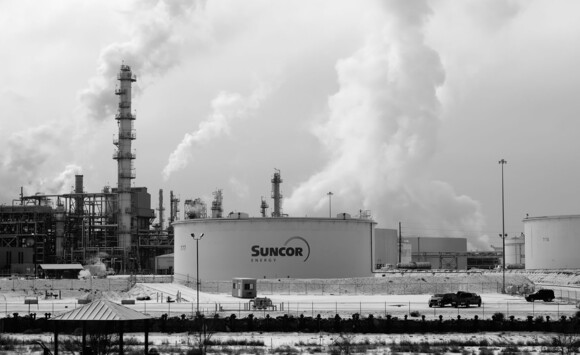
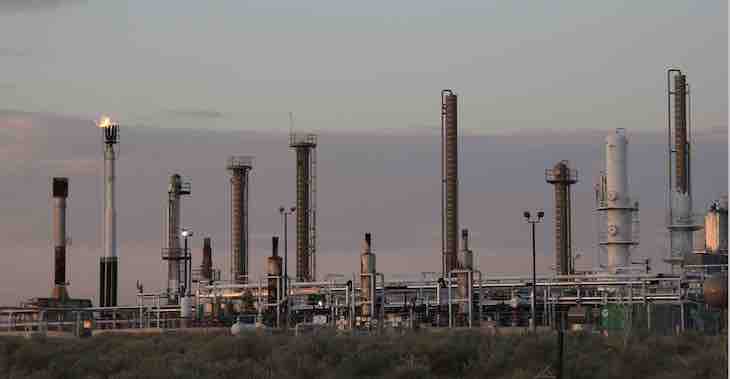
Denver, Colorado, USA – January 12, 2013: The Suncor Energy refinery in Denver, Colorado. Based in Calgary, Alberta, Suncor Energy is a Canadian oil and gas company with revenues of over 35 Billion Canadian Dollars. Photo credit: City of Boulder
Click the link to read the article on the 9News.com website (Cole Sullivan). Here’s an excerpt:
The Colorado Department of Public Health and Environment called the June 1 “compliance advisory” the first step in its enforcement process to hold the company accountable. It details more than 100 alleged violations that occurred at the state’s only oil refinery from July 2021 to June 2022. State regulators will meet with Suncor to discuss the issues and require fixes before determining if penalties should be levied against the company. A Suncor spokesperson said the company self-reported the violations and is working with CDPHE to resolve the compliance advisory.
“The enforcement process can create meaningful, positive changes and outcomes,” a CDPHE spokesperson told 9NEWS. “For example, the division’s historic $9 million settlement announced in March 2020 resolved an enforcement action with Suncor.”
[…]
The compliance actions have become an annual routine for the company, with records from the state indicating orders and advisories every year since 2013.
“It hasn’t proven to help,” said Ean Thomas Tafoya, who directs the Colorado chapter of environmental justice group GreenLatinos. “They’ve had one of the largest [fines] in the state’s history and yet they continue to have violations and more issues at this facility.”
PFAS contamination in the U.S. October 18, 2021 via ewg.org.
Click the link to access the report on the EPA website:
Objective:
This project aims to develop a new functionalized sawdust anion exchange resin for PFAS removal and to develop new cost-effective treatment processes using functionalized sawdust (FS). The hypothesis of this research is that cellulose-based sawdust can be functionalized into anion exchange resin, which can remove negatively charged PFAS in drinking water. This research will improve water management practices, and technical methods to minimize the PFAS risks to human, ecosystem and the environment. The specific research objectives of the proposed work are to: 1) Functionalize sawdust into biomass-based anion exchange resin; 2) Determine PFOA and PFOS removal from drinking water using functionalized sawdust column tests. The first objective helps students to understand the natural biomass (sawdust) from planet can be used for cleaning drinking water, which is related to people’s health. The second objective helps student to understand how much of PFAS existing in tap water, which is related to the polymer production from industries. This will help students to recognize the critical balance between prosperity of industry and protection of human health and the ecosystem. This project enables the student team to identify the community issues in our drinking water system. Undergraduate students will be trained in the area of sustainability, analytical chemistry, process design and environmental protection.
Summary/Accomplishments (Outputs/Outcomes):
In this Phase I project, functionalized sawdust has been chemically synthesized with epichlorohydrin and dimethylamine and characterized by Fourier transform infrared spectroscopy. The kinetic and isothermal adsorption experiments with FS have been performed and samples have been collected for liquid chromatography coupled to quadrupole time-of-flight mass spectrometry (LC-QToF) analysis. It has been observed that the functionalized sawdust can remove 93% of PFOA and 84% of PFOS in batch process. For the adsorption kinetics, the adsorption sorption rate constant of PFOA and PFOS is 0.1739 g/mg/h and 0.1022 g/mg/h respectively. The initial adsorption rate of PFOA and PFOS is 15.12 mg/g/h and 7.25 mg/g/h, respectively. The results suggested that the adsorption of PFOA and PFOS on FS was very fast and majority of adsorption can be completed within 2 h. The results have been summarized in the 2020 Progress Report.
Adsorption isotherm is critical to evaluate the sorption capacity of adsorbents as well as understand the PFAS and FS interactions. For the adsorption isotherm, series concentrations (ranging from 5-250 mg/L) of PFOA and PFOS solutions were absorbed with 0.2 g FS, respectively. The bottles were maintained on the shaker (200 rpm) for 120 h. The residual concentration of PFAS compounds have been quantified by LC-QToF analysis. As showed in Fig. 1, two commonly used models, the Langmuir and Freundlich were adopted to describe the experimental data and assess the adsorption behavior of the PFAS on each media. The adsorption isotherms show that the FS possesses high adsorption capacity 209.26 mg/g for PFOA and 161.80 mg/g for PFOS according to the Langmuir fitting (Table 1). The Langmuir adsorption model is based on the assumption of a structurally homogeneous adsorbent, monolayer adsorption and equivalent adsorption sites. The Freundlich model assumes adsorption on a heterogeneous surface. A good fit with the Langmuir model indicated monolayer adsorption of PFAS on the FS. The adsorption isotherm results in this study suggested that the synthesized FS showed high adsorption capacity for PFOA and PFOS removal…
Conclusions:
Our goal for the Phase I project is to develop a new functionalized sawdust anion exchange resin for PFAS (especially PFOA and PFOS) removal and to develop new cost-effective treatment processes using FS. To achieve this goal, the commercial sawdust has been functionalized by reaction with epichlorohydrin and dimethylamine. FTIR was used to characterize the functional groups changes along with the functionalization reactions. It can be observed that functional groups (such as hydroxyl group) have been significantly changed after functionalization, which indicated the occurrence of functionalization reactions. To assess the efficiency of FS in PFAS removal, we also adsorption kinetic and adsorption isotherm of PFOA and PFOS in batch process. Based on the adsorption kinetics, we found that adsorption of PFOA and PFOS on FS was very fast and majority of adsorption can be completed within 2 h in batch condition. Based on Langmuir and Freundlich model, we also determine adsorption isotherms to assess the adsorption behavior of the PFAS on each media. The result suggested that the synthesized FS showed high removal efficiency and high adsorption capacity for PFOA and PFOS removal according to the Langmuir fitting. Through this study, we believe that we have successfully synthesized sawdust-based anion exchange resin, which possessed high adsorption capacity of PFOA and PFOS removal from water system. We recommend that more PFAS compounds should be tested with this new developed technology and a techno-economic analysis is needed to assess the cost of advantages of FS for PFAS removal.
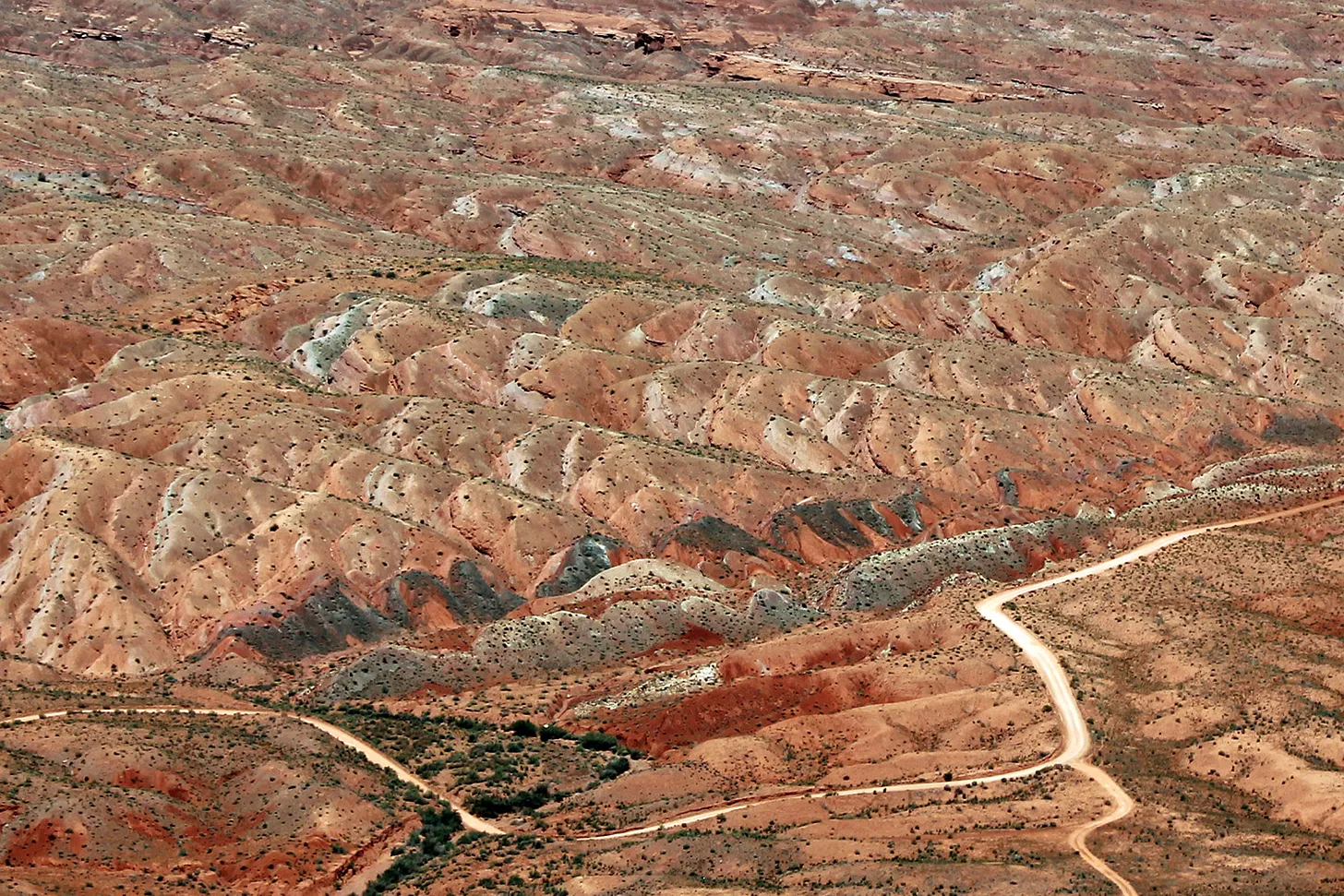
Comb Wash and tributaries in southeastern Utah, all of which are undeserving of Clean Water Act protection according to the majority of Supreme Court justices. Jonathan P. Thompson photo.
THE NEWS: The U.S. Supreme Court hands down a ruling in the long-running Sackett v. Environmental Protection Agency case that significantly alters and narrows the scope of the Clean Water Act.
THE CONTEXT: Sometimes it feels like the Supreme Court doesn’t like — or maybe just doesn’t get — the arid Western U.S. Last week’s ruling is a prime example: It potentially removes federal protections from thousands of miles of Western waterways, making it far easier for developers to pollute or destroy arroyos, wetlands and ephemeral streams.
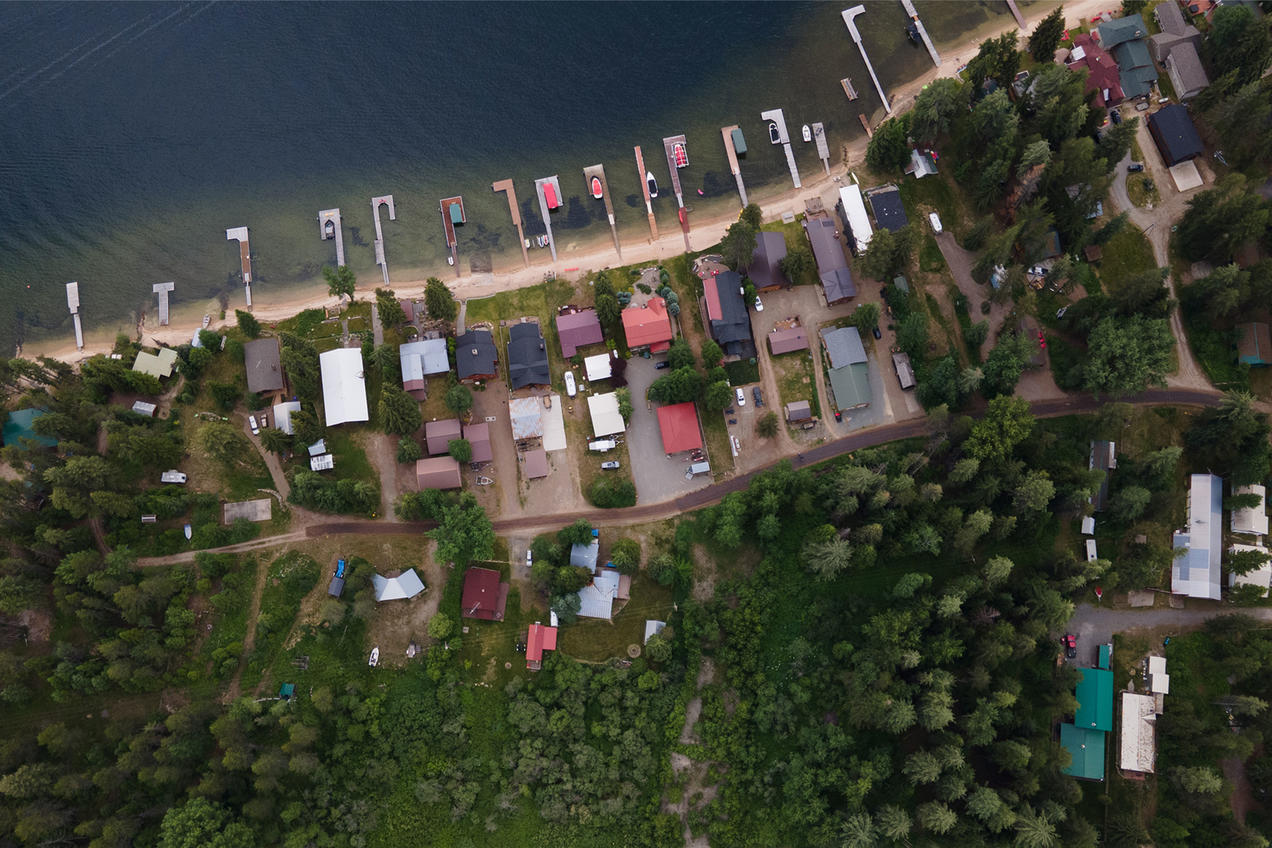
The specific case dates back to 2007, when EPA officials ordered Chantell and Michael Sackett to stop backfilling their soggy half-acre lot on the shores of Idaho’s Priest Lake, where they wanted to build a cabin. The EPA had determined that since the wetlands were adjacent to a navigable, interstate water (Priest Lake), it could be classified as “waters of the United States,” or WOTUS, and was therefore protected by the Clean Water Act. The Sacketts disagreed and took the feds to court. As the case wound its way through the legal system, the Sacketts’ cabin site transformed into the front line of a 50-year ideological battle over the definition of what constitutes legally decreed “waters.”
For years, the Environmental Protection Agency and Army Corps of Engineers—the agencies charged with enforcing the CWA—considered WOTUS to include everything from arroyos to prairie potholes to sloughs to mudflats, so long as the destruction or degradation thereof might ultimately affect traditionally navigable waters or interstate commerce (which could include recreation, sightseeing, or wildlife watching). It was a broad definition that gave the agencies latitude to “restore and maintain the chemical, physical, and biological integrity of the Nation’s waters,” as Congress mandated when creating the law in 1972.
Property rights ideologues pushed back on the definition, saying it was too broad and therefore gave the feds too much power to curb pollution or restrict development. Occasionally a developer would use this rationale to flout the rules, and a few of the cases made their way to the Supreme Court. In the 1985 Bayview case, the justices upheld the broad definition of WOTUS, and in the 2001 SWANCC case they left the definition alone but found that isolated ponds were not protected by the Clean Water Act simply because they were migratory bird habitat.
Then, in his plurality opinion on the 2006 Rapanos case, the late Justice Antonin Scalia wrote what would become the right-wing’s preferred definition of waters of the U.S. He argued that they should include only “relatively permanent, standing or continuously flowing bodies of water … described in ordinary parlance as streams[,] . . . oceans, rivers, [and] lakes.” Scalia’s definition emphatically excluded “ephemeral streams” and “dry arroyos in the middle of the desert.” (He also referred to the “immense arid wastelands” of the Western U.S., giving an idea of where this guy’s coming from.)
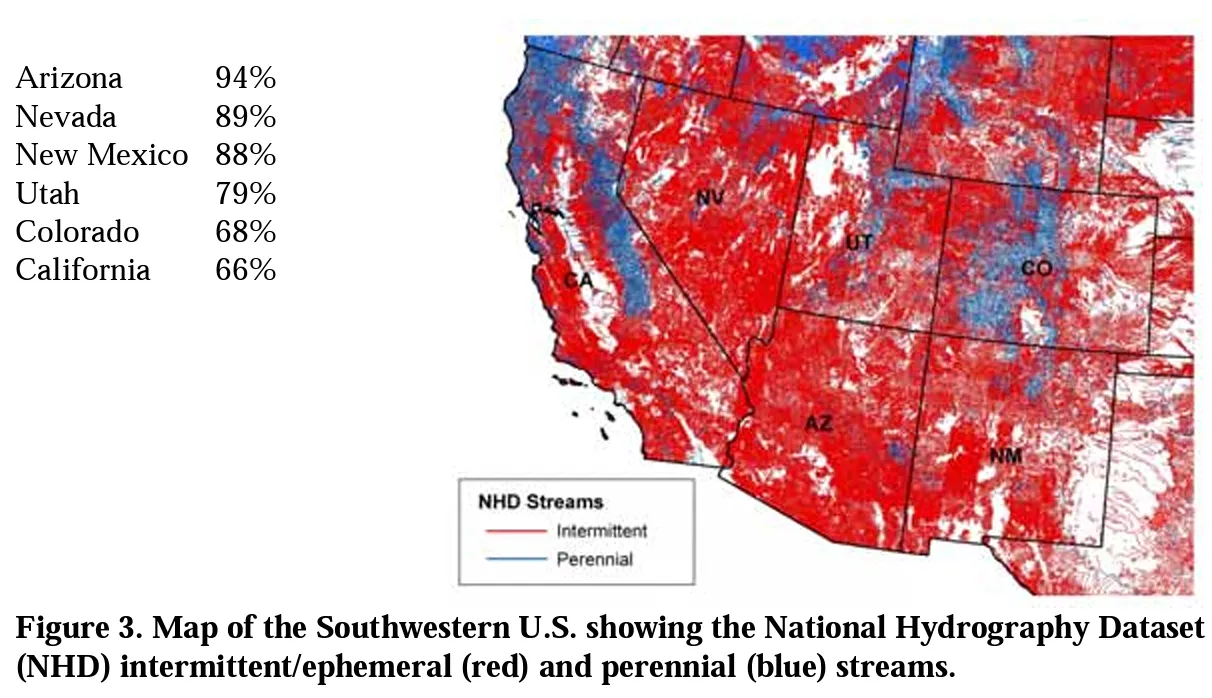
Justice Scalia’s opinion in the Rapanos case, and now Alito’s in the Sackett decision, would remove most or all intermittent or ephemeral streams from Clean Water Act protections. That would leave 94% of Arizona’s streams more vulnerable to development. Source: U.S. EPA.
Justice Anthony Kennedy disputed Scalia, saying instead the CWA should extend to any stream or body of water with a “significant nexus” to navigable waters, determined by a wetland’s or waterway’s status as an “integral part of the aquatic environment.”
The two conflicting Rapanos opinions have guided the agencies’ enforcement of the CWA ever since, with the George W. Bush and Trump administrations leaning toward Scalia’s narrow, anti-arroyo definition, and the Obama and Biden administrations adopting Kennedy’s “significant nexus” test.
Fast forward to the recent Sackett decision, which has two parts. First, the justices all agreed that the EPA should not have fined the Sacketts for filling in their wetland, because it does not fall under the Clean Water Act’s jurisdiction. But the wider ramifications come from Justice Samuel Alito’s rewriting of the definition of “waters of the U.S.” in his majority opinion — and the debate among justices it sparked.
Sackett overtly focuses on wetlands, as did most of the back-and-forth between the disagreeing justices, who sparred over the definition of “adjacent.” Alito and the majority essentially believe “adjacent” and “adjoining” are synonymous, which removes any wetland lacking a continuous surface connection to a navigable body of water from federal jurisdiction. He also puts the kibosh on the “significant nexus” test. (Justices Clarence Thomas and Neil Gorsuch go even further, trying to reduce waters of the U.S. to rivers or lakes that can actually be navigated by ships.) Even Justice Brett Kavanaugh disagreed with Alito’s narrow definition, pointing out that “adjacent” is not the same as “adjoining.”
You might be wondering how any of this effects the arid West, where wetlands — either adjacent or adjoining — aren’t all that common. After all, intermittent streams only got passing mentions in the opinions and not once does the term “arroyo” appear. But there’s little question that arroyos and ephemeral streams will end up suffering collateral damage. The Sackett majority defers to Scalia’s Rapanos definition, writing: “ … we conclude that the Rapanos plurality was correct: the CWA’s use of ‘waters’ encompasses ‘only those relatively permanent, standing or continuously flowing bodies of water forming geographical features that are described in ordinary parlance as streams oceans, rivers and lakes.’”
So, yeah, we Southwesterners do refer in our ordinary parlance to many an intermittent stream as a “river,” e.g. the Santa Fe River, the Santa Cruz River, the Rio Puerco(s), and so forth. But I doubt that would have been adequate for Scalia and now for Alito and friends.
It’s not clear yet how all of this will play out on the ground, except that the Sacketts can finally build their cabin without fear of an EPA fine. The Clean Water Act, one of the nation’s most important environmental laws, is now weaker than it was a couple of weeks ago, and countless wetlands, sloughs, arroyos and ponds are now more vulnerable to development and pollution. Justice Elena Kagan summed it up in her response to Alito: “The majority thus alters—more precisely, narrows the scope of—the statute Congress drafted,” she wrote, adding that the opinion “ … is an effort to cabin the anti-pollution actions Congress thought appropriate.”
Steve Bannon, former President Donald Trump’s right-hand man, once said the goal of the administration was the “deconstruction of the administrative state. He wanted to eviscerate regulations protecting human health and the environment so they would no longer “burden” corporations or stand in their way of reaping boundless profit. Trump may no longer be president, and both he and Bannon may be headed to jail soon. But their agenda lives on among the majority of the nation’s highest court, which, Kagan wrote, has appointed “itself as the national decision-maker on environmental policy.”
She continued, referring to last year’s decision that hindered the EPA from enforcing clean air laws: “So I’ll conclude, sadly, by repeating what I wrote last year, with the replacement of only a single word. ‘[T]he Court substitutes its own ideas about policymaking for Congress’s. The Court will not allow the Clean [Water] Act to work as Congress instructed. The Court, rather than Congress, will decide how much regulation is too much.’ Because that is not how I think our Government should work — more, because it is not how the Constitution thinks our Government should work …”
Read more of my writing on Sackett, WOTUS, Rapanos, and SCOTUS in High Country News at the Landline and in the Land Desk:
Colorado River Dry Delta, terminus of the Colorado River in the Sonoran Desert of Baja California and Sonora, Mexico, ending about 5 miles north of the Sea of Cortez (Gulf of California). Date: 12 January 2009. Photographer: Pete McBride, U.S. Geological Survey
Click the link to read the article on the Time Magazine website (Anisha Koli). Here’s an excerpt:
…in recent years, the countries’ relationship, when it comes to the river at least, has entered a new era of agreement and mutual advancement, as both countries face unprecedented drought and a need to revamp water systems.
“On earlier occasions, what I’ve seen is two countries that had a bilateral water management agreement where the gains from one country would equal the losses of the other country,” Carlos de la Parra, who leads Restauremos El Colorado, an environmental nonprofit, tells TIME. “They’ve migrated into a regional approach, realizing that it’s the same river, it’s the same basin and investments on one side of the border will benefit both sides of the border.”
Under a 1944 treaty established between the U.S. and Mexican governments, Mexico was allotted a guaranteed annual quantity of water. The agreement had flaws though. It didn’t mention water quality, and in the 1960s when the river’s salinity rose dramatically, the water directed to Mexico was too salty for human consumption or agriculture. Following farmer protests and threats from the Mexican government to take the dispute to the International Court of Justice, the U.S. agreed to an updated treaty in 1973 that ensured equal water quality. Most recently in 2017, the two governments revisited the negotiating table to strike Minute 323, a nine-year deal that set standards for how water should be allocated during surpluses and reduced during droughts. It also committed both countries to pledge resources and funding for environmental restoration. John Shepard, senior advisor at the Sonoran Institute, a non-profit that advocates for Colorado River restoration, notes that a new deal could be on the horizon. “If the lower basins agreed to cuts as they’re being articulated in this agreement, then Mexico will likely agree to a proportional share of cuts.”
[…]
Keeping the river and its ecosystems healthy has been a source of argument over the years. In the U.S. the prevailing view has been that it’s Mexico’s responsibility to protect and restore the delta because it’s chiefly located in Mexico, where it then flows into the Gulf of California. Mexico has argued that the U.S. should take responsibility because the country’s management and control of the river caused poor water quality and decimated habitats. Now, experts on both sides of the border are working to find a more collaborative way forward.
“There’s a saying that, ‘a crisis is a terrible thing to waste.’ In many ways, that’s how I’m approaching this,” De la Parra says. “Many people like myself are hard at work, thinking about how we can capitalize the crisis and move the irrigation district and other water uses into a more productive, more sustainable model.”
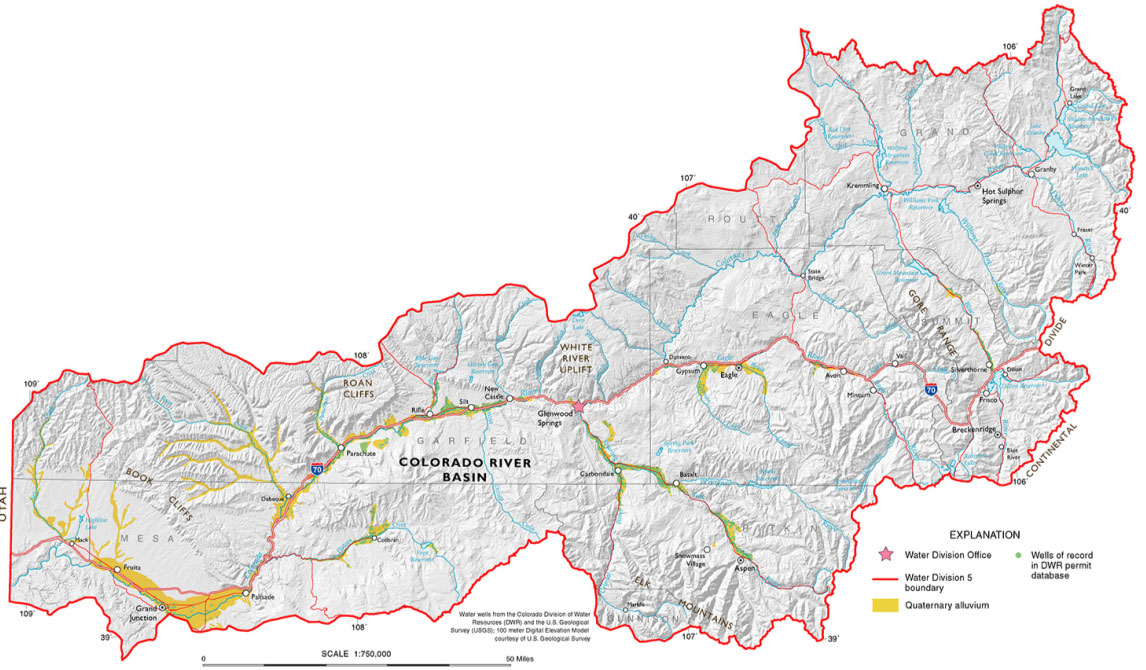
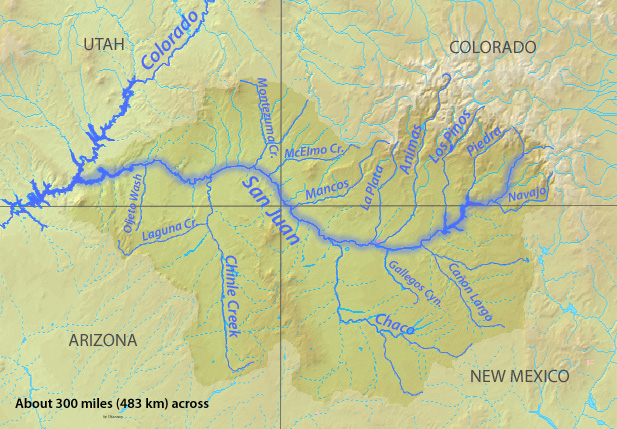
Map of the Colorado River drainage basin, created using USGS data. By Shannon1 Creative Commons Attribution-Share Alike 4.0
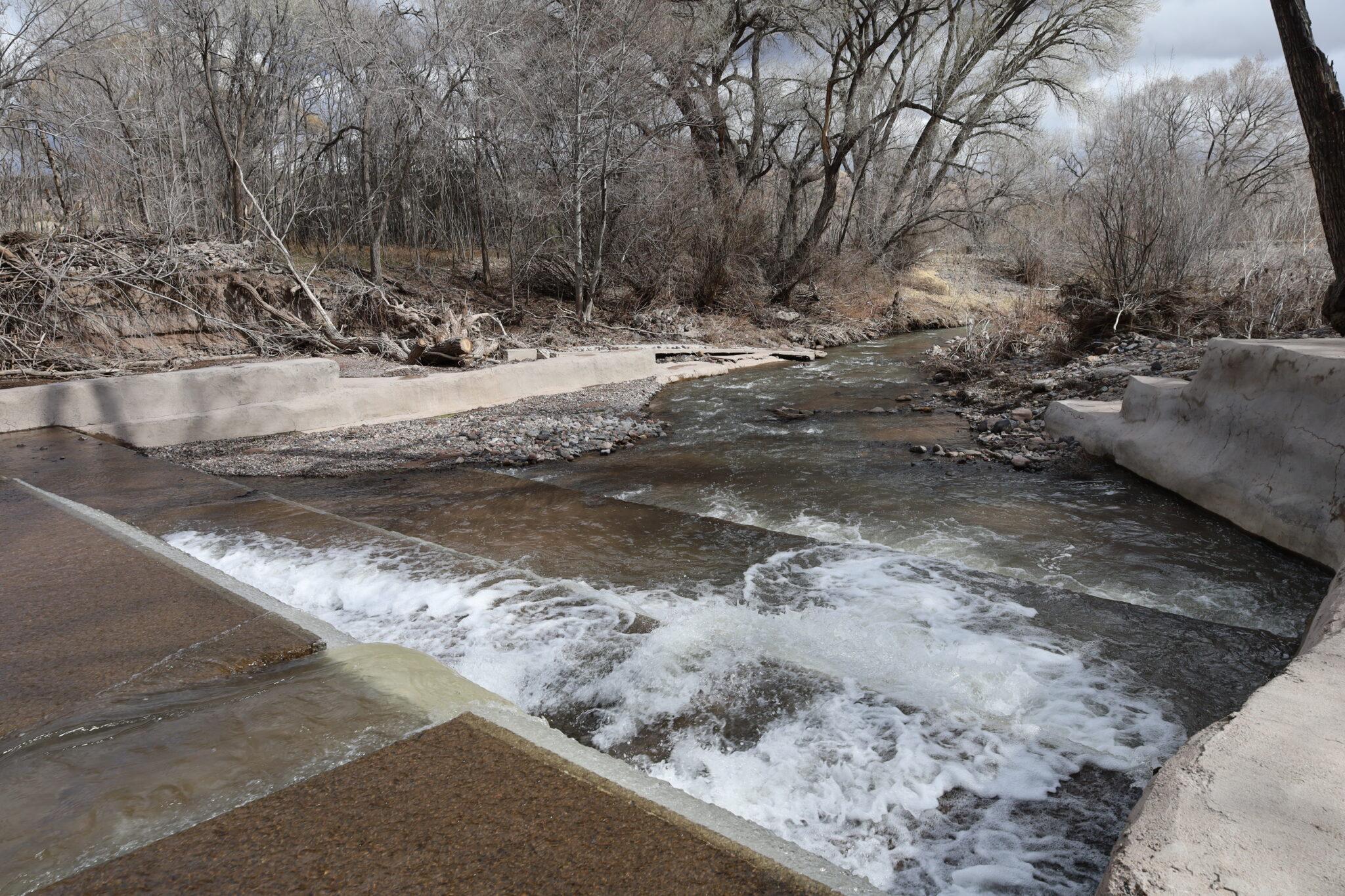
A diversion on the Mimbres River in southern New Mexico pictured on Feb. 21, 2023. Environmental advocates are concerned that intermittent and seasonal rivers and many wetlands protections will be rolled back across the country as the result of a U.S. Supreme Court water decision on May 25, 2023. (Photo by Megan Gleason / Source NM)
Click the link to read the article on the Source NM website (Danielle Prokop):
After landmark SCOTUS ruling limits what waters federal agencies protect under Clean Water Act, advocates concerned that NM is vulnerable.
A U.S. Supreme Court ruling changed water law overnight last week – and the impacts will ripple through New Mexico over coming months.
New Mexico’s complicated water landscape, coupled with the fact it’s one of three states that does not have a state agency regulate pollution in surface water, leaves it uniquely vulnerable, officials for the New Mexico Environment Department said.
The case
In their 9-0 decision in a case called Sackett vs. EPA the court ruled the federal government overreached in the case of Idaho couple Chantell and Michael Sackett. The court said the wetlands on their property were not classified as “waters of the United States,” and multiple rounds of permitting in order to infill and build a house on that land.
“Waters of the United States,” legal designation for the waters protected in 1972 Clean Water Act, which allows the federal government to limit pollutants such as livestock waste and industrial discharge and construction runoff.
The opinion limits the definition of what wetlands would be protected alongside “navigable waters,” defined in other cases as “relatively permanent, standing or continuously flowing bodies” – likes streams, oceans rivers and lakes.
“These wetlands must qualify as “waters of the United States” in their own right,” Justice Samuel Alito wrote for the majority opinion. “In other words, they must be indistinguishably part of a body of water that itself constitutes “waters” under the [Clean Water Act].”
While all the justices concurred with the judgment – to send the case back to lower courts for further proceedings in the Sacketts’ favor – Justice Brett Kavanaugh, joined by four other justices disagreed with the majority narrowing the definition from “adjacent” wetlands to “adjoining” wetlands.
New Mexico’s vulnerabilities
That distinction leaves New Mexico – and other parts of the arid Southwest – high and dry, said Tannis Fox, an environmental attorney for conservation nonprofit Western Environmental Law Center.
Fox said the rules limiting how much and what type of pollution from wastewater plants, construction sites and agriculture will still protect the state’s largest rivers but can’t say the same for tributaries.
“There are waters, same with wetlands within the entirety of a watershed, that are now at risk of not being protected under the Clean Water Act,” she said. “If there were a point source discharge into that body of water, you may not have to get a permit.”
The New Mexico Environment Department estimated that 93% of New Mexico’s streams and rivers are intermittent – seasonal rivers for example – or ephemeral – only running when there’s heavy rain, in a comment to the EPA in 2019.
These include “localized monsoonal downpours, ephemeral arroyos, cienegas, effluent-dependent streams, playa lakes, and other man-made reservoirs, waterways,” and canals.
The oxbow, a horseshoe curve of the river that has transformed over time into a marsh, as seen from the San Antonio Bluffs on Albuquerque’s Westside. Consecutive years of drought dried parts of the marshland that are crucial habitats for birds, beavers and other animals. (Photo by Diana Cervantes for Source NM)
Fox said this raises the question for existing permits on pollution, and future permitting landscape. The U.S. Environmental Protection Agency directly administers pollution programs for New Mexico, Massachusetts and New Hampshire.
Currently, the agency reviews EPA permit applications, and “certifies” them based on if they meet state water quality standards.
Environment Protection Agency Region 6 officials – which oversees New Mexico, Texas, Oklahoma Arkansas and Louisiana – declined an interview or comment.
In a written statement, EPA Administrator Michael Regan, said he was disappointed by the decision, saying it “erodes longstanding clean water protections.” He said the agency will review the decision, “and consider next steps,” but did not elaborate further.
Fox said New Mexico’s broad definition of waters of the state enshrined in the state’s constitution offers some protection beyond the federal definition, but it’s hard to enforce without a state permitting program.
“The immediacy of the need for a surface water program dramatically changed between today and yesterday,” Fox said.
Where is the state in getting a permitting program?
Since the court limited the federal scope, state officials said they anticipate more litigation to determine which waters will be protected, slowing down efforts to develop its own permitting program.
New Mexico Environment Department Secretary James Kenney said the science, technical and legal staff may have their hands full if permits are terminated prematurely.
“Because we may very well disagree that while not a “water of the U.S.,” we still have waters of the state to protect,” he said.
Kenney said the agency plans to bring rules for the program by December 2025, based on current funding and staff.
There’s several layers of red tape to get there, though.
The agency has to draft a resolution to be passed by the state legislature, seek input from New Mexicans and tribes, bring rules to it’s pollution authority board for passage, and get EPA approval after the statute passes.
Currently, the agency is funded for outreach in 2023.
Kenney said the ruling should be a “wake-up call” for lawmakers.
“Right now, we have $680,000 and a special appropriation to carry us through fiscal year 24. Maybe, maybe that increases so that we can get something done sooner,” he said, adding that there would probably be a presentation during the interim session.
As far back as 2019, the agency has testified that if the Clean Water Act no longer applies, more strict state and federal laws governing hazardous waste may apply. Kenney said he understands that for permit holders, this is a “nonstarter,” as hazardous waste laws have more restrictions and culpability.
Kenney warned that individuals and entities should think twice before petitioning to remove the permit and failing to include the state agency in that discussion.
“I will have no sympathy with respect to what transpires as a result of that, whether that’s protracted litigation, or robust enforcement for failing to include us in that discussion,” he said.
Click the link to read the article on the Vail Daily website (Ali Longwell). Here’s an excerpt:
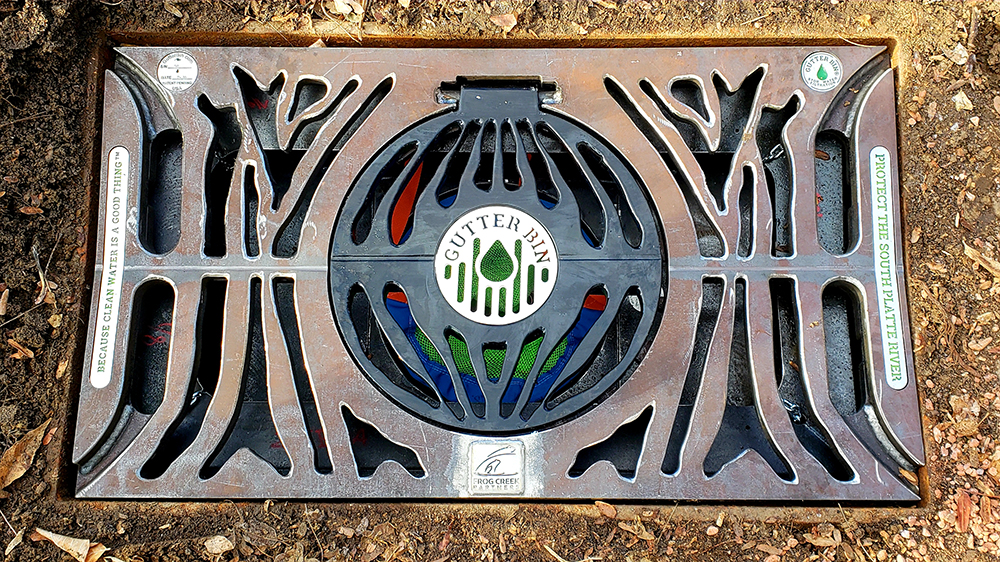
Supported by a Colorado Department of Health and Environment Grant, Frog Creek Partners installed 278 new Gutter Bins throughout town
Last week, a crew from Frog Creek Partners traveled throughout Vail to install Gutter Bin stormwater filtration systems across a quarter of the town’s stormwater drains to capture debris and pollution before it reaches Gore Creek. Each year, these 278 Gutter Bins will stop approximately 27.8 tons (or 55,600 pounds) of pollution from reaching Gore Creek, according to Brian Deurloo, Frog Creek’s president and founder. Vail has a total of 1,100 stormwater inlets — the open grates in the street — that flow to about 550 outfalls in Gore Creek. These open grates are different from sanitary sewers, which take water from items like sinks, toilets and washing machines through a wastewater treatment process before being discharged to the creek…
What this equates to is “a lot of opportunities for pollution to be introduced into Gore Creek through our stormwater system,” said Pete Wadden, the town’s watershed health specialist.
This pollution comes both directly from people dumping things into the stormwater drains or indirectly from the pollutants that run off the roadways, Wadden said. The latter include road salt, sand, cinders, dust from brakes, leaked oil from cars, and more…
…for many years, the town has been seeking cheaper alternatives to capture pollutants. In 2018, Vail discovered Frog Creek Partners’ Gutter Bins and installed several at the public works site and at Stephens Park…
“We’ve been really happy with how they’ve performed. They’re capturing something like 40 to 80 pounds of sediment and trash every six months when we go out and empty them,” Wadden said.
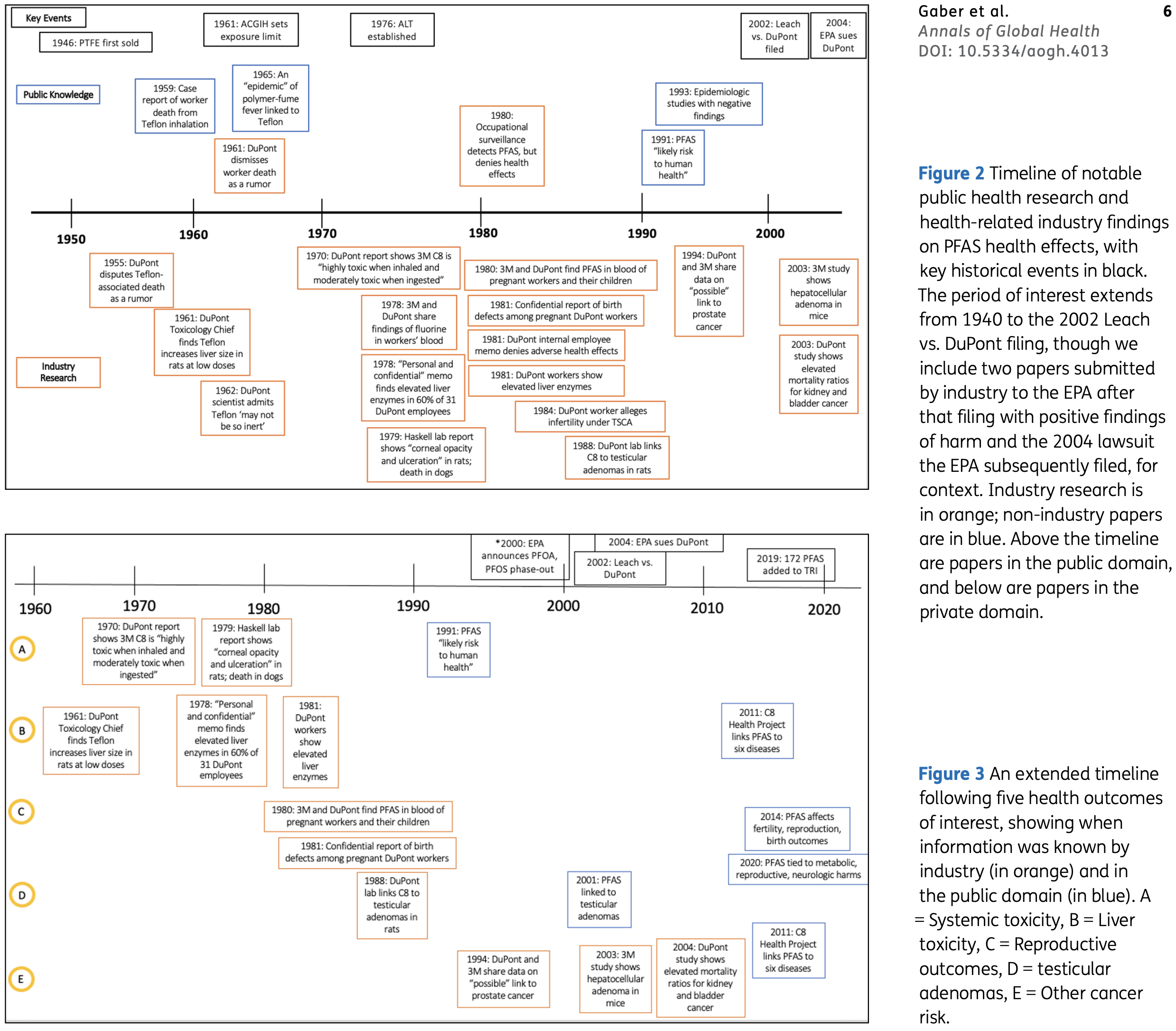
Click the link to read the paper on the Annals of Global Health website (Nadia Gaber, Lisa Bero, and Tracey J. Woodruff). Here’s the abstract:
Background: Per-and polyfluoroalkyl substances (PFAS) are a class of widely-used chemicals that persist in the environment and bioaccumulate in humans and animals, becoming an increasing cause for global concern. While PFAS have been commercially produced since the 1940s, their toxicity was not publicly established until the late 1990s. The objective of this paper is to evaluate industry documents on PFAS and compare them to the public health literature in order to understand this consequential delay.
Methods: We reviewed a collection of previously secret industry documents archived at the UCSF Chemical Industry Documents Library, examining whether and how strategies of corporate manipulation of science were used by manufacturers of PFAS. Using well established methods of document analysis, we developed deductive codes to assess industry influence on the conduct and publication of research. We also conducted a literature review using standard search strategies to establish when scientific information on the health effects of PFAS became public.
Results: Our review of industry documents shows that companies knew PFAS was “highly toxic when inhaled and moderately toxic when ingested” by 1970, forty years before the public health community. Further, the industry used several strategies that have been shown common to tobacco, pharmaceutical and other industries to influence science and regulation – most notably, suppressing unfavorable research and distorting public discourse. We did not find evidence in this archive of funding favorable research or targeted dissemination of those results.
Conclusions: The lack of transparency in industry-driven research on industrial chemicals has significant legal, political and public health consequences. Industry strategies to suppress scientific research findings or early warnings about the hazards of industrial chemicals can be analyzed and exposed, in order to guide prevention.
KEY MESSAGES IMPLICATIONS FOR POLICY MAKERS
This paper analyses how the chemical industry, using industry documents, delayed disclosing the harms of PFAS, costing billions of dollars in health and environmental damages globally.
Many countries are pursuing legal and legislative action to curb PFAS production that may be aided by the timeline of evidence presented here.
The production of chemical toxicity research should be in the best interest of protecting the public’s health, including designing the research question, funding studies, and publishing favorable and unfavorable findings.
Legal settlements against chemical manufacturers should include documents disclosure in order to ensure transparency and accountability for industries and their products.
Public health and environmental policy makers should move towards precautionary principles of chemical regulation.
IMPLICATIONS FOR THE PUBLIC
This paper examines previously secret documents held by DuPont and 3M, the largest manufacturers of PFAS, also called “forever chemicals.” We show how the chemical industry used the tactics of the tobacco industry to delay public awareness of the toxicity of PFAS and, in turn, delayed regulations governing their use. PFAS are now ubiquitous in the population and environment. Consumer awareness can advance calls for safer products by demanding publicly available studies of harm. Public pressure can also influence legislators to pass more health-protective environmental and chemical regulations.
New Mexico’s state leaders criticized the Republican-led U.S. Supreme Court for a recent decision that could limit protections for waterways throughout the arid state. The Supreme Court issued a judgement on May 25 in Sackett vs. the U.S. EPA, ultimately finding the Clean Water Act (CWA) only applied to wetlands that are directly connected to permanent bodies of water…The opinion was written by Justice Samuel Alito, with the other members issuing concurring opinions in the case.
“In sum, we hold that the CWA extends to only those ‘wetlands with a continuous surface connection to bodies that are waters of the United States in their own right, so that they are ‘indistinguishable’ from those waters,” read Alito’s opinion. “This holding compels reversal here. The wetlands on the Sacketts’ property are distinguishable from any possibly covered waters.”
But New Mexico Gov. Michelle Lujan Grisham contended the decision weakened the Clean Water Act and could put many of New Mexico’s fragmented rivers and streams at risk. In a statement following the verdict, Lujan Grisham said she was “appalled” and contended the ruling would leave 90 percent of New Mexico’s waters without federal protection from development. Lujan Grisham said her administration planned to study how state law could be used to fill any “regulatory gaps” created by the Supreme Court ruling to protect the state’s limited water resources.
Click the link to read the article on the Field & Stream website (Travis Hall). Here’s an excerpt:
On May 25, 2023, the Supreme Court of the United States (SCOTUS) issued a ruling that could ultimately rescind federal protections from more than 50 percent of the nation’s wetlands. With its 5-4 ruling in a case known as Sackett v. EPA, SCOTUS declared that the Clean Water Act—a measure long-regarded as the most impactful clean water safeguard ever enacted—no longer applies to isolated wetlands that aren’t visibly connected to larger water bodies by continuous, surface-level flows. According to sportsmen’s groups, the ruling will leave these isolated wetlands unprotected from development, drilling, and other sources of pollution. While the decision will be a boon to the homebuilding and extraction industries, it could have far-reaching and detrimental repercussions for wildlife species that rely on cold, clean water sources—like trout and waterfowl.
“It’s bad news for hunters and anglers,” Alex Funk, Director of Water Resources and Senior Counsel for the Theodore Roosevelt Conservation Partnership (TRCP), tells Field & Stream. “Everything from ducks to cold-water fish species like trout rely on headwater streams and headwater wetlands, like fens, to help maintain water temperatures—those are at risk now.”
[…]
The Clean Water Act’s stated goals were beautifully simple: Make America’s rivers and wetlands “swimmable and fishable” again. For fifty years, throughout the administrations of six different U.S. Presidents, the federal rule worked well. And it reversed some of the country’s most egregious environmental sins. Then, in 2001 and again in 2006, SCOTUS began taking court cases with huge implications for the future of the Clean Water Act. Its rock-solid protections were eroded by unfavorable court decisions, and the clarity that had made the CWA such an effective safeguard for so many years was muddied…
In response to the confusion brought about by these court cases, the Obama-era EPA proposed the so-called Waters of the U.S. Rule—commonly known as WOTUS. This 2015 rule sought to clarify and re-establish lost protections for hundreds of thousands of miles of ephemeral streams and tens of thousands of acres of wetlands. It was widely supported by the vast majority of America’s hunting and angling conservation groups. But its opponents had immense power in the mining, agribusiness, and development sectors. That lobby’s boisterous campaign to undermine WOTUS was widely successful, and in 2019 President Trump decried the rule as “horrible”, scaling back its protections for ephemeral streams and isolated wetlands once again. Then, when current President Joe Biden took office, his EPA administrator rebuilt WOTUS, restoring its protections to pre-Trump levels. That’s more or less where the rule remained until yesterday…
“The wetlands on the Sackett property are distinguishable from any…waters [that are covered under the CWA],” wrote Justice Samuel Alito, because they aren’t visibly connected to them. Writing for the majority, Alito went on to say that, in order to be eligible for federal protections under the Clean Water Act, a wetland must have a “continuous surface connection with water, making it difficult to determine where the water ends and the wetland begins.”
Creating a balance of water that’s taken from aquifers and water that replenishes aquifers is an important aspect of making sure water will be available when it’s needed.
Image from “Getting down to facts: A Visual Guide to Water in the Pinal Active Management Area,” courtesy of Ashley Hullinger and the University of Arizona Water Resources Research Center
“The Court is basically making the assumption that water only flows on the surface,” Trout Unlimited President and CEO Chris Wood tells F&S. “They’re making the assumption that there’s no such thing as groundwater, no such thing as sub-surface flow. It totally flies in the face of the scientific reality, and it’s a dangerous reading of the Clean Water Act.”
[…]
According to TRCP’s Funk, the onus will now fall on individual states to enact whatever clean water protections they see fit. “Most states don’t have the resources to set up clean water programs and enforce those safeguards,” says Funk. “The whole model of the Clean Water Act was that the feds would provide that cooperative base level of protection for the states. With this ruling, that base just dropped considerably.”
The U.S. Supreme Court has ruled in Sackett v. EPA that federal protection of wetlands encompasses only those wetlands that directly adjoin rivers, lakes and other bodies of water. This is an extremely narrow interpretation of the Clean Water Act that could expose many wetlands across the U.S. to filling and development.
Under this keystone environmental law, federal agencies take the lead in regulating water pollution, while state and local governments regulate land use. Wetlands are areas where land is wet for all or part of the year, so they straddle this division of authority.
Swamps, bogs, marshes and other wetlands provide valuable ecological services, such as filtering pollutants and soaking up floodwaters. Landowners must obtain permits to discharge dredged or fill material, such as dirt, sand or rock, in a protected wetland.
This can be time-consuming and expensive, which is why the Supreme Court’s ruling on May 25, 2023, will be of keen interest to developers, farmers and ranchers, along with conservationists and the agencies that administer the Clean Water Act – namely, the Environmental Protection Agency and the U.S. Army Corps of Engineers.
For the last 45 years – and under eight different presidential administrations – the EPA and the Corps have required discharge permits in wetlands “adjacent” to water bodies, even if a dune, levee or other barrier separated the two. The Sackett decision upends that approach, leaving tens of millions of acres of wetlands at risk. https://www.youtube.com/embed/bFGMoFIjKRM?wmode=transparent&start=1 The U.S. has lost more than half of its original wetlands, mainly due to development and pollution.
The Sackett case
Idaho residents Chantell and Mike Sackett own a parcel of land located 300 feet from Priest Lake, one of the state’s largest lakes. The parcel once was part of a large wetland complex. Today, even after the Sacketts cleared the lot, it still has some wetland characteristics, such as saturation and ponding in areas where soil was removed. Indeed, it is still hydrologically connected to the lake and neighboring wetlands by water that flows at a shallow depth underground.
In preparation to build a house, the Sacketts had fill material placed on the site without obtaining a Clean Water Act permit. The EPA issued an order in 2007 stating that the land contained wetlands subject to the law and requiring the Sacketts to restore the site. The Sacketts sued, arguing that their property was not a wetland.
In 2012, the Supreme Court held that the Sacketts had the right to challenge EPA’s order and sent the case back to the lower courts. After losing below on the merits, they returned to the Supreme Court with a suit asserting that their property was not federally protected. This claim in turn raised a broader question: What is the scope of federal regulatory authority under the Clean Water Act?
The Supreme Court has previously recognized that the “waters of the United States” include not only navigable rivers and lakes, but also wetlands and waterways that are connected to navigable bodies of water. But many wetlands are not wet year-round, or are not connected at the surface to larger water systems. Still, they can have important ecological connections to larger water bodies.
In 2006, when the court last took up this issue, no majority was able to agree on how to define “waters of the United States.” Writing for a plurality of four justices in U.S. v. Rapanos, Justice Antonin Scalia defined the term narrowly to include only relatively permanent, standing or continuously flowing bodies of water such as streams, oceans, rivers and lakes. Waters of the U.S., he contended, should not include “ordinarily dry channels through which water occasionally or intermittently flows.”
Acknowledging that wetlands present a tricky line-drawing problem, Scalia proposed that the Clean Water Act should reach “only those wetlands with a continuous surface connection to bodies that are waters of the United States in their own right.”
In a concurring opinion, Justice Anthony Kennedy took a very different approach. “Waters of the U.S.,” he wrote, should be interpreted in light of the Clean Water Act’s objective of “restoring and maintaining the chemical, physical, and biological integrity of the Nation’s waters.”
Accordingly, Kennedy argued, the Clean Water Act should cover wetlands that have a “significant nexus” with navigable waters – “if the wetlands, either alone or in combination with similarly situated lands in the region, significantly affect the chemical, physical, and biological integrity of other covered waters more readily understood as ‘navigable.’”
Neither Scalia’s nor Kennedy’s opinion attracted a majority, so lower courts were left to sort out which approach to follow. Most applied Kennedy’s significant nexus standard, while a few held that the Clean Water Act applies if either Kennedy’s standard or Scalia’s is satisfied.
The Biden administration responded with its own rule defining waters of the United States in terms of the presence of either a significant nexus or continuous surface connection. However, this rule was promptly embroiled in litigation and will require reconsideration in light of Sackett v. EPA.
The Sackett decision and its ramifications
The Sackett decision adopts Scalia’s approach from the 2006 Rapanos case. Writing for a five-justice majority, Justice Samuel Alito declared that “waters of the United States” includes only relatively permanent, standing or continuously flowing bodies of water, such as streams, oceans, rivers, lakes – and wetlands that have a continuous surface connection with and are indistinguishably part of such water bodies.
None of the nine justices adopted Kennedy’s 2006 “significant nexus” standard. However, Justice Brett Kavanaugh and the three liberal justices disagreed with the majority’s “continuous surface connection” test. That test, Kavanaugh wrote in a concurrence, is inconsistent with the text of the Clean Water Act, which extends coverage to “adjacent” wetlands – including those that are near or close to larger water bodies.
“Natural barriers such as berms and dunes do not block all water flow and are in fact evidence of a regular connection between a water and a wetland,” Kavanaugh explained. “By narrowing the Act’s coverage of wetlands to only adjoining wetlands, the Court’s new test will leave some long-regulated adjacent wetlands no longer covered by the Clean Water Act, with significant repercussions for water quality and flood control throughout the United States.”
The majority’s ruling leaves little room for the EPA or the Army Corps of Engineers to issue new regulations that could protect wetlands more broadly.
The court’s requirement of a continuous surface connection means that federal protection may no longer apply to many areas that critically affect the water quality of U.S. rivers, lakes and oceans – including seasonal streams and wetlands that are near or intermittently connected to larger water bodies. It might also mean that construction of a road, levee or other barrier separating a wetland from other nearby waters could remove an area from federal protection.
Congress could amend the Clean Water Act to expressly provide that “waters of the United States” includes wetlands that the court has now stripped of federal protection. However, past efforts to legislate a definition have fizzled, and today’s closely divided Congress is unlikely to fare any better.
Whether states will fill the breach is questionable. Many states have not adopted regulatory protections for waters that are outside the scope of “waters of the United States.” In many instances, new legislation – and perhaps entirely new regulatory programs – will be needed.
Finally, a concurring opinion by Justice Clarence Thomas hints at potential future targets for the court’s conservative supermajority. Joined by Justice Neil Gorsuch, Thomas suggested that the Clean Water Act, as well as other federal environmental statutes, lies beyond Congress’ authority to regulate activities that affect interstate commerce, and could be vulnerable to constitutional challenges. In my view, Sackett v. EPA might be just one step toward the teardown of federal environmental law.
This is an update of an article originally published on Sept. 26, 2022.
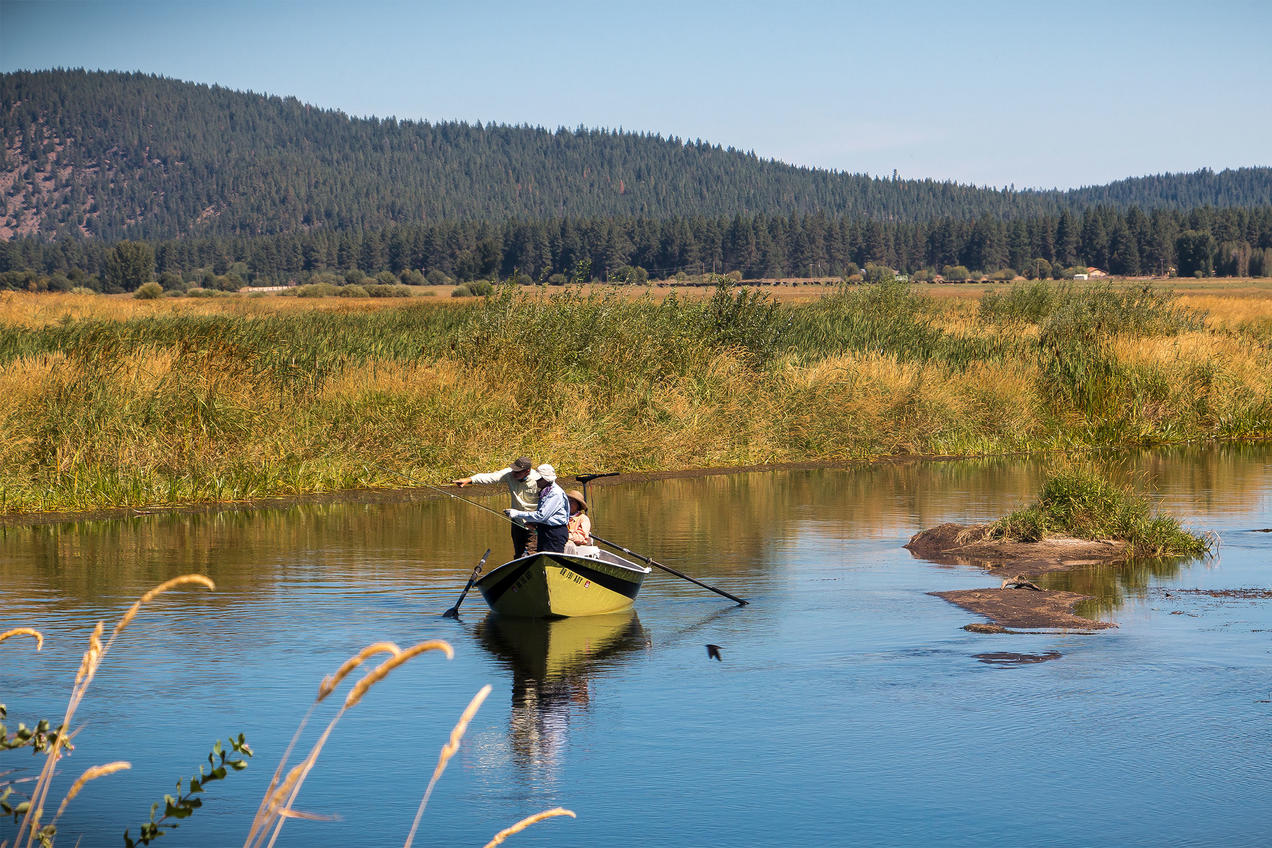
The Wood River Wetland in southern Oregon is home to an array of biodiverse vegetation and is a freshwater ecoregion. Photo credit: Bureau of Land Management
Experts in environmental law said the decision would leave many wetlands subject to pollution without penalty, sharply undercutting the E.P.A.’s authority to protect them under the Clean Water Act…Kevin Minoli, who worked as a senior E.P.A. lawyer from the Clinton through the Trump administrations, overseeing the enforcement of Clean Water Act regulations, said the decision would have enormous practical consequences and estimated that it would affect more than half the nation’s wetlands…
The decision was nominally unanimous, with all the justices agreeing that the homeowners who brought the case should not have been subject to the agency’s oversight because the wetlands on their property were not subject to regulation in any event. But there was sharp disagreement about a new test the majority established to determine which wetlands are covered by the law. Justice Brett M. Kavanaugh, joined by the three liberal justices in a concurring opinion, said the decision would harm the federal government’s ability to address pollution and flooding.
“By narrowing the act’s coverage of wetlands to only adjoining wetlands,” he wrote, “the court’s new test will leave some long-regulated adjacent wetlands no longer covered by the Clean Water Act, with significant repercussions for water quality and flood control throughout the United States.”
[…]
“There,” she wrote, “the majority’s non-textualism barred the E.P.A. from addressing climate change by curbing power plant emissions in the most effective way. Here, that method prevents the E.P.A. from keeping our country’s waters clean by regulating adjacent wetlands. The vice in both instances is the same: the court’s appointment of itself as the national decision maker on environmental policy.”
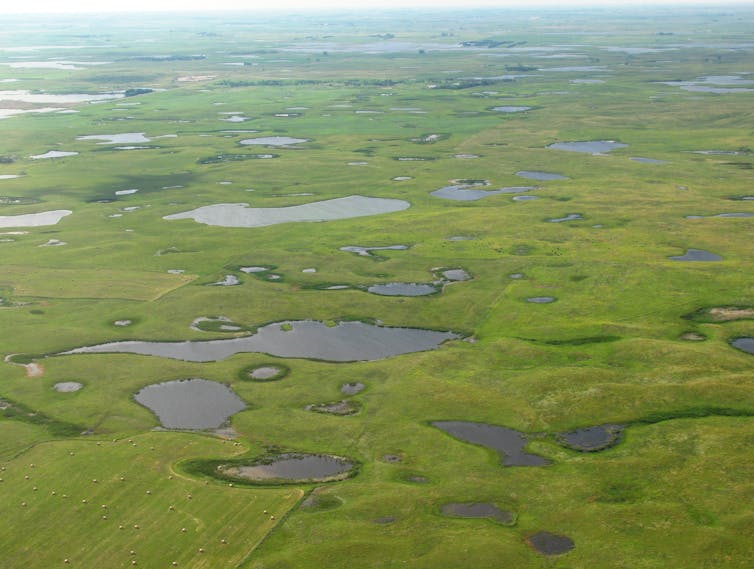
Wetlands, which are havens of biodiversity, offer priceless ecological benefits. As wetlands are lost to development nationwide, critics of the dam project worry about its local impact.
(Photo Credit: John Fielder via Writers on the Range)
In today’s [May 25, 2023] ruling on Sackett v. EPA, the Supreme Court dramatically narrowed the scope of the Clean Water Act, undoing protections that have safeguarded the nation’s waters for over 50 years. Because it erases critical protections for tens of millions of acres of wetlands, the court’s ruling threatens the clean drinking water sources for millions of Americans.
Overturning federal protections for wetlands makes them vulnerable to pollution and harmful development, which impacts water quality, groundwater supplies, flood protection, and habitat for plants, fish, and wildlife. It will also make it more expensive to treat our water, driving up costs for millions of people. The court’s ruling will allow further destruction of wetlands, which will increase the rate and severity of flooding and flood damages in many places.
Tom Kiernan, President and CEO of American Rivers, made the following statement:
“The court’s ruling is a serious blow to wetlands, which are essential to clean, affordable drinking water, public health, and flood protection. Today’s ruling puts rivers and people at greater risk from pollution and harm. We urge state officials, the Biden Administration, and Congress to act quickly to safeguard rivers, wetlands, and streams that are so vital to our health and safety, environment, and economy. Rivers should unite us, not divide us.”
“Without strong, science-based protections, the rivers and wetlands that are the lifeblood of our nation will suffer irreparable harm. We risk going backwards to a time of beach closures and rivers choked with pollution. This ruling will exacerbate environmental injustices as the worst impacts harm communities of color. American Rivers will continue to stand with local partners and frontline communities to secure equitable protections for rivers and clean water nationwide. ”
Click the link to read the article on The Denver Post website (Noelle Phillips). Here’s an excerpt:
Environmental advocates said the Democrat-controlled General Assembly created some new policies that should help chip away at air pollution, but the legislators missed out when making changes that could have a sweeping, long-term impact. The successes included a push toward expanded use of electric-powered cars and trucks, lawn equipment and home appliances that should eliminate some greenhouse gas emissions as the state weans itself from a reliance on fossil fuels. But the failures, environmentalists said, hurt the state’s overall goal to get into compliance with the federal Clean Air Act by reducing ozone pollution. The Front Range is listed by the Environmental Protection Agency as being in “severe non-attainment” for failing for years to meet federal clean air standards. On that front, HB23-1294, a bill that would have closed loopholes for new oil and gas permits, was gutted in order to win over Gov. Jared Polis’ support. And a massive land-use bill, which would have benefitted the environment by building more dense housing projects and encouraging people to drive less, failed…
The land-use bill, which would have reshaped how the state plans housing development, was mostly discussed as an answer to Colorado’s affordable housing issues. But SB23-213 was backed by environmentalists, who believed it would reduce sprawl and eliminate people’s reliance on cars by building more dense housing around places where people live, work and play. Denser development also means buildings use less energy and water, said Matt Frommer, senior transportation associate at Southwest Energy Efficiency Project. Frommer said he was so disappointed in the bill’s failure that he had to step away from talking about it for a few days after the session ended…
Kirsten Schatz, a clean air advocate for the Colorado Public Interest Research Group, was pleased that the legislature approved tax credits of up to 30% for Coloradans who buy electric-powered lawn and garden equipment…
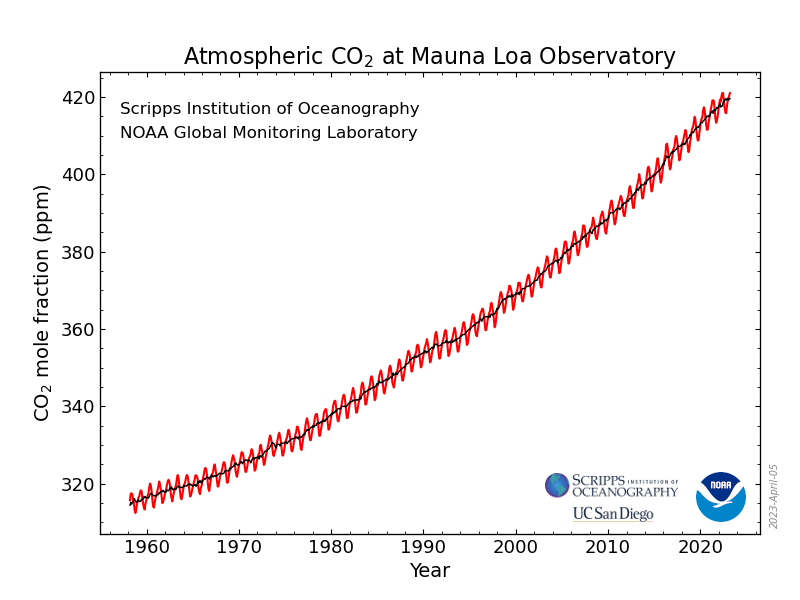
Mauna Loa is WMO Global Atmosphere Watch benchmark station and monitors rising CO2 levels Week of 23 April 2023: 424.40 parts per million Weekly value one year ago: 420.19 ppm Weekly value 10 years ago: 399.32 ppm 📷 http://CO2.Earthhttps://co2.earth/daily-co2. Credit: World Meteorological Organization
SB23-016: Greenhouse gas emissions reduction measures
This lengthy bill created multiple measures aimed at reducing greenhouse gas emissions and changes the goals for how fast the state must meet certain benchmarks between 2035 and 2045. The bill created a 30% tax credit for electric lawn and garden equipment and added regulations to how the Colorado Oil and Gas Conservation Commission regulates greenhouse emissions from fracking. Polis signed the bill on Thursday.
Hydrocarbon processing in the Wattenberg Field east of Fort Lupton, Colo., on July 2, 2020. Photo/Allen Best
This bill requires the Colorado Oil and Gas Conservation Commission to conduct a rulemaking to define, evaluate, and address the cumulative impacts of oil and gas drilling by April 2024. It also updates the complaint process by requiring the commission to respond to public complaints within 30 days, requiring the commission to consider credible evidence of pollution violations.
The bill eliminates a statute of limitations loophole as well as what’s known as the “start-up, shutdown and malfunction” loophole. It also establishes an interim legislative committee to craft more comprehensive legislation tackling these air pollution problems.
The bill is awaiting the governor’s signature and proponents believe he will do so.
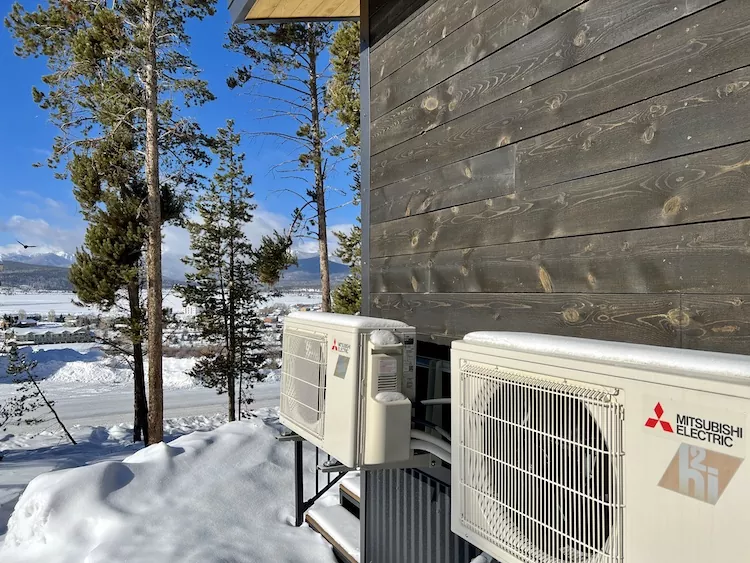
Air-source heat pumps at the home of Joe Smyth and Kristen Taddonio in Fraser, Colo. Photo/Joe Smyth
The bill creates a package of tax credits for consumers who buy climate-friendly technology such as electric cars and trucks, electric bicycles and heat pumps. Polis signed the bill on Thursday.
The bill sets tougher emissions standards for new gas furnaces and water heaters sold in Colorado, phases out the sale of fluorescent light bulbs that contain mercury and sets new energy- and water-saving standards for appliances. The bill is on the governor’s desk but has not been signed.
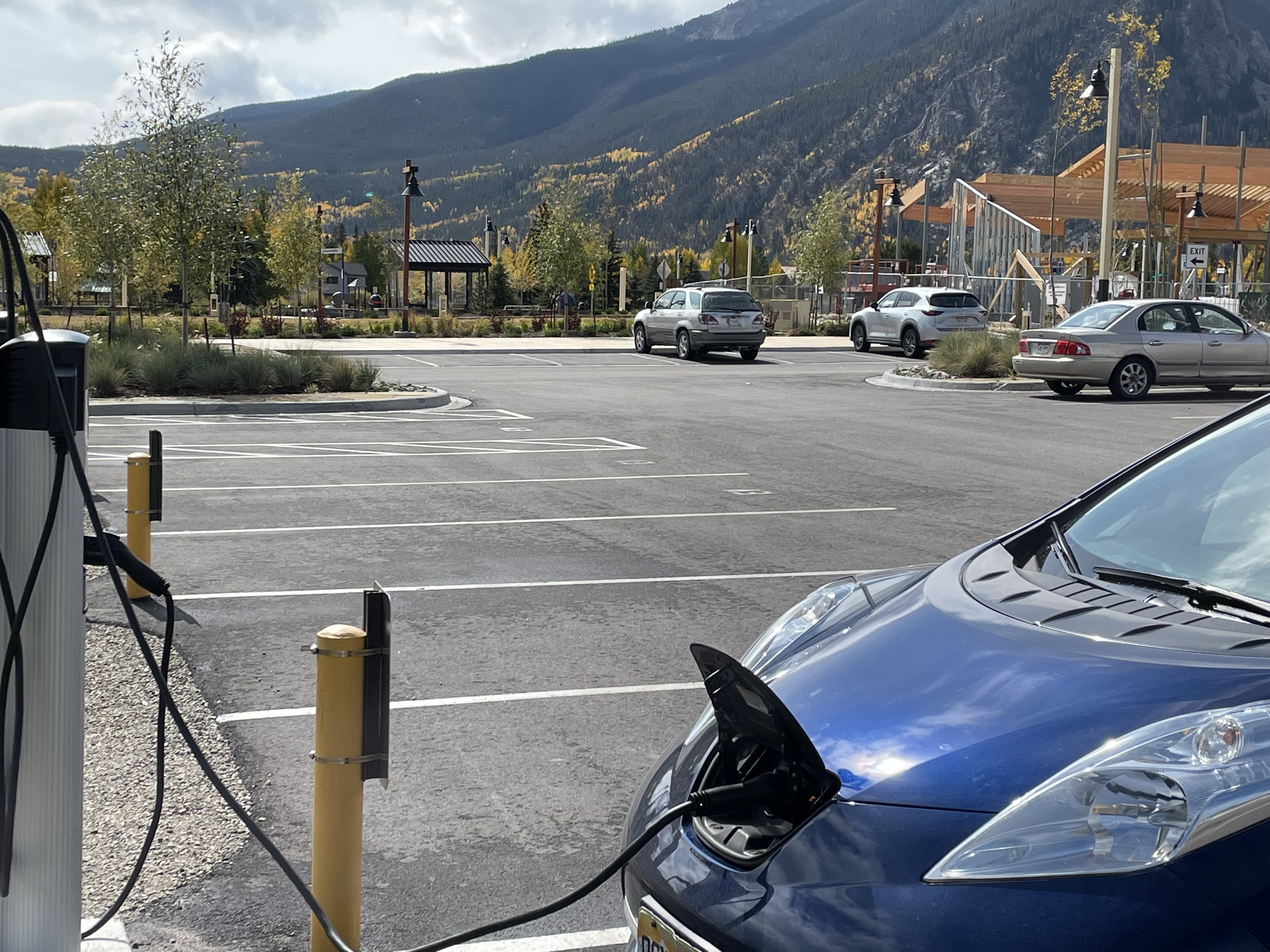
Leaf charging in Frisco September 30, 2021.
HB23-1233: Electric vehicle charging and parking requirements
This bill accelerates the implementation of new electric vehicle charging requirements for new buildings, increasing the availability of charging stations at apartment buildings and condominiums. It also created a standard definition of disproportionately impacted communities to guide the state in establishing environmental programs in the areas that need them the most. The bill has not been signed.
Xcel truck at Shoshone plant. Photo credit: Brent Gardner-Smith/Aspen Journalism
The bill’s goal was to lower utility bills for Coloradans but environmentalists liked it because it pushes the state further away from a reliance on natural gas. It prohibits utility companies from charging their customers to subsidize natural gas service for new construction projects and requires the Public Utilities Commission to stop charging customers who choose to stop using natural gas. Polis signed the bill on Thursday.
A homeowner with a warranty contract can opt for electric alternatives to gas-fueled equipment such as heat pumps. The governor signed the bill on March 31.
Volunteers help to construct the solar system at a low-income, rental-housing subdivision in La Plata County. Photo/LPEA
The bill creates a standard for labels on products that can be composted, such as trash bags, paper plates, disposable cups and utensils. The bill has not been signed by the governor.
Pesticides sprayed on agricultural fields and on urban landscaping can run off into nearby streams and rivers. Here, pesticides are being sprayed on a soybean field in Iowa. (Credit: Eric Hawbaker, Blue Collar Ag, Riceville, IA)
This image was taken during the peak outflow from the Gold King Mine spill at 10:57 a.m. Aug. 5, 2015. The waste-rock dump can be seen eroding on the right. Federal investigators placed blame for the blowout squarely on engineering errors made by the Environmental Protection Agency’s-contracted company in a 132-page report released Thursday [October 22, 2015]
May 11, 2023 (DENVER) — The Colorado Natural Resources Trustees today approved a $5 million settlement with the federal government to resolve natural resource damages claims at the Bonita Peak Mining District Superfund Site, including damages from the 2015 Gold King Mine blowout.
The United States’ alleged liability stems from two different sources. The U.S. Forest Service and the U.S. Bureau of Land Management manage federal lands within the Bonita Peak Mining District where mining activity historically occurred. Federal law imposes liability for natural resources injuries on owners of sites where they occur. In addition, the trustees alleged the U.S. Environmental Protection Agency was partly liable for the Gold King Mine release.
The Colorado Division of Reclamation, Mining and Safety began reclamation efforts at the Gold King Mine in 2008. Beginning in 2014, EPA initiated Superfund response activities focused on assessing a blockage in an adit at the Gold King Mine. On August 5, 2015, while EPA contractors were scraping away material from above the blockage, acidic pressurized water began leaking from the mine. The flow quickly increased in volume and released three million gallons of acid mine-impacted water that had been impounded behind the blockage. The contamination then released into downstream waters including the Animas and San Juan Rivers. EPA immediately conducted an emergency response to address the discharging Gold King mine with an interim water treatment plant.
The EPA listed the Bonita Peak Mining District Superfund Site encompassing several dozen abandoned mines on the National Priorities List in September of 2016 and is currently taking response actions to assess and respond to releases of hazardous substances into surface water from historic mining activities within the site. To date, the EPA has spent over $75 million on response efforts at the site.
The $5 million settlement with the federal government announced today will enable the trustees to fund projects to restore damaged natural resources from the spill and other releases of hazardous substances within the Bonita Peak Mining District Superfund Site. The trustees will consult with regional stakeholders—including local governments, not-for-profit groups, and community members—to solicit proposals, and allocate the money for environmental restoration projects.
“The damage to Southwestern Colorado natural resources remains a matter of great concern. In this action, we are securing valuable funds to address these damages and invest in the restoration of natural resources in this part of our state,” stated Attorney General Phil Weiser, chair of the Colorado Natural Resources Trustees. “We have vigilantly pursued claims for natural resource damages and will work hard to invest the funds we have recovered to best serve the affected communities.”
“Inactive and abandoned mines that operated before Colorado had mining laws continue to have unfortunate and ongoing impacts to Colorado’s waters and landscape. The issues surrounding Bonita Peak Mining District Superfund site remain challenging and I appreciate the cooperation among the trustees and the federal government in settling our State’s natural resource damage claims,” said Dan Gibbs, a trustee and the executive director of the Colorado Department of Natural Resources. “The Department of Natural Resources and our Division of Reclamation Mining and Safety will continue to work with our federal partners and other entities to reduce the impacts of legacy mining in our state.”
“Preserving our natural resources so we can protect the environmental and public health of Colorado communities is a top priority for our department,” said Jill Hunsaker Ryan, a trustee and the executive director of the Colorado Department of Public Health & Environment. “These funds will support the restoration of natural resources impacted by these damages, help Southwestern Colorado recover, and help us build a healthier state for all. We will continue to take necessary action to protect Colorado’s rivers, lakes, and groundwater from harmful pollutants.”
Colorado’s Natural Resources Trustees have recovered natural resources damages for the site several times in the past.
In December of 2021, the trustees approved a $1.6 million settlement agreement with Sunnyside Gold Corporation (SGC) to resolve claims that the company caused or contributed to releases of acidic, metals-laden mine wastewater into the Upper Animas River watershed. SGC operated the Sunnyside Mine from 1986 until 1991.
The trustees received approximately $230,000 in natural resource damages from a 2011 claim against the Standard Metals company regarding its operations at the mining district.
The State settled with the Blue Tee Corporation in 2018 for $468,000, which can go toward the Superfund cleanup within the mining district or to restoring injured natural resources.
These damages will likely be pooled with the recent settlement money as the trustees solicit proposals for projects from local stakeholders.
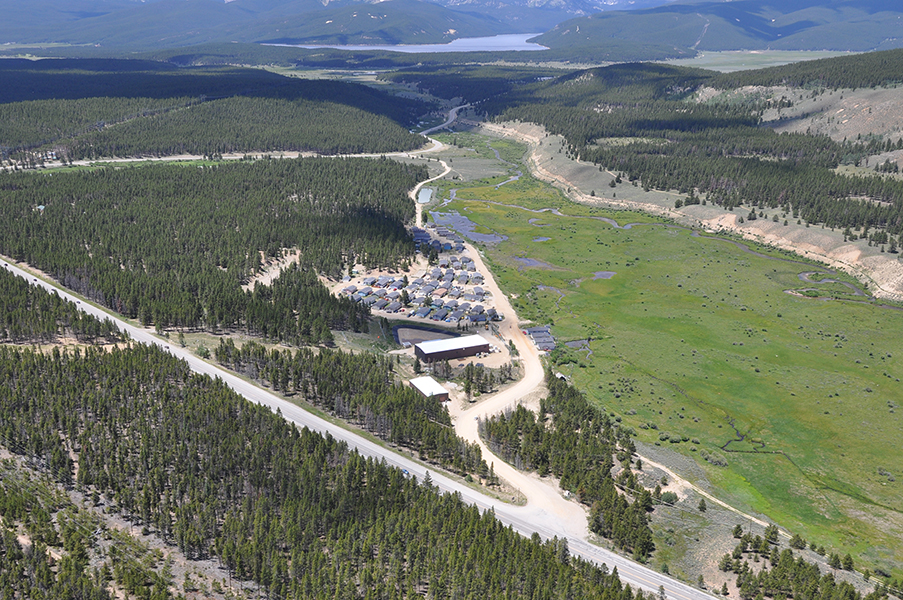
The LMDT is west of Hwy. 91 north of Leadville. Forest, wetlands, and a small neighborhood are located nearby. Photo credit: Reclamation
Click the link to read the release on the Reclamation webiste (Anna Perea and Elizabeth Smith ):
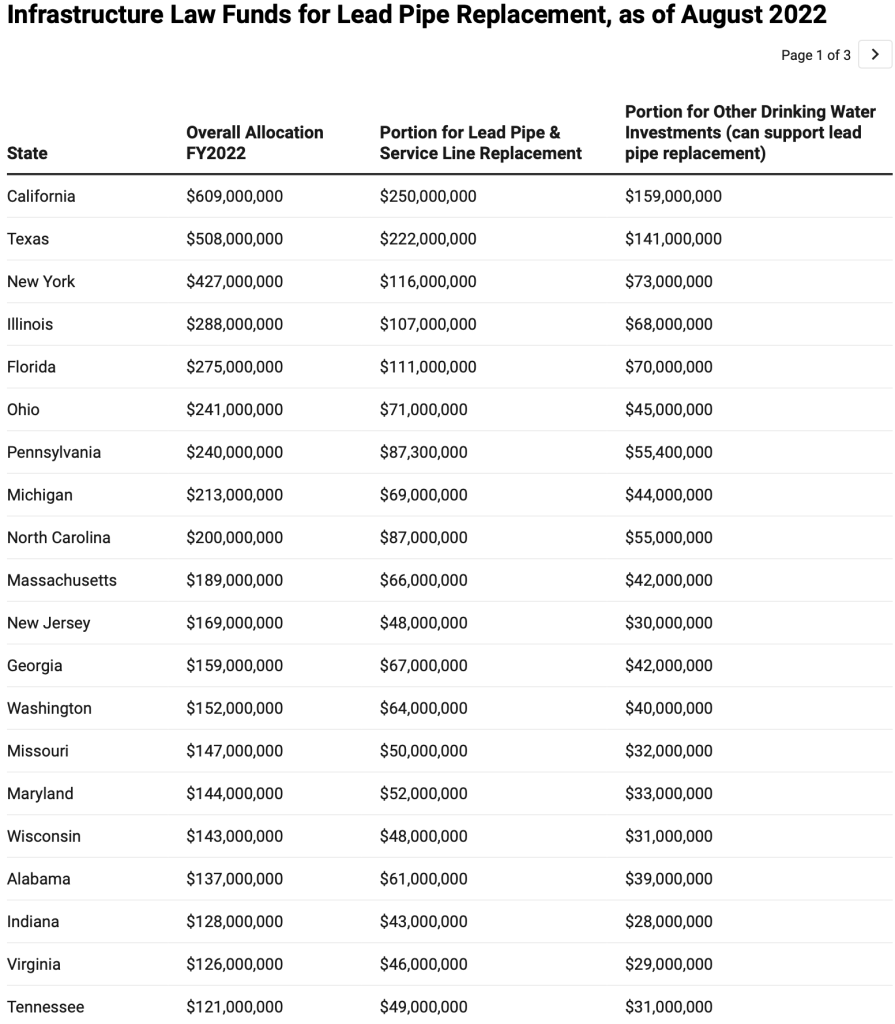
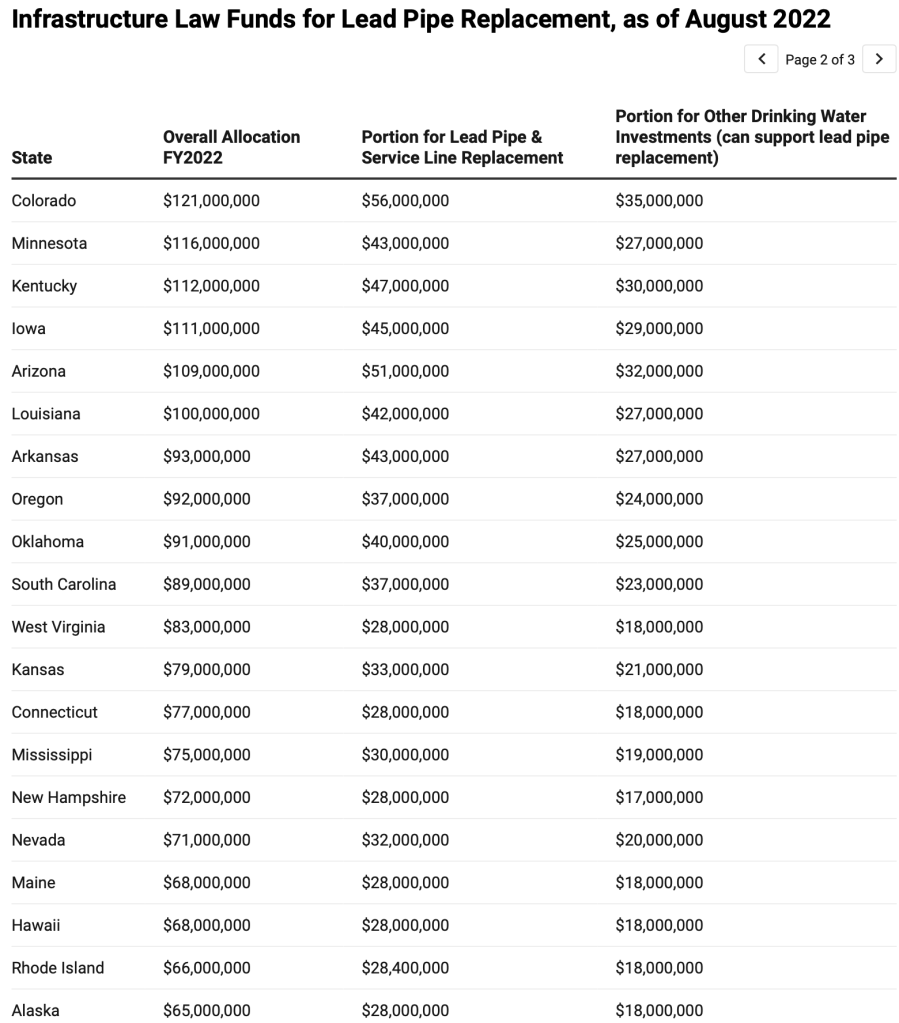
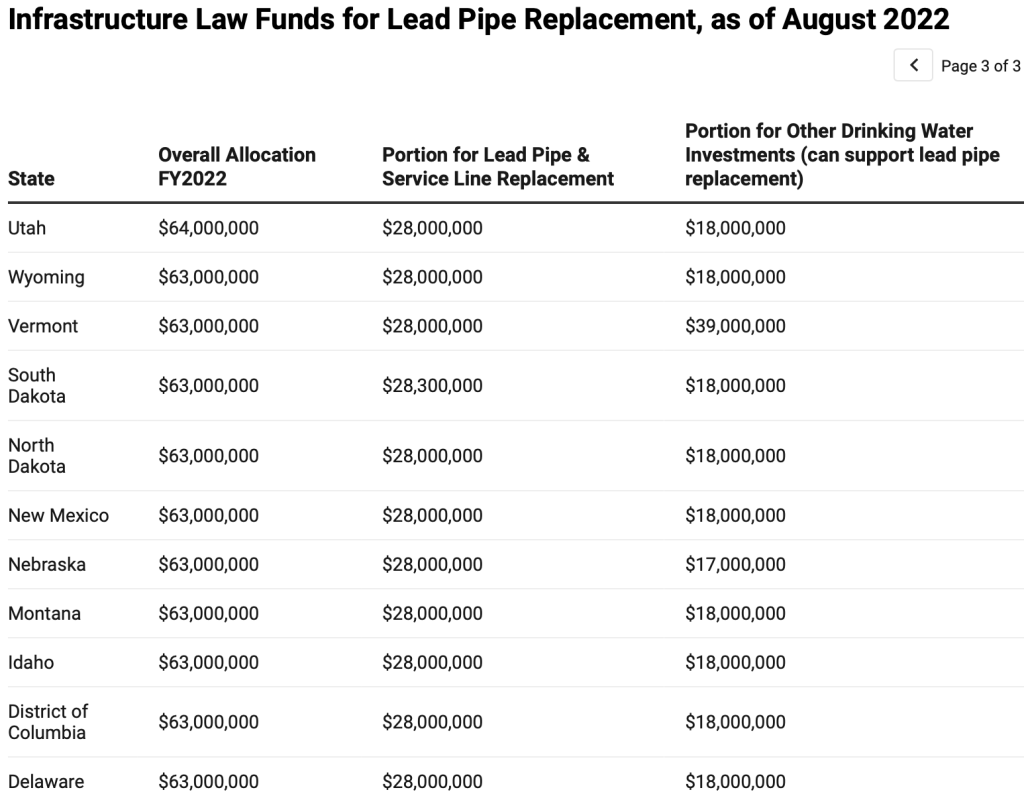
LOVELAND, Colo. — The Bureau of Reclamation announces a $56 million investment from the President’s Investing in America agenda for the construction of a replacement Leadville Mine Drainage Tunnel Treatment Plant. Originally built in 1991, the plant removes heavy metals from contaminated water caused by mining operations in the Leadville area. It has since reached its service life, and this investment from the Bipartisan Infrastructure Law will ensure the plant continues to protect water supply
The Department of the Interior recently announced a nearly $585 million investment from the Bipartisan Infrastructure Law for infrastructure repairs on water delivery systems. Funds will support 83 projects across all five Reclamation regions, including the Leadville Mine treatment plant.
Since 1991, the treatment plant has operated to remove lead, zinc, manganese, iron, and other heavy metals from contaminated water that flows from the 2-mile-long Leadville Mine Drainage Tunnel. The plant sends 650 million gallons per year of treated, clean water to the headwaters of the Arkansas River in accordance with Environmental Protection Agency guidelines.
“The replacement of the treatment plant represents one of the key priorities that the Bipartisan Infrastructure Law is intended to accomplish, protecting our water supplies for people and the natural environment,” said Jeff Rieker, Eastern Colorado Area Office Manager. “This funding will allow us to replace aging infrastructure that is critical for continued protection of the water resources of the Arkansas River, benefitting both the river itself, as well as the people who rely on it for a wide range of activities and uses.”
At present, the treatment plant has surpassed its expected service life of roughly 30 years. Over the next several years, Reclamation will construct a new treatment plant that incorporates knowledge gained over the past three decades, focuses on safety and improves the plant’s visual impact.
“The new plant will provide a longer service life and continue Reclamation’s commitment to community safety and producing clean water for the Arkansas River,” said Plant Supervisor, Jenelle Stefanic. “There will also be more maneuverability within the floor plan and additional safety features such as fall protection and noise reduction technology.”
Prior to mining, snowmelt and rain seep into natural cracks and fractures, eventually emerging as a freshwater spring (usually). Graphic credit: Jonathan Thompson
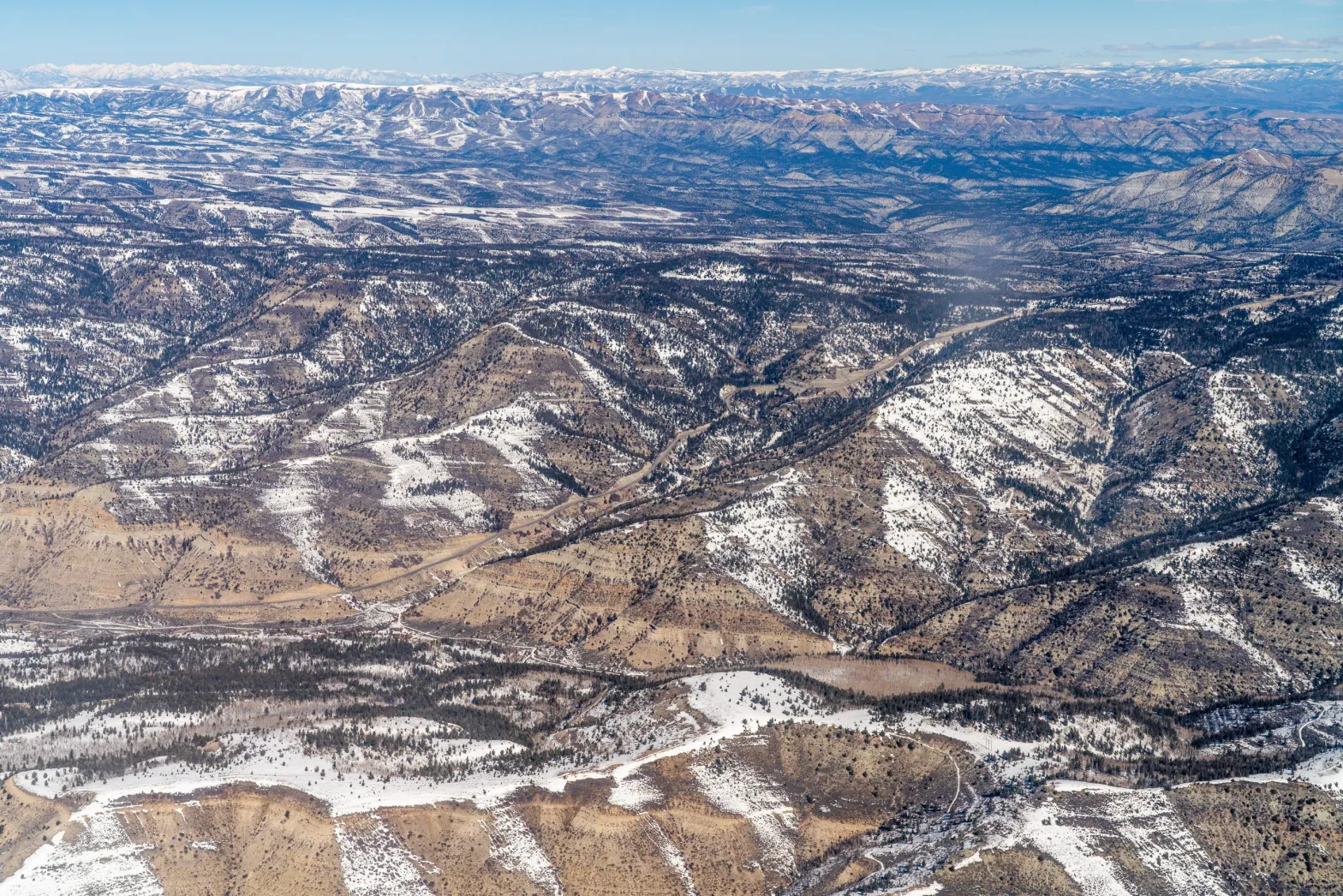
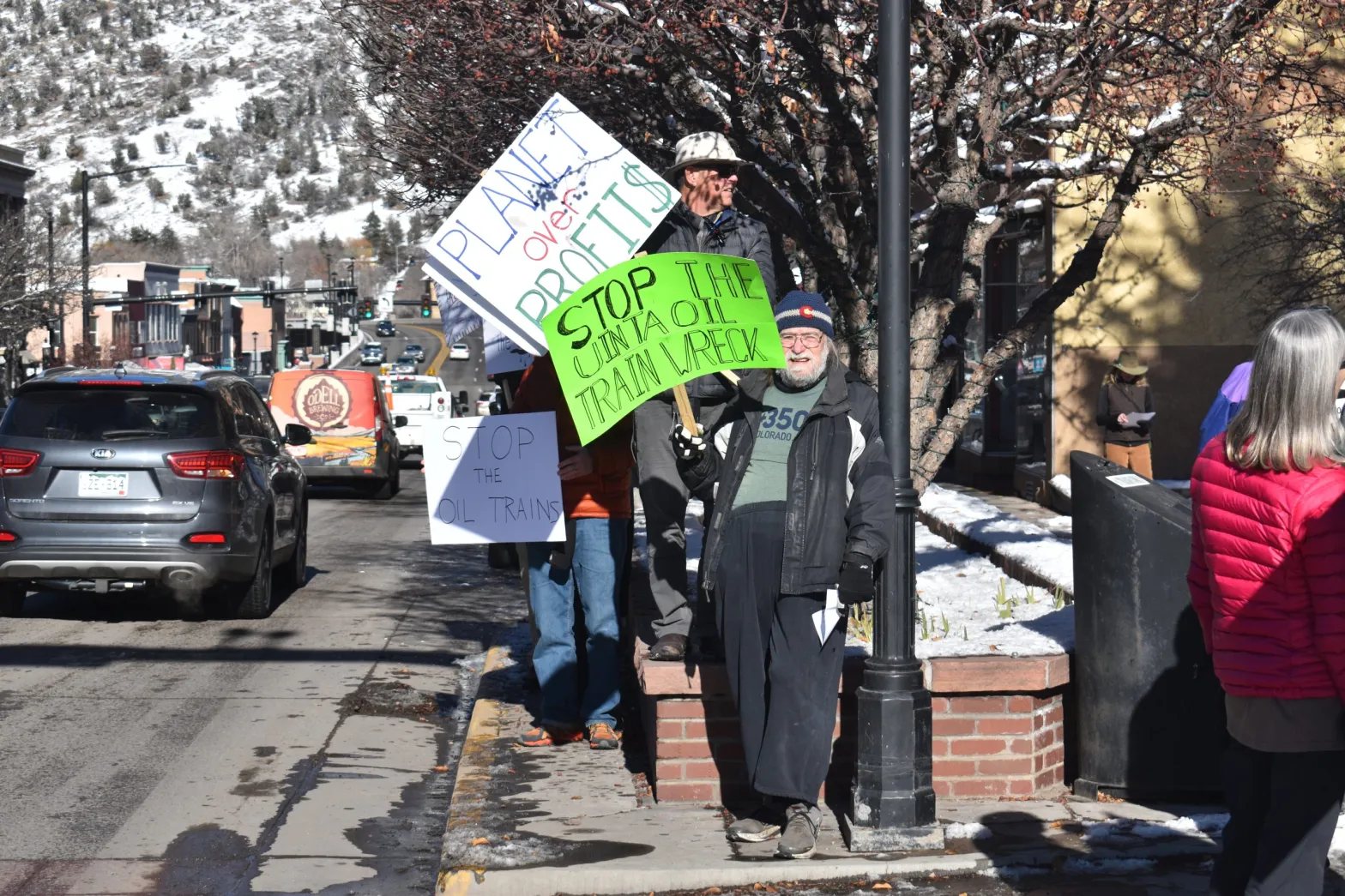
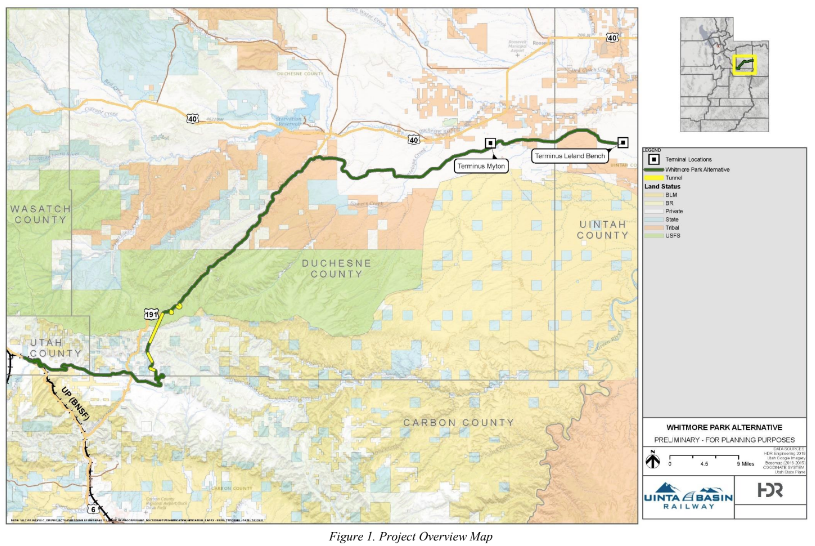
The Uinta Basin Railway project would build around 80 miles of train tracks connecting oil production to America’s rail network. That would allow producers to ship crude oil on trains through Colorado to refineries elsewhere in the country. The U.S. Surface Transportation Board and the United States Department of Agriculture have given the project the go-ahead, prompting a letter from U.S. Sen. Michael Bennet and U.S. Rep. Joe Neguse criticizing the federal review of the project.
“First, it focused solely on the Project’s risks in Utah with no evaluation of its potential harm to Colorado, including the risk of a derailment and oil spill in the headwaters of the River”, the March 28 letter read. “Second, this review also failed to include any analysis of the Project’s effect on greenhouse gas emissions and climate change. We urge you to conduct a supplemental review to fully account for these potential harms.”
[…]
While opponents of the project note the catastrophic consequences of a major spill into the Colorado River, those working to get the rail built say the likelihood of contamination is overstated. That’s because the crude oil is high in paraffin wax content, which means it turns to a solid below about 110 degrees Fahrenheit, according to Keith Heaton, director of the Seven County Infrastructure Coalition in Utah that’s advocating for the rail.
“The only times that the crude is a liquid is when it is heated and loaded into the railcars and when it is reheated back above the 110 degrees pour point, so it can be unloaded and processed,” Heaton said in an email. “In short, Uinta Basin waxy crude is transported as a solid, not a flammable or hazardous liquid. It does not present an environmental concern if there were a derailment.”
Luis Zerpa, associate professor at the Colorado School of Mines Petroleum Engineering Department, says those waxy properties have historically been seen as a barrier to shipping that type of oil.
“So that’s the problem with the waxy oils is they have a lot of these paraffinic molecules or components … that create the petroleum jelly or the candles, that when the temperature decreases it will solidify,” Zerpa said, adding that those properties make it very difficult to move the oil via a pipeline.
However, what makes the crude oil difficult to ship, should make it easy to clean up — at least in the event of a spill. Heaton says the studies done on the rail estimate less than one derailment a year and, if there was an accident, clean-up would be like “picking up a bunch of candles.”
“This is the safest and most ecological way to transport material. And the material, the waxy crude that we have in the basin, is a much sought after and superior product in ways when it comes to environmental concerns and those types of things. I guess you could characterize it as a little bit perplexing from time to time that there’s so much opposition to this,” Heaton said in a phone call with CPR News.
In the first official scorecard of Yampa River system health, the middle section of the Yampa earned an overall score of B. That B means the middle Yampa River from Pump Station boat launch east of Hayden to South Beach about 2 miles south of Craig is a “highly functional river where some stressors are present but in general it remains largely resilient to disturbances and may rely on limited management,” said Jenny Frithsen, environmental program manager with Friends of the Yampa, which is managing the scorecard project. Within the overall score of B as part of the Yampa River Scorecard Project, the middle Yampa earns an A for dissolved oxygen, PH levels and metals in the water, “the only ecological indicators that got an A,” Frithsen reported.
The first results of the long-term scorecard project will be released fully in early May with information available at YampaScorecard.org. Data collection started in the middle Yampa in summer 2022, and the overall project will include five river sections.
During summer 2023, data collection will focus on the stretch starting from Chuck Lewis State Wildlife Area to the Pump Station boat launch.
The river scorecard is derived via approximately 45 different indicators in and around the Yampa River that fall under three main areas: ecological health and function, river uses and management, and people and community benefits.
“By seeing what areas are a C, D or F, we can now focus on action and how to improve these numbers,” said Lindsey Marlow, executive director for Friends of the Yampa. “We now have a template to start conversations with people in this basin about the health of the river and its ecosystem services.”
Marlow said another key finding that stands out is riverscape connectivity, or a measurement of the ease in which a river can move around such as a connected flood plain and river channel.
“There are areas that score so well at 95% and others that need help at 65%, and now we get to embark on the exciting task of figuring out how to improve floodplain connectivity,” Marlow said.
Click the link to read the release on the Reclamation website (Chelsea Kennedy):
The Bureau of Reclamation awarded funding for 15 projects under the Desalination and Water Purification Research program. The research projects are innovative solutions that seek to reduce water treatment costs and improve performance.
“Developing new technologies that can treat currently unusable water will help communities worldwide,” said Research and Development Program Manager Ken Nowak. “These technologies have the potential to increase water supply flexibility under the risks of climate change and drought.”
The Desalination and Water Purification Research Program provides financial assistance for advanced water treatment research and development, leading to improved technologies for developing water supply from non-traditional waters, including seawater, brackish groundwater, and municipal wastewater, among others.
In addition to the $4 million in federal funding provided for selected projects, recipients have committed an additional $3 million of non-federal cost share to further support these research efforts.
Alabama
University of Alabama ($249,966 federal funding, $499,932 total project cost) : Engineering Sustainable Solvents for Brine Desalination. This project seeks to improve solvent performance in temperature swing solvent extraction for brine desalination through experimental and computational techniques.
California
Pacifica Water Solutions, LLC ($350,000 federal funding, $700,000 total project cost): Field Pilot Testing Electrically Conducting Nanofiltration and Reverse Osmosis Membranes. This project will field test innovative anti-scaling and antifouling electrically conducting desalination membranes against commercial membranes for reverse osmosis concentrate minimization and produced water applications.
University of California, Riverside ($250,000 federal funding, $390,754 total project cost): Development of a Novel Vacuum-ultraviolet Photochemical System for Treatment of Nitrate and Per Fluorinated Substances from Inland Desalination Brine. This project will test a novel laboratory-scale vacuum ultraviolet light-driven photochemical process for treatment of nitrate and perfluoroalkyl substances (PFASs) from inland desalination brine.
Colorado
University of Colorado ($592,703 federal funding, $756,246 total project cost): Concentrate Minimization: Pilot Testing of Improved Static Mixer Crystallizers. This project will perform pilot scale testing and evaluation of improved in-line, static mixer elements to accelerate the desupersaturation of reverse osmosis desalination brine.
University of Colorado ($250,000 federal funding, $396,501 total project cost): Robust Surface Patterned Membranes for Membrane Distillation of High Salinity Brine with High Efficiency. This project aims to develop and test scalable, robust, surface-patterned microporous membranes that are designed for a membrane distillation process treating highly concentrated brines.
Mickley & Associates LLC ($111,500 federal funding, $234,150 total project cost): Brine Mining. The project will gather, analyze, and synthesize information from the literature, websites, and interviews to bring clarity to many issues involving brine mining, such as potential benefits, feasibility, applicable technologies, recoverable compounds, and more.
Indiana
Purdue University ($250,000 federal funding, $465,799 total project cost): Batch Counterflow Reverse Osmosis. This project will develop lab-scale demonstration of batch counterflow reverse osmosis to achieve high recovery and efficiency and develop a fundamental understanding of fouling kinetics for the process.
Massachusetts
Tufts University ($249,994 federal funding, $407,733 total project cost): New Fouling-Resistant, Anti-Microbial Membranes for Pretreatment. This project aims to develop and demonstrate ultrafiltration pretreatment membranes that resist organic fouling and biofouling through dual mechanisms, manufactured through a novel scalable manufacturing process.
Minnesota
University of Minnesota ($249,853 federal funding, $249,853 total project cost): Crystallization Kinetics: Toward the Useful Separation of Salts in Enhanced Evaporation Systems. This project seeks to leverage the research team’s detailed understanding of the spatial and temporal temperature variation and brine evaporation behavior in enhanced evaporation systems to intentionally, and selectively, precipitate salt in distinct locations for collection and reuse.
New Mexico
New Mexico Institute of Mining and Technology ($249,896 federal funding, $499,792 total project cost): Advanced Hybrid Membrane Process for Simultaneous Recovery of Clean Water and Lithium from High Salinity Brines. This project seeks to develop an innovative hybrid membrane process for simultaneous recovery of clean water and lithium from high-salinity brines.
Pennsylvania
Temple University ($250,000 federal funding, $500,972 total project cost): Synergistic Integration of Electroactive Forward Osmosis and Microbial Desalination Cells for Energy-Neutral Desalination. The goal of this project is to develop an energy-neutral seawater desalination system by integrating electroactive forward osmosis and microbial desalination cells.
Tennessee
Vanderbilt University ($250,000 federal funding, $518,463 total project cost): Selective Removal and Degradation of PFAS via Cyclic Adsorption-electrooxidation on Conductive Functionalized Cu-MOF-aminated-GO. This project aims to develop a fundamentally new approach to selectively remove PFAS from water using a metal organic framework and degrade it to ensure complete removal.
Texas
William Marsh Rice University ($250,000 federal funding, $332,842 total project cost): Ion Exchange Membranes with Tunable Monovalent Ion Permselectivity to Maximize Water Recovery in Desalination. This project seeks to improve the performance of electrodialysis technologies by developing ion exchange membranes with tunable ion permeability and permselectivity for desalination applications.
Freese and Nichols, Inc. ($231,710 federal funding, $539,945 total project cost): Strategies for Gaining Pathogen Removal Credit for Reverse Osmosis in Potable Reuse in Texas (and Beyond). This project will facilitate the identification and evaluation of strategies for gaining pathogen removal credit for reverse osmosis in potable reuse applications in Texas and beyond.
Virginia
George Mason University ($250,000 federal funding, $500,203 total project cost): Engineering Spatial Wood Carbon Scaffolds with Nanocellulose Fillers for Water Deionization. This project seeks to create an innovative and energy-efficient capacitive deionization process with the help of biomass-based advanced porous structures for water desalination and purification.
For more information on Reclamation’s Desalination and Water Purification Research Program visit www.usbr.gov/research/dwpr.
As environmental challenges go, microfiber pollution has come from practically out of nowhere. It was only a decade or so ago that scientists first suspected our clothing, increasingly made of synthetic materials like polyester and nylon, might be major contributors to the global plastic problem.
Today a growing body of science suggests the tiny strands that slough off clothes are everywhere and in everything. By one estimate, they account for as much as one-third of all microplastics released to the ocean. They’ve been found on Mount Everest and in the Mariana Trench, along with tap water, plankton, shrimp guts, and our poo.
Research has yet to establish just what this means for human and planetary health. But the emerging science has left some governments, particularly in the Global North, scrambling to respond. Their first target: the humble washing machine, which environmentalists say represents a major way microfiber pollution reaches the environment.
Late last month a California State Assembly committee held a hearing on Assembly Bill 1628, which would require new washing machines to include devices that trap particles down to 100 micrometers — roughly the width of human hair — by 2029. The Golden State isn’t alone here, or even first. France already approved such a requirement, effective 2025. Lawmakers in Oregon and Ontario, Canada have considered similar bills. The European Commission says it’ll do the same in 2025.
Environmental groups, earth scientists and some outdoor apparel companies cheer the policies as an important first response to a massive problem. But quietly, some sustainability experts feel perplexed by all the focus on washers. They doubt filters will achieve much, and say what’s really needed is a comprehensive shift in how we make, clean and dispose of clothes.
The wash is “only one shedding point in the lifecycle of the garment. To focus on that tiny, tiny moment of laundry is completely nuts,” said Richard Blackburn, a professor of sustainable materials at the University of Leeds. “It would be much better to focus on the whole life cycle of the garment, of which the manufacturing stage is much more significant in terms of loss than laundering, but all points should be considered.”
Today, some 60 percent of all textiles incorporate synthetic material. Anyone who’s worn yoga pants, workout gear or stretchy jeans knows the benefits: These materials add softness, wicking and flexibility. Under a microscope, though, they look a lot like plain old plastic. From the moment they’re made, synthetic clothes — like all clothes — release tiny shreds of themselves. Once liberated these fibers are no easier to retrieve than glitter tossed into the wind. But their size, shape, and tendency to absorb chemicals leaves scientists concerned about their impacts on habitats and the food chain.
Anja Brandon is an associate director for U.S. plastics policy at the Ocean Conservancy who has supported the California and Oregon bills. She concedes that filters won’t fix the problem, but believes they offer a way to get started. She also supports clothing innovations but said they could be years away. “I for one don’t want to wait until it’s a five-alarm fire,” she said.
Studies suggest a typical load of laundry can release thousands or even millions of fibers. Commercially available filters, like the PlanetCare, Lint LUV-R and Filtrol, strain the gray water through ultra-fine mesh before flushing it into the world. It’s the owner’s job, of course, to periodically empty that filter — ideally into a trash bag, which Brandon said will secure microfibers better than the status quo of letting them loose into nature.
Washing machine manufacturers in the U.S. and Europe have pushed back, saying the devices pose technical risks, like flooding and increased energy consumption, that must be addressed first. University experiments with these filters, including an oft-cited 2019 study by the University of Toronto and the Ocean Conservancy, haven’t found these issues, but it’s not a closed case yet: Last year a federal report on microfibers, led by the Environmental Protection Agency and National Oceanic and Atmospheric Administration, called for more research in this vein.
Manufacturers also argue that microfibers originate in a lot of places, but washers are a relatively modest one. As self-serving as that sounds, people who study the issue agree there’s a huge hole in the available science: While we know clothes shed microfibers throughout their lives, we know surprisingly little about when most of it happens.
Some evidence suggests that the friction of simply wearing clothes might release about as many microfibers as washing them. Then there are dryers, which some suspect are a major source of microfiber litter but have been barely studied, according to the federal report. There is also limited knowledge about how much microfiber pollution comes from the developing world, where most people wash by hand. (A recent study led by Hangzhou Dianzi University in Hangzhou, China pointed to this knowledge gap – and found that hand-washing two synthetic fabrics released on average 80 to 90 percent fewer microfiber pollution than machine-washing.)
To Blackburn, it’s obvious that most releases occur in textile mills, where it’s been known for centuries that spinning, weaving, dyeing and finishing fabric spritzes lots of fiber. “Where do you think it goes when we get it out of the factory?” he said. “It goes into the open air.”
He calls filter policies “totally reactionary,” arguing that they would at best shave a few percentage points off the total microfiber problem. But there is one area where Blackburn is in broad agreement with environmentalists: In the long run, tackling the issue will take a lot of new technology. No silver-bullet solution has appeared yet, but a slew of recent announcements reveals a vibrant scene of research and development attacking the problem from many angles.
Some best practices already are known within the industry. For example, more tightly woven clothes, and clothes made of long fibers rather than short ones, fray less. But for years, popular brands like Patagonia and REI have said what they really need is a way to experiment with many different materials and compare their shedding head to head. This has been tricky: Microfibers are, well, micro, and there’s no industry standard on how to measure them.
That might be changing. In separate announcements in February, Hohenstein, a company that develops international standards for textiles, and activewear brand Under Armour revealed new methods in this vein. Under Armour is targeting 75 percent “low-shed” fabrics in its products by 2030.
These approaches would at best reduce microfiber emissions, not eliminate them. So another field of research is what Blackburn calls “biocompatibility”: making microfibers less harmful to nature. California-based companyIntrinsic Advanced Materials sells a pre-treatment, added to fabrics during manufacturing, that it claims helps polyester and nylon biodegrade in seawater within years rather than decades. Blackburn’s own startup, Keracol, develops natural dyes, pulled from things like fruit waste, that break down more easily in nature than synthetic ones.
New ideas to dispose of clothes are also emerging, though some will cause arched eyebrows among environmentalists. This year U.S. chemical giant Eastman will start building a facility in Normandy, France that it claims “unzips” hard-to-recycle plastics, like polyester clothes, into molecular precursors that can be fashioned into new products like clothes and insulation. Critics charge that such “chemical recycling” techniques are not only of dubious benefit to the environment, they’re really just a smokescreen for fossil-fuel corporations trying to keep their product in demand.
Lest anyone forget about washing machines, there’s R&D going after them, too. In January Patagonia and appliance giant Samsung announced a model that they claim cuts micro plastic emissions up to 54%. It’s already rolled out in Europe and Korea. At around the same time, University of Toronto researchers published research on a coating that, they claim, makes nylon fabric more slippery in the wash, reducing friction and thus microfiber emissions by 90 percent after nine washes. In a press release the researchers tut-tutted governments for their focus on washing-machine filters, which they called a “Band-Aid” for the issue.
One continuous thread through all these efforts, of course, is that everyone is working with imperfect information. The emerging science on microfibers – and microplastics in general – suggests they’re a gritty fact of modern life, but doesn’t yet show the magnitude of their harm to humans and other species. For the moment environmentalists, policymakers and manufacturers aren’t just debating whether to put filters on washing machines, but whether we know enough to act. In 20 years, when scientists know a lot more, it’ll be easier to judge whether today’s policies represented proactive leadership on an emerging environmental problem — or a soggy Band-Aid.
THREAT: CLIMATE CHANGE AND OUTDATED WATER MANAGEMENT
The Colorado River’s Grand Canyon is one of our nation’s, and the world’s, greatest natural treasures. A sacred place of deep cultural significance, it is also a beloved recreation and travel destination, and home to endangered plants and animals. But rising temperatures and severe drought driven by climate change, combined with outdated river management and overallocation of limited water supplies, put this iconic river at serious risk. As it makes critical decisions about water management along the Colorado River, the Bureau of Reclamation must consider the environment a key component of public health and safety and prioritize the ecological health of the Grand Canyon.
The Ohio River unifies 30 million people across 15 states, from New York to Mississippi. Protecting this precious resource is essential to ensuring the endurance of cultural identity, historical significance, biodiversity, vibrant river communities, and safe drinking water. But the upper river is threatened by industrialization and pollution, recently exemplified by the East Palestine train derailment. This ongoing chemical disaster underscores the vulnerability of the Ohio River and need for increased safeguards and durable funding for additional and continuous monitoring. To protect the Ohio River, Congress must designate the river as a federally protected water system and commit to significantly fund both the Ohio River Restoration Plan and Ohio River Valley Water Sanitation Commission’s technical upgrades.
The Pearl River is one of the most biodiverse rivers in the U.S. and the primary drinking water source for Jackson, Mississippi. But this natural treasure is threatened by a devastating private real estate development scheme masquerading as a flood control project. This “One Lake” project would dredge and dam the Pearl River to create new waterfront property, destroying vital fish and wildlife habitat, worsening Jackson’s flooding and drinking water crisis, increasing toxic contamination, and reducing freshwater flows critical to the region’s important seafood and tourism economies. The Biden administration must stop this project and invest in environmentally-sustainable flood relief for the predominantly Black community of Jackson while protecting the Pearl River and all the communities and economies that rely on it.
Ansel Adams The Tetons and the Snake River (1942) Grand Teton National Park, Wyoming. National Archives and Records Administration, Records of the National Park Service. (79-AAG-1). By Ansel Adams – This tag does not indicate the copyright status of the attached work. A normal copyright tag is still required. See Commons:Licensing., Public Domain, https://commons.wikimedia.org/w/index.php?curid=118192
Salmon in the Columbia-Snake River basin are on the brink of extinction in large part due to four dams on the lower Snake in eastern Washington. Restoring salmon runs and honoring treaties and responsibilities with Tribal Nations across the region requires removal of these four dams. Momentum and support for this river restoration effort is growing, but it is critical that the hydropower, transportation, and irrigation services of the dams are replaced before dam removal can begin. The region’s congressional delegation and the Biden administration must act with urgency to invest in infrastructure so that the dams can be removed, setting the Northwest on a course to climate resilience, economic strength, abundant salmon, and cultural revitalization.
The Clark Fork is a regional boating and angling destination and supplies some of the richest habitat in the lower 48. Throughout European settlement and industrial development, the Clark Fork was the backbone of large-scale enterprises that left a legacy of pollution and ecological damage. Community members, advocates, Tribes, and government officials are among many who have been helping to heal the river, however, the shuttered Smurfit-Stone pulp mill threatens to reverse the gains made. Sitting along four miles of the Clark Fork downstream of Missoula, Montana, Smurfit-Stone is poisoning the groundwater and river with dioxins and heavy metals. These pollutants threaten fish and wildlife and put the health of Tribal subsistence fishers at risk. Through federal Superfund law, the polluters are responsible for cleaning up the site.
The Eel River once teemed with abundant native fish and other wildlife, supporting the Wiyot, Sinkyone, Lassik, Nongatl, Yuki and Wailaki peoples, who have lived along the river since time immemorial. Today the river’s Chinook salmon, steelhead, and Pacific lamprey are all headed toward extinction in large part because of two obsolete dams that make up Pacific Gas and Electric’s Potter Valley Hydroelectric Project. Together the dams completely block salmon migration and harm river habitat. The license for the dams recently expired and PG&E no longer wants to operate the facilities. It’s up to federal regulators to require PG&E to remove the dams as part of the decommissioning plan, expected during the fall of 2023.
The Lehigh River near Jim Thorpe, Pennsylvania, 24 June 2002. By The original uploader was Malepheasant at English Wikipedia. – Transferred from en.wikipedia to Commons by Matthiasb using CommonsHelper., CC BY-SA 2.0, https://commons.wikimedia.org/w/index.php?curid=4495692
The Lehigh River, flowing out of the Appalachian Mountains and through the densely populated Lehigh Valley region, is the “backyard river” for half a million people, and the keystone to Northeastern Pennsylvania’s outdoor recreation industry. The areas that surround the river offer outdoor gathering spaces and accessible recreation opportunities for folks throughout the watershed, but especially in the cities of Allentown, Easton, and Bethlehem. But as the region becomes the logistics hub of the eastern seaboard, with over four square miles of warehouses and distribution centers built to date, the river’s health is at risk. Unless federal, state and local decision makers act to improve protections for local waterways, the area’s clean water and wildlife habitat could suffer irreversible harm.
But the Palmer Project, a proposed copper and zinc mine, is about to move to the next stage of development, which could release hundreds of thousands of gallons of toxic wastewater per day into nearby creeks that feed directly into the Klehini and Chilkat rivers, potentially crippling the entire ecosystem of the Chilkat Valley. This is in addition to the already concerning impacts of climate change, such as rapid glacier melting and a historic increase in rainfall. Congress and the Environmental Protection Agency (EPA) must act now to ensure the fundamental protections guaranteed by the federal Clean Water Act are not abandoned and a grave environmental injustice is not allowed.
Fishing on the Gallinas River near Las Vegas, New Mexico, Date: 1886 – 1888?
J.R. Riddle Collection,
Palace of the Governors Photo Archives, New Mexico History Museum, Santa Fe, New Mexico.
THREAT: CLIMATE CHANGE AND OUTDATED FOREST AND WATERSHED MANAGEMENT
New Mexico’s waterways are among the most vulnerable in the United States. The Rio Gallinas is the poster child for the adverse impacts—both ecological and cultural — of climate change on Southwestern watersheds. The river provides water for Las Vegas, New Mexico, and for the traditional acequia irrigation system. Drinking water, farming, and overall watershed functionality are all threatened by climate change and outdated forest management practices. Furthermore, without a good connection to its floodplain and a loss of wetlands, the Rio Gallinas is less able to naturally store the water needed to maintain flows during periods of drought.
The Okefenokee Swamp — a unique wetland nearly half a million acres in size — is threatened by a proposed titanium mine, which government agencies predict would result in permanent and unacceptable damage to this special place. In 2022, the U.S. Army Corps of Engineers abdicated its responsibility for oversight of the proposed mine. The Corps’ decision leaves permitting to the Georgia Environmental Protection Division, which must deny the permit applications for this ill-advised project. The Corps should make it clear that a federal Clean Water Act permit is required for the proposed mine. Perhaps no clearer case exists for why meaningful wetland protections at the federal level under the Clean Water Act are so important.
Brighton Village mobile home park next to a river. Multiple trailers are intersperses with bare deciduous trees on a riverbank. Photo credit: Aqua Talk
State legislators have introduced a bill that would create a water-testing program at mobile home parks, addressing residents’ long-standing concerns about water quality.
House Bill 1257, which is sponsored by District 57 Rep. Elizabeth Velasco, D-Garfield County, would require the Colorado Department of Public Health and Environment to create a water-testing program that covers all mobile home parks in the state by 2028. If the testing finds a water-quality issue, the park owner must come up with a remediation plan and not pass the cost of fixing the problem on to the residents.
The testing results would be made available to park residents and the public in English, Spanish and other languages. The bill would also require park owners to identify the water source and establish a grant program to help park owners pay for remediation options such as infrastructure upgrades.
The bill was introduced March 26, and its other sponsors are Rep. Andrew Boesenecker, D- Larimer County, and Sen. Lisa Cutter, D-Jefferson County.
Velasco, who said she lived in mobile home parks growing up, said she has heard complaints from residents about discolored water that stains clothes, smells and tastes bad, causes skin rashes, and breaks appliances. But often, those complaints go unaddressed because the water may still meet the standards of the Environmental Protection Agency’s Safe Drinking Water Act.
“The odor, the taste, the color, those are secondary traits of the water, according to these regulations,” Velasco said. “These issues are in low-income communities, majority people of color. These issues are not happening to wealthy families.”
Environmental justice issue
Water quality in mobile home parks is an environmental-justice issue for the Latino community. According to the Colorado Latino Climate Justice Policy Handbook, nearly 20% of Latino households live in mobile homes. And according to survey results in the 2022 Colorado Latino Policy Agenda, 41% of mobile home residents said they do not trust or drink the water in their homes. Eighty percent of survey respondents said they support new regulations requiring that mobile home parks provide their residents with clean drinking water.
Beatriz Soto is executive director of Protegete, a Latino-led environmental initiative of Conservation Colorado that developed the climate justice handbook. Conservation Colorado supports the bill. Soto, who also lived in mobile home parks in the Roaring Fork valley, said for years she has heard the same complaints Velasco did about water quality, so she knew it was a top priority for the Latino community. The survey results confirmed the anecdotes.
“This is not just little things we are hearing here and there in the community; this is a bigger issue,” Soto said. “When you work two jobs and you have to drive two hours to work and you come home and have to go to a laundromat because you can’t wash your clothes at your residence, there’s a real cumulative impact of living under those conditions.”
The Aspen-to-Parachute region has 55 parks, which combined have about 3,000 homes and 15,000 to 20,000 residents. Mobile home parks are some of the last neighborhoods of nonsubsidized affordable housing left in the state and provide crucial worker housing, especially in rural and resort areas.
Residents have complained about the water quality in some parks for years, but agencies have lacked the regulatory authority to enforce improvements. Recently, residents in parks near Durango and in Summit County have lacked running water for weeks at a time.
Voces Unidas de las Montanas, a Latino-led advocacy nonprofit that is based in Colorado’s central mountains and works in the Roaring Fork Valley, is one of the organizations leading Clean Water for All Colorado, a committee that helped to craft the legislation.
“Many of us who grew up in mobile home parks, myself included, have always known and normalized buying bottled water from the store, and it’s because we don’t trust our water,” said Alex Sanchez, president and CEO of Voces Unidas. “Many residents have been complaining and calling for action for decades, and no one has answered their call.”
Sanchez said the bill is his organization’s No. 1 legislative priority this session.
Rocky Mountain Home Association and Colorado Manufactured Housing Coalition oppose the bill. Tawny Peyton, executive director of the Rocky Mountain Home Association, said the mobile home park industry has been bombarded with sweeping law changes in recent years, causing confusion and additional operation and legal costs. Laws enacted in 2019, 2020 and 2022 granted extra protections to mobile home park residents.
“The Rocky Mountain Home Association is concerned with the entire bill,” Peyton said in an email. “Why is the mobile home park industry being singly targeted with this legislation? Industry was not made aware that mobile home park water quality was such an issue that a 23-page bill was warranted.”
Bill proponents acknowledge that the issue may take years to get resolved and that new regulations would be just the first step toward gathering data and assessing the problem.
“This is just a first stab at trying to resolve this issue,” Soto said. “This is establishing a framework to start testing and get all the information and documenting all the water sources for mobile home parks to determine what is the problem.”
House Bill 1257 is scheduled for a hearing by the Transportation, Housing and Local Government Committee on Wednesday [April 12, 2023].
Historically, production from the Uinta Basin was capped by the capacity of nearby refineries who refined the yellow and black waxy crude oil that comes out of the ground there. That meant production couldn’t exceed around 85,000 barrels per day (bpd). However, with the ability to now load that crude onto Union Pacific Railway trains headed to the Gulf Coast, production has surged as high as 135,000 bpd. Because of the unique geography of the area, all that oil is currently moved out by tanker trucks.
Enter the Uinta Basin Railway project, a proposed, brand new, 85-mile rail line that would connect the Uinta Basin’s oil fields to the Union Pacific system. According to the project’s proponents, it isn’t designed to take tanker trucks off local roads. Instead, the project is all about future growth. Proponents—a coalition of seven Utah counties—envision unlocking 130,000-350,000 bpd of new crude production.
That’s a shocking amount of growth for an oil field that produces a highly unusual form of crude oil—a hard, waxy crude that solidifies at temperatures below 110 degrees. Because of its unique chemistry, it cannot be transported via pipeline. Rather, it must be shipped either by truck or rail inside specially heated tanks, all of which has meant that Unita crude has been economically marginal for most of its history.
But access to a larger market could change all of that. And what makes it truly shocking is its cumulative greenhouse gas emissions, which could surpass the globally controversial Willow Project. That’s because at Willow’s peak, daily production is estimated at 180,000 bpd, while the Uinta Basin Railway proponents see their fields adding up to 350,000 bpd of new production.
According to the Surface Transportation Board’s Environmental Impact Statement (EIS) for the project, the high-end production scenario unlocked by this rail line could lead to more than 53 million metric tons of annual greenhouse gas emissions from the combustion of this oil. Given the International Energy Agency’s admonition that no new crude oil supply projects should be brought online to keep global temperature rise in check, the Uinta Basin Railway provides a textbook example of a project with no future in a climate-constrained world. Any federal decisions that could lead to the project’s construction–be they permits or financial assurances–are equivalent to the green lighting of a significant, long-term increase in unneeded and risky oil production.
A Threat to Precious Western Water Supplies
If you read the EIS for the Uinta Basin Railway project, you’d be deceived into believing it’s just about moving crude oil 85 miles closer to the Salt Lake City area and that its impacts are limited in scope. However, nothing could be further from the truth. The surge in growth this project would unlock is all about connecting the Uinta Basin to Gulf Coast refineries, which have bought increasing volumes of this oil in recent years and have the specialized refining equipment necessary to turn this oil into usable products.
What that means on the ground is that this project is about tying into the rail systems that can be used to get the oil all the way to the Gulf Coast. That means primarily using Union Pacific’s rail line, which runs through the Rocky Mountains alongside the headwaters of the Colorado River.
Union Pacific’s rail lines (left) hug the Glenwood Canyon walls beside the muddy Colorado River. Credit: djvass, Flickr
According to the project’s EIS, the extraordinary increase in crude-by-rail traffic facilitated by the project could lead to a derailment every year. Should that derailment be significant, there is a high probability that ruptured tank cars would leak oil into nearby waterways. In a letter from Colorado’s U.S. Senators Bennet and Hickenlooper, joined by Colorado Representative Neguse, this risk is called out specifically given how difficult a major response effort would be in the route’s rugged and remote terrain.
Equally concerning are the properties of the oil itself and what might happen should a spill take place in rapidly moving water without a near-immediate response effort. Though project proponents claim that the Uinta’s waxy crudes are “clean up friendly,” their unique qualities should raise serious concerns. For crude oils that quickly solidify when spilled into water, long term contamination is always a serious risk should the oil adhere to the river bottom as it biodegrades. The extraordinary lack of scientific basis for concluding minimal spill risks within the EIS should raise alarm bells for anyone looking at this project. Given that this oil would move alongside one of the West’s most critical water bodies, robust consideration of spill risks and response limitations should have been paramount to the environmental analysis that was conducted.
Instead, the Surface Transportation Board has accepted the Uinta Railway Project’s voluntary commitment to prepare an emergency response plan applicable only to the 85 miles of new rail line encompassing this project. The increased risks and emergency response capacities beyond that short distance are simply ignored, as if the thousands of miles left for the oil to travel simply do not exist.
A Project with Ballooning Costs Requests Taxpayer Support
Project proponents now hope to access 15% of that remaining pot, even though DOT’s bonds to date have supported highway and rail transit projects.
Indeed, the Uinta Basin Railway is a decidedly poor fit for these financial supports. Its sole purpose is moving crude oil out of the Uinta Basin. Few other commodities come from the area and project proponents have made no attempt to play up the rail line’s potential for diversifying markets for local commodities. Instead, they’ve doubled down on the assertion that the rail line will be about oil, oil, oil. Given the congressional desire that private activity bonds “increase private sector investment in U.S. transportation infrastructure,” using these bonds for a project with almost no meaningful utility aside from expanding oil production represents a gross misuse of limited federal funds.
A Project with Unacceptable Risks to the Climate and Fresh Water
In the aftermath of the Willow Project’s approval, the federal government must take greater care in its management of projects designed to lock in massive quantities of future greenhouse gas emissions. The Uinta Basin Railway project is one of these. Its approval and financial support would represent an extraordinary misuse of federal funds at a time when so much federal investment and effort is going to decarbonizing the U.S. economy. Instead, the federal government should be partnering with state and local governments to diversify the economy of this region instead of locking it into another century of dependence on oil.
Colorado River Basin in Colorado via the Colorado Geological Survey
Joe Charbonnet is an environmental engineer at Iowa State University who develops techniques to remove contaminants like PFAS from water. He explains what the proposed guidelines would require, how water utilities could meet these requirements and how much it might cost to get these so-called forever chemicals out of U.S. drinking water.
1. What do the new guidelines say?
PFAS are associated with a variety of health issues and have been a focus of environmental and public health researchers. There are thousands of members of this class of chemicals, and this proposed regulation would set the allowable limits in drinking water for six of them.
Two of the six chemicals – PFOA and PFOS – are no longer produced in large quantities, but they remain common in the environment because they were so widely used and break down extremely slowly. The new guidelines would allow for no more than four parts per trillion of PFOA or PFOS in drinking water.
Four other PFAS – GenX, PFBS, PFNA and PFHxS – would be regulated as well, although with higher limits. These chemicals are common replacements for PFOA and PFOS and are their close chemical cousins. Because of their similarity, they cause harm to human and environmental health in much the same way as legacy PFAS.
A few states have already established their own limits on levels of PFAS in drinking water, but these new guidelines, if enacted, would be the first legally enforceable federal limits and would affect the entire U.S.
Chemicals used to create water-repellent fabrics and nonstick pans often contain PFAS and leak those chemicals into the environment. Brocken Inaglory/Wikimedia Commons, CC BY-SA
2. How many utilities will need to make changes?
PFAS are harmful even at extremely low levels, and the proposed limits reflect that fact. The allowable concentrations would be comparable to a few grains of salt in an Olympic-size swimming pool. Hundreds of utilities all across the U.S. have levels of PFAS above the proposed limits in their water supplies and would need to make changes to meet these standards.
While many areas have been tested for PFAS in the past, many systems have not, so health officials don’t know precisely how many water systems would be affected. A recent study used existing data to estimate that about 40% of municipal drinking water supplies may exceed the proposed concentration limits.
Activated carbon is a charcoal-like substance that PFAS stick to quite well and can be used to remove PFAS from water. In 2006, the town of Oakdale, Minnesota, added an activated carbon treatment step to its water system. Not only did this additional water treatment bring PFAS levels down substantially, there were significant improvements in birth weight and the number of full-term pregnancies in that community after the change.
Ion exchange systems work by flowing water over charged particles that can remove PFAS. Ion exchange systems are typically even better at lowering PFAS concentrations than activated carbon systems, but they are also more expensive.
Another option available to some cities is simply finding alternative water sources that are less contaminated. While this is a wonderful, low-cost means of lowering contamination, it points to a major disparity in environmental justice; more rural and less well-resourced utilities are unlikely to have this option.
4. Is such a major transition feasible?
By law, the EPA must consider not just human health but also the feasibility of treatment and the potential financial cost when setting maximum contaminant levels in drinking water. While the proposed limits are certainly attainable for many water utilities, the costs will be high.
The federal government has made available billions of dollars in funding for treating water. But some estimates put the total cost of meeting the proposed regulations for the entire country at around US$400 billion – much more than the available funding. Some municipalities may seek financial help for treatment from nearby polluters, while others may raise water rates to cover the costs.
5. What happens next?
The EPA has set a 60-day period for public comment on the proposed regulations, after which it can finalize the guidelines. But many experts expect the EPA to face a number of legal challenges. Time will tell what the final version of the regulations may look like.
This regulation is intended to keep the U.S. in the enviable position of having some of the highest-quality drinking water in the world. As researchers and health officials learn more about new chemical threats, it is important to ensure that every resident has access to clean and affordable tap water.
While these six PFAS certainly pose threats to health that merit regulation, there are thousands of PFAS that likely have very similar impacts on human health. Rather than playing chemical whack-a-mole by regulating one PFAS at a time, there is a growing consensus among researchers and public health officials that PFAS should be regulated as a class of chemicals.
Fatemeh Asadi Zeidabadi, a PhD student in the UBC department of chemical and biological engineering and a student in Dr. Madjid Mohseni’s group. Photo credit: Mohseni lab
Engineers at the University of British Columbia have developed a new water treatment that removes “forever chemicals” from drinking water safely, efficiently – and for good.
“Think Brita filter, but a thousand times better,” says UBC chemical and biological engineering professor Dr. Madjid Mohseni, who developed the technology.
Dr. Madjid Mohseni
Forever chemicals, formally known as PFAS (per-and polyfluoroalkyl substances) are a large group of substances that make certain products non-stick or stain-resistant. There are more than 4,700 PFAS in use, mostly in raingear, non-stick cookware, stain repellents and firefighting foam. Research links these chemicals to a wide range of health problems including hormonal disruption, cardiovascular disease, developmental delays and cancer.
To remove PFAS from drinking water, Dr. Mohseni and his team devised a unique adsorbing material that is capable of trapping and holding all the PFAS present in the water supply.
The PFAS are then destroyed using special electrochemical and photochemical techniques, also developed at the Mohseni lab and described in part in a paper published recently in Chemosphere.
While there are treatments currently on the market, like activated carbon and ion-exchange systems which are widely used in homes and industry, they do not effectively capture all the different PFAS, or they require longer treatment time, Dr. Mohseni explained.
“Our adsorbing media captures up to 99 per cent of PFAS particles and can also be regenerated and potentially reused. This means that when we scrub off the PFAS from these materials, we do not end up with more highly toxic solid waste that will be another major environmental challenge.”
He explained that while PFAS are no longer manufactured in Canada, they are still incorporated in many consumer products and can then leach into the environment. For example, when we apply stain-resistant or repellent sprays/materials, wash PFAS-treated raingear, or use certain foams to put down fires, the chemicals end up in our waterways. Or when we use PFAS-containing cosmetics and sunscreens, the chemicals could find their way into the body.
For most people, exposure is through food and consumer products, but they can also be exposed from drinking water – particularly if they live in areas with contaminated water sources.
Dr. Mohseni, whose research group also focuses on developing water solutions for rural, remote and Indigenous communities, noted: “Our adsorbing media are particularly beneficial for people living in smaller communities who lack resources to implement the most advanced and expensive solutions that could capture PFAS. These can also be used in the form of decentralized and in-home water treatments.”
The UBC team is preparing to pilot the new technology at a number of locations in B.C. starting this month.
“The results we obtain from these real-world field studies will allow us to further optimize the technology and have it ready as products that municipalities, industry and individuals can use to eliminate PFAS in their water,” said Dr. Mohseni.
Groups call for CDPHE to issue strongest possible water discharge permit for refinery
DENVER, CO —
A new study conducted by Westwater Hydrology LLC connects PFAS pollution in Sand Creek and the South Platte River, as well as river water used by Commerce City, Brighton, Thornton, Aurora, and other municipal drinking water systems, to the Suncor refinery in Denver. The study found that Suncor’s 2021 discharges from just one outfall, 020, account for 16-47% of the total PFAS loading in Sand Creek and 3-18% of the total PFAS loading in the South Platte.
Municipalities, including Commerce City, Brighton, Thornton, and Aurora, utilize water intake wells along the South Platte downstream of Suncor. Due to the hydrology of the river and the underlying aquifer, any PFAS in the river gets drawn into the drinking water system when it enters these intake wells. The South Platte is also a major source of agricultural irrigation water; Suncor’s PFAS pollution is likely taken up by crops, creating another exposure point for the humans and animals that consume them.
“The communities surrounding the refinery have faced disproportionate health impacts and threats from Suncor for far too long,” said Caitlin Miller, senior associate attorney with Earthjustice’s Rocky Mountain office. “This facility continues to pollute the air that people breathe and the water that they drink with relative impunity. It is time for the Colorado Department of Public Health & Environment (CDPHE) to issue the strongest possible water discharge permit that prohibits Suncor from discharging any more PFAS.”
The PFAS levels studied at Outfall 020 do not account for additional pollution from Suncor’s other outfalls, including process water and stormwater outfalls, which only add to the overall impacts to Colorado’s waterways and drinking water.
CDPHE’s Water Quality Control Division has put forth a draft water permit that reduces the amount of PFAS that Suncor can discharge but fails to limit it to levels that are safe. Suncor installed a temporary treatment system in October 2021 to reduce its PFAS discharges at Outfall 020, but even with these measures in place, the pollution remains at toxic levels according to updated toxicity assessments from the Agency for Toxic Substances and Disease Registry (ATSDR) and the U.S. Environmental Protection Agency (EPA).
In its initial comments on the draft permit, Suncor requested that CDPHE dramatically weaken the pollution limits and monitoring requirements in its final permit for multiple pollutants, including PFAS.
“We have endured pollution to our sources of life through environmentally-racist policies in Commerce City for so long without restoration that even state and federal agencies have normalized trauma to our communities without protection or regulation from extractive industries,” said Renée Millard-Chacon, co-founder and executive director of Womxn from the Mountain, an Indigenous Womxn-led nonprofit based out of Commerce City. “However, we are all connected, and it is never okay to harm disproportionately impacted communities this way, including our future generations, without respecting our right to live and thrive without severe environmental degradation for an economic gain that has never benefited residents’ health.”
PFAS are toxic pollutants that persist in our bodies and the environment for decades. Drinking water is one of the most common routes of exposure to PFAS. Studies of the best-known PFAS have shown links between the chemicals and kidney and testicular cancer, as well as endocrine disruption in people.
The EPA recently objected to Suncor’s draft Title V air permit, finding that CDPHE failed to scrutinize changes to the company’s operations, including those that allow the company to emit even more harmful pollution into surrounding communities. EPA’s objection directs CDPHE to no longer rubberstamp proposed changes to the refinery’s operations.
When it was released, the Westwater Hydrology report indicated that South Adams County Water and Sanitation District (SACWSD) had at least one intake well – Well 119 – impacted by Suncor’s PFAS discharges. It found that these PFAS discharges could therefore impact Commerce City drinking water. Since releasing the report, we have learned and verified that this well is not hooked up to SACWSD’s general municipal supply, but rather provides underground irrigation water for portions of Commerce City.
SACWSD has created a dual water system for its northern service area where one set of water infrastructure supplies potable drinking water and another separate system supplies non-potable underground irrigation water. Irrigation water, including irrigation water for domestic use, in the area north of 96th Avenue and east of Highway 2 is impacted by Well 119. This remains a concern if residents use the water for home vegetable or fruit gardens.
The new information about Well 119 does not change any of the other conclusions in the report.
I’ve got to admit that when someone suggested I talk to the director of a global initiative that has developed standards for “responsible” mining, I was a bit skeptical. Conceptually I get it, but whenever I try to imagine an environmentally “responsible” mine, visions of the Bingham Canyon Mine in Utah come to mind — the largest human-made excavation on earth where more than 1,000 tons of explosives are used daily to blast loose about 150,000 tons of copper-bearing ore. How can that kind of destruction ever be labeled environmentally or socially “responsible?”
The Bingham Canyon mine in Utah. Jonathan P. Thompson photo.
So I hopped onto a Zoom call a few months ago and put the question to Aimee Boulanger, executive director of the Initiative for Responsible Mining Assurance, or IRMA, which, according to its mission statement, offers “true independent third-party verification and certification against a comprehensive standard for all mined materials.”
It turns out Boulanger was initially even more doubtful than me. “I hated the idea when I first heard it,” Boulanger said, and even refused to take part in it. At the time she was working for Earthworks, a mining and oil and gas watchdog group, one stop in a now three-decade-long career in environmental and health advocacy. She thought the global mining industry was so far gone that a certification system would only serve to greenwash bad behavior.
But, crucially, it wasn’t the mining industry looking to clean up its image that catalyzed the effort, but rather the companies that buy mined materials wanting to do so responsibly. Tiffany, for example, did not want to support or be associated with blood diamonds. So its CEO at the time went to Earthworks, hoping the NGO would be able to direct him to more responsible suppliers. They didn’t, but the request indicated a need for such a service, something analogous to the Marine Stewardship Council, which certifies fisheries.
Such a system, if implemented correctly, helps consumers — or downstream purchasers in this case — make informed choices about sourcing materials for their products. Maybe all mining is somewhat destructive, but if you have to buy copper or gold or lithium to make your business run, wouldn’t it be better to buy it from a more responsible operator? An independent audit can also incentivize mining companies to use best practices rather than running roughshod over the land, water, and communities.
So in 2006, representatives from NGOs, including Earthworks, companies that purchase minerals, affected communities, mining companies, and labor unions came together to form IRMA. By the time Boulanger — having come around to the idea — joined up in 2011, the disparate group was still arguing over the meaning of “responsible mining.” They wouldn’t even bother with designing a logo or building a website until they found consensus on the basic principles. Most members assumed it would be impossible to get environmental groups on the same page as mining companies.
But with Boulanger’s help they were able to create 10 principle points of engagement, which enabled them to formulate a draft charter laying out what “responsible” means when applied to a mining operation. In 2014, they sent out their standards internationally and field tested them at the Stillwater platinum and palladium mine in Montana. They began actual audits shortly before the coronavirus pandemic hit and paused everything. Now they’re back at it.
By this point in the conversation I had become convinced that with enough buy-in, IRMA could push for major improvements in the way mining companies do business, especially in areas where government regulations are weak — like on U.S. public lands. But I was still a bit blurry on one big point, so I asked Boulanger: “What, exactly, does responsible mining look like?”
There isn’t a simple or short answer. IRMA’s Standard for Responsible Mining is now more than two-dozen chapters and hundreds of pages long. “Here’s this 26 chapters, that span everything from resettling community, to pre-informed consent with Indigenous communities, to water and waste management,” Boulanger said. It covers noise and vibration, mercury and cyanide management, worker safety, and cultural heritage.
To even get on the scoring board, so to speak, the mine must meet 40 critical requirements. Dumping waste into natural bodies of water is a virtual deal-killer. Getting consent from the community is mandatory. Then the mine — not the company — is scored based on how many additional standards it achieves. Anglo American’s Unki platinum mine in Zimbabwe, for example, met the 40 requirements plus 75% of the additional standards and received an IRMA score of 75.
Initially the organization worked on a pass-fail system, as do most analogous organizations in other industries. This proved problematic when dealing with existing, legacy mines, which might find it easier to get a passing grade by constructing a new mine rather than upgrade the existing one — which isn’t the goal, obviously. So IRMA shifted to a scoring system, instead, because it leaves room for a mine to improve.
“If you’re a new mine, you should be able to demonstrate that you’re 100%,” Boulanger said. “But if you’re a legacy mine like Bingham Canyon? It’s better to make Bingham Canyon better than cutting a new hole that is perfect.”
Not all mines are eligible for consideration. IRMA members from the labor sector wanted thermal coal to be included, because the average coal miner has been left behind and underground and in the dark. But the environmental sector pushed back, saying that labeling even the best coal mine “responsible” would further enable coal burning, which is fundamentally irresponsible. Same goes for uranium, Boulanger said. “There are too many ‘risk points’ between cradle and grave,” she added. “Even if you say it (nuclear power) is a low greenhouse gas emissions source, it doesn’t count all of the other stuff.”
Coal and uranium mining companies can use IRMA’s self-assessment tool internally to grade themselves and find areas to improve. But they can’t make their score public or use IRMA’s name to burnish their image. And Earthworks’ continued involvement in the Initiative helps ensure industry can’t hijack the certification process for their own ends.
Since its inception, IRMA’s focus has shifted toward so-called “green metals” — e.g. graphite, lithium, rare earths, nickel, and cobalt — that are used in electric vehicles, batteries, and other clean energy applications. Six carmakers have now joined IRMA as members as they look to source these materials more responsibly.
A large-scale evaporation pond at the Silver Peak lithium mine on Oct. 6, 2022. The evaporation process can take a year and a half to complete. (David Calvert/The Nevada Independent)
Some of the new lithium mining proposals may have a tough time getting on IRMA’s scoreboard, however. Consent from the community, especially the Indigenous community, is paramount. And tribal nations are opposing some of the largest lithium proposals — Thacker Pass in Nevada, for example. “Let’s say you have an average of 68% in all the chapters but did not have Indigenous consent,” Boulanger said. “You’re not going to get the IRMA 50 award.”
“It’s a train wreck right now,” she said. “You’ve got all these industries looking for materials and you’ve got these communities saying, ‘Hell no!’”
After reevaluating an original layout for a new water treatment plant for over a year, Westminster City Council approved general plans for a new plant on Jan 23 – one that will cost $100 million less than originally planned…
According to Stephanie Bleiker, capital projects administrator, the improved plant will use existing infrastructure, can treat wildfire-contaminated water, is flexible for future replacement and has robust infrastructure. It’s estimated to cost $196 million, plus an additional $15 million for ozonation, though it may cost more with inflation. Ozonation is a process that injects pure oxygen into the water to kill a wide range of biological contaminants and to oxidize metals. The budget is supported by the current water rate structure, she said…
Concerns over water affordability stopped the project on Nov. 29, 2021. Over the past year, the plant’s capacity, locations and other supporting infrastructure have all been re-evaluated. That resulted in a call for less water treatment capacity at the new plant, from 60 million gallons of demand per day to 44 million. The location remained on Westminster Boulevard. Much of that lower demand is due to conservation measures for commercial and residential zones, said Bleiker…
Right now, Semper doesn’t have the ability to do ozonation, to handle solids easily, to do deep bed filtration or mechanical flocculation – a water treatment process where solids form larger clusters that are easier to filter out – or to treat emerging contaminants, such as so-called forever chemicals or PFAs. The new treatment plant would be able to do these things. Treating emerging contaminants comes down to having the space that will be provided with the new plant, she said. Bleiker mentioned some contaminants are known today, but more will come in the future that are not known. She said it’s the decision of the EPA and CDPHE to decide what’s regulated, and it’s not optional for the city to comply.
Click the link to read the article on the Sky-Hi News website (Kyle McCabe). Here’s an excerpt:
The Grand Lake Board of Trustees met for its regular meeting Jan. 23 and welcomed Kirsten Heckendorf, one of the directors of the Three Lakes Watershed Association, to speak during its workshop session. Three Lakes is a nonprofit focused on improving the areas in and around Granby Reservoir, Shadow Mountain Reservoir and Grand Lake. Much of their work has been focused on improving water quality in Shadow Mountain Reservoir and Grand Lake. Heckendorf presented to the board about the association’s desire to be designated a representative of the town. She explained that the status would allow Three Lakes to participate in meetings it otherwise cannot…
Three Lakes and Grand Lake already have a working relationship, Heckendorf said. Mayor Steve Kudron said the town has been fortunate to have the association working through water issues with the town. Heckendorf said Three Lakes becoming a representative of the town would not greatly change how the association operates, and the designation would benefit the county as well as Three Lakes…The board asked Heckendorf a few questions about the request during the workshop and quickly approved the designation of Three Lakes as a town representative on water clarity issues later in the meeting.
Firefighting foam containing PFAS chemicals is responsible for contamination in Fountain Valley. Photo via USAF Air Combat Command
Click the link to read the article on The Denver Post website (Conrad Swanson). Here’s an excerpt:
Thornton filed a lawsuit Monday [January 30, 2023] in South Carolina District Court against dozens of companies and people that produce PFAS, or “forever chemicals”, claiming the toxic substances contaminated the city’s water supply. Not only is Thornton suing a slate of high-profile companies, like 3M, DuPont and Chemours, it’s also suing 20 unnamed “entities or persons” that might have “permitted, caused and/or contributed” to the contamination of the city’s water. For decades the companies understood that PFAS, or perfluoroalkyl and polyfluoroalkyl substances, do not degrade naturally and were accumulating in people’s bodies, according to the lawsuit’s complaint…
Thornton officials announced in July that its water supply exceeded the EPA’s new – sharply reduced – limits for PFAS by more than 1,000 times. The city supplies water to about 160,000 people. At the time, Thornton’s water treatment and quality manager said the source of the chemicals weren’t immediately clear but that the city had stopped using some wells from which they drew water and began treating other water sources with new chemicals to draw out the toxic substances. Now city officials believe the contamination comes from firefighting foam used across the area for training and for actual fires, the lawsuit says. Thornton hired a consultant to help understand how best to clean the contamination. Cleanup and damage is expected to haunt the city “for many years to come,” the lawsuit says. The city is looking for money from the companies for the damage done to its property and for the cost of “investigating, remediating, and monitoring” its drinking water. While Thornton appears to be the first city in Colorado to sue PFAS manufacturers, its legal action follows a similar lawsuit filed nearly a year ago by Attorney General Phil Weiser.
Denver Water crews dug up old lead service lines from customers’ homes for years of study that led to the utility’s Lead Reduction Program. Photo credit: Denver Water.
The White House on Friday announced plans to speed up the use of infrastructure law funds to replace lead pipes in underserved communities, with a focus on Connecticut, New Jersey, Pennsylvania and Wisconsin beginning this year.
The four states, each led by Democratic governors, will be part of what’s called the Lead Service Replacement Accelerators program in collaboration with the Environmental Protection Agency and the Department of Labor.
The administration characterized it as a way to “drive progress” in using the Infrastructure Investment and Jobs Act funding dedicated to removing and replacing lead lines that carry drinking water to homes and schools. Exposure to lead in drinking water, particularly in children or pregnant women, can cause lasting neurological damage.
“Our Lead Service Line Replacement Accelerators demonstrate our commitment to ensuring every community has access to safe, clean drinking water,” EPA Administrator Michael Regan said in a statement Friday.
“By leveraging the historic investment made possible by the Bipartisan Infrastructure Law, we are moving one step closer to achieving President Biden’s vision of 100% lead-free water systems for all.”
Help for communities
The new initiative is meant to bring “hands-on support” and technical assistance from the EPA to guide communities through the lead service line removal process. That assistance might include help completing federal grant and loan applications, or expertise in finding labor and contractors.
Up to 10 million households and 400,000 schools and child care centers have lead service lines, according to the White House.
“It should be a right of every occupant of this earth and certainly of our country to have clean water, let’s just start there. Then let us understand, because many may not be aware, sadly, that it is not a right that is guaranteed to all the occupants of our country,” said Vice President Kamala Harris at the Accelerating Lead Pipe Replacement Summit held Friday at the White House.
“In many communities, families, children, parents cannot take for granted that they will turn on a tap and that clean water will come out. And I think we would all agree there is nothing about this that should be considered a luxury or an option,” Harris said during the summit’s keynote conversation with Regan.
Invited guests who attended the summit included mayors, philanthropic organizations, advocacy groups and community leaders.
Harris sent a letter to governors across the U.S. inviting them to join a wider, overarching coalition called the Biden-Harris Get the Lead Out Partnership.
So far it has brought together 123 municipalities, water utilities, community organizations and labor unions that have agreed to deploy federal funds to replace lead pipes, according to the vice president’s office.
Some of the communities set to participate in the new plan include:
East Newark and Newark, New Jersey
Erie County and Pittsburgh, Pennsylvania
Edgerton, Kenosha, Madison, Milwaukee, Sheboygan and Wausau, Wisconsin
“We have labor, nonprofits, our agencies, and the private sector, all who are here with one thing in mind, and that’s to get lead pipes out of all of our communities,” Regan said Friday [January 27, 2022].
How funds are divided
The administration budgeted $15 billion in infrastructure funds over several years for the EPA to divvy up among states for lead service line replacements.
Another $11.7 billion was directed toward the EPA’s state revolving fund meant to support a range of water quality projects, including lead pipe replacements.
In 2022 the administration allocated a portion of the funds to states and territories to cover the next five years of lead line fixes. Colorado was allocated $121 million.
The states that received the highest allocations were California, Texas, New York, Illinois, Florida, Ohio, Pennsylvania, Michigan, North Carolina and Massachusetts.
“Pennsylvanians have a constitutional right to clean air and pure water, but far too many communities here in Pennsylvania suffer from old and outdated lead pipes that endanger the health of our children and families,” Pennsylvania Gov. Josh Shapiro said in a statement Friday about being named to the accelerator program. “My Administration is ready to work with President Biden, Vice President Harris, and our federal partners to make life-saving investments that will deliver clean drinking to families across the Commonwealth, especially in communities that have been left behind for too long.”
Allotments for 2023 are expected to be announced in the spring after the EPA publishes its latest, legally required Drinking Water Infrastructure Needs and Survey Assessment, according to the agency.
Some advocacy organizations, including the Natural Resources Defense Council, criticized the breakdown of last year’s funds, arguing that states with the most lead pipes — like Illinois, Michigan, Missouri, New Jersey and Ohio — were receiving fewer funds per replacement than states with fewer lead pipes.
“Every state has lead service lines, but some have significantly more than others. The highest concentration of lead service lines delivering water to homes are in the upper Midwest and Northeast states as well as Texas,” the NRDC’s Cyndi Roper wrote in July.
Risks of childhood lead poisoning not equal
Not all children and families are equally susceptible to lead exposure. The risk is greater for those who live in low-income households and in older homes where lead plumbing fixtures, pipes and lead-based paint have not been replaced or remediated.
Research as recent as 2021 continues to show that Black children and children in low-income communities consistently show higher blood lead levels than their non-Hispanic white counterparts.
“It is up to communities to hold our elected officials accountable [for] implementing the infrastructure bill. It’s up to utilities to share what they need to ramp up their lead service line [replacement] programs. Most importantly, it is up to our government agencies and mayors and governors to act with a sense of urgency to prioritize removing every single lead service line,” Deanna Branch, of the Milwaukee-based Coalition for Lead Emergency, said at Friday’s White House summit.
Branch was accompanied at the podium by her 9-year-old son, Aiden, who at the age of 2 was hospitalized with lead poisoning.
No level of lead is safe for children, according to the Centers for Disease Control and Prevention.
The CDC estimates that about a half a million children in the U.S. have elevated blood lead levels, meaning the amount of lead found during a blood test is higher than most other children.
Some of the most common sources of exposure include lead paint in older housing stock, water carried through lead pipes, soil and dust near industrial sites and imported toys or jewelry.
Children under age 6 are most at risk for lead poisoning because of their hand-to-mouth behavior and because their developing nervous systems are vulnerable to what can be permanent effects of lead exposure, including lower IQ, behavioral problems, developmental delays and learning difficulties.
Editor’s note: East Newark and Newark, New Jersey; Erie County and Pittsburgh, Pennsylvania; and Edgerton, Kenosha, Madison, Milwaukee, Sheboygan and Wausau, Wisconsin, are part of the White House “Biden-Harris Get the Lead Out Partnership.” A previous version of this report misstated which program they were categorized under.
Sign in the Lisbon Valley of southeastern Utah. Jonathan P. Thompson photo.
Click the link to read the article on the ProPublica website, by Mark Olalde, Mollie Simon and Alex Mierjeski, video by Gerardo del Valle, Liz Moughon and Mauricio Rodríguez Pons
ProPublica is a Pulitzer Prize-winning investigative newsroom. Sign up for The Big Story newsletter to receive stories like this one in your inbox.
In America’s rush to build the nuclear arsenal that won the Cold War, safety was sacrificed for speed.
Uranium mills that helped fuel the weapons also dumped radioactive and toxic waste into rivers like the Cheyenne in South Dakota and the Animas in Colorado. Thousands of sheep turned blue and died after foraging on land tainted by processing sites in North Dakota. And cancer wards across the West swelled with sick uranium workers.
The U.S. government bankrolled the industry, and mining companies rushed to profit, building more than 50 mills and processing sites to refine uranium ore.
But the government didn’t have a plan for the toxic byproducts of this nuclear assembly line. Some of the more than 250 million tons of toxic and radioactive detritus, known as tailings, scattered into nearby communities, some spilled into streams and some leaked into aquifers.
Congress finally created the agency that now oversees uranium mill waste cleanup in 1974 and enacted the law governing that process in 1978, but the industry would soon collapse due to falling uranium prices and rising safety concerns. Most mills closed by the mid-1980s.
When cleanup began, federal regulators first focused on the most immediate public health threat, radiation exposure. Agencies or companies completely covered waste at most mills to halt leaks of the carcinogenic gas radon and moved some waste by truck and train to impoundments specially designed to encapsulate it.
But the government has fallen down in addressing another lingering threat from the industry’s byproducts: widespread water pollution.
Moab tailings site with Spanish Valley to the south
Regulators haven’t made a full accounting of whether they properly addressed groundwater contamination. So, for the first time, ProPublica cataloged cleanup efforts at the country’s 48 uranium mills, seven related processing sites and numerous tailings piles.
At least 84% of the sites have polluted groundwater. And nearly 75% still have either no liner or only a partial liner between mill waste and the ground, leaving them susceptible to leaking pollution into groundwater. In the arid West, where most of the sites are located, climate change is drying up surface water, making underground reserves increasingly important.
ProPublica’s review of thousands of pages of government and corporate documents, accompanied by interviews with 100 people, also found that cleanup has been hampered by infighting among regulatory agencies and the frequency with which regulators grant exemptions to their own water quality standards.
The result: a long history of water pollution and sickness.
Reports by government agencies found high concentrations of cancer near a mill in Utah and elevated cancer risks from mill waste in New Mexico that can persist until cleanup is complete. Residents near those sites and others have seen so many cases of cancer and thyroid disease that they believe the mills and waste piles are to blame, although epidemiological studies to prove such a link have rarely been done.
“The government didn’t pay attention up front and make sure it was done right. They just said, ‘Go get uranium,’” said Bill Dixon, who spent decades cleaning up uranium and nuclear sites with the state of Oregon and in the private sector.
Tom Hanrahan grew up near uranium mills in Colorado and New Mexico and watched three of his three brothers contract cancer. He believes his siblings were “casualties” of the war effort.
“Somebody knew that this was a ticking atomic bomb,” Hanrahan said. “But, in military terms, this was the cost of fighting a war.”
A Flawed System
When a uranium mill shuts down, here is what’s supposed to happen: The company demolishes the buildings, decontaminates the surrounding soil and water, and encases the waste to stop it from leaking cancer-causing pollution. The company then asks the Nuclear Regulatory Commission, the lead agency monitoring America’s radioactive infrastructure, to approve the handoff of the property and its associated liability to the Department of Energy’s Office of Legacy Management for monitoring and maintenance.
ProPublica’s analysis found that half of the country’s former mills haven’t made it through this process and even many that did have never fully addressed pollution concerns. This is despite the federal government spending billions of dollars on cleanup, in addition to the several hundred million dollars that have been spent by companies.
Often, companies or agencies tasked with cleanup are unable to meet water quality standards, so they request exemptions to bypass them. The NRC or state agencies almost always approve these requests, allowing contaminants like uranium and selenium to be left in the groundwater. When ingested in high quantities, those elements can cause cancer and damage the nervous system, respectively.
Bill Dam, who spent decades regulating and researching uranium mill cleanup with the NRC, at the DOE and in the private sector, said water pollution won’t be controlled until all the waste and contaminated material is moved. “The federal government’s taken a Band-Aid approach to groundwater contamination,” he said.
The pollution has disproportionately harmed Indian Country.
Six of the mills were built on reservations, and another eight mills are within 5 miles of one, some polluting aquifers used by tribes. And the country’s last conventional uranium mill still in operation — the White Mesa Mill in Utah — sits adjacent to a Ute Mountain Ute community.
So many uranium mines, mills and waste piles pockmark the Navajo Nation that the Environmental Protection Agency created a comic book superhero, Gamma Goat, to warn Diné children away from the sites.
NRC staff acknowledged that the process of cleaning up America’s uranium mills can be slow but said that the agency prioritizes thoroughness over speed, that each site’s groundwater conditions are complex and unique, and that cleanup exemptions are granted only after gathering input from regulators and the public.
“The NRC’s actions provide reasonable assurance of adequate protection of public health and safety and the environment,” David McIntyre, an NRC spokesperson, said in a statement to ProPublica.
“Cleanup Standards Might Suddenly Change”
For all the government’s success in demolishing mills and isolating waste aboveground, regulators failed to protect groundwater.
Between 1958 and 1962, a mill near Gunnison, Colorado, churned through 540,000 tons of ore. The process, one step in concentrating the ore into weapons-grade uranium, leaked uranium and manganese into groundwater, and in 1990, regulators found that residents had been drawing that contaminated water from 22 wells.
The DOE moved the waste and connected residents to clean water. But pollution lingered in the aquifer beneath the growing town where some residents still get their water from private wells. The DOE finally devised a plan in 2000, which the NRC later approved, settling on a strategy called “natural flushing,” essentially waiting for groundwater to dilute the contamination until it reached safe levels.
In 2015, the agency acknowledged that the plan had failed. Sediments absorb and release uranium, so waiting for contamination to be diluted doesn’t solve the problem, said Dam, the former NRC and DOE regulator.
In Wyoming, state regulators wrote to the NRC in 2006 to lambast the agency’s “inadequate” analysis of natural flushing compared to other cleanup options. “Unfortunately, the citizens of Wyoming may likely have to deal with both the consequences and the indirect costs of the NRC’s decisions for generations to come,” the state’s letter said.
ProPublica identified mills in six states — including eight former mill sites in Colorado — where regulators greenlit the strategy as part of a cleanup plan.
When neither water treatment nor nature solves the problem, federal and state regulators can simply relax their water quality standards, allowing harmful levels of pollutants to be left in aquifers.
County officials made a small area near the Gunnison mill off-limits to new wells, and the DOE suggested changing water quality standards to allow uranium concentrations as much as 475 times what naturally occurred in the area. It wouldn’t endanger human health, the agency said, because people wouldn’t come into contact with the water.
ProPublica found that regulators granted groundwater cleanup exemptions at 18 of the 28 sites where cleanup has been deemed complete and liability has been handed over to the DOE’s Office of Legacy Management. Across all former uranium mills, the NRC or state agencies granted at least 34 requests for water quality exemptions while denying as few as three.
“They’re cutting standards, so we’re getting weak cleanup that future generations may not find acceptable,” said Paul Robinson, who spent four decades researching the cleanup of the uranium industry with the Southwest Research and Information Center, an Albuquerque-based nonprofit. “These great mining companies of the world, they got away cheap.”
NRC staffers examine studies that are submitted by companies’ consultants and other agencies to show how cleanup plans will adequately address water contamination. Some companies change their approach in response to feedback from regulators, and the public can view parts of the process in open meetings. Still, the data and groundwater modeling that underpin these requests for water cleanup exemptions are often wrong.
One reason: When mining companies built the mills, they rarely sampled groundwater to determine how much contamination occurred naturally, leaving it open to debate how clean groundwater should be when the companies leave, according to Roberta Hoy, a former uranium program specialist with the Wyoming Department of Environmental Quality. She said federal regulators also haven’t done enough to understand certain contaminants at uranium mills.
In one recent case, the NRC fined a mining company $14,500 for incomplete and inaccurate groundwater modeling data. Companies use such data to prove that pollution won’t spread in the future. Freeport-McMoRan, the corporation that owns the fined mining company, did not respond to a request for comment.
At a 2013 conference co-hosted by the NRC and a mining trade group, a presentation from two consultants compared groundwater modeling to a sorcerer peering at a crystal ball.
ProPublica identified at least seven sites where regulators granted cleanup exemptions based on incorrect groundwater modeling. At these sites, uranium, lead, nitrates, radium and other substances were found at levels higher than models had predicted and regulators had allowed.
McIntyre, the NRC spokesperson, said that groundwater models “inherently include uncertainty,” and the government typically requires sites to be monitored. “The NRC requires conservatism in the review process and groundwater monitoring to verify a model’s accuracy,” he said.
Water quality standards impose specific limits on the allowable concentration of contaminants — for example, the number of micrograms of uranium per liter of water. But ProPublica found that the NRC granted exemptions in at least five states that were so vague they didn’t even include numbers and were instead labeled as “narrative.” The agency justified this by saying the groundwater was not near towns or was naturally unfit for human consumption.
Lincoln Park/Cotter Mill superfund site via the Environmental Protection Agency
This system worries residents of Cañon City, Colorado. Emily Tracy, who serves on the City Council, has lived a few miles from the area’s now-demolished uranium mill since the late 1970s and remembers floods and winds carrying mill waste into neighborhoods from the 15.3-million-ton pile, which is now partially covered.
Uranium and other contaminants had for decades tainted private wells that some residents used for drinking water and agriculture, according to the Department of Health and Human Services. The company that operated the mill, Cotter Corp., finally connected residents to clean water by the early 1990s and completed cleanup work such as decontaminating soil after the EPA got involved. But the site remains without a final cleanup plan — which the company that now owns the site is drafting — and the state has eased water quality standards for molybdenum, a metal that uranium mining and milling releases into the environment.
“We have great concerns about what it might look like or whether cleanup standards might suddenly change before our eyes,” Tracy said.
Jim Harrington, managing director of the site’s current owner, Colorado Legacy Land, said that a final cleanup strategy has not been selected and that any proposal would need to be approved by both the EPA and the state.
Layers of Regulation
It typically takes 35 years from the day a mill shuts down until the NRC approves or estimates it will approve cleanup as being complete, ProPublica found. Two former mills aren’t expected to finish this process until 2047.
Chad Smith, a DOE spokesperson, said mills that were previously transferred to the government have polluted groundwater more than expected, so regulators are more cautious now.
The involvement of so many regulators can also slow cleanup.
Five sites were so contaminated that the EPA stepped in via its Superfund program, which aims to clean up the most polluted places in the country.
At the Homestake mill in New Mexico, where cleanup is jointly overseen by the NRC and the EPA, Larry Camper, a now-retired NRC division director, acknowledged in a 2011 meeting “that having multiple regulators for the site is not good government” and had complicated the cleanup, according to meeting minutes.
Homestake Mining Company of California did not comment on Camper’s view of the process.
Only one site where the EPA is involved in cleanup has been successfully handed off to the DOE, and even there, uranium may still persist above regulatory limits in groundwater and surface water, according to the agency. An EPA spokesperson said the agency has requested additional safety studies at that site.
“A lot of people make money in the bureaucratic system just pontificating over these things,” said William Turner, a geologist who at different times has worked for mining companies, for the U.S. Geological Survey and as the New Mexico Natural Resources Trustee.
If the waste is on tribal land, it adds another layer of government.
The federal government and the Navajo Nation have long argued over the source of some groundwater contamination at the former Navajo Mill built by Kerr-McGee Corp. in Shiprock, New Mexico, with the tribe pointing to the mill as the key source. Smith of the DOE said the department is guided by water monitoring results “to minimize opportunities for disagreement.”
Tronox, which acquired parts of Kerr-McGee, did not respond to requests for comment.
May 2022 wildfire smoke obscured the throat of an ancient volcano called Shiprock. Photo credit: Allen Best/Big Pivots
All the while, 2.5 million tons of waste sit adjacent to the San Juan River in the town of 8,000 people. Monitoring wells situated between the unlined waste pile and the river have shown nitrate levels as high as 80 times the limit set by regulators to protect human health, uranium levels 30 times the limit and selenium levels 20 times the limit.
“I can’t seem to get the federal agencies to acknowledge the positions of the Navajo Nation,” said Dariel Yazzie, who formerly managed the Navajo Nation Environmental Protection Agency’s Superfund Program.
At some sites, overlapping jurisdictions mean even less cleanup gets done.
Such was the case near Griffin, North Dakota, where six cows and 2,500 sheep died in 1973; their bodies emitted a blue glow in the morning light. The animals lay near kilns that once served as rudimentary uranium mills operated by Kerr-McGee. To isolate the element, piles of uranium-laden coal at the kilns were “covered with old tires, doused in diesel fuel, ignited, and left to smolder for a couple of months,” according to the North Dakota Geological Survey.
The flock is believed to have been poisoned by land contaminated with high levels of molybdenum. The danger extended beyond livestock. In a 1989 draft environmental assessment, the DOE found that “fatal cancer from exposure to residual radioactive materials” from the Griffin kilns and another site less than a mile from a town of 1,000 people called Belfield was eight times as high as it would have been if the sites had been decontaminated.
But after agreeing to work with the federal government, North Dakota did an about-face. State officials balked at a requirement to pay 10% of the cleanup cost — the federal government would cover the rest — and in 1995 asked that the sites no longer be regulated under the federal law. The DOE had already issued a report that said doing nothing “would not be consistent” with the law, but the department approved the state’s request and walked away, saying it could only clean a site if the state paid its share.
“North Dakota determined there was minimal risk to public health at that time and disturbing the grounds further would create a potential for increased public health risk,” said David Stradinger, manager of the Radiation Control Program in the North Dakota Department of Environmental Quality. Contaminated equipment was removed, and the state is reevaluating one of the sites, he said.
“A Problem for the Better Part of 50 Years”
While the process for cleaning up former mills is lengthy and laid out in regulations, regulators and corporations have made questionable and contradictory decisions in their handling of toxic waste and tainted water.
More than 40 million people rely on drinking water from the Colorado River, but the NRC and DOE allowed companies to leak contamination from mill waste directly into the river, arguing that the waterway quickly dilutes it.
Federal regulators relocated tailings at two former mills that processed uranium and vanadium, another heavy metal, on the banks of the Colorado River in Rifle, Colorado, because radiation levels there were deemed too high. Yet they left some waste at one former processing site in a shallow aquifer connected to the river and granted an exemption that allowed cleanup to end and uranium to continue leaking into the waterway.
The Bluewater disposal site was a uranium-ore-processing site addressed by Title II of the Uranium Mill Tailings Radiation Control Act (UMTRCA). The site transitioned to DOE in 1997 administered under the provisions of a general Nuclear Regulatory Commission (NRC) license.
For a former mill built by the Anaconda Copper Company in Bluewater, New Mexico, the NRC approved the company’s request to hand the site off to the DOE in 1997. About a decade later, the state raised concerns about uranium that had spread several miles in an aquifer that provides drinking water for more than 15,000 people.
The contamination hasn’t reached the wells used by nearby communities, and Smith, the DOE spokesperson, said the department has no plans to treat the uranium in the aquifer. It’s too late for much more cleanup, since the DOE’s Office of Legacy Management’s mission is to monitor and maintain decommissioned sites, not clean them. Flawed cleanup efforts caused problems at several former mills after they were handed off to the agency, according to a 2020 Government Accountability Office report.
“Uranium has been overplayed as a boom,” said Travis Stills, an environmental attorney in Colorado who has sued over the cleanup of old uranium infrastructure. “The boom was a firecracker, and it left a problem for the better part of 50 years now.”
“No Way in Hell We’re Going to Leave This Stuff Here”
Mining companies can’t remove every atom of uranium from groundwater, experts said, but they can do a better job of decommissioning uranium mills. With the federal government yet to take control of half the country’s former mills, regulators still have time to compel some companies to do more cleanup.
Between 1958 and 1961, the Lakeview Mining Company generated 736,000 tons of tailings at a uranium mill in southern Oregon. Like at most sites, uranium and other pollution leaked into an aquifer.
“There’s no way in hell we’re going to leave this stuff here,” Dixon, the nuclear cleanup specialist, remembered thinking. He represented the state of Oregon at the former mill, which was one of the first sites to relocate its waste to a specially engineered disposal cell.
A local advisory committee at the Lakeview site allowed residents and local politicians to offer input to federal regulators. By the end of the process, the government had paid to connect residents to a clean drinking water system and the waste was moved away from the town, where it was contained by a 2-foot-thick clay liner and covered with 3 feet of rocks, soil and vegetation. Local labor got priority for cleanup contracts, and a 170-acre solar farm now stands on the former mill site.
But relocation isn’t required. At some sites, companies and regulators saw a big price tag and either moved residents away or merely left the waste where it was.
“I recognize Lakeview is easy and it’s a drop in the bucket compared to New Mexico,” Dixon said, referring to the nation’s largest waste piles. “But it’s just so sad to see that this hasn’t been taken care of.”
We solicited feedback on our findings from 10 experts who worked or work at the NRC, the Environmental Protection Agency, the Wyoming Department of Environmental Quality, the Southwest Research and Information Center, the University of New Mexico and elsewhere. Additionally, we interviewed dozens of current and former regulators, residents of communities adjacent to mills, representatives of tribes, academics, politicians and activists to better understand the positive and negative impacts of the uranium industry and the bureaucracy that oversees uranium mill cleanup.
We also traveled to observe mill sites in New Mexico, Utah and Colorado.
Map of Abandoned Uranium Mines on the Navajo Nation. Credit: EPA
People who eat just one U.S. freshwater fish a year are likely to show a significant increase of a cancer-causing chemical in their bloodstream, new research warns.
An analysis of U.S. government data derived from more than 500 fish samples revealed that the majority of fish living in streams, rivers and lakes across the country are contaminated with per- and poly-fluoroalkyl substances (PFAS) at levels almost 300 times higher than found in fish from other sources, including ocean and farmed fish, according to the paper published recently in the journal Environmental Research.
Importantly, perfluorooctanesulfonic acid (PFOS), a type of PFAS known to be particularly harmful, was the largest contributor to total PFAS levels found in freshwater fish samples, averaging 74% of the total, according to the study.
The U.S. Environmental Protection Agency (EPA) considers PFOS specifically to be a hazardous substance that “may present a substantial danger to human health” due to its links to cancer and effects on reproductive, developmental, and cardiovascular health, and warns that the chemical “may present a substantial danger to human health.” Other PFAS have also been linked to cancer, immune deficiencies, thyroid disease, and other health problems.
Great Lakes Watershed.
Freshwater fish represent an important U.S. food source, especially for people living on a low income. About 660,000 people in the U.S. eat fish they catch themselves three or more times per week.
“Consuming a single freshwater fish could measurably increase PFAS levels in your body,” said David Andrews, a senior scientist at the Environmental Working Group (EWG) and one of the authors of the paper. “These fish are incredibly contaminated.”
Many studies have shown that PFAS chemicals are pervasive in the environment and the new analysis underscores the growing understanding that humans and animals have little avenue for escaping contamination. The research paper found that fish from all 48 continental U.S. states showed PFAS contamination, and only one of the samples did not contain any detectable PFAS.
The study also found higher levels of PFAS among fish from the Great Lakes as compared to water bodies elsewhere, indicating that the Great Lakes are particularly vulnerable to contamination. According to Andrews, this could be because the water in the Great Lakes empties into the ocean much more slowly than other water bodies, aiding the accumulation of PFAS.
Heidi Pickard, a PhD candidate at Harvard University who studies PFAS in aquatic ecosystems and was not involved in the new study, said the results are likely an underestimate of the actual contamination present in fish, given the lack of ability to test for all of the thousands of PFAS chemicals and PFAS precursors — chemicals that break down to form PFAS once they enter the environment.
“We’re only starting to be able to measure and quantify [other PFAS compounds],” she said.
A ubiquitous pollutant
PFAS are also often referred to as “forever chemicals” because they do not break down in the environment and bioaccumulate, persisting in the bodies of humans and animals. There are more than 4,000 man-made PFAS compounds used by a variety of industries for such things as electronics manufacturing, oil recovery, paints, fire-fighting foams, cleaning products and non-stick cookware.
According to one nationwide study, 97% of Americans have detectable levels of PFAS in their blood, and the chemical is a ubiquitous pollutant in water and soil across the country.
The Biden Administration is implementing a series of steps to try to restrict PFAS from contaminating water, air, land, and food as well as to clean up PFAS pollution and speed up research on other PFAS issues.
The findings are “very concerning” to communities that frequently consume fish from local waterways, said Andrews. The general U.S. population varies greatly in their frequency of fish consumption; anglers, individuals living near water bodies, and immigrant communities coming from cultures with high fish consumption are usually considered the highest consumers.
These people are at higher risk of PFAS contamination; for example, a 2017 study found that higher consumption of fish and shellfish was associated with elevated levels of some PFAS. A 2022 study of Burmese immigrant anglers in New York State found elevated levels of PFOS in the anglers compared to the general population. Some people, said Pickard, rely on freshwater fish for subsistence and may not be able to afford substituting store-bought fish for locally caught fish.
Catching and eating fish is also a sovereign right for Indigenous tribal nations.
Regulation lacking
While the EPA recognizes that eating U.S. freshwater fish exposes fishers to PFOS, there are currently no federal fish consumption regulations to protect fishers from these or other PFAS chemicals. Only 14 of 50 states have implemented PFAS-specific fish consumption advisories, which does not reflect the full extent of the contamination problem, according to the research paper.
For example, many states in the Great Lakes region use guidelines set by the Great Lakes Consortium for Fish Consumption Advisories to determine regulations. Those guidelines are based on the Environmental Protection Agency’s 2016 drinking water standards.
In 2022, the EPA substantially lowered the drinking water standards — by about three orders of magnitude — with new interim guidelines. If fish advisories across the country were updated to reflect the EPA’s interim guidelines, nearly all fish from rivers, lakes and streams could be considered unsafe, according to the research paper.
Sean Strom, an environmental toxicologist at the Wisconsin Department of Natural Resources, said a lack of funding and scientific capacity among state agencies is likely hindering the creation of new consumption advisories. States that have been monitoring PFAS for longer are more able to enact public health measures in response to changing science, according to Strom.
There is growing evidence that PFAS are affecting other wildlife across the country. The results for freshwater fish, said Andrews, is “just scratching the surface” of the likely contamination by industrial chemicals happening in ecosystems worldwide.
Pickard agreed and said more research is needed to show how PFAS are impacting the lives and health of wildlife.
“We have a significant challenge in being able to assess ecological risk for all these PFAS and what that’s going to mean for species,” she said. “What are the biological effects going to be for them?”
Cleaning up the country’s water bodies is unlikely, according to Ranier Lohmann, a professor of marine chemistry who studies PFAS at the University of Rhode Island.
“There’s not an easy solution to widespread, low-level contamination,” he said.
Editor’s note: This story was produced in collaboration with The New Lede.
This page contains location-specific information related to PFAS manufacture, release, and occurrence in the environment as well as facilities potentially handling PFAS:
Click the link to read the release on the EPA website:
Today, the U.S. Environmental Protection Agency (EPA) announced the automatic addition of nine per- and polyfluoroalkyl substances (PFAS) to the Toxics Release Inventory (TRI) list.
TRI data are reported to EPA annually by facilities in certain industry sectors and federal facilities that manufacture, process, or otherwise use TRI-listed chemicals above certain quantities. The data include quantities of such chemicals that were released into the environment or otherwise managed as waste. Information collected through TRI allows communities to learn how facilities in their area are managing listed chemicals. The data collected also helps to support informed decision-making by companies, government agencies, non-governmental organizations, and the public.
The addition of these PFAS supports the Biden-Harris Administration’s commitment to address the impacts of these forever chemicals, and advances EPA’s PFAS Strategic Roadmap to confront the human health and environmental risks of PFAS.
“Communities have a right to know how and where PFAS are being managed, released, or recycled,” said Assistant Administrator for the Office of Chemical Safety and Pollution Prevention Michal Freedhoff. “EPA continues to work to fill critical data gaps for these chemicals and ensure this data is publicly available.”
These nine PFAS were added to the TRI list pursuant to the Fiscal Year 2020 National Defense Authorization Act (NDAA), which provides the framework for the automatic addition of PFAS to TRI each year in response to certain EPA activities involving such PFAS. For TRI Reporting Year 2023 (reporting forms due by July 1, 2024), reporting is required for nine additional PFAS, bringing the total PFAS subject to TRI reporting to 189.
Addition of four PFAS no longer claimed as confidential business information
Under NDAA section 7321(e), EPA must review confidential business information (CBI) claims before adding a PFAS to the TRI list if the chemical identity is subject to a claim of protection from disclosure under 5 U.S.C. 552(a). EPA previously identified four PFAS for addition to the TRI list based on the NDAA’s provision to include certain PFAS upon the NDAA’s enactment. However, due to CBI claims related to their identities, these PFAS were not added to the TRI list at that time. The identities of these PFAS were subsequently declassified in an update to the TSCA Inventory in February 2022 because at least one manufacturer did not claim them as confidential during prior CDR reporting. Because they were no longer confidential, pursuant to the NDAA, the four chemicals were added to the TRI list:
Alcohols, C8-16, γ-ω-perfluoro, reaction products with 1,6-diisocyanatohexane, glycidol and stearyl alc. (2728655-42-1)
Acetamide, N-(2-aminoethyl)-, 2-[(γ-ω-perfluoro-C4-20-alkyl)thio] derivs., polymers with N1,N1-dimethyl-1,3-propanediamine, epichlorohydrin and ethylenediamine, oxidized (2742694-36-4)
Addition of five PFAS with final toxicity values
The 2020 NDAA includes a provision that automatically adds PFAS to the TRI list upon the Agency’s finalization of a toxicity value. In December 2022, EPA finalized a toxicity value for Perfluorobutanoic acid (PFBA), its anion, and its related salts. Pursuant to the NDAA, the following five chemicals have been added to the TRI:
PFBA (375-22-4)
Perfluorobutanoate (45048-62-2)
Ammonium perfluorobutanoate (10495-86-0)
Potassium perfluorobutanoate (2966-54-3)
Sodium perfluorobutanoate (2218-54-4)
As of January 1, 2023, facilities which are subject to reporting requirements for these chemicals should start tracking their activities involving these PFAS as required by Section 313 of the Emergency Planning and Community Right-to-Know Act.
As part of EPA’s PFAS Strategic Roadmap, the Agency also proposed a rule in December 2022 to enhance PFAS reporting to TRI by eliminating an exemption that allows facilities to avoid reporting information on PFAS when those chemicals are used in small, or de minimis, concentrations. Because PFAS are used at low concentrations in many products, this rule would ensure that covered industry sectors and federal facilities that make or use TRI-listed PFAS will no longer be able to rely on the de minimis exemption to avoid disclosing their PFAS releases and other waste management quantities for these chemicals.
Editor’s note: Rice Elementary School became the second Wellington school to find elevated copper levels in some of its drinking water sources over PSD’s winter break, according to a district email sent to the school’s staff and families Wednesday. The Coloradoan will continue its reporting on this development.
Poudre School District is investigating the cause of issues with Wellington Middle-High School’s drinking water after two science classes at the school found high levels of copper in it late last year. Following the class tests — which showed levels more than double the Environmental Protection Agency’s action level for copper in drinking water at two water bottle filling stations — PSD took its own water samples from around the school Dec. 22, later confirming through a third-party lab that copper levels in several fixtures and bottle filling stations exceeded the EPA’s threshold, according to a district email to the school’s staff and parents Tuesday [January 3, 2023]…
The Town of Wellington also took samples of its own around the same time, ultimately ruling out the town’s water distribution lines as the cause for the elevated copper levels, the town and PSD both said. While PSD hasn’t yet confirmed what’s causing the elevated copper levels, the general contractor who built Wellington Middle-High School believes the issue could be tied to the newly constructed building’s water softener equipment, according to the district.
Colorado River headwaters tributary in Rocky Mountain National Park photo via Greg Hobbs.
Click the link to read the release on the EPA website:
Today [December 30, 2022], the U.S. Environmental Protection Agency (EPA) and the U.S. Department of the Army (the agencies) announced a final rule establishing a durable definition of “waters of the United States” (WOTUS) to reduce uncertainty from changing regulatory definitions, protect people’s health, and support economic opportunity. The final rule restores essential water protections that were in place prior to 2015 under the Clean Water Act for traditional navigable waters, the territorial seas, interstate waters, as well as upstream water resources that significantly affect those waters. As a result, this action will strengthen fundamental protections for waters that are sources of drinking water while supporting agriculture, local economies, and downstream communities.
“When Congress passed the Clean Water Act 50 years ago, it recognized that protecting our waters is essential to ensuring healthy communities and a thriving economy,” saidEPA Administrator Michael S. Regan. “Following extensive stakeholder engagement, and building on what we’ve learned from previous rules, EPA is working to deliver a durable definition of WOTUS that safeguards our nation’s waters, strengthens economic opportunity, and protects people’s health while providing greater certainty for farmers, ranchers, and landowners.”
“This final rule recognizes the essential role of the nation’s water resources in communities across the nation,” said Assistant Secretary of the Army for Civil Works Michael L. Connor. “The rule’s clear and supportable definition of waters of the United States will allow for more efficient and effective implementation and provide the clarity long desired by farmers, industry, environmental organizations, and other stakeholders.”
This rule establishes a durable definition of “waters of the United States” that is grounded in the authority provided by Congress in the Clean Water Act, the best available science, and extensive implementation experience stewarding the nation’s waters. The rule returns to a reasonable and familiar framework founded on the pre-2015 definition with updates to reflect existing Supreme Court decisions, the latest science, and the agencies’ technical expertise. It establishes limits that appropriately draw the boundary of waters subject to federal protection.
The final rule restores fundamental protections so that the nation will be closer to achieving Congress’ goal in the Clean Water Act that American waters be fishable and swimmable, and above all, protective of public health. It will also ensure that the nation’s waters support recreation, wildlife, and agricultural activity, which is fundamental to the American economy. The final rule will cover those waters that Congress fundamentally sought to protect in the Clean Water Act—traditional navigable waters, the territorial seas, interstate waters, as well as upstream water resources that significantly affect those waters.
Accompanying the issuance of the final rule, the agencies are also releasing several resources to support clear and effective implementation in communities across America. Today, a summary of 10 regional roundtables was released that synthesizes key actions the agencies will take to enhance and improve implementation of “waters of the United States.” These actions were recommendations provided during the 10 regional roundtables where the agencies heard directly from communities on what is working well from an implementation perspective and where there are opportunities for improvement. The roundtables focused on the geographic similarities and differences across regions and provided site specific feedback about the way the scope of “waters of the United States” has been implemented by the agencies.
Today, the agencies are also taking action to improve federal coordination in the ongoing implementation of “waters of the United States.” First, EPA and Army are issuing a joint coordination memo to ensure the accuracy and consistency of jurisdictional determinations under this final rule. Second, the agencies are issuing a memo with U.S. Department of Agriculture to provide clarity on the agencies’ programs under the Clean Water Act and Food Security Act.
Background On June 9, 2021, EPA and the Department of the Army announced their intent to revise the definition of “waters of the United States” to better protect our nation’s vital water resources that support public health, environmental protection, agricultural activity, and economic growth. On Nov. 18, 2021, the agencies announced the signing of a proposed rule revising the definition of “waters of the United States.”
The Clean Water Act prohibits the discharge of pollutants from a point source into “navigable waters” unless otherwise authorized under the Act. “Navigable waters” are defined in the Act as “the waters of the United States, including the territorial seas.” Thus, “waters of the United States” is a threshold term establishing the geographic scope of federal jurisdiction under the Clean Water Act. The term “waters of the United States” is not defined by the Act but has been defined by the agencies in regulations since the 1970s and jointly implemented in the agencies’ respective programmatic activities
Time has not been kind to our rivers. For centuries, humans have diminished, degraded and simplified rivers around the world, creating unhealthy waterways that have lost ecological value.
The good news is that our collective understanding of how to restore rivers is improving, with a greater focus on using natural systems to meet society’s needs while also protecting the environment. With nature-based management, we have an opportunity to rebuild rivers with the space and freedom they need to thrive. In turn, these healthier rivers lead to healthier communities and a healthier planet.
I spoke with Peter Skidmore, senior program officer with the foundation’s Colorado River initiative, about how restoring river health through natural processes can help us in the battle against climate change. He is the co-author of a recent article in the journal Anthropocene exploring the issue.
Can you describe some of the ways that rivers have been degraded over the past several hundred years?
As a society, we have relegated rivers and streams to constrained channels. These simplified and stabilized channels have lost a lot of their freedom, complexity and biodiversity. Starting in the 19th century, the extermination of beavers fundamentally changed the character of streams as dams were removed and riparian wetlands disappeared. With development in their valley bottoms, rivers have also lost the space to run free, flood, erode and deposit soil. The construction of dams and diversions have further constricted river flows.
What are we learning about emerging opportunities to restore the health of rivers so they can provide critical ecosystem services?
There has been a lot of hard work done to restore river health over the past few decades, but we’ve fallen short in addressing the challenge at a scale to have lasting impact. Over this time, we learned a lot about the potential of “natural infrastructure” to better manage rivers and restore their health through dynamic, natural processes. That can mean removing constraints wherever possible – setting levees back, concentrating infrastructure at a few pinch points, reconnecting rivers to their floodplains and renewing native vegetation.
Peter Skidmore is a senior program officer in the Environment Program focusing on the Colorado River initiative. Photo credit: Walton Family Foundation
Is there an example of how natural infrastructure can restore river health and improve climate resiliency?
One way is by promoting the return of beavers and beaver-related wetlands that reintroduce much-needed complexity into river systems. Messy rivers and streams – with features like braided and irregular channels, wetlands, eroding banks and gravel bars – are more diverse, dynamic and healthy. A success story is Bridge Creek, in Oregon, where the installation of beaver-inspired natural dams led to the expansion of beaver activity. These structures create a virtuous cycle of restoration that slows down water flow, revives mountain meadows and recreate stream meanders and wetlands that are ultimately maintained forever by beavers. They help maintain and retain groundwater, provide natural firebreaks and refuge for wildlife, and can alleviate the sedimentation impacts of post-fire flooding. Since 2005, Bridge Creek has had a dramatic increase in aquatic habitat and native fish populations. In addition to those fish and wildlife benefits, scientists are also finding that this kind of low-cost, low-tech restoration helps with carbon sequestration, nutrient capture and moderation of stream flow and temperature – critical ecosystems services in the face of drought and climate change.
A beaver dam on the Gunnison River. Beaver dams serve as inspiration for restoration projects that re-establish small, leaky and temporary dams in degraded stream systems. Photo: Brent Gardner-Smith/Aspen Journalism
What potential does this kind of restoration have to increase climate resiliency if done on large scale?
River ecosystems have a tremendous capacity for passive restoration if given the freedom space for dynamic interactions between the channel and the floodplain. They can literally heal themselves, often more quickly and effectively than we can. Just like humans need exercise to stay healthy, rivers also need that exercise. They need the space to move around. That’s important because, right now, ongoing development is exacerbating the impacts of a warming climate and straining the capacity of aging, expensive gray infrastructure to provide water security and protection from floods and drought. Natural infrastructure holds the potential to be a cost-effective and self-sustaining way to improve environmental health. It can be a critical component in a mix of solutions to the social and ecological challenges posed by climate change.
The good news is that if we give the incised streams some room, they can be restored to their healthy state and bring us the fire protection and water storage benefits that we really need. Graphic credit: SLO Beaver Brigade: http://www.slobeaverbrigade.com/2021/06/01/something-to-chew-on/
How is the foundation supporting natural infrastructure in the Colorado River basin?
The foundation’s five-year Environment program strategy increases our efforts to improve river and watershed health by working to improve public policy so it promotes nature-based solutions, and leveraging funding to implement them on a larger scale. We’re working with partners to test and increase the use of nature-based solutions that improve water security for farms and cities and also provide environmental benefits. We’re investing in beaver-related restoration that re-establishes wetlands and begins to restore degraded stream systems. And we’ve initiated an effort to identify and map changes in vegetated wetlands and beaver ponds throughout the basin as a way to measure progress and assess the potential of this work to provide system-wide benefit for the Colorado River.
Colorado River “Beginnings”. Photo: Brent Gardner-Smith/Aspen Journalism
Have you ever walked or driven by a lake covered with a thick scum that looks like pea soup? This could be caused by blue-green algae, a cyanobacteria (“cyan” means “blue-green”) that is frequently found in freshwater ponds and lakes. Cyanobacteria are often confused with green algae because both can produce dense mats that may smell bad and hamper activities like swimming and fishing. However, unlike most green algae, blue-green algae can produce cyanobacterial harmful algal blooms (cyanoHABs). The highly potent toxins they make, called cyanotoxins, can harm people, animals, aquatic ecosystems, the economy, drinking water supplies, property values, and recreational activities.
For over a century, copper-based algaecides have been a popular way to control and eradicate all kinds of algae. However, the copper can harm fish and other aquatic species. These algaecides can also cause the cyanobacteria algae cells to burst, creating even higher levels of cyanotoxins in the surrounding water.
EPA researchers wanted to look at alternative ways to inhibit the development of cyanoHABs. CyanoHABs occur because of excessive amounts of nitrogen and phosphorous compounds in water, which mainly come from fertilizers and other human activities. All microorganisms need nitrogen and phosphorous compounds to survive and grow. However, because cyanobacteria make their own food through photosynthesis, they can out-compete other microorganisms, like proteobacteria, for access to the nitrogen and phosphorous compounds. As a result, cyanobacteria numbers can increase rapidly, causing an algal bloom.
The most common fresh-water cyanobacterium in U.S. waters are Microcystis, which produce the toxin microcystin. Therefore, the study focused on how to reduce Microcystis numbers and microcystin toxin levels. EPA researchers wanted to find out if adding a food source (glucose) would allow other bacteria to better compete with the cyanobacteria and prevent or reduce the development of cyanoHABs.
After two weeks incubation. The flask on the left shows lake water with no glucose added (the control) and the flask on the right shows the water treated with glucose. Photo credit: EPA
It’s All in the Timing
EPA scientist Dr. Jingrang Lu’s research team had previously shown that Microcystis toxin genes and nutrient utilization genes could be measured before the microcystin toxin itself was detectable in the water. Dr. Lu explains, “These genes can provide a one-week advanced notice of a coming bloom, making it a key time for prophylactic, or preventive, action.”
The researchers collected weekly water samples from an Ohio lake during the 2021 bloom season. Early in the summer they measured low levels of both cyanobacteria and proteobacteria in the lake water. Later in June, the warning signs indicated a coming cyanoHAB and researchers were prompted to begin the experiment.
In the controlled environment of the laboratory, scientists filled two sets of flasks with lake water. Glucose was then added to some flasks while nothing was added to the control flasks. After two weeks of incubation, researchers measured the amount of microcystin toxin in each flask. The lake water treated with glucose had 80 to 90 percent less microcystin compared to the control flasks.
Researchers also quantified the number of Microcystis cells in the glucose treated and control flasks. Almost no Microcystis cells were detected in the glucose treated flasks, while the number of proteobacteria increased.
Next Steps
Although the glucose inhibited the cyanoHABs development in the laboratory, scientists would like to test this approach in lakes. There are other considerations as well. For example, although proteobacteria and other bacteria are less toxic than cyanobacteria, their growth may potentially produce other problems. As EPA scientist Dr. Steve Vesper notes, “The long-term solution to cyanoHABs is to reduce the quantity of nitrogen and phosphorous compounds entering rivers and lakes. The use of glucose is only a stop-gap measure on the way to finding a permanent solution to the problem of cyanoHABs.”
It wouldn’t be hyperbole to call it the most important water-related U.S. Supreme Court (SCOTUS) case to come along in a generation. Indeed, the outcome of Sackett v. Environmental Protection Agency (EPA), the first case to be heard in the court’s 2022–2023 term, will determine the future efficacy of the Clean Water Act by deciding whether wetlands are—or aren’t—deserving of federal protection.
Given the close relationship between wetlands and the larger system of streams, rivers, and tributaries to which they belong, the court’s ruling is certain to have a profound impact on the health and quality of all of America’s waterways. Here’s why.
The background of the Supreme Court’s clean water case
Michael and Chantell Sackett, who ran an excavation company, sought to develop property a few hundred feet from Priest Lake, a popular vacation site in the Idaho Panhandle, with plans to build a home there. To prepare the lot for construction, the Sacketts began to fill it with gravel. In 2007, the EPA halted the work after determining that the Sacketts’ lot contained a federally protected wetland. Under the authority granted to it by the Clean Water Act, the agency ordered the couple to remove the gravel and cease any further construction. The Sacketts sued in 2008, and the case wound its way through the federal court system for the next 14 years. Now, before the Supreme Court, their lawyers will argue, among other things, that the wetland the Sacketts filled is not, jurisdictionally speaking, a “water of the United States,” and thus not subject to EPA regulation.
What are the “waters of the United States”?
Since 1972, the Clean Water Act has played an essential role in protecting the country’s diverse array of aquatic environments from pollution and keeping them safe for fishing, swimming, and wildlife (not to mention as sources of drinking water for millions of people). And for roughly that same amount of time, the act has also been the target of polluters and developers who would like to limit its regulatory scope. One way they’ve attempted to do so? By focusing on a particular—and pivotal—bit of language found in the law, five simple words that carry enormous legal weight: “waters of the United States” (or WOTUS, for short).
Aerial view of wetlands and tundra typical of the Bristol Bay watershed in Alaska. Utilizing the Clean Water Act, the EPA is currently in the process of vetoing the Pebble Mine in Alaska’s Bristol Bay, which would pose a critical threat to the area’s wetlands. Photo credit: EPA
Numerous pollution control programs in the Clean Water Act apply only to WOTUS, and for most people, defining the term is a pretty straightforward matter: The phrase refers to—or at least seems like it would be referring to—the many different bodies of water to be found within the geographical borders of our nation. And according to Jon Devine, the director of NRDC’s federal water policy team, that’s pretty much the correct way to define it.
“Congress intended the phrase to be interpreted very broadly,” says Devine. When lawmakers were drafting the Clean Water Act half a century ago, he says, they envisioned its protections as extending to all the various bodies of water that make up a watershed, many of which people use for recreation, fishing, and drinking-water supply. And while those lawmakers may not have been hydrologists, they nevertheless understood the fundamental interrelatedness of these different bodies of water. “So the very earliest regulations set forth by the EPA were inclusive,” Devine notes. As a jurisdictional matter, WOTUS comprised “all the relevant parts of an aquatic ecosystem, including streams, wetlands, and small ponds—things that aren’t necessarily connected to the tributary system on the surface, but that still bear all kinds of ecological relationships to that system and to one another.”
Still, given the restrictions on how people could interact with these protected waters, interested parties were inclined to litigate the meaning of the term over the decades. “There were always fights about it,” Devine says. “A developer who wanted to bulldoze a wetland, or a polluter who was being prosecuted for dumping into a small stream, would question whether that particular feature should really be considered a water of the United States.” But, as Devine notes, “they largely lost.” And as a result, the more inclusive definition prevailed—or at least it did until the early 2000s, when cracks in that foundation began to develop.
SCOTUS on WOTUS
The most significant development on this front took the form of two separate opinions authored by Supreme Court justices Antonin Scalia and Anthony Kennedy in a 2006 case, Rapanos v. United States. Like Sackett v. EPA, it also involved filling wetlands without a permit to do so. In their individual opinions, Scalia and Kennedy outlined two contrasting ways of identifying which waters merited protection under the Clean Water Act. For Scalia, those that qualified had to be either so-called navigable waters (think rivers, lakes, basically anything that can accommodate a boat), regularly flowing tributaries to those waters, or wetlands—so long as those wetlands had a continuous surface connection to a body of water that already enjoyed federal protection.
The Wood River Wetland in southern Oregon is home to an array of biodiverse vegetation and is a freshwater ecoregion. Photo credit: Bureau of Land Management
Kennedy saw things differently. He maintained that the connection between wetlands and other bodies of water didn’t necessarily have to be visible—i.e., continuous, and on the surface—but could be measured in other ways. For Kennedy, the far more important question was: Does a given wetland share a significant nexus with another protected body of water? Or (in somewhat plainer English), would polluting or destroying certain wetlands affect the physical, chemical, or biological health of the second body of water? If the answer was yes, Kennedy believed, then both deserved the same level of protection, regardless of whether a boat could easily journey between them.
Although the lower courts consistently ruled that wetlands satisfying Kennedy’s test must be protected (consistent with the views of both the Bush and Obama administrations), polluting industries kept arguing that Scalia’s view should govern. The Trump administration adopted a definition based on the Scalia approach, but it was quickly struck down in court. Which brings us to 2022, and to Sackett—and to the dangerous possibility of a Supreme Court ruling that will adopt a radically narrow view.
The stakes for our wetlands—and water
Wetlands are hugely important. In the words of the EPA, they “are among the most productive ecosystems in the world, comparable to rainforests and coral reefs.” By regulating water flow, they can dramatically lessen the impact of both floods and droughts. They provide habitat for all manner of fish, birds, mammals, insects, reptiles, and amphibians. And they do all of these things while storing massive amounts of carbon in their abundant vegetation—making safeguarding wetlands a valuable natural climate solution.
Colorado River headwaters tributary wetland in Rocky Mountain National Park photo via Greg Hobbs.
In a better world, perhaps, those reasons would be enough to ensure that wetlands receive the maximum level of federal protection, but the main question before the Supreme Court right now is: When wetlands are intrinsically connected to other indisputably protected waters, does the Clean Water Act prevent their unregulated pollution and destruction? If not, then the Sacketts’ efforts to get rid of the one on their property wouldn’t need a federal permit, and developers and polluters can celebrate. But if wetlands that are intrinsically connected to other waters are protected, then destroying or polluting them is tantamount to destroying or polluting a lake or a river: an indisputable violation of the Clean Water Act.
For Devine, the answer is clear—so clear that he and his colleagues at NRDC and the Southern Environmental Law Center felt compelled to file a friend-of-the-court brief on the matter, in support of the EPA, that was entered into the court’s docket earlier this year. In that document, Devine says, more than 100 conservation and community organizations argue that “based on the history of the Clean Water Act, and on prior Supreme Court cases, the law—at the very least—protects the kinds of things found on the Sacketts’ property.” Not only is the wetland in question spitting distance from a huge lake that’s also a popular recreational spot, but this particular wetland is also part of a larger complex of wetlands through which water flows, underground, to the lake. And like nearly all other wetlands, it provides all kinds of water purification, water regulation, and wildlife habitat. “The law should protect these wetlands that, the science shows, have such an important effect on downstream waters,” Devine says.
Water flows in all sorts of ways: aboveground; belowground; rapidly, down rivers and streams; and also slowly, through the cleansing filters of the reeds, soils, and grasses that make up a wetland. “The notion that the law can’t protect a body of water, simply because there’s a road between it and another body of water that’s unquestionably protected, is absurd and unscientific,” says Devine. “And it would defeat the purpose of the Clean Water Act.”
Leading chemical manufacturer 3M announced it will exit per- and polyfluoroalkyl substance (PFAS) manufacturing and work to discontinue the use of the “forever chemical” across its product portfolio by the end of 2025. 3M’s decision signals a significant market shift away from the chemical industries’ reliance on PFAS for nonessential products, and an opportunity to end PFAS contamination at its source.
PFAS are toxic chemicals used in an array of products, from cookware and clothing to paint and firefighting foam. They have been linked to numerous health risks in people, including cancers, liver disease, and much more. PFAS have contaminated the drinking water of an estimated 200 million Americans.
The following is a statement from Sujatha Bergen, Director of Health Campaigns at NRDC:
“This announcement signals significant market and regulatory push-back on the production of these harmful chemicals, and an opportunity for other manufacturers to follow suit.
“Polluters must be held accountable for cleaning up their messes. 3M has been accused of contaminating local communities and water supplies for decades and today’s announcement should not excuse them from addressing these injustices.
“We can and must create a future without PFAS. Market shifts like this are crucial and must be accompanied by federal and state-level policy changes to protect the public from further harm.”
Darrell Fordham points toward a tunnel entrance for the proposed Uinta Basin Railway that would run near a mountain retreat property he owns in Argyle Canyon, Utah. U.S. Highway 191 is on the left in the photo. CREDIT: AMY HADDEN MARSH/ASPEN JOURNALISM
Darrell Fordham is heartbroken. It took years for the resident of Lehi, Utah, to purchase 20 acres above Utah’s Argyle Canyon and build a cabin for family retreats. “I’ve sunk about $150,000 into that property,” he told Aspen Journalism. “We bought it back in 2006 just as a place to raise our kids. Get ’em out of the city, get ’em unplugged and off the cellphones.”
The cabin is at about 6,000 feet at the edge of the Ashley National Forest on the West Tavaputs Plateau, surrounded by aspens and conifers in a small, tightknit, off-the-grid community known as Argyle Canyon Estates. “Being off-grid and about 3 1/2 miles off the pavement, the quiet is the whole appeal of that property,“ said Fordham. But that quiet is in jeopardy due to the proposed Uinta Basin Railway (UBR).
The UBR is not yet under construction but received necessary approvals from the Federal Surface Transportation Board (FSTB) in December 2021 and the U.S. Forest Service in July 2022. The 88-mile-long railroad would connect the fracked-oil fields in northeast Utah’s Uinta Basin to the national rail network. The crude would then be transported in heated tanker cars through Colorado on its way to Gulf Coast refineries.
Fordham began organizing his neighbors against the UBR in 2019 when it looked like two potential alignments — the Indian Canyon route and the Wells Draw route — would run through local properties and uncomfortably close to his community. As the Argyle Wilderness Preservation Alliance, the community wrote letters against the UBR in July 2020, shortly after the Seven County Infrastructure Coalition (SCIC), a quasi-governmental board created in 2014, applied for approval from the FTSB. Fordham said the group hired a lawyer that year and filed lawsuits in Utah district court but to no avail.
In 2014-15, 26 potential UBR routes were identified in Utah Department of Transportation feasibility studies, but none passed the initial screening process. Five years later, the SCIC added the Indian Canyon, Wells Draw and Craig routes as alternatives. The Craig and Wells Draw routes were eventually scrapped. The Indian Canyon route morphed into the preferred 88-mile Whitmore Park route, named for a large valley south of the Tavaputs Plateau.
According to maps provided by Fordham, the Whitmore Park route would still pass 2,550 feet from his property line. He said it feels as if his concerns have fallen upon deaf ears. “I think it’s communities like ours that are impacted by things like this because we’re just common people,” he said. “We don’t have hundreds of thousands of dollars to fight the government and the big oil companies, so they know they can just run it right over the top of us and there’s really nothing we can do about it.”
Overview of Argyle Canyon area that would be impacted by the proposed Uinta Basin Railway.
CREDIT: PHOTO COURTESY OF ECOFLIGHT
FSTB legal appeals in the works
In February, environmental groups and Eagle County filed separate appeals in response to the FSTB’s decision last December to approve the UBR. (The two cases have since been consolidated.) At issue are the approval decision and the U.S. Fish and Wildlife Service’s September 2021 biological assessment, upon which the FSTB relied to make its decision.
Most Uinta Basin oil is trucked to refineries in Salt Lake City, but production is capped at 80,000 to 90,000 barrels per day due to air pollution restrictions on the Wasatch Front. By connecting the Uinta Basin fracked-oil fields to the national rail line at Kyune, Utah, the UBR promises to quadruple production by bringing Uinta Basin crude — which must be heated for transportation purposes so that it doesn’t solidify — to the global market.
But increased oil production means increased air pollution in the Uinta Basin. Ted Zukoski, CBD attorney, told Aspen Journalism that air pollution in the basin is already listed as marginal. “This means it’s on the edge of becoming a nonattainment area because of wind inversions that trap pollution from drilling in the basin and lead to very unhealthy air quality.”
A 2013 study by state and federal agencies revealed federal ground-level ozone standards violations in the basin due to oil and gas production. In 2016, the state of Utah recommended nonattainment designations for National Ambient Air Quality Standards in five Utah counties, including Duchesne and Uintah, both in the Uinta Basin. A lag in oil and natural gas production lowered methane levels from 2015 to 2020. But methane leaks in production infrastructure effectively canceled out those gains. As of October, the Uinta Basin remains in nonattainment status.
Zukoski said the FSTB ignored the air pollution impacts and the downstream impacts of greenhouse gases released from consumers burning gasoline refined from Uinta Basin crude. “It could lead to as much as 53 million tons of additional CO2 going into the atmosphere,” he said. “The Forest Service knows how bad climate change is, so it’s hypocritical for this agency to support this project.”
Eagle County argues that the FSTB failed to look at the cumulative impacts of increased rail traffic on the Union Pacific line, which passes through the county, and possible impacts should Colorado’s Tennessee Pass railway be reactivated. County officials added that the scope of the FSTB’s environmental analysis was too narrow, focusing only on the 88 miles of the UBR in Utah.
A man holds a picket sign that reads “Stop the Uinta Oil Train Wreck” in Glenwood Springs on Saturday, Dec. 10.
CREDIT: RAY K. ERKU/GLENWOOD SPRINGS POST INDEPENDENT
Colorado officials join the legal fray
In late October, the city of Glenwood Springs and the towns of Minturn, Avon, Red Cliff and Vail filed an amicus brief in support of Eagle County and the FSTB appeal. Karl Hanlon is an attorney with Karp, Neu, Hanlon, a Colorado firm that works with the cities of Glenwood Springs, Minturn and Red Cliff.
“What’s being proposed is 18 miles a day of train cars on the main [Union Pacific] line going through the city of Glenwood Springs and passing alongside the Colorado River through Garfield, Eagle and Grand counties,” he told Aspen Journalism. “The risks are tremendous with regard to the potential for an accident, the socio-economic impacts and the environment.”
Hanlon added that the FSTB did not consider whether running up to 185,000 heated tanker cars full of waxy crude alongside Interstate 70 is a good idea, particularly through Glenwood Canyon. The 2020 Grizzly Creek Fire shut down I-70 through the canyon for two weeks. Rockslides and mudslides from heavy rains the following summer closed the canyon again, resulting in lengthy detours for commercial trucks and other traffic, and decimating the Glenwood Springs economy at the height of tourist season.
“One major incident in Glenwood Canyon ends the livelihood of Glenwood Springs,” said Hanlon. “Not only is it a huge environmental disaster that is almost impossible to clean up, it will be the death knell for the community.”
He said the FSTB’s decision ignored Coloradans. “Frankly, the board just kind of thumbed their nose at all these communities,” he said. “FSTB focused on the 88 miles of new line in Utah and did their entire analysis there.”
Routt, Boulder, Chaffee, Lake and Pitkin counties, near the Union Pacific line, also signed on to the amicus brief. Routt County Manager Jay Harrington told Aspen Journalism that U.S. Highway 40 is the main northern traffic detour when I-70 is closed. “A rail accident does not have to occur close to Routt County to cause problems,” he said. “Every time I-70 [in the Glenwood Canyon ] is closed, traffic is rerouted right through here.”
The amicus brief references climate change impacts, wildfire risks from heated train cars, and the domino effect of an oil spill on downstream Colorado River users. Hanlon said the FSTB should start over and revisit the indirect impacts, including communities outside Colorado. “That waxy crude has to go a long way to get to a refinery,” he said. “There are communities all across the [country] going down towards the Gulf Coast that are facing similar impacts from this.”
Dirt track to the right leads to a borehole site for a tunnel under the Ashley National Forest roadless area, part of the Uinta Basin Railway proposal which U.S. Forest Service officials approved in July.
CREDIT: AMY HADDEN MARSH/ASPEN JOURNALISM
USFS:A railroad is not a road
The Forest Service greenlighted a 12-mile stretch of the Whitmore Park route in July that would cut through an inventoried roadless area (IRA) in the Ashley National Forest. Prior to the approval, CBD and other conservation groups sent a letter to national Forest Service Chief Randy Moore, urging him to reject the Ashley National Forest’s application. But Moore refused, stating in a November 2021 response letter, “By definition, a railway does not constitute a road under the Roadless Rule.”
Then, in July, Ashley National Forest Supervisor Susan Eickhoff approved that 12-mile portion of the UBR. Two months later, CBD, Living Rivers, Sierra Club and Utah Physicians for a Healthy Environment filed suit. Zukoski said the argument is more than whether a railroad is a road; it’s also about the UBR’s effect on the general intent and purpose of a roadless area. “We raised many issues, including a failure of the Forest Service to consider the impact on roadless values,” he said.
The 2001 Roadless Rule established wilderness attributes and values to define an IRA, such as remoteness, quiet and solitude within the natural world. But, Zukowski said, roadless areas offer more than solace for humans. “The Forest Service understood that these areas had a particular and special value because of their protection of storehouses of biodiversity,” he said.
This map, included in U.S. Forest Service documents evaluating the Uinta Basin Railway proposal, shows the 88-mile length of the route. Tunnels are shown in yellow.
CREDIT: COURTESY IMAGE
The UBR track, with a right-of-way between 100 and 200 feet wide, would run mostly parallel to U.S. Highway 191, cutting through private property and agricultural fields in Indian Canyon before slicing through the Ashley National Forest. The railroad’s footprint would alter an estimated 167 acres within the IRA, with an additional 235 acres affected in the construction process but planned for reclamation. Three tunnels on Forest Service land, including two spiral tunnels and a portion of a 3-mile-long straight tunnel, would have a total length of 2.6 miles.
In a January interview for ChannelV6.com, a local broadcaster in northeast Utah, Kyle Robe, deputy project manager for Rio Grand Pacific, discussed the spiral tunnels planned for Indian Canyon and the 3-mile-long straight tunnel. “[We will] drill holes into the face of the rock and high-pressure grout those holes,” he said. Then come massive machines called “roadheaders.” “They’ve got a big arm and big rotors on the end with teeth on them [that] chip away at that rock,” said Robe. “We’ll get about 25 feet a day on each end of rock that we’ll tear out of the mountain.” Robe did not respond to interview requests from Aspen Journalism. A spokesperson for the Seven County Infrastructure Coalition also declined to comment, citing pending litigation.
Track construction also means carving out miles of cuts, siding track and embankment fill, and placing culverts and other infrastructure, including five bridges. Temporary work areas, including camps to house workers, could be up to 1,000 feet wide. Once completed, up to 10 trains per day would rumble through the IRA, each hauling up to 100 tanker cars of crude.
Darrell Fordham stands near a tunnel entrance for the proposed Uinta Basin Railway, which would pass near his family’s mountain retreat in Argyle Canyon, Utah.
CREDIT: AMY HADDEN MARSH/ASPEN JOURNALISM
CBD attorney Wendy Park pointed to a bigger, overarching issue. “Under [President Joe] Biden’s 2021 executive order, combating climate change is something that all federal agencies should be doing everything in their power to address,” she told Aspen Journalism. In his 2021 letter to CBD, Moore cherry-picked components of the executive order to support the touted economic benefits of the project, stating that the UBR would support Biden’s policy to build a sustainable economy. But Biden’s order states that the United States will develop a finance plan to promote “the flow of capital toward climate-aligned investments and away from high-carbon investments.”
Eickhoff, of the Ashley National Forest, also amended the 1986 Ashley National Forest Land Resource Management Plan (LRMP) to allow for the UBR corridor through the IRA. The LRMP calls for maintaining the area’s scenic values. But Eickhoff’s amendment exempts the UBR right of way.
The SCIC must meet conditions of the Forest Service approval, including federal and LRMP mitigation measures, before track construction can begin. But despite approving the UBR last summer, the Forest Service has yet to issue the actual permit.
The agency could still change course, which is what activists in Utah, Colorado and points east are hoping for. Protests last week in Boulder, Denver, Salt Lake City and Glenwood Springs called on U.S. Secretary of Agriculture Tom Vilsack to revoke the permit. “It’s worthwhile to continue to put pressure on the Biden administration and Secretary Vilsack because this project is a carbon bomb,” said CBD campaigner Deeda Seed. “This is a poster child for the harm from climate change.”
This story ran in the Glenwood Springs Post Independent on Dec. 13.
Three years after it started, Denver Water’s Lead Reduction Program is getting a big boost from more than $76 million in federal funding.
The funding will help fast-track the program, replacing thousands more old, customer-owned lead service lines in the next few years than had been originally anticipated.
The state approved allocation of funds to Denver Water in October, and the Denver Board of Water Commissioners formally accepted the funds Dec. 7.
The money will be spent in 2023 through 2025 and is expected to replace up to 7,600 lead service lines, shortening the 15-year program by 1.5 years. Thanks to the new funding, between 3,000 and 5,000 additional lines will be replaced in 2023 — on top of the nearly 5,000 lines already planned for replacement next year.
Since the program started in January 2020, Denver Water has replaced more than 15,000 lead service lines. The lead lines are replaced with lead-free, copper lines at no direct cost to the customer.
The addition of $76 million in federal funding for the Lead Reduction Program will fast-track the replacement of up to 7,600 old lead service lines. Photo credit: Denver Water.
“This infusion of federal money means we will be able to replace thousands more customer-owned lead service lines at a faster pace than we had originally planned, and ultimately shorten the length of the biggest public health initiative in Denver Water’s history. This groundbreaking program is supported by all our customers across our service area,” said Jim Lochhead, Denver Water’s CEO/Manager.
“Removing these lines is the most effective way to eliminate this source of lead exposure, and we are committed to this program until every lead service line has been removed. We’re grateful for the opportunity provided by this funding.”
The water Denver Water delivers to customers is lead-free, but lead can get into the water as it passes through a customer’s internal plumbing or water service line that contains lead. The service line is the small pipe that connects to Denver Water’s pipe in the street and carries water to the customer’s home. Lead can cause serious health problems if too much enters the body, whether from drinking water or other sources.
Denver Water’s groundbreaking Lead Reduction Program aims to replace nearly 5,000 customer-owned lead service lines every year. When the program started, Denver Water estimated there were between 64,000 and 84,000 lead service lines in its service area and expected it would take 15 years to remove them all.
The addition of federal money will help Denver Water exceed its annual target in 2023 by an extra 3,000 to 5,000 lines. For every 4,500 additional lead service lines replaced using the federal funding, the overall length of the program will be one year shorter.
Replacement work will take place in parts of many neighborhoods across Denver in 2023, including Baker, Globeville, Sunnyside, Barnum West, Athmar Park and Capitol Hill.
An initial map of the 2023 replacement work areas is available at denverwater.org/Pipes. The replacement work prioritizes areas with vulnerable, at-risk populations and disproportionately impacted communities while also taking into account planned construction activities, schools and child care centers.
Lead was a commonly used material for water service lines across the U.S. through the mid-1900s and is frequently found in Denver homes built before 1951.
The replacement work is done by contractors through the Lead Reduction Program and by Denver Water crews, who replace any lead service line found during scheduled pipe replacements or during repair work on a broken water main.
In total, Denver Water was approved for $76,123,628 from the Colorado Drinking Water State Revolving Fund, which will receive money from the federal bipartisan Infrastructure Investment and Jobs Act signed into law by President Joe Biden in November 2021. The funding Denver Water received is a low-interest loan that the utility will repay, with $40 million of the loan’s principle forgiven immediately as allowed by the legislation.
The $76 million in federal funding Denver Water’s Lead Reduction Program received comes from the federal bipartisan Infrastructure Investment and Jobs Act signed by President Joe Biden signed in November 2021. Photo credit: White House.
The state will receive federal funding from the Environmental Protection Agency to address lead in drinking water every year for five years, beginning in 2022. Denver Water intends to apply for funds in the future and, if approved, will be able to accelerate the replacement program even more.
The EPA also has approved a continuation of the Lead Reduction Program, via a variance from the federal Safe Drinking Water Act, following a review of the progress made in its first three years.
“Denver Water’s approach to tackling lead in drinking water has been remarkable and an example for other communities across the country,” said EPA Regional Administrator KC Becker, in an announcement.
“Thanks to new funding from the Bipartisan Infrastructure Law the utility’s customers can expect an even faster lead service line replacement schedule delivering health protections for children and adults across the Denver area.”
Customers enrolled in the Lead Reduction Program receive water pitchers and filters to use for cooking, drinking and preparing infant formula until six months after their lead service line is replaced. Photo credit: Denver Water.
Lochhead thanked EPA and Denver Water’s community partners for working with the utility to ensure the successful implementation of the program.
“Denver Water’s first priority is sustaining our communities by protecting the health of our customers,” Lochhead said.
In addition to the installation of a new, lead-free, copper water service line at no direct cost, customers enrolled in the program also receive water pitchers and filters certified to remove lead.
Filtered water should be used for cooking, drinking and preparing infant formula until six months after the lead service line is replaced. The utility also has changed the water chemistry, raising the pH of the water it delivers, to better protect customers from the risk of lead.
This has been a huge effort involving many areas of Denver Water, and we couldn’t have done it without the support we’ve received from our customers,” said Alexis Woodrow, who manages the Lead Reduction Program for Denver Water.
“Our customers enrolled in the program allow us into their homes to replace their old lead service lines, and they are patient with all the construction work that accompanies the replacement process. We’re also excited that in a recent survey, 83% of customers said that they use the filters we provide to filter water for cooking, drinking and preparing infant formula.”
With the federal funding, the work surrounding the replacement process will touch more homes and neighborhoods in 2023.
“We’re grateful for all the support we’ve received for this program, from our customers to our community partners and our elected officials,” Woodrow said.
“We’re all working to protect our customers now and for generations to come.”
For decades, Americans mostly turned a blind eye to the industrial-scale livestock production operations that churn out cheap supplies of meat and dairy for the masses. Occasional opposition to local pollution problems and the casual animal cruelty that characterize conventional US dairy, hog, and poultry production did little to alter practices that are embedded in the rural landscape.
That may be changing. A wave of frontline resistance is now breaking across the Upper Midwest and around the country as organized campaigns aimed at regulating concentrated animal feeding operations, known as CAFOs, are being felt at every level of government, and in state and federal courts.
Opposition to large livestock operations is more intense than at any time in recent memory, say environmental advocates.
“It’s been building and building,” said Rob Michaels, an attorney for the Environmental Law and Policy Center (ELPC), a Chicago-based legal group, who is working to limit CAFO manure discharges in Ohio and Michigan. “It’s now being raised as a political issue. As a legal issue. As a legislative issue.”
On October 19, the 9th Circuit U.S. Court of Appeals issued a ruling that lends legal muscle to a five-year old petition that Food & Water Watch and 36 allies filed to compel the US Environmental Protection Agency (EPA) to update CAFO permitting regulations. The Trump and Biden administrations ignored the 2017 petition. The Court of Appeals said the plaintiff’s petition “raises issues that warrant an answer” from the agency. A Food and Water Watch attorney said the Justice Department has been in touch to schedule a negotiating meeting.
A week later, on October 26, Earthjustice, a nonprofit public interest law group, and 50 allied non-profit and citizen organizations from around the US filed a separate petition calling on the EPA to initiate new rule-making that would require the largest CAFOs, which are significant sources of water pollution, to apply for wastewater discharge permits under the Clean Water Act. The petition asserts that because every CAFO discharges polluting wastes EPA has the authority and duty to require them to operate under wastewater permits.
Calls for moratoriums on new CAFO construction also are being heard by legislatures in Iowa, Missouri, Minnesota, and Wisconsin. Counties in South Dakota and Arkansas have issued local moratoriums. The Missouri Supreme Court is set to decide, perhaps before the year ends, whether counties can regulate CAFO development through local public health ordinances.
At least five Wisconsin counties and three towns have enacted temporary moratoriums, and one county is considering imposing a local ordinance next year. Last year the Wisconsin Supreme Court affirmed the authority of the Wisconsin Department of Natural Resources (DNR) to restrict large livestock farms to protect the state’s water, a rebuke to a 2011 state law that limited the DNR’s authority to regulate CAFOs.
Dairy cattle Morgan County. Photo credit: Allen Best/The Mountain Town News
Water worries
The EPA has identified more than 21,000 large CAFOs across the country but just 6,266 of those operate with wastewater discharge permits under the Clean Water Act designed to control and restrict pollutants discharged into waterways, according to EPA figures.
“EPA is weak on regulations on CAFOs,” said Emily Miller, a Food & Water Watch attorney. “Only a fraction have permits and the permits that do exist are just simply ineffective.”
An EPA spokesman said the agency would not comment on either petition. The American Farm Bureau Federation declined to be interviewed for this article.
The National Milk Producers Federation, though, issued this statement in response to the environmentalists’ petitions. “Regulation of CAFOs require a responsible approach, which sometimes isn’t the case among environmental activists who seek to use regulations to reduce the availability of animal protein products for consumers,” said Jamie Jonker, the group’ chief science officer.”
The restiveness about CAFO operations and expansion in the American countryside is due to the same kinds of disruptions occurring in states like Wisconsin, where 340 large livestock operations have been constructed, most of them big milk and hog production facilities. They collectively house hundreds of thousands of animals.
Wisconsin CAFOS pour billions of gallons of untreated liquified manure every year, and millions of tons of solid manure on hundreds of thousands of farm acres. A study for the Wisconsin Legislature made public in October found that the number of private wells contaminated with nitrates or E.coli, the intestinal bacteria, was expanding steadily and identified the source as agricultural discharges.
CAFOs, though, are the only industrial polluting facilities not required to treat their wastes. The federal waiver for treating CAFO wastes dramatically reduces pollution control and operating costs. It is a primary reason the American livestock sector has rapidly changed from numerous small farms that manage livestock on outdoor pastures and barnyards to many fewer industrial-scale operations where animals spend their entire lives indoors.
And because CAFOs operate on efficiencies of scale, they have played an outsize role in keeping commodity prices low and contributed to the closure of small farms in America.
As CAFOs gained influence, for example, Wisconsin in November counted 6,172 dairy farms, down from 11,260 a decade earlier, according to state figures. A study by the American Farm Bureau Federation found that from 2011 to 2020 Wisconsin led the nation in farm bankruptcies.
Though the Biden administration dispatched the EPA administrator and several aides to Cleveland earlier this year to celebrate the 50-year anniversary of the Clean Water Act, the 1972 statute has not come close to achieving its “fishable and swimmable” goal for American surface waters. The problem is unregulated nutrient discharges from agriculture. In 2016, the EPA identified phosphorus and nitrogen discharges from U.S. farmland as “the single greatest challenge to our nation’s water quality.”
Harmful algal blooms caused by phosphorus discharges from CAFOs now contaminate many of America’s iconic waters, among them Chesapeake Bay, Lake Okeechobee, Lake Champlain, California’s Clear Lake, and Lake Erie. “Somewhere between 88 percent and 94 percent of the problem is caused by these CAFOs, these megafarms and their nutrient nonpoint source runoff. Everyone knows it,” said Wade Kapszukiewicz, the mayor of Toledo, Ohio, which was forced in 2014 to shut down its drinking water plant for three days because of bloom-generated toxins. Half a million residents lost their drinking water supply.
CAFO nutrient discharge is worse in the Corn Belt states: the Dakotas, Minnesota, Wisconsin, Iowa, Illinois, Missouri, Nebraska and Kansas. The EPA counted 9,332 concentrated livestock and poultry operations across the Corn Belt in 2021. It is not known how much manure they all produce each year, but it’s prodigious. For comparison the 291 CAFOs in Michigan generate 4 billion gallons of untreated raw liquid manure annually, and millions of tons of solid manure, according to the state environment department.
In Iowa, where almost 4,000 CAFOs operate, nearly every mile of streams and acre of surface water is impaired by nutrients or E.coli. Just 167 Iowa CAFOs have wastewater discharge permits, according to the E.P.A.
The Biden Administration and CAFO opponents know full well that changing the regulatory rules of the CAFO game will be a fierce struggle. Environmentalists, small farm advocates, and E.P.A. administrators under previous administrations, Democratic and Republican, have tried to cross this same ground before and been turned back in federal courts by politically powerful farm groups led by the American Farm Bureau Federation and its allies in the various state and national dairy, pork, poultry, and beef associations.
In 2003, in response to a lawsuit brought by Natural Resources Defense Council and Public Citizen, the EPA issued a new rule that obligated CAFOs to apply for discharge permit unless they could demonstrate that they had “no potential to discharge” damaging nutrients. That rule was challenged by livestock operators, who in 2005 convinced the Second Circuit Court of Appeals to strike it down.
The E.P.A. tried again with a new rule in 2008 that limited the permitting obligation to CAFOs that “propose to discharge” wastes. But in 2011, in a case brought by the National Pork Producers Council and other farm groups, the Fifth Circuit Court of Appeals struck that rule down, too. In both cases plaintiffs argued the law didn’t give the agency authority to regulate “potential” or “proposed” sources of pollution.
With their petitions and grassroots campaigns, activist legal and non-profit groups are pressing E.P.A. to try again. They assert that every CAFO operating in the United States is a source of “actual” wastewater discharges that require much more effective regulation. “The E.P.A. under its current leadership acknowledges that what we’ve asked for needs to happen,” said Amy van Saun, a senior attorney for the Center for Food Safety, which is a party to the 2017 petition. “I don’t think they have any legal way to say no.”
With soil sampling 98% complete at the Colorado Smelter Superfund Site, the Environmental Protection Agency seeks to finish its residential cleanup by spring 2024, if not sooner.
Since 2015, the EPA has conducted outdoor soil and indoor dust samplings of lead and arsenic levels at residences near the former Colorado Smelter. When samples taken from residences show harmful levels of contaminants, the properties are then earmarked for EPA cleanup.
Due to the COVID-19 pandemic, the EPA’s progress on dust sampling has trailed behind its soil sampling efforts. The agency has sampled dust at 73% of the properties it’s targeted in Pueblo’s Bessemer, Eilers and Grove neighborhoods.
As of Oct. 28, about 44% of the 1,833 properties that have received soil sampling have required cleanup, according to the EPA, as have about 36% of the 1,361 dust-sampled properties.
Twenty-two sanitary pads, panty liners and incontinence pads have detectable levels of fluorine, an indicator of the group of chemicals known as PFAS, according to a new report from Mamavation.
Partnering with EHN.org, the environmental wellness blog and community had 46 pads products tested by a U.S.-Environmental-Protection-Agency-certified lab and found levels of fluorine ranging from 11 parts per million, or ppm, to 154 ppm in 22 of the brands, including 13 advertised as “organic,” “natural,” “non-toxic,” “sustainable” or using “no harmful chemicals.”
Fluorine is a strong indicator of “forever chemicals”— which have been linked to everything from cancer to birth defects to lower vaccine effectiveness.
EHN.org partially funded the testing and Pete Myers, chief scientist of Environmental Health Sciences, which publishes Environmental Health News, reviewed the findings. The report comes just a month after Mamavation found PFAS evidence in popular tampon brands. A past investigation also looked at PFAS indicators in period underwear and found 11 of 17 tested pairs had detectable levels of fluorine.
But it’s not just feminine care products — earlier this year an EHN.org investigation on PFAS found the chemicals in foods, sports clothes, makeup and other products.
While the health impacts of PFAS exposure via skin contact are still somewhat unclear, Linda S. Birnbaum, scientist emeritus and former director of the National Institute of Environmental Health Sciences and National Toxicology Program, told Mamavation “Dermal exposure to PFAS from your menstrual products can be a big problem. Because vaginal skin is so vascular, we can anticipate the internal exposure could be a bit worse. This is a category of products that should NOT have any detectable fluorine.”
Why is fluorine in sanitary products?
It’s not clear how fluorine ends up in sanitary products. However, it’s possibly from trying to achieve moisture-wicking fabric, as PFAS are stain- and water-resistant. Or the contamination could be unintended via lubricants used in production, or manufacturers omitting data on — or simply not knowing — the raw materials.
The testing is part of an ongoing effort by Mamavation and EHN.org to identify PFAS in common consumer products. Follow our PFAS testing project with Mamavationat the series landing page.
The orange plume flows through the Animas across the Colorado/New Mexico state line the afternoon of Aug. 7, 2015. (Photo by Melissa May, San Juan Soil and Conservation District)
New Mexico officials received 17 proposals totaling more than $28 million for the $10 million in Gold King Mine spill settlement money between the state and the U.S. Environmental Protection Agency that has been set aside for restoration projects. The deadline for submitting proposals for the settlement money was Oct. 28, a date that was extended from its original deadline of Sept. 30 by the New Mexico Office of the Natural Resources Trustee, the state agency that is coordinating the process. Maggie Hart Stebbins, the New Mexico natural resources trustee, said her agency has begun the process of vetting the proposals and will be analyzing them to determine if additional information is needed from any of the entities seeking the funding…
The $10 million is part of a $32 million settlement the state reached with the EPA earlier this year to compensate New Mexico for damages related to the August 2015 incident, during which millions of gallons of toxic waste were released from the abandoned Gold King Mine near Silverton, Colorado, eventually winding up in the Animas and San Juan rivers. A total of $18.1 million from that settlement was designated for response costs, while $3.5 million was set aside for water quality and cleanup activities through Clean Water Act and Superfund grants. The remaining $10 million has been earmarked for restoration of injured natural resources, much of which state officials said would be used to fund outdoor recreation opportunities in northwest New Mexico…
The list of proposals includes several projects submitted by government entities in San Juan County, as well as those associated with the Navajo Nation and the state of New Mexico. San Juan County submitted three proposals, while the City of Aztec submitted two, and the cities of Bloomfield and Farmington submitted one each. New Mexico State Parks led the way with four proposals, while the New Mexico Tourism Department submitted one.
New Mexico Lakes, Rivers and Water Resources via Geology.com.
Uranium and vanadium radioactive warning sign. Photo credit: Jonathan P Thompson
Click the link to read the article on the PropPublica website Mark Olalde, Mollie Simon and Alex Mierjeski, video by Gerardo del Valle, Liz Moughon and Mauricio Rodríguez Pons
ProPublica is a Pulitzer Prize-winning investigative newsroom. Sign up for The Big Story newsletter to receive stories like this one in your inbox.
In America’s rush to build the nuclear arsenal that won the Cold War, safety was sacrificed for speed.
Uranium mills that helped fuel the weapons also dumped radioactive and toxic waste into rivers like the Cheyenne in South Dakota and the Animas in Colorado. Thousands of sheep turned blue and died after foraging on land tainted by processing sites in North Dakota. And cancer wards across the West swelled with sick uranium workers.
The U.S. government bankrolled the industry, and mining companies rushed to profit, building more than 50 mills and processing sites to refine uranium ore.
But the government didn’t have a plan for the toxic byproducts of this nuclear assembly line. Some of the more than 250 million tons of toxic and radioactive detritus, known as tailings, scattered into nearby communities, some spilled into streams and some leaked into aquifers.
Congress finally created the agency that now oversees uranium mill waste cleanup in 1974 and enacted the law governing that process in 1978, but the industry would soon collapse due to falling uranium prices and rising safety concerns. Most mills closed by the mid-1980s.
When cleanup began, federal regulators first focused on the most immediate public health threat, radiation exposure. Agencies or companies completely covered waste at most mills to halt leaks of the carcinogenic gas radon and moved some waste by truck and train to impoundments specially designed to encapsulate it.
But the government has fallen down in addressing another lingering threat from the industry’s byproducts: widespread water pollution.
Creating a balance of water that’s taken from aquifers and water that replenishes aquifers is an important aspect of making sure water will be available when it’s needed.
Image from “Getting down to facts: A Visual Guide to Water in the Pinal Active Management Area,” courtesy of Ashley Hullinger and the University of Arizona Water Resources Research Center
Regulators haven’t made a full accounting of whether they properly addressed groundwater contamination. So, for the first time, ProPublica cataloged cleanup efforts at the country’s 48 uranium mills, seven related processing sites and numerous tailings piles.
At least 84% of the sites have polluted groundwater. And nearly 75% still have either no liner or only a partial liner between mill waste and the ground, leaving them susceptible to leaking pollution into groundwater. In the arid West, where most of the sites are located, climate change is drying up surface water, making underground reserves increasingly important.
ProPublica’s review of thousands of pages of government and corporate documents, accompanied by interviews with 100 people, also found that cleanup has been hampered by infighting among regulatory agencies and the frequency with which regulators grant exemptions to their own water quality standards.
The result: a long history of water pollution and sickness.
Reports by government agencies found high concentrations of cancer near a mill in Utah and elevated cancer risks from mill waste in New Mexico that can persist until cleanup is complete. Residents near those sites and others have seen so many cases of cancer and thyroid disease that they believe the mills and waste piles are to blame, although epidemiological studies to prove such a link have rarely been done.
“The government didn’t pay attention up front and make sure it was done right. They just said, ‘Go get uranium,’” said Bill Dixon, who spent decades cleaning up uranium and nuclear sites with the state of Oregon and in the private sector.
Tom Hanrahan grew up near uranium mills in Colorado and New Mexico and watched three of his three brothers contract cancer. He believes his siblings were “casualties” of the war effort.
“Somebody knew that this was a ticking atomic bomb,” Hanrahan said. “But, in military terms, this was the cost of fighting a war.”
A Flawed System
When a uranium mill shuts down, here is what’s supposed to happen: The company demolishes the buildings, decontaminates the surrounding soil and water, and encases the waste to stop it from leaking cancer-causing pollution. The company then asks the Nuclear Regulatory Commission, the lead agency monitoring America’s radioactive infrastructure, to approve the handoff of the property and its associated liability to the Department of Energy’s Office of Legacy Management for monitoring and maintenance.
ProPublica’s analysis found that half of the country’s former mills haven’t made it through this process and even many that did have never fully addressed pollution concerns. This is despite the federal government spending billions of dollars on cleanup, in addition to the several hundred million dollars that have been spent by companies.
Often, companies or agencies tasked with cleanup are unable to meet water quality standards, so they request exemptions to bypass them. The NRC or state agencies almost always approve these requests, allowing contaminants like uranium and selenium to be left in the groundwater. When ingested in high quantities, those elements can cause cancer and damage the nervous system, respectively.
Bill Dam, who spent decades regulating and researching uranium mill cleanup with the NRC, at the DOE and in the private sector, said water pollution won’t be controlled until all the waste and contaminated material is moved. “The federal government’s taken a Band-Aid approach to groundwater contamination,” he said.
White Mesa Mill. Photo credit: Energy Fuels
The pollution has disproportionately harmed Indian Country.
Six of the mills were built on reservations, and another eight mills are within 5 miles of one, some polluting aquifers used by tribes. And the country’s last conventional uranium mill still in operation — the White Mesa Mill in Utah — sits adjacent to a Ute Mountain Ute community.
So many uranium mines, mills and waste piles pockmark the Navajo Nation that the Environmental Protection Agency created a comic book superhero, Gamma Goat, to warn Diné children away from the sites.
NRC staff acknowledged that the process of cleaning up America’s uranium mills can be slow but said that the agency prioritizes thoroughness over speed, that each site’s groundwater conditions are complex and unique, and that cleanup exemptions are granted only after gathering input from regulators and the public.
“The NRC’s actions provide reasonable assurance of adequate protection of public health and safety and the environment,” David McIntyre, an NRC spokesperson, said in a statement to ProPublica.
“Cleanup Standards Might Suddenly Change”
For all the government’s success in demolishing mills and isolating waste aboveground, regulators failed to protect groundwater.
Between 1958 and 1962, a mill near Gunnison, Colorado, churned through 540,000 tons of ore. The process, one step in concentrating the ore into weapons-grade uranium, leaked uranium and manganese into groundwater, and in 1990, regulators found that residents had been drawing that contaminated water from 22 wells.
The DOE moved the waste and connected residents to clean water. But pollution lingered in the aquifer beneath the growing town where some residents still get their water from private wells. The DOE finally devised a plan in 2000, which the NRC later approved, settling on a strategy called “natural flushing,” essentially waiting for groundwater to dilute the contamination until it reached safe levels.
In 2015, the agency acknowledged that the plan had failed. Sediments absorb and release uranium, so waiting for contamination to be diluted doesn’t solve the problem, said Dam, the former NRC and DOE regulator.
In Wyoming, state regulators wrote to the NRC in 2006 to lambast the agency’s “inadequate” analysis of natural flushing compared to other cleanup options. “Unfortunately, the citizens of Wyoming may likely have to deal with both the consequences and the indirect costs of the NRC’s decisions for generations to come,” the state’s letter said.
ProPublica identified mills in six states — including eight former mill sites in Colorado — where regulators greenlit the strategy as part of a cleanup plan.
When neither water treatment nor nature solves the problem, federal and state regulators can simply relax their water quality standards, allowing harmful levels of pollutants to be left in aquifers.
County officials made a small area near the Gunnison mill off-limits to new wells, and the DOE suggested changing water quality standards to allow uranium concentrations as much as 475 times what naturally occurred in the area. It wouldn’t endanger human health, the agency said, because people wouldn’t come into contact with the water.
ProPublica found that regulators granted groundwater cleanup exemptions at 18 of the 28 sites where cleanup has been deemed complete and liability has been handed over to the DOE’s Office of Legacy Management. Across all former uranium mills, the NRC or state agencies granted at least 34 requests for water quality exemptions while denying as few as three.
“They’re cutting standards, so we’re getting weak cleanup that future generations may not find acceptable,” said Paul Robinson, who spent four decades researching the cleanup of the uranium industry with the Southwest Research and Information Center, an Albuquerque-based nonprofit. “These great mining companies of the world, they got away cheap.”
NRC staffers examine studies that are submitted by companies’ consultants and other agencies to show how cleanup plans will adequately address water contamination. Some companies change their approach in response to feedback from regulators, and the public can view parts of the process in open meetings. Still, the data and groundwater modeling that underpin these requests for water cleanup exemptions are often wrong.
One reason: When mining companies built the mills, they rarely sampled groundwater to determine how much contamination occurred naturally, leaving it open to debate how clean groundwater should be when the companies leave, according to Roberta Hoy, a former uranium program specialist with the Wyoming Department of Environmental Quality. She said federal regulators also haven’t done enough to understand certain contaminants at uranium mills.
In one recent case, the NRC fined a mining company $14,500 for incomplete and inaccurate groundwater modeling data. Companies use such data to prove that pollution won’t spread in the future. Freeport-McMoRan, the corporation that owns the fined mining company, did not respond to a request for comment.
At a 2013 conference co-hosted by the NRC and a mining trade group, a presentation from two consultants compared groundwater modeling to a sorcerer peering at a crystal ball.
ProPublica identified at least seven sites where regulators granted cleanup exemptions based on incorrect groundwater modeling. At these sites, uranium, lead, nitrates, radium and other substances were found at levels higher than models had predicted and regulators had allowed.
McIntyre, the NRC spokesperson, said that groundwater models “inherently include uncertainty,” and the government typically requires sites to be monitored. “The NRC requires conservatism in the review process and groundwater monitoring to verify a model’s accuracy,” he said.
Water quality standards impose specific limits on the allowable concentration of contaminants — for example, the number of micrograms of uranium per liter of water. But ProPublica found that the NRC granted exemptions in at least five states that were so vague they didn’t even include numbers and were instead labeled as “narrative.” The agency justified this by saying the groundwater was not near towns or was naturally unfit for human consumption.
Lincoln Park/Cotter Mill superfund site
This system worries residents of Cañon City, Colorado. Emily Tracy, who serves on the City Council, has lived a few miles from the area’s now-demolished uranium mill since the late 1970s and remembers floods and winds carrying mill waste into neighborhoods from the 15.3-million-ton pile, which is now partially covered.
Uranium and other contaminants had for decades tainted private wells that some residents used for drinking water and agriculture, according to the Department of Health and Human Services. The company that operated the mill, Cotter Corp., finally connected residents to clean water by the early 1990s and completed cleanup work such as decontaminating soil after the EPA got involved. But the site remains without a final cleanup plan — which the company that now owns the site is drafting — and the state has eased water quality standards for molybdenum, a metal that uranium mining and milling releases into the environment.
“We have great concerns about what it might look like or whether cleanup standards might suddenly change before our eyes,” Tracy said.
Jim Harrington, managing director of the site’s current owner, Colorado Legacy Land, said that a final cleanup strategy has not been selected and that any proposal would need to be approved by both the EPA and the state.
Layers of Regulation
It typically takes 35 years from the day a mill shuts down until the NRC approves or estimates it will approve cleanup as being complete, ProPublica found. Two former mills aren’t expected to finish this process until 2047.
Chad Smith, a DOE spokesperson, said mills that were previously transferred to the government have polluted groundwater more than expected, so regulators are more cautious now.
The involvement of so many regulators can also slow cleanup.
Five sites were so contaminated that the EPA stepped in via its Superfund program, which aims to clean up the most polluted places in the country.
At the Homestake mill in New Mexico, where cleanup is jointly overseen by the NRC and the EPA, Larry Camper, a now-retired NRC division director, acknowledged in a 2011 meeting “that having multiple regulators for the site is not good government” and had complicated the cleanup, according to meeting minutes.
Homestake Mining Company of California did not comment on Camper’s view of the process.
Only one site where the EPA is involved in cleanup has been successfully handed off to the DOE, and even there, uranium may still persist above regulatory limits in groundwater and surface water, according to the agency. An EPA spokesperson said the agency has requested additional safety studies at that site.
“A lot of people make money in the bureaucratic system just pontificating over these things,” said William Turner, a geologist who at different times has worked for mining companies, for the U.S. Geological Survey and as the New Mexico Natural Resources Trustee.
If the waste is on tribal land, it adds another layer of government.
The federal government and the Navajo Nation have long argued over the source of some groundwater contamination at the former Navajo Mill built by Kerr-McGee Corp. in Shiprock, New Mexico, with the tribe pointing to the mill as the key source. Smith of the DOE said the department is guided by water monitoring results “to minimize opportunities for disagreement.”
Tronox, which acquired parts of Kerr-McGee, did not respond to requests for comment.
San Juan River Basin. Graphic credit Wikipedia.
All the while, 2.5 million tons of waste sit adjacent to the San Juan River in the town of 8,000 people. Monitoring wells situated between the unlined waste pile and the river have shown nitrate levels as high as 80 times the limit set by regulators to protect human health, uranium levels 30 times the limit and selenium levels 20 times the limit.
“I can’t seem to get the federal agencies to acknowledge the positions of the Navajo Nation,” said Dariel Yazzie, who formerly managed the Navajo Nation Environmental Protection Agency’s Superfund Program.
At some sites, overlapping jurisdictions mean even less cleanup gets done.
Such was the case near Griffin, North Dakota, where six cows and 2,500 sheep died in 1973; their bodies emitted a blue glow in the morning light. The animals lay near kilns that once served as rudimentary uranium mills operated by Kerr-McGee. To isolate the element, piles of uranium-laden coal at the kilns were “covered with old tires, doused in diesel fuel, ignited, and left to smolder for a couple of months,” according to the North Dakota Geological Survey.
The flock is believed to have been poisoned by land contaminated with high levels of molybdenum. The danger extended beyond livestock. In a 1989 draft environmental assessment, the DOE found that “fatal cancer from exposure to residual radioactive materials” from the Griffin kilns and another site less than a mile from a town of 1,000 people called Belfield was eight times as high as it would have been if the sites had been decontaminated.
But after agreeing to work with the federal government, North Dakota did an about-face. State officials balked at a requirement to pay 10% of the cleanup cost — the federal government would cover the rest — and in 1995 asked that the sites no longer be regulated under the federal law. The DOE had already issued a report that said doing nothing “would not be consistent” with the law, but the department approved the state’s request and walked away, saying it could only clean a site if the state paid its share.
“North Dakota determined there was minimal risk to public health at that time and disturbing the grounds further would create a potential for increased public health risk,” said David Stradinger, manager of the Radiation Control Program in the North Dakota Department of Environmental Quality. Contaminated equipment was removed, and the state is reevaluating one of the sites, he said.
“A Problem for the Better Part of 50 Years”
While the process for cleaning up former mills is lengthy and laid out in regulations, regulators and corporations have made questionable and contradictory decisions in their handling of toxic waste and tainted water.
More than 40 million people rely on drinking water from the Colorado River, but the NRC and DOE allowed companies to leak contamination from mill waste directly into the river, arguing that the waterway quickly dilutes it.
Federal regulators relocated tailings at two former mills that processed uranium and vanadium, another heavy metal, on the banks of the Colorado River in Rifle, Colorado, because radiation levels there were deemed too high. Yet they left some waste at one former processing site in a shallow aquifer connected to the river and granted an exemption that allowed cleanup to end and uranium to continue leaking into the waterway.
For a former mill built by the Anaconda Copper Company in Bluewater, New Mexico, the NRC approved the company’s request to hand the site off to the DOE in 1997. About a decade later, the state raised concerns about uranium that had spread several miles in an aquifer that provides drinking water for more than 15,000 people.
The contamination hasn’t reached the wells used by nearby communities, and Smith, the DOE spokesperson, said the department has no plans to treat the uranium in the aquifer. It’s too late for much more cleanup, since the DOE’s Office of Legacy Management’s mission is to monitor and maintain decommissioned sites, not clean them. Flawed cleanup efforts caused problems at several former mills after they were handed off to the agency, according to a 2020 Government Accountability Office report.
“Uranium has been overplayed as a boom,” said Travis Stills, an environmental attorney in Colorado who has sued over the cleanup of old uranium infrastructure. “The boom was a firecracker, and it left a problem for the better part of 50 years now.”
“No Way in Hell We’re Going to Leave This Stuff Here”
Mining companies can’t remove every atom of uranium from groundwater, experts said, but they can do a better job of decommissioning uranium mills. With the federal government yet to take control of half the country’s former mills, regulators still have time to compel some companies to do more cleanup.
Between 1958 and 1961, the Lakeview Mining Company generated 736,000 tons of tailings at a uranium mill in southern Oregon. Like at most sites, uranium and other pollution leaked into an aquifer.
“There’s no way in hell we’re going to leave this stuff here,” Dixon, the nuclear cleanup specialist, remembered thinking. He represented the state of Oregon at the former mill, which was one of the first sites to relocate its waste to a specially engineered disposal cell.
A local advisory committee at the Lakeview site allowed residents and local politicians to offer input to federal regulators. By the end of the process, the government had paid to connect residents to a clean drinking water system and the waste was moved away from the town, where it was contained by a 2-foot-thick clay liner and covered with 3 feet of rocks, soil and vegetation. Local labor got priority for cleanup contracts, and a 170-acre solar farm now stands on the former mill site.
But relocation isn’t required. At some sites, companies and regulators saw a big price tag and either moved residents away or merely left the waste where it was.
“I recognize Lakeview is easy and it’s a drop in the bucket compared to New Mexico,” Dixon said, referring to the nation’s largest waste piles. “But it’s just so sad to see that this hasn’t been taken care of.”
We solicited feedback on our findings from 10 experts who worked or work at the NRC, the Environmental Protection Agency, the Wyoming Department of Environmental Quality, the Southwest Research and Information Center, the University of New Mexico and elsewhere. Additionally, we interviewed dozens of current and former regulators, residents of communities adjacent to mills, representatives of tribes, academics, politicians and activists to better understand the positive and negative impacts of the uranium industry and the bureaucracy that oversees uranium mill cleanup.
We also traveled to observe mill sites in New Mexico, Utah and Colorado.
Illustration of how a denitrifying bioreactor fits in with drainage water management. Credit: NRCS
Click the link to read the article on the NRCS website (Kari Cohen):
Walk to the edge of certain crop fields in Iowa and look down. You might not notice anything unusual, but just beneath the surface hordes of woodchip-dwelling microorganisms are busy removing excess nitrates from water before it leaves the field. By filtering nitrates, this organic gauntlet safeguards local streams and, eventually, the Gulf of Mexico.
Hungry microorganisms and woodchips are the key components of denitrifying bioreactors, a conservation practice that USDA’s Natural Resources Conservation Service (NRCS) made eligible for financial assistance last year with the publication of a Denitrifying Bioreactor conservation practice standard. Progressive farmers in the Midwest have been experimenting with bioreactors for about a decade, and NRCS has piloted the practice in a handful of states including Iowa, Minnesota and Illinois.
“We’re really excited about the potential to spread this technology across the Mississippi River Basin,” said Dr. Wayne Honeycutt, deputy chief for science and technology at NRCS. “When paired with nutrient management, cover crops and no-till practices, denitrifying bioreactors are a fantastic line of defense for subsurface nitrates.”
Water control structures (in the large white circles) route water running through tile lines into the denitrifying bioreactor, which lies underground at the edge of a field. Image by John Peterson via the NRCS
A bioreactor is basically a buried trench filled with a carbon source – usually wood chips – installed at the edge of a field. Tile drains from the field carry excess water from the plant root zone, and divert a portion of the drainage water into the bioreactor. Microorganisms on the wood chips consume the nitrates in the water and expel it as nitrogen gas. Performance varies based on size, location, and a variety of other factors, but the average bioreactor can be expected to remove 35-50 percent of nitrates from the water flowing through it. Bioreactors have no adverse effects on crop production and do not restrict drainage.
In 2011, the Iowa Soybean Association was awarded a Conservation Innovation Grant from NRCS to increase farmer awareness and accelerate implementation of denitrifying bioreactors. Project leaders monitored and analyzed the performance of new and existing bioreactors, and explored ways to limit buildup of harmful contaminants in the woodchip pile.
“One thing we learned is that it’s important not to build bioreactors too large,” said Keegan Kult, environmental projects manager with the Iowa Soybeans Association. “If they’re too large, it becomes hard to control the flow of water through the bioreactor.”
The project also provided outreach and training to NRCS field staff and drainage contractors to build confidence and familiarity with the new practice. Kult said that the Iowa Soybean Association has been involved in the installation of 22 bioreactors in Iowa, and estimates that there are probably another 10-15 beyond that.
Installation costs of a bioreactor vary, but the average model costs $8,000-$12,000. NRCS, through the new conservation practice standard, may provide partial financial assistance for the cost of implementation. Nabbing Nitrates Before Water Leaves the Farm: Bioreactors, a short video by the Missouri & Mississippi Divide Resource Conservation and Development with support from NRCS, provides a nice overview of a bioreactor from start to finish.
NRCS promotes coordinated conservation practices that help producers avoid loss, and control and trap nutrients and sediment at the edge of farm fields. Denitrifying bioreactors hold great promise as a nutrient trap, reducing the flow of excess nitrates into local bodies of water, a significant water quality concern throughout the Mississippi River Basin.
Due to their potential for capturing nitrates, bioreactors are gaining popularity. Bioreactors are still a relatively new technology, however, and continued research and testing will lead to further refinement and performance improvement in the future.
Installation of a denitrifying bioreactor. Nitrates beware. Photograph by Jason Johnson, NRCS Iowa.
The New River, a contaminated waterway that flows north from Mexico, spills into the Salton Sea in southwestern California’s Imperial Valley. (Image: U.S. Bureau of Reclamation)
Southern California’s powerful Imperial Irrigation District voted late Tuesday [November 22, 2022] 3-2 to ink an agreement with federal and state officials that could yield as much as $250 million for Salton Sea restoration projects in exchange for not using another 250,000 acre-feet of Colorado River water. An acre-foot is enough to supply about two households. The vote came despite livid objections from Imperial County farmers and environmental groups, who questioned why such a major agreement was being voted on just 24 hours after it was made public, and four days before two newly elected board members are slated to be sworn in to the five-member panel, replacing outgoing president Jim Hanks and outgoing director Norma Galindo, two of the three backers of the agreement on Tuesday…
“Most of us heard about this four-way deal for the first time through the news media Monday afternoon …. The omission of public input borders on a violation of human rights when dealing with something essential to living like water,” said Jose Flores, research and advocacy specialist at Comite Civico del Valle, a nonprofit community advocacy group, who denounced it as a “half-baked deal.”
[…]
But director JB Hamby, agreeing with a majority of the board and the district’s general manager and water director said, “there is no down side” to the agreement with the U.S. Department of Interior, the California Natural Resources Agency and the Coachella Valley Water District because while it does not bind the district to cuts, it guarantees critical federal support if cuts are implemented. The agreement also would release IID from liability for wind-borne pesticides and other toxics contained in exposed lake bed, and loss of habitat for endangered birds and other species. Instead the state of California would absorb that risk. In exchange, IID agreed to guarantee state contractors long-sought access to its lands to construct restoration projects, and to provide up to 100,000 acre-feet from New River supply, not Colorado River supply. Outgoing president Hanks said the agreement guarantees up-front for the first time in decades of cuts that federal and state officials will pay for impacts to the Salton Sea from reduced Colorado River supply. The sea is dependent on runoff from Colorado River water provided to farms along its shores for its continued existence. Since 2003, a series of agreements have diverted large amounts from the farms and the lake to urban areas.