Post by Robert Marcos (Robert Marcos Studio):
By now everybody’s sick and tired of the term “Dead Pool”. But what about reaches? Last summer as I was driving from Denver to Grand Junction I was horrified to see that the Mighty Colorado that had been flowing outside my left window had suddenly dried up, completely. This was nine miles east of Glenwood Springs. The view of the dessicated riverbed reminded me of a scene from a post-apocalyptic movie.
The culprit of course was the Shoshone Hydroelectric Generating Station which diverts 1250 cfs from a diversion at Hanging Lake, then returns that water 2-1/2 miles downstream after it’s been used to drive the plant’s hydroelectric turbines.
As the name implies Grand Junction’s “15 mile reach” is much longer. In the late summer a full 15-miles of dry river bottom can be seen along the I-70 beginning at the Cameo Diversion Dam and ending 15 miles downstream at the confluence of the Gunnison River. The Cameo Diversion Dam supplies 1.2 million acre feet of river water annually to irrigate Grand Valley farms, then returns about half of that water to the Colorado river at a variety of points downstream.
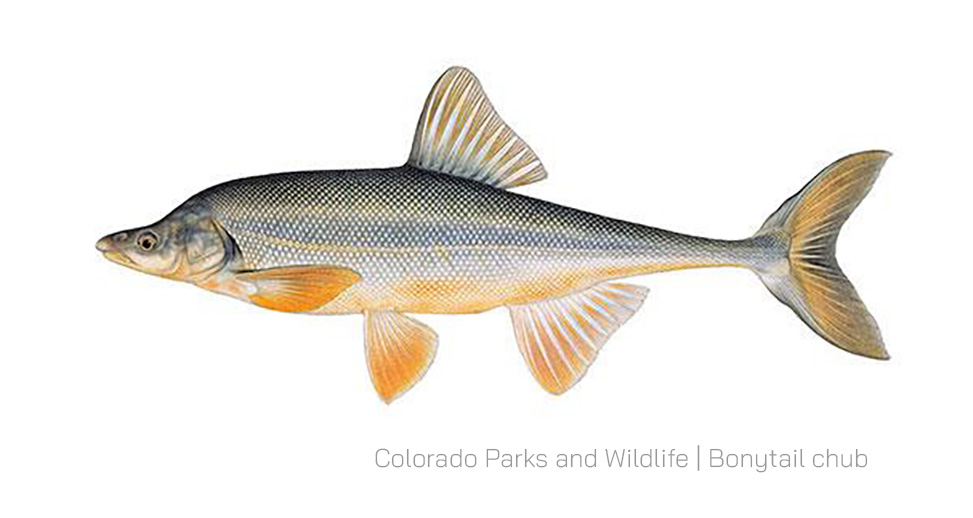
Not surprising these dry patches are hell for native fish, at least four of which are on the verge of extinction. The Bonytail – which has no wild populations left, the Colorado Pikeminnow, the Razorback Sucker, and the Humpback Chub, are all critically imperiled due to habitat loss from dams and competition from non- native species.
Gratefully one organization has ponied up to keep the water flowing. The Colorado Water Trust uses donations from people like me to buy water from sources that are upstream of these reaches in order to maintain a limited amount of water flow, year round. It may not be much but they’re hoping it’s enough to keep these fish, and many other aquatic species alive through the summer.
I can’t help but wonder whether those who are responsible for managing the river couldn’t do more to balance its many uses in order to ensure that the river’s ecological health isn’t left hanging by such a fragile thread.
Please visit: https://coloradowatertrust.org