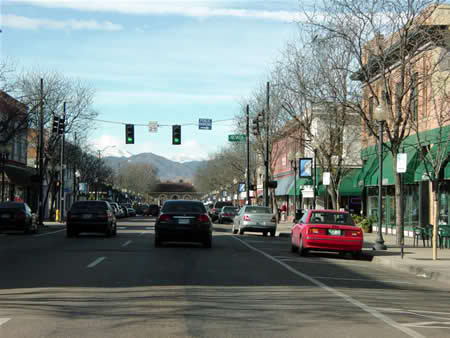
Littleton: The city is renegotiating their supply contract with Denver Water

A picture named littleton.jpg

From the Littleton Independent (Heather Sackett):

Discussions began this spring around the same time Littleton was asked by Sterling Ranch, a proposed, large-scale Douglas County residential development, to consider the potential for annexation. The contract, written in 1970, states that areas annexed by the city will automatically become part of the area served by Denver Water. “Littleton’s contract is an anomaly that appears to assume water service will be available for future annexed territory,” the late Denver Water Manager Chips Barry wrote in a March 30 letter to Littleton City Manager Jim Woods. “It appears that Littleton could, in theory, annex to the south, as you did with the TrailMark annexation.” The letter goes on to say that Denver Water would probably not have the water available to serve any large areas south of Littleton. Barry proposed an amendment to the contract that would limit Denver Water’s obligation to serve areas newly annexed into Littleton.

More South Platte River basin coverage here.

Aspinall Unit operations update

A picture named aspinallunitdescription.jpg

From email from Reclamation (Dan Crabtree):

As those of you who observe the Gunnison River gage below the Gunnison Tunnel have noticed, there have been some large fluctuations as the Tunnel is shut down. Once things stabilize, flows in the Black Canyon and Gunnison Gorge should settle between 400 and 500 cfs.

More Aspinall Unit coverage here.

Conservation: Aging U.S. water infrastructure wastes 1.7 trillion gallons per year according to ITT Value of Water survey

A picture named fountainpavementdrawing.jpg

Here’s the link to the survey. Here’s a interview with Colin Sabol, vice president of marketing and business development in ITT’s Fluid and Motion Control division from Smart Planet (Melanie D.G. Kaplan). From the article:

Not surprisingly, the survey showed that many of us are concerned about our water system. But Not surprisingly, the survey showed that many of us are concerned about our water system. But Colin Sabol, vice president of marketing and business development in ITT’s Fluid and Motion Control division, says since we can’t see the underground pipes, they don’t get as much attention as, say, potholes. According to the report, every day there are 650 water main breaks. And according to the American Society of Civil Engineers, leaking pipes lose an estimated seven billion gallons of clean drinking water a day., says since we can’t see the underground pipes, they don’t get as much attention as, say, potholes. According to the report, every day there are 650 water main breaks. And according to the American Society of Civil Engineers, leaking pipes lose an estimated seven billion gallons of clean drinking water a day…

[Sabol:] Every day we waste water and energy, and every day it gets a little worse. It’s been getting worse for decades, and it’s reached a point where we believe it’s time to do something about it. If we ignore it, it won’t become a huge problem overnight, but it’s time to start paying more attention. The issue’s not going to go away by itself. The EPA did a study in 2002 where they rated the quality of our water infrastructure, and the rating was D-minus. They said it would take half a trillion dollars to fix all the water infrastructure at once. The Congressional Budget Office said if you spent $19 billion a year more you would catch up with these problems. So we are under-investing annually that much. The federal government today only spends a couple billion a year. The vast majority comes from local tariffs and local and municipal governments.

More infrastructure coverage here.

Flaming Gorge pipeline: Eric Kuhn — ‘There’s just no water for Million for this project’

A picture named flaminggorgepipelinemillion.jpg

Eric Kuhn was in Rock Springs recently and spoke to opponents of the Million Resource Group’s proposed pipeline from the Green River basin to meet the unbridled growth along the Front Range in Colorado. Here’s an in-depth report from the Jeff Gearino writing for the Casper Star-Tribune via the Billings Gazette. From the article:

A veteran Colorado engineer said last week that his water conservation district worries there won’t be enough excess water left to be taken out of the Green River system. If the pipeline is approved, municipal and other entities in southwest Wyoming and western Colorado that rely on the Green River may not have enough water to meet their future recreation, tourism and industrial growth needs. “There’s just no water for Million for this project,” Colorado River Water Conservation District General Manager Eric Kuhn told members of a local group opposing the pipeline project…

He said the Colorado River District board shares the concerns of people in southwest Wyoming about moving water from the Green River, and the Flaming Gorge Reservoir it feeds, to Colorado’s bustling Front Range. “The (Million pipeline) question comes down to inflows into the Flaming Gorge … and all the science suggests a drier future,” Kuhn told members of the Communities Protecting the Green River Committee during an informational meeting Tuesday night…

“The bottom line is … our district is planning for the worst, and that’s why we think this is a bad project,” said Kuhn, who has worked for the district for more than 30 years. “The project threatens Colorado because it could overdevelop the Colorado River water supply,” he said. “Our concern is what happens if we overdevelop and then that water isn’t there.” The Colorado River Water Conservation District was created by the Colorado Legislature in 1937 to provide legal, technical and political protection for the Colorado River and its principal tributaries within Colorado. The district comprises 15 counties on Colorado’s West Slope. The district is a political subdivision of the state of Colorado, but not a state agency.

More coverage from Jeff Gearino writing for the Billings Gazette. From the article:

Wyoming uses about 525,000 acre feet from the Green River each year — about 73 percent of what has been the state’s typical annual Colorado River Compact allocation of 833,000 acre feet…

Million has applied to the U.S. Army Corps of Engineers for a permit to build the private pipeline at an estimated cost of $3 billion. He has identified several Colorado agricultural interests and some municipal interest in southeastern Wyoming as potential customers for the water. The Corps of Engineers is preparing an environmental study of the proposal, which is expected to be completed in 2016. Million also has applications pending with the Wyoming State Engineer’s Office to pipe up to 250,000 acre feet of water per year from diversion points on the Green River and Flaming Gorge Reservoir. The Corps is sifting through more than 7,000 comments on the transbasin water pipeline project. Corps officials have said they are also considering more than 300 alternative ways of providing water to the Front Range besides Million’s proposal.

More Flaming Gorge pipeline coverage here and here.