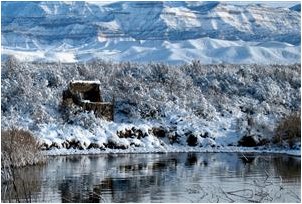
Montrose County opposes instream flow right for San Miguel River above the confluence with the Dolores River

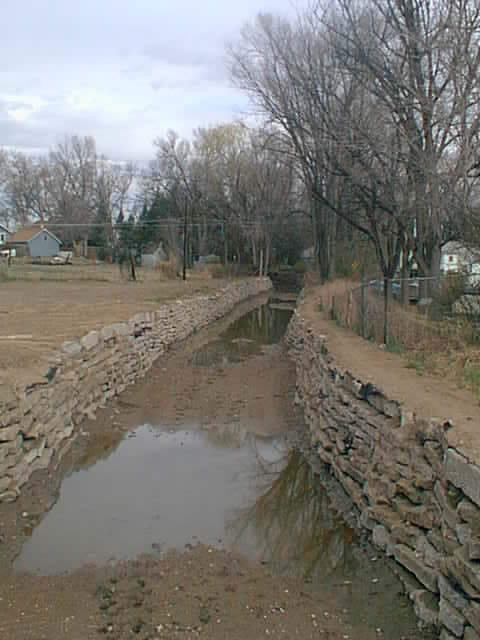
A picture named sanmiguelriver1109

From the Montrose Daily Press (Katharhynn Heidelberg):

A recent decision by the Colorado Water Conservation Board makes that balance [between water for development and jobs in the west side of the county and water for endangered species] trickier to attain. Contrary to the county’s hopes, the board voted Jan. 25 to declare its intent to appropriate an instream water right on a river portion stretching 17 miles from the Calamity Draw confluence to where it meets the Dolores River. The instream flows assure that fish species of concern, in this case the flannelmouth and bluehead sucker, have sufficient water to survive.

More San Miguel watershed coverage here and here.

2010 Colorado gubernatorial election transition: Governor Hickenlooper pow wows with Club 20

A picture named highlinelake.jpg

From The Grand Junction Daily Sentinel (Charles Ashby):

Gov. John Hickenlooper, House Speaker Frank McNulty and other high-ranking state officials all told members of Club 20 the same thing: They’re trying to find ways to reduce government spending and help encourage businesses to begin hiring again. “The issues that we’re talking about are those exact same kitchen-table issues,” McNulty said. “How do we make sure that we have a budget that works? How do we make sure that we’re doing what he can to help Coloradans get back to work?”[…]

Hickenlooper said since the 2003 drought, the same year he became Denver’s mayor, the 1.2 million customers of Denver Water reduced their consumption by 35 percent. “The new head of Denver Water and the new Denver mayor are focused to get that down to 50 percent,” he said. “That’s not the whole solution, but I think we can get the other urban areas to use that same sense of frugality, that we don’t need to have bluegrass lawns everywhere and we don’t need to water them three days a week.” Hickenlooper said he won’t sacrifice the state’s agricultural industry or the push for new jobs just so cities can grow larger.

More 2010 Colorado election coverage here.

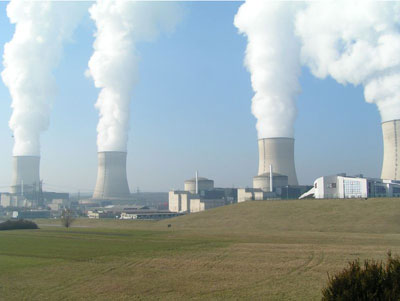
Energy policy: What is the value of water used in generating electricity?

A picture named nukeplantcattenomfrance.jpg

You can download Western Resource Advocates‘ report here. Here’s an excerpt from the executive summary:

Water has tremendous value — people, crops, industry, and the environment all rely on this limited resource. In the arid and semi-arid West, the value of water is even more pronounced, rising precipitously in times of drought and scarcity. Climate change models project increased rates of evapotranspiration throughout the West, more severe droughts, and reduced runoff in the Colorado River. Accordingly, the value of water in the Southwest will continue to rise.

In 2005, power plants in six states — Arizona, Colorado, Nevada, New Mexico, Utah, and Wyoming — consumed an estimated 395,000 acre-feet (AF) of water. These plants impact our region’s rivers and aquifers, and tie up water that could meet growing urban, agricultural, or environmental needs.

Electric utilities’ choices can have vastly different impacts on water resources. A wet-cooled coal plant, for example, typically uses three times as much water as a combined-cycle gas plant; wind turbines, solar photovoltaic panels, and energy efficiency use no water; and employing dry cooling in a thermoelectric power plant can reduce water use by 90%. Yet most electric utilities and regulators do not adequately consider water in their future resource plans. Electric utilities typically appropriate or purchase water rights for new thermoelectric power plants, but the cost of these water rights does not reflect the opportunity cost of water use over the life of the power plant — 40 to 50 years or longer.

While the value of water is highly varied, it is not zero. This report attempts to develop a range of values of water for use in electric resource planning. Western Resource Advocates (WRA) analyzed the prices paid for water by the three different sectors that compete with power plants: municipal, agricultural, and environmental (Figure ES 1). In addition, we assessed the authority of regulators in the six states to consider water in evaluating utilities’ electric resource plans. We found that, across the region, the degree to which water influences regulators’ and utilities’ electric resource planning decisions varies significantly.

More energy policy coverage here.

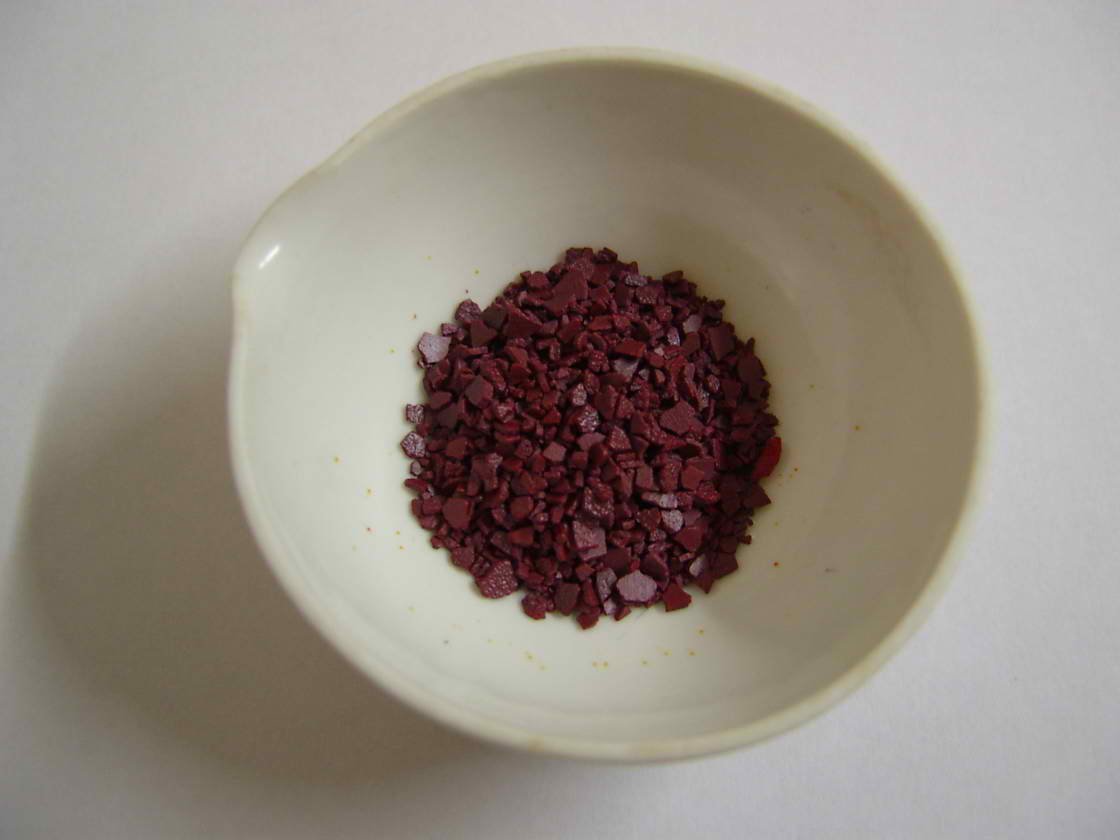
Pueblo: No hexavalent chromium in water supply

A picture named hexavalentchromiumwikipediacommons.jpg

From NewsFirst5.com (Greg Boyce):

Water samples were sent to MWH Labs, a laboratory that is equipped to test for this specific chemical and all samples showed a result of “Non-Detected” for dissolved hexavalent chromium. The Board of Water Works will continue testing for chromium VI in each quarter of 2011.

More water pollution coverage here.

Colorado River basin: Releases from Lake Powell to Lake Mead are underway

A picture named glencanyondam.jpg

From KSL.com (John Hollenhorst):

In recent weeks, the level of Lake Powell has been dropping sharply. The agency that controls the reservoir is releasing 11 billion gallons [33,757 acre-feet] of water each day to help bring up the level of Arizona’s Lake Mead. Lake Powell always comes down this time of year, but the releases now are significantly more than usual. “That level of release hasn’t occurred since the late ’90s,” said Richard Clayton, a hydraulic engineer for the U.S. Bureau of Reclamation. His job is to oversee releases from the Glen Canyon Dam. The high wintertime releases have triggered controversy. But the bureau has a message for boaters who worry Lake Powell might drop too far: “Don’t worry. Be happy.” The releases are prompted by expectations of the best spring runoff in more than a decade. Bureau experts predict, but can’t guarantee, that Lake Powell will eventually rise higher this summer than it did last year…

The release of water has caused Lake Powell to drop more than 13 feet, while Lake Mead has risen about 10 feet since early November. From a Nevada perspective, that’s good news. For a full decade, the big reservoir behind Hoover Dam has taken a battering from the region’s long-term drought. Lake Mead is currently about 42 percent full, and its surface area has shrunk drastically. Lake Powell currently stands about 57 percent full. This year, a new agreement reached by the seven states on the Colorado River will likely require additional releases from Lake Powell to Lake Mead. If spring runoff is high enough to trigger the so-called “equalization” agreement, it will require releases from Lake Powell sufficient to bring Lake Mead up to an elevation of 1,105 feet above sea level, according to Clayton. It currently stands at about 1,091 feet. “If we wait until April and don’t make appropriate changes to operations now,” Clayton said, “we won’t have enough time to release the required volume by the end of the water year.”

More coverage from The Arizona Daily Star (Pat Jacobs/Sharon Megdal/Warren Tenney/Carol Zimmerman). From the article:

Each year, the secretary of the interior looks at river flows and the expected water levels in Lake Mead and Lake Powell. Using this information, the secretary will declare the river water supplies are normal, in surplus, or in shortage. The key factor in the decision is the amount of storage (as measured by water elevation above sea level) in Lake Mead. Last year, Lake Mead at its lowest was only seven feet above the shortage trigger point of 1075 feet (it’s risen about eight feet since then). If a shortage is declared, Arizona and specifically [the Central Arizona Project] would be the first to lose access to a portion of our Colorado River allotment. As part of the agreements with California, Nevada and the federal government which led to the construction of the CAP system, Arizona consented to junior (lowest) priority to Colorado River water.

It’s important to note that even if levels in Lake Mead were to drop to 1,025 feet (a Level 3 shortage), Tucson and the other cities using CAP water would not lose access to any of their allocations. Municipalities and Native Americans have the highest priority rights to CAP water.

More Colorado River basin coverage here.

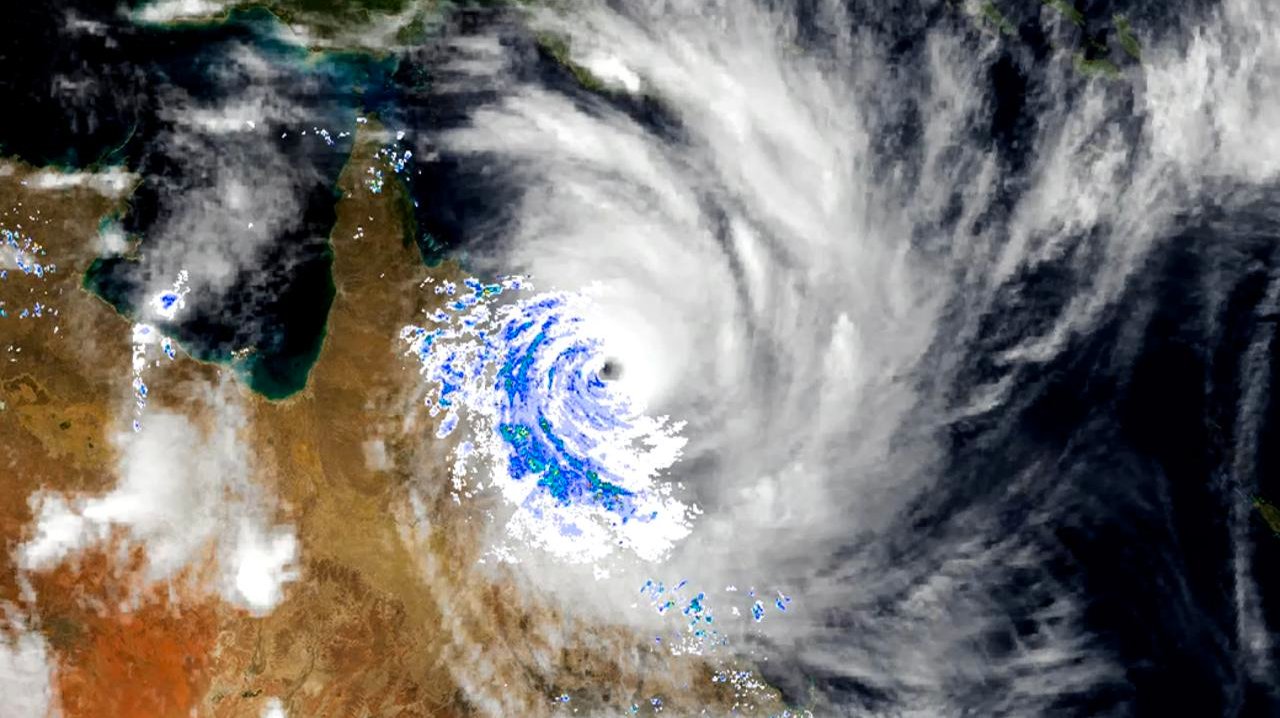
Australia: Cyclone Yasi bears down on Queensland

A picture named cycloneyasi02022011abc.jpg

I’m thinking of my new friends from Australia this morning. Less than a week ago we were talking about the Australian mega-drought. Today Australians are fleeing cyclone Yasi. Good luck y’all. Click here for the time lapse sequence for the storm.

Here’s a report from ABC News. From the article:

North Queensland residents are starting to feel the full force of one of Australia’s worst cyclones, with the category-five storm due to cross the coast near Innisfail about midnight (AEST). Yasi has closed to within 90 kilometres of Innisfail and the weather bureau’s 10pm warning stated it had slowed and was moving west south-west at 25kph. Hundreds of thousands of people are sheltering in evacuation centres and homes across the region as strong winds and heavy rain lash hundreds of kilometres of coastline…

[Queensland Premier Anna Bligh] says the potentially deadly system is the “most catastrophic storm ever seen” in the state and will pack winds of up to 300 kilometres per hour.

Energy policy — oil and gas: The Colorado Oil and Gas Conservation is looking into diesel in hydraulic fracturing fluid in Colorado

A picture named derrick.jpg

From KJCT8.com:

Commission Director David Neslin said Tuesday that the commission is looking into whether diesel fuel has been used, and if so, when, in what amounts and whether its use was consistent with Colorado regulations. Neslin says a fundamental part of the commission’s regulatory mission is protecting groundwater.

More oil and gas coverage here and here.

Brush: Wastewater treatment plant construction update

A picture named wastewatertreatmentwtext.jpg

From the Brush News Tribune (Jesse Chaney):

Since the project started in November, a team of workers from Moltz construction of Salida has demolished some of the old structures, excavated the land and started building the new configuration. “We’re staging it to keep the facility operating and treating while they’re actually building the new one,” said Brush Wastewater Manager Dale Colerick. “By doing that, we are able to minimize the footprint of what we have and reutilize some of the old components to keep the costs down.

Colerick said the crew is currently working on the first phase of the project, which involves the demolition of one of the old trickling filters. The trickling filters contained a bed of rocks, where a colony of microorganisms converted waste into biological solids. The first phase also includes the construction of the new headworks structure that brings the wastewater into the facility, the primary clarifiers and pump station used to remove solids from the water, and the new bioreactors that will house the microorganisms. He said the new plant will house the headworks inside a building rather than out in the open, which will help reduce odors. He said the exhaust from the building will be channeled through a natural bio-filter.

The second phase will start when the new headworks, primary clarifiers and bioreactors are in place, Colerick said. At this point, the old primary clarifier will be converted into a secondary clarifier, and work on a new ultraviolet disinfection system will begin. He said the new clarifiers will be deeper and narrower than the old ones, which will reduce their surface area by 40 percent and therefore limit odors. He said the ultraviolet system will replace the chlorine-based system currently in use. He said the ultraviolet method will allow the facility to do away with chlorine, which must be neutralized before the treated water can be discharged to the South Platte River.

During the third and final stage of the project, he said, the crew will rehabilitate the old secondary clarifiers and upgrade the old sludge digester.

More wastewater coverage here and here.

Colorado Springs: Arkansas River Basin Water Forum April 27-28

A picture named arkansasriverbasin.jpg

From The Pueblo Chieftain:

Nominations are now being accepted for the 7th Annual “Bob Appel — Friend of the Arkansas” award that is presented each year at the Arkansas River Basin Water Forum…The award is designed to honor an individual who has over the years demonstrated their commitment to improving the condition of the Arkansas River as it flows from its headwaters near Leadville to the state line.

More Arkansas River basin coverage here.

Colorado Springs: Peak to Prairie Landscape Symposium Friday and Saturday

A picture named moongarden051108

From The Pueblo Chieftain:

The annual Peak to Prairie Landscape Symposium will be Friday and Saturday at the Doubletree Hotel, 1775 E. Cheyenne Mountain Blvd. Homeowners and industry professionals can learn about the latest landscape-design trends, and regional experts will talk about water-wise methods, plant selection, installation and maintenance…

Hours are 8:45 a.m. to 5 p.m. Friday and 8:45 a.m. to 12:30 p.m. Saturday. Cost is $80 for both days, including Friday lunch; or $60 for Friday and $40 for Saturday. To register, go to www.peaktoprairielandscapesymposium.org.

More conservation coverage here.

Energy policy — oil and gas: Diesel fuel as a component of hydraulic fracturing fluid

A picture named marcellushydraulicfracturing.jpg

From Bloomberg (Kim Chipman):

The providers injected 32.2 million gallons of unauthorized diesel fuel, or fluids containing the fuel, to extract gas from wells in 19 states from 2005 to 2009, Representatives Henry Waxman, Edward Markey and Diana DeGette wrote today in a letter to Environmental Protection Agency Administrator Lisa Jackson. BJ Services led with 11.5 million gallons followed by Halliburton at 7.2 million, they said.

Companies using hydraulic fracturing — a technique that shoots water, sand and chemicals into shale to extract natural gas — aren’t required to get permits unless they use fluids containing diesel, which the EPA said is a threat to drinking water. No companies sought such permits, the lawmakers said.

“This appears to be a violation of the Safe Drinking Water Act,” according to the letter from Waxman of California, Markey of Massachusetts and DeGette of Colorado. “It also means that the companies injecting diesel fuel haven’t performed the environmental reviews required by the law.”

Schlumberger Ltd., the No. 1 provider of oil-field services, Halliburton, the second biggest, and BJ Services agreed with the EPA in 2003 to stop using diesel fuel in fracturing fluids for coalbed methane production. Such wells tend to be closer to sources of drinking water than other oil and gas production wells.

More coverage from David O. Williams writing for the Colorado Independent. From the article:

The process was exempted from the Safe Drinking Water Act under the Energy Policy Act that was passed during the Bush administration in 2005 – except in cases when diesel fuel is used. Oil and gas industry officials claim the fracking process has been used safely for decades, but conservationists and a growing number of community activists in heavily drilled areas of the country claim the process has led to groundwater contamination.

From the Houston Chronicle (Peter Fowler):

Industry representatives said the EPA didn’t require permits for using diesel in hydraulic fracturing until June 2010 – after the period in the congressional study. “The letter relies entirely on the notion that historically the EPA has regulated hydraulic fracturing, and that’s not the case,” said Matthew Armstrong, an attorney with Bracewell & Guiliani who represents a number of energy companies…

Concerns include the potential for the chemicals to get into drinking water or for natural gas to migrate into water wells. The industry says such incidents are rare and can be avoided. Most hydraulic fracturing fluid uses water as its primary component, but in formations where water is absorbed too easily – such as in certain kinds of clay – diesel is used as an additive. It usually is just one component of the chemical used in the mix. Armstrong said about a third of the 32 million gallons referred to in the letter was straight diesel fuel.

The EPA and industry agreed in 2003 that diesel wouldn’t be used in hydraulic fracturing jobs in coal bed methane formations, because drilling in those formations tends to be closer to drinking water sources. But oil field services giants Halliburton and BJ Services, among other companies, say that agreement doesn’t apply beyond drilling operations in those formations.

The EPA first said it would require companies to seek permits to use diesel in non-coal bed operations last June, in a posting on the agency’s website. That wasn’t a proper way to change the rules, Halliburton said in a statement. “This action did not follow the standard administrative processes required in adopting new federal regulatory requirements, and the companies involved had no knowledge this change was being made by the EPA,” the company said.

Halliburton is among the companies represented by the Independent Petroleum Association of America and the U.S. Oil & Gas Association, which are challenging the EPA’s new requirement. A federal appeals court in Washington recently denied the EPA’s motion to dismiss the case, and the court will hear arguments later this year…

About half of the 32.2 million gallons of fluid containing diesel was injected in Texas, followed by Oklahoma, North Dakota, Louisiana and Wyoming.

More coverage from Allison Sherry writing for The Denver Post. From the article:

Because the EPA has had the authority to regulate this area since 2005 and hasn’t done it has left oil and gas companies practices open for interpretation. “No one is really contesting the EPA’s authority but it can’t just decide one day that it wishes it would have regulated this in the past,” said Matt Armstrong, a DC-based leading industry lawyer. “It’s an attempt to sort of create a media circus around this issue.”

More oil and gas coverage here and here.

2011 Colorado legislation: HB 11-1068 — State Engineer Approve Ag Water Transfer

A picture named irrigationditchgreeleyhistoricalresources.jpg

From The Pueblo Chieftain (Chris Woodka):

The bill, HB 1068, is sponsored by Rep. Randy Fischer, D-Fort Collins, and would create a 40-year program in the Arkansas Valley that would allow the state engineer to approve sales of agricultural water to cities through leases. The term could be renewed for another 40 years. The bill, as introduced, would allow farmers to lease one-third of their water or lease water for one-third of the years in the term with only the state engineer’s approval.

During a meeting Thursday at the CWC’s annual convention, the bill was questioned by numerous water attorneys for being an end-run around Water Court that appears to benefit only the Arkansas Valley Super Ditch.

Others, including Fischer, said such alternative measures are needed to reduce the cost of litigation and make water leasing programs pay off for farmers. “I have real concerns if we continue to go by the book and the only alternative is dry-up of agricultural lands,” Fischer said. “What I’m trying to do is keep the water in the hands of the producers.”[…]

…critics say the bill does nothing more than transfer the cost of court challenges and the burden of proof to those whose water rights could be injured. “You’re shifting the transaction costs from the cities,” said Alan Curtis, whose clients include Sterling and Tri-State Generation and Transmission Association. “There are also the issues of revegetation and transit losses that are usually addressed in front of Water Court.” While HB1068 sets up an administrative program only in the Arkansas River basin, Curtis said he fears the precedent could be used to set up a similar program in the South Platte, as well. That would create an additional layer of costs for communities such as Sterling because they would be forced to file suits in Water Court to protect their rights, he said…

Steven Janssen, attorney for the Henrylyn Irrigation District in the South Platte basin, said the legislation opens the door for more authority for the state engineer, and could lead to reversals of state engineer’s assumed authority that have been struck down in several recent state Supreme Court decisions…

Andy Jones, an attorney whose clients are primarily in the South Platte basin, supported the concept of the legislation, saying it is an example of the type of creative thinking that is needed to avoid further dry-up of ag lands. “If you want to be leaders, find a way to make this happen,” Jones said. “Transaction costs are huge. Markets need the flexibility to make transfers a reality.”[…]

“I appreciate the input,” Fischer said. “But how do we get around just saying no to everything? I want to do something proactive.”

More HB 11-1068 coverage here. More 2011 Colorado legislation coverage here.

National Register of Historic Places listing for irrigation ditches?

A picture named grandvalleyirrigationditch.jpg

From The Pueblo Chieftain (Chris Woodka):

The San Luis People’s Ditch, the City Ditch in Denver and parts of the Grand Ditch are already listed on the National Register, but there has been no active effort to list a ditch since the 1980s, [Heather Bailey, historian for the Colorado Historical Society] said.

The newest effort started with research on behalf of some ditch owners by Micheal Holleran, then a Colorado University-Denver instructor, 10 years ago. His 2005 application details the development of Colorado ditches throughout history and makes the case for the need to preserve them. “We are in no rush to move forward,” Bailey said. “This is just a framework for anyone who wants to list a property.” She explained the proposed action, called a multiple documentation form, would not list specific ditches. Such forms already exist for mines and railroads or even things like gas stations and drive-in movie theaters, added Astrid Liverman, coordinator for National Register listings in Colorado. While being listed on the National Register is largely a point of pride, it can have financial or tax benefits if reconstruction is contemplated, Bailey said.

Water users [at the Colorado Water Congress 2011 Annual Convention] focused on what could go wrong with the process, however, saying it could lead to increased state or federal scrutiny of nearly any water development or repair project.

The state officials tried to assure water users that no property would be put on the list unless the owner requested. That raised a tangle of complexity, since most ditches are mutually owned, may have structures located on private or public property and cross multiple properties. Water users asked how the state would contact every possible party involved and whether emergency repairs would be subject to a longer permitting process.

Fountain Creek Watershed Flood Control and Greenway District board meeting recap

A picture named fountaincreekwatershed.jpg

From The Pueblo Chieftain (Chris Woodka):

The Fountain Creek Watershed Flood Control and Greenway District board Friday voted not to interview any of the 17 applicants for the director’s job and to give 30-day notice to interim director Gary Barber. “It’s a money decision and we’ll do the best we can to keep grants and projects moving, given the limited resources,” said Pueblo County Commissioner Jeff Chostner, who represents the county on the Fountain Creek board…

…the district will be managed by the board’s executive committee — Vice Mayor Larry Small, chairman; Pueblo City Councilman Larry Atencio, vice-chairman; Fountain Mayor Pro-tem Gabe Ortega, secretary; and Fountain Creek resident Jane Rhodes, treasurer. “I think it will be helpful to have Gary Barber stay on during the transition,” Chostner said. Winner and Barber will remain on a steering committee under the terms of an agreement, working with the executive committee to make day-to-day decisions on grants and projects. There are about $3.5 million in projects along Fountain Creek now, some of which are being done in cooperation with the City of Pueblo. The agreement calls for the Fountain Creek district to take the lead on managing the grants…

The Fountain District had about $175,000 in its general fund at the end of 2010. After making final payments to Barber, its only expenses will be to retain Elise Bergsten, who has done the district’s clerical work for the past year. The district is currently using donated legal services from Pueblo and El Paso counties.

More Fountain Creek coverage here and here.
CWCB: Board meeting recap

A picture named snowpackcolorado01312011

From The Pueblo Chieftain (Chris Woodka):

The Colorado Water Conservation Board voted Wednesday to adopt findings and recommendations of the 2010 Statewide Water Supply Initiative. The document sets the framework to begin implementing strategies to meet needs that were first identified in 2004, but which have become more clearly identified in the past six years.

John Redifer, who represents the Colorado River basin on the CWCB, was the lone dissenting voice, saying he believed the Interbasin Compact Committee had pushed the recommendations. “If I’m going to support this, we need something in it that says we’re going to figure out the relationship between the IBCC, the CWCB and the roundtables,” Redifer said…

The CWCB spent Wednesday afternoon hammering out the wording of recommendations, which will be presented to the Legislature and Gov. John Hickenlooper. “These go far beyond the IBCC recommendations,” said Eric Wilkinson, who represents the South Platte basin on both the CWCB and the IBCC. “They advance what we’re trying to do.”[…]

The recommendations, which will guide CWCB policy, set up a six-year planning cycle for water projects that place an emphasis on multiple uses. It also puts a priority on projects that can be developed in the next 10 years…

The recommendations incorporate the IBCC’s four-pronged method of dealing with the shortfall: identified projects, conservation or reuse, new supplies and more agricultural dry-up. “It’s a Pollyanna approach,” Redifer said. “We’re not giving everyone what they want, but forcing everyone to give up a little bit.”[…]

Robert Longenbraugh, a former deputy state engineer who is now a water consultant, said the recommendations do not fully incorporate groundwater as a way of meeting demand. The South Platte basin has groundwater levels that are at an all-time high, but continues to send water out of the state. “We need to seriously consider the importance of alluvial aquifers,” Longenbraugh said.

From The Pueblo Chieftain (Chris Woodka):

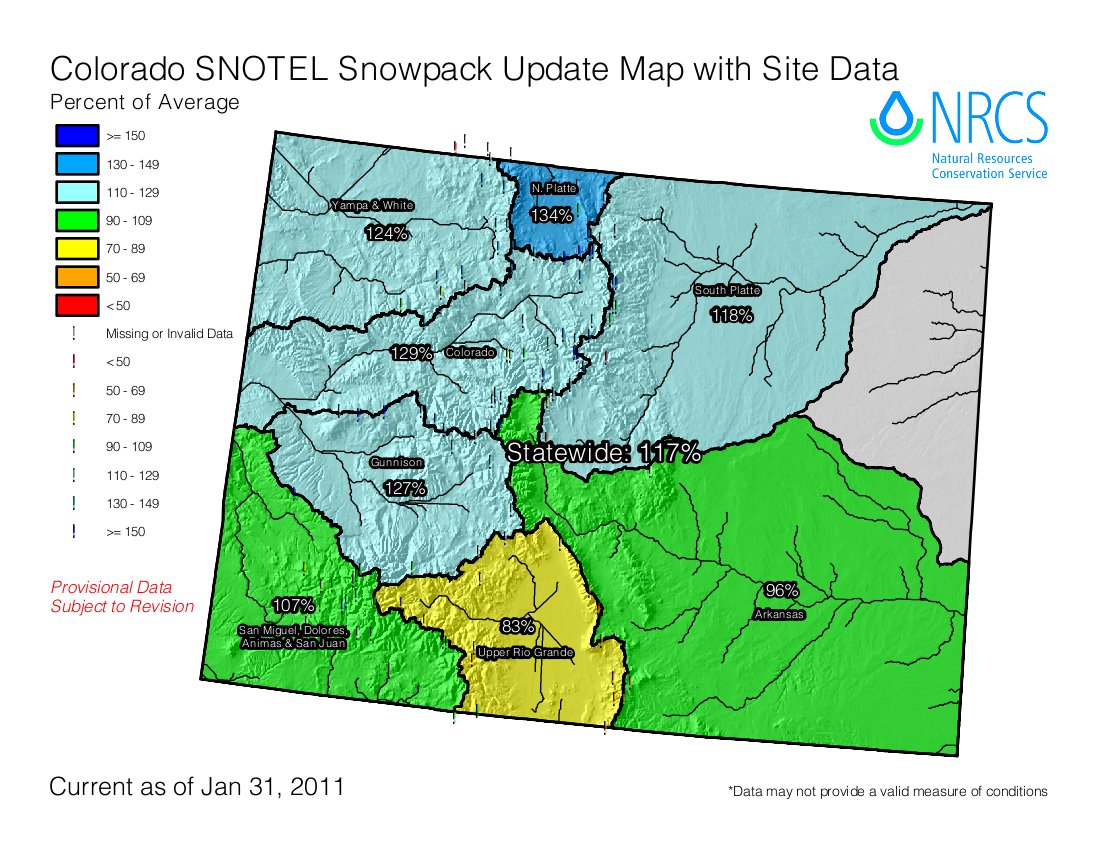
Reed Dils reported that an average snowpack in the Arkansas River basin leaves out the continuing drought in the Lower Arkansas Valley or the extremely dry conditions in the southern mountains. “We need more snow in the San Luis Valley,” Travis Smith added in his report from the Rio Grande basin. “If we could only have a couple good years back to back.”

The Colorado-Big Thompson Project is on track to spill water for the first time in 11 years, said Eric Wilkinson, a CWCB board member and executive director of the Northern Colorado Water Conservancy District.

The South Platte River is also facing very dry conditions on the Eastern Plains, a situation that mirrors the Arkansas River basin.

If snowpack increases over the winter, the Fryingpan-Arkansas Project could also spill. Roy Vaughan, the Bureau of Reclamation manager of the Fry-Ark Project, has cautioned water managers in the Arkansas River basin that a spill could be possible at Lake Pueblo for the last two years. Although it’s still too early to make predictions this year, there would be a spill at Lake Pueblo this spring if snow continues to pile up.

More CWCB coverage here.

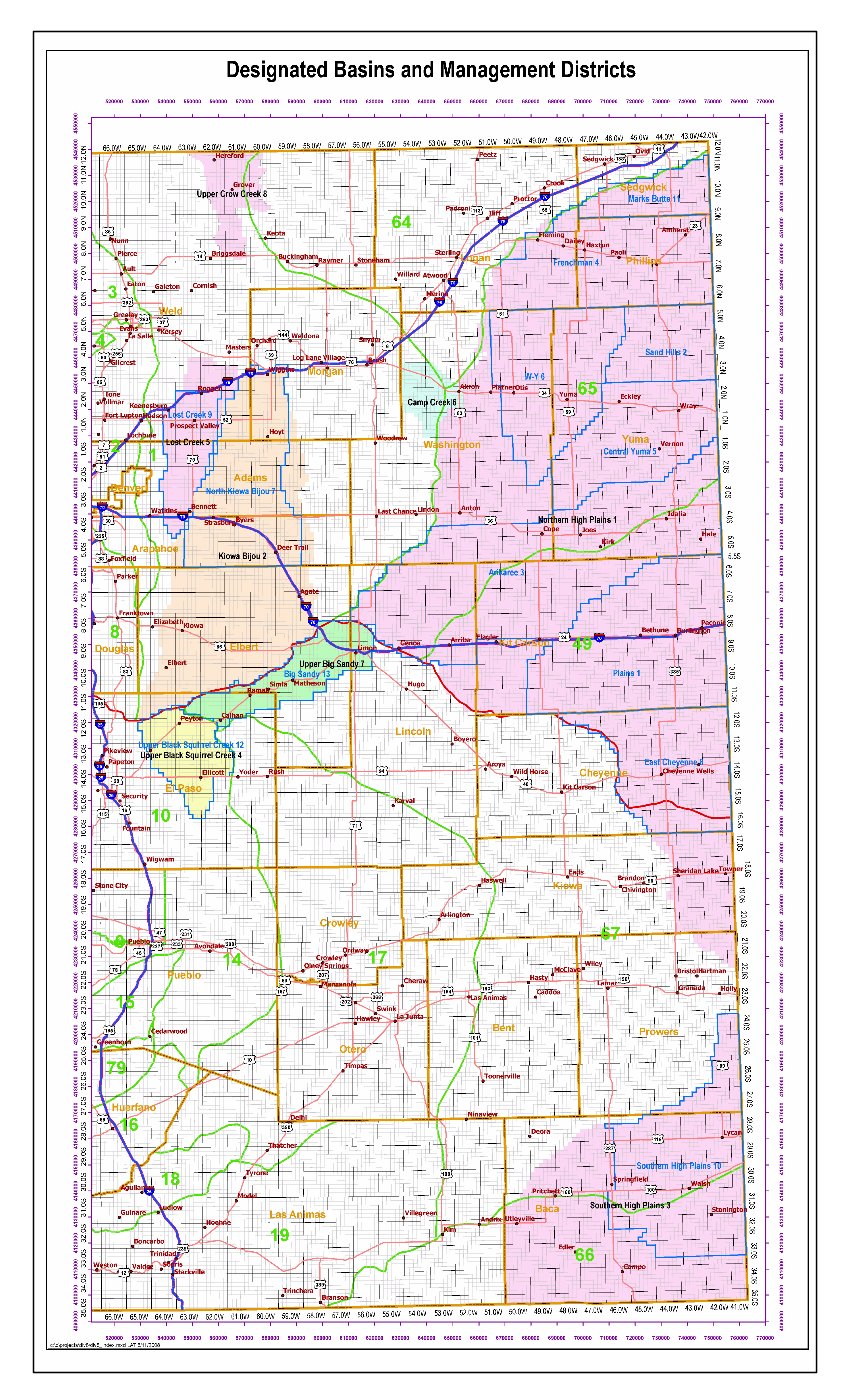
CoH2O LLC is shopping water to the Cherokee Metropolitan District

A picture named coloradodesignatedgroundwaterbasins.jpg

From The Colorado Springs Gazette (R. Scott Rappold):

District officials recently signed a letter of intent, saying that if Kessel proves he can deliver the water, they will buy it, even while their manager and other water providers in the area remain skeptical that Kessel can get the 8,000 acre-feet he has promised.

“This water is relatively close [Horse Creek Basin of El Paso, Lincoln and Elbert counties], and we’ve got some work to do to get them to the point where they’re comfortable with the water, and I don’t blame them (for being skeptical),” Kessel said. “We would hope that once we get this pipeline in the ground the other districts in the Pikes Peak area will see the light and say, well, we need some water too.”

I couldn’t find the Horse Creek basin in the designated groundwater basin list on the Colorado Groundwater Commission website. If you know what they’re talking about would you post in the comments?

More groundwater coverage here.

Silt: New water supply for Silt Mesa?

A picture named fountainpavementdrawing.jpg

From the Glenwood Springs Post Independent (John Colson):

The [Silt Water Conservancy District] was formed in 1957 to conserve and develop water resources within its boundaries. It operates Rifle Gap and Harvey Gap reservoirs, with related pipelines and other facilities, primarily to deliver irrigation water to farms and ranches.

The district also provides water “to augment individual domestic wells” within district boundaries, according to the letter.

The water table underlying the area is recharged mainly through “flood irrigation and seepage from unlined ditches,” according to the letter. But even so, some residents “need to truck domestic water to refill cisterns during certain times of the year” because their wells can’t do the job.

The availability of well water may worsen, the letter cautions, if the district goes ahead with efficiency improvements, such as enclosing existing ditches in pipelines and switching to sprinkler irrigation.

According to Dan Cokley, an engineer with the Schmueser Gordon Meyer engineering firm and project manager for the water conservancy district, the proposed new water system would serve about 500 residential properties. The coverage area, he said, is from approximately the north side of Silt Mesa Road to an area north of Harvey Gap. The water lines would be separate from the town of Silt’s water system.

More infrastructure coverage here.

2010 Colorado gubernatorial election transition: Governor Hickenlooper wants a sustainable water plan in place in 5 years

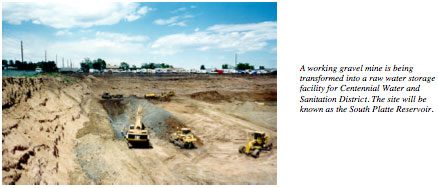
A picture named southplattereservoir.jpg

From TheDenverChannel.com (Justin Adams):

On Friday, Hickenlooper told the Colorado Water Congress that the status quo approach to water is threatening agriculture. Thirsty Denver suburbs have often looked to supplement their supplies of nonrenewable groundwater by buying farmers’ water rights.

From the Colorado Independent (Scott Kersgaard):

In brief remarks on the third and final day of the conference, HIckenlooper said Colorado needs to be every bit as diligent in handling its water budget as its fiscal budget. He said water plays a huge role in everything from recreation and agriculture to economic development. “Our water policy is linked to the economic vibrancy of the state.” He said future development of Colorado will rely heavily on the people here now securing our water supplies for the future…

While campaigning for governor, he said he visited all 64 counties, and that in every county “eventually the conversation got around to water.”

He joked about the adage that “whiskey is for drinking and water is for fighting,” but said in the end the West is known more for barn-raisings than it is for shoot-outs and that it will be that collaborative spirit that enables Colorado to forge water policies that allow the state to move forward in an era of climate change.

More coverage from Joe Hanel writing for The Durango Herald. From the article:

In his first address as governor to the Colorado Water Congress, Hickenlooper called for quick action. “My goal is in five years, we get to a sustainable plan that’s got some meat on the bones, that’s got definite and accurate final outcomes on how are we going to have a long-term, sustainable solution to this,” Hickenlooper said…

“A status quo approach to water threatens our agricultural uses,” Hickenlooper said. “We have to be very careful to resist balancing our water budget on the back of agriculture.”[…]

Hickenlooper wants to see both farms and cities do better with conservation, a value he said he learned from his mother. “In our house, you didn’t waste anything,” Hickenlooper said. “It’s striking to see how casual water waste is, not just in urban areas but in every area of the state.”

“If we are willing to put aside partisan divides, Republican versus Democrat or urban versus rural, we can get this done, and what a gift that would be to give to future generations of Colorado,” Hickenlooper said.