CWCB: Next Water Availability Task Force Meeting May 16

siltcreek.jpg

From email from the Colorado Water Conservation Board (Ben Wade):

The next Water Availability Task Force meeting is scheduled for Thursday, May 16 from 9:30-11:30am & will be held at the Colorado Parks & Wildlife Headquarters, 6060 Broadway, Denver in the Bighorn Room.

The agenda has been posted at the CWCB website.

More CWCB coverage here.

Weekly Climate, Water and Drought Assessment of the Upper Colorado River Region #ColoradoRiver

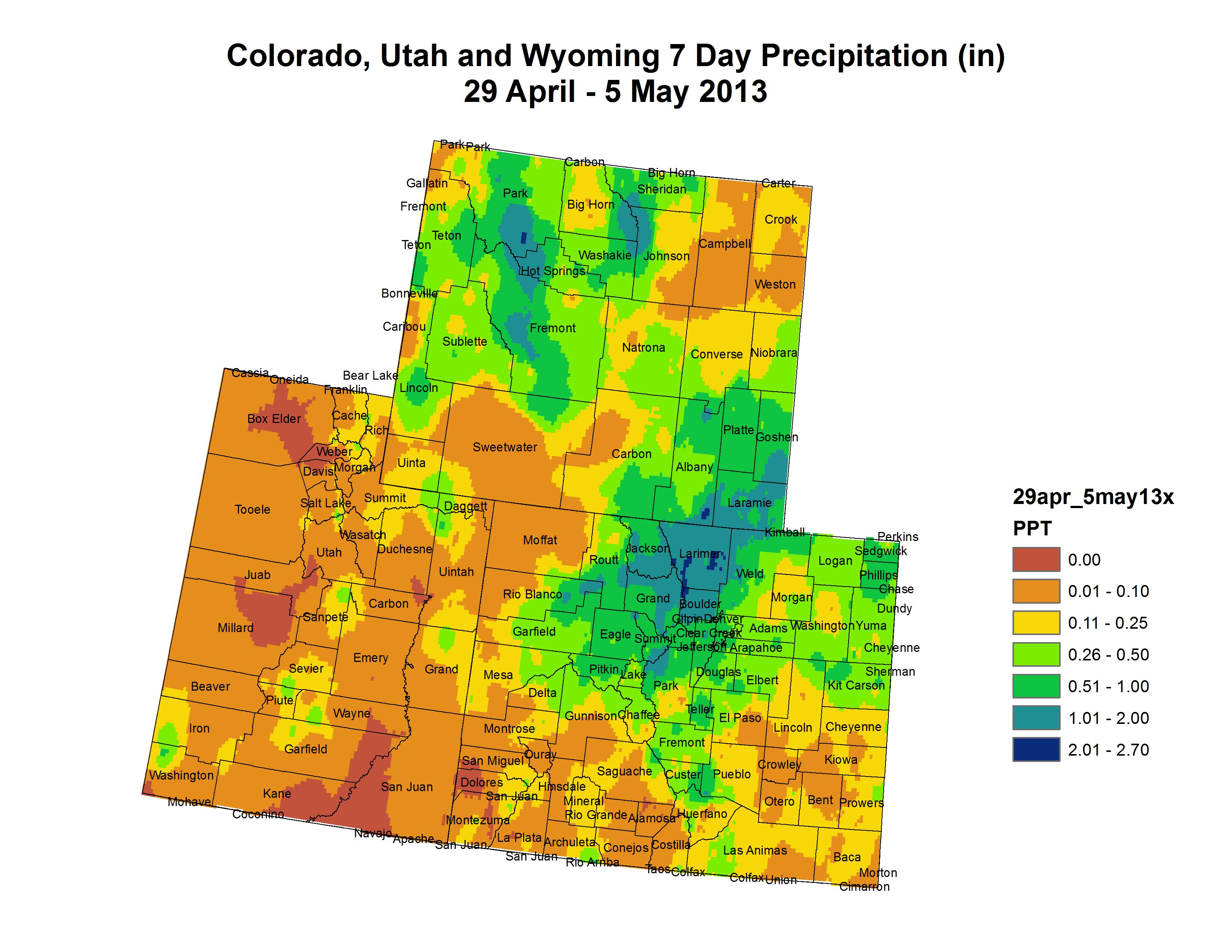
wyutcoprecipitationapril29tomay52013

Click on the thumbnail graphic for the April 29 through May 5 precipitation summary map for the Upper Colorado River Regions. Click here for all the summaries.

Greeley’s Water Conservation Newsletter for May is hot off the press #COdrought

Drought/snowpack news: April snowfall softens drought in northern Colorado #COdrought

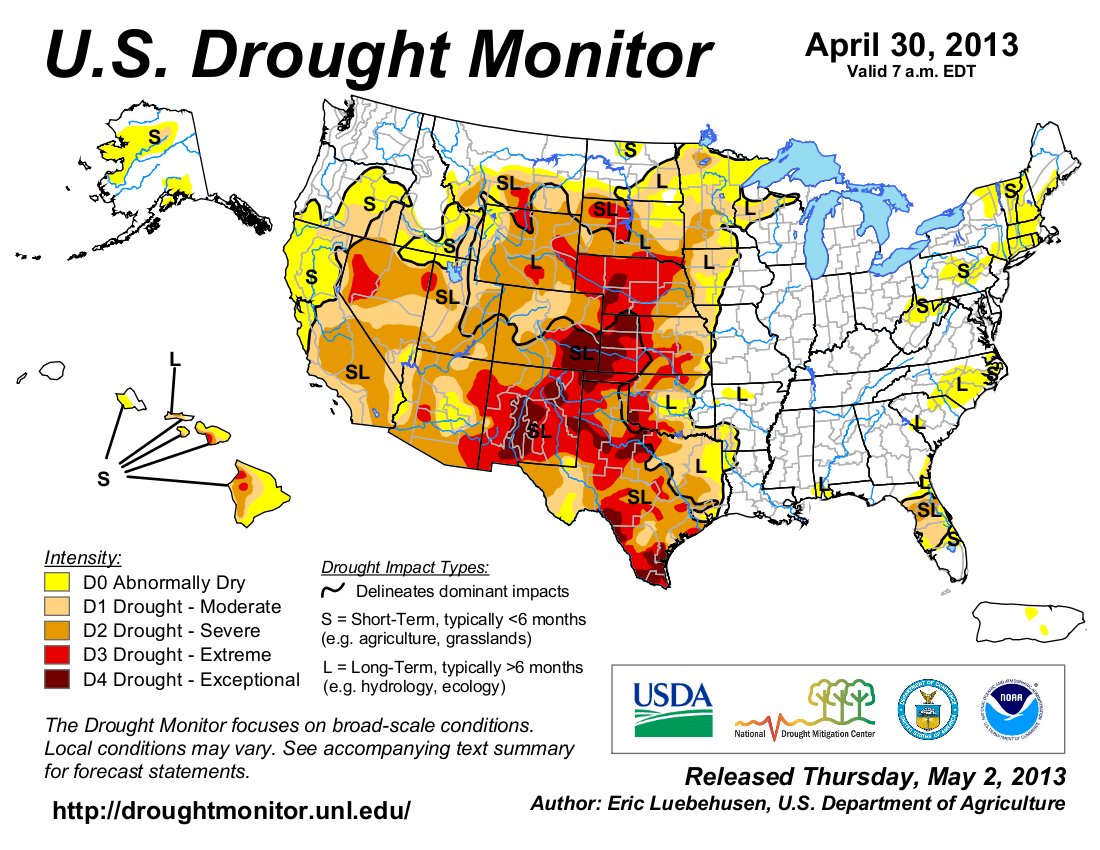
usdroughtmonitor04302013

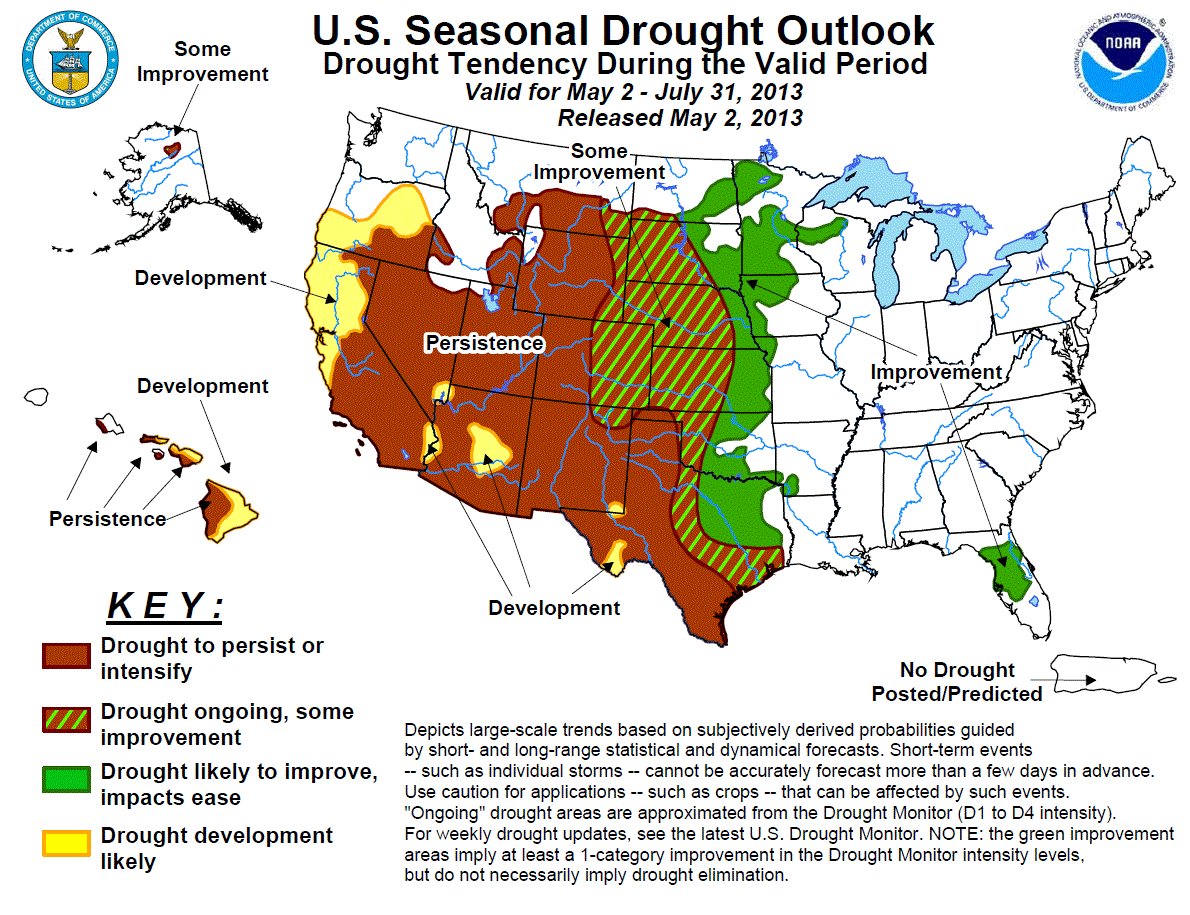
seasondroughtforecastcpc90daymay22013

Click on the thumbnail graphics for the current US Drought Monitor and the current 3-month drought outlook from the Climate Prediction Center.

From the Fort Collins Coloradoan (Bobby Magill):

Northern Colorado’s drought appears to be headed into remission following dousing after dousing of heavy snow and rain since the middle of April.

At least that’s the case for a doughnut hole in the region’s drought — an area roughly surrounding Fort Collins, Greeley and Longmont.

Drought conditions in most of Larimer, Boulder and western Weld counties and southern Laramie County, Wyo., are being downgraded from ā€œmoderateā€ drought conditions to merely abnormally dry.

Wednesday’s Colorado Climate Center drought report shows that above-average precipitation in April and an additional 1 to 2 inches of moisture during the first week of May in Northern Colorado has turned the region soggy enough to pause drought for now…

Colorado outside of Larimer, Boulder and Weld counties remains under moderate to extreme drought conditions, particularly southern Colorado were conditions are worsening…

Snowpack in Northern Colorado’s mountains is above-normal for this time of year, with the snow in the South Platte River Basin, which includes the Poudre River, at 105 percent of normal. The Colorado River Basin is 104 percent of normal.

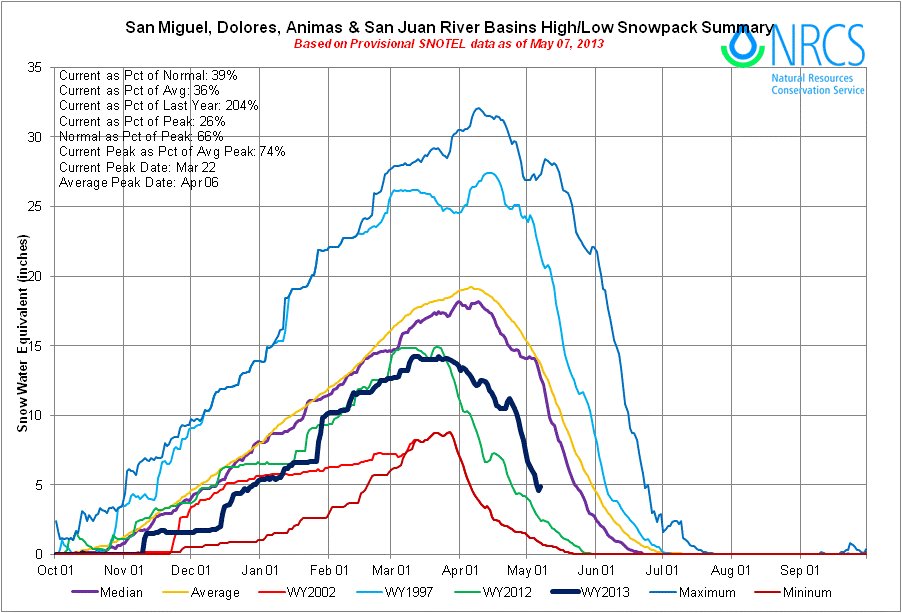
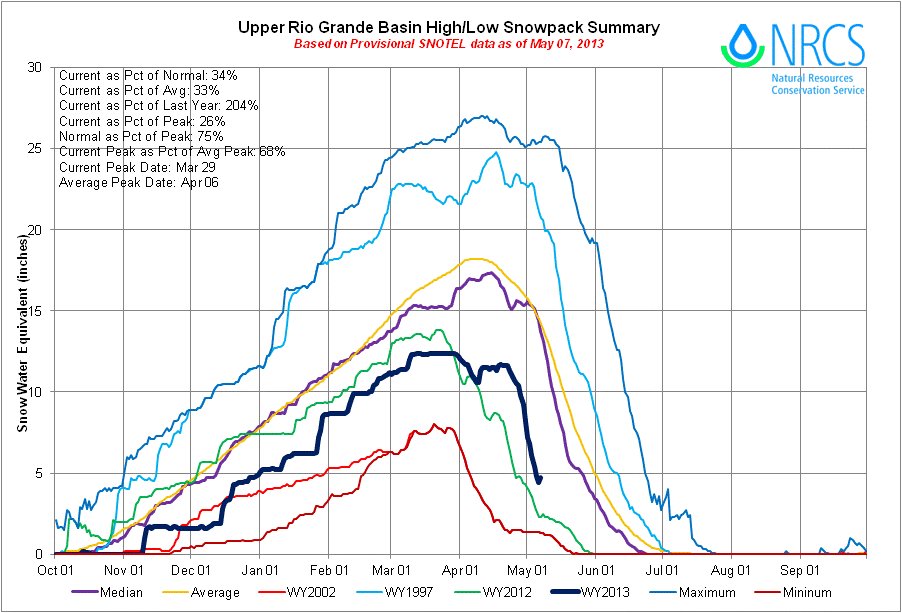
Southern Colorado’s quickly-melting snowpack is hurting badly, however. The Rio Grande Basin’s snow is only 31 percent of normal, and the San Juan River Basin is 40 percent of normal.

A look at the management of water in the San Luis Valley

sanluisvalleynationalgeographic.jpg

From the Valley Courier (Virginia Simmons):

In the 1860s the legislative branch of the Territory of Colorado had already made provisions about water use in the relatively small ditches by appropriation. The first ones created in the early 1850s were soon followed in the 1860s and 1870s by ditches that diverted water from the main stem of the Rio Grande River itself. In 1876 the constitution of the State of Colorado established appropriation of water rights in the order of priority, the doctrine of prior appropriation, and by the 1880s Colorado was making considerable headway in organizing the state government. The filing of ditch rights began in 1881.

In 1881, the Judicial Branch of the State of Colorado was granted final authority over priority, amount, location, and use of water rights. The judicial branch of Colorado’s government still has the authority over water matters relating to water, from district courts up to the Colorado Supreme Court.

Much later, in 1969, seven judicial districts would be established, overlapping with the seven major river basins of Colorado. The Colorado Twelfth Judicial District is in the Third Water District, the same geographical area as the San Luis Valley. Besides being a water court, the district court deals with many other types of cases, of course, so district judges get assistance of water referees, attorneys who examine cases related to water and make recommendation to the district judge. In Colorado Judicial District 3, District Judge Pattie M. Swift is the water judge.

Since 1881 also, the state has had an Office of the Water Engineer, our Colorado water pooh bah. Beginning as a one-man office, it was responsible for such activities as records of surface and ground water rights, decrees, stream flow and water use, and dam safety. The state engineer also serves as Colorado’s commissioner on the Rio Grande Compact Commission. The Division of Water Resources (DWR) is currently headed by Director Dick Wolfe.

Division 3 of the Division of Water Resources (DWR) was established in 1969, whereby the state designated seven divisions, one for each of Colorado’s major water basins. Division 3 occupies the San Luis Valley, the drainage of the Rio Grande River in Colorado and the same geographical area that is served by the judicial District Court, District 3.

In the DWR’s Division 3, Rio Grande Basin Division, the division engineer is Craig Cotten, with his office at 301 Mullins, Alamosa. He oversees monitoring stream flow, water use, well permits, ditch repair, and dam repair, and files reports with the Denver office. Local water commissioners’ offices are located at present at Monte Vista (District 20), Antonito (22), and Saguache (25, 26, 27). Water commissioners measure stream flows at gaging stations, coordinate calls for users with senior and junior rights, and send reports to the division engineer. Ditch riders are hired by ditch companies to maintain ditches and headgates, open headgates, and other on-the-ground jobs, some of which may get touchy.

Municipalities must comply with DWR regulations, water quality policies of the Colorado Water Quality Commission, the Colorado Department of Health and Environment, the Colorado Water and Wastewater Facility Operators Board Certification, and the local code of ordinances, and federal laws. In a large town such as the City of Alamosa, the contact is the Director of Public Works, whereas smaller towns may have a water and sewer department. Residents of rural areas and small villages use domestic wells.

Not until 1957 and 1965 was legislation passed regarding wells, ground water, and augmentation. Permits for ground water wells were then required and are administered by DWR. Statutes also were passed that included tributary water in wells that were affecting surface water rights. Since 1972, DWR has administered domestic well permits on property of less than 35 acres. Restrictions on permits may differ from one county to another, but they still must comply with DWR’s state regulations.

Over all, then, administration of the Colorado Division of Water Resources (DWR) for the entire, diverse state is a large responsibility. And this is just one division within the present Colorado Department of Natural Resources (CDNR), where some other divisions are also related to water. Mike King is director of CDNR.

More Rio Grande River Basin coverage here and here.

Snowpack news: ‘Mother Nature has been nothing but miserly to the Rio Grande basin’ — Matt Hildner #COdrought

snowpackcolorado05072013

sanmigueldoloresanimassanjuanbasinhilow05072013

upperriograndebasinhilow05072013

Click on the thumbnail graphics for the current statewide snowpack map along with the basin high/low graphs for the Upper Rio Grande and the San Miguel,Dolores, Animas and San Juan basins.

From The Pueblo Chieftain (Matt Hildner):

While the northern part of the state and parts of the Arkansas River basin were given reprieves by a string of April snowstorms, Mother Nature has been nothing but miserly to the Rio Grande basin. The snowpack report from the Natural Resources Conservation Service lists the basin’s snowpack at 40 percent of its normal peak at the end of April. ā€œIt’s not a good year at all,ā€ Division Engineer Craig Cotten said Tuesday.

The federal agency also is forecasting a flow of only 225,000 acre-feet on the Rio Grande River from April to September. Should those forecasts hold, Cotten said this year would mark the fourth lowest flows on record for the Rio Grande since the state began recording them in 1889.

Forecasts are just as bad on the Conejos River in the southwestern corner of the San Luis Valley, where only 113,000 acre-feet are predicted through September.

The dreary numbers are mitigated slightly by the fact that this year’s runoff did not come as early as last year, giving irrigators a better chance to take advantage of them, Cotten said.

The dry forecast also means the state will not have to send much water downstream to satisfy the Rio Grande Compact, which governs how Colorado, New Mexico and Texas share the river. Cotten’s office projects that only 4 percent of the flows on the Rio Grande will need to be sent downstream, and the Conejos, which also has obligations under the compact, will have no delivery requirement.

Craig Cotten division engineer Dry weather is likely to remain, according to the National Weather Service’s Climate Prediction Center, which predicts a likelihood of below-normal precipitation from May through July in South-Central Colorado. The rest of May may hold a brief respite as the center is predicting a likelihood of above-normal precipitation.

2013 Colorado legislation: House Joint Resolution 1026 (Protect Agricultural Water Supplies) passes the state House #COleg

irrigation.jpg

From The Pueblo Chieftain (Chris Woodka):

The state House Tuesday passed a bipartisan resolution to protect Colorado’s water supply and recognize the benefits irrigated agriculture provides to Colorado. ā€œWe want to make sure we protect water, it’s a precious resource,ā€ said Rep. Lori Saine, R-Dacono. ā€œWater is the lifeblood of our state. I’m glad to see bipartisan support for this resolution.ā€

House Joint Resolution 1026 calls on the Legislature to work with Gov. John Hickenlooper and Colorado’s water community to continue addressing Colorado’s predicted water supply-demand imbalance. HJR1026 recognizes the importance of Colorado’s irrigated agriculture and encourages investment in outreach and education to increase Coloradans’ awareness of how beneficial irrigated agriculture is to Colorado.

The Colorado Water Conservation Board and Interbasin Compact Committee have been working on meeting future demand for more than a decade. Hickenlooper wants to have a state water plan in place by 2016. ā€œAgriculture contributes about $40 billion to our state’s economy,ā€ Saine said. ā€œWe have to make sure that water rights are protected.ā€

More than 85 percent of Colorado’s water use is for agriculture, but a growing amount is required for city and industrial uses.
ā€œOur water demands will only increase going forward,ā€ Saine added.

More 2013 Colorado legislation coverage here.