Drought news: Denver Water’s rate payers get a one month reprieve from drought surcharges #COdrought

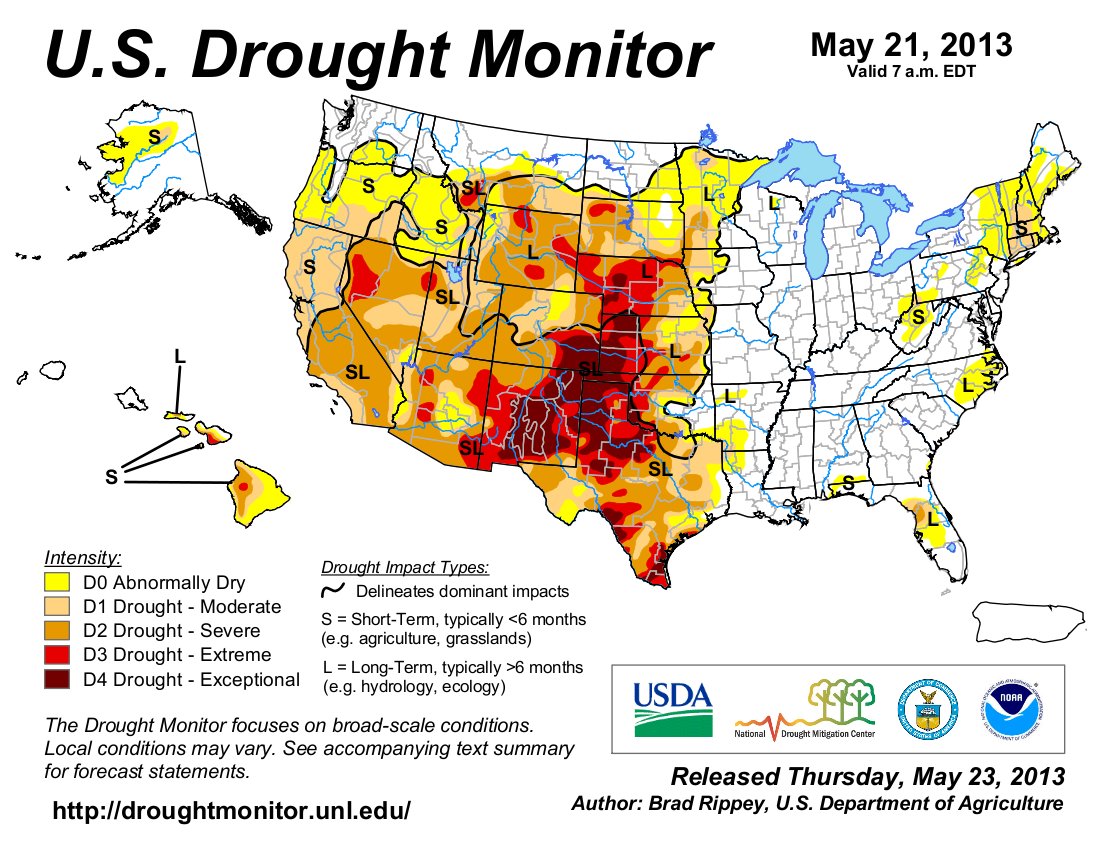
usdroughtmonitor05212013

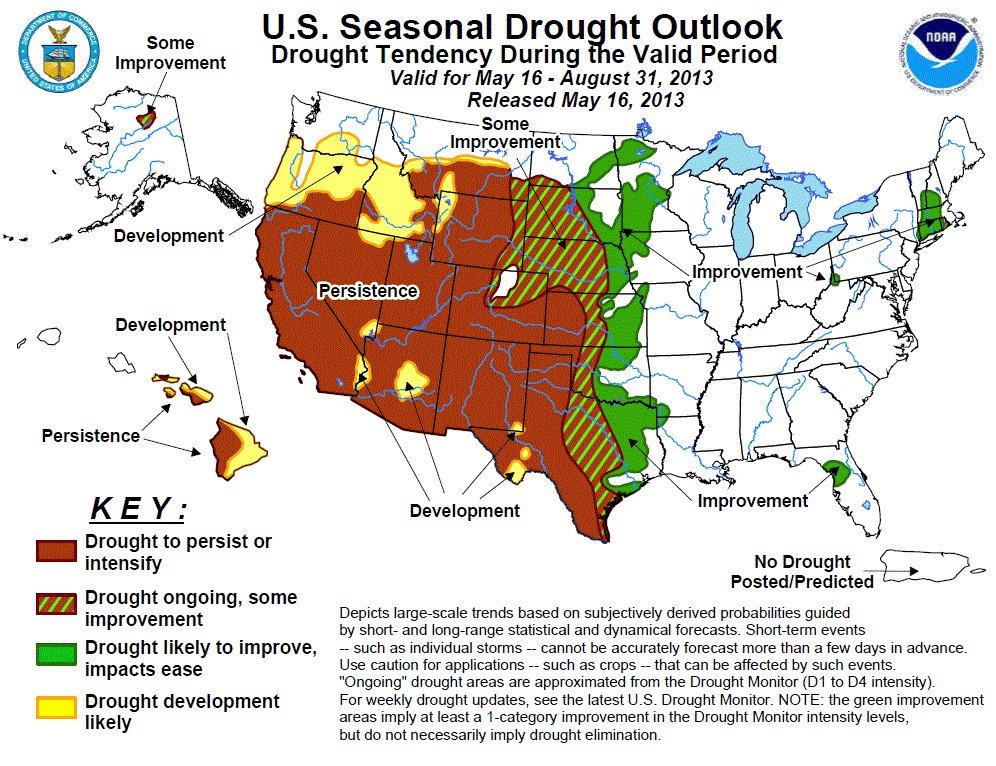
seasonaldroughtoutlookcpc0516to08312013

From the Denver Water Blog:

If you’ve been following our weekly posts, you’ve seen our snowpack and precipitation graphs jump upward after the April and May snowfall. This is great news for our water supply, which had been abysmal since July 2011.

As you probably know by now, the snowpack above the diversion points in Denver Water’s watersheds ended up below the average peak at 91 percent in the Colorado River watershed and 92 percent in the South Platte River watershed. We’ve also stressed the importance of May and June weather as it will impact how much mountain snow will make its way into our reservoirs as water. The wetter the better!

So what’s new? Today at its meeting, the Denver Board of Water Commissioners voted to delay drought pricing by one month. Why? Depending on how much water makes its way to our reservoirs, we may be in a position to change our drought response from Stage 2 to Stage 1, which would remove drought pricing entirely. But, we won’t make that decision until we have a better sense of our reservoir situation and summer conditions after runoff is over in late June or early July.

The temporary drought pricing was scheduled to appear on bills beginning in June to encourage customers to use even less water and help reduce revenue loss to maintain our treatment and distribution system. We’ve seen customers use even less water, thanks to their savvy water-saving habits and letting Mother Nature take care of watering this spring. And, we believe that by delaying the pricing, the benefit to customers outweighs the revenue we may lose in June. The last thing we want to do is put drought pricing in place, just to remove it if we change direction.

While it’s too soon to move to Stage 1 drought restrictions, we will continue to closely monitor conditions and remain flexible in our response.

From The Denver Post (Nic Turiciano):

Denver Water has some good news for customers worried about the cost of keeping their lawns green: The Denver Water Board of Commissioners voted at their meeting Wednesday to delay drought pricing by one month.

Stage 2 drought pricing, which raises rates for watering and aims to encourage less usage, was supposed to go into effect June 1. Denver Water users remain under Stage 2 drought rules, which dictate that customers water their lawns no more than two times per week and adhere to a strict schedule.

Denver Water may be able to eliminate all drought pricing and watering restrictions for the 2013 summer depending on precipitation during the month of June, according to spokeswoman Stacy Chesney.

From the Fort Collins Coloradoan (Bobby Magill):

Warm and dry weather may be about to take hold again for the time being as severe and extreme drought conditions keep their grip on much of Colorado, according to a drought report issued this week from the Colorado Climate Center at Colorado State University.

Northern Colorado is the only bright spot in the report. Eastern Larimer, western Weld and nearly all of Denver, Boulder, Clear Creek, Gilpin and Jefferson counties are merely “abnormally dry.”

Western Larimer County is considered to be in a moderate drought.

The quickly-melting mountain snowpack in the South Platte River Basin, which includes the Poudre River, is 125 percent of normal for this time of year, the best in the state, according to U.S. Natural Resources Conservation Service data.

Most of the snowpack in southwest Colorado has already melted, contributing to ongoing severe drought conditions in the San Juan Mountains and much of the Western Slope.

Extreme and exceptional drought conditions continue to plague southeast Colorado.

The National Weather Service is calling for the drought to all but disappear between Denver and Fort Collins while improving in northeast Colorado and persisting through most of the rest of the state.

Nolan Doesken featured on This American Life

Governor Hickenlooper orders work to begin on Colorado Water Plan — draft due December 2014

waterfromtap.jpg

From the Summit County Citizens Voice (Bob Berwyn):

Colorado water experts will try to figure out how to manage the state’s most precious resource in an era when all signs points to increasing shortages and the potential for growing conflicts within the state and the region over its allocation. Under an executive order issued this week by Gov. John Hickenlooper, the Colorado Water Conservation Board will lead the effort to address the growing gap between supply and demand. Especially worrisome is the gap in the South Platte Basin, the state’s most populous and at the same time, the most productive agricultural basin.

Hickenlooper acknowledged that the recurring drought could hasten the impacts of the gap between supply and demand, noting that the past two decades have been Colorado’s warmest on record, dating back to the 1890s.

More CWCB coverage here.

New Belgium Brewery’s $100,000 donation to Fort Collins helps to secure water rights in the Coy Ditch

coyditchdampoudreriver.jpg

From the City of Fort Collins via the North Forty News:

Using a $100,000 contribution from New Belgium Brewery, the City of Fort Collins Natural Areas Department recently acquired a 40 percent interest in the Coy Ditch, a move that will benefit habitats along the Cache la Poudre River Corridor.

The City’s recent acquisition consists of water that formerly irrigated the Link-N-Greens golf course where Woodward Governor’s new corporate headquarters are to be located. The Natural Areas Department plans to use the acquired water to enhance environmental values in and near the Poudre River. New Belgium Brewery contributed $100,000 towards the $700,000 purchase price.

“For New Belgium, this is a great way to invest in a healthy river and riparian corridor right where we live and work,” said New Belgium Director of Sustainability Jenn Vervier. “Much of our philanthropic efforts go toward supporting healthy watersheds, but it is especially meaningful when we can work on something this close to home.”

The water rights acquisition brings the city’s total interest in the Coy Ditch to 50 percent. The remaining 50 percent is owned by a municipal water provider.

Natural Areas Department Director John Stokes said, “This purchase will help the City pursue a minimum instream flow on the Poudre River and also to augment ponds and wetlands. Both of these objectives are critical to river health. In addition to these benefits, the water rights open up the possibility for modifications to Coy Ditch diversion dam (just east of College Avenue) to improve habitat connectivity, recreation and stormwater management. The City wishes to extend its sincere appreciated to New Belgium for its farsighted and generous donation.”

Citizens are invited to an open house to learn more about over 25 projects in the Poudre River Corridor on June 26, 4-7 p.m. at the Lincoln Center, Canyon West Room, 417 West Magnolia Street.

Topics include construction, trail closures, drought & fire, habitat restoration, flood mitigation and planning. Give input and enjoy kids’ activities and a cash bar. An overview of the projects and trail closures can be found at fcgov.com/riverprojects/

From the Fort Collins Coloradoan (Kevin Duggan):

Eventually, the rights could translate to higher flows in the Poudre that would boost recreation and habitat along the river, said John Stokes, director of natural areas. “It’s not a huge water right, but it is significant,” Stokes said. “My hope is to put a little bit more water in the river and establish an in-stream flow program.”

The ditch, which dates to 1865, has the No. 13 priority on the river. Its decree is for 31.5 cubic feet per second. For reference, the Poudre River’s flow on Wednesday was roughly 600 cfs.

Fort Collins owns 50 percent of the water; the East Larimer County water district owns the rest.

More Cache la Poudre River Watershed coverage here and here.

Adams County stormwater fees: ‘We just want a chance to be heard’ — Gloria Rudden

cherrycreekflood08031933castlewooddamfailure.jpg

From The Denver Post (Yesenia Robles):

The 20-person task force — which includes representatives from municipalities where the fee does not apply — will be asked to deliver recommendations to the commissioners by Oct. 1.

Members of the task force said Tuesday they are anxious to learn more about the program and voice their opinions. “We just want a chance to be heard,” said member Gloria Rudden, a resident of unincorporated Adams County. “This wasn’t well thought out and so I’m hoping to try to work on something that’s feasible.”[…]

The fee, assessed based how much of a property doesn’t allow stormwater to soak into soil, was estimated at an average of $62.64 per year for a single-family home. Some residents, however, reported bills as high as $900. The county hired an outside consultant to review the bills and by the end of February, found a 34 percent error rate. Commissioners responded by temporarily capping the fee and creating the task force.

While the task force prepares its recommendations, projects that were expected to be funded by the fee this year are on hold.
Deputy county administrator Todd Leopold on Tuesday said that instead of collecting about $5 million this year, as was projected, the stormwater fee will bring in about $2.2 million. About $1 million is intended to fund a portion of the Utah-Junction-Clay Street outfall project near West 60th Avenue under Interstate 76. Bidding is still going on for that project…

Andrew Been, another task force member, said he would like to see a plan to reduce or end the fee when projects are complete, but also wants a better explanation of why the fee was needed in the first place.

More stormwater coverage here and here.

Weekly Climate, Water and Drought Assessment of the Upper Colorado River Region #ColoradoRiver

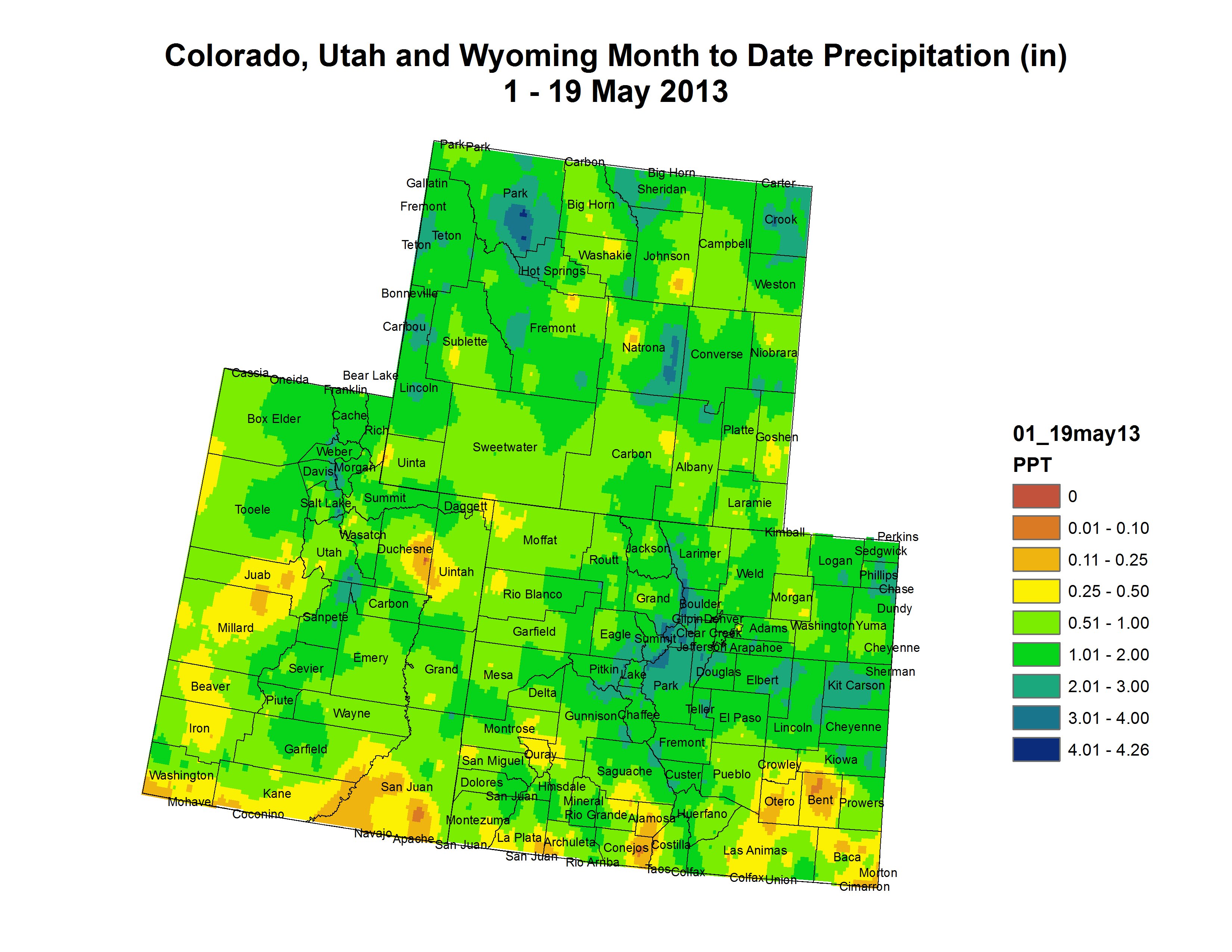
wyutcoprecipitationmay1to192013ccc.jpg

Click on the thumbnail graphic for the May month to date precipitation map. Click here to read all the summaries.

More Colorado River Basin coverage here and here.

CMU: Grand Valley Float — Palisade to Corn Lake May 29 #ColoradoRiver

palisadepeachorchard.jpg

From Colorado Mesa University:

Float along the Colorado River between vineyards and orchards in a section of the 15-mile reach of critical habitat for 4 species of endangered fish.

To Register, click here.

More endangered/threatened species coverage here and here.

The Arkansas Valley Conduit scores and extra $4 million from Reclamation funds

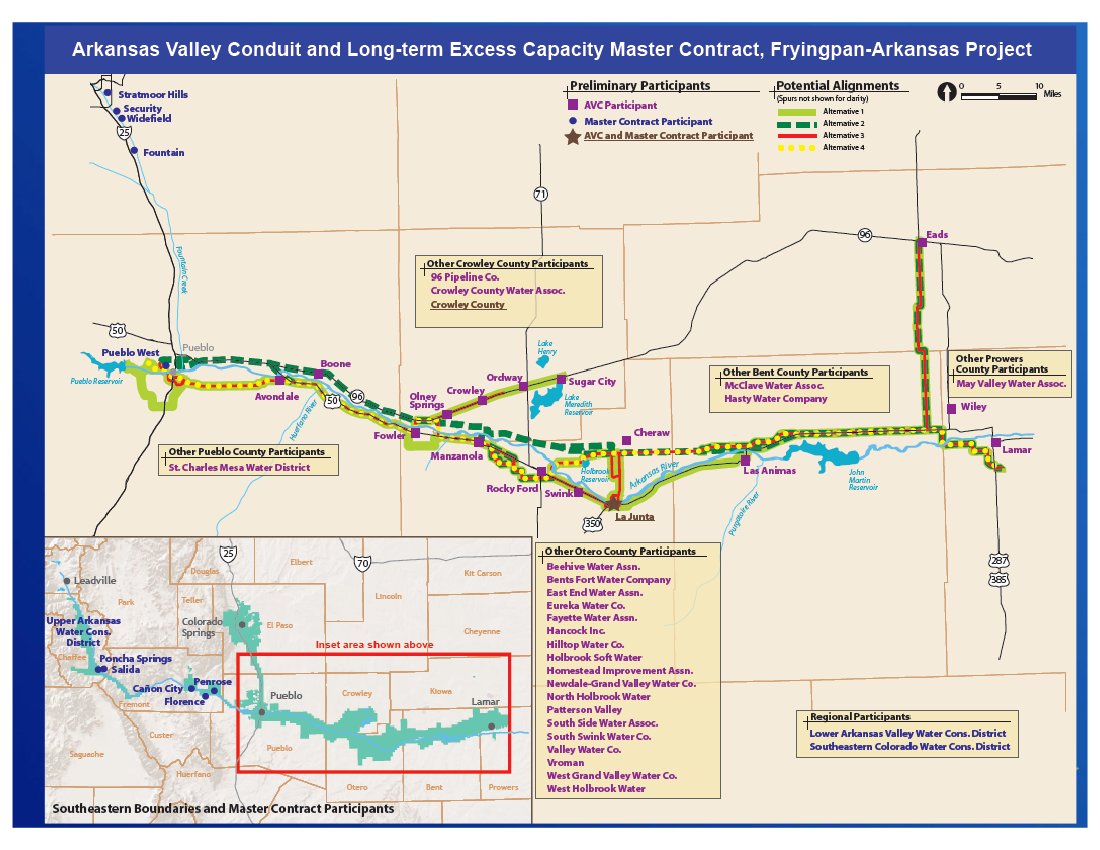
arkansasvalleyconduitproposed.jpg

From The Pueblo Chieftain (Chris Woodka):

The Arkansas Valley Conduit will receive an additional $4 million in federal funds this year thanks to reallocation of unused or leftover funds within the Bureau of Reclamation. “It will allow us to start working on engineering and the drafting of a design,” said Jim Broderick, executive director of the Southeastern Colorado Water Conservancy District, sponsors of the project.

Broderick learned of $3.79 million in additional funds being steered to the conduit during a visit with Reclamation Commissioner Mike Connor in Washington, D.C., earlier this week. The money comes at a time when the district anticipated getting far less than it needed to keep the project moving. Last month, the district’s board received the grim news that under sequestration, only $1 million would be included in the 2014 budget. The district had sought $14 million.

More Arkansas Valley Conduit coverage here and here.