
From the Environmental Defense Fund (David Festa):
Restoring rivers: Four steps to a pulse flow
Can the pulse flow be replicated to restore rivers in other water stressed regions around the world? With apologies to the importance of the nuances of international water-sharing agreements, here’s my shorthand of the steps needed to get a pulse flow.
First, find water. Anywhere irrigation is critical to food production, agriculture is responsible for 70% or more of withdrawals from rivers, streams and groundwater. As societies realize the value of conserving water, money can be made available to incentivize farmers and managers of irrigation infrastructure to improve, voluntarily, irrigation efficiency. In other words, with the right incentives, they can maintain or improve their food production using less water.
Second, find a way to buy some of the saved water. Farmers who save water through efficiency can choose what to do with the “saved” water. One choice is to sell or lease it to someone else, using the payments to help defray the cost of improving efficiency.
Third, particularly for rivers where flow is generated by melting mountain snowpack, find a way to mimic a spring flood. Water savings accrue over time so releasing water as efficiency measures are put into place would produce but a trickle at a time. The key is to store enough water to make a difference. In this instance, Minute 319 broke new ground in international water sharing by allowing Mexico to store up water in Lake Mead, a short drive from the famous Bellagio fountains in Las Vegas.
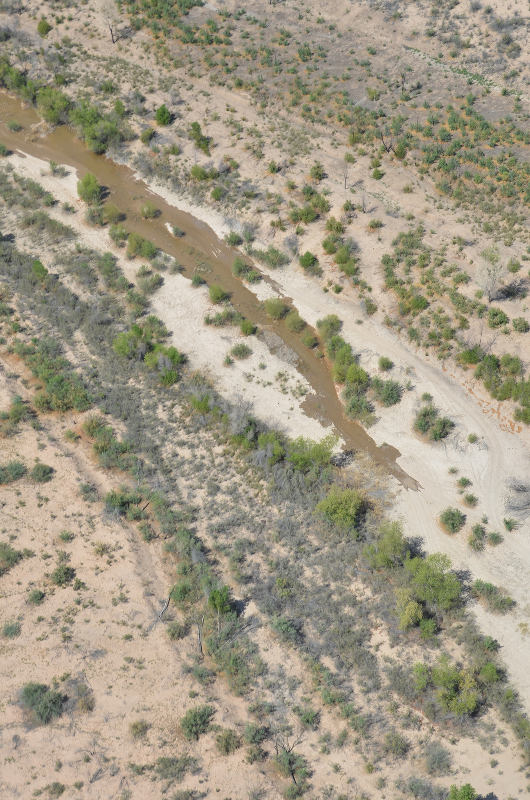
Finally, prepare the way. Starting several years ago, farmers and conservation advocates worked together in the Colorado River Delta to plant and irrigate several hundred acres of restored native habitat. The natural condition for the delta includes periods of drought and periods of floods (natural pulse flows). Therefore, the ecosystem has evolved to take advantage of this kind of wet/dry cycle. The problem is that with only a handful of exceptions, the delta has not been wet through and through since before the early 1960s! Much of the natural vegetation had long since died out.
The hope is that the pulse flow will act like a cardiac defibrillator and shock the system back into its routine, albeit for only a portion of the historic delta. But the restored connection between the Colorado River upstream and the Upper Gulf of California should be a boon to the hundreds of bird species that migrate the Pacific flyway. Of course for this to be truly successful, it will require more pulse flows (scientists think, about one every five years) and a small amount of steady water (called base flow) in between just to keep things damp.
A new foundation for stewardship
Thanks to the painstaking approach taken by the architects of Minute 319, there is a solid foundation for this new approach to stewardship of the Colorado River.
More Colorado River Basin coverage here and here.