

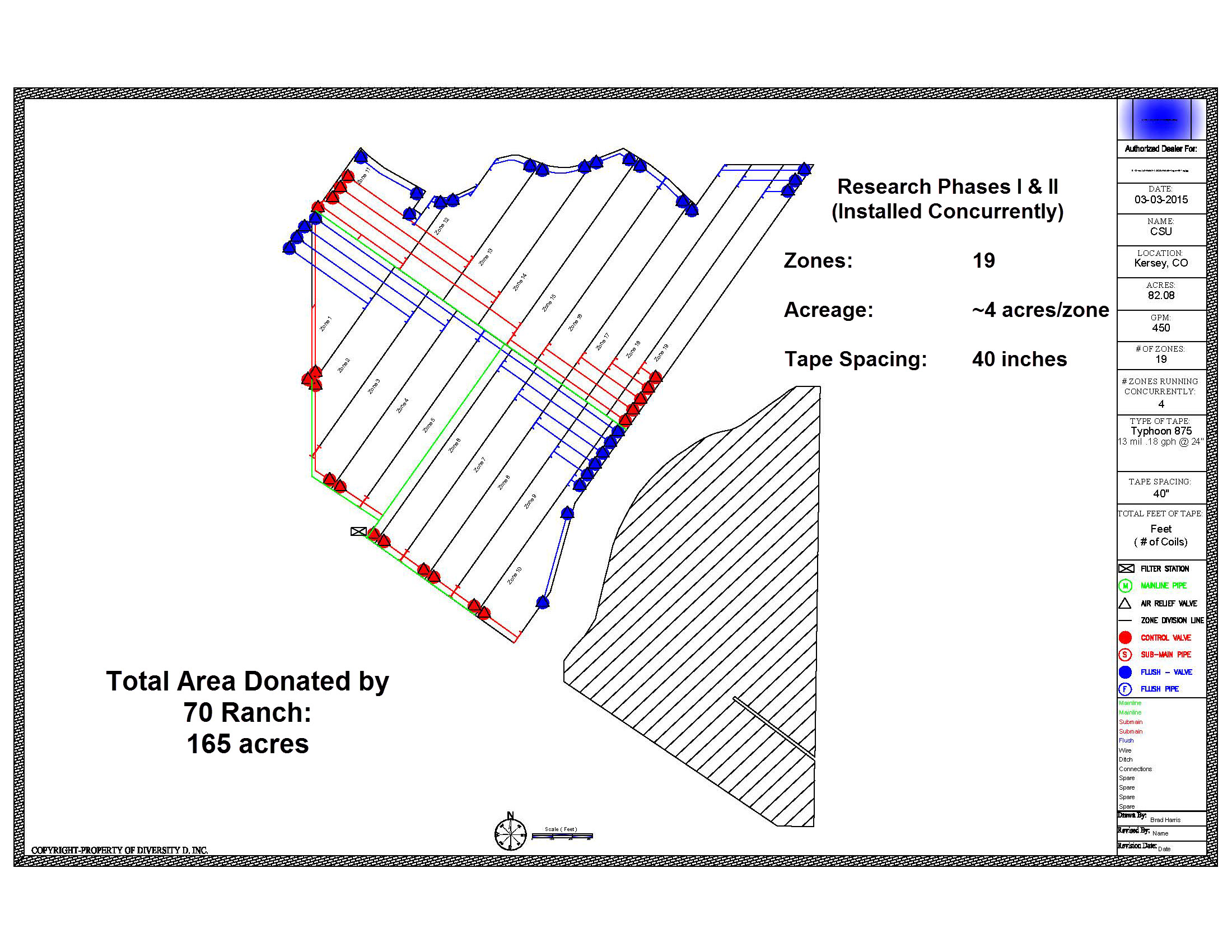
Bob Lembke thinks that irrigation technology developed in Israel to grow crops in the Negev Desert should have application here in the US and particularly in the South Platte Basin. To that end United Water and Sanitation has dedicated 165 acres of their 70 Ranch property for a 30-40 year pilot project with Colorado State University researchers. Their plan is to test cropping patterns, deficit irrigation, and other variables to assesss the potential for subsurface irrigation as an alternative to “Buy and Dry” in the basin.
Project participants hope to grow more with less and also help drought harden operations that have been water short traditionally.
According to Skip Dinges from HMD Consulting subsurface irrigation has many benefits:
Dr. Ramchand Oad is the CSU researcher helping with the project. He emphasizes that subsurface irrigation lessens evaporation as compared with surface irrigation. He also mentioned that farmers should be able to bring more acreage into production with their available water.
Efficiency if is a double-edged sword however. South Platte irrigators divert far more water each season that is available from natural streamflow and transbasin diversions. The reason that they can do that is the return flows from flood irrigation.
More South Platte River Basin coverage here.
