
From The Las Cruces Sun-News (Diana Alba Soular) via The Albuquerque Journal:
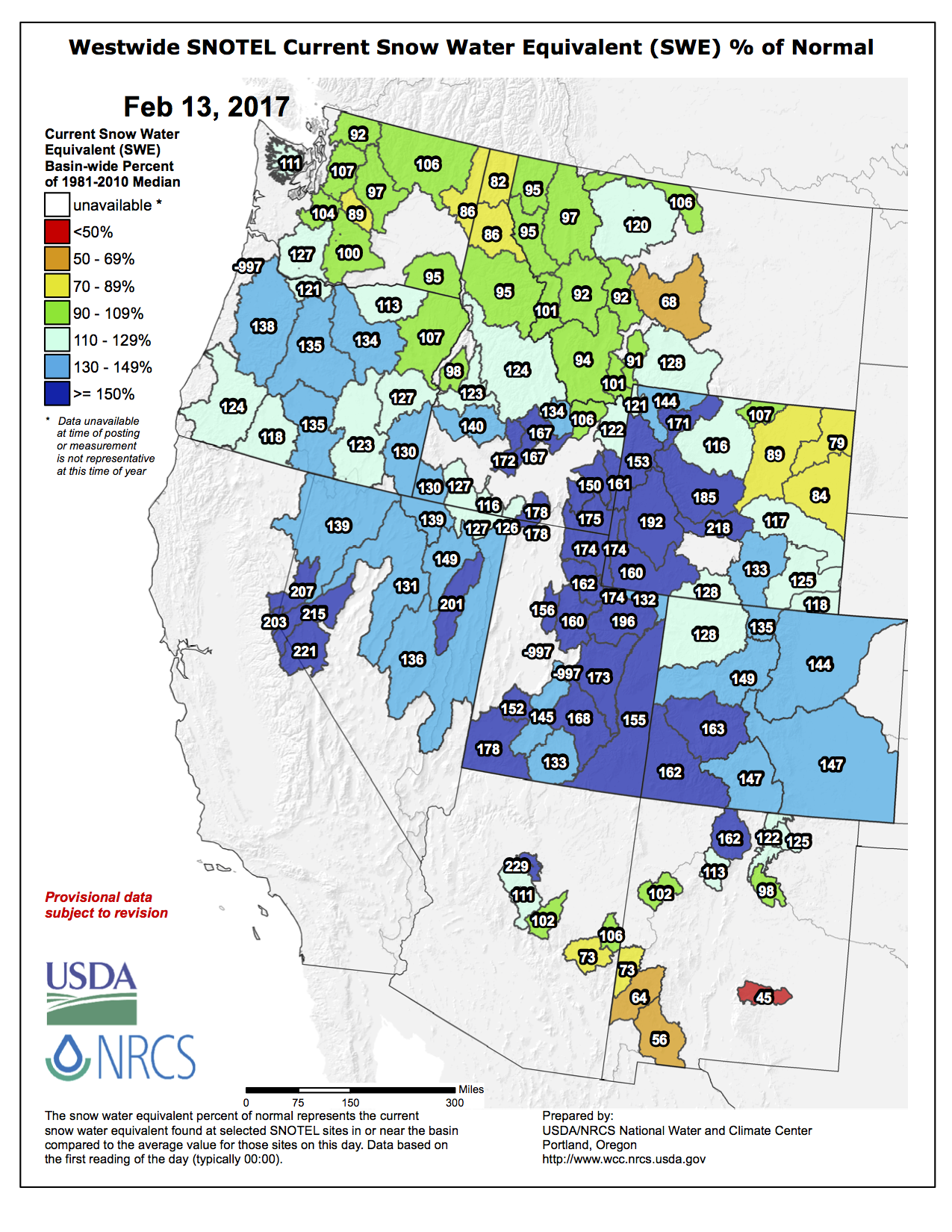
Snowpack has continued to build in southern Colorado and northern New Mexico, which could lead to the best river water year in Doña Ana County since 2010.
The Elephant Butte Irrigation District board heard an update last week about the winter snowpack, which turns into spring snowmelt and feeds the Rio Grande each year. A major basin in southern Colorado is sitting at 151 percent of average for its snowpack, said Phil King, consultant water engineer for the district.
“The Upper Rio Grande is the big one; it’s well over average,” he told EBID board members.
A month ago, the same basin was at 143 percent of average.
Other basins in the southern Rocky Mountains that contribute to Rio Grande runoff also are above average, King said…
Snowpack in southern Colorado mountains affecting the Rio Grande was nearly 50 percent greater than a year ago, according to a Natural Resources Conservation Service report released Wednesday.
The district already has a small amount of water in storage in upstream reservoirs – Elephant Butte Lake and Caballo Reservoir – which is enough to issue farmers nearly a 6 acre-inches per acre allotment. The runoff will add to that.
Early federal forecasts are predicting a bumper spring runoff for the Rio Grande. But King said he’s more cautious in his outlook because hefty snowpack numbers haven’t translated into strong runoff in recent years. He said a shift in the environmental factors affecting runoff have thrown off forecasting models that worked in the past.
King said he’s preliminarily predicting EBID farmers could receive 18 to 24 acre-inches per acre of water for the season, a figure that includes both the 6 acre-inches already in storage and the possible new runoff.
If 24 acre-inches – or 2 acre-feet – is eventually allotted by the district, it would be the most since 2010, when EBID farmers received the same amount.
From CBS Denver:
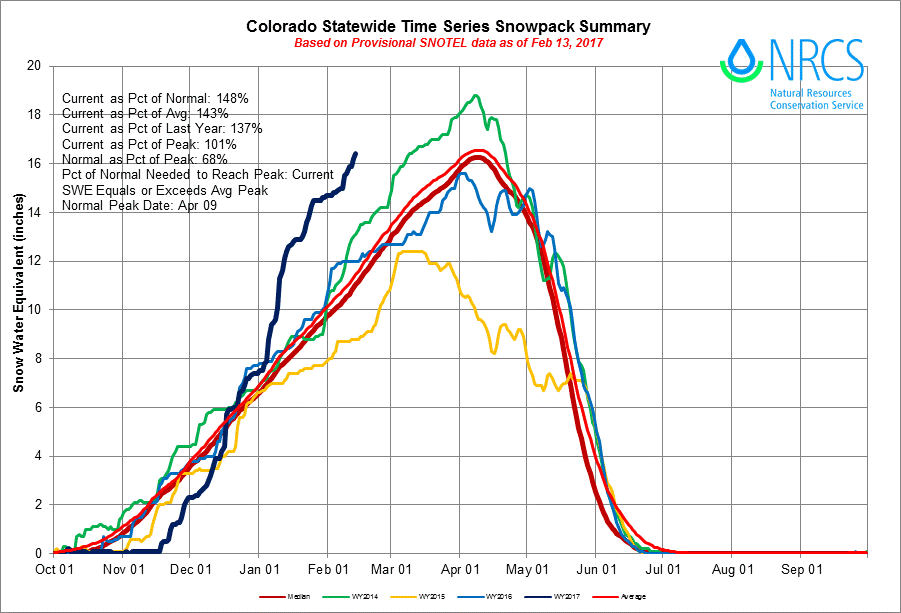
As of February 13, statewide snowpack was at a level normally seen around April 9 or 10. The dark blue line on the graph [above] shows the current average water content of roughly 16.3 inches.
Brian Domonkos, with the Colorado Snow Survey Program, says our current snowpack is the second highest since records began in 1986. Only 1997 was higher with an average water content of 18.4 inches.
With March and April being historically snowy months there’s a chance that the 30-year record set in 1997 could be challenged.