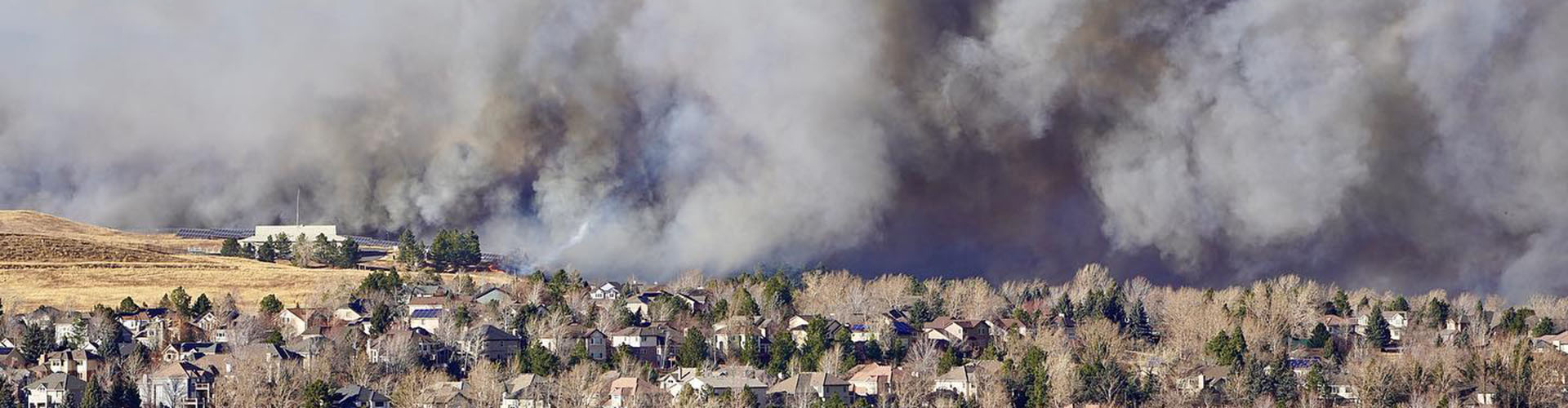
“(Mass property loss in a fire disaster) makes it much harder to recover,” Amabile said before the hearing. “It’s harder to find a place to rent, it’s harder to get your building permits approved, it’s harder to find a builder and an architect, and it’s also harder to get your claim through the insurance company because they’re also overwhelmed with claims.”
The Marshall fire underscores the need for this type of legislation, she said. Homes lost to fire disasters still account for a small percentage of total insurance claims, including things like hail, but the mass trauma they inflict is dramatic, she said…
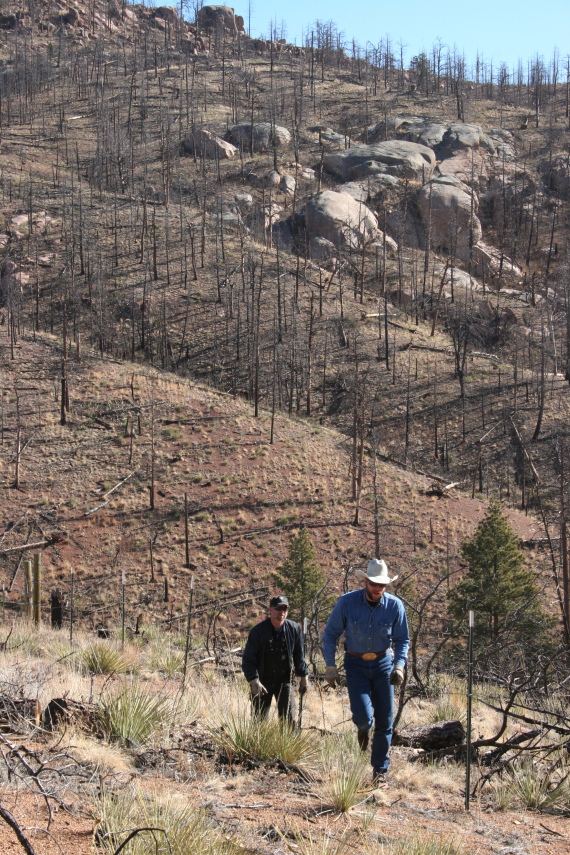
Slopes above Cheesman Reservoir after the Hayman fire photo credit Denver Water.
Broadly speaking, a local government would need to have a dedicated funding source for fire mitigation to qualify for a matching slice of money from the state forest service. A fiscal analysis predicts it would cost about $20 million in its first full year, beginning July 1, 2023.
What qualifies as mitigation would be broadly defined and left to the local government, Snyder said. The state’s ecosystem is too diverse to prescribe solutions. The bill has not been scheduled for a committee hearing yet, the first step to possible passage into law…
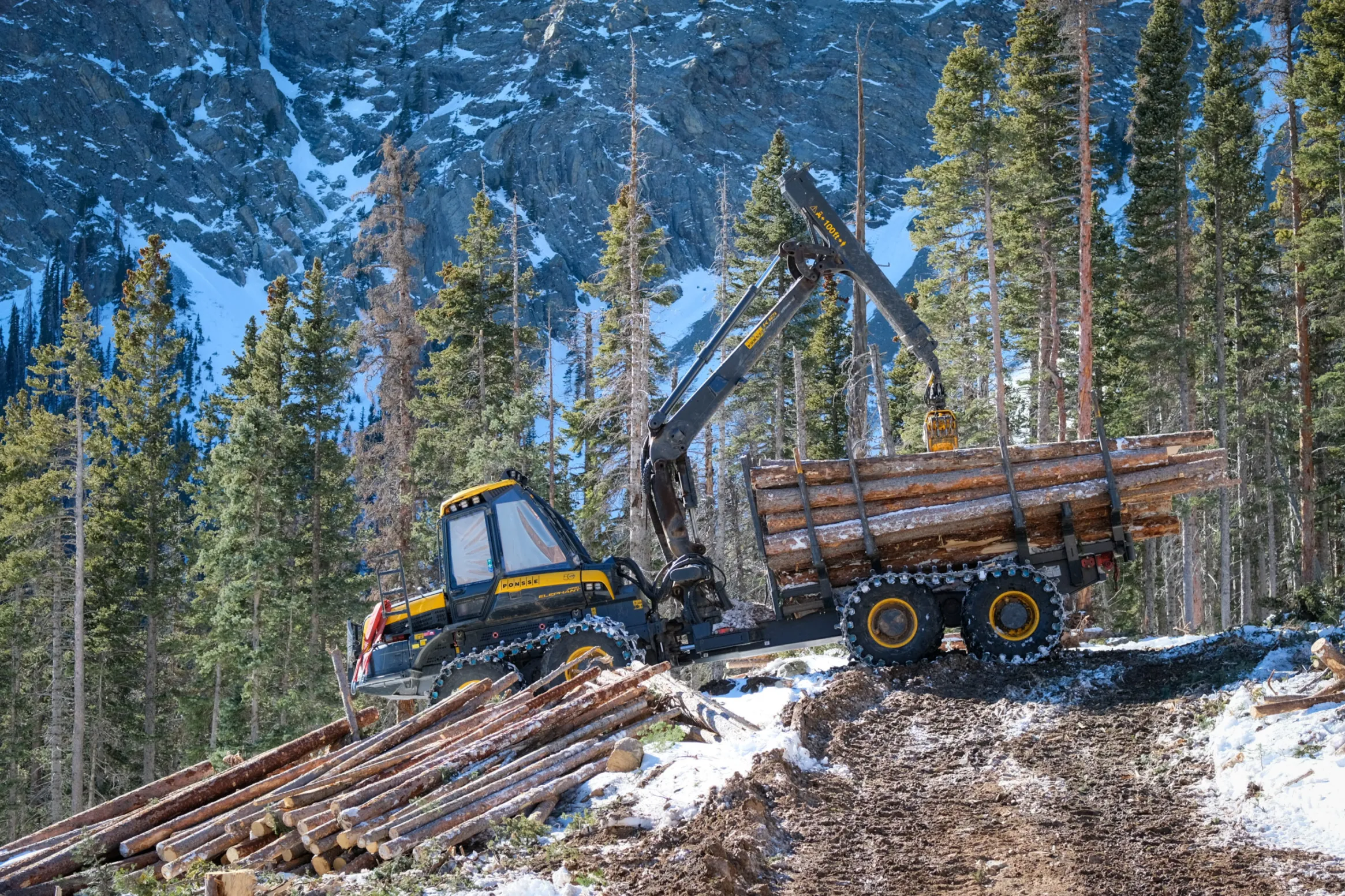
Agile equipment gathers processed logs in the forest and takes them to the road and stacks them. Photo credit: Ryan Michelle Scavo
Fire management will need education, awareness, planning, mitigation and preparation, Will said. And while he encouraged those efforts, it’s Mother Nature’s cooperation, for better of ill, that will define wildfires in Colorado.
Click the link to view a list of bills for wildfire.