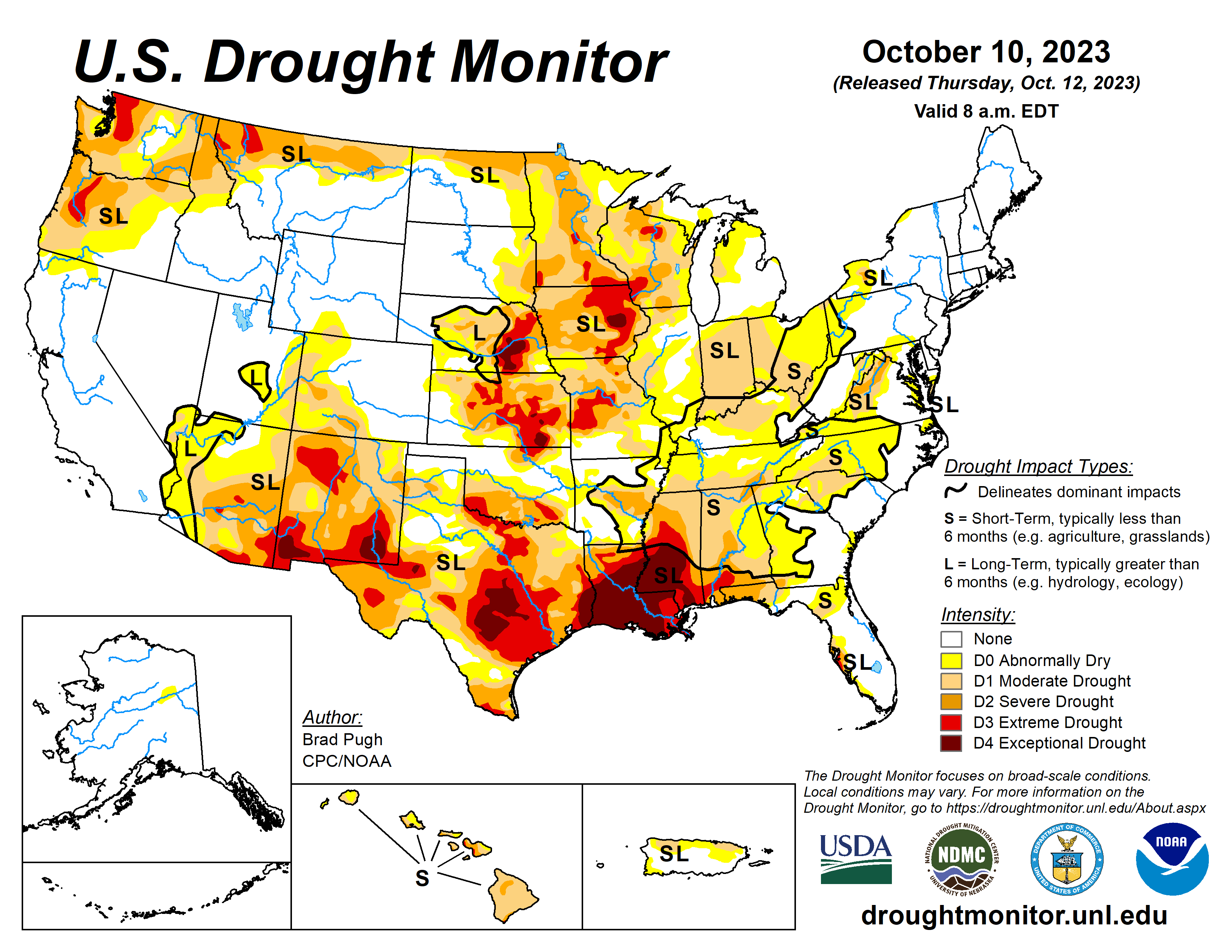
A strong cold front resulted in moderate to heavy precipitation across the Great Plains, Ozarks, and western Gulf Coast during the first week of October. The most widespread improvements were made to southern Arkansas, northwestern Louisiana, southeastern Oklahoma, and eastern to central Texas where more than 2 inches of precipitation was observed this past week. Following anomalous heat across the central U.S. to start October, the cold front ushered in much cooler temperatures from October 5 to 7. The first frost or freeze of the fall affected the Northern to Central Great Plains on October 7. As the cold front progressed eastward, drought-easing rainfall overspread parts of Illinois, northern Indiana, southern Michigan, and western New York. Father to the south, short-term drought continued to expand north and east across the Southeast. Following a wet September, minor improvements were warranted for parts of Washington. Heavy rainfall, associated with Tropical Storm Philippe, resulted in improving drought for eastern Puerto Rico. Drought continues to intensify across parts of Maui and the Big Island…
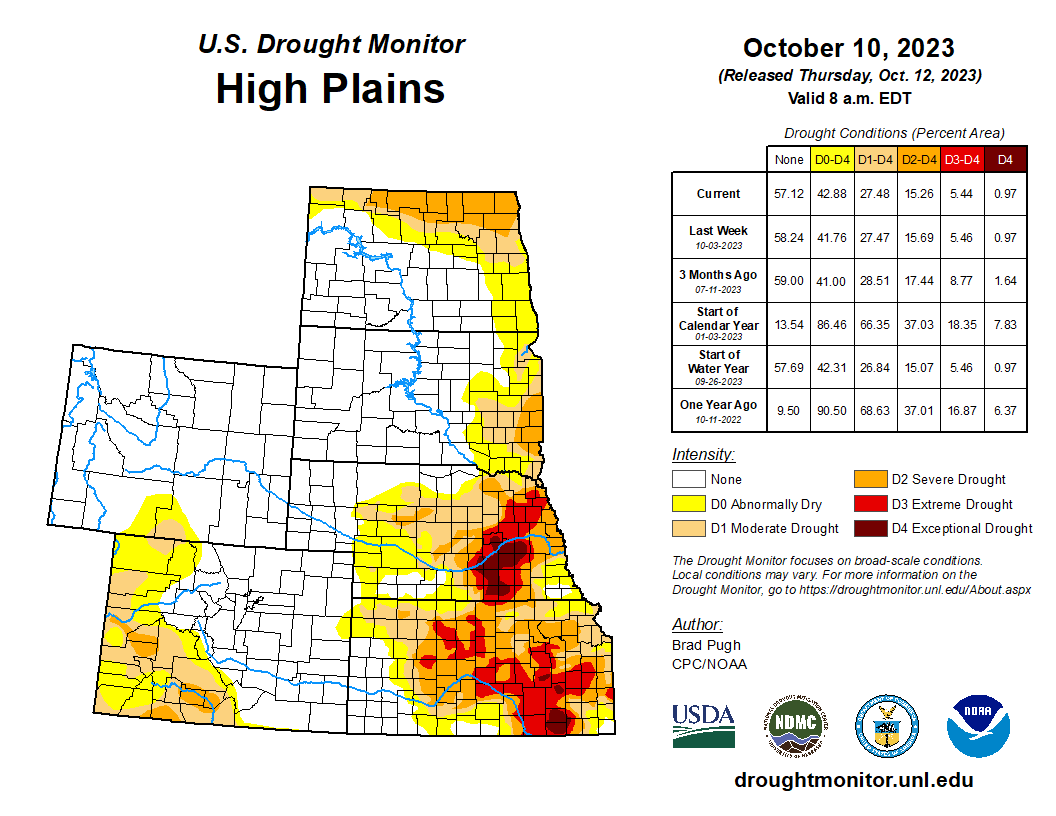
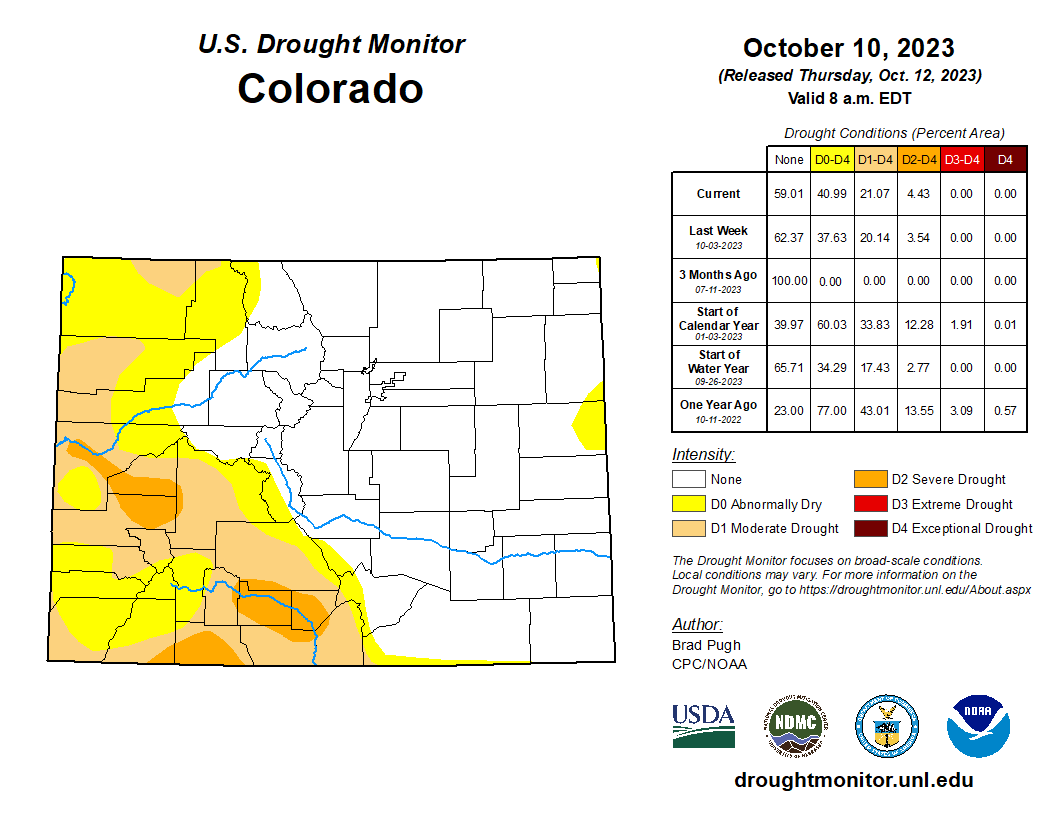
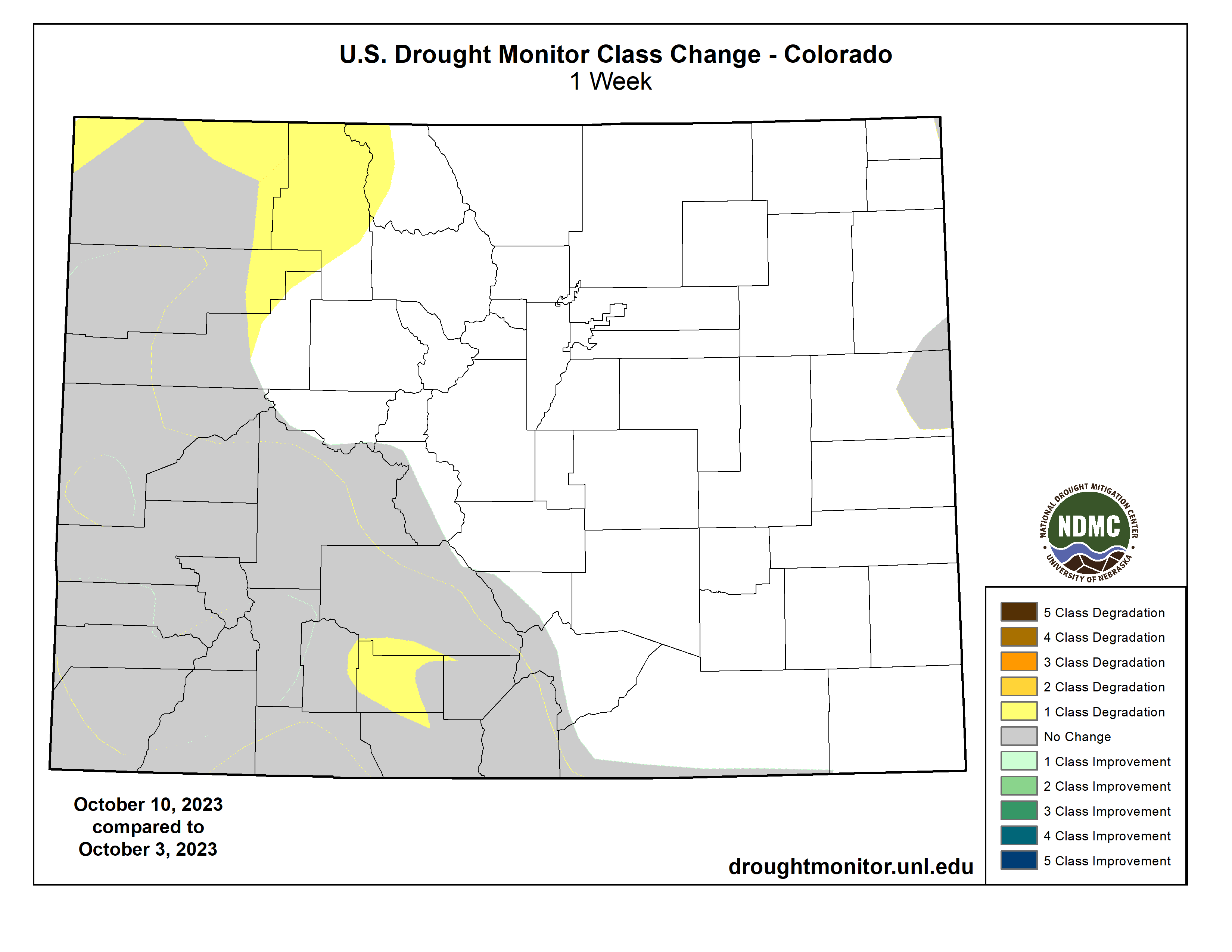
A 1-category improvement was made to northwestern North Dakota and northeastern South Dakota where more than 1 inch of precipitation occurred this past week. Small improvements were also warranted in central Nebraska with the wet start to October. Although parts of eastern Nebraska also received heavier precipitation, NDMC’s long-term blend supports D2+ levels of drought. Based on drier-than-normal conditions during the past 60 days and soil moisture, abnormal dryness (D0) was expanded across the southwestern corner of Nebraska. 60-day SPI, soil moisture, and NDMC’s short-term blend supported an increase in D0 and the addition of D1 across southern Wyoming. The suppressed 2023 Monsoon and the 6-month SPEI supported an expansion of D2 in southwestern Colorado, while increasing short-term dryness led to increasing D0 coverage across northwestern Colorado…
Colorado Drought Monitor one week change map ending October 10, 2023.
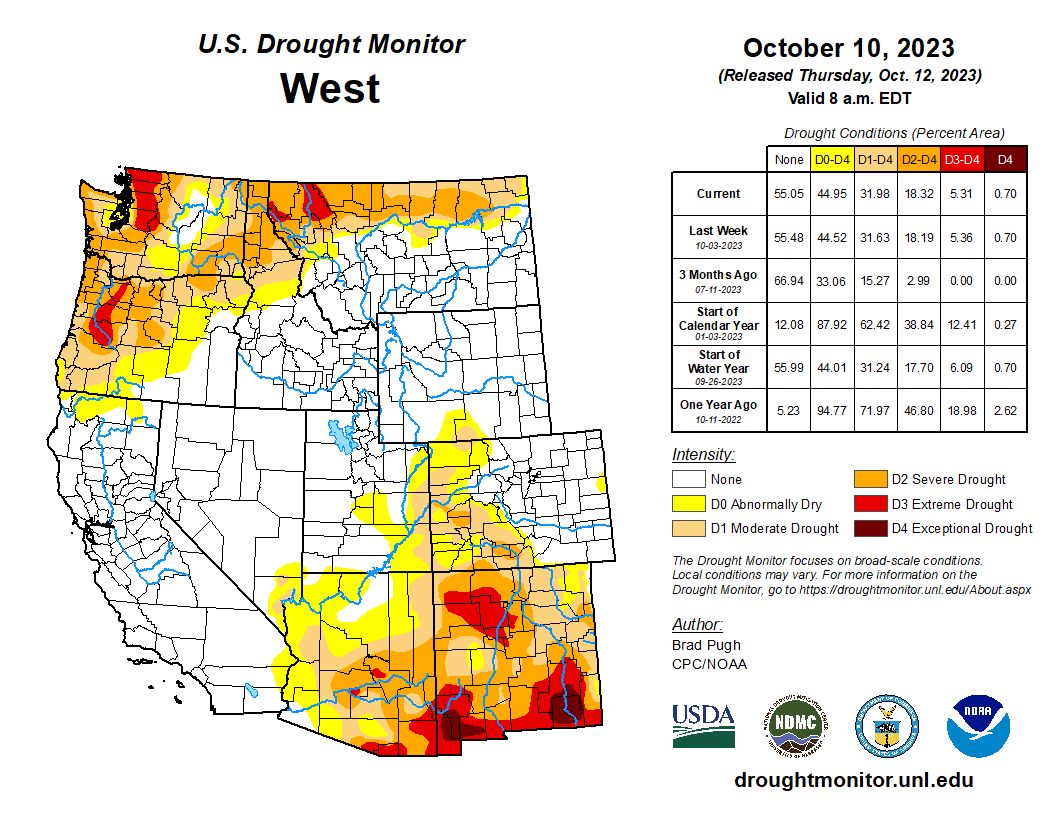
A 1-category improvement was made to northeastern Montana where more than 1 inch of precipitation occurred this past week. Precipitation during the past two weeks along with long-term SPIs supported the removal of extreme drought (D3) in north-central Montana. Based on SPI at multiple time scales, severe drought (D2) was added to eastern Arizona while there was an expansion of moderate drought (D1) in western Arizona. Improving 28-day streamflows along with support from NDMC’s short to long-term blends led to a 1-category improvement for the Puget Sound of Washington along with southeastern parts of the state. Abnormal dryness (D0) was expanded across northeastern Utah due to increasing short-term dryness during the past one to three months and this was also consistent with changes made to adjacent Colorado and Wyoming…
A broad 1-category improvement was made to southern Arkansas, northwestern Louisiana, southeastern Oklahoma, and eastern to central Texas where more than 1.5 inches of precipitation occurred this past week. SPIs at multiple time scales, soil moisture, and 28-day average streamflows were also factors in determining where to depict the improvements. For areas that received more than 3 inches of precipitation and there was support from the NDMC’s drought blends, a 2-category improvement was justified across southwestern Arkansas, northeastern Texas, and the Texas Gulf Coast. Drought coverage and intensity across Texas peaked in early September when 85.68 percent of the state was covered with drought (D1 or higher) and two-thirds of the state was designated with severe (D2) to exceptional (D4) drought. Based on 90-day SPEI, an expansion of D2-D4 was made to parts of Mississippi. Impacts in Mississippi include poor pasture conditions, soybean and peanut losses, and cattle sell offs. The 90-day SPEI also supported an expansion of D4 across northeastern Louisiana. Increasing short-term dryness led to an expansion of abnormal dryness (D0) and moderate drought (D1) across Tennessee…
Looking Ahead
During the next five days (October 12-16, 2023), an intense low pressure system is forecast to track from the Central Rockies and Great Plains eastward to the Midwest and Central Appalachians. A swath of heavy precipitation (1 to 3 inches) is likely to accompany this surface low. On October 12th, a vigorous area of mid-level low pressure is expected to bring heavy snow (6 to 12 inches) to the higher elevations of Wyoming. A low pressure system is forecast to move offshore of the Southeast by October 13th after it brings widespread precipitation to parts of the Southeast. Mostly dry weather is forecast to persist across the Tennessee Valley, while much drier weather prevails across the Southern Great Plains. Periods of light to moderate precipitation are expected for the coastal Pacific Northwest.
The Climate Prediction Center’s 6-10 day outlook (valid October 17-21, 2023) favors near to below-normal precipitation throughout much of the contiguous U.S. with above-normal precipitation most likely across southeastern Alaska. Increased probabilities for above-normal temperatures are forecast across the West and Northern to Central Great Plains, while below-normal temperatures are likely for the Mid-Atlantic and Southeast.
US Drought Monitor one week change map ending October 10, 2023.
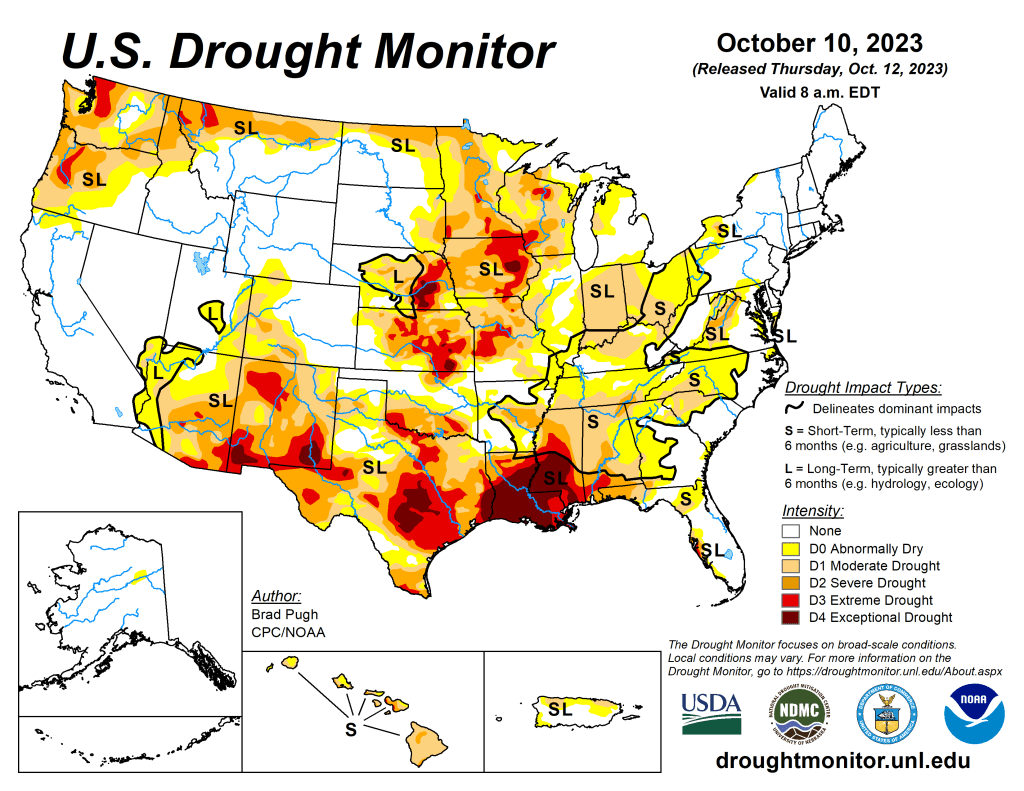
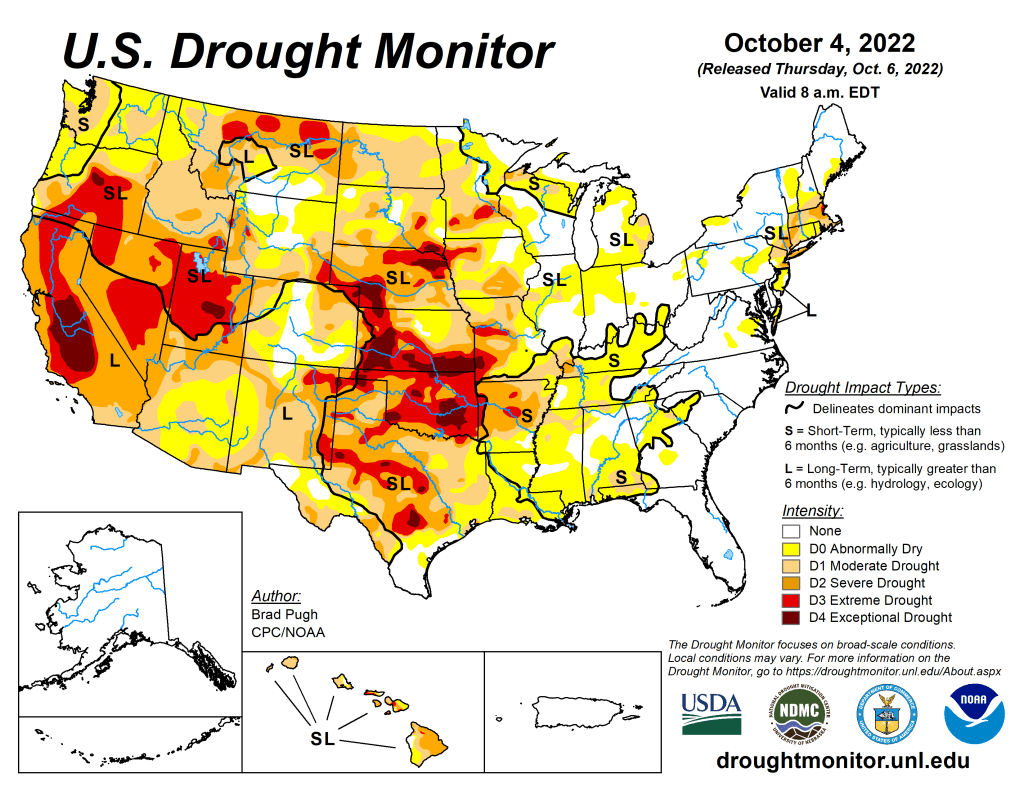
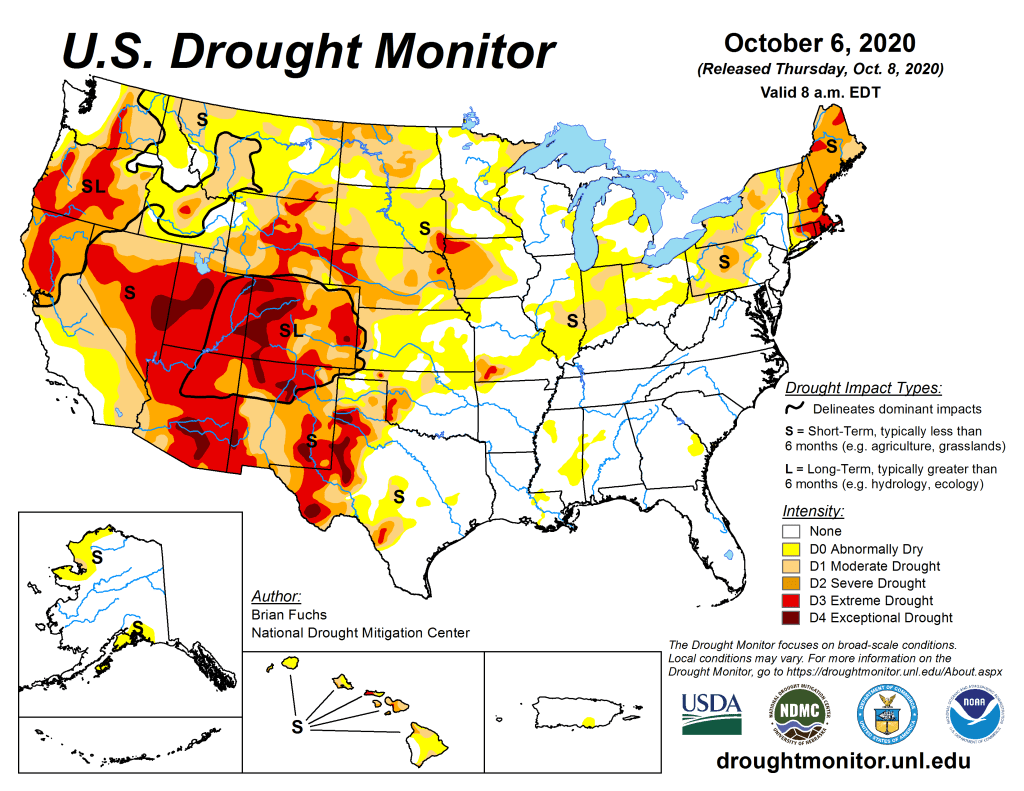
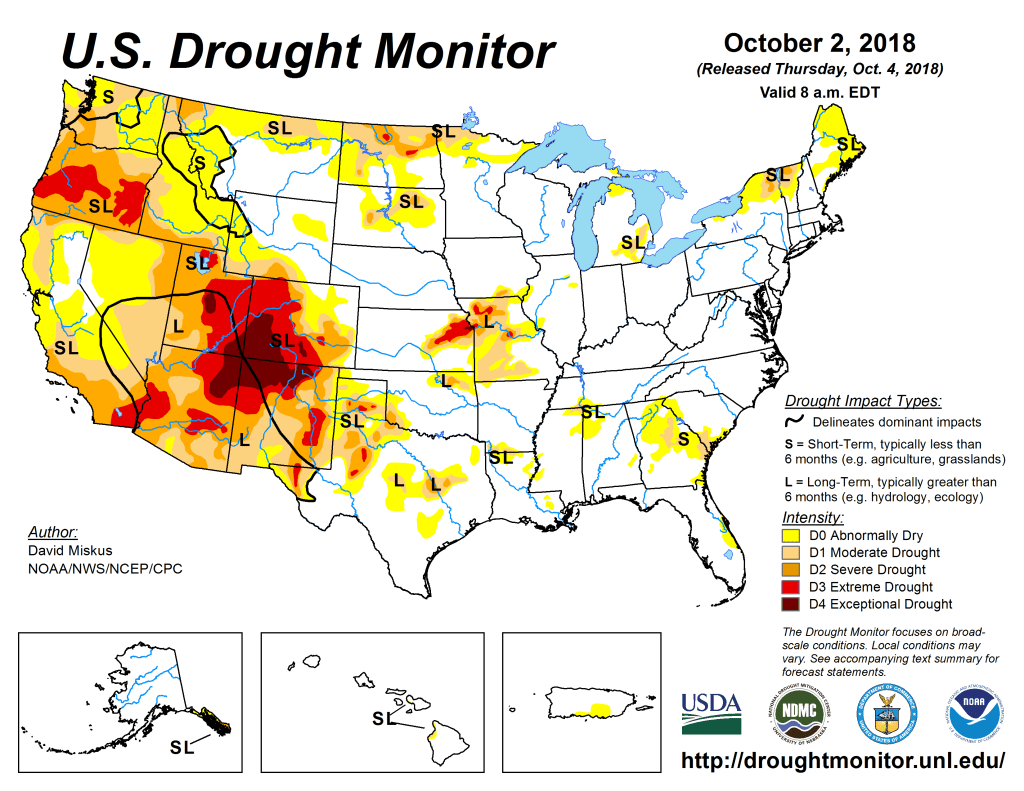
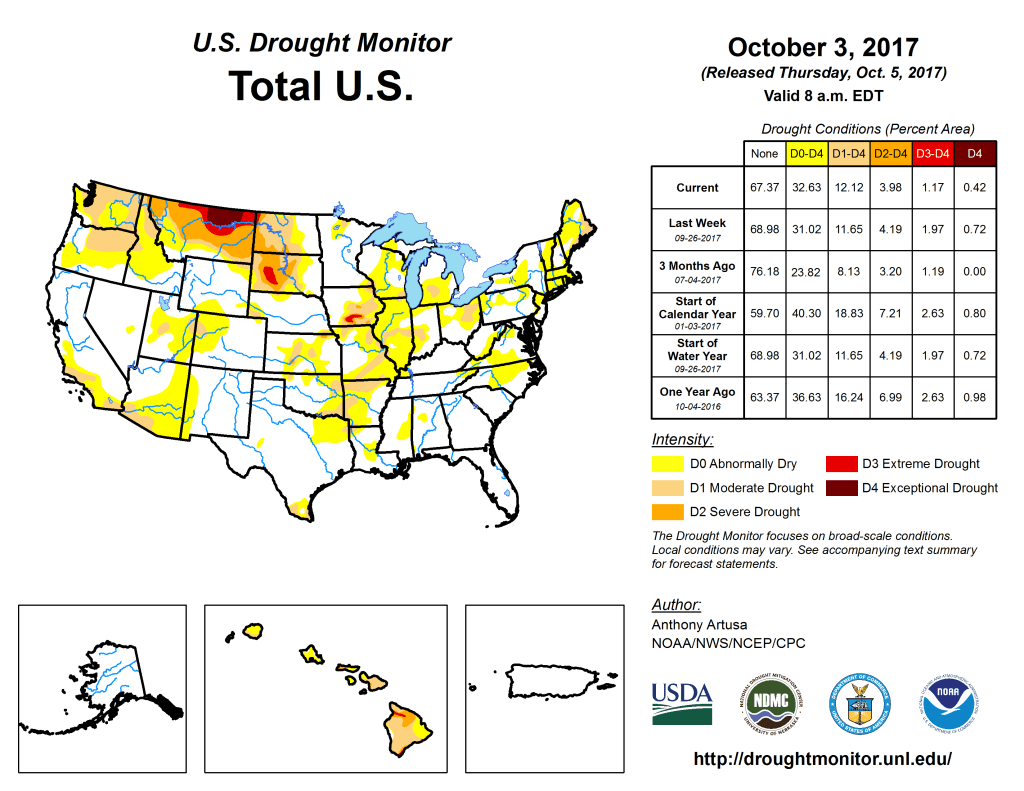
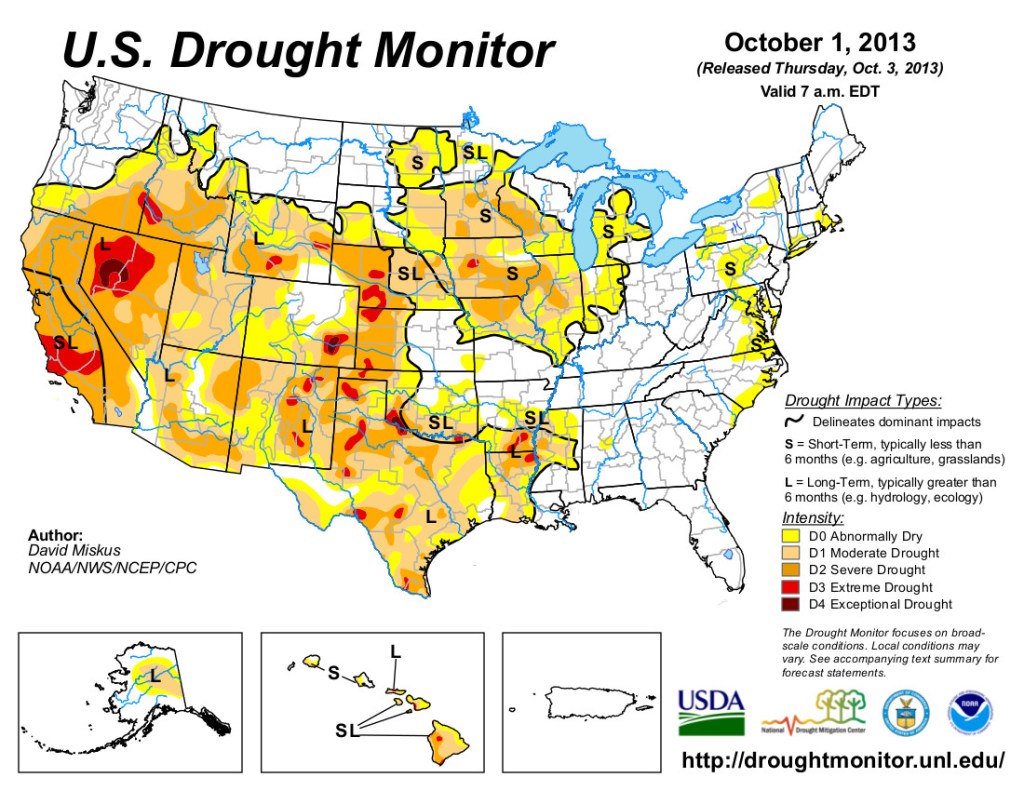
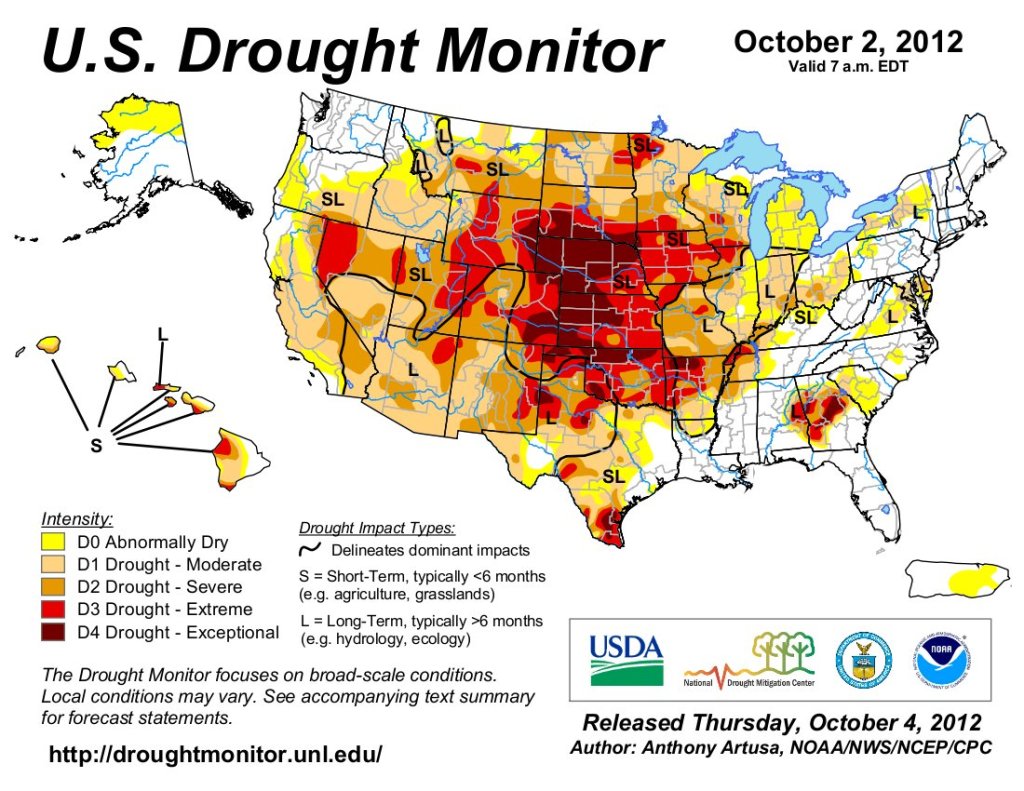
Just for grins here’s a slideshow of US Drought Monitor maps from early October for the past few years.
Colorado River “Beginnings”. Photo: Brent Gardner-Smith/Aspen Journalism
Click the link to read the article on the InkStain website (John Fleck):
Editor’s note: Today (Oct. 11, 2023) is the 75th anniversary of the signing of the Upper Colorado River Basin Compact. The following is an excerpt from Revisiting the Upper Colorado River Basin Compact on its Diamond Anniversary, a forthcoming analysis by Eric Kuhn and John Fleck, co-authors of the book Science Be Dammed: How Ignoring Inconvenient Science Drained the Colorado River.
BY ERIC KUHN AND JOHN FLECK
The Upper Colorado River Basin Compact was signed by representatives from Arizona, Colorado, New Mexico, Utah, and Wyoming on October 11, 1948, after over two years of negotiations. It was an attempt to resolve the allocation of water among the five states, and for three quarters of a century it performed that task well.
But as we approach the middle of the third decade of the 21st century, the challenges of overallocation of Colorado River, over-appropriation of the water we have, and climate change reducing the river’s flows, the Upper Basin Compact and the extended body of rules in which it is embedded are showing their age.
At its simplest, the Upper Basin Compact divided the water use available from the 7.5 million acre-feet per year apportioned to the Upper Basin by the 1922 Colorado River Compact. The compact accomplished two major tasks:
It apportioned the consumptive use of water among the Upper Basin states using percentage allocations. Colorado received 51.75%, New Mexico 11.25%, Utah 23%, and Wyoming 14% of the water available for use in the Upper Basin. Arizona received a fixed 50,000 acre-feet per year.
It defined the obligations of the Upper Division states (Colorado, New Mexico, Utah, and Wyoming) to deliver water to the Lower Basin at Lee Ferry to satisfy the requirements of the Colorado River Compact.
In pursuing a new set of post-2026 Colorado River Operating rules, major water agencies and state leaders have insisted that the “Law of the River” – the suite of rules dating to the 1922 Colorado River Compact and including the Upper Basin Compact – should be a fundamental guiding principle of future river management. “The Post-2026 Operations should reside in a framework consistent with a reasonable interpretation of the Law of the River,” the Central Arizona Project wrote, to cite one example among many.[1] But a careful review of the history of the Upper Basin Compact shows how tenuous a foundation the Law of the River provides, and how uncertain any attempt at “reasonable interpretation” might be, because of fundamental uncertainties about what the Law actually says.
When the Upper Basin compact was signed there was agreement on the definition of the “what” to which the percentage allocations apply. Water use in the Upper Basin was limited by water availability after meeting the Colorado River Compact’s Lee Ferry delivery requirements. Today, because of the impacts of climate change on flows, there is no such agreement and there are claims that the intent of the compact was to provide an equal amount of water for use to each basin. This creates deep uncertainty in the actual volumes of water available to each state.
There is still no consensus on how to measure consumptive use basin-wide. The Upper and Lower Basins use different methods, and Lower Basin tributary use is neither well understood nor quantified. This makes managing the river system challenging.
The Upper Division States claim overuse by the Lower Basin based by using one measurement method, while using a different method for their own uses. There is valid dispute over these theories and methodologies.
Tribal water rights remain unresolved and limited in some cases by provisions aimed at preventing tribes from using their full legal entitlements.
Native America in the Colorado River Basin. Credit: USBR
In negotiating the Upper Basin Compact, the states made key decisions on critical compact issues that continue to echo through 21st century water management.
STREAM DEPLETION
Colorado River management has always suffered under controversy and ambiguity around the question of how to measure consumptive use. The Colorado River Compact did not include a definition of “beneficial consumptive use.” In the century since it was signed, two competing (and conflicting) methods have been used: diversions less return flow, and stream depletion. On some scales, they may look the same. But on large enough scales, they do not, in ways that have profound implications for 21st century river management decisions.
Under the stream depletion theory, each basin’s consumptive use is measured as the net reduction in natural flows caused by man-made activities. For example, the Upper Basin’s consumptive use would be calculated as the amount that upstream uses deplete the natural flow of the river at Lee Ferry.
During the Upper Basin Compact negotiations, Colorado and Arizona were the main proponents of this theory. It was ultimately adopted in Article VI of the Upper Basin compact as the method for measuring consumptive use.
But the stream depletion theory is not universally used in river management today. It is, for example, used to quantify reservoir evaporation in the Upper Basin, but not the Lower Basin. It is not used to measure Lower Basin mainstream uses, where the “diversions minus return flows” method is used instead. Uses on the Lower Basin tributaries, which are included in the compact definition of “Colorado River System” are currently not measured at all – using either theory.
ALLOCATING STATE WATER BY PERCENTAGES RATHER THAN ABSOLUTE AMOUNT
The Upper Basin Compact is frequently praised for state-by-state allocations based on percentages (except Arizona), rather than absolute numbers, thus avoiding the mistake in the Colorado River Compact that over-allocated the river’s water.
But modern policy discussions are unsettled on a central issue – percentage of what? On their own, the percentages are meaningless without reference to some sort of underlying total amount of water available to be shared among the states.
When negotiating the Upper Basin Compact, the states’ representatives were clear on what they intended as the basis for using the percentages. They intended to apply the percentages to the amount of water available for consumptive use in the Upper Basin after meeting what they viewed as their compact “delivery obligations” at Lee Ferry.
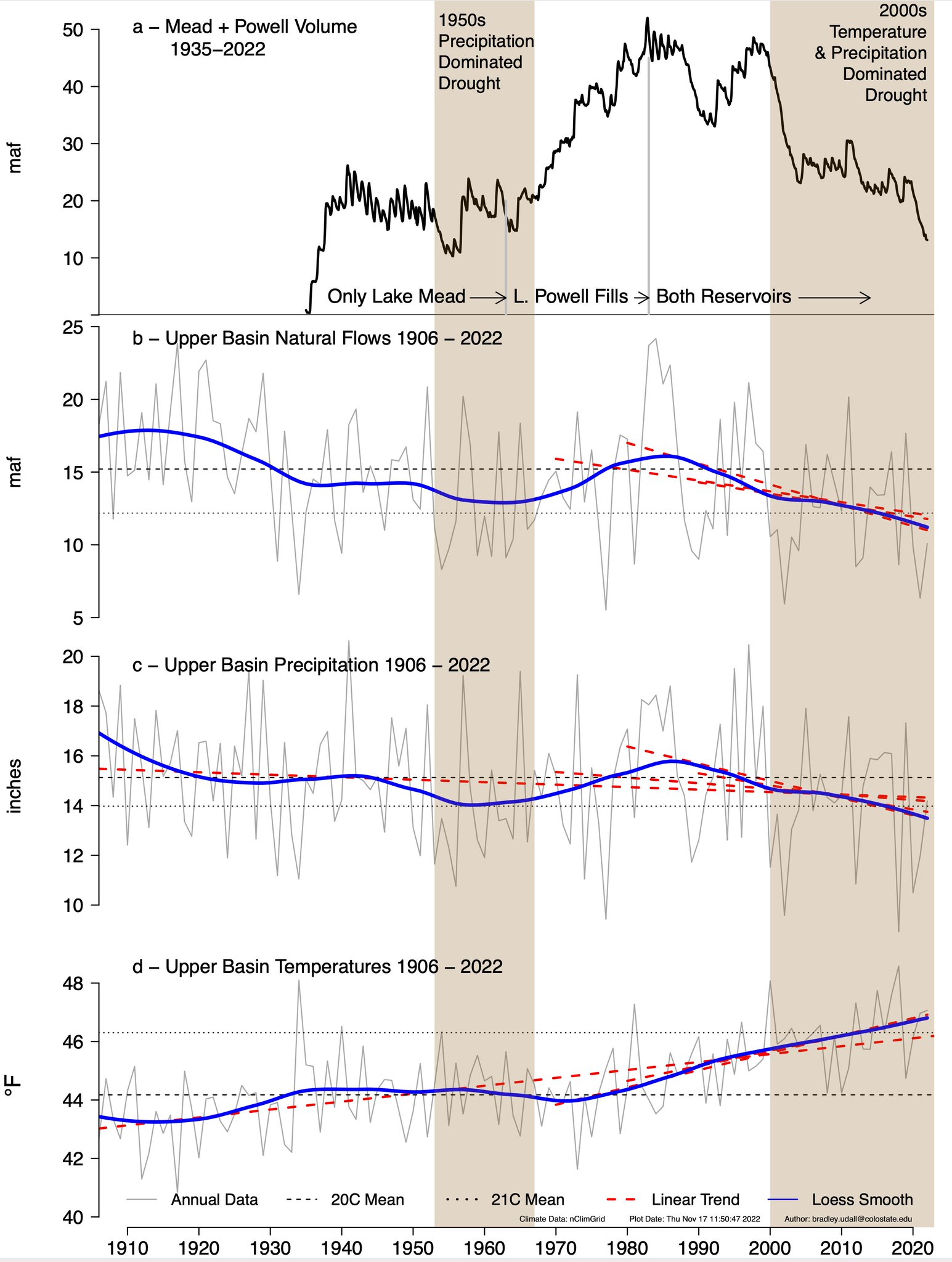
Updated Colorado River 4-Panel plot thru Water Year 2022 showing reservoirs, flows, temperatures and precipitation. All trends are in the wrong direction. Since original 2017 plot, conditions have deteriorated significantly. Brad Udall via Twitter: https://twitter.com/bradudall/status/1593316262041436160
Today, there is no such consensus. Climate change has altered the river’s hydrology, putting the burden of impacts on the Upper Basin. Its leaders have responded by arguing that the compact’s negotiator’s intention was to equally divide the water available to each basin for use. Since climate change is causing a decline in natural flows, whatever Lee Ferry obligations the Upper Division States have must now be adjusted to reflect the new hydrologic reality.
Resolving this issue requires either litigation, negotiated settlement, or collectively agreeing on a modified approach – one that appropriately factors in climate change and maintains the benefits of the 1948 flexible percentage allocations.
TRIBAL WATER
While large Native American water needs and legal entitlements were identified before the Upper Basin Compact was negotiated, Tribal communities were excluded from the negotiations. Instead, Indian water use, which the negotiators knew was legally perfected long before 1922, was lumped into state allocations, with each state being responsible for meeting tribal needs from its share of the water. This gamble set up a potential conflict between the apportionments made by the Upper Basin Compact and the protections provided Indian rights under the Colorado River Compact.
A decade after the compact was signed, this conflict became real. In response, Upper Basin leaders took steps to limit tribal water rights and prevent full use of tribal entitlements, by inserting provisions in project authorizing legislation. The implications today are a legacy of intentional discrimination against tribes, unresolved legal questions around tribal water rights, and provisions that treat Native Americans as second-class citizens.
[1] Brenda Burman letter to Bureau of Reclamation, Aug. 15, 2023. See also comments by the state of Wyoming, the Salt River Project, the state of Colorado and the Upper Colorado River Commission.
Ranchers and farmers across the Colorado River Basin, who control roughly 80% of the drought-strapped river’s flows, are reluctant to sign up for voluntary, government-funded water conservation programs for a variety of reasons identified in a new report.
Chief among them are a fear of losing their water rights, seeing their water use reduced, and engaging with far-off bureaucracies that they believe aren’t qualified to help.
“Agricultural Water Users’ Preferences for Addressing Water Shortages in the Colorado River Basin” is a study conducted by the Western Lands Alliance (WLA) in partnership with the Ruckelshaus Institute at the University of Wyoming in Laramie. Released late last month, it includes survey responses from more than 1,000 ranchers and farmers in six Colorado River Basin states, as well as interviews with producers. The WLA represents landowners and agricultural producers across the West.
The WLA launched the research effort to better understand how agricultural water users in the region view different water conservation efforts and what it would take to convince them to participate. Hallie Mahowald, a co-author of the report and chief programs officer at the WLA, said in a webinar in September that the landowners will be key to finding solutions to the growing shortages on the river because they control so much of its water.
“We feel it is critical to understand landowner perspective and to solicit landowner input if we are going to develop successful strategies to address Western water shortages,” she said.
Updated Colorado River 4-Panel plot thru Water Year 2022 showing reservoirs, flows, temperatures and precipitation. All trends are in the wrong direction. Since original 2017 plot, conditions have deteriorated significantly. Brad Udall via Twitter: https://twitter.com/bradudall/status/1593316262041436160
The report comes as the river basin remains mired in a long-running drought that has come close to crippling lakes Powell and Mead and experiences ongoing shortages as climate change continues to sap its flows.
At the same time, hundreds of millions of dollars in federal funding is being made available to help the Colorado River Basin states better manage the river, reduce water use, and develop programs to sustain the basin’s cities and farms as the region continues to warm.
Drew Bennett, MacMillan Professor of Practice in Private Lands Stewardship at the University of Wyoming in Laramie, said the survey results show a disconnect between ranchers and farmers and the agencies who are charged with overseeing Colorado River Basin water management. In fact, more than 85% of those surveyed said they did not trust the water agencies that help manage the giant river system.
“We need to build additional trust…it will be absolutely critical moving forward,” Bennett said.
And while more than 50% of those surveyed are engaging in at least limited conservation practices, they are not interested in doing more if their water rights aren’t strongly protected, if they are not adequately compensated, and if the programs aren’t administered locally.
This lack of trust, the report says, “may create a barrier to gaining buy-in for new water management strategies, even if they are supported by significant funding from state and federal government agencies.”
The river basin spans seven states. The Upper Basin includes Colorado, New Mexico, Utah and Wyoming, and the Lower Basin includes Arizona, California and Nevada.
Researchers broke out survey responses based on which basin a grower operates in. Key findings of the report include:
97% of Upper Basin growers (Colorado, New Mexico, Wyoming and Utah) and 96% of Lower Basin growers (Arizona, California and Nevada) are worried about coming shortage-related changes in water policy and new constraints on their water use.
Just 14% of Upper Basin growers and 13% of Lower Basin growers believe that existing water policies and management practices are adequate to address coming shortages.
69% of Upper Basin and 74% of Lower Basin growers have implemented at least one water conservation practice, largely in response to local water shortages.
56% of growers in both basins would engage in programs to improve their water delivery systems if funding is provided.
Just 8% of Upper Basin and 18% of Lower Basin growers would participate in programs that would fallow, or cease production, on the same field for multiple years.
And just 13% of Upper Basin and 14% of Lower Basin growers said there was a high level of trust between water users and water management agencies.
In Colorado, the Colorado Ag Water Alliance has been working to help producers use water more efficiently to prepare for future droughts and manage with less water. But CAWA’s Executive Director Greg Peterson said it’s a difficult task.
“Our goal is to help these people survive. People [who don’t farm] don’t actually understand that there are few opportunities to reduce water use in an agricultural setting,” Peterson said. “You might be able to reduce water use by 5% or maybe 10% without reducing yields. But it’s not easy to do.”
Wyoming and other basin states have begun installing sophisticated new technologies that help determine how much water crops consume, known as consumptive use, and how much water runs off and returns to the river or natural environment after a field has been irrigated. This is a critical measurement because it is only the consumptive use portion of irrigation water that can be administratively “saved” as water left in the river system.
Jeff Cowley is administrator for interstate streams in the Wyoming State Engineer’s Office, the top water regulator in the state. Cowley is implementing new conservation technologies and working with growers who are already participating in one of the new federal programs known as the System Conservation Pilot Program.
Homing in on how much water is saved and left in the river is a complicated question whose answer differs from field to field and crop to crop. When water was plentiful, before the drought and climate change, there was enough water that this kind of precision wasn’t required. But that is no longer the case.
Cowley said this new level of precision is another critical factor in working with skeptical farmers and ranchers because it provides some certainty on what impact programs could have on their water supplies.
“Folks are attached to their water,” Cowley said. “They are willing to try new things, but not on their own dime.”
And any given year, he said, “there is not a lot of room for mistakes.”
Fresh Water News is an independent, nonpartisan news initiative of Water Education Colorado. WEco is funded by multiple donors. Our editorial policy and donor list can be viewed at wateredco.org.
More by Jerd Smith Jerd Smith is editor of Fresh Water News. She can be reached at 720-398-6474, via email at jerd@wateredco.org or @jerd_smith.
Click here to download the report. (Bennett, D., Lewis, M., Mahowald, H., Collins, M., Brammer, T., Byerly Flint, H., Thorsness, L., Eaton, W., Hansen, K., Burbach, M., and Koebele, E. 2023.). Here’s the executive summary:
Executive Summary The Colorado River Basin is in crisis. There is no longer enough water for all of those who depend on it. The agricultural sector is the largest water user in the Colorado River Basin, meaning that farmers and ranchers are central to both the impacts of and solutions to water shortages. Their involvement will be key to developing effective policy solutions to today’s water crisis.
We surveyed 1,020 agricultural water users throughout six states in the Colorado River Basin to understand their perspectives on the present crisis, their current water conservation practices, and their preferences for strategies to address water shortages going forward. Agricultural water users were primarily concerned about how the current situation could impact water policy, constrain irrigators’ own water use, and constrain other agricultural water users. We also conducted qualitative research to capture preferences for local approaches to managing water and provide additional context on dynamics in the Colorado River Basin, including interviews with 12 agricultural producers and water experts and a focus group with 10 agricultural water users in Colorado.
Perhaps unsurprisingly, we found agricultural water users are already responding to water shortages. Roughly 70% of surveyed agricultural water users have already adopted one or more water conservation practices or adaptation strategies. Importantly, many would consider adopting additional practices. Despite this, few respondents participated in or were aware of formal programs to support water conservation. One exception, however, was the Natural Resources Conservation Service’s Environmental Quality Incentives Program (EQIP). A third of respondents currently or previously participated in EQIP and an additional 37% were aware of the program. Information gathered from interviews and the focus group identified multiple burdens to participation in EQIP and similar programs, and several participants thought the benefits were not worth the effort. These insights suggest an opportunity for revisiting how formal programs meant to incentivize water conservation connect with water users.
Most survey respondents were unlikely to adopt water conservation practices as part of formal demand management or system conservation programs to address water shortages. Only one of eight practices included in the survey – enhancing water delivery systems – had a majority of respondents state that they were likely to adopt the practice. The remaining seven practices had a considerably lower likelihood of adoption. Respondents were also generally opposed to water transfers as a solution to shortages. Opposition was strongest to permanent transfers broadly, as well as to temporary transfers from agricultural to non-agricultural uses. Only temporary transfers from agricultural water users to other agricultural water users had less than 50% opposition. Major barriers to supporting water transfers included concerns about losing water rights, even in temporary transfer arrangements, as well as insufficient financial compensation. Addressing these concerns will be critical to increase participation of agricultural water users in demand management or system conservation. Still, although support for temporary water transfers and demand management practices was low, even equivalently low participation (e.g., 10% to 20%) could help address water shortages as part of a portfolio of strategies for the Colorado River Basin.
We also documented an overwhelming preference for local approaches to managing water shortages and a trust gap with non-local agencies. This was evidenced by respondents’ preference for the local management of formal programs, such as some of the demand management and system conservation programs under consideration, as well as for the administration of funding for water conservation and other programs. Qualitative research participants communicated that strategies to address water shortages must account for the diversity of local contexts across the Colorado River Basin. These strategies could therefore be best implemented at the local level through existing delivery infrastructure and by managers with track records of success. State and federal water managers and agencies involved in program delivery should emphasize building trust with agricultural water users and gaining knowledge about unique features of local contexts. Simply providing additional funding for formal water conservation programs may be inadequate to meet the diversity of challenges across an area of 246,000 square miles. Developing opportunities for dialogue and listening can help foster relationships and improve trust among key stakeholders.
Given the importance of agriculture as the primary water user in the Colorado River Basin, proactively engaging agricultural communities will be critical to successfully managing water shortages. Understanding the perspectives and preferences of agricultural water users, as documented in this report, can help guide the development of solutions that work for producers and other users in the Basin.
Map of the Colorado River drainage basin, created using USGS data. By Shannon1 Creative Commons Attribution-Share Alike 4.0
DENVER — Wednesday, Oct. 11, 2023 — The Denver Board of Water Commissioners on Wednesday, Oct. 11, adopted rate changes to help pay for important upgrades, projects and ongoing maintenance and repair work to keep its system operating efficiently while keeping rates as low as good service will allow.
The new rates take effect Jan. 1, 2024, and for typical single-family residential customers who receive a bill from Denver Water, if they use the same amount of water in 2024 as they did in 2023, the new rates will increase their monthly bill by an average of $1.60 to $2.30 over the course of the year, depending on where they live.
“Denver Water is at a pivot point. These are historic times and we’ll be affected, just as the communities we serve will be affected, by climate change, population growth, variability in the economy, inflation and supply chains,” said Alan Salazar, Denver Water’s CEO/Manager who joined the organization in August.
“Water is a crucial resource that supports all of us. You can’t have civilization without it. Continuing to maintain and invest in the system that supports our water supply will ensure we — Denver Water as well as our customers — are ready for what lies ahead, while keeping rates as low as good service will allow.”
Denver Water expects to invest $1.9 billion over the next 10 years in projects that will maintain, repair, protect and upgrade the system and make it more resilient and flexible in the future. The utility is committed to ensuring the system can reliably deliver safe, clean and affordable water to its customers while mitigating the effects of the economy, from inflation to supply chain issues, on its costs.
More details on the rate increase can be found at these links:
Water rates to rise slightly in 2024 — Provides details on Denver Water’s rate structure and how the increase impacts customer bills, including an infographic visually highlighting the impacts to customers inside and outside of Denver.
Major investment on tap — Highlights what water rates help pay for with an overview of some of the projects that make up the utility’s 10-year forecast for an estimated $1.9 billion investment into the system that supports about 25% of the state’s population, including Colorado’s capital city. The story includes a video highlighting some of the current projects including the expansion of Gross Reservoir, the Lead Reduction Program that is replacing customer-owned lead service lines at no direct cost to the customer, the new Northwater Treatment Plant under construction north of Golden and the new water quality laboratory now operational at the National Western Center near downtown. The investment forecast also includes improving and replacing aging water mains under the streets and improving the overall flexibility and resiliency of the system and our communities.
Since January 2020, Denver Water has replaced more than 20,000 customer-owned lead service lines at no direct cost to the customers.
The utility in 2022 signed a Memorandum of Understanding with several water utilities across the West to reduce the use of water-intensive Kentucky bluegrass in places where it’s purely decorative, such as traffic medians.