Click the link to read the article on The Land Desk website (Jonathan P. Thompson):
The 2023 water year ended Sept. 30, and wow was it a weird one. It was snowy, then wet, then warm, then dry. It was La Niña acting like El Niño, then El Niño acting a bit like La Niña (there’s a gender-bending quip in there somewhere, but I’ll refrain). When the whopper of a winter ended, it really looked like we’d have a near-record water year.
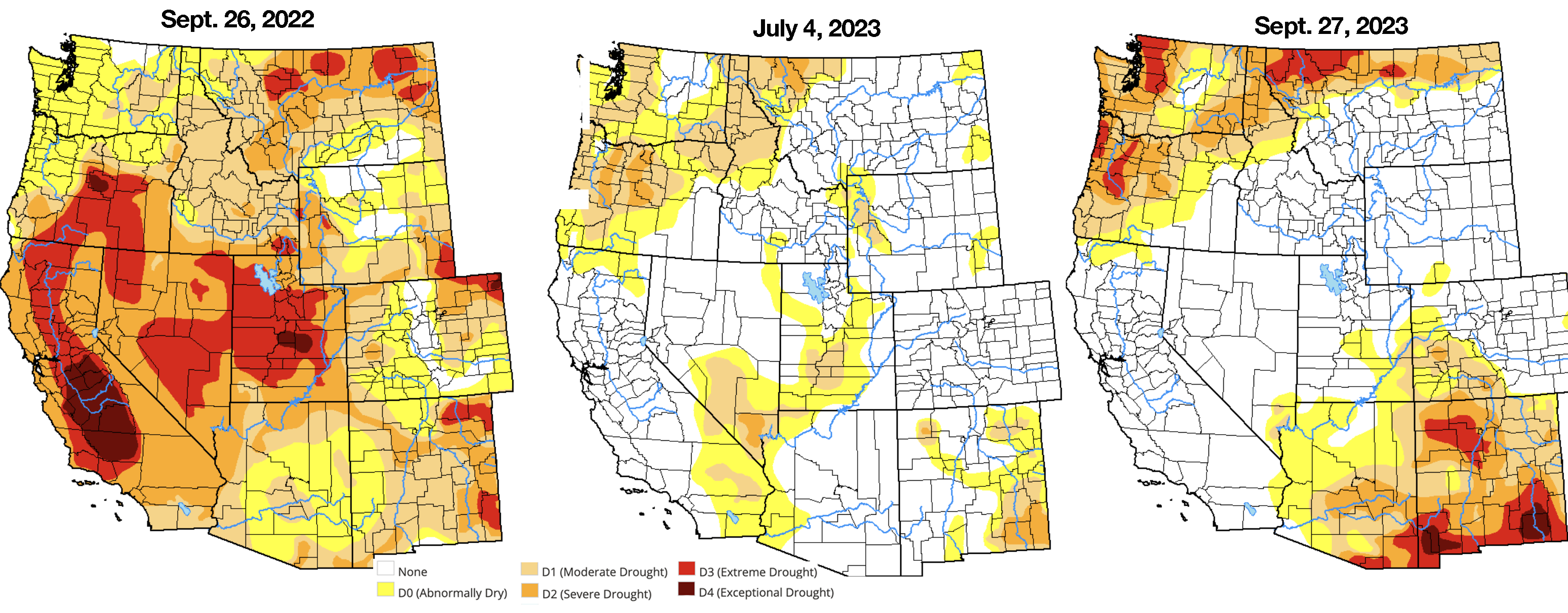
But in the Southwest, after a relatively cool June, someone cranked up the regional thermostat and turned off those waterspouts — bringing the drought back into regions that had been saturated at the end of the winter. In most places hopes for a strong — if late — monsoon were dashed. Phoenix experienced its driest monsoon on record (.15” precipitation compared to the 2.43” average), during a record-breaking summer for heat (56 110+ F days so far, breaking the 2020 record of 53 days). Tucson fared better, with a slightly below-average-precipitation monsoon, but it was also its hottest monsoon on record, with an average high of 103.7 degrees Fahrenheit. Arizona was almost drought-free in early July; now nearly the whole state is plagued by abnormal dryness.
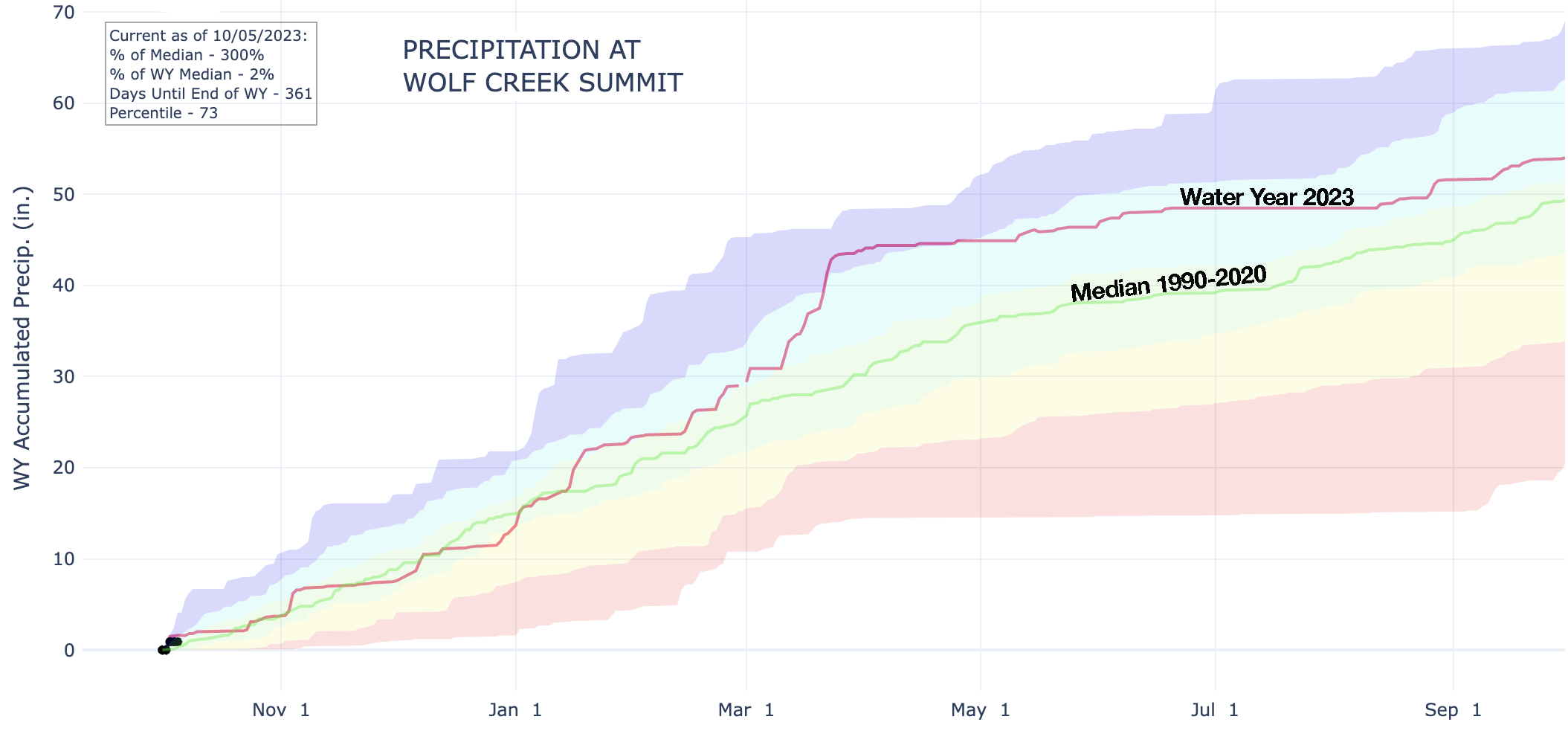
Further north, things are looking better. The precipitation graphs for the water year in southwestern Colorado show the bountiful winter followed by the dry summer. But most high-country weather stations still ended the year with above normal precipitation amounts.
Public Lands Monitor
Something interesting has been happening over the last several months at the field office level of the Bureau of Land Management. The agency — often referred to as the Bureau of Mining and Livestock — has released long-term plans that actually prioritize conservation and land stewardship over extraction. It’s an indication that even as the Biden administration approves a few big oil and gas projects, like ConocoPhillips’ Willow in Alaska, it is also taking enduring action to reduce extractive industries’ impacts on public lands. For example:
- The Grand Junction and Colorado River Valley field offices’ resource management plan’s preferred alternative would block future oil and gas leasing on nearly 1.6 million acres in Western Colorado. The land in question isn’t in the oil and gas hotspots such as the Piceance Basin; it’s designated as merely low to medium oil and gas potential, meaning maybe it wouldn’t have been drilled anyway. Still, it’s big enough to rile the industry and, of course, Rep. Lauren Boebert, who took time off from vaping and groping her fellow theatre-goer in public to condemn the “land grab” because, well, she’s outraged about all that groping and grabbing, apparently. And, you know, because she’s Boebert. You’ve got a few more weeks to comment and maybe offset some of that lunacy.
- Up in Wyoming, the Rock Springs field office issued its own plan for about 3.6 million acres in the southern part of the state, including the Red Desert. There’s a lot here, but just to distill it down to a couple of eye-poppers, the preferred alternative includes:
- 1.6 million acres of ACECs, or areas of critical environmental concern, which are given an extra layer of protections and restrictions on development;
- 2.19 million acres closed to oil and gas development);
- 1.99 million acres withdrawn from hardrock mining claims;
- 2.48 million acres closed to wind and solar.
- 225,537 acres closed to all off-highway vehicles, with OHVs limited to designated roads and trails on 3.37 million acres, leaving about 13,000 acres open to OHVs.
- 3.58 million acres open to livestock grazing, following in the Biden administration’s pattern of favoring livestock operations over other extractive uses.
- Environmental groups generally lauded the plan, with the Wyoming Outdoor Council calling it “extremely favorable to conservation,” especially of the treasured Red Desert. And then there was the response from the Dipsh%* Society …. errr certain extremist Wyoming lawmakers. State Rep. John Bear, for example, said the plan would “take away the livelihood of hundreds of ranchers.” Bear apparently didn’t make it past the cover photo of the document to see that 99.9% of the area in question would remain open to grazing. Meanwhile, Rep. Bill Allemand, not wanting to lose his seat as Mayor of Crazytown, called the RMP (along with Biden’s other environmental policies) “probably the biggest disaster in the history of the United States,” and said it would affect more people than “the Civil War, Pearl Harbor, and 9/11 combined.” Seriously? Where do they find these people? Weigh in by sending your thoughts to the BLM.
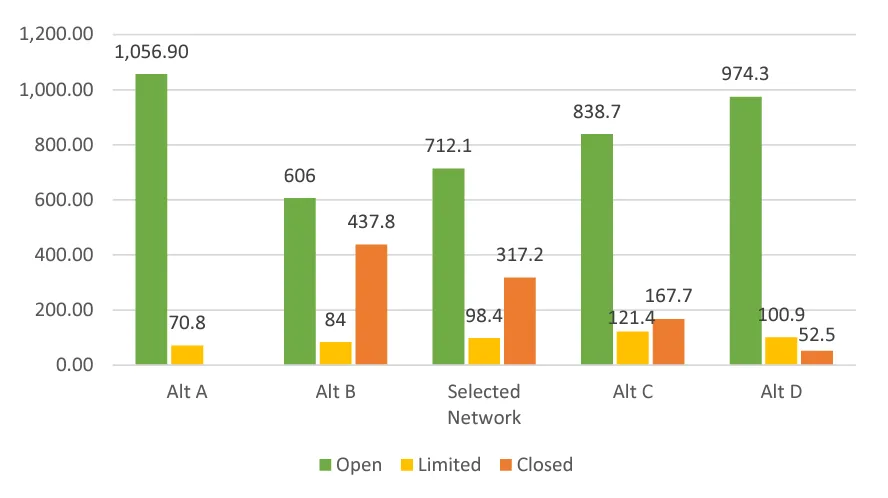
- And, finally, on a related (but slightly different) note, the BLM’s Moab field office released its final 🏍️ motorized travel management plan 🛻 for the 300,000-acre Labyrinth Canyon and Gemini Bridges area. Previously there were more than 1,000 miles of routes open to off-highway vehicles in the planning area, which lies between Green River (the town) and Dead Horse Point (on the north and south ends) and the Green River and Hwy. 191. Under the new plan there are about 800 miles open to OHVs, about 100 miles of which are limited.
Utah environmentalists generally are pleased. “Visitors will finally be able to experience stunning Labyrinth Canyon without the noise, dust, and damage that accompanies motorized recreation,” said Laura Peterson, staff attorney with the Southern Utah Wilderness Alliance. “For too long, the BLM has prioritized off-road vehicle use at the expense of Utah’s incredible natural and cultural resources. The Labyrinth Canyon plan represents an important step forward to guide the management of Utah’s public lands and reduce the impacts of off-road vehicle routes in this area.”
Oil and Gas Tracker
Some 163 barrels of crude and 6,430 barrels of oil and gas wastewater spilled from a tank battery into Alvey Wash outside Escalante, Utah, in September. The material then flowed 17 miles down the drainage, crossing a portion of Grand Staircase-Escalante National Monument in the process. Citation Oil and Gas, the operator of the facility, apparently has a slimy history in the region, racking up at least 20 spills in the last 25 years. Erica Walz got the scoop on the story for The Insider, and the Deseret News’ Kyle Dunphey followed up with Citation’s sordid track record.
***
Wyoming Gov. Mark Gordon just turned down $5 million in federal funds aimed at helping oil and gas operators plug and reclaim low-producing “stripper” wells. This program, which is purely voluntary, would reduce emissions of methane and volatile organic compounds and other nasty stuff now, and prevent these wells from being abandoned and orphaned in the future, as stripper wells often are. And it wouldn’t affect production all that much because, well, these are low producing wells. But nope, Gordon — who used to be far more reasonable than he is now — doesn’t want it because it might harm the industry and might marginally reduce oil and gas tax revenues. Such is the state of petro-politics today (i.e. positively nutty).