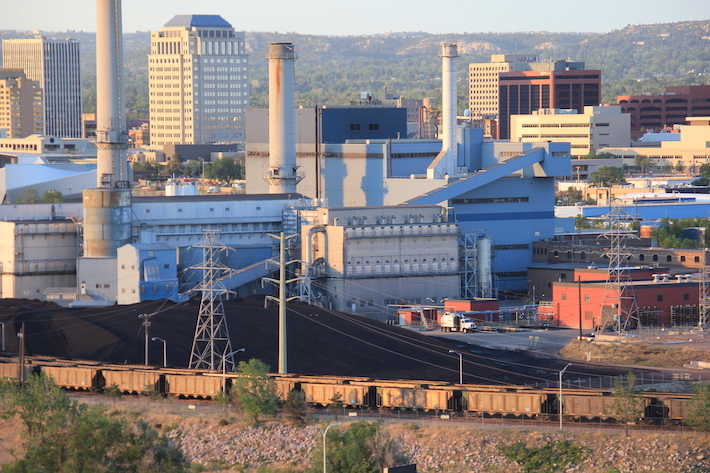
Air pollution particles from coal-fired power plants are more harmful to human health than many experts realized, and it’s more than twice as likely to contribute to premature deaths as air pollution particles from other sources, new research demonstrates.
In the study, published in the journal Science, colleagues and I mapped how U.S. coal power plant emissions traveled through the atmosphere, then linked each power plant’s emissions with death records of Americans over 65 years old on Medicare.
Our results suggest that air pollutants released from coal power plants were associated with nearly half a million premature deaths of elderly Americans from 1999 to 2020.
It’s a staggering number, but the study also has good news: Annual deaths associated with U.S. coal power plants have fallen sharply since the mid-2000s as federal regulations compelled operators to install emissions scrubbers and many utilities shut down coal plants entirely.
In 1999, 55,000 deaths were attributable to coal air pollution in the U.S., according to our findings. By 2020, that number had fallen to 1,600.
In the U.S., coal is being displaced by natural gas and renewable energy for generating electricity. Globally, however, coal use is projected to increase in coming years. That makes our results all the more urgent for global decision-makers to understand as they develop future policies.
Coal air pollution: What makes it so bad?
A landmark study in the 1990s, known as the Harvard Six Cities Study, linked tiny airborne particles called PM2.5 to increased risk of early death. Other studies have since linked PM2.5 to lung and heart disease, cancer, dementia and other diseases.
Following that research, the Environmental Protection Agency began regulating PM2.5 concentrations in 1997 and has lowered the acceptable limit over time.
PM2.5 — particles small enough to be inhaled deep into our lungs — comes from several different sources, including gasoline combustion in vehicles and smoke from wood fires and power plants. It is made up of many different chemicals.
Coal is also a mix of many chemicals — carbon, hydrogen, sulfur, even metals. When coal is burned, all of these chemicals are emitted to the atmosphere either as gases or particles. Once there, they are transported by the wind and interact with other chemicals already in the atmosphere.
As a result, anyone downwind of a coal plant may be breathing a complex cocktail of chemicals, each with its own potential effects on human health.
Tracking coal PM2.5
To understand the risks coal emissions pose to human health, we tracked how sulfur dioxide emissions from each of the 480 largest U.S. coal power plants operating at any point since 1999 traveled with the wind and turned into tiny particles — coal PM2.5. We used sulfur dioxide because of its known health effects and drastic decreases in emissions over the study period.
We then used a statistical model to link coal PM2.5 exposure to Medicare records of nearly 70 million people from 1999 to 2020. This model allowed us to calculate the number of deaths associated with coal PM2.5.
In our statistical model, we controlled for other pollution sources and accounted for many other known risk factors, like smoking status, local meteorology and income level. We tested multiple statistical approaches that all yielded consistent results. We compared the results of our statistical model with previous results testing the health impacts of PM2.5 from other sources and found that PM2.5 from coal is twice as harmful as PM2.5 from all other sources.
The number of deaths associated with individual power plants depended on multiple factors — how much the plant emits, which way the wind blows and how many people breathe in the pollution. Unfortunately, U.S. utilities located many of their plants upwind of major population centers on the East Coast. This siting amplified these plants’ impacts.
In an interactive online tool, users can look up our estimates of annual deaths associated with each U.S. power plant and also see how those numbers have fallen over time at most U.S. coal plants.
Coal’s role in US electric power generation fell quickly Coal declined significantly as a U.S. source of electricity generation as natural gas and renewable energy increased over the past 15 years.
A U.S. success story and the global future of coal
Engineers have been designing effective scrubbers and other pollution-control devices that can reduce pollution from coal-fired power plants for several years. And the EPA has rules specifically to encourage utilities that used coal to install them, and most facilities that did not install scrubbers have shut down.
The results have been dramatic: Sulfur dioxide emissions decreased about 90% in facilities that reported installing scrubbers. Nationwide, sulfur dioxide emissions decreased 95% since 1999. According to our tally, deaths attributable to each facility that installed a scrubber or shut down decreased drastically.
As advances in fracking techniques reduced the cost of natural gas, and regulations made running coal plants more expensive, utilities began replacing coal with natural gas plants and renewable energy. The shift to natural gas — a cleaner-burning fossil fuel than coal but still a greenhouse gas contributing to climate change — led to even further air pollution reductions.
Today, coal contributes about 27% of electricity in the U.S., down from 56% in 1999.
Globally, however, the outlook for coal is mixed. While the U.S. and other nations are headed toward a future with substantially less coal, the International Energy Agency expects global coal use to increase through at least 2025.
Our study and others like it make clear that increases in coal use will harm human health and the climate. Making full use of emissions controls and a turn toward renewables are surefire ways to reduce coal’s negative impacts.
This article is republished from The Conversation under a Creative Commons license. Read the original article.
Lucas Henneman is an assistant professor of engineering at George Mason University. Through its opinion section, Kansas Reflector works to amplify the voices of people who are affected by public policies or excluded from public debate. Find information, including how to submit your own commentary, here.