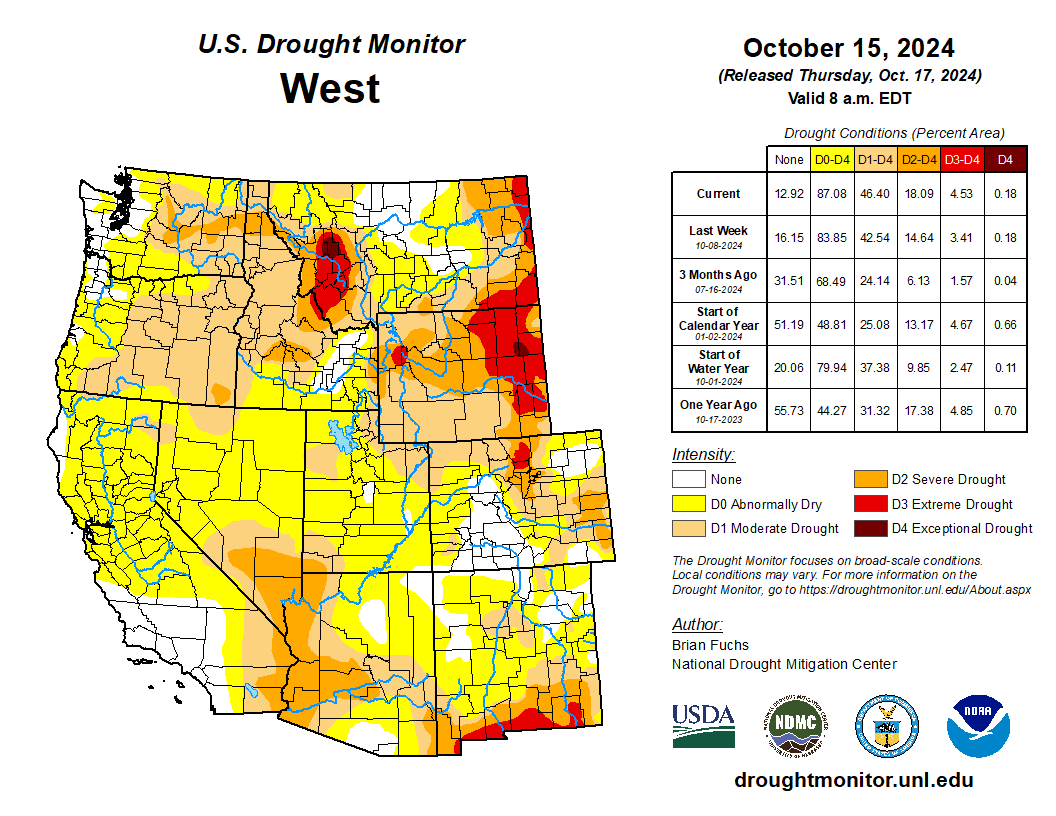
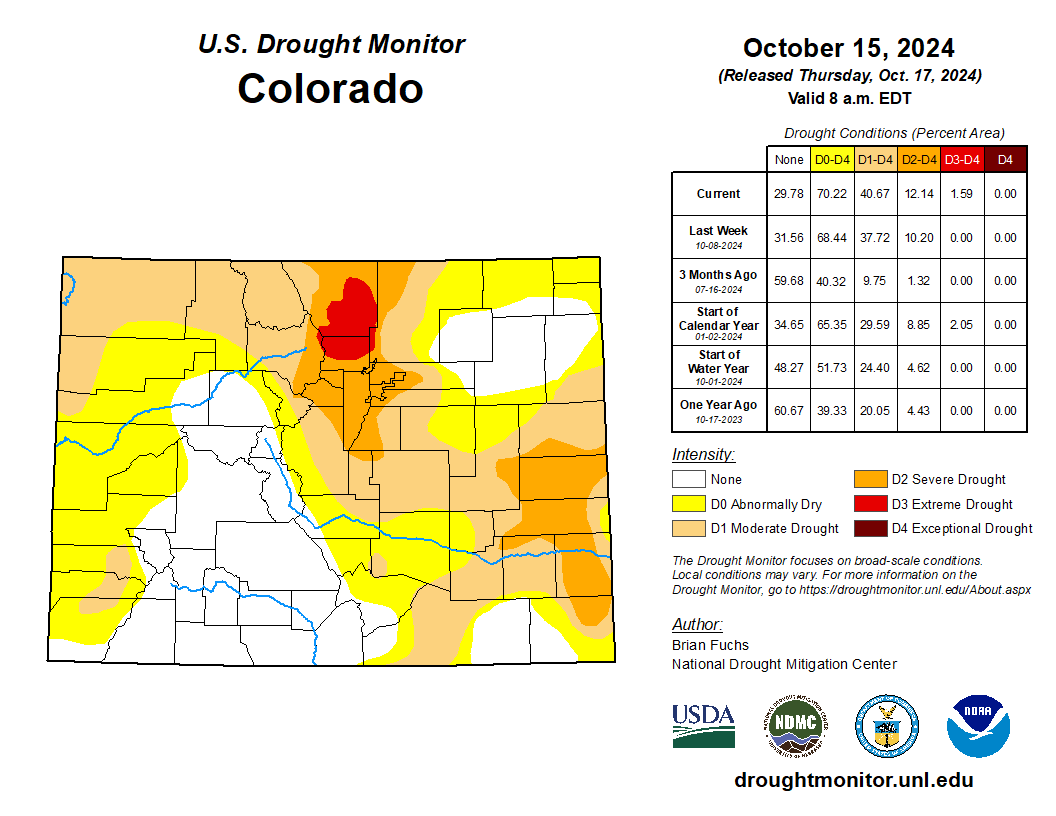
#Drought news October 17, 2024: Moderate and severe drought expanded over eastern #Colorado and abnormally dry conditions expanded over portions of northeast #Colorado and into #Wyoming and #Nebraska, most all of the West was dry this week

Click on a thumbnail graphic to view a gallery of drought data from the US Drought Monitor website.

Click the link to go to the US Drought Monitor website. Here’s an excerpt:

This Week’s Drought Summary

Precipitation across the country was pretty much nonexistent over the past week. The outliers were in Florida as Hurricane Milton came ashore and brought with it copious amounts of rain over much of the peninsula, as well as some rains in the upper Midwest into New England, and some coastal areas of the Pacific Northwest. From the Mississippi River west, most areas were warmer than normal, with departures of 9-12 degrees or more above normal over much of the southern Plains, Rocky Mountains, and into the desert Southwest. Cooler-than-normal temperatures were recorded along the Eastern Seaboard with departures of 3-6 degrees below normal quite common…

High Plains

The dry pattern continued over the High Plains with only a small area of North Dakota recording any precipitation this week. The warm temperatures continued as well with most areas 4-8 degrees above normal and even greater departures of 8-12 degrees above normal in the plains of Wyoming and Colorado and portions of western Nebraska and South Dakota. Degradation took place from North Dakota to Kansas and into the plains of Montana, Wyoming, and Colorado. Moderate and severe drought were expanded in North Dakota, mainly in the south and west portions of the state. South Dakota had moderate and severe drought expand in the northern, southern, and western portions of the state and had extreme drought expand in the northwest and a new area in southern portions of the state. Nebraska and Kansas both had severe and moderate drought expand over many areas of the state. Kansas had extreme drought expand in the far southeast. Moderate and severe drought expanded over eastern Colorado and abnormally dry conditions expanded over portions of northeast Colorado and into Wyoming and Nebraska. Eastern Wyoming had moderate, severe, and extreme drought conditions expand…
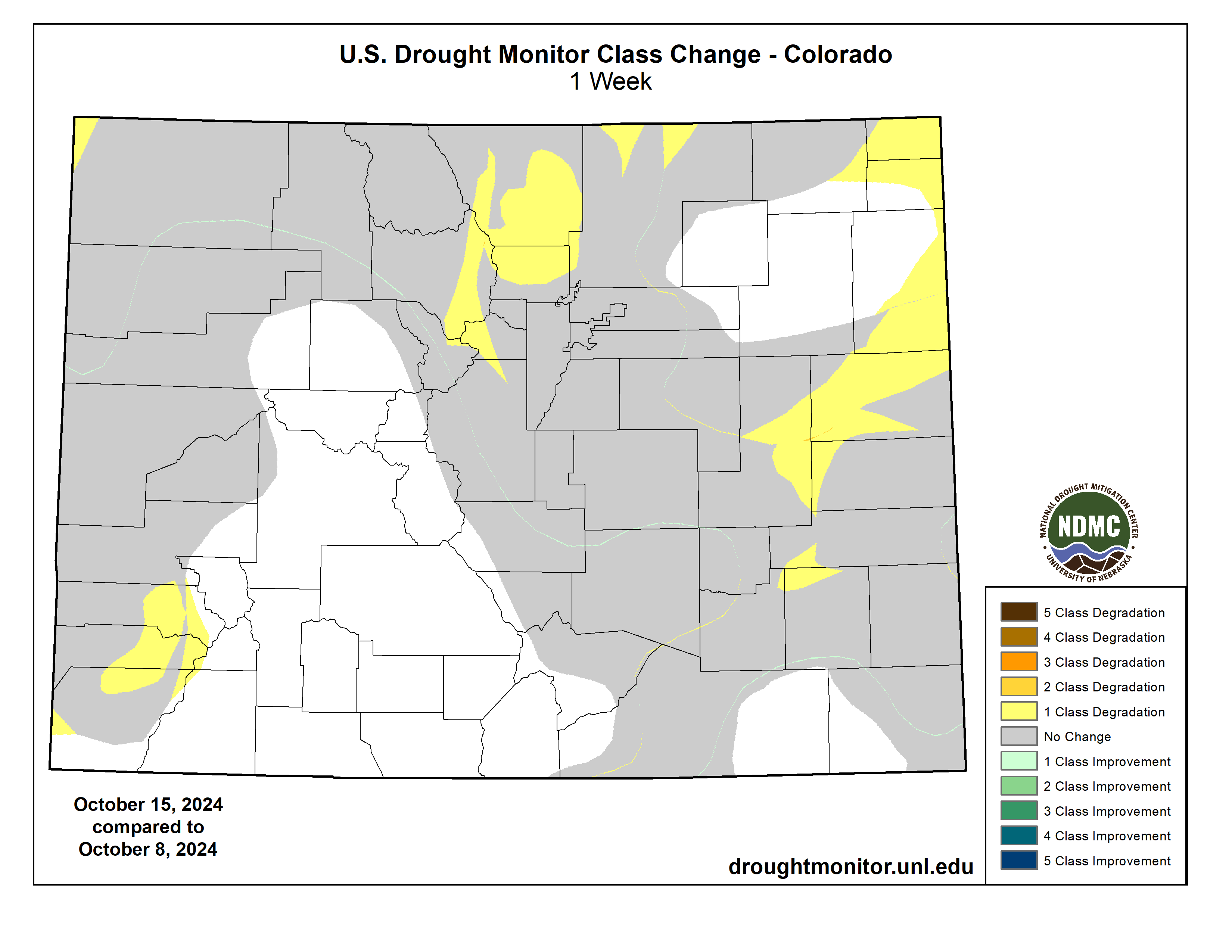
Drought Monitor one week change map ending October 15, 2024.

West

As with the Plains and the South, most all of the West was dry this week with only some coastal areas of California and Washington measuring any precipitation. Warm temperatures dominated the region with almost everyone at least 3-6 degrees above normal for the week and areas of Utah, Idaho, Colorado, Nevada, Wyoming and southern Montana 9-12 degrees above normal. Abnormally dry and moderate drought conditions expanded over Washington and Oregon. In Arizona, moderate and severe drought expanded in the southern portions of the state and into southern California. Moderate drought also expanded in central Arizona. The heat that has impacted the Southwest has been record-setting. Phoenix went 21 straight days of setting all-time daily high temperature records that ended on October 15, when the high temperature of 99 degrees Fahrenheit did not break the daily high. New Mexico had severe and extreme drought expand over southern parts of the state, while abnormally dry conditions filled in more of the west. Moderate drought emerged in southwest Colorado, with severe drought expanding and a new area of extreme drought in the north central portions of the state. Utah had abnormally dry conditions and moderate drought expand in the east. In Wyoming, moderate drought expanded over the southwest part of the state, severe drought expanded in the central area, and moderate drought expanded in the northwest…

South

Warm temperatures dominated the region with some areas of Texas having temperatures greater than 10 degrees above normal. The entire region was warmer than normal outside of far south Texas and portions of southern Louisiana. Like the High Plains, precipitation was pretty much nonexistent in the region this week, and coupled with the warm temperatures, degradation took place over much of the region. In Oklahoma, moderate and severe drought expanded in the central portions of the state while extreme drought expanded in the northeast. Northwest Arkansas had moderate, severe, and extreme drought all expand, while in Louisiana, moderate drought expanded in the north and in the south, with a new pocket of severe drought introduced in the south. A new area of moderate drought emerged in southern Mississippi and into southern portions of Louisiana. Moderate drought expanded over portions of central Tennessee. Texas had widespread degradation over much of the east and central portions of the state as well as expansion of moderate drought over the Panhandle. Severe and extreme drought expanded in the central portion of the state, where long-term indicators are showing drought at various timescales. Along the border with Oklahoma, severe and extreme drought expanded slightly…

Looking Ahead

Over the next 5-7 days, it is anticipated that much of the Rocky Mountain and central Plains areas will have the best chances for measurable precipitation. The highest amounts are anticipated over northeast New Mexico, southeast Colorado, and parts of the Oklahoma and Texas panhandles, where 2 or more inches may be recorded. Most of the other areas are expecting an inch or less. Temperatures during this time are anticipated to be above normal over much of the Plains, Midwest, and into the Northeast, with departures of 10-15 degrees above normal over the upper Midwest. Cooler than normal temperatures of 2-4 degrees below normal are expected over the Four Corners region and the Rocky Mountains.

The 6-10 day outlooks show that above-normal temperatures will continue for almost all of the country through the end of October, especially from Texas into the Midwest. The coastal areas of the Pacific Northwest have the greatest probabilities of below-normal temperatures during this time. Outlooks show that the greatest chances of below-normal precipitation are from the Gulf Coast into the Midwest and over much of the East. The highest probabilities of above-normal precipitation will be in the central to northern Plains, northern Rocky Mountains and into portions of the Pacific Northwest.

US Drought Monitor one week change map ending October 15, 2024.

#Colorado Supreme Court ā€œslow sipā€ ruling could affect city water supplies from fast-growing #Greeley to #CastleRock — Fresh Water News

Water stored in Colorado’s Denver Basin aquifers, which extend from Greeley to Colorado Springs, and from Golden to the Eastern Plains near Limon, does not naturally recharge from rain and snow and is therefore carefully regulated. Courtesy U.S. Geological Survey.

Click the link to read the article on the Water Education Colorado website (Jerd Smith):

October 10, 2024

Nearly 40 years ago, after watching aquifers below Douglas County plunge amid fast growth and heavy use, Colorado lawmakers adopted a ā€œsip slowlyā€ management process that required communities such as Parker and Castle Rock to pump out fixed amounts of nonrenewable groundwater each year in an effort to make the resource last at least 100 years.

Fast forward to 2020. That year, the state directed well owners to sip even slower, explicitly stating how much water their permits entitled them to, and requiring them to stop pumping at the end of that 100-year period if they have fully used the water to which they were entitled when the original well permits were issued.

But Parker and Castle Rock objected, suing the state over the new permitting language. They argued that the original volume estimates used to calculate their annual pumping rates were never meant as formal, total volume limits. Those limits, they argued, could sharply limit their future water supplies because they were essentially a best guess, based on measuring technology that has changed considerably since then.

Aurora and Greeley joined the case, siding with the state. A special water court ruled against Parker and Castle Rock, which together appealed to the Colorado Supreme Court. The high court is expected to issue a ruling in the case before the end of the year, according to spokeswoman Suzanne Karrer.

Under Colorado’s so-called 100-year rule, well owners can extract no more than 1% of the water under their lands each year, pumping all the water within 100 years of the issuance of their permits. But prior to use of the new permitting language, the total volume of water that could be taken out over the life of the permit was never explicitly stated on the permits themselves, though it was used to calculate the annual extraction rate.

State officials said they added the water volumes to ensure wells are regulated in a uniform way and that well owners are informed at the start of that 100-year clock how much actual water they can pump.

Deputy State Engineer Tracy Kosloff explained, via email. ā€œIf the amount pumped is less than the annual maximum, the length of time it takes to reach the total allowed withdrawal will be more than 100 years. For instance, if one pumps half of the maximum each year, it will take 200 years to reach the total.ā€

However, if the maximum allowed each year is pumped, then the permit will expire at the end of the 100 years, and the well owner would have to stop pumping and find other water sources, Kosloff said.

But Parker and Castle Rock argue that water levels in the aquifer vary and that over that 100-year period more water might actually be available to them. Establishing a lifetime limit, especially one based on an estimate and old measuring technology, could deprive them of water to which they are entitled.

Colorado designated groundwater basins.

Colorado is home to several aquifer formations, some of which can be easily recharged via rainfall and snowmelt, and are considered renewable. Others cannot be readily recharged and thus are considered to be nonrenewable. These are known as nontributary aquifers and wells drilled in these areas are at the heart of the dispute.

Sean Chambers, Greeley’s director of water and sewer utilities, supports water regulators’ effort to more closely manage nonrenewable underground supplies by including a specific volume on permits because it will better protect everyone over the long run.

Greeley is planning a major new aquifer storage facility on the Wyoming border known as the Terry Ranch. The city wants to ensure water it stores underground isn’t inadvertently tapped by other users whose pumping could siphon off the city’s supplies, Chambers said via email.

When it became clear in the 1980s and 1990s that the aquifers were in decline, Douglas County communities began reducing the amount of water they were taking out of the aquifers, adding surface supplies from the South Platte River and Cherry Creek, and building multimillion dollar water recycling plants so they can reuse the water they already own.

Parker once relied on nonrenewable groundwater for more than 90% of its supplies, but has since reduced that use to roughly 35%. By 2050, it hopes to drop that amount to 25% of its supplies, according to Ron Redd, manager of the Parker Water and Sanitation District.

Ultimately, Redd said, it’s likely that the state laws on the books now will have to be changed as a result of the dispute.

ā€œIf we lose, we will try to run legislation upholding our interpretation of the law,ā€ he said. ā€œWe were surprised by this. No one knew it was coming until suddenly we saw this condition on our well permits.ā€

More by Jerd Smith. Jerd Smith is editor of Fresh Water News. She can be reached at 720-398-6474, via email at jerd@wateredco.org or @jerd_smith.

Water treatment process in Greeley. Graphic via Greeley Water

#California’s new water recycling rules turn #wastewater to tapwater — LAInst.com

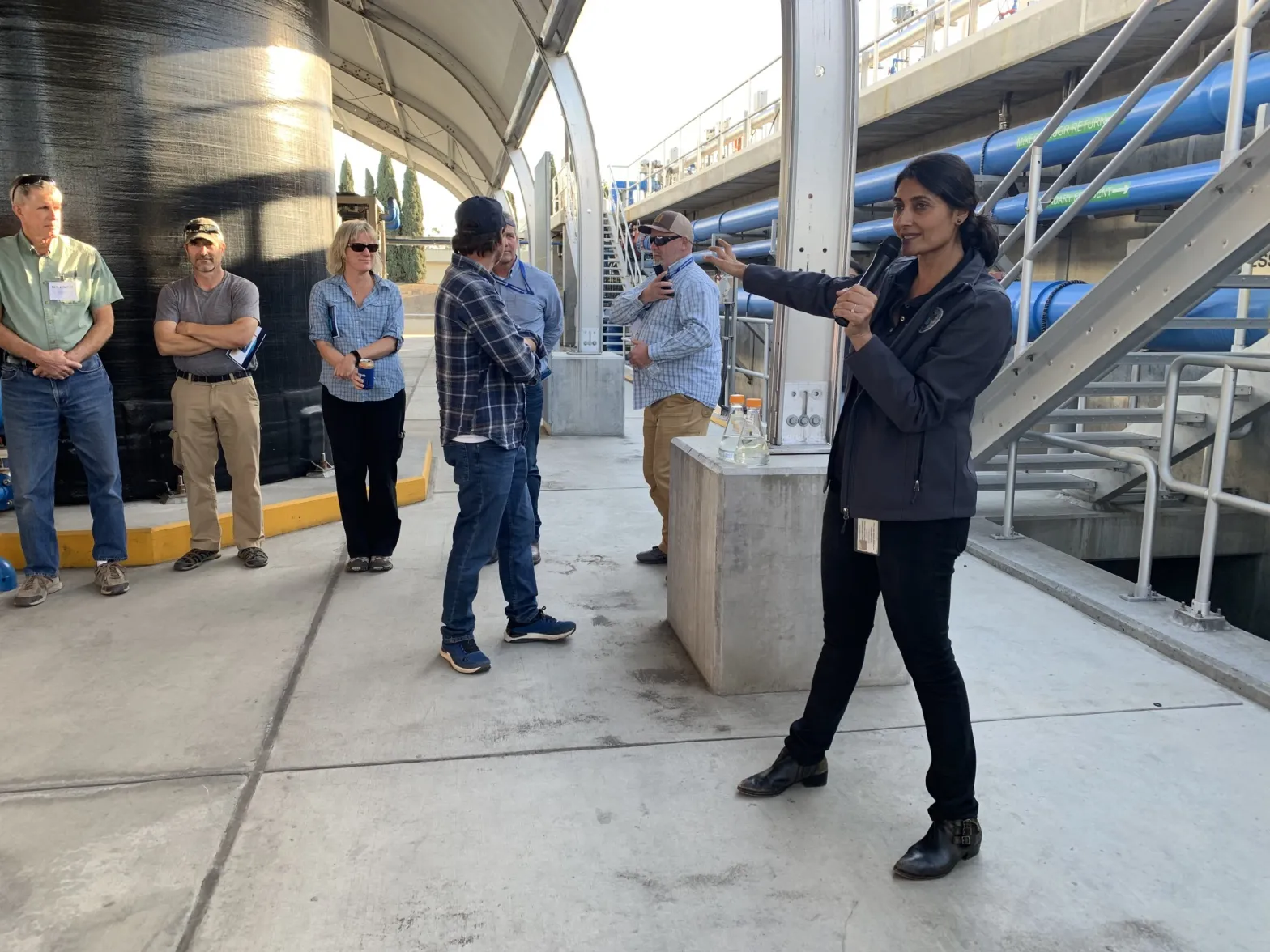
Rupam Soni, MWD’s community-relations team manager, gives a tour of MWD’s Pure Water Southern California demonstration facility. MWD is hoping to soon use recycled wastewater, known as direct potable reuse, to augment its supplies from the Colorado River. CREDIT: HEATHER SACKETT/ASPEN JOURNALISM

Click the link to read the article on the LAInst.com website (Erin Stone). Here’s an excerpt:

October 7, 2024

This month,Ā statewide regulationsĀ for what’s technically called ā€œdirect potable reuseā€ went into effect. The rules allow wastewater — yes, the water that goes down the drain or is flushed down the toilet — to be treated to drinkable standards then distributed directly to homes and businesses. Mickey Chaudhuri, treatment and water quality manager for the Metropolitan Water District of Southern California (MWD), said the new rules are ā€œa gamechanger.ā€

Previously, California law only allowed ā€œindirectĀ potable reuse,ā€ which is what the Fountain Valley facility does — highly treated wastewater is injected underground into an aquifer, where further, natural filtration occurs. Then that water is put into the pipelines to our homes and businesses. DirectĀ potable reuse, which is what these newly effective regulations are about, skips that step where the water is injected into groundwater basins. Instead, the highly treated sewage water goes directly to drinking water treatment plants and then is distributed…ecause these new regulations allow recycled water to be put directly into the local water system, more cities can recycle water for drinking that don’t happen to have an underground basin, or don’t have enough space in groundwater basins because of past pollution, which isĀ the case for cities such as L.A.Ā and Santa Monica.

Wildfires don’t just burn farmland āˆ’ they can contaminate the water farmers use to irrigate crops and supportĀ livestock

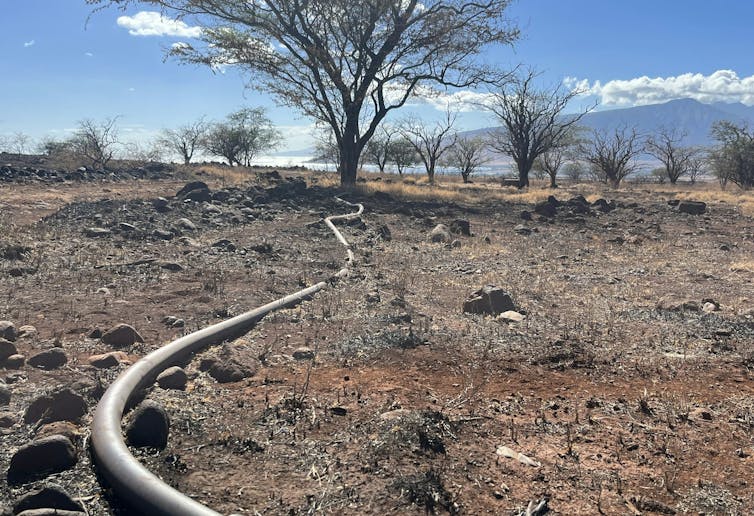
A water pipe that was used to carry water to livestock crosses land burned in the Maui fires in August 2023. Andrew Whelton/Purdue University, CC BY-ND

Andrew J. Whelton, Purdue University

The wildfires that burned across Maui, Hawaii, in August 2023 became the deadliest conflagration in the United States in more than a century. While the harm to homes and tourism drew the most attention, agriculture was also heavily affected across the island, and the harm did not stop once the flames were out.

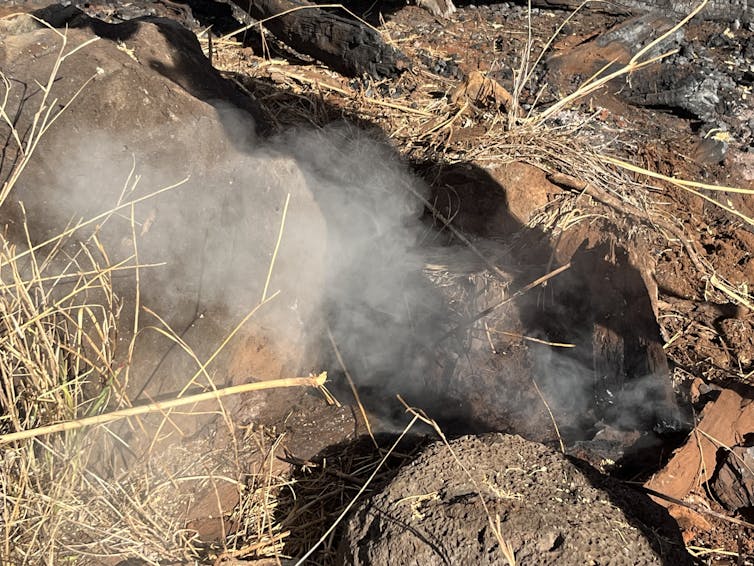
In some cases, fires smoldered underground for weeks. Water systems were destroyed, and some were contaminated in ways scientists are only beginning to understand.

smoke comes from a burned area underground.
Two weeks after the Maui fires began, they were still smoldering below ground. Andrew Whelton/Purdue University, CC BY-ND

As an environmental engineer, I work with communities affected by wildfires and other disasters. I also led a team of university and public works professionals to assist in Maui’s response to the fires.

In a new study based on that effort, my team worked with the Hawaii Department of Agriculture to assess damaged water systems, including water pipes, wells and pumps that are essential for livestock and crops. It was the first study of its kind to examine wildfire damage to agriculture water systems.

The results show the types of damage that can occur when a fire burns through property, and they offer a warning to agricultural regions elsewhere. With the U.S. averaging over 60,000 wildfires and 7.2 million acres burned each year, it is clear that wildfires have become a whole-of-society problem.

Contaminated water infrastructure poses risks

Wildfires often knock out power, which can disable water pumps that farmers and ranchers rely on. They can also damage pipes in ways that can release toxic chemicals and have long-lasting effects.

Recent municipal water system studies by my team and others have shown that water sources and even the pipes and tanks can become unsafe to use. Studies in fire-swept areas have found levels of volatile organic compounds, or VOCs, such as benzene, a carcinogen, above hazardous waste limits. Exposure to this water can cause immediate harm to people.

When water pumps stop working or components are destroyed, municipal water systems lose pressure. When that happens, VOCs can enter from heated or burning plastics, structures and vegetation.

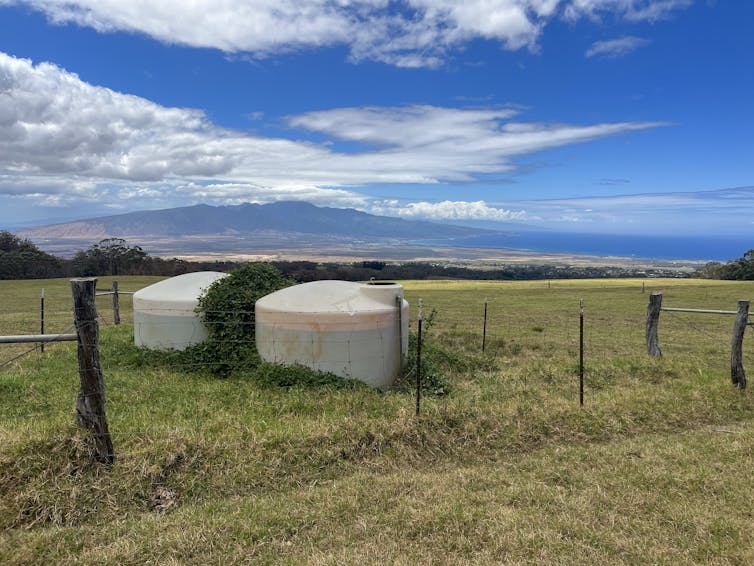
Two water tanks in a field.
Even when tanks are untouched by fire, the pipes serving them can be contaminated if they heat up. Andrew Whelton/Purdue University, CC BY-ND

An insidious challenge is that VOCs penetrate plastic water lines, gaskets and tanks like water going into a sponge. Even after bad water is flushed out, chemicals can leach from the plastic and make the water unsafe for weeks to months. Damaged components have to be replaced.

In the wake of the Maui fires, however, there was no immediate guidance on how farmers and ranchers should inspect and test their water systems.

Learning from Maui’s experience

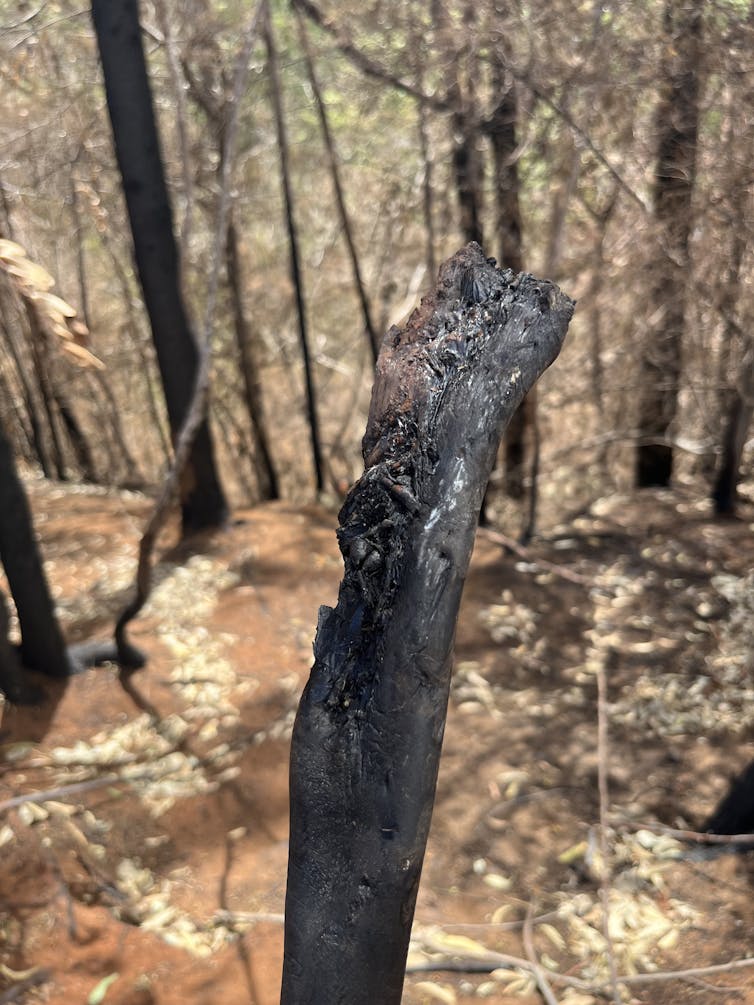
Farms and ranches had many plastic water system components. On one ranch, fire destroyed more than nine miles of plastic water pipe. Much of the pipe ran above ground alongside fencing, which also burned.

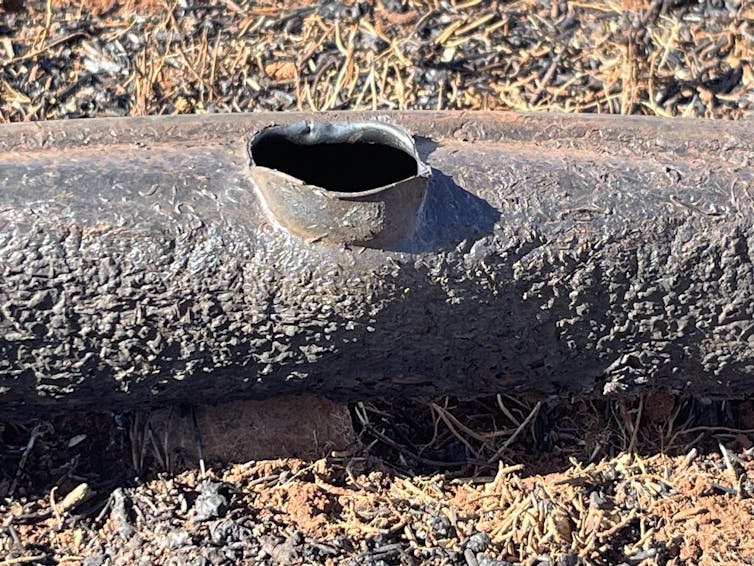
Plastic irrigation systems were destroyed. Numerous other components melted, were leaking or lacked water. The loss of power sometimes prevented water pumps from keeping the pipes full of water.

A melted pipe with a hole in it lays on the ground.
Some plastic water lines burst due to the temperature and water pressure during the fire. Andrew Whelton/Purdue University, CC BY-ND
A melted pipe in a wooded area.
More than 9 miles of plastic polyethylene water lines were destroyed by the fire. Andrew Whelton/Purdue University, CC BY-ND

While wells can become contaminated and well casings can burn, the wells themselves were not contaminated. This was mostly because the wells were set back from combustible materials and because firefighters and property staff helped to protect them.

Debris and particles from smoke, however, did enter animal troughs, buckets and waterers. These items had to be drained and cleaned for the safety of the animals. Water systems were repeatedly flushed with clean water after the fire, and VOC testing of the water supplies did not find lingering contamination.

Lots of questions still to answer

There are still many unanswered questions. Since there was no VOC testing procedure for agricultural water systems before the fires, there is no data to show the frequency and severity of this kind of contamination.

Not all municipal water systems that suffer fires become contaminated. Contamination is related to differences in the sites, systems and the fires themselves.

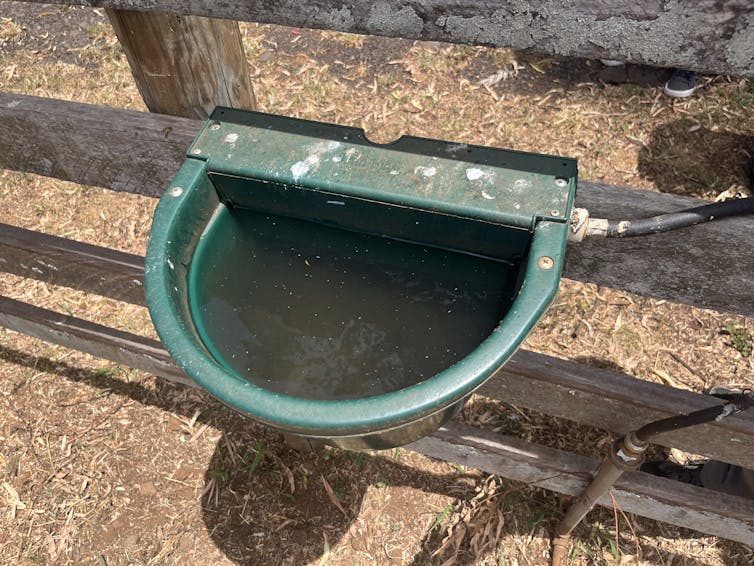
A plastic bowl attached to a fence with a water line coming into it.
Animal watering systems are often supplied by plastic pipes. Andrew Whelton/Purdue University, CC BY-ND

There is also no data on the degree to which this wildfire-contaminated water would harm animals and crops. Would animals avoid the water and become dehydrated? Can crops become contaminated? Will exposure affect the meat of livestock? Many of these unanswered questions will require the expertise of veterinary medicine and crop and soil scientists.

What are the solutions?

One thing that was clear is that farmers and ranchers lack adequate guidance to prevent wildfire-caused pollution of their water systems. Some practical lessons learned can help these community members bounce back:

  • Defensible space should be established by keeping equipment 30 feet away from combustible materials. Burying plastic components 3 feet underground helps protect them from fire.
  • Similar to municipal water systems after a fire, damaged agriculture water system components should be isolated. Pipes and tanks should be rapidly refilled and extensively flushed with water to help remove potential contamination.
  • Water delivery devices, including troughs, buckets and tire waterers, should be drained and cleaned. When contamination is a concern, chemical water testing should be conducted. In some cases, components will have to be replaced.
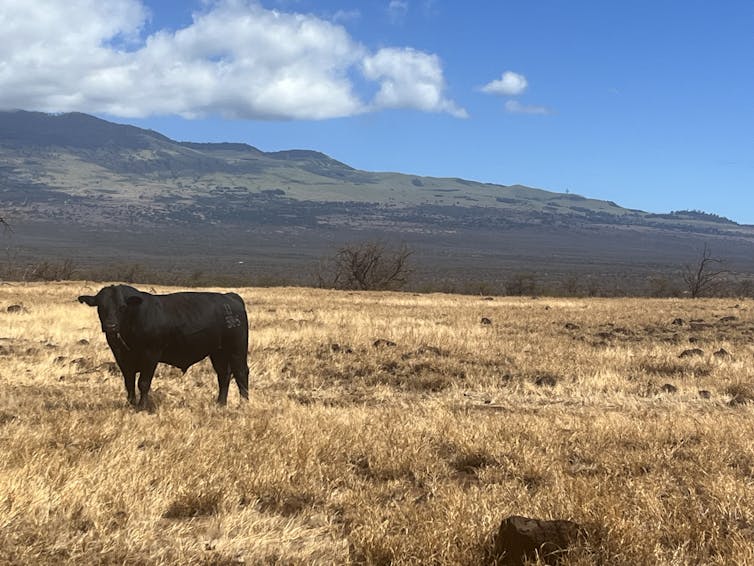
A cow in a field with burn landscape behind it.
Pipes and wells to get water to cattle can also be at risk in wildfires. Andrew Whelton/Purdue University, CC BY-ND

A 2024 survey of California farmers shows that the top three resources ā€œrelied on and wished for during wildfireā€ were generators, water pumps and water storage tanks. These items would help prevent water system pressure loss and contamination.

Who can help?

Wildfire risk to farms and ranches can be reduced. State and federal agriculture departments and insurance companies can provide financial assistance. Technical assistance is available from universities.

Lessening the impact of wildfires and expediting recovery can help farms and ranches do yeoman’s work to support health and the economy.

Andrew J. Whelton, Professor of Civil, Environmental and Ecological Engineering, Purdue University

This article is republished from The Conversation under a Creative Commons license. Read the original article.