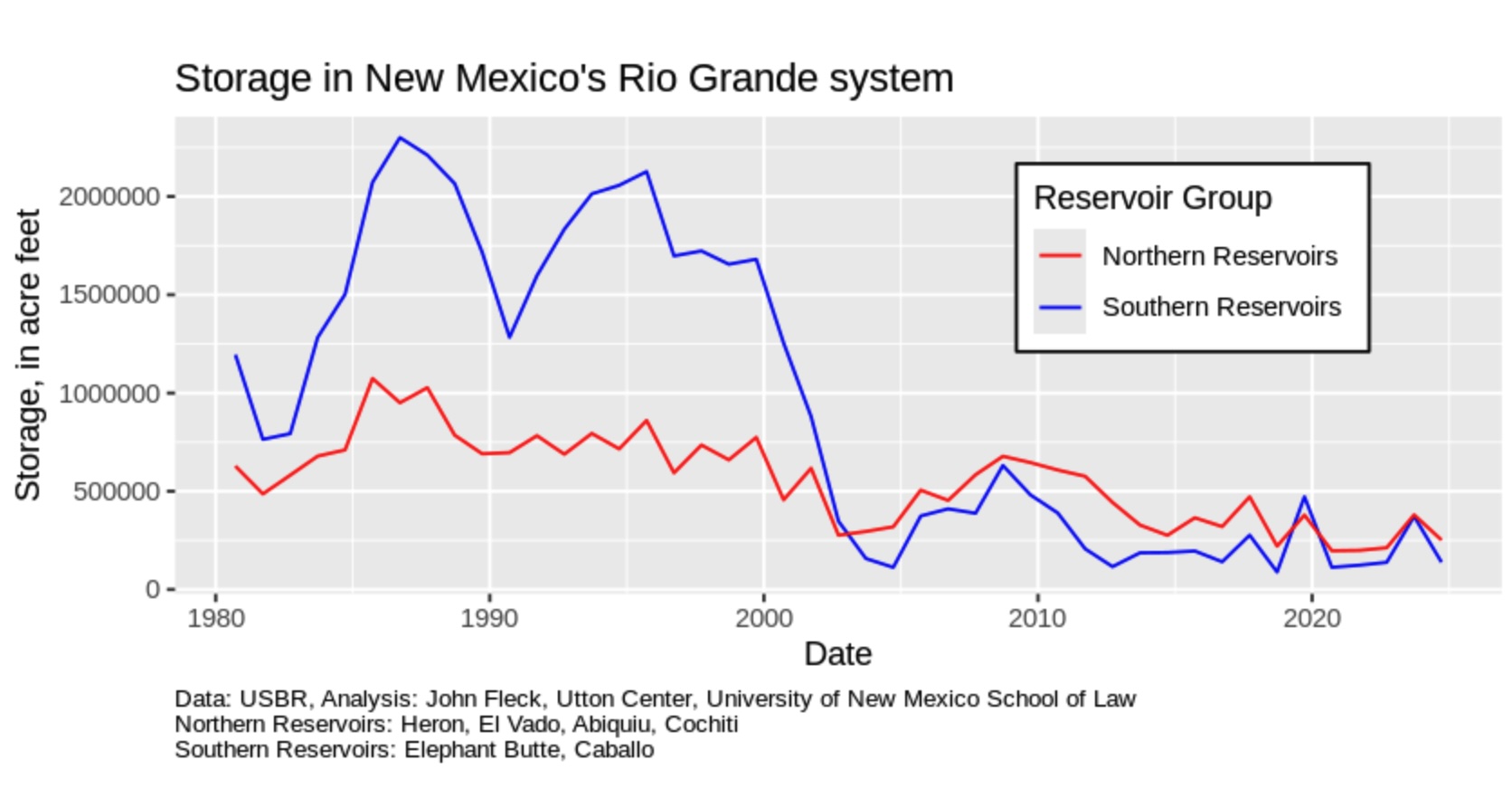
Bouncing along the bottom. Credit: John Fleck/InkStain
Click the link to read the article on the InkStain website (John Fleck):
October 4, 2024
Sept. 30 marks the end of the “water year,” an accounting milestone that gives us an opportunity to take stock.
The change in total water storage year-over-year is one way to do this, to help understand if we took more water out of the reservoirs than the climate put in. The graph above is actually based on Sept. 20 year-over-year (the Reclamation data updates lag a bit), but it’s enough to give us a feel for two things.
First, we’ve seen no real reversal of the long term pattern – a huge reduction in storage in the early 21st century, and then basically dragged the bottom of the reservoirs ever since.
Second, on a shorter one- or two-year time scale, total storage is down ~350,000 acre feet at the end of water year 2024 compared to the end of 2023. Over a two-year time scale, we basically burned through the bonus water from a wet 2023 and are back where we were at the end of 2022.
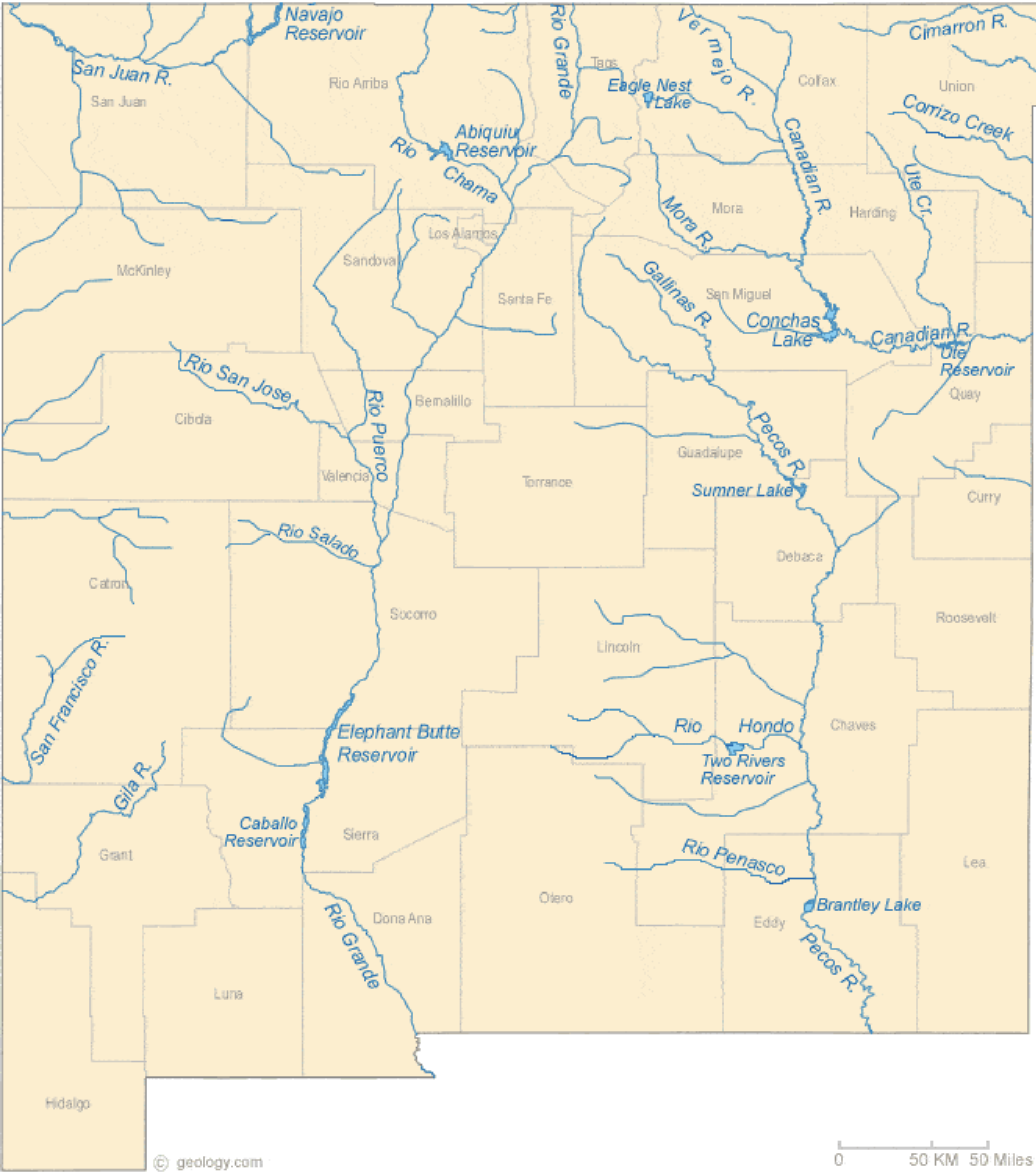
Rio Grande flow this year at Otowi in north-central New Mexico has been 63 percent of the period of record mean, going back to the late 1800s.
New Mexico Lakes, Rivers and Water Resources via Geology.com.
The Rockford Ditch has the oldest water rights on the Crystal River. It irrigates some agricultural land as well as the lawns and gardens of the Colorado Rocky Mountain School and the Satank neighborhood of Carbondale.
CREDIT: HEATHER SACKETT/ASPEN JOURNALISM
The old water law adage doesn’t capture just how difficult it is to lose a water right. And state policy limits the pool of possibly abandoned water even further.
In December 2020, the Summit County Open Space and Trails Department bought a 15-acre property with a small pond, three ditches and a well.
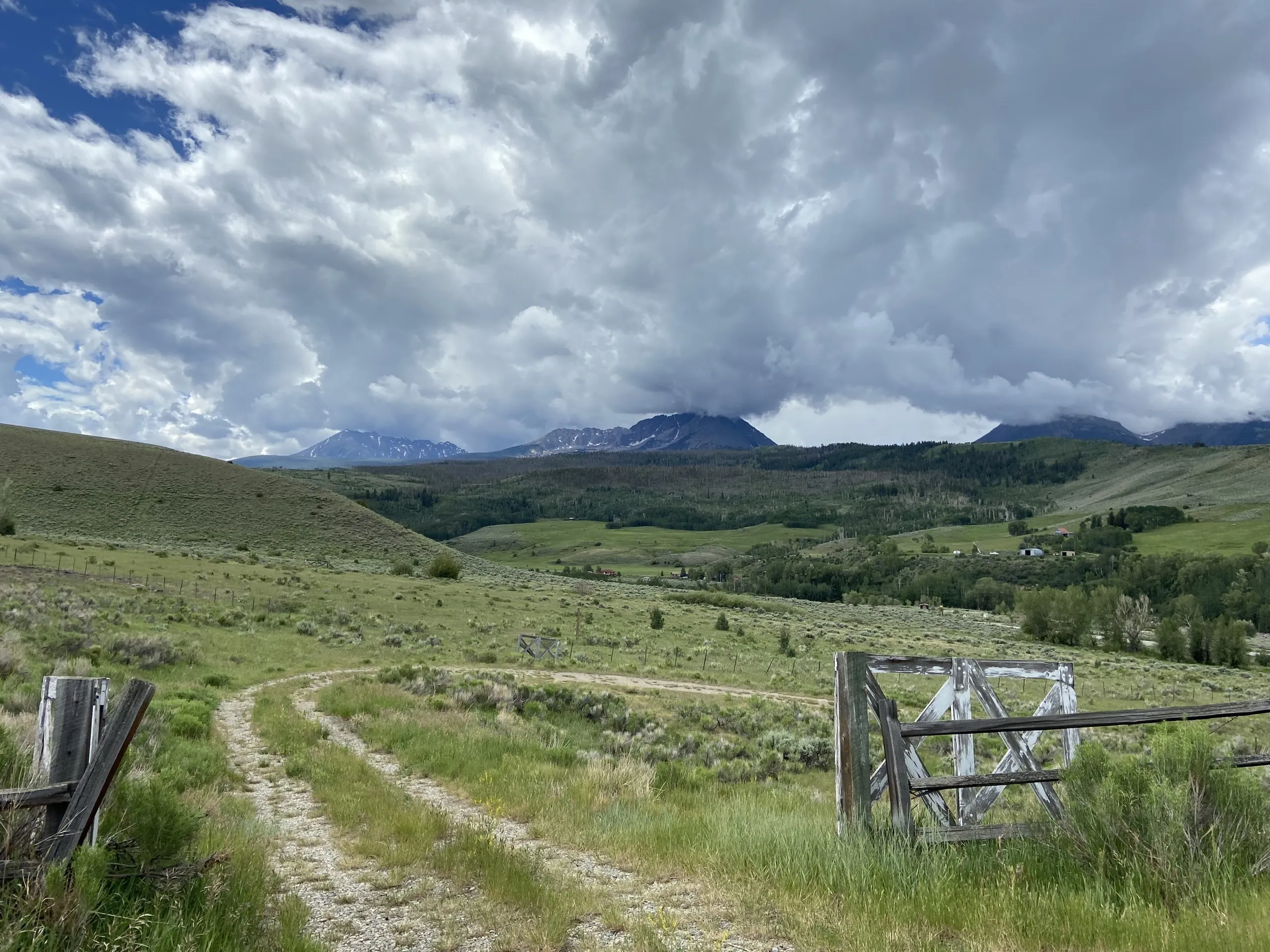
Known as the Shane Gulch property, it was the only remaining private property north of Heeney Road between Green Mountain Reservoir and the Williams Fork Range. The land, just east of Colorado 9 and the Blue River, has stunning views of the snow-capped peaks that form the Continental Divide. Summit County purchased the property, which consists of three parcels of rolling hills and meadows, to preserve the unique scenic, wildlife and agricultural heritage values of the area.
The water on the property had historically been used for irrigation. But according to the state Division of Water Resources, the former owners of the property had not used the water rights on one of those ditches, the Culbreath Ditch, in the previous 10 years. The water rights were placed on the initial 2020 abandonment list, leaving them at risk of being lost.
Abandonment is the official term for one of Colorado’s best-known water adages: Use it or lose it. As the saying goes, a user must do something of value with their water (use it) or the state could take it away (lose it). Once abandoned, the right to use the water is canceled and goes back to the stream where someone else can claim it and put it to use.
Every 10 years, officials from the Colorado Division of Water Resources review every water right — through diversion records submitted by water users and site visits — to see whether it has been used at some point in the previous decade. If it has been dormant, it’s added to the preliminary abandonment list. But there’s a safety net. Not using the water is just one part of abandonment; a water user must also intend to abandon it.
The goal of abandonment is to preserve the water law system that the West relies upon. That legal framework, known as prior appropriation, is the bedrock of Colorado water law in which the oldest rights get first use of the river. If an upstream user with a senior water right resumes using it again after decades of letting it sit dormant, that’s not fair to downstream junior water users because it leaves less water for them. The abandonment process prevents people from locking up a resource they aren’t using.
The view from the Shane Gulch property, owned by Summit County, where the Blue River begins forming Green Mountain Reservoir. The county bought the property and water rights from the Culbreath Ditch in 2020. Credit: Courtesy of Summit County Open Space and Trails
Abandonment-process protections
Although the concept of abandonment may loom large in the minds of water users, only a tiny percentage of water rights ends up on the abandonment list every 10 years, and it’s rare for the state to formally abandon a water right.
In the last round of cancellations, in 2021, 3,439 water rights ended up on the final abandonment list out of 171,578 total water rights in the state, or 2%. On the Western Slope, 658 water rights out of about 75,000, or less than 1%, ended up on the final revised abandonment list.
Water users have two opportunities to fight an abandonment listing, and state policies have given an extra layer of protection from abandonment to the oldest water rights for the past 20 years. In most, if not all, cases, the water rights that were abandoned truly were not used in the previous decade.
In an example near Glenwood Springs, a ditch had been filled in and turned into a trail, and the land it had once irrigated was now home to a hotel and recreation center. And those who aren’t using their water because they are participating in state-approved conservation programs, such as the System Conservation Program currently happening in the Colorado River’s Upper Basin (Colorado, New Mexico, Utah, and Wyoming), are protected from abandonment.
“It’s a lot harder than people think to actually abandon water rights,” said Jason Ullmann, the top water engineer at the Colorado Division of Water Resources. “I think people feel like there’s this constant potential for their water right to be abandoned, but because it’s a personal property right to use the public’s resource, you don’t want it to be easy to come in and abandon that right.”
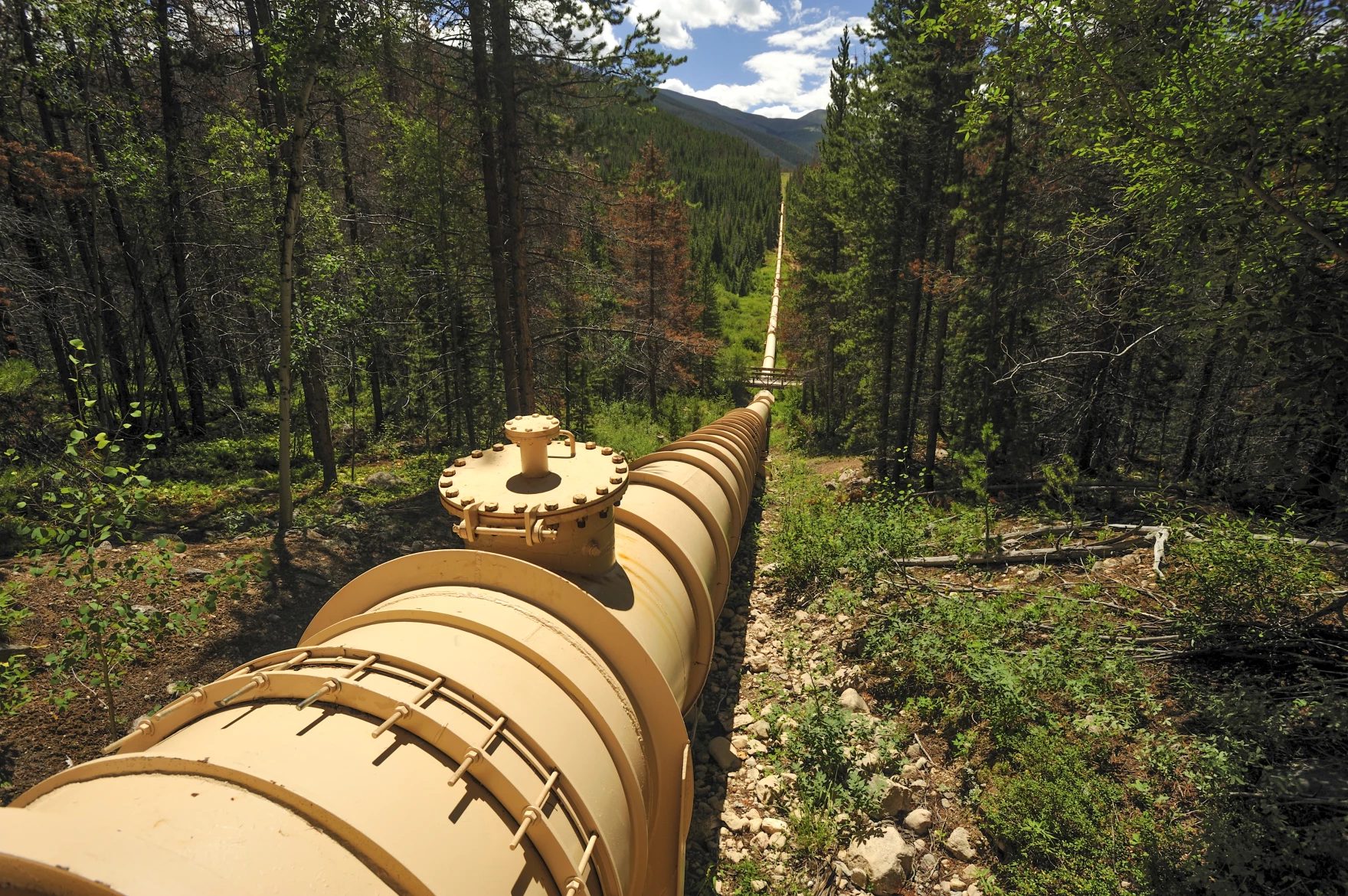
A complex system of pipes, tunnels and canals carries water around the Western U.S., like this one in Colorado’s Fraser Valley. However, policy experts say a cross-country pipeline wouldn’t make sense for political, financial and engineering reasons. Ted Wood/The Water Desk
Click the link to read the article on the KUNC website (Alex Hager):
September 30, 2024
This story is part of a series on water myths and misconceptions in the West, produced by KUNC, The Colorado Sun, Aspen Journalism, Fresh Water News and The Water Desk at the University of Colorado Boulder. KUNC’s coverage of the Colorado River is supported by the Walton Family Foundation.
The Colorado River is a lifeline for about 40 million people across the Southwest. It supplies major cities like Los Angeles, Phoenix, and Denver and a multibillion-dollar agriculture industry that puts food on tables across the nation. But it doesn’t have enough water to meet current demands.
Policymakers are struggling to rein in demand on the river, which has been shrinking at the hands of climate change. The region needs to fix that gap between supply and demand, and there’s no obvious way to do it quickly.
But one tantalizingly simple solution keeps coming up. The West doesn’t have enough water, but the East has it in abundance. So, why don’t we just fix the Colorado River crisis by piping in water from the East?
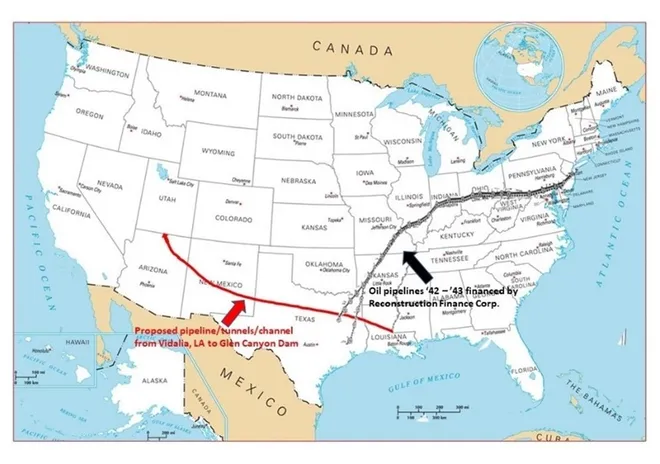
This proposed pipeline divert water from the Atchafalaya River in Louisiana through Louisiana, Texas, New Mexico, Arizona and up to the Glen Canyon Dam. Credit: Don Siefkes
The answer is complicated, but experts say it boils down to this: It doesn’t make sense to build a giant East-to-West water pipeline anytime soon for three reasons — politics, engineering, and money.
Political headwinds
If the West’s leaders wanted to take some water from the East, who would they even ask? Right now, there’s no national water agency that could oversee that kind of deal.
“I would argue that there aren’t many entities with the authority across the country to do this,” said Beaux Jones, president and CEO of The Water Institute in New Orleans. “I don’t know that the regulatory framework currently exists.”
Water is often managed using a messy patchwork of different government agencies and laws. The Colorado River is managed through a fragile web of agreements between cities, states, farm districts, native tribes and the federal government. Even though they’re all pulling from the same water supply, there’s no central Colorado River government agency.
A similarly complex system applies to many watersheds in the East. Even if a single city or state in the Western U.S. seriously wanted to build a pipeline from the East, it’s not even clear who they’d meet with to ask for water from a different area. And there’s no single federal agency that could sign off on such a deal and make sure it doesn’t harm people or the environment.
Colorado Water Conservation Board Executive Director and commissioner to the Upper Colorado River Commission Becky Mitchell, center, speaks on a panel with representatives of each of the seven basin states at the annual Colorado River Water Users Association conference in Las Vegas Thursday, December 15, 2022. The UCRC released additional details of a water conservation program this week.
CREDIT: HEATHER SACKETT/ASPEN JOURNALISM
Any serious effort to pull new water in from the East to the Southwest would likely touch some part of the Mississippi River basin. It’s a sprawling network of smaller rivers that covers 31 different states, from Montana to Pennsylvania.
It’s a busy river with a lot of uses. And while its shortages aren’t as severe as dry times in the West, the Mississippi River basin goes through its own droughts. So even if, someday, the governments of the East and West set up a formal way to negotiate a water transfer, the cities, farms, boaters and wildlife advocates to the east might not be willing to share.
“The very nature of there being sufficient availability of water in the Mississippi River Basin to, in a large scale way, export that water,” Jones said. “I think there are many people on the ground within the Mississippi River basin that would fundamentally disagree with that.”
Engineering limits
There are countless examples of large pipelines and canals moving liquids around the U.S. at this very moment. The longest existing today is the Colonial Pipeline, which carries gasoline from Houston to northern New Jersey through 5,500 miles of pipe.
So if we have the engineering capacity to do that, could we build similar infrastructure for water? In theory, yes. But it would have to be much larger than existing pipes for oil and gas.
“It takes so much more water to supply a city than it takes gasoline,” said John Fleck, a water policy professor at the University of New Mexico. “So the size of the pipe or the canal has to be a lot bigger, has to be much wider, has to cover a lot more ground.”
Because that pipeline or canal would be so big, it is more likely to ruffle some feathers along the way. Fleck suggested that landowners in its path, including local governments, could push back on a giant new piece of infrastructure running through their properties and mire any pipeline project in regulatory red tape.
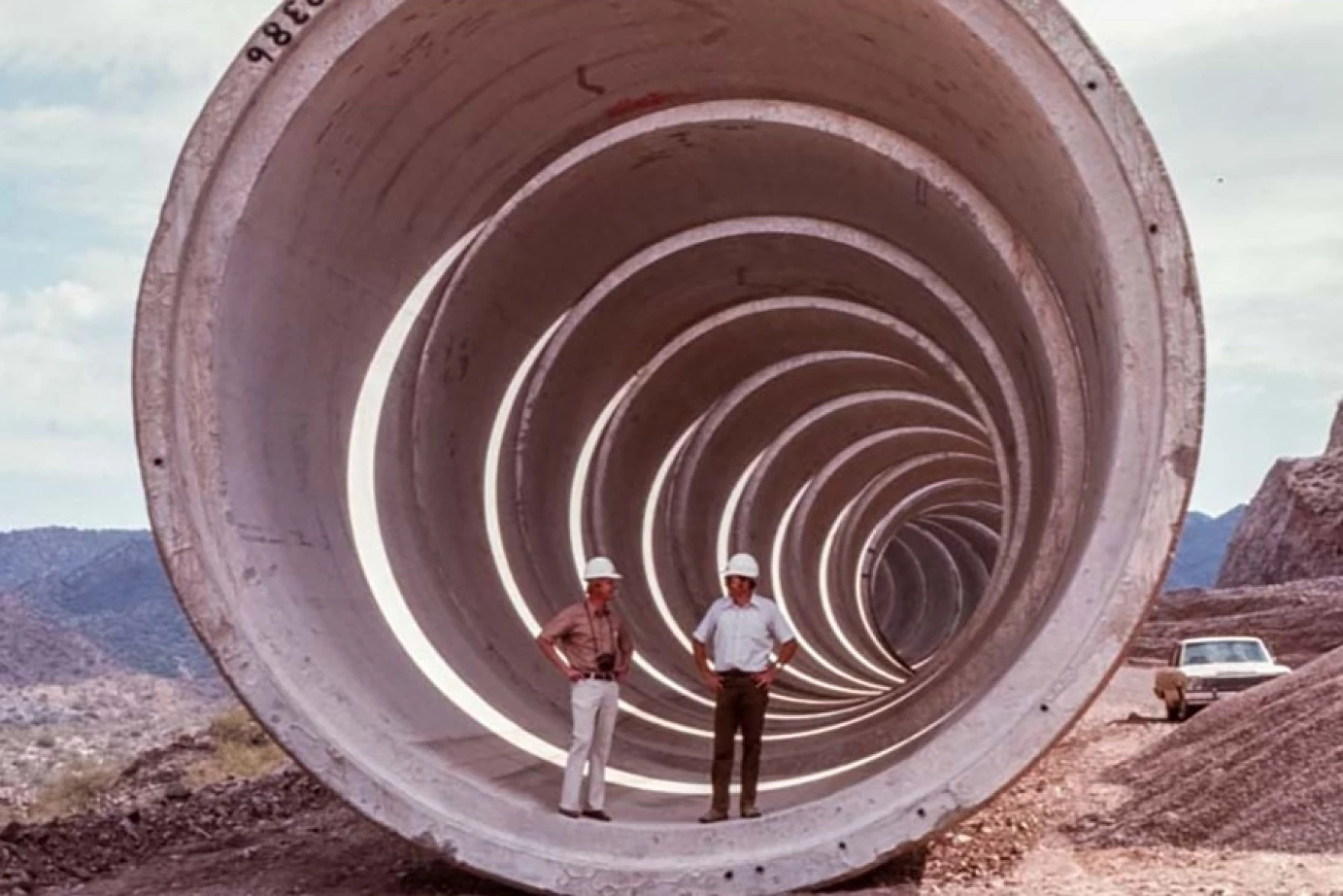
Phoenix, Los Angeles, Denver and Salt Lake City wouldn’t look like they do today without giant water-moving systems, like this pipe that is part of the Central Arizona Project. Experts say all of the feasible water pipelines have already been built, and a system to carry water in from the East is too difficult to be worth building. Photo credit: Central Arizona Project
All that said, a pipeline is still physically possible. There is perhaps no better argument for an East-West water transfer than the fact that the Western U.S. is already crisscrossed by multiple huge pipes and canals that carry water across long distances.
The West as we know it today wouldn’t exist without that kind of infrastructure. Much of Colorado’s population only has water due to a series of underground tunnels that bring water across the Rocky Mountains. Phoenix and Tucson have been able to welcome new residents in the middle of the desert with the help of a 336-mile canal that carries water from the Colorado River. Los Angeles, Albuquerque and Salt Lake City would not be the cities they are today without similarly ambitious water delivery systems built decades ago.
The existence of those water-moving projects isn’t proof that we should build a new, even bigger water pipeline from the East, Fleck said. In fact, he pointed to those systems as proof that we shouldn’t.
“All the feasible ones have largely been done, and the ones that are left are the ones that weren’t done because they just turned out not to be feasible,” he said.
Money problems
Even in a world where the West’s leaders could find a willing water seller, get the right permits and put shovels in dirt, experts say an East-to-West water pipeline would simply be too expensive.
Any solution to the Colorado River crisis will require massive amounts of public spending. The federal government alone has thrown billions of dollars at the problem in just the past few years. But water economists and other policy experts say a cross-country pipeline isn’t the most efficient use of taxpayer dollars.
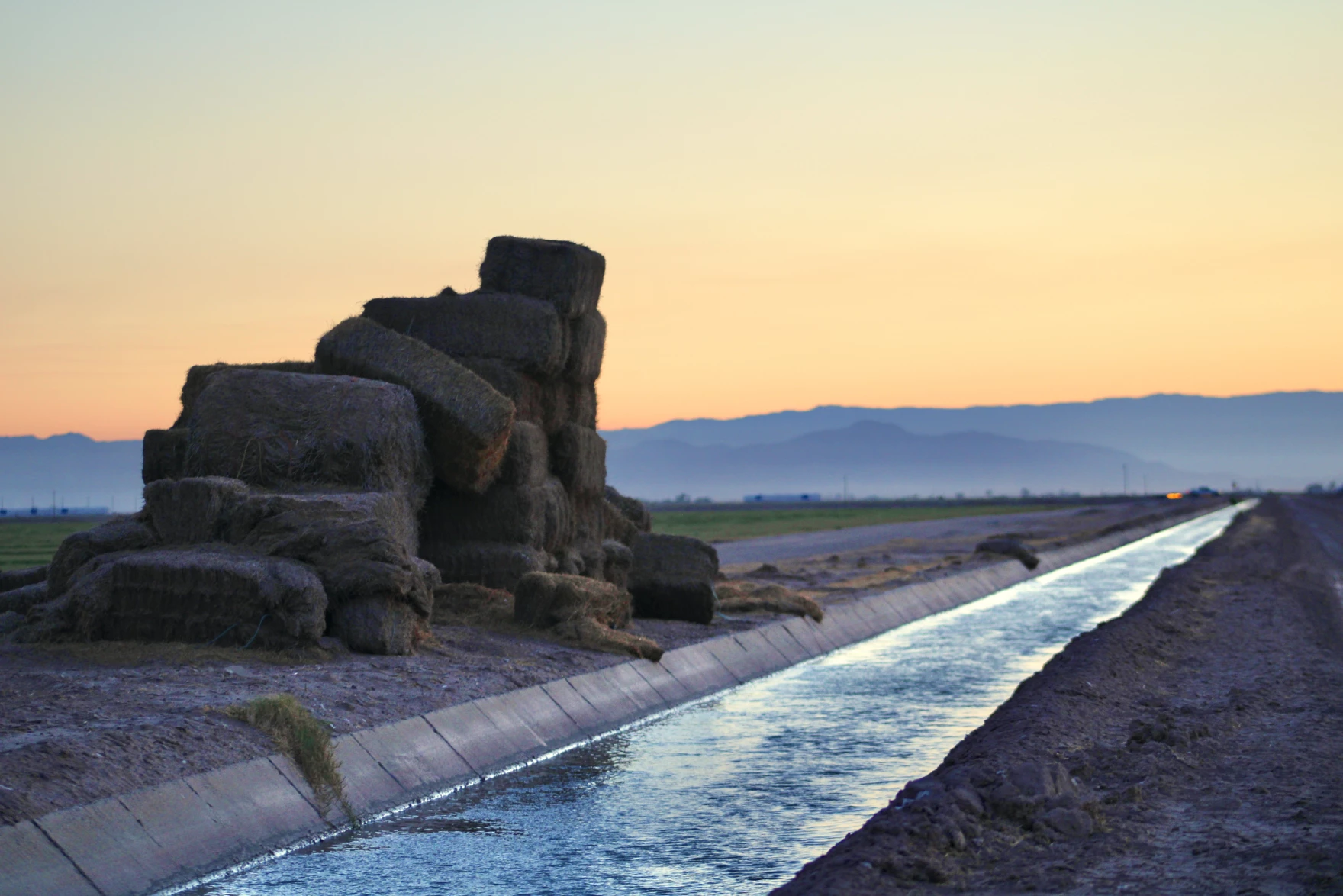
Stacks of hay bales sit beside an irrigation canal in California’s Imperial Valley on June 20, 2023. Experts say there are more cost-effective ways to fix the Colorado River crisis than building a cross-country canal, like paying farmers to pause growing thirsty crops such as alfalfa. Alex Hager/KUNC
Kathleen Ferris, former director of the Arizona Department of Water resources, pointed to two ongoing efforts that might be a more cost-effective way to help correct the region’s supply-demand imbalance. One involves paying farmers to pause growing on their fields, freeing up water to bolster the region’s beleaguered reservoirs. Another uses expensive, high-tech filtration systems to turn wastewater directly back into drinking water.
“Sometimes I feel like people don’t want to do the heavy lifting,” said Ferris, who is now a water policy researcher at Arizona State University. “Instead, they want to just find the next water supply and be done with it and have somebody else pay for it.”
Ultimately, she said, those kinds of programs already have momentum and cost less money than an East-to-West water pipeline.
“Why don’t we do the things that we know are possible and that are within our jurisdiction first,” Ferris said, “Before we go looking for some kind of a grand proposal that we don’t have any reason to believe at the moment could succeed.”
Pipe dreams becoming reality
Piping in water from outside of the Colorado River basin, for all of its challenges, is a tempting enough idea that the federal government has given it a serious look.
In 2012, a Bureau of Reclamation report analyzed ways to bring new water into the Colorado River Basin, including importing piped water from adjacent states.
The study concluded that strategy was not worth the money and effort.
“It just isn’t the time yet,” said Terry Fulp, a retired Reclamation official who helped write the study. “We felt that there were other things we could be doing in the basin, particularly in the Lower Basin, that would relieve the pressure.”
This map from the Bureau of Reclamation’s 2012 “Colorado River Basin Water Supply and Demand Study” shows places where water could theoretically be imported. One of the report’s authors said now “isn’t the time” to pipe water in from the East. Credit: U.S. Bureau of Reclamation
Fulp said the study was a worthwhile endeavor, and that the idea of importing water from the East might make sense down the road. The scale of the challenge posed by the Colorado River crisis, he said, will take some big thinking, “on the order of the thinking when we built the Hoover Dam.”
“It’s one of those possible solutions that should always stay, if not forefront on the table, somewhere on the table, so that you don’t lose sight of it,” Fulp said.
Despite the fact that many Colorado River experts have cast doubt on the feasibility of a cross-country water pipeline, even some sitting state officials say it deserves more research. Chuck Podolak, director of the Water Infrastructure Finance Authority of Arizona said the idea deserves “serious attention.”
“We understand that every option is hard, every option is expensive, every option has political hurdles, every option is a daunting engineering task,” he said. “Right now, we’re in a let’s-look-at-everything mode with eyes wide open.”
Arizona and other states around the region, with their eyes on continued growth, are already looking at ways to stretch out the water they already have using technology. Terry Fulp said those efforts may need to expend past the spendy and ambitious engineering projects that are already helping facilitate that growth.
“It’ll be the time someday, if we want the Southwest to continue to grow the way it’s been growing,” he said. “There’s only so much water in the basin.”
Gore has been talking about carbon emissions for more than 40 years. Now he includes a “hope budget.”
At a congressional hearing on the greenhouse effect in 1981, Al Gore, then a member of the House of Representatives from Tennessee, remarked that it was hard to come to terms with the fact that rising carbon dioxide emissions could radically alter our world. “Quite frankly, my first reaction to it several years ago was one of disbelief,” he said. “Since then, I have been waiting patiently for it to go away, but it has not gone away.”
Gore’s hearings didn’t spark the epiphany he’d hoped among his fellow members of Congress. More than four decades later, the problem still hasn’t resonated with many of them, even as the devastating weather changes scientists warned about have become reality. Wildfires have turned towns to ash, and the rains unleashed by storms like Hurricane Helene have left even so-called climate havens like Asheville, North Carolina, in a post-apocalyptic state, with power lines tossed around like spaghetti.
“I’ll have to admit to you that I’ve been surprised at how difficult it’s been to implement the kinds of policies that will solve the climate crisis,” Gore said in an interview with Grist.
So he isn’t exactly surprised that the issue is on the back burner this election season. When asked about their plans to fight climate change in the presidential debate last month, Vice President Kamala Harris assured voters she wasn’t against fracking for natural gas, while former President Donald Trump went on a tangent about domestic vehicle manufacturing. The subject took on a more prominent role in the vice presidential debate last Tuesday, when the Republican, Senator J.D. Vance of Ohio, hedged by calling global warming “weird science” while not actually dismissing it, and the Democrat, Governor Tim Walz of Minnesota, envisioned America “becoming an energy superpower for the future.” And that was about it.
“Since the struggle for votes is almost always focused on undecided voters, most of them in the center of the political spectrum, it’s not at all unusual to see immediate, visceral issues like jobs and the economy take the foreground,” Gore said.
As told in the documentary An Inconvenient Truth, Gore’s interest in climate change was first sparked at Harvard University, where Gore took a population studies class taught by the Roger Revelle, a climate scientist who had played a pivotal role in setting up experiments to measure rising levels of carbon dioxide in the atmosphere. It was the 1960s, a decade in which the American public first started learning about the dangers of burning fossil fuels. Gore was stunned by the evidence Revelle presented, but “never imagined for a second that it would take over my life.”
He’s spent the decades since advocating for climate action. As vice president under President Bill Clinton in the 1990s, he unsuccessfully pushed to pass the Kyoto Protocol, the first international attempt to push countries to limit their greenhouse gas emissions. Six years after he lost the presidential election to George W. Bush in 2000, An Inconvenient Truth, the documentary that turned his traveling climate change slideshow into a hit, launched the issue into the national conversation. Today, he leads the educational nonprofit The Climate Reality Project, which trains people how to mobilize their neighbors to elect climate champions, counter greenwashing, and advance green solutions.
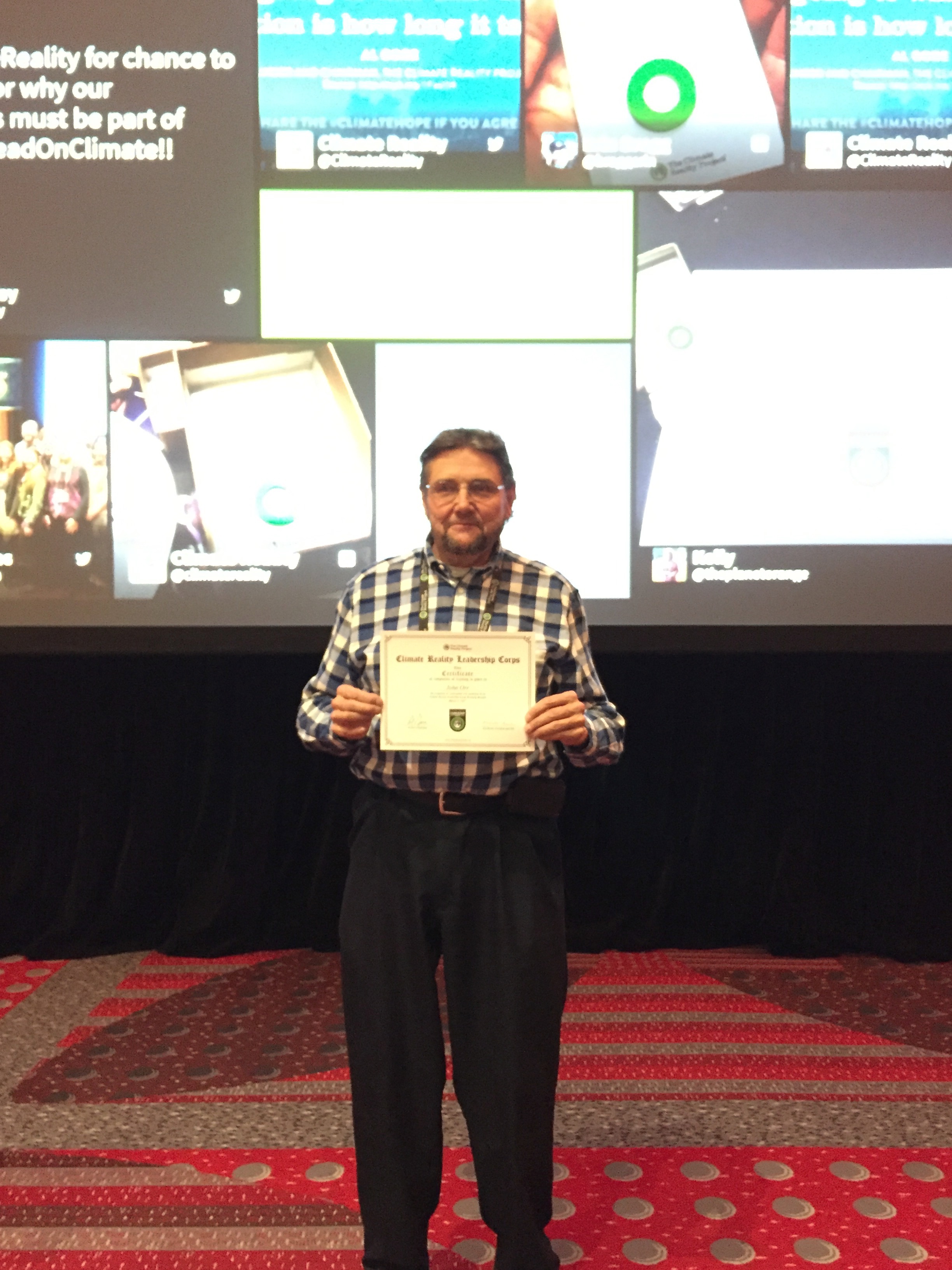
Coyote Gulch graduation March 4, 2017. @ClimateReality #ActOnClimate
As a prominent Democrat, Gore’s impassioned advocacy has been blamed for making climate change seem like a liberal thing to care about. To Gore, that’s an example of attacking the messenger without looking at the deeper reasons why climate change is politically contentious in the first place. “Even when Pope Francis, for goodness’ sake, speaks out on it, they attack him and say that he’s meddling in partisanship.” If there’s anyone to blame for polarization, he said, it’s the fossil fuel industry, which has tried to take control of the conversation about climate change.
“This is the most powerful and wealthiest business lobby in the history of the world, and they spare no effort and no expense to try to block any progress,” Gore said. “Whoever sticks his or her head up above the parapet draws fire from fossil fuel polluters, and they use their legacy networks of economic and political power to try to block any solutions of any sort that might reduce the consumption of fossil fuels.”
In his decades of talking to the public about climate change, he says he’s learned a few things. You have to keep in mind a “time budget” that people will give you to speak with them, as well as a “complexity budget” so that you avoid dumping facts and numbers onto people. Finally, he says, you need to allot a “hope budget” so they don’t get too overwhelmed and depressed.
Electricity generation in 2022 (dark blue) from key fuel sources and countries, terawatt-hours (TWh). Red bars indicate estimated electricity generation from the renewables built in 2019-2023 and set to be built in 2024-2028, according to the IEA’s “main case” forecast. Source: Carbon Brief analysis by Simon Evans of figures from the IEA Renewables 2023 and Renewables 2022 reports, the IEA world energy outlook 2023 and the Ember data explorer.
Even while progress has been slower than he’d hoped, Gore sees signs that things are moving in the right direction. Last year, 86 percent of new electricity generation installed worldwide came from renewables, for example. Not to mention that Congress, where climate legislation had long gone to die, finally managed to pass a landmark climate law in 2022, the Inflation Reduction Act, which aims to drastically trim U.S. emissions through green incentives and rebates.
“It’s the kind of challenge that is so compelling — once you pick it up, you can’t put it back down again — because it really requires any person of conscience, I think, to keep working on it until we get the kind of progress that’s needed.”
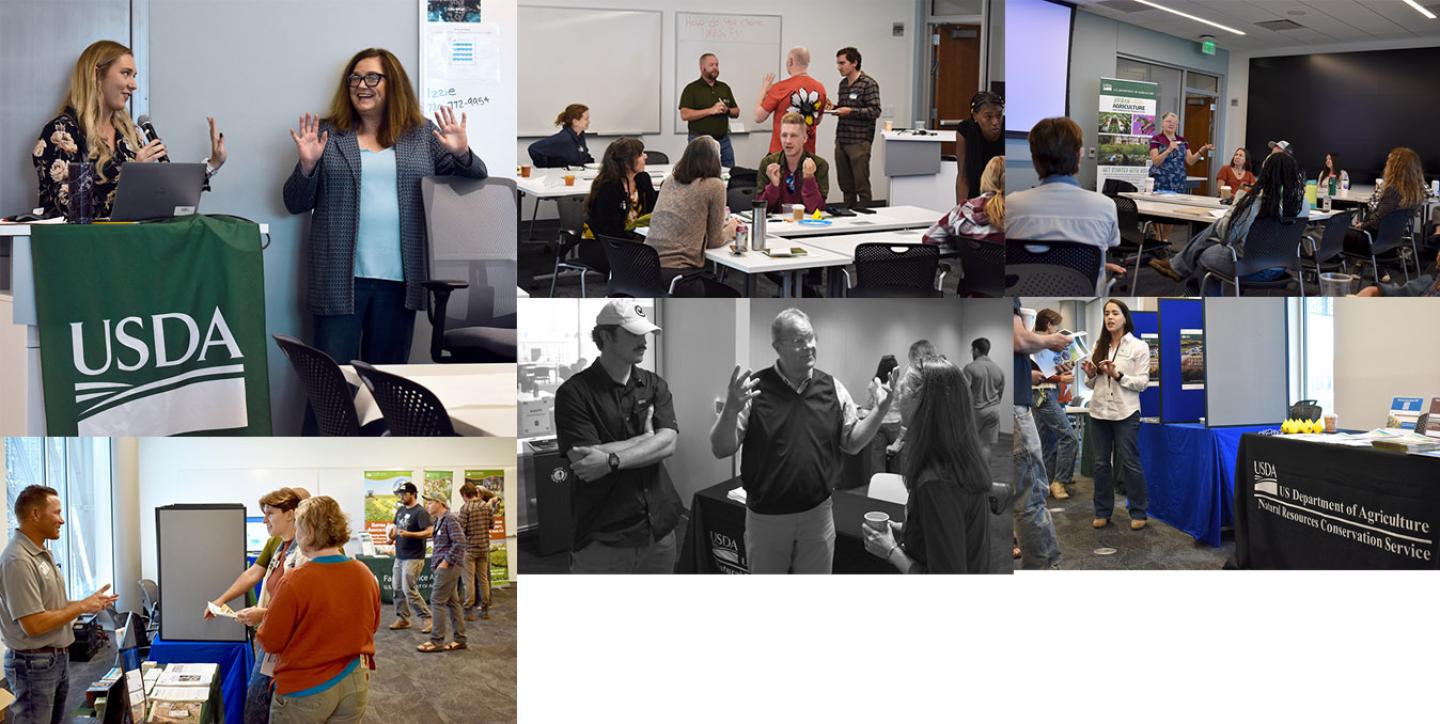
Over 40 attendees gathered for the first Urban Agriculture Connector’s Meeting at the CSU Spur campus in the heart of Denver on September 26th. This groundbreaking event brought together a diverse group of stakeholders, including representatives from federal, state, and local governments, non-profit organizations, and urban agriculture producers. The meeting served as a nexus for networking and learning about the myriad resources available for urban agriculture.
The meeting marks a milestone in the USDA’s continuing commitment to urban agriculture. In 2018, the USDA established the Office of Urban Agriculture and Innovative Production, showcasing its dedication to including urban, small-scale, and innovative producers in its support of agriculture in all its forms. This office plays a crucial role in coordinating across USDA agencies to ensure that the needs of urban producers are met and adapted to as the landscape of agriculture evolves.
Cindy Einspahr, NRCS Outreach & Beginning Farmer/Rancher Coordinator, emphasized the importance of the event, stating, “The Urban Conservation Connectors meeting will be an excellent opportunity to connect with the urban agriculture community and establish new relationships. This is only the beginning of numerous meetings to follow.”
The event kicked off with a warm welcome from Petra Popiel, NRCS State Public Affairs Specialist. Setting a collaborative tone for the day, attendees had the opportunity to introduce themselves and share their background and interest in urban agriculture.
Elizabeth Thomas, FSA Outreach & Administrative Specialist, provided an overview of USDA conservation assistance available in urban settings and discussed strategies for providing resources to historically underserved farmers. The focus on urban conservation underscores the USDA’s recognition of the unique challenges and opportunities presented by city-based agriculture.
The meeting featured presentations from a diverse array of urban agriculture partners, each bringing their unique perspective and expertise to the table. Presenters included:
Consumption Literacy Project
Colorado Department of Education-School Nutrition Unit
Denver Department of Public Health & Environment
Denver Urban Gardens (DUG)
Farm Service Agency (FSA)
Natural Resources Conservation Service (NRCS)
Rural Development (RD)
Shannon Dobbs/Food System Hackers
US Department of Health and Human Services
This wide-ranging group of presenters highlighted the interdisciplinary nature of urban agriculture, touching on aspects from education and public health to innovative farming techniques and community development.
As the meeting drew to a close, discussions turned to the future of urban agriculture in Colorado. The NRCS is committed to continuing its work with urban agriculture and keeping the conversation going by asking the crucial question: “What is Urban Ag in Colorado?”
As urban populations continue to grow and the demand for locally-sourced, sustainable food increases, the importance of urban agriculture cannot be overlooked. The Urban Agriculture Connector’s Meeting represents a significant step forward in fostering the relationships, knowledge-sharing, and resource allocation necessary to support producers and communities.
By bringing together a diverse group of stakeholders and focusing on the unique needs of urban producers, the USDA and its partners are laying the groundwork for a more inclusive and sustainable agricultural future. The connections made and ideas shared at this event will undoubtedly sprout into innovative projects and collaborations that will shape the landscape of urban agriculture in Colorado and beyond.
Jen Bousselot and Amanda Salerno plant seedlings at CSU Spur alongside City of Denver employees Colin Bell and Austin Little. Photo credit: Colorado State University