Work to start on powerful new laser facility funded by public-private partnership — #Colorado State University

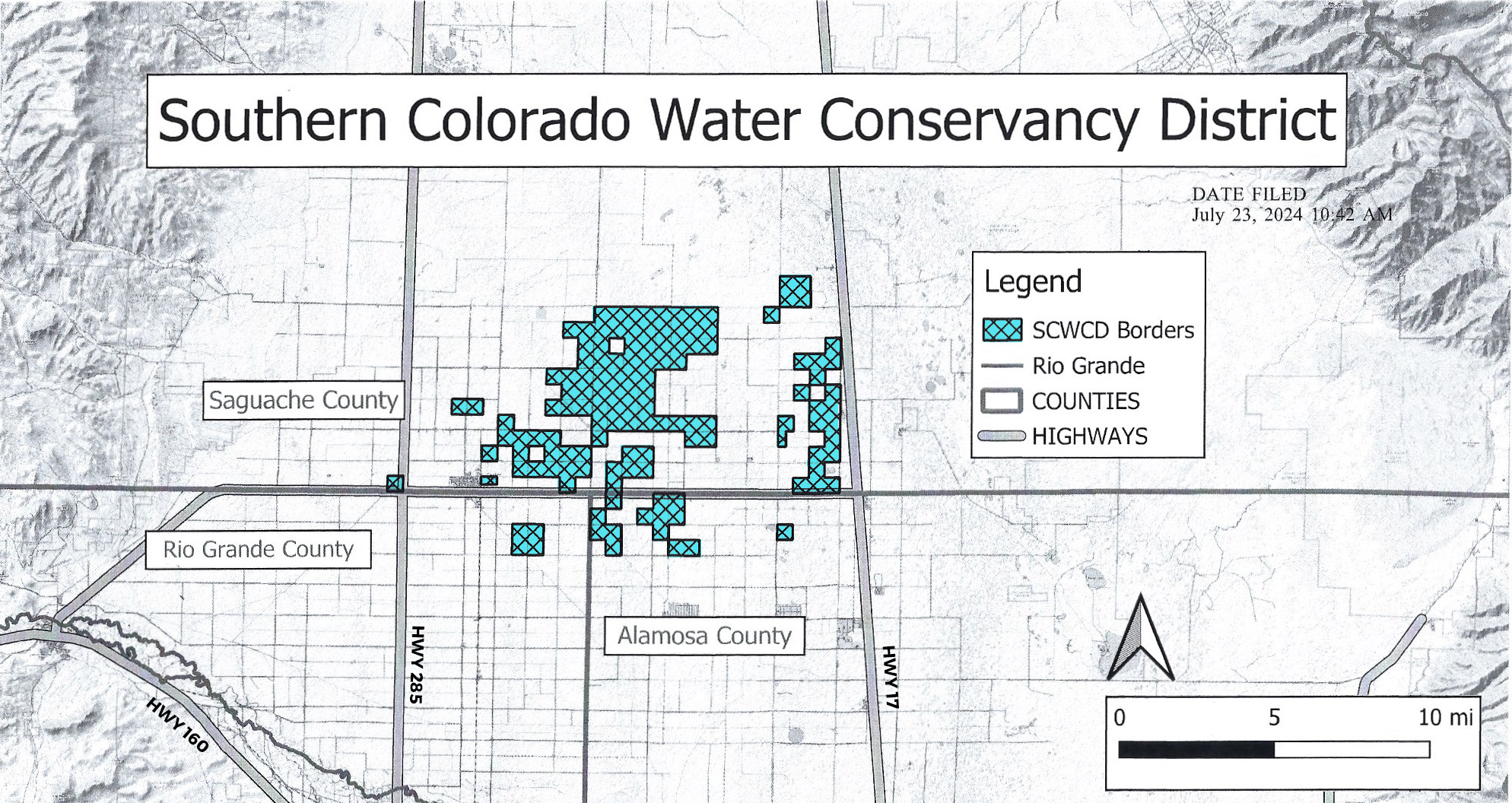
Artist rendering of the new laser research facility which will be located on Foothills Campus and is set to finish in 2026. A major topic of research in the facility will be laser-driven fusion as a viable clean energy source. Credit: Colorado State University

Click the link to read the article on the Colorado State University website (Josh Rhoten):

October 2024

Construction activity will start this month on a powerful new laser research facility located on Colorado State University’s Foothills Campus. Set to come online in mid-2026, the facility is the combined result of 40 years of laser development research at CSU in partnership with the U.S. Department of Energy’s Fusion Energy Sciences program in the Office of Science and a strategic $150 million public-private partnership with industry leader Marvel Fusion that launched in 2023.

Geraldine Richmond, the DOE undersecretary for science and innovation, spoke at the groundbreaking event for the Advanced Technology Lasers for Applications and Science (ATLAS) Facility. Photo credit: Colorado State University

The new building will be known as the Advanced Technology Lasers for Applications and Science (ATLAS) Facility. A major topic of research there will be laser-driven fusion as a viable clean energy source. CSU President Amy Parsons hosted a groundbreaking ceremony for the facility on Wednesday that included comments from Geraldine Richmond, under secretary for science and innovation at the U.S. Department of Energy, U.S. Rep. Joe Neguse, and Marvel Fusion CEO Moritz von der Linden, among other CSU leaders.

Fusion energy is a form of power generation that aims to recreate the process that powers the sun by fusing atomic nuclei together. If successful, laser-driven fusion energy promises to safely generate practically unlimited, sustainable, carbon-free energy. When finished, the facility will feature an upgraded version of an existing ultrahigh power laser developed at CSU in combination with two new lasers provided by Marvel Fusion. The new structure will be located near existing laser research-focused buildings and will house related labs and offices. Taken together, the project is a major expansion of space and capabilities for the university. 

The ATLAS Facility will be a unique cluster of high-intensity, high-repetition rate lasers that can be configured to fire simultaneously at a single fusion target. That burst will deliver nearly 7 petawatts of power – over 5,000 times the electrical generation capacity of the U.S. – into a focal spot roughly the width of a human hair for approximately 100 quadrillionths of a second. The trio of ultra high-power lasers can also be used independently and in other combinations to study questions beyond fusion energy, including key topics in fundamental research.

Parsons said the university has been at the forefront of laser research for many years and the facility would support leadership in this space for many more to come. 

“As a top institution recognized both for research and for sustainability, CSU is a fitting home for this facility,” she said. “We have been a leader in laser research for decades, and our faculty are advancing critical technologies. This new facility will house one of the most powerful lasers in the world and establishes CSU as a nexus for laser fusion research.”

Beyond fusion and basic science research, the ATLAS Facility will also support interdisciplinary work into topics like medicine, where lasers could be used to deposit energy in a very localized region for tumor treatment. Other potential research at the facility includes microchip lithography and design and detailed X-ray imaging of rapidly moving objects, such as airplane engine turbines in full motion. The facility will also broadly support fundamental science research. 

The combined existing and new facilities will now be known collectively as the Advanced Laser for Extreme Photonics (ALEPH) Center.

Undersecretary Richmond highlighted the DOE’s extensive partnership with CSU around laser research in her comments at the event – particularly through the Fusion Energy Sciences program. The agency recently awarded the university $12.5 million through its LaserNetUS program in addition to another award of $16 million to start an Inertial Fusion Science and Technology hub. Those grants support research using the existing facilities on campus, including upgrades of the high-powered ALEPH laser. The DOE funding also enables outside researchers to access research facilities for free, whether they are working on fusion or any other topic – supporting activity across many key fields.

“I’m excited for the important research through this private-public partnership happening with Marvel Fusion at Colorado State University,” said Richmond. “We are eager to leverage these opportunities. Laser development and experiments fit within our long-term goal of reaching fusion energy, but equally important is uncovering what we will learn in this process that will help us ultimately achieve that goal.”

Laser research facility will aid work in fusion, medicine and fundamental science 
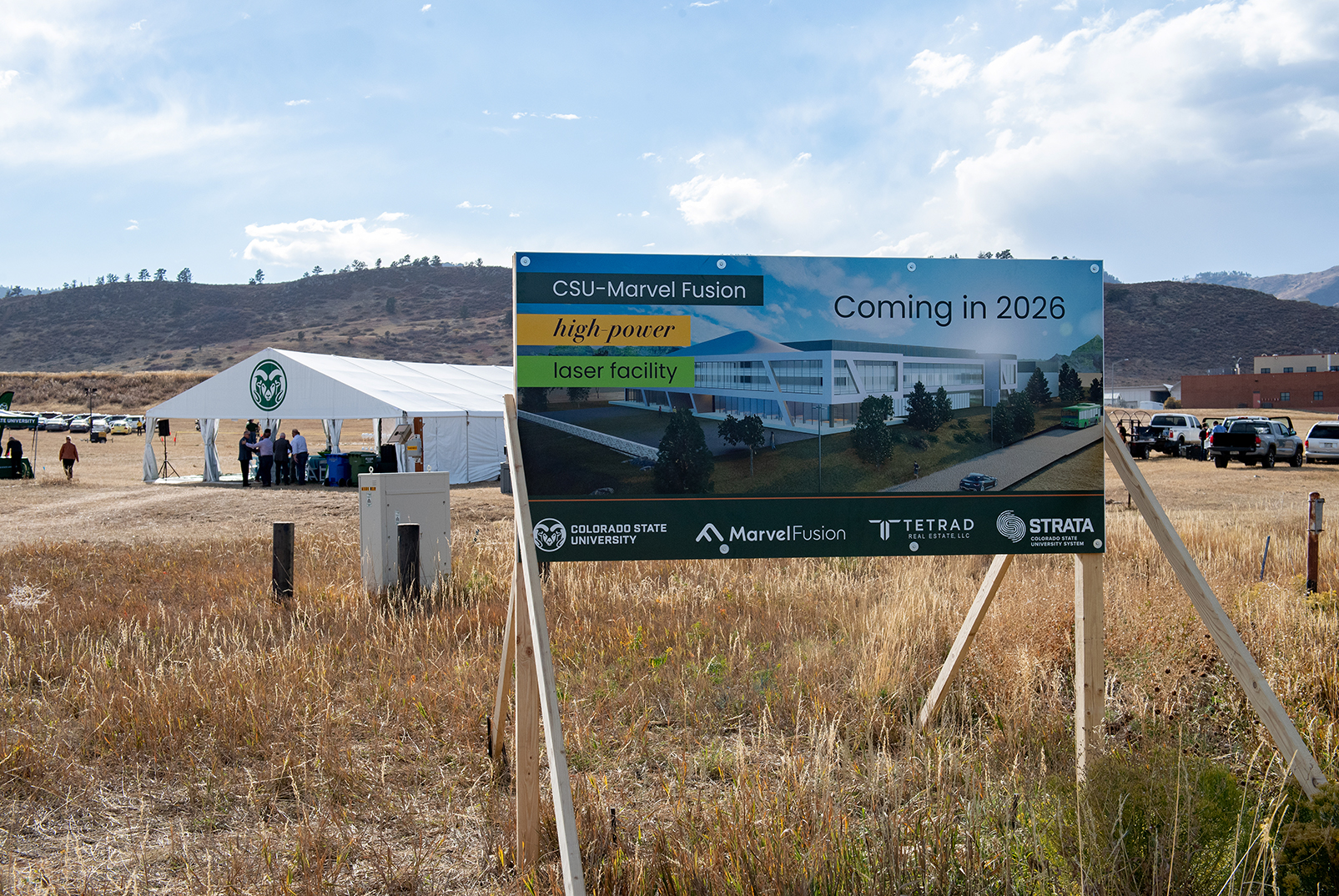
Construction activity will start this month on a powerful new laser research facility located on Colorado State University’s Foothills Campus. Credit: Colorado State University

CSU’s leadership in laser research is primarily due to work by University Distinguished Professors Jorge Rocca and Carmen Menoni. Both are part of the Department of Electrical and Computer Engineering, while Rocca also holds a position in the Department of Physics, and Menoni has a position in the Department of Chemistry. The pair have been leading interdisciplinary research on this topic at the university for years. Their existing and fruitful research partnerships with Marvel Fusion was the key reason the company chose to further invest in the university with the project, said CSU Vice President for Research Cassandra Moseley. 
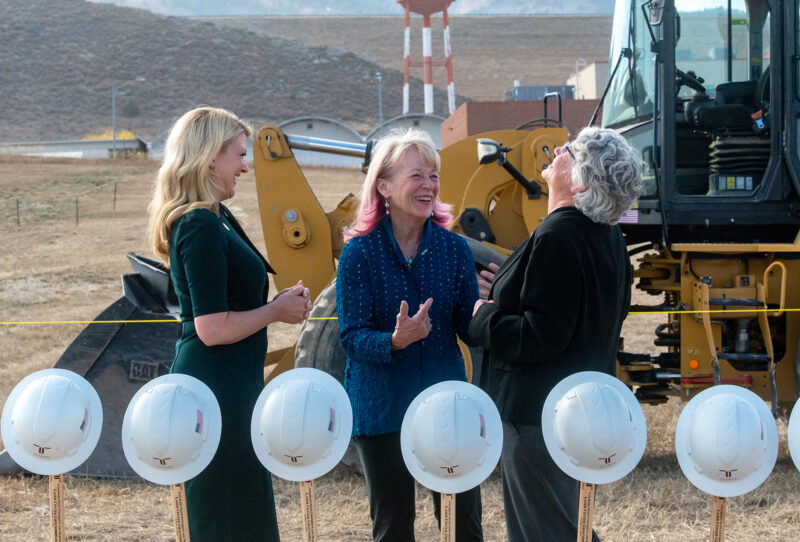
From left: CSU President Amy Parsons, DOE Under Secretary for Science & Innovation Geraldine Richmond, and CSU Vice President for Research Cassandra Moseley speak after the event Photo credit: Colorado State University

“CSU is a leader in laser research and technology, which has led us to break ground on a building that will bring that impactful research to the next level,” said Moseley, who also spoke at the groundbreaking. “We celebrate today with the scientists whose teams helped get us to this point, and with excitement for the research power and discovery that will take place in this facility.”  

Allen Robinson, dean of the Walter Scott, Jr. College of Engineering, echoed those sentiments and said the new facility is a remarkable step forward for the university in terms of entrepreneurship. 

“We are incredibly proud of the decades of success of professors Rocca and Menoni that is culminating in the construction of this world-class facility,” said Robinson. “This partnership with industry and CSU STRATA is a natural extension of the culture of entrepreneurship and technology transfer that is widespread in the college and at CSU.” 

Robinson added that the exponential growth of laser-based research around the world has resulted in a large and unmet need to prepare the next generation of scientists, technicians and suppliers within the fusion industry. He said the new facility will address that need by offering both undergraduate and graduate students at CSU a chance for hands-on experience with the latest technology – fulfilling the university’s commitment as a land-grant institution to support workforce development in crucial STEM fields. 

Heike Freund, the chief operating officer of Marvel Fusion, said the company was excited to continue to partner with CSU in this research space. 

“This groundbreaking marks an exciting new chapter in the partnership between Marvel Fusion and Colorado State University as we move forward with constructing a facility that will drive the future of fusion energy,” Freund said. “Fusion energy has the potential to revolutionize the approach to sustainable power, providing a virtually limitless, clean energy source. This collaboration sets CSU and MF at the forefront of cutting-edge research, paving the way for transformative advancements that could redefine global energy solutions.” 

Construction on the project will be managed by Tetrad Corporation with McCarthy Building Companies, Inc. serving as the general contractor and SWBR leading design. The 71,000-square-foot facility will feature over 7,500 cubic yards of concrete – including 5-foot-thick shielding walls around the target bay and a three-foot-thick slab below the laser and target bays for vibration isolation. The lab spaces will feature clean rooms up to ISO 6 / Class 1,000, and the HVAC systems will maintain extremely tight temperature and humidity tolerances to keep the laser systems functioning properly. 
Proposition JJ: Water project funding important for farmers and fish — The #GrandJunction Daily Sentinel #2024election

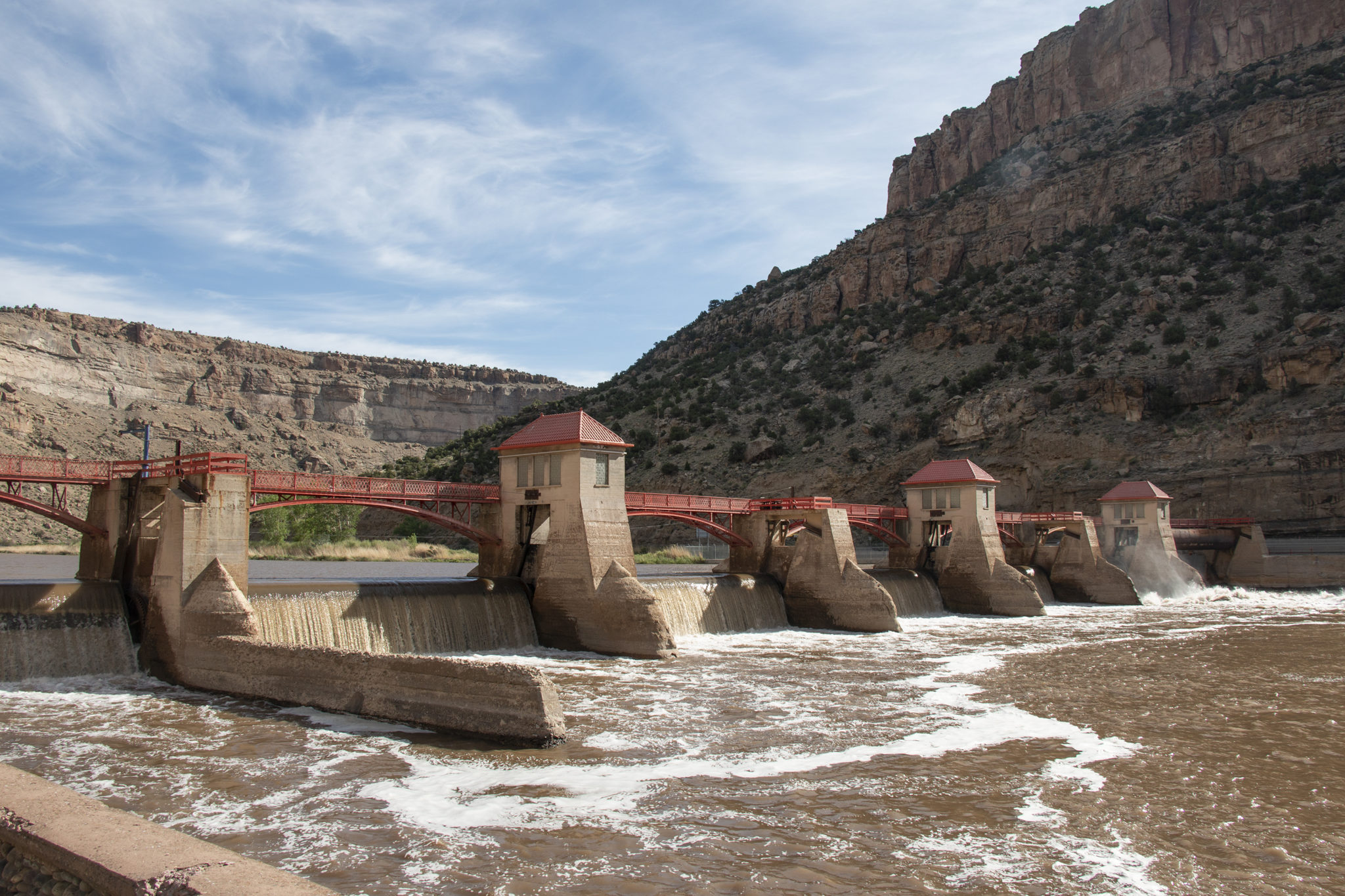
The Grand River Diversion Dam, also known as the “Roller Dam”, was built in 1913 to divert water from the Colorado River to the Government Highline Canal, which farmers use to irrigate their lands in the Grand Valley. Photo credit: Bethany Blitz/Aspen Journalism

Click the link to read the article on the Grand Junction Daily Sentinel website (Tina Bergonzoni and Jackie Fisher). Here’s an excerpt:

In 2019, Coloradans voted to direct tax dollars generated from sports betting to projects that create a more secure water future for the state. More than 90% of this revenue now goes to fund the Colorado Water Plan. But a state-imposed cap limits the amount of revenue that can be used for water projects. As a result, the program is oversubscribed — there are more critical water projects in need of support than current funding limits will allow. On the ballot this November, Prop JJ would rectify this problem by removing the current cap. Its passage would enable more revenue coming in from sports betting to go towards addressing the state’s water needs. This, coupled with increasing funding for drought resilience and other infrastructure needs from the federal government, can help us implement the long-term solutions necessary to manage a hotter and drier climate.

Recent efforts in the Grand Valley have shown the importance of investments in water projects for our community and our environment. The projects include building a new hydropower plant on the Orchard Mesa Irrigation District system, leasing water to help supply it and work underway to upgrade the iconic but aging Roller Dam in DeBeque Canyon. These infrastructure projects not only benefit farmers and generate clean energy, they also play a key role in delivering water to the 15-Mile Reach of the Colorado River between the major irrigation diversions and the confluence with the Gunnison River. Due to high demand, this stretch of the river can reach critically low levels. Increasing water flows in the reach supports critical habitat for native endangered fish and can also keep rafts from running aground on town floats when flows diminish after spring runoff. As managers of the Grand Valley Water Users Association (GVWUA), which runs the Roller Dam, and the Orchard Mesa Irrigation District (OMID), which works with GVWUA to run the power plant, we collaborate with numerous stakeholders and agencies. This includes working to enhance flows in the 15-Mile Reach to protect endangered species while fulfilling our responsibilities to deliver water to producers of hay, corn, wine grapes, produce and peaches.

R.I.P. Phil Lesh: “Lately it occurs to me. What a long, strange trip it’s been.”

Click the link to read the obituary on The New York Times website (Jim Farber). Here’s an excerpt:

Oct. 25, 2024

Phil Lesh, whose expansive approach to the bass as a charter member of the Grateful Dead made him one of the first performers on that instrument in a rock band to play a lead role rather than a supporting one, died on Friday. He was 84. His death was announced on his Instagram account. No further information was provided. In addition to providing explorative bass work, Mr. Lesh sang high harmonies for the band and provided the occasional lead vocal. He also co-wrote some of the band’s most noteworthy songs, including ones that inspired adventurous jams, like “St. Stephen” and “Dark Star,” as well as more conventional pieces, like “Cumberland Blues,” “Truckin’” and “Box of Rain.”

The Grateful Dead in 1970, in a rural setting – Bill Kreutzmann, Ron “Pigpen” McKernan, Jerry Garcia, Bob Weir, Mickey Hart, and Phil Lesh By Herb Greene – Billboard, page 9, 5 December 1970, Public Domain, https://commons.wikimedia.org/w/index.php?curid=27041998

Mr. Lesh’s bass work could be thundering or tender, focused or abstract. On the Grateful Dead’s studio albums, his lines held so much melody that one could listen to a song for his playing alone. At the same time, he shared his bandmates’ love for unusual chord structures and uncommon time signatures. In constructing his bass parts, he drew from many sources, including free jazz, classical music and the avant-garde…He had formal training in those last two areas, having played both classical violin and trumpet, composed music for orchestras and studied with the avant-garde composer Luciano Berio, all before taking up the bass and joining the Dead. His work with the band held such value for a significant portion of its massive following that devotees at concerts would position themselves in the “Phil Zone,” an area named for “the proximity to Lesh’s position onstage,” according to the 1994 Grateful Dead guidebook “Skeleton Key: A Dictionary for Deadheads.”

Grateful Dead – Truckin’ (Tivoli Concert Hall 4/17/72) | Meet Up At The Movies 2022. The sixth show on the Grateful Dead’s famous Europe ’72 tour was a return engagement to the Tivoli Concert Hall in Copenhagen, Denmark, on April 17, 1972.

Group of irrigators forming new water conservation district: District would include 77 parcels in three counties, signals push away from Rio Grande Water Conservation District @AlamosaCitizen #RioGrande #SanLuisValley

Credit: court documents

Click the link to read the article on the Alamosa Citizen website:

October 26, 2024

A new water conservancy district is taking shape on the western end of the San Luis Valley that will compete for groundwater purchases to keep farms in operation and add to the complicated efforts to restore the underground aquifers of the Upper Rio Grande Basin.

Winding its ways through Colorado Division 3 Water Court is an application from a group of Valley irrigators to form the Southern Colorado Water Conservancy District and Groundwater Management Subdistrict. 

The farming operations that would belong to the new conservancy district would include 77 parcels of irrigated lands with an assessed valuation of $13.3 million, according to documents filed with the application. The parcels show up in Saguache, Rio Grande and Alamosa counties.

The application to form a new conservancy district comes from the same farm operators who formed the Sustainable Water Augmentation Group. Last year, SWAG filed for an alternative augmentation plan in state district water court in effort to avert a groundwater management plan approved by the Rio Grande Water Conservation District and its Subdistrict 1.

In essence, SCWCD has replaced SWAG in the fight for sustainability of farming and ranching in the western end of the Valley. The formation of a new conservancy district also signals a push away for these farm operations from the Rio Grande Water Conservation District and its strategies.

Once operational, Southern Colorado Water Conservancy District will find itself working with the Colorado Division of Water Resources to get its water management plans approved just as the Rio Grande Water Conservation District does for its members.

“Again, the primary objective of the SCWCD will be to obtain and operate a decreed plan or plans for augmentation, and/or a groundwater management plan, to allow landowners in the District to continue to operate their groundwater wells in accordance with Colorado law,” the group said in its application filed with Division 3 water court.

The next district water court hearing on the application is scheduled in November.

Asier Artaechevarria, Willie Myers and Les Alderete – all three of whom formed the SWAG board of directors – would be the initial board of directors steering the Southern Colorado Water Conservancy District, according to court filings.

SCWCD would impose a mill levy tax upon the farms operating within its boundaries to pay for operations and strategy to adhere to the state’s groundwater pumping rules. The conservancy district would include approximately 250 wells, and the group said it plans to invest another $40 million to obtain approximately another 6,000 acre-feet of water to “achieve and maintain a sustainable water supply.”

San Luis Valley Groundwater