Fire speed, not size, drives threat to people, infrastructure: New CU Boulder study: “Fast fires” are getting faster, more dangerous in the Western U.S. — CIRES #wildfire

East Troublesome Fire. Photo credit: Thomas Cooper

Click the link to read the article on the CIRES website:

October 24, 2024

Fast-growing fires were responsible for nearly 90 percent of fire-related damages despite being relatively rare in the United States between 2001-2020, according to a new CU Boulder-led study. “Fast fires,” which thrust embers into the air ahead of rapidly advancing flames, can ignite homes before emergency responders are able to intervene. The work, published today in Science, shows these fires are getting faster in the Western U.S., increasing the risk for millions of people.

The research highlights a critical gap in hazard preparedness across the U.S. — National-level fire risk assessments do not account for fire speed or provide insight into how people and communities can better prepare for rapid fire growth events.

“We hear a lot about megafires because of their size, but if we want to protect our homes and communities, we really need to appreciate and prepare for how fast fires move,” said Jennifer Balch, CIRES fellow, associate professor of Geography, and the lead author of the study. “Speed matters more for keeping people safe.”

Balch and her colleagues were inspired to look closer at fire speed after the Marshall Fire, which destroyed more than 1,000 homes in Boulder County, Colorado, in December 2021. The fire burned less than 6,100 acres (24.7 square kilometers) but grew quickly due to a combination of dry conditions and high winds. Less than an hour after the fire was reported, it had spread to a town 3 miles (4.8 kilometers) away, eventually prompting the evacuation of tens of thousands of people. In the aftermath, Balch’s team was eager to understand how fire growth rates impact fire risk across the country.

The researchers used satellite data to analyze the growth rates of over 60,000 fires in the contiguous U.S. from 2001-2020. Using a cutting-edge algorithm, which involves applying a set of calculations to each satellite pixel, they identified and recorded the perimeter of each fire for each day it was active.

“Until now, we had scattered information about fire speed,” said Virginia Iglesias, interim director of Earth Lab and co-author of the study. “We harnessed Earth observations and remote sensing data to learn about fire growth across the nation in a systematic manner.”

The team used the fire perimeter maps to calculate the growth rate of each fire as it progressed. They then zoomed in on the fastest fires, which grew more than 4,003 acres (16.2 square kilometers) in a single day, and probed how the highest growth rates changed over time. The analysis revealed a staggering 250 percent increase in the average maximum growth rate of the fastest fires over the last two decades in the Western U.S.

“Fires have gotten faster in the western U.S. in just a couple of decades,” Balch said. “We need to focus on what we can do to prepare communities: hardening homes and making robust evacuation plans.”

To evaluate the impacts of fast fires on people and infrastructure, the researchers compared the growth rates of the fastest fires to information recorded in incident reports about the number of structures damaged or destroyed per fire event. They found that fast fires accounted for 88 percent of the homes destroyed between 2001 and 2020 despite only representing 2.7 percent of fires in the record. Fires that damaged or destroyed more than 100 structures exhibited peak fire growth rates of more than 21,000 acres (85 square kilometers) in a single day.

“These results change how we think about wildfire risk because they position growth rate as a key determinant of a fire’s destructive potential,” Iglesias said.

The work also highlights a critical risk assessment gap. At the national level, wildfire risk models include parameters for area burned, intensity, severity, and probability of occurrence, but they do not incorporate growth rate or other measures of fire speed. Government agencies and insurance companies that use these models are therefore missing vital information about how fires spread, which homeowners could use to better protect themselves and their communities. The authors believe this needs to change.

“When it comes to safeguarding infrastructure and orchestrating efficient evacuations, the speed of a fire’s growth is arguably more critical than its sheer size,” Iglesias said.

West Fork Fire June 20, 2013 photo the Pike Hot Shots Wildfire Today

My family lived the horrors of Native American boarding schools – why Biden’s apology doesn’t go far enough

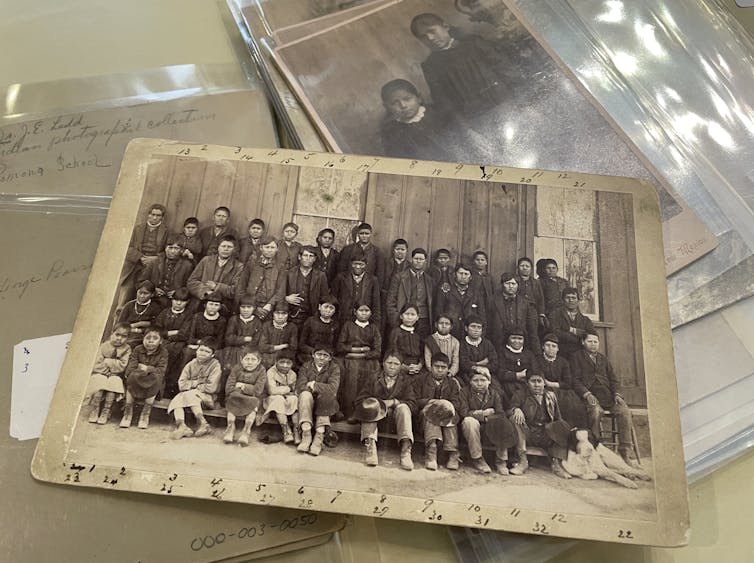
A photograph archived at the Center for Southwest Research at the University of New Mexico in Albuquerque shows a group of Indigenous students who attended the Ramona Industrial School in Santa Fe. AP Photo/Susan Montoya Bryan

Rosalyn R. LaPier, University of Illinois at Urbana-Champaign

I am a direct descendant of family members that were forced as children to attend either a U.S. government-operated or church-run Indian boarding school. They include my mother, all four of my grandparents and the majority of my great-grandparents.

On Oct. 25, 2024, Joe Biden, the first U.S. president to formally apologize for the policy of sending Native American children to Indian boarding schools, called it one of the most “horrific chapters” in U.S. history and “a mark of shame.” But he did not call it a genocide.

Yet, over the past 10 years, many historians and Indigenous scholars have said that what happened at the Indian boarding schools “meets the definition of genocide.”

From the 19th to 20th century, children were physically removed from their homes and separated from their families and communities, often without the consent of their parents. The purpose of these schools was to strip Native American children of their Indigenous names, languages, religions and cultural practices.

The U.S. government operated the boarding schools directly or paid Christian churches to run them. Historians and scholars have written about the history of Indian boarding schools for decades. But, as Biden noted, “most Americans don’t know about this history.”

As an Indigenous scholar who studies Indigenous history and the descendant of Indian boarding school survivors, I know about the “horrific” history of Indian boarding schools from both survivors and scholars who contend they were places of genocide.

Was it genocide?

The United Nations defines “genocide” as the “intent to destroy, in whole or in part, a national, ethnical, racial or religious group.” Scholars have researched different cases of genocide of Indigenous peoples in the United States.

Historian Jeffery Ostler, in his 2019 book “Surviving Genocide,” argues that the unlawful annexation of Indigenous lands, the deportation of Indigenous peoples and the numerous deaths of children and adults that occurred as they walked hundreds of miles from their homelands in the 19th century constitute genocide.

The mass killings of Indigenous peoples after gold was found in the 19th century in what is now California also constitutes genocide, writes historian Benjamin Madley in his 2017 book “An American Genocide.” At the time, a large migration of new settlers to California to mine gold brought with it the killing and displacement of Indigenous peoples.

Other scholars have focused on the forced assimilation of children at Indian boarding schools. Sociologist Andrew Woolford argues that scholars need to start calling what happened at Indian boarding schools in the 19th and 20th century “genocide” because of the “sheer destructiveness of these institutions.”

Woolford, a former president of the International Association of Genocide Scholars, explains in his 2015 book “This Benevolent Experiment” that the goal of Indian boarding schools was the “forcible transformation of multiple Indigenous peoples so that they would no longer exist as an obstacle (real or perceived) to settler colonial domination on the continent.”

A black and white photo shows students seated in rows in a classroom, while the instructor is standing in front.
First- and second-grade students sit in a classroom at the former Genoa Indian Industrial School in Genoa, Neb. Researchers are now trying to locate the bodies of more than 80 Native American children buried near the school. National Archives/AP

Indigenous writers have explained how this transformation at Indian boarding schools occurred. “Federal agents beat Native children in such schools for speaking Native languages, held them in unsanitary conditions, and forced them into manual and dangerous forms of labor,” writes Indigenous law professor Maggie Blackhawk.

What my grandmother witnessed

Secretary of the Interior Debra Anne Haaland has stated that every Native American family has been impacted by the “trauma and terror” of Indian boarding schools. And my family is no different.

One of the more horrific stories that my maternal grandmother shared with her grandchildren was that she witnessed the death of another student. They were both under the age of 10. The student died of poisoning after lye soap was put in her mouth as a punishment for speaking her Indigenous language.

We know that similar punishments happened and children died at Indian boarding schools. The Department of Interior reported in 2024 that 973 children died at Indian boarding schools.

Tribes are increasingly seeking the return of the remains of children who died and are buried at Indian boarding schools.

A man seems to look intently as he digs with a shovel.
A worker digs for the suspected remains of children who once attended the Genoa Indian Industrial School, on July 11, 2023, in Genoa, Neb. AP Photo/Charlie Neibergall

Lasting legacy

The U.S. government is beginning to encourage survivors to tell their stories of their Indian boarding school experiences. The Department of the Interior is in the process of recording and documenting their stories on digital video, and they will be placed in a government repository.

At 84 years old, my mother is the only living Indian boarding school survivor in our family. She shared her story with the Department of the Interior this past summer, as did dozens of other survivors.

Haaland stated these “first person narratives” can be used in the future to learn about the history of Indian boarding schools, and to “ensure that no one will ever forget.”

“For too long, this nation sought to silence the voices of generations of Native children,” Biden added at the apology ceremony, “but now your voices are being heard.”

As a descendant of Indian boarding school survivors, I appreciate President Biden’s apology and his effort to break the silence. But, I am also convinced that what my mother, grandmother and other survivors experienced was genocide.

Rosalyn R. LaPier, Professor of History, University of Illinois at Urbana-Champaign

This article is republished from The Conversation under a Creative Commons license. Read the original article.

Navajo Dam operations update October 28, 2024: bumping down to 350 cfs

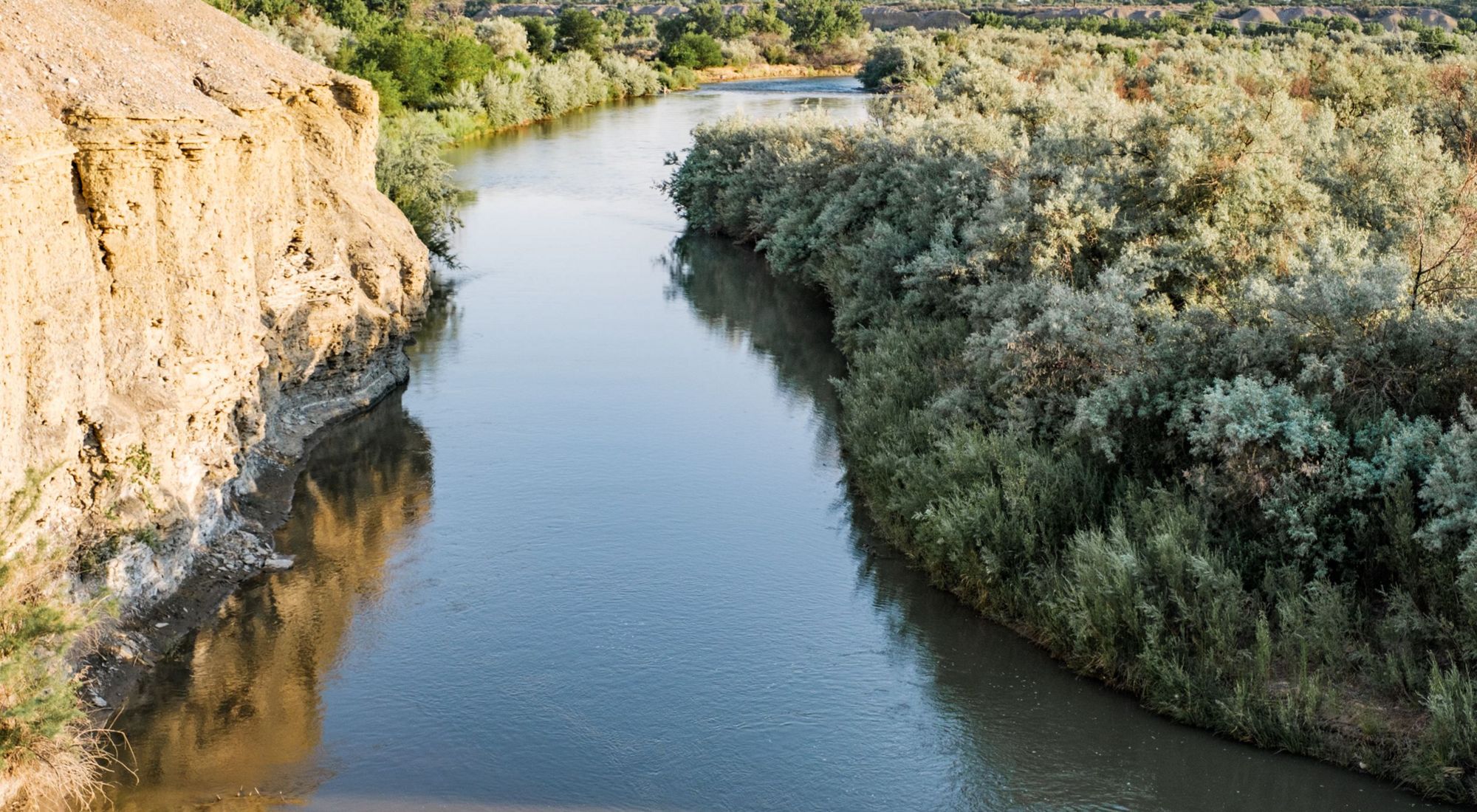
SAN JUAN RIVER The San Juan River at the hwy 64 bridge in Shiprock, NM. June 18, 2021. © Jason Houston

From email from Reclamation Western Colorado Area Office:

October 28, 2024

With cooler weather and forecast sufficient flows in the critical habitat reach, the Bureau of Reclamation has scheduled a decrease in the release from Navajo Dam from 450 cubic feet per second (cfs) to 350 cfs for Wednesday, October 30th, at 7:00 AM. Reclamation is still currently utilizing the 4×4 for the release point due to a maintenance project. This project will continue throughout October and November.

Releases are made for the authorized purposes of the Navajo Unit, and to attempt to maintain a target base flow through the endangered fish critical habitat reach of the San Juan River (Farmington to Lake Powell).  The San Juan River Basin Recovery Implementation Program recommends a target base flow of between 500 cfs and 1,000 cfs through the critical habitat area.  The target base flow is calculated as the weekly average of gaged flows throughout the critical habitat area from Farmington to Lake Powell.  

This scheduled release change is subject to changes in river flows and weather conditions.  If you have any questions, please reply to this message, call 970-385-6560, or visit Reclamation’s Navajo Dam website at https://www.usbr.gov/uc/water/crsp/cs/nvd.html.

Colorado State University researchers studying hay crops that use less water, respond better to drought — The #GrandJunction Daily Sentinel #ActOnClimate

Sainfoin (Onobrychis viciifolia) has amazing properties and was largely ignored during the post war years of industrial agriculture. Not surprisingly, it’s making a bit of a comeback. Photo credit: Soil Association

Click the link to read the article on The Grand Junction Daily Sentinel website (Dan West). Here’s an excerpt:

October 27, 2024

On Tuesday, The Water for Colorado Coalition hosted several tours along the Colorado River corridor looking at different water conservation projects. The last stop was at the CSU Western Colorado Research Center where Dr. Perry Cabot, a research scientist with CSU, is conducting trials on alternative forage or hay crops.

“If (growers are) trying to ride out a really rough cropping season or they know it’s going to be rough for the foreseeable future, which we do,” Cabot said, “how can they actually get something growing on that land that doesn’t require the consumptive use demand of alfalfa?”

Hunter Doyle with The Land Institute is working with Cabot and several Colorado growers to help answer that question. They told the group they are looking at crops that produce good yield while potentially using less water or have the ability to bounce back better after experiencing drought. One crop in particular, Kernza, is of interest because it can produce both hay and grain, Doyle said…

“Most of what we use the Colorado River Basin water for is agriculture, and most of that is to grow hay,” [Hannah] Holm said. “So, the grand theory is if we can find alternatives, you can take some pressure off the system and off rivers. That’s why American Rivers cares about this.”

#Wyoming backs #Utah’s quest to seize BLM land, may want other federal property: Cheyenne says its support for Western states to take over federal land could extend to national parks, forests and wilderness areas — Angus M. Thuermer Jr. @WyoFile

An oil and gas drilling rig in Wyoming BLM’s High Desert District. (Wyoming BLM/FlickrCC)

Click the link to read the article on the WyoFile website (Angus M. Thuermer Jr.):

October 25, 2024

Wyoming is backing an effort by Utah to wrest ownership of U.S. Bureau of Land Management land from the federal government, arguing that states could “develop the land to attract prospective citizens.”

In an amicus brief filed Tuesday, Wyoming, Idaho, Alaska and the Arizona Legislature expressed support for Utah’s quest to take its case straight to the U.S. Supreme Court. Utah wants to own BLM land that’s currently the property of all Americans, saying among other things that the federal holdings deprive the Beehive State of an equal footing with other states.

Gov. Mark Gordon announced the Wyoming plea this week. Wyoming’s U.S. Rep. Harriet Hageman lent her name to a separate amicus brief supporting Utah, teaming with U.S. Sens. Mitt Romney, Mike Lee and other Western members of Congress.

Twenty-six Wyoming legislators also asked Tuesday to join the action if the Supreme Court agrees to take up the issue. Those 10 state senators and 16 representatives (see list below) say they might not stop after gaining state ownership of BLM’s property which is largely sagebrush and desert prairie steppe.

Wyoming legislators’ could extend their claims to “all former federal territorial lands … now held by the United States … [including] parks, monuments, wilderness, etc.,” their brief states.

Oregon Buttes near South Pass are in a BLM wilderness study area in Sweetwater County. (Ecoflight)

The federal government has until Nov. 21 to respond to what conservationists call a “land grab.”

“This lawsuit is as frivolous as they come and a blatant power-grab by a handful of Utah politicians whose escalating aggression has become an attack on all public lands as we know them,” Jocelyn Torres, an officer with the Conservation Lands Foundation, a Colorado nonprofit, said in a statement.

Unappropriated

Utah and its allies argue that BLM lands are “unappropriated” and should be the property of Western States. Because of the federal government’s “indefinite retention” of 18.5 million BLM acres, “Utah is deprived of basic and fundamental sovereign powers as to more than a third of its territory,” its bill of complaint states.

Sagebrush rebellion efforts like Utah’s legal gambit have popped up — and fallen short — repeatedly since the movement arose in the 1970s. They’ve been countered in part by western states ceding — in their constitutions at statehood — ownership of federal property to the government and all Americans.

“The people inhabiting this state do agree and declare that they forever disclaim all right and title to the unappropriated public lands lying within the boundaries thereof,” the Wyoming Constitution states. Further, Western states received federal property at statehood — two square miles in many surveyed 36-square-mile townships in Wyoming — to support schools and other institutions.

“Only Congress can transfer or dispose of federal lands,” the Lands Foundation said.

Gov. Gordon sees it differently.

“Wyoming believes it is essential for the states to be recognized as the primary authority when it comes to unappropriated lands within our borders,” he said in a statement Thursday.

The BLM manages 28% of the land in Wyoming, the brief states, most of it “unappropriated.”

Leaving vexing legal complexities to Utah, Wyoming’s brief focuses on “harms that federal ownership of unappropriated lands uniquely imposes on western States on a daily basis,” the amicus filing states. “In short, western States’ sovereign authority to address issues of local concern is curtailed, and billions of dollars are diverted away from western States.”

A ruling in favor of Utah would “begin to level the playing field … and restore the proper balance of federalism between western States and the federal government,” the brief states.

If Utah prevails, Western states “would then have a fair chance to develop the land to attract prospective citizens,” Wyoming contends. Ownership of federal BLM land would let Wyoming and its allies “use and develop land … and reinvest more of the revenue generated.”

Wyoming’s 29-page brief concludes with the assertion that “[g]ranting the relief requested in Utah’s bill of complaint would make clear that western States are not second-class sovereigns.”

Legislators may want more

Wyoming lawmakers say that Wyoming expected at statehood that Congress would some day “dispose” of the BLM lands in question as it had done with other states. Instead, lawmakers argue the federal government is exercising an unconstitutional police power in holding onto the property.

Turning the BLM land over to Wyoming would create a boom, lawmakers assert. “Developing natural resources in Wyoming could create thousands of jobs, generate billions of dollars in economic activity, and significantly boost the State’s economy,” the 10-page brief states.

Hageman and her D.C. legal allies say the U.S. Supreme Court has no choice but to hear the case.

The federal government denies Utah “basic sovereign powers,” Hageman and the other states’ congressional delegates say. 

“[W]hat the United States is doing to Utah is not directly analogous to one sovereign nation’s physical invasion of another, the brief states.” But existing federal control is just as serious as war, the brief contends, and needs to be addressed now.

The Supreme Court has never required states “to make a showing that war is actually justified,” when considering whether to immediately address a complaint like Utah’s,” Hageman’s brief states. “Instead, the standard is whether the federal government’s actions would amount to an invasion and conquest of that land if … Utah were a separate sovereign nation.”

Here’s a list of the Wyoming legislators who filed a brief in support of Utah.

Senators

Bo Biteman (R-Ranchester), Brian Boner (R-Douglas),

Tim French (R-Powell), Larry Hicks (R-Baggs), Bob Ide (R-Casper), John Kolb (R-Rock Springs), Dan Laursen (R-Powell), Troy McKeown (R-Gillette), Tim Salazar (R-Riverton), Cheri Steinmetz (R-Lingle).

Representatives

Bill Allemand (R-Midwest), John Bear (R-Gillette), Jeremy Haroldson (R-Wheatland), Scott Heiner (R-Green River), Ben Hornok (R-Cheyenne), Christopher Knapp (R-Gillette), Chip Neiman (R-Hulett), Pepper Ottman (R-Riverton), Sarah Penn (R-Lander), Rachel Rodriguez-Williams (R-Cody), Daniel Singh (R-Cheyenne), Allen Slagle (R-Newcastle), Scott Smith (R-Lingle), Tomi Strock (R-Douglas), Jeanette Ward (R-Casper), John Winter (R-Thermopolis).

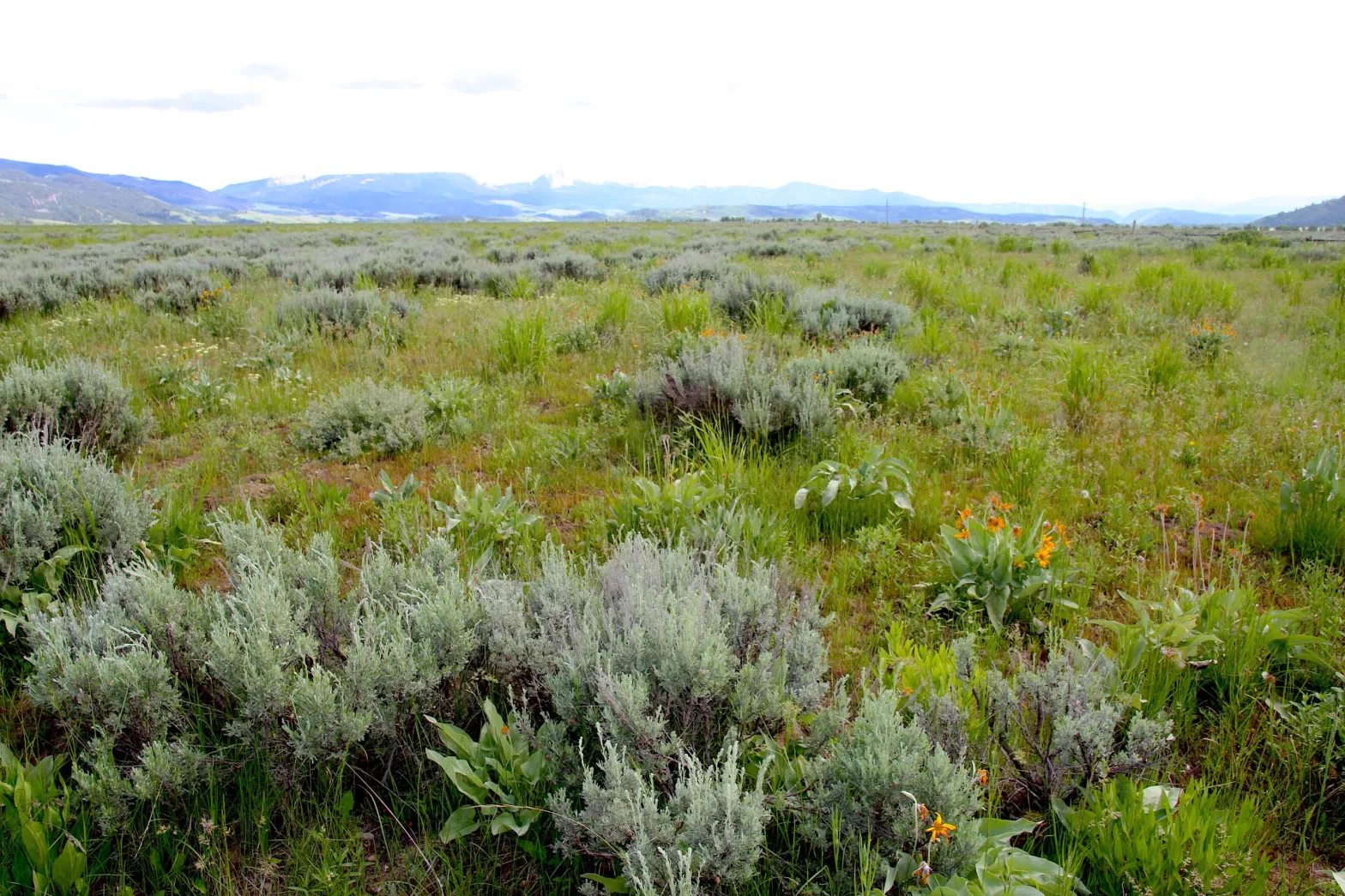
Sagebrush has succesfully matured in one of Grand Teton National Park’s oldest reclamation sites, pictured. (Mike Koshmrl/WyoFile)