Baby, it’s warm outside: February gave #Alamosa the warmest winter day on record in a series of 60-degree days — AlamosaCitizen.com #RioGrande

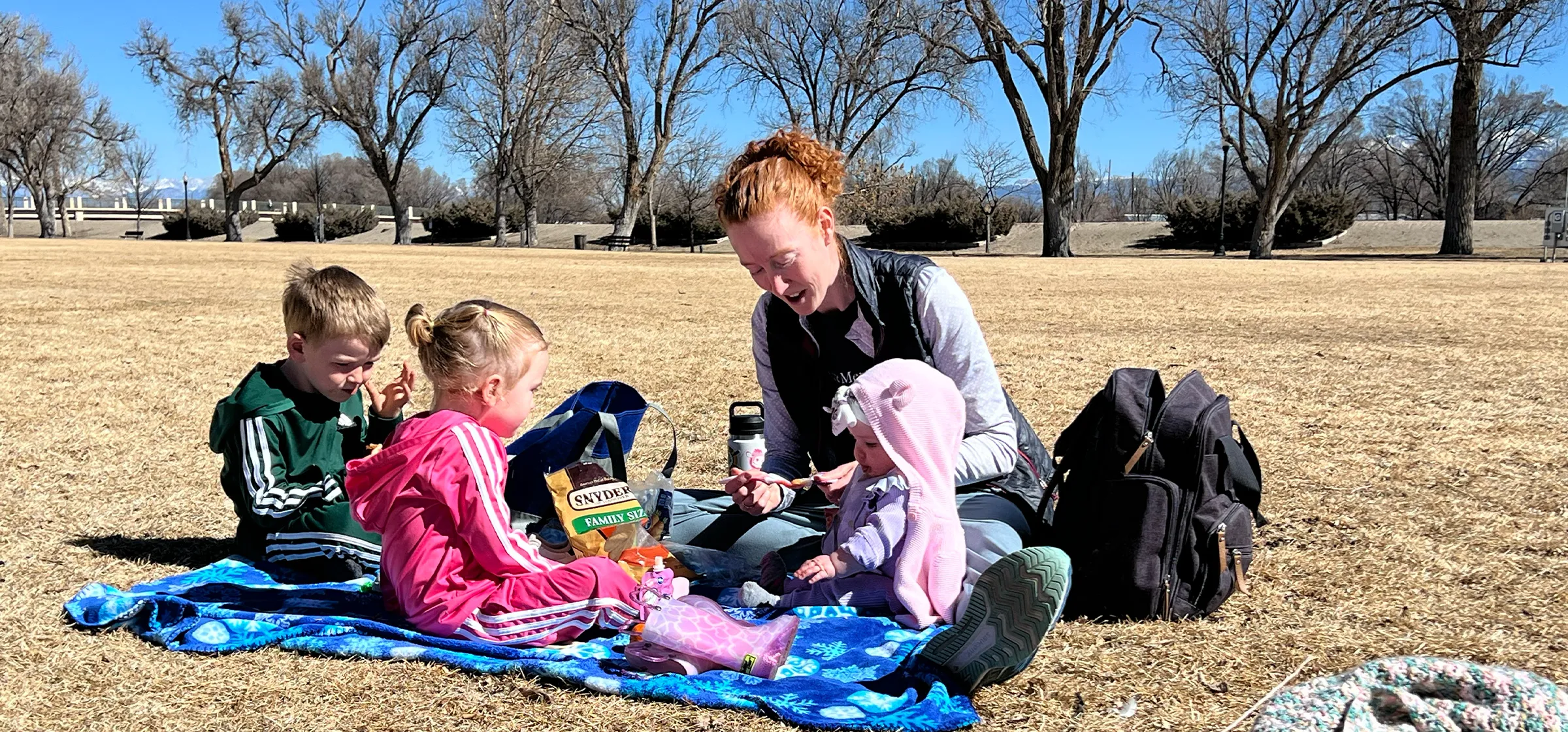
Picnic at Cole Park with Beth Wehe and children. Credit: The Citizen

Click the link to read the article on the Alamosa Citizen website:

February 28, 2025

ebruary delivered a series of 60-degree weather days – seven in all, or a quarter of the month in temperatures more common in May and early June. As such, winter never really took hold.

Now with March in sight, the San Luis Valley and its Rio Grande and Conejos River systems need a bounce in precipitation to avoid heavy curtailment this summer in its agricultural fields and to keep the dust down in general. The Rio Grande at Del Norte was measuring 44 percent of what’s normal for the end of February, while the Conejos was in better shape at 84 percent of normal flows, according to the latest measurements at Del Norte and Mogote.

The high of 67 on Feb. 3 was the warmest winter day on record at Alamosa, and records were broken throughout western and southern Colorado during that time period, said Russ Schumacher, director of the Colorado Climate Center at CSU-Fort Collins.

Alamosa also has never had a February with as many 60 degree days as 2025. Feb. 2, Feb. 3, Feb. 4, Feb. 6, Feb. 7, Feb. 24 and Feb. 25 all reached 60 or above. New record high temperatures were established for Feb. 2 (63 degrees), Feb. 3 (67 degrees), Feb. 4 (64 degrees) and Feb. 25 (64 degrees). The high of 59 on Feb. 24 also established a new record high, giving the month five days with new daily high temperatures.

“When there’s no snow on the ground like this month, then it gets (and stays) much warmer. This effect is true everywhere, but it is especially important in the Valley because of the high elevation and generally cooler air overall,” Schumacher said.

The warm February lent itself to an early arrival of sandhill cranes and a month of bicycle riding rather than snowboarding. March arrives similar to February, with unseasonably warm temperatures and low odds for moisture.

Even should snow materialize, February was too warm with its 60 degree days for any snowpack conditions to exist. Instead, whatever falls from the skies in March will get soaked up by the thirsty ground and work only to give a brief recharge to the rivers and the natural surface water that flows from the mountains into the Valley floor.

“When there’s no snow on the ground like this month, then it gets (and stays) much warmer. This effect is true everywhere, but it is especially important in the Valley because of the high elevation and generally cooler air overall,” Schumacher said.

The warm February lent itself to an early arrival of sandhill cranes and a month of bicycle riding rather than snowboarding. March arrives similar to February, with unseasonably warm temperatures and low odds for moisture.

Even should snow materialize, February was too warm with its 60 degree days for any snowpack conditions to exist. Instead, whatever falls from the skies in March will get soaked up by the thirsty ground and work only to give a brief recharge to the rivers and the natural surface water that flows from the mountains into the Valley floor.

On DOGE and Keystone XL and lost jobs — Jonathan P. Thompson

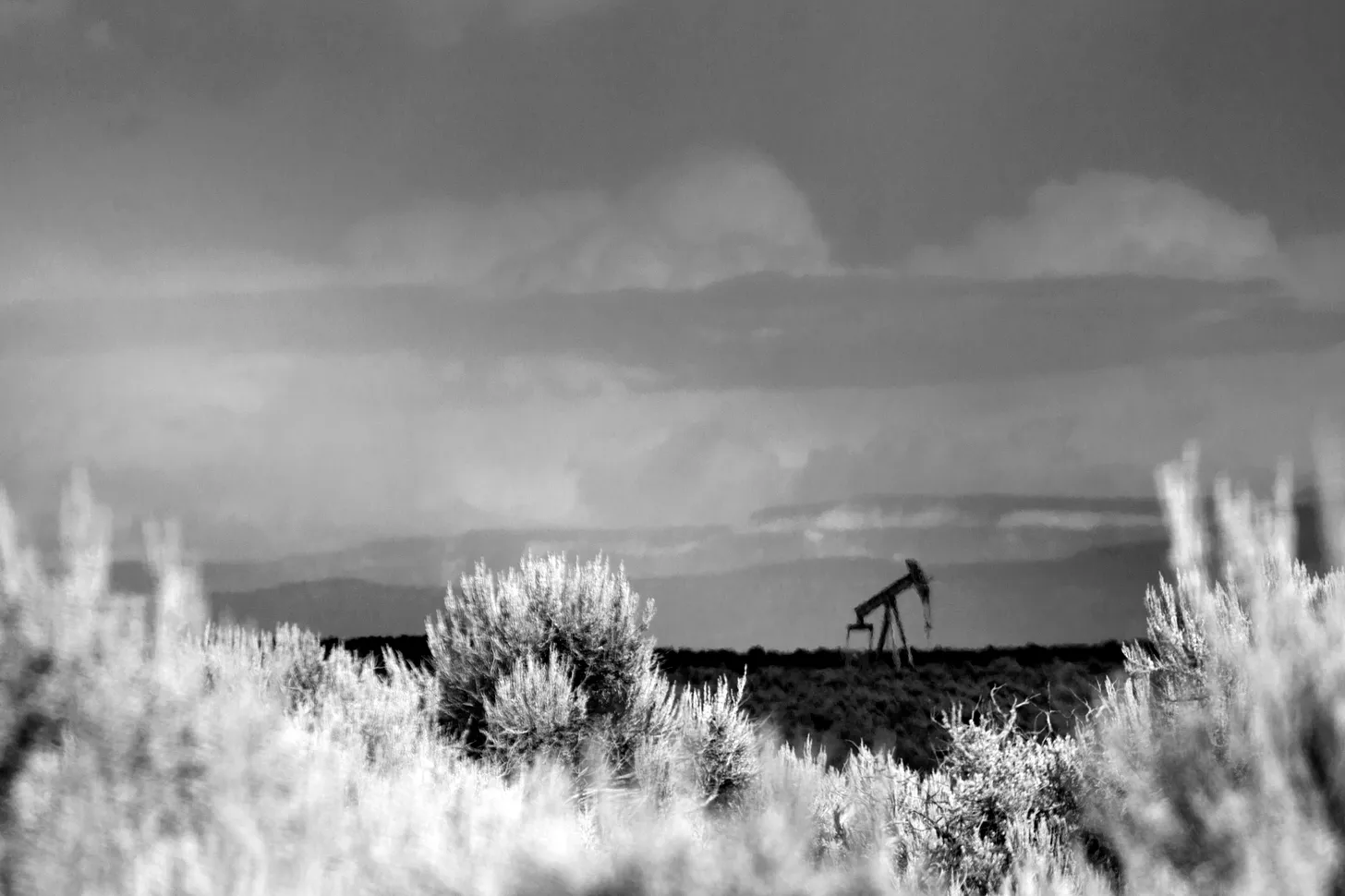
Photo credit: Jonathan P. Thompson/The Land Desk

Click the link to read the article on The Land Desk website (Jonathan P. Thompson):

February 28, 2025

🤯 Crazytown Chronicle 🤡

The last thing I want to do is devote every dispatch to the madness and inanity flooding out of the White House. Seriously. Nevertheless, today I feel the need to devote some words to responding to Land Desk reader and frequent commenter Dennis Pierce’s comment on Tuesday’s dispatch, which read:

I’m glad Pierce brought that up, because I think it’s an important and valid point and one worthy of discussion — especially considering that Trump recently announced that he wants Keystone XL built “NOW!” Pierce’s comment was similar — though more accurate than — a post widely shared on Facebook that said:

I’ll get to the factual problems here in a minute, but first let’s just clarify what these folks are trying to say, which is a little bit of what-about-ism, but also: If you’re so worried about jobs, how could you celebrate the Keystone XL’s cancellation or, for that matter, the closure of a coal power plant or mine? After all, that hurts real people, too.

It’s a valid point.

But DOGE’s rampage is very, very different than Biden’s Keystone XL cancellation.

First off, Biden didn’t fire anyone. He cancelled a permit for the Keystone XL pipeline, which led the developer, TC Energy, to abandon the project and lay off about 1,000 temporary construction workers. While DOGE is slashing jobs as an end in itself, Biden cancelled the permit because:

  • When the Trump administration approved the permit in 2019, it was defying a court order to take a “hard look” at the pipeline and the effects of current oil prices (they were super low at that point), potential increases in greenhouse gas emissions (the oil carried by the pipeline would emit 178 million tons of carbon dioxide annually when burned), new data on oil spills (the XL’s sister pipeline, the Keystone, had already experienced nearly 1,500 spills during its first seven years of operation), and potential effects on cultural resources (the diluted bitumen carried by the pipe is harder to clean up than conventional crude).
  • The line would cross huge swaths of tribal and private lands. Many of those tribal nations and landowners didn’t want the line on their lands, and Indigenous advocates and the Rosebud Sioux Tribe and the Fort Belknap Indian Community had sued the administration to stop the line.
  • The line would have cut through sage grouse habitat and the 378 miles of new power lines needed to run pumping stations would have crossed whooping crane habitat, thereby imperiling the endangered birds.
  • The line was being built by a Canadian company to carry Canadian crude from the tar sands to U.S. refineries. That oil wasn’t needed — the market was glutted in early 2021 — and it would have competed against U.S. producers, damaging the oilfield-reliant economies in the Permian Basin and elsewhere.

Had TC Energy gone forward with the project, it would have created about 6,000 jobs over the three-year development phase. Those jobs, of course, never came to be. While that’s a lot, its nothing near the 14,000 that social media posters are throwing around. Nor is it even close to the job toll DOGE has racked up so far. The Keystone jobs were temporary; after the three years they would all go away, leaving just 20 to 35 permanent, full-time workers to operate the line. So comparing the Keystone cancellation to the current chainsaw-butchering of the federal workforce is way off.

But the larger point stands: When Biden cancelled Keystone XL, he also put a lot of folks out of well-paying jobs that, even though they were only temporary, could not easily be replaced. That hurt real people. And it was naive, even a bit callous, for Keystone XL opponents to suggest that the laid off workers could get jobs in the clean energy industry, or that fossil fuel workers in general could simply learn to code — as Biden said in 2019. A few years before, Hillary Clinton was skewered for telling an Ohio audience that “we’re going to put a lot of coal miners and coal companies out of business.”

It’s almost as bad as Musk. Right? Not quite. Clinton followed up that statement with this: “We’re going to make it clear that we don’t want to forget those people. Those people labored in those mines for generations, losing their health, often losing their lives to turn on our lights and power our factories. Now we’ve got to move away from coal and all the other fossil fuels, but I don’t want to move away from the people who did the best they could to produce the energy that we relied on.”

Policies aimed at reducing fossil fuel use and cutting climate-altering and human health-harming pollutants will and do have an economic impact. Closing a coal mine or power plant can be devastating, both economically and culturally, for the communities that rely on them, even if it does improve the lives of people who live nearby by cleaning up the air and water.

While some environmental groups and the politicians that support them don’t care about those job losses — their goal is to protect the environment, human costs be damned — these days most green groups not only care, but fight just as forcibly for a just transition as they have to make facilities clean up their acts. For example:

  • After the Mohave coal plant and its associated mine on Black Mesa shut down at the end of 2005, the Grand Canyon Trust helped spearhead the creation of a Just Transition Coalition that then pushed regulators to require Southern California Edison to invest revenues from the sale of sulfur credits into economic and clean energy development benefitting the Navajo Nation and Hopi Tribe. The plant had sullied the air for years, and the coal mine was rapidly depleting the Navajo aquifer by using huge volumes of water to slurry the coal across Arizona to the plant.
  • Tó Nizhóní Ání is leading the effort to push Arizona utilities to help fund a just transition for the communities most affected by the December 2019 closure of the Navajo Generating Station and the Kayenta coal mine on Black Mesa, as well as the imminent shutdown of the Four Corners power plant.
  • When Public Service Company of New Mexico announced it would shut down the San Juan Generating Station in 2022, environmental groups and Democratic state lawmakers passed the Energy Transition Act, which allows PNM to issue bonds to fund the power plant’s abandonment, which included about $40 million for local economic development and displaced worker assistance and another $30 million for coal mine reclamation, which kept some workers employed. The Act also required PNM to build some of the replacement power facilities in the same area. The San Juan solar installation employed hundreds of workers during its construction and helped replace property tax revenues for the Central Consolidated School District.

And while Biden may have been a little oblivious about the ease of switching careers, he not only showed empathy toward those who are losing their jobs in the energy transition (he never brandished a chainsaw or insulted the folks who lost their jobs), but also pushed through legislation — i.e. the Infrastructure and Jobs and the Inflation Reduction acts — which poured billions of dollars into clean energy development and manufacturing and abandoned mine and oil and gas well cleanup programs, creating hundreds of thousands of jobs in the process.

The new New Deal is a pretty good dealJonathan P. Thompson November 24, 2021 Read full story

That’s in contrast to the Trump administration, which is not only slashing jobs at a frenzied rate, but has also frozen and even tried to claw back funding from those job-creating laws, which is not only illegal, but also jeopardizes thousands of jobs in the private sector.

I suppose Trump believes that if he can convince some company to come back and build Keystone XL, perhaps by promising them a blank check to tear up the environment and private and tribal lands, then it will replace a fraction of those lost jobs. At least for a little while.

That may be a little more difficult than he thinks, however. The pipeline’s original developer is no longer interested in the project. And anyone else looking to build it would run up against another one of Trump’s harebrained policies. On the same day that he posted about reviving Keystone XL, Trump also announced that he was going ahead with tariffs against imports from Mexico and Canada, including on the oil that a future Keystone XL would carry. That diminishes if not destroys the economic case for anyone who might be considering building the pipeline. It’s typically oblivious behavior from the oligarchs running our country.

***

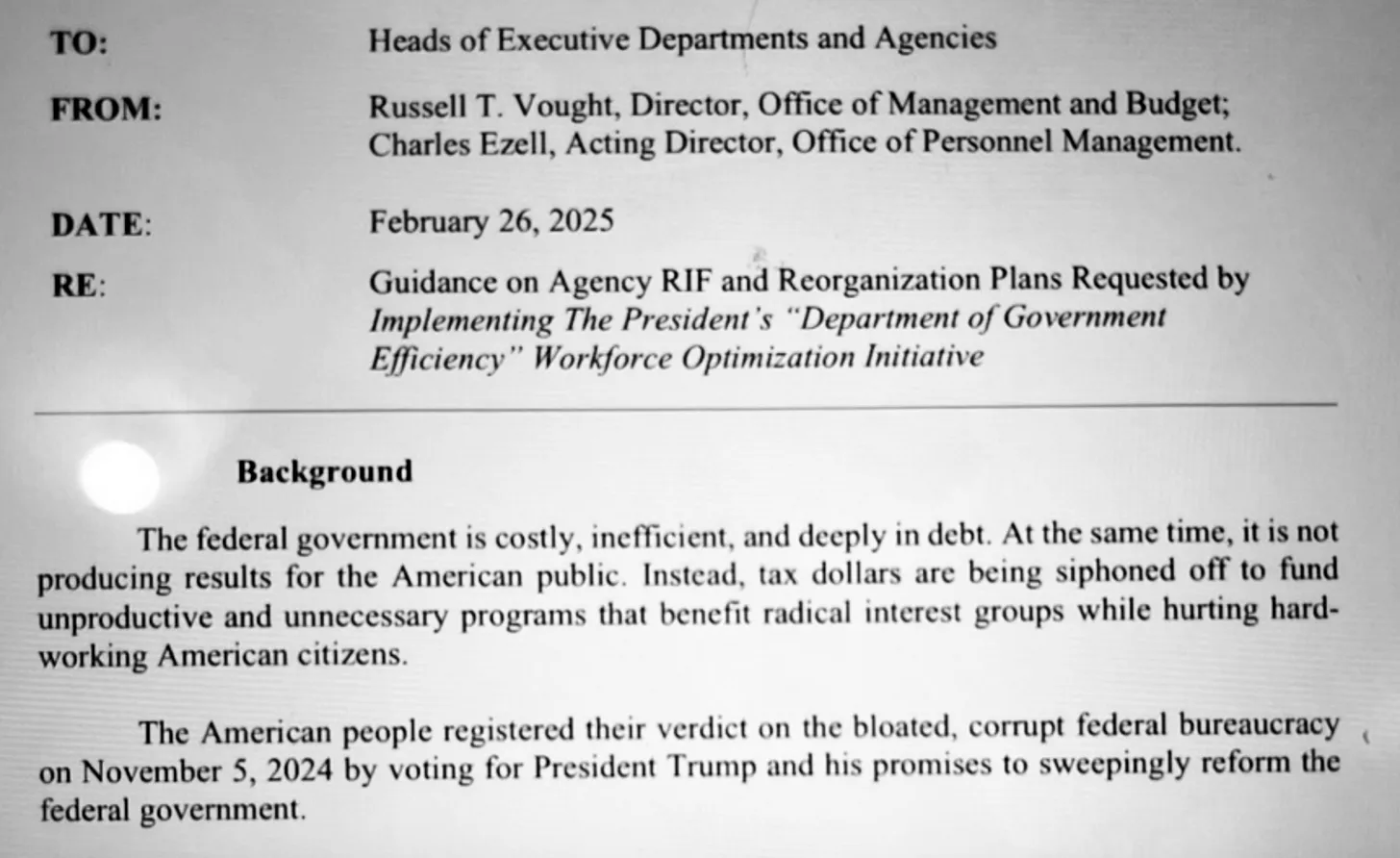
When reports started coming in that the Trump administration was unfreezing its hold on seasonal National Park Service employees or rehiring some federal workers it had fired only days earlier, I began to think — or at least hope — that the bloodshed was almost over. Mmmm … nope. Two days ago Russel Vought, the Director of the Office of Management and Budget, sent a memo to all federal agencies ordering them to “promptly undertake preparations to initiate large-scale reductions in force.”

Here’s the way he introduced the memo:

Which is a long way of saying that Russell Vought is an a&%hole. He’s also an architect of Project 2025. It’s funny, because I remember a few months ago when a certain commenter chiding me for predicting that Trump would follow Project 2025 if elected. Well, guess what: The Trump administration is following Project 2025 to the letter. That includes eviscerating public agencies, like the National Oceanic and Atmospheric Administration, where 800 employees were fired yesterday and more may lose their jobs today. This is bad. Very bad.

***

If you’re in the Durango area and you’d like to support public employees, you’ve got options! On March 3, at 3 p.m., there will be a peaceful demonstration to support public lands employees, many of whom were illegally fired under the Trump administration’s cuts to federal agencies, outside the San Juan National Forest Headquarters at 15 Burnett Ct in Durango. There will be concurrent events in Bayfield and Dolores (see flier below). Attendees are invited to bring thank-you cards and small gifts for remaining staff and participate in sign-waving to show solidarity. This event will support both the San Juan National Forest Headquarters and the local Bureau of Land Management (BLM) office, which have each lost employees in these cuts.

And beer! Ska Brewing in Durango is rolling out a special stout today to support forest service workers — or help them drown their sorrows (20% alcohol … holy cow). Check out the logo:

End-of-February #snowpack check-in: ok in the north, bleak in the south (plus, a message about our federal government partners) — Russ Schumacher (ClimateColorado.colostate.edu)

Click the link to read the article on the Colorado Climate Center website (Russ Schumacher):

February 28, 2025

By the time March rolls around, we have a lot of information about how the snowpack accumulation in Colorado’s mountains is going to turn out. For those familiar with statistics, the correlation between statewide snowpack on February 28 and the peak value (usually in early April) is 0.86. For the Upper Colorado River basin, the end-of-February correlation is even higher: about 0.91. This means that, even though March and April can still bring a lot of snow to the mountains, it’s difficult for the spring to turn the tide from a bad season to a good one, or vice versa.

And why do we care so much about snowpack? The water that serves tens of millions of people originates as snow in Colorado’s mountains. Thus, when we talk about “snowpack”, what we’re usually looking at is the “snow water equivalent” (SWE): how much water is stored in that snow, a large portion of which will run off into streams, rivers, and reservoirs in the spring and summer to be used by people, farms, and ecosystems.

Where does this winter’s snowpack stand at the end of February?

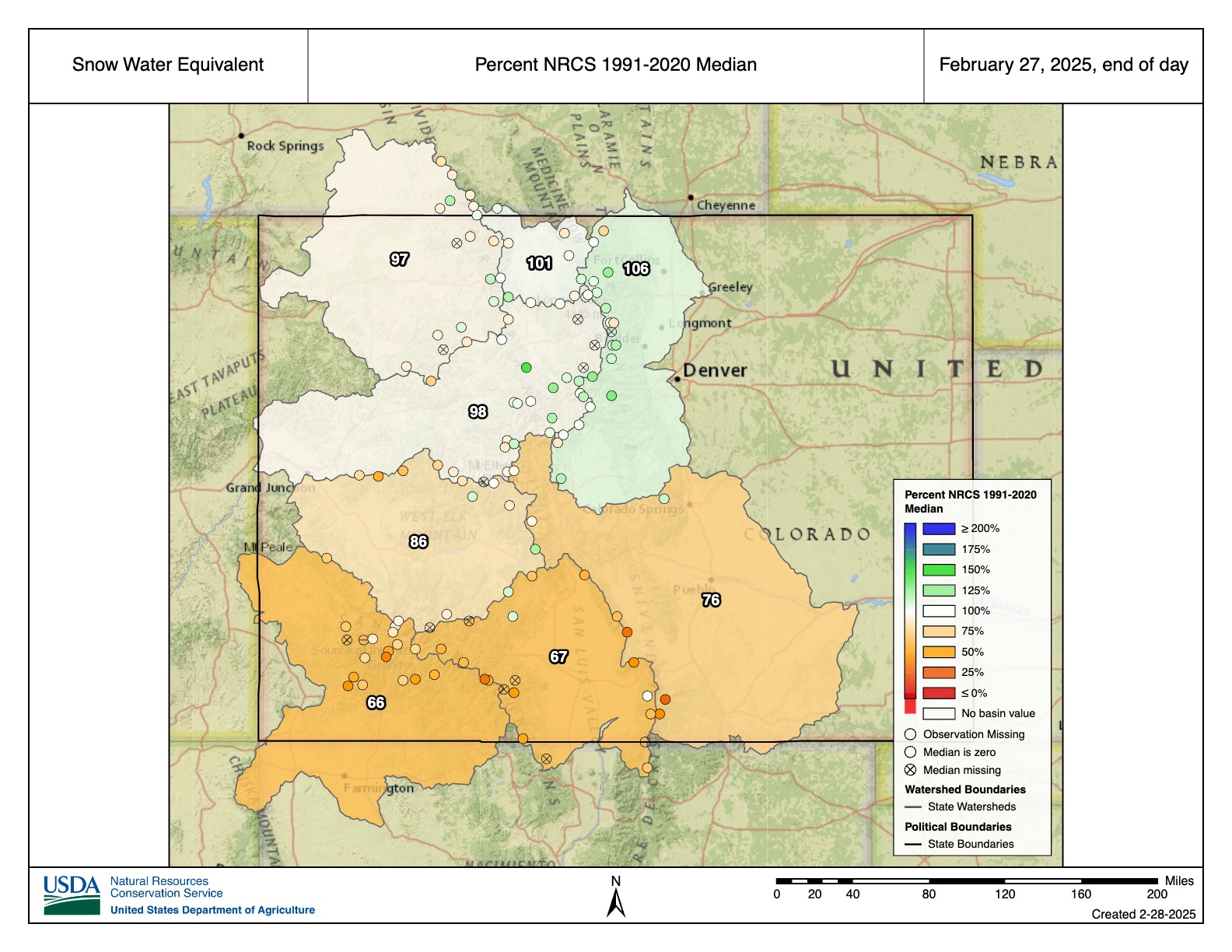
Looking at the current map that shows the percent of median SWE across Colorado, there’s a clear north-south divide. The mountains that will see their water run off into Colorado’s northern river basins like the Yampa, White, and North and South Platte, are looking pretty decent. They were sitting near to a little below average as of early February, but the huge storm cycle in the middle of the month has brought them to right around average, or even a bit above in the South Platte basin.

SNOTEL percent of median snow water equivalent as of the end of the day February 27, 2025. Obtained from the NRCS interactive map.

Farther south, it’s a very different story. Back in November, these areas had way above average snowpack from major early-season storms. But then the snow largely shut off through December and January. Although the San Juan and Sangre de Cristo mountains and the Grand Mesa did get a good shot of snow in mid-February, it wasn’t nearly as much as farther north. And the warm, dry pattern of the last week (at a time of year when we expect regular snowstorms) has left them well below normal. Snowpack in the combined San Miguel-Dolores-Animas-San Juan basin sits at just 66% of average, and the upper Rio Grande at 67% of average.

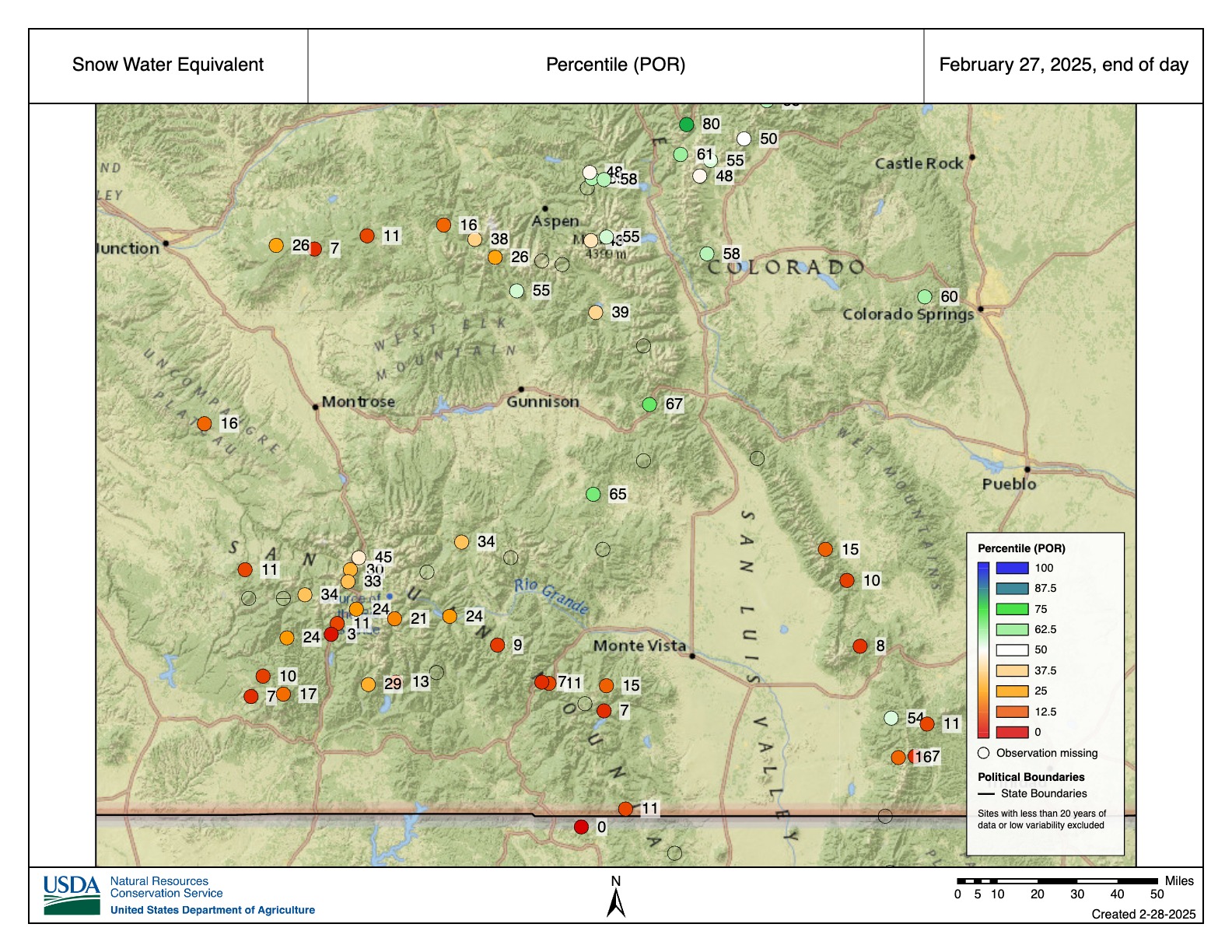
Zooming in on the southern mountains, and plotting the snowpack percentile over the period of record, we see some very low numbers, especially in the southern San Juans. (Here, if you see a value of 10, that means that 90% of years would have more SWE on this date.) For many stations in Colorado’s southern mountains, the snowpack is the lowest it’s been at this time of the winter since the brutal drought of 2018. (Other seasons that were even worse include 1990, 2002, and 2006.) This week’s US Drought Monitor now shows D3 (extreme drought) in parts of Conejos, Archuleta, and Rio Grande Counties. In contrast, conditions farther north look much better, especially around the ski areas in Pitkin, Eagle, and Summit Counties. The divide of snowier to the north and less-snowy to the south is what often happens in La Niña winters like this one.

Zoom-in on southwestern Colorado to show the period-of-record SWE percentile at SNOTEL stations as of February 27, 2025. A value of 10 means that 90% of years would have more SWE on this date; a value of 50 means this year is right in the middle of the historical distribution. From the NRCS interactive map.
Snow water equivalent in the combined San Miguel-Dolores-Animas-San Juan basins through February 27, 2025. The current year is shown in black, the average is in green, and 2018 shown in purple. Obtained from NRCS.

Consistent with the snowpack numbers, the outlook for spring and summer water supply looks decent for Colorado’s northern rivers, but pretty bleak for the southern streams, and for the Upper Colorado River basin as a whole. The Colorado Basin River Forecast Center’s mid-February outlook, which largely included the snowpack boost from the mid-month storm, shows near-average April through July streamflows in the Colorado River headwaters, but only 63% of average along the Dolores River, and 70% of average into Lake Powell. Assuming these outlooks end up being roughly correct, there will be a lot less water available in southwestern Colorado (and farther downstream) than in a typical year. CBRFC will host a webinar on March 7 to discuss their updated early-March forecast.

Mid-February 2025 water supply outlook from NOAA’s Colorado Basin River Forecast Center, showing the percent of average flows in various rivers across the basin. From https://www.cbrfc.noaa.gov/wsup/pub2/discussion/current.pdf

What comes next?

There are 5-8 weeks left in the typical mountain snow accumulation season, depending on exactly where you’re located. March doesn’t always have the consistent mountain snowfall that we expect in the heart of winter, but often delivers a big snowstorm or two. The last week of February has been extremely warm across Colorado, with little to no snowfall, and the first couple days of March will be more of the same. But then the pattern looks to shift to become more active. One storm is on the way for March 3-4, with the possibility of another behind it on March 6-7. But it looks like this may continue to amplify the north-south divide, as current forecasts show the most precipitation hitting the northern mountains and eastern plains, with not as much to the south.

(left) 7-day precipitation forecast from NOAA’s Weather Prediction Center, for the period from February 28 to March 6, 2025; (right) departure from average precipitation over this same period. Graphic from https://climate.colostate.edu/drought/#outlook

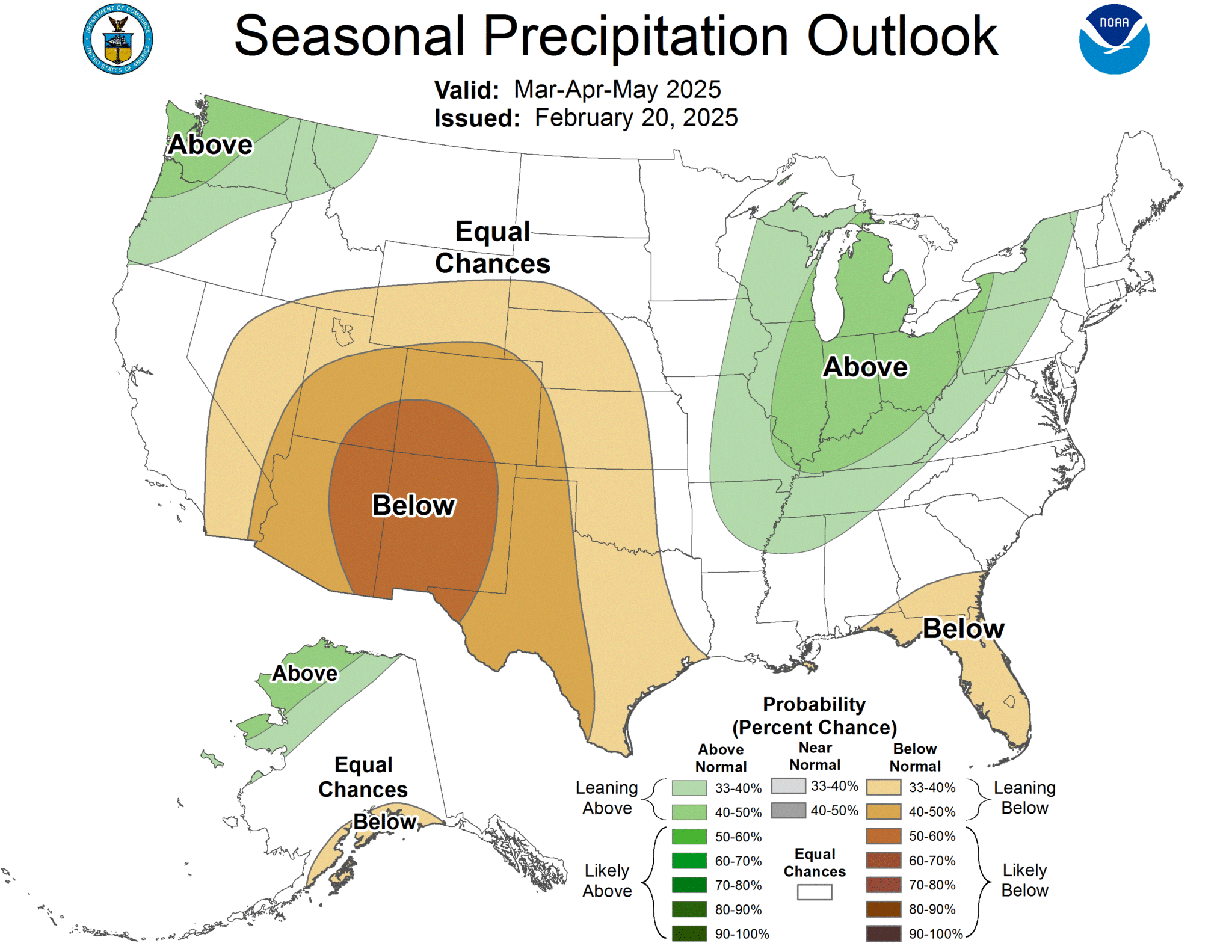
The outlook for March as a whole doesn’t show a very strong signal across Colorado, with only a slight tilt toward below-average precipitation across the southern part of the state. The outlook for the full spring season (March-April-May) shows increased odds of dry conditions across all of Colorado, with the highest chances of dry conditions in the southwest. Overall, in light of the current snowpack and the outlook, for northern Colorado there’s some reason for cautious optimism about the snow and water situation through the spring, but cause for real concern about worsening drought in the south and west.

Monthly precipitation outlook from the NOAA Climate Prediction Center for March 2025. From https://www.cpc.ncep.noaa.gov

A note about our federal government partners

If you’ve read this far, you’ve seen a lot of data, and hopefully recognized what it can tell us about the water and drought situation here in Colorado. Every bit of data in this blog post originated from the federal government, either from the Natural Resources Conservation Service (part of the Department of Agriculture), or from the National Oceanic and Atmospheric Administration (NOAA). This information is collected, maintained, and disseminated by dedicated public servants, and is always freely available to all. We work closely with the National Weather Service offices and other NOAA entities that serve Colorado, and their workforce is in the process of being devastated. Those fired include the bright minds of people just starting their careers, as well as experienced professionals who chose to serve the country. We couldn’t do what we do without our federal partners, we stand with them in these challenging times, and want to emphasize that investments in NOAA and other federal agencies support public safety, the economy, and US leadership in science.