
Click the link to read the article on the Aspen Times website (Ali Longwell). Here’s an excerpt:
September 23, 2025
La Nina prepares to make a brief appearance in Colorado this fall before winter forecasts turn even more unpredictable than usual
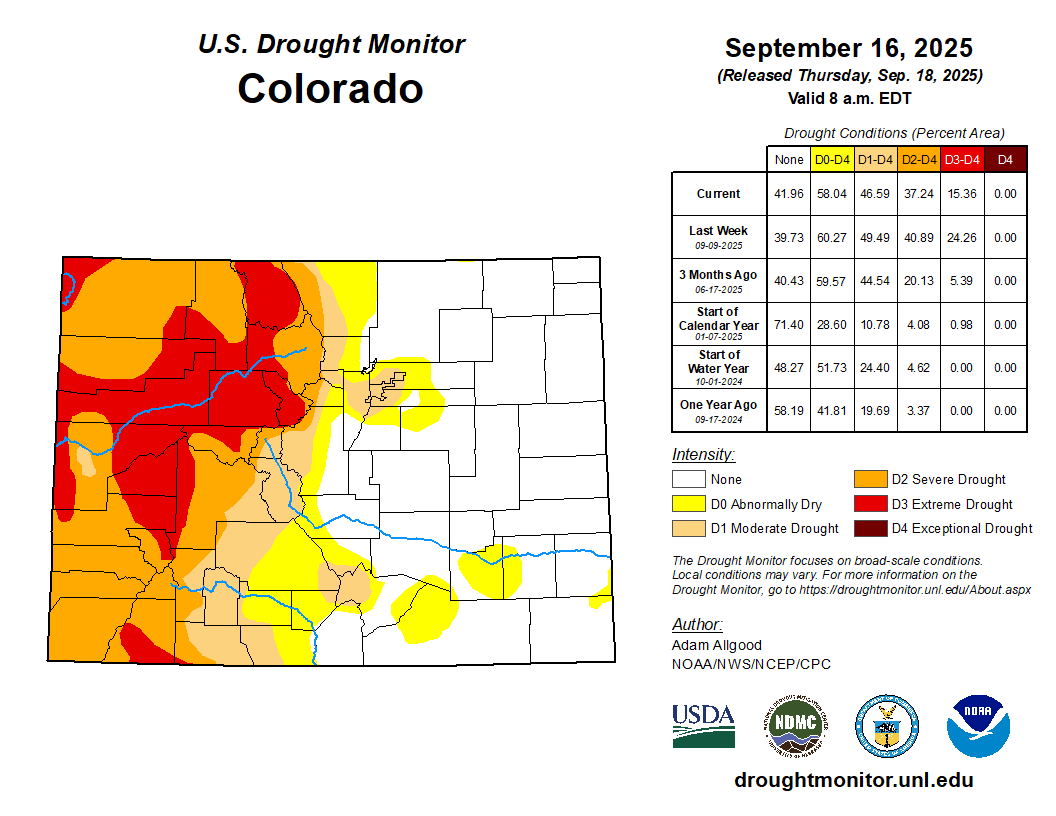
Following an extremely warm, dry summer on the Western Slope, recent rainfall is beginning to chip away at the worst of Colorado’s drought conditions. In mid-August, “exceptional” drought conditions — the most severe among the national drought monitor rankings — developed across nearly 7% of the state in northwest Colorado for the first time since May 2023. The exceptional rating hit portions of Moffat, Routt, Rio Blanco, Garfield, Eagle, Pitkin, Gunnison, Delta, and Mesa counties following one of the hottest, driest summers on record for the region.
“Fortunately, the exceptional drought that we had in early to mid-August is over in western Colorado with the persistent rains of the last few weeks,” said Russ Schumacher, Colorado’s state climatologist, at September’s Colorado Water Conditions Monitoring Committee meeting on Tuesday.
Comparing the Aug. 20 Colorado Drought Monitor to the most recent Sept. 16 map, Schumacher said, “you can see big improvements in a lot of places, but still long-term drought — severe to extreme drought — across much of western Colorado.” During the last month, only portions of North Park, Grand County and the Denver metro area saw worsening drought conditions as they missed out on recent storms, Schumacher noted…“It’s not that all the drought concerns are over in that part of the state, but it’s not these extreme conditions that we had a month ago, where wildfires were starting and growing every day and things like that,” Schumacher said. “Fortunately, that period is over for now. But then the flip side of that, we’ve seen flash flooding and debris flows, especially on the burn scars.”
