
Click the link to read the article on the Alamosa Citizen website:
February 3, 2026
There is another emerging issue that decades of drought and the warming climate is causing in the San Luis Valley – elevated levels of heavy metals in drinking wells that can cause health issues for households that rely on them.
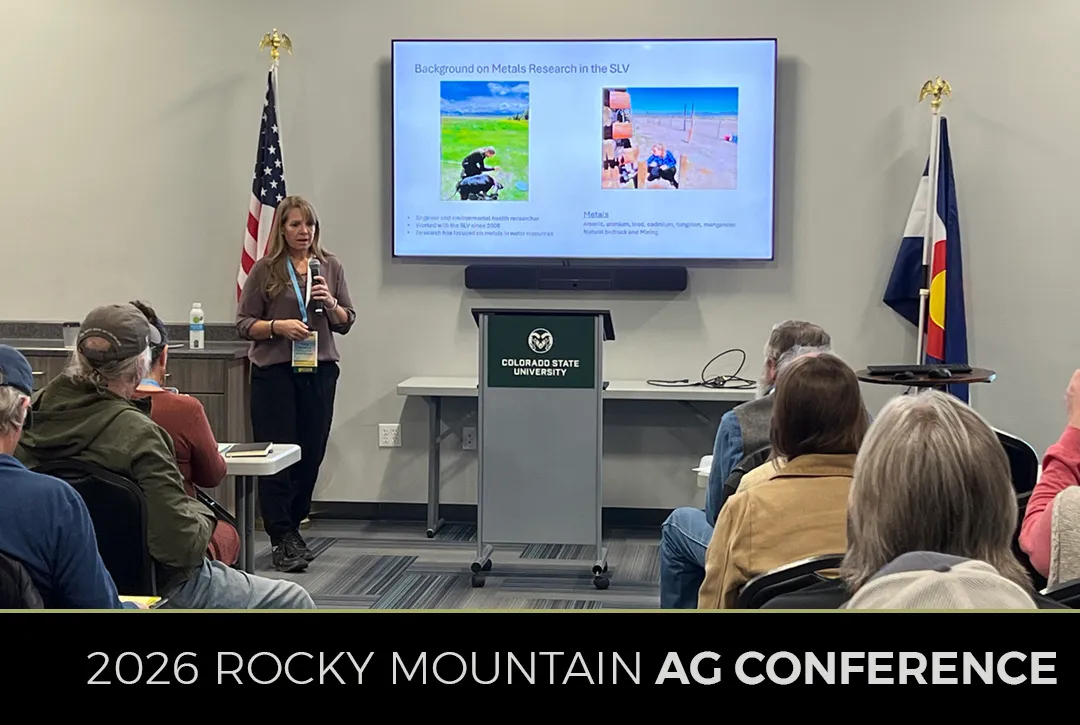
It’s a topic Kathy James, Ph.D., and associate professor with the Colorado School of Public Health, knows well after spending the past three years working with families in the Valley that rely on private drinking wells.
James provided an update to the work during Tuesday’s opening day of the 2026 Southern Rocky Mountain Ag Conference. She reported that 15 to 25 percent of the private groundwater wells used for drinking water in the San Luis Valley contain elevated levels of arsenic, uranium and other heavy metals.
Her confidence in the findings is bolstered by the fact that 850 households in the different counties of the Valley participated in the study and provided samples to help James and her team evaluate the effect drought is having on water quantity and water quality.
“The comprehensive information that we have about distribution of metals across the Valley is by far one of the best we’ve seen in most western states that do experience elevated metals,” James said.
She noted how low snowpack impacts the age of water underground and ultimately the quality of water people are drinking from a private well.
The Upper Rio Grande Basin, like the Colorado River, is suffering from snow droughtsin the high elevations of the west and below-normal spring runoff levels.
Less snow, less spring runoff for recharge of the aquifers, and higher levels of arsenic, uranium and other heavy metals is the emerging issue. James talks more about the study and the team’s findings in the next episode of The Valley Pod, which streams Wednesday on AlamosaCitizen.com.
