Pulling Water from Thin Air

by Robert Marcos

Devices that collect water from the air are generally called atmospheric water harvesters or atmospheric water generators. None of these actually create water, they just phase‑change or capture water that’s already in the atmosphere.

Why is this pertinent? As most of the Earth’s land areas dry out, our warming atmosphere is holding on to ever-increasing amounts of water vapor. The Lawrence Livermore National Laboratory reported that inĀ 2024 the Earth’s atmosphere held almost 5% more water vapor than the average recorded between 1991–2020.
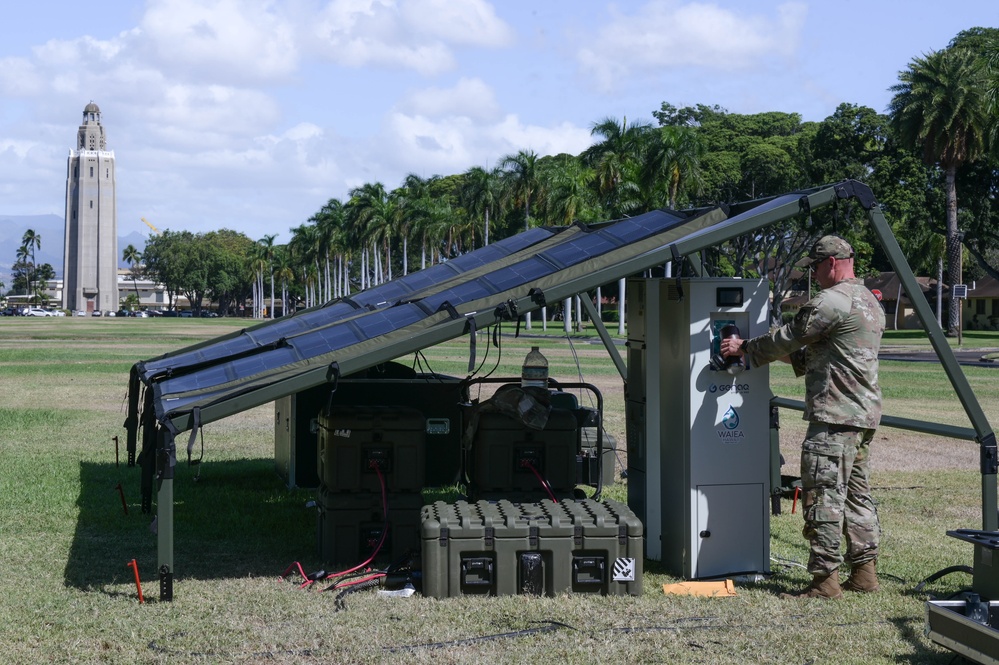
A soldier operating a portable solar power unit with solar panels deployed, near military equipment, in a park-like setting with a tall building in the background.

Here are the four basic types of Atmospheric Water Harvesters –

  • Condensation-based systems cool air below its dew point using refrigeration or heat‑pump cycles so water vapor condenses into liquid on cold coils. Theses are essentially dehumidifiers optimized for producing potable water. 
  • Desiccant-based systems use hygroscopic materials (desiccants) such as salts or silica gel that absorb moisture from air, which are then are heated to release liquid water for collection.
  • Adsorption based systems use porous materials like hydrogels or metal–organic frameworks that adsorb water vapor at night or when cool, then release it when warmed by the sun or low‑grade heat, with the vapor condensed on nearby surfaces.
  • Fog and dew collectors are passive devices thatuse meshes or netted surfaces which collect fog droplets which collect then drain into gutters and tanks.

DARPA, the U.S.Army Research Lab, the Marine Corps, Air Force, and special operations units  have all experimented with AWG technologies for desert and emergency conditions, most often at bases in the Middle East and on the African continent. The U.S. Army is actively testing and piloting atmospheric water generators (AWGs), but as of early 2026 they appear in research, demonstration, and limited field trials rather than as a fully standard, widely deployed water source for all soldiers.

Currently the U.S. Army Engineer Research and Development Center (ERDC) has signed multiple Cooperative Research and Development Agreements with companies such as Genesis Systems and AirJoule to develop fuel‑efficient, truck‑ or ATV‑mounted AWGs that can provide potable water at the point of need in austere environments. Genesis Systems’ WaterCube units have been ā€œoperationally fielded and commercially available,ā€ and an Army–Genesis CRADA is specifically aimed at adapting this platform for mobile military use in field operations. Public descriptions of these efforts emphasize potential use to reduce water convoys and support future warfighters, which indicates a transition and experimentation phase rather than full-scale permanent deployment across the force.

A large portable air conditioning unit positioned on a wooden platform in an outdoor area, with military-style tents in the background.
Genesis Systems WaterCube is a ruggedized atmospheric water generation system designed for military and government use. 

Water From Air is a non-profit organization that’s specifically focused on distributing atmospheric water generators in schools, villages, and water-stressed regions primarily located in East Africa and India. Their units produce clean drinking water directly from humidity in the air, bypassing the need for wells, pipes, or rainfall. Each installed unit typically provides between 200 and 400 liters of clean drinking water daily, supporting approximately 200–400 people.

More non-profits which provide clean drinking water to disadvantaged communities –

  • The Moses West Foundation A non-profit that deploys large-scale AWG systems during disaster relief efforts and in water-stressed areas globally, including Africa.
  • Innovation: Africa While primarily focused on solar-powered pumped water from aquifers, they specialize in delivering Israeli-developed water technologies to remote African villages.
  • Majik Water: A Kenyan-based social enterprise (start-up) that uses AWG technology to provide more than 200,000 liters of water monthly to arid regions in Kenya.
  • One Drop Foundation seeks sustainable access to safe water, sanitation, and hygiene for the world’s most vulnerable communities. The foundation distinguishes itself through a unique approach called Social Art for Behavior Changeā„¢, which uses art and creativity to inspire communities to adopt healthy water-related habits and take ownership of their local infrastructure.

#Drought news February 26, 2026: Below-average snow-water equivalency remains a concern in much of the West #snowpack

Click on a thumbnail graphic to view a gallery of drought data from the US Drought Monitor website.

Click the link to go to the US Drought Monitor website. Here’s an excerpt:

This Week’s Drought Summary

Stormy, briefly colder weather in California and elsewhere in the West helped to improve previously meager mountain snowpack, with an average of approximately 6 inches of snow-water equivalency being added to the Sierra Nevada. However, 4- to 8-foot snowfall totals in the Sierra Nevada also led to travel disruptions through mountain passes and contributed to the nation’s deadliest avalanche—northwest of Lake Tahoe—in 45 years. Meanwhile, the nation’s mid-section faced several days with record-setting warmth and gusty winds. Portions of the central and southern High Plains endured a rash of wildfires, starting on February 17, with the largest—the Ranger Road Fire—quickly consuming more than 280,000 acres of cured vegetation in northwestern Oklahoma and southwestern Kansas. Initial reports indicated that there were also livestock losses and property destruction. In contrast, several rounds of storminess affected the eastern U.S., culminating in a late-winter blizzard along the middle and northern Atlantic Coast on February 22-23. The winter storm deposited more than a foot of snow in major East Coast cities from Philadelphia to Boston, with a single-storm record of 37.9 inches measured in Providence, Rhode Island. Earlier, an early-season outbreak of severe weather occurred on February 19, when as many as a dozen tornadoes were reported in Illinois and Indiana…

High Plains

Gradual drought deterioration was noted in several areas, except North Dakota, which remains free of drought. In Nebraska, a mostly dry, windy winter has adversely affected winter wheat, which at the end of January was rated just 24 percent in good to excellent condition—down from 54 percent in late-November 2025. Snowfall that blanketed parts of Nebraska on February 19 provided only temporary relief from overall dryness. Farther south, parts of Kansas and Colorado contended with high winds, grassfires, and blowing dust, especially on February 17. On that date, wind gusts in Colorado were clocked to 79 mph in Colorado Springs, 72 mph in Burlington, and 71 mph in Pueblo. South of Pueblo, on I-25, chain reaction collisions due to low visibility in blowing dust resulted in five fatalities and involved approximately three dozen vehicles…

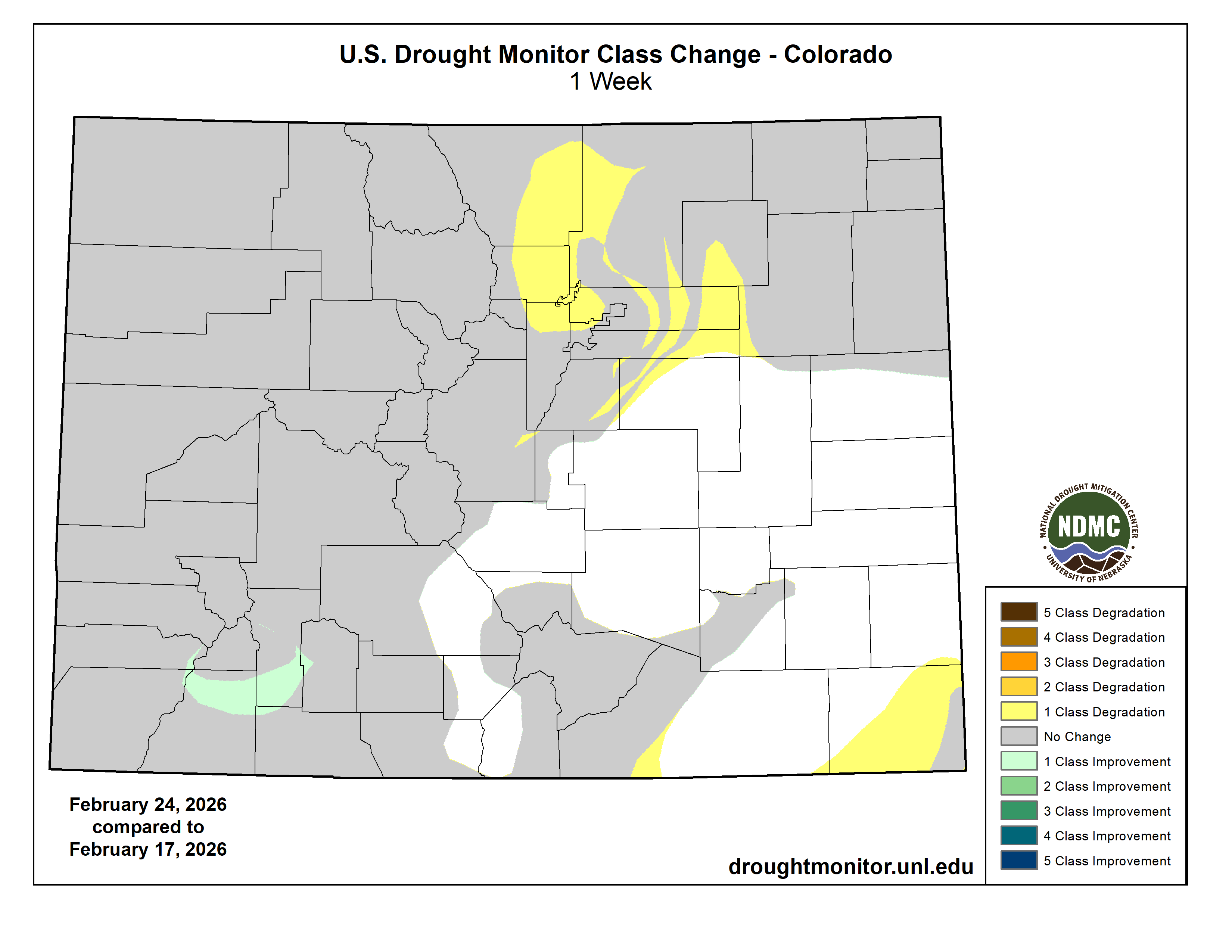
Colorado Drought Monitor one week change map ending February 24, 2026.

West

There were few overall changes in the West, as most of the heavy precipitation fell in areas—such as northern and central California—currently experiencing no drought. Farther inland, brief bursts of precipitation in drought-affected areas prevented worsening conditions, but provided little overall relief. In Utah’s Wasatch Range, Alta received 31.2 inches of snow in a 24-hour period on February 17-18, but will likely end the month with below-average snowfall. Below-average snow-water equivalency remains a concern in much of the West, even in drought-free areas such as the Sierra Nevada. According to the California Department of Water Resources, the Sierra Nevada snowpack contained an average snow-water equivalency of 16 inches—up about 6 inches from earlier in the month, but less than three-quarters of normal for late February. In much of Arizona, New Mexico, and Oregon, snow-water equivalency values were less than 50 percent of normal…

South

The southern High Plains endured a historic day of wind and wildfires on February 17, when the Ranger Road Fire was ignited in Beaver County, Oklahoma. The Ranger Road Fire soon scorched more than 280,000 acres of grass and brush, expanding into northwestern Harper County, Oklahoma, and parts of three counties in southwestern Kansas. Meanwhile, the Lavender Fire burned more than 18,000 acres northeast of Vega, Texas, and reportedly destroyed at least 18 structures. On February 17, the day of ignition, peak gusts included 73 mph in Lubbock, Texas, and 67 mph in Guymon, Oklahoma. Due to deteriorating conditions and diminishing topsoil moisture reserves, moderate drought (D1) was broadly introduced across northern and western Oklahoma and the northern panhandle of Texas. Farther east, gradually worsening drought conditions were also observed from the western Gulf Coast region to the Mississippi Delta, with several new areas of extreme drought (D3) being introduced and others being expanded. Coverage of exceptional drought (D4) increased slightly in southern Texas…

Looking Ahead

Fast-moving, loosely organized disturbances will traverse the country during the next 5 days. Some of the heaviest precipitation, locally 1 to 2 inches or more, should fall in the Southeast, mainly through Friday. Beneficial showers will linger into the weekend across Florida’s peninsula. In contrast, dry weather will prevail during the next 5 days in the nation’s southwestern quadrant, from southern California to the central and southern High Plains. Record-setting warmth will accompany the dry weather, with temperatures routinely topping 90°F in southern Texas and the Desert Southwest. Farther north, a new plume of Pacific moisture will arrive on Saturday across southern Oregon and northern California. That moisture will race eastward, sparking wintry precipitation by Sunday and Monday from the central Plains into the mid-Atlantic, including the Ohio Valley and neighboring regions.

The NWS 6- to 10-day outlook for March 3 – 7 calls for the likelihood of warmer-than-normal weather nationwide, except for near- or below-normal temperatures in parts of New York and much of New England. Meanwhile, near- or above-normal precipitation across most of the country should contrast with drier-than-normal conditions in coastal North Carolina and portions of the Far West, including California and the western Great Basin.

US Drought Monitor one week change map ending February 24, 2026.

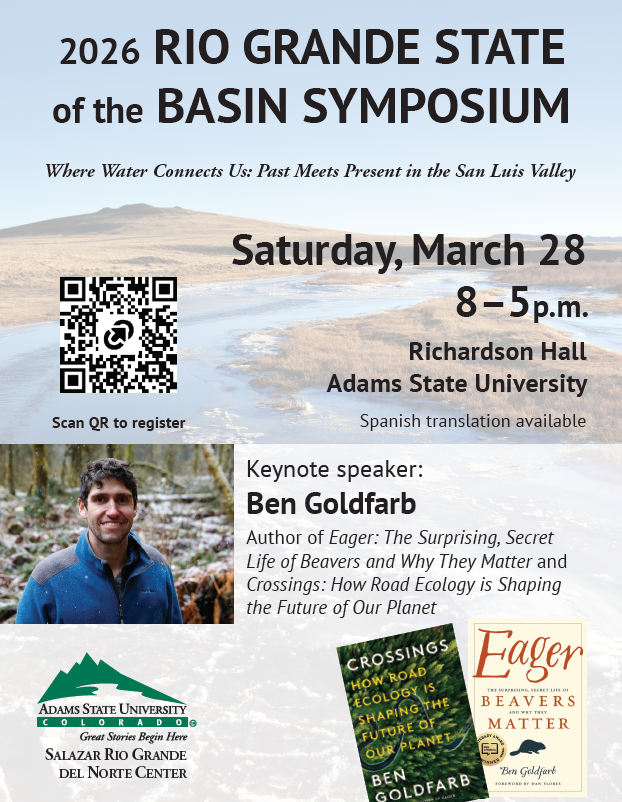
2026 #RioGrande State of the Basin Symposium March 28, 2026 — Salazar Rio Grande del Norte Center

Click the link for the english registration.

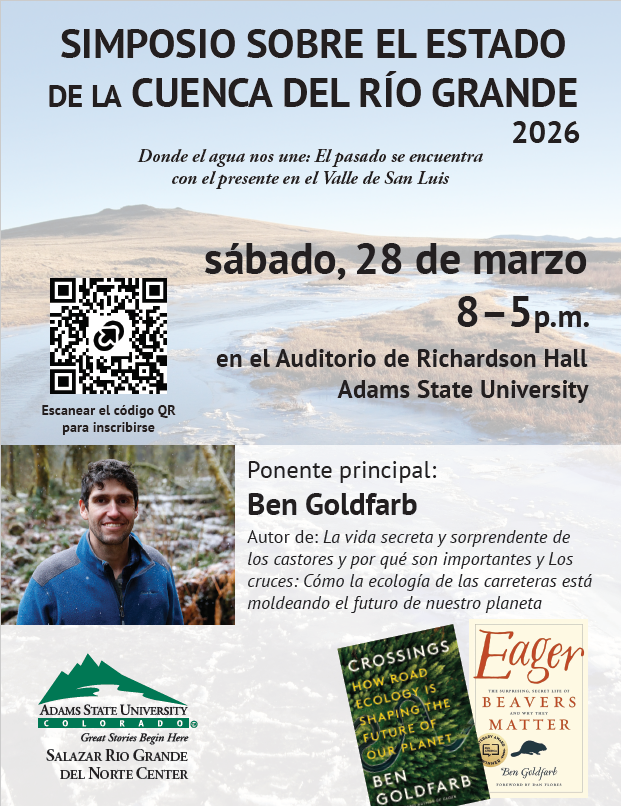
Click the link for the Spanish registration.

Big Decisions Loom for a Rapidly Shrinking #LakePowell: Reclamation considers actions to prop up the #ColoradoRiver’s second-largest reservoir — Brett Walton (circleofblue.org) #COriver #aridification

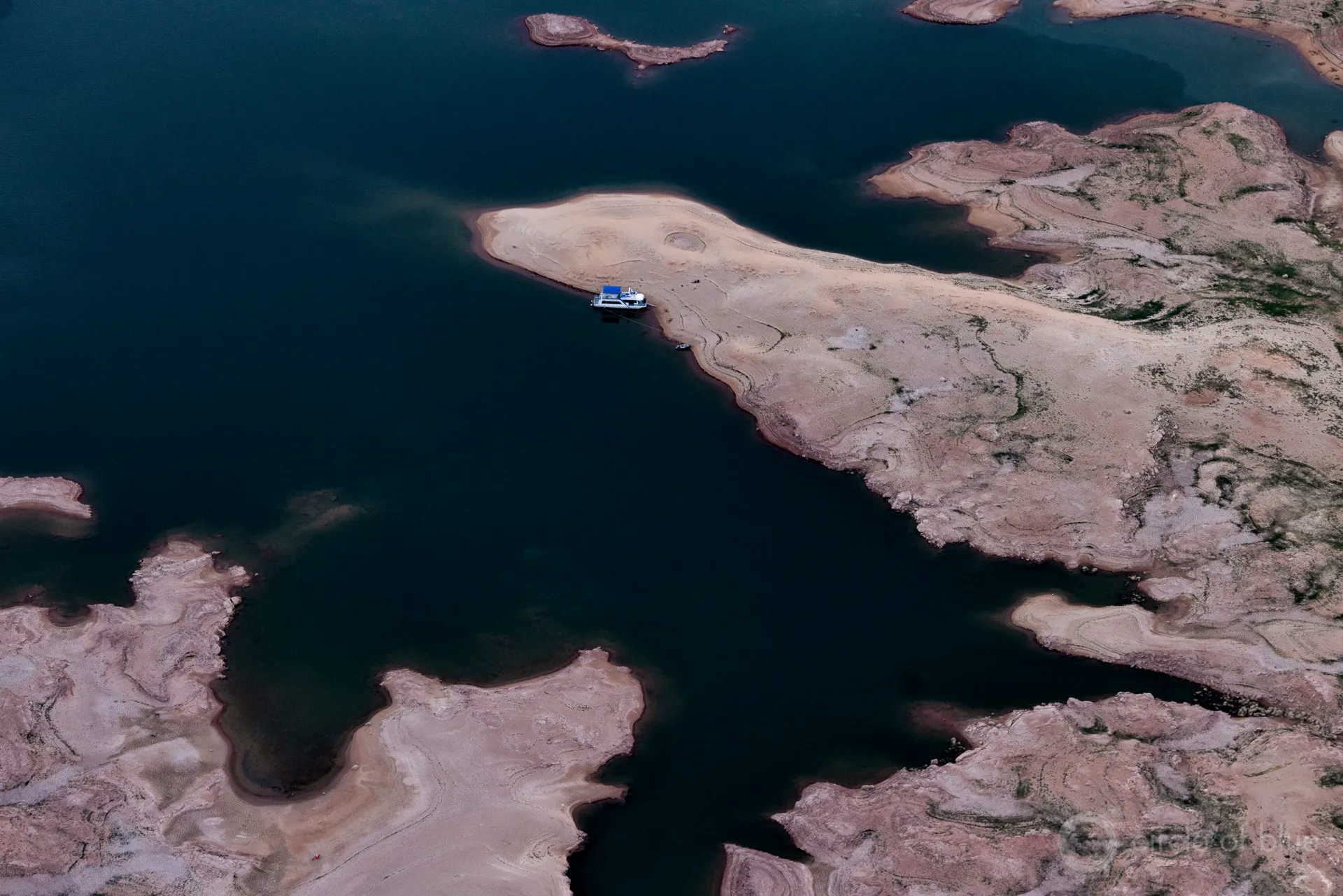
Glen Canyon Dam. Photo credit: Circle of Blues

Click the link to read the article on the Circle of Blue website (Brett Walton):

February 26, 2026

Officials at the Bureau of Reclamation, the federal agency that manages Colorado River dams, outlined several actions they are considering in the coming months to boost water levels in a rapidly shrinking Lake Powell, which could drop to a record low later this year that would halt hydropower production from Glen Canyon Dam for the first time.

The Colorado River’s second-largest reservoir behind Lake Mead is entering one of the most difficult periods in its six-decade history. The basin is drying due to a warming climate. Powell is just a quarter full, and projected to drop lower this year. Winter has been a dud, with warm temperatures and a historically bad snowpack in the Colorado mountains that feed into the reservoir.

Decisions in the next three months about how much water to release from Powell and how much to hold back will reverberate across the basin, affecting hydropower production, legal obligations, watershed ecology, threatened species, and millions of people who use its water and energy.

ā€œThings are happening in parallel and not in sequence,ā€ said Wayne Pullan, Reclamation’s Upper Colorado Basin regional director. ā€œWe’re going to be doing everything all at once.ā€

Pullan and other Reclamation officials discussed their options during a meeting Wednesday of the Glen Canyon Dam Adaptive Management Work Group, an expert committee that advises on the dam’s ecological impacts.

The back of Glen Canyon Dam circa 1964, not long after the reservoir had begun filling up. Here the water level is above dead pool, meaning water can be released via the river outlets, but it is below minimum power pool, so water cannot yet enter the penstocks to generate electricity. Bureau of Reclamation photo. Annotations: Jonathan P. Thompson

The number that federal officials are paying attention to is 3,490 feet. Below that point, Glen Canyon Dam cannot produce hydropower. Powell would be too low for water to flow through the power-generating turbines.

2024 decision allows Reclamation to ā€œconsider all tools that are availableā€ to keep Powell from dropping below 3,500 feet, an elevation that provides a little wiggle room for maintaining hydropower production. Powell today sits at 3,531 feet.

ā€œI think it’s safe for us to assume that unless Mother Nature is uncharacteristically generous, that Lake Powell elevations are going to fluctuate at elevations that we’re not comfortable with,ā€ Pullan said.

The tool from the 2024 decision is Section 6(E), which grants Reclamation the authority to restrict water releases from Powell to as low as 6 million acre-feet. The planned released this year is 7.48 million acre-feet, so the Section 6(E) authority represents a potential 20 percent reduction.

A cut of that magnitude might not be necessary because Reclamation has another tool it can use in tandem.

That option is releasing more water from Flaming Gorge and other smaller reservoirs located higher in the watershed. This is called a DROA release after its authorizing document. Pullan said this action, which states in the lower basin are advocating for, is being discussed and the volume of those releases would be determined in the spring, around April or May.

ā€œIt’s important to remember that this is all in flux,ā€ Pullan said. ā€œThis cake is being mixed and isn’t baked in any way yet.ā€

A previous DROA release in 2022-23 moved 463,000 acre-feet from Flaming Gorge into Lake Powell. Flaming Gorge today is 82 percent full, holding almost 3 million acre-feet.

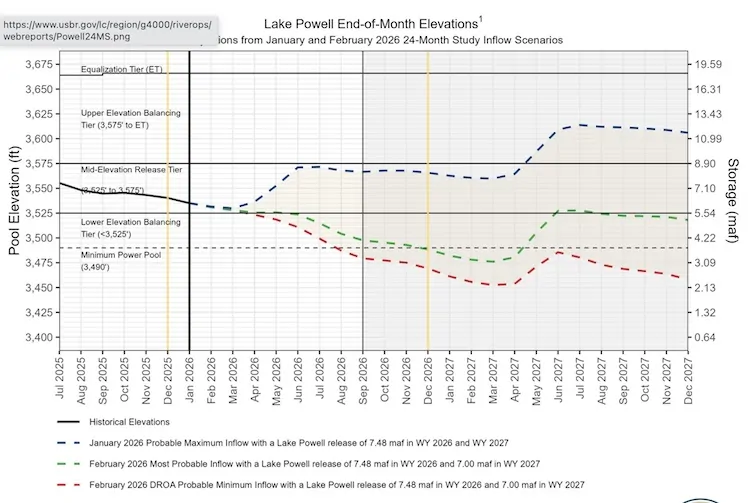
Note the dotted red line. If says that it’s possible that power production at Glen Canyon Dam could end by August.

Reclamation’s current projections show Powell dropping below hydropower production level by December, in an average water supply scenario. If snowpack and runoff continue to run below average, then that threshold could be breached, barring interventions, in August.

Katrina Grantz, Reclamation’s deputy regional director, said that in the most probable water supply scenario the agency has the tools to be able to keep Powell above 3,500 feet over the next 12 months. But it is still analyzing how and when to deploy them.

ā€œReclamation is working on various scenarios of how this could play out,ā€ Grantz said.

There are other considerations in the mix. Powell is the source of cold-water releases to help native fish. The water this year could be record warm. Powell is also the source of high-volume flows to move sediment that rebuilds Grand Canyon beaches and steadier flows that assist aquatic insects. Releases have implications for boating and recreation, too.

A shrinking Lake Powell has implications for water supply, recreation, fisheries, hydropower generation, watershed ecology, and legal requirements. Photo J. Carl Ganter/Circle of Blue

The basin’s abysmal hydrology coincides with deep political and legal uncertainty. Current reservoir management guidelines expire at the end of the year, and the seven basin states have not been able to agree on their replacement. Reclamation instead is forging its own path, aiming to finalize a decision this summer.

Reduced releases from Powell could also cause the four upper basin states – Colorado, New Mexico, Utah, and Wyoming – to violate the Colorado River Compact, which requires a certain volume of water to move downstream. This requirement and its legal ramifications are not clear and could be litigated.

It all amounts to an unsettling time for those working in the basin.

ā€œWe have to work with the resources we have,ā€ Pullan said. ā€œWishing will not make things so.ā€

Map of the Colorado River drainage basin, created using USGS data. By Shannon1 Creative Commons Attribution-Share Alike 4.0

Massive #solar project proposed where crops once grew — AlamosaCitizen.com #SanLuisValley #RioGrande

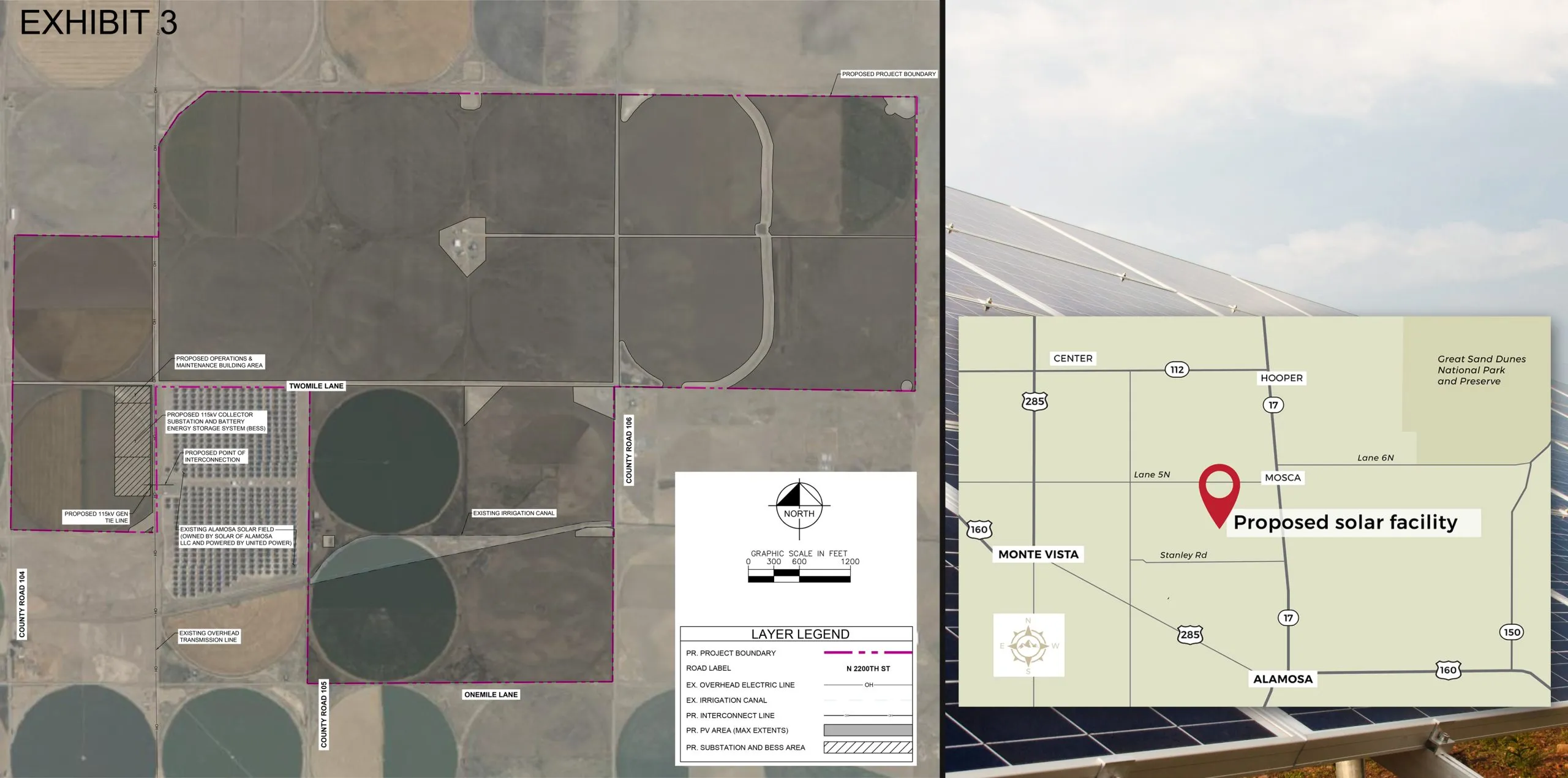
Spud Valley Energy Center’ would be built on 2,578 acres near Mosca and Hooper; it would ultimately develop 600 megawatts of solar energy and 600 megawatts of battery storage.

Click the link to read the article on the Alamosa Citizen website:

February 22, 2026

ā€˜Spud Valley Energy Center’ would be the largest ever conceived for the Valley, and one of Colorado’s biggest solar projects, at a time when ag producers are being forced to reduce their footprint to save on the water

It is an agricultural corridor in Alamosa County that is drying faster and seeing more buy-and-dry deals than other parts of the San Luis Valley due to the scarcity of water from the Upper Rio Grande Basin.

On 2,578 acres of private land off State Highway 17 leading into Mosca and Hooper, a number of families are entering into contracts with NextEra Energy and its bid to ultimately develop 600 megawatts of solar energy and 600 megawatts of battery storage on the fields that once grew crops.

The solar project, dubbed the ā€œSpud Valley Energy Center,ā€ is the largest ever conceived for the Valley and one of Colorado’s biggest. It comes at a time when ag producers in Subdistrict 1 of the Rio Grande Water Conservation District are being forced to reduce their footprint to save on the water. Solar development then, in a Valley plentiful with sunshine, becomes an alternative for the land and a company like NextEra Energy has the means to make it happen.

ā€œA number of the landowners we’re working with have already either retired their wells or they’re participating in CREP (Conservation Reserve Enhancement Program) to rest their lands for longterm,ā€ said Evan Reimondo, the project manager, in an interview with Alamosa Citizen.

Spud Valley is perfectly sited when you consider the other solar development already in the corridor, the Public Service Co. substation near the project site, the water conservation subdistrict it is in, and Alamosa County’s own interests for solar development through its 1041 permit process.

A different solar development proposal — Korsail Energy’s Cornflower Solar project ā€” had its permit application denied by the county commissioners last year after it met a headwind of resistance from locals concerned about the location of the project that was within a migratory range of sensitive wildlife areas in west Alamosa County. 

Korsail was seeking to build 90 megawatts of solar and 80 megawatts of battery storage on 986 acres, but was doomed because of the location it selected. NextEra Energy’s Spud Valley doesn’t seem to carry that burden with its location, and at 600 megawatts puts the Valley on the map for solar generation to support Colorado’s goal of a state power grid built on 80 percent renewable energy by 2030.

ā€œColorado’s demand for electricity is going to keep growing as the population grows and technology develops and all of those things,ā€ said Reimondo, Spud Valley’s project manager. ā€œSo we’re preparing for the future when we over-permit. By permitting for 600, it gives us that future flexibility.ā€

The plan is to build an initial 200 megawatts of solar and 200 megawatts of battery storage, and then stage to 600 megawatts of each from there. The transmission bottleneck — bringing power in and out of San Luis Valley — presents the biggest challenge.

ā€œAs the grid is built out, as network upgrades are completed in the future, new (transmission) lines are built, and we’ll be ready to take advantage of that,ā€ Reimondo says.

Alamosa County is currently reviewing NextEra Energy’s 1041 permit application and eventually will hold public hearings at the county planning level and then before the county commissioners.

Reimondo says the company hopes to begin construction in 2027, with the first 200 megawatts of solar and battery storage built and tied into the neighboring Public Service Co. substation by the end of 2029.

Multi-year project, draining of Juniata Reservoir required to fix cracked pipe — The #GrandJunction Daily Sentinel

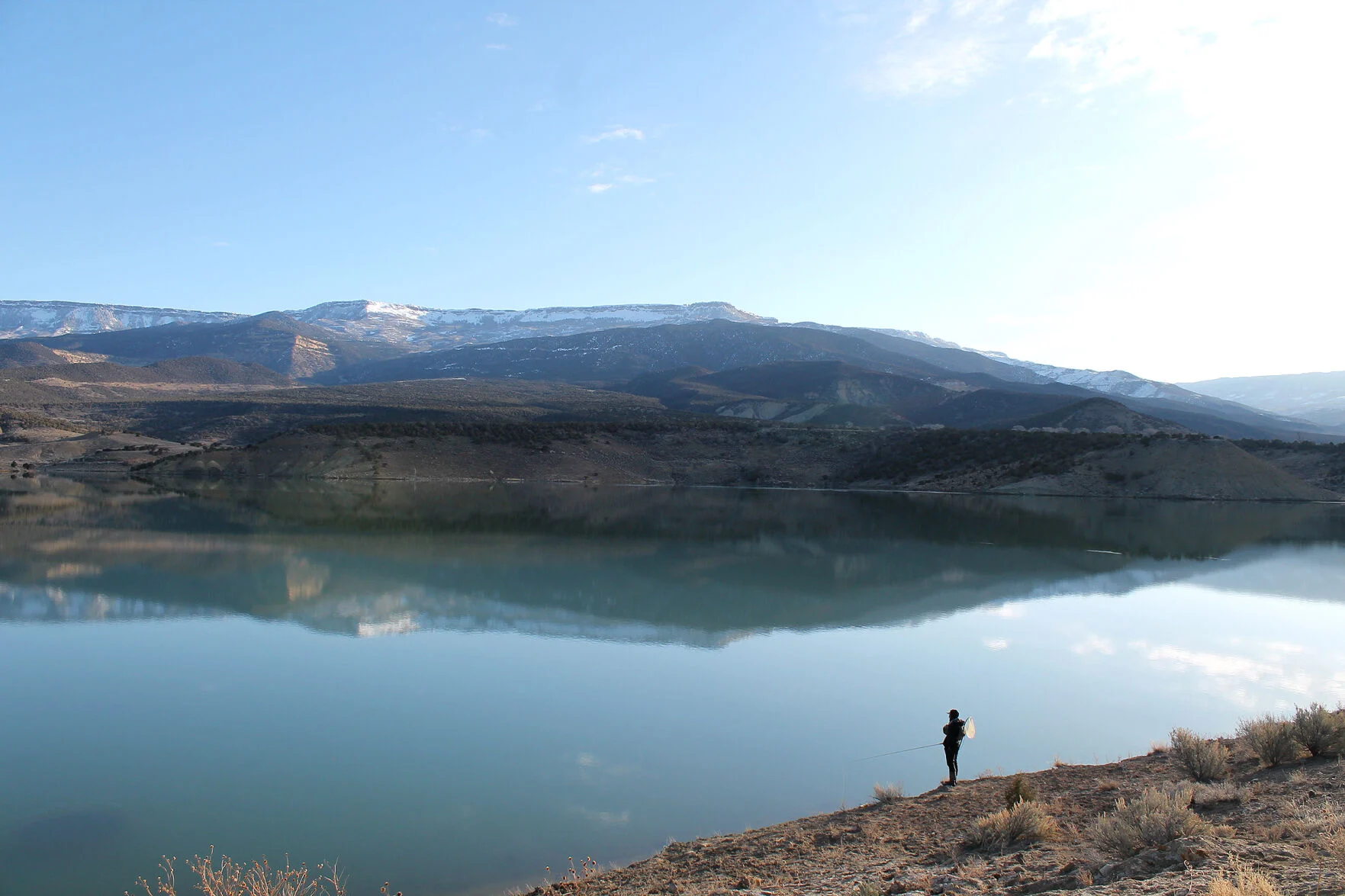
Juniata Reservoir, located near Grand Mesa, is where the city of Grand Junction stores water coming off Grand Mesa in the Kannah Creek watershed. That water flows down Kannah Creek and eventually into the taps of Grand Junction residents. Photo courtesy of City of Grand Junction

Click the link to read the article on the Grand Junction Daily Sentinel website (Dan West). Here’s an excerpt:

February 22, 2026

The City of Grand Junction is planning to fully drain Juniata Reservoir, one of two reservoirs that store the city’s water coming off Grand Mesa, later this year, after a leak was discovered during a routine inspection that will require a multi-year effort to fix. During an inspection, a crack in the outlet structure pipe that allows water to leak into the pipe going through the dam was discovered, according to the City of Grand Junction. Grand Junction Utilities Director Randi Kim said the crack and the slow seepage of water was discovered over the last few years and has been monitored by the city. The most recent inspection happened over the summer, she said.

ā€œThere’s a crack in the outlet pipe on the interior of the dam, and then that’s leaking along the pipeline, to the exterior,ā€ Kim said. ā€œRight now, there’s no concern about dam safety at present.ā€

Kim said the project is budgeted in the city’s long-term capital plan for just under $1.6 million. Construction will take place in 2027 and fully replace and upgrade the outlet pipe.

ā€œWe’re going to be replacing that whole outlet structure and providing a new valve system and all of the apparatuses that go along with that outlet structure,ā€ Kim said.

The city has worked with an engineer to determine if the cracked pipe could be replaced without draining the reservoir, Kim said. However, the State of Colorado is requiring the city to fully drain the reservoir to ā€œensure the structural integrity of the dam can be properly addressed.ā€

Water inflow to Juniata Reservoir will be shut off beginning this November and is expected to be fully drained by September 2027, according to the city. Kim said the city is working with Clifton Water to provide it with raw water during the draw down to still utilize the water. Clifton will be able to help backfill the reservoir as it refills after the project is completed, she said…Kim said the city is also looking into potentially leasing some of the water during the reservoir’s draw down to agricultural users who may also be able to utilize it. Any un-utilized water from Juniata will be stored at the Purdy Mesa Reservoir, she said. During the drawdown and construction, Kim said the city will still be able to utilize Kannah Creek for its water needs. The city has 17 reservoirs on the Grand Mesa, which flow down Kannah Creek and provide water to the city.

ā€œWe have direct flow rights off of Kannah Creek,ā€ Kim said. ā€œSo we can continue to divert our direct flow rights from the Kannah Creek to our water treatment plant.ā€

Grand Junction back in the day with the Grand Mesa in background