Click the link to read the article on the Aurora Sentinel website. Here’s an excerpt:
March 19, 2026
City water officials are sounding increasingly urgent alarms about Aurora’s water supply, warning that worsening drought conditions and poor snowpack could force early and potentially escalating restrictions this year. Aurora Water General Manager Marshall Brown told city leaders yesterday that the situation has deteriorated enough that staff will likely recommend a formal Stage 1 drought declaration as early as April 6, nearly a month ahead of the city’s typical seasonal watering restrictions. If approved by the City Council, new limits on water use would take effect April 7, officials said.
“Our water supply situation is actually bleak enough that, if things don’t improve, and we don’t get a community response that we need during a Stage 1 restriction, the forecast indicates we may be in a Stage 2 restriction by the end of the year,” Brown said. “That would be really dramatic.”
Aurora breaks water supply and restrictions into four categories:
- Normal: Current permanent rules limit landscape irrigation from 10 a.m. – 6 p.m. for a maximum of three days per week.
- Stage I: Considered when reservoir levels are lower, often reducing outdoor irrigation to two days per week.
- Stage II: More stringent, potentially reducing irrigation to one day per week.
- Stage III: Emergency conditions with severe restrictions, including no landscape irrigation.
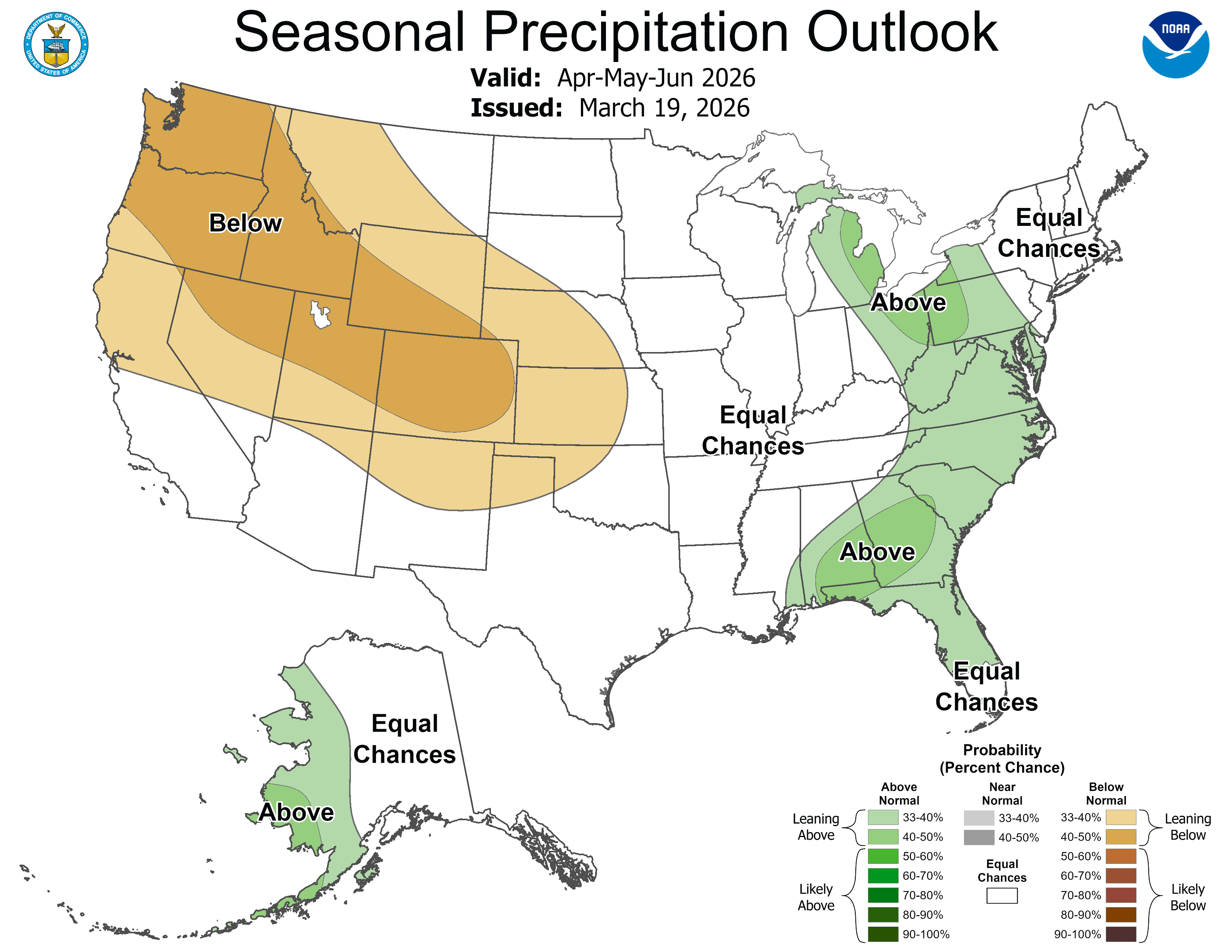
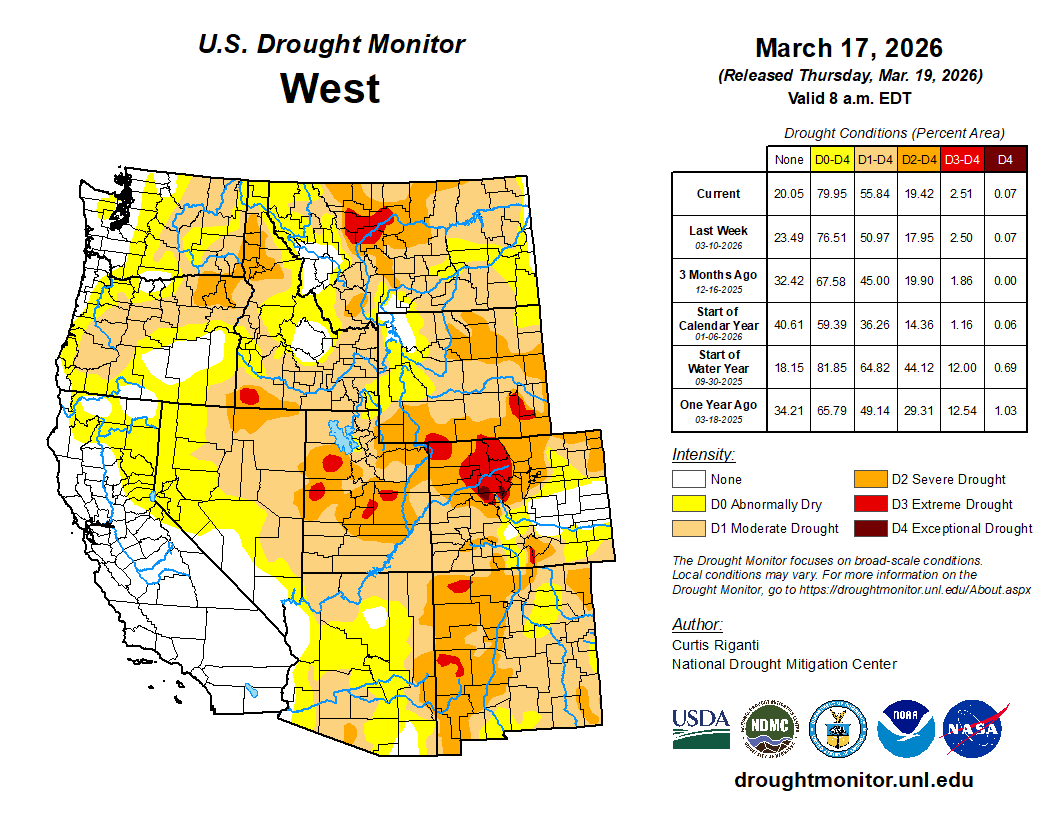
The warning marks a notable shift from just weeks ago, when city leaders said conditions were concerning but not yet dire. Now, officials say a combination of record warmth, minimal precipitation and dwindling snowpack has pushed the system closer to critical thresholds. According to the latest Aurora Water report, conditions across Colorado remain deeply dry. More than 75% of the state is classified as abnormally dry, with over half in moderate drought and significant portions in severe to extreme drought. February and March so far have offered little relief, statewide water officials reported. Those trends are expected to continue. Long-range forecasts from federal agencies indicate warmer and drier-than-normal conditions through the spring, further reducing the likelihood of meaningful runoff to replenish reservoirs.