
Click the link to read the article on The Durango Herald website (Sam Brasch). Here’s an excerpt:
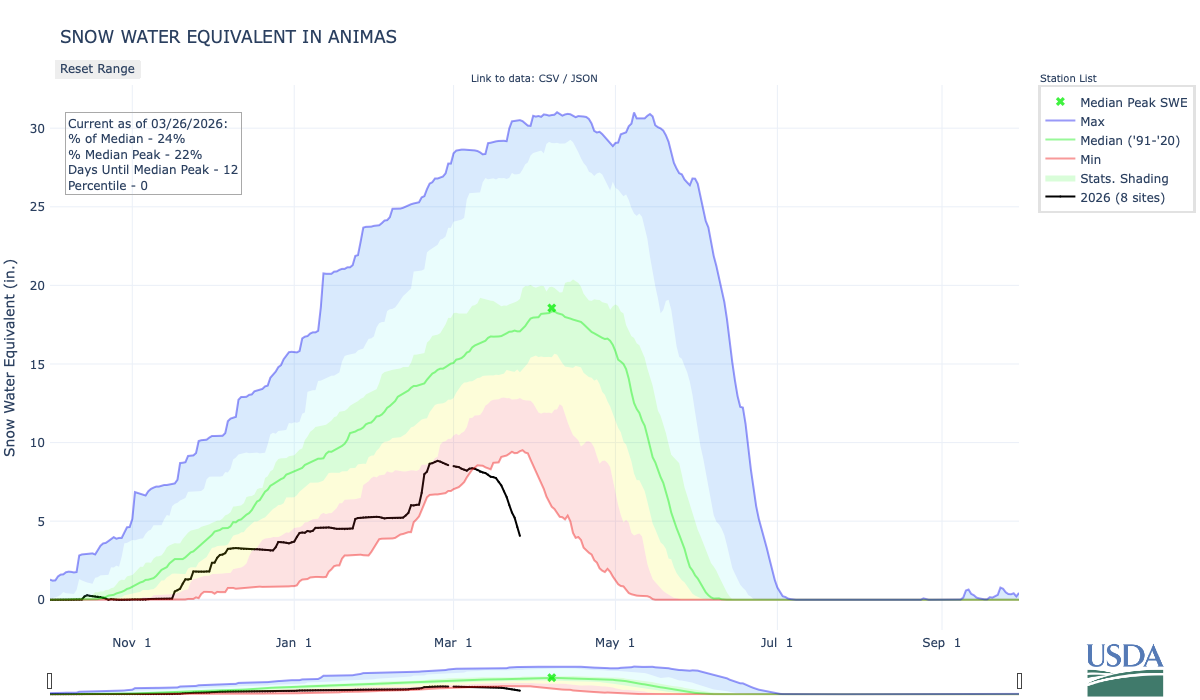
An unprecedented heat wave over the past few days has shattered temperature records across Colorado – and may have forced the state’s record-low snowpack to peak weeks ahead of schedule. In a normal year, the state’s snowpack reaches its highest levels in early April, according to data collected by the U.S. Department of Agriculture. After that, the water stored as mountain snow steadily drains away, with most of it gone by late June or early July. Colorado hasn’t stuck to the script this year. Anyone who’s visited the state’s high country has seen the snowless mountainsides, left bare by a season of warm weather and low precipitation. As of mid-March, the state faced its worst snowpack in the 41-year history of the USDA snow monitoring program, known as SNOTEL. Forecasts don’t predict a significant spring snowstorm within the next few weeks, either. That means as ski slopes and alpine drifts melt into slush, snow levels may have already hit a high-water mark March 9, about a month early.
“That really sets you up poorly for the year to come in terms of water supply,” said Peter Goble, Colorado’s assistant state climatologist at the Colorado Climate Center. “You not only have less water, but you have to stretch it out longer than if the weather had stayed colder longer.”
The early melt also likely offers a preview of Colorado’s hotter future. A 2024 report from the Colorado Climate Center found spring snowpack has shrunk in the past 75 years, but scientists only have modest confidence that the trend will continue. It’s a far better bet that snowpack will peak earlier, creating new challenges for the state’s water managers and its ecosystems…Part of the challenge is when the snow melts sooner, less liquid water makes it into streams and rivers. The dynamic occurs because of the cooler conditions and shorter days in the early spring. When snowpack melts more slowly, it has more time to absorb into the soil and evaporate rather than reaching waterways…Early runoff also lengthens the dry season in the spring and summer, opening the window for wildfires. While vegetation growth, rainfall and other factors play a role in fire risk, early runoff primes mountain landscapes for blazes, Molotch said…The situation has set the table for strict water usage limits in the months ahead. Gov. Jared Polis has activated the Colorado Drought Task Force, shifting the state toward an official drought declaration. Denver Water is also set to implement watering restrictions because of low snowpack starting March 25.