

Click the link to read the article on the American Rivers website (Page Buono and Sinjin Eberle):
March 18, 2026
The situation is clear: the precipitation outlook in the Colorado River Basin is dire, the river cannot sustain the demands placed on it, and this year we’re likely to face unprecedented management decisions with potentially catastrophic consequences.
Despite decades of warnings and years of negotiations, there remains no clear blueprint for how the West can live with less water. That future is no longer hypothetical—it is already here.

We often talk about the Colorado River and drought in ways that can feel removed, impersonal, abstract, and buried in jargon. But beneath the stories, there are real lives, livelihoods, ecosystems, and traditions that make the region what it is, and that are very much at stake.
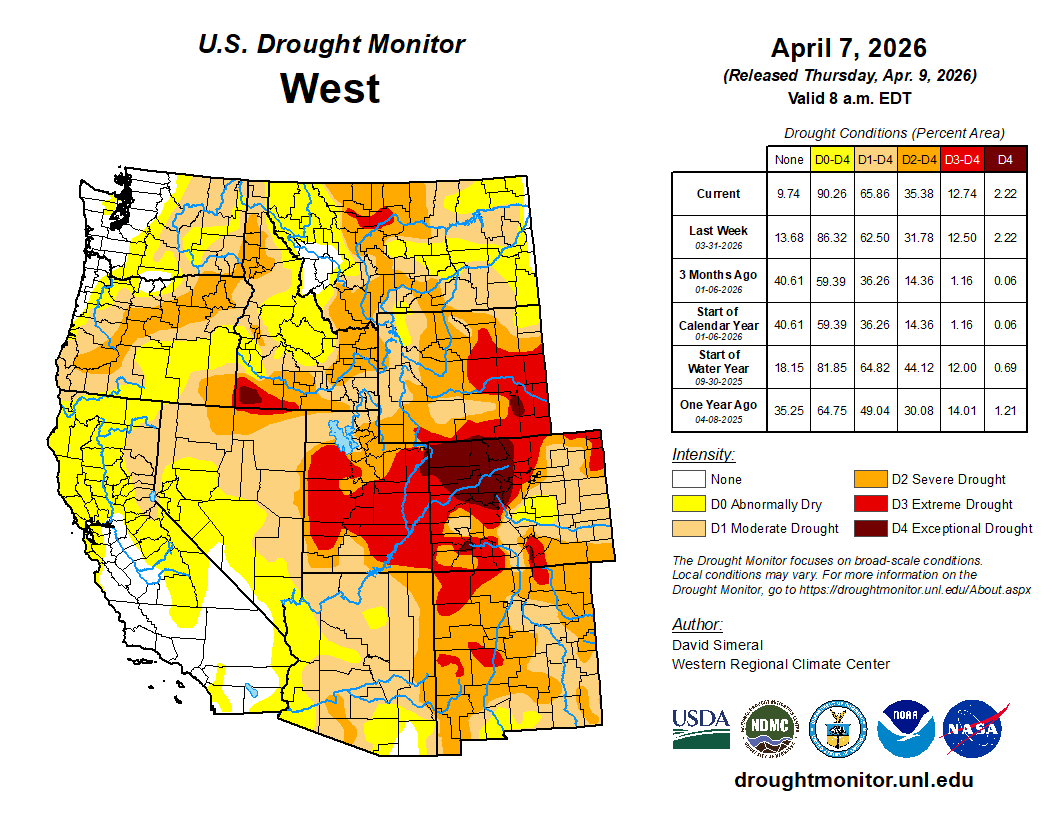
On March 3, for example, the US Drought Monitor released their latest report, revealing that “snow water equivalent” is less than 70% of normal across the Central Rockies, and less than 50% in the Four Corners.
Snow water equivalent is essentially how the water in the snow translates to real, wet water – the kind rivers and people rely on. By some accounts, the prediction for this year’s total is now on par with – and potentially worse than – 2002, which previously held the record for one of the worst water years on the Colorado River. For those who live in the region, the catastrophic wildfires of 2002 are not abstract: the Hayman fire burned for over a month, killed six people, destroyed more than 600 homes, and amounted to estimates of $42 million worth in damages. That same year, Arizona experienced the Rodeo-Chediski fire, which burned nearly half a million acres.
But it isn’t just one fire in one year – throughout the Southwest and in California, regions are experiencing some of the largest, most catastrophic wildfires in history, and they’re occurring much more frequently.
