A Pueblo jury late Thursday awarded rancher Gary Walker a $4.6 million judgment against Colorado Springs Utilities for the Southern Delivery System pipeline crossing Walker Ranches in Northern Pueblo County.
Walker contends the amount is far short of what the pipeline has cost him. During the trial, he contended that the conditions of the SDS easement have jeopardized a $25 million conservation easement he was negotiating with the Nature Conservation for $1,680 an acre on 15,000 acres.
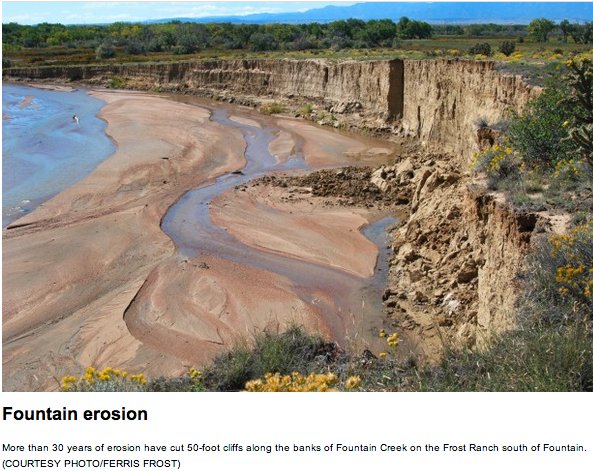
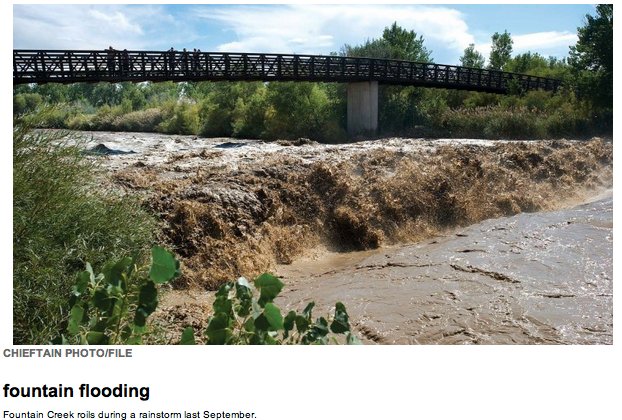
Walker said the conditions of the utility easement through his property allow for access that negates the value of the conservation easement, and that soils from offsite that were used as fill are contaminated with seeds from invasive species. Rain storms already have caused erosion on the pipeline scar and the damage could be greater in the future.
He also said he is fearful that Colorado Springs will take action against him if normal ranch activities interfere with the SDS permanent easement that is 100 feet wide across 5.5 miles of Walker Ranches.
The jury awarded Walker $4.665 million in damages in addition to the $82,900 actual value of the easement. The actual value was part of Judge Jill Mattoon’s instructions to the jury.
“We stung Colorado Springs, but it will do little to protect the next little guy or rare environmental landscape that gets in their way,” Walker said in a written statement provided to The Pueblo Chieftain. “My attorneys were amazed at CSU’s response against one rancher. It was like using a tank to kill a fly.”
The rancher charged that Colorado Springs drove up litigation costs intentionally. In December, Walker won a Pueblo District Court decision on costs of about $500,000 to that point, but the state Supreme Court pushed the decision back until the trial concluded. In that case, Walker said Colorado Springs had needlessly delayed trial.
“Colorado Springs punished us a great deal both financially and emotionally but I am glad we did it and I would do it again even though we lost a lot more than we gained,” Walker said. “Our financial loss is minor when compared to the loss of another open space and protected wildlife habitat area.”
Walker plans to raise the issue of how he was treated by Colorado Springs to Pueblo County commissioners, who issued a 1041 permit for SDS in 2009.
“My hope is that Pueblo County stands their ground and protects everyone by holding the city of Colorado Springs and their utility company to the terms of the 1041 contract they signed in 2009,” Walker said.
Walker also indicated that he is nervous about whether he will actually be able to collect the $4.6 million, since he expects Colorado Springs to appeal.
Colorado Springs has not indicated if it will ap- peal the judgment.
“We are disappointed in the outcome and will be exploring our options to protect the interests of those residents who are helping to fund the SDS project and will be impacted by this outcome,” said Janet Rummel, SDS spokeswoman for Colorado Springs Utilities. “We do not believe the result was supported by the evidence presented.”
She contended that Colorado Springs has worked to address Walker’s concerns and to offer fair compensation for the easements, along with paying $720,000 to relocate cattle during construction.
“We will continue to work with Mr. Walker and all easement holders on the SDS alignment to complete successful restoration and revegetation, as well as to responsibly maintain the condition of our easements,” Rummel said.
A contentious jury trial over the value of easements for the Southern Delivery System pipeline crossing Walker Ranches opened Monday in District Judge Jill Mattoon’s courtroom.
Colorado Springs Utilities offered about $100,000 for the easements, and has paid rancher Gary Walker $720,000 for moving cattle to alternate grazing pastures. Walker claims the value of SDS impacts on his land are $25 million, according to court documents. The 66-inch diameter pipeline has a 50-foot permanent easement and 100-foot temporary easement across 5.5 miles of Walker Ranches.
The total length of the SDS pipeline from Pueblo Dam to Colorado Springs is about 50 miles.
Walker spent about eight hours on the stand Monday and Tuesday testifying about the impact SDS has had on his cattle, violating existing conservation easements, introducing toxic materials and invasive species and other issues he has experienced since Colorado Springs constructed the underground pipeline in 2011. Water from the pipeline scar flooded other areas of the ranches and contributed to erosion, Walker said.
Walker stressed throughout that he does not believe he has been treated fairly in his dealings with Colorado Springs.
“After dealing with Colorado Springs since 2011, I’m worried about anything that occurs between you and I,” Walker pointedly told Colorado Springs attorneys during a testy cross-examination.
Colorado Springs in February won an appeal to the state Supreme Court to overturn a $500,000 judgment for court costs awarded by retired District Judge Victor Reyes in December. Walker had claimed Colorado Springs delayed the trial while he accrued costs for expert witnesses.
Colorado Springs is questioning Walker’s basis for damages, claiming conservation easements do not affect the parcels where the pipeline was built and that Pueblo County’s 1041 permit is an agreement between Colorado Springs and Pueblo County, not individual landowners. One of the conditions of the 1041 permit states that landowners should not have out of pocket expenses because of real estate transactions related to SDS.
Because of the large volume of documents in the case, the trial is expected to take about two weeks.
The Pueblo Board of County Commissioners got a first look at a resolution that will allow the board to retain legal counsel along with engineering consultants and other staff to evaluate whether Colorado Springs’ lack of any consistent stormwater funding is a deal-breaker for the Southern Delivery System.
The board took no official action on the measure, instead instructing attorneys Gary Raso and Ray Petros to fine-tune the resolution before it comes back for a vote.
The crux of the issue is the failure of a ballot measure in Colorado Springs in November that would have created a dedicated funding source for stormwater improvements in Colorado Springs that could mitigate the impact of runoff into the Fountain Creek.
The work that would be cleared by the resolution will allow staff to examine what’s been done so far and what still needs to be done for Colorado Springs to comply with the stormwater requirement in the SDS 1041 permit.
“We need to develop a factual basis for any action we take,” said Raso. “It would be the first time that Pueblo County would have an independently established set of facts about the stormwater flowing through the Fountain Creek.”
Petros told commissioners Monday that Colorado Springs has provided staff a summary of its stormwater expenditures.
Colorado Springs has indicated that it has budgeted $17 million this year for more improvements, but Petros said there’s yet to be any indication what those improvements are or if they’re among the 239 projects worth more than $534 million identified in 2013.
Commissioner Sal Pace said he wants a clear picture on what projects Colorado Springs has planned that directly mitigate impacts on the Fountain Creek and which ones are aimed at fixing the challenge of runoff from the various burn scars in the area.
It’s possible that building flood control projects for the burn scar will have an impact on the flooding in Fountain Creek. But Commission Chairwoman Liane “Buffie” McFadyen wondered whether the impacts of the Waldo Canyon Fire are accounted for under the current agreements over the SDS, since those were signed before the first spark of the catastrophic fire ever landed.
McFadyen also worried that the work set forth in the resolution may be at odds with the needs of the county’s own constituents in Pueblo West. The metro district ties into SDS.
“I don’t want to see Pueblo West used in a way that could be interpreted as gamesmanship in all of this,” she said.
Commissioner Terry Hart noted that the $50 million being paid to the Fountain Creek Watershed Flood Control and Greenway District likely won’t be enough to pay for the mitigation projects in Pueblo County and asked Petros and Raso to include a specific date in the resolution as to when the information will be ready.
Petros suggested the end of June, to give the newly elected mayor and City Council time to get sworn in after April 7 elections and for next month’s lawsuit over compensation by Colorado Springs to Walker Ranches to run its course.
However, Hart said he’d like to see it sooner.
“I didn’t create this problem,” he said. “What created this problem was the failure of the question in November.”
The last 50-foot pipe of the 50-mile-long Southern Delivery System arrived at a construction site Wednesday, marking a key milestone for the project as it nears completion next year both on time and under budget.
“We put to rest a lot of doubters that we’d get this done,” said Lionel Rivera, Colorado Springs’ former mayor, who helped approve the project.
With Kool & The Gang’s “Celebration” playing in the background, a truck hauled the massive blue pipe to a site just south of Pikes Peak International Raceway. Crews will place it underground in the coming weeks, completing a system spanning from Pueblo Reservoir to a new water treatment facility in Colorado Springs, which is under construction.
More than 7,000 of the steel, 66-inch-diameter pipes were installed since in 2010. That included a mile-long stretch bored 85 feet below Interstate 25 – a tunnel that was $10 million cheaper than creating a surface trench, according to Colorado Springs Utilities.
Current and former elected officials from across southern Colorado, along with several contractors who have worked on the project, were among scores of people on hand to watch the pipe being delivered. Many signed their names on it.
“It’s great – we’ve been at this a long time,” said John Fredell, the Southern Delivery System’s program director. “It’s a wonderful, wonderful day to celebrate.”
Three pump stations and the treatment facility are expected to be completed this year, with the system up and running for customers in Colorado Springs by the first quarter of 2016, Fredell said.
The project is on track to cost $841 million, below Colorado Springs City Council’s approved budget of $880 million in 2009, which did not account for inflation or rising material costs. The council also serves as Utilities’ board. Those savings rise to about $150 million when factoring in the cost of inflation and increases in material costs, said Fredell, who credited design changes to the pipeline and water treatment facility for much of the savings.
One of the biggest water projects in the western U.S. will hit a major milestone this month, when the last piece of 50 miles of pipe is laid for the Southern Delivery System, the $841 million project to bring new water supplies to Colorado Springs and nearby communities.
The project includes 50 miles of pipeline, three pump stations and a water treatment plant. It will deliver water from the Pueblo Reservoir to Colorado Springs, Fountain, Security and Pueblo West.
More than 7,000 sections of blue-colored, welded, steel pipe 50 feet long and most of it 66 inches in diameter were installed on the project during the last 3 1/2 years of construction.
The project spent $204 million on pipe and installation, according to the Colorado Springs Utilities.
“The pipe is the main artery for this water project and we are extremely pleased with how the pipeline construction went,” said John Fredell, the program director for the Southern Delivery System project.
The project is in the final year of construction and Fredell said the costs are expected to be nearly $150 million under the original budget…
Northwest Pipe (Nasdaq: NWPX), based in Vancouver, Washington, manufactured the SDS pipe at its Denver plant.
Three contractors installed the pipe, Garney Construction, headquartered in Kansas City with an office in Littleton; ASI/HCP Contractors of Pueblo West; and the heavy civil division of Layne, a construction firm based in The Woodlands, Texas, which has four offices in Colorado.
Construction is continuing on other elements of the Southern Delivery System project, including a $125-million water treatment plant and pump station that will have the capacity to treat and pump 50 million gallons of water per day. Three pump stations will help move water uphill, about 1,500 feet in elevation, from the Pueblo Reservoir, also are under construction.
Construction on the remaining portions of the project are expected to be finished by the end of 2015.
Community leaders gathered Wednesday to celebrate the completion of pipeline construction for the Southern Delivery System (SDS). The project consists of more than 7,000 50-foot sections of steel pipe that have been installed over the last three and a half years. The pipe will transport water stored in the Pueblo Reservoir north to Pueblo West, Fountain, Security and Colorado Springs.
“It’s taken many years and it’s taken many city councils and it’s taken many leaders and many workers to accomplish this,” said Colorado Springs City Councilman Merv Bennett. “Our friends to the south, the Lord gave them the Arkansas River as their delivery system. To the north, Denver has the South Platte River as their delivery system. We have Fountain Creek and we ran out of that water in 1912.”
Proponents of the SDS argue the pipeline will ensure Colorado Springs and surrounding areas can continue to grow, especially toward eastern El Paso County. The region will have to worry less about drought and watering restrictions.
“Water is important. It’s the lifeline of a community,” said Lionel Rivera, former mayor of Colorado Springs. “It’s the way you grow and I think we’ve ensured the water supply for at least the next 50 years.”
Rivera was mayor from 2003 until 2011 and helped get the project rolling. He said Tuesday that it was one of the most rewarding things he did as mayor.
“It’s very exciting, a little bit emotional to see that pipe,” Rivera said. “It just made me think of all the stuff we had to go through to get this approved. We were told back when we started it that it couldn’t get done from a political standpoint, but we proved the doubters wrong.”
The project has had opponents over the years, many from Pueblo who are concerned over stormwater issues.
Though pipeline construction is complete, workers still need to build water treatment plants and pump stations. The first drop of water is expected to be delivered in spring 2016.
Construction crews are poised to lay the final pipeline link for Colorado’s biggest water project in decades — an $841 million uphill diversion from the Arkansas River to enable population growth in Colorado Springs and other semi-arid Front Range cities.
Eleven 2,000-plus horsepower pumps driven by coal-fired power plants will propel the water from a reservoir near Pueblo through a 50-mile pipeline with an elevation gain of 1,500 feet.
This is the first phase, moving up to 50 million gallons a day, for a Southern Delivery System that utility officials estimated will eventually cost $1.5 billion.
“It means we will have greater water security,” Colorado Springs utilities spokeswoman Janet Rummel said. “Businesses need water. Our communities need water to survive. It means we can continue to serve our population as it grows.”
Water challenges loom across Colorado, with state officials projecting a 163 billion-gallon shortfall. A few years ago, drought forced Colorado Springs to stop watering municipal parkways and gardens.
The diverted water can be used only within the Arkansas River Basin, officials said, ruling out sales to south Denver suburbs. And the river water, after treatment, must be returned to downstream farmers.
Colorado Springs residents have been paying for the project through water bills, which increased by 52 percent over four years. Utility officials spent $475 million from bonds.
The water will flow by next March, officials said. At full buildout, the system will store water in two new reservoirs east of Colorado Springs.
The new north outlet works at Pueblo Dam — Photo/MWH Global
The Southern Delivery System pipeline’s completion was marked by a contingent of El Paso County officials and a smattering of Pueblo County folks as well.
For John Bowen, president of ASI Constructors of Pueblo West, the SDS project has meant bread on the table as well as water in the pipes.
“It’s generated $50 million in contract values for our company,” Bowen said during a ceremony to mark completion of the SDS pipeline from Pueblo Dam to Colorado Springs. “We were able to grow as a business during a time when a lot of contractors were laying people off.”
ASI was the primary contractor for the connection at Pueblo Dam, as well as 12 miles of the 50-mile SDS pipeline route, and relied on 70 local businesses for support services. The SDS project generated $800,000 in wages for ASI workers.
More Southern Delivery System coverage here and here.
The Colorado Supreme Court vacated a Pueblo District Court order that would have required Colorado Springs to pay Pueblo County rancher Gary Walker more than $500,000 in costs in a legal dispute over Southern Delivery System.
The order, issued last week, throws out former District Judge Victor Reyes’ Dec. 4 decision to award Walker Ranches $387,000 plus 8 percent annual interest since 2011 for costs leading up to a trial that has been postponed several times. That amounted to about $509,000.
Reyes retired at the end of last year.
Reyes issued a supplemental order that the payment was binding because of Colorado Springs’ 1041 land-use agreement with Pueblo County that prevents “undue financial burdens” for Pueblo County residents affected by SDS.
The state Supreme Court directed Pueblo District Court to determine costs after a trial to determine the value of the easement for SDS across Walker Ranches. The trial is scheduled to begin in April.
Colorado Springs had argued legal costs should not be negotiated until after the trial concluded, while Walker’s lawyers said costs were incurred even as Colorado Springs sought delays for trial.
Walker has not made a request for payment under the 1041 agreement from Pueblo County commissioners, and the county is not a party to the dispute over payment, said Ray Petros, special counsel for Pueblo County.
Walker and Colorado Springs are miles apart on the value of the SDS pipeline easement. Colorado Springs contends it is worth $100,000, while Walker’s attorneys filed documents indicating damage to the ranches as a whole from the pipeline is $25 million.
Fountain Creek Watershed FromThe Pueblo Chieftain (Chris Woodka):
Pueblo city and county officials are at odds over water quality regulations that could add millions of dollars to city sewer expenses.
The rift was great enough that the Pueblo Area Council of Governments backed down from a vote Thursday to support a variance for selenium and sulfates the city is seeking from the Colorado Water Quality Control Commission.
PACOG delayed its vote one month, after putting it off in December as well, in order to allow Pueblo County Commissioner Terry Hart to participate in debate.
Hart, along with Commissioners Sal Pace and Liane “Buffie” McFadyen, raised concerns that the county’s ability to insist on standards from upstream communities in El Paso County under the 1041 permit for Southern Delivery System would be compromised if they agreed to support a variance for Pueblo.
“Commissioner Hart is not here, and he wants to have a say,” McFadyen said. “In our future, we will have water quality issues in this county and we need to be consistent.”
That means the city will have to go into a state pre-hearing on Feb. 4 without support from other local governments. The variance itself will be considered by the state in April.
Pueblo City Manager Sam Azad said sewer fees could double or triple if the city is forced to meet numeric standards.
The reach of the Arkansas River below the Pueblo wastewater treatment plant has naturally high levels of selenium and sulfates. If numeric standards are enforced, no additional releases would be allowed.
Pueblo would have to pay up to $92 million and $9 million annually to seal its wastewater lines from collecting groundwater and to treat water released from the plant to remove all traces of contaminants, said Wastewater Director Gene Michael.
Sealing the lines from collecting groundwater, $35 million of the total, would actually increase selenium because existing treatment removes some of it from water that’s released. The disposal of waste from reverse-osmosis treatment would compound environmental damage, Michael said.
“Let me be crystal clear, the county is not in favor of spending $92 million,” Pace said.
One of the conditions of the delay was to give environmental attorneys John Barth of the county and Gabe Racz of the city time to work out a way to gain county support for the resolution without jeopardizing future SDS deliberations.
While Pace said that agreement was close, the city disagreed.
“It’s unlikely John Barth and the city would agree to anything,” said Dan Kogovsek, city attorney.
After an hour of discussion, City Council President Steve Nawrocki agreed to back off a vote until the February meeting in hopes of getting unanimous support from PACOG before the April state rule-making hearing. Pace and McFadyen promised the vote would not be delayed again.
More water pollution coverage here. More Fountain Creek watershed coverage here. More wastewater coverage here. More stormwater coverage here. More Southern Delivery System coverage here.
Controlling stormwater on Fountain Creek has surfaced as a key issue for use of the Southern Delivery System in light of the rejection of the Pikes Peak Drainage Authority by El Paso County voters in November.
A proposal to use the SDS pipeline to deliver water to a system just north of Colorado Springs could be a test of Pueblo County’s 1041 regulations for SDS.
Donala Water and Sanitation District has asked for an exemption or finding of no significant impact from Pueblo County 1041 conditions on its plan to move water from rights it purchased in 2009 on the Willow Creek Ranch south of Leadville.
A Pueblo County analysis of votes in the Donala district shows its residents rejected stormwater control by a 60-40 margin.
“Serious concerns over compliance with (1041 conditions) are raised by the failed efforts in El Paso County, including within the city of Colorado Springs and Donala, at establishing, financing and maintaining stormwater controls,” Pueblo County Planner Joan Armstrong wrote in a letter to Donala last week.
“The recent failure of the November ballot proposal in El Paso County on stormwater fees only heightened those concerns.”
Donala plans to use excess capacity in the SDS pipeline from Pueblo Dam to Colorado Springs and a conveyance agreement with Colorado Springs Utilities to move an average of about 436 acre-feet (143 million gallons).
SDS is not expected to come on line until at least 2016, and Donala is not the only community interested in using it. Colorado Springs has the majority of capacity in the line, which won’t reach its full volume of 78 million gallons daily for several decades.
The move would provide about one-third of the water for 2,600 taps serving 8,000 people in the Donala district. It also would reduce Donala’s dependence on non-renewable groundwater from the Denver Basin aquifer.
Donala asked for the exemption because the amount of water falls short of the 500-acrefoot threshold that normally would trigger a 1041 permit review.
Armstrong asked Donala to address the question of whether larger amounts of water could be moved through the pipeline.
She also explained that the county also is interested in the maximum — not just the average — flows that could be moved to Donala through SDS, and in complying with certain conditions of the 1041 permit for SDS, including stormwater control.
The county asked Donala if it still intends to amend its service plan to control stormwater, as manager Kip Peterson indicated in a 2013 interview with The Pueblo Chieftain.
The county also wants to know which of the projects identified in the 2013 El Paso County Stormwater Needs Assessment by CH2MHill would serve Donala and whether the district intends to fund or construct any of those projects.
A giant teeth-gnashing machine is boring its way 85 feet under Interstate 25, two sets of railroad tracks and Fountain Creek. The machine is cutting a 1-mile long tunnel about 20 miles south of downtown Colorado Springs for a section of a massive pipeline project that will carry millions of gallons of water from the Pueblo Reservoir to Colorado Springs. It is the most complicated and dangerous part of the 50-mile stretch of the Southern Delivery System project, said Brian Whitehead, Colorado Springs Utilities project manager. If all goes as planned the tunnel should be completed in the first quarter of 2015.
“This is the last section of the pipe to be constructed and the most complex part,” Whitehead said. “There are risks – it’s not something anyone can do.”
Construction on the biggest Utilities project in its history began in 2010. The Southern Delivery System project was envisioned as the way for the city to handle future growth, said Jay Hardison, Colorado Springs Utilities water treatment plant project manager. It took years to plan and receive the proper permits from federal, state and county officials. The plan also was reviewed and approved by the Federal Aviation Administration because the new water treatment plant and holding tank off Colorado 94 are in the flight line near Colorado Springs Airport.
SDS cost, water rates
– Project cost: $841 million.
– Utilities customers’ water rate increased by 12 percent in 2011 and 2012 to cover cost of project.
– Utilities customers’ water rate increase by 10 percent in 2013 and 2014.
Southern delivery system timeline
2009: Final approvals and permits secured.
2010: Construction started.
2011: Construction began at Pueblo Dam and on the raw water pipeline.
2012: Pueblo Dam connection complete.
2014: Raw water pipeline construction complete.
2015: Raw water pump stations expected to be complete.
2016: Water treatment plant and finished water pump stations expected to be completed and SDS delivers water to Colorado Springs, Fountain, Security and Pueblo West.
2020-2025: Phase 2 could begin to expand capacity at the water treatment plant
More coverage from Monica Mendoza writing for The Colorado Springs Gazette:
At the start of the economic recession in 2008-09 work slowed at the Northwest Pipe company, which manufactures pipe in Denver. Then in 2010, the contracts for the massive $841 million Southern Delivery System project started dropping, said John Moore, Northwest Pipe operations manager. Colorado Springs Utilities was building a 50-mile pipeline from Pueblo Reservoir to Colorado Springs.
“When it dropped, we went from hanging on, hibernation mode, to Pueblo and production,” Moore said. “At the apex, we had 235 people employed working two shifts. For us it meant business was up.”
Utilities has hired 380 businesses in Colorado to plan and build the pipeline and water treatment plant, spending an estimated $489 million on contracts in the state. Of that, Northwest Pipe won $110 million in work.
The company made four to five pipes a day. In all it manufactured 7,000 pieces of pipe for the project. Beyond the direct contracts, there was a ripple effect, Moore said.
“Anytime you have a project this size, you are coordinating with suppliers and trucking companies,” Moore said. For example, during peak production, as many as 25 trucks a day left Northwest Pipe’s manufacturing facility. “We used local suppliers – the truck company was local.”
“The other thing that might be missed in the number is that most of the people who work on these crews putting the pipe in, there is a lot of inspection required, people making sure they are doing things right,” Moore said. “We have reps coming in, there is a huge travel industry associated with this project in rental cars, hotels and air travel.”
There is about one mile of pipeline left to complete in the project. Then Northwest Pipe will be done and moving on to water projects in Texas and other states, Moore said. The company has nine manufacturing plants across the country.
“Across the country, water infrastructure is getting old – water pipes are getting old,” Moore said.
More Southern Delivery System coverage here and here.
While the decision of how to spend $50 million for flood control on Fountain Creek to benefit Pueblo will be made by the parties directly involved, other input will be needed.
“Anyone who wants to come to the table and says, ‘We want to find out where money for these projects will be available,’ is welcome,” Pueblo County Commissioner Terry Hart said.
Last week, Hart made a pitch to the Fountain Creek Watershed Flood Control and Greenway District to begin planning now for the arrival of $50 million in payments from Colorado Springs Utilities after Southern Delivery System goes online in 2016. That money is seen as seed money for projects that could amount to $150 million or more identified in a corridor master plan. The money was negotiated by Pueblo County under its 1041 agreement with Utilities in 2009 for the construction of the SDS water supply pipeline through the county. It is to be used for flood control projects on Fountain Creek that benefit Pueblo County. When the district was established later in 2009, it became the recipient of the money.
“At a minimum, Pueblo County, CSU and the Fountain Creek district need to be involved, and they will have the final say,” Hart said.
But the city of Pueblo and the Lower Arkansas Valley Water Conservancy District also should have input about how the money will be used, Hart said.
The greatest potential damage from Fountain Creek flooding is within the city of Pueblo and in the communities of the Lower Ark Valley downstream from Fountain Creek.
“The Lower Ark District was instrumental in developing the corridor plan, and we definitely need the technical input from the city of Pueblo,” Hart said.
The corridor plan, a joint effort of Utilities and the Lower Ark district, identifies projects between Fountain and Pueblo that could cost several times the $50 million that was earmarked under the 1041 agreement. Pueblo already has participated in pilot projects to demonstrate flood control techniques.
In addition to technical assistance, Pueblo County’s attorneys will have to be involved to determine whether projects meet the conditions of the 1041 permit. This will be important to avoid the kinds of dispute that developed when the Lower Ark raised objections about how its contributions to the district were being spent.
“I see this new committee working in concert with the steering committee (Utilities, Lower Ark and the Fountain Creek District),” Hart said.
Whatever else is in it, the biggest element of Colorado’s water plan will be cooperation.
“Water can either divide or unite us. In the end, it’s our choice,” Gov. John Hickenlooper told the Colorado Water Congress last week. “In this state, we work together, and we have to make sure it doesn’t divide us.”
When Hickenlooper called for a state water plan last year, it had a direct impact on most of the water professionals attending the summer workshop. Four months from the finishing line, the governor reiterated the importance of water to Colorado. The draft plan will be on the governor’s desk in December, whether or not Hickenlooper survives an election challenge from Republican Bob Beauprez. Beauprez addressed the Water Congress Friday.
Hickenlooper heaped praise on the work of basin roundtables, which have been meeting since 2005, and have spent the past year developing basin implementation plans.
“The roundtables, while not as glamorous and sexy as bare-knuckle water brawling in neighboring states and here in the past, have moved forward,” he said.
“It has not been just a small group of people in Denver directing how it will be used, but a broad group of people working together to write a plan.”
Hickenlooper highlighted the Arkansas Valley Conduit as an example of water projects that benefit the outlying areas of Colorado. Hickenlooper said he and Colorado Water Conservation Board Executive Director James Eklund talked with Mike Connor, deputy secretary of the Interior, earlier this year to ask him to move funds to provide more money for the conduit. Last week, the Bureau of Reclamation announced $2 million in funding for the conduit this year.
“That $2 million is a good first step for Southeastern Colorado, an area that has been in a drought for years,” he said.
Whether it’s putting in a new dam or pipeline, leasing water from farms or simply conserving water, municipal customers should be prepared to pay more for mitigation.
“With any project, we have to be prepared to look at the question: What are the underlying costs?” said Mark Pifher, permit manager for the Southern Delivery System being constructed by Colorado Springs Utilities.
Pifher led a panel of those who have worked on Colorado’s largest municipal water projects to explore the obvious and hidden add-on costs of water development. The event was part of the Colorado Water Congress summer convention.
In the case of SDS, an $840 million pipeline from Pueblo Dam to Colorado Springs, about $150 million in additional costs to meet permit requirements has been tacked on.
Aurora paid additional costs for its lease of High Line Canal water 10 years ago, with an additional $1.3 million on top of $10.8 million in direct payments to farmers and $1.4 million for a continued farming program now in its tenth year on the Rocky Ford Ditch.
In the Rocky Ford Ditch program, Aurora provides some of the water it purchased to allow farmers to stay in business.
“We’re thinking we’ll continue the program in the future,” said Tom Simpson, Aurora’s engineer in the Arkansas Valley. “One thing of concern is the availability of water in the Arkansas basin.”
New storage projects also come with a price tag for mitigation.
Travis Bray of Denver Water said the $360 million Gross Reservoir expansion project, designed to increase yield by 18,000 acre-feet, has cost an additional $30 million in mitigation so far, as it moves toward full permitting, projected to happen in 2015.
Jeff Drager of the Northern Colorado Water Conservancy District said its $300 million Windy Gap Project, designed to increase storage by 90,000 acre-feet, has cost $19 million in mitigation and 3,000 acre-feet of water.
Along with the money, agreements with affected communities cost time. Both projects are a decade behind schedule.
“I was a young guy when we started, and now my kids are out of college,” Drager said. “I’d just be happy to get this done by the end of my career.”
Even conservation has hidden costs, said Jason Mumm with MWH Global, a consultant on many municipal projects. He presented detailed analysis that showed how reduction of water use drives water rates up. As a result, customers may wind up paying the same amount of money or more after paying for appliances that reduce water use.
“Conservation is good, but we do need to understand that it comes with its own costs,” Mumm said.
More Colorado Water Plan coverage here. More conservation coverage here. More Windy Gap Firming Project coverage here and here. More Moffat Collection System Project coverage here and here. More Southern Delivery System coverage here and here.
The estimated construction cost of the Southern Delivery System, a water pipeline from Pueblo Dam to Colorado Springs, has been lowered to $841 million, about $145 million less than earlier estimates.
“It’s our responsibility to manage project costs as closely as possible to protect the investment being made by the SDS partner communities,” said Janet Rummel, spokeswoman for Colorado Springs Utilities.
The timing of SDS construction saved money primarily because of lower interest rates and lower pricing for materials and services, she said.
“Competitive bidding has allowed more than 100 Pueblo County-based businesses to benefit from $65 million in SDS spending so far,” Rummel said.
Although most of the benefit from SDS goes to Colorado Springs, Pueblo West, Security and Fountain also are SDS partners.
The pipeline has a capacity of 96 million gallons per day, with 78 mgd going to El Paso County.
Pueblo West will increase its capacity by 18 mgd through a connection to the newly constructed north outlet works.
Its current connection at the south outlet delivers 12 mgd — just above the metro district’s peak-day delivery. The outlet is shared by the Pueblo Board of Water Works and the Fountain Valley Authority. It also will be the hookup for the Arkansas Valley Conduit.
Pueblo West has paid $6.5 million for construction of its SDS connection, and estimates it will have paid a net price of $6.7 million — when all bills and refunds are totaled — by 2017.
The money came from reserves, said Jack Johnston, metro district manager.
“We have cash-funded the project out of reserves that were collected primarily during the growth years,” Johnston said. “They were fees that were set aside to help build the reserves to do capital projects.”
Pueblo West got some of the SDS savings, but just for the construction nearest the dam, where its 36-inch-diameter connection splits off from the 66-inch-diameter line that runs 50 miles north.
“Whatever savings were realized in building the north outlet works were passed on to us,” Johnston said.
Pueblo West had been negotiating an agreement to turn on SDS ahead of schedule, since its spur from the dam will be ready for use ahead of the rest of the project.
However, the board last month delayed action on a draft agreement that could allow early turn-on of SDS. If no agreement is reached, the startup would be whenever Colorado Springs gets the go-ahead from Pueblo County to turn on SDS, expected in 2016.
Colorado Springs must meet Pueblo County’s 1041 permit conditions in order to start SDS.
Those conditions include $50 million in payments, plus interest, to the Fountain Creek Watershed Flood Control and Greenway District; $15 million for road rehabilitation in Pueblo West; and $2.2 million for Fountain Creek dredging in Pueblo. All of those payments are included in the $841 million construction cost.
Colorado Springs also will pay $75 million for wastewater system improvements by 2024 within the city under the 1041 permit, but that cost is not included in the estimate.
Huge pipes being tunneled underground near the intersection of Powers Boulevard and Constitution Avenue is the first big sign after almost two decades of work to increase the water available to the Colorado Springs area by a third…
Pipeline construction at the busy intersection is ahead of schedule, expected to be complete in September rather than November, said SDS spokesperson Janet Rummel…
A $125 million facility that will be able to process 50 million gallons of water a day, the treatment plant on the east side of Colorado Springs is halfway constructed, also ahead of schedule. Construction began in March 2013 and will be finished in fall of 2015. The plant is expected to put out drinking water in April 2016…
SDS construction is estimated to cost $847 million – $147 million less than the original estimation in 2009.
Rummel said money was saved by asking engineers to make designs that would be cost-effective without damaging drinking water quality, like keeping every part of the water treatment plant under the same roof instead of separate buildings.
This means SDS will cause less of a utilities rate increase for CSU customers than originally expected in 2009…
“This is the future of Colorado Springs,” said Jay Hardison, CSU water treatment plant project manager.
More Southern Delivery System coverage here and here.
Colorado Springs will be taking a more regional approach and looking at risk factors as it develops its 50-year water plan. That’s a shift from the 1996 water resources plan that focused solely on supply and led to Southern Delivery System, said Brett Gracely, water resources manager for Colorado Springs Utilities.
“We are seriously evaluating the timing of future SDS components,” Gracely told the Pueblo Board of Water Works Tuesday.
Utilities is updating the plan that will determine its actions in water development after SDS comes online in 2016. The plan will look at watershed health, fire vulnerability and climate change, as well as social values and tradeoffs. It also will incorporate traditional factors like water supply, demand and quality.
“Because of changes in technology and software, we can run thousands of scenarios through our models,” Gracely said.
Another key difference is that Colorado Springs Utilities is not planning on building another $1 billion pipeline as a result of this plan, but more carefully evaluating its options after SDS.
“It’s a completely blank page,” Gracely said. “But it will have no effect on SDS phase I.”
The first phase is a 50-mile pipeline from Pueblo Dam to Colorado Springs, served by three pump stations and a treatment plant. The second phase of SDS includes the construction of two reservoirs on Williams Creek southeast of Colorado Springs.
Water board members Tom Autobee and Kevin McCarthy questioned Gracely on what conservation measures Colorado Springs envisions in order to cut demand. Reduced water use after the 2002 drought has been complemented by a tiered rate structure that makes expanded water use more costly, he explained. Colorado Springs also has dropped minimum landscaping requirements that at one time would have encouraged greater water use.
“What is your telescope telling you about West Slope imports?” McCarthy asked.
“Warmer weather is what we’re expecting,” Gracely replied. “Half the (climate) models are showing it will be wetter, and half drier, but they all say it will be warmer.”
With Southern Delivery System nearing completion, Colorado Springs is going to work on a plan to provide water for the next 50 years.
“There is a lot of uncertainty in the West when it comes to water,” Leon Basdekas, project manager for Colorado Springs Utilities integrated water planning, told the Fountain Creek Watershed Flood Control and Greenway District board Friday.
Utilities’ last water plan was in 1996 and focused almost entirely on supply. It provided options about how to develop water rights that Colorado Springs obtained in the Arkansas Valley during the 1980s. Among the options were direct reuse, reservoirs and pipelines. The water plan eventually led to SDS, a $940 million pipeline from Pueblo Dam to Colorado Springs that will be completed by 2016. Those types of options still will be considered.
“Everything is on the table,” Basdekas said.
But the new plan also will look at demand, water quality, infrastructure, energy, regulation, legal issues and public opinion, he added. The goal is to develop a sustainable future supply that also respects social values, Basdekas said.
Among the biggest challenge is managing risk during climate change. Severe drought in 2012-13 was only one indication of how future water supplies could be affected.
At the same time, Colorado Springs is looking for as much public input as possible as it begins looking at the next 50 years.
“We need public involvement, so we just don’t go into a dark room and come out with a plan,” he said.
The new north outlet works at Pueblo Dam — Photo/MWH Global
FromThe Colorado Springs Business Journal (John Hazlehurst):
CSU’s ongoing billion-dollar bet is the Southern Delivery System. Scheduled to go online in 2016, SDS will convey water from Pueblo Reservoir via a 66-inch-diameter underground pipeline to Colorado Springs. It will expand the city’s raw water delivery capacity by an eventual 55 million gallons per day (MGD), a nearly 50-percent increase in system capacity…
“What we’re hoping for is a record snowpack,” CSU Chief Financial Officer Bill Cherrier said in late March, “followed by a hot, dry summer.”
Cherrier said it with a smile, but he had neatly summarized CSU’s dilemma. Water in the reservoirs must both be replenished and sold. The sell side of the equation is driven by fixed costs, including system maintenance and replacement, energy costs and continuing capital investment. But buyers don’t care about CSU’s problems; they prefer to water their lawns with free water from the skies.
Per-capita water use has dropped sharply in the past 20 years, leading to corresponding reductions in the city’s long-term consumption estimates.
“The Base (i.e. revenue) forecast is for an estimated service area population (city, suburban, Green Mountain Falls, military) of about 608,552 and about 106,000 AF/yr for demand,” wrote CSU spokesperson Janet Rummel in an email. “The ‘hot and dry’ scenario uses the same service area population and estimates about 120,000 AF/yr demand. This particular ‘hot and dry’ scenario equates to an 80 percent confidence interval and adds about 13 percent to annual demands.”
That’s a precipitous drop from the high-side estimate of the 1996 water resources plan, which forecast a population in 2040 as high as 900,000 and water demand of 168,150 acre-feet. The base forecast, at 106,000 acre-feet annually, is only 1,800 acre-feet more than the community used in 2000, 40 years previously.
Does that mean CSU’s water managers dropped $841 million into a new water delivery system that we may not need until 2016? Does this prove that the project, originally conceived to furnish water for the Banning-Lewis Ranch development, is now entirely unnecessary?
Perhaps not…
“SDS is not a short-term solution,” Rummel said in a 2010 email. “The time to build a major water project is not when you have run short of water … [we need] to better prepare our community for drought, climate change and water supply uncertainty on the Colorado River.”
Many factors entered into the decision to build SDS. In 1996, there was no discussion of system redundancy, of having an additional water pipeline that could serve the city in case one of the existing conduits needed emergency repair. But 18 years later, the pipelines are that much more vulnerable to accident or malfunction.
In 1996, population growth and per capita water use were expected to continue indefinitely at historic levels. But they didn’t. Commercial and industrial use declined, and price-sensitive residents used less water. Indoor use declined as well as outdoor, thanks to restricted-flow shower heads and low-flush toilets.
SDS stayed on track. In the eyes of the water survivalists who conceived and created the project, the city’s rights on the Arkansas River had to be developed. They saw long, hot summers in the city and dry winters in the mountains. Opponents could make any arguments they liked, but these five words trumped them all.
Use it or lose it.
Undeveloped water rights are like $100 bills blowing down the street — someone will grab them and use them for their own benefit…
“This will be our last pipeline,” said CSU water resources manager Gary Bostrom. “We will never be able to develop a new water delivery system. When SDS is finished, that’s it.”
Bostrom’s peers in Las Vegas, Phoenix, San Diego and Los Angeles have reason to envy him. Colorado Springs has won the water wars. We’ve bought ourselves decades of time. Whether we save or squander this liquid bounty is up to us.
In 2040, the city may have 30,000 to 50,000 acre-feet a year of unneeded delivery capacity. That cushion will allow for decades of population growth and for the introduction of sophisticated irrigation techniques that will preserve our green city and minimize water use.
In years to come, members of the Colorado Springs City Council will decide how to preserve the city’s future. Will they heed Bostrom’s warning and encourage radical conservation? Will new developments be required to xeriscape, and preserve trees with drip irrigation devices?
More Southern Delivery System coverage here and here.
Pueblo West is pondering whether it even needs to turn on Southern Delivery System early after the metro district board waded through the process that led up to a controversial memorandum of understanding that would allow that to happen. The MOU apparently represents years of complex negotiations between Colorado Springs attorneys.
Three board members, Chairman Lew Quigley, Mark Carmel and Judy Leonard, voted on May 27 to talk about the MOU in open session, rather than behind closed doors.
But at Tuesday’s metro board meeting — devoted solely to water issues — board members and staff wrangled over what the document means and how it should be drafted.
The MOU could pave the way for Pueblo West to begin using a new 36-inch pipeline from the north outlet on Pueblo Dam ahead of schedule. It’s needed because Pueblo West is reaching the limits of its current delivery line, and to provide redundancy if anything should happen to its sole supply source, said Manager Jack Johnston. Johnston said the MOU was merely conceptual, and the argued that details of it needed to be explained in executive session.
“This is really our bus to drive,” Johnston said.
Carmel countered that a more open discussion in public among Pueblo West, Colorado Springs needed.
Pueblo County commissioners and attorneys objected to details of the agreement which required Pueblo West to obtain approval of 1041 permit conditions, saying Colorado Springs is attempting to bully the metro district.
“This was presented to me as an ultimatum. … I suspect this new board will go back to the drawing board to give you a new direction,” Carmel said. He wanted to delay action until a full board could act — board member Jerry Martin was not at Tuesday’s meeting.
Quigley objected to discussing the agreement in executive said that a meeting behind closed doors was needed to explain how the agreement related to several other lawsuits in order to protect Pueblo West’s legal position.
Board member Barbara Bernard favored discussing such an agreement in executive session if necessary.
“Yes, I want to know how we got to this point,” she said. “I need as much counsel as we can have.”
Colorado Springs Utilities was trying to make sure the clock wouldn’t start ticking if Pueblo West got water early under a controversial agreement.
That’s how Mark Pifher, permit manager for Southern Delivery System, explained the situation Wednesday to the Lower Arkansas Valley Water Conservancy District during his update on SDS progress.
The agreement was to have been discussed in executive session on May 27 by the Pueblo West Metropolitan District, but newly elected board member Mark Carmel objected to talking about it behind closed doors, claiming the agreement would hold Pueblo West “hostage.”
The issue escalated when Pueblo County commissioners and attorneys claimed Colorado Springs was using bully tactics to pressure Pueblo West into gaining county approval of 1041 permit conditions from the county.
“Pueblo West wanted delivery of the water as soon as possible,” Pifher said. “The concern we had was that if the water is delivered to Pueblo West, will all the other conditions be expedited?”
Among those conditions is the beginning of $50 million payments to the Fountain Creek District and other Fountain Creek issues. Utilities and the Lower Ark have been in negotiations over Fountain Creek issues for the past nine years.
“What we’re asking is that Pueblo West go to the commissioners so those other conditions will not be triggered,” Pifher said.
The agreement also contained a provision that would require Pueblo West to stop using the new pipeline if Colorado Springs did not meet SDS conditions.
On Tuesday, the Pueblo West board discussed the agreement with Manager Jack Johnston and attorney Harley Gifford.
Carmel and board President Lew Quigley wanted an open discussion of the agreement. Johnston said it had been negotiated over several years by staff and attorneys. Gifford said it is tied to other legal issues that need to be discussed in executive session.
The 36-inch water line from the north outlet is nearly complete and would provide redundancy for the existing 24-inch line Pueblo West has connected to the south outlet. The new line would provide up to 18 million gallons per day in addition to the 12-million-gallon capacity of the existing line.
More Southern Delivery System coverage here and here.
Pueblo County officials believe Colorado Springs Utilities is trying to pressure Pueblo West for help in meeting 1041 permit requirements for the Southern Delivery System. After obtaining a copy of a draft memorandum of understanding that was to be considered by the Pueblo West metro board in executive session last month, two commissioners and the county’s water attorney say it’s the same type of coercion Utilities tried to exert on the county earlier.
“It’s bully tactics. I think it’s terrible and totally inappropriate,” said Terry Hart, chairman of the county commissioners. “This is the second time in a couple of months where Utilities is trying to negotiate approval of 1041 conditions. In this case, it pits Pueblo West against Pueblo County, when there’s no good reason to do it.”
Commissioner Sal Pace agreed: “Whether Pueblo West has access to its own water has nothing to do with conditions on Fountain Creek.”
Water attorney Ray Petros was equally blunt: “This proposed MOU is a heavy-handed tactic by Utilities to withhold water deliveries to Pueblo West as a lever against the county in the event the county had to consider suspending the SDS permit.”
Pueblo West has not approved the MOU, and Jack Johnston, the metro district manager, portrayed it as a working document “at the staff and attorney level.”
However, newly elected Pueblo West board member Mark Carmel objected at his first official meeting to considering the deal in executive session. He was backed by Chairman Lew Quigley and board member Judy Leonard.
Johnston said a document for public consideration would be ready for discussion in open session, probably in mid-June.
But the document provided to The Chieftain by Carmel, and shared with the county, asks Pueblo West to get the county to sign off on several conditions of the 1041 permit before Pueblo West can turn on SDS.
Among other things, the agreement instructs Pueblo West to obtain written confirmation from Pueblo County that four politically charged conditions of the county’s 1041 permit have been met or “will not be triggered . . . by use of SDS facilities.”
Those conditions include the payment of $50 million to a special district for Fountain Creek flood control, the Pueblo Arkansas River flow program, the adaptive management scenario for Fountain Creek and Colorado Springs stormwater management. Each of those has led to complicated political negotiations or even court cases for Colorado Springs. Pueblo West has been in court with Pueblo County over the flow program.
Pueblo County ran into the same tactics when it asked Utilities to release interest money from the $50 million early to fund dam studies on Fountain Creek, Hart and Pace noted.
“In any event, holding Pueblo West hostage casts Springs’ Utilities as a bully,” Petros said. “It’s certainly counterproductive to a cooperative approach for addressing environmental mitigation of the SDS Project.”
More Southern Delivery System coverage here and here.
Orders at the Northwest Pipe Co. plant in Denver were drying up in 2010 when bid requests started coming for a massive water project linking the Pueblo Reservoir and Colorado Springs called the Southern Delivery System.
“The start of the SDS project couldn’t have come at a better time,” Northwest’s vice president of sales Eric Stokes said.
At a cost of $841 million, the water project is the largest the region has seen in decades. Starting in 2016, it will pipe water held in the Pueblo Reservoir to consumers in Colorado Springs, Pueblo West, Security and Fountain.
“This is our water security for many years to come, 50 years into the future,” said John Fredell, program director of the water services division for SDS.
Northwest Pipe’s Denver plant won almost all the contracts to supply 50 miles of steel pipe, and the company celebrated the completion of the last piece Thursday afternoon. Northwest produced 7,000 pieces of the pipeline, each averaging 50 feet in length and 66 inches in diameter. The orders allowed Northwest’s employment in Denver to grow from 116 full-time workers to more than 231 at the peak of manufacturing.
Of about $500 million spent so far on the project, $359 million has gone to 333 Colorado businesses, including more than 75 based in metro Denver, Fredell said.
Northwest Pipe alone received about $110 million, including $23 million spent on payroll. Given that the next closest competitor was in California, Stokes said Northwest had a distinct advantage.
“Proximity was part of it,” Fredell said.
Back in 1997, Northwest Pipe, which is based in Vancouver, Wash., acquired Thompson Pipe & Steel Co., a manufacturer with Denver roots going back to the late 1800s. For decades, Thompson built pipes in the Curtis Park area that continue to help move water across much of the state. Thompson moved its plant to a 45-acre facility at 6030 Washington St., where workers continued to convert steel coil arriving by rail car into water pipes shipped out on trucks.
Once formed, the pipes are pumped full of water and pressure-tested to ensure there are no leaks. They are moved into a cavernous ⅛ – mile-long warehouse where they are rotated rapidly while concrete is poured inside to make a lining designed to last for decades. In a third building, the pipes are primed, painted and prepared for shipping.
“It is nice to know you have finished on time,” said Jason Cheng, a welder from Westminster who joined Northwest in October to work on the SDS order.
Cheng and other workers lined up to sign the last piece of pipe, undeterred as the rain poured down Thursday afternoon. Their signatures, in white ink, quickly smeared down the bright-blue pipe.
“We want the water on the inside of the pipe, not the outside,” one person commented.
Northwest Pipe, (Nasdaq: NWPX) is based in Vancouver, Washington. Its Denver manufacturing plant had a $110 million contract to build the project’s 50 miles of pipeline to carry the water. It was the biggest contract for materials under the project.
Northwest Pipe started making its 50-foot sections of pipe for the project, each section 66 inches in diameter, in 2011.
And the last pieces are now coming off the manufacturing line and awaiting a truck for transport to the project site.
“This is one of the largest programs that we’ve seen,” said John Moore, manager of Northwest Pipe’s manufacturing plant at 6030 N. Washington St. in north Denver.
During peak production, as many as 25 trucks a day left Northwest Pipe’s manufacturing facility.
Being in Denver meant trucking costs were less and Northwest Pipe could submit a more competitive bid for the project, Moore said.
And the project meant jobs for Northwest Pipe, which ramped up to 231 people during peak production, from a low of 116 people prior to work on the project, said John Moore, the plant manager. The company currently has 131 people on staff.
Northwest Pipe, which supplies pipes to carry water and waste water, has delivered pipes to other big water providers, including Denver Water and Aurora.
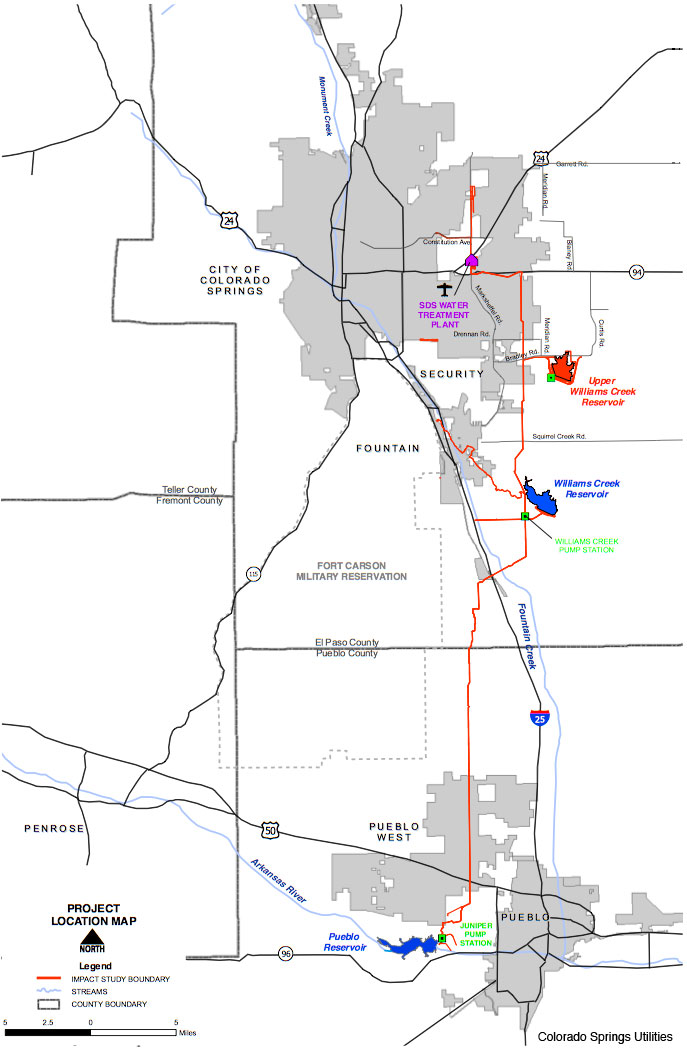
Southern Delivery System route map — Graphic / Reclamation
Here’s part one of an in-depth look at the Southern Delivery System from John Hazlehurst writing for the Colorado Springs Business Journal. Click through and read the whole article. Here’s an excerpt:
Contending that the denial [of Homestake II] had been arbitrary and capricious, the two cities [Aurora and Colorado Springs] appealed the decision to the courts. In a comprehensive description of the city’s water system and possible future sources of supply given to City Council in 1991, CSU managers said that “extensive litigation is expected to continue.”
Denied by the Colorado Court of Appeals and the Colorado Supreme Court, the cities appealed to the U.S. Supreme Court, which declined to hear the case.
City officials were stunned. They couldn’t believe that a coalition of Western Slope “enviros” and ski towns had prevented them from developing water to which the city had an undisputed right. They had believed the Environmental Protection Agency’s 1990 decision to scuttle Denver’s proposed Two Forks Dam near Deckers on the South Platte River was an outlier, not a sign of things to come…
Slow to recognize that mountain communities now had the power to kill their water development plans, Utilities officials looked at another alternative. Instead of taking water directly from the wilderness area, the city proposed to build a dam on the mainstem of the Arkansas at Elephant Rock, a few miles upstream of Buena Vista.
A grassroots rebellion against the project was soon evident, as hand-lettered signs appeared along U.S. Highway 24, which parallels the Arkansas. The signs carried a simple message: “Don’t Let Colorado Springs Dam this River!”
It soon became clear that Chaffee County commissioners would not issue a construction permit for any such project, dooming it before the first planning documents were created…
If trans-mountain diversions or dams on the Arkansas were no longer feasible, that left a single alternative for developing the city’s water rights. CSU would have to let its water flow down to Pueblo Reservoir, construct a diversion structure on the dam, and pump it uphill to Colorado Springs.
It would be, water managers believed, the easiest project to build and permit.
“It was just a pipeline,” said CSU water resources manager Gary Bostrom, who has worked 35 years for Utilities. “What could go wrong?”[…]
“We didn’t really understand the importance of partnering with and involving the public in decision-making,” said [Gary Bostrom], “until the Southern Water Project.”[…]
The plan for the Southern Delivery System was presented to City Council in 1992. Among the material submitted to councilmembers was a comprehensive description of the city’s existing water system. Water managers made sure Council was aware of the importance of the task before them.
“The massive scope of this project,” CSU staff noted, “requires a very long lead time to allow for complexities of numerous permitting processes, land acquisition, litigation, design, financing and construction.”
Of all the variables, CSU managers and elected officials gave the least weight to those that may have been the most significant…
“We weren’t worried about hydrology,” said Bostrom. “The years between 1980 and 2000 were some of the wettest years on record. The water was there for the taking. Shortages on the Colorado weren’t part of the discussion.
“We knew about the Colorado River Water Compact of 1922 (which allocated Colorado River water between Mexico and the upper and lower basin states), but it wasn’t something we worried about.”
Then as now, 70 percent of the city’s water supply came from the Colorado River. SDS would tap the city’s rights on the Arkansas, diversifying the portfolio.
“We have to plan for growth,” said Bostrom. “That’s what history tells us. We know that it will be expensive, but the cost of not building a system well in advance of need would be much greater. People complained about the cost of the Blue River (trans-mountain diversion) project in the 1950s, but we wouldn’t have a city without it — we wouldn’t have the Air Force Academy.”
But even as the project moved slowly forward, the comfortable assumptions of a wet, prosperous future began to unravel.
“Exactly 15 years ago today (April 29, 1999),” said Bostrom, “we were in the middle of a flood — remember? We didn’t know it, but that was the day the drought began.”
More Southern Delivery System coverage here and here.
The new north outlet works at Pueblo Dam — Photo/MWH Global
From the Colorado Springs Business Journal (Marija B. Vader):
Wayne Vanderschuere, general manager of the Colorado Springs Utilities water services division, said the Southern Delivery System will be completed on schedule and $150 million under the original budgeted amount.
More Southern Delivery System coverage here and here.
Colorado Springs has spent $26.6 million to acquire land for its $984 million Southern Delivery System. Most of the money was spent in El Paso County, although properties in Pueblo West and on Walker Ranches were purchased either permanently or for temporary easements.
Pipeline easements totaled $961,681 for 388 acres in Pueblo County, compared with $2.5 million for 486 acres in El Paso County.
Another $1 million was paid to buy homes in Pueblo West.
The big money was paid for other features of the project in El Paso County, a total of about $22 million.
“It would be misleading to simply do the math on the values above and conclude that more was paid for land in El Paso County than Pueblo County,” said Janet Rummel, spokesman for Colorado Springs Utilities, in an e-mail responding to a request from The Pueblo Chieftain.
Permanent easement prices ranged from 50-90 percent of fee value, while temporary easements are valued at 10 percent per year, varying from one to four years.
“The fee value of land depends primarily on location, but also is subject to size, shape, development entitlement and improvements, if any,” Rummel explained.
“Within the raw water pipeline alignments for SDS, fee values for easements and facilities ranged from $1,389 per acre to almost $20,000 per acre,” Rummel said. “Pueblo West properties were generally valued in the range between $10,900 to $13,000 per acre.”
At the high end of that scale were 6 homes on about 10 acres in Pueblo West purchased for $1.044 million.
But even below that scale were 103 acres, two-thirds in permanent easements, on Walker Ranches, which could be purchased for $82,900, or about $804 per acre. Utilities also paid Walker $600,000 to relocate cattle during construction, as required by Pueblo County’s 1041 permit.
Gary Walker will contest the amount of the easement payment in court this November, one of four cases still in dispute.
Walker also has raised complaints, most recently during a county public hearing, about erosion along the pipeline route. The bulk of the money, however, has gone for the treatment plant, pump station and reservoir sites in El Paso County.
Utilities paid $259,519 for 43 acres for the Bradley Pump Station; $2.4 million for 124 acres at the treatment plant and $19.3 million for a future reservoir site on Upper Williams Creek.
At the reservoir site, T-Cross Ranches, owned by the Norris family, received $9,500 per acre for 791 acres ($7.5 million), while the state land board received $10,500 per acre for 1,128 acres ($11.8 million).
SDS is a pipeline project that will deliver up to 96 million gallons of water daily from Lake Pueblo to Colorado Springs, Fountain, Security and Pueblo West.
The figures do not include money Utilities paid to purchase homes in Jimmy Camp Creek at a reservoir site that later was abandoned.
Southern Delivery System route map — Graphic/Reclamation
From the Colorado Springs Independent (Pam Zubeck):
Outside of a handful of parcels tied up in eminent-domain court actions, the city has amassed the vast majority of land needed to complete the 66-inch-diameter line across Pueblo and El Paso counties. And as for those in court, Utilities has been granted possession; at issue is determination of their value.
Which leaves only one other property acquisition needed for the pipeline itself, and a couple dozen others for related projects. Overall, the land-acquisition project is on schedule, if significantly over budget.
“We are pleased to be nearly complete with acquiring the land needed for SDS,” says Utilities project manager John Fredell in a statement. “We have worked hard to be fair with property owners and appreciate their cooperation to advance this critical project for our community and partners.”[…]
The city’s initial foray into acquiring property for the project, in 2003 and 2004, caused an uproar, and a tightening of city real estate acquisition procedures. Utilities, in some cases without Utilities Board approval, had made offers for homes near Jimmy Camp Creek, northeast of the city, for up to three times the homes’ assessed values, plus six-figure moving costs — in one case, $340,000. The city paid $6.1 million for 14 properties and then allowed the former owners to rent for $300 a month indefinitely.
Within a few years, the city abandoned the Jimmy Camp area as a reservoir site due to archaeological values and other factors, and instead chose Upper Williams Creek near Bradley Road.
In 2009 and 2010, Utilities tangled with Pueblo West residents and left some hard feelings in its wake. The buried pipeline, which traverses the back portions of residential lots, can’t be built upon, which residents say renders their yards unusable.
Resident Dwain Maxwell, who’s forced Utilities into condemnation court, says he was paid $1,850 for land his appraisal said was worth $16,500. Meanwhile, he estimates Utilities has spent four times that amount on attorneys. “I feel like they’ve not been honest with us,” he says today.
Gary Walker of Pueblo County is also still in condemnation court with the city, and declined to be interviewed for this story. But he notes in an email that he’s been recognized repeatedly for his stewardship of the land at his ranch, and was the first to sign up for the reintroduction of the black-footed ferret under federal rules. “How do you put a price on the destruction of something so important as our environment?” he asks.
In 2012, Utilities went up against the Norris ranching family for a chunk of land for Upper Williams Creek Reservoir. After the Norrises moved to create their own reservoir, a deal was reached in which the city paid the family $7.5 million for 791 acres.
But the biggest single acquisition was land next to the Norris property owned by the State Land Board. The city paid more than $11.8 million for 1,128 acres, the highest per-acre price paid for pipeline property…
Utilities needs to acquire about 15 additional properties for the reservoir site, but the reservoir won’t be built until SDS’ second phase, from 2020 to 2025, as demand requires. The city also needs 11 more properties for a section of pipe for treated water, Rummel says.
So far, the city has spent $34.6 million on land for SDS. That’s about 38 percent more than the $25 million estimate in 2009 for 274 parcels in Phase 1 and reservoir land. If costs for surveys, appraisals, real estate fees and closings are added, the cost is $45 million, or 22 percent more than the 2009 “all-in” estimate of $37 million.
Water rates, meantime, haven’t increased as much as earlier predicted. Ratepayers saw 12 percent hikes in 2011 and 2012, and 10 percent increases in 2013 and 2014. A 5 percent hike is expected in 2015. Previously, 12 percent annual jumps were forecast from 2011 through 2017.
More Southern Delivery System coverage here and here.
he Southern Delivery System is on course to begin operating in 2016.
“It will be complete for testing purposes in 2015,” SDS Permit Manager Mark Pifher told the Lower Arkansas Conservancy District in an impromptu update Wednesday.
SDS is a 50-mile pipeline from Pueblo Dam to Colorado Springs. When completed, it will serve Colorado Springs, Fountain, Security and Pueblo West. Nearly all of the pipeline is in the ground, and construction has begun at three pumping stations, including one near Pueblo Dam, Pifher said. While all parts of SDS will be complete by next year, the system will require months of testing before it is put into use.
“When it’s finished, the water won’t be delivered,” Pifher said. “It won’t be pushing water to customers until 2016.”
The Lower Ark district has been in negotiations for years with Colorado Springs on the impacts of SDS, particularly increased flows on Fountain Creek. Pifher updated the Lower Ark board on the progress of stormwater meetings in Colorado Springs.
A committee of El Paso County citizens is working toward putting a stormwater enterprise proposal on the November ballot. Fees would be about the same as under the former enterprise, which Colorado Springs City Council abolished in 2009, Pifher said.
The Lower Ark board also got a review of the U.S. Geological Survey of dams on Fountain Creek from USGS Pueblo office chief David Mau. Noting the study was funded by Colorado Springs (under its 1041 agreement with Pueblo County), Pifher said an alternative for 10 side detention ponds south of Fountain held the most promise for reducing flood impacts on Pueblo. Pifher also downplayed the immediate impacts of SDS on Fountain Creek.
“When we turn it on, it will carry 5 million-10 million gallons per day,” Pifher said.
Over 50 years, that will increase flows up to 96 million gallons per day.
“It will take some time to grow into demand on that system,” Pifher said.
More Southern Delivery System coverage here and here.
El Paso County is moving toward a regional stormwater authority that could be formed in an election this November. The Lower Arkansas Valley Water Conservancy District heard that news Wednesday from Mark Pifher, Colorado Springs Utilities permit manager for the Southern Delivery System.
“The stormwater task force is leaning toward a new regional authority that would be funded by a fee rather than a sales tax or property tax,” Pifher said.
The fee would be based on square footage of impervious surfaces, such as other cities throughout the state, including Pueblo. While no public vote is required for a fee, El Paso County officials recognize that a vote would be prudent to form the authority that would assess the fee, Pifher said.
The latest estimate of stormwater needs in El Paso County is at $724 million, with $192 million in critical needs. Of that, $534 million is needed for Colorado Springs, with $161 million in critical projects. An additional $40 million is estimated so far to deal with impacts from the Waldo Canyon and Black Forest fires.
The Lower Ark board still is looking at a possible federal lawsuit against the Bureau of Reclamation for its refusal to reopen an environmental impact study for SDS that calculates impacts without a stormwater system in place. The district is concerned that increased flows from SDS development will worsen conditions on Fountain Creek. Reclamation issued a record of decision for SDS in early 2009, which became the basis for contracts issued the following year. Later in 2009, the Colorado Springs City Council abolished the stormwater enterprise it had formed in 2005 based on its interpretation of a ballot question sponsored by Doug Bruce, who referred to the fee then in place as a “rain tax.”
The stormwater task force formed in 2012 in response to a city attorney’s opinion that the city was obligated to deal with stormwater in order to operate SDS.
With Southern Delivery System well under construction, Colorado Springs Utilities is cleaning up water court applications that dealt with alternatives that are now off the table. Specifically, a recent amendment to Colorado Springs’ water exchange rights on the Arkansas River removes Elephant Rock reservoir in Chaffee County and a diversion near Penrose in Fremont County as points of exchange.
“Clearly, with the North Outlet Works almost completed, we’re not going to be building a diversion at Highway 115 (near Penrose),” said Brett Gracely, water resources administrator for Utilities.
The plan for Elephant Rock reservoir near Buena Vista met with protests when it was first suggested in Colorado Springs water plans in the 1990s. Colorado Springs kept the plan on the table in several court filings over the years, but looked to Pueblo Dam to build SDS.
Signs that read, “Don’t dam this valley” remained in view of travelers on U.S. 285 for years.w
The signs were taken down after Colorado Springs officials formally declared the Elephant Rock plan dead during a 2012 ceremony in Salida, Gracely said.
The amended application, filed last month in Division 2 water court, allows Colorado Springs to return flows to the Arkansas River from SDS on Fountain Creek for out of priority storage in Lake Pueblo.
The proposed structures in Chaffee and Fremont counties will be removed as they come up for review in water court, Gracely said.
The first phase of SDS should be online in 2016.
More Southern Delivery System coverage here and here.
Pueblo County commissioners Monday studied whether nearly $300,000 in interest payments for Southern Delivery System could be used to provide interim funding for the Fountain Creek Watershed Flood Control and Greenway District. Interest of an estimated $291,000 is expected to be paid by Colorado Springs Utilities on the balance of $50 million it promised to the district upon completion of the Southern Delivery System.
Under terms of Pueblo County’s 1041 land-use regulations, the interest began accruing in 2012 and will continue to add up until 2016, when SDS is expected to go online. At that time, Colorado Springs will begin making $10 million annual payments to the district. The specific amount is being negotiated, since it was not clearly defined in the 1041 conditions. The money is scheduled to go toward flood control measures that benefit Pueblo, including the construction of a dam or series of dams on Fountain Creek.
Paying the interest in advance would allow the district to use that money to leverage more grants to start work on rehabilitating the creek, said Commissioner Terry Hart.
Right now the district, which includes all of El Paso and Pueblo counties, is out of money and is relying on passing the hat among governmental entities in both counties for operating costs.
Interest payments would be credited back to Colorado Springs Utilities in 2016 when the final fee payment is made.
The commissioners took no formal action, but instructed water lawyer Ray Petros to draft a resolution.
Pueblo City Councilwoman Eva Montoya was elected to chair the Fountain Creek Watershed Flood Control and Greenway District board last week. Colorado Springs Councilman Val Snider will serve as vice chairman. The board’s top job rotates between elected officials in El Paso and Pueblo counties annually. The board has nine members — four from each county and one from the citizens advisory group.
Other Pueblo County members are Commissioner Terry Hart; Melissa Esquibel of the Lower Arkansas Valley Water Conservancy District board; and Jane Rhodes, who owns land on Fountain Creek.
Other El Paso County members are Commissioner Dennis Hisey, Palmer Lake Trustee Michael Maddox, and Fountain Mayor Gabe Ortega.
Richard Skorman, of Colorado Springs, represents the CAG, which is made up of members from both counties. On Friday, the board also approved 14 appointments each to the CAG and its Technical Advisory Committee.
The board also renewed Executive Director Larry Small’s contract at $30,000 per year.
Meanwhile the district is keeping an eye out for project dough from Colorado Springs. Here’s a report from Chris Woodka writing for The Pueblo Chieftain:
Will the City for Champions drive to boost tourism in Colorado Springs detract from funds for flood control? The question was raised Friday by Pueblo County Commissioner Terry Hart at the Fountain Creek Watershed Flood Control and Greenway District, who heard the comment in a recent television report.
El Paso County members of the district immediately assured him the funding streams are separate and would not impair a drive to get some sort of stormwater fee or tax on this November’s ballot.
“If we see another major project competing, we sit up and take notice,” Hart said. “We’re looking for a dedicated revenue source for stormwater.”
The question of Colorado Springs stormwater funding has vexed Pueblo County officials since 2009, when City Council abolished a stormwater enterprise created four years earlier and funded for just three years. As part of conditions for a 1041 land use permit for Southern Delivery System, Colorado Springs pledged to keep its stormwater utility in place. The permit even requires other communities that tie onto SDS to have an enterprise like Colorado Springs had in place.
A regional task force began meeting in 2012, when Colorado Springs leadership admitted it should be funding $13 million-$15 million in stormwater projects annually. Two of the largest, most destructive fires in the state’s history have compounded the potential damage from flooding. Richard Skorman, a former Colorado Springs councilman who has worked with the stormwater task force, said it is moving toward a way to fund stormwater improvements on a more permanent basis and place a measure on the November ballot.
El Paso County Commissioner Dennis Hisey and Fountain Creek district Executive Director Larry Small, another former Springs councilman, said Mayor Steve Bach’s City for Champions proposal uses a sales tax incremental financing plan, rather than a direct tax or fee. City for Champions is a $250 million package to fund an Olympic museum, stadium, arena and other improvements designed to draw tourists to the Pikes Peak region. Meanwhile, El Paso County is faced with a backlog of about $750 million in stormwater projects. The city also has shortfalls in transportation and parks funding, Small said.
The Fountain Creek district has the ability to assess a 5-mill tax on property owners in El Paso and Pueblo County under the 2009 law that created it. Last year, the Fountain Creek board agreed to hold off on asking for any tax increase until Colorado Springs and El Paso County dealt with the stormwater issue.
A small hydroelectric generation project at Pueblo Dam is moving into a preliminary design phase. The proposal would create a 5.8 megawatt hydroelectric generator at the recently completed North Outlet Works, which was constructed as part of the Southern Delivery System. It would generate about 21 million kilowatt-hours annually, said Kevin Meador, an engineer with the Southeastern Colorado Water Conservancy District at the board’s meeting Thursday.
“We started this process in February 2012, and we have to finish the application by August,” Meador said. “We’ve got the pedal to the metal and we’re pushing to get these tasks done.”
The Southeastern district has partnered with Colorado Springs Utilities and the Pueblo Board of Water Works in an agreement with the Bureau of Reclamation to build the hydro plant.
Power likely would be sold to Black Hills Energy and then to other users. Details are being negotiated.
Right now, the district is working through planning, permitting and technical issues, Meador said.
Arkansas River levee through Pueblo
Here’s the release from Colorado Parks & Wildlife:
Colorado Parks and Wildlife will continue work in the Arkansas River this month as part of an ongoing habitat improvement project. Anglers may notice heavy equipment and other signs of work, such as cloudy water, in the area.
“The project may create some short-term inconveniences for anglers, but the result will be better fishing for years to come,” Doug Krieger, a senior aquatic biologist for Colorado Parks and Wildlife, said.
The project is set to begin the week of Jan. 13, and will continue through mid February. The latest improvements will be made between Juniper Bridge and Valco Bridge. Work will occur Monday through Thursday.
Heavy equipment operators will place large boulders and trees along the 1.5 mile stretch, creating deeper pools and an improved river channel design that will hold more trout and other fish species.
“We are creating better habitat for fish to find shelter, feed, reproduce and thrive,” Krieger said. “We will also provide more fish holding structure that anglers seek for good fishing success.”
Anglers are still able to fish in this reach of the river but are reminded to avoid areas around construction and keep away from heavy equipment.
This habitat improvement project work is Phase II of a project that originally began in 2004. Since completion of Phase I in 2005, the Arkansas River through Pueblo has gained a reputation as a premier trout fishing location.
A portion of the Phase II project will consist of making improvements to existing structures, while the remaining construction will provide for the installation of new structures.
From November until the middle of March, outflows from Pueblo Reservoir are fairly stable creating opportunities for anglers to enjoy stream fishing in clear and cool water during times of the year when most streams are locked in winter conditions.
Partners in the project include the City of Pueblo, Xcel Energy, Trout Unlimited, and the Packard Foundation, with matching funding from the US Fish and Wildlife Service Sport Fish Restoration Program.
The state is preparing to rock the Arkansas River again. Think fish, not electric guitars. Heavy equipment will be in the river in the 1.5-mile reach between the Juniper bridge and Valco bridge to install more boulders and trees in the river below Pueblo Dam. The project is a continuation of an effort that has improved fish habitat along the river.
“The project may create some short-term inconveniences for anglers, but the result will be better fishing for years to come,” said Doug Krieger, a senior aquatic biologist for Colorado Parks and Wildlife.
Water might be cloudy during construction, and there still will be a few trucks on area roads as part of Southern Delivery System construction — about half the number that were rumbling last fall.
The project will begin Monday and continue until mid-February, in order to take advantage of low river levels. The work will create deeper pools and an improved river channel that will hold more trout and other species, Krieger said.
“We are creating better habitat for fish to find shelter, feed, reproduce and thrive,” Krieger said. “We will also provide more fish holding structure that anglers seek for good fishing success.”
Partners in the project include the city of Pueblo, Xcel Energy, Trout Unlimited and the Packard Foundation, with matching funding from the U.S. Fish and Wildlife Service Sport Fish Restoration Program.
Meanwhile, there will continue to be some truck traffic in the area from the excavation site of the Juniper Pump Station, part of SDS. In December, trucks finished hauling dirt from the Juniper site, located near the base of the dam, to an old gravel pit on the north side of the river. Now, they are hauling rocks away from the construction site. There are fewer trucks on the road now, said Janet Rummel, Colorado Springs Utilities spokeswoman for SDS.
“Not all of the rock is being hauled away,” Rummel said. “A good portion of the boulders will be used at the pump station site for landscaping features, and SDS contractors are collaborating with Lake Pueblo State Park staff to have some of the decorative boulder-sized rocks used for other park improvements.”
There’s room in a $900 million water pipeline project for all sorts of businesses. Even brick-makers.
Joe Welte, whose grandfather founded Summit Brick and Tile in Pueblo in 1902, gave a brief account of his family’s business at Tuesday’s celebration for local contractors who have worked on the Southern Delivery System. The event also marked the beginning of work on the Juniper Pump Station, the final piece of SDS construction in Pueblo County. He concluded with a story about his brother Tom’s visit to an elementary school, where he asked students to build a wall using either klinkers — bricks deformed by heat — or straight bricks. The students chose straight bricks, saying the wall would tumble with klinkers on the foundation.
“Whether you are starting an education, planning your life or building for our water future, make sure that you use straight brick at the bottom,” Welte said.
Summit Brick is one of about 100 local companies that are benefiting from contracts for SDS, a water delivery pipeline from Pueblo Dam to Colorado Springs that also benefits Pueblo West. Its part is relatively small: 50,000 4-by-4-by-12-inch bricks for the facade of the Juniper Pump Station, which amounts to about two days’ production.
“With the downturn in the economy, this came at a good time,” Welte said.
The bricks played a symbolic role at Tuesday’s event, as representatives of local companies build a wall and received commemorative bricks — made in Pueblo County, of course.
The largest amount of local contracts went to ASI Constructors, which holds three contracts for $50 million. The company builds dams and other water projects all over the world.
“It’s not often that we get to participate in a project of this magnitude in our own backyard,” ASI President John Bowen said.
He touted the safety of the project, 68,000 man-hours without a lost-time accident, and economic benefit, $800,000 in wages, for his company alone.
Government officials from both El Paso and Pueblo counties, including newly elected state Sens. George Rivera of Pueblo and Bernie Herpin of Colorado Springs, attended the event as well.
From the Colorado Springs Independent (Pam Zubeck):
On Tuesday, the city kicked off construction of the Juniper pump station not far from the outlet from the dam that was built earlier as part of SDS. It’s one of three pump stations that, according to Colorado Springs Utilities, represent some of the largest components of the project; cumulatively, they’ll cost $76.5 million. A third of that will go to Colorado contractors. The prime contractor is Archer Western Constructors of Arlington, Texas.
To update, here are some notes on SDS’ progress, provided by Springs Utilities:
• The SDS pump stations will move water 1,500 feet in elevation from Pueblo Dam to the new water treatment plant under construction in El Paso County. At full capacity, SDS will be able to transport up to 96 million gallons of water per day (MGD) – 18 MGD to Pueblo West and the remaining 78 MGD to the El Paso County partner communities of Colorado Springs, Security and Fountain.
• Garney Construction of Kansas City, Mo., is installing a 0.3-mile, 90-inch-diameter pipeline that will link Pueblo Dam to the Pueblo West Metropolitan District and other project partners. After Colorado Springs, Pueblo West is the second leading beneficiary of the SDS project.
• Major SDS construction work commenced in Pueblo County in 2011 with the start of the new connection to Pueblo Dam. Since then 18 miles of pipe have been installed in Pueblo County and a total of 42 total miles installed project-wide. Recently, the SDS pipeline construction project through Pueblo West was recognized by Engineering News Record as the Best Water Project in 2013 for the mountain states region.
• Construction of the nearly $1 billion project is resulting in significant benefits to the local economy. To date, more than 300 companies and organizations in Colorado have helped plan and construct SDS, including 100 in Pueblo County. Of the more than $362 million spent to plan and build SDS, more than $289 million has gone to Colorado companies.
When complete, the Juniper water pump station in Pueblo will have many motors and one of them will have the horsepower of four Formula 1 racing cars.
It will need it to pump water 1,500 feet in elevation from Pueblo Reservoir to Pueblo West, Fountain, Security and Colorado Springs. Juniper station at Lake Pueblo State Park will be one of three water pump stations needed to move up to 96 million gallons of water up hill 53 miles in the Colorado Springs Utilities’ Southern Delivery System pipeline…
The entire $1 billion project is expected to be completed by April 2016 and could pump 5 million gallons daily at first but with eventual capacity to pump up to 96 million gallons daily.
From the Colorado Springs Business Journal (Rebecca Tonn):
The Southern Delivery System starts construction of the Juniper Pump Station at Lake Pueblo State Park and the last remaining section of pipeline in Pueblo County on [October 29, 2013]. Area businesses that will perform work or provide materials to build SDS components in the county will participate in a brick-laying ceremony, from 2 – 3 p.m.
More Southern Delivery System coverage here and here.
Colorado Springs City Council and Mayor Steve Bach continue to wrangle over how stormwater funding will be handled. Council president Keith King on Friday said council does not want to expand city government, after Bach chastised council earlier in the week.
Colorado Springs Utilities committed to mitigation of floodwater on Fountain Creek in 2009 as part of its conditions when it obtained a 1041 land-use permit from Pueblo County for Southern Delivery System.
“We’d like to clarify that council is not endorsing the creation of a physical department nor do we have plans to expand city government. We are advocating for the creation of a virtual department, or more accurately, a stormwater appropriations or dedicated funding source,” King said. “This virtual department is strictly an accounting mechanism to inform citizens of how much revenue we are allocating to stormwater and ensures that the funds are solely dedicated to stormwater.”
Council has proposed using $2 million from this year’s fund balance to begin work immediately.
Earlier this week, Bach told council he does not favor creating a new department after the council sent him a letter Oct. 14 saying it would propose a stormwater appropriation department. A “virtual” department would assure the public that stormwater needs are being considered, King said.
“We must commit money from of our general fund for operation and maintenance. We must show our citizens we are serious about addressing the stormwater drainage issues. We must show our friends in Pueblo that we are resolute about how much we are spending,” King said. “Most importantly, we must make sure, as council, that we can audit the numbers and prove our expenditures to the citizens.”
Bach claims $25 million for stormwater, including wildfire mitigation, is included in his budget proposal for next year. The mayor wants to extend current bonds to pay for $100 million in the most critical stormwater needs over five years. Colorado Springs stormwater needs are estimated at about $535 million.
Council is working with an El Paso County stormwater task force to develop a sustainable funding source for projects, as well as a regional approach.
Thursday, a couple dozen residents showed up to the first “Stormwater Solutions Town Hall” at the Conservation and Environment Center. Officials sat back and let residents pick through possible solutions to come up with what they believe is most feasible.
“The solution is a regional approach,” said homeowner Sharon Owen.
A regional approach and a willingness to invest in stormwater infrastructure were shared by those in attendance.
“This is what happens when you don’t invest,” said homeowner Bruce Fogarty. “It’s going to be expensive but it’s something that absolutely needs to be done.”
After nearly an hour of residents brainstorming and presenting their ideas, task force members say they plan on taking the ideas brought forward here and at two more town halls to come up with what they hope is a final solution.
“If you don’t plan it, if you don’t do it right you’re wasting your time and energy,” [El Paso County Commission Chairman Dennis Hisey] said.
“We don’t want to grow government,” Bach said in his remarks to City Council this week.
Bach was reacting to a letter the nine council members sent him earlier this month outlining their plan to create a Stormwater Department and take $2 million from the city’s 2013 rainy day fund to start it.
The idea, said council president Keith King, is to get moving immediately on stormwater projects. He said it would show residents that the city is spending money from its general fund on stormwater projects. And it could be viewed as a good faith commitment should the city council ask residents to approve a fee or tax to pay for stormwater projects, he said.
Bach said his plan to pay for stormwater projects does not require a new tax or fee.
“The prior city council imposed a fee,” Bach said. “It was well meaning, but it didn’t resonate well.”
A short-lived Stormwater Enterprise and its fee was rescinded four years ago and left the city without a dedicated funding source to pay for millions in stormwater and drainage needs, which has been the focus of nearly two years of meetings and discussions. Colorado Springs sits in the northern section of the Fountain Creek Watershed – a 927-square mile watershed that includes three counties and eight municipalities. Legally, the city is responsible to keep the community safe and move stormwater through the city to avoid flooding, keep a safe environment and ensure water quality.
Bach wants residents to extend the voter-approved Springs Community Improvement Program, which was the sale of $88 million in municipal bonds and paid for 29 capital improvement projects. The projects were completed in 2004 and the debt, paid for from the general fund, is scheduled to be paid off in 2016. If voters extended the bond program, the city could spend $175 million on projects in five years and pay back the debt in 20.
The money also could be spent on other city capital improvement projects that have been on hold, Bach said. Road improvement, bridge repair and building repair and renovations have gone untouched for years. Bach’s idea about renewing the SCIP bond program would spend $20 million a year for five years on stormwater projects, $11.5 million on roads and bridges and set aside $1 million a year for city park improvement, he said. And instead of a new city department, all of the projects would be handled by the city’s public works department.
But City Council said the mayor’s plan does not address regional stormwater concerns. A regional stormwater task force, for nearly two years, has described stormwater issues as regional saying that if money is spent north of the city, in the county limits, it benefits entities downstream. The taskforce envisioned a regional tax or fee that would be a permanent source of money for the stormwater and drainage projects, which by some estimates is nearly $700 million. This approach would be a pay-as-you-go method and a fee or tax also would cover the estimated $11 million in ongoing maintenance needs to keep the existing stormwater channels, drainage ponds and other systems in good shape.
“One of the things we need to look at is the entire watershed, from the top of El Paso County to Pueblo,” King said.
From the Colorado Springs Independent (Pam Zubeck):
The dust-up between City Council and Mayor Steve Bach over stormwater took another turn today when Council President Keith King issued a statement disputing remarks Bach has made in recent days.
As reported on the Independent’s blog on Oct. 16, Council issued a letter to Bach seeking more detail on the 2014 budget and declaring it wanted to create a stormwater department.
Capital projects dominate the 2014 utilities budget with more than $391 million planned for construction, including $229 million for two massive projects, the Southern Delivery System and bringing the coal-fired Martin Drake and Ray Nixon power plants up to federal Environmental Protection Agency standards.
To the residents, whose utility bills contribute 78 percent of the total utilities operating budget, it means rate hikes to pay for those capital projects. A typical residential customer can expect a $9.37 monthly increase in their utility bills next year, which includes $5.99 for a water rate increase that was approved last year and kicks in Jan. 1. The combined rate increases will bring in an additional $31 million.
Colorado Springs Utilities Chief Planning and Finance Officer Bill Cherrier presented the proposed 2014 utilities budget to the City Council, which doubles as the utilities board of directors…
Utilities is nearing the finish line with one of its largest projects – SDS, a 53-mile water pipeline from Pueblo Reservoir to Colorado Springs. It’s a $1 billion project that started four years ago and amounted to four straight years of 10- and 12-percent water rate increases. In 2014, utilities will spend $178 million on SDS and expects to complete the project in 2016, said Gary Bostrom, chief of water services.
“This is the last significant water rate increase we anticipate for the SDS project,” Bostrom said.
More Southern Delivery System coverage here and here.
Even before a drop of water flows through Southern Delivery System, other El Paso County communities are making plans to hook up to the pipeline.
Donala Water & Sanitation District, which serves 2,600 people north of Colorado Springs plans to begin an environmental impact statement process with Bureau of Reclamation within the next two weeks in order to obtain a long-term storage contract in Lake Pueblo.
Cherokee Metro District, serving about 18,000 people in a community surrounded by Colorado Springs, wants to hook up to SDS in the future.
Those communities will be held to the same environmental commitments, including federal environmental review and stormwater management, under Pueblo County’s 1041 permit.
Donala purchased a ranch south of Leadville for its water rights in 2009, but will need SDS to deliver about 280 acrefeet annually — about 25 percent of its needs. “We have been talking to the city for years,” said Kip Peterson, manager of the Donala District. Donala already has a temporary contract in place to use Colorado Springs water delivery systems to deliver water from the ranch.
Stormwater controls are problematic, because 95 percent of the land in Donala already has been developed, but the district is looking at how to amend its plan to address stormwater, Peterson said.
Like Donala, Cherokee has a contract to buy water from or have its water delivered by Colorado Springs Utilities. Cherokee has a two-year lease from the Pueblo Board of Water Works. Cherokee gets most of its water from wells, but needs additional sources to round out its supply. “Unlike Donala, we don’t yet own any water we could store in Lake Pueblo,” said Sean Chambers, Cherokee manager.
But Cherokee is interested in using SDS for the long-term. Like Colorado Springs, it has some water and wastewater lines that cross Sand Creek, a tributary of Fountain Creek. Those would be held to the same level of scrutiny as Colorado Springs lines.
More Southern Delivery System coverage here and here.
A major water pipeline through Pueblo County has moved quickly since construction began two years ago. A connection at Pueblo Dam is complete, all but a fraction of Southern Delivery System pipeline is in the ground and work will start soon on the Juniper Pump Station, Colorado Springs Utilities officials told Pueblo County Commissioners last week.
“There has been significant progress on construction in Pueblo County,” said John Fredell, SDS program director for Utilities. That includes more than 18 miles of pipeline through Pueblo West and the northern part of Pueblo County on Walker Ranches.
Under the 1041 permit, Colorado Springs also has committed to spend at least $145 million in mitigation. About $42 million of that has been spent so far.
Commissioners are reviewing Colorado Springs commitments made under the 2009 1041 permit. Terry Hart, Sal Pace and Liane “Buffie” McFadyen all joined the board this year, and were not on the board when the permit was issued. Friday’s meeting was an opportunity for them to evaluate SDS compliance.
SDS also benefits Pueblo West, by more than doubling its water supply capacity and giving it another way to deliver water from Pueblo Dam.
“On our own, it would have been difficult to accomplish this,” Pueblo West Manager Jack Johnston told commissioners. “It’s been a $6 million cost to Pueblo West of a $30 million project.” Pueblo West now has a line that delivers 12 million gallons per day from the South Outlet Works. When SDS is complete, it will have another 18 million-gallon line from the new North Outlet Works. “Everything they committed to has been exceeded,” Johnston said.
Pueblo County staff has received quarterly and annual updates on compliance with the 1041 regulations, said Keith Riley, deputy program director for SDS. During the four-hour hearing there were some complaints from Pueblo West landowners about the way they have been treated as the pipeline crossed their property. But Riley pointed out that condemnation of property was a last resort, and some of the purchases of houses along the route provided materials for Habitat for Humanity and training opportunities for firefighters. Any large project is bound to leave some people unhappy, he said. “My heart goes out to those who have been (adversely) affected,” Riley told commissioners. “Our staff does care about landowners and we plan to respond to each point.”
Hart, who chairs the commission, said the county plans to see that Colorado Springs lives up to its commitment. “We’ve directed staff to match the comments we heard today with the conditions in the 1041 agreement and see if we can settle the differences,” Hart said.
While Colorado Springs officials painted a serene picture of compliance with Pueblo County 1041 permit conditions, local landowners offered different viewpoints. After listening to a presentation addressing major points of the Southern Delivery System by Colorado Springs Utilities staff, several people took issue with the rosy outlook.
Dwain Maxwell plopped down a 6-inchthick stack of paper and explained how a team of Colorado Springs lawyers outflanked him in court over what he says is a low-ball property appraisal for an easement on his property in Pueblo West.
LaVetta Kay told about how her complaints of workers trespassing on her property were disregarded by SDS management.
Engineer Laurie Clark showed photos of how large areas of pipeline revegetation areas on Walker Ranches have been washed out by relatively light summer storms.
Jane Rhodes talked about how unchecked flows on Fountain Creek continue to wash acres of her ranch land downstream. “I only have two acres, but they’re just as important to me as Gary Walker’s thousands of acres,” Maxwell told the board.
A Pueblo district court jury awarded Maxwell only $1,850, rather than the $2,200 Colorado Springs Utilities first offered him or the $18,500 his own appraiser valued the property. Commission Chairman Terry Hart asked Keith Riley, assistant project director for SDS, why Utilities did not pay Maxwell the amount it originally offered. “What I worry about when I hear about this is that Mr. Maxwell was not properly represented,” Hart said.
“The court ordered us to pay $1,850,” Riley replied.
Maxwell said the construction led to dust and disruption. Revegetation has created 4-foot tall weeds due to overwatering, but little grass. “Their promises have not been followed,” Maxwell said. Construction has created problems for Kay as well.
“I get no communication,” she said. “There’s no accountability. They disrespect me and disregard my property.”
Clark’s photos countered Utilities slides that portrayed orderly green belts along the pipeline route. Instead, large ravines that cross the pipeline route were gouged out, ruining revegetation that had begun. Utilities is aware of the problems and is working with Walker to solve them, said Mark Pifher, permit manager.
Rhodes’ problems relate to stormwater control, a long-standing problem on Fountain Creek that she believes will be made worse by SDS. “With all of the water coming from the north, when SDS gets done and in full force, we possibly won’t have any farms on Fountain Creek,” Rhodes said.
Commissioners directed staff to compile complaints according to conditions Colorado Springs agreed to in the 1041 permit and determine if they can be resolved. “This gives us an opportunity to address any issues out there and see where we are headed,” Hart said.
Colorado Springs indicated it would work with Pueblo County in resolving issues. “We take our obligations seriously and are sure that we could meet every one of them,” Utilities CEO Jerry Forte told him.
The Southern Delivery System construction has provided a shot in the arm to Pueblo County’s economy, commissioners heard during a meeting last week on the progress of SDS. “There has been a positive economic benefit to Pueblo,” said John Bowen, president of ASI Constructors.
The Pueblo West company won a $50 million contract for construction of the North Outlet Works at Pueblo Dam and some of the pipeline associated with SDS. “We’ve added employees during the recession,” Bowen said. “We are part of balancing the public trust with environmental concerns.”
It is important to ASI and Pueblo County for SDS to stay on course for its 2016 completion, because that will speed up work on Fountain Creek. ASI would be among bidders for future dam projects, he said.
Sherri Weber of M&S Trucking in Boone also spoke of the economic benefits. The company has hauled materials to construction sites for nearly two years under its SDS contract.
Overall, Colorado Springs Utilities said it has spent $60 million with more than 100 Pueblo County contractors. The total spent through the end of July on SDS construction was $382 million.
Pueblo County commissioners Friday looked at a menu of issues ranging from economic benefits to environmental damage surrounding construction of the Southern Delivery System pipeline through the county. Hanging over the discussion like a storm cloud, however, was whether Colorado Springs is serious about reining in flood control, as its council once promised. “In light of the recent flooding in Colorado Springs, this is a timely meeting that brings up concerns that have been with us for a long time,” Commissioner Sal Pace said. “The low point was in 2009, with the elimination of the stormwater enterprise.”
It was a repeated theme throughout a four-hour meeting. Resolving Fountain Creek issues played a big role in years of discussions that led to Bureau of Reclamation approval of the $940 million SDS project.
The 1041 permit itself does not require any level of spending or even that a stormwater enterprise has to be in place. It only requires that return flows from SDS do not exacerbate flows, said Mark Pifher, SDS permit manager. That position is being contested by the Lower Arkansas Valley Water Conservancy District, which this week decided to sue the Bureau of Reclamation, which issued a favorable record of decision for SDS based on the existence of a stormwater enterprise.
At Friday’s meeting, Jay Winner, Lower Ark general manager, asked Colorado Springs officials why council chose to drop the stormwater enterprise in 2009 while ignoring the main goal of the 2009 Proposition 300, which was to eliminate Utilities transfers to the city’s general fund. The move came after Springs voters defeated a 2008 issue to make stormwater payments voluntary. “As elected officials, we felt there was a message from voters that the stormwater fee should be stopped,” said Colorado Springs Councilwoman Jan Martin, the only council member still serving who was on the board in 2009. She voted to repeal the enterprise.
Martin is working on a stormwater task force that plans to put a ballot issue for a stormwater fee or tax on the November 2014 ballot in Colorado Springs and El Paso County. What appears on the ballot depends in part on a prioritization of needs ordered by Colorado Springs Mayor Steve Bach, who has not cooperated with the task force.
Dorothy Butcher, a former state representative from Pueblo, questioned how much of current stormwater spending in Colorado Springs, reported at $46 million, is addressing the issue of reducing Pueblo flood impacts. “With your potential 2014 ballot initiative, if it’s turned down, what source of revenue will you use?”
Martin said the council would transfer money from other sources, as it is doing now, adding that she is confident voters will support a ballot issue that clearly outlines its purpose, such as last year’s ballot measure to continue a transportation tax.
More Southern Delivery System coverage here and here.
A federal decision on the Southern Delivery System is headed to court. The Lower Arkansas Valley Water Conservancy District is preparing a complaint to file in federal court over the Bureau of Reclamation’s refusal to reopen its record of decision on SDS. The central issue is the abolishment of the Colorado Springs stormwater enterprise in 2009, which was in place when Reclamation granted approval of a 40-year contract for storage, exchange and connection at Pueblo Dam for SDS.
“I’m asking our board to draft a legal complaint against the Bureau of Reclamation,” said Melissa Esquibel, a Pueblo County board member. “We’ve asked the Bureau of Reclamation to reopen the record of decision, and gotten no action. We need to direct staff to draft a lawsuit.”
Lower Ark board members say SDS should not be allowed to deliver water until the stormwater issue is resolved. “If there had not been a stormwater enterprise, SDS never would have gotten a 1041 permit,” said Anthony Nunez, a Lower Ark board member who was a Pueblo County commissioner in 2009.
Last year, the Lower Ark district sent letters to Reclamation asking to reopen the record of decision on the stormwater issue. Reclamation declined to take any action.
This will be the second lawsuit the Lower Ark district has filed against Reclamation, if the board approves it at its October meeting. In 2007, the Lower Ark sued Reclamation over a 40-year storage and exchange contract with Aurora, claiming it illegally allowed the Fryingpan-Arkansas Project to move water out of the Arkansas River basin. The lawsuit was settled in 2009, after Aurora and the Lower Ark signed an agreement for mitigation of some of the issues surrounding the contract.
Flood protection for the Lower Arkansas Valley should not be an afterthought. That message was delivered to Colorado Springs Wednesday during a presentation about regional stormwater efforts in El Paso County to the Lower Arkansas Valley Water Protection District. “We quibble about data. What I want to see is the problem fixed,” Lower Ark General Manager Jay Winner told Mark Pifher, point man for the Southern Delivery System.
Colorado Springs Utilities disputes the Lower Ark’s interpretation of state and federal data about water quality. The Lower Ark claims it shows higher flows have increased sedimentation and bacteria in Fountain Creek since Colorado Springs got rid of its stormwater enterprise in 2009. Pifher countered that’s just because of higher peak flows in the past three years. Fountain Creek monitoring has begun and safeguards are built into the Bureau of Reclamation’s contract through an adaptive management program if unexpected pollution occurs, he said. A stormwater task force and Mayor Steve Bach are close to coming to consensus and moving a stormwater issue to the 2014 ballot.
All of which served to aggravate Pueblo County members of the Lower Ark board:
“My heartburn is that the discussions center around the Black Forest and Waldo Canyon as far as Fountain Creek is concerned, but nothing for us” said Melissa Esquibel. “I don’t think anything substantive has happened.”
“It’s been a fractured thing up there since I was a commissioner. It almost doesn’t seem real. We’ve heard the same thing over and over and over,” said Anthony Nunez. “I have to say there is a small amount of trust.”
“We have to put limits on SDS until the stormwater issue is taken on,” said Reeves Brown.
Colorado Springs voters defeated a Doug Bruce measure in 2008 to make payment of stormwater fees voluntary by 30,000 votes, but City Council abolished the stormwater enterprise after a second ballot measure that did not even mention it by name passed in 2009, Winner said. While Bruce campaigned against a “rain tax,” the 2009 Proposition specifically tried to sever utility payments from the Colorado Springs general fund. Council has not ended Utilities payment in lieu of taxes, Pifher said in response to a question by Winner.
Pifher said stormwater fees would be collected again beginning as soon as 2015 if voters approve it in 2014. That didn’t do much to allay fears. “You got what you needed and the stormwater enterprise went away,” Winner said. “Do you see the pattern here?”
More Southern Delivery System coverage here and here.
Fountain Creek connects Pueblo with Colorado Springs, and controlling it remains a key issue if the Southern Delivery System is to be turned on in three years. So there is bound to be a torrent of discussion on a stormwater enterprise, dams on Fountain Creek and water quality over the next few months.
Pueblo County commissioners set the stage last week for a Sept. 20 meeting to air issues surrounding the county’s 1041 permit for SDS. While there is a varied menu of issues that were hammered out over several months back in 2008-09, it’s clear that Fountain Creek is at the top of the agenda. “I don’t know if any of this works, because I’ve seen the power of the water,” Commissioner Liane “Buffie” McFadyen said last week after reviewing a federal study of dams on Fountain Creek. “What I would like to see is for Pueblo to stop being flooded and for people in north Pueblo County to keep from losing their land to these floods.”
The commissioners — none of whom were on the board when the 1041 permit was negotiated — also are working through the details of exactly how to handle $50 million, plus interest, that was pledged by Colorado Springs to protect Pueblo from flooding that will be made worse by SDS. Their lawyers are focusing the board on what it can do to keep Colorado Springs on track with the conditions agreed to in the 1041 permit.
But a different set of issues is swirling around the sides.
Chief among them is stormwater. It was taken for granted by the Bureau of Reclamation in the studies leading up to a 40-year contract for SDS to operate from Pueblo Dam. In the 1041 conditions, only the incremental flows directly caused by SDS are mentioned. “It’s a moral question and potentially a legal question,” Commissioner Sal Pace said.
In July, the Lower Arkansas Valley Water Conservancy District claimed flooding has worsened and water quality deteriorated after Colorado Springs City Council eliminated its stormwater enterprise fee in 2009. Commissioners want to hear that report, as well as the rebuttal from Colorado Springs Utilities.
Last week, public wrangling over the stormwater question broke out again in Colorado Springs. Mayor Steve Bach was quoted in the Gazette as favoring a city stormwater fee, while Council President Keith King argued for a regional approach — possibly extending to the confluence and including Pueblo.
The Colorado Springs Council plans hearings of its own in the next few months to sort out which approach voters would be most likely to favor.
Wildlife officials are watching water temperatures in the Arkansas River for potential harmful effects on fish. “The combination of low flows and weather are making for uncomfortable conditions for fish up and down the river,” said Doug Krieger, aquatic biologist for Colorado Parks and Wildlife. While fishermen have reported finding some dead fish, it appears that fish in the water are not stressed, he added.
As temperatures climbed into the 90s this week, water temperatures in the Pueblo reach of the Arkansas River have hit 80 degrees or higher each day after flows dropped below 40 cubic feet per second at Moffat Street on Monday. Closer to Pueblo Dam, temperatures have been about 70 degrees.
The problem is being complicated by mud that washed into the river near the Nature and Raptor Center earlier this month, said Ben Wurster, of Steel City Anglers and Trout Unlimited. “It’s been so dry, and with no moisture the water heats up,” Wurster said.
There is little that can be done. There are about 5,000 acre-feet of agricultural water stored in Lake Pueblo, but farmers likely want to hold it back to start crops next year. Parks and Wildlife has some water, but not enough to make a difference. Cities have curtailed exchanges into Lake Pueblo, but are not releasing any additional water.
The Pueblo Board of Water Works and Colorado Springs have an agreement to release water to maintain flows of 50 cfs below Pueblo Dam once the Southern Delivery System is in operation. Conditions this week are not dry enough to trigger releases, even if that agreement were active.
In another development, the Bureau of Reclamation and Colorado Springs reached a temporary agreement to release water through the river gate on the North Outlet Works rather than the spillway.
Under its SDS contract, Reclamation will own the North Outlet Works, which was built by Colorado Springs. Details still are being negotiated.
It looks like Pueblo County is about to get back in court with Colorado Springs, this time over compliance with the 1041 permit for the Southern Delivery System (which is largely complete in the county). Here’s a report from Chris Woodka writing for The Pueblo Chieftain:
Stormwater, revegetation, roads and other details of a county permit for the Southern Delivery System will be discussed at a public meeting next month. The Pueblo County commissioners want to hear comments from the public and discuss the progress of the project with Colorado Springs Utilities, leaving open the possibility of 1041 permit compliance hearings at a later date. “What we envision is a chance for Colorado Springs to respond to questions,” said Terry Hart, chairman of the commission. “We definitely want the ability for public participation.”
The meeting is scheduled for 10 a.m. Sept. 20 in the commission meeting chambers at the Pueblo County Courthouse.
Commissioners Monday reviewed issues surrounding SDS that have surfaced in recent months. They include issues of revegetation on Walker Ranches in northern Pueblo County.
Also at issue is a dispute over the interpretation of Colorado Springs stormwater data by the Lower Arkansas Valley Water Conservancy District and Colorado Last month, water attorney Peter Nichols told the Lower Ark board storm flows have worsened and water quality deteriorated, while stormwater funding decreased from 2009-12. Mark Pifher, SDS permitting manager, responded that there is no correlation between the demise of the stormwater enterprise in 2009 and water quality or volume of flows. He disputed the trends that Nichols found.
Commissioners plan to get more information from Nichols in advance of the Sept. 20 meeting.
At Monday’s meeting, commissioners also looked at the possibility of prepayment on interest from the $50 million Colorado Springs pledged for Fountain Creek flood control.
They also want to review the U.S. Geological Survey study that shows the effectiveness of dams throughout the Fountain Creek watershed.
Colorado Springs Utilities’ plan to improve a portion of Fountain Creek as part of mitigation for the Southern Delivery System got unanimous approval Friday from a board formed to improve Fountain Creek. Meeting in Pueblo, the Fountain Creek Watershed Flood Control and Greenway District approved a new alignment for the creek and wetlands creation about 25 miles north of Pueblo near Pikes Peak International Raceway.
Allison Mosser, a Utilities engineer, explained the project, which was listed as the No. 5 priority in a U.S. Army Corps of Engineers study of projects that could improve Fountain Creek. The project also is among those listed in the district’s corridor master plan. The area is one of the worst on the creek in terms of erosion and sedimentation, she said.
The alignment would mean moving some structures and reinforcing other parts of the bank on the property, which is owned by Utilities. A small part of the creek on the Hanna Ranch also is included, but all costs would be paid by Colorado Springs. Some native willows would be planted for bank stabilization and wetlands would be created or improved. Water for initial seeding of the wetlands would use water from rights owned by Colorado Springs at Clear Springs Ranch, Mosser said.
The Bureau of Reclamation would have final authority over approval of the wetlands, because it holds the SDS permit.
Construction would begin in November and take three months, while planting the wetlands would be completed later in the year.
Monitoring the wetlands would continue for three to five years.
More coverage of the Fountain Creek district meeting from Chris Woodka writing for The Pueblo Chieftain:
A district formed to improve Fountain Creek will team with the U.S. Geological Survey to measure water quality changes caused by runoff from recent fires. The Fountain Creek Watershed Flood Control and Greenway District board Friday approved a contract that will measure the impacts of the 2012 Waldo Canyon Fire and this year’s Black Forest Fire.
The Black Forest Fire was the most destructive in Colorado history in terms of homes and vehicles destroyed, and could increase the concentration of certain elements.
The total contract will be $18,000, with $6,000 in federal funds, and the other $12,000 contributed by the district and several El Paso County sources.
Samples will be taken as storms occur. “We’ve already missed three or four opportunities,” said Larry Small, executive director of the district. Two sites on Monument Creek and four on Fountain Creek would be sampled. More than 100 constituents will be tested for contaminants like lead and E. coli.
The USGS indicated last month that it has baseline data. “I think this is an important first step. We’ve been talking about impacts since the Waldo Canyon Fire last year,” said Pueblo County Commissioner Terry Hart.
Melissa Esquibel, a board member from the Lower Arkansas Valley Water Conservancy District, questioned the value of the study, since it would not thoroughly identify sources and problems caused by subsequent storms.
Hart said this study would provide evidence for more detailed studies later.
Jane Rhodes said more studies are needed downstream to see if fires are impacting Pueblo County, because the study sites are in El Paso County.
“We need to find out what’s in the water to protect our population,” added Pueblo City Councilwoman Eva Montoya.
Pueblo County commissioners are more than happy to throw some money into the hat to keep a Fountain Creek district afloat. At the same time, patience is wearing thin for El Paso County to come to grips with stormwater funding. “At some point, this board is going to lose its patience with the largest city in the state without a stormwater fee,” said Commissioner Liane “Buffie” McFadyen. “I feel like we’re standing knee-deep in water and not going anywhere.”
Larry Small, executive director of the Fountain Creek Watershed Flood Control and Greenway District, asked commissioners Monday to consider the district’s plan to patch funding until 2016. The district is nearly out of funds, and is asking county and city governments to come up with $50,000 to meet administrative needs in 2014. Pueblo County’s share would be $10,000.
If Southern Delivery System comes online in 2016, as projected, the district would begin receiving payments from Colorado Springs toward the $50 million negotiated in the Pueblo County 1041 process. That money is earmarked for Fountain Creek flood control projects that protect Pueblo. Interest from the $50 million could be used as soon as next year to begin planning flood-control projects that could benefit Pueblo. But commissioners still are sore that Colorado Springs City Council eliminated its stormwater enterprise in 2009 and has not replaced it.
Colorado Springs City Council is seeking a regional solution to meet $900 million in identified projects in El Paso County. Nearly 80 percent of those are in Colorado Springs. Mayor Steve Bach is pursuing a separate course to prioritize projects. While that discussion continues, the Fountain Creek district has put its own plans for a mill levy election — the district can assess up to 5 mills of property tax — on hold just in case there is an El Paso County stormwater fee election in 2014. “The longer (the Fountain Creek district) goes without passing a mill levy, it limits the time you’re able to do projects,” said Commissioner Sal Pace.
Small pointed to a U.S. Geological Survey study that showed 10 retention ponds south of Fountain would provide protection for Pueblo by cutting 46 percent of the peak flow off a 100-year flood. The SDS money would all go toward those types of projects, or a large dam, an option that is unlikely. But commissioners want results sooner. “If we put the district in mothballs for too long, we defeat the statutory mandate,” said Chairman Terry Hart.
More Fountain Creek watershed coverage here and here.
Coffee and bagels at Denver Water just before heading to Pueblo Dam
Every now and again you sign up for the right water tour. The American Water Resources Colorado Section tour of the Southern Delivery System — which is slated to move Fryingpan-Arkansas Project water to serve several Arkansas Valley communities — turned out great.
First off, we visited the valve house for the project at the base of Pueblo Dam.
Valve house north outlet works Pueblo Dam, August 2013
Folks from Colorado Springs Utilities and USBR detailed much of the design and proposed operational facts about the outlet works. The release to the Arkansas River was engineered for 1120 CFS. One of our hosts smiled as he said, “You can feel a vibration when it’s open.”
Valve test north outlet works Pueblo Dam via MWH Global
We also visited the site where CSU is building a new treatment plant out by the Colorado Springs airport. That’s where the MWH Global project manager explained that they had spent most of the week pumping stormwater out of the 40 foot hole that they dug in the wind blown sand soil at the site. It seems that one of those monsoon storms dumped an inch or so of precipitation in 30 minutes. They had accomplished pouring one section of the slab base for the plant that day.
New CSU water treatment plant site, August 2013
Converstion on the bus between stops ranged from the cultural differences between white europeans and the native american tribes to the announcement earlier in the day from Reclamation of a 24 month operating plan for Lake Powell that would reduce deliveries downriver to Lake Mead.
We heard about Castle Rock’s plans to move to 75% renewable supplies from their director, Mark Marlowe. They’re hoping to eventually only use their wells to get through a drought.
We also heard some roadside geology from one of the folks at the Colorado Geological Survey. He explained a bit about the Denver Basin Aquifer System and hydraulic fracturing in the Niobrara.
More Southern Delivery System Coverage here and here.
It was a massive task. The question was simple: What are the impacts of building dams at various points on Fountain Creek? To do that, the U.S. Geological Survey broke the 932-square-mile drainage area into 72 subbasins, looked at 1,900 cross-sections and relied on historic information from more than a dozen stream gauges. “We used the information that was available, but engineers always want more information,” David Mau, head of the Pueblo USGS office, told the Fountain Creek Watershed Flood Control and Greenway District last week.
He was careful to point out that funding, property acquisition and water rights questions were not addressed by the study.
Mau released preliminary findings that show Pueblo would get equal protection from flooding by building one large dam or a series of 44 retention ponds along the creek. Most surprising was the relatively strong protection provided by just 10 detention ponds south of Colorado Springs. But the $570,000 study, expected to be finalized later this year, is just the beginning of protection for Pueblo from the highly variable and sometimes destructive flows of Fountain Creek. The political battles over stormwater still are being waged and the costs of alternatives largely unknown, but it is clear that building a series of smaller structures rather than a large earthen dam would cost less.
The district also must determine in the next few years how to spend $50 million coming to it from Colorado Springs as a condition of its 1041 land-use permit with [Pueblo County].
FOUR CHOICES
Four potential scenarios are among 14 modeled by the U.S. Geological Survey:
1. Build 44 detention ponds from the Air Force Academy to the confluence of Fountain Creek at the Arkansas River. Reduction of peak flows: 59%. Reduction of sediment: 18%.
2. Build an 85-foot earthen dam north of the confluence: Peak flows: 56%; sediment: 62%.
3. Build 10 detention ponds between Colorado Springs and Pueblo: Peak flows: 47%; sediment: 8%. 4. Build a diversion channel at the El Paso-Pueblo County line to channel flows into Chico Creek: Peak flows: 42.5%; sediment: 8.4%.
Numbers are based on a 100-year storm centered over downtown Colorado Springs. Peak discharge without any dams is 37,500 cubic feet per second, measured at Pueblo. Sediment load without any dams is 104,000 tons.
Pueblo District Attorney Jeff Chostner will ask the Colorado Supreme Court to overturn an appeals court ruling on Fountain Creek.
Last week, a three-judge appellate panel overturned District Judge Victor Reyes’ order for the Colorado Water Quality Control Commission to redo its certification of Colorado Springs’ mitigation plan for Fountain Creek and the Arkansas River. The case was originally filed by former District Attorney Bill Thiebaut. “I think there are contradictions within the opinion about what Judge Reyes could and couldn’t do,” Chostner said Tuesday. “They were also wrong on the facts and in saying that he acted in a capricious way.”
One of the major criticisms in last week’s reversal of Reyes’ order was that he chose to adopt Thiebaut’s complaint almost in its entirety. “It’s not unusual for a judge to pick one side over the other,” Chostner said. A petition for a writ of certiorari will be filed with the Supreme Court by the Aug. 29 deadline, Chostner said.
John Barth, a Hygiene water attorney hired by Thiebaut, and Chostner’s staff will work on the appeal.
Reyes issued the order last year for the commission to re-evaluate its certification for Colorado Springs Utilities’ plan for mitigation of impacts from the Southern Delivery System on Fountain Creek and the reach of the Arkansas River from Pueblo Dam to Avondale.
Thiebaut and the Rocky Mountain Environmental Labor Coalition opposed the plan, mainly because it relies on an adaptive management program that was spawned in the Bureau of Reclamation’s environmental impact statement for SDS. The opponents argued for a numerical standard instead.
The state certification is necessary for Army Corps of Engineers’ approval to work in Fountain Creek under the federal Clean Water Act.
More Southern Delivery System coverage here and here.
Colorado Springs leaders have told Pueblo County commissioners the city is not required to address specific stormwater projects or spend a set amount under its Southern Delivery System 1041 permit. It’s infuriated Commissioner Sal Pace, because the position apparently contradicts an June 6 letter in which Colorado Springs pledged to address the needs identified in the permitting process for SDS, a pipeline that will deliver water from Pueblo Dam to El Paso County. “I don’t know if I’m more furious or confused,” Pace said. “All one has to do is read the SDS environmental impact statement and see that the stormwater enterprise is mentioned over and over. In the June 6 letter, they indicated they were committed to addressing their stormwater needs. Now, in one simple letter, the city has reversed all that.”
As a state lawmaker, Pace challenged the elimination of the stormwater enterprise and continues to question the decision as a commissioner.
Pueblo County commissioners are seeking a meeting with Colorado Springs officials to discuss SDS compliance, but no date has been set. Violations of the 1041 permit would have to be addressed at a formal compliance hearing, and are not subject to the individual opinions of commissioners. Apparently, Colorado Springs is taking the position that it is only required to pay $50 million to a Fountain Creek improvement district, spend $75 million on bolstering sewer lines and ensure that SDS does not increase flows under the county permit for its $940 million water supply project. “It is clear the 1041 permit itself does not require or adopt any specific list of capital projects that must be implemented to address Fountain Creek peak flows, run-off volumes or other flood hazards,” Colorado Springs Mayor Steve Bach and Council President Keith King wrote in a letter to Pace last week. ‘’Nor does the 1041 permit require a specific dollar amount to be allocated toward stormwater projects.”
Comments in March 2012 by City Attorney Chris Melcher that Colorado Springs should be spending at least $13 million annually on stormwater touched off a flurry of stormwater activity three years after council abolished the city’s stormwater enterprise.
An El Paso County task force identified $900 million in capital projects, $686 million in Colorado Springs. Bach launched an independent review of Colorado Springs’ share.
During that time, the Lower Arkansas Valley Water Conservancy District asked the Bureau of Reclamation to reopen its environmental analysis of SDS because it originally assumed the stormwater enterprise was in effect. Last week, the district released figures showing the city’s expenditures on stormwater dwindled to nearly nothing in 2012.
Colorado Springs is spending $46 million on stormwater projects this year, with more than half going toward dealing with impacts from the Waldo Canyon Fire.
The burden of meeting water quality standards will increasingly fall on farmers in the Lower Arkansas Valley as a result of inaction on stormwater in Colorado Springs. “It’s outrageous that they do not want to take the responsibility for stormwater,” said Jay Winner, general manager of the Lower Arkansas Valley Water Conservancy District. “Pueblo and the Lower Ark district have tried to cooperate, but it seems that every The federal Food Modernization and Safety Act passed last year puts increased responsibility for water quality on farmers who irrigate and market raw food, Winner said. Lower Ark district studies show that water quality on Fountain Creek has continued to decline since Colorado Springs abolished its stormwater enterprise.
Winner was reacting to news reported in The Chieftain Tuesday that Colorado Springs Mayor Steve Bach and Council President Keith King say their city is not obligated to do any specific projects or fund stormwater at any certain levels under Pueblo County permits for the Southern Delivery System.
Bach and King made that clear in a letter to Pueblo County Commissioner Sal Pace last week.
That’s a slap in the face to Winner, who received assurances stormwater would be funded at Colorado Springs City Council meetings in 2005, when the stormwater enterprise was formed, and in 2009, when it was dissolved. But a recent analysis by the Lower Ark district shows funding dropped to almost nothing in 2012. It has increased to $46 million this year, largely because of concerns about funding levels for SDS permits raised by Colorado Springs attorney Chris Melcher last year and the after-effects of the Waldo Canyon Fire. “The enterprise was supposed to fund the backlog of projects,” Winner said. That backlog now is estimated to be $686 million, a figure Bach questions. “They disguise their intentions and do nothing.”
Winner said the stormwater enterprise was listed as reasonably foreseeable in the 2009 environmental impact statement for SDS by the Bureau of Reclamation. “It has to be in place before one drop of water moves through SDS,” Winner said.
Conversely, Reclamation says a stormwater enterprise in Colorado Springs or El Paso County is not reasonably foreseeable in its current evaluation of the Arkansas Valley Conduit. But Reclamation has not reopened the EIS for SDS, despite a Lower Ark request last year.
Winner also questions whether the Fountain Creek Watershed Flood Control and Greenway District is weighted too heavily in favor of El Paso County. He is critical of the district for focusing on impacts of Waldo Canyon near Colorado Springs rather than downstream impacts. The district was formed in part to satisfy how $50 million in payments from Colorado Springs to improve Fountain Creek would be handled under Pueblo County’s 1041 permit for SDS. The district played a role in the current discussion over stormwater in El Paso County, backing a study that showed Colorado Springs’ stormwater funding lagged far behind other Front Range communities.
However, Colorado Springs leadership has at times ignored the district. For six months in 2011 no representative from Colorado Springs attended Fountain Creek meetings, as reported in the Sept. 24, 2011, Pueblo Chieftain. “I don’t recall that Mayor Bach ever has attended a Fountain Creek board meeting,” Winner added.
More Southern Delivery System coverage here and here.
As SDS Program Director John Fredell explains, Colorado water law dictates that water native to Front Range streams and rivers can only be used once. For example, Colorado Springs Utilities can divert Fountain Creek water for use by residential customers, but any of that water not consumed must be treated and released for downstream users. With Western Slope water, Colorado Springs has the right to “use the water to extinction.”
However, Fredell says, no “plumbing”currently exists to allow the Springs to fully consume its Western Slope water. The water gets used once then flows downstream to the Arkansas River via Fountain Creek. By connecting a pipeline from Pueblo Reservoir to the Springs’ water system, the SDS provides the plumbing that will change that. Colorado Springs Utilities will soon be able to exchange water sent down Fountain Creek for water stored in Pueblo Reservoir. “With SDS, we’re basically reusing our water, getting two to three uses of that water, which is extremely valuable.”
Fredell points to several economic benefits of reusing the city’s Western Slope water, including preservation of Arkansas Basin agricultural water rights, which are frequently targeted by growing Front Range cities. Once municipalities acquire agricultural rights and change them to municipal use in Water Court, productive farmland is dried up with little chance of ever being returned to agricultural production.
The immediate benefits of the SDS include revenue for local businesses and jobs for the local workforce. “The SDS is the biggest thing going,” says Fredell, “and we worked hard to get local contractors and companies involved. A lot of people questioned the timing of this project, asking why we would start such a big project during an economic downturn. My answer is, ‘Why wouldn’t you start now?’ You get better pricing on materials and services because of a more competitive market, and you help move the economy forward. This project provides work for over 300 Colorado businesses.” Furthermore, historically low bond rates add up to huge savings over the project’s forty-year finance period.
Officials with Colorado Springs Utilities must also take into account the age of the city’s existing water infrastructure. Bringing Western Slope water to the Springs requires a complex system of twenty-five dams, 200 miles of pipes and four major pump stations in nine counties. That infrastructure is aging, and some parts of the system are more than fifty years old. As parts wear out and fail, the redundancy provided by the SDS will ensure an uninterrupted water supply during repairs and maintenance, which will become more frequent as system components get older.
More Southern Delivery System coverage here and here.
About $58 million of the $337.8 million spent on Southern Delivery System so far has gone to contractors in Pueblo County, according to the latest accounting of the project. Now estimated to cost about $940 million, SDS would build a 50-mile raw water pipeline from Pueblo Dam to El Paso County. There are three pump stations along the way and a new water treatment plant in northeast Colorado Springs. The project benefits Colorado Springs, Security, Fountain and Pueblo West.
Allison Moser, a Colorado Springs Utilities engineer, gave the Fountain Creek Watershed Flood Control and Greenway District an update on SDS Friday.
So far, 38 of the 50 miles of underground pipeline — most of it 66 inches in diameter — have been placed. The North Outlet Works at Pueblo Dam has been completed and construction work on the Juniper Pump Station below the dam will begin this fall. The treatment plant in Colorado Springs is under construction, and contracts have been awarded for all three pump stations.
Most of the money for the project has been spent within Colorado, with $165 million in El Paso County, $800,000 in Fremont County and $48 million in the rest of the state. Another $66 million has been spent outside the state, mostly for specialized equipment not manufactured in Colorado, Moser said.
The Fountain Creek district has authority of some parts of SDS that cross the flood plain in El Paso County. That will change, however, because of new 1041 regulation in El Paso County that give county commissioners authority over all utility projects under a 1974 law. The major portion of Fountain Creek affected by SDS is the underground crossing of the pipeline several miles south of Fountain, which would be about 40 feet below the surface. That portion has been redesigned to avoid any disturbance of wetlands, Moser said.
More Southern Delivery System coverage here and here.
A district formed to protect Fountain Creek is asking its members to contribute $50,000 in 2014 to keep itself afloat. The Fountain Creek Watershed Flood Control and Greenway District voted Friday to seek contributions from El Paso and Pueblo County, as well as incorporated cities in the two counties in order to stay solvent. The district will run out of money at the end of this year and has no prospect of reliable revenue until 2017, when Southern Delivery System is scheduled to go online. “We’re trying to figure out ways and perspectives about how we can hold the district together for the next few years,” said Pueblo County Commissioner Terry Hart. “We have to have a short-term plan for the ability to fund projects.”
The Fountain Creek board also voted to ask Pueblo County and Colorado Springs Utilities to pay off an estimated $2.2 million in index funds early in another attempt at funding. The index funds are a form of interest that accrues on the $50 million Colorado Springs pledged to pay the district under Pueblo County 1041 conditions for the Southern Delivery System. Under the March 2009 1041 agreement, Colorado Springs would begin accruing the interest on any payments not made during the first 42 months.
Mark Pifher, a Utilities executive, said Colorado Springs and Pueblo County are still negotiating the formula, and timing for payments and the district’s request could unravel some of those talks.
“Nowhere do we say we’ll take the money right now,” said Fountain Mayor Pro-Tem Gabe Ortega, who chairs the Fountain Creek board.
Jay Winner, general manager of the Lower Arkansas Valley Water Conservancy District, criticized the plan, saying the district had failed to take full advantage of grant management fees and other potential sources of revenue. He said the Lower Ark has helped fund the district in the past and offered payments from its 2009 court settlement with Aurora that have been underutilized Larry Small, executive director of the Fountain Creek district, dismissed Winner’s comments, saying those options were explored but not adequate to fund the routine operations of the district.
A district formed to fix Fountain Creek likely will wait several years before asking voters for property tax revenues. That’s partly because of an effort in El Paso County to address stormwater that may lead to a 2014 election to fund a solution. Other reasons include a lingering weak economy and the need to show voters accomplishments in the form of successful projects.
The Fountain Creek Watershed Flood Control and Greenway District last week evaluated its long-term strategy following a retreat earlier in the month. “It’s likely the stormwater task force will ask for money in 2014,” said Larry Small, executive director, in his review of the retreat. “We have to look at what’s needed until 2017.” That’s the year the district will begin receiving payments totaling $50 million over a five-year period from Colorado Springs Utilities under its 2009 agreement on 1041 permit conditions with Pueblo County.
The district’s interim strategy is to pass the hat among its member governments to collect $50,000 for administration next year. It also wants an agreement between Pueblo County and Utilities to allow it to collect an estimated $2.2 million in index payments — essentially interest on the $50 million — early from Colorado Springs.
Under the 2009 state law that formed the Fountain Creek District, it can collect up to 5 mills in property tax if voters approve it in Pueblo and El Paso counties. Each mill would generate about $8 million annually in the two counties.
Colorado Springs is moving on multiple fronts to address how Fountain Creek will be protected from damaging floods and how water quality will be improved. Some feel more could have been done all along, however.
Mark Pifher, an executive with Colorado Springs Utilities, updated the Lower Arkansas Valley Water Conservancy District last week on the efforts to address stormwater needs. A regional stormwater task force will finish its second phase this fall. The group determined there are $900 million in stormwater needs in El Paso County, with $680 million of that in Colorado Springs. The next phase will determine how much funding is available and what strategies are needed to secure funds for the remainder. “We have been busy in the last few months, looking at Waldo Canyon and now the Black Forest Fire,” Pifher said. “We will be looking at a longterm solution in Phase 2.”
The task force is looking at different structures for funding, including property tax assessments and a regional authority of a fifth utility — on top of gas, electric, water and wastewater — to fund stormwater projects.
There are other efforts:
Colorado Springs Mayor Steve Bach also has hired a consultant to review and prioritize stormwater needs.
El Paso County has adopted its own 1041 regulations that address stormwater control in new development.
Colorado Springs is nearing completion of a drainage criteria manual that regulates new construction.
“Whatever happens, there will be a need for an election, even if there is a fee,” Pifher said.
The Lower Ark District has been critical of Colorado Springs for eliminating its stormwater enterprise in 2009. The enterprise would have provided a steady stream of funding toward stormwater projects that would protect Fountain Creek. “I applaud your efforts, but it’s two or three years too long,” said Reeves Brown, a Pueblo County board member.
Less than $2 million of the $46 million in stormwater projects on Colorado Springs’ list meet the criteria set out by Pueblo County commissioners for a 1041 permit for the Southern Delivery System.
The commissioners instructed water attorney Ray Petros to review the list submitted this week to commissioners and Pueblo City Council and he determined that most projects related to either the Waldo Canyon Fire or internal Colorado Springs issues.
“As a starting point, what we’re looking for is a list of major projects that have a significant impact for Pueblo County,” said Commission Chairman Terry Hart. “What things are they doing to rein in the floodwaters that arrive in Pueblo County and to assure water quality?”
The county still wants an accounting of the scope of stormwater control that was envisioned prior to 2009. While Waldo Canyon creates a new set of problems, Colorado Springs had agreed to address past problems on Fountain Creek through the stormwater enterprise, Hart said. Commissioner Sal Pace shared those concerns, adding that Colorado Springs needs to provide evidence of long-term funding, rather than shortterm emergency funds.
“That’s one-time money. What they need to do is show how there will be a continuous supply,” Pace said.
In response to criticism of his city’s stormwater efforts, Colorado Springs Mayor Steve Bach visited with several Pueblo community leaders Friday to make the case that the city is working on a stormwater solution. Bach was accompanied by Colorado Springs Council President Keith King, Councilman Merv Bennett and City Attorney Chris Melcher. “What we’re working on are steps to develop a full and definite plan that we can take to voters,” Bach said. “We want to make sure that we’re taking the best approach.”
Bach stressed that the Waldo Canyon Fire, which destroyed 347 homes in Colorado Springs last summer, is the top priority. But the city also realizes its commitment to protect downstream users from disastrous floods. Bach has initiated an independent study after a regional study found nearly $700 million in stormwater needs for Colorado Springs and $900 million for El Paso County. He wants Colorado Springs, not a new regional authority, to confront the problem.
Bach acknowledged the fact that development in Colorado Springs, coupled with the burn scar from the Waldo Canyon Fire, has increased the risk of more dangerous floods on Fountain Creek.
Colorado Springs has to come up with a way to continue annual funding to address stormwater needs that had been identified before 2009, when Pueblo County issued a 1041 permit for the Southern Delivery System predicated on the idea that a stormwater enterprise was in place.
Melcher said the Colorado Springs City Council’s hands were tied by voters in November 2009 that effectively eliminated the stormwater enterprise approved by council in 2005.
Bennett said a sustainable funding source for stormwater projects is needed, and King, a former state legislator, suggested several ways that up-front funding could be leveraged.
Bach promised to share more specific information about what Colorado Springs intends to do by no later than this fall.
The WARSSS study on the Waldo Canyon burn scar made public on Thursday. #cowxow.ly/kGuKp