John Hamrick (Cotter Corp): ‘We see things are getting a lot better — The amount of uranium out there is a lot less’

cottermillcontaminationconcerndenverpost10232011

From The Pueblo Chieftain (Tracy Harmon):

“We are committed to cleaning up our mill,” mill manager John Hamrick said during a public meeting Thursday in Canon City. “We do take this obligation very seriously and we want to be able to demonstrate the remedial action is compliant with the health and safety standards,” Hamrick said.

About 50 people attended the latest in a series of public meetings planned to provide the public updates on the clean-up plan…

Some members of the public charged that contaminated water is leaking from the site to adjacent neighborhoods. State regulators rejected the charge. “A leak has not been demonstrated,” [Department of Public Health Hazardous Materials Division Chief Steve Tarlton] said. “It is possible, so more study is being done. But we are convinced it is not conclusive that there is a leak.”[…]

Hamrick showed a 1975 map of groundwater contamination spread and compared it to a 2010 map. “We see things are getting a lot better. The amount of uranium out there is a lot less and it is not like things are spread out, things are getting better,” Hamrick said.

More coverage from Rachel Alexander writing for The Cañon City Daily Record. From the article:

The documents under review by CDPHE, the Environmental Protection agency and the public are the New Evaporation Pond Conceptual Design; the Onsite Soil Excavation and Groundwater Characterization Process Plan; and the Soil Remediation Criteria Selection.

This is the first round of documents that are being developed by Cotter as part of the process to terminate its radioactive materials license and the deletion of the site from the Superfund list. About 50 people attended the meeting.

“This is a process as we get down the road and try to figure out how to clean up this site,” said CDPHE public information officer Jeannine Natterman. “We’re going forward together with this.”

“We’re reviewing these documents at the same time you are,” said Steve Tarlton, radiation program manager of the hazardous materials and waste management division of CDPHE.

Tarlton and Cotter’s Vice President of Milling John Hamrick made brief presentations about the three documents and the decisions that the department will be making before a question and answer period was conducted.

“It is our understanding that the public wants to be more involved in the document reviews,” Tarlton said.

“We have been producing documents and will be producing documents for review by CDPHE,” Hamrick said. “I’m here to tell you tonight that we’re committed to cleaning up our mill. We do take this obligation very seriously and intend to be able to close this mill in compliance with all standards.”

More nuclear coverage here and here.

On Thursday CDPHE is hosting the first public meeting for decommissioning the Cotter Mill near Cañon City

cottermillcontaminationconcerndenverpost10232011

From The Pueblo Chieftain (Tracy Harmon):

The meeting, to be hosted by the Colorado Department of Public Health and Environment, is scheduled from 6 to 8 p.m. at Garden Park High School, 201 N. Sixth St. The meeting will focus on the conceptual design for a new evaporation pond, on-site soil excavation, soil remediation criteria and groundwater characterization…

Cotter officials indicate in their report that preliminary assessment of radiological soil cleanup criteria designed to meet the higher standards could mean the potential of cleanup of vast amounts of uneven soils, environmental degradation across much of Cotter property, negative environmental impacts to adjacent lands, increased risks to public health and excessive cost. In relation to the groundwater characterization, Cotter proposes to use 10 water monitoring wells, one of which is at the neighboring Shadow Hills Golf Course, to test contamination levels.

The reports to be focused on at the meeting can be downloaded at www.cdphe.state.co.us/hm/cotter/index.htm or at the Royal Gorge Regional Museum and History Center, 612 Royal Gorge Blvd. which is open from 10 a.m. to 4 p.m. Wednesday through Saturday.

For those who cannot attend the meeting, written public comments will be accepted through Feb. 17 and can be mailed to Steve Tarlton, CDPHE, 4300 Cherry Creek Drive South, Denver, CO 80246 or emailed to steve.tarlton@state.co.us.

More Lincoln Park/Cotter Mill superfund site coverage here and here.

Whit Gibbons: ‘Why do we need the Environmental Protection Agency?’

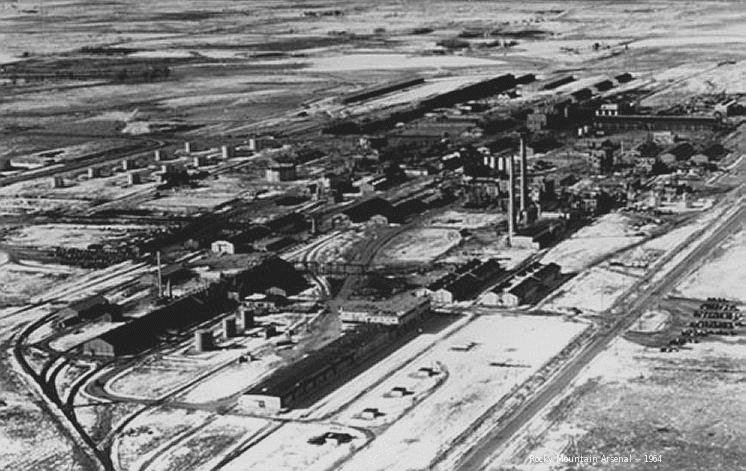
rockymountainarsenal1964

From the Tuscaloosa News (Whit Gibbons). Click through and read the whole article. Here’s an excerpt:

Want to have cancer-causing, bird-killing DDT sprayed in your neighborhood? How about having high levels of brain- damaging mercury dumped into your favorite fishing spot? What about paper mill wastes clogging up rivers and fouling the air people breathe?

These health hazards were once commonplace in communities throughout our country. That they are no longer the hazards they once were is due in no small part to the Environmental Protection Agency, which protects us from these and other environmental abuses. Without EPA oversight, the United States would be a much less healthy place to live.

Those who believe we do not need federal regulation of activities that can turn the country into a toxic waste dump are likely unaware of the far-reaching environmental and human health consequences of such actions. They may also not want to accept the fact that some individuals and many corporations will put profit ahead of all other considerations–including the health and well-being of the general populace.

More Environmental Protection Agency coverage here.

Cotter terminating Cañon City radioactive materials license at the Lincoln Park/Cotter Mill superfund site

cottermillcontaminationconcerndenverpost10232011

From The Denver Post (Bruce Finley):

A letter from Cotter president Amory Quinn says Cotter “will not seek to renew” the radioactive materials license Cotter has from the state health department. Cotter plans to decommission and decontaminate the mill site and to request license termination, Quinn said in the Dec. 12 letter…

The decision marks a possible turning point in a long-running controversy over the mill.

Cañon City residents opposed to the mill applauded the move.”We think this is the first sign of serious progress on getting this place cleaned up. They have stated now that they are going away. The challenge is to see that they clean it up properly before they do,” said Sharyn Cunningham, leader of Colorado Citizens Against Toxic Waste, who praised Gov. John Hickenlooper’s office “for engaging” on the issue…

Cotter’s operating license expires Jan. 31. The company could have submitted a renewal application 30 days before the expiration. Now the company must submit a decommissioning plan and schedule, the state health department said this morning. Under the state Radiation Control Act, decommissioned uranium mill sites must be thoroughly cleaned up and restored at the operator’s expense.

For months, Cotter work crews have been jack-hammering concrete foundations and ripping apart contaminated remaining buildings a the mill. Quinn’s letter says that, by Dec. 31, only eight structures will remain at the site. The work aims to consolidate all waste in a massive impoundment pond. Next year, workers are expected to dig out toxic soil and bury that, too. The dismantling work has cost about $3.5 million, according to Cotter mill manager John Hamrick, and eventually will include construction of a new evaporative waste pond to store water pumped from a potentially contaminated creek that flows near Cotter’s property.

Here’s the release from the Colorado Department of Health and Environment (Jeannine Natterman):

The Colorado Department of Public Health and Environment announced today Cotter Corp. has notified the department of its decision to terminate its Cañon City Uranium Mill radioactive materials license.

The current license expires Jan. 31, 2012, and Cotter was faced with submitting a renewal application 30 days prior to that expiration date. Instead, Cotter now must submit a decommissioning plan and schedule as defined in the regulations.

“This is good news for the Cañon City community,” Gov. John Hickenlooper said. “We appreciate Cotter Corp.’s containment and cleanup efforts and look forward to the company’s continued involved in the community as remediation and decommissioning activities occur over the next 10 to 15 years.”

The decision not to seek licensure sets the mill on a course for closure. The Radiation Control Act requires decommissioned uranium mill sites to be thoroughly cleaned up and restored at the operator’s expense.

“A comprehensive, meaningful public involvement process will be followed for the license termination,” said Steve Tarlton, radioactive materials program manager for the department’s Hazardous Materials and Waste Management Division. “Through transparent and open communication, the state is committed to getting community input as the termination process moves forward.”

The current license conditions will remain in effect beyond the expiration date until the Department of Public Health and Environment notifies Cotter in writing that the license is terminated. No operations are allowed under the current license conditions and the termination process precludes restarting operations.

Specific documents required in the decommissioning plan must be submitted to the department and made available for public review and comment prior to any final approval. The documents include:

• An on-site conceptual characterization plan that describes how Cotter will address on-site and windblown soils, and on-site groundwater — due Dec. 19, 2011
• An impoundment reclamation plan that includes an alternative disposal analysis – due March 31, 2012
• A review and documentation of historic cleanup actions – due March 31, 2012 • A contaminated groundwater cleanup analysis – due Feb. 17, 2012

For more background and technical information about the Cotter Cañon City Uranium Mill, see: www.cdphe.state.co.us/hm/cotter/licenseinfo.htm.

More coverage from Tracy Harmon writing for The Pueblo Chieftain. From the article:

“We are just beside ourselves,” said Sharyn Cunningham of Canon City, co-chairwoman of the Colorado Citizens Against Toxic Waste, an opposition group that formed 10 years ago to fight a Cotter proposal to bring new radioactive waste to the mill for disposal. “Finally, we can focus on a really good cleanup, set out by absolute standards and planning that will involve public participation,” Cunningham said. “The mill has been in no man’s land for so long and I just feel so happy about this.”

“I have worked on (opposing) this for 40 to 50 hours a week for years and I just never let up. We all worked together and kept applying pressure,” Cunningham said.

State health officials have been overseeing the cleanup of “legacy” contamination at the Cotter mill and the neighboring Lincoln Park community, which became part of a Superfund site in 1984 after the 1958-79 use of unlined tailings impoundments allowed uranium and molybdenum contamination to seep into the groundwater…

“If the mill is headed to decommissioning, I certainly hope the finances are in place to see the reclamation is paid for,” said Ed Norden, Fremont County Commission chairman. “I doubted we would ever see uranium processing out there again since there has been so much cleanup and I hope the company is committed to reclamation and the financial obligation that goes with that.” Cotter employs a dozen workers and makes use of contractors for specific jobs.

Norden said he knows some residents in the community will be disappointed there will never be high-paying mill jobs at Cotter again. “But it will be interesting to see how many jobs are created through the cleanup and reclamation. I think it is going to be a massive project,” Norden said.

More coverage from the Associated Press via The Durango Herald. From the article:

Cotter once processed uranium for weapons and fuel at the mill. Federal authorities placed the mill on a national list for Superfund cleanups in 1984 after radioactive materials traced to the mill were found to have contaminated the soil and groundwater. The U.S. Environmental Protection Agency eventually turned oversight of cleanup work to state officials. Uranium hasn’t been processed at the mill since 2006. The state requires sites that are being decommissioned to be thoroughly cleaned and restored at the operator’s expense. It’s expected to be a multimillion-dollar effort. One of Cotter’s first steps will be to submit a conceptual characterization plan describing how Cotter will address on-site and windblown soils and on-site groundwater. That’s due Monday.

More nuclear coverage here and here.

Leadville: Public celebration for the delisting of Operable Unit 9 from the California Gulch Superfund Site, December 9

californiagulchleadville.jpg

From the Leadville Herald-Democrat:

Residents of Leadville and Lake County are invited to celebrate the fact that, after almost 30 years, most are no longer living in a Superfund site. Specifically the celebration is for the deletion of Operable Unit 9 from the California Gulch Superfund Site; OU9 encompasses the downtown area and West Park. The event will be Friday, Dec. 9, from noon to 2 p.m. at the National Mining Hall of Fame and Museum, 120 W. 9th St. It is being held by the city of Leadville, Lake County, the Colorado Department of Public Health and Environment and the Environmental Protection Agency. Information will be presented on the history of the Superfund site, the OU9 remedy, and current and future cleanup progress. Light refreshments will be served.

More California Gulch coverage here and here.

After a five year review the EPA has approved the remediation plan for the Standard Mine superfund site

faultveinstandardminegunnisoncounty.jpg

From The Crested Butte News (Alissa Johnson):

The two-phase plan would control the flow of water through the mine to reduce contamination, and if needed, use passive water treatment to further treat runoff.

The record of decision, signed in September, has the support of the local nonprofit Standard Mine Technical Advisory Group but still needs to be selected for federal funding. It could take until 2013 before the plan is implemented, complementing remediation work already done from 2007 through 2009.

The Standard Mine, which is about five miles west of Crested Butte and drains into Elk Creek, was added to the National Priority List in 2005 because of elevated levels of metals in the soil and the creek. Elk Creek flows into Coal Creek, which is the site of the municipal water intake for Crested Butte.

“We were really fortunate that when the EPA first came in 2006, they had the funding to do some surface cleanup first,” said Anthony Poponi, executive director of Coal Creek Watershed Coalition and grant administrator for the advisory group. That work included building a repository for mine tailings that included waste rock and tailings rich in pyrite, a metal that creates acid mine drainage when exposed to air. After removing waste rock and tailings from Elk Creek, the EPA also reconfigured the creek.

“The miners had produced a creek channel around and through the mill site, which was not the natural orientation, so once we took the tailings out, we dropped the creek back to its natural alignment,” explained EPA superfund project manager Christina Progess. That alignment includes small wetlands and riparian areas and has led to a measureable reduction in metals in Coal Creek and Elk Creek…

“There are three connected mine levels,” said Poponi, “and the EPA knew water coming in at the highest level was in pretty good condition and by the time it came out at level 1 [at the bottom] it was really bad, so they did some investigations and what they came up with was the proposed plan.” The first phase of the remediation plan proposes filling the entrance at level 3, toward the top of the mine, with a flowable fill and foam. That fill, a concrete mixture, would seal off the entrance to the mine so that clean water could be prevented from entering mine workings and would reduce the amount of water coming out of level 1…

A flowthrough bulkhead would be installed at level 1 to control the water flowing out of the bottom of the mine. The bulkhead would allow for what Progess calls the “metered release” of water from the mine…

Residents interested in learning more about the plan are invited to attend an EPA-hosted community meeting on November 30, at 1 p.m. in Town Hall.

More Standard Mine coverage here and here.

Lincoln Park/Cotter Mill superfund site update: The dismantling of contaminated strutures has cost Cotter $3.5 million so far

cottercontamination.jpg

From The Denver Post (Bruce Finley):

Cotter Corp. crews this week jack-hammered concrete foundations and ripped apart contaminated remaining buildings at their uranium mill, pushing to consolidate all waste in a massive impoundment pond by year’s end.

Next year, workers will dig out toxic soil 4 feet deep and bury that too, said John Hamrick, Cotter’s vice president for mill operations, outlining a dismantling project that he said has cost $3.5 million so far.

The project eventually will include construction of a new evaporative waste pond to store water pumped from a potentially contaminated creek that flows near Cotter’s property, Hamrick said…

Ten new groundwater-testing wells are to be built in a nearby urban neighborhood to monitor toxic plumes, along with additional wells west of the mill, where the latest underground plume of cancer-causing trichloroethylene was discovered last year…

State health department regulators have let Cotter deliberate on whether to reopen or embark on total cleanup and restoration of the site. But now Cotter’s operating license is about to expire. Cotter must decide by January whether to renew or to move toward reclamation and closure…

Federal authorities during the Cold War backed creation of the mill to process uranium for nuclear weapons. In 1984, the mill was deemed a Superfund environmental disaster. Toxic metal waste contaminated residential wells near Cañon City.

More nuclear coverage here and here.
CPDHE is requiring ten new monitoring wells as a condition of approval for Cotter’s license renewal at the Lincoln Park/Cotter Mill superfund site

cottermillcontaminationconcerndenverpost10232011.jpg

From The Pueblo Chieftain (Tracy Harmon):

Steve Tarlton, state health department radiation control program manager, wanted to assure those attending a public meeting Wednesday that both surface water and groundwater is prevented from moving off the mill site by an earthen dam and a pumpback system located between the mill site and the Lincoln Park neighborhood. He said no new contamination is leaving the site.

Cotter Corp.’s license will expire in early 2012, so company officials must submit a renewal application by the end of this year. State health officials also want a better look at the “legacy” contamination in the neighboring Lincoln Park community, which became part of the Superfund cleanup site in 1984 after the 1958 to 1979 use of unlined tailings impoundments allowed uranium and molybdenum contamination to seep into the groundwater.

“Ten new wells will be drilled in Lincoln Park and we will examine test results to try to get good data to define the edges of the contamination plume,” Ethington said. The hydrology of the area is controlled by the leaking of irrigation ditches, but one irrigation ditch — the Pump Ditch — may be blocking contamination from escaping the Lincoln Park neighborhood. “I believe it is like a dam that is obstructing movement,” Ethington explained, pointing out that officials want to figure out how to allow the contamination to get out of the Lincoln Park neighborhood.

“A hundred years down the line what is that (Arkansas) river going to be like? And a thousand years from now people will be saying what in the hell were those guys thinking,” asked Tony Belaski, a local resident.

“I have no answer for how long it will take to get to the river. We thought it would be diluted by now — that is something we need to figure out,” Tarlton said. Tarlton said the diluting power of the Arkansas River will be much more powerful than the springs and runoff affecting groundwater in Lincoln Park.

Tarlton said officials will look for alternatives to capture groundwater sooner at the mill site before it flows away and becomes more difficult to deal with. Among alternatives that will be considered are trenching, a new evaporation pond and a water treatment facility which would be costly, Tarlton said. “All the alternatives will be evaluated during the license renewal,” Tarlton said…

State health officials said there will be several opportunities for the public to comment during meetings throughout the license renewal process. The process also will include an environmental impact assessment, Tarlton said…

And finally, state officials want to investigate the potential source of a separate groundwater plume found under the Shadow Hills Golf Course which sits just south of the mill site. “That plume only has uranium in it so it is probably a different source. It is the kind of material derived more from an ore rather than the processing of ore,” Ethington explained.

More Lincoln Park/Cotter Mill superfund site coverage here and here.

Lincoln Park/Cotter Mill superfund site: There is little evidence that containment ponds are leaking according to CPDHE

cottermillcontaminationconcerndenverpost10232011.jpg

From The Pueblo Chieftain (Tracy Harmon):

About 50 people attended an update meeting Wednesday night hosted by the Colorado Department of Public Health and Environment and the Environmental Protection Agency. A major topic of concern to those in attendance was whether the ponds leak. “I don’t see any significant evidence of a release,” said Edgar Ethington, environmental protection specialist for the state health department.

Using magnesium as the “best geochemical indicator of impoundment water” presence, Ethington said he tested at several sites all along the impoundment edges at depths up to 70 to 80 feet. Magnesium levels in the impoundment water are 60,000 to 100,000 parts per million and all but one of the edge test sites produced magnesium levels of 200 parts per million. “If the impoundment was leaking that would be sky high and it isn’t. There is minor evidence of a leak at one well that is twice what the others are (400 parts per million),” Ethington explained.

“Is it strong evidence — no — but I always make the conservative assumption. So in the license renewal phase I will ask Cotter (officials) to look at how much water is moving through there and where it is going,” Ethington said.

During his presentation, Steve Tarlton, state health department radiation control program manager, said both surface water and groundwater is prevented from moving off the mill site by an earthen dam and a pumpback system located between the mill site and the Lincoln Park neighborhood. “Surface water and groundwater are pumped back before it leaves the site,” Tarlton said…

Cotter has no immediate plans to reopen, [Cotter Mill Manager John Hamrick] said, but Cotter officials continue to study whether building a new mill would be economically feasible. Hamrick said Colorado Health Department Executive Director Chris Urbina toured the mill site Wednesday and Gov. John Hickenlooper’s Chief of Staff Roxane White will visit the site Nov. 11 to gauge remediation progress.

More coverage from Rachel Alexander writing for the Cañon City Daily Record. From the article:

Edgar Ethington, an environmental protection specialist with CDPHE, described the investigation into a possible leak in the primary impoundment. “We’re not seeing any indication of significant release,” Ethington said…

Steve Tarlton, radiation control program manager at CDPHE, said Cotter’s license is set to expire on Jan. 31, 2012. They are required to submit a renewal application by Dec. 31. Once the department receives the application, they have 45 days to determine if the application is complete. Within 45 days after that, a public meeting must be conducted, with a second one organized within 30 days of the first meeting. The county commissioners have 90 days after the first public meeting to submit comments on the environmental report. The department will have 360 days after the second public meeting to issue their decision.

More nuclear coverage here and here.
CPDHE: Cotter Mill public meeting November 2, no official announcement about possible reopening

cottercontamination.jpg

From The Pueblo Chieftain (Tracy Harmon):

According to Jeannine Natterman, public information officer for the Colorado Department of Public Health, “As far as I know, no,” Cotter is not planning to reopen the mill. Natterman said in March 2009, Cotter officials notified the state they intended to rebuild the mill and process ore from the Mount Taylor Mine located near Grants, N.M.

Officials continue to leave the reopening option available, but have not made a final determination on whether such a move would be feasible for the company.

“That’s how they (Cotter officials) are avoiding announcing a full-blown closure,” said Sharyn Cunningham, co-chair of Colorado Citizen’s Against Toxic Waste.

Cotter officials must renew the mill’s radioactive material’s license through the state health department and will be required to submit an application by Dec. 31. The license is required for Cotter to continue cleanup work on the mill property, Natterman said, and the license also would be required for the eventual reopening of the mill…

EPA and state health officials have slated topics of discussion for a public meeting from 7 to 9 p.m. Wednesday at Harrison School, 920 Field Ave., which will include the renewal process for the company’s radioactive materials license. Also slated for discussion are decommissioning, the status of impoundments used to store radioactive tailings and the latest data on the Lincoln Park groundwater situation.

Yesterday, Karen Crummy reported in The Denver Post that Cotter officials were planning to reopen the mill. She cited the 2009 letter about processing ore from New Mexico. Here’s an excerpt:

Additionally, Hickenlooper said he will dispatch his chief of staff, Roxane White, to the Cotter Mill next month to evaluate cleanup efforts at the site declared a Superfund environmental disaster in 1984. “This is very important to the people down there,” he said. “I’m definitely looking at it, and Roxane is looking at it, so we can understand it in some detail and assure ourselves that there isn’t risk to human health or the environment.”[…]

Cotter is currently demolishing its buildings and disposing of the debris in one of the leaking tailing ponds. In a June 24 letter, Cotter said it intended to “maintain its Radioactive Materials License for the purpose of processing Mount Taylor ore.”[…]

Western Mining Action Project attorney Jeff Parsons said he believes Cotter is trying to drag out final shutdown of the mill to avoid what are expected to be detailed reviews of the cleanup. Because the mill is a Superfund site, the EPA must sign off on final plans.

“This is Cotter’s way of trying to push off the serious work, and the state is enabling them by not looking into the claim about Mount Taylor,” said Parsons, who is representing residents suing to force Cotter to post a larger bond to guarantee cleanup of land and water near the mill.

More coverage of next Wednesday’s public meeting from Tracy Harmon writing for The Pueblo Chieftain. From the article:

The meeting is scheduled from 6 to 9 p.m. Wednesday at Harrison School, 920 Field Ave. Representatives from the state Department of Public Health and Environment and the U.S. Environmental Protection Agency will lead the meeting.

Topics of discussion at the formal meeting Wednesday will include the renewal process for the company’s radioactive materials license. Also slated for discussion are decommissioning, the status of impoundments used to store radioactive tailings and the latest data on the Lincoln Park ground water situation. Health officials will include an update on the northwest ground water contamination plume under the neighboring Shadow Hills Golf Course just south of the mill. Another topic of discussion will be the recent presence of TCE, or trichloroethene, in ground water at the mill. TCE is an industrial solvent generally used to remove grease from metal. According to a July report generated for Cotter by an environmental consultant, trichloroethene has been detected in ground water at levels that exceed EPA limits. The report also said the source of the TCE contamination has not been identified. In July, a phased soil gas investigation was proposed to identify potential sources of the contamination and to further map out the extent of the ground water plume. The meeting also will include a Superfund cleanup update. There also will be time for local citizens to speak privately to either state health or EPA representatives.

More Lincoln Park/Cotter Mill superfund site coverage here and here.

Lincoln Park/Cotter Mill: State regulators, ‘…ignored warnings from the Environmental Protection Agency, independent firms and their own engineers,’ according to The Denver Post

cottermillcontaminationconcerndenverpost10232011.jpg

Here’s an exposé from Karen Crummy writing for The Denver Post. Click through and read the whole thing. They’re running a series of photos and a aerial view of the area. Check out the cool photo of the construction of one of the leaky ponds. Here’s an excerpt:

Allowing the radioactive waste to remain on site is just the latest chapter in a 50-year saga during which regulators for the state, which owned the land during 20 years that Cotter polluted it, ignored warnings from the Environmental Protection Agency, independent firms and their own engineers.

The result is that while polluted sites such as Rocky Flats became a national model for nuclear decontamination and towns like Grand Junction and Leadville evolved from environmental tragedies to recreation destinations, the cleanup of Cotter has dragged on for nearly 30 years and is at least a decade away from completion. “They were great people. They helped the industry a lot,” said Richard Ziegler, the former executive vice president of Cotter who left the firm six years ago, regarding state health regulators.

State regulators say the ponds’ leaks do not pose an immediate threat because residents no longer drink well water. “Cotter is isolated and not as environmentally dangerous” as some other sites, said Steve Tarlton, who has overseen the Superfund site for the state since 2003…

When Cotter moved to expand its mill in 1978, the EPA issued its first of many warnings ignored by the state: Consider moving the mill to a different site because of the “significant” health concerns, wrote David Wagoner, the EPA’s director of air and hazardous materials. The CBI also asked Al Hazle, head of the radiation control department, not to issue Cotter a new license until the bureau received documents it requested from Cotter. He agreed. The next day, Hazle granted the license. In a 1981 report commissioned by the EPA, the health department questioned why Hazle was not heeding advice from Robert Shukle with the state’s water quality division. Shukle inundated his boss with memos about Cotter’s shortcomings, repeatedly informing the radiation chief that Cotter was continuing to flout regulations, especially by its refusal to put “tracer” chemicals in the newly constructed impoundment ponds to see whether they were leaking.

More Lincoln Park/Cotter Mill Superfund site coverage here and here.

USGS: Hydrogeologic Setting and Simulation of Groundwater Flow near the Canterbury and Leadville Mine Drainage Tunnels, Leadville, Colorado

leadvilleminedrainagetunnel.jpg

Here’s the release from the U.S. Geological Survey (Wellman, T.P./Paschke, S.S./Minsley, Burke/Dupree, J.A.):

The Leadville mining district is historically one of the most heavily mined regions in the world producing large quantities of gold, silver, lead, zinc, copper, and manganese since the 1860s. A multidisciplinary investigation was conducted by the U.S. Geological Survey, in cooperation with the Colorado Department of Public Health and Environment, to characterize large-scale groundwater flow in a 13 square-kilometer region encompassing the Canterbury Tunnel and the Leadville Mine Drainage Tunnel near Leadville, Colorado. The primary objective of the investigation was to evaluate whether a substantial hydraulic connection is present between the Canterbury Tunnel and Leadville Mine Drainage Tunnel for current (2008) hydrologic conditions.

Altitude in the Leadville area ranges from about 3,018 m (9,900 ft) along the Arkansas River valley to about 4,270 m (14,000 ft) along the Continental Divide east of Leadville, and the high altitude of the area results in a moderate subpolar climate. Winter precipitation as snow was about three times greater than summer precipitation as rain, and in general, both winter and summer precipitation were greatest at higher altitudes. Winter and summer precipitation have increased since 2002 coinciding with the observed water-level rise near the Leadville Mine Drainage Tunnel that began in 2003. The weather patterns and hydrology exhibit strong seasonality with an annual cycle of cold winters with large snowfall, followed by spring snowmelt, runoff, and recharge (high-flow) conditions, and then base-flow (low-flow) conditions in the fall prior to the next winter. Groundwater occurs in the Paleozoic and Precambrian fractured-rock aquifers and in a Quaternary alluvial aquifer along the East Fork Arkansas River, and groundwater levels also exhibit seasonal, although delayed, patterns in response to the annual hydrologic cycle.

A three-dimensional digital representation of the extensively faulted bedrock was developed and a geophysical direct-current resistivity field survey was performed to evaluate the geologic structure of the study area. The results show that the Canterbury Tunnel is located in a downthrown structural block that is not in direct physical connection with the Leadville Mine Drainage Tunnel. The presence of this structural discontinuity implies there is no direct groundwater pathway between the tunnels along a laterally continuous bedrock unit.

Water-quality results for pH and major-ion concentrations near the Canterbury Tunnel showed that acid mine drainage has not affected groundwater quality. Stable-isotope ratios of hydrogen and oxygen in water indicate that snowmelt is the primary source of groundwater recharge. On the basis of chlorofluorocarbon and tritium concentrations and mixing ratios for groundwater samples, young groundwater (groundwater recharged after 1953) was indicated at well locations upgradient from and in a fault block separate from the Canterbury Tunnel. Samples from sites downgradient from the Canterbury Tunnel were mixtures of young and old (pre-1953) groundwater and likely represent snowmelt recharge mixed with older regional groundwater that discharges from the bedrock units to the Arkansas River valley. Discharge from the Canterbury Tunnel contained the greatest percentage of old (pre-1953) groundwater with a mixture of about 25 percent young water and about 75 percent old water.

A calibrated three-dimensional groundwater model representing high-flow conditions was used to evaluate large-scale flow characteristics of the groundwater and to assess whether a substantial hydraulic connection was present between the Canterbury Tunnel and Leadville Mine Drainage Tunnel. As simulated, the faults restrict local flow in many areas, but the fracture-damage zones adjacent to the faults allow groundwater to move along faults. Water-budget results indicate that groundwater flow across the lateral edges of the model controlled the majority of flow in and out of the aquifer (79 percent and 63 percent of the total water budget, respectively). The largest contributions to the water budget were groundwater entering from the upper reaches of the watershed and the hydrologic interaction of the groundwater with the East Fork Arkansas River. Potentiometric surface maps of the simulated model results were generated for depths of 50, 100, and 250 m. The surfaces revealed a positive trend in hydraulic head with land-surface altitude and evidence of increased control on fluid movement by the fault network structure at progressively greater depths in the aquifer.

Results of advective particle-tracking simulations indicate that the sets of simulated flow paths for the Canterbury Tunnel and the Leadville Mine Drainage Tunnel were mutually exclusive of one another, which also suggested that no major hydraulic connection was present between the tunnels. Particle-tracking simulations also revealed that although the fault network generally restricted groundwater movement locally, hydrologic conditions were such that groundwater did cross the fault network at many locations. This cross-fault movement indicates that the fault network controls regional groundwater flow to some degree but is not a complete barrier to flow. The cumulative distributions of adjusted age results for the watershed indicate that approximately 30 percent of the flow pathways transmit groundwater that was younger than 68 years old (post-1941) and that about 70 percent of the flow pathways transmit old groundwater. The particle-tracking results are consistent with the apparent ages and mixing ratios developed from the chlorofluorocarbon and tritium results. The model simulations also indicate that approximately 50 percent of the groundwater flowing through the study area was less than 200 years old and about 50 percent of the groundwater flowing through the study area is old water stored in low-permeability geologic units and fault blocks. As a final examination of model response, the conductance parameters of the Canterbury Tunnel and Leadville Mine Drainage Tunnel were manually adjusted from the calibrated values to determine if altering the flow discharge in one tunnel affects the hydraulic behavior in the other tunnel. The examination showed no substantial hydraulic connection.

The multidisciplinary investigation yielded an improved understanding of groundwater characteristics near the Canterbury Tunnel and the Leadville Mine Drainage Tunnel. Movement of groundwater between the Canterbury Tunnel and Leadville Mine Drainage Tunnel that was central to this investigation could not be evaluated with strong certainty owing to the structural complexity of the region, study simplifications, and the absence of observation data within the upper sections of the Canterbury Tunnel and between the Canterbury Tunnel and the Leadville Mine Drainage Tunnel. There was, however, collaborative agreement between all of the analyses performed during this investigation that a substantial hydraulic connection did not exist between the Canterbury Tunnel and the Leadville Mine Drainage Tunnel under natural flow conditions near the time of this investigation.

Here’s the link to the full report.

More Arkansas River basin coverage here.

Summitville superfund site: New water treatment plant dedication last Friday

summitvillemine.jpg

From The South Fork Tines:

“I want to thank the U.S. Environmental Protection Agency and the American Recovery and Reinvestment Act for providing funding to complete the new water treatment plant at Summitville,” said Chris Urbina, executive director and chief medical officer of the Colorado Department of Public Health and Environment. “This project provided more than a 100 construction jobs in this area, and significantly improved water quality, restoring fish and aquatic life to the Alamosa River and Terrace Reservoir,” he said…

In May 2009, the Colorado Department of Public Health and Environment was awarded more than $16 million from the American Recovery and Reinvestment Act, and construction of the 1600-gallon-per minute water treatment plant began on Sept. 14, 2009. The plant will remove contaminants from acidic metals-contaminated mine drainage before the water leaves the site and enters the headwaters of the Alamosa River, which flows into the Rio Grande. Funds from the act are paying 90 percent of this remedial action; the department is paying the remaining 10 percent.

Gold and silver mining began at Summitville around 1870. Large-scale, open-pit mining began at the site in 1984. The mine operator, Summitville Consolidated Mining Corp., Inc., used cyanide heap leaching to extract precious metals from the ore. In this process, ore excavated from the mountain was crushed and placed onto the clay- and synthetic-lined heap leach pad. A sodium cyanide solution was then applied to leach out gold and silver.

Almost immediately after the heap leach pad was constructed in 1986, a leak was detected. In December 1992, the company abandoned the site and announced it was filing for bankruptcy. EPA immediately assumed responsibility of the site as an emergency response, avoiding a significant environmental disaster. On May 31, 1994, Summitville was placed on EPA’s National Priorities List of Superfund sites.

Since 1992, EPA and the department have conducted several interim projects designed to slow the amount of acid mine drainage coming from the site. These interim projects included: 1) detoxifying, capping and revegetating the heap leach pad; 2) removing waste rock piles and filling the mine pits; 3) plugging the adits or underground mine entrances; and 4) expanding the water runoff holding ponds and operating a water treatment plant on site. The new water plant, dedicated today, replaces one built several years ago.

More Summitville Mine superfund site coverage here and here.

Summitville Mine superfund site: Open house Wednesday for opening of new water treatment facility

summitvillemine.jpg

From The Pueblo Chieftain (Matt Hildner):

State environmental officials will host an open house Wednesday for the opening of a new water treatment facility at the Summitville Mine Superfund site

The open house will run from noon to 4 p.m. and include a grand-opening ceremony from 1 p.m. to 2 p.m. Site tours will be offered at noon and 2:30 p.m.

More Summitville coverage here and here.

Energy policy — nuclear: Cotter Corp, Inc. cited for spill at the Lincoln Park/Cotter Mill superfund site

cottercontamination.jpg

From The Denver Post (Bruce Finley):

Colorado Department of Public Health and Environment officials charged with overseeing a Superfund cleanup at the site issued the notice of violation because Cotter’s operating permit requires properly functioning equipment. But because Cotter notified department officials as required, documented the problem and fixed the broken equipment, “no further enforcement actions are anticipated,” health department spokeswoman Jeannine Natterman said. The uranium-tainted water will not add to the contamination that in the past reached groundwater in neighborhoods near Cañon City, Natterman said. An underground clay barrier installed in the 1980s and the pumping system will contain toxic material, she said.

More coverage from Tracy Harmon writing for The Pueblo Chieftain. From the article:

The accident happened when the lid to a vault containing pumps for the “pumpback” system was inadvertently left open overnight, causing the flange to freeze and rupture. The problem was discovered the next morning by Cotter personnel and corrected…

“This condition on the Cotter license is more strict than at any other uranium recovery facility and is not required by the Nuclear Regulatory Commission or Colorado regulations,” Tarlton explained. Cotter employees maintain a pumpback system to capture contaminated groundwater and pump it back to the primary impoundment for evaporation. This system prevents groundwater contaminated by pre-1978 operations from further contaminating the neighboring Lincoln Park groundwater.

More nuclear coverage here here.

Energy policy — nuclear: Cotter, Corp. wants to stop testing inactive leaky and toxic impoundment pond

lincolnparksuperfund.jpg

From the Cañon City Daily Record (Rachel Alexander):

“As you are aware, the pool of water in the impoundment has diminished by evaporation to the extent that only the addition of base material has maintained the pool and consequently the head,” [Radiation Safety Officer Jim Cain] said in the letter. “In addition, introduction of base material to the pool has become inefficient and we have no means to improve the delivery.”

Steve Tarlton, of CDPHE, said the pH monitoring was necessary when the pond was in active use, but it is no longer operating. “Since they started dewatering the ponds, maintaining the pH is not critical,” he said. “The pH issue has gone away. We don’t want them to add water to the pond if they don’t have to. It makes sense to stop monitoring.”

CDPHE officials are looking at the monitoring issue in conjunction with the company’s dewatering plan and they expect to make a decision in the next few weeks.

More Lincoln Park/Cotter Mill superfund site coverage here and here.

Energy policy — nuclear: Lincoln Park/Cotter Mill superfund site cleanup focusing on groundwater pollution with an eye towards discontinuing pumping

cottercontamination.jpg

From The Pueblo Chieftain (Tracy Harmon):

A top priority, according to Mill Manager John Hamrick, is to move away from having to pump contaminated groundwater that slips past a failed treatment wall and is then moved back onto the mill property. The site is called the dam-to-ditch area which is located between an earthen dam and an irrigation ditch which divides the mill property from the Lincoln Park neighborhood. “We’re investigating the best way to clean it up so the goal will be to eventually quit pumping. It is a small area and the plume is small there but the concentrations (of uranium and molybdenum) have remained the same — they are just sitting there,” Hamrick said. On Monday, Cotter officials notified the state public health department that they have a plan to clean up the dam-to-ditch site…

Cotter officials also are delving into the presence of TCE in groundwater underneath the mill. TCE stands for trichloroethylene and it was first detected in October 2010. “We are investigating the nature and extent of the TCE groundwater plume. There are a couple of things that are puzzling about its presence and we are not even sure the contamination is ours,” Hamrick said. Cotter officials also seek to stop pH testing in the primary waste impoundment. State health officials have ordered Cotter to neutralize the pH level in the impoundment but that requires the injection of a liquid containing lime. “That is going against another order we have to dry out the impoundment,” Hamrick explained…

The tailings pond currently is used as a site to dispose of the old mill buildings that are being dismantled. Also, some old, leftover process liquids, such as kerosene, are being mixed with an absorbent and placed into the impoundment in a dry form, Hamrick said, so keeping the drying-out process going is difficult when liquid containing lime has to be injected into the impoundment.

More Lincoln Park/Cotter Mill superfund site coverage here and here.

Energy policy — nuclear: Cotter, Corp. wants to stop testing leaky and toxic impoundment pond

lincolnparksuperfund.jpg

From the Associated Press via The Colorado Springs Gazette:

Cotter is in the process of dismantling its shuttered uranium mill, located south of the Arkansas River near Cañon City.

A makeshift row of wooden pallets leading into the viscous impoundment has sunk into muck, and “it is now unsafe to measure the pH of the pool,” Cotter’s environment coordinator, Jim Cain, said in a July 25 letter to the Colorado Department of Public Health and Environment.

Cotter, a subsidiary of San Diego-based defense contractor General Atomics, also notified department regulators that the company will pursue a lower-cost, passive approach to investigating a recently discovered plume of the industrial solvent trichloroethene. According to Cotter documents, TCE was detected in groundwater at levels exceeding federal health limits and has spread to at least one off-site well.

Public health department officials on Wednesday still were considering Cotter’s request to suspend testing, “but it seems like a reasonable request,” department radiation control unit manager Steve Tarlton said. He also said Cotter’s proposed passive approach to investigating TCE contamination is “a good approach,” although future testing and remediation may be necessary.

More Lincoln Park/Cotter Mill superfund site coverage here and here.

Creede: Willow Creek floodplain restoration planning meetings to start this fall

A picture named commodorewasterockcreede.jpg

From The Pueblo Chieftain (Matt Hildner):

Strewn with waste rock and mine tailings and largely bereft of vegetation, the 1 1/2-mile stretch that sits astride Colorado 149 is due for a face-lift. The project will take on a number of goals, including the transformation of the creek from a braided channel that races to the Rio Grande to park, recreational and open space for the town’s roughly 300 residents.

But what residents hope to see from the 151 acres in the flood plain recently annexed by the town will be determined, in part, by what they call for during planning meetings that could come as soon as this fall. “The fall planning will be one of the next big hurdles,” said Eric Grossman, a town trustee, who sits on the four-member board of the non-profit that will direct the flood plain’s cleanup…

Grossman said initial ideas have ranged far and wide, including a community garden, open space, a miniature golf course and trails for pedestrians and ATV users…

With public input this fall, the nonprofit also is going to try to nail down the design features for Willow Creek’s new alignment. The stream has run down the flood plain in a braided channel since at least 1939, according to aerial photos that were analyzed in a 2007 study of the flood plain by the Natural Resources Conservation Service. The braided structure, in combination with water and soil contamination from nearly a century of mining in the area, has led to poor ecosystem function.

An important solution for water contamination will come when the U.S. Environmental Protection Agency settles on a cleanup remedy for the Nelson Tunnel, which is the watershed’s largest contributor of pollutants such as cadmium, zinc and lead. Agency officials said last month they are conducting a pair of studies that will help determine the cleanup measure for the tunnel. The tunnel, which sits upstream from the flood plain in the historic mining district, was declared an EPA Superfund site in 2008.

More Nelson Tunnel/Commordore Waste Rock superfund site coverage here and here.

Energy policy — nuclear: Colorado and Cotter, Corp don’t agree on cleanup at the Schwartzwalder Mine in the Ralston Creek watershed

A picture named uranium.jpg

From The Denver Post (Bruce Finley):

Cotter has filed a lawsuit challenging the state order…

State mining regulators “continue to coordinate closely with CDPHE in reviewing and monitoring on-site activities, as well as ensuring environmental protections are in place to protect drinking water supplies,” Pineda said. “Cotter has submitted a proposal to install a bypass that would divert ground and surface water around the mine, and the company is continuing to provide DRMS with information needed to fully review this proposal.”

A picture named cottercontamination.jpg

Meanwhile, Cotter has received permission to use an impoundment pond that the state of Colorado claims leaks, according to a report from Bruce Finley writing for The Denver Post. Here’s an excerpt:

The tailings impoundment at Cotter is about 157 acres and includes two retention areas. One is closed and contains about 2 million cubic yards of material. The second area is open and receiving materials related to the mill demolition, including the 90,000 gallons of sludge. It contains about 2 million cubic yards of material and is about half full, according to the health department. Cotter’s vice president for milling operations, John Hamrick, said the sludge is about 95 percent kerosene, used to process uranium. Before the sludge is moved to the impoundment, it will be mixed with another material. “It’s like kitty litter,” Hamrick said Monday. “It becomes a solid.”

Eventually, new sludge and solvents dumped into the leaky impoundment will be neutralized, health department spokeswoman Jeannine Natterman said. “More contamination is not going into that (Cañon City) area.” Hamrick said Cotter disputes the health department’s assessment of the impoundment. “We disagree with the state, that the impoundments are leaking,” he said…

Toxic plumes have been detected moving underground toward Cañon City and the Arkansas River. Most recently, officials disclosed that the cancer-causing chemical trichloroethylene has been detected in groundwater at concentrations up to 360 times federal health limits.
“It has been confirmed that no trichlroethylene has gotten into Lincoln Park (neighborhood in Cañon City),” Natterman said. Cotter officials “are still poking holes, taking samples” to characterize that plume, she said. “Cotter is responsible for all the sampling and analysis. All data have to be quality-controlled by us.”

More Schwartzwalder mine coverage here. More nuclear coverage here and here.

Energy policy — nuclear: Judge Roger Hyatt denies CDPHE and Cotter, Corp’s motion to dismiss lawsuit over Lincoln Park/Cotter Mill superfund site cleanup

A picture named cottercontamination.jpg

From the Colorado Independent (David O. Williams):

Colorado Citizens Against ToxicWaste (CCAT) filed a lawsuit last year trying to get the state to compel Cotter Corp. to establish an aggressive cleanup plan at the EPA Superfund site and provide twice as much in financial assurance to back the project.

The Colorado Department of Public Health and Environment (CDPHE) and Cotter both asked the court to dismiss the case, questioning CCAT’s legal standing. On Friday, District Court Judge Robert Hyatt rejected that motion.

“After considering all of Plaintiffs allegations in the complaint to be true this Court finds a sufficient showing that the Plaintiff is entitled to relief and the Motion to Dismiss under Rule 12(b)(5) is DENIED,” District Court Judge Robert Hyatt wrote.

“Instead of telling us that we don’t have an interest in the radioactive contamination of our water and air, the department ought to be working with the public to protect our environment and health. It is regrettable that CDPHE has taken Cotter’s side to keep Colorado citizens out of the decision process,” said Sharyn Cunningham, a CCAT co-chair whose own well water was contaminated by the Cotter Mill.

More coverage from Tracy Harmon writing for The Pueblo Chieftain. From the article:

Cotter Corp. has agreed to increase the cleanup bond to $20.8 million from $14.7 million this month to cover the cost of decommissioning the entire mill when it closes. The state estimates the cleanup will cost about $43.7 million, while Cotter estimates it would be $23.2 million.

More nuclear coverage here and here.

Lincoln Park/Cotter Mill superfund site update: Trichloroethene is spreading in the groundwater around the site

A picture named cottercontamination.jpg

From KRDO.com (Joe Dominguez):

It was reportedly found in tests taken at the Shadow Hills Golf Course late last year but just reported to Colorado’s Department of Public Health and Environment. Cotter had been negotiating for the past few years with state health department officials on how to deal with contaminated ground water. That contamination was uranium found decades earlier. Some residents believe it’s time for someone else to take over…

“I think it’s going to take the federal government because it’s such a big mess,” said [Ethan McClaugherty]…

The main argument between the state and Cotter leaders that has slowed down the plan is how to deal with cleaning up contamination. Cotter wants to use a slower less expensive method while RAP leaders suggest cycling that contaminated water through pumps and machines and putting it back into the ground. This new development could delay those negotiations again. Cotter will now have to do more tests on ground water to determine how widespread the TCE problem is and where it is originating from. No timetable has been set for how long Cotter has to get those answers for the state.

More Lincoln Park/Cotter Mill superfund site coverage here.

Lincoln Park/Cotter Mill superfund site update: Trichloroethene is spreading in the groundwater around the site

A picture named lincolnparksuperfund.jpg

From The Denver Post (Bruce Finley):

State regulators Friday confirmed [trichloroethene] in the toxic and radioactive waste from the mill, adjacent to Cañon City, and said they’ve asked Cotter to investigate. “It’s in the groundwater. It’s not in the public drinking water supply that we know of,” said Jeanine Natterman, a spokeswoman for the Colorado Department of Public Health and Environment.

Cañon City’s 16,000 residents, many of whose wells already are tainted, received no notification. “Nothing surprises me anymore,” because the plant “is like an octopus with 20 arms,” said Sharyn Cunningham, 64, who lives 1 1/2 miles away and co-chairs Colorado Citizens Against Toxic Waste.

More Lincoln Park/Cotter Mill superfund site coverage here.

Energy policy — nuclear: Colorado Citizens Against Toxic Waste file amended lawsuit against Cotter Corp over Lincoln Park/Cotter Mill superfund site

A picture named cottercontamination.jpg

From The Pueblo Chieftain (Tracy Harmon):

An amended complaint was filed in Denver District Court Friday by attorneys Travis Stills of the Energy Minerals Law Center in Durango and Jeffrey Parsons with the Western Mining Action Project in Lyons, on behalf of Colorado Citizens Against Toxic Waste. The defendants are the state health department and Steve Tarlton in his capacity as manager of the state’s radiation control program, plus Cotter Corp. also is listed as a party.

Because Colorado radiation regulations require a decommissioning funding plan that outlines a cost estimate for closing the mill, Cotter and state officials have been working since 2009 to try to pin down an updated cost estimate. However, the lawsuit alleges the bond remains inadequate despite the fact that Cotter Corp. has agreed to up the bond from $14.7 million to $20.8 million by June of this year to cover cost of decommissioning the entire mill when it closes. The state estimated cleanup will cost about $43.7 million while Cotter estimated it would be $23.2 million. On Dec. 15, the state health officials agreed to leave the bond at $20.8 million despite public comment that urged it should be $53 million. “We would like to see them (Cotter Corp.) post the entire $43.7 million at least. It is a federal program the state is implementing and adding a 25 percent contingency (an additional $10.9 million) is standard,” Parsons said. “Both the bonding amount and the way it is calculated are serious problems because they are the first line of defense for the taxpayers of Colorado…

The suit also alleges that decommission work on the old mill is being done without benefit of any kind of updated decommissioning plan since the last plan was inked in 2005. Parsons said there is no current decommissioning plan, final closure plan or reclamation plan. “That is the huge elephant in the room, they (Cotter) are demolishing old buildings, old tanks and putting them in the tailings impoundments and what is going to happen with the tailings impoundment? Currently, they are pumping back contaminated water to adjust for leaking.

More coverage from Bruce Finley writing for The Denver Post. From the article:

The lawsuit filed in Denver District Court alleges that recent dismantling activity at Cotter’s Cañon City mill is being done without a required plan, presenting a public-health risk as toxic and radioactive waste is dumped into a waste-storage pond. “We have frequent high winds here. I always worry,” said Cañon City resident Sharyn Cunningham, leader of Colorado Citizens Against Toxic Waste. “We’d like an opportunity to weigh in.”[…]

The lawsuit also contends a plume of toxic groundwater contamination from the mill property — identified in 2008 — is flowing unchecked toward the heart of Cañon City and the Arkansas River…

Cotter president Amory Quinn said the lawsuit “doesn’t have anything to do with us” and confirmed that Cotter is dismantling old structures. He said Cotter hopes to move forward with plans to re-engineer and reopen the mill. The health department’s recent approval of a permit for another company to build a uranium mill in southwestern Colorado should have no effect on Cotter’s plans, Quinn said. “We have done millions of dollars’ worth of remedial work in the past few years, and we are going to continue until it is complete,” he said.

More nuclear coverage here and here.

Summitville superfund site update

A picture named summitvillemine.jpg

From The Pueblo Chieftain (Matt Hildner):

The water treatment plant, funded by $17 million in federal stimulus spending, has been eyed by federal and state environmental officials as a key component in limiting contamination from the site. It joins a new micro-hydro power plant and a dam spillway as projects crews worked on this summer. “There’s quite a lot going on this year,” said Austin Buckingham, project manager for the Colorado Department of Public Health and Environment…

Austin Buckingham said the new plant, which will draw water from the impoundment dam at the bottom of the site, will use lime to raise the pH balance of the contaminated water. The rise in pH forces the metals to precipitate. Those metals include copper, cadmium, manganese, zinc, lead, nickel, aluminum, and iron. With a capacity of 1,600 gallons per minute and the ability to run at night, thanks to automation, the plant is expected to have an easier time dealing with spring runoff from the site, which sits near tree line 18 miles southwest of Del Norte…

Other projects moving forward this year include the installation of a 56 kilowatt hydro power plant, which is expected to cut an estimated $15,000 per year off the site’s power bill. Turbines for the plant are expected to arrive in two weeks, she said. The turbines will be powered by water coming from the treatment plant on its way to Wrightman Fork, a tributary of the Alamosa River.

More Summitville Mine coverage here and here.

Rocky Mountain Arsenal superfund site cleanup update

A picture named rockymountainarsenal1964

From The Denver Post (Bruce Finley) via the Sky-Hi Daily News:

For half a century, the arsenal at Denver’s northeast edge loomed as a secretive complex of more than 250 buildings with signs around it warning “Use of Deadly Force Authorized.” There, the Army made chemical weapons and later, Shell made pesticides. Residential and commercial development gradually encroached on the site. Today, 47 bison roam, raptors circle and badgers burrow on recovering short-grass prairie 10 miles from downtown Denver. “We’ve transformed a very highly contaminated site into a beautiful prairie landscape,” said Carol Campbell, the EPA’s assistant regional administrator handling Superfund cleanups and other officials. “Because it is something that people now can go to and enjoy, it is different from other Superfund cleanup sites.”

The Army still will be responsible for 725 acres of fenced-off land where toxic materials were consolidated and buried. Devices called lysimeters, about 6 feet beneath the clay and dirt, are supposed to verify that surface water isn’t reaching the waste. In addition, monitoring of the already-contaminated groundwater at the arsenal must continue to ensure that lethal chemicals don’t spread farther toward the South Platte River…

Once, homesteading farmers and ranchers lived here. In 1942, the Army established the arsenal to make mustard gas and blister agent to deter Japan and Germany. Then, during the Cold War, factory workers in body suits and gas masks produced thousands of tons of napalm and sarin nerve gas, which was stuffed into bomblets that were placed in Honest John rocket warheads.

Army leaders later leased the site to private companies, including Shell, which arrived in 1952 and for three decades produced chemical pesticides, such as dieldrin, that Shell sold worldwide for agriculture. The liquid waste was dumped in evaporation ponds. Solid waste was dumped into trenches. More than 600 lethal chemicals spread through the soil into groundwater.

More South Platte Basin coverage here.

CDC: Don’t drink the water near the Lincoln Park/Cotter Mill superfund site

A picture named lincolnparksuperfund.jpg

From The Pueblo Chieftain (Tracy Harmon):

Members of Colorado Citizens Against Toxic Waste voiced disappointment in a recent health assessment relating to exposure to Cotter Uranium Mill contamination…

The study found that long-term ingestion of contaminated private well water may have put some people in the Lincoln Park neighborhood adjacent to the mill at risk for health problems. Most neighborhood residents use the public water supply and are not exposed to the contaminant, according to the report. “I’m disappointed that the agency ignored our local doctors’ request,” said Carol Dunn, co-chair of Colorado Citizen Against Toxic Waste. “Instead of recommending a study of real people with real health problems, they studied the Cotter Mill’s self-sampling data to see if there was a risk to our health…

The agency will host two open houses to present findings from noon to 2 p.m. and 7 to 9 p.m. Sept. 23 at the Holy Cross Abbey, 2951 E. U.S. 50. Written public comment on the report will be accepted until Nov. 9.

More nuclear coverage here and here.

Stockholm: World Water Week 2010

A picture named worldwaterweek2010

World Water Week kicks off today in Stockholm. This year’s theme is The Water Quality Challenge – Prevention, Wise Use and Abatement. Click through for a complete listing of events. Here’s the link for their RSS feed.

Colorado has no water quality challenges unless you consider past mining activities, agricultural runoff, storm runoff from our cities or pharmaceuticals in the water supply and the occasional case of illegal dumping.

Energy policy — nuclear: Is Cotter, Corp. going to shutter the mill at the Lincoln Park/Cotter Mill superfund site?

A picture named cottercontamination.jpg

From the Cañon City Daily Record (Karen Lungu):

John Hamrick, vice president of Cotter mill operations, sent a letter to the director of Air and Toxics Technical Enforcement Program Office of Enforcement Compliance and Environmental Justice, dated July 23, stating, “On June, 30, 2010, Cotter Corporations (N.S.L.) submitted a letter to Mr. Steve Tarlton of the Hazardous Materials and Waste Management Division of Colorado Department of Public Health and Environment notifying him of a change in status of the Primary Impoundment at the Cañon City Milling Facility near Cañon City.” The letter stated that Cotter will “close both the primary and secondary impoundments as soon as reasonably achievable.” Hamrick goes on to say the Cañon City milling facility began dismantling structures and facilities no longer considered useful to the CCMF. The company no longer will carry out radon flux testing, Hamrick said, at the primary impoundment, because the primary impoundment no longer is an active facility that is subject to 40 CFR Part 61, Subpart W requirements.

Previously stating the mill would reopen, Cotter took local lawmakers by surprise when they told regulators it would discontinue testing for radon emissions at the site because it is no longer an active facility subject to regulation. The mill south of Cañon was designated a Superfund site in 1984, making Cotter responsible for continued monitoring of radon emissions at the milling facility, as well as neighboring Lincoln Park.

More Lincoln Park/Cotter Mill coverage here and here.

Energy policy — nuclear: Is Cotter, Corp. going to shutter the mill at the Lincoln Park/Cotter Mill superfund site?

A picture named cottercontamination.jpg

Cotter, Corp. has decided to permanently close the mill at the Lincoln Park/Cotter Mill superfund site. Here’s a report from Bruce Finley writing for The Denver Post. From the article:

Cotter Corp. has informed regulators it will close two toxic-waste impoundment ponds at the mill “as soon as reasonably achievable,” according to a letter Cotter sent to the U.S. Environmental Protection Agency. Cotter, which had previously said the mill would be reopened, now has told state regulators it will stop testing for radon emissions at the site because it is “no longer an active facility” subject to regulation.

The apparent reversal, and Cotter’s decision to stop testing for radon emissions, caught local leaders by surprise. The site has been designated a polluted Superfund site and Cotter has been responsible for monitoring to make sure cancer- causing radon was not escaping the facility.

Fremont County Commissioner Mike Stiehl questioned whether Cotter can stop tests. “That
doesn’t sound right to me.”

More coverage from Tracy Harmon writing for The Pueblo Chieftain. From the article:

“They are working toward closing the impoundments and have been dewatering (drying out) the impoundments for years,” said Jeannine Natterman, public information officer for the Colorado Department of Health. “They have not officially notified us they are closing the (entire) facility.”[…]

Manager John Hamrick said the company will close both the primary and secondary waste impoundments, “as soon as reasonably achievable.” The letter goes on to indicate that radon testing will not be carried out on the primary impoundment this year and in subsequent years because it is no longer an active impoundment. “They have planned to close the impoundments all along and they have been taking old structures down. What the letter means is that they are close to permanently capping the impoundments,” Natterman explained. “Even once capped, the primary impoundment can be used for new, more contemporary operations because it would not have the same material going in. If it is appropriately capped and appropriate materials are used for the cap, the primary impoundment could be used again,” Natterman said.

More nuclear coverage here and here.

EPA proposes removal of more than 2,500 acres at Rocky Mountain Arsenal from Superfund list

A picture named rockymountainarsenal1964

Here’s the release from the U.S. Environmental Protection Agency (Jennifer Chergo):

The U.S. Environmental Protection Agency (EPA) has announced a proposal to delete portions of the Rocky Mountain Arsenal (RMA) from the National Priorities List (NPL). The NPL is a list of the nation’s most contaminated sites, known as Superfund sites. EPA and the Colorado Department of Public Health and Environment have determined that all required cleanup activities are complete in the areas proposed for deletion. EPA is accepting public comments on the Notice of Intent to Delete for 30 days, from June 17 to July 19, 2010.

EPA is proposing to delete 2,500 acres of soil, sediment, surface water and structures from the central and eastern surface areas within the RMA boundaries. EPA is also proposing to delete the entire surface area just north of the RMA boundary. Groundwater underlying these areas is not included in this deletion and will remain on the NPL. All areas at RMA deleted from the NPL will continue to be subject to regular EPA review to ensure the protection of human health and the environment.

Deleting property from the NPL facilitates reuse of that property. Should the proposed deletion of the central and eastern surface area be finalized, its 2,500 acres will be transferred to the U.S. Fish and Wildlife Service (FWS) to become part of the Rocky Mountain Arsenal National Wildlife Refuge.

This is the fifth proposed partial deletion of land at RMA. Between 2003 and 2006, EPA completed four partial deletions consisting of 13,406 acres. Of the property deleted at RMA to date, 917 acres were sold to Commerce City for commercial development, 12 acres were transferred to South Adams County Water and Sanitation District for the Klein Treatment Facility, 126 acres were transferred to local governments for road-widening, and 163 acres were retained by the Army, primarily for water treatment systems. Another 12,188 acres were transferred to the FWS to become part of the National Wildlife Refuge, as prescribed in the 1992 Rocky Mountain Arsenal National Wildlife Refuge Act.

RMA is located in Commerce City, approximately ten miles northeast of Denver, Colo., in Adams County. RMA was established in 1942 by the U.S. Army to manufacture chemical warfare agents and munitions for use in World War II. Beginning in 1946, some facilities were leased to private companies to manufacture industrial and agricultural chemicals. Shell Oil Company, the principal lessee, manufactured pesticides at the site from 1952 to 1982. Industrial and waste disposal practices resulted in contamination of structures, soil, surface water and groundwater. EPA placed RMA on the NPL in 1987. Since that time, the site has been undergoing extensive environmental investigation and cleanup.

For more information, visit: http://www.epa.gov/region8/superfund/co/rkymtnarsenal/

More superfund coverage here.

Energy policy — nuclear: Governor Ritter inks the deal on HB 10-1348 (Increase Oversight Radioactive Materials)

A picture named cottercontamination

Update: Here’s a report from Rachel Alexander writing for The Cañon City Daily Record. From the article:

[Governor Ritter] signed the bill at the Whitewater & Kayak Recreation Park as the river roared behind him. “You’re going to be impacted by how we approach uranium milling and how we approach uranium permitting,” he said. The bill was sponsored by Sens. Ken Kester, Bob Bacon and Rep. Buffie McFadyen.

The law requires uranium processors to comply with clean-up orders before new applications are processed, strengthen public oversight of bonding requirements; require processors to inform residents about threats to their water if they have registered wells in close proximity to known groundwater contamination; and require processors to amend their operating license before accepting new sources of “alternate feeds.”

“Nobody thinks uranium is an inherently evil thing, it’s just evil if you lose stewardship of it,” Ritter said. “We believed it was the right thing to move this forward.”

Governor Ritter signed the bill that Cotter Corp claims will prevent them from generating the revenue to fund the cleanup of the Lincoln Park/Cotter Mill superfund site near Cañon City. Here’s a report from Bruce Finley writing for The Denver Post. From the article:

“This just gives us a better hold on the milling process,” Ritter said before signing the bill, a bipartisan measure sponsored by Rep. Buffie McFadyen, and Sens. Ken Kester and Bob Bacon.

Greenwood Village based Cotter Corp. operates the mill that became a Superfund cleanup site in 1984. During the statehouse battle over the law, Cotter vice president John Hamrick said the legislation would kill Cotter’s proposed project to refurbish the mill and haul 12.5 million tons of uranium ore from New Mexico for processing. Hamrick on Tuesday declined to comment on the status on any future project. But Hamrick said Cotter is now planning to do research at the mill if the Colorado Department of Public Health and Environment approves.

More coverage from Patrick Malone writing for The Pueblo Chieftain. From the article:

“We should think not about ourselves, but about the generations to come” when it comes to protecting the environment, Ritter said. “It’s incumbent on us to turn this state over to the generation after us and the one that follows in a better way than we found it.”

Under HB1348, Cotter can’t gain permits to expand its operation without first mitigating contamination that already exists. It also must notify residents where groundwater contamination exists of its progress in addressing the problem. The bill also requires Cotter to carry a higher bond that would be sufficient to conduct cleanup efforts. If the mill were to close, the cleanup would be the state’s responsibility, like so many other decommissioned uranium-processing sites throughout the state…

During the past decade, Cotter has been cited about 100 times for environmental violations, but they have been markedly less frequent during the past five years, when a wholesale change of its management team took place. Cotter officials have said the bill hamstrings their intention to take on new materials from Mount Taylor in New Mexico, which would provide the revenue necessary to construct and update an environmentally sound mill.

But residents of Canon City have been fighting for years to get Cotter to clean up the contaminated plumes of groundwater that have been identified. To date, Cotter has chosen to let it dissipate naturally, which could take decades, stretching into centuries.

For the past eight years, Colorado Citizens Against Toxic Waste has pushed for more aggressive measures from Cotter to address the pollution. Tuesday, they saw the fruit of their work. “It’s a culmination of years of paying attention to this site, seeing the problems and looking for solutions,” said Sharyn Cunningham, president of Colorado Citizens Against Toxic Waste. “This bill is the solution to the contamination problems here.”

Here’s the video of the signing from Governor Ritter’s office. Here’s the release (Evan Dreyer/Megan Castle):

Gov. Bill Ritter concluded a two-day, five-city tour of southern Colorado this afternoon, visiting the banks of the Arkansas River near the Royal Gorge to sign legislation that will protect waterways and communities by increasing oversight of uranium mills.

“We all want a safe environment for our families, our children and our communities,” Gov. Ritter said before signing House Bill 1348, a bipartisan measure sponsored by Rep. Buffie McFadyen and Sens. Ken Kester and Bob Bacon. “Future Coloradans will want to raft, kayak and fish this river, just as we’re able to do today. It’s up to us to make sure they get that opportunity. This bill will help make that happen.”

HB 1348 requires operators of uranium mills to comply with all clean-up orders before new state permits for expansion or restructuring of operations are processed. The bill also requires operators to inform residents about threats to their water if residents have wells in close proximity to known groundwater contamination.

“We heard Canon City residents testify that the poison from the uranium processing plant has been tainting groundwater for decades,” Rep. McFadyen said. “This bill simply requires uranium processors to clean up the old mess they’ve already made before accepting new materials that will create new waste. Having polluted groundwater harms the health and the economic development of the area. This bill sets the tone for the nation on what to do with uranium groundwater contamination.”

More 2010 Colorado legislation coverage here.

More nuclear coverage here and here.

Attorney General Suthers proposes $1.6 million settlement for Lowry Landfill

Lowry Landfill 2008

From the Aurora Sentinel (Brandon Johannson):

According to a statement from Colorado Attorney General John Suthers, the state reached a settlement with the property owner, operator and groups that sent waste to the landfill. Suthers said the settlement means the state and those involved can avoid lengthy and expensive litigation to determine to what extent each group was involved. “This settlement provides an equitable and appropriate solution to address the injuries at the Lowry Landfill Superfund Site,” Suthers said in the statement. “The agreement will allow Colorado to move forward on resource restoration instead of spending years locked in costly litigation.”

The 508-acre site is in unincorporated Arapahoe County near East Hampden Avenue and South Gun Club Road, less than a mile east of E-470. According to Suthers’ office, it was the principal landfill for the Front Range as well as the industrial landfill for many Colorado companies, taking solid and liquid waste from 1965 through 1980 and solid waste from 1980 until 1990.

The settlement, filed in U.S. District Court in Denver, is now open for public comment for the next 30 days.

Under the first settlement, the companies and entities that contributed waste materials to the site will pay the state more than $1.1 million, money that will assist the state in restoring natural resources and compensate for damage to the groundwater at the site, according to Suthers’ statement.

A second settlement, between the state and the City and County of Denver, Waste Management of Colorado and Chemical Waste Management, Inc., will require the parties to pay the state $500,000, the statement said. That money will be used for a loan for low- to middle-income households needing sewer repairs, something the statement said will help improve groundwater quality in the South Platte River watershed.

More Lowry Landfill coverage here.

Attorney General Suthers proposes $1.6 million settlement for Lowry Landfill

A picture named lowrylandfill2008

From The Denver Post (Bruce Finley):

Companies that contributed to pollution at the 508-acre site and now would pay damages to the state, include Molson Coors Brewing Co., ConocoPhillips Co., Gates Corp., Shell Oil Co., Cyprus Amax Minerals Co., Roche Colorado Corp., S.W. Shattuck Chemical Co. and Alumet Partnership. The Metro Wastewater Reclamation District and the cities of Littleton, Englewood and Lakewood also would pay.

State prosecutors focused on lost public use of groundwater. “This settlement provides an equitable and appropriate solution to address the injuries at the Lowry Landfill Superfund Site,” state Attorney General John Suthers said. “The agreement will allow Colorado to move forward on resource restoration instead of spending years locked in costly litigation.”[…]

Denver set up the landfill in 1964 using land in Arapahoe County that had been used as a bombing range and conveyed by the federal government. Companies dumped about 138 million gallons of liquid industrial waste at the site near Gun Club Road and East Hampden Avenue between 1965 and 1980. Then, Waste Management Inc. ran the landfill for garbage disposal until 1990. An Environmental Protection Agency investigation in 1994 established the presence of hazardous substances in the groundwater, surface water and soils. A cleanup that began in the mid-1980s — run by the state with EPA supervision — is still incomplete.

The settlements, proposed in U.S. District Court, depend on comments received over a 30-day period. Under one settlement with Denver, Waste Management and Chemical Waste Management Inc., about $500,000 would be used for loans to low- and middle-income households needing sewer repairs to help improve groundwater…

EPA officials monitor efforts to contain and reduce a toxic plume in shallow groundwater, [EPA spokesman Rich] Mylott said. That water is being treated. State and federal cleanup officials have indicated no significant health risk linked to contamination at the landfill.

More superfund coverage here.

Energy policy — nuclear: State Water Quality Control Division nukes Cotter plan for Schwartzwalder mine mitigation

A picture named uranium.jpg

From the Associated Press via CBS4Denver.com:

Cotter Corp. has submitted a plan to state mining regulators to reduce uranium levels in Ralston Creek from the closed Schwartzwalder Mine. The water flows into a reservoir that supplies some of Denver’s drinking water. The Water Quality Control Division of the state health department told mining regulators in a memo Monday that Cotter’s plan doesn’t reduce uranium in the water to acceptable levels…

The state Office of Mined Land Reclamation expects to decide by May 19 whether to approve or reject Cotter’s plan or seek more information.

Meanwhile here’s a look at HB 10-1348 and how it will impact Cotter’s plans for their mill in Cañon City from Marjorie Childress writing for the Colorado Independent. From the article:

A controversial plan to open an old uranium mine on Mt. Taylor near Grants, New Mexico, faces an obstacle in the new law passed by the Colorado legislature that forbids increased operations at uranium mills until the mill companies clean up sites contaminated in the past. The Cotter Uranium Mill, just a little over a mile south of Cañon City is owned by the same company that owns the Mt. Taylor mine and is the designated recipient of future Mt. Taylor uranium ore. Under the new law, which Colorado Gov. Bill Ritter has yet to sign, Cotter would not be able to accept the ore, at least not any time soon. “This is not unexpected,” John Hamrick, vice president of milling at Cotter, told the Cañon City Daily Record. “This bill will prevent us from processing the Mount Taylor ore.”

Click through and read the whole article — there is a lot of good detail.

More HB 10-1348 coverage from Matthew Beaudin writing for the Telluride Daily Planet. From the article:

The bill will essentially require companies to clean as they go, curtailing the toxic sites that dot the Western landscape and the towering cleanup costs that saddled taxpayers. (Colorado alone has shelled out more than $1 billion to cleanup the industry.) Last week, the Senate voted 24-9 in favor of the bill and the house later readopted the bill resoundingly, 60-3. Now, it waits for Ritter to vault it into law…

Hilary White, Sheep Mountain Alliance’s executive director, helped work on the measure and said Ritter will sign the bill “shortly.”[…]

Taxpayers have spent more than $950 million to clean up toxic pollution at past uranium milling operations located primarily on Colorado’s Western Slope, according to the U.S. Department of Energy. “It means that the bad actors in the uranium industry will not be allowed to operate if they are in violation of contaminating the environment,” White said. “It’s been shown time and time again that uranium companies just walk away from their messes.”[…]

Jeffrey Parsons, a senior attorney with the Western Mining Action Project, which supports the bill, said there’s no guarantee Cotter will be able to get ore from Mount Taylor, which is considered sacred land by as many as 30 Indian tribes. White said the measure will also increase bonding obligations for operators in hopes of stanching the costs of future cleanup. All told, the Naturita mill site cost $67 million to clean up and the Uravan site, designated a Superfund site, cost $120 million to clean, White said. Also according to Sheep Mountain, Energy Fuels, the company planning to build a mill in Paradox Valley, plans to put up $12 million in bonding. Bonding in general, she said, was “less than adequate.” “The industry is a mess and needs to be cleaned up,” she said.

More Schwartzwalder mine coverage here.

Energy policy — nuclear: HB 10-1348 (Increase Oversight Radioactive Materials) clears preliminary vote in the state senate

A picture named cottercontamination.jpg

From The Pueblo Chieftain (Patrick Malone):

The state Senate on Tuesday gave preliminary approval to a bill that would require Cotter uranium mill to clean up its pollution before taking on new jobs. Proponents of the bill contend Cotter has been poisoning the environment for decades and done little about it, while representatives of the company have said the proposed legislation would be a poison pill for its operation…

The House already has passed the bill, and a final vote on it in the Senate could come as soon as today.

More HB 10-1348 coverage here.

Energy policy — nuclear: HB 10-1348 (Increase Oversight Radioactive Materials) passes out of state Senate Business, Labor and Technology Committee

A picture named cottercontamination.jpg

From The Cañon City Daily Record (Rachel Alexander):

The Senate Business, Labor and Technology Committee passed the bill out on a vote of six to one. Matt Garrington, of Environment Colorado, one of the groups supporting the bill, said it could be taken to the floor as early as Monday.

More HB 10-1348 coverage here.

Leadville to celebrate 150 years of mining

A picture named californiagulchleadville

From The Pueblo Chieftain (Tracy Harmon):

The April 1860 discovery of gold in California Gulch by Leadvillite Abe Lee set this town on its mining path filled with plenty of colorful characters and their rags-to-riches stories. The 150th anniversary celebration of mining in Leadville is scheduled at 5:30 p.m. April 24 at the National Mining Hall of Fame and Museum, 120 W. Ninth St. The event will begin with tours of the museum and a wine tasting. A three-course gourmet dinner will follow at 7 p.m…A silent auction and Victorian dance featuring the music of the Shadow Mountain Sting Band will follow starting at 9 p.m. Victorian or miners’ attire is encouraged. Cost is $80 per person or $150 per couple or $20 per person for dance-only tickets. Reservations for the event are requested by Monday by calling 1-719-486-1229.

Energy policy — nuclear: HB 10-1348 gets state house approval moves on to the state senate

A picture named cottercontamination.jpg

Bump and update: From the Cañon City Daily Record (Rachel Alexander):

“Today’s vote is absolutely amazing,” said Matt Garrington, of Environment Colorado, which helped develop the bill. “Never before have we seen such strong bipartisan support on uranium legislation.”[…]

“Uranium processing has left behind a dirty, dangerous legacy in Colorado,” Garrington said. “Today, the Colorado House told the uranium industry that business as usual is not acceptable. This legislation is an important step to help protect Colorado’s air and water from toxic, radioactive uranium pollution.”

From The Pueblo Chieftain (Patrick Malone):

By a vote of 62-2, HB1348 sponsored by state Rep. Buffie McFadyen, D-Pueblo West, advanced. Its next stop will be a Senate committee…

Cotter officials testified before a House committee that the bill would be “a poison pill” for the plant, while Canon City residents testified that the poison from the uranium processing plant has been tainting groundwater there for decades. “I vehemently disagree that this would close the Cotter mill,” McFadyen said. “It doesn’t affect their current operation, and only requires them to clean up the mess they’ve made before accepting new waste they aren’t already permitted to process.”[…]

Under the bill, uranium processors would be required to clean up existing contamination before they are permitted to accept new materials, as Cotter has proposed to do beginning later this year. Company officials have said the expansion would create up to 100 jobs at the uranium processing site that now has 31 employees.

The bill also would require annual reports from processors to residents of areas near groundwater plumes of uranium contamination. They would include updated reports on the status of the contamination and the steps taken to address them. Another portion of the bill requires uranium processors to carry bonds sufficient to pay for cleanup of contamination, rather than saddling taxpayers with the cost.

From State Bill Colorado (Debi Brazzale):

House lawmakers agreed Monday that increased oversight to ensure groundwater is not contaminated from uranium processing is a good thing for Colorado’s water supply, and gave their final approval to House Bill 1348 before it moves to the Senate for consideration. The measure requires that prior to obtaining a license to begin or expand uranium processing operations, the applicant has to show that the existing site is not in violation of existing environmental or public health laws…

Republican Marsha Looper of Calhan told the committee that most of her district derives its water from groundwater, and said the measure is crucial to the state’s agriculture industry. “Water is a precious resource for our state. We need to do our utmost to protect this important resource,” said Looper. Looper went on to say that the processing of uranium ore has a terrible track record when it comes to groundwater contamination. According to Looper, Durango and Grand Junction are seeing increased levels of contamination decades after the uranium operations have ceased. Looper said she welcomes the additional accountability the measure would provide.

More HB 10-1348 coverage here.

Energy policy — nuclear: HB 10-1348 (Increase Oversight Radioactive Materials) passes out of House Transportation and Energy Committee

A picture named cottercontamination.jpg

From the Cañon City Daily Record (Rachel Alexander):

“We had amazing bipartisan support,” said Matt Garrington, of Environment Colorado, one of the groups that developed the bill. The bill also was developed by Colorado Citizens Against ToxicWaste. It is sponsored by Rep. Buffie McFadyen and Sen. Ken Kester.

Among those who testified for the bill were Fremont County Commissioner Mike Stiehl, CCAT co-founder Sharyn Cunningham and Gloria Stultz.

The bill now will go to the full House for debate and a vote. If it passes there it will go to the Senate committee.

More 2010 Colorado legislation coverage here. More nuclear coverage here and here.
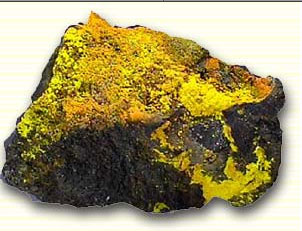
Energy policy — nuclear: Supporters of HB 10-1348 (Increase Oversight Radioactive Materials) rally in Denver

A picture named cottercontamination.jpg

From the Colorado Independent (David O. Williams):

Proponents of the comparatively carbon-free nuclear power industry, including Colorado Sen. Mark Udall, maintain the state’s toxic past was born of ignorance about the dangers and new technology makes mining and processing much safer. State lawmakers clearly want more concrete assurances. “Our number one goal as a legislature should be public safety,” Rep. McFadyen said in a release. “This no nonsense legislation ensures toxic waste cleanup and the health of our citizens.”

HB 1348 would require uranium operators to clean up existing problems before applying for expansion permits; allow local governments, the public and other stakeholders to provide input during the Colorado Department of Putlic Health and Environment’s annual reviews of cleanup financing; require uranium companies to notify residents with water wells near groundwater contamination; and require state licensing when companies accept “alternate feed,” or toxic waste from industrial or medical operations.

“Actions have consequences, and uranium companies need to clean up their mess,” said Sen. Ken Kester, R-Las Animas, another sponsor of the bill.

More coverage from The Grand Junction Daily Sentinel (Charles Ashby):

Though the measure could affect one operating near Canon City, the planned Piñon Ridge mill 12 miles west of Naturita already would be required under existing laws to do much of what House Bill 1348 calls for, said George Glasier, president and CEO of Energy Fuels Inc., which is hoping to open the first uranium mill in the nation in 25 years.

Glasier said the measure, introduced by several southern Colorado lawmakers, is aimed at the Cotter Uranium Mill in Fremont County, which has been plagued with contamination problems since the late 1950s. The lawmakers said they introduced the measure to deal with long-standing concerns over cleanup of that mill, parts of which already are a federal Superfund cleanup site. The bill is aimed at existing mills that release radioactive material into the groundwater, requiring them not only to report how it is being cleaned up, but also ensuring they have set aside enough cash to pay for it, said Rep. Buffie McFadyen, D-Pueblo West, and the bill’s sponsor. It would bar mills from expanding operations until the contamination is removed, she said…

The bill would make it harder for Cotter to get the site cleaned and make it impossible for other sites, including ones not yet opened, to stay in business, [John Hamrick, Cotter’s vice president of milling] said. “The bill as written essentially will prevent uranium milling within the state because of language concerning release of materials,” Hamrick said. “If you have a shovel full of uranium ore and you dump it on the ground, at that point you have a release that would exceed standards. That’s a poison pill for uranium mills.”

More 2010 Colorado legislation coverage here. More nuclear coverage here and here.

Energy policy — nuclear: HB 10-1348 (Increase Oversight Radioactive Materials) update

A picture named conventionaluraniummill.jpg

From the Telluride Daily Planet (Reilly Capps):

A new piece of legislation seeks to tighten up the application process and ensure that old mills are cleaned up before new ones are opened, and the Telluride Town Council came out in support of it yesterday. The Uranium Processing Accountability Act [HB 10-1348] (pdf) would apply most directly to the Cotter-owned mill near Cañon City, which first opened in 1958. It is still in the process of cleaning up contamination. The company applied to reopen the mill in 2001. If this bill passes, the Cotter Corp. couldn’t re-open the mill until all the clean-up has been completed…

The bill would also apply to the bonds that companies put up to pay for cleanup. When a mill starts operation, the company has to post a public bond that will pay for the cleanup. The proposed bill seeks to make sure that the public has a say in the size of the bond.

But Dianna Orf, a lobbyist for the Colorado Mining Association, said the legislation doesn’t make sense. “The implication I see is that if you can’t accept new material for processing, you can’t produce the revenue stream you need” to clean up the old site, Orf said. The Colorado Mining Association is not necessarily opposed to the legislation, said director Stuart Sanderson. But he said the state, and the country, would do well to support uranium production in general.

Here’s the fact sheet from the Colorado Environmental Coalition and an excerpt:

Uranium milling has a radioactive and toxic legacy in Colorado. Operations have polluted our air and water, devastated communities and public health, killed wildlife, and ruined our lands. In March 2009, Cotter announced plans to reopen its Canon City mill, even though it’s still an E.P.A. superfund site and has other outstanding violations. The first new uranium mill in the U.S. in 25 years is being considered in the Paradox Valley of Western Colorado to mill ore pulled from the public lands in Colorado’s red rock canyon country surrounding the Dolores River. We must learn from our past mistakes and update state law to match modern standards. The Uranium Processing Accountability Act would require any uranium processing facility to clean up its toxic mess before applying for new or expanding operations. This ensures scarce state resources will be allocated for the clean-up of existing problems.

More 2010 Colorado legislation coverage here. More nuclear coverage here.

Energy policy — nuclear: Colorado Citizens Against Toxic Waste and other state conservation groups hope for 2010 legislation to clean up the Lincoln Park/Cotter Mill superfund site

A picture named lincolnparksuperfund.jpg

From The Pueblo Chieftain (Tracy Harmon):

Jeff Parsons of the Western Mining Action Project said he believes Colorado taxpayers should not foot the bill for cleanup of “bad uranium operations.” “It is common sense to require all uranium operations to clean up their toxic messes. Period,” Parsons said…

Cotter Mill Manager John Hamrick said the company spends a lot of money on cleanup projects. On tap this year are plans to place a dirt cover over the secondary impoundment, tearing out of old tanks and cleanup of sites where the company used to store ore at the mill.

Also on tap in the Legislature this year is the state health department’s plan to ask for a new penalty section on the state’s radiation-control regulation. Under that proposal, any violator (be it Cotter, an X-ray company or other radiation users) of the radiation-control act could be subject to up to $15,000 daily fines.

In an effort to raise funds for their 2010 legislative effort, Colorado Citizens Against Toxic Waste and Environment Colorado has scheduled a banquet from 6:30 to 8:30 p.m. Jan. 30 at the Abbey Event Center, 2951 E. U.S. 50. The event will feature dinner, guest speakers, door prizes, plus a live auction and silent auction. Cost is $50 to $100 per person depending on the level of support desired. Reservations are required by Monday. Call Pam Kiely of Environment Colorado at 1-303-929-8702 or visit online.

More nuclear coverage here and here.

ASARCO parent Grupo Mexico ponies up $1.79 billion for mining cleanup

A picture named californiagulchleadville.jpg

From the Environmental News Service:

ASARCO LLC is a mining, smelting, and refining company based in Tucson, Arizona that mines and processes primarily copper. Parent corporation Grupo Mexico is providing the $1.79 billion to resolve the ASARCO’s environmental liabilities from operations that contaminated land, water and wildlife resources on federal, state, tribal and private land in 19 states. “Through this historic settlement, the American public is compensated for the damage and loss of natural resources resulting from ASARCO’s past mining, smelting and refining operations,” said Secretary of the Interior Ken Salazar. “Were it not for this agreement, these injured resources would either remain impaired for future generations or require taxpayer expenditures to achieve environmental restoration.” The money from environmental settlements in the bankruptcy will be used to pay for past and future costs incurred by federal and state agencies at the more than 80 sites contaminated by mining operations in 19 states, said federal officials…

The contaminated Superfund sites are in Arizona, Alabama, Arkansas, California, Colorado, Idaho, Illinois, Indiana, Kansas, Missouri, Montana, Nebraska, New Jersey, New Mexico, Ohio, Oklahoma, Texas, Utah, and Washington.

More superfund coverage here.

California Gulch: ASARCO dough due December 9

A picture named californiagulchleadville.jpg

From the Leadville Herald Democrat (Ann E. Wibbenmeyer):

The state of Colorado will be getting $42 million of the $1.7 billion settlement. A smelter site in Denver near the intersection of interstates 25 and 70 known as Globeville, will be getting $16 million. Twenty-two million of the settlement money will be shared between the California Gulch Superfund Site and four other sites such as the Summitville Mine Superfund Site and a site near Vasquez Boulevard and Interstate 70. The exact amount to be used in Leadville is unknown.

More California Gulch coverage here and here.

$1 million for restoration from Shattuck Chemical site settlement

A picture named southplattedenvermetro.jpg

From The Denver Post (Mark Jaffe):

Because the site is in the South Platte River watershed, the restoration efforts are broad. About 280 acres of wetlands on the Eastern Plains will be restored at a cost of $818,000, based on an initial $75,000 from the Shattuck settlement. Adding funds and services to the project are government agencies, private businesses and landowners, said Fish and Wildlife Service biologist Matt Filsinger. Among those participating are Ducks Unlimited, the Colorado Division of Wildlife, the Lower South Platte Water Conservancy District, the Harmony Ditch Co. and Drakeland Farms.

The Shattuck settlement also will help pay for a $235,000 restoration of Overland Pond Park. “It was felt that since Shattuck was an urban Superfund site, some of those funds should stay in Denver,” Archuleta said. The Fish and Wildlife Service will put $120,000 toward the project, and the remainder of the $235,000 will come from funds and services from community groups, such as the Greenway Foundation, and city agencies, such as Denver Parks and Recreation. “Overland Pond Park has been loved to death,” said Casey Davenhill, administrative coordinator for the nonprofit Greenway Foundation. “Those 8 acres are really heavily used.” The park, created in the early 1970s, has small habitat zones representing Colorado from the prairie to alpine forest, Davenport said. “This has made the park an important educational resource, and that’s something Fish and Wildlife wants to support,” Archuleta said. The project will include grading trails, new signs, upgrading the pond area and new plantings, according to a Wildlife Service draft restoration plan…

The draft restoration plan is open until early December for public comment and can be viewed at: www.fws.gov/mountain-prairie/nrda/Shattuck/index.html

More restoration coverage here.

EPA faking the look of mine tailings with shotcrete at California Gulch

A picture named californiagulchleadville.jpg

From the Leadville Herald Democrat (Ann E. Wibbenmeyer):

The reaction to the work was positive, with comments about how authentic the piles still looked. There was some discussion about the wood used for the new cribbing wall, and whether it should have been treated to look old. According to Kerry Guy, project manager with the U.S. Environmental Protection Agency, the wood was not treated at all. In this way, the boards will begin to look weathered sooner than with a treatment. The treatment on the surface of the wood could be done at a later time, he said, if that is what the community wants…

The work was done on the Denver City mine piles, which is owned by Leadville Silver and Gold. Bob Elder, local mining engineer, is the only remaining board member of this company and gave the EPA permission to use the piles [for the pilot study]…

Around the back of the Denver City piles, to the left, is the area that was covered with shotcrete. This is concrete shot onto the piles in varying shades to more closely resemble the rocks left on top of mining piles. Half of this was lined and the other half shot without a liner, to test the need for a liner to reduce the amount of acid mine drainage water into the Arkansas River.

More California Gulch/Yak Tunnel coverage here and here.

Leadville residents want everyone to have a voice in California Gulch superfund operations

A picture named californiagulchleadville.jpg

From the Leadville Herald Democrat (Ann E. Wibbenmeyer):

Members of the Citizens’ Advisory Group, appointed by the Lake County commissioners to advise the county on Superfund issues, were vocal in their demand for a non-appointed board for an as-yet-unformed Community Advisory Group during another formation meeting on Oct. 27. The guidelines for forming the latter group were given to Mayor Bud Elliott and Commissioner Mike Bordogna by Jennifer Lane, community involvement coordinator for the Environmental Protection Agency. Bordogna and Elliott wanted to make sure that the community had a say in pending decisions about the California Gulch Superfund Site. A Community Advisory Group, or CAG, is the EPA’s structure for ensuring community participation in EPA decisions, according to Lane. The first formation meeting was held in August, with renewed community interest in the issues. The group agreed to hire a facilitator to help structure the process of creating the group that would advise the EPA of the Lake County input on Superfund issues.

At the Oct. 27 meeting, with about 40 people in attendance, the people from the county-appointed group argued that anyone who showed up to any future meeting should be able to vote on the decisions, as opposed to just having certain people appointed to the committee. According to Bill Klauber, who is with the county-appointed group, this is the only way to ensure that every voice is heard. If a person doesn’t have a vote at the table, then that person’s voice is not being heard, he said.

More California Gulch coverage here and here.

California Gulch superfund site update

A picture named californiagulchleadville.jpg

Here’s an update about progress at operable unit 11 up at the California Gulch superfund site in Leadville, from Ann E. Wibbenmeyer writing for the Leadville Herald Democrat. From the article:

This area, also known as the 11-mile reach, can be seen from U.S. 24 south of Leadville near the Hayden Ranch. The work done in this area was the subject of a tour taken by the Lake County Open Space Initiative on Sept. 10. The issues in the area were caused by the mining operations on the east side of Leadville, according to Mike Holmes, project manager with the EPA. Waste from the mines would wash down the river and deposit along the riverbank, creating areas where no vegetation would grow. The goal of the project along the 11-mile reach is to remediate these fluvial tailings piles along the river.

This project is different than most remediation projects with the EPA, said Holmes. Part of the funding for this project came from a natural resource damages settlement that put money in a trust for state and federal agencies to use on habitat restoration. With this funding, for the first time, remediation is being done in conjunction with restoration, said Holmes. Usually the EPA does the remediation of mine waste, then Division of Wildlife or State Parks, for example, come in to restore the wildlife. Both were done this summer on the same project on the banks of the Arkansas River.

For the remediation, sugar beet pulp was used to neutralize the low pH, or acidity, of the soil. The pH of sugar beet pulp is 8, or basic, according to Holmes. There is calcium carbonate that releases over time in the pulp for a long-term remedy for the soil. Once this occurred, natural grasses and willows were transplanted to the river banks where there was no vegetation before. This will help in the restoration process as well, according to Nicole Vieira with the Colorado Division of Wildlife. This vegetation will make the banks more stable, especially with the unsteady releases from Turquoise Lake.

Another part of the restoration process was placing cross veins in the river. These are rows of boulders across the river that slow down the flow in specified areas. The river bed is excavated so that deep pools are created around the rocks for fish to live in the winter, she said. This will cut down on the amount of migrating in the winter to allow for healthier growth of fish, she said.

Meanwhile a new citizen advisory group is forming to oversee operable unit 6. Here’s a report from Ann E. Wibbenmeyer writing for the Leadville Herald Democrat. From the article:

According to Jennifer Lane, U.S. Environmental Protection Agency, Lake County Commissioner Mike Bordogna and Leadville Mayor Bud Elliott, the new CAG will be a completely different group than the existing group. Members of the existing citizens’ group are welcome to join the CAG, said Lane. Bordogna said that the two groups could work on parallel tracks. The difference, he said, is that the citizens’ group was appointed by the previous board of commissioners to advise the commissioners. This CAG would be set up under EPA guidelines, use EPA funds and advise the EPA.

The EPA is looking to cap more tailings piles in OU6, according to a report from Ann E. Wibbenmeyer writing for the Leadville Herald Democrat. From the article:

At a public meeting on Sept. 17, [Linda Kiefer, project manager for the U.S. Environmental Protection Agency] outlined the pilot study and the four methods being tested as possible remedies for the Greenback, RAM and Makato tailings piles in Stray Horse Gulch. These piles are visible both from the Mineral Belt Trail and East 5th Street, or CR 1. Under the original record of decision for remediating the operable unit 6 of the California Gulch Superfund site, there were two piles that were capped as part of the remedy. The rocks that were used to cover those piles changed the appearance of those historic tailings, which have since been referred to as “the wedding cakes” by Leadvillites ever since. The other part of this decision was to send other acidic runoff into the Leadville Mine Drainage Tunnel, which was supposed to be plugged to ensure that all the water would be treated in the plant run by the Bureau of Reclamation.

This brought the EPA to announce earlier this year that the remedy chosen in 2003 was not working, and it informed the Lake County commissioners that capping otherwise undisturbed piles was the next option. In 2003, this was an unpopular option, because the community wanted to preserve the history of those piles. The community still wants to preserve that history. The pilot study is an attempt to compromise by capping the piles, but making them blend into the other historic mine piles.

On one section of the test pile, shotcrete will be used as the capping material. This is a light concrete that is sprayed onto the pile. It can be done with various colorations, according to Kiefer. The section next to the concrete will be covered with inert rock and stabilized with timber cribbing, much like what is seen from the Mineral Belt Trail. The inert rock, which is non-acid producing waste rock from other piles, would retain the historic look of the piles…

The hope is that the construction of the test site will be done by the end of October, when the community will be invited on a field trip to see the outcome of the test pile.

More California Gulch coverage here.

California Gulch superfund site: EPA proposes altered cleanup plan

A picture named californiagulchleadville.jpg

From the Colorado Independent (Katie Redding):

In 1997, under pressure from media, including NBC Nightly News, as well as from citizens, preservationists and state representatives, incredulous EPA authorities agreed to leave several remaining tailings piles in the Leadville Mining District in place, divert most runoff around them, and send any contaminated runoff down Stray Horse Gulch, into an old mine shaft and through a series of convoluted mine workings to a treatment plant on the other side of town.

But in the intervening years, according to EPA Remedial Project Manager Stan Christensen, dye tracer tests have shown that not all the 300 to 500 gallons of contaminated water generated each year actually makes it to the plant. Depending on the day, the plant recovers somewhere between 12 percent and 75 percent of the contaminated water that comes its way, he said. No one is sure where the rest of the water goes.

More California Gulch coverage here and here.