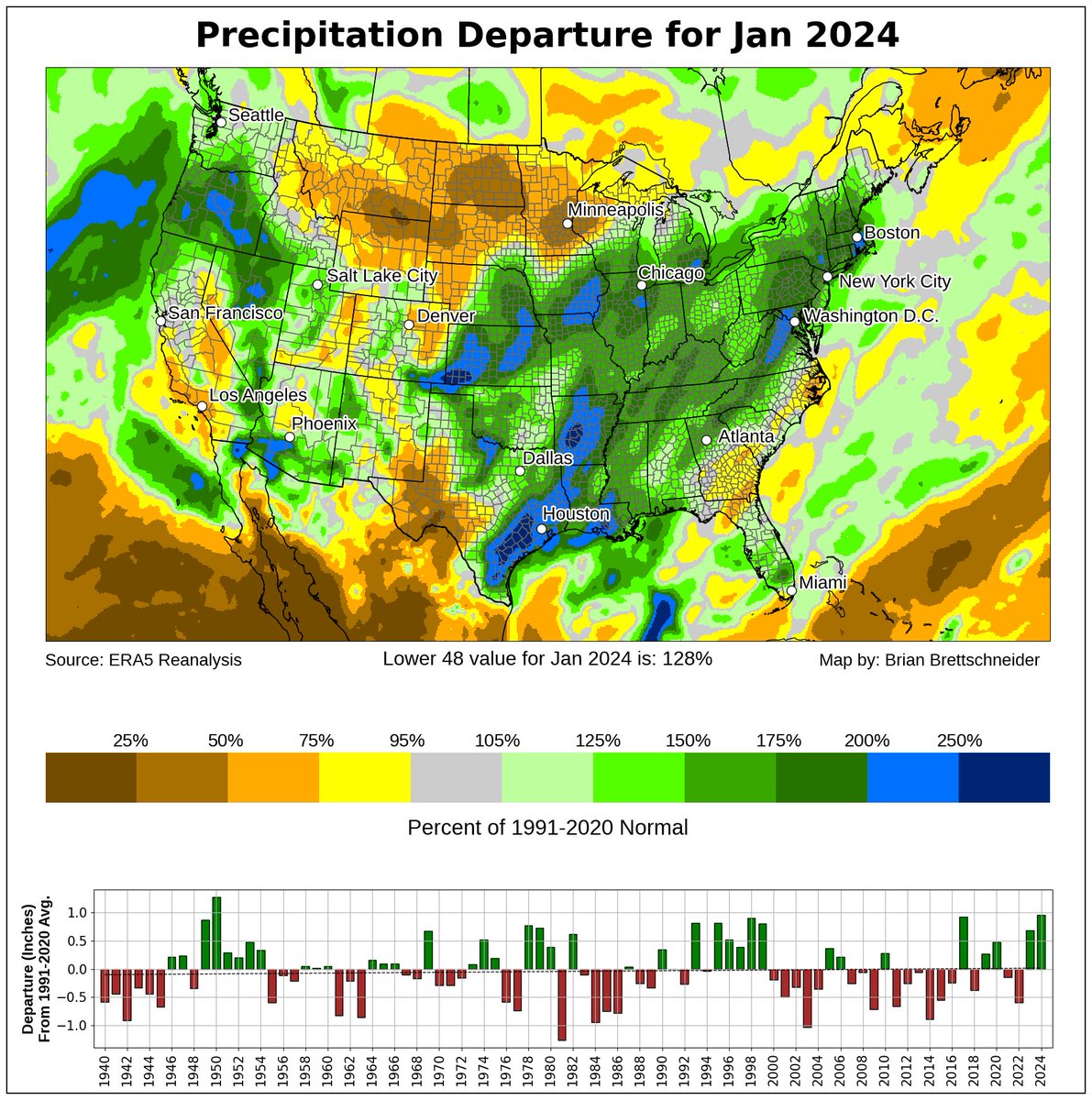
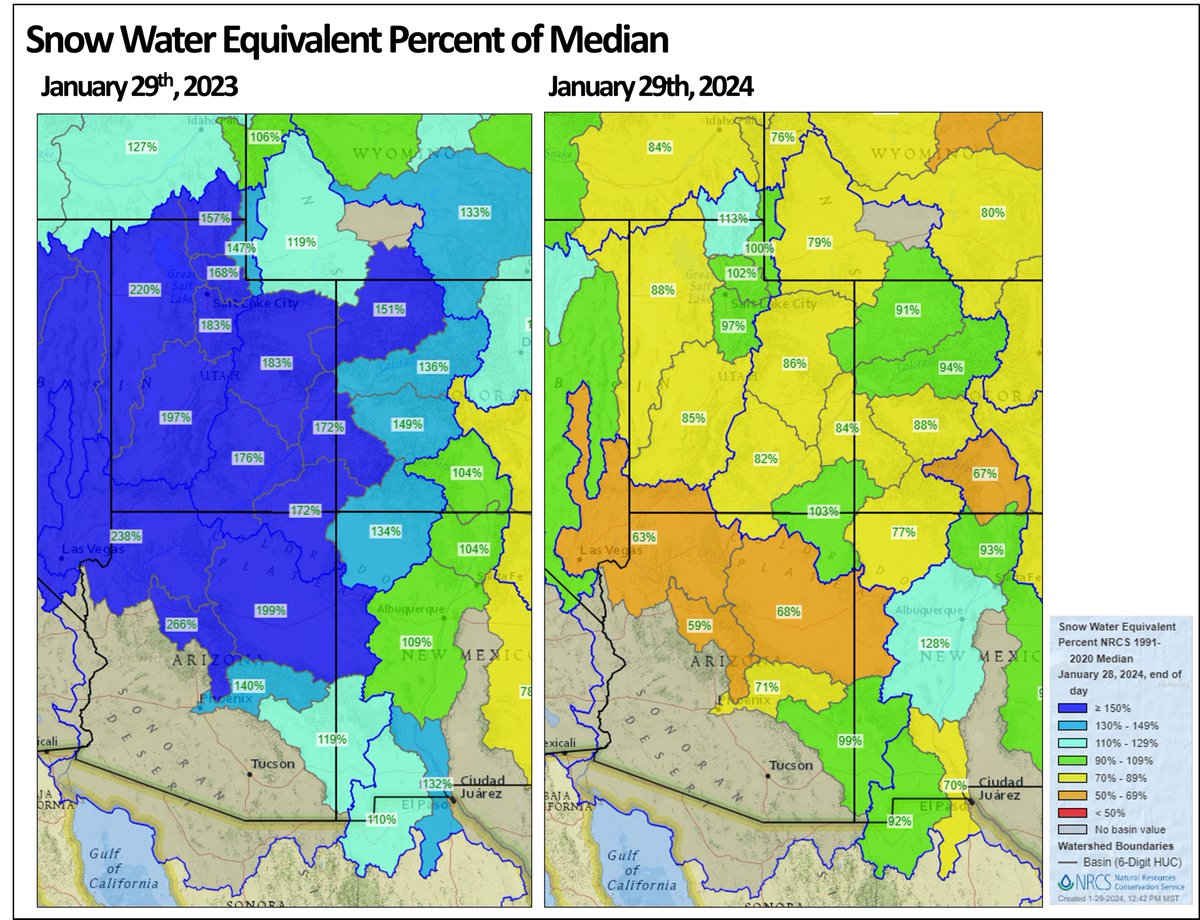
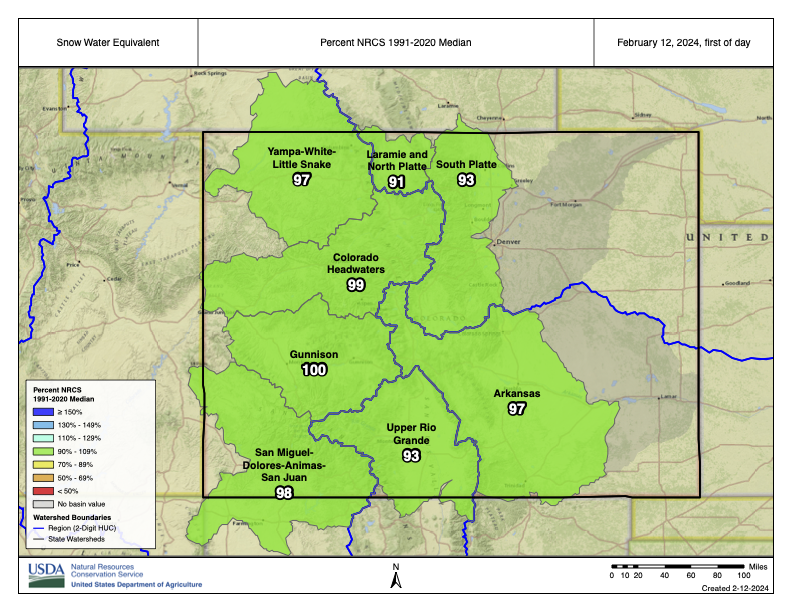
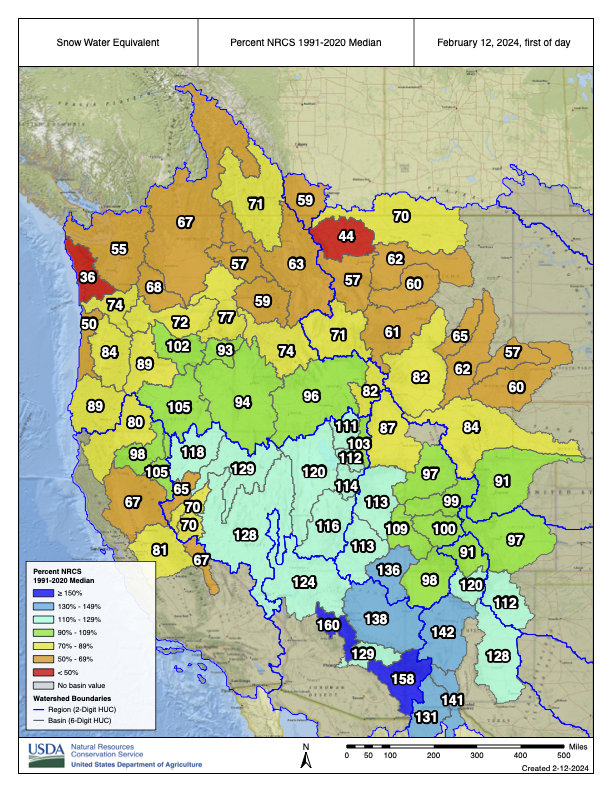
Click the link to access the report on the NRCS website. Here’s an excerpt:


The health of our waters is the principal measure of how we live on the land — Luna Leopold


Click the link to download the report. Click the link to go to the UNDP website to read about the report:
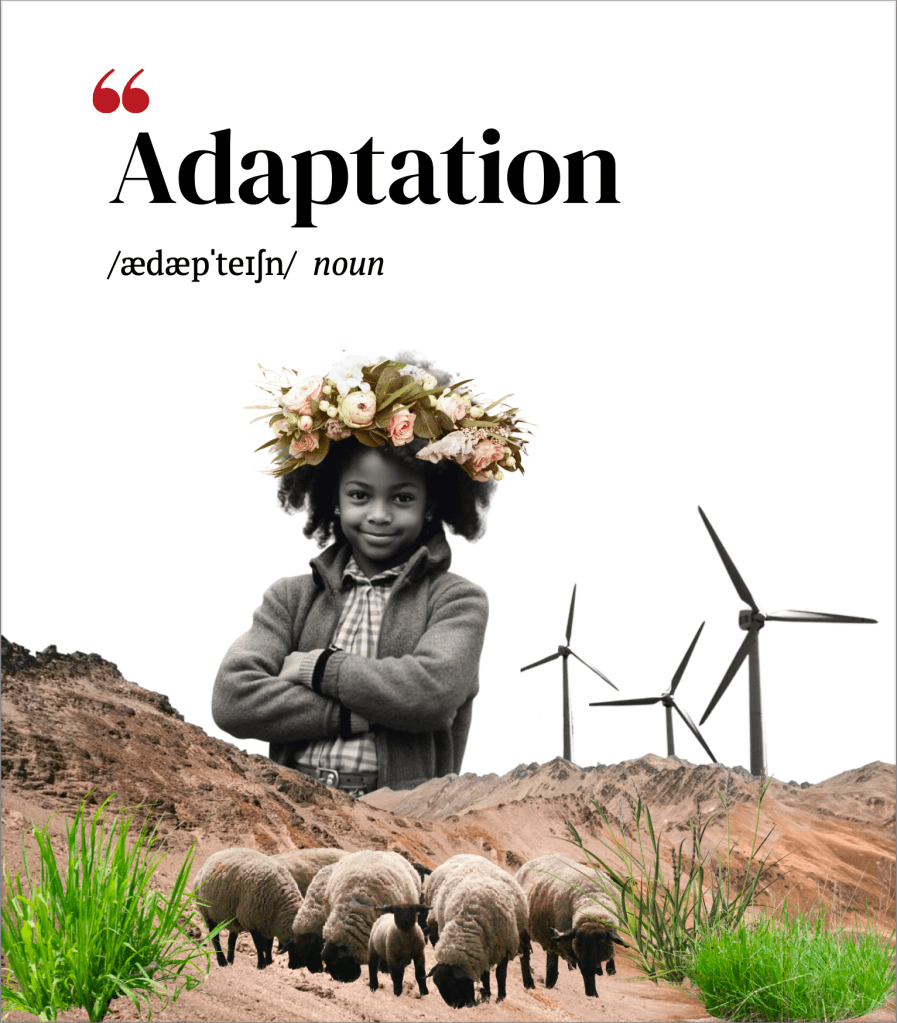
The Climate Dictionary is an initiative aimed at providing an everyday guide to understanding climate change. It seeks to bridge the gap between complex scientific jargon and the general public, making climate concepts accessible and relatable to individuals from various backgrounds and levels of expertise.
The concept is driven by the belief that empowering people with knowledge is crucial in fostering action and collective responsibility towards addressing climate change.
By utilizing a creative combination of compelling visuals, concise explanations, and engaging storytelling, “The Climate Dictionary” effectively communicates complex climate concepts in a user-friendly and visually captivating manner. The publication features a series of climate-related term or phenomenon. The content is meticulously crafted to cater to diverse audiences, catering to both the scientifically inclined and those with limited prior knowledge of the subject.
You can view the web version of Climate Dictionary here.
Download the Climate Dictionary pocketbook in Spanish here.

Click the link to read the article on the Audubon website:
February 8, 2024
Today the U.S. Fish and Wildlife Service (FWS) announced revisions to their incidental take permitting program under the Bald and Golden Eagle Protection Act. The final rule includes a general permit for wind energy projects that exhibit a demonstrably low risk to eagles. Audubon and partners submitted recommendations to make permitting more efficient in ways that support the buildout of wind energy while benefitting Bald and Golden Eagle conservation.
“Bald Eagles and Golden Eagles are deeply important to our nation, and this rule sets a new precedent for how the U.S. Fish and Wildlife Service will work with clean energy developers to avoid and minimize impacts to these iconic birds at wind energy sites as well as transmission,” said Marshall Johnson, chief conservation officer of the National Audubon Society. “We congratulate the Service and the Migratory Bird Program for their hard work in creating a pathway to a more efficient permit program where wind energy companies commit to conservation measures, monitor and share data on eagles at their project sites, and help manage Bald and Golden Eagle populations across the country.”
Clean energy development is key to reducing carbon pollution and helping slow the rise in global temperatures, but infrastructure must be sited and operated in ways that avoid, minimize, and mitigate impacts to local and regional bird populations. Audubon has set a goal to help achieve 100 gigawatts of new renewable energy and transmission responsibly sited by 2028. Audubon’s report, Birds and Transmission: Building the Grid Birds Need, outlines the urgent need for additional transmission capacity and shares solutions for minimizing risks to birds. More about incidental take permits under the Bald & Golden Eagle Protection Act can be found here.

Click the link to read the release on the USBR website:
February 12, 2024
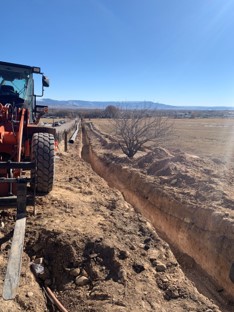
The Bureau of Reclamation today awarded $20.9 million to fund six salinity control projects in Colorado and Utah through its Basinwide and Basin States Salinity Control Programs. These projects will reduce the amount of salt in the Colorado River and its associated impacts in the basin.
This funding will prevent approximately 11,661 tons of salt each year from entering the Colorado River. Quantified economic damages due to salinity in Colorado River water is currently about $332 million per year in the United States. It is estimated that damages would increase to $631 million per year without the Colorado River Basin Salinity Control Program.
“These awards will make improvements to off-farm irrigation systems like ditches and laterals in the Upper Basin States and prevent economic damages to downstream users by improving Colorado River water quality,” said Clarence Fullard, program manager for Reclamation’s Colorado River Basin Salinity Control Program. “When the projects are complete, they will benefit crop production and decrease water treatment costs and damage to water supply infrastructure in Lower Basin States.”
These projects were selected through a competitive process, open to the public. Reclamation solicits, selects and awards grants through Notice of Funding Opportunity announcements to projects sponsored by non-federal entities that control salt loading in the Upper Colorado River Basin. One of the primary selection criteria is the lowest cost per ton of salt controlled. Reclamation will distribute the $17.5 million over the next 4 years to the state of Colorado and $3.4 million to the state of Utah.
To learn more, visit the Colorado River Basin Salinity Control Program at http://www.usbr.gov/uc/progact/salinity.
Click the link to read the blog post on the Colorado Climate Center website (Becky Bolinger):
February 13, 2024
You watched the news this morning, and the meteorologist told you snow is coming this weekend. Conversations at the coffee shop and the break room at work center around the amount of snow we might get. But now you actually want to know, “how much am I going to get at my house?” What if you’re driving somewhere else? Might be helpful to know how much other places are going to get too. Look no further. You’re going to want to bookmark one of these links below!
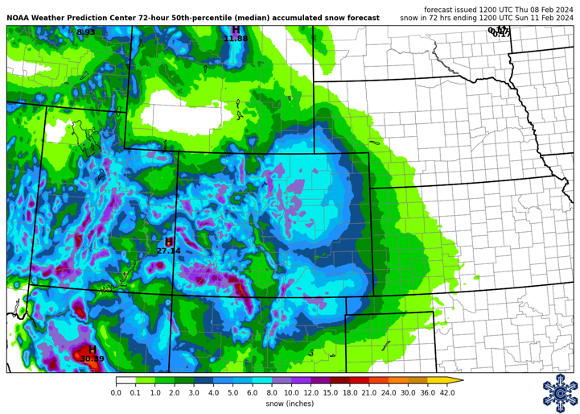
Pull up your weather app, and it’s likely to tell you “chance of snow, high of 29°F, 2-3″ of new accumulations,” or something similar. But that accumulation is just for the morning. Or afternoon. Or one brief time-period that is only one part of a total storm that has passed through. It’s hard to figure out the forecast total for the entire event from your weather app! Bookmark the links below for easy access to forecast snow accumulations.
- Intermountain West Ski Dashboard – not only does our ski dashboard provide a 7-day precipitation outlook, you can find 72-hour forecast snow accumulations like the one above (not current, from last week!). The 10th percentile map gives you an idea of a “low end” amount, the 50th percentile represents the most likely amount, and the 90th percentile map gives you the “high end” amount.
- National Weather Service Probabilistic Snow Forecast – The Boulder Weather Forecast Office has a wonderful winter page that shows snow forecasts for the entire state of Colorado. Included are the official snow total forecasts, with low end and high end amounts included. There are also probabilistic maps, so you can see the likelihood that your location will receive 2 inches, 6 inches, 10 inches (and other totals) for the next storm passing through.
- Snowfall Forecast Maps for Many Locations – the following link takes you to the snowfall forecast for the Contiguous United States (CONUS). Change “CONUS” in the URL to any Weather Forecast Office 3-letter identifier and you’ll zoom into that area. Or change “CONUS” to a state, such as “WY_state_Snow.png” to see any state’s snowfall forecast map. Thanks to Mark Ellinwood, and his informational post on X for this great resource!
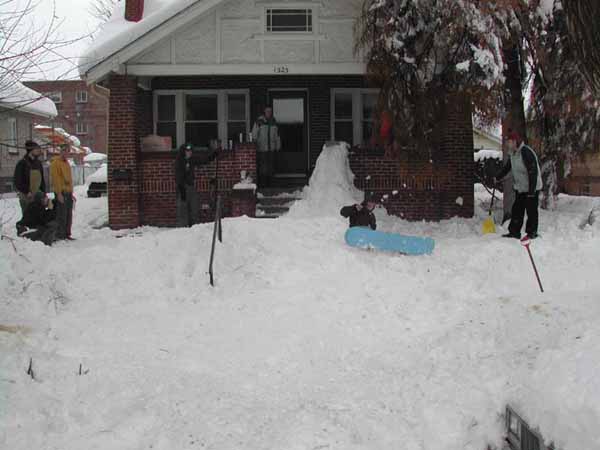
It snowed! Woohoo! You’ve taken pictures of your patio furniture and lawns. You’ve captured slo-mo videos of pretty snowflakes falling from the sky. You can go out into your own yard and measure the depth with a ruler. But… it is kinda cold. Also, you want to see the snowfall totals from other locations than just your backyard. Where do we find that information??
Snowfall Accumulation Maps AFTER the Event
The storm ended and you’re watching the news for totals. They tell you the official amount in Denver (which actually comes from Denver International Airport… or practically Kansas!). They share a short-list of other locations around the state – Boulder, Vail, Greeley. But they missed your town! Okay, make sure you have one of these bookmarked to get at that extra info you’re craving!
- Intermountain West Ski Dashboard – Back to the top of our ski dashboard page and you’ll find 24-hour, 48-hour, and 72-hour snowfall maps for the Intermountain West. These maps are generated by NOHRSC (pronounced know-risk), using observation data combined with models to estimate total snowfall at every point.
- NOHRSC Interactive Snow Information – Going directly to the NOHRSC page, you can set up your own preferences. Zoom into the area you want, pick the product that you want, add county lines or highways. Once done, scroll to the bottom, and on the left, you’ll see options to link to the image directly (“Link to latest image”) or to the page with the latest updates (“Link to latest page”).
- CoCoRaHS New Snow Maps – gridded maps are cool, but station maps are cooler. Find the snowfall totals from thousands of CoCoRaHS volunteer observers. On this page, you can zoom into an area, pick the time period you want, make sure to select snowfall, and see the totals. Click on a station for more details!
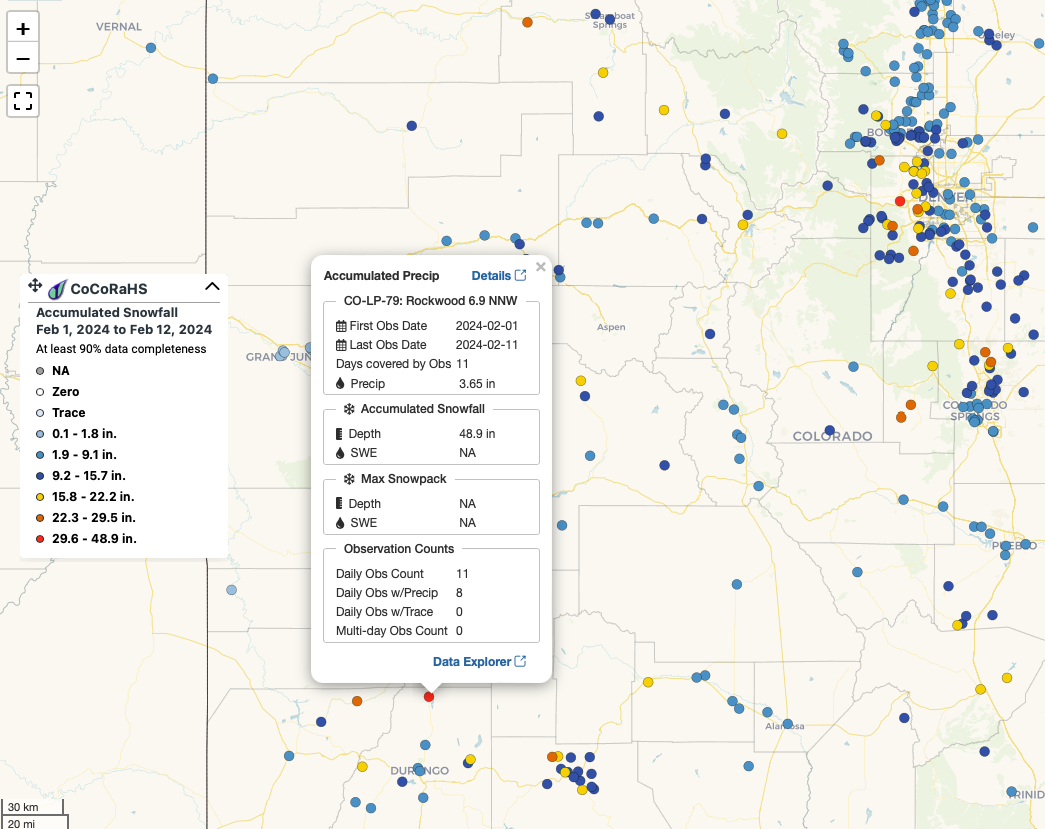
Hopefully you’ve found one of these links helpful. Or maybe you’ve used links to other resources. Share where you get your information to further add to this database of helpful snowfall forecasts and totals!
Click the link to read the article on the KUNC website (Alex Hager). Here’s an excerpt:
February 10, 2024
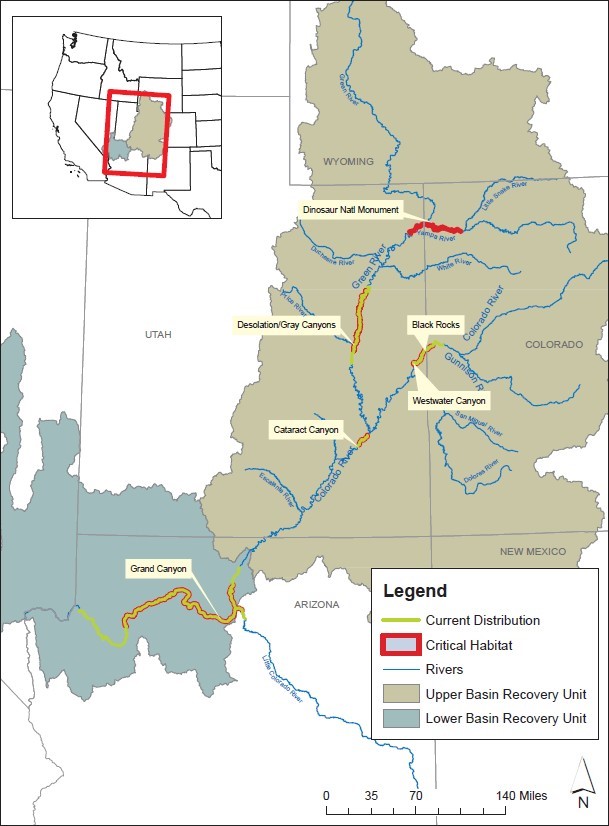
Federal water managers proposed a new plan to protect native fish species in the Grand Canyon, but conservation groups say it doesn’t go far enough. Water levels in Lake Powell, the nation’s second-largest reservoir, have been dropping to historic lows as the region struggles to rein in demand in response to dry conditions fueled by climate change. Those low water levels have allowed non-native fish to pass through the Glen Canyon Dam, which holds back Lake Powell, and eat native fish that live on the other side, in the portion of the Colorado River that runs through the Grand Canyon. The native species at issue is the humpback chub, which is found nowhere on earth besides the Colorado River and its tributaries. It was previously considered “endangered,” but was downlisted to “threatened” in 2021. The fish still receives protections under the Endangered Species Act.
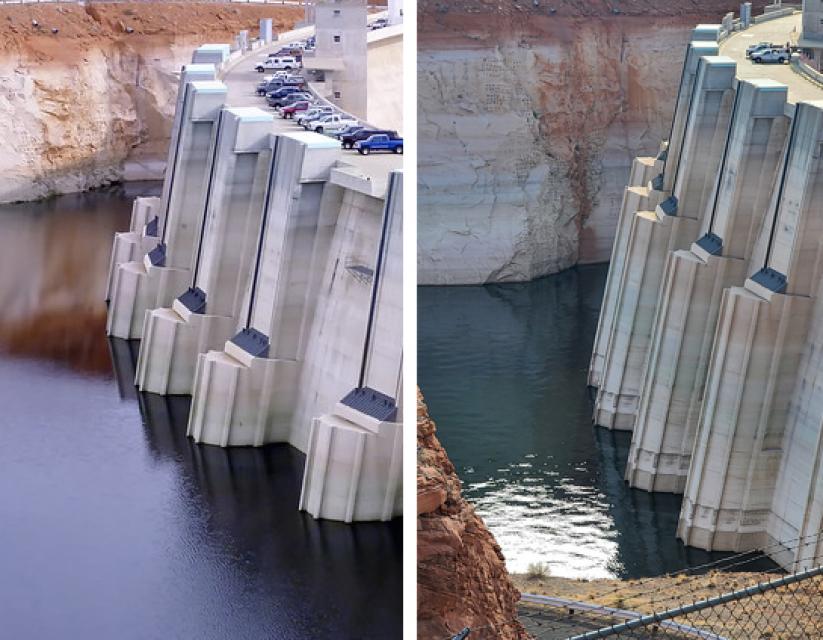
Lake Powell, which began filling in the 1960s, was stocked with non-native fish such as smallmouth bass for recreational fishing in 1982. Smallmouth bass prefer warm water near the reservoir’s surface. Now that the surface of the reservoir is dropping, the fish are able to move low enough to enter the tubes inside Glen Canyon Dam that allow water to pass from one side to the other. The Bureau of Reclamation, the federal agency which manages the West’s dams and reservoirs, released a draft plan for water releases from the dam in northern Arizona. It proposed five new ways to manage releases from the dam in an effort to keep native fish thriving in the Colorado River below Lake Powell — four of which involve attempts to make the water cooler and disrupt the spawning patterns of non-native fish…

Taylor McKinnon, Southwest director for the Center for Biological Diversity, takes issue with two components of the draft plan. The first, he said, is a tangible change. McKinnon encouraged federal water managers to consider making physical changes to the dam intakes themselves — like adding screens — to prevent fish from passing through…The second issue McKinnon described is more of an ideological one. He said federal water managers are not doing enough to look at the long-term viability of the reservoir in the face of a drying climate.
“Federal agencies need to become proactive,” he said. “They need to look at the science. They need to look at the forecasts for future Colorado River flows in one decade, two decades. All that information indicates that Glen Canyon Dam is facing climate-inevitable deadpool and climate-inevitable obsolescence.”

Click the link to read the article on the KUNC website (Alex Hager). here’s an excerpt:
February 9, 2024
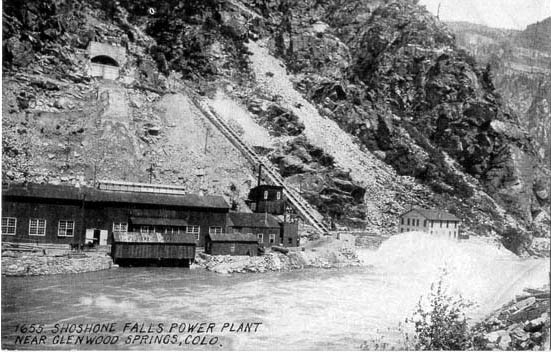
The purchase [of the Shoshone Power Plant non-consumptive use hydropower rights] represents the culmination of a decades-long effort to keep Shoshone’s water on the west side of Colorado’s mountains, settling the region’s long-held anxieties over competition with the water needs of the Front Range, where fast-growing cities and suburbs around Denver need more water to keep pace with development. Even though the Shoshone water rights carry an eight-figure price tag, the new owners will leave the river virtually unchanged. The river district will buy access to Shoshone’s water from the plant operator, Xcel Energy, and lease it back as long as Xcel wants to keep producing hydropower. The water right is considered “non-consumptive,” meaning every drop that enters the power plant is returned to the river. The river district wants to keep it that way as long as they can and ensure the water that flows into the hydroelectric plant also flows downstream to farmers, fish and homes.
The river district is rallying the $98.5 million sum from local, state and federal agencies. The district has secured $40 million already, with deals in the works for the remainder. It’s rare for a big-money water deal to find this kind of broad approval from a diverse group of water users. But the acquisition is seen as pivotal for a wide swath of Colorado, and has been co-signed by farmers, environmental groups and local governments…Shoshone’s water right is one of the oldest and biggest in the state, giving it preemptive power over many other rights in Colorado. Even in dry times, when cities and farms in other parts of the state feel the sting of water shortages, the Shoshone Hydroelectric Plant can send water through its turbines. And when that water exits the turbines and re-enters the Colorado River, it keeps flowing for myriad users downstream…
The hydro plant itself produces relatively little energy. Its 15 megawatt capacity is only a small fraction of Xcel Energy’s total Colorado output of 13,100 megawatts. Shoshone’s capacity is enough to serve about 15,000 customers, which is less than a quarter of the population of Garfield County, where the plant is located. But the power plant has held legal access to water from the Colorado River since 1902, and can claim seniority over the vast majority of other water owners in the state. That kind of seniority means power and certainty for whoever owns it. And that has raised the hackles of Western Colorado water users, who worry that water users in other parts of Colorado might be interested in buying Shoshone’s water right…The Colorado River District’s plans to buy Shoshone’s water have rallied widespread support, largely because of the transfer’s widespread benefits. Perhaps no constituency will benefit from the move as much as the one that lives in the river itself…Standing on the banks of the Colorado River in Grand Junction, [Dale] Ryden looked out over a murky, meandering stretch of water. It’s part of the “15 mile reach,” a critical section of the river about 80 miles west of the Shoshone plant. The reach is filled partly by water exiting Shoshone’s turbines. Ryden explained that this section of river is home to a variety of species, some of which are endangered, and some which are found nowhere else on earth besides the upper portions of the Colorado River. Those species – with funky names like the flannelmouth sucker and the humpback chub – rely on this stretch of river for virtually every aspect of life.


Click the link to read the article on The Palm Springs Desert Sun website (Janet Wilson). Here’s an excerpt:
February 9, 2024
Will seven Western states be able to rapidly craft a voluntary plan to keep the Colorado River afloat for decades to come? It’s increasingly unclear, as negotiations have foundered between two sides, according to key players. There are sharp differences between northern and southern states’ proposals, with representatives of the mountainous Upper Basin states of Colorado and New Mexico unwilling, to date, to shoulder large future cuts, both because of historic underuse of their share of the river and because of heavily populated California and Arizona’s historic overuse. The southwestern states have for years taken twice as much as their northern neighbors.

Upper Basin officials, including Colorado’s plainspoken river commissioner, Becky Mitchell, said they have been informed of a proposal under discussion by California, Arizona and Nevada, collectively known as the Lower Basin, where the Lower Basin and Mexico would agree to take 1.5 million acre-feet of water less from the shrinking river each year. Mitchell said far more details are needed. That amount would be enough to both to make up for evaporation and leakage from delivery canals snaking across the hot desert, and to help stabilize the nation’s largest reservoirs, based on a report released Thursday by the U.S. Bureau of Reclamation that showed average annual losses to evaporation and river banks of 1.3 million acre-feet in the Lower Basin.
Lower Basin officials, including California’s Colorado River commissioner JB Hamby, who is leading the state’s negotiating team, declined to confirm numbers while they hash out specifics, but pointedly said major reductions need to be contributed by every state. One California official did confirm the numbers. Tom Buschatzke, Arizona’s top representative on the river talks, also wouldn’t confirm the 1.5 million acre-feet number, but emphasized the structural magnitude of what the Lower Basin is offering to do, noting his state and California, with help from Nevada and Mexico, would address evaporation and leakage for decades to come, and contribute more atop that to help stabilize the system. But, he said, more needs to be done, by everyone.
“It’s hugely important for folks to know that the Lower Basin is going to step up, and that we see a desire and a need for the rest of the problem to be solved collectively,” he said. “We can’t do it all. It is not physically possible.”
[…]
For now, negotiations between the two sides have ground to a halt, even as a deadline looms to produce a draft agreement by next month. The last time representatives from all seven states met face to face was in early January, when they convened at the Woolley’s Classic Suites, at Denver Airport. Since then, at the urging of U.S. Reclamation Commissioner Camille Calimlim Touton, there have been two Zoom calls with all the states that highlighted the fundamental differences, one participant said. The northern states recently invited their southern counterparts to Salt Lake City to resume full talks, but none chose to attend.
“We’ll keep inviting them,” Mitchell said. “I do not think we are at an impasse, and I do not believe we need to be at an impasse.”

Click the link to read the article on the NOAA website (Tom Di Liberto):
February 8, 2024
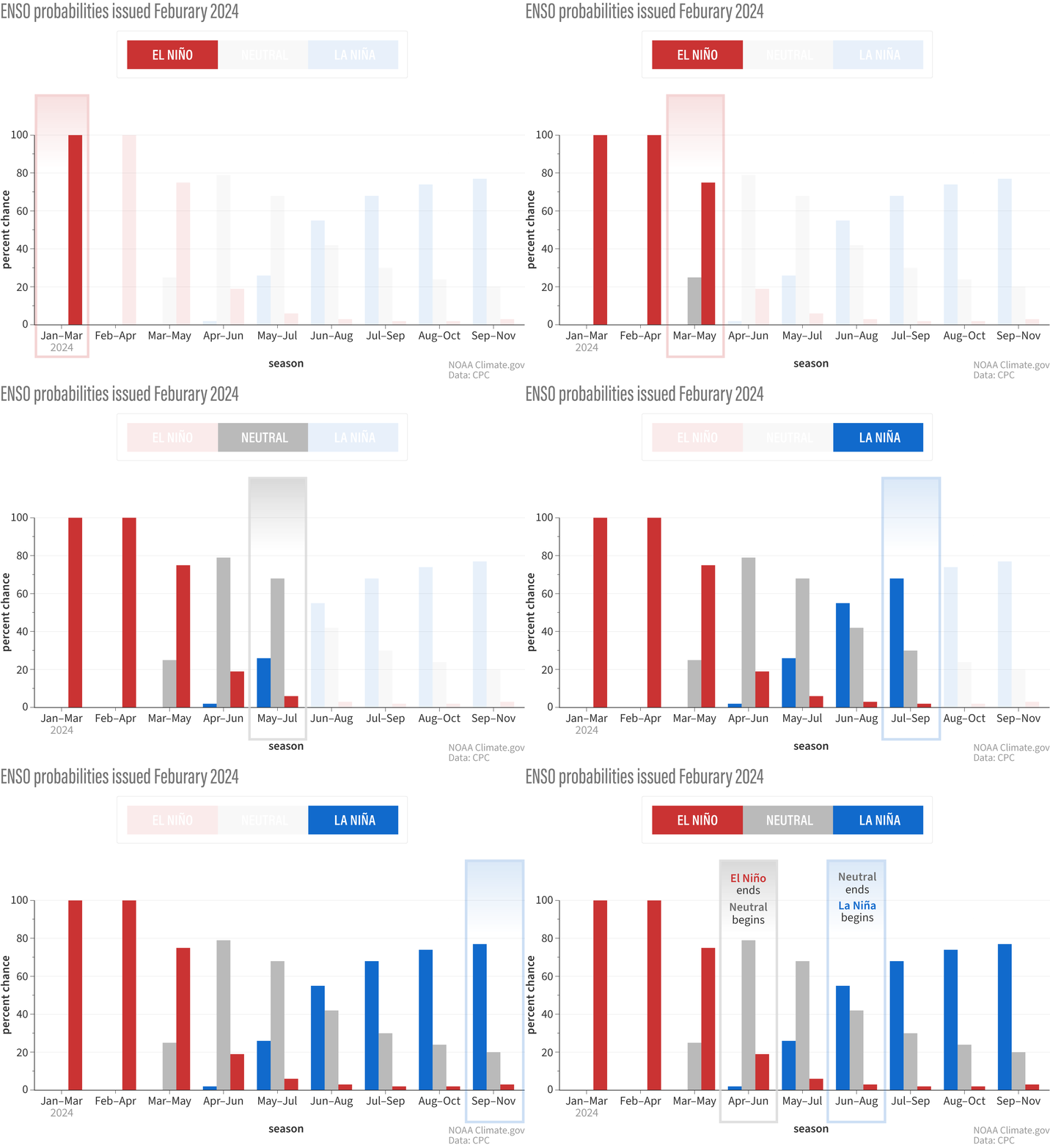
On a brisk early February morning, all of us El Niño-Southern Oscillation (ENSO) forecasters emerged from our burrows and saw our shadows. That can mean only one thing: conditions are favorable for the development of La Niña within the next six months. Yes, the February ENSO Outlook officially announces that we are in a La Niña Watch, even while, at the current moment, the Pacific Ocean remains in an El Niño (this is simultaneous to the ongoing El Niño Advisory—here is an explainer to help sort it out). The outlook gives a 79% chance that El Niño will transition to ENSO-Neutral by the April–June period, and then a 55% chance the Pacific transitions into La Niña in June–August. Confused? I’ll explain it all without the help of any prognosticating rodents (take THAT, Punxsutawney Phil).

El Niño’s current status
Let’s start with the here and now. At the current moment, El Niño remains across the equatorial Pacific Ocean. In January, sea surface temperatures remained above average across most of the Pacific, though temperatures fell a bit across the eastern and central Pacific. Monthly values in the Niño-3.4 region (the key tropical Pacific monitoring region for ENSO and the basis for the Oceanic Niño Index (see below) dropped from just over 2°C above average in December 2023 to 1.87°C above average in January 2024. Overall, the most recent Oceanic Niño Index (ONI) value—how NOAA classifies the strength of events—for November–January places this event’s peak strength at ~2°C, or the fifth highest on records back to 1950 (**).
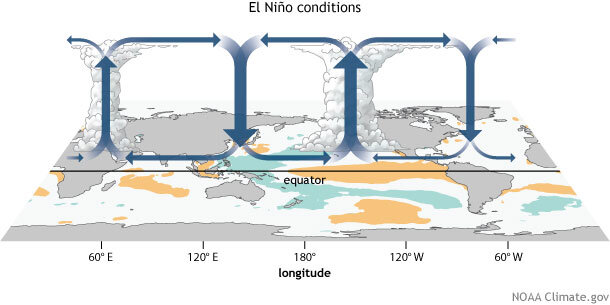
Atmospherically, El Niño weakened a bit as well over the last month. Remember, El Niño is an ocean-atmospheric phenomenon. During El Niño, the atmosphere over the tropics—the Walker Circulation—gets all jumbled up. The result in the Pacific is weakened trade winds, an increase in thunderstorm activity near the Dateline, and a reduction in thunderstorms across the Western Pacific (also, usually, across the Amazon). However, in January, the trade winds were closer to average across the equatorial Pacific, and while thunderstorm activity remained a bit elevated near the Dateline, it was instead closer to average across Indonesia in the western Pacific.
Put together, it looks clear that this El Niño event is past its peak. However, it’s important to remember that El Niño’s impacts on global temperature and precipitation can linger through April.
Is that all?
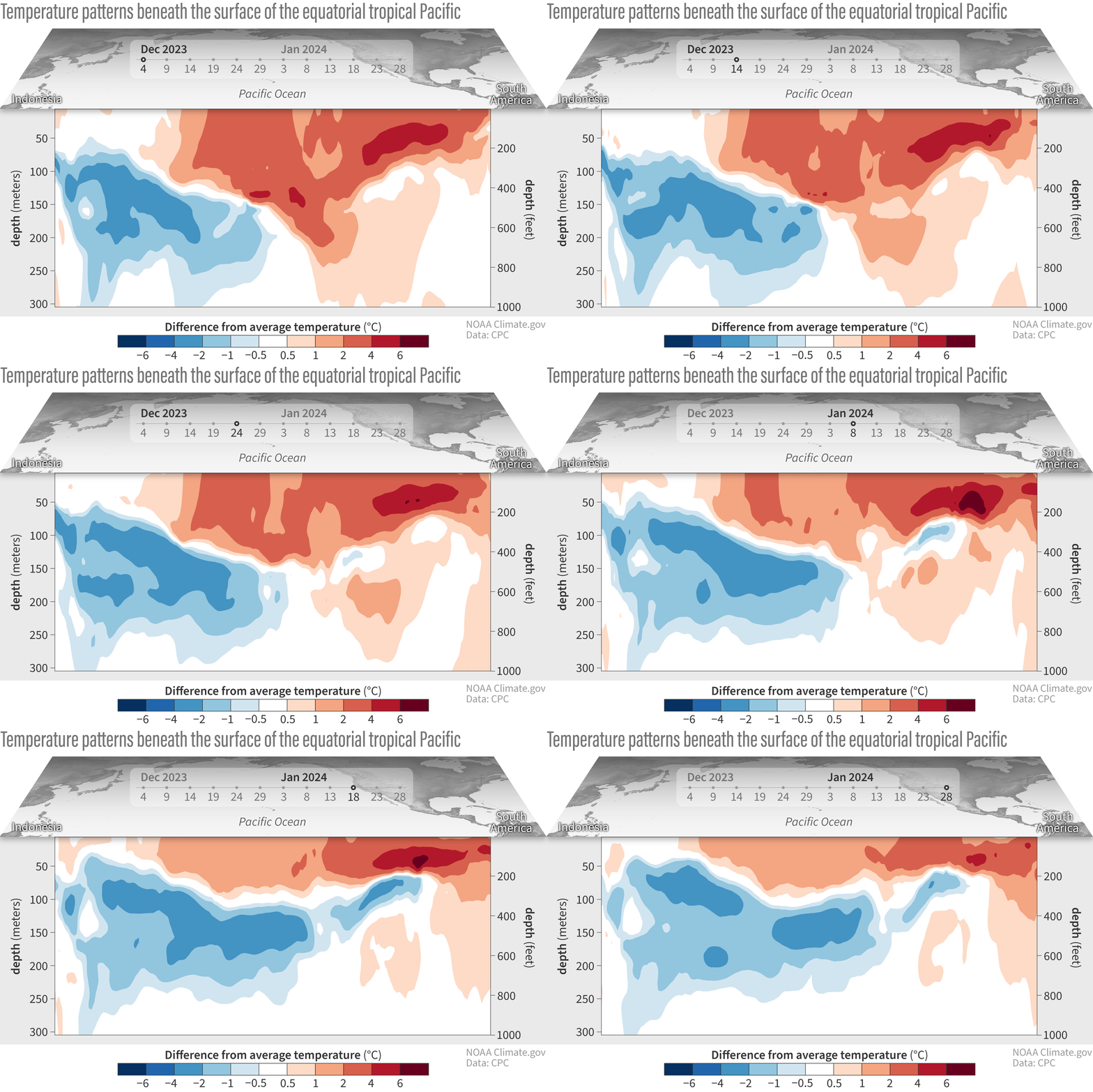
While everything I said above is all fine for the surface, the BIG story is happening underneath the sea surface in the Pacific. Averaged across the entire equatorial Pacific Ocean, ocean temperatures in the upper 300 meters returned to near-average for the first time in almost a year. And it’s clear that cooler-than-average ocean waters are widespread at depth and expanding eastward, even while above-average temperatures persist closer to the surface in the central/eastern Pacific.
Where is this all going?
That’s the million-dollar question. The seasonal prediction models that forecasters look to for guidance are pretty confident in a transition from El Niño to ENSO-neutral sometime during the northern hemisphere spring 2024. Following that, there is a general consensus among the models that La Niña will follow during the summer. Now when it comes to transitions, there is always a bit of uncertainty on the exact timing, as an El Niño can end in a hurry. After all, the current outlook has only a two-season difference between the end of El Niño (79% chance in April-June), and the start of La Niña (55% chance in June-August). And some of the influencers of that transition can be atmospheric patterns that are not forecastable this early on, like the Madden-Julian Oscillation or random weather events.
How common are transitions from El Niño to La Niña?
Going back to 1950, over half of the El Niño events were followed shortly thereafter by a transition to La Niña (after a brief period of time in ENSO-Neutral). So, it would not be at all uncommon to see this sort of potential outcome this year.
Breaking that down even more by looking at similar strong El Niños, five of the eight events since 1950 were followed by a La Niña. And that transition happened rapidly. Two years (1973 and 1998) had only one 3-month period of ENSO-Neutral conditions before switching to La Niña. Two years (1983, 2010) had two 3-month periods of ENSO-Neutral in between. And 2015 had three 3-month periods.
Suffice to say, the historical record suggests that if the equatorial Pacific moves from a strong El Niño into a La Niña, it doesn’t seem to waste its time.
We’ll keep our eyes on the Pacific for you to help narrow down when and how this El Niño will end. So check back with us next month!
Signed,
The most accurate mammalian weather/climate forecasters
** A pesky annoyance is the fact the 1965-66 El Niño also peaked at 2.0°C, but it did so only during the September-November and October-December seasons. By November 1965-January 1966, it was 1.7°C. So, if we rank just by November-January seasons, then the current 2023-24 event is ranked fifth. But if we rank by all near-winter seasons, then this event is basically tied for fifth.

Click the link to read the article on the Inside Climate News website (Katie Surma):
A first of its kind U.N. study by conservation scientists finds nearly half of internationally protected migratory species are on their way to extinction.
Humans are driving migratory animals—sea turtles, chimpanzees, lions and penguins, among dozens of other species—towards extinction, according to the most comprehensive assessment of migratory species ever carried out.
The State of the World’s Migratory Species, a first of its kind report compiled by conservation scientists under the auspices of the U.N. Environment Programme’s World Conservation Monitoring Centre, found population decline, a precursor to extinction, in nearly half of the roughly 1,200 species listed under the Convention on Migratory Species (CMS), a 1979 treaty aimed at conserving species that move across international borders.
The report’s findings dovetail with those of another authoritative U.N. assessment, the 2019 Global Assessment Report on Biodiversity and Ecosystem Services, that found around 1 million of Earth’s 8 million species are at risk of extinction due to human activity. Since the 1970s, global biodiversity, the variation of life on Earth, has declined by a whopping 70 percent.
Scientists and economists use complicated models to try to predict how fast the world can transition away from fossil fuels. The Washington Post analyzed 1,200 modeled pathways for the world to shift to clean energy and found that only four of them showed the world hitting the 1.5C target without substantially overshooting or using speculative technology (like large-scale carbon capture) that doesn’t yet exist. At this point, many experts believe that the economy is too stuck on fossil fuels to transition fast enough for 1.5 degrees.
Does that mean we’ll pass catastrophic tipping points?
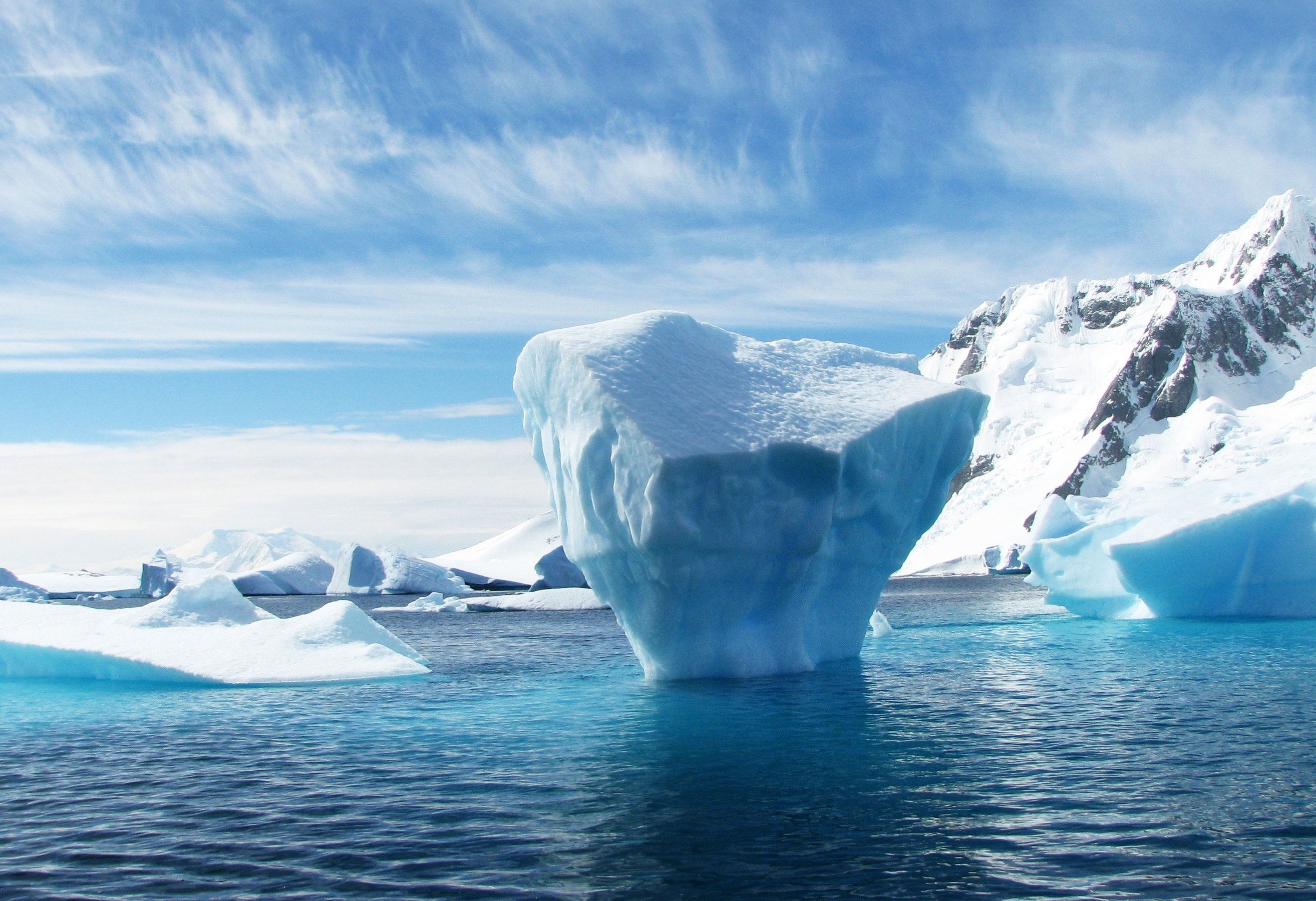
That’s a more difficult question. Scientists don’t know exactly when certain tipping points — like the collapse of the Greenland ice sheet or the release of greenhouse gases from thawing permafrost — will occur. It’s very hard to predict and model these types of catastrophic changes.
And 1.5C isn’t a magic threshold; it’s not as though as soon as we pass that number, Antarctic ice sheets will collapse and ocean circulations will grind to a halt. But one thing is certain: For every tenth of a degree of warming, tipping points are more likely. Two degrees is worse than 1.9 degrees, which is worse than 1.8 degrees, and so on.
And at each tenth of a degree, the infrastructure and systems that the world has built — electric grids, homes, livelihoods — will become more strained. Our modern world simply was not designed for temperatures this high. At some level, the final temperature of the planet isn’t what matters most. It’s where countries can actually get carbon emissions to zero — and stop contributing to future warming altogether.
Click the link to read the article on The Washington Post website (Shannon Osaka). Here’s an excerpt:
It’s official: For the past 12 months, the Earth was 1.5 degrees Celsius higher than in preindustrial times, scientists said Thursday [February 8, 2024], crossing a critical barrier into temperatures never experienced by human civilizations. According to the European Union’s Copernicus Climate Change Service, the past 12 months clocked in at a scorching 1.52 degrees Celsius (2.74 degrees Fahrenheit) higher on average compared with between 1850 and 1900. At some level, that’s not surprising — the past 12 months have been scorching, as a warm El Niño cycle combined with the signal of human-caused warming generated heat waves and extreme weather events around the globe.
“This El Nino maximum is riding on top of a base climate that is continuously warming due to climate change,” Andrew Dessler, a climate scientist at Texas A&M University, said in an email. “The combination of them is what’s giving us such hot global temperatures.”
But does this mean that the world’s most famous climate goal is out of reach? Not … exactly. Here’s what you need to know:
In the 2016 Paris climate agreement, almost 200 nations agreed to keep the global average temperature from exceeding 2 degrees Celsius (3.6 degrees Fahrenheit) above preindustrial levels — and to “pursue efforts” to keep it below 1.5 degrees Celsius. The latter addition largely came from pressure from small-island states, who are at risk of disappearing under rising seas if temperatures get much higher. Scientists have shown that holding the temperature rise to 1.5C could mean the survival of coral reefs, the preservation of Arctic sea ice and less deadly heat waves…
Does this mean we have missed the 1.5C climate goal? No. There’s actually some disagreement about what exactly counts as breaching that threshold — but scientists and policymakers agree that it has to be a multiyear average, not a single 12-month period. Scientists estimate that without dramatic emissions reductions, that will happen sometime in the 2030s. But there could be other single years or 12-month periods that cross the line before then.
Can we still avoid passing 1.5C? Most scientists say passing 1.5C is inevitable. “The 1.5-degree limit is deader than a doornail,” Columbia University climate scientist James Hansen said in a call with reporters late last year.

Click the link to read the assessment on the NOAA website:
FEBRUARY 8, 2024
An arctic air mass brought bitter cold and snow to much of the nation in mid-January; powerful storms brought heavy rainfall and flooding to parts of the southern Plains
Key Points:
- The arctic air mass from January 14–18 broke nearly 2,500 daily minimum temperatures county records from the Northwest to the Lower Mississippi Valley.
- On January 22–25, heavy rainfall brought more than a month’s worth of rain and life-threatening flooding to parts of Texas and Louisiana.
- January 2024 was the 10th-wettest January on record for the nation, and temperature ranked in the middle third of the historical record for the month.
Other Highlights:
Temperature
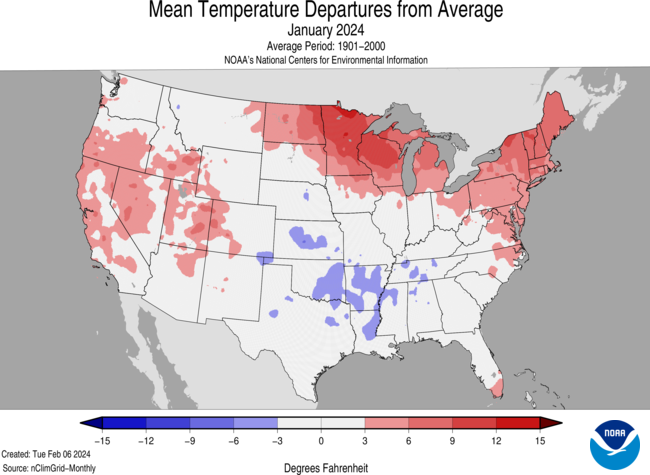
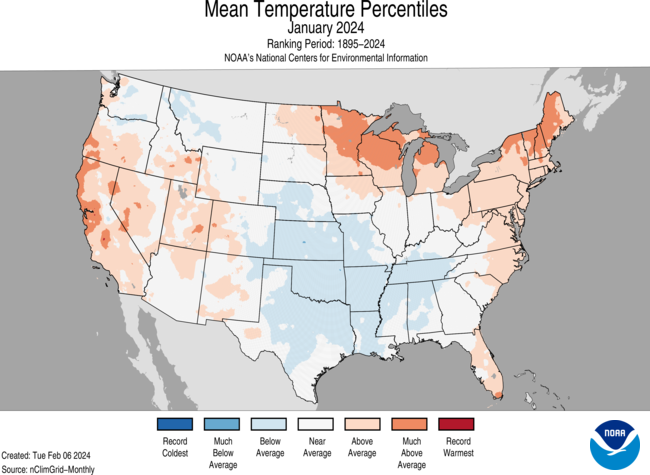
The average temperature of the contiguous U.S. in January was 31.8°F, 1.6°F above average, ranking in the middle third of the 130-year record. Generally, January temperatures were above average from the Carolina Coast to the Northeast and across parts of the West Coast, central Rockies, Upper Midwest and Great Lakes, with below-normal temperatures extending from parts of the Northwest to the Gulf of Mexico. Wisconsin had its 10th-warmest January on record.
The Alaska statewide January temperature was 2.9°F, 0.7°F above the long-term average, ranking in the middle third of the 100-year period of record for the state. Near-normal temperatures were observed across much of the state with above-normal temperatures observed in parts of the North, West and the Aleutians. Below-normal temperatures were observed in parts of the Interior and East.
Precipitation
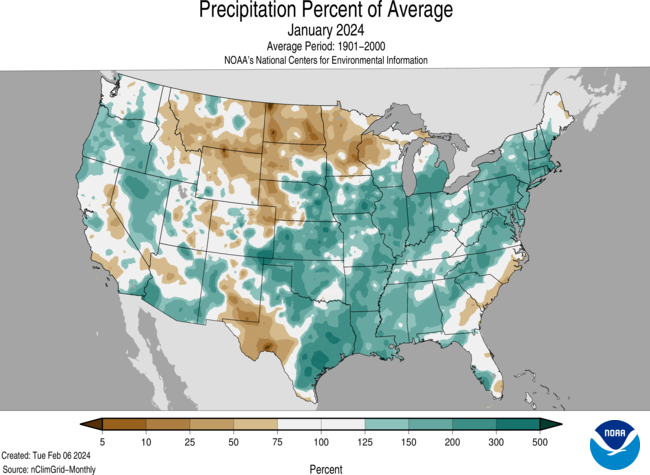
January precipitation for the contiguous U.S. was 3.18 inches, 0.87 inch above average, ranking as the 10th-wettest January in the historical record. Precipitation was above average across much of the eastern U.S. and in parts of the West. Massachusetts and Connecticut ranked third wettest. Conversely, precipitation was below average from parts of the northern Rockies to portions of the Upper Midwest and in parts of the Southwest and coastal Carolinas. North Dakota had its 10th-driest January on record for this period.
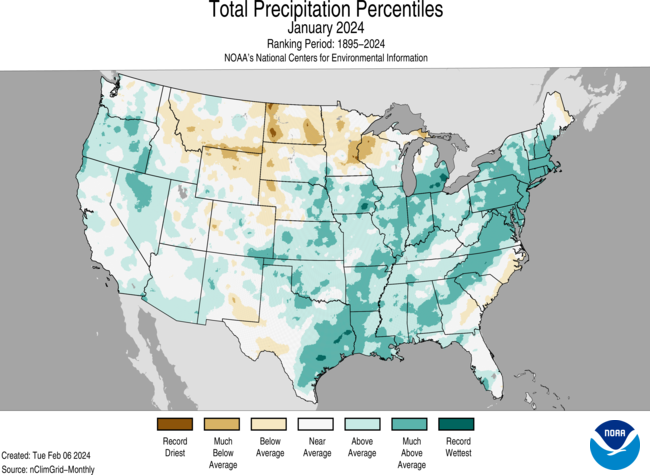
Alaska’s average monthly precipitation ranked in the middle third of the historical record. Precipitation was below average across much of the state, while above-normal precipitation was observed in parts of the southeast Interior, Panhandle and the Aleutians during the month.
Other Notable Events
- An arctic air mass brought record-breaking cold temperatures and snow to much of the contiguous U.S. during mid-January:
- The mid-January arctic air mass dropped temperatures to 20 to 35°F below normal over parts of the northern and central Plains, while heavy snow fell over portions of the Great Lakes and the Northeast. The lowest temperature in the country occurred in Briggsdale, Colorado, with a low temperature of −35°F the morning of January 16.
- Heavy snow fell over much of the Northeast, while New York City reported over an inch of snow for the first time in nearly two years on January 16.
- Nashville received over six inches of snow on January 15—more than an entire winter’s worth of snow for the city.
A powerful bomb cyclone brought cold temperatures, strong winds and heavy snow to portions of the Northwest on January 8–10, resulting in the Seattle NWS issuing the first blizzard warning in over 11 years for the region.
Historic snowfall continued across portions of Alaska. Anchorage has received over 100 inches of snow since October—the snowiest water year (October 2023–September 2024) to date. In Juneau, the airport received more than 76 inches of snow in January, the highest January total on record and second highest monthly total.
Drought
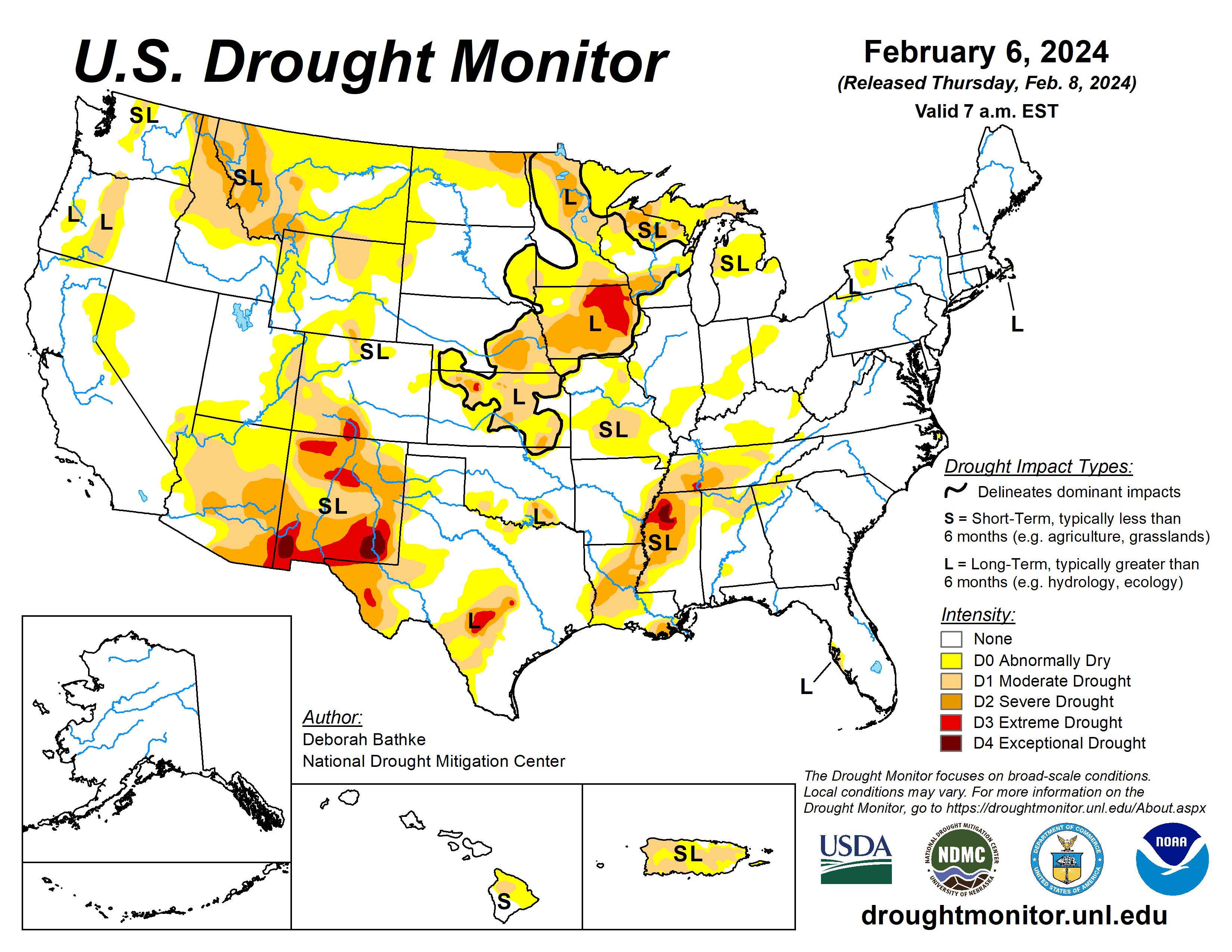
According to the January 30 U.S. Drought Monitor report, about 23.5% of the contiguous U.S. was in drought, down about 9.5% from the beginning of January. Drought conditions expanded or intensified across northern parts of the Rockies and Plains and in parts of the Northwest, Southwest and Puerto Rico this month. Drought contracted or was reduced in intensity across much of the Great Plains to the East Coast, parts of the Northwest, Southwest and Hawaii.
Monthly Outlook
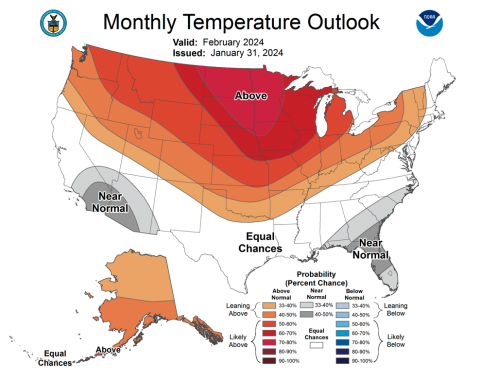
Above-average temperatures are favored to impact northern portions of the U.S. in February while precipitation is likely to be above average across portions of the southwestern U.S. and Southeast Coast. Drought is likely to persist across portions of the Northwest, Southwest, Midwest, Hawaii and Puerto Rico. Visit the Climate Prediction Center’s Official 30-Day Forecasts and U.S. Monthly Drought Outlook website for more details.
Significant wildland fire potential for February is above normal across Puerto Rico. For additional information on wildland fire potential, visit the National Interagency Fire Center’s One-Month Wildland Fire Outlook.
This monthly summary from NOAA’s National Centers for Environmental Information is part of the suite of climate services NOAA provides to government, business, academia and the public to support informed decision-making. For more detailed climate information, check out our comprehensive January 2024 U.S. Climate Report scheduled for release on February 13, 2024. For additional information on the statistics provided here, visit the Climate at a Glance and National Maps webpages.

Click the link to read the release on the Colorado Water Trust website (Tony LaGreca):
February 7, 2024
As the Stewardship Manager for Colorado Water Trust, I am lucky to have several interesting jobs outside of developing new projects. I write a monthly forecasting memo that helps our staff plan for the upcoming season’s operations. I travel around the state and visit our projects to ensure they are still operating as designed. I collect streamflow and water temperature data to inform project design. It’s all great work but there is one job that is arguably the most important; I maintain and update (read the next words in an important sounding voice) The Master Dashboard Accounting Spreadsheet.
This spreadsheet tallies the streamflow volumes and the number of river miles with improved flows. Volume and miles restored are the primary metrics that describe our impact. We must report accurate records to the Division of Water Resources, and our funders like to see our volume and mileage metrics, as well. Heck, the first thing you see on our website is a cool animation tallying up our volumes and stream miles. Just looking at the site now, I see that we have restored 73,242 acre-feet of water to 612 miles of Colorado’s rivers, which is very impressive… or is it? Honestly what do those numbers mean? Is our work important? Impactful? Let’s dig a little deeper to find a better way to highlight the benefits our work.
Let’s start with terms. Acre-feet is a weird one—it’s a very important term in the water world but doesn’t translate well to a general audience. Us water nerds often try to better explain the term. “An acre-foot of water is enough water to supply two average households for one year” we will say in a very serious tone. Great, so now we can visualize how many showers and toilet flushes the Water Trust has restored. Hmm… perhaps if we convert it to gallons it will make more sense. I see that we have restored 22.6 billion gallons—that sounds impressive! Let’s convert it to metric tablespoons to get a truly enormous number. Unfortunately, the human brain is epically bad at comprehending large numbers so perhaps we should look at this another way.
Rivers and streams are not simple units easily counted and categorized. Rivers are homes for fish, drinking water for towns, irrigation water for farmers, places of recreation, and focal points for communities in the arid west. Rivers are local and personal. Our Yampa River Project is a great example for examining the alternative metrics we can use to measure our impact on the river and the community that depends on it. Low summertime flows on the Yampa lead to high water temperatures that are unhealthy or even deadly to the trout who call the river home. To help protect the trout, Colorado Parks and Wildlife (CPW) is often forced to close the river to extremely popular recreational activities like angling and tubing. While the closures help keep fish alive, they severely impact summer tourism and the local economy. Since 2012, the Water Trust has partnered with the Upper Yampa Water Conservancy District, Colorado Water Conservation Board, City of Steamboat Springs, and the Yampa River Fund to release additional water from Stagecoach Reservoir 18 miles upstream of Steamboat. These releases help cool temperatures for the fish and keep the river open for recreation. Now, let’s take a closer look at some of the metrics that tell the story of our impacts to the Yampa and the Steamboat community.
Take a look at the plot below, which shows the flows in the Yampa River in Steamboat during the late summer of 2023. The blue shading shows the flows that the Water Trust released. Last summer, Water Resources Specialist, Blake Mamich, saw that dropping flows and high river temperatures were exceeding regulatory thresholds (which lead to river closures) so he acted quickly, coordinating releases to boost stream flows and keep the river cool.

Let’s look at some of the metrics that help tell the story of this successful project. In 2023, the Yampa River Project:
- Released water for 60 days, keeping the river cool to keep the city compliant with regulations.
- Boosted flows for fish for nearly two months.
- Averted 38 days of river closures, keeping the river open when it would have otherwise been closed for over a month during the busy tourism season.
- Water Trust releases often accounted for over 30% of the entire flow in the Yampa River, and has accounted for over half of the flow in years past.
Now there are some metrics that show the impact of our work a little better than 3,288 acre-feet or one billion gallons. Let’s look beyond the flow numbers to see how the project is providing benefits to the upper Yampa community. A 2019 study by the Steamboat Chamber of Commerce found that summer tourism has a $166 million-dollar impact on the city which supports over 2,000 jobs. While I am not an economist, it’s not unrealistic to imagine that a 38-day closure of the river flowing through the heart of town would reduce those numbers. It’s also interesting to note that less than 2% of the economic benefits would easily pay for this project to run in perpetuity. Looking beyond the tourism impacts, the water continues to flow downstream of Steamboat where it is available to agricultural users along the length of the river. This project is also a long-term investment in sustainable river health as the Water Trust has operated this project in 10 of the last 12 years, providing a decade of benefits.
Digging more deeply into the impact of our projects really shows why our work is so important. They go beyond just putting flows into the river—they make tangible and long-term impacts on the habitats and communities that rely on healthy rivers across the state.
I will keep updating the Master Dashboard Accounting Spreadsheet and reporting our volume numbers since they are still very important to our work, but I promise to chime in here on occasion to highlight all of the benefits that our projects generate. So next year when you are reading the annual report and you see we have restored enough water to cover Manhattan Island to a depth of 5 feet*, know that there is a story behind the numbers.
*That is true by the way.

Click the link to read the blog post on the Colorado Farm & Food Alliance website:
February 11, 2024
What are agrivoltaics?
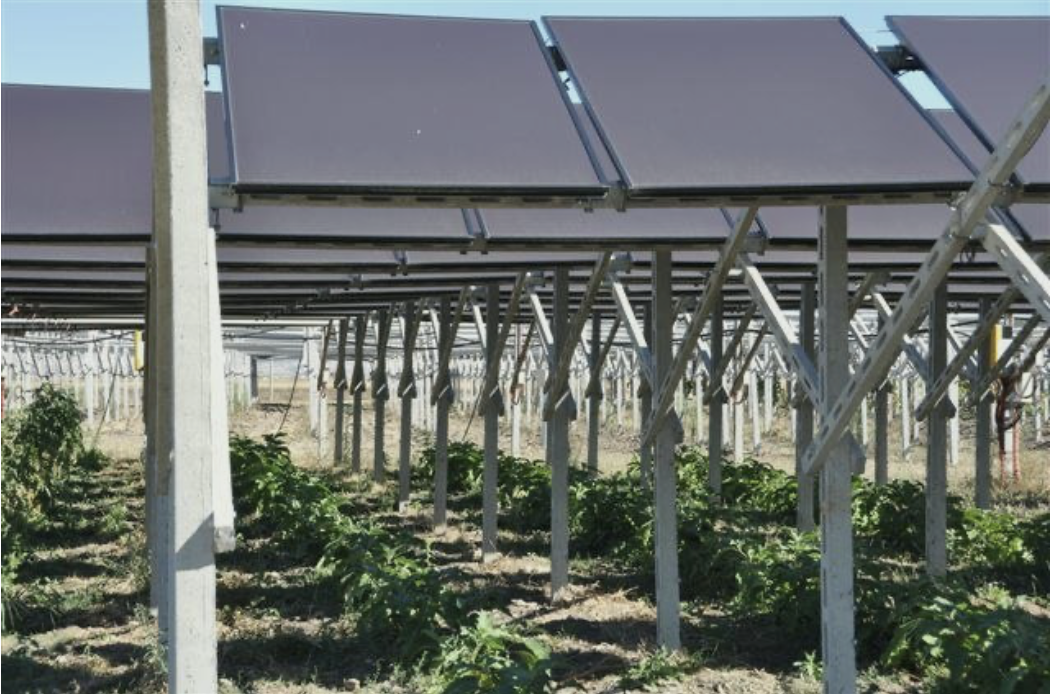
Agrivoltaics are the pairing of solar energy—also known as photovoltaics—and agriculture. Some experts think it offers solutions that can help renewables better integrate with rural livelihoods and might also provide some enhancements for farming as we head into a hotter, drier, less predictable weather future.
As an example, Jack’s Solar Garden, on Colorado’s Front Range, has been a real leader modeling how agrivoltaics, farming and community can support each other. And now, such systems are beginning to sprout on the Western Slope as well.
As the need for fast deployment of renewables impacts rural communities, issues such as siting and who benefits become central concerns.
Smart co-location, including agrivoltaics where it makes sense, is one way to smooth the way for more clean energy to power farms and rural places. Community-solar is another way to ensure that communities are centered in the expansion of renewable energy.
Community-Solar can help put rural people at the center of the clean energy build-out.
Community-solar—think “solar garden”—is a shared solar system that provides a direct benefit from the power production at that facility to a group of community-based members or subscribers. Community-solar can increase energy equity by sharing the benefits of clean energy production and savings among a number of users, and can support the expansion of renewables by putting more members from impacted communities in the driver’s seat. It often is used to assist households that otherwise would be unable to afford or obtain individual solar systems in benefiting from the growth of clean energy.
In Delta County, the Colorado Farm & Food Alliance is part of a team of local leaders bringing agrivoltaics together with community-solar in a project at Thistle Whistle Farm on Hanson Mesa, outside the town of Hotchkiss. The Thistle Whistle project got a kick-start last spring when the Colorado Farm & Food Alliance and the team were awarded a stage 1 Community Solar Power Accelerator Prize, sponsored by the National Renewable Energy Laboratory. That competition is still on-going even as the Thistle Whistle project proceeds.
National Community Solar Prize spurs project along.
Project proponents hope the latest submission will unlock the stage 2 funding award this spring, keeping things on track to put a community-owned, farm-integrated energy system into operation before next year. In any case, the National Community Solar Partnership, which helps administer the competition through the Hero X platform, also provides in-depth training, technical assistance, and a supportive cohort that has already moved this project forward.
You can learn more about this project and the inspiration behind it on this episode of Crisis to Comeback, a podcast by Kori Stanton and Citizens for a Healthy Community. She interviews Mark Waltermire, owner of Thistle Whistle Farm and a western Colorado agricultural leader.
To read more about how renewables can integrate with rural communities, check out this guest column by our director that recently ran in the Grand Junction Daily Sentinel: “Renewable energy: Get it right, but get it going”. And watch our blog, our social media, and in other outlets for updates as this and other projects progress.
Click the link to read the article on The Land Desk website (Jonathan P. Thompson):
+ UT nixes Bears Ears swap; Mining Law reform … NOT!
Though it sits just 10 miles from the Grand Canyon’s south rim, the controversial Pinyon Plain (née Canyon) uranium mine goes unnoticed by the millions of people who drive past it on their way to the national park. It’s tucked in among the trees about two miles off the highway, and its total above-ground footprint is a mere 17 acres — smaller than an upscale shopping center in Flagstaff.
Officials at Energy Fuels, Pinyon Plains’ operator, highlight the facility’s inconspicuousness when responding to opposition to plans to rev up the mine. Curtis Moore, Energy Fuels’ VP of marketing, told the Navajo-Hopi Observer in 2022 that the mine “is about as small and low-impact as commercial mining gets.” There’s no gaping open pit like those at the copper mines further south in Arizona nor hulking piles of waste rock and toxic tailings and, Moore insisted, the Pinyon Plain is the most heavily regulated conventional mine in the nation, which should prevent it from contaminating groundwater or the air.
Moore’s assurances don’t ease the concerns of many Havasupai people, however, who are affected by the mine in ways that transcend regulations and the scope of conventional Western science. “We have a belief system that they don’t understand,” Havasupai elder Carletta Tilousi told The Guardian in 2022. “In our stories, that area where the mine is located is Mother Earth’s lungs. So when they dug the mine shaft, they punctured her lungs.”
This is the sort of potential harm that almost never makes it into environmental impact statements or regulators’ considerations of proposed projects. That may be changing. The United States Geological Survey has published a new report on uranium mining near the Grand Canyon, one that incorporates Indigenous knowledge to identify exposure pathways that standard risk analyses might miss. The report, by Carletta Tilousi (Havasupai Tribe) and Jo Ellen Hinck (USGS), is an eye-opening read.
In the Grand Canyon-area, high-grade uranium ore often occurs in geologic features known as breccia pipes, prompting prospectors to stake hundreds of claims there from the 1940s to the 1980s, when the domestic uranium mining industry collapsed. Interest was revived in 2007, when prices shot up again, and more claims were staked. The Pinyon Plain Mine — which was developed years ago but never produced ore — sits a few miles from Red Butte, a landform held sacred by several tribal nations, and in Mat Taav Juudva, or “sacred meeting corridor” for the Havasupai. It is now within the boundaries of Baaj Nwaavjo I’tah Kukveni – Ancestral Footprints of the Grand Canyon National Monument. New mining claims can’t be staked here, but since Pinyon Plain was an existing, valid claim when President Biden established the monument last year, it is grandfathered in.
The Havasupai Tribe has pushed back against uranium mining for decades, saying it endangers their health, land, and culture. The Pinyon Plain Mine sits above the Redwall-Muav aquifer, and mining could contaminate this precious store of groundwater. Indeed, when the mine shaft was sunk in 2016, it encountered a perched aquifer, which drained into the shaft. This not only threatens the tribe’s drinking water, but also its very existence. The report quotes Havasupai Vice-Chairman Edmond Tilousi thusly: “If the R-Aquifer becomes contaminated, and we must abandon our ancestral home of Supai Village, we will leave the blue-green waters of Havasu Creek behind and consequently will cease to be the Havasuw Baja. While we may still breathe air, we, the People of the Blue Green Water, will have become extinct.”
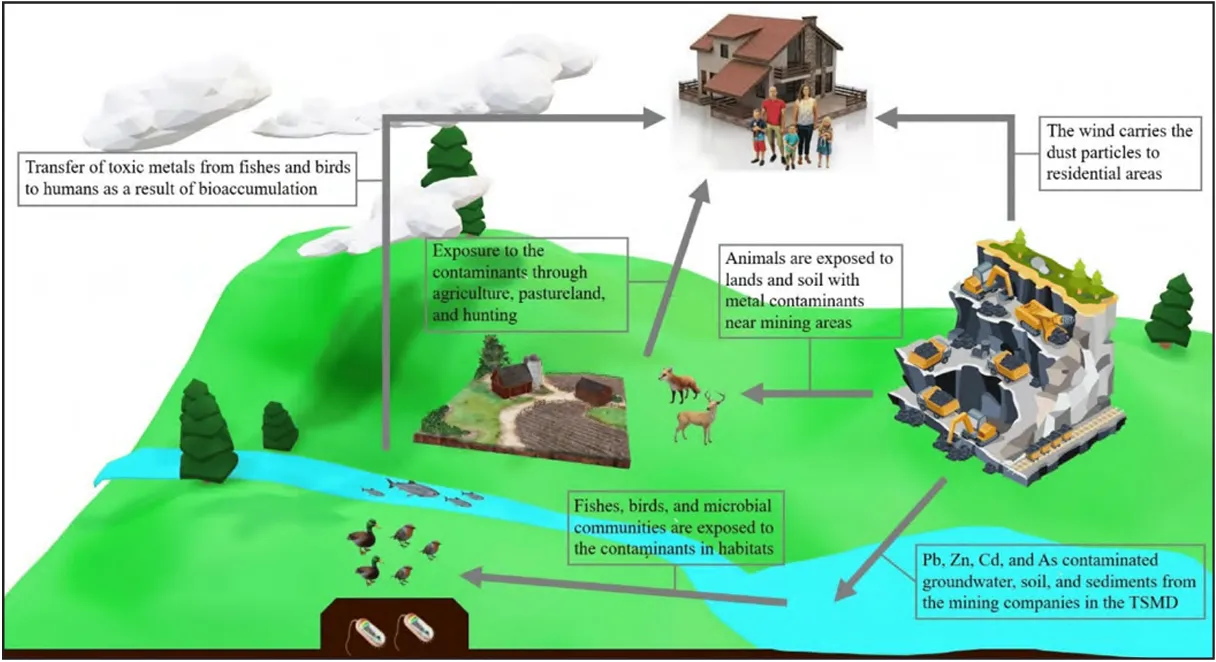
The aquifers are just one exposure pathway. Others will appear in standard risk assessments of mines, like this one:
And yet others are typically overlooked. This updated contaminant exposure framework shows both the pathways revealed by standard analyses, and those identified through Indigenous knowledge and the Havasupai perspective:
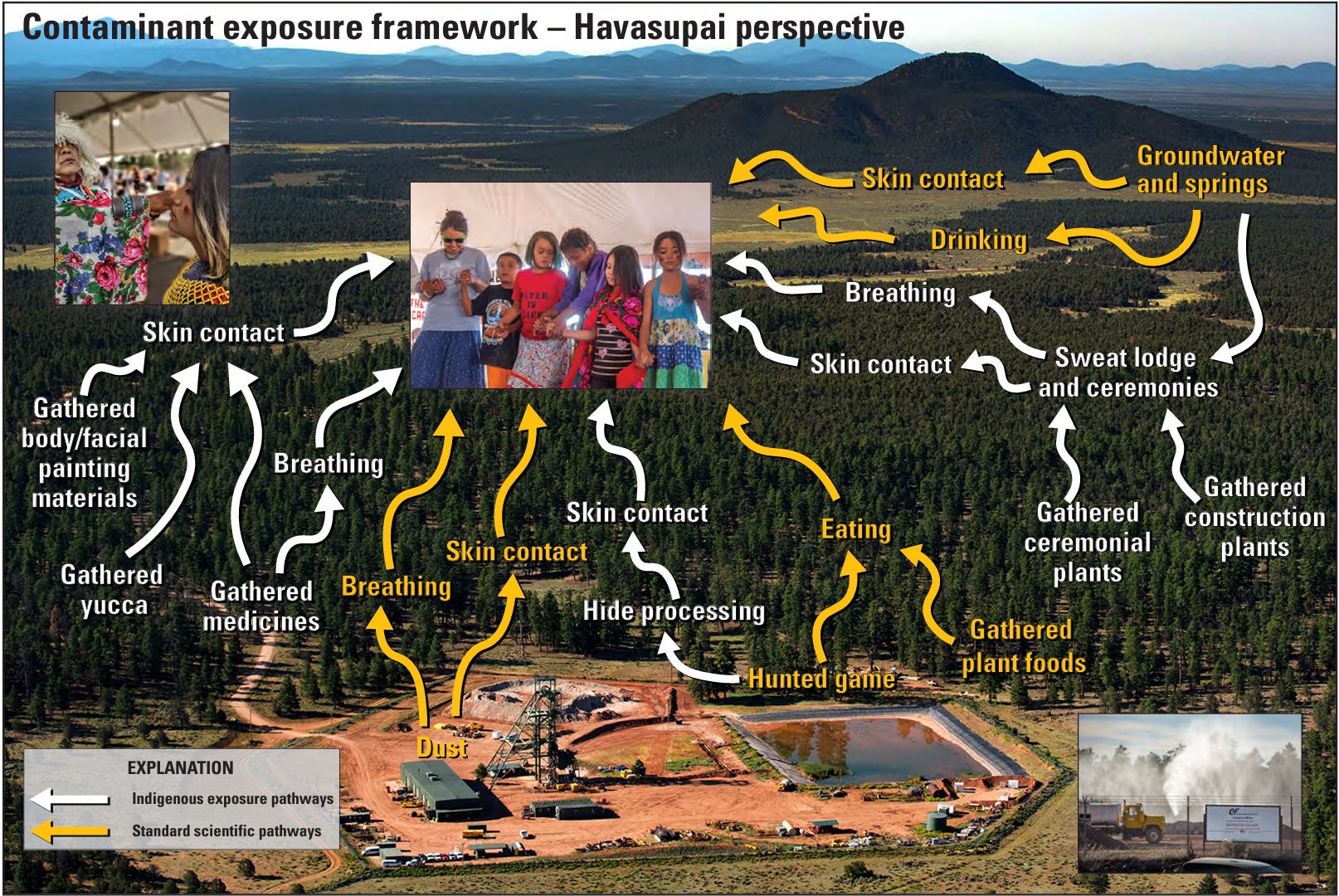
This new report, “Expanded Conceptual Risk Framework for Uranium Mining in Grand Canyon Watershed—Inclusion of the Havasupai Tribe Perspective,” gives a far more holistic view of mining and its impacts than standard analyses. As such, it gives a much more complete vision of what is actually at stake. Hopefully other researchers and federal agencies will take note and follow the authors’ lead.
I will admit that I was pretty psyched to hear that Congress was finally taking up mining law reform. After all, the General Mining Law of 1872 hasn’t been significantly altered since then President Ulysses S. Grant signed it into law. Isn’t it about time to tighten things up a bit and end the 152 years of public land giveaways? Apparently not.
Yes, Congress is considering the Mining Regulatory Clarity Act. But no, it is not reforming the law in a good way.
See, the law currently says that for a mining claim to be valid, the claimant has to prove it contains a valuable mineral deposit. And if it’s not valid, then a mining company can’t use or occupy the claim. For decades, this requirement was more or less ignored when it came to mining companies using invalid claims on public lands to store waste rock or mill tailings. But in recent years, judges have handed down some significant rulings — most notably the Rosemont decision — blocking mines from storing waste on invalid, unproven claims.
The “Clarity Act” pushed by Rep. Mark Amodei, a Nevada Republican, would essentially validate invalid claims by removing the “valuable mineral” requirement. The language from the bill reads: “A claimant shall have the right to use, occupy, and conduct operations on public land, with or without the discovery of a valuable mineral deposit,” if the claimant pays their location fee and annual maintenance fees.
In other words, it further loosens an already lax and antiquated law.
🤯 Annals of Inanity 🤡
It really seems as if the Republican-led Utah legislature is looking to one up Congress in the dysfunction department. Nearly every day we hear some news of boneheadedness coming out of Capitol Hill, and nearly every time it’s follow up by something even more head-scratching out of Salt Lake City.
This week’s moronic moment comes to you courtesy of Gov. Spencer Cox and his comrades in the legislature, who put the kibosh on a land exchangethat would have swapped out state parcels in Bears Ears National Monument for federal land outside the monument. You might be thinking that Utah felt like they were getting the short end of the stick here, and merely wanted to renegotiate. But in fact, as Utah’s School and Institutional Trust Lands Administration officials and Utah’s congressional delegation will tell you, the swap is a really good deal for the state and for the schools and institutions revenues from the lands support.
The exchange would allow SITLA (Utah’s School and Institutional Trust Lands Administration) to dispose of discrete parcels within the monument with minimal revenue-generating potential. In return, they’d receive consolidated blocks of Bureau of Land Management land in areas targeted for lithium, potash, uranium, helium, oil and gas, and/or residential development. Meanwhile the BLM would rid itself of the headache of dealing with all of these little inholdings within the monument. SITLA officials estimated the swap would net the state hundreds of millions of dollars in additional revenue over the long term, which was good enough for Utah’s entire congressional delegation to sign onto federal legislation that would have ratified the deal (it stalled out, however, which opened the door to this week’s withdrawal).
So what’s changed that would spur the withdrawal? Nothing. Cox and his Republican colleagues claim they made this imbecilic move because: the BLM “has signaled that it will adopt an exceptionally restrictive and unreasonable land management plan {for Bears Ears NM} that would negatively impact the communities surrounding the Monument and the state’s public school children…”
Yes, Utah’s elected leaders are throwing away hundreds of millions of dollars for public schools because they perceived “signals” about something they didn’t like. The draft management plan for Bears Ears NM hasn’t even been released, and even if it is restrictive as all get out, canceling the exchange will do nothing to change it. Nothing! All this little political circus act will do is, yes: Take money away from public school children.
In other words, this whole thing is merely an exercise in ideology-driven stupidity. Echoing their GOP brethren in Washington, D.C., Utah’s Republicans are acting against their constituents’ best interest in order to make a political point. Only not even they know what that point might be.
Click the link to read the assessment on the Western Water Assessment website:
February 9, 2024 – CO, UT, WY
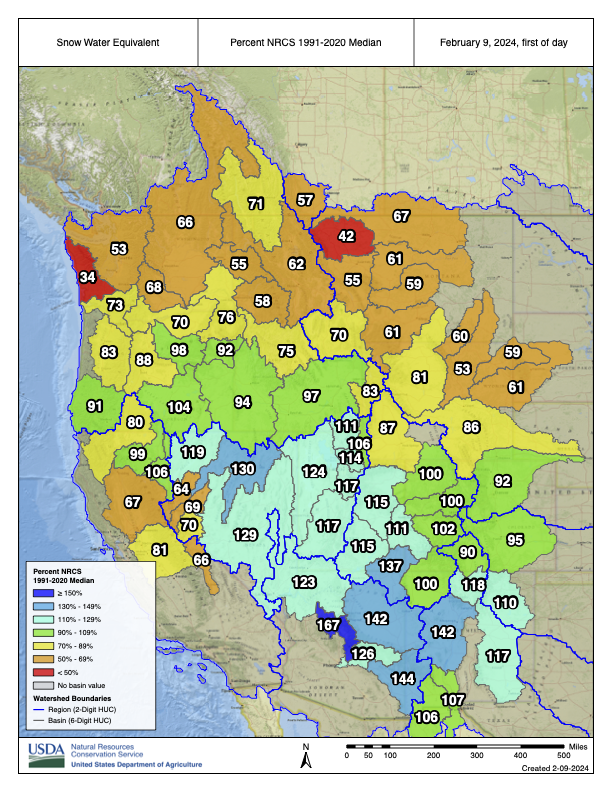
After a relatively wet January, snowpack conditions improved and are near-average in Utah (96%), slightly-below average in Colorado (87%) and below average in Wyoming (74%). Seasonal streamflow volume forecasts are below average for most locations except for northern Utah where forecasts predict average to slightly-above average seasonal streamflow. Regional coverage of drought remained steady at 15% and alleviation of some drought conditions in southwestern Colorado was offset by the development of drought in northern Wyoming. El Niño conditions are expected to continue through spring with above average precipitation and temperatures predicted for February.
Across the region, a patchwork of above and below average precipitation fell during January. Slightly-above average January precipitation was observed in northern Colorado, southern Wyoming and along the Wasatch Front and southwestern Utah. Much-above average January precipitation was observed in southeastern Colorado. Below average January precipitation, including large areas of less than 50% of average, fell in northeastern, south-central and northwestern Colorado and Utah and across all of northern Wyoming.
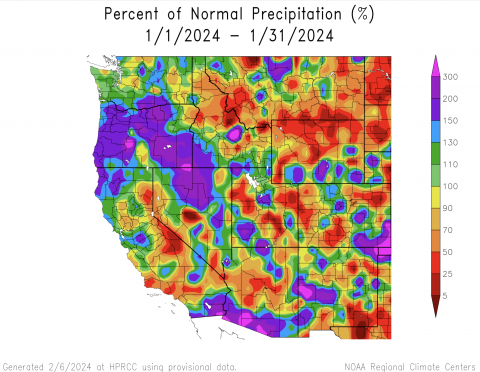
January temperatures were generally above average in the southwestern portion of the region and below average in the northeast. In Colorado and Wyoming, January temperatures were above average on the west side of the Continental Divide and below average east of the Divide with temperatures as cold as 10 degrees below average. Utah temperatures were generally 2 to 4 degrees above average but the eastern Uinta Basin saw temperatures up to 10 degrees warmer than average.

Regional snowpack at the end of January was a mix of near-normal and below normal conditions. Near-average snow water equivalent (SWE) was observed in northern Utah and northern Colorado. In southern Colorado, southern Utah and much of Wyoming, SWE was 70-90% of average. Snowpack in northeastern Wyoming and in the Yellowstone River Basin was much-below normal (50-70% average). Statewide SWE improved relative to average in Colorado (87%), Utah (96%) and Wyoming (74%).
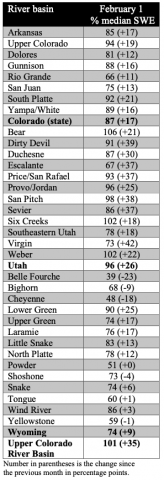

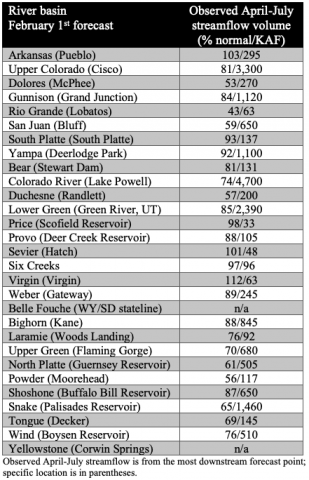
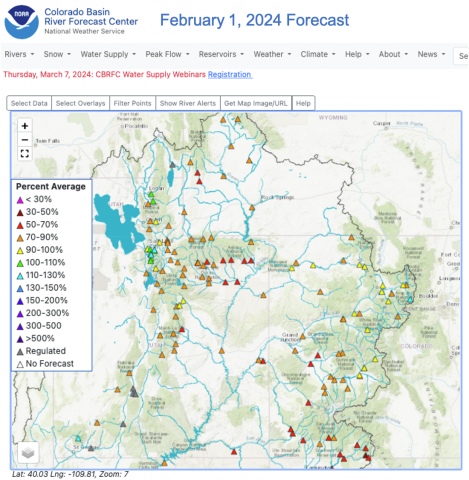
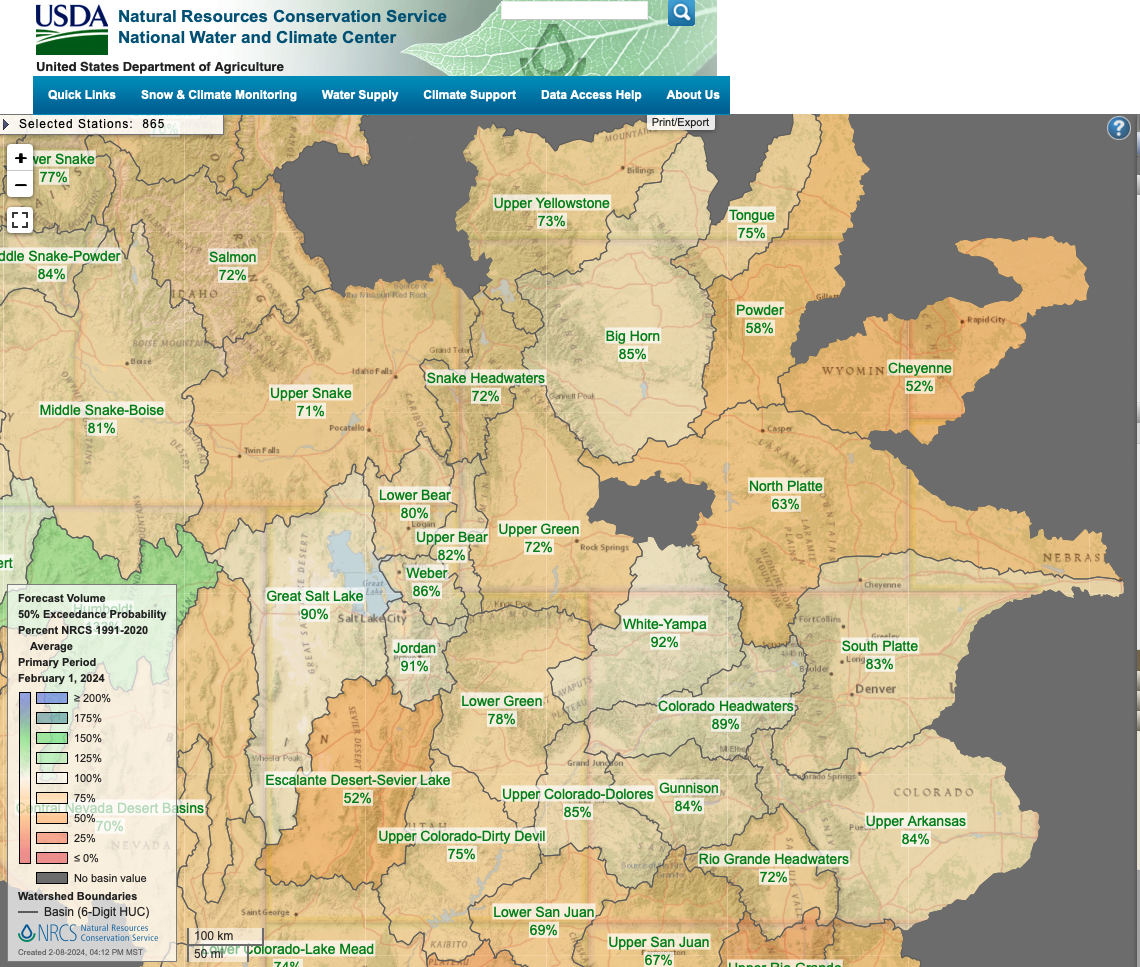
Regional April-July streamflow volume forecasts are generally below to much-below average, except northern Utah where streamflow forecasts are near to above average. In most locations, forecasted streamflow volume increased compared to the January 1st forecast. Streamflow forecasts are lowest for the Dolores, Duchesne and San Juan River Basins. The forecast for the inflow to Lake Powell is 74% of average.
Total regional coverage of drought remains at 15% and unchanged since December. Drought development in northern Wyoming was balanced by drought improvement in southeastern Utah and southwestern Colorado.
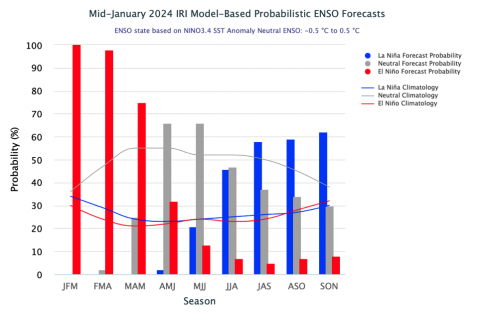
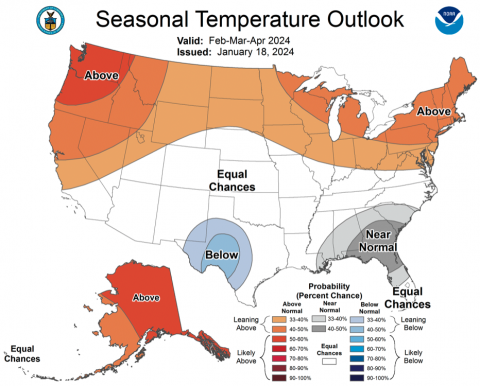
El Niño conditions continue as ocean temperatures in the eastern Pacific were 1.5–2 degrees Celsius above average. All ocean temperature models are projecting a steady cooling of ocean temperatures and there is a 70% chance of El Niño conditions continuing through spring (March-May). This summer, there is a 65% probability of neutral ENSO conditions but by fall, there is a 60% chance of La Niña conditions developing. The NOAA monthly outlook for February suggests an increased probability of above average precipitation for Colorado, Utah and eastern Wyoming and above average temperatures for the entire region. During February–April, the NOAA seasonal forecast suggests an increased probability of above average temperatures for northern Utah and Wyoming.

January significant weather event: Early January storm cycles and avalanches. After a stormy early December in the West, very dry conditions prevailed across Colorado, Utah and Wyoming from December 10–January 4. Beginning on January 4 and lasting for 11 days, near-continuous storms impacted the Intermountain West and brought below and much-below average snowpacks to near-normal by January 15. River basins reached near-normal SWE conditions by January 15 including the Bear, Jordan, Yampa-White and Weber which received 3.5–5.5” of SWE. A few snotel sites in northern Utah received very high amounts of SWE from January 4–January 15 including 10.4” at Ben Lomond Peak near Ogden, 8.5” at Alta near Salt Lake City and 8.3” at Tony Grove Lake near Logan. With the combination of a month-long snow drought and the rapid addition of SWE to mountain snowpacks in Utah, extreme avalanche danger was forecasted for the entire Wasatch Mountain Range from Logan to Provo including the Wasatch Plateau in central Utah. It was extremely rare to see extreme avalanche danger over the entire Wasatch Mountain Range on a single day and not something that I have personally observed over the last 17 years. Extreme avalanche danger closed Little Cottonwood Canyon Road for 36 hours and avalanche mitigation efforts triggered numerous full-path avalanches that buried the road.
Click the link to read the article on The Salt Lake Tribune website (Leia Larsen). Here’s an excerpt:
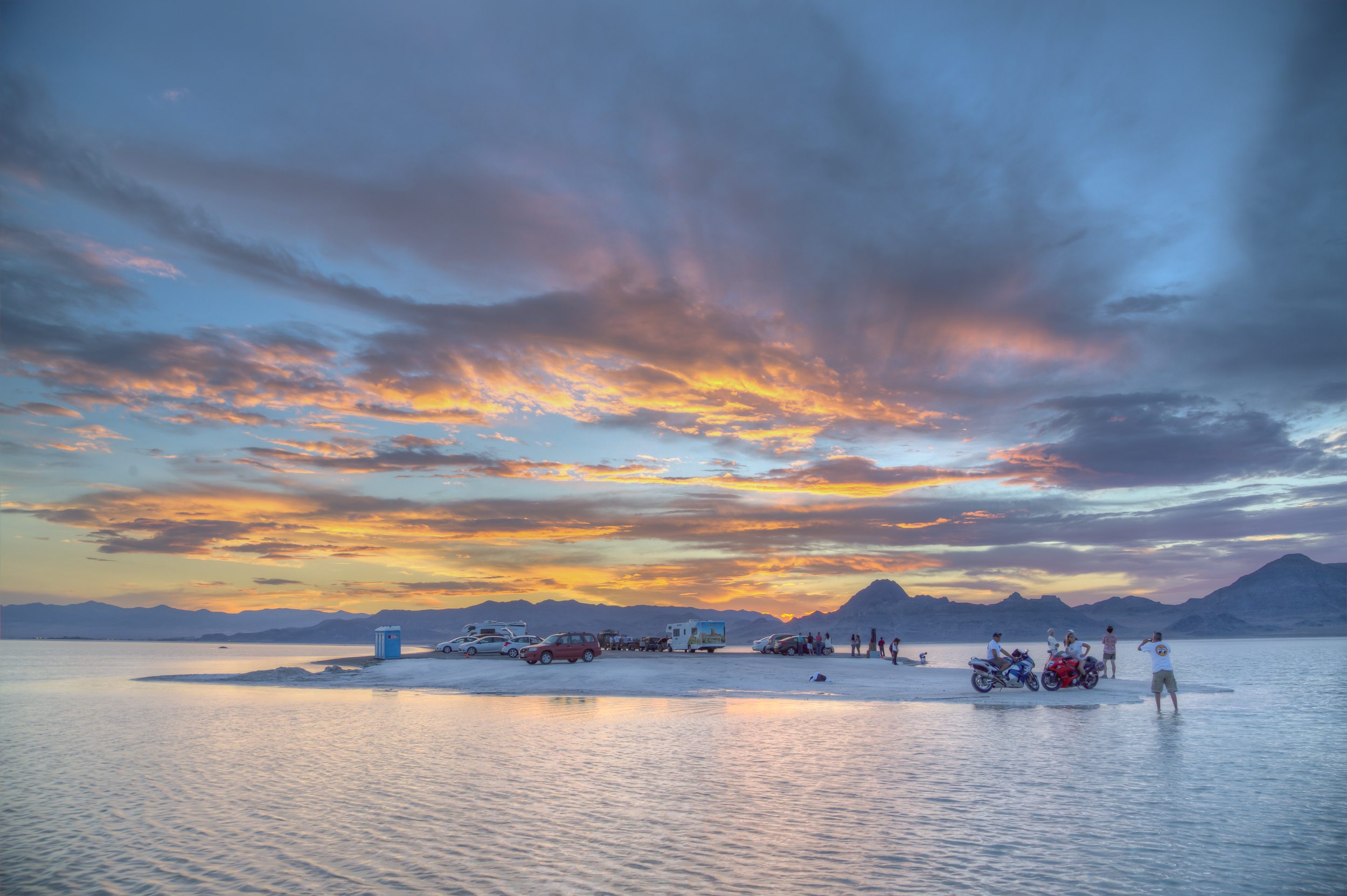
The Bonneville Salt Flats west of the Great Salt Lake are so flat that racers can drive at mind-boggling speeds that break the sound barrier. But the expanse of salty crust began rapidly receding in the 1980s and hasn’t stopped. In just 30 years, the salt flats shrunk from 50 square miles to 35 square miles. They lost a third of their volume. The racing community pointed at nearby groundwater pumping for potash mining as the culprit, so in the late 1990s, land managers approved a process called “laydown” — mixing all the leftover mining salts with groundwater and flooding it across the flats in an effort to help the crust regrow…
Turns out, groundwater extraction — including the pumping done for brine laydown — has dramatically changed the aquifer beneath the salt flats. The subterranean water that built up the salt pan over thousands of years is now flowing away from the flats, carrying the salt away with it. Researchers published their findings in the Utah Geological Association Journal on Jan. 14. The site the potash company used to pump water for the laydown process was on the edge of the flats, next to the Silver Island Mountains. Supporters of the project may not have realized the water it extracted was linked to the aquifer beneath the shrinking salt crust.
From email from Reclamation (Susan Novak Behery):
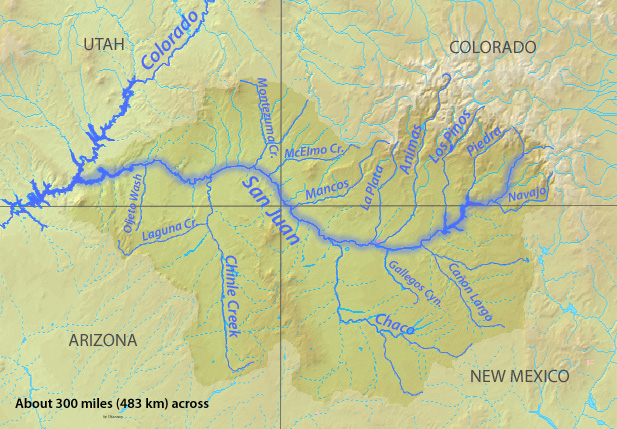
In response to falling flows in the critical habitat reach, the Bureau of Reclamation has scheduled an increase in the release from Navajo Dam from 350 cubic feet per second (cfs) to 400 cfs for tomorrow, February 10th, at 4:00 AM.
Releases are made for the authorized purposes of the Navajo Unit, and to attempt to maintain a target base flow through the endangered fish critical habitat reach of the San Juan River (Farmington to Lake Powell). The San Juan River Basin Recovery Implementation Program recommends a target base flow of between 500 cfs and 1,000 cfs through the critical habitat area. The target base flow is calculated as the weekly average of gaged flows throughout the critical habitat area from Farmington to Lake Powell.

Click the link to read the article on the Alamosa Citizen website (Owen Woods):
February 7, 2024
State climatologist Russ Schumacher appeared on the latest episode of the Outdoor Citizen podcast to talk to us about Colorado’s snow and climate. Schumacher, who took over as Colorado’s state climatologist in 2017, is also professor of atmospheric science at Colorado State University. In a time of climate change and increasingly unpredictable events, Schumacher and people like him are here to help us all make sense of it.
“There’s always something new happening,” and that’s what fascinates him most about his work and the weather. In Colorado, especially, he said. “We have such fascinating weather. The weather and the climate can vary hugely over short distances.”
It’s both fascinating and challenging, he said.
The San Luis Valley is a great example of the variability of weather, he noted. “For one thing, I think it’s not as well understood as other parts of the state.”
Everybody loves to study the weather in the northern part of the state, he said, but “I think some of what happens there in the Valley is so fascinating, and a lot of times it flies under the radar either literally or figuratively.”
New radar installed near the Alamosa airport helps track local weather, he said.
Schumacher and his colleagues at the climate center just released the third edition of the Climate Change in Colorado report. The last time that report was updated was in 2014. A lot has happened since then, he said, and they realized a new update was needed.
You can read the report here. Schumacher broke down some of the key takeaways from that report.

LIke most of the planet, Colorado has been warming. Colorado has warmed by 3 degrees fahrenheit on average since the late 1880s. Precipitation is much harder to pin down, but the past two decades have been very dry.
As the planet continues to warm, Colorado will see the effects.
Climate models are all over the place, he said, when it comes to precipitation. There is a lot of variation. When it comes to snow and water, he said, even if the precipitation doesn’t change and the amount of liquid coming out of the sky doesn’t change “the fact that it’s warmer is going to put more stress on those water resources.”
In the summer, when the air is hotter it means quicker evaporation. In the winter, there is a shift in timing when runoff occurs in the spring and that changes when there are peak flows in the river.
“Warming is going to have impacts on our snow in the winter and our water supply in the summer,” he said.
We’re haven’t yet seen much of the effects for this El Niño year. Schumacher says there is still more time for that. Yet, we’re still below average in many of the nations’ southern river basins.
The current atmospheric river conditions on the west coast and in California are likely to head our way in the coming days and weeks. “It’ll be on the warm side when it hits Southern Colorado, as well.”
“Nowhere in the state is looking great at this point,” but we are much better than we were at the end of 2023. This last bout of snowstorms this month is helping. But it’s not a “boom year” that is typical with El Niño years.
There’s still hope to be had, he said.
The storms coming from the southwest are typically warmer than winter weather. He said that Saturday, Feb. 4, was the wettest day Fort Collins has seen. The city received 1.66 inches of precipitation in just that one day, which he said is not typical for early February.
The current snow drought will have long-term effects. It’s been “most acute” in Southern Colorado. There have been more years with low snowpack rather than a higher snowpack.
Since Colorado is a headwaters state, that doesn’t just impact us but the states surrounding us. Their water levels are reliant on Colorado’s snowpack.
The larger reservoirs in the Colorado River system require more consistently good years. One good year won’t necessarily create good levels. That system is in better shape than it was a year ago, but overall is in a bad state.
In the Rio Grande basin, he said, as the river flows down to New Mexico, there are increasing water supply issues further south. “Even if you have a good snowpack year, if the summer monsoon doesn’t come through and it’s really hot, that air is really thirsty for that water. It’s gonna try and pull that water out of the soils and out of the crops back into the air which means if you’re growing crops you’ve got to irrigate more, which means you’re using more water. That all is really a vicious cycle that puts stress on the system all around.”
Listen to the podcast here, or wherever you get your podcasts to hear more about what Schumacher is seeing.

Click the link to read the discussion on the Climate Prediction Center website:
February 8, 2024
ENSO Alert System Status: El Niño Advisory / La Niña Watch
Synopsis: A transition from El Niño to ENSO-neutral is likely by April-June 2024 (79% chance), with increasing odds of La Niña developing in June-August 2024 (55% chance).
During January 2024, above-average sea surface temperatures (SST) continued across most of the equatorial Pacific Ocean. SST anomalies weakened slightly in the eastern and east-central Pacific, as indicated by the weekly Niño index values. However, changes were more pronounced below the surface of the equatorial Pacific Ocean, with area-averaged subsurface temperature anomalies returning to near zero. Although above- average temperatures persisted in the upper 100 meters of the equatorial Pacific, below-average temperatures were widespread at greater depths. Atmospheric anomalies across the tropical Pacific also weakened during January. Low-level winds were near average over the equatorial Pacific, while upper-level wind anomalies were easterly over the east-central Pacific. Convection remained slightly enhanced near the Date Line and was close to average around Indonesia. Collectively, the coupled ocean-atmosphere system reflected a weakening El Niño.
The most recent IRI plume indicates a transition to ENSO-neutral during spring 2024, with La Niña potentially developing during summer 2024. Even though forecasts made through the spring season tend to be less reliable, there is a historical tendency for La Niña to follow strong El Niño events. The forecast team is in agreement with the latest model guidance, with some uncertainty around the timing of transitions to ENSO-neutral and, following that, La Niña. Even as the current El Niño weakens, impacts on the United States could persist through April 2024 (see CPC seasonal outlooks for probabilities of temperature and precipitation). In summary, a transition from El Niño to ENSO-neutral is likely by April-June 2024 (79% chance), with increasing odds of La Niña developing in June-August 2024 (55% chance).
Click the link to read the article on The Denver Post website (Elise Schmelzer). Here’s an excerpt:
February 7, 2024
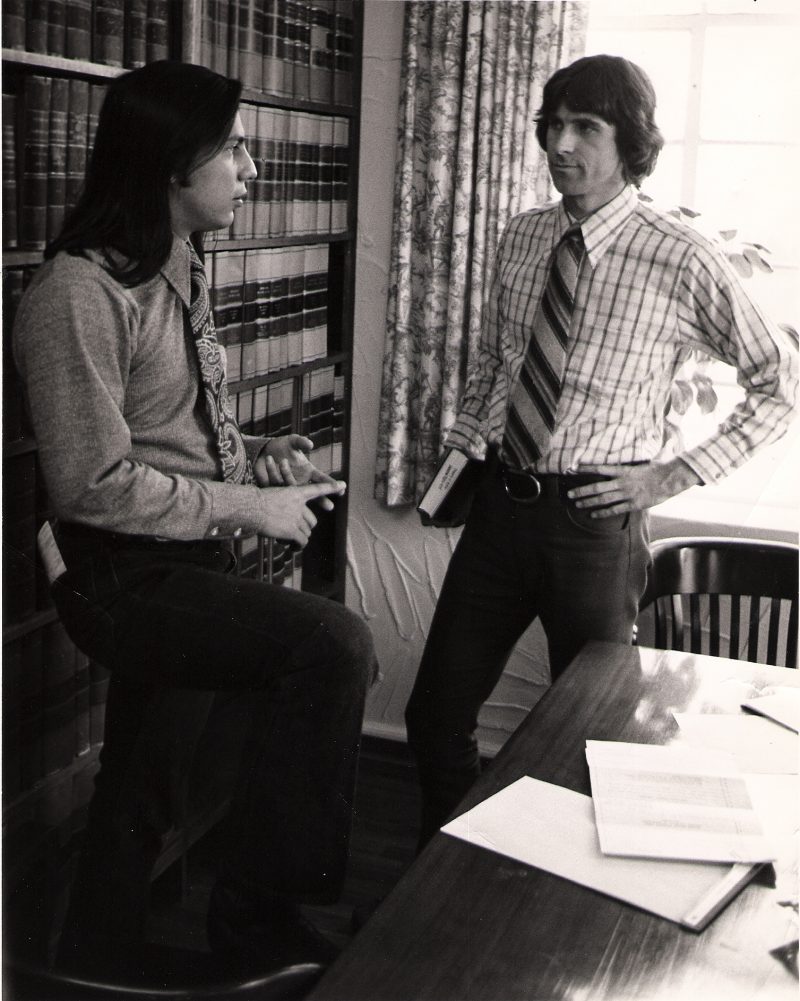
When David Gover became an attorney with the Native American Rights Fund, he inherited a water rights legal case about as old as he was.
The case revolving around water rights in Oregon held by the Klamath Tribes started in 1975 and it’s emblematic of many tribal water cases — they’re long, complex and require specific legal knowledge. There are not enough Native water attorneys to handle the difficult cases, which are critical for tribes to access the water they are entitled to. That’s one of the challenges Gover hopes the new, Colorado-based Tribal Water Institute will help solve. The institute will help train new attorneys in tribal water law and provide other resources to help tribes access and develop their water rights. Tribes hold some of the oldest and most senior water rights in the West, but many do not have the money or infrastructure to use their water or sufficient legal staff to protect it.
“There’s still so much need out there and capacity is an ongoing issue for us all,” Gover said…
The institute will train young water attorneys to advocate for tribes in state and federal policy and serve as a central resource for tribes on water issues. It will be part of the Boulder-based Native American Rights Fund, a nonprofit that has worked on myriad legal issues for tribal nations since 1970. Too often, tribes are stuck in a reactive position on water policy and litigation because they don’t have enough resources to work proactively, Gover said. The Native American Rights Fund has represented tribes in nine of the 35 tribal water rights settlements approved by Congress since 1978, but there is more work than attorneys available…
The Walton Family Foundation — which has spent millions on water issues in the West — donated $1.4 million to launch the institute. Native American Rights Fund staff continues to fundraise for the $4.2 million they estimate will be needed to fund the institute for three years. Tribal nations are under-represented in federal and state policy discussions, said Moira Mcdonald, environment program director of the Walton Family Foundation.
“That is unjust and unwise,” she said. “We need to listen to their voices. More inclusive decision-making will lead to greater benefits for the environment and society as a whole.”

Fair representation for tribes is especially important in the Colorado River basin. Combined, the 30 tribes in the basin hold rights to approximately 25% of the water. But many have not been able to use their full allotment and the tribes have been repeatedly left out of negotiations over how the river should be used and divided.

Click the link to read the release on the Bureau of Reclamation website (Michelle Helms):
February 8, 2024
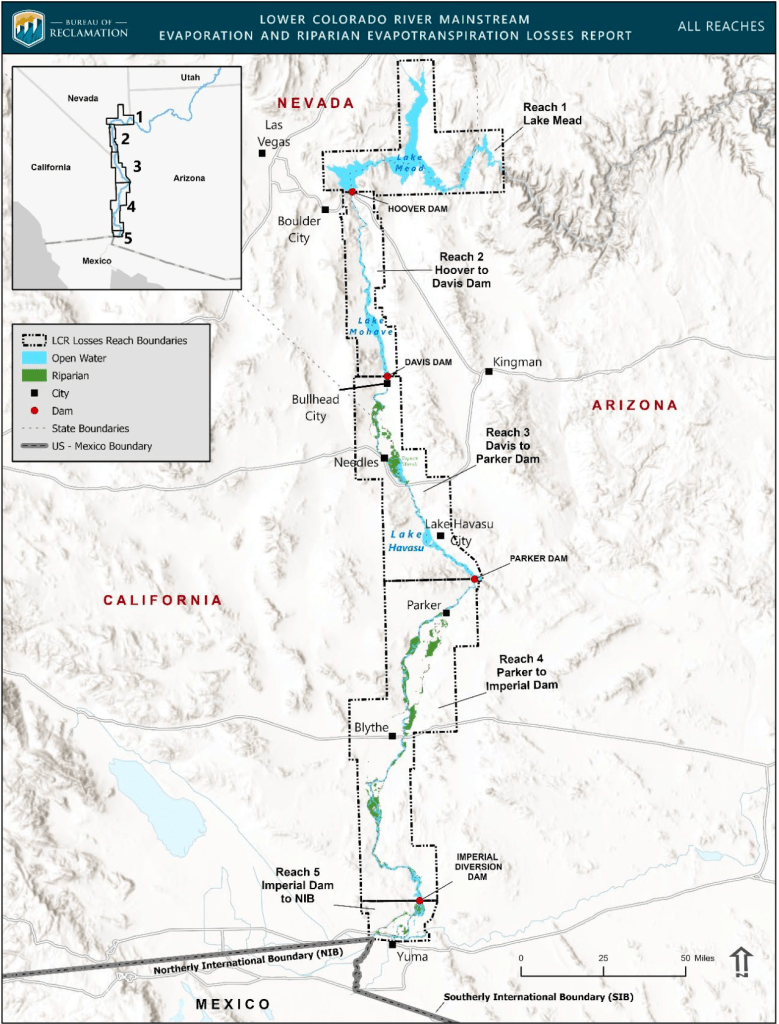
The Bureau of Reclamation today published an overview of historical natural losses along the lower Colorado River. The Mainstream Evaporation and Riparian Evapotranspiration report looks at water surface evaporation, soil moisture evaporation, and plant transpiration. It will be used by Reclamation as a source of data as it manages regional water operations and to improve the agency’s modeling efforts.
“Reclamation’s approach to water management in the Colorado River Basin and across all Reclamation states is based on best available science, transparency, and inclusivity.” said Reclamation Commissioner Camille Calimlim Touton. “The release of the Mainstream Evaporation and Riparian Evapotranspiration study today evidences this commitment by informing our partners and the public about river and reservoir evaporation and transpiration in the Colorado River Basin.”
The report provides an overview of average mainstream losses from both river and reservoir evaporation, as well as the evaporation and transpiration associated with vegetation and habitats along the river. The report states that approximately 1.3-million-acre feet of losses occur annually along the lower Colorado River mainstream. Based on data from 2017 to 2021, approximately 860,000 acre-feet of Colorado River water is lost to evaporation occurring annually from Lake Mead to the border with Mexico. A further 445,000 acre-feet is lost to evaporation and transpiration from natural vegetation and habitats.
Reclamation is committed to addressing the challenges of climate change and drought in the Colorado River Basin, using science-based, innovative strategies. As Reclamation continues working cooperatively with the basin states, tribes, stakeholders, partners, and the public who rely on the Colorado River, we are also deploying historic funding and resources from President Biden’s Investing in America agenda that increase near-term water conservation, build long term system efficiency, and prevent the Colorado River System’s reservoirs from falling to critically low elevations that would threaten water deliveries and power production. As a result of the commitment to record volumes of conservation in the Basin, as well as recent hydrology, the Interior Department announced in October 2023 that the chance of falling below critical elevations has been reduced to eight percent at Lake Powell and four percent at Lake Mead through 2026. Lake Mead is currently about 40 feet higher than it was projected to be at this time last year.
The Mainstream Evaporation and Riparian Evapotranspiration report is available on the Reclamation website.
Click the link to read the article on The Grand Junction Daily Sentinel website (Dennis Webb). Here’s an excerpt:
February 7, 2024
A second atmospheric river of moisture in a matter of days is further bolstering Colorado snowpack levels that have continued to lag a bit behind normal…An initial atmospheric river storm system that wound down over the weekend dumped as much as three feet of snow in parts of the mountains, with the Colorado Avalanche Information Center saying the Ruby and Ragged ranges west of Crested Butte and south of Marble were particularly hard-hit. The Mesa Lakes area on Grand Mesa got about 15 inches of snow in that storm and Park Reservoir saw about a foot of snow fall, while another measuring site on Grand Mesa got only about 4 inches, said Dennis Phillips, a meteorologist for the National Weather Service in Grand Junction. The second atmospheric river that arrived this week is expected to be a stronger system, he said…

The federal Natural Resources Conservation Service on Tuesday said that statewide snowpack in Colorado stood at 93% of normal for Feb. 6. It has seen little growth since the middle of last month or so, after increasingly sharply from below 70% of normal at the start of January.
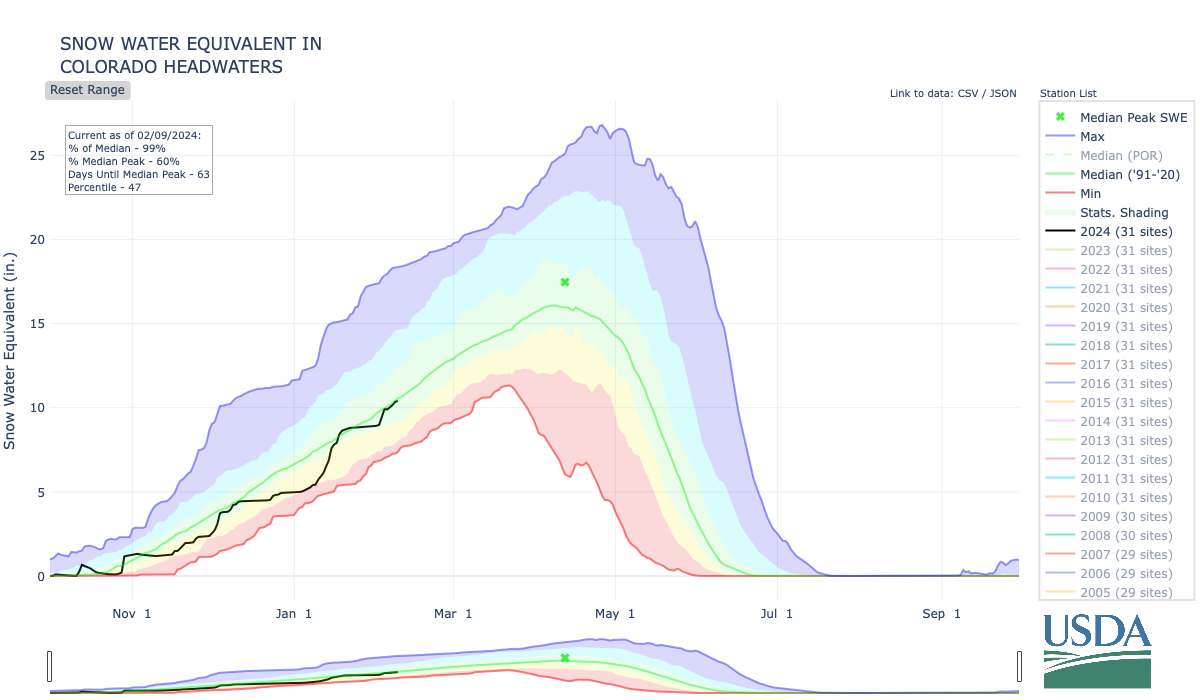
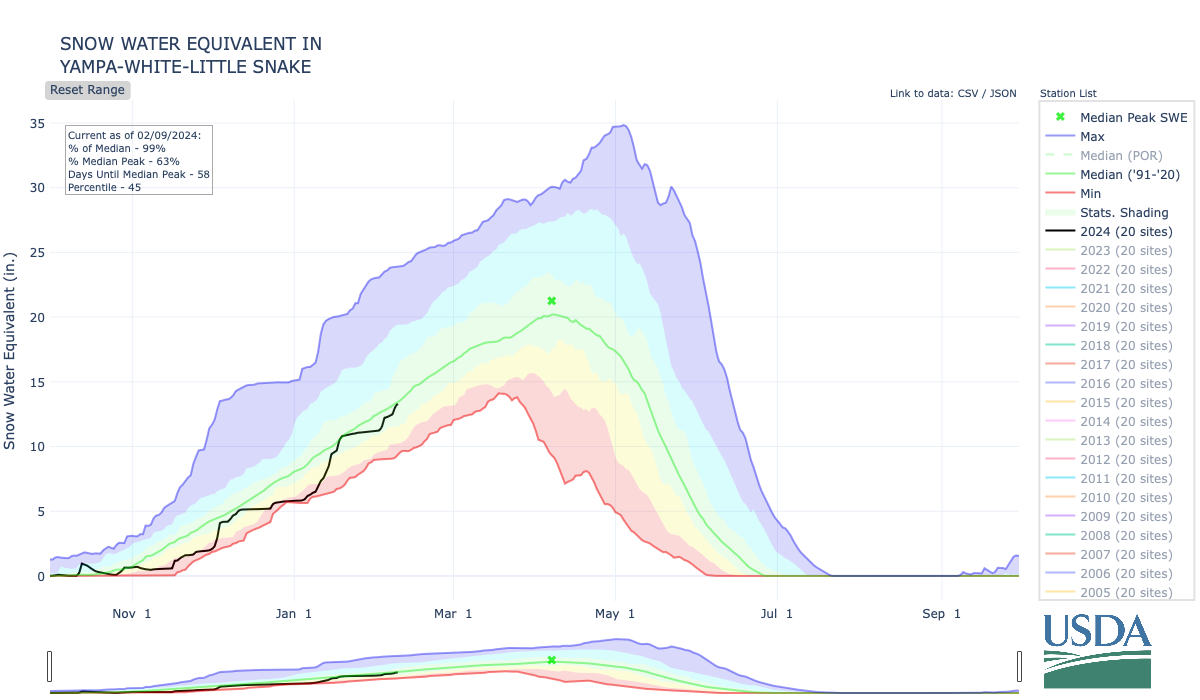
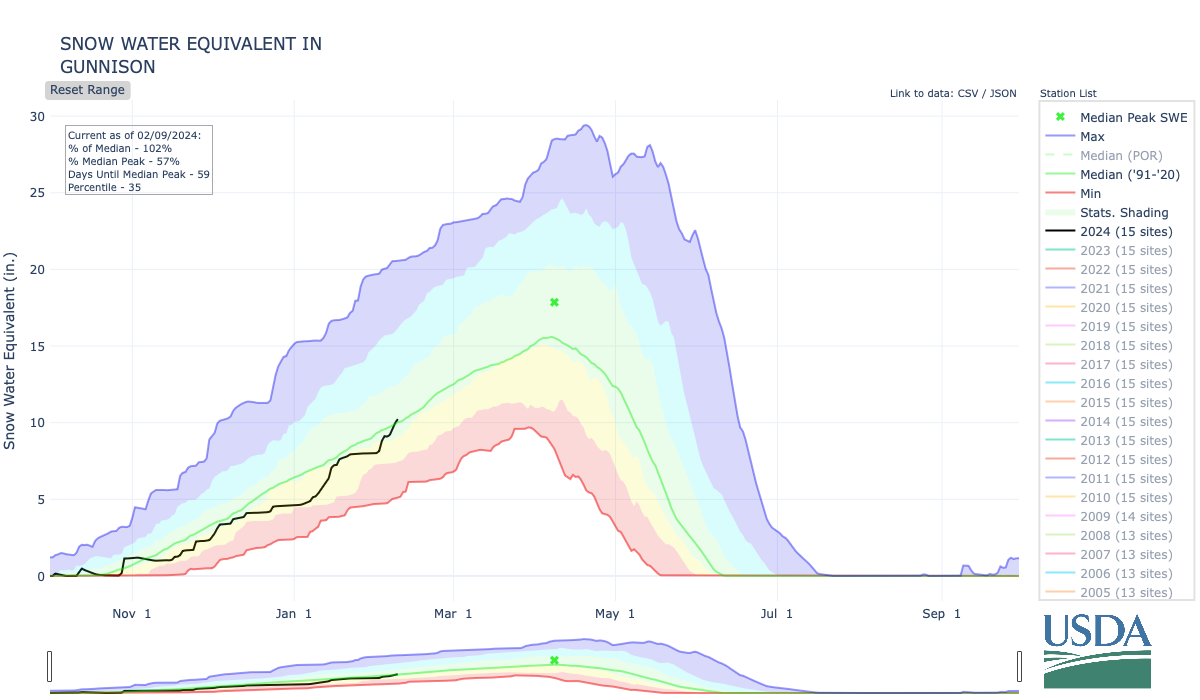
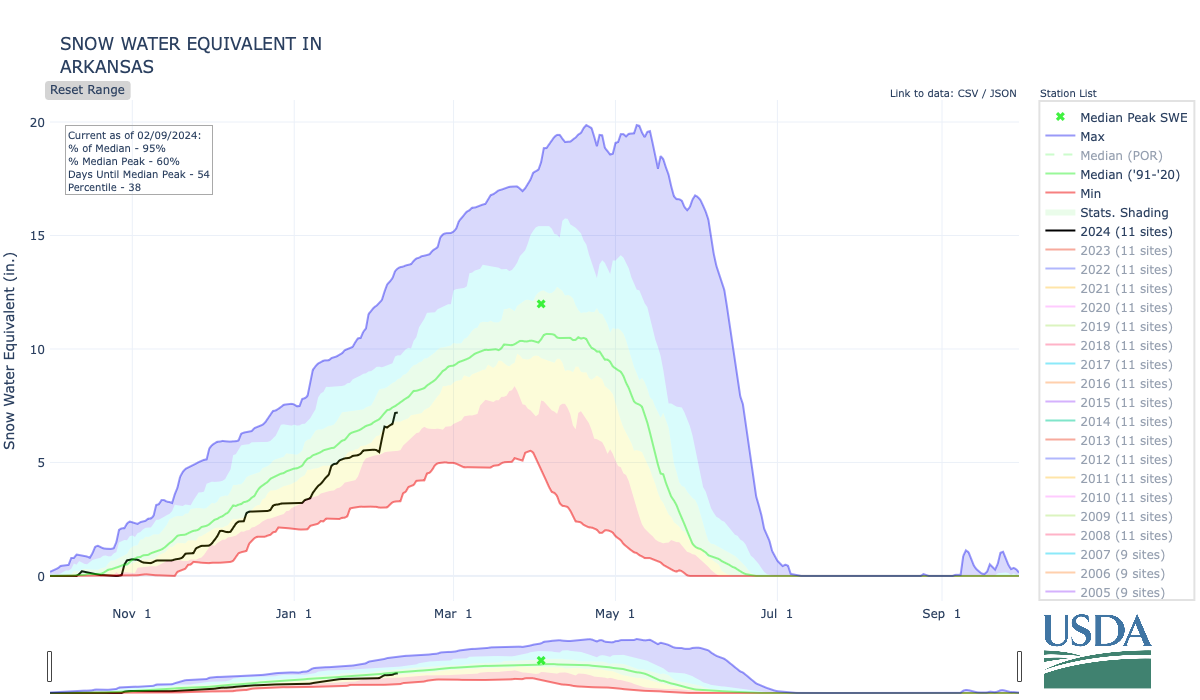
Snowpack in the Colorado headwaters basin on Tuesday stood at 96% of normal for Feb. 6. The Yampa-White-Little Snake basins were at 95% of normal, as was the Gunnison River Basin, and the Arkansas River Basin was at 91%.

Southwest Colorado is drier, with the combined San Miguel-Dolores-Animas-San Juan basins at 84% of normal and Upper Rio Grande River Basin at 80%. On Grand Mesa, snowpack levels at NRCS sites Tuesday ranged from 93% at Mesa Lakes to 74% at Overland Reservoir. Mountain snowpack is relied upon to bolster streamflows, reservoirs and agricultural and municipal supplies when that snow melts and runs off.
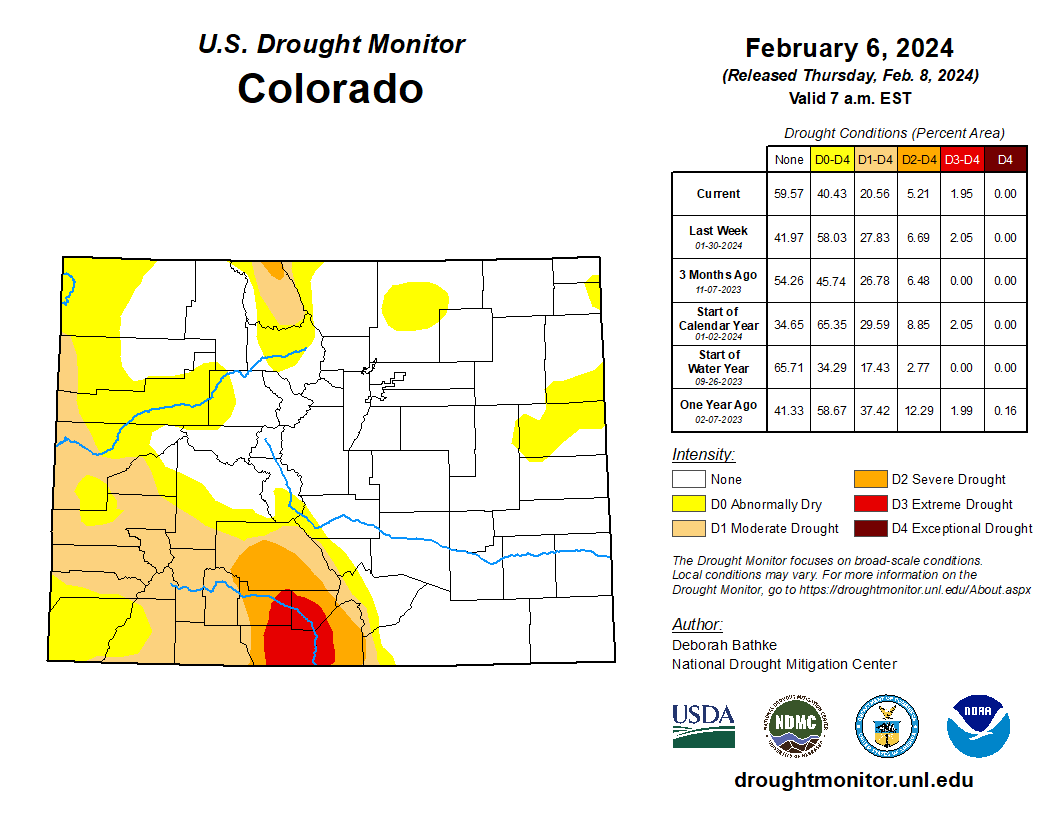
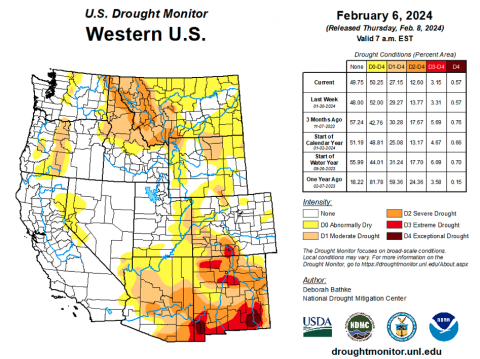
Most of Southwest Colorado is in varying levels of drought, with moderate drought stretching into western and southern Mesa County, according to the U.S. Drought Monitor.
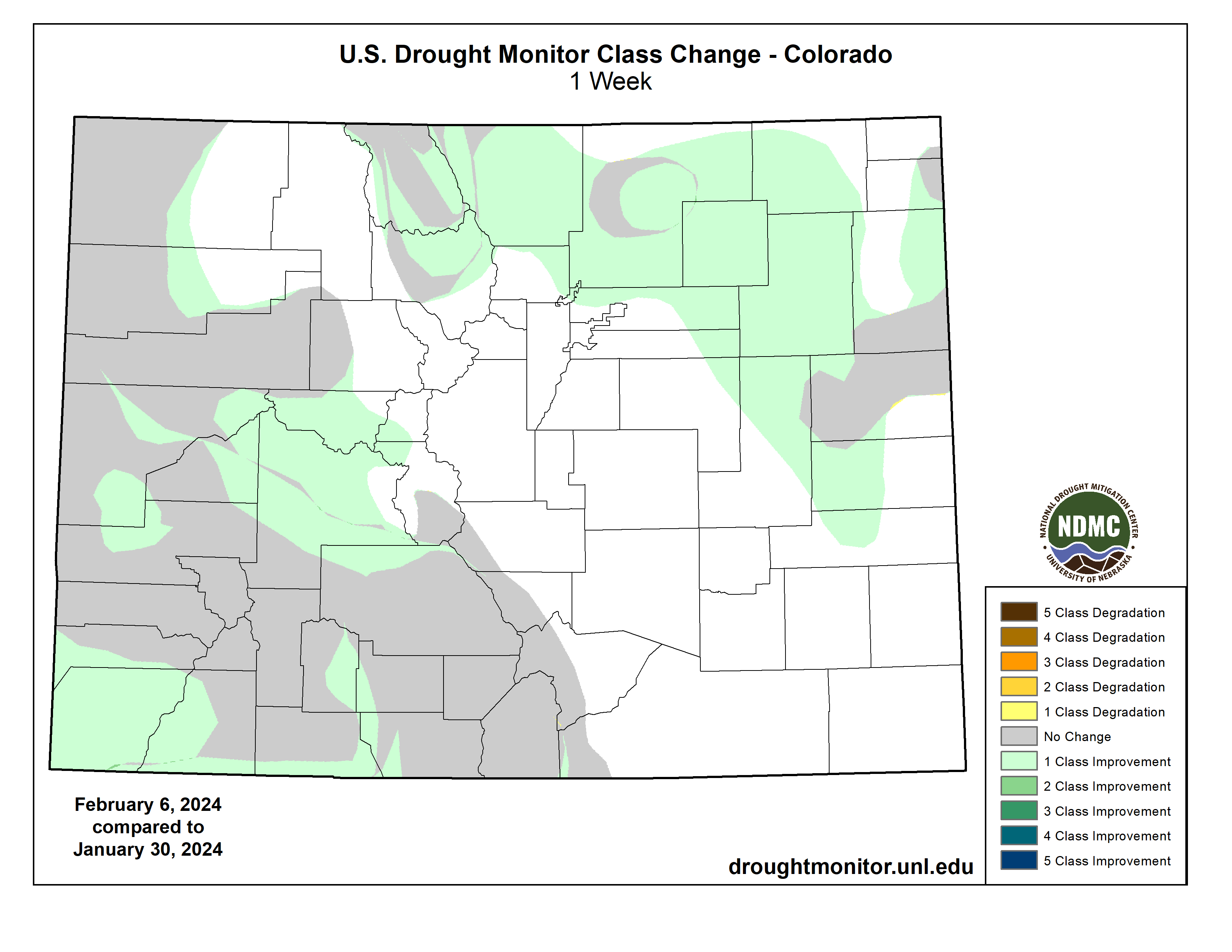
Click on a thumbnail graphic to view a gallery of drought data from the US Drought Monitor website.
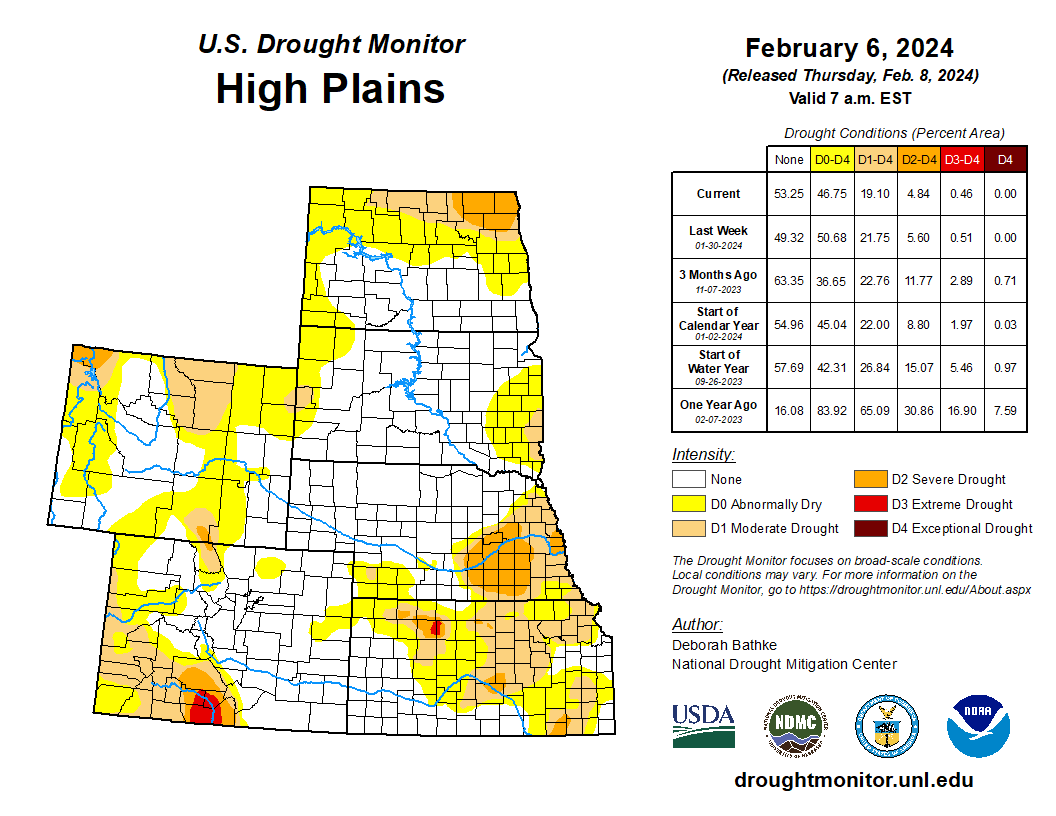
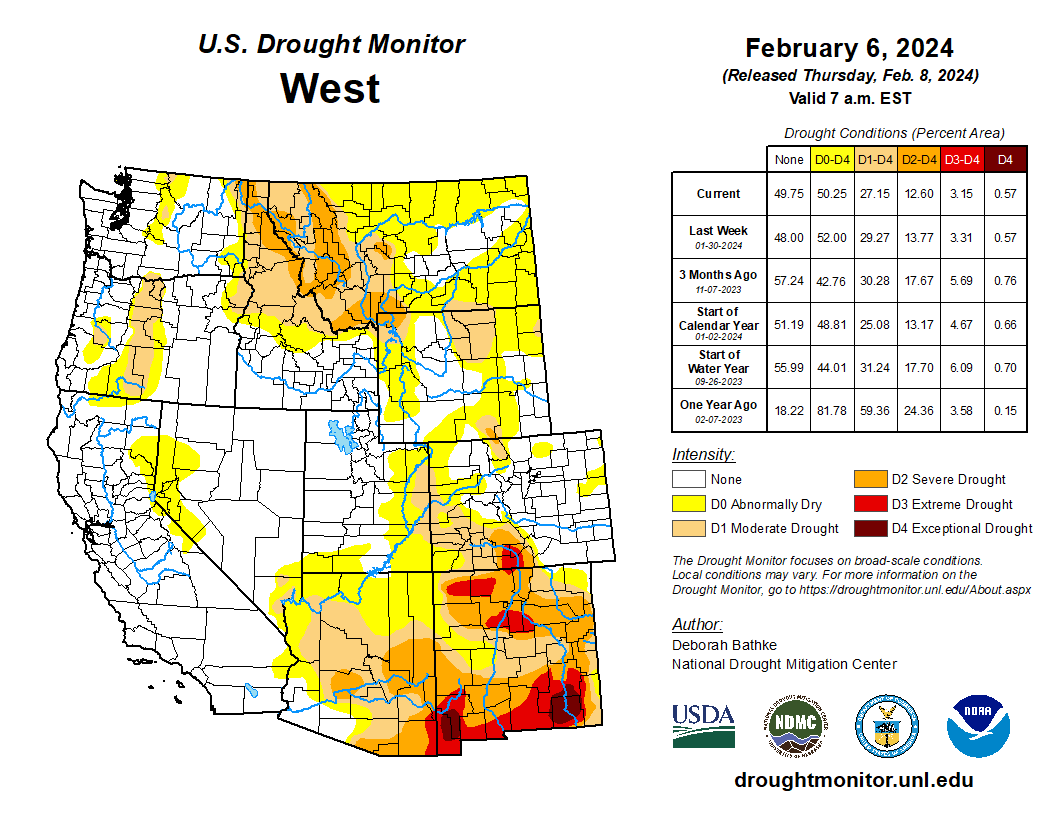
Click the link to go to the US Drought Monitor website. Here’s an excerpt:
Last week, a strong Pacific storm system brought flooding rains to California and heavy snow to the mountain ranges of Northern California and the Sierra Nevada. Parts of the state saw nearly a foot of rain from this storm, breaking long-standing records. Moisture from this system also brought rain and snow to the Pacific Northwest and inland regions of the West. Most states in the region saw pockets of improvement despite the heaviest precipitation missing many of the West’s persistent drought areas. Another round of showers and thunderstorms passed through the South and Southeast. In the last two weeks, rainfall totals of more than 10 inches fell in parts of East Texas, Louisiana, and Mississippi. The excess rain brought one and two category improvements to drought. The Northern Plains, Upper Midwest, and Northeast stayed relatively dry, with well above normal temperatures last week. Concerns continue to grow over the lack of snow this season…
High Plains
High temperatures averaged about 8 to more than 20 degrees above normal. Precipitation of less than 0.25 inches fell across much of the Dakotas, eastern Nebraska, and southwest Kansas. The rest of the region recorded totals ranging from about 0.25 inches to just over 1 inch. Moderate drought (D1) improved in eastern South Dakota in response to above normal precipitation during the month of January. South-central Nebraska and northern and central Kansas also saw 1-category improvements to long-term drought areas. While short-term moisture deficits have largely been eliminated, a dry signal remains at timescales longer than about 6 months. Precipitation deficits of nearly 10 inches over the last year remain in drought areas in these states and impacts to deeper soil moisture levels and groundwater continue to linger…
West
A strong storm system brought flooding rains to California and heavy snow to the mountain ranges of Northern California. Parts of the state recorded totals of 10 to 15 inches during the week, more than 600% of normal (for the same 7-day period). Moisture from this system also brought rain and snow to the Pacific Northwest and inland regions of the West. Outside of California, precipitation mostly totaled less than 3 inches. Pockets of improvements occurred in Idaho and western Montana, where recent precipitation has helped reduce drought signals in the short and longer terms. Central Arizona, the Four Corners region, and Colorado also saw improvements. A lack of snow in eastern Montana and western North Dakota led to the expansion of abnormal dryness (D0)…
South
Another round of wet weather brought more than 3 inches of rain to parts of Texas, Louisiana, and Mississippi. Totals less than 0.25 inches fell in parts of Tennessee and Texas. The continued wet weather left parts of Alabama with 200 to more than 400% of normal rainfall for the last two weeks. Much of the state saw 1- and 2-category improvements to drought conditions. While the drought developed rapidly over the summer, improvements are slower to happen. Rainfall deficits of more than 10 inches over the last six months remain over parts of Louisiana and Mississippi. Streamflow, groundwater levels, and deeper soil moisture also remain historically low for this time of year. The fact that drought signals are still present shows how dry it was during earlier months…
Looking Ahead
The National Weather Service Weather Prediction Center forecast (valid February 7 – 10, 2024) calls for another round of rainfall to sweep across California and into the Desert Southwest. High elevation snow is expected over mountains in the West with a wintry mix (freezing rain, sleet, and snow) over the northern Plains and upper Midwest. Heading into the weekend, the extended forecast (valid February 10 – 14, 2024) calls for a band of heavy rain across the South and Southeast. High temperatures are expected remain above average across central and eastern parts of the country. The Climate Prediction Center’s 6-to-10-day outlook (valid February 13 – 17, 2024) calls for an increased probability that observed temperatures, averaged over this 7-day period, will be above normal across the Upper Midwest, the west Coast, and Alaska. Temperatures across the remaining parts of the country are expected to be near to below normal. The pattern of increased precipitation across California and the southern tier of the continental U.S. (CONUS) is expected to continue, while much of the remaining CONUS, eastern Alaska, and the Big Island of Hawaii are expected to have below or near-normal precipitation.
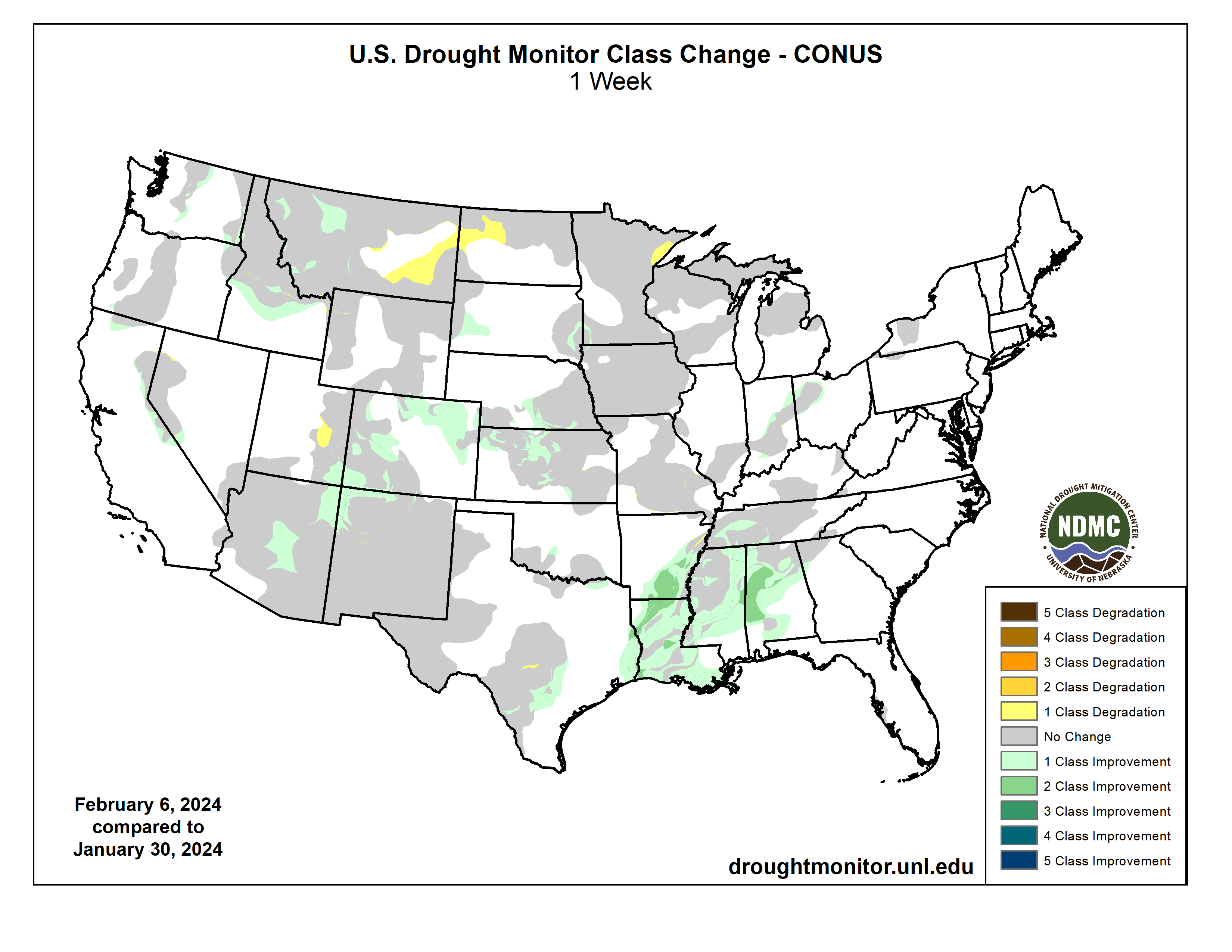
Just for grins here’s a gallery of US Drought Monitor maps for the last few years.
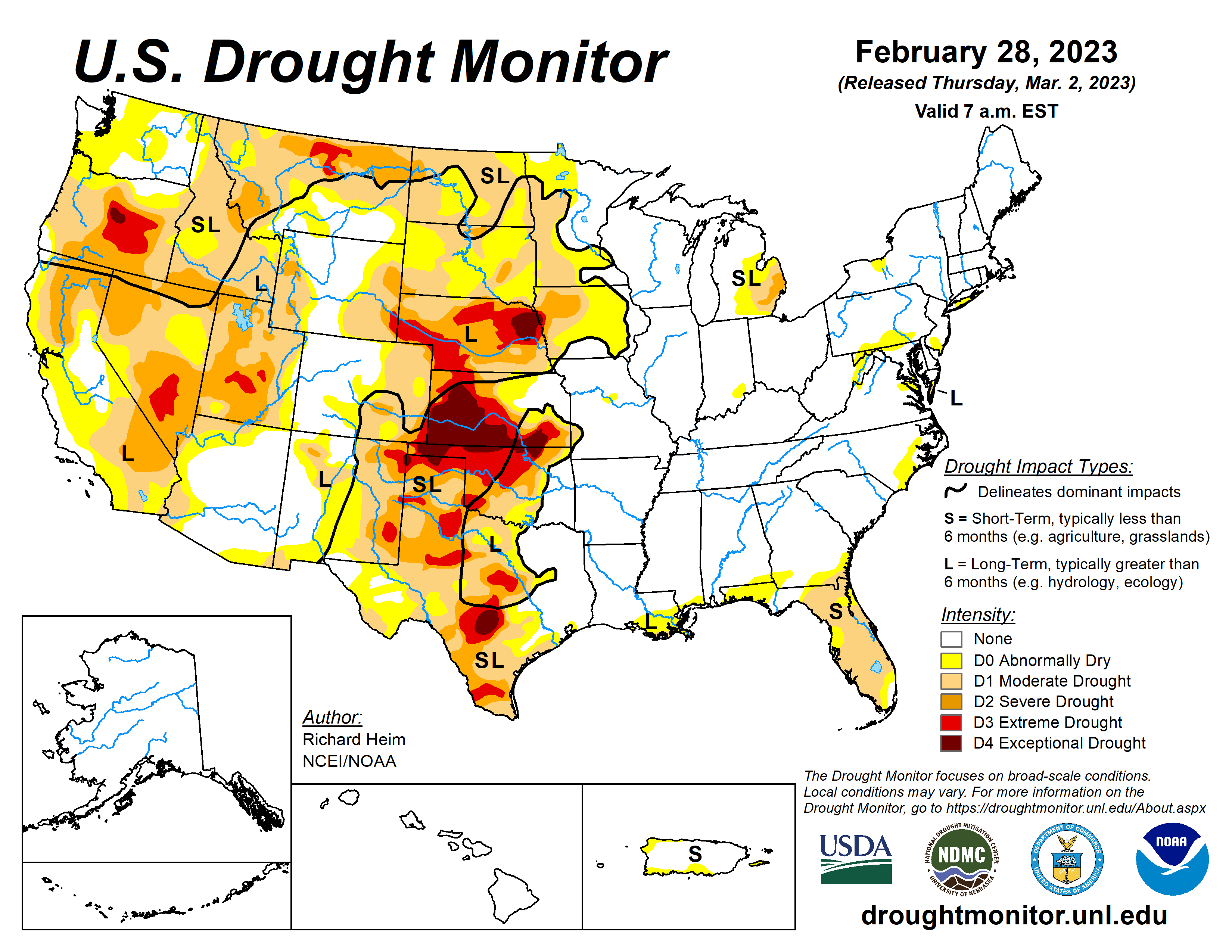
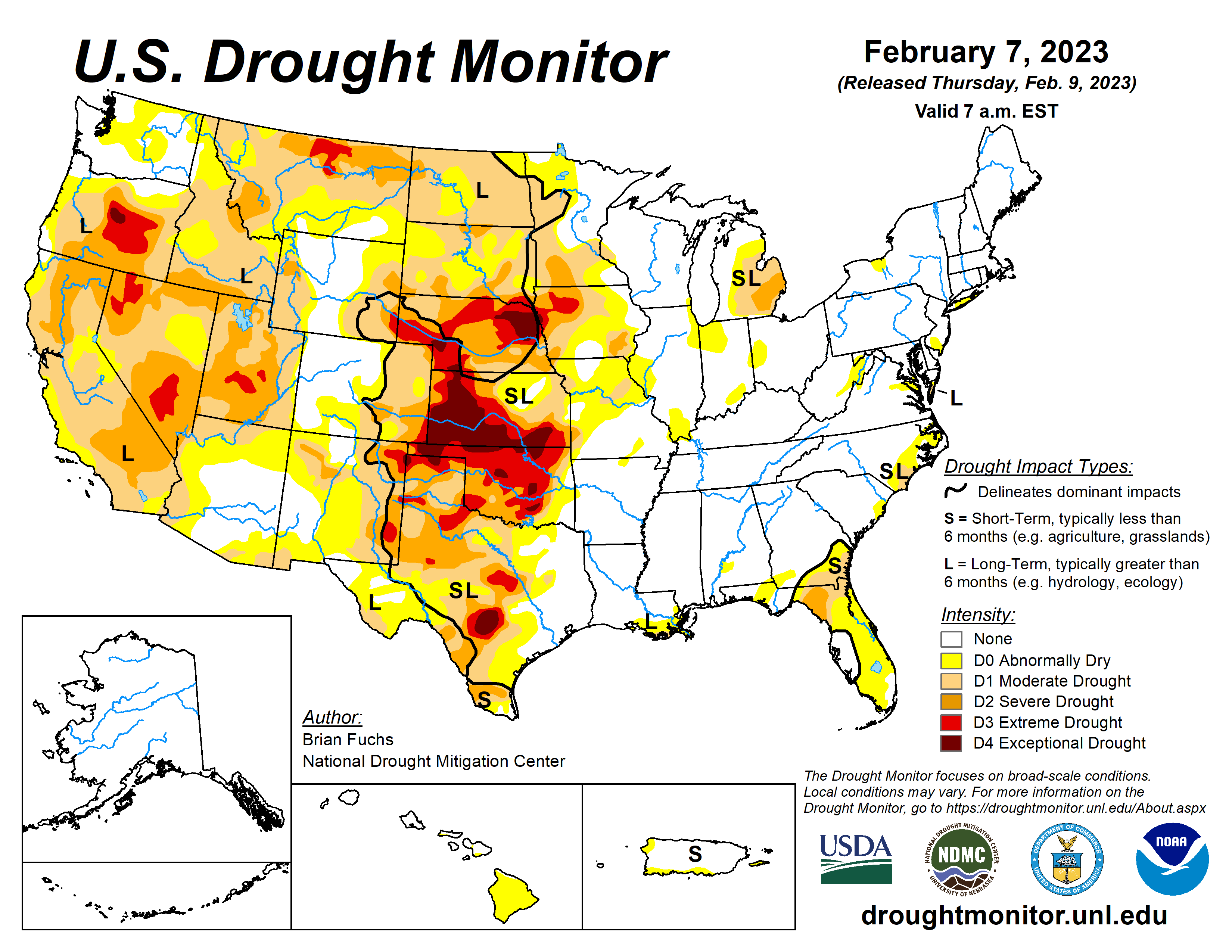
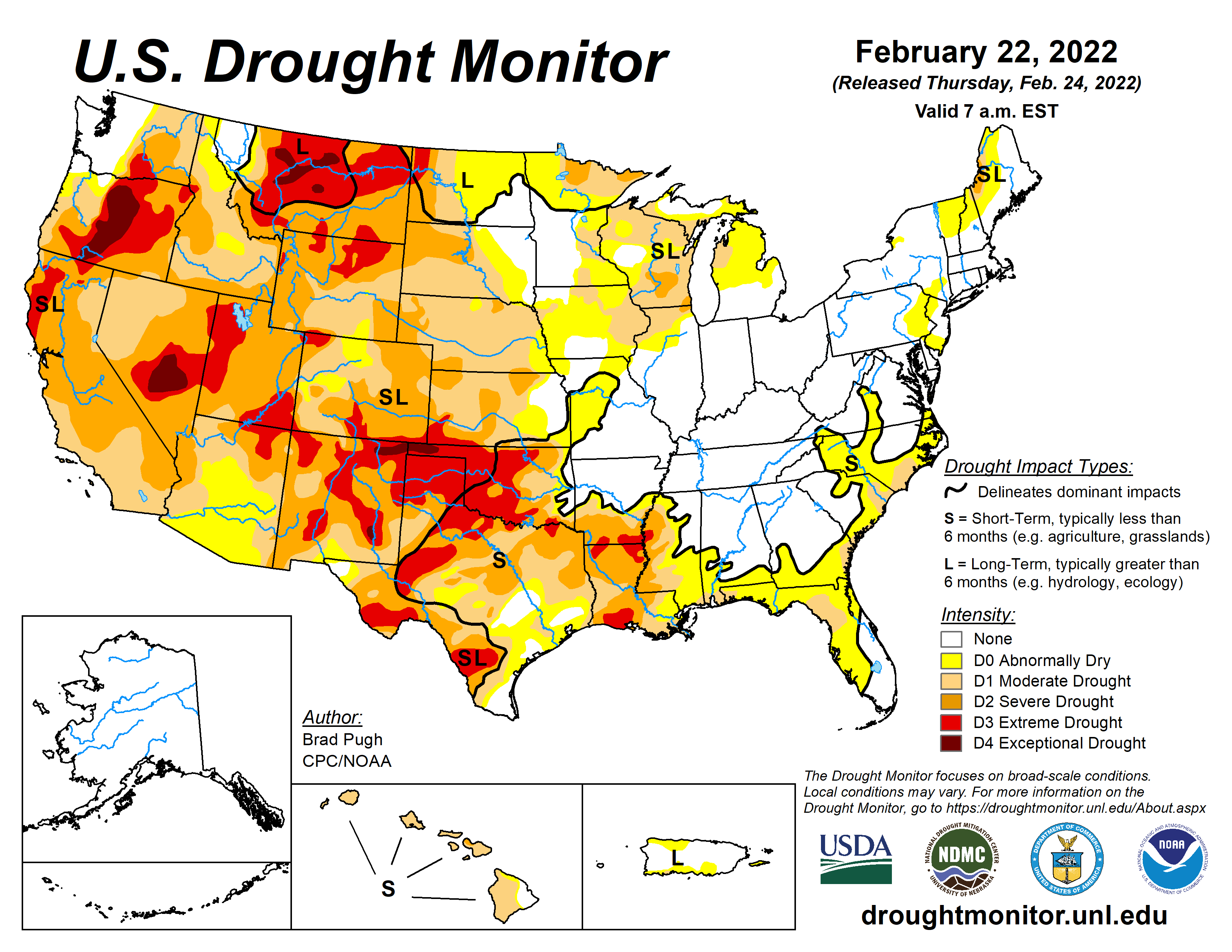
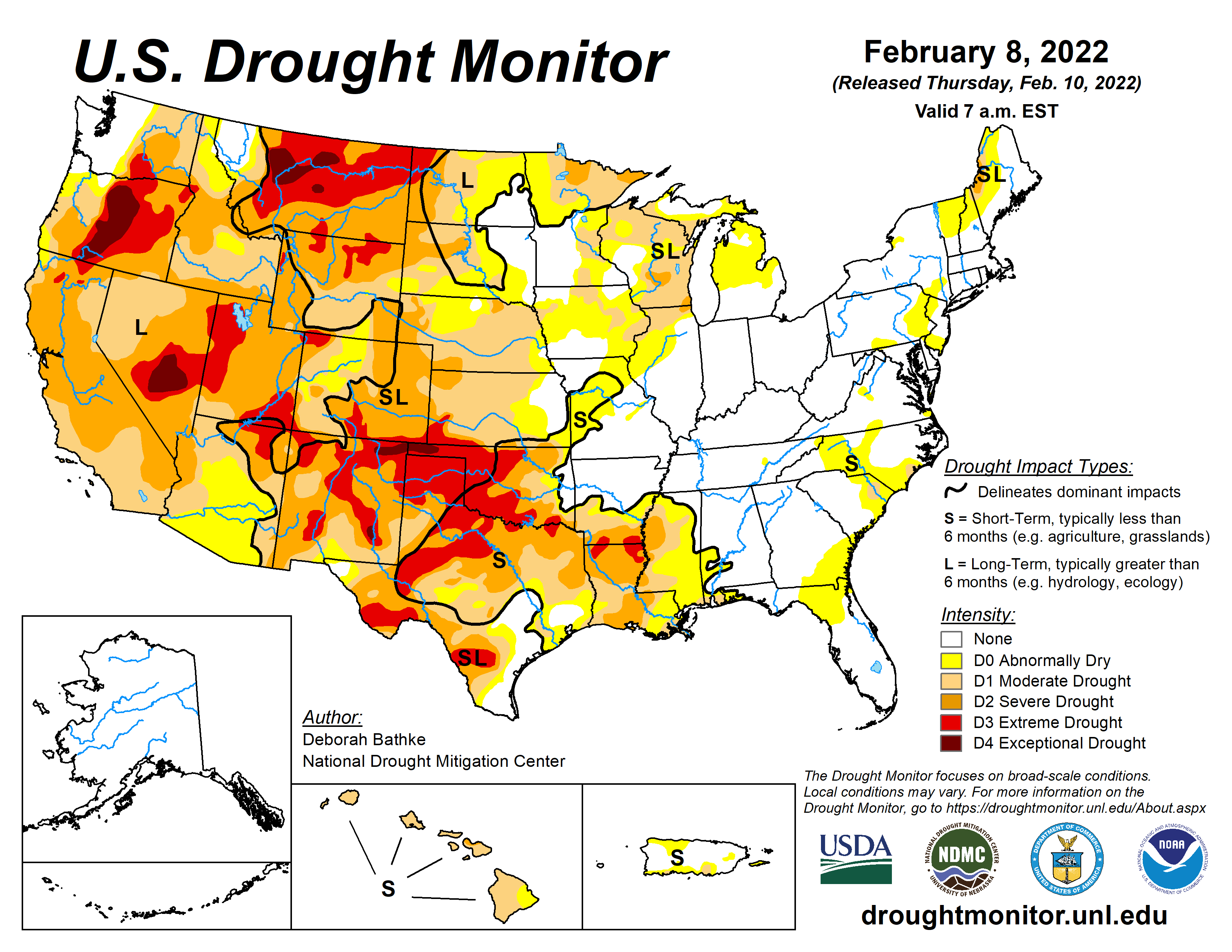
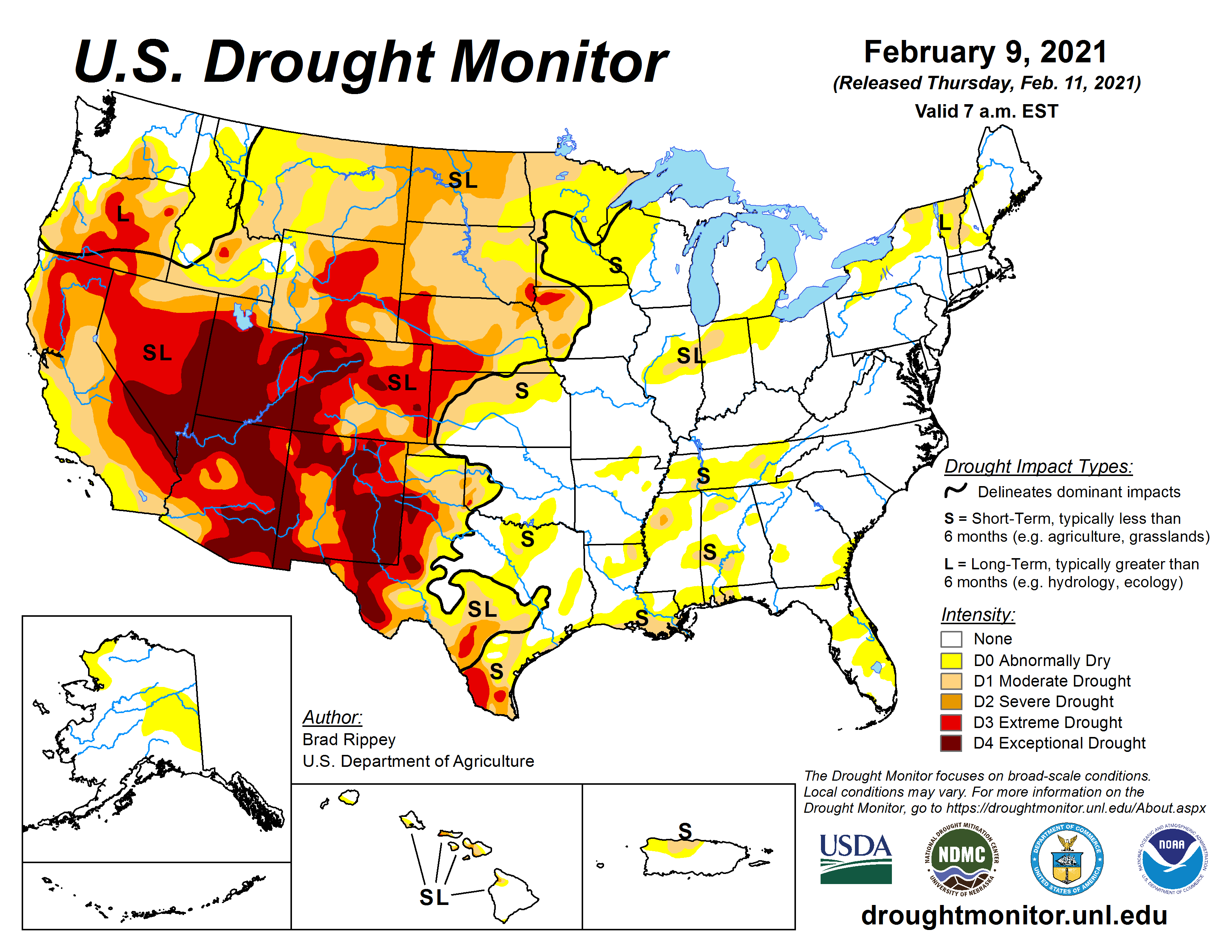

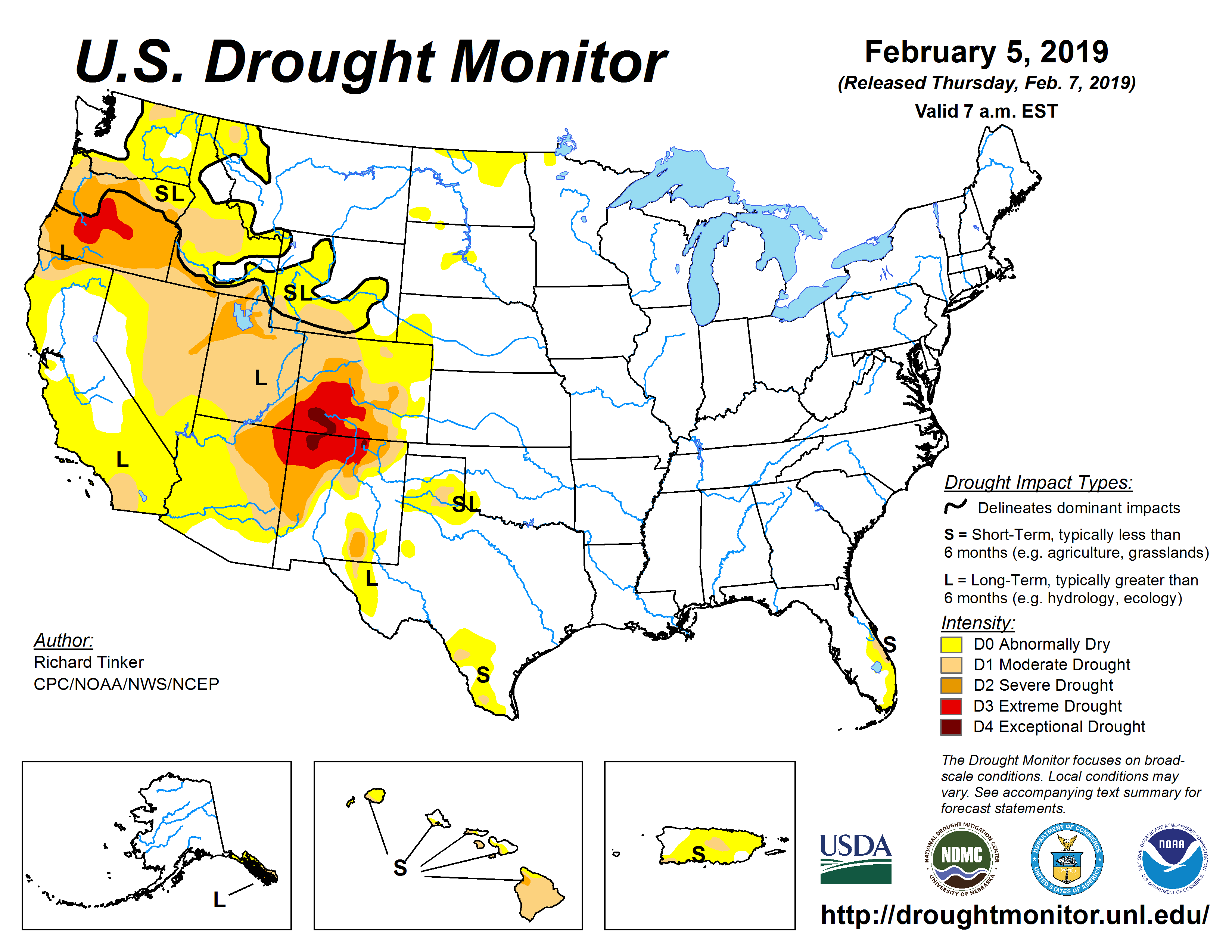

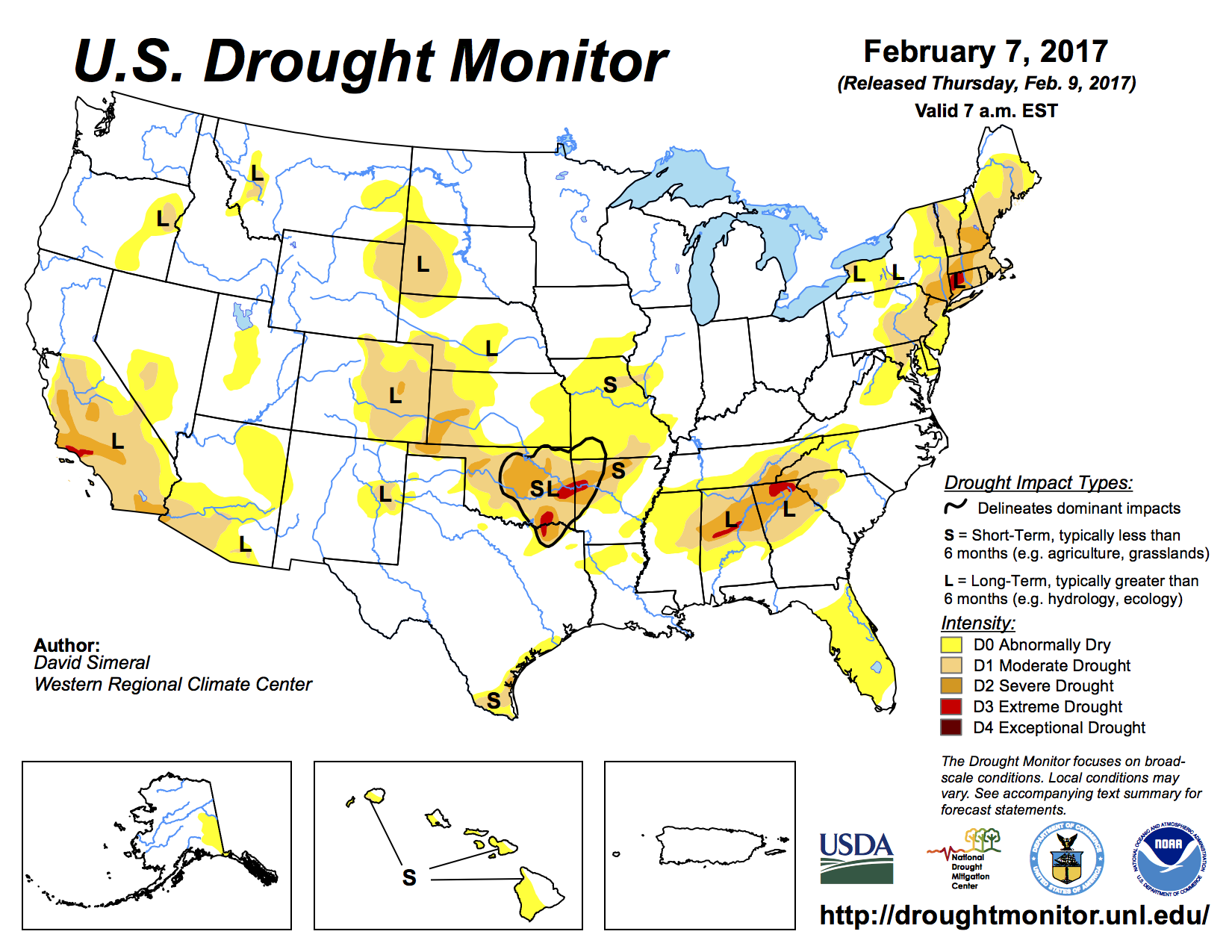
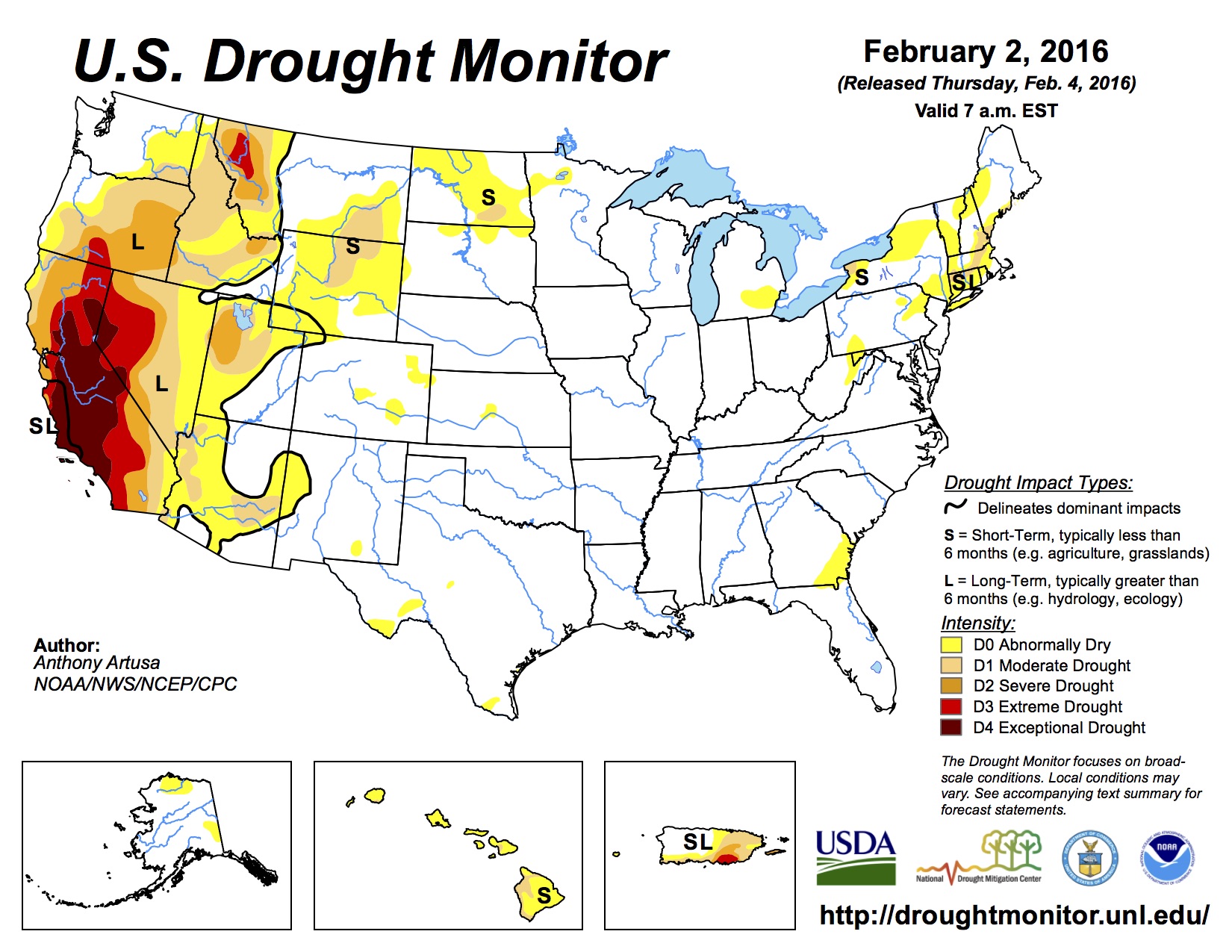
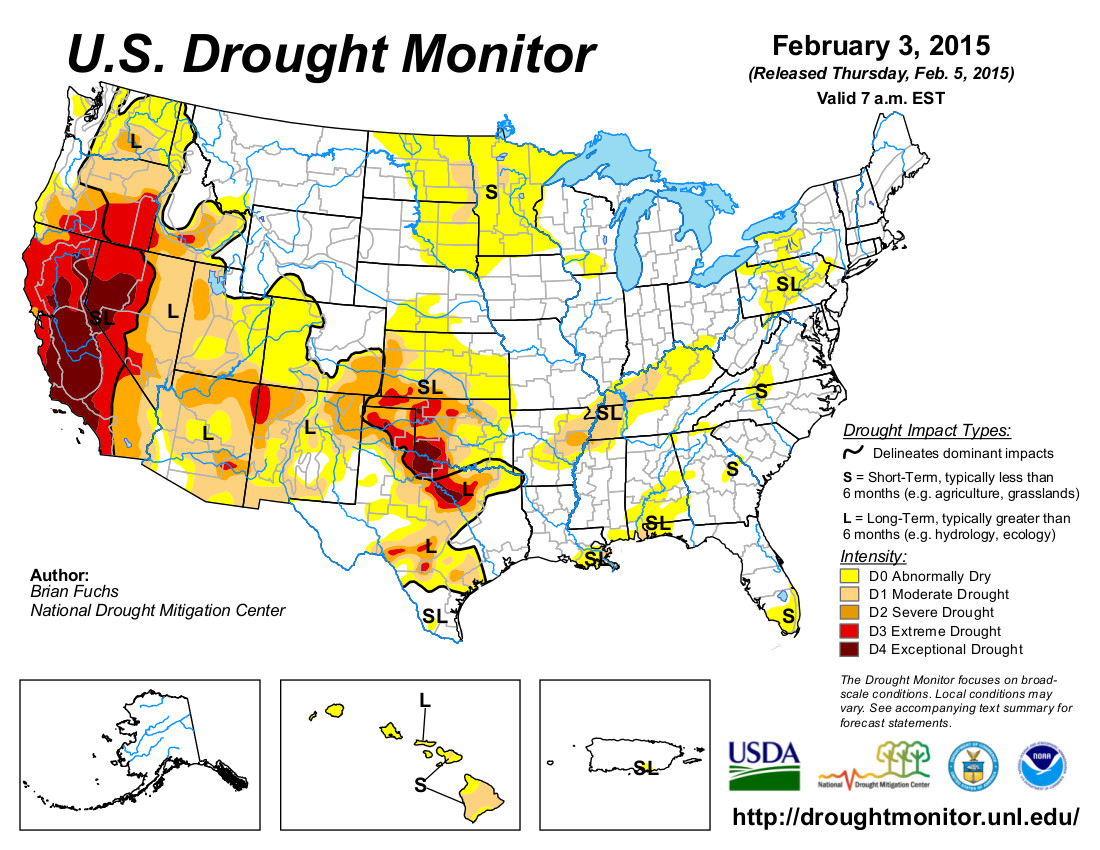

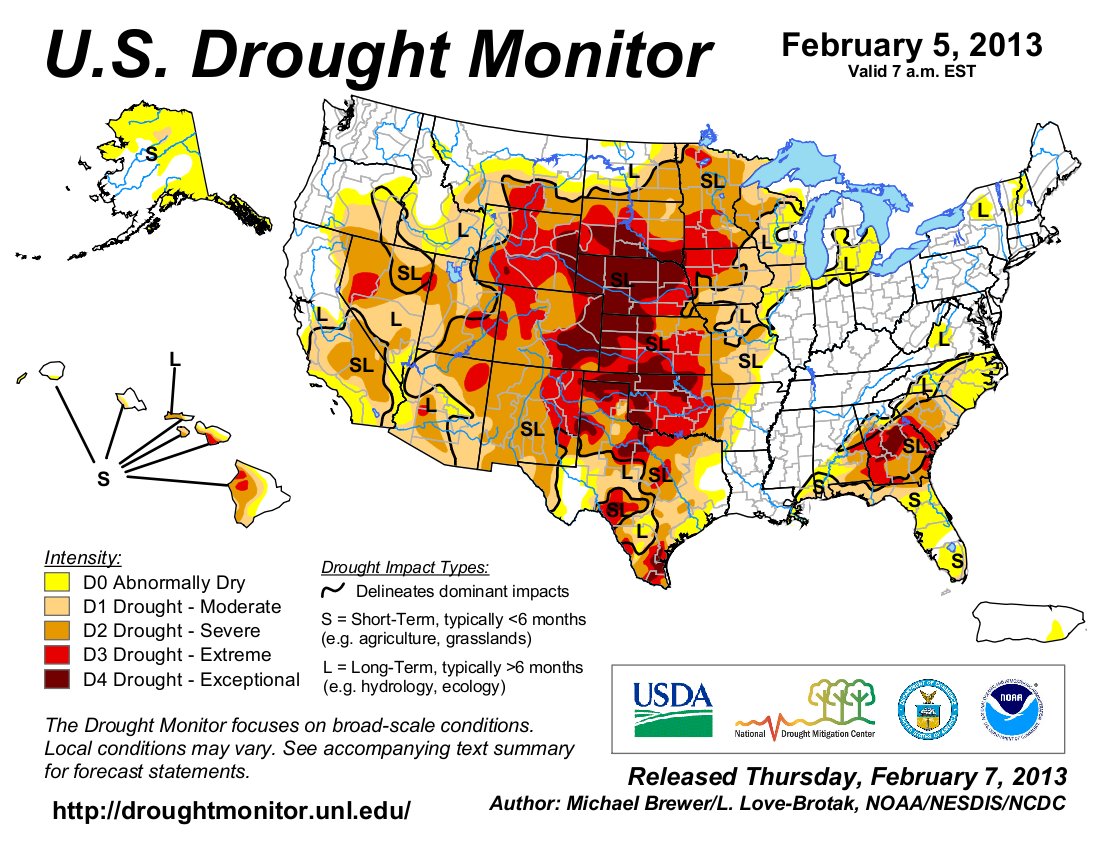
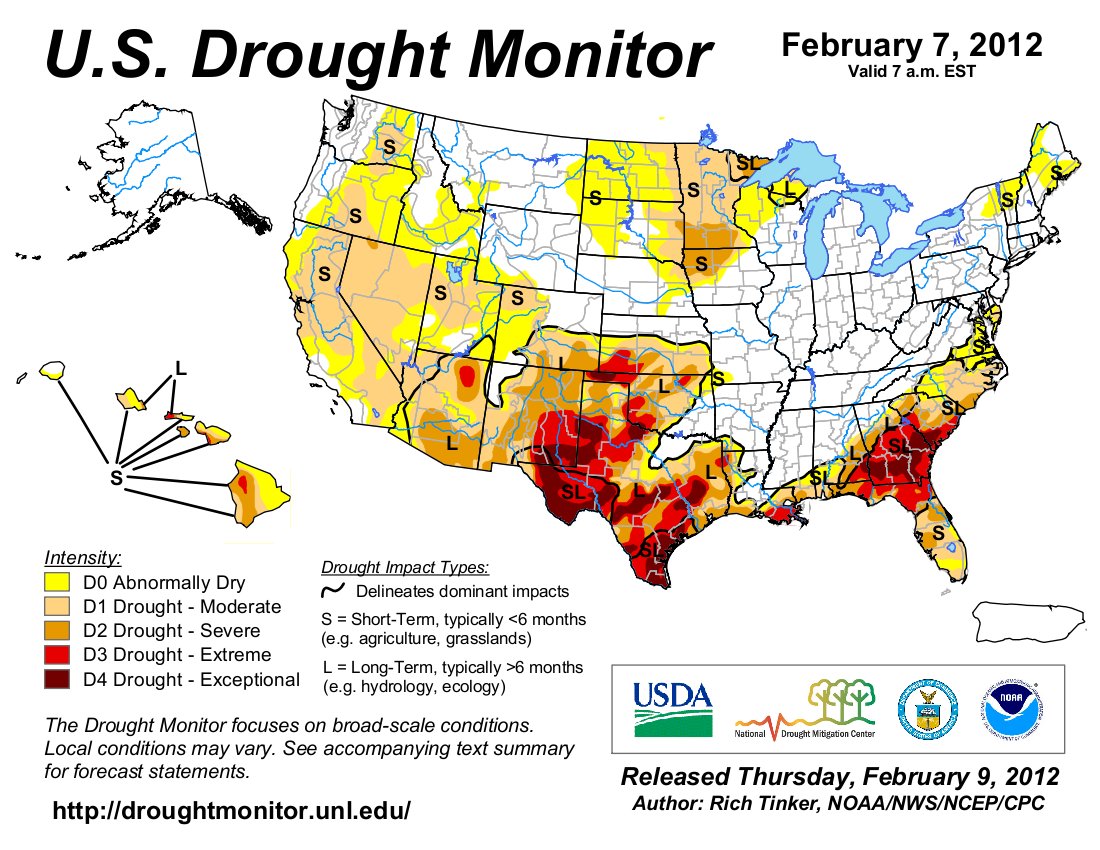
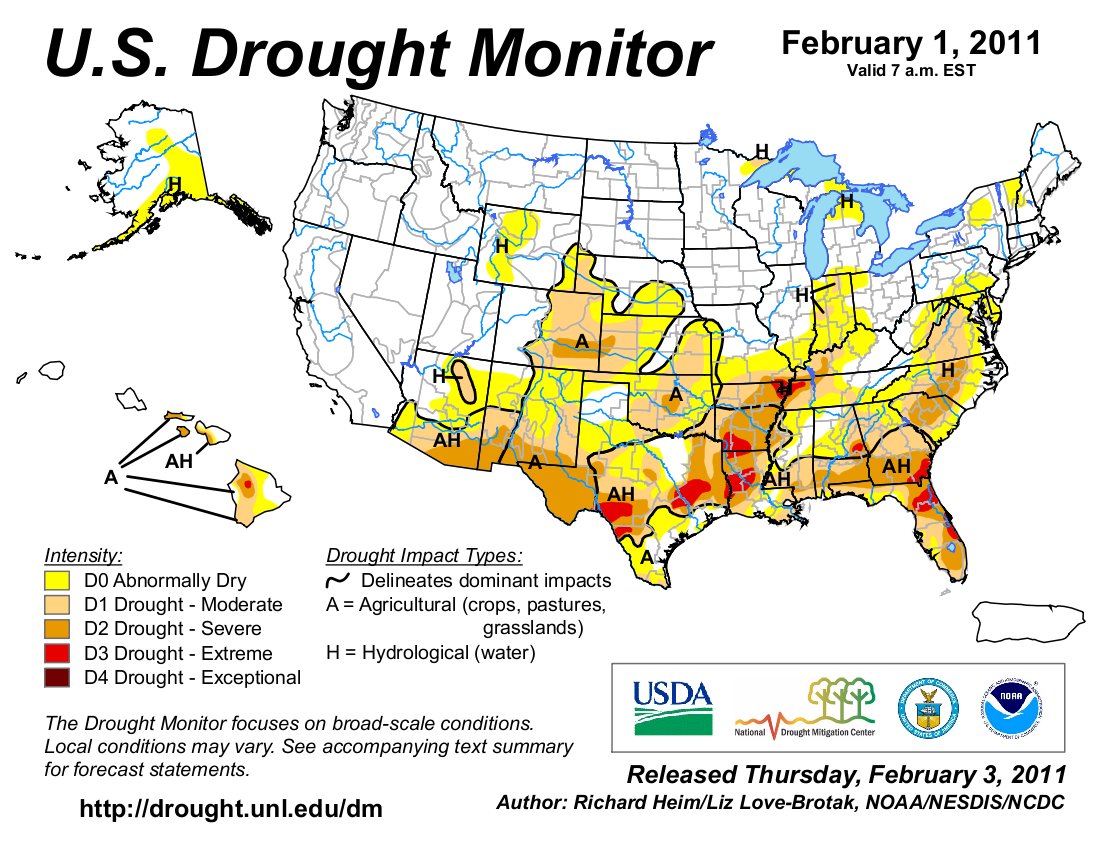
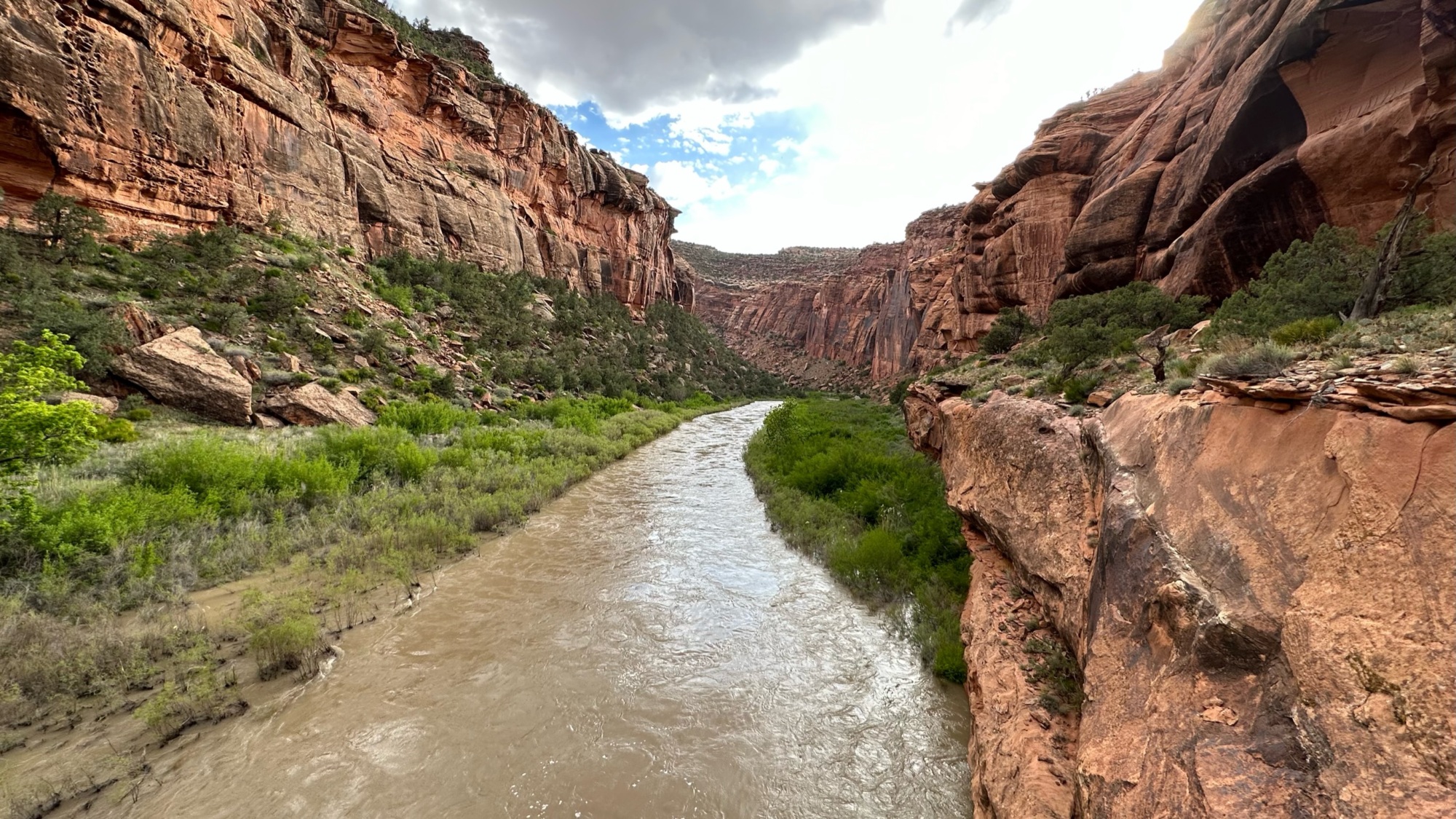
Click the link to read the article on the Environment America website (Karli Eheart and Ellen Montgomery):
December 22, 2023
Where is the Dolores River?
The Dolores River flows more than 241 miles from south to north through Colorado and then into Utah where it joins the Colorado River, carving one of the country’s most stunning canyons.
In 1765, a Spanish explorer came across what he named “El Río De Nuestra Señora de Dolores,” or “The River of Our Lady of Sorrows.” Today, the Dolores River brings pleasure rather than sorrow, as a vibrant habitat for wildlife and a popular recreation destination.

Why is the Dolores River important?
The water in the Colorado River is used for multiple purposes across many western states; including agriculture and drinking water. The river provides water to the cities of Cortez and Dove Creek as well as the Ute Mountain Ute Tribe and the Montezuma Valley through large, man-made canals. Importantly, the Dolores River flows into the Colorado River, which provides critical downstream benefits to some 40 million Americans.

The Dolores River was dammed just southwest of the city of Dolores, Colorado, creating the McPhee Reservoir, which allocates all of its stored water for agriculture. Even though it is the second largest reservoir in Colorado, the McPhee does not have the capacity to support agriculture and to release enough water into the river to help recreation and wildlife thrive.
This watershed is an ideal habitat for large mammals, such as desert bighorn sheep, mule deer, and beavers as well as many migratory birds. The river is also home to three native fish; flannelmouth sucker, bluehead sucker, and roundtail chub.
The jaw-dropping scenic views make it a popular tourist destination year after year. Rafting, camping, hiking, fishing, hunting, bird watching and other activities are abundant. Visitors also come for the rich cultural history. The Dolores Canyon was home to ancient Ute peoples, Ancestral Puebloans, and Fremont peoples for thousands of years.
Threats to the Dolores River
The Dolores river is dependent on water released by snowpack, the snow that builds up in the colder months. Due to climate change, snowpack has been decreasing since the 1950’s as snow melts earlier and there is less precipitation.
Because of the more intense drought conditions caused by climate change, there is often not enough water in the McPhee Dam left to release into the river after water has been allocated to agriculture. The river’s flow has decreased by 50% over the last 10 years. Not having enough water flowing can lead to dramatic increases in both water temperature and sediment and silt, leading to reduced water quality.

The importance of snowpack to the river was demonstrated in 2016. Thanks to a healthy snowpack which released more water than past years, the river flowed at a “floatable” level for the first time in half a decade. The fully flowing river led to increased water recreation, such as rafting the technical rapids, exploring back hidden canyons, fly fishing for rainbow trout and spotting wildlife such as beavers. Camping even resumed, despite many campsites being overgrown and untended for years.
In addition to low water levels, the river is exposed to pollution from uranium tailings and runoff from historic mines at its headwaters. With the possibility of mining resuming, the Dolores could be exposed to even more pollution, threatening native fish species, potentially leading to population declines. Additionally, it decreases the quality and the safetyof drinking water across the country, potentially leading to public health risks.
We must protect the Dolores River
We must ensure the water in the Dolores River is safe for drinking, wildlife, recreation, and agriculture. Designating the land surrounding the Dolores River in Mesa and Montrose counties as a national monument would help to protect endangered species, encourage sustainable and responsible recreation and protect the water that does flow in the river from future toxic pollution. A national monument will not address all of the challenges with water shortages in this area but it will give wildlife a better chance. This will allow people to continue to enjoy the unique beauty of this area without running the risk of overuse, and preserve it for future generations.




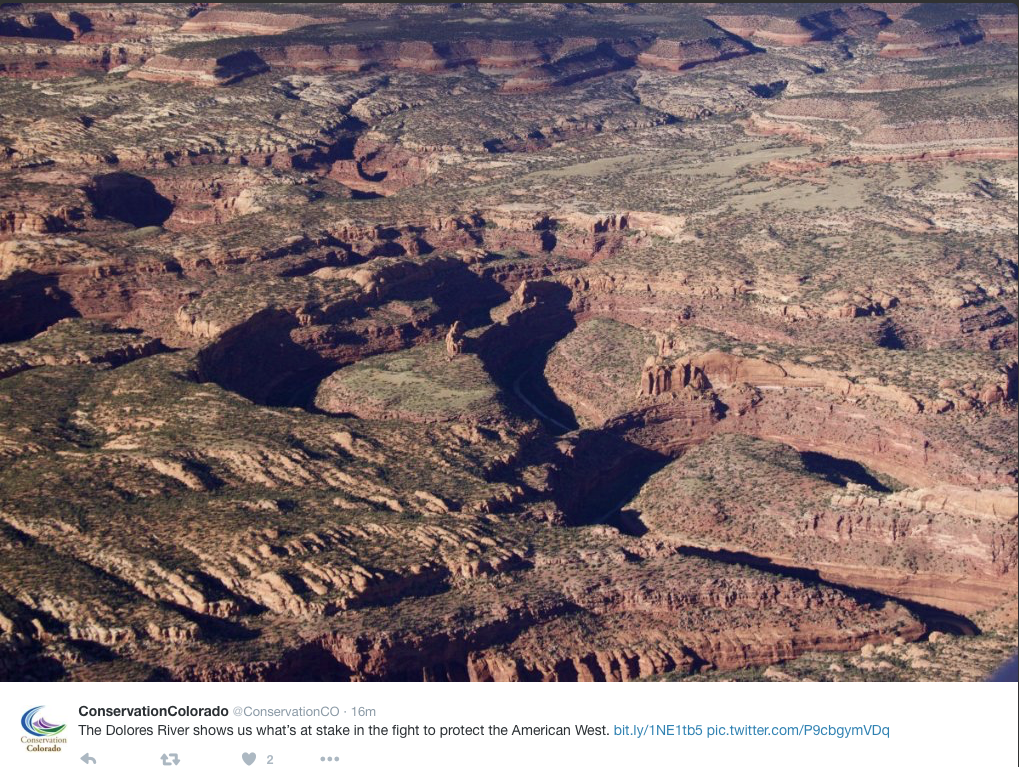
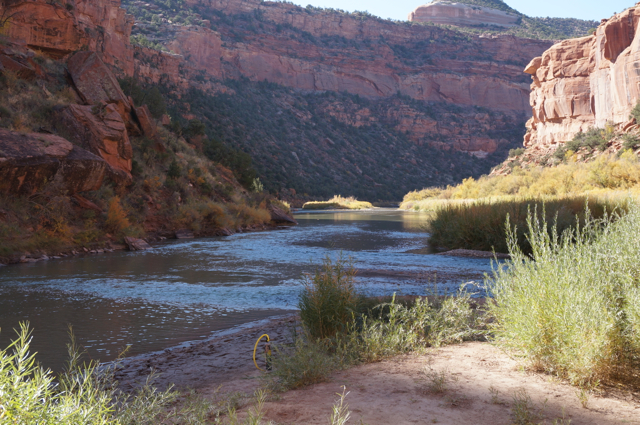

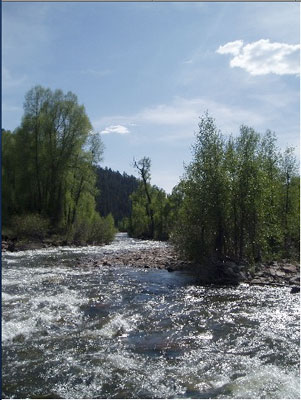

Click the link to read the article on the Water Education Colorado website (Jerd Smith):
Hundreds of growers in Colorado’s San Luis Valley could see their water costs nearly quadruple under a new plan designed to slash agricultural water use in the drought-strapped region and deflect a potential legal crisis on the Rio Grande.
A new rule approved by the area’s largest irrigation district, known as Subdistrict 1, and the Alamosa-based Rio Grande Water Conservation District, sets fees charged to pump water from a severely depleted underground aquifer at $500 an acre-foot, up from $150 an acre-foot. The new program could begin as early as 2026 if the fees survive a court challenge.
“It’s draconian and it hurts,” said Sen. Cleave Simpson, a Republican from Alamosa who is also general manager of the Rio Grande water district.
The region, home to one of the nation’s largest potato economies, has relied for more than 70 years on water from an aquifer that is intimately tied to the Rio Grande. The river begins high in the San Juan mountains above the valley floor.
Both the river and the aquifer are supplied by melting mountain snows, but a relentless multi-year drought has shrunk annual snowpacks so much that neither the river nor the aquifer have been able to recover their once bountiful supplies.
And that’s a problem. Under the Rio Grande Compact of 1938, Colorado is required to deliver enough water downstream to satisfy New Mexico and Texas. If the aquifer falls too low, it will endanger the river’s supplies and push Colorado out of compliance. Such a situation could trigger lawsuits and cost the state tens of millions of dollars in legal fees.
Subdistrict 1 has set state-approved goals to comply with the compact. Within seven years, it must find a way to restore hundreds of thousands of acre-feet of water to the aquifer, a difficult task.

An acre-foot equals nearly 326,000 gallons of water, or enough to cover an acre of land with water a foot deep.
The specter of an interstate water fight is creating enormous pressure to reorganize the valley’s farming communities in a way that will allow them to use less water, grow fewer potatoes, and still have a healthy economy.
For more than a decade, valley water users have been working to reduce water use and stabilize the aquifer. Many have already started experimenting with ways to grow potatoes with less water by improving soil health, and to find new crops, such as quinoa, that may also prove to be profitable.
They have taxed themselves and raised pumping fees, using that revenue to purchase and then retire hundreds of wells. In fact, the district is pumping 30% less water now than it was 10 years ago, according to Simpson.
But the pumping plans, considered innovative by water experts, haven’t been enough to stop the decline in aquifer levels. The Rio Grande Basin is consistently one of the driest in the state, generating too little water to make up for drought conditions and restore the aquifer after decades of over pumping.
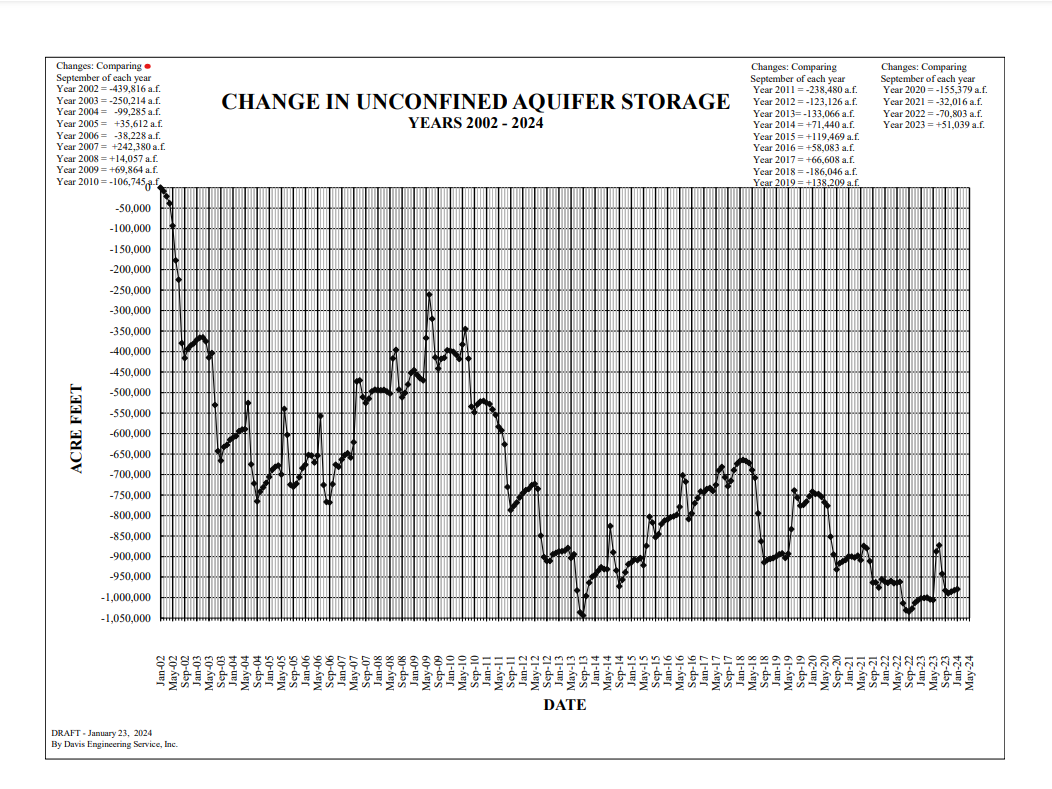
With the new fees, the region will likely have some of the highest agricultural water costs in the state, said Craig Cotten, who oversees the Rio Grande River Basin for Colorado’s Division of Water Resources.
Perhaps not as high as water in the Colorado-Big Thompson Project on the northern Front Range, where cities and developers and some growers pay thousands of dollars to buy an acre-foot of water.
Still it is much higher than San Luis Valley growers and others have paid historically. Fees at one time were just $75 an acre-foot, eventually reaching $150 an acre-foot. The prospect of the fee skyrocketing to $500 is shocking.
“That is high,” said Brett Bovee, president of WestWater Research, a consulting firm specializing in water economics and valuations. Typically such fees across the state have been in the $50 to $100 range, he said.
But Bovee said the water district is taking constructive action while giving growers opportunities to find their own solutions to the water shortage. “It’s putting the decision-making power into the hands of growers and landowners, rather than saying ‘everybody take one-third of your land out of production.’”
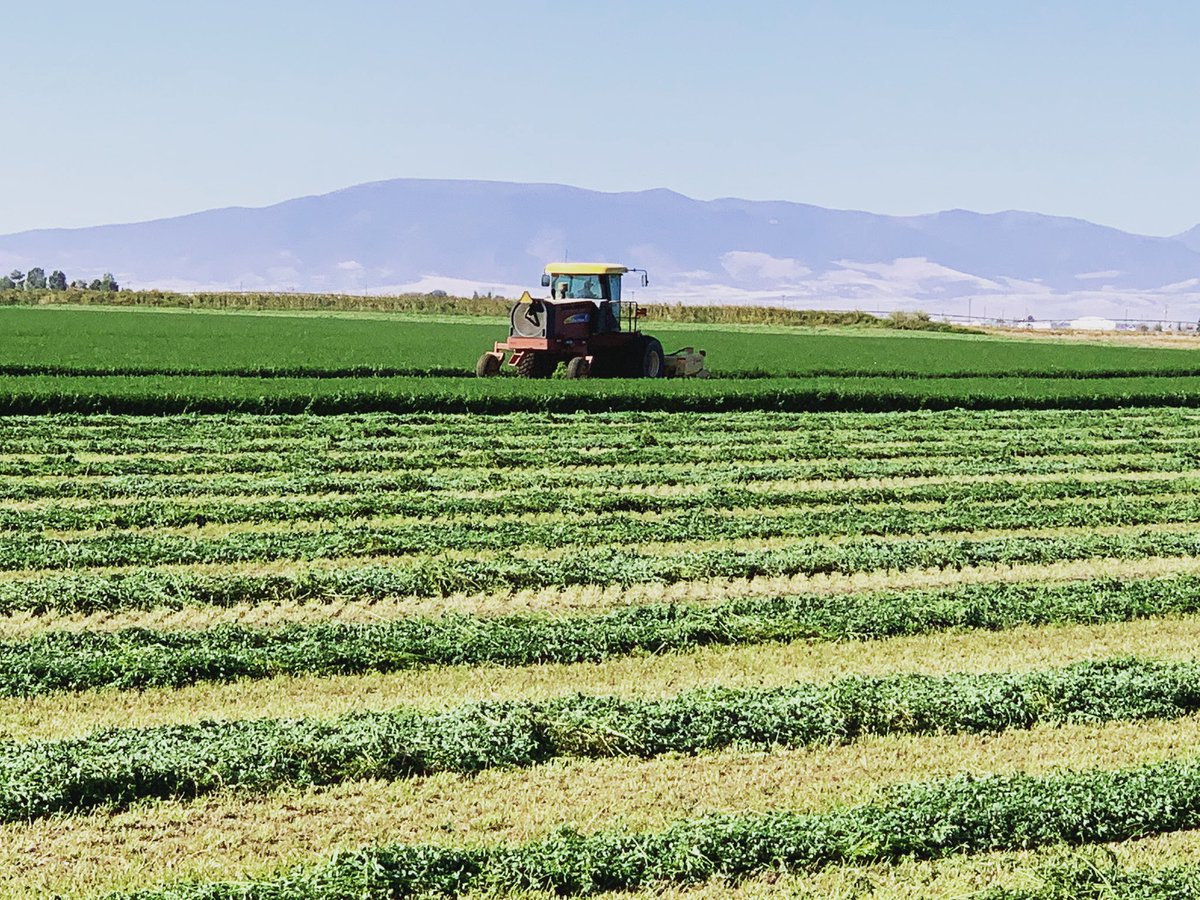
Subdistrict 1 is the oldest and largest of a group of irrigation districts in the valley, according to Cotten. Its $500 fee has triggered a lawsuit by some growers, who believe the district is applying the new fees unfairly.
“The responsibility for achieving a sustainable water supply is to be borne proportionately based on (growers’) past, present and future usage,” Brad Grasmick, a water attorney representing San Luis Valley growers in the Sustainable Water Augmentation Group and the Northeast Water Users Association, said, referring to state water laws. “But we believe the responsibility is being disproportionately applied to our wells.”
Those growers are now trying to create their own irrigation district and they are suing to stop the new fee.
“I think that more land retirement and more reduction in well pumping is needed and that is what my group is trying to do,” Grasmick said. “No one wants to see the aquifer diminish and continue to shrink. If everybody can do their part to cut back and make that happen, that is the way forward. My guys just want to see the proportionality adhered to.”
To date, tens of millions of dollars have been raised and spent to retire wells in the San Luis Valley, with Subdistrict 1 raising $70 million in the last decade, according to Simpson. And in 2022 state lawmakers approved another $30 million to retire more wells.
But it’s not enough. With each dry year, the water levels in the aquifer continue to drop.

Similar issues loom for Eastern Plains irrigators
The San Luis Valley is not the only region faced with finding ways to reduce agricultural water use or face interstate compact fights. Colorado lawmakers have also approved $30 million to help growers in the Republican River Basin on the Eastern Plains reduce water use to comply with the Republican River Compact of 1943, which includes Kansas, Nebraska and Colorado.
Lawmakers are closely monitoring these efforts to reduce water use while protecting growers.
Sen. Byron Pelton, a Republican from Sterling, said the combined money that is going to the Rio Grande and Republican basins is critical. But the potential for legal battles, he said, is concerning.
“Agriculture is key in our communities,” Pelton said. “But the biggest thing is that we have to stay within our compacts. Sometimes you’re backed into a corner and that is just the way it has to be. I hate it, but we have to stay in compliance.”
How much irrigated land will be lost as wells are retired isn’t clear yet. Simpson said growers who have access to surface supplies in the Rio Grande will still be able to irrigate even without as many wells or as much water, but the land will likely produce less and farms may become less profitable.
And it will take more than sky-high pumping fees to solve the problem, officials said. The Division of Water Resources has also created another water-saving rule in Subdistrict 1 that will force growers to replace one-for-one the water they take out of the aquifer, instead of allowing them to simply pay more to pump more.
Cotten said the hope is that the higher fees combined with the new one-for-one rule will reduce pumping enough to save the aquifer and the ag economy.
Valley growers are already shifting production and changing crops, said James Ehrlich, executive director of the Colorado Potato Administrative Committee in Monte Vista, an agency involved in overseeing and marketing the region’s potato crops.
Still the new fees could jeopardize the entire potato economy, Ehrlich said.
“There are a lot of creative things going on down here,” Ehrlich said. “But we have to farm less and learn to survive as a community together. And Mother Nature has not helped us out. We’ve stabilized but we can’t gain back what (state and local water officials) want us to gain back. It is just not going to happen.”
More by Jerd SmithJerd Smith is editor of Fresh Water News. She can be reached at 720-398-6474, via email at jerd@wateredco.org or @jerd_smith.

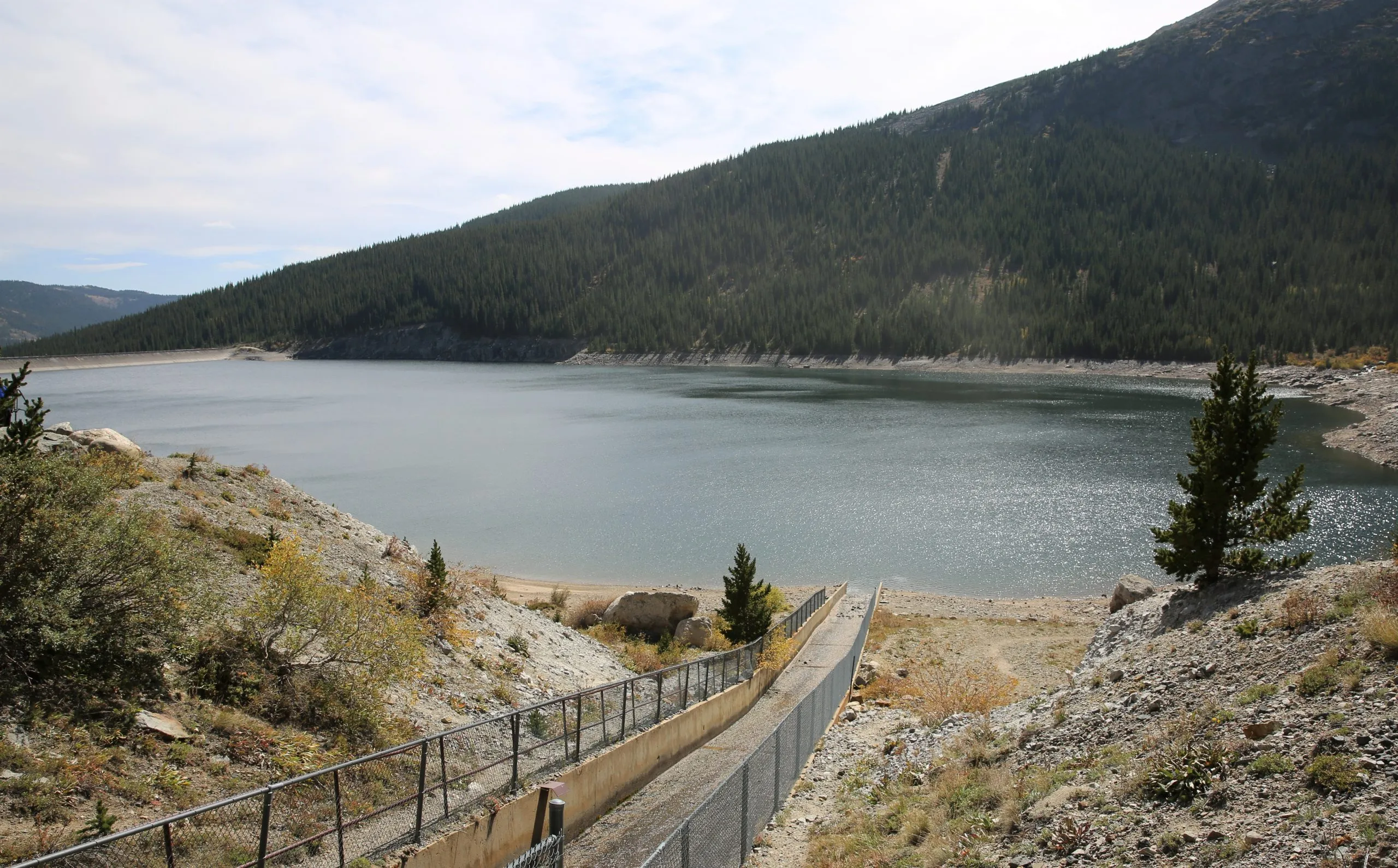
Click the link to read the article on the Aspen Journalism website (Heather Sackett):
February 6, 2024
Colorado Springs has agreed to give up water rights tied to reservoirs in the Blue River basin in exchange for the ability to expand Montgomery Reservoir on the east side of the Continental Divide without opposition from Western Slope entities.
Colorado Springs Utilities had been fighting in water court since 2015 to hang on to conditional water rights originally decreed in 1952 and tied to three proposed reservoirs: Lower Blue Reservoir, on Monte Cristo Creek; Spruce Lake Reservoir, on Spruce Creek; and Mayflower Reservoir, which would also have been built on Spruce Creek. Lower Blue Reservoir was decreed for a 50-foot-tall dam and 1,006 acre-feet of water; Spruce Lake Reservoir was decreed for an 80- to 90-foot-tall dam and 1,542 acre-feet; and Mayflower Reservoir, was decreed for a 75- to 85-foot-tall dam and 618 acre-feet.
After negotiations with eight opposers, including the Colorado River Water Conservation District, Summit County and the town of Breckenridge, the parties are set to approve an agreement that would cancel the conditional water rights for Spruce Lake and Mayflower reservoirs. A third potential reservoir, Lower Blue, would keep its 70-year-old rights, but Colorado Springs would transfer the majority of the water stored to Breckenridge and Summit County, and would share the costs of building that reservoir, which would be owned and operated by Breckenridge and Summit County.
In exchange, the Western Slope parties will not oppose Colorado Springs’ plan to enlarge Montgomery Reservoir to hold an additional 8,100 acre-feet of water for a total capacity of about 13,800 acre-feet. That project is expected to enter the permitting phase in 2025. After the permitting and construction of the Montgomery Reservoir expansion, the conditional water rights for Spruce Lake and Mayflower reservoirs would be officially abandoned and the water rights for Lower Blue Reservoir transferred to Summit County and Breckenridge.
“These conditional rights we’re relinquishing in the agreement are for future reservoirs that would be difficult to permit and build for us,” Jennifer Jordan, senior public affairs specialist at Colorado Springs Utilities (CSU), said in an interview with Aspen Journalism. “And we can gain in average years that same yield and perhaps a little bit more by getting the Montgomery Dam enlargement completed.”
A 2015 evaluation of the conditional water rights and proposed reservoirs by Wilson Water Group found several potential environmental and permitting stumbling blocks, including the presence of endangered species and challenging high-Alpine road construction.
CSU also agreed to a volumetric limit of the amount it will be allowed to take through the Hoosier Tunnel after the Montgomery Reservoir expansion: 13,000 acre-feet per year over a 15-year rolling average. CSU currently takes about 8,500 acre-feet per year through the tunnel.
Montgomery Reservoir is part of CSU’s Continental Hoosier System, which takes water from the headwaters of the Blue River between Breckenridge and Alma to Colorado Springs via the Hoosier Tunnel, Montgomery Reservoir and Blue River Pipeline. It is the city’s oldest transmountain diversion project.
Each year, transmountain diversions take about 500,000 acre-feet from the Colorado River basin to the Front Range. Colorado Springs is a large water user that draws from this vast network of tunnels and conveyance systems that move water from the mountainous headwaters on the west side of the Continental Divide to the east side, where the state’s biggest cities are located. Colorado Springs’ largest source of Western Slope water is its Twin Lakes system, which draws from the headwaters of the Roaring Fork River above Aspen.
Proposed reservoirs on the Blue River

CSU to support Shoshone
The Glenwood Springs-based River District was created in 1937 to combat these types of diversions and keep water on the Western Slope. It was one of the entities that opposed CSU’s conditional water rights in its nearly nine-year water court battle, which kicked off when the water provider filed a diligence application. That is the process in which a conditional water-right holder must demonstrate to the water court that it can and will eventually develop the water right, and that in the previous six years, it has done its diligence in seeing a project through.
On Jan. 16, the River District board approved the settlement agreement, which includes a commitment from Colorado Springs that the utility will support the River District’s efforts at securing the Shoshone water right.
The River District is working to purchase water rights from Xcel Energy associated with the Shoshone hydropower plant in Glenwood Canyon. The water rights date to 1902 and are nonconsumptive, meaning the water would stay in the river and flow downstream to the benefit of the environment, endangered fish and other water users on the Western Slope. The Colorado Water Conservation Board approved $20 million toward the $98.5 million purchase last week.

“The settlement provides additional local water supplies to the Blue River Valley and a commitment of support from Colorado Springs Utilities for the Shoshone Water Right Preservation effort, which provides substantial benefits to the health of the entire Colorado River, including important water security, economic and environmental benefits to the West Slope,” River District General Manager Andy Mueller said in a prepared statement. “In addition, the West Slope will benefit from clearly specified limits on the total amount of water Colorado Springs can divert through its Continental-Hoosier transmountain diversion tunnel.”
The agreement was also good news for Breckenridge, which will split the 600 acre-feet of water from Colorado Springs in a future Lower Blue Reservoir equally with Summit County. The reservoir was originally decreed for 1,006 acre-feet, but the agreement now limits the reservoir capacity to 600 acre-feet. Colorado Springs will retain the remaining amount, about 400 acre-feet, which can be stored in Montgomery Reservoir.
Breckenridge Mayor Pro Tem Kelly Owens said Breckenridge will be able to use the stored water in late summer, when flows in the Blue River are at their lowest.
“The way we see it is that we’ve now protected those waters, the snowmelt, and keeping it in the Blue River basin,” Owens said.
According to the agreement, Colorado Springs would pay 50% of the construction costs of a future Lower Blue Reservoir, and Breckenridge and Summit County would each pay 25%.
Colorado Springs City Council is expected to approve the agreement at its Feb. 13 meeting.
This story ran in the Feb. 5 edition of the Summit Daily.
Click the link to read the article on the 8NewsNow.com website (Greg Haas). Here’s an excerpt:
February 5, 2024
The attention is on Southern California right now, but an atmospheric river’s path will extend inland with potential flooding — and possible drought relief. If you’re watching the weather, it’s still a little early to tell whether these storms will go where they can hope Las Vegas the most. That’s anywhere in the Upper Colorado River Basin, where there’s a chance they could produce snow to help the river that supplies 90% of the water used in Southern Nevada…The paths of this year’s atmospheric rivers are unlike the ones that slammed the Sierras last year. Those storms carried snow straight east through Northern Nevada and Utah, feeding the Rocky Mountains with snowpack levels that reached 160% of normal by the end of winter. That snow provided relief from drought years that had everyone watching nervously as Lake Mead dropped in 2022. This time, the moisture is following a path that is causing concern in Death Valley, where roads were destroyed less than six months ago by the remnants of Hurricane Hilary…
But where will the atmospheric river go from there? The path is currently extending to Salt Lake City, where it fizzles out as it runs up against the Wasatch Mountains…And after rains let up, the biggest question remains: Will the moisture reach the Upper Colorado River Basin? That’s the drainage area that feeds the Colorado River, extending from central Utah to the Continental Divide in Colorado. The moisture is currently tracking toward the upper Green River basin, the northern tip in the map shown below:
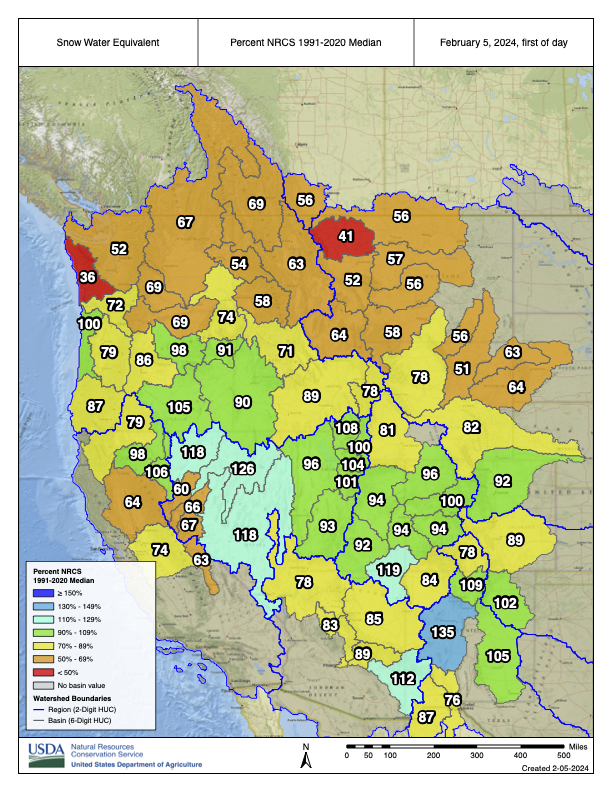
…Currently, total SWE levels for the Upper Colorado River Basin are at 92% of normal — an improvement over recent weeks. The level was 93% on Jan. 18, and dipped as low as 85% since then, according to information from the U.S. Bureau of Reclamation.
Click the link to read the article on the Denver Water website (Jay Adams):
February 5, 2024
Storms that dumped several feet of snow in Park, Summit and Grand counties in January and February left behind great skiing conditions and a sorely needed boost to the mountain snowpack.
Entering 2024, the snowpack in the areas of the South Platte and Colorado river basins where Denver Water captures snow for its water supply were well below normal due to relatively dry weather in November and December 2023.
But storms in mid-January and early February boosted mountain snowpack in the two river basins to nearly normal for this point in the season.

As of Monday, Feb. 5, the snowpack in Denver Water’s collection areas stood at 106% of normal in the South Platte Basin and 98% of normal in the Colorado River Basin.
“January was great in terms of our water supply. In fact, the snowpack accumulation was nearly double the average for the month,” said Nathan Elder, water supply manager at Denver Water.
“We are right at normal for the season, and we’re hopeful the stormy weather pattern continues as we head into the snowier months of the year.”
The blue line on the charts below shows how a few big storms can quickly boost a very low snowpack (close to the bottom of the grey area) up to the black or “normal” line:
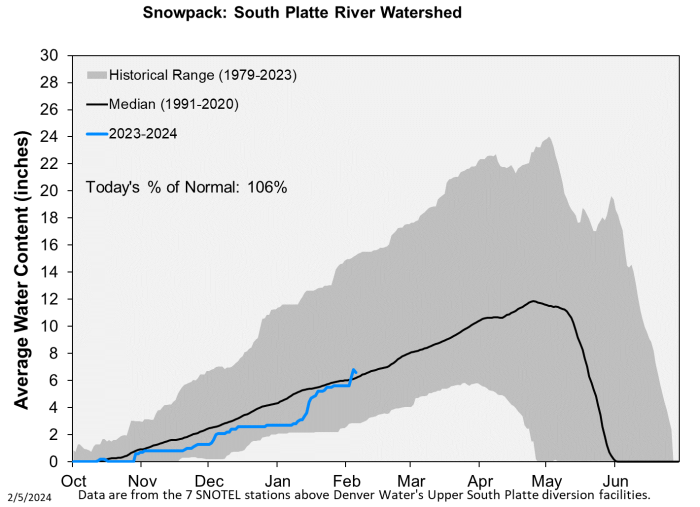

Monitoring the snow
Denver Water pays close attention to the snowfall in the mountains because snowmelt provides 90% of the water supply for 1.5 million people in its service area across metro Denver.
The utility monitors the snowpack in multiple ways through the season.
Once a month, January through April, Denver Water crews snowmobile and snowshoe through the snow to collect about a dozen samples of the snowpack along preestablished paths through the wilderness called “snow courses.”
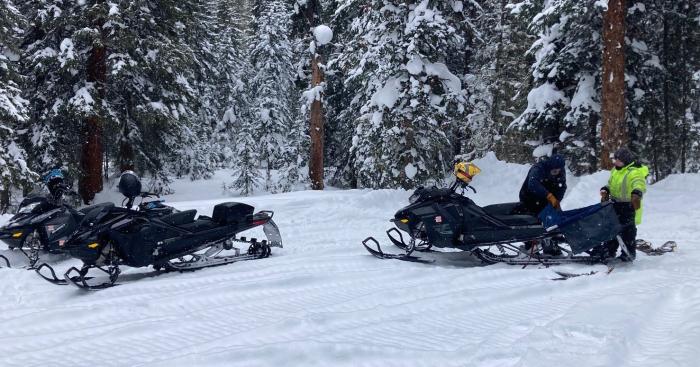
Denver Water has snow courses at 11 locations in Grand, Park and Summit counties.
Capturing snow samples looks like spear-fishing. Crews jab a specially designed hollow pole into the snow until it hits the ground. The pole measures the snow depth and weight which is then used to determine the snow’s density.
This information is then used to calculate the snow water equivalent, or SWE. In simple terms, it’s the depth of water that would cover the ground if all the snow melted.
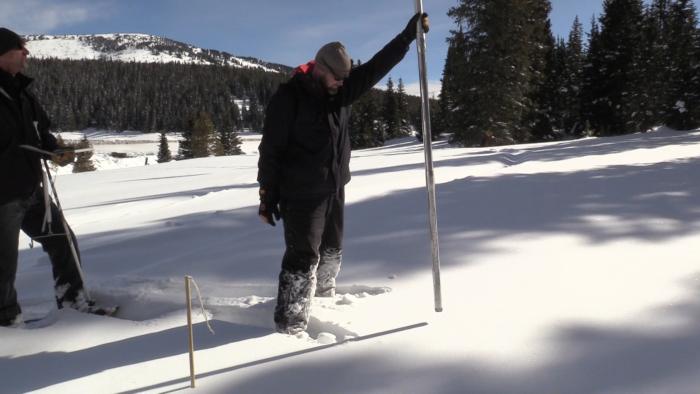
“Ski areas love that champagne powder, but we like to see snow with lots of water inside,” said Rick Geise, a facility operator at Dillon Reservoir in Summit County. “The more water packed into the snow, the more water that flows into our reservoirs in the spring when all the snow melts.”
Denver Water shares the data collected from its snow courses with the National Resources Conservation Service, which puts out statewide snowpack and water supply information.

The utility also uses information gathered from automated mountain weather stations called SNOTEL sites, which are managed by the NRCS.
Denver Water also gets information on the snowpack from the air, via flights from a company called Airborne Snow Observatories, which uses advanced technology to measure snowpack from the sky.
“We use the data to make sure we have a good idea about the amount of water in the snow up in the mountains,” Elder said.“These tools give us very good picture of the snowpack so we can provide accurate water supply forecasts for our customers and the general public.”
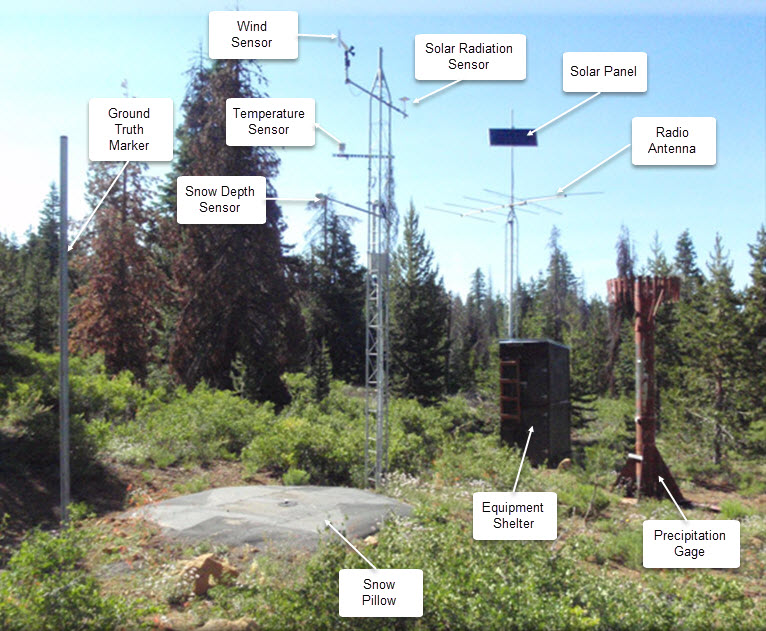
Areas in dark green or blue had at least 150% of their normal January precipitation.

Click the link to read the article on the InkStain website (John Fleck):
February 2, 2024
I’ve been updating the crufty old code I use to generate graphs to help me (and colleagues) think about river flows.
This one’s a little busy, so maybe for specific nerd colleagues’ use, and not general consumption?
It’s based on a request from a friend who uses these, and asked for a visualization of the wet 1981-2000 period compared to the drier 21st century. This is an important comparison given that a whole bunch of New Mexicans (including me!) moved here in the wet 1980s and ’90s, which created a sense of what’s “normal.”
It’s important to note that this is not a measure of climate, at least not directly. This is a measure of how much actual water flows past the Otowi gage, which is a product of:
- climate-driven hydrology adding water
- trans-basin diversions adding water (“trans basin diversion” singular, I guess, the San-Juan Chama Project)
- upstream water use subtracting water
- reservoir management decisions moving water around in time (sometimes reducing the flow by storing, sometimes increasing it by releasing)
I get so much out of staring at these graphs. A few bits from this one, which I did a few evenings ago curled up with my laptop in my comfy chair:
- Look at the curves around Nov. 1 – a drop as irrigation season ends, following by a rise as managers move compact compliance water down the river to Elephant Butte. Makes me curious about what they were doing back in the ’80s and ’90s in November.
- This year’s winter base flow is low.
At some point soon I’ll get the updated code onto Github, but it’s not quite ready for sharing. (I’m rewriting it in Python, because learning is fun!)
Despite overall drier conditions compared to last year, several basins in the CBRFC area are either nearing or at normal SWE levels for this time of year.
Click the link to read the article on the Denver7.com website (Robert Garrison). Here’s an excerpt:
February 5, 2024
The Colorado Department of Public Health and Environment slapped Suncor Refinery with a $10.5 million fine for air pollution violations from July 2019 through June 2021, the agency announced Monday. The Commerce City refinery must also double the number of air pollution monitors compared to the refinery’s original fenceline monitoring plan, according to the CDPHE’s largest enforcement package against a single facility. Of the $10.5 million Suncor has to pay the state, only $2.5 million of that is related to penalties it accumulated in the time period specified above and includes:
- Exceeding sulfur dioxide, carbon monoxide, and nitrogen oxides emissions limits.
- Exceeding hydrogen sulfide concentration limits.
- Exceeding opacity and visible emissions standards.
- Failing to meet certain operating parameters.
- Violations due to causes other than power disruptions.
No less than $8 million will go toward projects Suncor must complete, the CDPHE said in a news release.
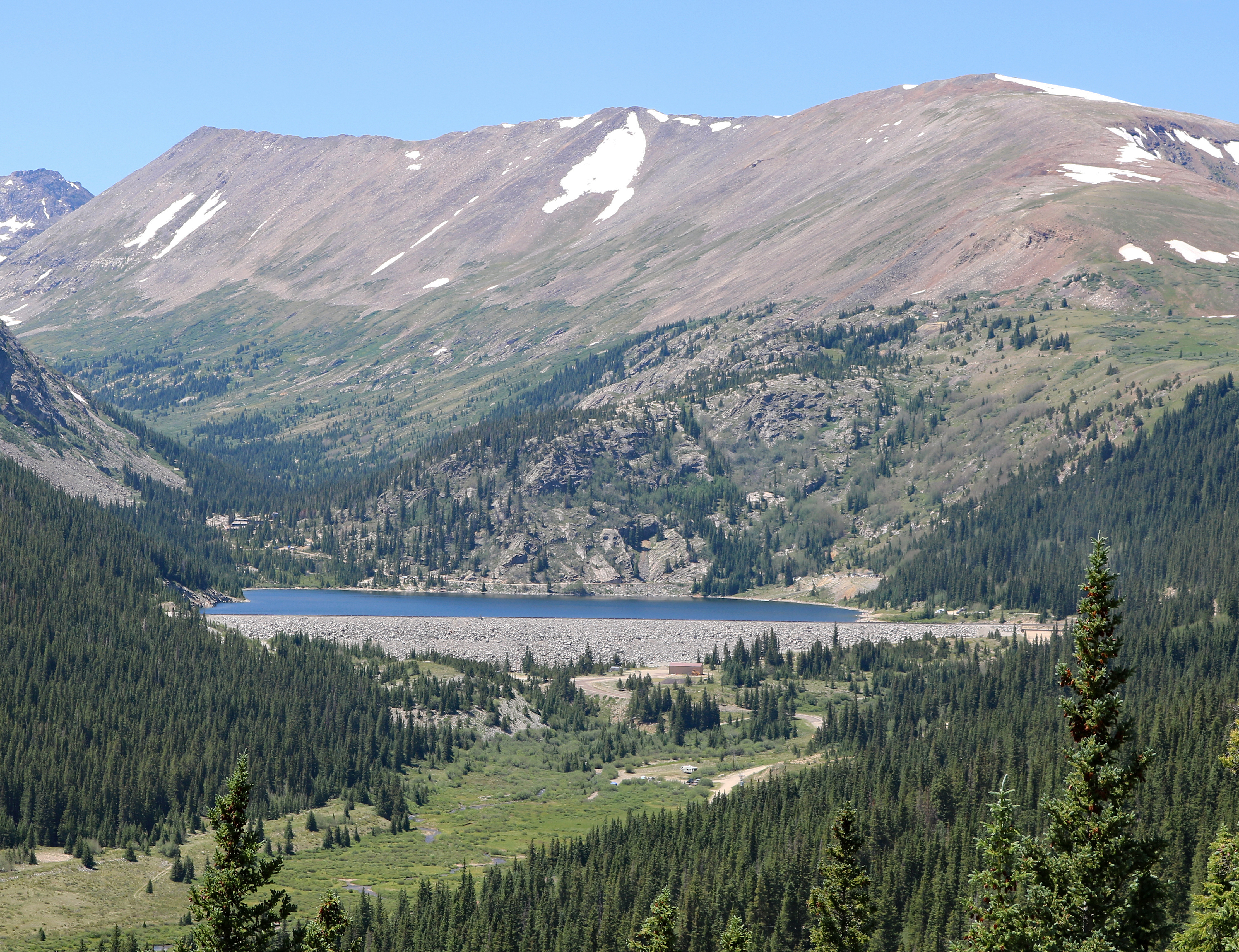
Click the link to read the article on The Colorado Springs Gazette website (Breanna Jent). Here’s an excerpt:
February 4, 2024
If approved by all seven subject parties, the agreement will settle about nine years of debate and allow Colorado Springs Utilities to expand its Montgomery Reservoir in Park County, between Alma and Hoosier Pass, to increase Colorado Springs’ water supply, officials with the city-owned utility told its board of directors in mid-January.
“The agreement gives more certainty in our Blue River water supply. For the general customer, it brings more reliability for how we go forward and what our future looks like” as Colorado Springs continues to grow, said Abby Ortega, Colorado Springs Utilities’ general manager of infrastructure resources and planning…
The deal too will advance plans to build a new water reservoir at the southern base of Quandary Peak for use by Summit County and the town of Breckenridge. All six Western Slope entities have approved the agreement — Breckenridge, Summit County, the Colorado River Water Conservation District, the Ute Water Conservancy District, the Orchard Mesa Irrigation District and the Grand Valley Water Users Association. The Colorado Springs City Council, which acts as the Utilities Board of Directors, will vote on the proposal Feb. 13.

Click the link to read the article on The Land Desk website (Jonathan P. Thompson):
February 2, 2024
A study published just last month in Science Advances finds that the last couple of decades were dry. And they were hot. Yeah, I know: We don’t need no propellor-head scientists to tell us that! And yet. The findings, while not exactly surprising, are super interesting, because they provide additional confirmation that the current megadrought (or the most recent phase of ongoing aridification, if you prefer) is intensified by human-caused climate warming.
The paper takes a look at the increasing prevalence and severity of “hot droughts,” which is when rainfall deficits and high temperatures combine to deleterious effect — as much of the Western United States has suffered through lately. Research has shown that the current drought is among the most severe of the last 1,200 years, but the relationship between temperature and severity of past droughts has been less clear.
This study, “Increasing prevalence of hot drought across western North America since the 16th century,” dives more deeply into that relationship by looking at tree rings and paleo-climate reconstructions.
The last time the Southwest experienced anything close to the current drought was back in the late 1500s, when it was as rain- and snow-starved as it is now. But there was a big difference: It wasn’t nearly as hot then as it has been now.
The phenomena are summed up in this graphic below, which I must admit I had to peer at for a while before I understood it. But once I grasped what was going on (and that the lower the Palmer Drought Severity Index, the drier it is, which seems counterintuitive to me), it popped out pretty clearly: We live in unprecedented hot, dry times.
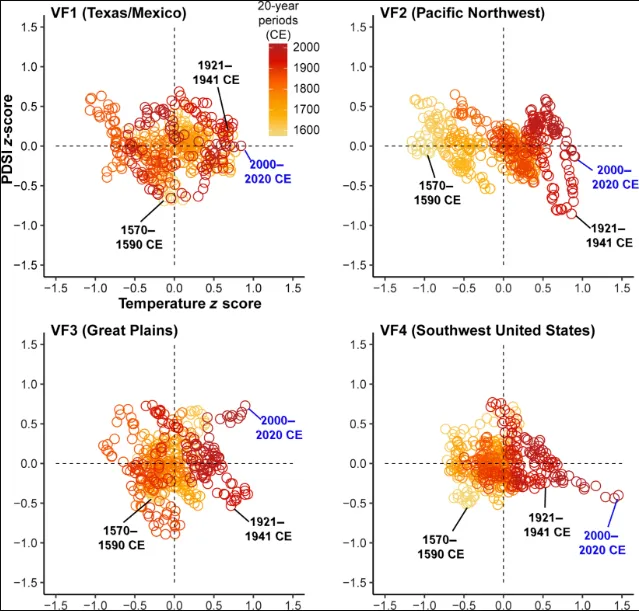
The authors note that the decades spanning the modern megadrought “exhibit the strongest negative relationships between summer maximum temperatures and soil moisture” compared to any other historical period. The heat amplifies evapotranspiration, which further dries out areas that are already suffering from a lack of rain or snow, but also can create drought conditions even when precipitation is especially scant. That can be seen in the Colorado River, where about one-third of the decline in flows can be attributed to unprecedented high temperatures. The authors go on to write: “… multidecadal drying exacerbated by high temperatures may further alter surface energy balance in ways that lead to additional warming.” Ughh. [ed. emphasis mine]
Oh, and about that 2000-2022 megadrought? I’m starting to get the bad feeling that the prolonged dry spell didn’t end in 2023, but just took a little break, and has come roaring back at us. Sure, January brought a few big storms to the West’s mountains, boosting snowpack substantially in some areas. The river basins in Utah’s Wasatch Front, for example, are mostly at or above median snowpack levels. But the snow remains thinner than the 1991-2020 normal in much of the West.
That includes the Upper Colorado River Basin.
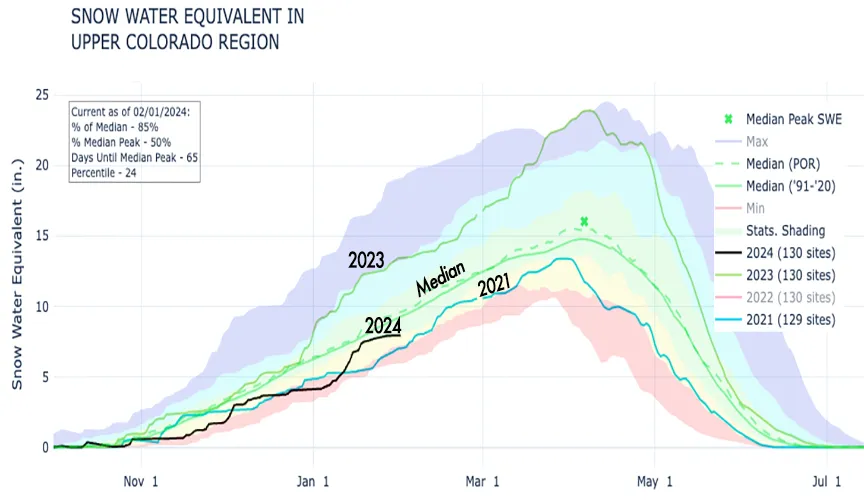
And in the Animas-Dolores Basin in southwestern Colorado. According to this, the combined basin is actually in worse shape than it was in early February 2021.:
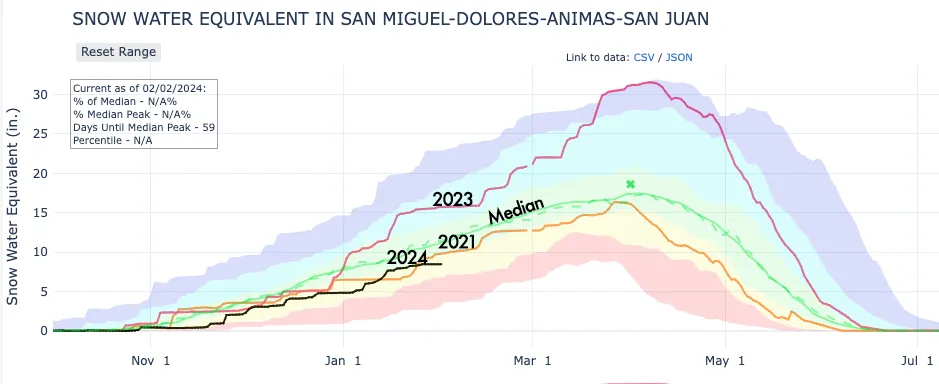
And zooming in on Columbus Basin in the La Plata Mountains, we find that this year’s snowpack is about even with this date in 2021. Better than ^^, but still …
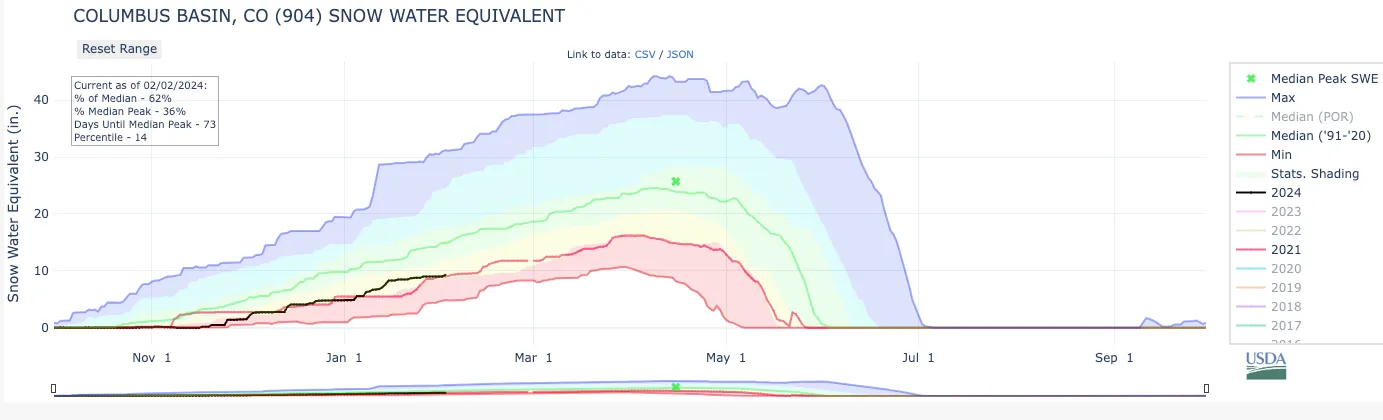
I know I always say this, but I’ll say it again: Don’t panic. Yet. Even as I write this a good-sized storm is walloping southwestern Colorado and these lines are likely to shoot upward in coming days. And we’re still in early days as far as the strongest expected effects of El Niño, so we may be in for a whopper of a spring still.
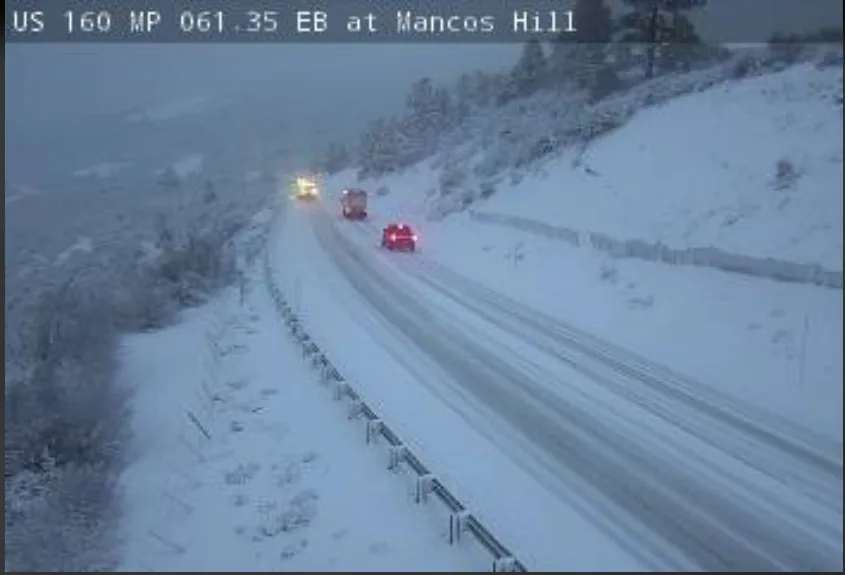
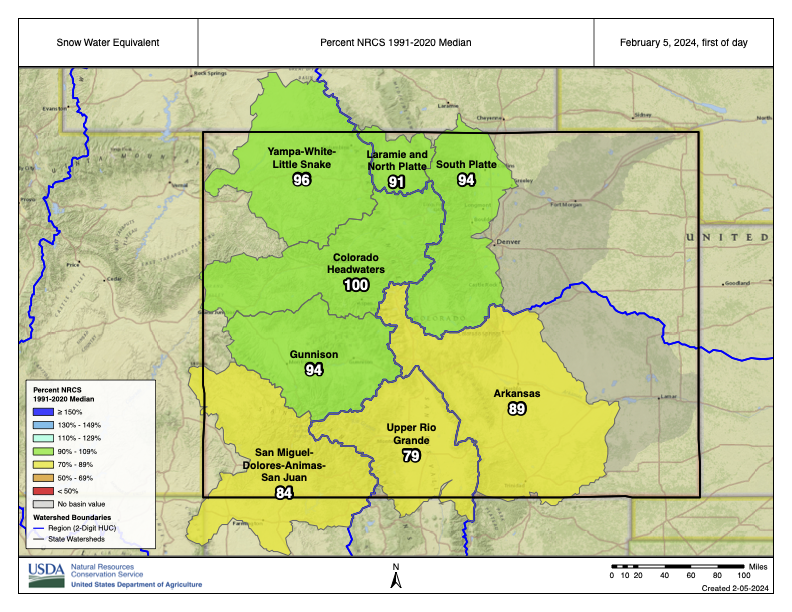
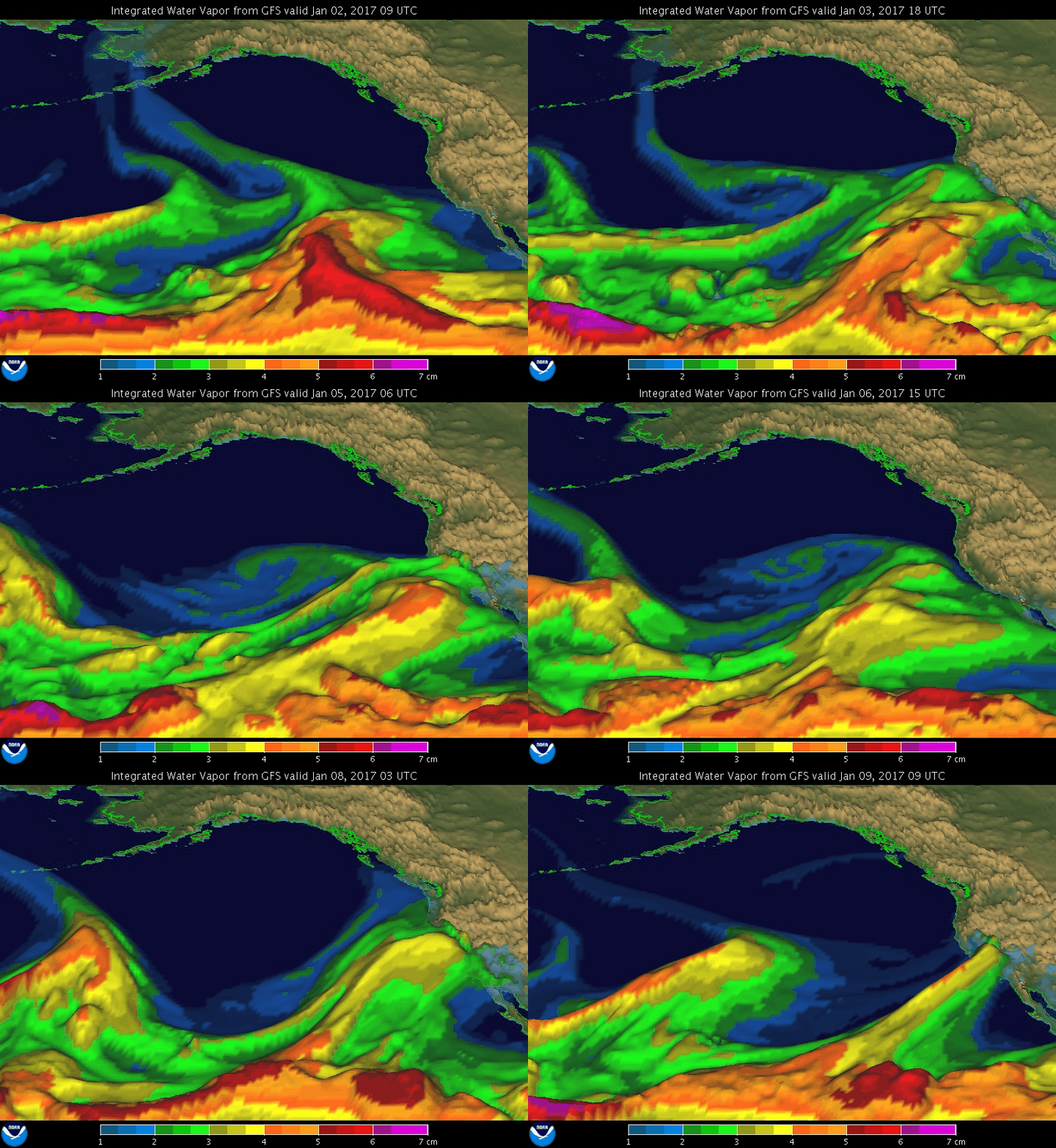
Click the link to read the article on The Water Desk website (Mitch Tobin):
The term “atmospheric river” (AR) has become common in weather stories and media coverage, but the name for these age-old events is a relative newcomer in meteorological glossaries.
Coined by scientists in the 1990s, the term’s popularity has soared in recent years as researchers, forecasters, journalists, and others have publicized the outsized role of atmospheric rivers in producing rain, snow, wind, and severe weather in the American West (and other places).
The West Coast is now facing the first of two ARs that promise to deliver much-needed snow to the Sierra Nevada but also threaten to cause havoc. The animated map below shows the expected liquid precipitation from January 31 to February 7.

Here in Colorado, some of that Pacific moisture is expected to give our snowpack a welcome boost after a warm, dry spell that made it feel like spring in late January and had me hiking through mud in a t-shirt. (See the end of this post for an update on the West’s snowpack, which remains underwhelming in many areas.)
Below is a quick primer on ARs, why they matter, and what the future might hold for ARs as the climate warms.
What are atmospheric rivers?
These plumes of moisture are sometimes likened to “rivers in the sky” because they transport so much water vapor from the tropics toward higher latitudes. In data visualizations, like the one below, they can resemble a fire hose dousing the West Coast.

An AR is “a long, narrow, and transient corridor of strong horizontal water vapor transport that is typically associated with a low-level jet stream ahead of the cold front of an extratropical cyclone,” according to the American Meteorological Society’s Glossary of Meteorology.
When ARs are forced upward by mountains or other forces, the water vapor cools, condenses, and precipitates, as shown in the graphic below. This NOAA figure says the amount of water vapor in a strong AR “is roughly equivalent to 7.5-15 times the average flow of water at the mouth of the Mississippi River.”
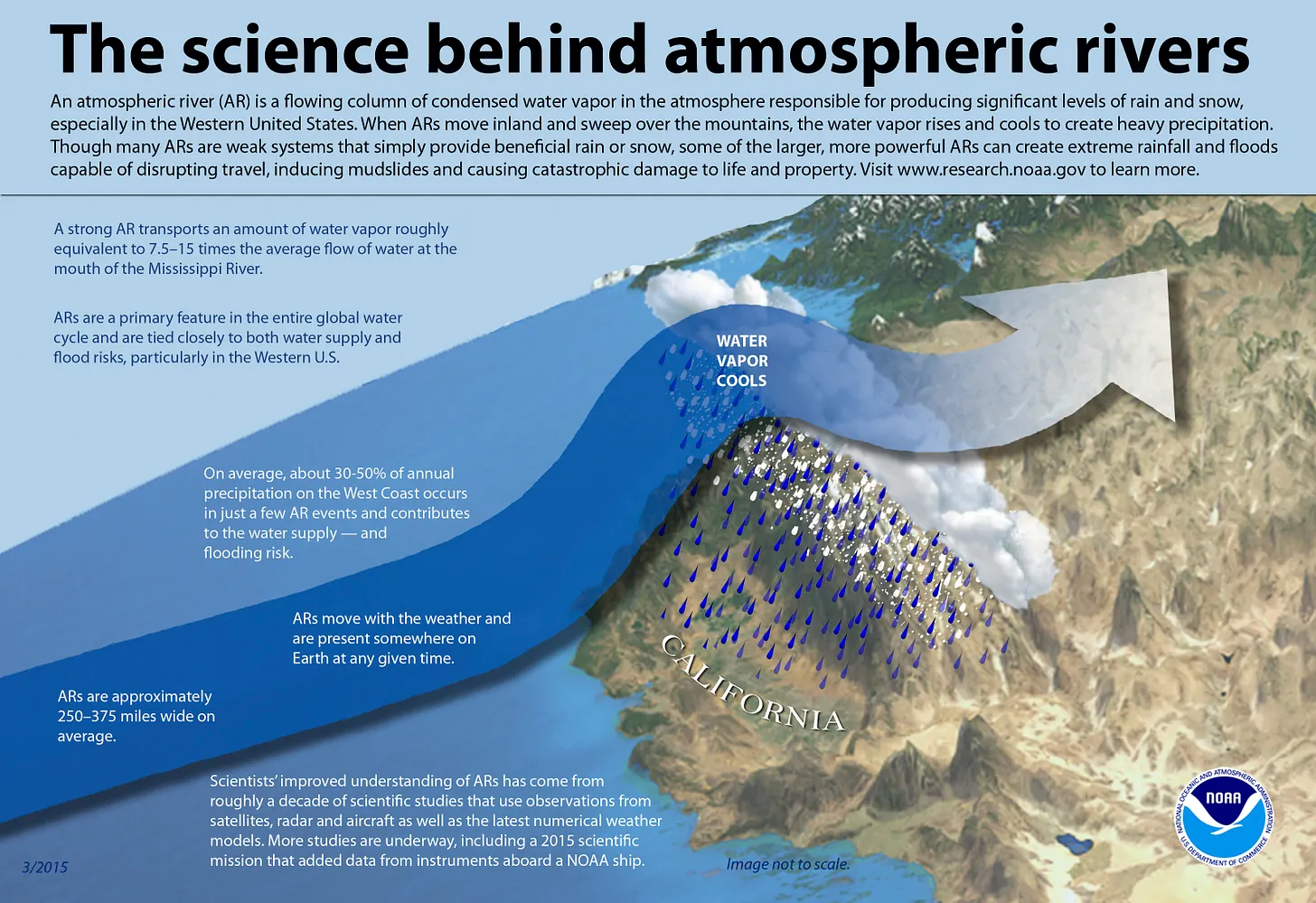
One type of AR has come to be known as the “Pineapple Express” because it taps moisture around Hawaii. The January 4 images below from the NASA Earth Observatory illustrate the connection: the top graphic depicts a measure of water vapor in the atmosphere and the bottom shows the view from a satellite.
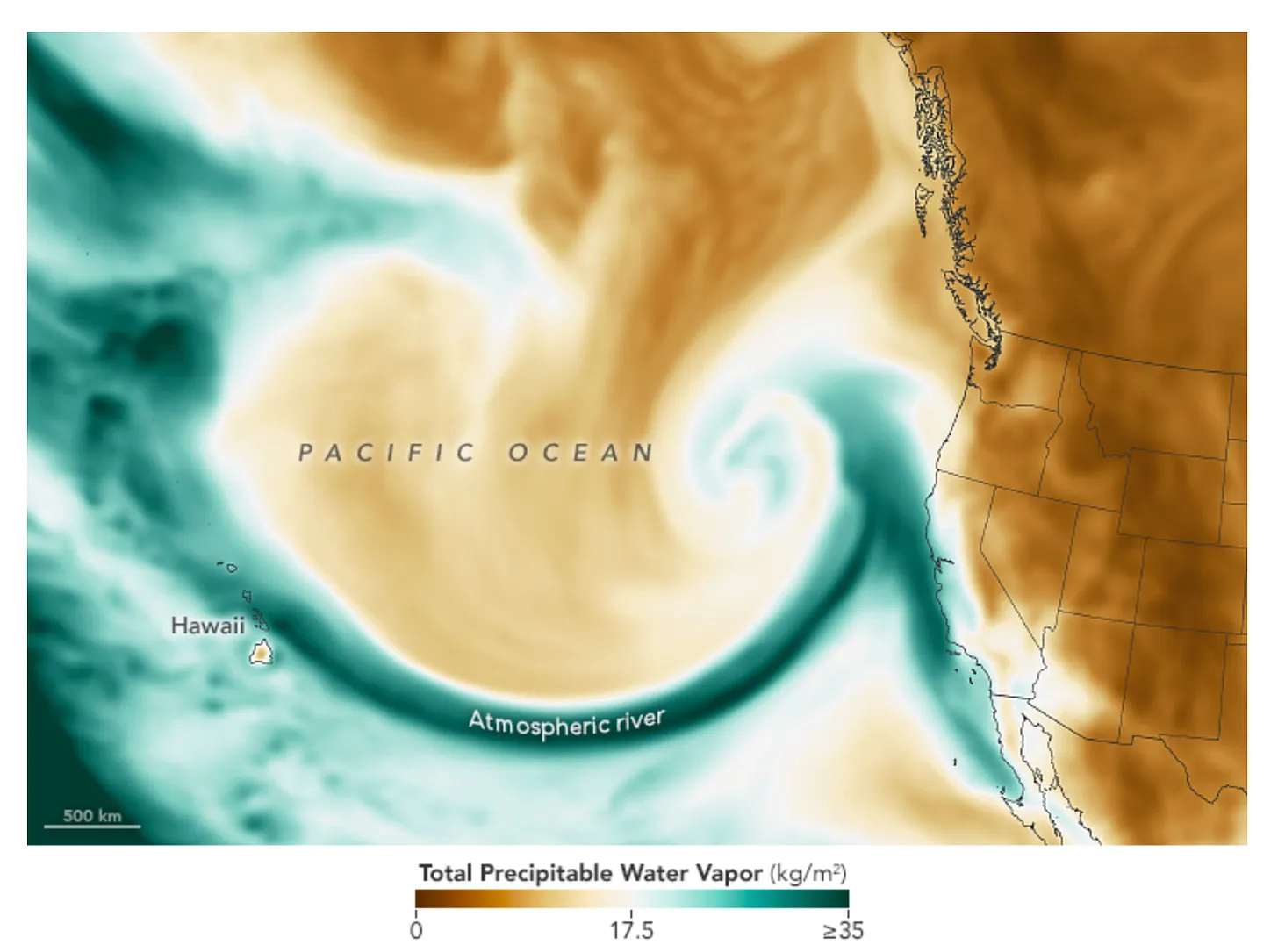

ARs are critical for the West’s water and snowpack
Whether you compare ARs to the Amazon or the Mississippi, there’s no doubt they exude wetness, so they can have far-reaching effects on the West’s water resources, for better or worse.
On average, a few AR events contribute 30% to 50% of the annual precipitation in West Coast states, according to NOAA. A 2019 paper in Geophysical Research Letters concluded that AR storm days are responsible for about one-quarter of the snowpack in the Sierra Nevada and one-third of the snowpack in the Cascades of Oregon and Washington.
Even the Rocky Mountains benefit from ARs. A 2021 study in Geophysical Research Letters estimated that the snow produced by ARs accounts for 31% of the peak snow water equivalent in the Upper Colorado River Basin, where the majority of the river’s flow originates.
“Atmospheric river” is a relatively new term
ARs have been a big deal for eons—an average of about 11 are present on Earth at any time—but it wasn’t until the 21st century that the term entered into general circulation. The two graphics below, from NASA’s Jet Propulsion Laboratory and the Center for Western Weather and Water Extremes (CW3E) at the Scripps Institution of Oceanography, show the term’s growing use in news stories and peer-reviewed journal articles.
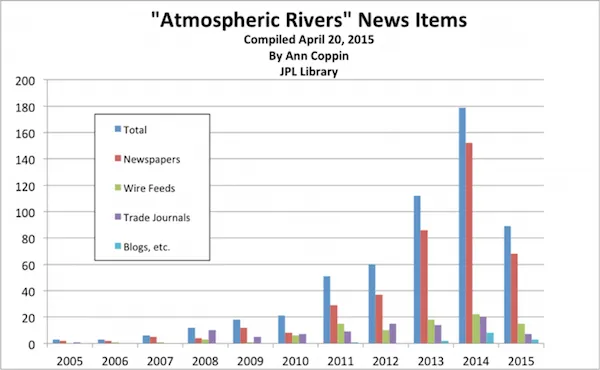
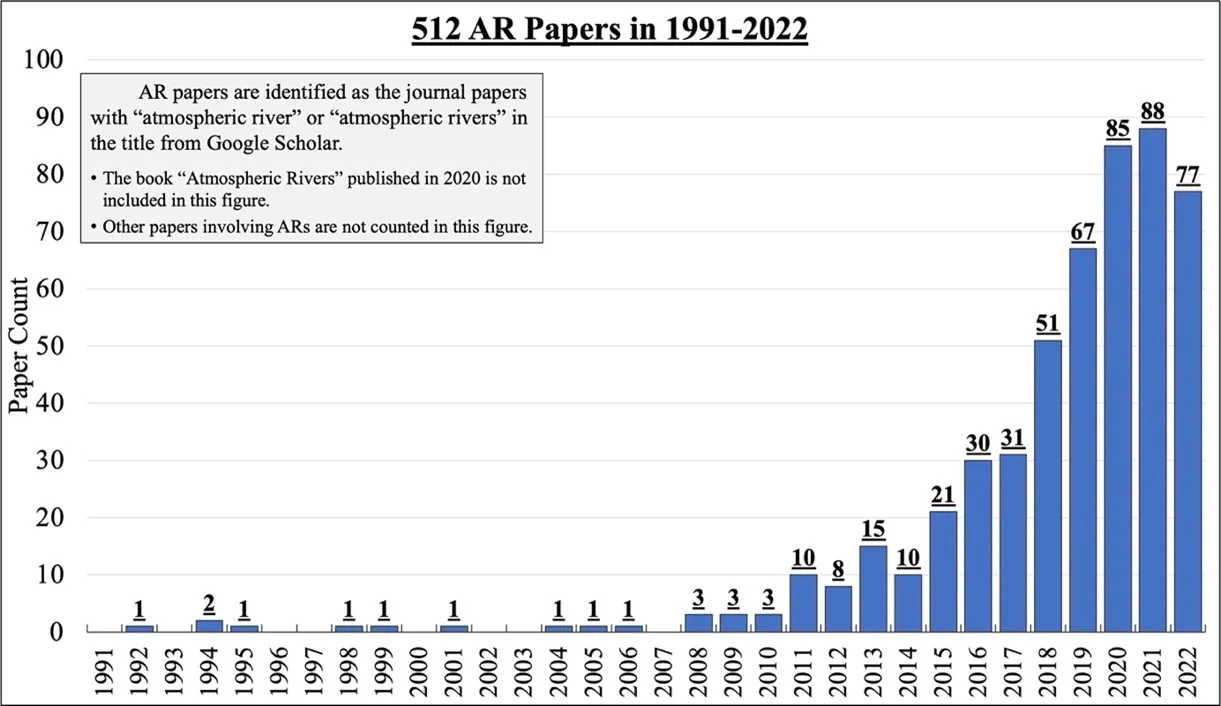
I took a peek at Google Ngram, which analyzes the text in books, and also found a sharp rise in the term’s use.
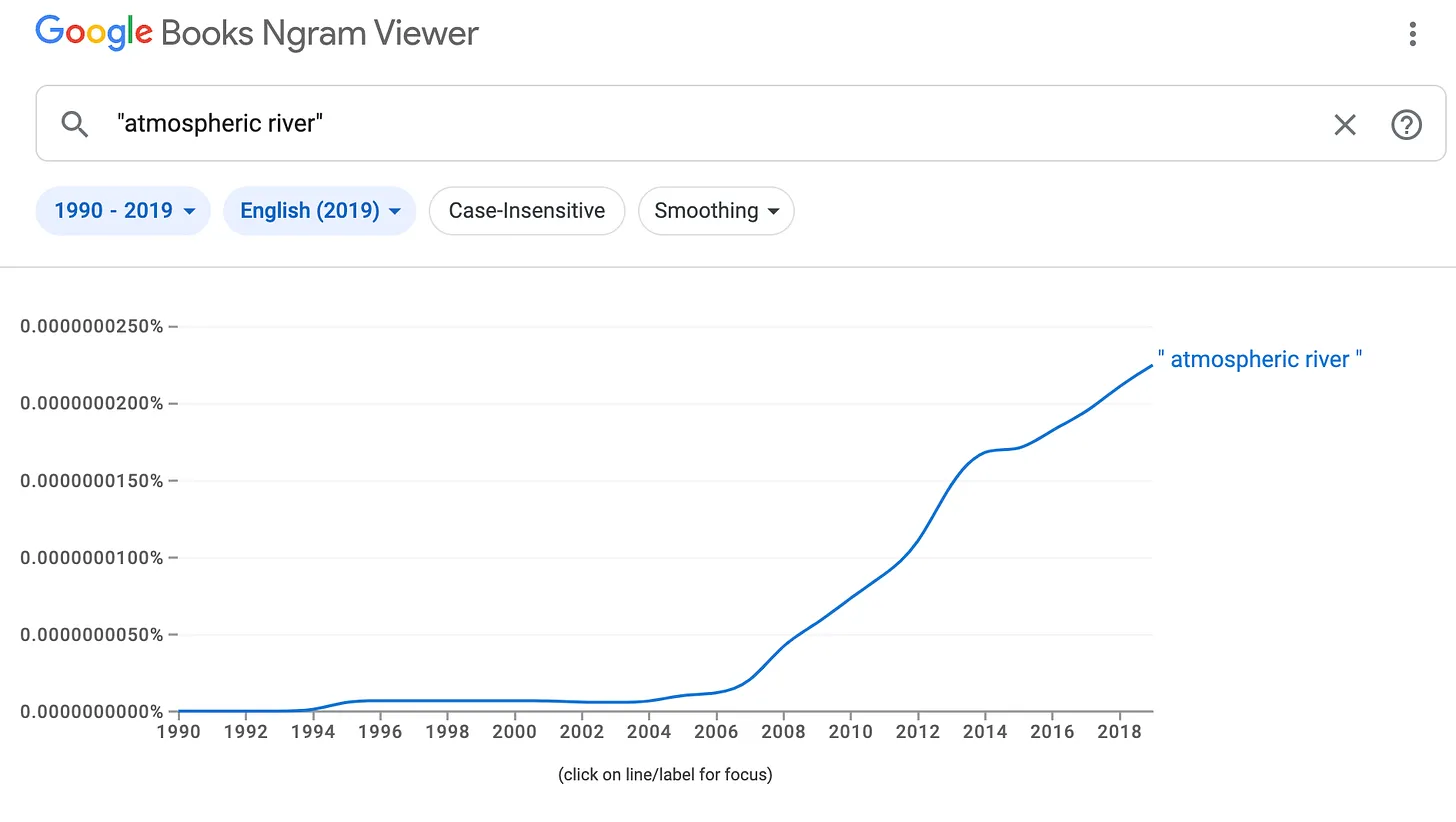
Some experts think the analogy to a terrestrial river is inappropriate, and some think the term is “duplicative of preexisting concepts, such as the warm conveyor belt,” according to this article in the Bulletin of the American Meteorological Society. Nevertheless, “atmospheric river” has jumped from peer-reviewed journals to water cooler conversations, not unlike “polar vortex,” “bomb cyclone,” and “heat dome.”
AR Scale rates severity with five categories
Just as hurricanes are classified by the Saffir-Simpson Hurricane Wind Scale, and tornadoes are categorized by the Enhanced Fujita Scale, ARs have their own rating scale.
The AR Scale is based on two factors: the duration of the event and its “maximum vertically integrated water vapor transport,” a measure of its water content and the speed at which it’s moving. As shown in the graphic below, there are five categories, with the bottom two described as primarily beneficial.
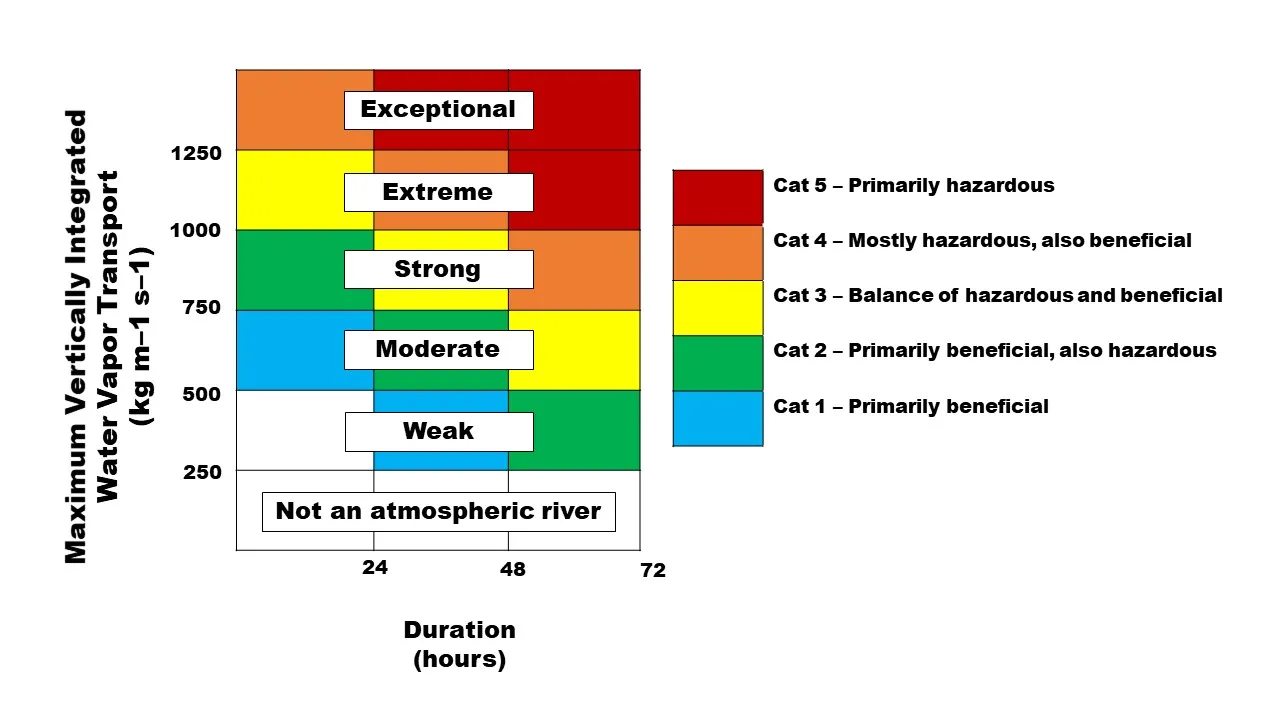
One way to summarize AR forecasts is shown below in a set of maps from CW3E, which describe conditions along three locations—coastal, foothills, and inland—from January 30 to February 6.

The forecast shows the southern Oregon coast is expected to reach Category 5, the most severe level, while other areas along the Pacific Ocean will reach Categories 3 and 4. Farther inland, conditions are expected to be less extreme, but at higher elevations, it’ll definitely be dumping.
ARs can end droughts but also cause major flooding
As noted by the AR Scale, these events can be both helpful and hazardous. On the positive side, ARs can be effective drought busters. A 2013 study in the Journal of Hydrometeorology concluded that about one-third of persistent droughts in California have been erased by AR storms, with 60% to 74% of droughts in the Pacific Northwest ending this way.
On the negative side of the ledger, ARs have been responsible for some of the worst floods on the West Coast, including nearly 90% of California’s flood damage. Even this week’s weather prompted some internet rumors that California would be subject to a “megaflood” of biblical proportions, according to this Los Angeles Times story, which noted that experts don’t think this is “the big one.”
One doomsday scenario, known as “ARkStorm,” is a 1,000-year event featuring wave after wave of ARs flooding large portions of California, displacing up to 10 million people, and causing a $1 trillion disaster. For more on this potential nightmare, check out “The Trillion-Gallon Question,” a 2023 story by Christopher Cox in The New York Times Magazine about the potential fragility of California’s water infrastructure.
And let’s not forget about the wind. “Atmospheric rivers are among the most damaging storm types in the middle latitudes, especially with regard to the hazardous wind they produce,” according to NASA. Researchers at the Jet Propulsion Laboratory found that ARs were to blame for up to half of the most destructive windstorms over the last two decades. In a 2017 study in Nature Geoscience, scientists concluded:
“Landfalling atmospheric rivers are associated with about 40–75% of extreme wind and precipitation events over 40% of the world’s coastlines. Atmospheric rivers are associated with a doubling or more of the typical wind speed compared to all storm conditions, and a 50–100% increase in the wind and precipitation values for extreme events.”
Climate change will intensify ARs
As the planet continues warming, scientists expect ARs to strengthen. A warmer atmosphere can hold more water, so climate change is projected to boost the intensity of downpours. NASA scientists predict that by the end of the 21st century, climate change will make ARs about 25% wider and longer while increasing the global frequency of AR conditions, such as heavy rain and strong winds, by around 50%.
A 2021 paper focused on the West concluded that for every 1◦C of additional warming, annual average flood damages will rise by about $1 billion. Because warming is causing the snow level to rise, atmospheric rivers are more likely to drop rain, so they may not be as helpful to the snowpack, and when rain falls on snow, that can cause huge problems with flooding and debris flows.
The odds of an ARkStorm have doubled due to climate change and “runoff in the future extreme storm scenario is 200 to 400% greater than historical values in the Sierra Nevada because of increased precipitation rates and decreased snow fraction,” according to a 2022 paper in Science Advances.
For a great overview of climate change and ARs, see this recent Washington Post storyfrom Kasha Patel. And check out this fascinating piece from Ian James at The Los Angeles Times to learn how scientists are using a hurricane-reconnaissance jet to study ARs.
Update: snowpack and snow drought
Many parts of the West could use some moisture, as shown by all the yellow, orange, and red in the January 31 map below of the region’s snowpack, but the green and blue colors depict basins where conditions are near or above normal.
In its January 26 update, “Snow Drought in Much of the Intermountain West Region Despite El Niño,” the National Integrated Drought Information System reported that snow water equivalent was 85.1% of the median in the Upper Colorado River Basin and 68.5% in the lower basin.
In California, the ARs will provide a big boost to the Sierra snowpack, which has been significantly below average all season. As shown below, the statewide snowpack on January 31 was just 50% of normal and only 31% of the April 1 average.
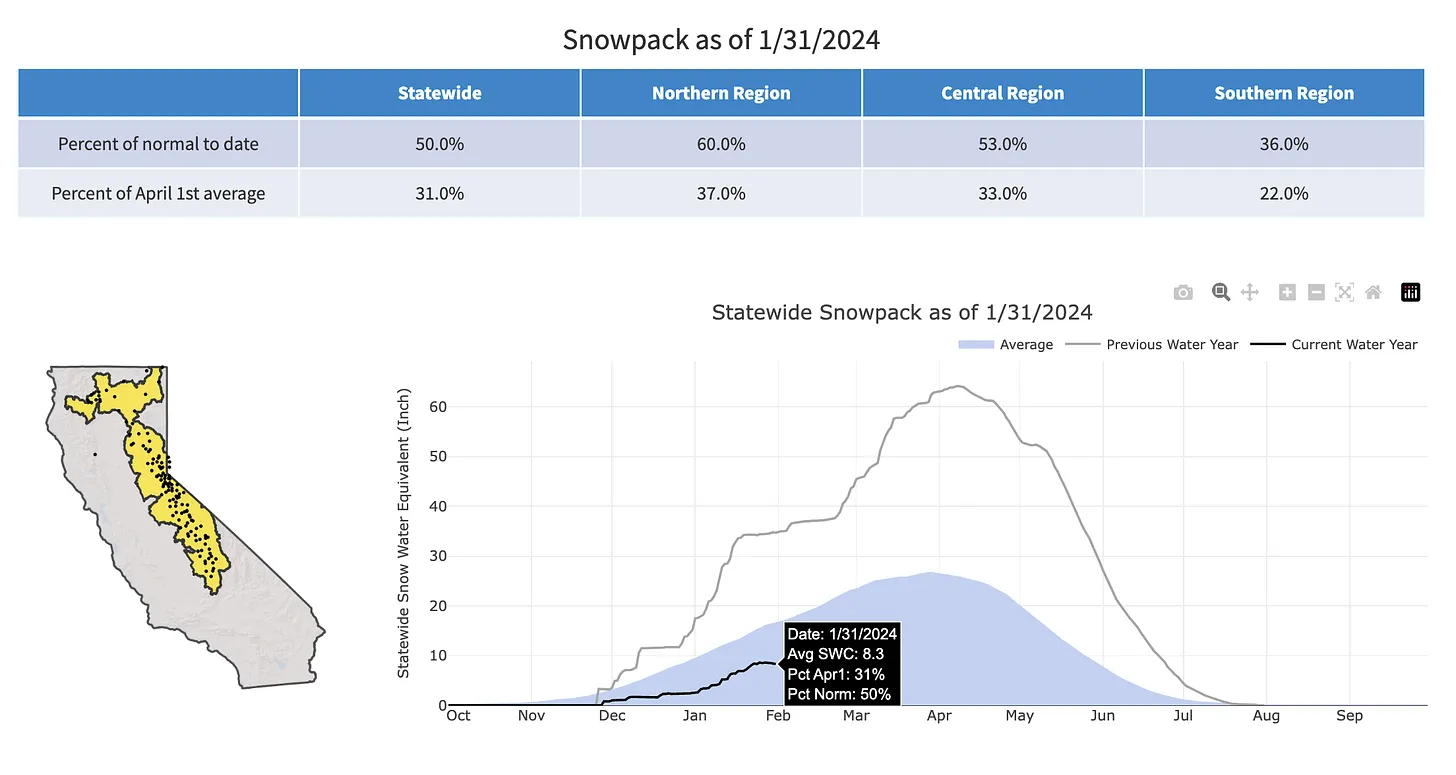
In summary, the West’s snowpack this winter has been lackluster in many areas, though some basins are actually above normal, and the near term looks wet. The January 31 map below shows the 7-day forecast for liquid precipitation, so expect to see a lot of those snowpack numbers jump!
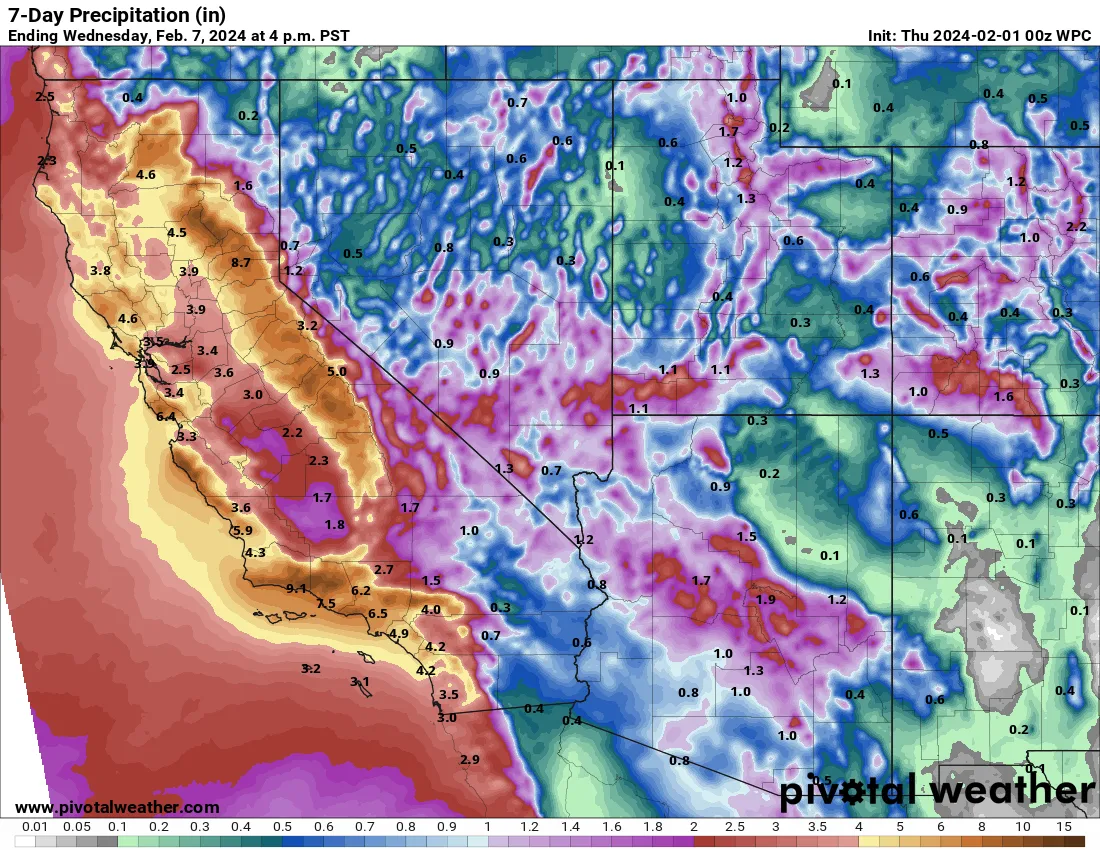

Click the link to read the article on the Big Pivots website (Allen Best):
January 30, 2024
Minor pushback to proposed limits on new water-thirsty grasses in areas that get little or no foot traffic
This story was produced as a collaboration between Big Pivots and Aspen Journalism — two nonprofit news organizations covering Colorado’s water. It follows a five-part series that examined the intersection of water and urban landscapes in Colorado.
Colorado legislators in 2022 passed a bill that delivered $2 million to programs across the state for removal of turf in urban areas classified as nonfunctional. By that, legislators mean Kentucky bluegrass and other thirsty-grass species that were meant to be seen but rarely, if ever, otherwise used.
Now, they are taking the next step. The Colorado Senate on Tuesday voted in favor of a bill, Senate Bill 24-005, that would prevent thirsty turf species from being planted in certain places that rarely, if ever, get foot traffic, except perhaps to be mowed.
Those places include alongside roads and streets or in medians, as well as in the expansive areas surrounding offices or other commercial buildings, in front of government buildings, and in entryways and common areas managed by homeowners associations.
The bill also bars use of plastic turf in lieu of organic vegetation for landscaping.
“If we don’t have to start watering that turf in the first place, we never have to replace it in the future,” state Sen. Dylan Roberts, D-Frisco, a co-sponsor, said in making the case for the proposed new state standard.
Roberts stressed that the prohibition would not apply to individual homes or retroactively to established turf. “It applies to new development or redevelopment. It does not apply to residential homes,” he said. “This is about industrial, commercial and government property across the state.”
Kentucky bluegrass and other grass species imported from wetter climatic zones typically use far more water than buffalo grass and other species indigenous to Colorado’s more arid climate. The bill, however, does allow hybrids that use less water as well as the indigenous grass species.
Originally reviewed by an interim legislative committee in October, the bill was subsequently modified to provide greater clarity about what constitutes functional versus nonfunctional turf, while giving towns, cities and counties greater flexibility in deciding which is which within their jurisdictions. If the bill becomes law, local jurisdictions will have until Jan. 1, 2026, to incorporate the new statewide standard into their landscaping code and development review processes.
After being approved on a third reading by the Senate by a 28-5 vote on Wednesday morning, the measure now moves to the House.
Advocates do not argue that limits on expansion of what the bill calls nonfunctional turf will solve Colorado’s water problems. Municipalities use only 7% of the state’s water, and outdoor use constitutes roughly half of municipal use.
“One more tool in the toolbox,” Roberts said.
State Sen. Cleave Simpson, R-Alamosa, said if the standard had been adopted 20 to 30 years ago, perhaps 10,000 acre-feet of water could have been saved annually.
“As a percentage, it is minimal,” he conceded. “It’s closing the gaps in small increments as best you can as opposed to large sweeping change.”
The backdrop for this is more frequent drought and rising temperatures since 2002, what Simpson called the aridification of the West. The climatic shift is forcing harder choices.
“We are all trying to figure out how to live and work in this space,” Simpson said.
In a Senate Agriculture and Natural Resources Committee meeting Jan. 25, Simpson also said he was motivated to help prevent water grabs by Front Range cities from the San Luis Valley, what locals sometimes call Colorado’s south slope. Three separate attempts have been made in the past 35 years to divert water from the San Luis Valley, a place already being forced to trim irrigated agriculture to meet requirements of the Rio Grande Compact.
“That’s largely my motivation to be part of this conversation and do everything I can to reduce that pressure on my rural constituents and our way of life,” Simpson said in the committee hearing. The bill passed the committee on a 4-1 vote.
Developing water for growing cities — particularly along the Front Range but even in headwaters communities — has become problematic as the climate has veered hotter and, in most years of the 21st century, drier.
The result, as was detailed in a five-part collaboration in 2023 between Big Pivots and Aspen Journalism, has been a growing consensus about the need to be more strategic and sparing about use of water in urban landscapes.
Agriculture uses nearly 90% of the state’s water, as was noted by state Sen. Chris Hansen, D-Denver. At Tuesday’s Senate hearing, he chided Roberts, Simpson and other legislative sponsors for not addressing efficiency in agriculture.
Hansen, who grew up in a farm town in Kansas near the Colorado border, applauded the bill but questioned why the interim committee hadn’t come up with legislation to improve efficiency of agricultural water use. He cited the use-it-or-lose-it provision of Colorado water law that he suggested discouraged farmers and ranchers from innovating to conserve water.
“I feel the interim water committee let us down by not bringing forth anything that advances conservation on what is by far the largest category of use, almost 90%,” he said. “I want to know what is next on that front.”

Hansen got strong pushback. Simpson responded that agriculture in the San Luis Valley has already been forced to change. To comply with the Rio Grande Compact, his district is trying to figure out how to take 10,000 to 20,000 acres out of agricultural production. On his own farm, he said, water deliveries that traditionally lasted until mid-July have ended as early as May 20. “I have to figure out a way to grow crops that are less water-consumptive, more efficient and ultimately take irrigated acreage out of production,” Simpson said.
State Sen. Byron Pelton, R-Sterling, also took the occasion to cite incremental gains in irrigation efficiency and the loss of production in the Republican River basin. There, roughly 25,000 acres need to be taken out of production for Colorado to meet interstate compact requirements.
As had been the case several days before at the bill’s legislative committee hearing, most of the limited opposition in the Senate was against the notion that cutting water used for landscaping is a statewide concern. It’s a familiar argument — a preference for local control — used in many contexts.
A representative of the Colorado Municipal League (CML), a consortium of 270 towns and cities, told the Senate committee that the proposal constituted state overreach in a one-size-fits-all approach.
Heather Stauffer, CML’s legislative advocacy manager, cited the regulations of Aurora, Greeley and Aspen as examples of approaches created to meet specific and local needs. “We would advocate that the state put more money into funds that address turf removal programs that have been very successful among municipalities across the state,” Stauffer said.
In 2023, Boulder-based Resource Central completed 604 lawn-replacement projects along the Front Range. With aid of state funding, it plans to expand its turf-removal and popular Garden In A Box programs to the Western Slope this year.
No representatives from any towns or cities showed up to oppose the bill. But representatives of three local jurisdictions, including Vail-based Eagle River Water and Sanitation District and the water provider for unincorporated Pueblo West, testified that the bill filled a need.
Denver is behind the bill. Denver Water, which provides water to 1.6 million people, including the city’s 720,000 residents as well as many suburban jurisdictions, has committed to reducing the water devoted to urban turf in coming years by 30%, or roughly the turf covering 6,000 acres. Utility representatives have said they don’t want to become frugal with water devoted to existing landscapes only to see water used lavishly in new development.
Andrew Hill, government affairs manager for Denver Water, called the bill a “moderate approach” in creating a new waterwise landscaping standard, one in which imported grasses are not the default.
“It makes real changes statewide, but it’s narrow enough to only apply to areas [where] I think a consensus exists,” Hill said at the committee hearing.

Local governments can go further, and many have already. Thirty-eight local governments and water providers in Colorado offer turf-replacement programs. Western Resource Advocates found last fall that 17 of the jurisdictions already limit new turf while another nine plan to do so.
Aurora and Castle Rock, late-blooming municipalities in the metropolitan area, have adopted among the most muscular regulations in Colorado, taking aim at water devoted to new homes’ front yards. Both expect to continue growing in population, and together they plan to pursue importations of water currently used for farming along the South Platte River in northeastern Colorado. Aurora also still owns water rights in the Eagle River basin that it has been trying to develop for the past 40 years.
In the full Senate debate, Republican leaders argued for incentives, such as the expanded buy-back program for turf removal, instead of a statewide thou-shalt-not approach.
The Colorado River Drought Task Force recommended legislators allocate $5 million annually for turf-removal programs. Key legislators have already indicated they plan to introduce legislation to do just that.
But is this the answer? Such programs are “inefficient and not cost-effective” if water-thirsty grass species continue to be planted in questionable places, the policy manager for municipal conservation at Western Resource Advocates said in the committee hearing last week.
The policy manager, Lindsay Rogers, said passing the bill would build the momentum to “help ensure that Coloradans live within our water means and particularly in the context of a growing state and worsening drought conditions.”
The Associated Landscape Contractors of Colorado, which represents 400 Colorado landscape and supplier companies, testified in support of the bill but hinted at future discussions as the bill goes through legislative sausage-making. Along with sod growers, they quibble over the dichotomous phrasing of nonfunctional versus functional turf. They prefer the words recreational and utility.
On the flip side of these changes, some home gardeners might find buffalo grass and other indigenous grasses more conserving of water but less appealing. Buffalo grass, for example, greens up a month or so later in spring and browns up a month earlier in fall.
Water in urban landscapes is also on the agenda for three programs this week at the annual meeting of the Colorado Water Congress, the state’s preeminent organization for water providers. Included may be a report from a task force appointed by Gov. Jared Polis last February that met repeatedly through 2023 to talk about ways to reduce expansion of water to urban landscapes.
For more from Big Pivots and Aspen Journalism, visit their websites at https://bigpivots.com and at https://aspenjournalism.org.
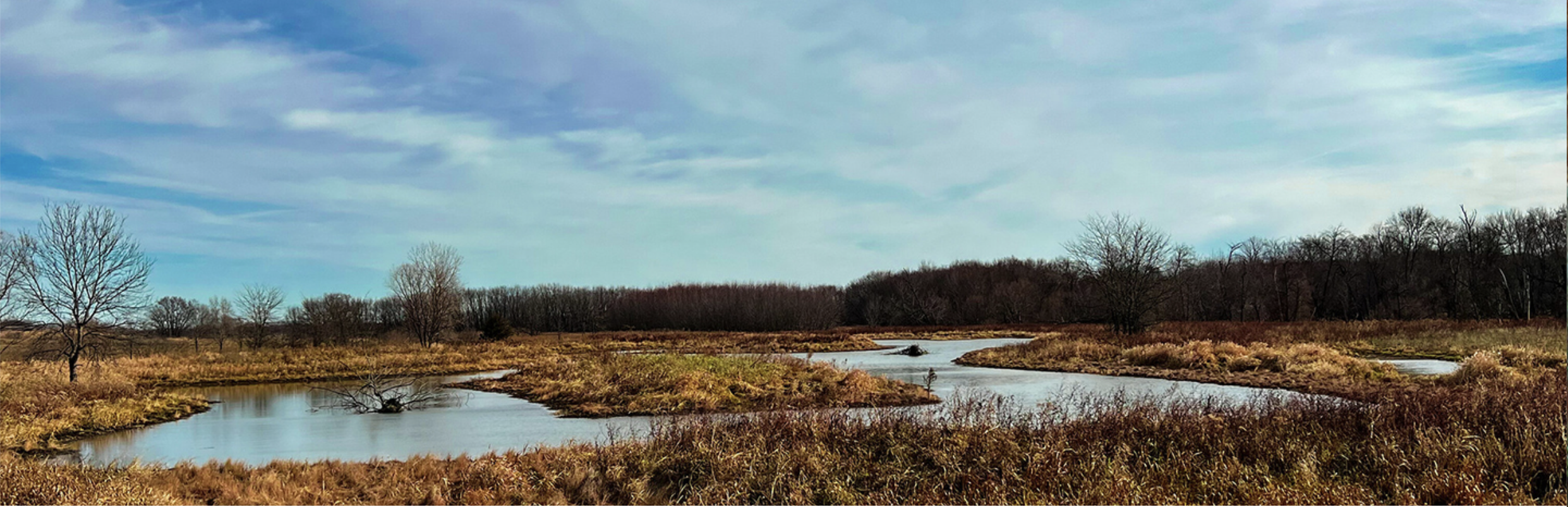
Click the link to read the interview on the USDA website (Elizabeth Creech):
Dr. Joseph (Joe) Prenger is the Wetlands Lead for the Conservation Effects Assessment Project (CEAP), an effort led by USDA’s Natural Resources Conservation Service (NRCS) to quantify the effects of voluntary conservation across the nation’s working lands. In this Ask the Expert, Dr. Prenger answers questions about new CEAP findings on the capacity of wetlands to capture and store nutrients from cropland fields, associated water quality benefits, and NRCS resources to support wetlands on private and Tribal lands.

Let’s start with the basics: What are wetlands, and how do they improve local water quality?
Wetlands occur where water covers or is present near the soil’s surface, either seasonally or year-round. Wetlands in agricultural settings may capture and store sediment and nutrients from the surrounding environment, reduce flooding, contribute to climate change mitigation by serving as a carbon sink, increase biodiversity, and provide wildlife habitat.
This nutrient capture and storage component is key for local water quality. We know nutrients, namely nitrogen and phosphorus, support healthy, productive crops. When nutrients are lost from cropland fields and enter local waterbodies, however, they may contribute to harmful algal blooms and hypoxic or low oxygen zones, and compromise water quality.
A recent CEAP report highlighted an increase in both nitrogen and phosphorus lost from cropland fields over a ten-year period. Based on these findings, NRCS is focusing on efforts to help farmers and other land managers save money and protect water quality with SMART Nutrient Management.
Supporting farmers in making targeted, site-specific decisions to effectively manage nutrients is critical. It’s very difficult to achieve 100% crop uptake and 0% nutrient loss, though, even with strong planning. We need SMART Nutrient Management to reduce the amount of nutrients lost from cropland fields, plus a way to capture and store those nutrients that are lost before they reach local waterbodies. Wetlands in agricultural landscapes have the potential to serve this second function, particularly when restored or constructed with this goal in mind.
You recently published findings on increasing the water quality benefits of agricultural wetlands. What are the key takeaways for farmers?
We published a new Conservation Insight on this topic in January 2023. Findings pull from a literature review of studies reporting field measurements for prairie-pothole wetlands found throughout parts of Iowa, Minnesota, Montana, North Dakota, and South Dakota. In short:
- Nitrogen retention by these wetlands ranged from 15% to 100%, and phosphorus retention ranged from 0% to 100%.
- These are large ranges. An individual wetland’s effectiveness in capturing and storing nutrients depended largely on upland management practices.
- Accumulation of sediment from agricultural fields, for instance, may eventually lead to infilling of wetlands and associated reductions in water storage capacity. A buffer between cultivated cropland and the adjacent wetland – such as a grass filter strip – may reduce this sedimentation and deliver significant improvements to water storage and nutrient capture.
Here is the bottom line for farmers: When strategically integrated in operation-wide conservation planning, wetlands can offer a suite of benefits. The key is to plan them as part of an overall strategy that carefully manages the contributing areas to reduce contaminant loading and preserve wetland functions. Wetlands can significantly reduce nutrient loss to waterways, supporting water quality goals both locally and in terminal waterbodies like the Great Lakes or Gulf of Mexico. In addition, wetlands can help reduce flooding and recharge groundwater supplies, serve as a carbon sink, increase biodiversity, and provide wildlife habitat.
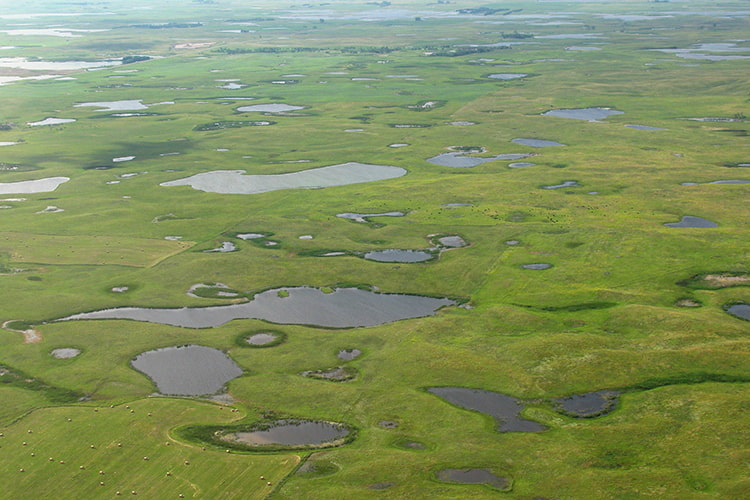
Does USDA support farmers and other land managers in wetlands conservation efforts?
Absolutely, yes. Through NRCS, USDA offers financial assistance and one-on-one technical support for farmers and other land managers interested in wetlands conservation. Specifically:
- The Wetland Reserve Easements (WRE) component of the Agricultural Conservation Easement Program (ACEP) is available to help private and Tribal landowners protect, restore, and enhance wetlands that have been previously degraded due to agricultural uses.
- NRCS supports land managers in implementing voluntary practices to conserve natural resources and strengthen working lands. This includes practices – such as filter strips – that capture nutrients and sediments prior to entering streams and wetlands, thus improving the potential for wetlands to store water and recycle nutrients over the long term. Filter strips are also a climate-smart mitigation activity, with the potential to increase soil carbon and sequester carbon in perennial biomass while improving water quality.
I encourage anyone interested in wetlands conservation across their working lands to contact the NRCS office at their local USDA Service Center.
Where can I learn more about CEAP assessments?
Through CEAP, USDA quantifies and reports on trends in conservation practices, and associated outcomes, over time. You may learn more about CEAP assessments by visiting our new webpage – nrcs.usda.gov/ceap. Our Wetlands Assessments webpage provides information on the effects of conservation efforts related to agricultural wetlands, including additional publications.
Dr. Joseph (Joe) Prenger is the CEAP Wetlands Lead for the NRCS Resource Inventory and Assessment Division. He can be reached at joseph.prenger@usda.gov.

Click the link to read the article on the American Rivers website (Amy Souers Kober and Andrew Fisk):
January 10, 2024
Unsafe dams are “ticking time bombs” putting communities at risk
A partial dam break on Connecticut’s Yantic River is threatening a downstream community with potentially life-threatening flooding. Authorities have issued a flash flood warning and are evacuating the area. The dam is rated as a high hazard potential by the state’s dam safety office.
The incident is an example of the growing threat of dam failures to communities nationwide, as infrastructure is aging and climate change is fueling more severe flooding.
Andrew Fisk, Northeast Regional Director for American Rivers, made the following statement:
“Dam failures can be disastrous and put lives at risk. This is a wake-up call. Increasingly frequent and severe flooding is straining infrastructure in the Northeast and nationwide. In order to protect communities, we must improve the safety and performance of dams.”
“Tens of thousands of dams across our country are old and obsolete. The American Society of Civil Engineers gives the nation’s dams a D grade in its report card on the nation’s infrastructure. One of the most cost-effective ways to deal with outdated, unsafe dams is to remove them.”
“We support the efforts of the community and the Connecticut Dam Safety Program to manage this emergency. American Rivers has advocated in past years to strengthen the dam safety program and get them the resources they need to keep Connecticut’s dams safe.”
“Congress must act to reauthorize the National Dam Safety Program which supports state dam safety agencies. The program’s authorization expired on September 30, leaving thousands of high-risk dams across the country vulnerable to failure. Aging dams are ticking time bombs. We must help communities invest in necessary repairs and, where appropriate, dam removal and river restoration.”
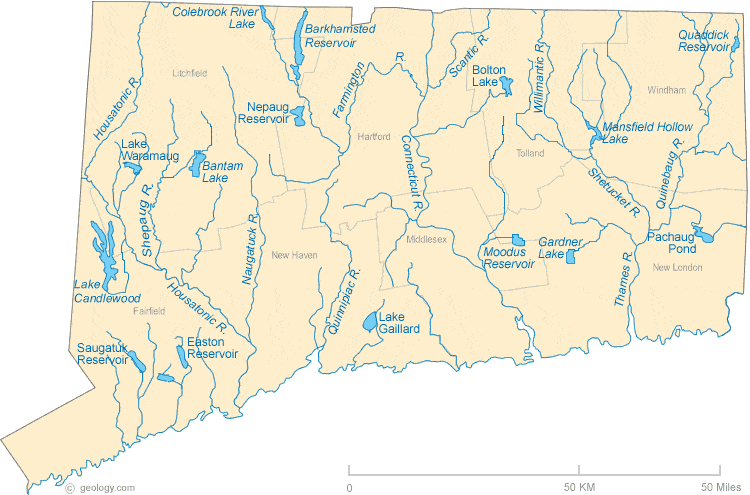

Click the link to read the post on the Colorado Climate Center website (Goble, P. E., and R. S. Schumacher, 2023: On the Sources of Water Supply Forecast Error in Western Colorado. J. Hydrometeor., 24, 2321–2332, https://doi.org/10.1175/JHM-D-23-0004.1.):
January 31, 2024
The Colorado River is the lifeblood of the desert southwestern United States. Its water is used by a population of over 40 million people, is an important source of hydropower, and is the source of irrigation for a portion of the United States that produces a wide variety of specialty crops. Our beautiful state is home to some of its most productive tributaries. The Colorado Headwaters, Gunnison, San Juan, and Yampa River Basins, all in western Colorado, combine to produce over 50% of the Colorado River’s average annual discharge.
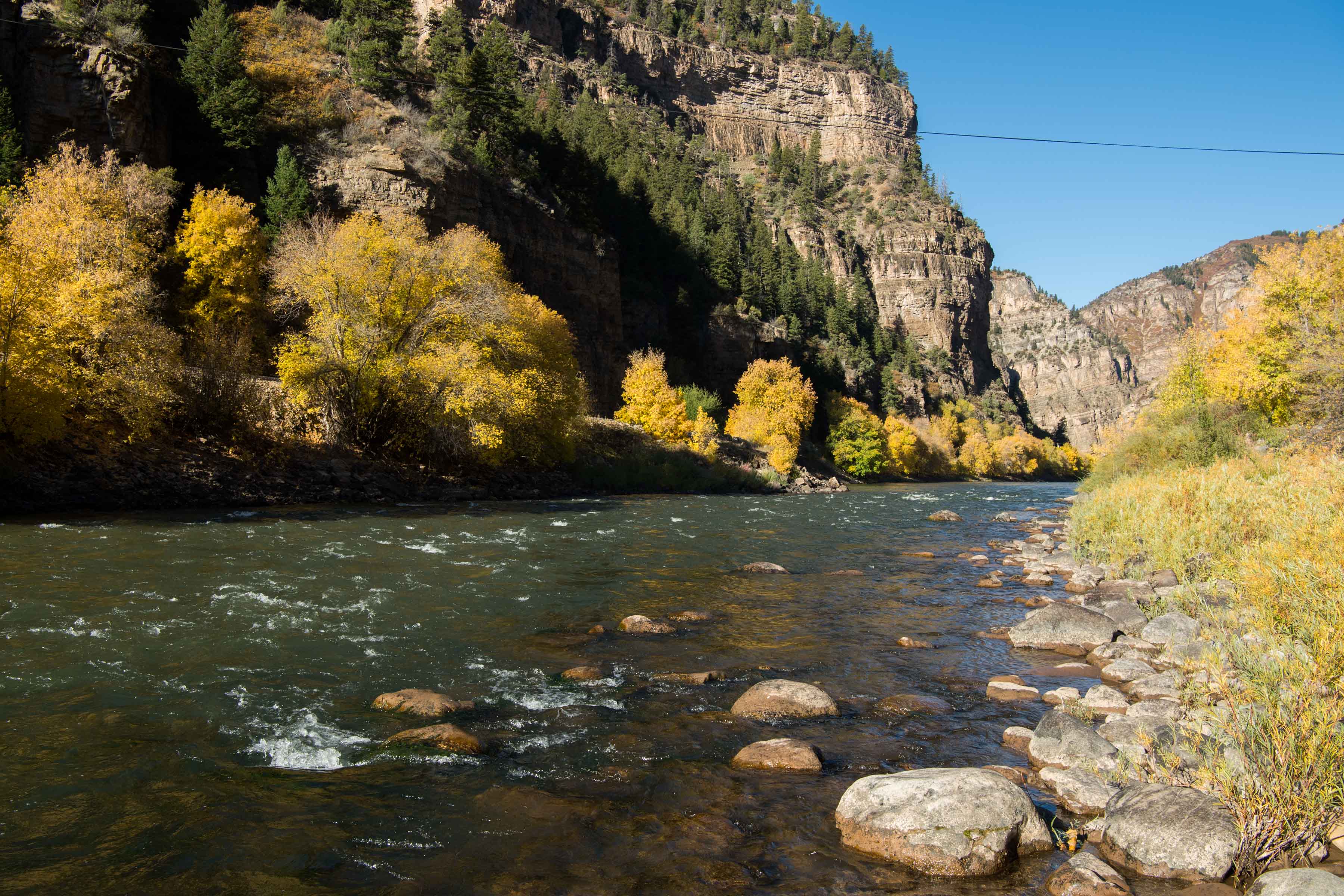
What makes these river basins so productive? Primarily it is snowpack accumulating throughout the cold season (November-April), which melts in the spring and feeds our thirsty lakes, streams, and reservoirs, including trans-basin diversions all the way from Denver to Los Angeles. Some of the Colorado River’s water comes from groundwater and summertime precipitation (an estimated 10-15% according to the Colorado River wiki), but the river is primarily a snow-fed river.
In recent years and decades the Colorado River system has become strained. A combination of climate change, climate variability, and population growth has lead to water demand outpacing water supply along the river system. When this happens curtailments are inevitable; agricultural producers, municipal water managers, hydropower producers, and other water users need to know how much water will be available for the season ahead so they can plan accordingly. To answer this question, water users turn to water supply forecasters, like the Colorado Basin River Forecast Center (CBRFC), and the Natural Resources Conservation Service (NRCS), for answers. April 1st water supply forecasts are crucial to water managers. April 1st is near peak snowpack season, and important benchmark date to those planning for the coming runoff season
April 1st water supply forecasts, such as those produced by CBRFC and NRCS, are fundamentally built around physical and statistical relationships between high elevation precipitation and snowpack measurements in the winter/spring (primarily from the Snowpack Telemetry Network), and gaged streamflow measurements in the spring/summer. After all, the Colorado river is a snow-fed river. This process typically works very well, but 2020 and 2021 yielded much lower than normal runoff despite near normal snowpack at the beginning of April. This rang alarm bells throughout the basin, and raised questions about the role of antecedent soil moisture conditions in the following season’s runoff. Theoretically, if soils are dry at the start of winter due to warm summers and dry autumns, this should reduce runoff in the coming season. As winters snow melts, the water would have to replenish dry soils before filling lakes, streams and reservoirs. 2020 and 2021 were also impacted by dry conditions in western Colorado in April and May. According to the National Centers for Environmental Information April 2021 in particular was the driest April on record for western Colorado.
Both antecedent soil moisture conditions and weather conditions following peak snowpack season negatively impacted western Colorado’s water supply forecast skill in 2020 and 2021. Soil moisture negatively impacted forecasts because it was lower than normal, and not included in all water supply forecast models (it is parametrized in CBRFC’s forecasts). Future weather impacted these forecasts because April and May precipitation were low, and weather forecasting skill is low beyond 7-10 days, so future weather cannot effectively be built into a water supply forecast. Knowing which one of these factors impacted water supply forecasts more is a paramount question because the answer dictates the best pathway for improving forecasts going forward, and how difficult that path will be. Water supply forecast errors from missing or inadequate soil moisture data can be remedied with soil moisture models and observations. Water supply forecast errors stemming from currently unpredictable future weather will persist in the absence of research that adds skill to long-term weather forecasts and seasonal climate outlooks.
With funding from the National Integrated Drought Information System (NIDIS) the Colorado Climate Center conducted a study to evaluate the role of both soil moisture/groundwater, and future weather after the date of a water supply forecast in predicting spring runoff. To do this, we created hindcasts of April–August streamflows using SNOTEL snowpack and precipitation data from 1981–2021, inputting modeled soil moisture and groundwater data to predict streamflow. In this case, “hindcast” refers to a prediction of streamflow in a previous subset of years using a statistical model that was trained based on a separate subset of years. In this way, we mimicked an actual water supply forecasting environment without including the known answer into the model. Special attention was paid to hindcasts made using October-March data (See the AMS article for a more detailed explanation of the methods).
This study found that, on average, basin soil moisture and groundwater data from across the western Colorado did not contribute significantly to the skill of hindcasts. Future weather explained most of the error in water supply hindcasts made both on and before April 1st (plot 1). 2020 and 2021 were exceptional years. Both 2020 and 2021 were preceded by a hot, dry summer and a dry fall in western Colorado. As a result, hindcasts made with soil moisture and groundwater data were more skillful than those made without (tables 1 and 2).
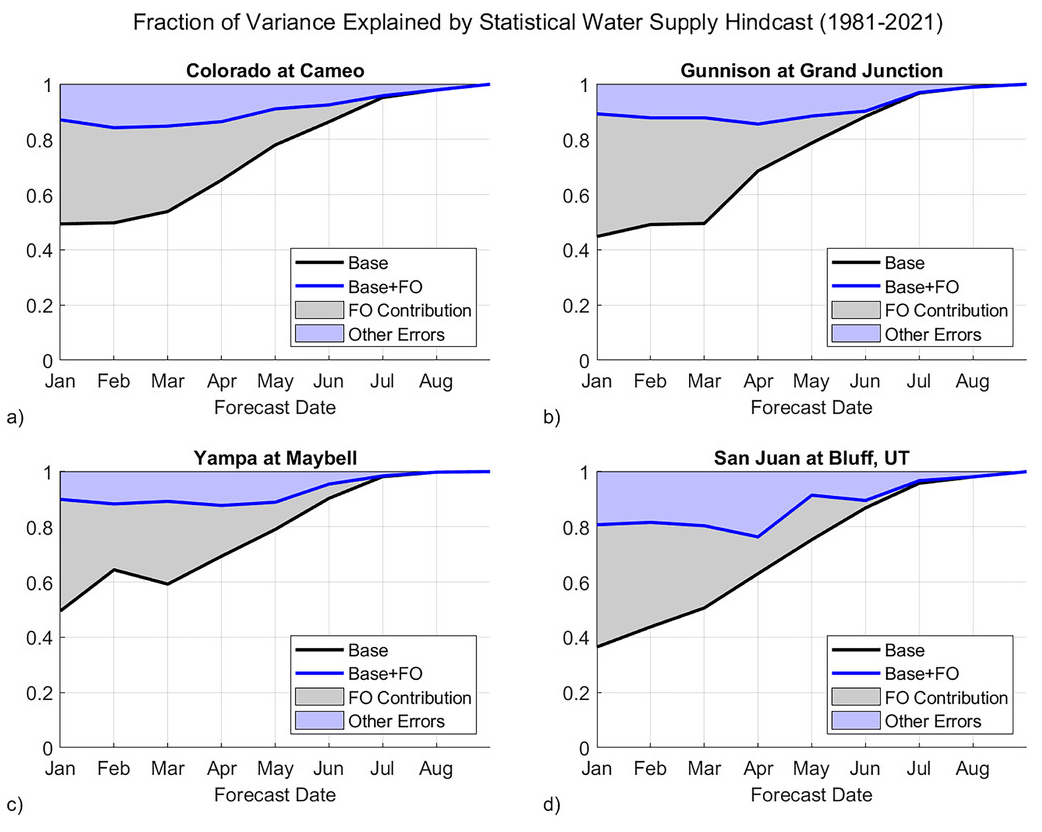


The long-term issues plaguing the Colorado River system aren’t going anywhere. Climate change, climate variability, and population growth will continue to challenge the status quo operations of this resource. The results of this study are important because they demonstrate that there is a clear ceiling on how skillful we can expect water supply forecasts to be for our precious rivers in western Colorado. Marginal improvements may be possible though more thorough and accurate incorporation of soil moisture data in water supply forecasts. However, April 1st water supply forecasts will continue to face a wide array of uncertainty unless the accuracy of sub-seasonal-to-seasonal forecasts can be greatly improved.

Click the link to read the article on the Grist website (Anita Hofschneider):
February 2, 2024
“If you’re going to develop energy in the U.S. you’ve got to do it with the support of tribal communities.”
In December, a federal judge found that Enel Green Power, an Italian energy corporation operating an 84-turbine wind farm on the Osage Reservation for nearly a decade, had trespassed on Native land. The ruling was a clear victory for the Osage Nation and the company estimated that complying with the order to tear down the turbines would cost nearly $260 million.
Attorneys familiar with Federal Indian law say it’s uncommon for U.S. courts to side so clearly with tribal nations and actually expel developers trespassing on their land. But observers also see the ruling as part of a broader trend: Gone are the days when developers could ignore Indigenous rights with impunity. Now, even if projects that threaten Native land and cultural resources ultimately proceed, they may come with years-long delays that tack on millions of dollars. As more companies look to build wind and solar farms or mine minerals for renewable energy, failing to recognize Indigenous sovereignty could make the clean energy transition a lot more expensive and much further away.
“I think tribes are starting to see that they have more leverage than they thought, and that they’ve previously exercised, over all this infrastructure that’s on their land,” said Pilar Thomas, an attorney, member of the Pascua Yaqui Tribe of Arizona and former deputy director of the Office of Indian Energy Policy and Programs at the U.S. Department of Energy. “They want to make sure that they’re getting their fair share.”
Rick Tallman, a program manager at Colorado School of Mines’ Center for Native American Mining and Energy Sovereignty who has spent more than two decades working on financing and consulting for clean energy projects, calls the Osage Nation ruling a wake-up call.
“If you’re going to develop energy in the U.S. you’ve got to do it with the support of tribal communities,” he said.
According to Tallman, investors don’t like uncertainty. He said a lot of infrastructure funders are very conservative and won’t back a project unless they are confident it will succeed, which includes getting the buy-in of affected Indigenous Nations. There’s no upper limit to how much the project could cost if investors don’t get it right.
One analysis from researchers at First Peoples Worldwide at the University of Colorado at Boulder estimated that resistance to the Dakota Access Pipeline drove the project cost upwards of $7.5 billion. That includes more than $4.3 billion in divestment from banks backing the project and nearly $1.4 billion in additional operating costs, not to mention millions spent to hire law enforcement.
Marion Werkheiser, founding partner of Cultural Heritage Partners, said the costs are so high that some renewable energy projects never even get off the ground, citing the Cape Wind project in Nantucket Sound that was opposed by members of the Wampanoag Tribe.
And it’s not just a U.S. trend; Indigenous peoples around the world are fighting to enforce their rights, especially the right to free, prior and informed consent to projects on their land–a concept enshrined in the United Nations Declaration on the Rights of Indigenous Peoples. However, the U.S. hasn’t codified that into law, and compliance globally is spotty.
“Renewable energies are actually not that good in respecting Indigenous rights,” said Genevieve Rose from the International Work Group for Indigenous Affairs. “They have this feeling that because they bring up something good, something green, that they are automatically a good thing.”
But her colleague David Berger said there’s more awareness and resistance from Indigenous peoples, and companies are being forced to factor in those costs. He pointed to Norway, where the state-owned company that developed an illegal wind farm has agreed to pay Indigenous Sámi people about $675,000 every yearfor the next 25 years for violating their rights. “What’s good is you have that legal structure so communities can push back,” Berger said.
Wesley Furlong, an Anchorage-based senior staff attorney at the Native American Rights Fund, said more tribes are filing lawsuits in the U.S., partly because the legal landscape is changing. For example, the National Historic Preservation Act, a federal law managing the preservation of historic resources, has been around since 1966, but it was only in 1999 that the federal government codified regulations related to communicating with tribes about projects that affect them, and the rules weren’t fully in effect until 2004. Some tribes are just now learning about their rights.
Another reason for the increase in lawsuits is because some tribal nations have more resources to fund litigation. “Indian gaming has been a game-changer for tribes to be able to raise revenue and hire attorneys,” Furlong said.
That combination of more legal tools, more financial resources and more education about Native rights, Furlong said, has led to more tribes getting involved in energy developments on their traditional and ancestral territories, including lands with historic connections and are not owned by a tribe. And he only expects that to continue: Most of the U.S. reserves of lithium, copper, cobalt and nickel — metals key to the clean energy transition — are within 35 miles of Federal Indian Reservations, according to a study by the investment firm MSCI.
That’s something renewable energy developers need to be aware of, said Thomas. “I am a staunch believer that if you are within spitting distance of a tribe that you should be engaged in outreach to the tribe,” she said.
Not every project is going to get buy-in, she adds, but she encourages companies to have patience and continue to reach out to tribes even if they don’t respond. Furlong from the Native American Rights Fund said project proponents may erroneously assume that tribes will always be opposed, forgetting that tribal governments want what’s in the best interest of their citizens
Bottom line, it’s much less costly for companies to invest in tribal consultations and get them right from the get-go, says Daniel Cardenas, the head of the National Tribal Energy Association and a member of the Pit River Tribe who has consulted with tribes and companies regarding fossil fuel projects. “The cost of engagement is almost nothing compared to the cost of what they’re going to have to pay [if they don’t do it right],” he said of developers.
Werkheiser has seen some progress, with some banks, insurance companies and energy developers adopting Indigenous peoples policies to guide their investments and some companies undergoing voluntary certifications to show their projects are ethical and respectful of Indigenous rights. “Financial institutions are recognizing that this is a real business risk and they’re building it into the cost of capital for these companies,” she said.
But overall, change is slow, she said.
“For the most part, the renewable energy developers are repeating the mistakes that fossil fuels developers have made over the years,” she said. “They’re not engaging with tribes early as potential partners and information sources during their planning process, and they are basically deferring their own relationship with tribes to the federal government.”
That’s a mistake, said David Kane, a consultant who leads WindHorse Strategic Initiatives. Energy companies often mistakenly perceive tribal chairs as though they are the equivalent of small-town mayors, rather than recognizing them as heads of state. [ed. emphasis mine]
Because of that, he says companies often disrespect tribes from the beginning by sending lower-level representatives to liaise with them, and many companies may never even step foot on a reservation or go before tribal councils. Developers often complain that it takes a long time to build relationships with tribal members but Kane says it’s better to do so before projects get underway.
“There’s still a lot of mistrust of white men and with good reason,” he said. And the energy industry, including renewables, he said, is still predominantly white and male.
Another challenge is that sometimes companies assume what will work with one tribe will work with another, said Cardenas from the National Tribal Energy Association.
“There’s 574 tribes, and each one operates differently and independently,” he said. “So if you know one tribe, you just know one tribe.”
He thinks tribal nations should be seen as partners, even sponsoring partners, with shared equity in the developments. There’s growing interest: Over the past two decades, tribal nations have pursued hundreds of clean energy projects, with the Inflation Reduction Act recently increasing funding for such projects.
But in the meantime, costly litigation continues. Last week in the U.S., four tribal nations sued a developer to prevent a $10 billion wind energy transmission line from going into operation. And in Oklahoma, the Osage Nation is now seeking damages from Enel. A judge still needs to decide how much that will cost the company.
Click the link to read the article on the Big Pivots website (Allen Best):
February 2, 2024
Becky Mitchell speaks crisply and with a bass-drum firmness. Her speeches are like freight trains, orderly processions full of weight, one thought pounding after another.
Her full-time job since July 2023, as Colorado’s lead negotiator in Colorado River matters, gives her weighty material that matches her rhetorical style. Before that, she informally held the same role as the director of the Colorado Water Conservation Board.
The Colorado River has been riven with rising drama in the last 20 years. The seven basin states – but particularly Arizona and California – have reluctantly, slowly conceded reforms necessary to the occasion. The federal government, the referee for the river and operator of the two giant dams, Hoover and Glen Canyon, was slow to force the hard decisions.
“It is time for a fundamental change in how we manage the Colorado River,” she told members of the Colorado Water Congress at the group’s annual conference on Jan. 30. “It’s time to adapt to the river that we have, not the river we dream of.”
“We have some difficult roads ahead of us as we work to find a sustainable solution for the basin,” she said in wrapping up her 15-minute speech. “What we must do would’ve been easier 10 years ago. It would’ve been easier 5 years ago. Tomorrow will be difficult, but we must have the courage to try.”
Following is a lightly abridged version of the speech:
Change is coming. I can’t emphasize enough how much the post-2026 negotiations matter whether you are in the upper basin, lower basin, Mexico, or a member of one of the 30 tribal nations. We all deserve a future with certainty and security in our water supply without that being jeopardized by constant crisis management. We also all deserve a future where we can live within the means of the river and without the risk of overuse or misuse driving us into crisis.
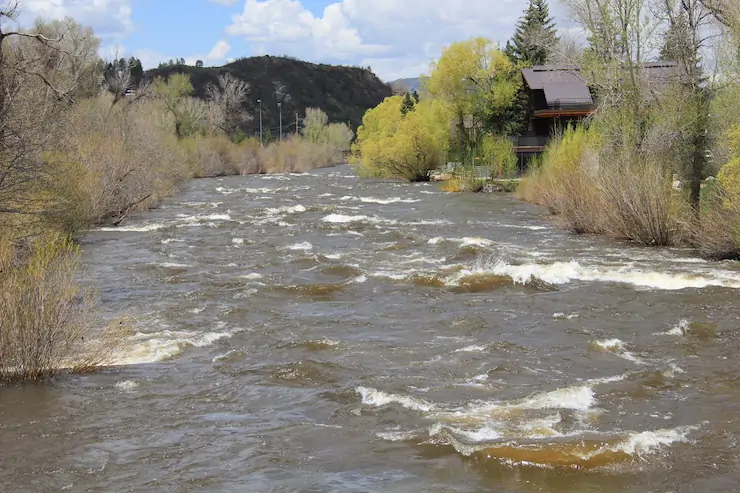
For the past two decades, the upper basin has been caught between the impacts of climate change and lower-basin overuse. I acknowledge that the lower basin does not like the term overuse. My intent is not to offend, but rather to be clear and honest about uses that exceed what the compact and hydrology can allow whatever it is called. We cannot and will not agree to guidelines that perpetuate management of our water resources that do not acknowledge what Mother Nature is providing. The basin cannot continue to use water at a rate that is unsustainable. Those who are fearful of change or who benefit from status quo will find fault in the plain facts that I share with you here today. You will find fault in the tone with which I share them.
The good news is that change is coming. The upper division states have said for years, decades now, the lower basin needs to take responsibility for the role in emptying the reservoirs. But let me be clear why this change is needed. Dry hydrology and overuse have drained the reservoirs. Future guidelines must recognize the reality of the Colorado River Basin hydrology.
Our lower basin neighbors have recently recognized that they must address the overuse. The next step for them is to explain how will they make this commitment a reality. We look forward to seeing those details.
We will continue to do everything we can to get to a seven state solution that protects Colorado and the upper basin, but we also need to be prepared for other scenarios. The upper division states have presented a concept to the lower basin states that outlines mechanisms for living within the means of the river while rebuilding and maintaining Powell and Mead and operating within the law of the river.
(Our concept) is essentially a water budget that honors the law and Mother Nature. The Colorado River Compact is our foundation. Solutions need to respect the law of the river and recognize the reality of hydrology across the entire basin. Those solutions must also be real and verifiable. Aspirational goals do not provide the clarity that is required to provide predictability across the basin.
We cannot and will not agree to balancing like the ’07 guidelines, a concept that was used to justify sending water downstream. The water should be used to rebuild storage. We’re focused on fair, legal and sustainable outcomes for the entire basin. Out of respect for the sovereignty of those lower basin states and the role of the Secretary of the Interior as the water master in the lower basin states, we have not weighed in on how they should apportion the reductions amongst themselves. That is for the lower basin (states) to work out.
We have heard our downstream neighbors say, if we figure out the structural deficit, will you meet us in the middle on climate change? That’s one heck of a hypothetical. If the lower basin overuse is addressed, we’d be looking at a very different situation than what we see today. In fact, if the lower basin had accounted for evaporation and transit losses through the ’07 guidelines, the reservoirs would likely be healthy now.
We are the ones who’ve been doing the work on climate change. We absolutely have been doing our part. What I’ve heard from across Colorado is we are willing to help. We are willing to be a part of the solution, but we cannot solve a problem alone.
We (already) take involuntary and uncompensated reductions when Mother Nature doesn’t provide water. Users in the upper basin have taken an average of 1.3 million acre-feet in shortages annually over the last several years. We make do with less in our communities, our workforce, our economies, and our food production. The lower basin must recognize and acknowledge the annual shortages that occur in the upper division states and then acknowledge — thank you — that the operation of the reservoirs must absolutely respond to hydrology. In addition, we must also acknowledge that the upper basin has not developed into our 7.5 million acre-foot apportionment and that undeveloped tribal water rights are flowing downstream.
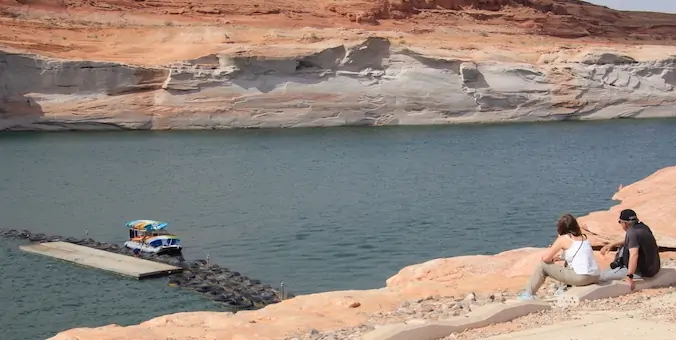
Overuse must end, and the compact must remain our foundation. It will not be easy. As we move into a future that is more responsive to hydrology, I acknowledge that we all must acknowledge there will be hardship and pain, while also acknowledging that this hardship and pain has existed in the upper basin for decades. Because we haven’t been shielded from climate change impacts, the upper basin states are uniquely positioned to assist our downstream neighbors in learning how to live with less.
We are collaborating in unprecedented ways in the upper basin, and this time we’re doing it at a bigger table. I’m very proud that we are working with the upper basin tribal nations in recognition of their historical ownership and their undeveloped federally reserved water rights. This collaboration has made very clear to me that is unacceptable for the upper division states to accept any limitations on future uses when upper basin tribes have limited access to clean water, agricultural production, and economic vitality.
I remember the speech I gave in the summer of 2022. The reservoirs were crashing. The federal government had laid out an ultimatum: Figure out how to conserve 2 to 4 million acre feet or we’ll figure it out for you. The lower basin was unwilling and unable to reach an agreement about cuts to their uses. I remember many long meetings and long hours that my team and I put into discussions with our fellow upper division states. We worked out the five-point plan. This was a turning point for Colorado. The decision was a difficult one for me. It was not fun.
By implementing this plan, we have positioned ourselves as leaders in the basin, the ones willing to come to the table to do our part. Colorado cannot and will not accept status quo. We cannot or will not be bullied into a future that drains the reservoirs for continued unsustainable use.
For example, we pushed the Bureau of Reclamation to modify how the upper basin is represented in Colorado River Basin modeling. Our advocacy means that today the updated models better reflect the reality in the upper basin, a reality that will be represented in the post 2026 tools. Reclamation models now show what shortages look like here.
This team has also worked to make Colorado more resilient. Over the past year, the CWCB has spearheaded a turf removal program to make our municipalities more resilient for future water shortages.
Division of water resources has continued to strictly administer water rights, including painful cuts to water use to respond to Mother Nature.
My fellow commissioners and the upper Colorado River Commissioners revamped the 2024 System Conservation Pilot Program, or SCPP, to allow water users to voluntarily forego their water uses in exchange for compensation, thereby helping to put water in the river to mitigate drought in the upper division states.
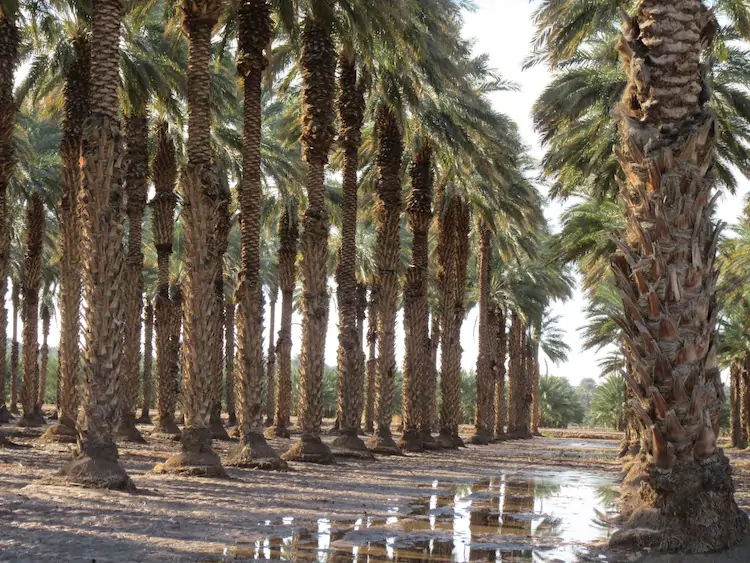
The drought task force critically examined the Colorado River issues and not only applauded the good work of the state, but recommended additional resources to augment our existing work.
The river team is also working to transition our guiding principles from paper to practice. You are all familiar with the irrefutable truths. It’s one thing to say these are our principles. It’s another thing to then apply them to the basin-states negotiations. That is a difficult task. I’ve seen some of these principles gain traction throughout the entire Colorado River basin. Federal government has acknowledged the need for managing the reservoirs sustainably. The lower basin has acknowledged the need to address their overuse. The environmental community recognizes that healthy storage at our nation’s two largest reservoirs must be the first step in protecting Colorado’s rive and the, Colorado River’s ecosystems. Gradually, I’m hearing interest from DC to the Imperial Valley, recognizing that the status quo does not work anymore.
It is time for a fundamental change in how we manage the Colorado River. We must all live within the means of the river if we hope to sustain it. I want Lake Powell and Lake Mead to serve the purposes they were designed to serve. To provide for sustainable development of our compact apportionments in the Colorado River Basin and to provide water security in dry years. A sustainable system means we have to rebuild storage in Lake Powell and Lake Mead and protect upstream storage for releases only in the most dire circumstances. This means that the worldview around water must change, particularly in the lower basin. We must manage demand to rebuild the storage that provides certainty of supply. In all years, we all must adapt to the available water supply.
We have an opportunity now to collaboratively determine how to adapt to the river that we have, not the river we dream of. The lower basin states have said many good things that signal that they are open to collaboration.
We believe them when they say they will own the structural deficit, when they say they will live within the means of the river, when they say they will support the tribes and that they support the environment. I take them at their word. We assume that they are serious about these commitments, and we expect open and transparent accounting of all lower basin uses of main stem tributaries so that we can trust but verify their actions. We hope that the lower basin will come around to support the framework for management of Lake Powell and Lake Mead that is sustainable for the 40 million people who rely on the Colorado River.
What we must do would’ve been easier 10 years ago. It would’ve been easier five years ago. Tomorrow will be difficult, but we must have the courage to try.


Click the link to read the article on the Source NM website (Danielle Prokop):
The nation’s highest court will hear federal objections to a deal between Texas and New Mexico in their dispute over Rio Grande water in oral arguments scheduled for a midweek date on March 20.
The U.S. Supreme Court agreed to take up the case last week, as the lawsuit crawls into a decade since its filing.
Justices will evaluate arguments from the federal government taking exception to a compromise planagreed to by Texas, New Mexico and Colorado to settle the case. The three states are parties in the lawsuit and agreed to the compromise in January 2023. [ed. emphasis mine]
The New Mexico Office of the State Engineer said there would be no need to adjust its budget request before the New Mexico State Legislature because of the oral arguments in D.C. State Engineer Mike Hamman said in a written statement that the office is looking forward to the oral argument in March.
“We are confident that the Supreme Court will accept the states’ proposed settlement, which will allow us to move forward towards securing a stable water future for all users in the lower Rio Grande,” said Hamman.
Budget asks
Also on Monday morning, the New Mexico House of Representatives released its state budget proposal for the next fiscal year. In the proposed budget, the House Appropriations and Finance committee extended $2 million given last year to the New Mexico Department of Justice for Rio Grande litigation and notes another $6.4 million on interstate water litigation will carry forward from last year.
In the Office of the State Engineer, $8.9 million is set aside for litigation and adjudication of water rights within streams around the state and underground basins.
Separately, the agency will transfer $2.5 million to the litigation and adjudication programs of the state engineer. While not all adjudication and litigation is specific to the supreme court’s Rio Grande case, that in all, totals to nearly $20 million between both agencies.
How we got here
Formally called Original No. 141 Texas v. New Mexico and Colorado, the case has cost taxpayers tens of millions of dollars.
The 2014 filing by the state of Texas centers on allegations that New Mexico groundwater pumping downstream of Elephant Butte Reservoir took Rio Grande water allocated to Texas.
Texas said New Mexico’s pumping violated the 1938 Rio Grande Compact, a legal agreement between Colorado, New Mexico and Texas to split the river’s water.
While 80% of the river’s water is used for agriculture, it’s a major source of drinking water for cities such as El Paso and Albuquerque, and for wildlife. Las Cruces sits below Elephant Butte Reservoir and receives all its drinking water from groundwater.
In 2018, the U.S. Supreme Court allowed the federal government to intervene in the case. Attorneys for federal agencies said New Mexico groundwater pumping threatened federal abilities to deliver water to tribes, regional irrigation districts and Mexico under a federal treaty.
The case pressed on to trial in 2021 and was split into two parts. A six-week virtual portion of the trialwas held in the fall, and a second in-person technical portion was pushed back after months of negotiations by parties took up much of 2022.
Just before the trial was set to resume, the three states announced an agreement which would resolve issues between Texas and New Mexico. It includes measuring water deliveries at the state line, new conditions for over- and under-deliveries of Rio Grande water and incorporating drought baselines and groundwater pumping into the formulas for how much water is available.
Attorneys for the federal government objected, arguing that the agreement was made without their consent.
U.S. 8th Circuit Judge Michael Melloy recommended last year that the Supreme Court accept the deal over objections from the federal government, calling it “fair and reasonable” in his 123-page report. He said disputes over federal operations in Southern New Mexico could be resolved in other courts.
In December, the federal government submitted a filing objecting to Melloy’s recommendation. In the filing, attorneys said the settlement “imposes obligations on the United States without its consent.” Attorneys further argued that the deal should be thrown out because it is “contrary to the Compact”.
It’s expected that only attorneys for the states and the federal government will have time to speak during oral arguments before the Supreme Court in March. If that happens, groups unable to present arguments would include farming associations, irrigation districts, the city of Las Cruces and New Mexico State University, which appear as amici curae or “friends of the court.”
Opinions from the Supreme Court are typically issued by late June, occasionally early July, during their session.

From email from the Colorado Department of Natural Resources (Michael Elizabeth Sakas):
February 1, 2024
Rebecca Mitchell, Colorado’s Upper Colorado River Commissioner, spoke to a sold-out crowd at the Colorado Water Congress’s Annual Convention in Aurora, CO this week. She shared an update on the state’s negotiation positioning, and the reality of difficult roads ahead, as the states and Tribal Nations work to find sustainable solutions for 40 million people who rely on the Colorado River in the arid southwest.
“Change is coming to the Colorado River and because it is, I can’t emphasize enough how much the Post-2026 negotiations matter,” Commissioner Mitchell said in her speech. “Whether you are in the Upper Basin, Lower Basin, Mexico, or a member of one of the 30 Tribal Nations, we all deserve a future with certainty and security in our water supply, without that being jeopardized by constant crisis management.”
The current guidelines, called the ‘07 Guidelines, manage Lake Powell and Lake Mead. These expire in 2026, and the states that share the river are in the process of negotiating new guidelines for how Lake Powell and Lake Mead will operate post-2026. Powell and Mead hit their lowest levels on record in recent years, partly because states in the Lower Basin continue to use more water than what flows into these reservoirs. Commissioner Mitchell said that the ‘07 Guidelines cannot simply be extended.
“I want to recognize that the Lower Basin does not like the term overuse. My intent is not to offend, but rather to be clear and honest about uses that exceed what the Compact and hydrology can allow,” Commissioner Mitchell said. “Whatever you call it, we cannot– and will not– agree to guidelines that perpetuate management of our water resources that do not acknowledge what Mother Nature is providing. The Basin cannot continue to use water at a rate that is unsustainable.”
“History shows that collaborative efforts by the Basin States can provide superior solutions. We will continue to do everything we can to get to a seven-state solution that protects Colorado and the Upper Basin. But we also need to be prepared for other scenarios,” Commissioner Mitchell said.
“Our Colorado River team is a force. I cannot thank the Colorado Water Conservation Board, the Division of Water Resources, and the Attorney General’s teams enough. Also, I greatly appreciate the support of Governor Polis, who has been engaged and helpful as we enter these critical negotiations,” Commissioner Mitchell said. “Together, we have shown the federal government and the Lower Basin that Colorado cannot and will not accept the status quo or be bullied into a future that drains the reservoirs for continued, unsustainable use in the Lower Basin.”
Click the link to read Commissioner Mitchell’s full speech from the 2024 Colorado Water Congress Annual Convention on the Colorado Department of Natural Resources website:
Rebecca Mitchell, Colorado’s Upper Colorado River Commissioner
Colorado Water Congress Annual Convention Speech
Jan. 31, 2024Change is coming – and because it is, I can’t emphasize enough how much the Post-2026 negotiations matter.
Whether you are in the Upper Basin, Lower Basin, Mexico, or a member of one of the 30 Tribal Nations, we all deserve a future with certainty and security in our water supply without that being jeopardized by constant crisis management. We all deserve a future where we can live within the means of the river, without the risk of overuse or misuse driving us into crisis.
For the past two decades, the Upper Basin has been caught between the impacts of climate change and Lower Basin overuse, along with the increasing risk that our thirsty neighbors will look upstream for more water.

I want to recognize that the Lower Basin does not like the term overuse. My intent is not to offend, but rather to be clear and honest about uses that exceed what the Compact and hydrology can allow. Whatever you call it, we cannot – and will not – agree to guidelines that perpetuate management of our water resources that do not acknowledge what Mother Nature can provide.
The Basin cannot continue to use water at a rate that is unsustainable.
Those who are fearful of change, or who benefit from the status quo, will find fault with the plain facts I share here with you and will find fault with the tone in which I share them, as an excuse for their inaction. We must move forward together to face the future with honesty and courage. You, Colorado, and all people in the Basin deserve nothing less than honesty and courage.
The good news? Change is coming. The Upper Division States have said for decades that the Lower Basin needs to take responsibility for its role in emptying the reservoirs.
Let’s be clear about why this change is needed. The ‘07 Guidelines cannot be extended. Under the ‘07 Guidelines, dry hydrology and overuse by the Lower Basin have drained the reservoirs. Future guidelines must recognize the reality of Colorado River Basin hydrology.
Our Lower Basin neighbors recognize that they must address their overuse, what they call the “structural deficit.” I applaud that first step of acknowledging their responsibility. The next step is for them to explain how they will make this commitment a reality that we can rely on. We look forward to seeing those details.
The history of the Basin shows that collaborative efforts by the Basin States can provide superior solutions. We will continue to do everything we can to get to a seven-state solution that protects Colorado and the Upper Basin.
But we also need to be prepared for other scenarios.
The Upper Division States have presented a concept to the Lower Basin States that outlines mechanisms for living within the means of the river while rebuilding and maintaining Powell and Mead, and operating within the Law of the River – essentially a water budget that honors the law and Mother Nature.
The Colorado River Compact is our foundation. Solutions need to respect the Law of the River and recognize the reality of the hydrology of the Colorado River Basin. Solutions must also be real and verifiable. Aspirational goals do not provide the clarity that is required to provide predictability to the Basin.
We cannot and will not agree to continue “balancing” under the ‘07 Guidelines, a concept used to justify sending water downstream to fuel Lower Basin overuse. That water should be used to rebuild storage.
We’re focused on fair, legal, and sustainable outcomes for the entire Basin.
Out of respect for the sovereignty of the Lower Basin States, and the role of the Secretary of the Interior as Water Master of the Lower Basin, we have not weighed in on how they should apportion reductions among themselves. That is for the Lower Basin to work out. We’ve rolled up our sleeves in a good-faith effort to balance the demands with supplies, and the need to have water available in dry years to keep the system from crashing.
We have heard our downstream neighbors say, “If we figure out the structural deficit, will you meet us in the middle on climate change?”
First off – that’s one heck of a hypothetical. If Lower Basin overuse is addressed, we would be looking at a very different situation than what we see today. In fact, if the Lower Basin had accounted for evaporation and transit losses throughout the ‘07 Guidelines, the reservoirs would likely be healthy.
But at this time, we’re the only ones who’ve been doing anything about climate change. We’ve shown that we are willing to do our part, that we have been doing our part. I have heard across Colorado that we’re willing to help – but we cannot solve the problem alone.
We take involuntary and uncompensated reductions when Mother Nature does not provide. Water users in the Upper Basin have taken an average of 1.3 million acre-feet in shortages annually over the last several years. In other words, we have used 1.3 million acre-feet less than what we may have used if our water users’ demands were fulfilled.
When we make do with less water, we also make do with less in our communities, our workforce, our economies, and our food production. The Lower Basin must recognize and acknowledge the annual shortages that occur in the Upper Division States, and then acknowledge that the operation of reservoirs must respond to hydrology.In addition, we must acknowledge that the Upper Basin has not developed into our 7.5 million acre-foot apportionment and that undeveloped Tribal water rights are flowing downstream.
Regardless of what the future agreement looks like, the sideboards are set: we can no longer operate without regard for Mother Nature, overuse must end, and the Compact must remain our foundation.
It won’t be easy. As we move to a future that is more responsive to hydrology, I acknowledge that there will be hardship and pain in the Lower Basin – while also acknowledging that this hardship and pain has existed in the Upper Basin for decades, because we haven’t been shielded from climate change impacts.
The Upper Basin is uniquely positioned to assist our downstream neighbors in learning to live with less.
Seventy-five years ago, my predecessor agreed to the 1948 Upper Colorado River Compact, which established the Upper Colorado River Commission (UCRC) as a forum for “interstate comity.” That sentiment has never been truer in the Upper Basin than today. The Upper Division States are strongly united, and we’re stronger because of the common interests shared across Colorado, New Mexico, Utah, and Wyoming.
We are collaborating in unprecedented ways in the Upper Basin, and this time we’re doing it at a bigger table. I’m very proud that we are working with the Upper Basin Tribal Nations in recognition of their historical ownership and their undeveloped federally reserved water rights. This collaboration has made it very clear to me that it is unacceptable for the Upper Division States to accept any limitations on future uses when the Upper Basin Tribes have limited access to clean water, agricultural production, and economic vitality.
What we can do and what we will do is operate responsibly, and initiate programs and policies that promote sustainable uses across the Upper Basin.
I would like to take a moment to reflect on how far we have come as a state, and as the Upper Basin, over the last couple of years. I remember the speech I gave to you all in the summer of 2022. The reservoirs were crashing. The federal government had laid out an ultimatum: “Figure out how to conserve 2 to 4 million acre-feet, or we’ll figure it out for you.” The Lower Basin was unwilling and unable to reach an agreement about cuts to their uses.
When it became clear that a Basin agreement was impossible, I remember the many long meetings and long hours that my team and I put into discussions with our fellow Upper Division States. And we worked our way to the Five Point Plan.
That Five Point Plan was a turning point for Colorado. You all know that decision was a difficult one for me. But by implementing this plan, we positioned ourselves as leaders in the Basin as the ones willing to come to the table to do our part.
A few short months later, the General Assembly passed a bill that funded the creation of several new full-time employees. If you’ve ever worked in state government, you’ll know that getting one new employee is a massive success – imagine then how significant it is to secure nearly 20 positions dedicated to Colorado River issues.
Our Colorado River team is a force. I cannot thank the Colorado Water Conservation Board, the Division of Water Resources, and the Attorney General’s teams enough. Together, we have shown the federal government and the Lower Basin that Colorado cannot and will not accept the status quo or be bullied into a future that drains the reservoirs for continued, unsustainable use in the Lower Basin.
For example, we pushed the Bureau of Reclamation to modify how the Upper Basin is represented in Colorado River Basin modeling. Our advocacy means that today, the updated models better reflect the reality in the Upper Basin — a reality that will be represented in post-2026 tools. Reclamation models now show what shortages look like here. The models also show how shortage cuts into our water needs.
This team has also worked to make Colorado more resilient. Over the past year, the CWCB has spearheaded a turf removal program to make our municipalities more resilient to future water shortages; DWR strictly administered water rights – including painful cuts to water use – to respond to Mother Nature; Me and my fellow Upper Colorado River Commissioners revamped the 2024 System Conservation Pilot Program – or SCPP – to allow water users to voluntarily forgo their water uses in exchange for compensation, thereby helping to put water in the river to mitigate drought in the Upper Division States; and the Drought Task Force critically examined Colorado River issues, and not only applauded the good work of the state, but recommended additional resources to augment our existing work.
The Colorado River team is also working to transition our guiding principles from paper to practice. You are all familiar with the irrefutable truths. It’s one thing to say, “These are our principles.” It’s another thing to then apply them in Basin State negotiations.
I’ve seen some of the principles gain traction throughout the entire Colorado River Basin. The federal government has acknowledged the need for managing the reservoirs sustainably. The Lower Basin has acknowledged the need to address their overuse. The environmental community recognizes that healthy storage at our nation’s two largest reservoirs must be the first step in protecting the Colorado River’s ecosystems.
Gradually, I’m hearing diverse interests, from D.C. to the Imperial Valley, recognize that the status quo doesn’t work anymore, that it is time for a fundamental change in how we manage the Colorado River, and that we must all live within the means of the River if we hope to sustain it.
I want Lake Powell and Lake Mead to serve the purposes they were designed to serve: to provide for sustainable development of our compact apportionments in the Colorado River Basin, and to provide water security in dry years.
A sustainable system means we have to rebuild storage in Lake Powell and Lake Mead, and protect upstream storage for releases only in the most dire circumstances. This means that the worldview around water must change – particularly in the Lower Basin. We must manage demand to rebuild the storage that provides certainty of supply in all years. We all must adapt to the available water supply.
We hope our Lower Basin partners will meet us in this moment. We have an opportunity to collaboratively determine how to adapt to the river that we have, not the river that we dream of.
The Lower Basin states have said some good things that signal they are open to collaboration. We believe them when they say that they will “own the structural deficit,” when they say they will “live within the means of the River,” that they “support the Tribes,” and that they “support the environment.”
I take them at their word. We assume they are serious about these commitments, and we expect open and transparent accounting of all Lower Basin uses– mainstem and tributaries– so that we can trust but verify their actions.
We hope that the Lower Basin will come around to support a sustainable framework for the management of Lake Powell and Lake Mead for the 40 million people who rely on the Colorado River. We are bound together by this River, by the Compact we signed 100 years ago, and by our shared interest in a vibrant American southwest.
Utilizing unprecedented federal funds, I believe that we can reach an agreement that protects all who rely on this critical resource – and we should do this post haste: 40 million people are counting on us.
I want to acknowledge my counterparts in both the Upper and Lower Basins, along with the leadership of the Bureau of Reclamation, and the fact that we have some difficult roads ahead of us as we work to find a sustainable solution for the Basin. What we must do would have been easier ten years or even five years ago. Tomorrow will be difficult, but we must have the courage to try.
The history of the Basin shows that collaborative efforts by the Basin States can provide superior solutions. We all know we must prepare for other scenarios. But for now, I promise you that we are focused on finding that collaborative solution.My request is that Colorado stay unified at this critical time in the negotiations. I commit to making space and time to have the difficult discussions we need to have within Colorado about these important issues. But the most important task – right now – is to find success in the negotiations with the other Basin States.
Success depends on all of us staying together with a common goal of protecting the resources of Colorado for all who depend upon them – including the Tribal Nations, agricultural users, cities, and the environment.
Thank you.

Click on a thumbnail graphic to view a gallery of drought data from the US Drought Monitor website.
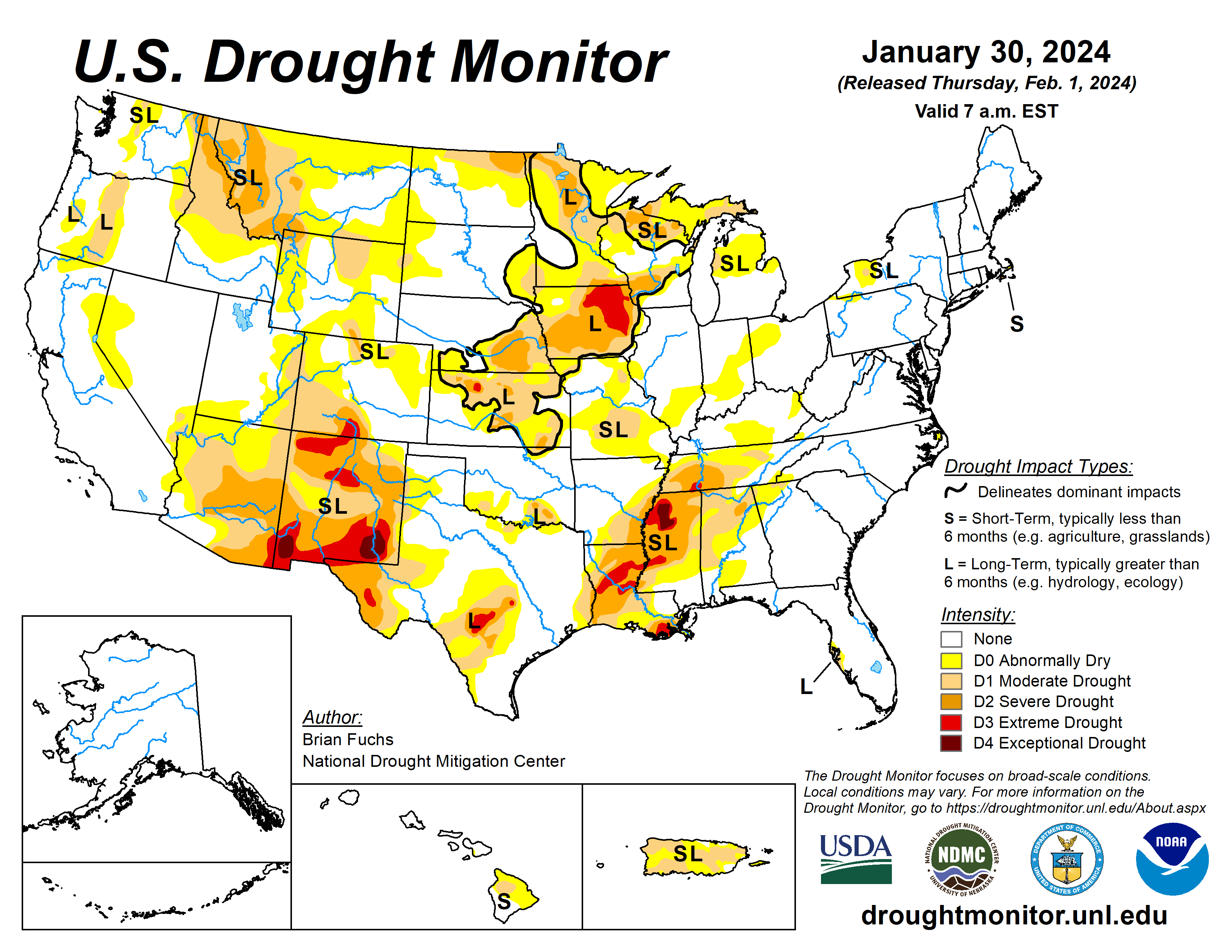
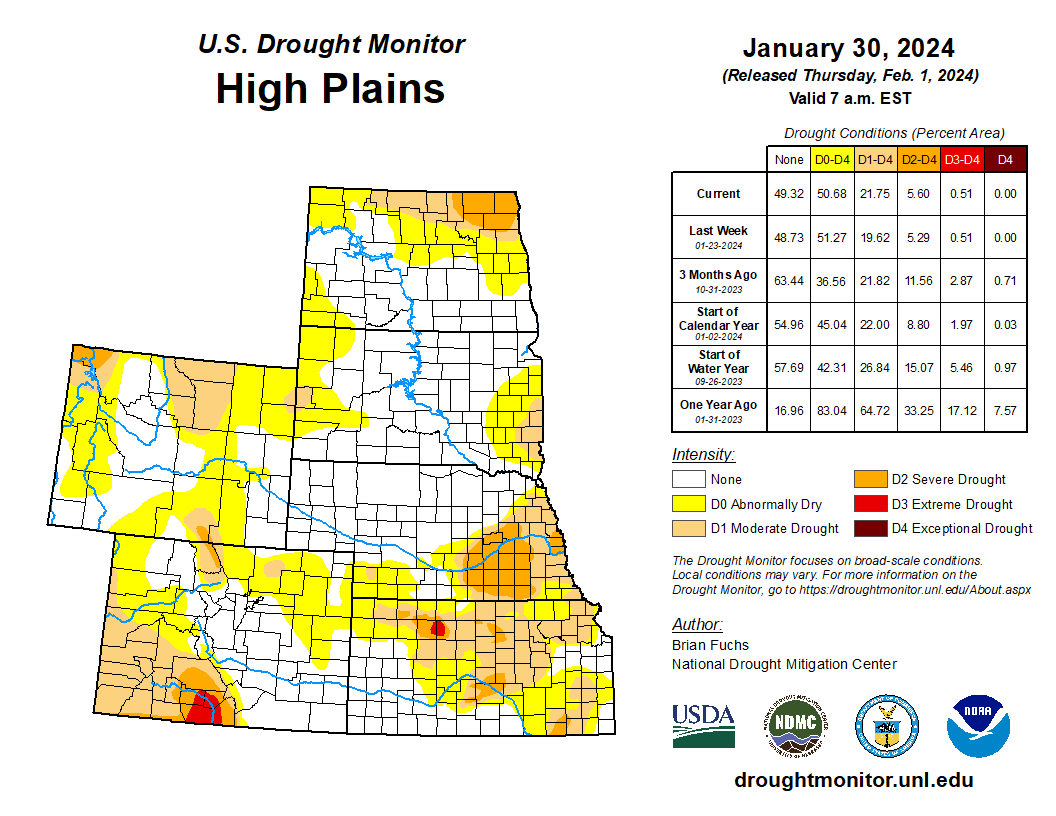
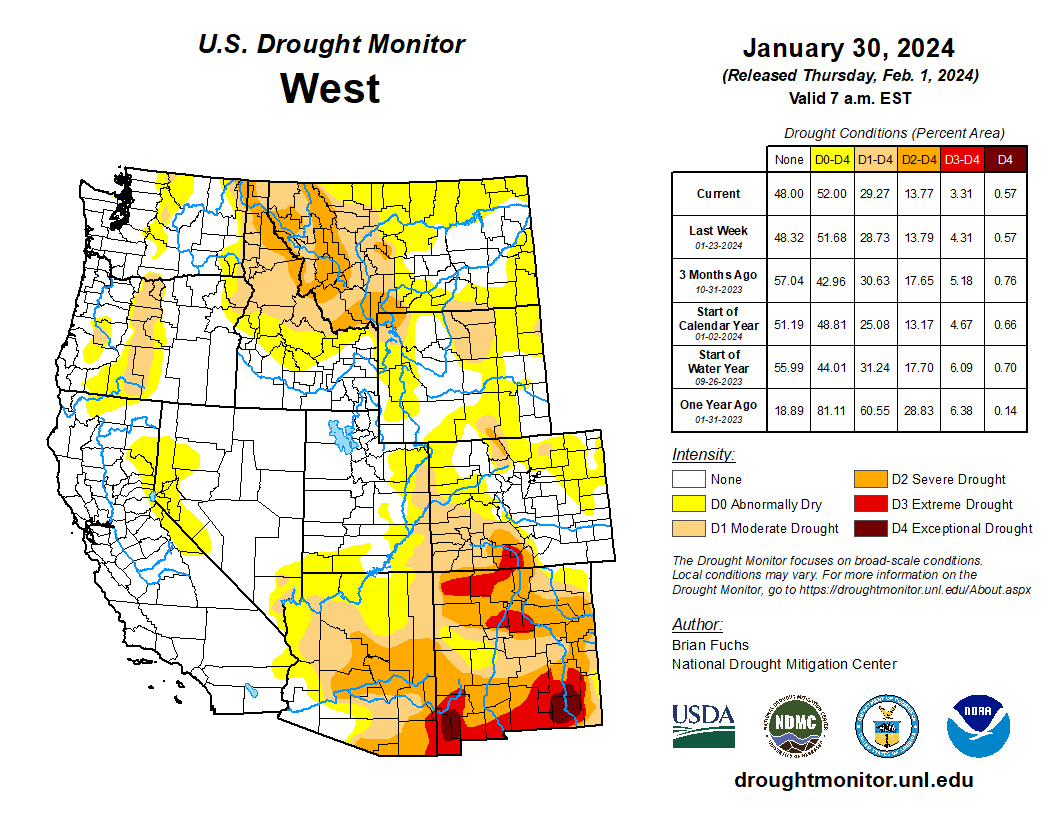
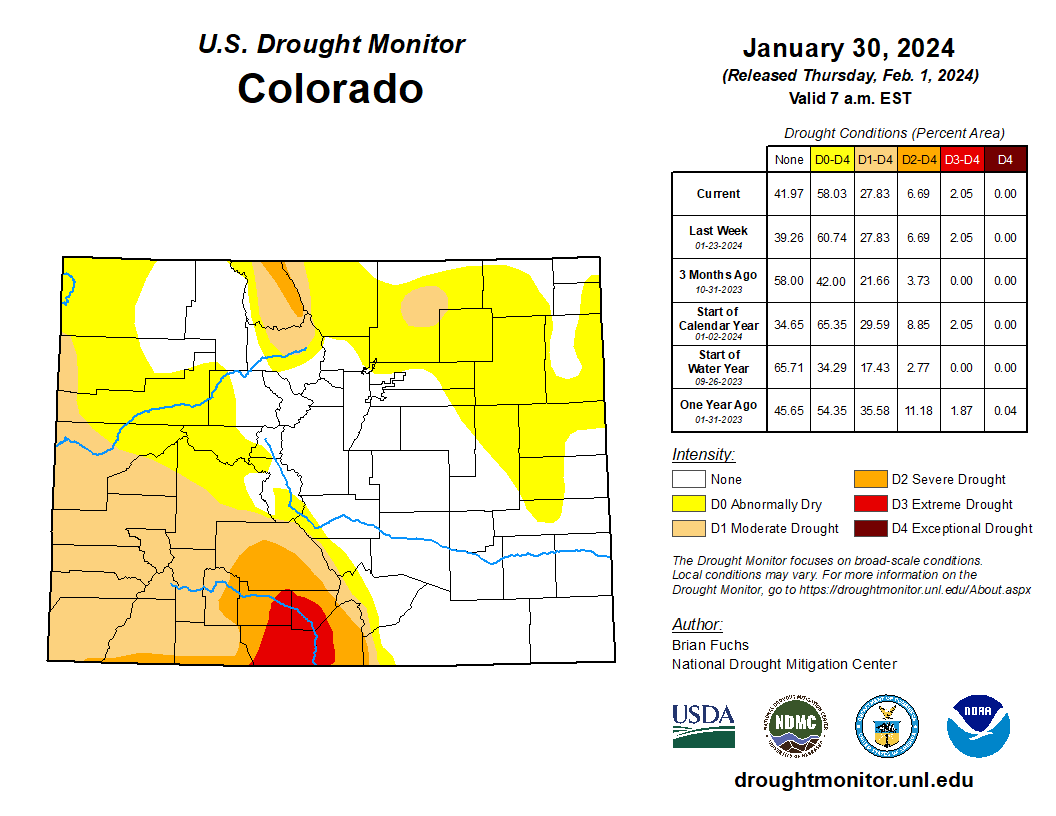
Click the link to go to the US Drought Monitor website. Here’s an excerpt:
This Week’s Drought Summary
The synoptic pattern over the last week favored continued precipitation over the coastal areas of the Pacific Northwest and very widespread and heavy precipitation in the South and Southeast and into the Midwest. Some areas of east Texas, Louisiana and Mississippi recorded over 8 inches of rain for the week. Dryness dominated the central to high Plains and most of the rest of the West as well as the Atlantic Coast into south Florida. After a very strong cold snap in previous weeks, temperatures this week were warmer than normal over much of the U.S., with the upper Midwest having the greatest departures of 15-20 degrees above normal in Minnesota and northern Wisconsin. Across the plains of Wyoming and Montana and into the northern Rocky Mountains, there is building concern over the lack of snow this current water year and snow drought concerns are also prevalent in portions of the High Plains and upper Midwest…
High Plains
Most of the region was dry this week, with only portions of central Colorado, far southwest Kansas, and northern North Dakota recording normal to above-normal precipitation. Temperatures were near normal over much of Kansas and central Nebraska and were 5-10 degrees above normal for most of the rest of the region. Most of the region did not see any changes to the drought status this week. Moderate drought was introduced over portions of western South Dakota and central Wyoming due to the ongoing dry winter and lack of snow. Abnormally dry conditions were improved in central Colorado based on the short-term improvements being observed there…
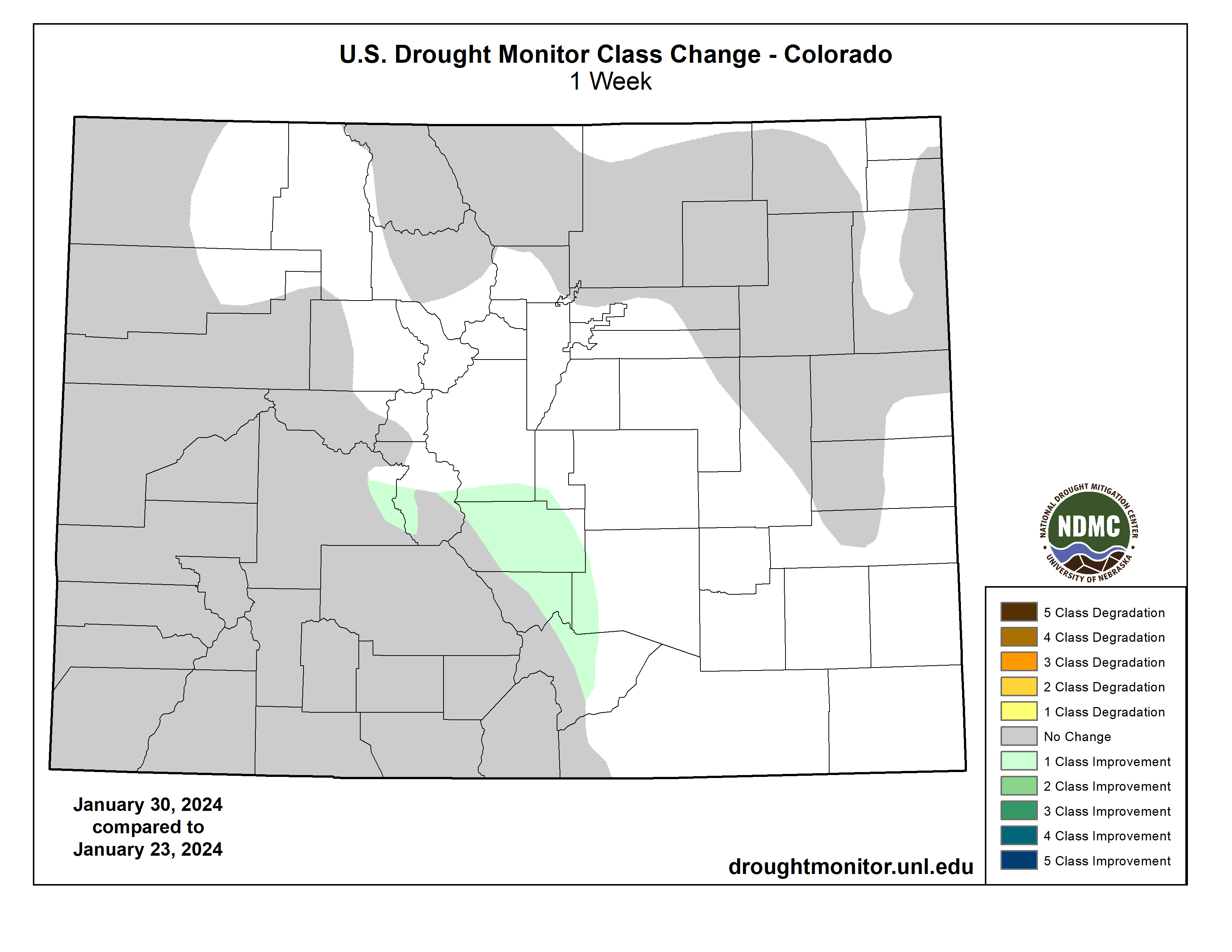
West
Areas along the coast and inland and into the Southwest recorded above-normal precipitation this week while much of the central to northern Rocky Mountains were dry. The entire West was near to above normal for temperatures with the greatest departures over Montana, Wyoming, Utah and Idaho, where some areas were 10-15 degrees above normal for the week. This same area has been impacted by snow drought this current water year and there are developing concerns about water availability heading into the spring and summer as we approach February. Severe drought was introduced into more of southern and central Montana and into northwest Wyoming. Abnormally dry conditions were expanded in southern Utah and introduced into eastern California and western Nevada. Moderate drought expanded in northeast Oregon into Idaho and in southern Oregon in the Klamath Valley. Elsewhere in Oregon and Washington, improvements were made to moderate and severe drought in western Oregon and Washington while some areas of abnormally dry conditions were contracted. Areas of southern Arizona and southern New Mexico had improvements where extreme drought was removed from much of southern Arizona and reduced in southern New Mexico with additional improvements to moderate and severe drought…
South
Temperatures were cooler than normal over central Oklahoma into northern Texas where departures were 1-3 degrees below normal. Most of the rest of the region was near normal to 3-6 degrees above normal, with the greatest departures over Mississippi where it was 9-12 degrees above normal. A very wet week for the region. Some areas of east Texas and into Arkansas recorded over 800% of normal precipitation for the week and almost all areas were 200-400% of normal precipitation. Widespread improvements to the overall drought status were made this week over most of Arkansas, Tennessee, Mississippi, Louisiana and east Texas where a full category improvement in drought intensity status was made. Some areas were investigated for multiple categories of improvement but with some of the long-term issues still showing up, most improvements were limited to a single reduction in intensity this week. Southern Oklahoma and north Texas had targeted improvements to the severe and moderate drought as well as the abnormally dry conditions. Portions of west Texas continued to be dry and may need to see drought intensification if the pattern doesn’t change…
Looking Ahead
Over the next 5-7 days, an active pattern is anticipated to remain over the South and Southeast with another week of widespread precipitation from east Texas to the Carolinas. Some precipitation is anticipated over the central Plains while a wetter pattern is anticipated over most of the West, with the greatest precipitation along the California coast. Temperatures during this period are anticipated to be below normal over California, Nevada, and into Utah and Arizona while warmer-than-normal temperatures are expected to impact the Plains, Midwest and portions of the South. The greatest departures of above-normal temperatures are anticipated in the upper Midwest and northern Plains with departures of 20-25 degrees above normal.
The 6–10 day outlooks show above-normal chances for warmer-than-normal temperatures over much of the country east of the Rocky Mountains with the greatest probability over the Great Lakes region and upper Midwest. The best chances for cooler-than-normal temperatures will be over the West and Florida with the best chances of below-normal temperatures over much of California. Much of the western half of the U.S. will have high probabilities of above-normal precipitation with the greatest chances over the Southwest. The best chances of below-normal precipitation will be in upper New England and through much of the Mid-Atlantic and into the Southeast. The highest probability of below-normal precipitation will be over Maine, New Hampshire and Massachusetts.
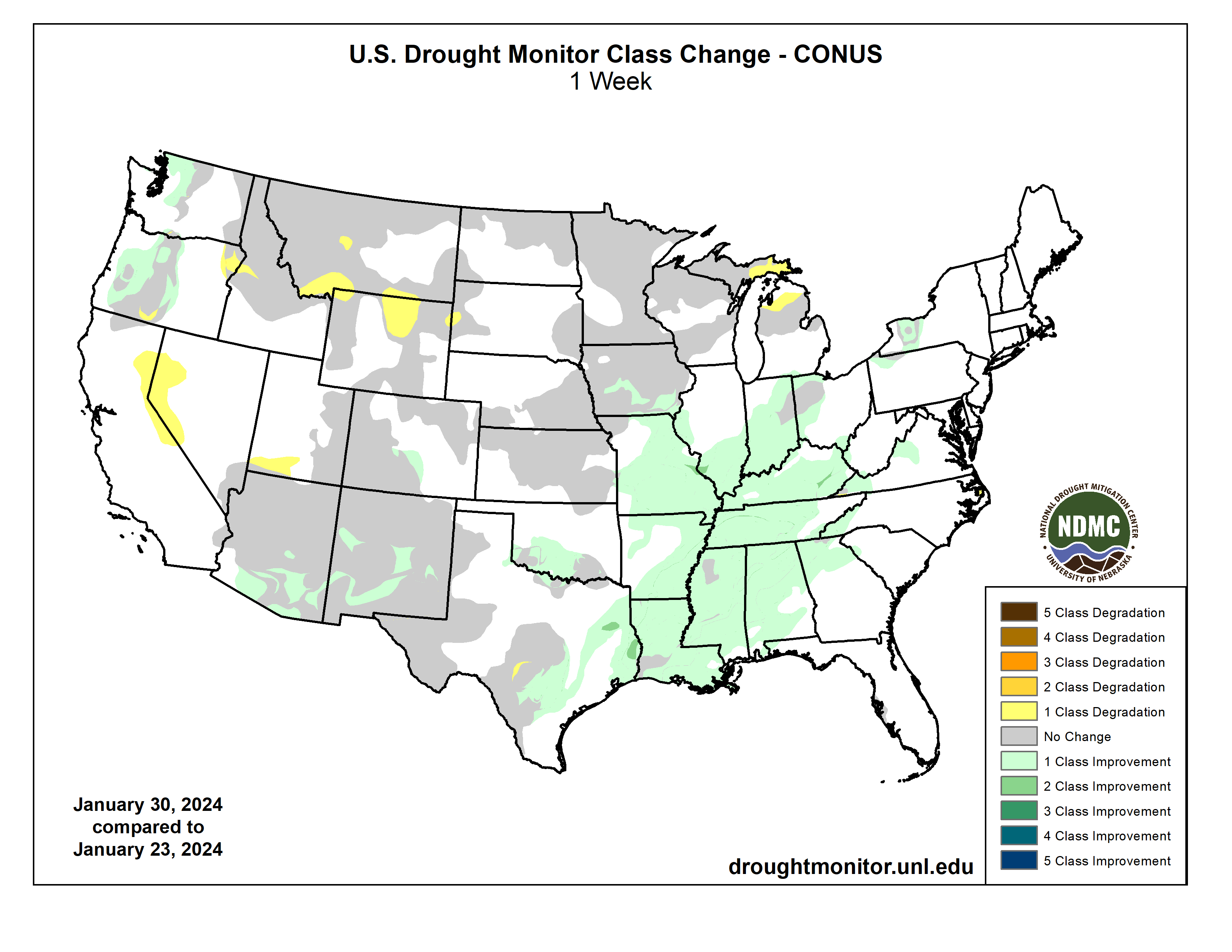
Click the link to read the transcript on the Colorado Public Radio website (Carl Bilek, Joe Wertz, and Ryan Warner). Here’s an excerpt:
January 29, 2024
A college freshman from Denver will chair the Environmental Protection Agency’s first National Environmental Youth Advisory Council. 18-year-old Gabriel Nagel graduated from Denver East High School and now attends Stanford University. He said young people can make a difference in addressing issues like climate change if they just get involved.
“They need to start speaking up to leaders in their community, whether that be their school district, even just their high school working to make local change. That could be really impactful,” said Nagel.
From the EPA’s National Environmental Youth Advisory Council webpage:
Gabriel Nagel is an accomplished youth climate justice activist and community organizer. He is the founder and CEO of the nonprofit Light CO2, which launched a carbon footprint tracking app, curated a collection of youth-written articles, and planted 10,000+ trees. Gabriel is also the founder and co-leader of the DPS Students for Climate Action team, which developed an environmental justice policy passed across 200 schools, impacting 92,000 students. The policy is one of the first among all US school districts to address social and climate justice. He serves on Denver’s Sustainability Advisory Council, which manages a $40 million budget, and as the United Nations Association’s Climate Action Ambassador, where he is drafting the first UN Youth Declaration of Human Rights. In addition to being featured on NPR twice, he spoke at NYC Climate Week and met with Vice-President Kamala Harris to discuss climate anxiety. He is honored with the President’s Environmental Youth Award.
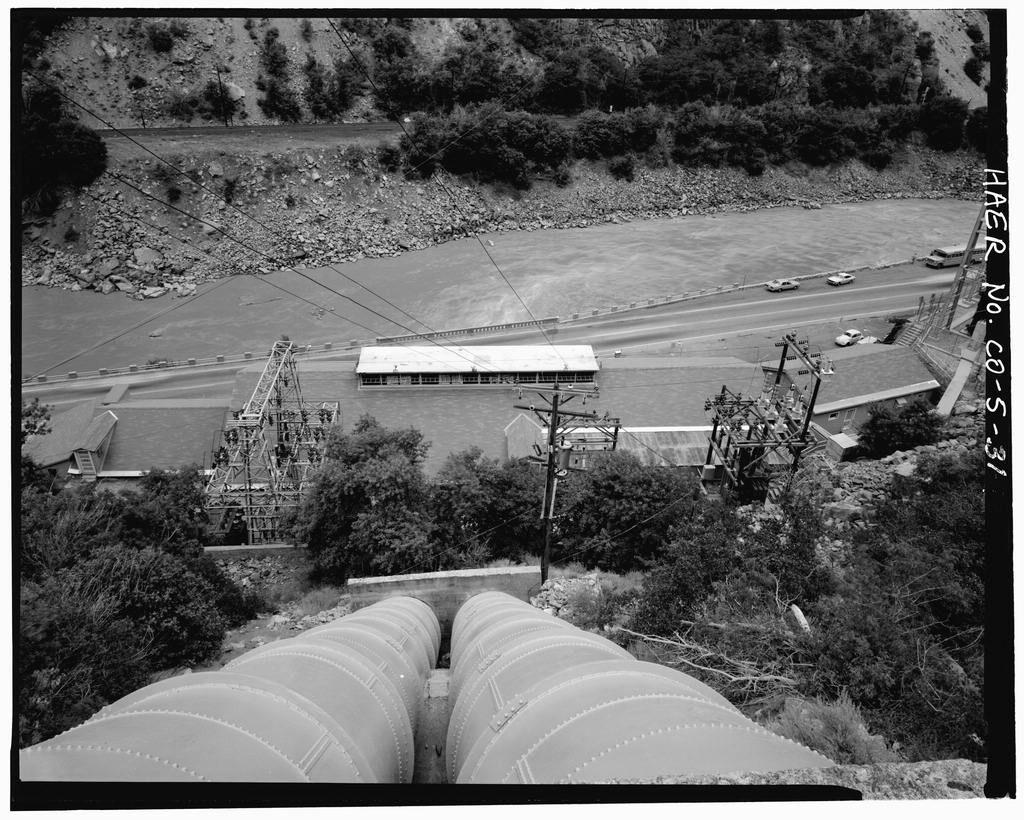
Click the link to read the release on the Colorado Water Conservation Board website:
January 29, 2024—The Colorado Water Conservation Board (CWCB) has voted to recommend $20 million in funding to the Colorado River District as part of the annual Water Projects Bill contributing to a larger funding effort to secure Shoshone permanence and foster water security on the Colorado River.
“The CWCB Board considered this funding application very carefully. This is a significant step towards maintaining historic flows on the Colorado River,” said Lauren Ris, CWCB Director. “As an agency, we will continue to do our due diligence in this process, with the hope that these efforts can benefit the environment and give West Slope water users more certainty.”
The decision follows a special workshop held on January 25, and a final vote during CWCB’s January Board Meeting. On December 19, 2023, the Colorado River Water Conservation District and Public Service Company signed an agreement that would allow the River District to purchase the water rights associated with the Shoshone power plant. The River District is also planning to seek funds from the Bureau of Reclamation and others.
In the coming months to years, CWCB will work with the River District to negotiate an instream flow agreement. If approved, the two entities would then seek a change in water right decree through Colorado Water Court. The CWCB’s Instream Flow Program secures instream flow water rights to protect streamflow to preserve the natural environment of streams and lakes where fish and other species live. The integrity of this long-standing program depends on a thorough review, so it’s critical CWCB staff follow public processes.
“We also greatly appreciate the hard work and dedication of CWCB staff in this effort and their positive recommendation of funding to the Board,” said Andy Mueller, Colorado River District General Manager. “We consider the state an integral partner in protecting Shoshone’s flows in perpetuity, and the $20 million funding milestone brings this generational investment in Colorado water security one step closer to the finish line.”
“If completed, Shoshone water right preservation would help maintain flows on the Colorado River, and support the system as a whole,” said Dan Gibbs, Executive Director of the Colorado Department of Natural Resources. “Securing this water right and negotiating an instream flow use agreement could mean supporting healthy agriculture, providing clean drinking water, fostering healthy environments, and more. We look forward to working with the Colorado River District and Xcel Energy as this process enters the next phases of evaluation and approval.”