
Click the link to read the article on the 8NewsNow.com website (Greg Haas). Here’s an excerpt:
February 5, 2024
The attention is on Southern California right now, but an atmospheric river’s path will extend inland with potential flooding — and possible drought relief. If you’re watching the weather, it’s still a little early to tell whether these storms will go where they can hope Las Vegas the most. That’s anywhere in the Upper Colorado River Basin, where there’s a chance they could produce snow to help the river that supplies 90% of the water used in Southern Nevada…The paths of this year’s atmospheric rivers are unlike the ones that slammed the Sierras last year. Those storms carried snow straight east through Northern Nevada and Utah, feeding the Rocky Mountains with snowpack levels that reached 160% of normal by the end of winter. That snow provided relief from drought years that had everyone watching nervously as Lake Mead dropped in 2022. This time, the moisture is following a path that is causing concern in Death Valley, where roads were destroyed less than six months ago by the remnants of Hurricane Hilary…
But where will the atmospheric river go from there? The path is currently extending to Salt Lake City, where it fizzles out as it runs up against the Wasatch Mountains…And after rains let up, the biggest question remains: Will the moisture reach the Upper Colorado River Basin? That’s the drainage area that feeds the Colorado River, extending from central Utah to the Continental Divide in Colorado. The moisture is currently tracking toward the upper Green River basin, the northern tip in the map shown below:
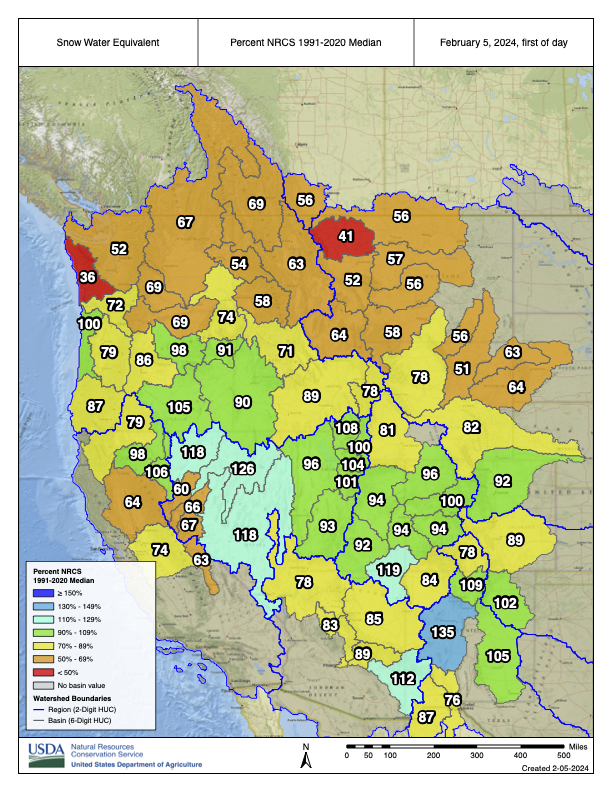
…Currently, total SWE levels for the Upper Colorado River Basin are at 92% of normal — an improvement over recent weeks. The level was 93% on Jan. 18, and dipped as low as 85% since then, according to information from the U.S. Bureau of Reclamation.