
From The Pueblo Chieftain (Chris Woodka):
The state interim water resources review committee gave the green light to five bills at its meeting on Oct. 30. It tabled six other bills.
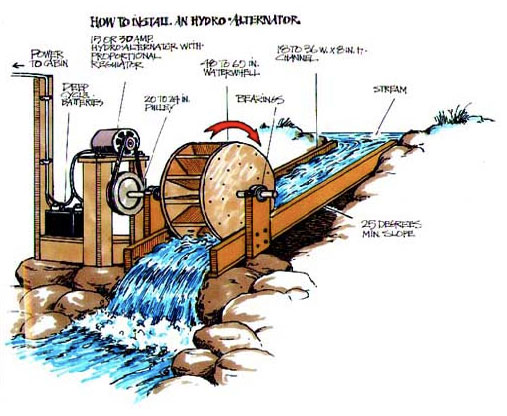
Hydroelectric generation: Sets up guidelines for licensing of hydro projects.
Flexible water markets: Creates a new type of water use, subject to water court approval and consumptive use diversion limits.
Grants for wastewater treatment: Clarifies guidelines for using severance tax money for small communities water and wastewater plants.
Removal of Division of Water Resources printing requirements: Allows more use of electronic copies of reports, rather than requiring printed copies.
Opposing federal special use permit terms: Specifies that water rights obtained by the United States government as a condition of a permit are presumed to be speculative, forfeited but not necessarily abandoned. The right reverts to the prior owner and retains its original priority.
More coverage (Chris Woodka):
Legislation that could allow water rights to be changed for indefinite purposes is expected to be introduced in the next state legislative session. The new law could affect the Pueblo Board of Water Works shares on Bessemer Ditch as well as the Arkansas Valley Super Ditch.
Flexible water markets would be authorized as a new type of water right under a proposed bill that got a green light from the interim water resources committee on an 8-2 vote at its final meeting in October.
State water law now requires an end user to be identified to avoid speculation. The anti-speculation doctrine is a powerful legal tool. For instance, it was employed as the major legal argument for stopping water transfers from the Fort Lyon Canal by High Plains A&M in a 2003 case that was upheld by the state Supreme Court in 2005.
The new bill would allow changes of use of irrigation water rights through fallowing, reduced cropping, deficit irrigation and other alternatives to full irrigation that do not result in permanent dry-up or irrigated lands. Unlike previous attempts at legislation, the bill would still require a court process to determine the historic consumptive use of the water for crops. Only that portion can be removed from a water system, even under existing law. A water right could be used for agriculture, municipal, industrial, recreation or environmental uses in alternate years under the legislation.
The interim committee also wants legislation that would look at property tax implications for partially irrigated farmland, as well as ditchwide quantification of water rights when only some are used for a different purpose.
A flex use water right could be useful in changing Bessemer Ditch water rights purchased by the Pueblo water board in 2009. Under flex marketing, land that was historically irrigated could remain in production rather than drying up the land.
“The board is interested in maintaining flexibility for municipal or agricultural use by whatever mechanism, whether it’s this bill or something else,” said Paul Fanning, legislative administrator for the Pueblo water board.
The bill also could have implications for the Arkansas Valley Super Ditch, which is looking at methods to lease water from lands that are temporarily dried up.
From The Pueblo Chieftain (Chris Woodka):
Farmers in the Lower Arkansas Valley want to be able to use their own water to supplement wells, but see legal and engineering hurdles. So, with the help of the Lower Arkansas Valley Water Conservancy District, they are seeking legislation to change replacement requirements for wells.
“We’re not trying to expand our water right, but just continue what we have been doing under the substitute supply plan,” said Paul Casper, a farmer who is a board member of the Holbrook Canal Co. “We want to use our own water on our own land.”
The legislation would allow a farmer to use surface water from existing water rights as replacement water for well depletions on the same ground, provided it already has been part of a well augmentation plan. As it stands now, farmers are required to file for a change of use in water court after operating for 10 years under a substitute water supply plan.
Casper said that is too expensive and takes time. The new law would allow farmers to use water that had already been permitted or decreed for replacement use without a court filing.
Because the law faced opposition from the legislative committee of the Colorado Water Congress, the Lower Ark district pulled it from consideration by the interim water resources committee. But it plans to push for passage of the bill when the Legislature convenes in January.
“We’ve already had engineering over a 10-year period to show that no one’s water rights have been injured,” said Alan Frantz, a Rocky Ford farmer and member of the Catlin Canal board. “The state is requiring additional engineering and lawyers to take it through court.
“In two years, the augmentation group on the Catlin already has spent $300,000 on engineering, and we’re not even close to court,” Frantz said.
Farmers in the future will need to grow more food, even as their sources of water diminish, Frantz said. To grow higher value crops farmers need a steady supply of water throughout the years. Wells provide that at time surface water falls short.
Tyler Karney, manager of the Ordway Feedyard, agreed.
“Any obstacle in front of farmers needs to be removed,” Karney said. “This legislation is helpful to farmers. We need to take the barriers away.”
More 2014 Colorado Legislation coverage here.