
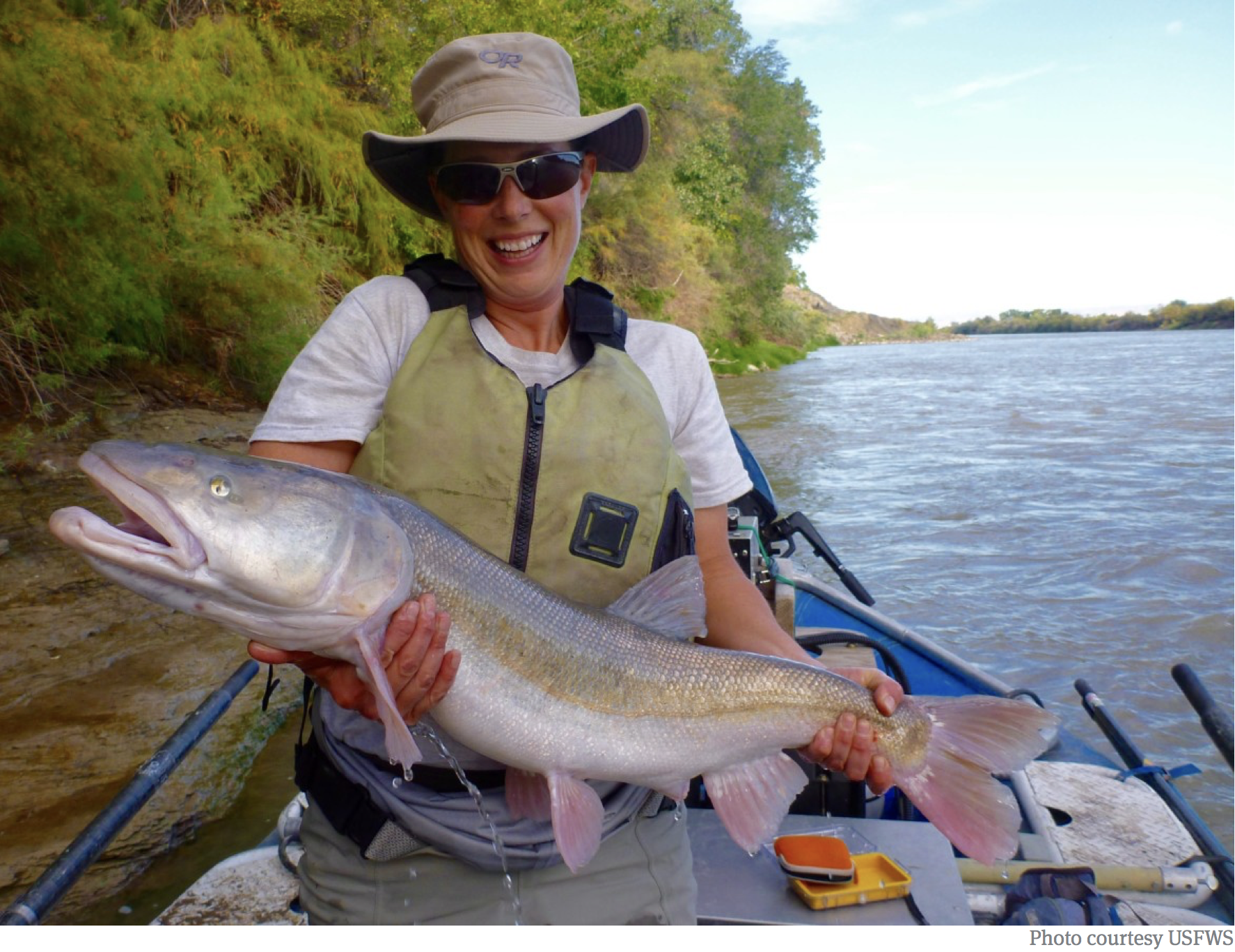
From The Washington Post (Kasha Patel):
Hydropower dams blocked the fish’s migrations for spawning, altered river flow and churned cooler water downstream. The Colorado pikeminnows, which were not accustomed to the cooler waters, were soon outcompeted for food by nonnative fish. Now, most Colorado pikeminnows reach only two to three feet long.
“Those fish are now endangered and have been replaced with cold-water-adapted trout,” said Gordon Holtgrieve, a fish ecologist at the University of Washington. “The river doesn’t look anything like it used to, and Native Americans of the region, who traditionally used these fish, have lost part of their culture.”[…]
The ubiquitous dams around the world are built to guard against extreme flooding, meet steadily increasing water demands and provide hydroelectric power. They also alter river ecosystems — such as by changing temperatures downstream — and can substantially change nearby fish populations…
Worldwide, at least 3,700 medium and large hydropower dams are planned in the coming decades or under construction, heavily concentrated in South America, Africa and South and East Asia. Hundreds of millions of people in large river basins in these areas rely heavily on the river for their livelihoods, Holtgrieve said. For example, Cambodians receive about 80 percent of their animal protein from primarily wild-caught freshwater fish from the Mekong River.
Now, in a recent study, researchers have created a first-of-its-kind machine learning model that can predict temperature changes as a result of dams planned around the globe and could help planners and engineers mitigate the environmental impact. Analyzing future dams worldwide, the team found some dams changed downstream temperatures by as much as 10.8 degrees Fahrenheit (6 degrees Celsius).
Based on the research, the team created a public tool that allows people to plug in the dimensions of a future dam and learn how it will affect downstream temperatures.