The health of our waters is the principal measure of how we live on the land — Luna Leopold
#Snowpack Is Near Normal Across #Colorado But Reservoir Levels Are Variable — NRCS
Here’s the release from the NRCS (Brian Domonkos):
Mountain snowpack accumulations across Colorado have slowed down since the beginning of the year but conditions are generally surrounding normal across the major river basins. That said, it is important to note that percent of normal values have been updated from the 1980-2010 period to 1990-2020 so there are changes in comparison to the last decade. This change is a standard across many other water and climate monitoring networks across the country which helps with consistent reporting and comparability.
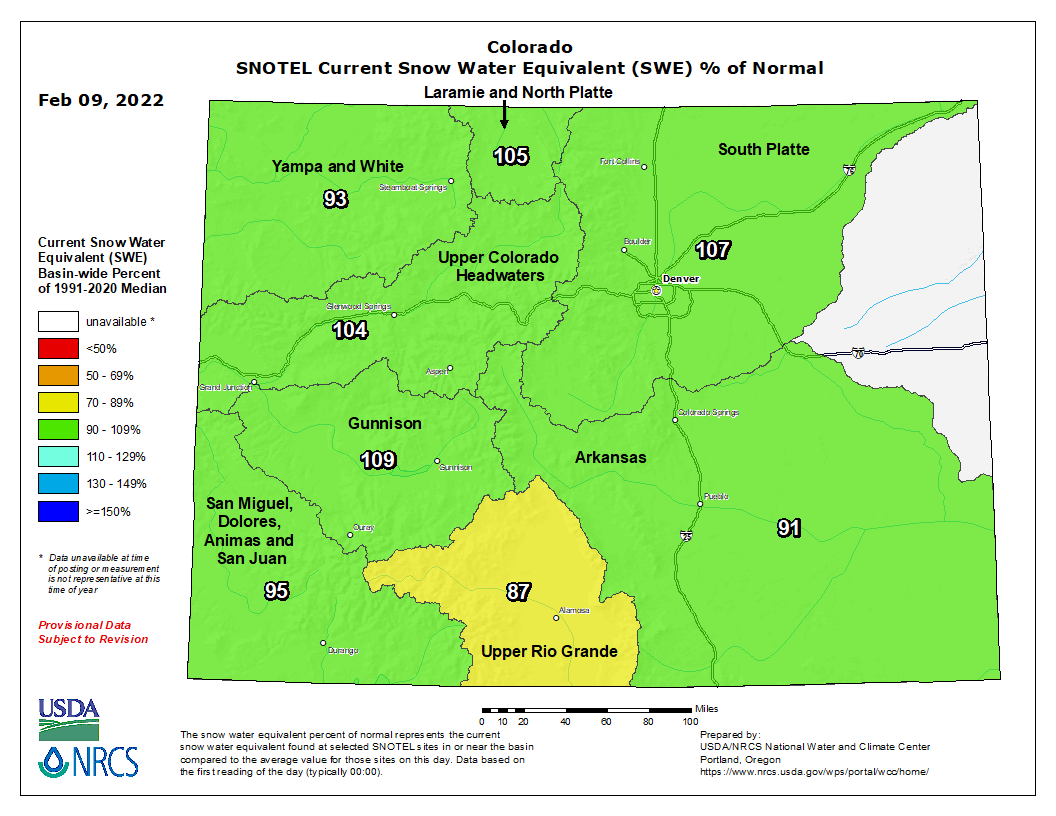
Colorado snowpack basin-filled map February 9, 2022 via the NRCS.
Currently Colorado statewide snowpack is 100 percent of normal (median) with some variation basin to basin but with not as much variation as has been observed over the last several years. Snowpack ranges from a low of 89 percent of normal in the Upper Rio Grande to a high of 110 percent of normal in the Gunnison River Basin. Statewide this is 60 percent of the median peak accumulation that is generally observed in early April.
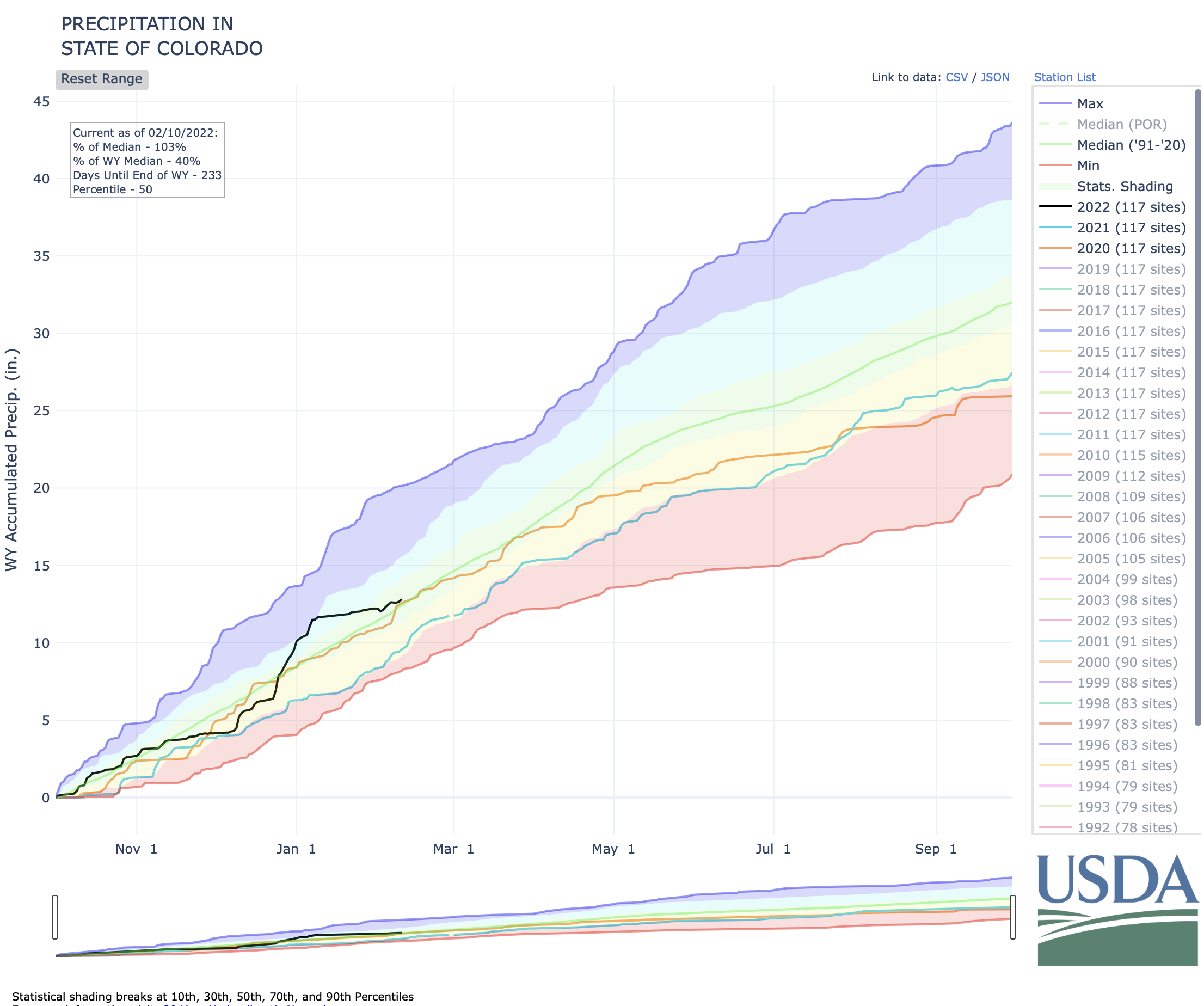
Water year to date precipitation, starting October 1st, is very similar to snowpack at 103 percent of normal. NRCS hydrologist Karl Wetlaufer notes that “While the current conditions are encouraging it is important to consider that due to the multi-year drought can effect snowmelt runoff. Dry soil conditions going into winter can reduce the observed streamflow relative to what the observed peak snowpack ends up being.”. Streamflow forecasts are currently lower than snowpack levels, as would be anticipated given the conditions going into winter.
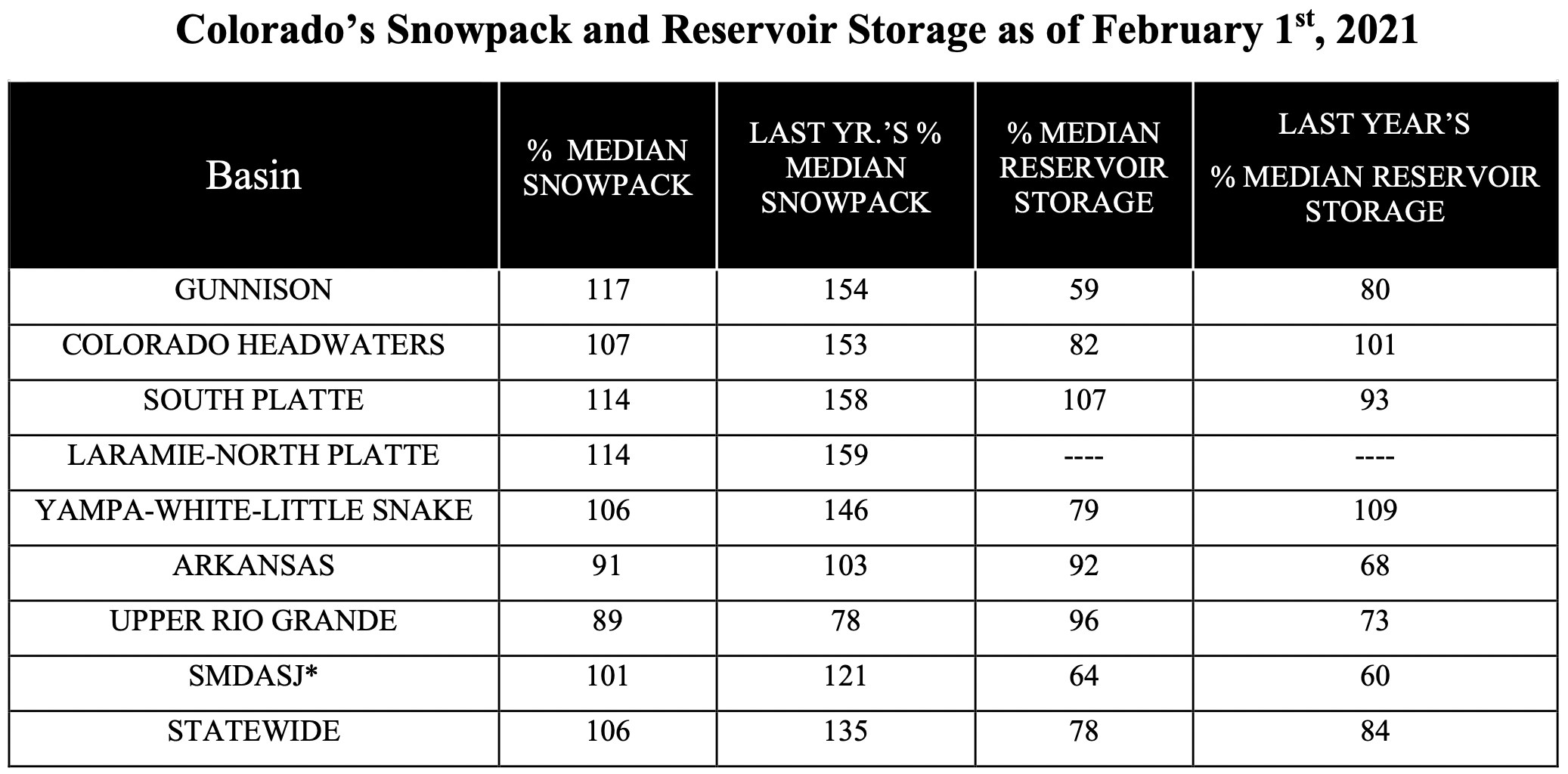
In the big picture of water supply and water availability reservoir storage is also currently a major consideration in Colorado. Southwest Colorado currently has the lowest reservoir storage in the state with 59 percent of normal in the Gunnison and 64 percent in the combined San Miguel, Dolores, Animas, and San Juan Basins. The most plentiful reservoir storage in in the South Platte at 112 percent of normal. Wetlaufer continued to note “In addition to the reservoirs within the state it should also be kept in mind that Lake Powell and Lake Mead, are also at the lowest levels on record which has an effect on the entire Colorado Basin and can continue to affect the headwaters here in Colorado.” There is still much potential snowpack accumulation season to come but changing water supply conditions should still be closely watched.
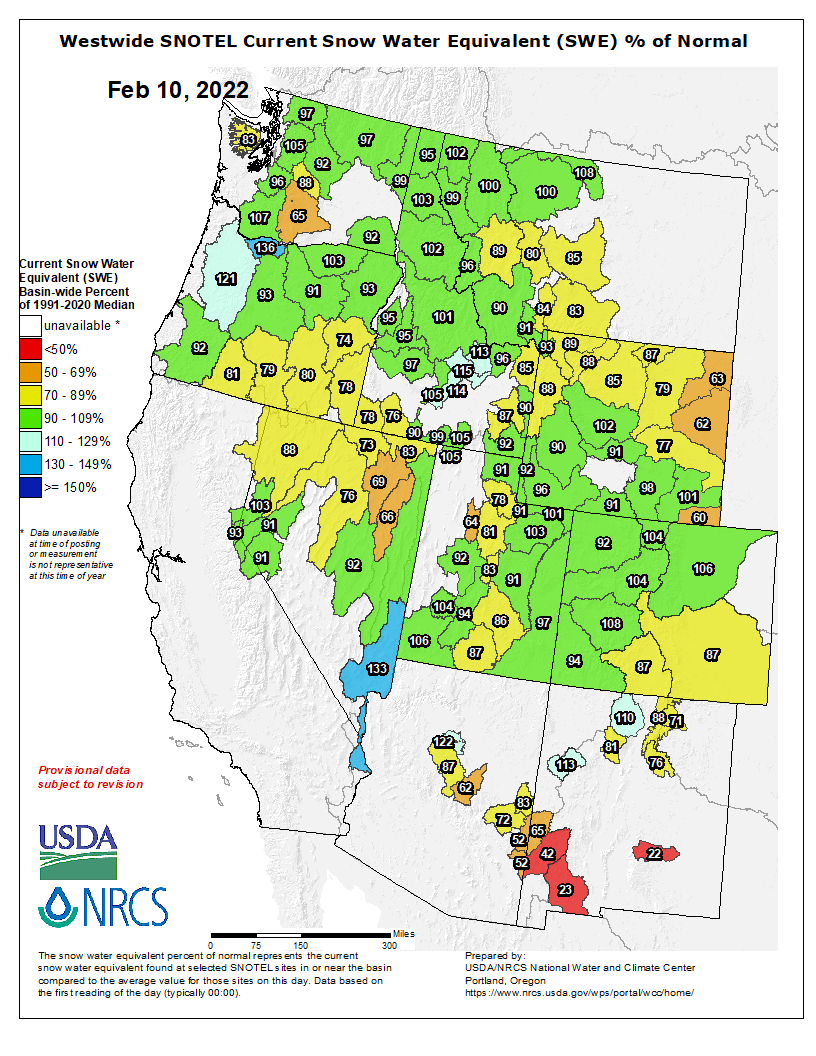
Westwide SNOTEL basin-filled map February 10, 2022 via the NRCS.