Click the link to read the release on the Metropolitan Water District of Southern California website:
Proposal Outlines Constructive Approach to Achieve Necessary Water Use Reductions through 2026 to Protect Critical Infrastructure, Prioritize Public Health and Safety
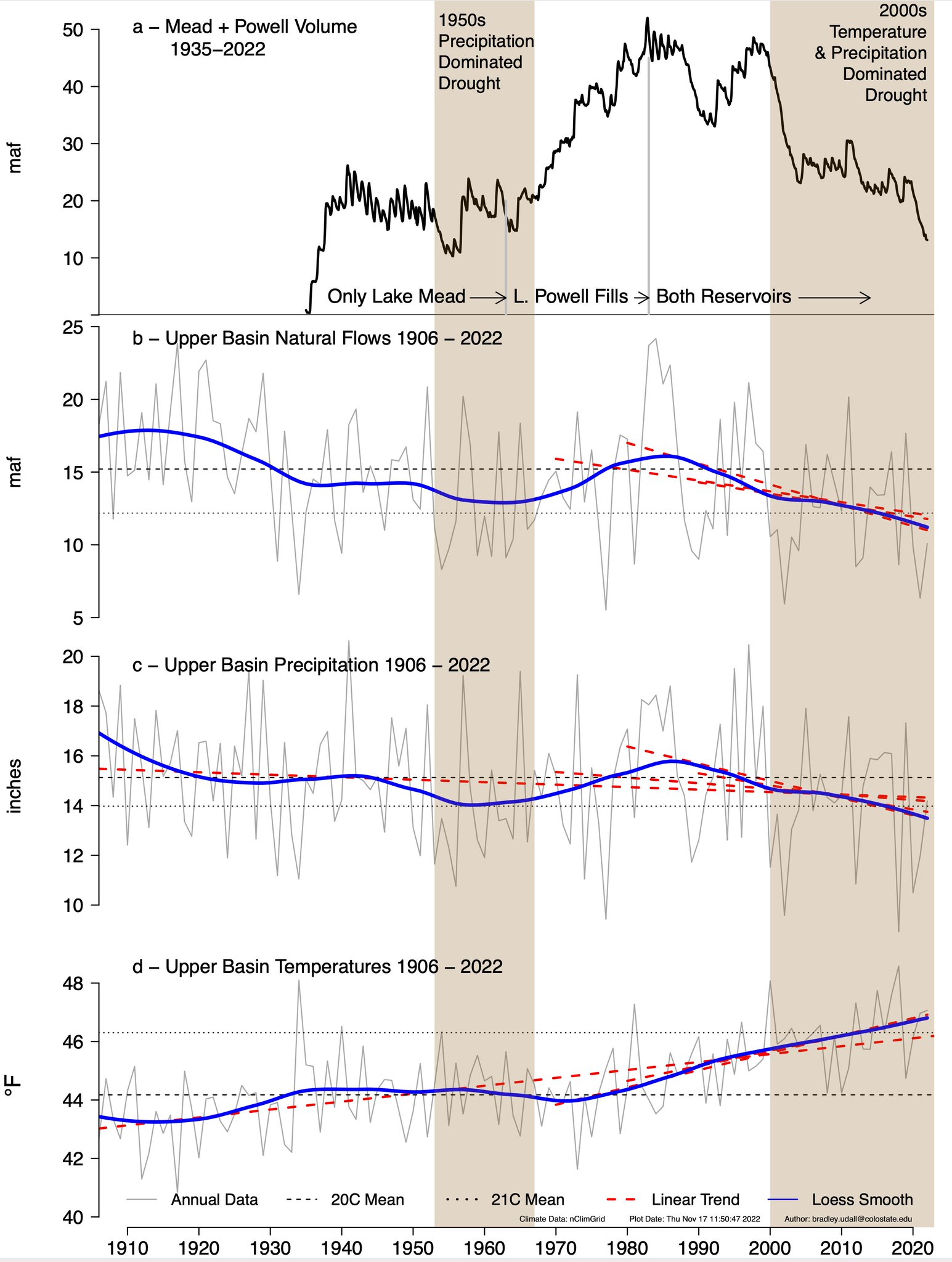
California water agencies that rely on the Colorado River today proposed a modeling framework for the U.S. Bureau of Reclamation to evaluate as it considers actions to help stabilize reservoir elevations and protect critical infrastructure to ensure the Colorado River system can continue to support 40 million people, nearly 6 million acres of agriculture, and Tribes across seven states and portions of Mexico.
The modeling framework outlines a constructive approach to achieve additional water use reductions while protecting infrastructure, prioritizing public health and safety, and upholding the existing body of laws, compacts, decrees, and agreements that govern Colorado River operations (known collectively as the Law of the River). The approach builds on the California agencies’ commitments announced last fall to voluntarily conserve an additional 400,000 acre-feet of water each year through 2026 to protect storage in Lake Mead and help stabilize the Colorado River reservoir system.
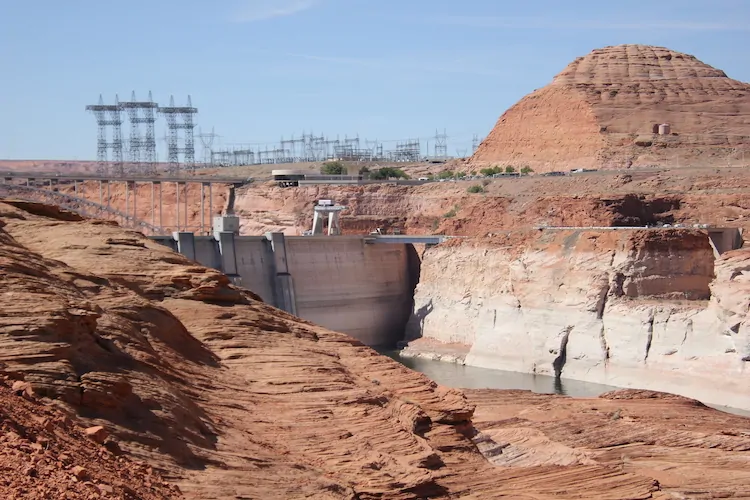
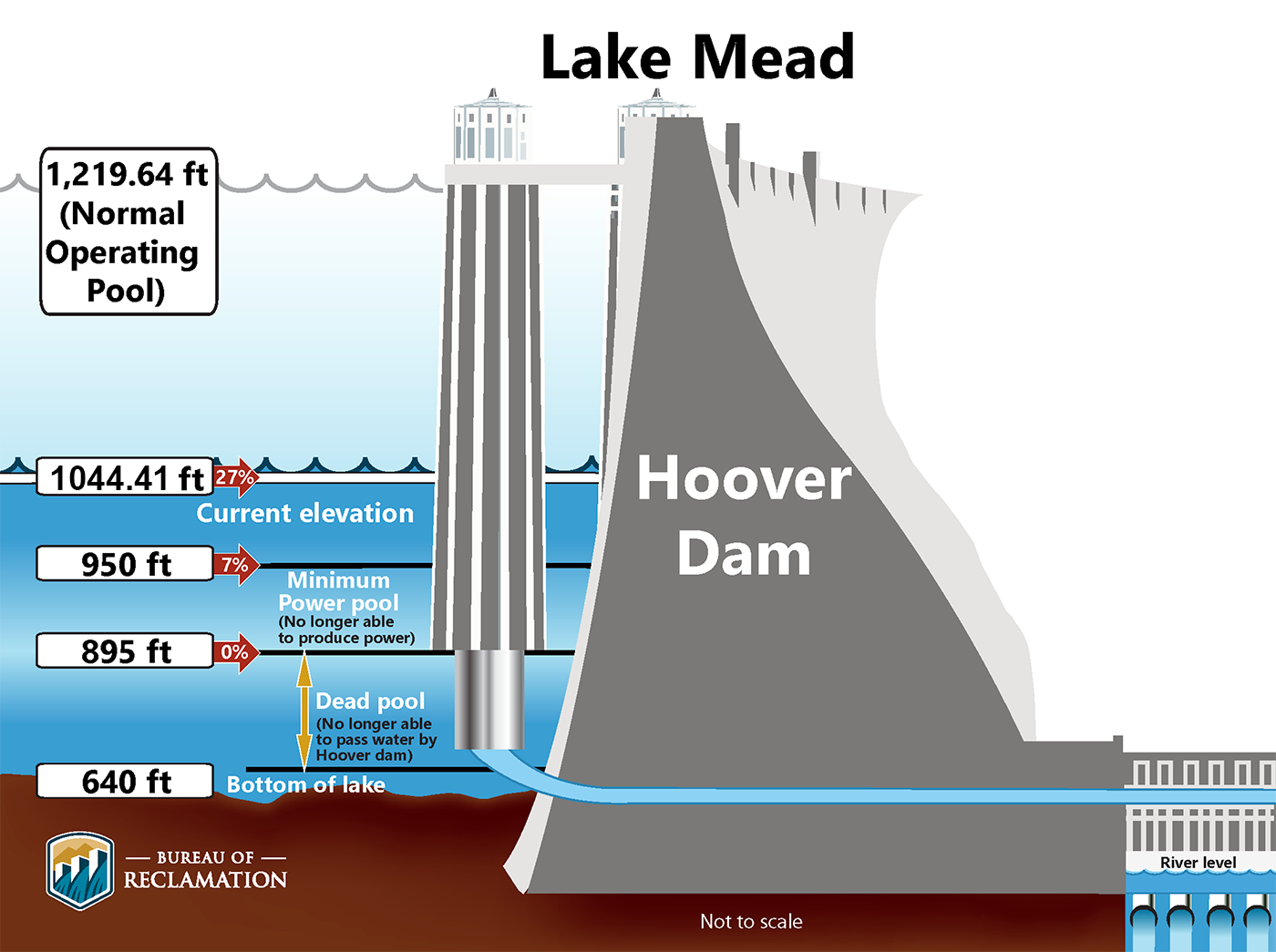
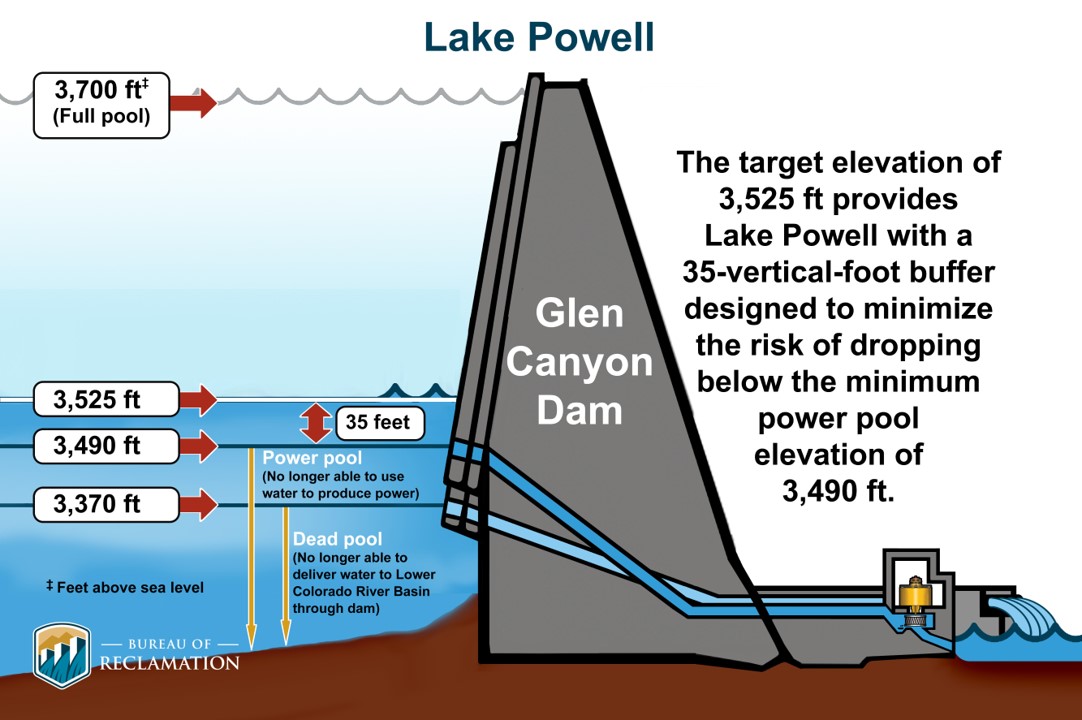
California’s proposed framework seeks to protect Lake Mead elevation of 1,000 feet and Lake Powell elevation of 3,500 feet by modifying some parameters governing reservoir operations, maximizing the impact of existing plans and voluntary conservation actions, and increasing cutbacks if Lake Mead elevations decline. It also protects baseline water needs of communities across the West by prioritizing water supplies for human health and safety. The proposal was carefully developed to enable workable phased water use reductions and ensures protection of adequate water volumes in Lake Mead and Lake Powell.
“The alternative provides a realistic and implementable framework to address reduced inflows and declining reservoir elevations by building on voluntary agreements and past collaborative efforts in order to minimize implementation delays. California’s alternative protects critical elevations and uses adaptive management to protect critical reservoir elevations through the interim period,” — JB Hamby, chair of Colorado River Board of California and California’s Colorado River Commissioner, wrote in a transmittal letter to Reclamation.
The approach differs from a modeling proposal submitted to Reclamation on January 30 by the six other basin states. The six-state proposal would direct the majority of water use reductions needed in the Lower Basin to California water users through a new apportionment method based on “system and evaporative losses.” The proposal directly conflicts with the existing Law of the River and the current water rights system and mandates cutback without providing tools to manage reductions.
For the past several months, California water users have sought a timely, practical and implementable solution with other Lower Basin users that can be implemented over the next three years to protect critical elevations in Lake Mead while longer-term changes are negotiated to update 2007 Interim Guidelines that will expire at the end of 2026. Suggestions to fundamentally change the Law of River are appropriately addressed through this shared process to update the guidelines.
California’s water agencies remain committed to working with all Colorado River basin states to take urgent, fair, and achievable action now to avoid unacceptable risks to communities, farms and economies in California and the rest of the basin.
For decades, California has been a leader in managing its Colorado River water resources and collaborating in basin-wide efforts to more effectively operate and manage the reservoir system and to incentivize water conservation as demands have increased in the face of shrinking supplies due to climate change.
In 2003, California permanently reduced its use of Colorado River water from about 5.2 million acre-feet annually to its basic apportionment of 4.4 million acre-feet, a permanent annual reduction in water use of about 800,000 acre-feet. The reduction in use resulted from implementing a combination of agricultural and urban conservation activities. Since 2003, water users in California have taken significant actions to conserve Colorado River water, adding over 1.5 million acre-feet and 20 feet of elevation of conserved water to Lake Mead since 2007. California water users committed to further conservation to bolster storage in Lake Mead through the 2019 Drought Contingency Plan. California has invested billions of dollars in urban and agricultural conservation across Southern California, through programs that reach virtually every Colorado River water user in the state.
“Twenty years ago, California adopted the largest water conservation-and-transfer agreement in U.S. history that not only supports the bulk of our nation’s food system but also sustains the environment. This multi-billion-dollar conservation-focused framework – the Quantification Settlement Agreement – is the blueprint for other states to follow. California has done its part and is willing to do more, but it’s time for the other states to step up and create their own conservation programs that sustain the quality of life in their communities,” said Jim Madaffer, vice chair of the Colorado River Board of California, representing the San Diego County Water Authority.
“For over 20 years, Metropolitan has met the challenge of reducing our use of Colorado River water, and we are committed to doing more now. But we must do it in a way that does not harm half of the people who rely on the river – the 19 million people of Southern California. We must do it in a way that does not devastate our $1.6 trillion economy, an economic engine for the entire United States. We must do it in a way that can be quickly implemented, adding water to lakes Mead and Powell without getting mired in lengthy legal battles. We must do it in a way that maintains and strengthens partnerships on the river, allowing us to work together to build longer term solutions. The proposal presented today by California does all of this by equitably sharing the risk among Basin states without adversely affecting any one agency or state. The plan presented yesterday, which shut out California, does not. California knows how to permanently reduce use of the river – we have done it over the past 20 years, through billions of dollars in investments and hard-earned partnerships. We can help the entire Southwest do it again as we move forward,” said Adel Hagekhalil, general manager, Metropolitan Water District of Southern California.
“The Colorado River – Imperial Valley’s only source of water – supports far more than our rural disadvantaged community as it provides for a robust agricultural industry that feeds millions of people and provides food security for this nation. California, and particularly the Imperial Irrigation District, is working to be part of the solution, however we also believe in upholding the Law of the River and not shouldering the burden of supply limitations for states and agencies that have outgrown their water rights. California has spent the past two decades successfully working together to resolve intra-state supply and demand imbalances to sustain the Colorado River. Since the signing of the Quantification Settlement Agreement, the largest ag-to-urban water conservation and transfer agreement in U.S. history, IID’s water management programs have generated over 7.2 million acre-feet in support of the Colorado River system. Today, IID and its California partners have proposed a balanced and implementable plan that begins to address the monumental challenges we face with the ongoing Colorado River drought,” said Henry Martinez, general manager, Imperial Irrigation District.

“Historically, CVWD and our agricultural community have invested heavily in its irrigation delivery system to minimize water loss, including canal lining projects, a closed pipe irrigation distribution system and installing drip irrigation. We have prioritized the efficient use of Colorado River water over the long term. We also took action last year with other California agencies to voluntarily identify a collection of Colorado River water conservation and reduction actions to save 400,000 acre-feet annually through 2026. We support our California partners and are committed to reaching a 7-basin state consensus on a framework for additional water use reductions through 2026,” said Jim Barrett, general manager, Coachella Valley Water District.

“One-hundred and forty-six years ago, the original developers of our Palo Verde Valley filed and were granted the very first water rights to Colorado River water. Secured by those rights, farmers and farm workers have invested multiple generations of farm loans and hard work to produce food and fiber for consumers. Surrounding our agriculture are small rural cities that depend exclusively upon Colorado River water for their domestic supply. Farmers and landowners in Palo Verde Irrigation District want to be part of a solution to the current mismatch of supply and demand on the River in a manner that honors existing Public Law, and Administrative Law,” said Bart Fisher, president, Palo Verde Irrigation District Board of Trustees.
“The Colorado River has been the lifeblood of the Quechan people since time immemorial, and we have a deep and abiding responsibility to be good stewards of the River – for the Tribe and its members, for the species and ecosystems that it sustains, and for the benefit of our fellow tribes and non-Indian neighbors throughout the Basin. It is why we have always fought for and will continue to defend our water. The modeling proposal submitted by the State of California to the Bureau of Reclamation for inclusion as part of its development of the SEIS reflects a meaningful effort to address the hydrologic challenges facing the Basin while respecting the senior water rights of the Tribe and others and ensuring that the Colorado can continue to exist as a living river,” said Quechan Tribal Council President Jordan Joaquin.