On climatic dissonance and a new water year: With images of the confusing Western weather and a dire warning — Jonathan P. Thompson #ActOnClimate

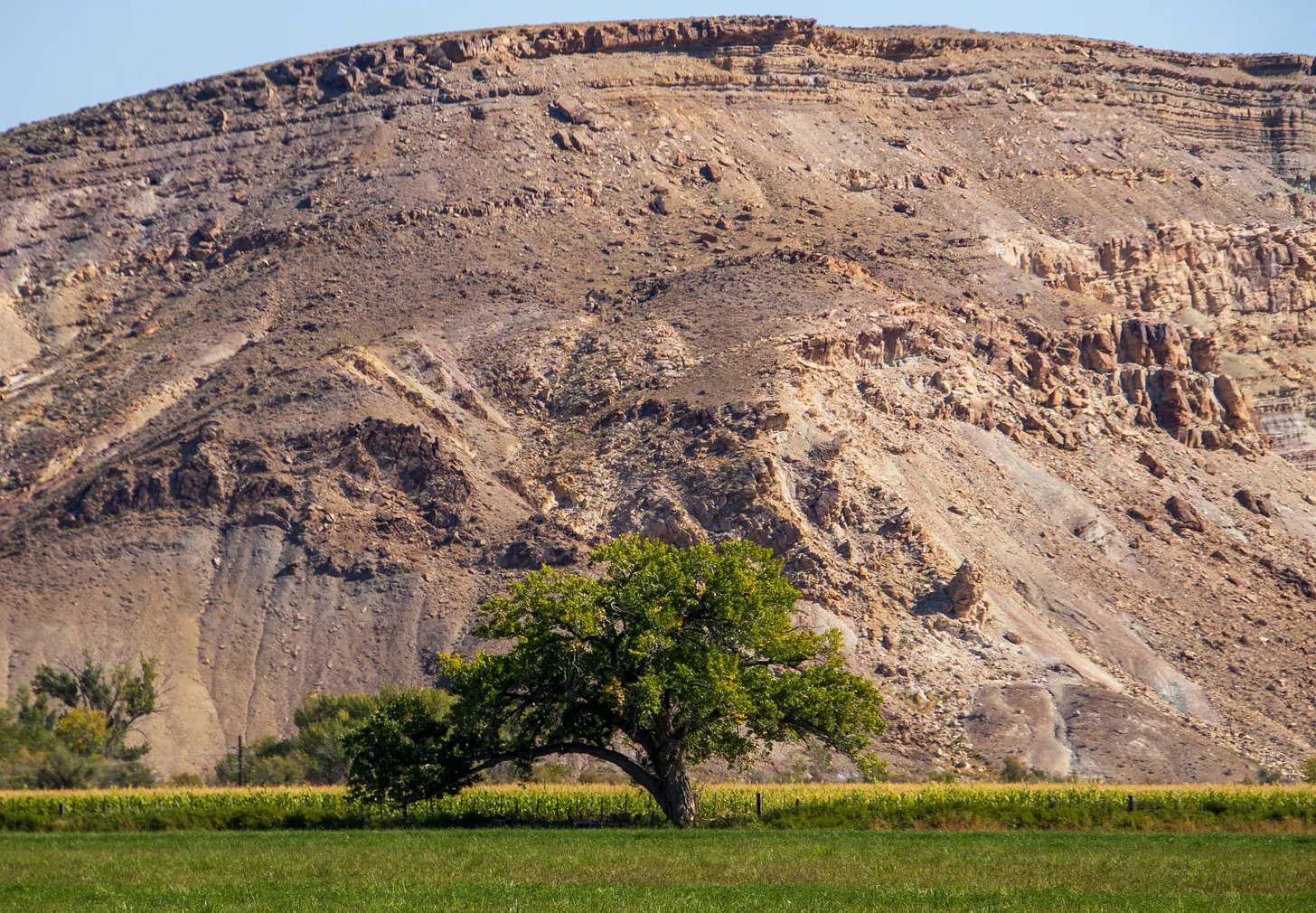
In the Gunnison River Valley in Western Colorado, cottonwoods are still green and some cornfields still haven’t been harvested. Jonathan P. Thompson photo.

Click the link to read the article on The Land Desk website (Jonathan P. Thompson):

October 11, 2024

The autumn-afternoon ache comes on as I pilot the Silver Bullet past the undulating fields south of Dove Creek. The feeling of regret, melancholy, nostalgia, and relief infuses both senses and mind every year at this time. Maybe it’s the harsh light of early October that does it, or the merciless blue sky, or the apples and pears hanging heavy on sagging, yellow-leafed branches, or just the knowledge that another summer has passed and June’s dreams and aspirations went unfulfilled.

But this year the weather seems confused — or maybe just confusing. For instead of the scent of piñon smoke wafting from chimneys, the air is infused with the smell of freshly cut hay. Even as leaf-peepers race to see high country hillsides burn with the brilliant yellows, oranges, and reds of the changing aspens, Wyoming ranchers scramble to ferry thousands of head of cattle out of the path of raging wildfires in the Bighorn Mountains and the foothills of the Wind Rivers — places that during many Octobers might be blanketed with snow.

The aspens on the southern slope of the La Plata Mountains in southwestern Colorado were right in the middle of their autumn transformation last week, with higher elevation clones already leafless and lower elevation ones still deep green. Jonathan P. Thompson photo.

It is October, according to the calendar and the angle of the sun. But the weather might disagree: In Colorado, farmers are still harvesting tomatoes and raspberries, and they’re getting a third or fourth cutting of hay. The mercury in Phoenix has surpassed 100° Fahrenheit on every day so far this month, resulting in an average maximum temperature of 109°. Even the highest peaks are suspiciously devoid of snow, though it can be hard to tell since smoke from distant wildfires have obscured the views on several days this month, as though it were July or August.

It all makes for a deceptive end to the 2024 water year. Deceptive because, for as dry as it all feels right now, most of the Southwest received a weirdly normal amount of precipitation over the last 12 months.
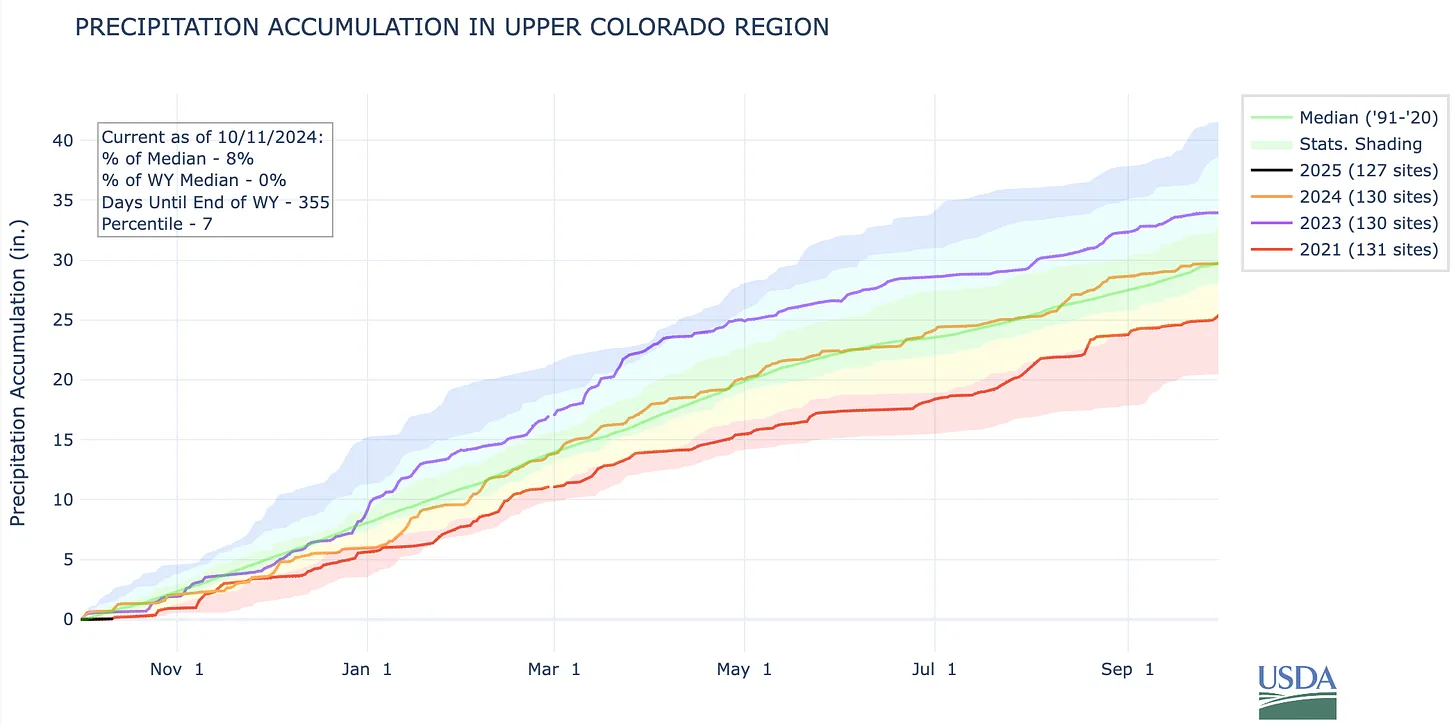
The orange line in the middle that uncannily traces the median precipitation accumulation for the ‘91-’20 period — i.e. “normal”— is for the just-ending water year. WY 2021 (abnormally dry) and 2023 (abnormally wet) are included for comparisons. USDA NRDC.

“Normal” precipitation levels, unfortunately, aren’t enough to wipe out drought. In fact, drought conditions have gotten worse in much of the Upper Colorado River Basin and northern California in the past year, while subsiding somewhat in southern New Mexico and the Pacific Northwest. Remember that water year 2023 was super wet in the Southwest.
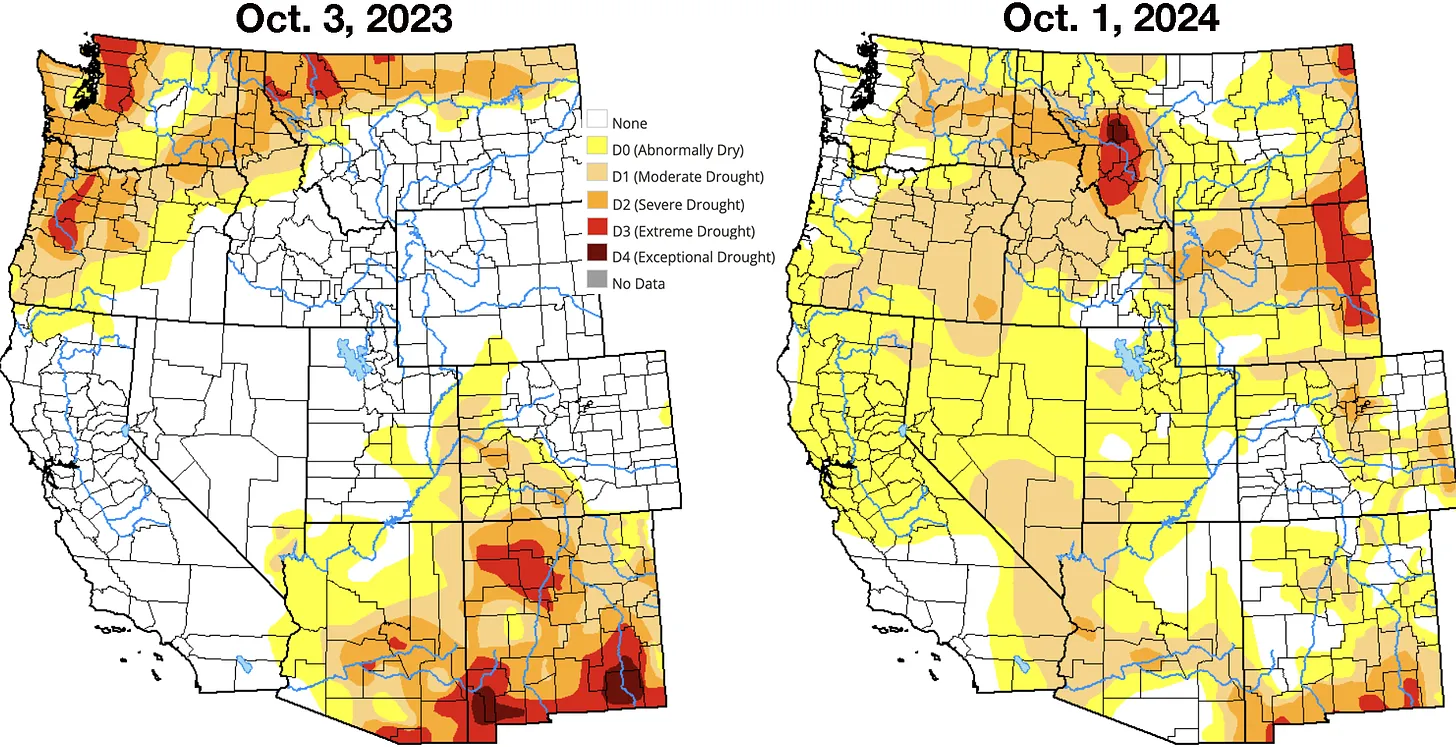
Drought has intensified in much of Wyoming over the last year, thanks to warmer than normal temperatures and a weak winter snowpack. That has contributed to some particularly nasty fires, including the Pack Trail in Teton County, which has burned through 68,377 acres since igniting in mid-September, and the Elk in Sheridan County, which has charred about 79,000 acres. National Drought Monitor.

When water falls from the sky it goes into rivers and reservoirs, allowing irrigators to pour it onto their fields long after ditches normally would have been shut off. That allows for the odd juxtaposition of sprinklers soaking emerald green alfalfa fields against adjacent khaki-colored corn or sorghum crops.
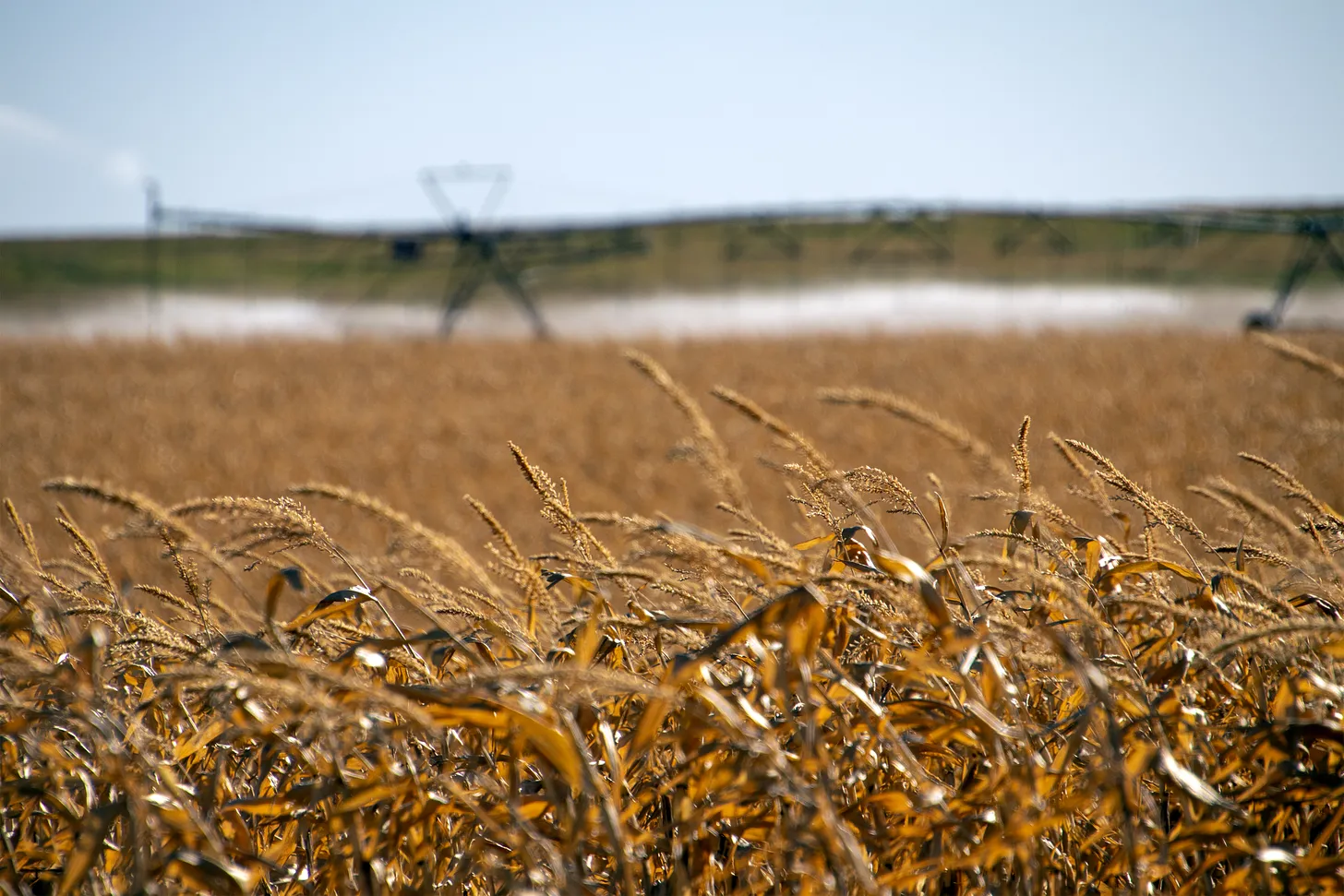
Sprinklers spray fields near Pleasant View, Colorado. The crop in the foreground is a type of forage sorghum, I believe, which is a less water-intensive substitute for alfalfa. In the background the alfalfa is still green and being irrigated and farmers are getting another cutting of hay. Jonathan P. Thompson photo.

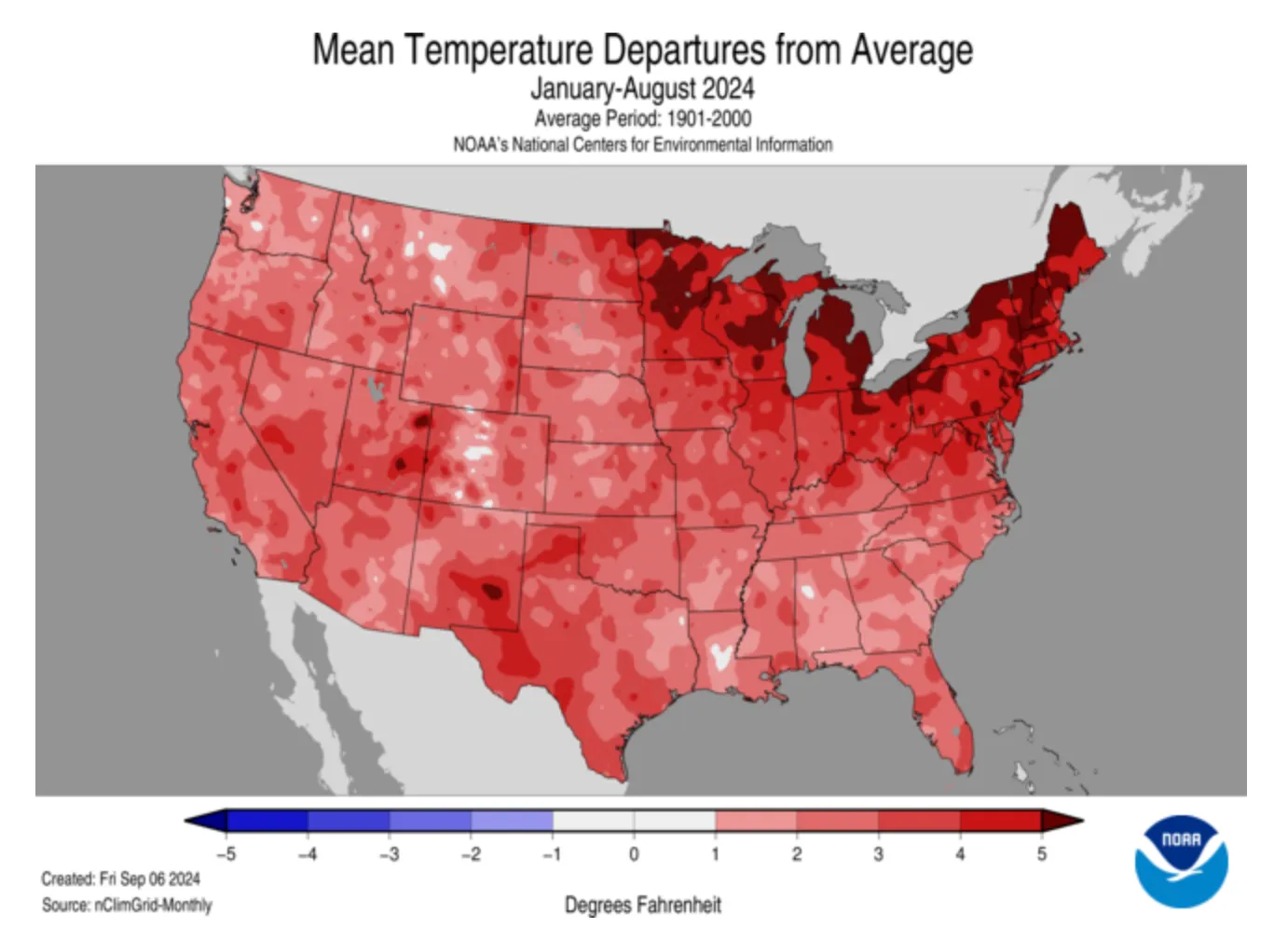
But the normal amounts of precipitation have been offset somewhat by warmer temperatures. And, yes, the temperatures are getting warmer everywhere — and not just in October. Much of the Southwest experienced the hottest summer on record. Phoenix has sweltered through 138 days of 100-degree-plus heat this year so far, with the mercury surpassing 110° F on 70 of those days, smashing last year’s record of 55 days of that level of scorcher. It was 120° or hotter in Death Valley on 36 days.

I hoped to give you an updated map of temperature deviations for the entire water year, but the National Centers for Environmental Information has yet to issue their September climate report because, in an ironic and troubling twist, the Asheville, North Carolina, headquarters were damaged by the climate change-exacerbated Hurricane Helene. So here’s one for January through August.
I’d be lying if I were to say I wasn’t enjoying the unseasonable warmth. Soaking up the sun on these bluebird days eases that autumnal ache, somewhat, and being able to lay on my sleeping bag on the sandstone at night and gaze up at a sky full of stars (and Northern Lights — holy cow that was cool!) without even getting chilled is kind of nice.

But then I start thinking of the water year that just commenced, and wonder whether this beginning is an auspicious omen of what’s to come or perhaps just the calm before a whopper of a winter? One thing we can be sure of is that we’re in the new abnormal era, brought on by human-caused climate heating, when the strangest weather phenomenon is the, well, norm.

And my revelry is broken by thoughts of “The 2024 State of the Climate Report” recently published in BioScience. The authors warn that in spite of all the warnings the planet has sent, its human inhabitants continue to burn more fossil fuels, cut down and burn more forests, and emit more greenhouse gases — “in part because of stiff resistance from those benefiting financially from the current fossil-fuel based system. … Human population and ruminant livestock population have been increasing at approximately 200,000 and 170,000 per day respectively,” they write. “Decoupling the growth in all of these variables with greenhouse gas emissions may be difficult.” [ed. emphasis mine]

As a result, global temperatures keep rising as do heat-related mortalities. Severe weather events have become more extreme and unpredictable. They conclude:

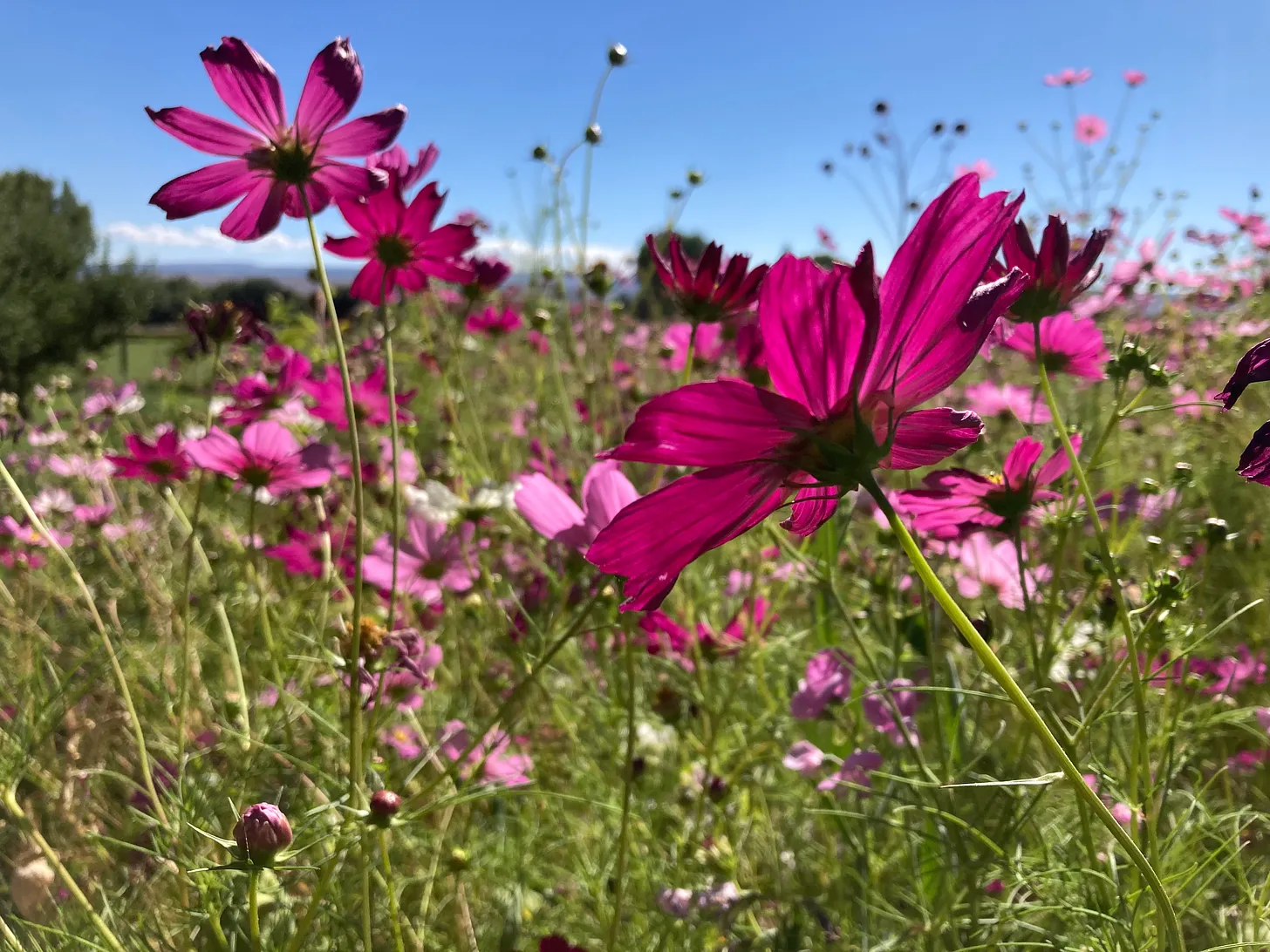
Cosmos in full-summertime bloom in the North Fork Valley in October 2024. Jonathan P. Thompson photo.

📸 Parting Shot 🎞️

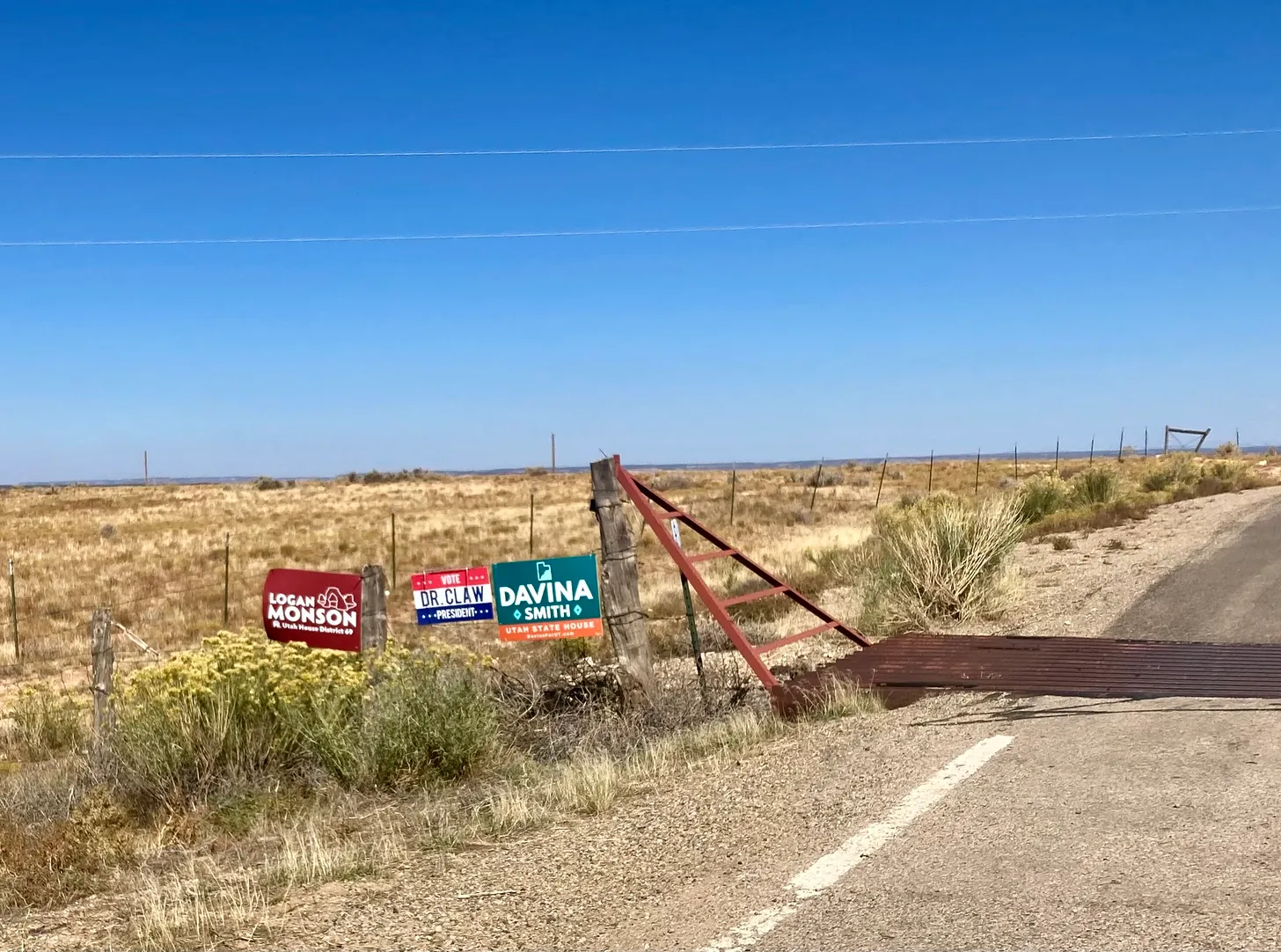
Campaign signs in southeastern Utah October 2024. Jonathan P. Thompson photo.

People — and salmon — return to restored #KlamathRiver to celebrate removal of 4 dams — Deb Krol (AZCentral.com)

Click the link to read the article on the AZCentral.com website (Debra Utacia Krol). Here’s an excerpt:

October 12, 2024

The vinyl decals, featuring salmon crying to get beyond the first of the dams, were wrinkled, the banner itself battle-scarred in places. But the message was still clear: “Un-dam the Klamath now!”

That message became fact at the end of September, when the final hunks of concrete were trucked away from the last of the four dams that had impeded fish migration for nearly a century. The world’s largest dam removal project to date was complete, and about 500 people came to a meadow about 10 miles south of the Klamath on Oct. 5 to celebrate and to look forward to the next phase of restoring an entire basin the size of West Virginia…The Klamath River Basin suffered a near-death experience after being subjected to more than 100 years of mismanagement and injustices against tribal communities. Governments and private industry built dams on ancestral Shasta Nation lands, replumbed the Upper Klamath Basin for agriculture and channelized a key tributary, resulting in massive amounts of phosphorus flowing into the Upper Klamath Lake and eventually, the lower river…

Immediately, he said, the tribe lost 25% of its food supply. In 1984, the tribe was forced to stop fishing altogether when their other two major fish species, the c’waam and koptu, plummeted in numbers, victim to toxic waters in Upper Klamath Lake and the depleted water supplies as farmers asked for more water to be diverted for crops where the Lower Klamath Lake once stood…The two sucker fish, a cultural touchstone for the Klamaths, were listed as endangered in 1988 and have yet to recover. The tribe is the only one in the basin that holds treaty rights, and has made several “water calls” to keep enough water in Upper Klamath Lake to support the dwindling c’waam and koptu stocks. But that hasn’t proved to be very successful, and [William] Ray said that he is “upset, concerned, angry and frustrated at the prospect of extinction.”

Klamath River Basin. Map credit: American Rivers

Hunter and Woody Creeks and Avalanche and Thompson creeks in the #CrystalRiver Basin are now designated Outstanding Waters by the #Colorado Water Quality Control Commission — The #Aspen Times

This photo shows the Thompson Creek drainage on the right as it flows into the Crystal River just south of Carbondale. A company with oil shale interests has voluntarily abandoned its conditional water rights for a reservoir on Thompson Creek. CREDIT: ECOFLIGHT

Click the link to read the article on The Aspen Times website (Westley Crouch). Here’s an excerpt:

September 6, 2024

The Colorado Water Quality Control Commission on Aug. 21 unanimously designated roughly 385 miles of waterways across 15 rivers and streams in the upper and lower Colorado, Eagle, Yampa, and Roaring Fork River basins as Outstanding Waters. The Outstanding Waters designations are authorized by the Colorado Water Quality Control Act and the Clean Water Act…

“An Outstanding Waters designation is a protection that can be given to reaches of streams that offer water quality protection. It is the highest level of water quality protection that can be given by the state of Colorado,” Anderson said. “With the protection, future projects that may happen along these reaches have to ensure that the water quality will not be diminished.”

This designation can protect creeks and rivers from future developments and pollution. He noted that all existing industries, ranches, homes, and utilities along these sections of designations will be grandfathered in…For creeks, streams, and rivers to receive this designation, the water quality must already be of a high standard. Eleven respective criteria points must be met as it relates to water quality before this designation can be obtained.