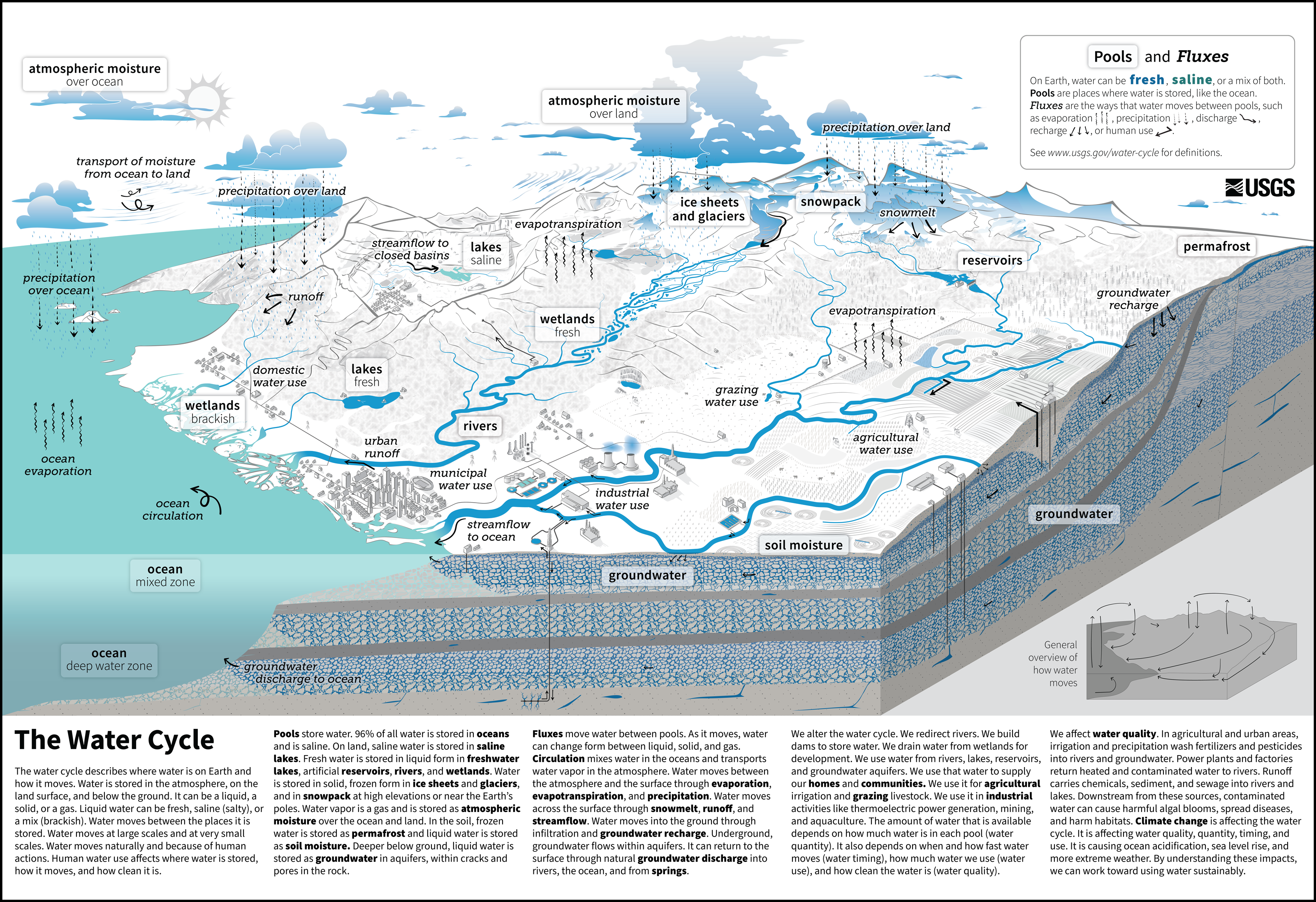
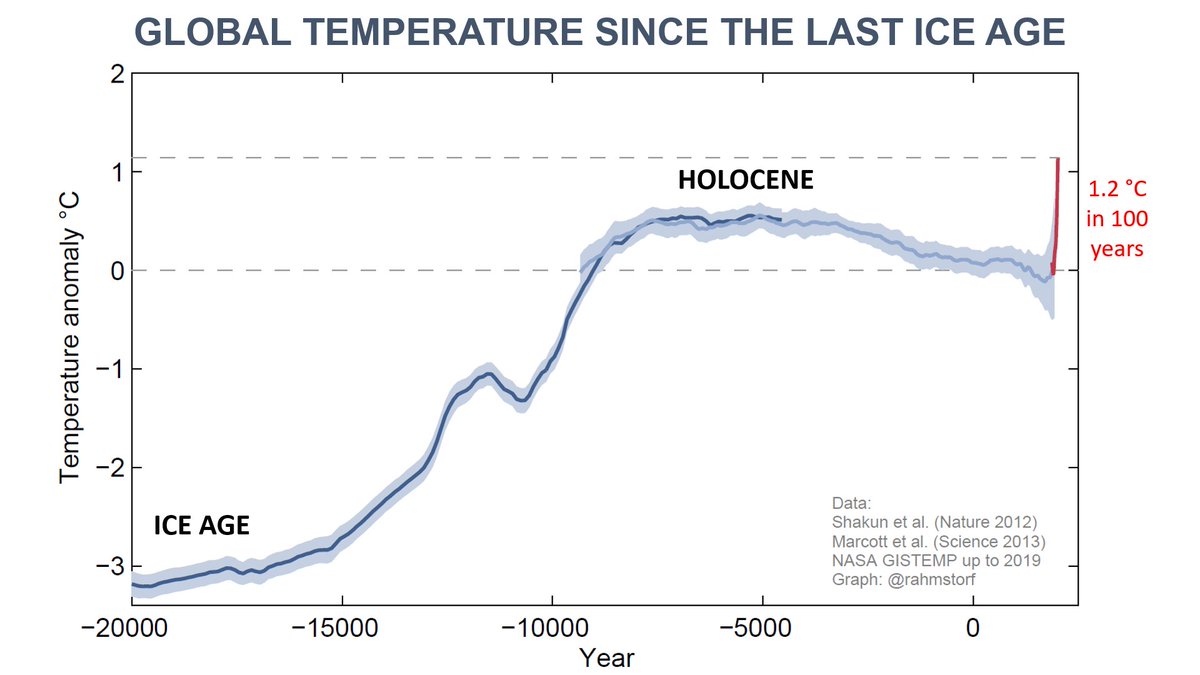
Humanity has thrown the global water cycle off balance “for the first time in human history,” fueling a growing water disaster that will wreak havoc on economies, food production and lives, according to a landmark new report. Decades of destructive land use and water mismanagement have collided with the human-caused climate crisis to put “unprecedented stress” on the global water cycle,said the report published Wednesday by the Global Commission on the Economics of Water, a group of international leaders and experts.
Credit: Stefan Rahmstorf
Disruptions to the water cycle are already causingsuffering. Nearly 3 billion people face water scarcity. Crops are shriveling and cities are sinking as the groundwater beneath them dries out. The consequences will be even more catastrophic without urgent action. The water crisis threatens more than 50% of global food production and risks shaving an average of 8% off countries’ GDPs by 2050, with much higher losses of up to 15% projected in low-income countries, the report found.
“For the first time in human history, we are pushing the global water cycle out of balance,” said Johan Rockström, co-chair of the Global Commission on the Economics of Water and a report author. “Precipitation, the source of all freshwater, can no longer be relied upon.”
Graphic showing the movement of “green water” and “blue water” in the global water cycle. Global Commission on the Economics of Water
The report differentiates between “blue water,” the liquid water in lakes, rivers and aquifers, and “green water,” the moisture stored in soils and plants. While the supply of green water has long been overlooked, it is just as important to the water cycle, the report says, as it returns to the atmosphere when plants release water vapor, generating about half of all rainfall over land. Disruptions to the water cycle are “deeply intertwined” with climate change, the report found. A stable supply of green water is vital for supporting vegetation that can store planet-heating carbon. But the damage humans inflict, including destroying wetlands and tearing down forests, is depleting these carbon sinks and accelerating global warming. In turn, climate change-fueled heat is drying out landscapes, reducing moisture and increasing fire risk.
The $33 million Colorado River Connectivity Channel diverts the river around the Windy Gap Dam to improve river health, fish passage and habitat in the upper headwaters of the Colorado River. (Northern Water, Contributed)
With the snip of a ribbon Tuesday, Colorado water managers officially opened a new waterway in Grand County that reconnects a stretch of the Colorado River for the first time in four decades to help fish and aquatic life.
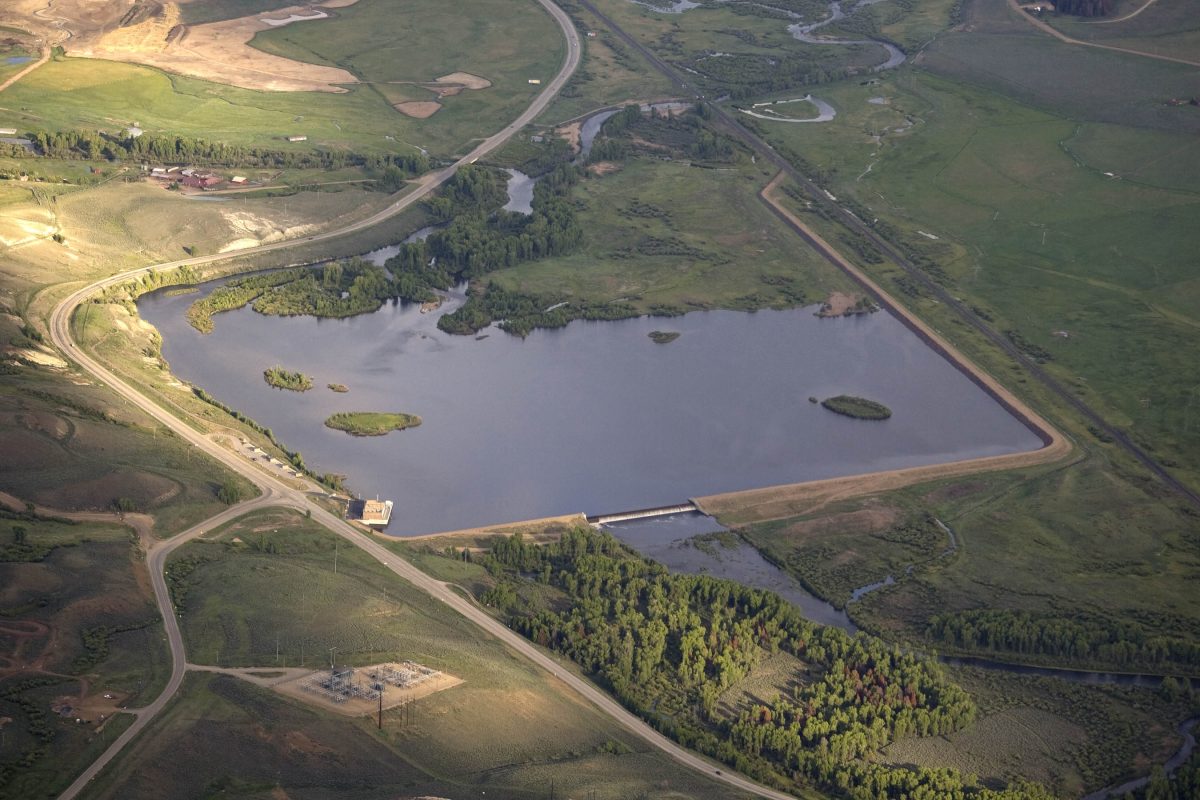
The milelong waterway, called the Colorado River Connectivity Channel, skirts around Windy Gap Reservoir, where a dam has broken the natural flow of the river since 1985. The $33 million project’s goal is to return a stretch of the river to its former health, a river where aquatic life thrived and fish could migrate and spawn. But getting to the dedication ceremony Tuesday took years of negotiations that turned enemies into collaborators and can serve as a model for future water projects, officials say.
“It speaks to the new reality of working on water projects, which is that it doesn’t have to be an us-versus-them situation,” Northern Water spokesperson Jeff Stahla said. “People can get together and identify things that can help not only the water supply, but also help the environment.”
Windy Gap Reservoir and the new channel are just off U.S. 40 near Granby, a few miles southwest of popular recreation areas around Lake Granby and Grand Lake.
The reservoir was designed to deliver an average of 48,000 acre-feet of water per year from Grand County through numerous reservoirs, ditches, canals and pipelines to faucets in homes and sprinklers on farms across northeastern Colorado. One acre-foot roughly equals the annual water use of two to three households.
But soon after construction finished in 1985, locals and fly fishermen started noticing problems — starting with the bugs.
Drivers used to cleaning insects out of their radiators suddenly had one less chore as certain types of mayflies, stoneflies and caddisflies disappeared. In 2011, state biologists calculated a 38% loss in diversity between the early 1980s and 2011.
The dam blocked fish passage, and the reservoir became a breeding ground for whirling disease, a deadly condition for local trout caused by a microscopic parasite.
Windy Gap Reservoir before construction started for the Colorado River Connectivity Channel. The dam, built in 1985, blocked the Colorado River and inhibited a healthy fishery. The new channel around the reservoir will improve the health of the Upper Colorado River. (Northern Water, Contributed)
It choked seasonal high flows. Without the flows to flush the sediment from between small rocks, the habitat for a fundamental food source, small organisms called macroinvertebrates, diminished. The sculpin, a small fish that often serves as an indicator of river health, disappeared entirely.
Macro Invertebrates via Little Pend Oreille Wildlife Refuge Water Quality Research
“The ecosystem started crashing,” said Kirk Klancke, a longtime conservationist in the area. “It didn’t die out completely, but it certainly started crashing. We lost all the sensitive, most important macroinvertebrates.”
The fishery’s gold medal status was threatened, and losing that would have been a blow to the local economy, he said.
The reservoir also couldn’t reliably serve its main purpose: catching water and pumping it 6 miles to Lake Granby to eventually reach the Front Range. When the lake is filled to the brim in wet years, it can’t store Windy Gap’s water, leaving northeastern communities in the lurch, according to Northern Water.
Restoring a river channel in the Upper Colorado Basin. Graphic credit: Northern Water
The new channel is the fix.
To create the channel, the Northern Colorado Water Conservancy District started work in 2022, draining Windy Gap Reservoir and cutting its size in half. The result is a smaller reservoir and a floodplain through which the channel flows.
Crews built a new diversion headgate — the main focus of the dedication this week — that manages how much water enters the reservoir from the channel. They removed a small, upstream dam crossing the Fraser River that blocked fish passage.
After vegetation is established, the channel will open to fishing and recreation, likely around 2027.
Water has been flowing through the channel for about a year, and officials are already seeing benefits: Colorado Parks and Wildlife said Tuesday that the sculpin has been detected in that stretch for the first time in 20 years.
“Seeing the project come to fruition, and then getting the bonus of having wildlife biologists tell you, ‘Yep, we’re already seeing signs of biological healing,’ was just mind blowing,” said Tony Kay, former president of Trout Unlimited who has been working on connecting the river for 26 years.
It was emotional. Not everyone who started this process was able to see it through to the end, like Bud Isaacs, a downstream landowner who was one of the first to raise the alarm and who passed away in 2022, Kay said.
“We never actually thought that this would happen,” he said.
The channel is also one facet of a sweeping, multimillion-dollar plan to fix multiple problems in one go.
Through the Windy Gap Firming Project, growing Front Range communities will have more reliable water storage in the form of Chimney Hollow Reservoir, which is under construction near Loveland and will work in tandem with Windy Gap to provide water supplies.
The effort to build the connectivity channel has seemed slow moving at times, but officials, environmentalists and urban areas are celebrating it as an example of hard-won collaboration.
“It was a gamble to partner with Front Range water diverters. There were a lot of people who told us you can’t do deals with the devil. You’re going to end up really regretting it,” Klancke said. “The connectivity channel has proved we went down the right road.”
It’s also just one step in addressing chronic low-flow issues along the upper Colorado River caused by drought and massive water diversions to Colorado’s Front Range, Klancke said.
In five years time, Kay hopes to see a healed river through the new channel and farther downstream. He’ll be saying “thank you” every time he drives past that stretch of the river.
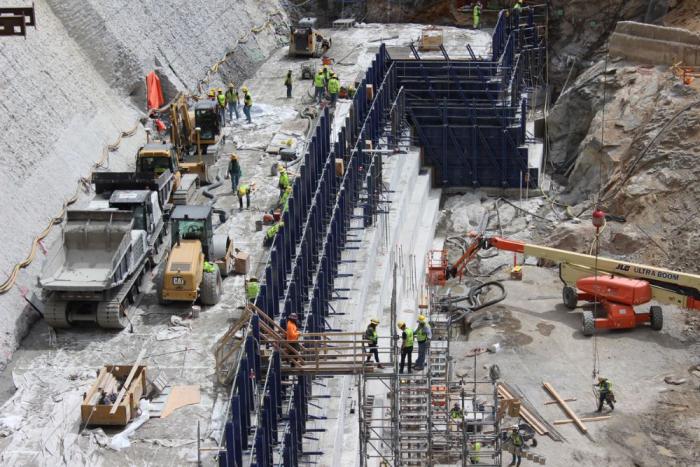
The dam raise process begins at the bottom of the dam using roller-compacted concrete to build the new steps that will go up the face of the dam. Photo credit: Denver Water.
Click the link to read the article on The Denver Post website (Elise Schmelzer). Here’s an excerpt:
October 17, 2024
The U.S. Army Corps of Engineers violated the Clean Water Act and the National Environmental Policy Act when approving permits for the construction of the dam, U.S. District Court Judge Christine Arguello found in the ruling, issued Wednesday. The federal agency failed to sufficiently consider other options that could be less environmentally damaging than dam expansion, Arguello wrote in her order. Arguello did not order Denver Water to stop construction on the dam, in part because the utility already plans to halt construction in November for the winter season. An abrupt halt to the project could also affect the integrity of the dam, she wrote. The defendants and plaintiffs will now work to create a remedy for the improperly issued permits. Each side must submit briefs on proposed solutions to Arguello by Nov. 15. In a statement, Denver Water said it still hopes “to move the project toward completion.”
[…]
Denver Water argued in its filings that the issues raised were moot since construction had already begun and one of the permits in question already used. Arguello, however, dismissed that argument, as the reservoir had not yet been expanded and the 400 acres of land and 500,000 trees it would drown still remained above water…
One of the Army Corps of Engineers’ failures was its lack of analysis of how climate change could impact the project. As climate change shrinks the amount of water available in the Colorado River system, Arguello asked, is it practical and reasonable to build a reservoir to store water that doesn’t exist? The lack of analysis shows that the USACE did not fully analyze the practicality of the dam project, as required by law, she wrote.
The benefits of this geo-exchange system extend beyond environmental impact. By significantly reducing energy costs—saving millions of dollars each year—CMU is able to keep tuition affordable. These savings directly support the CMU Promise, additional merit aid, more scholarships, and other cost-saving initiatives that benefit students. Photo credit: Colorado Mesa University (June 7, 2024)
Today, Governor Polis celebrated Colorado Mesa University’s (CMU) nation-leading geothermal heating system for being recognized as one of only 19 case studies across the nation by the Department of Energy as one of the best geothermal systems.
“Congratulations to Colorado Mesa University for being featured as a U.S. Department of Energy case study for geothermal heating. CMU has one of North America’s largest geothermal heat pump systems and connects 16 buildings, providing 90% of the energy required to operate the campus. Plans are underway to connect the remaining campus buildings, comprising 800,000 square feet, to the central loop to achieve a 100% geothermal campus. CMU’s work is a great example of Colorado’s leadership in providing clean, low-cost energy resources,” said Governor Polis.