Feb. 10, 2025- A newly announced conservation easement will protect more than 7,400 acres in the North Fork Valley from development.
Landowner Peter Slaugh worked with the Colorado West Land Trust to permanently protect Scenic Mesa Ranch, which is south of Hotchkiss and near the confluence of the North Fork of the Gunnison River and the mainstem of the Gunnison River.
“Thanks to the commitment of landowner Peter Slaugh, this remarkable landscape will remain protected forever — ensuring its rich wildlife habitat, agricultural legacy, and scenic beauty continue to benefit the community for generations to come,” the land trust said in a news release.
The ranch includes miles along the two rivers, borders the Gunnison Gorge National Conservation Area and helps connect lower-elevation public land with the West Elk wilderness.
“The property’s scale, high-quality habitat, and strategic location make this an incredibly important conservation achievement,” Rob Bleiberg, executive director of the land trust, said in the release. “We are grateful to partner with Peter Slaugh to protect this incredibly important piece of Western Colorado’s wildlife and agricultural heritage.”
The mesa and the ranch’s riparian areas and canyons are home to wildlife such as eagles, river otters, elk, mule deer, bighorn sheep, mountain lions and black bears. Scenic Mesa also supports livestock grazing, irrigated hay production and dryland pastures, and the conservation easement permanently secures senior water rights, ensuring the land’s continued agricultural productivity and preservation of open space, the land trust said.
Slaugh said in the release, “We live in a dry climate where water is key to promoting healthy habitats. We feel honored to act as stewards of this ranch with a rich history. While raising cattle, we are equally committed to managing the health and survival of wildlife and their habitats. It’s important to us that this land remains a wildlife preserve and avoids development.”
Slaugh and the land trust plan to partner on restoration projects to improve aquatic and upland habitats, including river restoration work with the Western Colorado Conservation Corps.
According to the land trust, the conservation easement preserves the beauty of a mesa visible from Colorado Highway 92 and surrounding public roads. The land also is adjacent to more than 13,000 acres of conserved land and near public lands, further enhancing its value as an ecological asset.
The nonprofit Colorado West Land Trust, based in Grand Junction, has conserved more than 144,000 acres in Delta, Gunnison, Mesa, Montrose, Ouray and San Miguel counties.
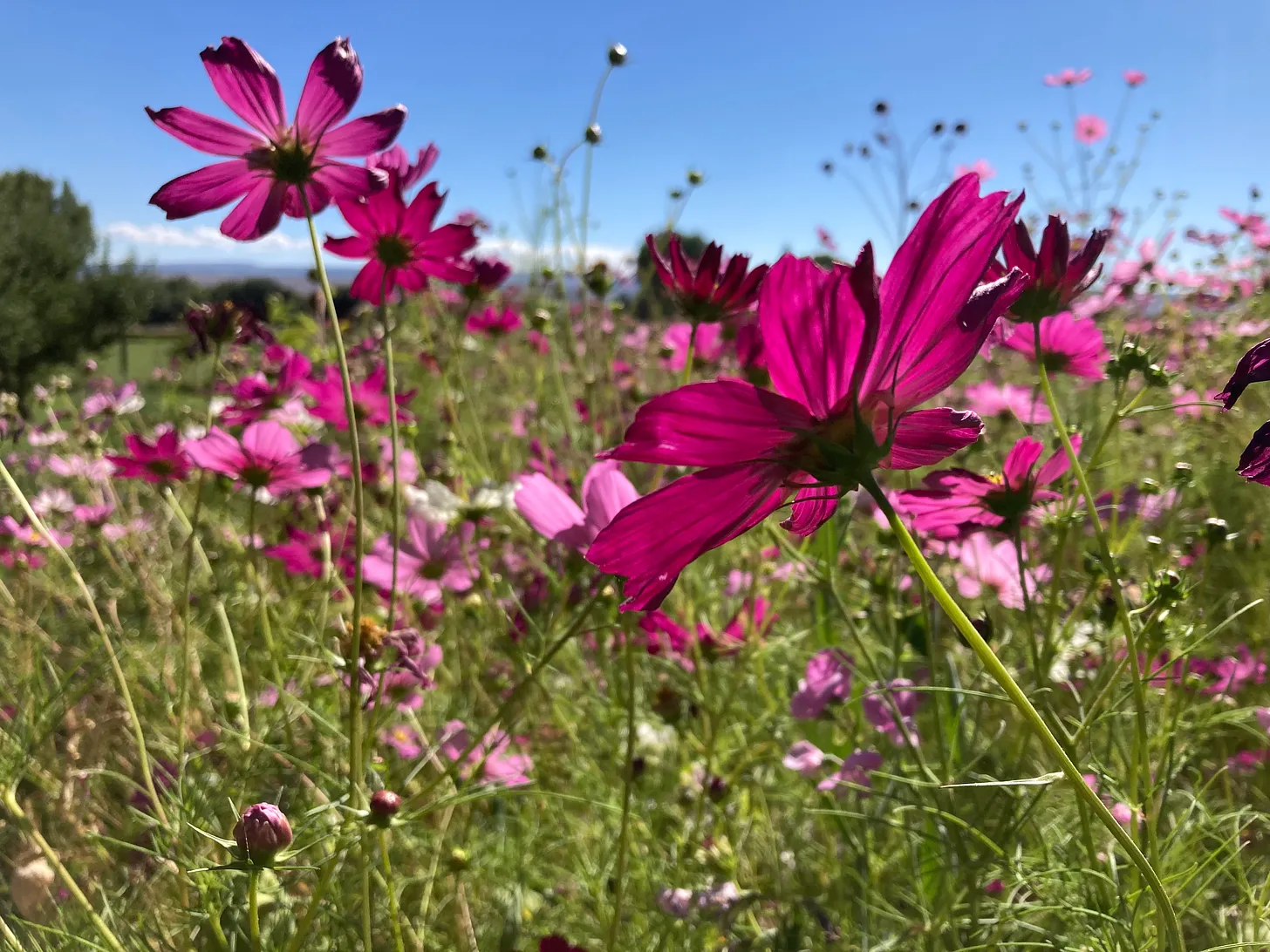
Cosmos in full-summertime bloom in the North Fork Valley in October 2024. Jonathan P. Thompson photo.
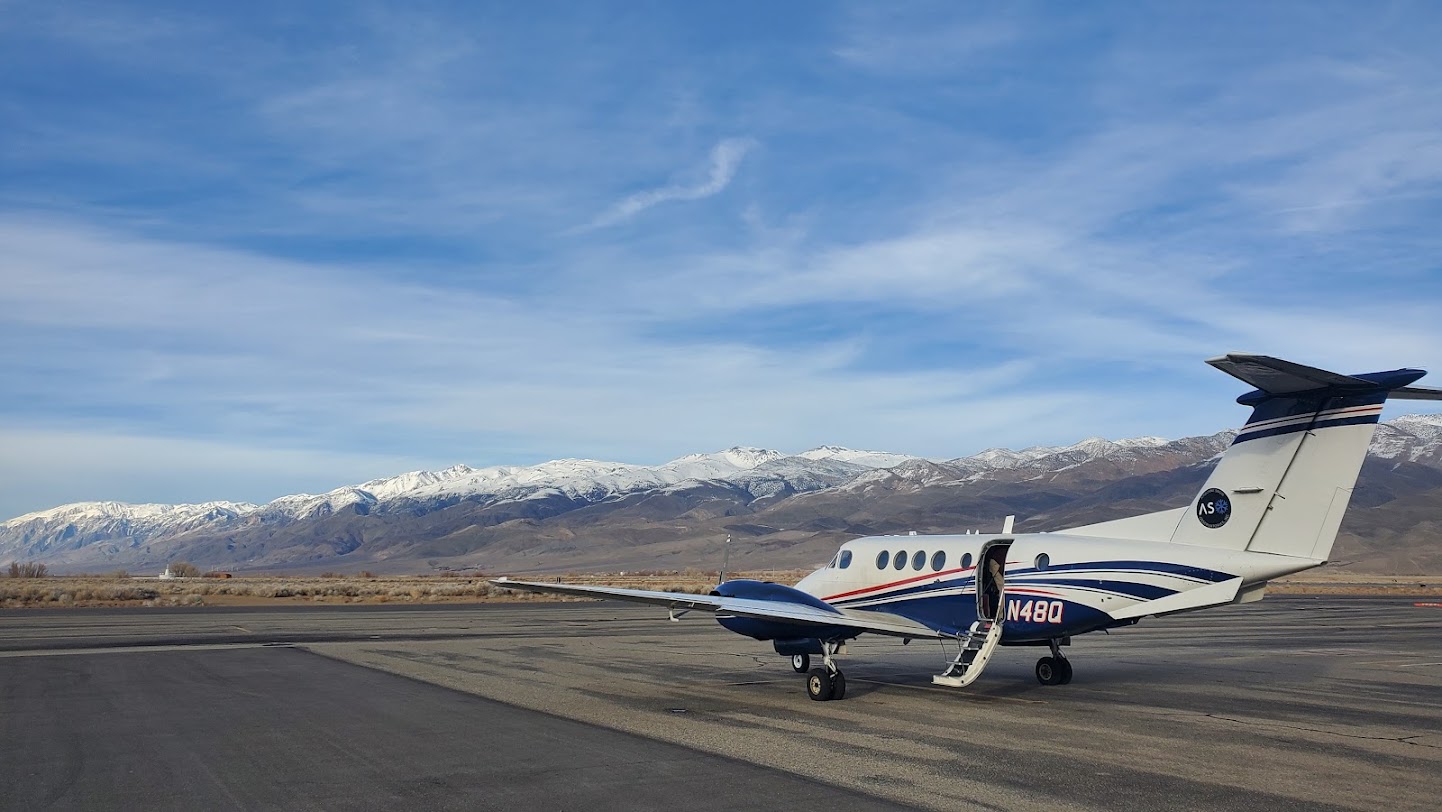
An Airborne Snow Observatories plane prepares for a flight to survey a watershed using lidar technology. Data from the flight will be used to produce snow depth, snow water equivalent and snow albedo maps all to enhance the accuracy of summer runoff forecasts.
Airborne Snow Observatories/Courtesy illustration
House Bill25-1115, a bipartisan proposal from a group of Western Slope lawmakers that would create a new statewide snowpack measurement program using emerging tools like light detection and ranging technology, also known as lidar.
“This is a way for us to plan better in our storage facilities, in our reservoirs,” said House Speaker Julie McCluskie, a Dillon Democrat and a prime sponsor of the bill.
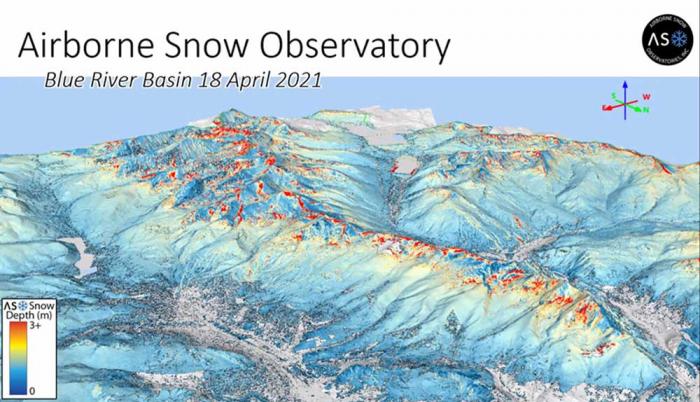
The mountain ranges above Dillon Reservoir, seen through the lens of the data collected by sophisticated equipment onboard a plane that flew over the Blue River Basin to measure the amount of water frozen in the snow above Denver Water’s largest reservoir. Image credit: Airborne Snow Observatory Inc.
Like radar, but using light, lidar sends beams from a plane or satellite towards the ground. By measuring the time it takes for the light to be reflected, scientists can calculate the depth of an area and create a 3-D model of the landscape. The flights also use a spectrometer to capture infrared images that show where snow is melting fastest. Glenwood Springs-based scientist Jeff Deems and his team pioneered the technology for snowpack mapping with the National Aeronautics and Space Administration in 2013. From those efforts, Deems co-founded Airborne Snow Observatories, a public benefit corporation that contracts with local and regional governments and water providers. Using a fleet of twin-engine planes equipped with lidar, the group runs flights to map river basins across the West. Deems said lidar isn’t replacing SNOTEL, which remains the backbone for snow monitoring by providing a decades-long record of changes in snowpack. Instead, lidar is helping fill in the gaps. While SNOTEL sites pinpoint data at specific locations, lidar provides a full picture of the entire watershed.
“The combination of the two gives us this really powerful 4D picture of a basin-wide snowpack,” Deems said. “We get the three dimensions from airborne surveys and the ‘time’ dimension from the SNOTELs, and that really gives us the best knowledge from which to anticipate and forecast our summer runoff.”
GLENWOOD SPRINGS, Colorado — The Colorado River District’s Board of Directors held its first quarterly meeting of the year on Jan. 21-22 and approved $480,000 in Community Funding Partnership grants to support water projects across the Western Slope. A highlight in this round of funding is a $300,000 grant to the Colorado Mesa University’s Ruth Powell Hutchins Water Center to support the Center’s growth over the next three years, including hiring an executive director and establishing a long-term growth strategy for the organization. The River District funding award will be matched by $ 300,000 from Colorado Mesa University.
The grant and partnership with CMU will strengthen the Water Center’s ability to serve as a West Slope hub for water policy and academic education, fostering leadership and innovation in water resource management. The funding will also support strategic planning and program expansion, positioning the West Slope as a central source of research, collaboration, and leadership in Colorado’s River.
“Supporting the CMU Water Center is an investment in the expertise and leadership needed to secure Western Colorado’s water future,” said Colorado River District General Manager Andy Mueller. “CMU has long been a trusted leader in West Slope education and data-informed research. This partnership empowers local knowledge and innovation and will create future generations of water leaders in the Colorado River.”
“At CMU, we take pride in being a voice for Western Colorado, and we see the Water Center as central to that mission,” said Colorado Mesa University President John Marshall. “With this investment from the Colorado River District—matched by CMU—we are establishing a strong, foundational hub for water research and policy rooted in Western Slope expertise, helping students and professionals drive solutions for our region’s water future.”
In addition to the CMU Water Center grant, the Board approved $180,000 in Community Funding Partnership grants for critical water projects across the Western Slope. An $80,000 grant will support the Terror Ditch Pipeline Project in Delta County, piping just over a mile of ditches to reduce water loss and mitigate infrastructure collapse risks, benefiting over 500 acres of agricultural land in the Gunnison Basin. Another $100,000 grant will fund the Upper Yampa Watershed and Stagecoach Reservoir Water Quality Model Project in Routt County, which will develop decision-making tools to address harmful algal blooms and improve water quality in the Upper Yampa River Basin.
The Community Funding Partnership, launched in 2021, is designed to support the development of multi-benefit water projects across Western Colorado. To date, the program has funded over 130 projects and leveraged nearly $100 million in funding for projects that benefit agriculture, infrastructure, healthy rivers, watershed health and water quality, and conservation and efficiency.
For more information on the Colorado River District’s Community Funding Partnership and how to apply for future funding opportunities, visit www.ColoradoRiverDistrict.org.
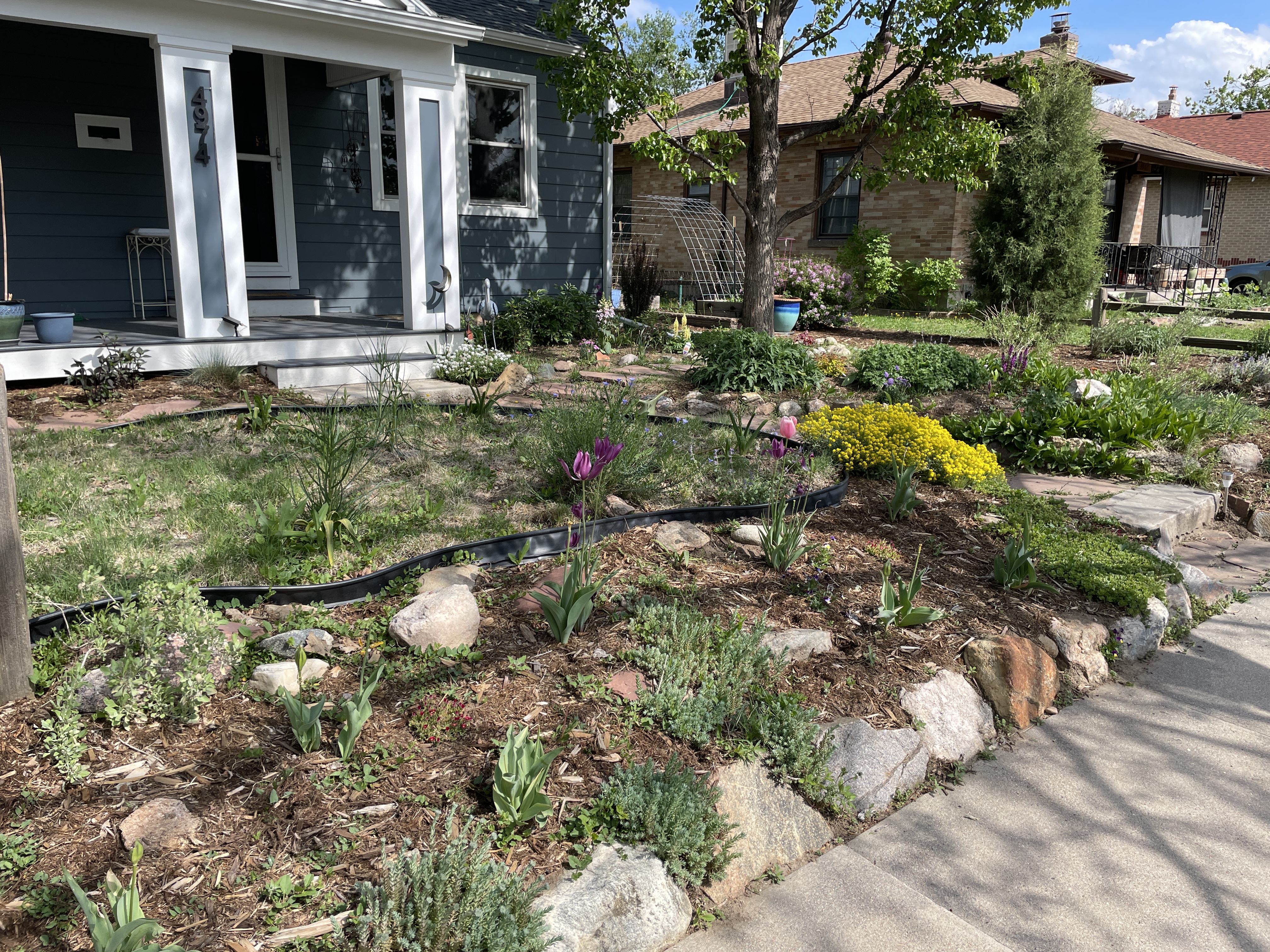
Glenwood Springs homeowners Ginny and Jim Minch replaced their lawn with drought-tolerant plants and decorative rocks using a rebate program through the city of Glenwood. Colorado lawmakers have introduced another bill this session taking aim at thirsty turf as a way of conserving water. Credit: Heather Sackett/Aspen Journalism
Colorado lawmakers want to add more restrictions on thirsty grass in new residential developments in an effort to conserve water.
House Bill 1113 would limit planting non-functional turf, artificial turf or invasive plant species in new and redeveloped apartment or condominium housing. This year’s bill is an extension of last year’s Senate Bill 5, which requires local governments by Jan. 1, 2026, to establish policies prohibiting the planting of nonfunctional turf as part of any new development or redevelopment alongside roads and streets or in medians, as well as in areas surrounding offices or other commercial buildings, in front of government buildings, and in entryways and common areas managed by homeowners associations.
Under HB 1113, local governments would also have to enact their own policies about how to limit new turf on properties not covered by either of the two state bills by 2028.
The bill represents a continuing effort across the Colorado River basin to wring savings from municipal water use in the face of a warming and drying climate. State Sen. Dylan Roberts, who represents District 8, is a sponsor of the bill, along with representatives Karen McCormick and Lesley Smith, all Democrats. Roberts, whose district includes Garfield, Routt, Summit and Eagle counties, said the bill was born out of a general desire to conserve water.
“Whether it’s ongoing drought that is putting a strain on our water supply, negotiations over interstate compacts like the Colorado River or population growth, there’s just a lot of demands on Colorado’s water,” Roberts said. “Water that’s being used for non-functional turf is a pretty obvious place to look for water savings.”
The prohibition on new grass is not aimed at lawns for single-family homes, parks, playgrounds or sports fields. Non-functional turf is defined as grass that is not used for civic, community or recreation purposes. Often planted alongside roads or sidewalks, medians or around offices, commercial or government buildings, it is purely ornamental and the only person who ever walks on it is pushing a lawnmower.
In recent years, municipalities and urban water providers have focused on thirsty Kentucky bluegrass as low-hanging fruit in reducing outdoor water use. Outdoor water use can be the biggest factor in a development’s water use overall. Voluntary turf removal incentives have grown in popularity, with lawmakers creating a state funding source in 2022 for property owners to replace lawns with less water-intensive landscaping. A 2023 statewide drought task force also recommended to the legislature that they continue to fund turf removal programs.
Rep. Karen McCormick, whose district includes Boulder County, said the second part of the bill that requires local entities to enact their own regulations on turf is a nod to local control. Those regulations could include limiting new turf planted around single-family homes, as a handful of municipalities, including Aurora and Castle Rock, have done.
“We’re not telling the local entities how to do that or what to do, but to do this your way that works for your community and your county, your city,” McCormick said. “We’re just saying, please look at how you are allowing high-water-use turf and please sit down and address how you can be part of the solution.”
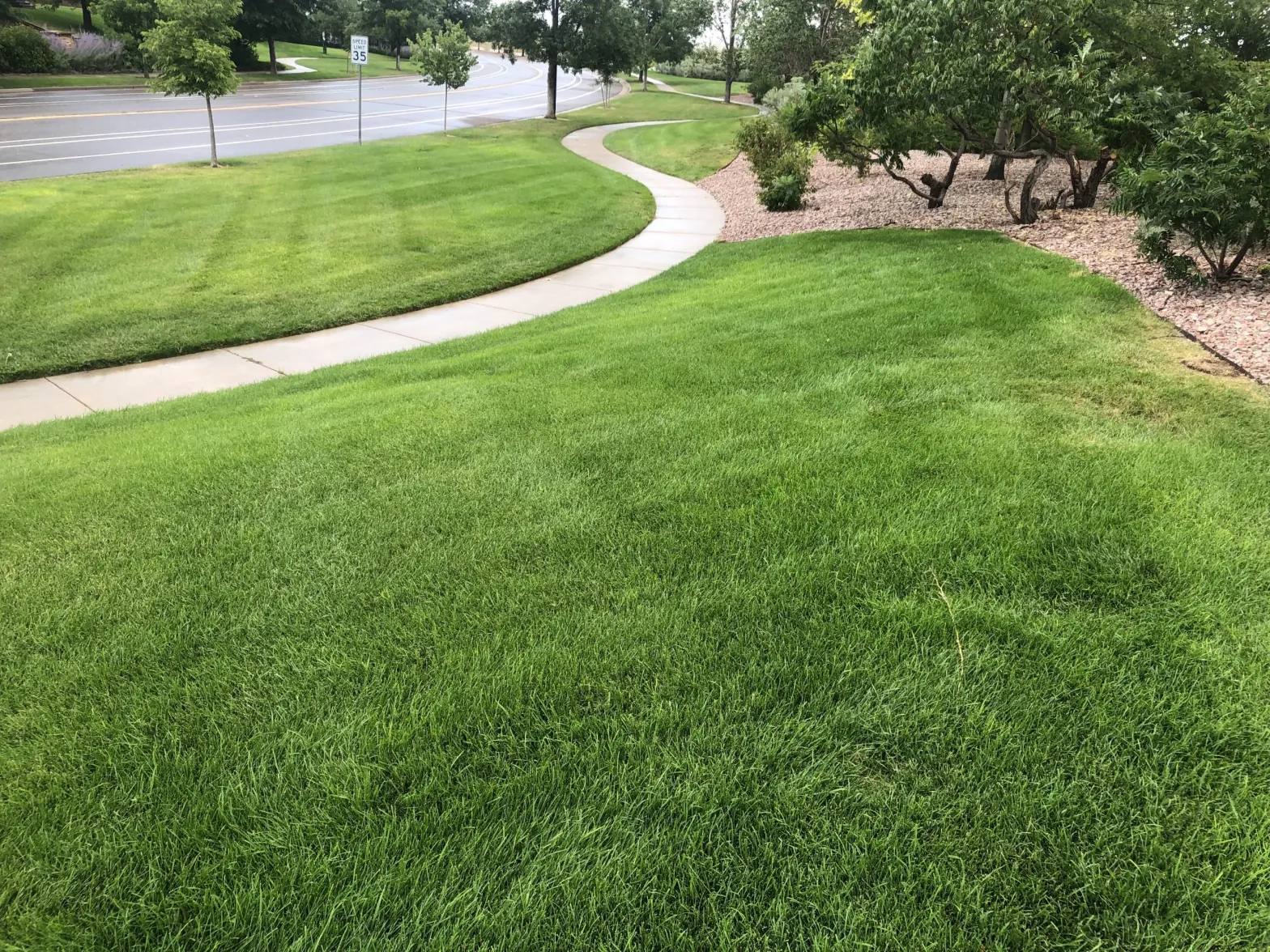
Real estate developers in Aurora typically created lavish areas devoted to turf along streets, including this one, but a 2022 law dramatically reduced what is permitted in future developments.
CREDIT: ALLEN BEST/BIG PIVOTS
Environmental groups like Conservation Colorado, Western Resource Advocates, the Sierra Club and 350 Colorado are supporting the measure.
Chelsea Benjamin, a policy advisor at WRA, said the organization is supporting HB 1113 to build on the statewide progress over the past few years toward more water-wise landscaping.
“Especially in the context of Colorado becoming a hotter and drier place, our resources are getting stretched thin,” Benjamin said. “There have been a lot of efforts to date to focus on water conservation because we know that it’s the cheapest, fastest and most reliable way to help our communities thrive in this new reality.”
The place where HB 1113 may be most effective is in fast-growing Front Range cities. Several large municipal water providers on the east side of the Continental Divide are monitoring the legislation as it makes its way through the state House and Senate, including Denver Water, Colorado Springs Utilities and Aurora Water, which together serve about 2.4 million residents.
Colorado Springs, like some other communities around the state, is already addressing turf in its land use code. According to Julia Gallucci, water conservation supervisor for CSU, the city of Colorado Springs, which is a separate entity, would need to make only minor tweaks to its land use code to be in compliance with state rules. In Colorado Springs’ 2023 land use code update, new construction projects are limited to 25% turf in any irrigated areas.
For cities, reducing outdoor water use is key to meeting conservation goals and stretching existing water supplies. Gallucci said that outdoor watering accounts for 40% of Colorado Springs’ total use system wide.
“Water is a limited resource,” Gallucci said. “We are a water-depleted state and we are a growing city so we have to do our part.”
The lone group opposing the bill as of Wednesday was Colorado Counties, Inc., which represents all of the state’s 64 counties. Reagan Shane, CCI’s legislative and policy advocate, said that while many county representatives, especially those on the Western Slope, supported the idea of water conservation, more than 65% of the state’s counties voted to oppose the bill.
“We just don’t even know that it’s something we can police,” Shane said. “How do we pass regulations that we can’t functionally police and what are the implications of that and is that good governance?”
The National Association of Landscape Professionals, GreenCO and the Synthetic Turf Council are looking to amend the bill.
John McMahon is CEO of Associated Landscape Contractors of Colorado, which is one of the seven organizations under the umbrella of GreenCO. He said his group is hoping to amend the bill so that certain species of less-thirsty grass are excluded from the definition of “turf.”
“We are looking for exemptions for new species of hybridized turf available out there,” McMahon said. “Our overall view is the right turf for the right climate and certainly the right part of the yard. We don’t agree with having Kentucky bluegrass everywhere either.”
HB 1113 is scheduled for a hearing before the House Agriculture, Water & Natural Resources Committee on Feb. 20.