Change, #Climate, and Rural Action in 2025 – What federal changes mean for rural climate action — #Colorado Farm & Food Alliance

Click the link to read the article on the Colorado Farm & Food Alliance website:

January 28, 2025

Change is the only constant, all around us at all times. In our natural, human, and political systems, the pace of change feels particularly intense right now. How will we participate in this change, appropriate to its scope and scale, to shape or be shaped by it? 

For the past several years, the Colorado Farm & Food Alliance has focused on three broad “avenues” (or approaches) for local solutions regarding rural climate action. In each of these, the new federal administration and shift in Congress could impede or derail progress already made and potentially into the future. 

Avenues for climate action that the CO Farm & Food Alliance has focused on are (1) meeting landscape-level conservation goals to secure water supplies and boost ecological and climate resilience; (2) producing more locally generated and community-centered clean energy; and (3) helping small-acreage agricultural producers benefit from and support the shift to more regenerative practices that increase climate mitigation and adaptation, and boost farm health. 

In 2025, we expect ongoing attempts to rollback current environmental and conservation policy – based on stated intent from the new administration and Congress, along with early action and leadership changes in agencies and on committees – with a hard shift away from natural resource protection, environmental justice, and climate action. 

The CO Farm & Food Alliance is troubled by this change in federal direction. We will work with partners to defend the progress made and seek opportunities to continue that progress. 

With our model of local action and community-rooted solutions, the CO Farm & Food Alliance will work to prevent harm and continue to advance on all of these fronts in partnership with national and local allies.

meeting landscape-level conservation goals to secure our water supplies, wildlife, and quality of place

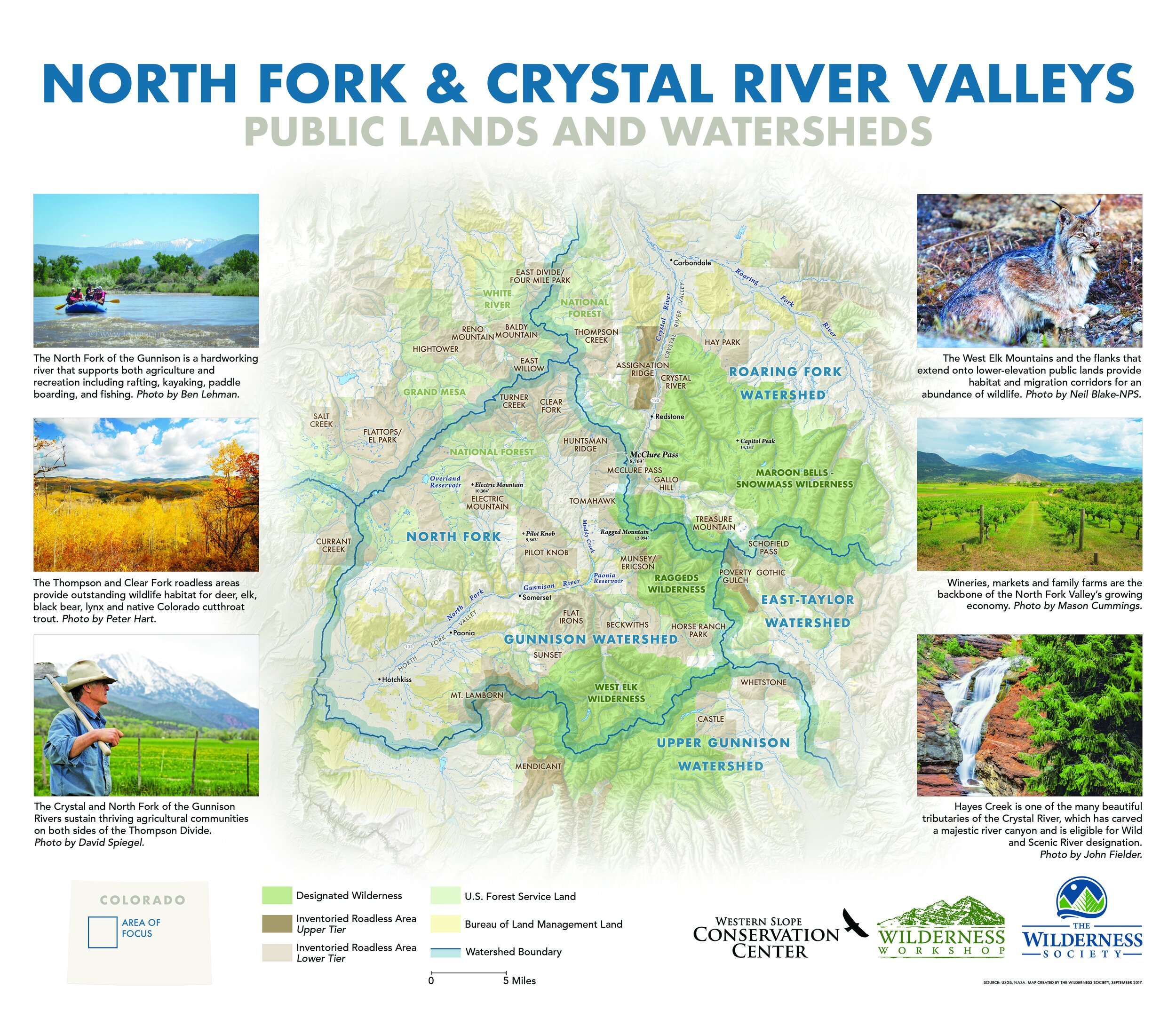
The Colorado Farm & Food Alliance began with the premise that healthy lands and clean water protect Colorado farms, food, and drink. At the time of our founding, we sought to unify as a local voice for farm and food leaders who supported the protection of the public lands and water source areas surrounding the North Fork Valley. 

As our focus broadened to include food security and climate change, among other issues, we also recognized that land use, specifically the conservation and restoration of natural places and systems is a powerful way to help address climate anomalies. 

The Colorado Farm & Food Alliance remains committed to working with our partners to secure and maintain protection for critical public and watershed lands in western Colorado. Protecting cherished places such as the Thompson Divide and Clear Fork area, the North Fork Valley, and Dolores Canyons enjoys broad public appeal. 

Conservation also helps address the biodiversity crisis and makes watersheds and Colorado farms more resilient to drought. These iconic landscapes are foundational to the character of this place and its residents. They protect our water supplies, essential wildlife habitats, and popular hunting and recreation areas. This means we will join with others to defend public lands and conservation policies from rollbacks and other emerging threats in Washington. However, there will also be opportunities to champion the importance of public lands to Colorado and highlight their values.
producing more locally produced and community-centered clean energy

Rural communities’ powering of farms, businesses, and homes—and the growth of renewable energy projects in rural areas—can significantly improve people’s lives and livelihoods. However, rollbacks to clean energy, environmental justice, and other climate programs could set western Colorado back and be a “gut punch” we do not need

The Colorado Farm & Food Alliance supports deploying more community-based renewable energy for farms and rural communities. We will closely monitor how Washington’s changes might impact local communities’ ability to develop their own home-grown power solutions. 

For transitioning coal and power-plant communities, like the North Fork and other places in Colorado, environmental justice means supporting local solutions for front-line communities. This is recognized in climate funding laws passed during the last Congress, which directly benefit places like Craig, Naturita, and Pueblo, as well as communities in Delta County. However, a recent January 2025 White House Executive Order seeks to defund many of these programs.

Despite this, we will continue working with partners to help advance innovative community-based clean energy projects – like the Thistle Whistle Community Solar project. We will advocate for the preservation of funding that allows coal-mining and power-plant communities – whether rural or urban, red or blue – to envision and implement their own home-grown energy solutions.

The North Fork River valley. Photo credit: Colorado Farm & Food Alliance

supporting small-acreage agricultural producers in benefiting from a shift to more regenerative practices

The Farm Bill, which is central to agriculture in the United States, was recently extended for a third time. This has made a normally five-year bill into an eight-and-counting ordeal. It is not certain that it will be settled this year, but it will have a far-reaching impact when it is. 

That’s because the Farm Bill touches many things, from nutrition to farming to clean energy. Even with an uncertain passage, the debate over this bill will continue in committees in both the House and the Senate, now under narrow Republican control. 

The Farm Bill is one place rural renewables get funded, through the Rural Energy for America Program (REAP). This is another place where cuts might come to clean energy under a new Congress and priority shifts in the administration. 

Clean energy is just one small part of the Farm Bill. Several vital programs funded by this legislation could be at risk of cuts or elimination. These include nutrition programs such as SNAP (“food stamps”) and Doubleup Foodbucks. This program, which could be targeted, addresses hunger in our communities and supports local farmers by increasing SNAP benefits at local farmers’ markets. 

Farm and ranch conservation funding is another area likely to see proposed Farm Bill cuts. This includes helping small-acreage farmers implement more regenerative and climate-adapted practices. Programs that support small-acreage farmers are essential for conservation. In the U.S., the number of farmers is decreasing, but the average size of farms is increasing. Many small farms will be converted to other uses and will not stay in agriculture if farming becomes nonviable.  

The loss of a farm is personally devastating and sends ripples through the local economy. It also limits the type and scope of nature-based climate solutions that can be implemented. In important headwaters and agricultural areas, like the Gunnison River basin, ensuring the viability of agriculture–which smaller and mid-sized farms and ranches dominate–and protecting our farm economies are critical strategies to support rural, farm-based climate action. 

Conservation funding and nutrition programs that allow farmers to provide food directly into local markets are key tools that improve farm outputs, provide income, boost resilience, and address food insecurity in western Colorado. 

The Colorado Farm & Food Alliance is sharing and we will continue to develop new and additional resources to help farmers and others navigate policy and program changes at the USDA and other agencies. We will also highlight growers and ranchers practicing techniques that make their farms and pastures more resilient, productive, and sustainable. Showcasing our successes and our shared work will be important in the years ahead.
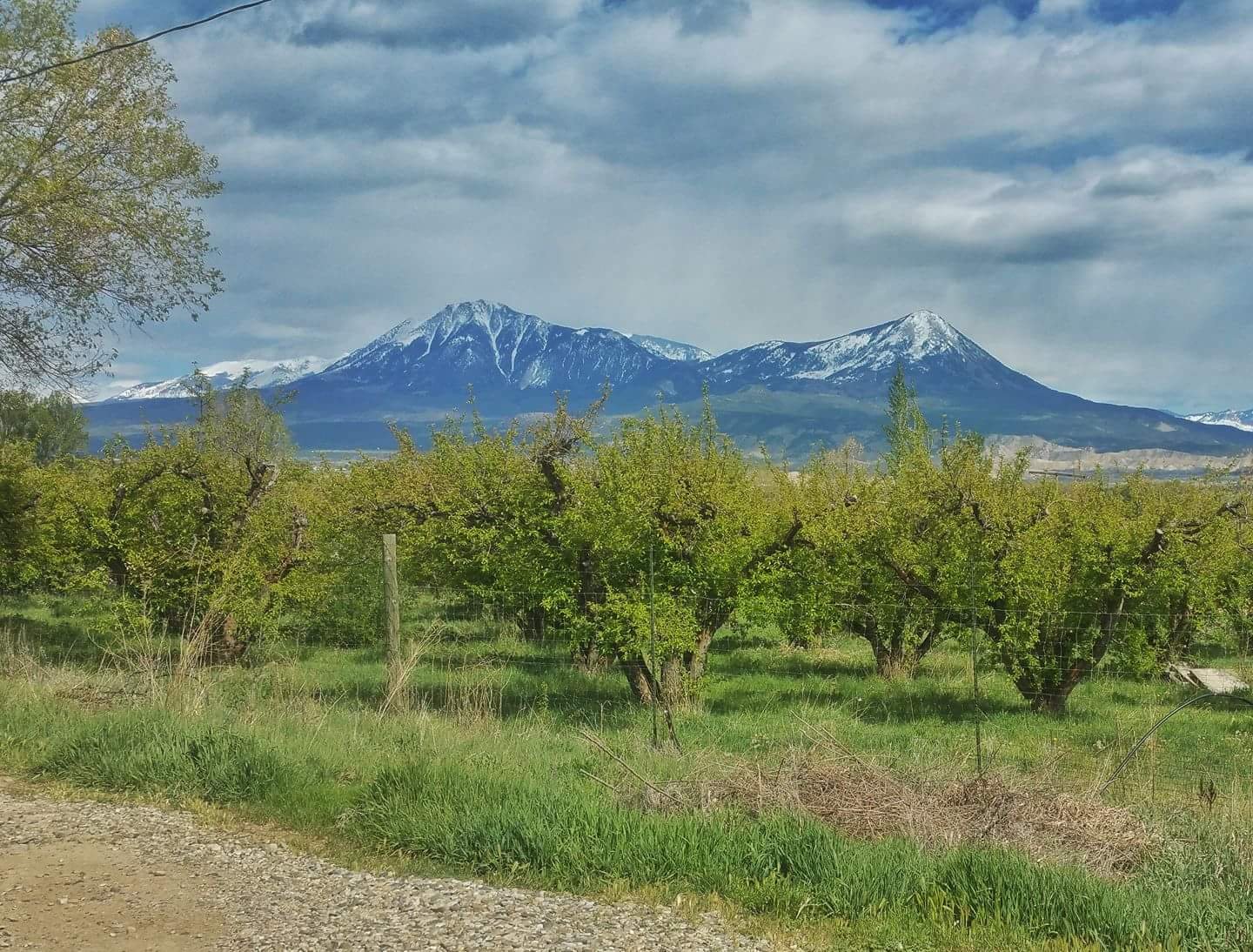
A North Fork Orchard. Photo credit: Colorado Farm & Food Alliance

The Future is here: We are it.

Despite all these changes and challenges coming our way, we can find security in our community and shared endeavors. We can create something new, sustainable, and fair that emerges right here. 

But first, we must persist. This means securing and defending what we have and value most. It means standing up for the vulnerable and those people and places that are targets of attack. 

Still, that cannot be all we do. We should neither feel defeated nor content to just wait for a different time. We should imagine new ways to connect with each other now, to celebrate what we cherish and to replicate and share out what we do well.

The future is up to us, but we are mighty together. Now we must become the change we seek.
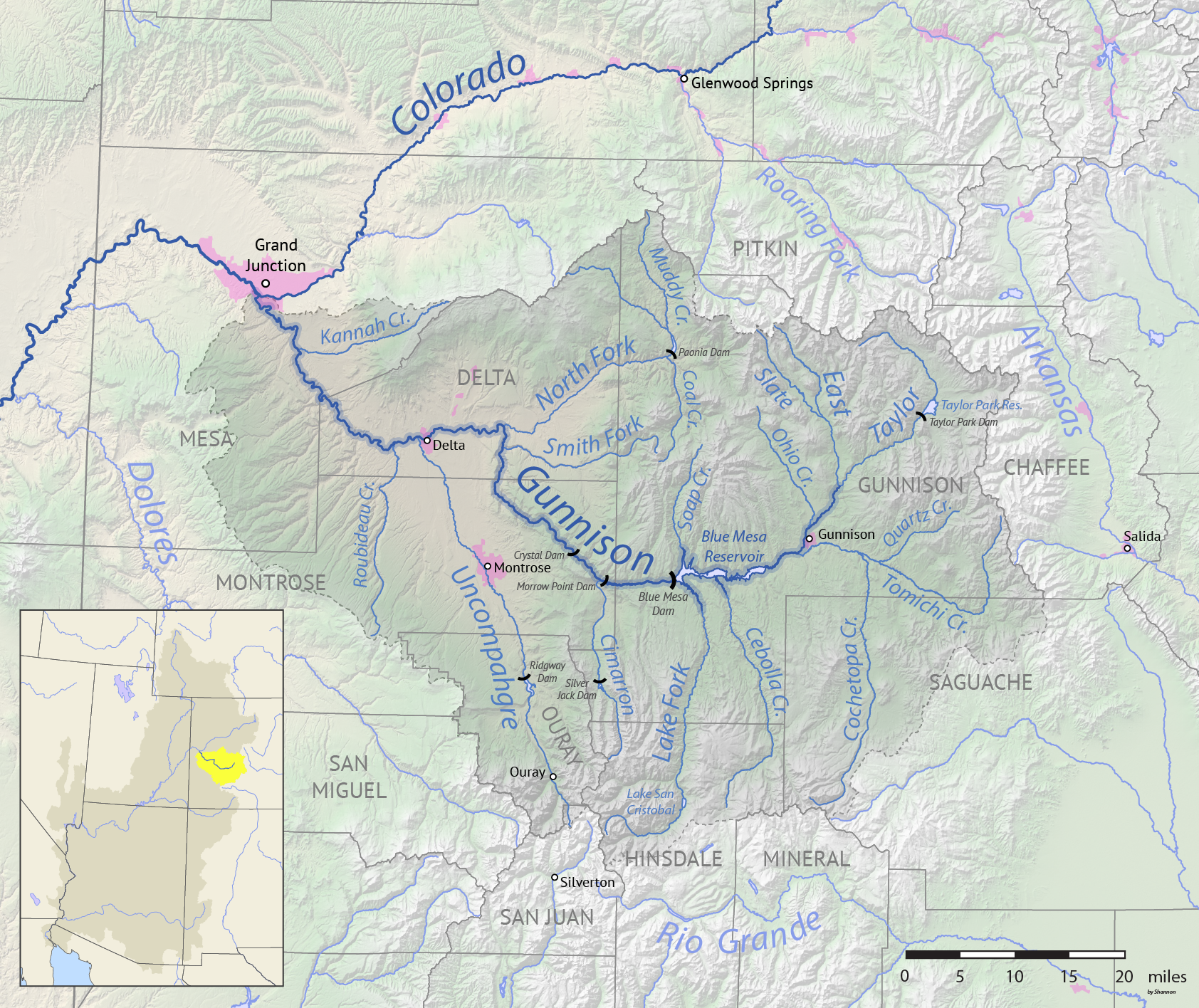
Gunnison River Basin. By Shannon1 – Own work, CC BY-SA 4.0, https://commons.wikimedia.org/w/index.php?curid=69257550

Lawmakers say no to storing nuclear waste in #Wyoming: Distrust over the federal government’s ability to build a permanent repository played a critical role in committee’s decision to kill controversial ‘temporary’ storage bill — Dustin Bleizeffer (WyoFile.com)

A barrel of radioactive waste is visible through a catwalk at the Smith Ranch-Highland in-situ uranium mine in Wyoming. (Dustin Bleizeffer/WyoFile)

Click the link to read the article on the WyoFile.com website (Dustin Bleizeffer):

January 30, 2025

Despite growing support for nuclear energy nationally and here in Wyoming, there are simply too many concerns to entertain the possibility of opening the state to the country’s growing stockpile of spent nuclear fuel waste, some lawmakers say.

House Bill 16, “Used nuclear fuel storage-amendments,” touted by its backers as a tool to initiate a larger conversation, died Wednesday morning in the House Minerals, Business and Economic Development Committee.

In addition to being flooded with emails and phone calls from constituents opposed to warehousing the deadly, radioactive material, several lawmakers on the panel were not convinced that a “temporary” storage facility would, in fact, be temporary. They noted that the federal government has tried and failed for decades to establish a permanent nuclear waste repository that would give some legitimacy to the “temporary” storage concept.

“This appears to be a huge game of hot potato,” Gillette Republican Rep. Reuben Tarver said.

Reacting to several claims during the hearing that the storage of radioactive nuclear fuel waste poses no human health or environmental risks, Rep. Scott Heiner of Green River listed a litany of reported leaks from the same type of “dry cask” containers in other states that would come to Wyoming.

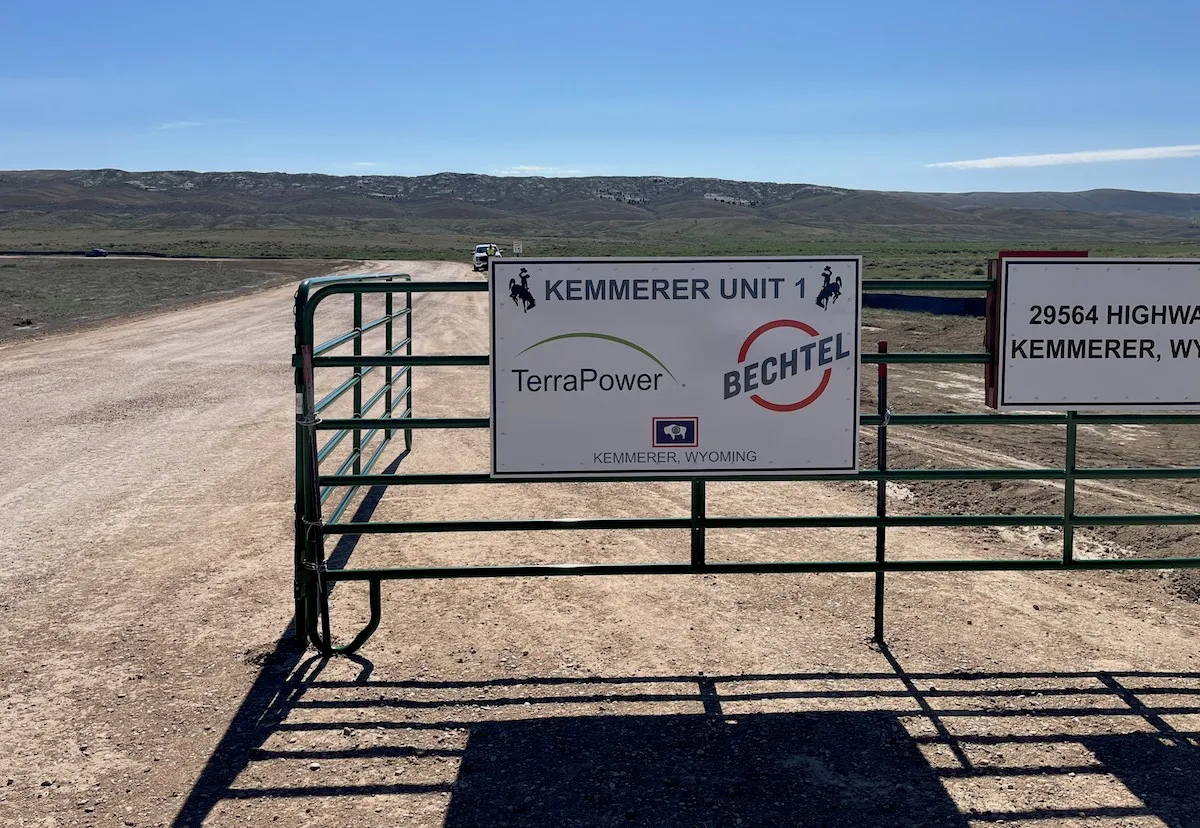
TerraPower’s proposed Natrium nuclear power plant will be located outside Kemmerer. (Dustin Bleizeffer/WyoFile)

“They’re still cleaning that up,” Heiner said. “Multi-billion-dollar environmental cleanup — to take decades. So even though there’s a lot of safety precautions in place, we can’t guarantee [storage is] 100% risk-free.”

What was in the bill

The push to open the state to spent-nuclear fuel waste has persisted for decades, including a years-long effort in the early 1990s, which ended when then-Gov. Mike Sullivan vetoed a similar measure, noting that the issue was simply too divisive and fraught with unanswered questions.

Since then, Wyoming lawmakers have tinkered with state statutes, notably a few years ago to accommodate limited storage at the site of nuclear power generation to help clear the way for TerraPower’s Natrium nuclear power plant project near Kemmerer. But state law still prohibits high-level radioactive waste storage, as envisioned in HB 16, unless the federal government establishes a permanent repository.

House Bill 16 would have set the stage to remove that statutory barrier in anticipation of a permanent, federal waste storage repository, Lander Republican Rep. Lloyd Larsen said.

“That seems to be in the works now,” he told committee members. 

The legislation also sought to change language throughout Wyoming law referring to radioactive material as “waste” to “used nuclear fuel” — an attempt to alter public perception, as well as promote the idea that the materials might one day be reprocessed for re-use.

In fact, former Republican Rep. Donald Burkhart Jr. of Rawlins, when he introduced the bill to the committee in July, said if Wyoming takes on temporary nuclear fuel waste storage it would prime the state to eventually win a lucrative industry in reprocessing. 

“Currently, the United States does not reprocess nuclear fuel,” Burkhart told committee members then. “I feel that within the next five years, that will change, and when it changes, wherever the fuel is stored is where they will do the reprocessing.”

Lack of public engagement

Burkhart’s rollout of the measure last year was also a major point of contention for the committee and several people who testified on Wednesday.

Rep. Donald Burkhart, Jr. (R-Rawlins) at the State Capitol in 2022. (Mike Vanata/WyoFile)

Burkhart, who did not run for another term, waited until the final minutes of a two-day hearing in Casper in July to introduce the draft measure to the Minerals Committee. He also forbade the Legislative Service Office from sharing the draft measure publicly until days before an October hearing, leaving scant opportunity for the public to digest the proposed law and research its implications.

“So many questions,” Gillette Republican Rep. Christopher Knapp said. “I think that part of this is because, although this says it came out as an interim bill, you really didn’t discuss this during the interim. This came as a last-minute bill in front of us, and here we sit in a committee meeting that probably should last for days with questions to get this through.”

Lawmakers on the panel also expressed suspicions that long-time backers of nuclear waste storage already have potential locations in mind, including perhaps sites on or near the Wind River Indian Reservation — without consulting the tribal communities.

We must protect our sacred lands: To meet the crisis of our time and help address past wrongs, we need bold action from decision makers — Clark Tenakhongva (High Country News)

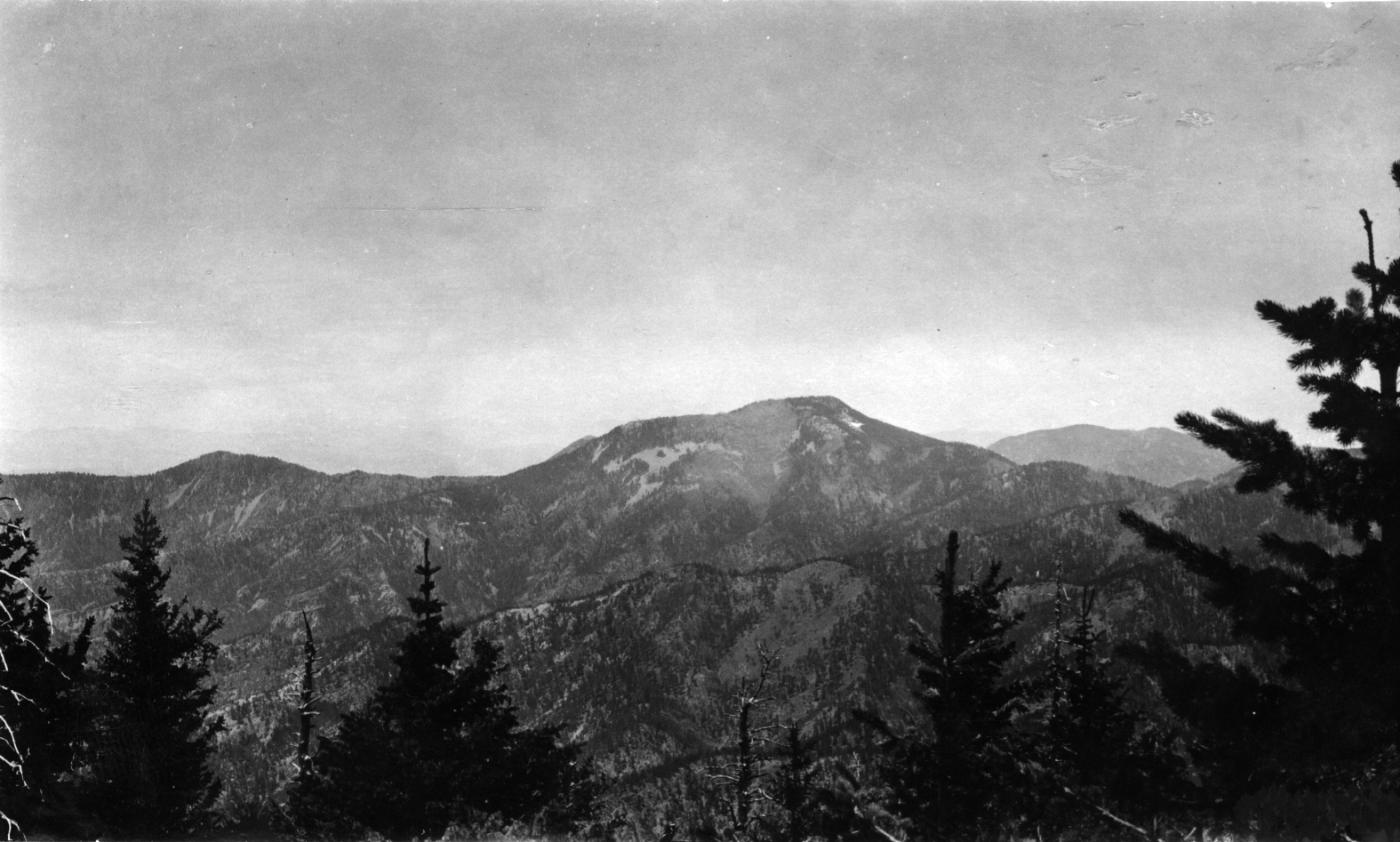
Gila National Forest Historic Photo Collection. The view from Mogollon Baldy. USFS photo by E. W. Kelley, 1923 FS # 175804

Click the link to read the article on the High Country News website (Clark Tenakhongva):

January 29, 2025

I write with a steadfast commitment to Hopi – the land, animals and people that have been in so-called Arizona since life began. We Hopi claim responsibility not just for Arizona life, but for biodiversity throughout the world, endowed to us by the Creator. In my political and nonprofit positions, I’ve worked to protect Bears Ears National Monument, Baaj Nwaavjo I’tah Kukveni-Ancestral Footprints of the Grand Canyon National Monument, and Chaco Canyon. In my current role as a consultant on land protection campaigns with WildEarth Guardians, I am engaged in the Greater Gila campaign, protecting Hopi ancestral homelands in the Gila National Forest and Apache-Sitgreaves National Forests. Unrelenting uranium mining, fracking, livestock grazing and recreational abuse have decimated the land as well as our sacred sites. Tribes, nonprofits and community members cannot afford to backslide during this second Trump administration, and we cannot give away our power by waiting four years. 

Through my work with environmental nonprofits and elected officials, I have witnessed small strides toward LandBack, tribal sovereignty and less extractive management of public lands. While I am certainly grateful for actions to protect places sacred to the Hopi and other tribes, I am deeply concerned about this second Trump administration, and the disturbing pattern of Democrats crafting campaigns that are disconnected from the poorest in this country – in rural America and on tribal lands. To address the polycrises of the current moment, we need bold action from decision makers. Standing in the middle of the road will only continue to perpetuate the harms of colonization.

The founding of the United States, and its subsequent accrual of wealth and power, were built on slavery and genocide. Most Native people have never fully recovered from this, continuing to live without access to running water, concerned about our water rights in general, and well aware that the federal government could break treaties at any time – a practice that has never stopped or been fully remediated. We do not need more apologies or statements. We need meaningful, direct action – legislative and community-led, before the Trump administration begins eviscerating the work we have done.

My work with WildEarth Guardians relies on decolonization and addressing past harms – including those done by the conservation movement – to ensure they are not repeated in the future. From the Native perspective, we have always cared about the land, through common teachings, oral history, ceremony and relationships. From the nonprofit perspective, conservation has historically been rooted in science and law. Steps towards honoring and uplifting traditional ecological knowledge and wisdom through co-stewardship, co-management and LandBack efforts must not be abandoned. Courageous allyship from our public servants – congressional and state officials alike – in dismantling an oligarchic takeover of both parties is imperative. We invite you to stand arm in arm with us in a bold renunciation of campaign contributions from entities that enable genocide (both at home and abroad), empower the fossil fuel industry, and generally create more poverty, climate change, racism and extinction. It will not be possible to achieve the continuation of life while also prioritizing re-election through corporate contributions and political vanity.

Clark Tenakhongva, former vice chairman of the Hopi Nation and former co-chairman of the Bears Ears Inter-Tribal Coalition via his Facbook page.

To protect our sacred lands and, at minimum, hold the line on what tribes have fought for (and won), there must be a bold alternative to Trump’s authoritarianism.To meet these trying times, members of Congress, federal and state agencies, and state legislatures must:

  • Protect and defend the existing boundaries of the most vulnerable national monuments, including Bears Ears, Ancestral Footprints, Grand Staircase, and others targeted by the Trump administration.
  • Recognize that water is life. Contamination of our rivers and streams and underground aquifers are a perpetual problem. Hopi people have significant rates of cancer due to uranium poisoning.
  • Congress must reform the archaic 1872 Mining Law, which gives free reign to corporations (many of them foreign) to exploit our lands and poison our bodies.
  • Congress must also ratify and fund the Northeastern Arizona Indian Water Rights Settlement Act of 2024. This urgent matter has already cost our tribes millions of dollars as we’ve searched for an agreement. Securing these water rights is potentially the most important thing Congress can do to immediately benefit the Hopi.
  • The U.S. government must fully fund agencies like the Bureau of Land Management, the National Park Service and the U.S. Forest Service. Lack of capacity and law enforcement has led to increased vandalism, looting and illegal ATV use, as well as recreational overuse. The Schultz Fire, in the Coconino National Forest, was started by an abandoned campfire. The 15,000-acre burn destroyed much of our sacred Douglas Fir that we use for ceremonies, and resulted in a new, bureaucratic process for Hopi with the U.S. Forest Service. Permits are now required in a place our ancestors had gathered freely for centuries. This is one example of how an underfunded, understaffed agency, coupled with a push for more tourism, had devastating and far-reaching consequences.
  • The Biden administration’s Executive Order 13175 mandatesthat federal agencies consult with tribes regarding land managementCongress should uphold this mandate and, in fact, increase contact with tribal governments and communities in order to honor all perspectives. This mandate has not yet resulted in deep or meaningful changes. Support and directives for agencies to meaningfully engage with tribes, even under a second Trump administration, is critical.
  • As a veteran, I support our troops and responsible military behavior. But low-level military flights over current and ancestral Hopi lands have resulted in poor nesting conditions and survival outcomes for golden eagles and hawks. Military flights have increased over the tribal and ancestral lands of the White Mountain Apache, San Carlos Apache, Tohono O’odham, Hopi and others. We ask that Congress continue to hold the Department of Defense accountable for reckless overflights, dropping flares (which have caused forest fires) and dropping  chaff (toxic military training material which contains PFAS and other contaminants).

It is my hope that if elected officials, community members and agencies truly act out the values they purport, we can start down a path of healing. I close this letter with a sincere prayer and a reminder that life is precious.

R.I.P. Marianne Faithful: “Lovers of the past I’ll leave behind”

Faithfull performing on the Dutch TV programme Fanclub on 17 September 1966. By Photographer: A. Vente – FTA001007877 013 con.png Beeld & Geluid Wiki, Fanclub, CC BY-SA 3.0 nl, https://commons.wikimedia.org/w/index.php?curid=57844584

Click the link to read the obituary on The New York Times website (Guy Trebay). Here’s an excerpt:

February 2, 2025

She was a figure out of fiction, right down to her Jane Austen name. The daughter of a baroness and a British major (a spy during World War II), Marianne Faithfull — who died this week at 78 — was discovered by the Rolling Stones’ manager, Andrew Loog Oldham, at a record release party in the 1960s while still in her teens. “My first move was to get a Rolling Stone as a boyfriend,” she was often quoted as having said. “I slept with three and decided the lead singer was the best bet.” The bet paid off for both parties. Mick Jagger and Ms. Faithfull dated from 1966-70 and during that time she recorded a series of pop songs, most memorably “As Tears Go By.” Mr. Jagger wrote imperishable Stones hits like “Wild Horses” under the direct inspiration of Ms. Faithfull — lovely, feckless, druggie and unfettered. She was “a wonderful friend,” Mr. Jagger wrote on Instagram this week, “a beautiful singer and a great actress.” She was also a style paragon from the outset…A British journalist once described Ms. Faithfull, in the late 1960s, as “the flowing-haired, miniskirted, convention-knocking epitome” of a “drug generation” that her elders were challenged to understand. What more accurately she epitomized was a spirit of bohemian laissez-faire better located in class than any particular era.

Marianne Faithfull – Live at L’Olympia, Paris 1966 (Come and Stay With Me, Plaisir D’Amour, As Tears Go By) [Full Set] Marianne Faithfull performs “Come and Stay With Me”, “Plaisir D’Amour”, and “As Tears Go By” from her debut self-titled album live at L’Olympia, Paris in 1966 with guitarist Jon Mark at the Hugues Aufray concert alongside further supporting acts Nino Ferrer, Colette Chevrot, and Pascal Danel.

#Colorado law protects state streams, lakes and wetlands, no matter who is in the White House, lawmakers say — Mark Jaffe (Fresh Water News)

The May Ranch near Lamar, Colo., has never been plowed. Photo/Ducks Unlimited via The Mountain Town News

Click the link to read the article on the Water Education Colorado website (Mark Jaffe):

January 25, 2025

Faced with uncertainty due to a U.S. Supreme Court decision and a Trump administration decree, Colorado is steering its own course when it comes to regulating and protecting the state’s waters and wetlands.

In a 2023 decision the Supreme Court sharply limited protections under the Clean Water Act.

Colorado, however, enacted its own, more comprehensive statute in 2024. House Bill 24-1379, requires state permits for any dredging or filling of wetlands, streams and rivers on state or private land.

The federal government – through the U.S. Army Corps of Engineers – retains the power to issue permits on federal land in Colorado and to oversee certain water projects. And on Jan. 25 in an executive order President Donald Trump called for emergency permitting powers under the act for energy facilities, which could affect Army Corps permits.

“We were the first state to pass our own state-level permitting regulations,” said Sen. Dylan Roberts, an Avon Democrat and bill co-sponsor. “The election was going on at this time and it was in the back of some people’s minds.”

“Wetland protections and regulations had swung pretty drastically from the Bush administration to Obama to Trump to Biden and now back to Trump,” Roberts said, “They were swinging back and forth for almost two decades.”

“This provides certainty here on the state level,” Roberts said. “People won’t have to worry about what happens next.”

Ephemeral streams are streams that do not always flow. They are above the groundwater reservoir and appear after precipitation in the area. Via Socratic.org

The push for state rules started well before the campaign season. It was sparked by the Supreme Court’s ruling in Sackett v. EPA, a case in which an Idaho couple sued the Environmental Protection Agency when they were blocked from filling in a wetland on their property.

The 5-4 decision, written by Justice Samuel Alito, limited the scope of Clean Water Act protections, particularly to wetlands when it came to issuing permits to dredge and fill.

“Following Sackett, many streams, lakes, and wetlands in Colorado are at risk of irreversible harm,” House Bill 24-1379 said.

An array of projects requiring dredge and fill, including flood control, stream restoration, roads, housing, water development and transit, would no longer be regulated by the federal government, the bill said.

And so, legislators on both sides of the aisle began looking to craft state rules. But getting to near-unanimous passage of the legislation — the final House vote was 56 to 7 and it passed unanimously in the Senate — was not easy.

“There are always many voices in the water policy space in Colorado,” said House Speaker Julie McCluskie, a Vail Democrat and the bill’s prime sponsor. At the first stakeholder meeting to discuss the proposed legislation 400 people attended.

Balancing the needs of competing interests

The goal was to balance multiple, and sometimes competing interests, including the business community, developers, the agricultural community, water developers and environmentalists, while safeguarding water quality in the state, McCluskie said.

“We listened and tried to accommodate all those voices,” she said. The bill was amended in both the House and the Senate.

One of the first big debates was the scope of the state rules. “Business groups were pushing for only waters that lost protection under Sackett,” said Stuart Gillespie, an attorney with the environmental law group Earthjustice.

“But it was difficult to delineate just those gaps. The science very clearly shows you can’t protect a subset of water … and there was the risk of further rollbacks,” Gillespie said.

The lawmakers decided on a comprehensive rule. “Colorado is no longer beholden to changes in federal laws,” Gillespie said.

The law directs the Colorado Water Quality Control Commission to develop a dredge and fill authorization program for all waters on state and private land.

The foundation for that program is the current federal standard for permits, so-called Section 404 permits, issued by the Army Corp of Engineers. The legislation calls for the state rules for large projects to include an impact analysis, an alternative analysis, and a compensatory mitigation plan.

House Bill 1379 directs the commission to “establish a comprehensive dredge and fill program to protect state waters, no matter how the federal term “Waters of the United States” is defined in the future.”

“The final rulemaking of the state-led program is scheduled for December 2025, following an ongoing stakeholder process to obtain extensive public input,” commission spokesperson John Michael said in an email.

“Colorado remains committed to a balanced approach that safeguards our natural environment while allowing construction projects to proceed responsibly,” Michael said.

Smaller projects will be allowed to proceed while the rulemaking is underway, but large ones will have to wait for the new rules, Gillespie said.

The rules took on even more import when President Donald Trump issued an executive order on Jan. 25 Declaring a National Energy Emergency and calling on the Army Corp of Engineers to use the emergency permitting provisions to speed Section 404 permits for energy projects.

“The state program operates separately from the federal 404 permitting program and thus is not impacted by President Trump’s executive order directing federal agencies to expedite energy project approvals,” the commission’s Michael said.

Earthjustice’s Gillespie said, “if the Corps is really handing out permits without checking compliance to the Clean Water Act it could hurt Colorado, so the state will have to be vigilant.”

More by Mark Jaffe

Mark Jaffe writes about energy and environment issues. He was a reporter and editor at The Denver Post covering energy and environment and a reporter on the energy desk at Bloomberg News. Previously, he was the environment writer for the Philadelphia Inquirer. He is the author of “And No Birds Sing — The story of an ecological massacre in a tropical paradise,” “The Gilded Dinosaur — The fossil feud between O.C. Marsh and E.D. Cope and the rise of American Science.”

Federal Water Tap, January 27, 2025: President Trump Attempts to Remake Environmental Policy through Executive Order — Brett Walton (circleofblue.org)

Click the link to read the article on the Circle of Blue website (Brett Walton):

The Rundown

  • President Trump issues executive orders on energy production, water supplies, and climate change.
  • Other executive orders target foreign aid, FEMA, and the Paris agreement.
  • In settlement with EPA, California mobile home park operator agrees to fix failing water system.
  • Reclamation publishes a report detailing five options it will analyze for post-2026 Colorado River management.

And lastly, President Trump visits recent disaster zones in California and North Carolina.

“I wanted to go to Los Angeles and see what was going on with California, why they aren’t releasing the water. Millions and millions of gallons of water, they’re sending it out to the Pacific. Someday, somebody’s going to explain that one. In the meantime, they have no water in Los Angeles, where they had the problems.” – President Donald Trump, on January 24, while visiting Fletcher, North Carolina to see damage from Hurricane Helene before he flew to Los Angeles.

Trump’s comments displayed a misunderstanding of California water. Water flowing to the Pacific through the Golden Gate is necessary to prevent salt water from encroaching in the Sacramento-San Joaquin delta, a source of local drinking water and irrigation in addition to fish habitat. Hydrants in Los Angeles went dry in some areas during the fires because of the massive strain on the municipal water system from firefighting. Trump said he wanted to make disaster aid to California contingent on sending more water to the Central Valley and Southern California.

By the Numbers

12: Biden administration executive orders repealed in President Trump’s order on “Unleashing American Energy.” The repealed orders dealt with climate risk, forest protection, environmental justice, and clean energy.

News Briefs

The First Week
President Donald Trump spent his first week in office beginning to unravel the energy and environment legacy of his predecessor.

In a flurry of executive orders, Trump made good on campaign promises to reject international entanglements and promote the fossil fuel industry while trimming America’s financial commitments to the rest of the world.

Trump withdrew from the Paris climate agreement and froze international spending on climate mitigation and adaptation. The Biden administration estimated U.S. climate finance for developing countries was $9.5 billion in 2023. The executive order intends to claw back unspent funds and revoke policies that support international climate action.

Other foreign spending is at risk. Trump paused, for 90 days, new “obligations and disbursements” of foreign aid, saying in the order that foreign aid is “not aligned with American interests and in many cases antithetical to American values.”

On the domestic side, another order directed the Commerce and Interior departments to begin the work to send more water from northern California to southern California via canals. In Trump’s view – supported by big farm groups that would benefit from the action – water that exits the Sacramento-San Joaquin delta is “wasted,” when in fact those flows are necessary to keep salt water out of the largest estuary on the West Coast. The order resurrects an attempt from the first Trump administration to rewrite water export policy. That attempt was halted by a federal district court.

In disaster policy, Trump signed an order to review FEMA’s mission and possibly eliminate the agency. A council of no more than 20 agency heads and people outside of government will make a recommendation. “I think, frankly, FEMA is not good,” Trump said while in North Carolina.

And in energy policy, Trump ordered a review of all policies that burden not only the development of domestic energy sources, but also their use. That means reviewing and possibly rescinding water and energy efficiency standards for appliances and showerheads. The order suspends Inflation Reduction Act funds for clean energy projects.

The order tells agencies to reconsider decisions that withdrew public lands from mineral exploration, such as mining leases near the Boundary Waters Canoe Area Wilderness.

Trump also revoked Biden administration orders that required agencies to account for the financial risks of climate change, consider the social cost of carbon, find opportunities to use nature-based solutions, protect old growth forests, and make climate change a foreign policy priority.

All told, the federal government’s priorities have been reordered, and agencies will evaluate future projects with new criteria for costs and benefits.

California Mobile Home Park
The operator of Oasis Mobile Home Park, located in Riverside County, California, reached a settlement with the EPA to fix the community’s failing water system, which is contaminated with arsenic and sewage from leaking septic systems.

The agency noted the failures for years, including an administrative order in 2021, but the operators did not comply, the complaint states. In addition to the fixes, the operators will pay a $50,000 fine.

The park is located within the Torres Martinez Desert Cahuilla Indian Reservation, in Thermal, California.

Studies and Reports

Colorado River Management Options
The Bureau of Reclamation published a report detailing the five options it will analyze when deciding how to manage the Colorado River after current guidelines expire in 2026.

The options present a range of water conservation plans and water release schedules that were submitted by states, tribes, and environmental groups in the basin.

On the Radar

Panama Canal Hearing
On January 28, the Senate Committee on Commerce, Science, and Transportation will hold a hearing to discuss the Panama Canal’s influence on U.S. trade and national security.

President Trump has suggested that the U.S. try to take back the canal, which it handed over to Panama in 1999. House Republicans introduced a bill to authorize purchasing the canal.

RFK Jr. Confirmation Hearing
On January 29, the Senate Finance Committee will hold a confirmation hearing for Robert F. Kennedy, Jr., to lead the Department of Health and Human Services.

An earlier version of this post incorrectly stated that the U.S. handed over the Panama Canal in 1978. The treaty authorizing the handover was ratified that year.

Federal Water Tap is a weekly digest spotting trends in U.S. government water policy. To get more water news, follow Circle of Blue on Twitter and sign up for our newsletter.