Click the link to read the article on The Revelator website (John R. Platt):
February 11, 2025
Scientists also declared several other extinctions, including the first documented plant extinction in New Hampshire
Extinction Countdown
In 2009 teams of volunteers fanned out across 35 countries in Europe, Africa, and Asia looking for something that, in all likelihood, no longer existed.
The object of their quest: a 14-inch-long shorebird with long legs, a curved beak, and a mix of white and gray feathers.
Last officially seen in 1995, the slender-billed curlew (Numenius tenuirostris) had once been plentiful enough to hunt — perhaps most notably for museum specimens. That pressure, combined with habitat destruction, reportedly pushed the birds into decline.
In November 2024, after years of searches, scientists declared that the species was gone for good — the first documented extinction of a bird species from mainland Europe, North Africa and West Asia.
“It is a tragedy on a par with the dodo and the great auk, and we should hang our heads in shame,” wrote Mary Colwell of the conservation group Curlew Action. “Our disregard for wildlife speaks volumes for who and what we are. The slender-billed [curlew] may not have had an economic value, it contributed nothing to the bottom line of anyone’s financial spreadsheet, no one relied on these birds for their jobs or wellbeing, there was no conceivable reason to drive them to extinction. But it seems that is exactly what we have done.”
The biggest tragedy about this bird’s loss: We didn’t act soon enough to save it.
“Conservation attention came too late for the slender-billed curlew,” researchers wrote in the paper announcing its probable extinction. “The potential decline of the species was highlighted [in 1912] and stated more explicitly [in 1943]. These warnings were not acted on however, and the species was not recognized as being of conservation concern until 1988. After this, a [1991] review of the species and an action plan [in 1996] followed. Our analysis indicates the species was on the verge of extinction or extinct when the action plan was published.”
They continued, warning that this extinction is a call to action to prevent future species losses:
“Such extinctions are an indicator of the failure of international cooperation on biodiversity conservation as surely as climbing carbon levels currently measure our failure adequately to address climate change. With more advanced technologies than were available even 20 years ago — including optical and photographic equipment, bird-tracking and remote-sensing methods, and an evidence base on methods for protection, management and restoration — there is even less excuse for further failures.”
But the slender-billed curlew won’t be the last species we lose, and it wasn’t the only species scientists declared extinct (or regionally extinct) in 2024. Here are some of their stories.
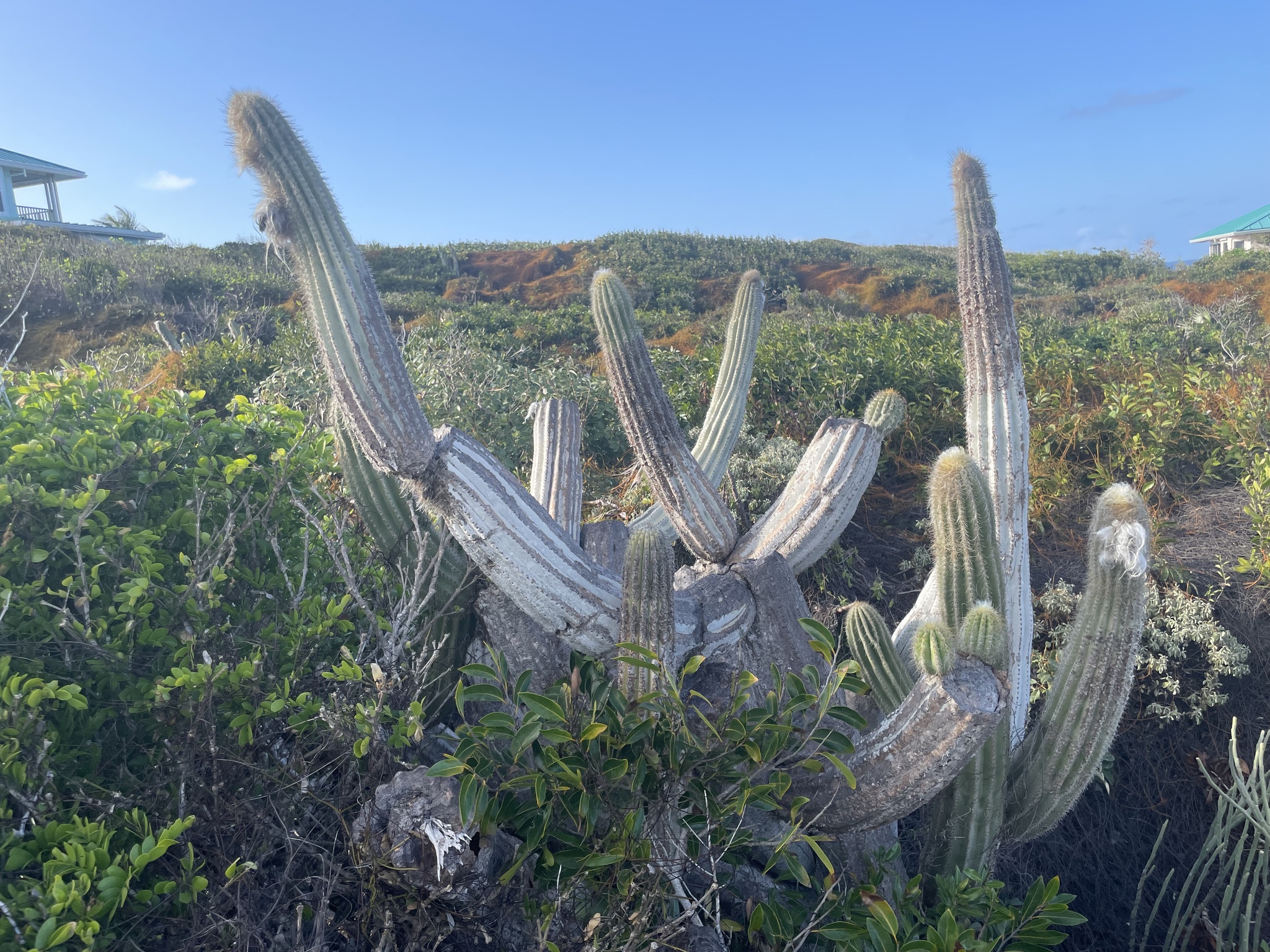
Key Largo tree cactus (Pilosocereus millspaughii) — This coastal plant still grows on a few scattered islands, but not on the island that gave it its name. Encroaching seas have wiped it out in the past couple of years, making it “the first local extinction of a species caused by sea-level rise” in the United States. That’s shocking for a population that was considered “thriving” as recently as 2021.
“Unfortunately, the Key Largo tree cactus may be a bellwether for how other low-lying coastal plants will respond to climate change,” Jennifer Possley, director of regional conservation at Fairchild Tropical Botanic Garden, said in a statement announcing the extinction.
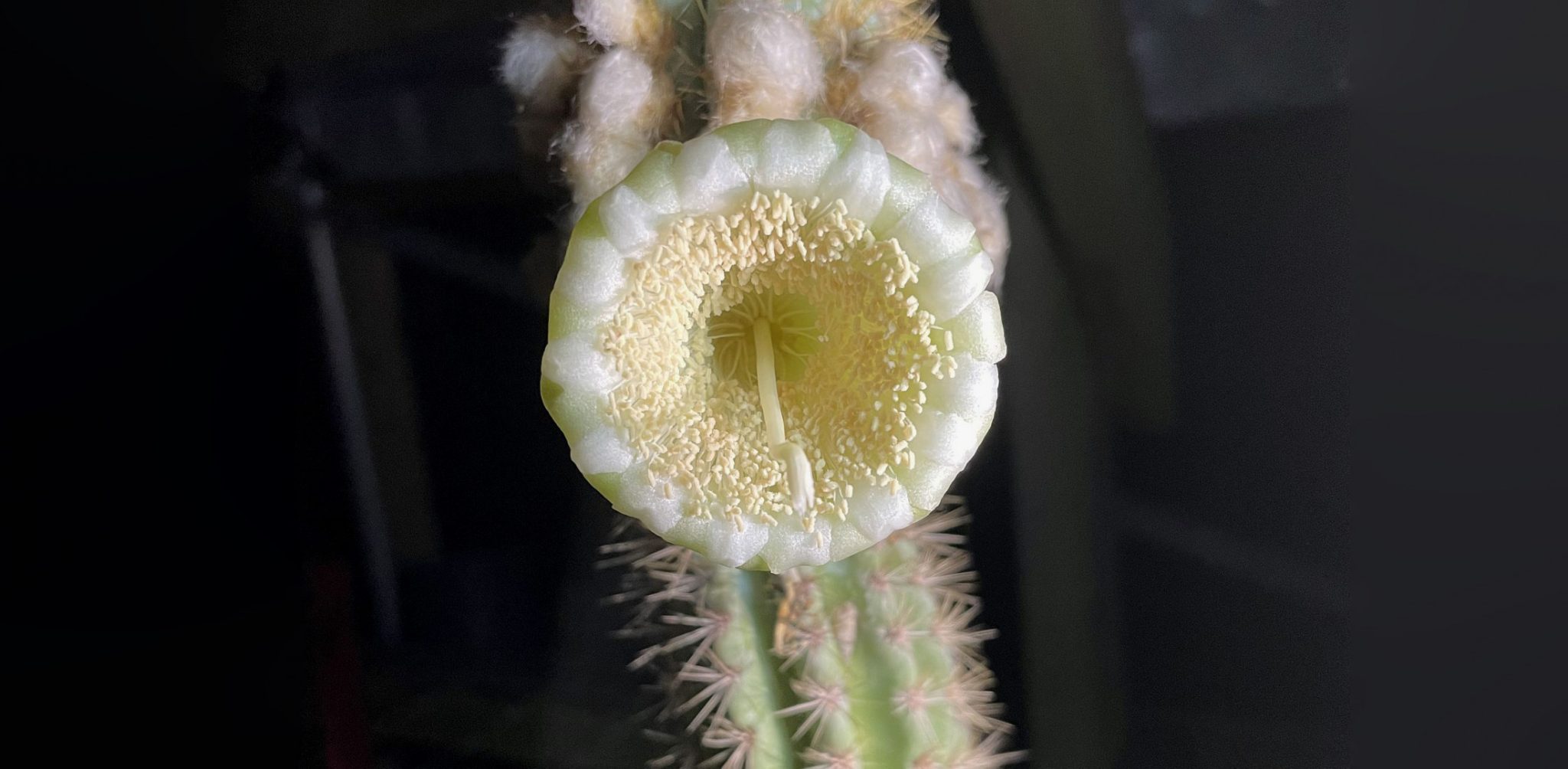
Expect more in future. But we can also use this as an opportunity: Scientists saw it coming and collected enough cactus flowers and fruits to keep the species growing in a greenhouse. Maybe one day they’ll be able to return to Key Largo. Until then the island has a hole in its ecosystem.
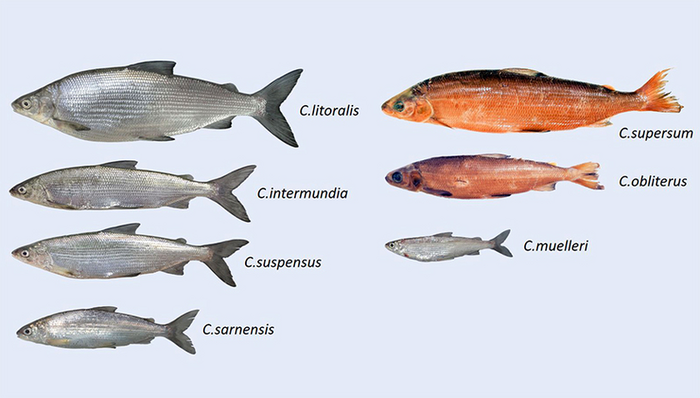
Obliterated whitefish (Coregonus obliterus), Ören whitefish (Coregonus trybomi) and Zug whitefish (Coregonus zugensis) — These Swiss fish were among seven species redescribed and taxonomically reassigned by scientists in 2023. The IUCN assessed them as extinct in 2024, reflecting a greater scientific consensus.
The obliterated whitefish (a name that just kills me) was last seen in Lake Zug in 1939 and, according to a press release, “would have been completely forgotten if specimens had not been found by Eawag scientists Oliver Selz and Ole Seehausen in the historical Steinmann-Eawag Collection.” It and other species died out from eutrophication — lack of oxygen in lake water caused by algal blooms, themselves caused by phosphates from domestic wastewater and fertilizer runoff from agriculture. (The Ören declined due to introduced predators like Eurasian pikeperch and acid rain.)
Lest we get completely depressed, the press release presents a lovely counterpoint, noting that “the only whitefish species still found in Lake Zug today, spawning near the shore, is the ‘Balchen.’ Testifying to its survival is its new scientific name — Coregonus supersum (‘I have survived’).”
Java stingaree (Urolophus javanicus): This small Indonesian stingray was only observed once, at a fish market in 1862. The IUCN declared it extinct in December 2023 — calling it the first marine fish extinction caused by human activity — although the media didn’t notice until after January (which is why it’s on this year’s list).
“Intensive, generally unregulated fishing was likely the major threat resulting in the depletion of the Java stingaree population, with coastal fisheries catches already declining in the 1870s,” the extinction assessment reads. “Catches on the northern coast of Java in 1940 were down to almost half the annual catch landed in the 1860s. Additionally, the northern coast of Java, particularly Jakarta Bay, is heavily industrialized, and extensive habitat loss and degradation may also have impacted this species.”
Round Island hurricane palm (Dictyosperma album var. conjugatum) — As reported by Mongabay, the last wild tree of its kind “snapped during a windstorm.” The tree had stood on Mauritius “for decades as the only survivor of its kind.”
Bogardilla (Squalius palaciosi) — Last seen in 1999, this Spanish fish disappeared after dams and weirs limited its habitat and a half-dozen introduced species either ate it, outcompeted it for resources, or brought new pathogens to the area. It serves as a reminder that extinction is often the result of multiple factors chipping away at a species’ survival — a death of a thousand indignities.
Seven plants in Bangladesh: The Asian nation released its updated Plant Red List in November and announced that seven native plant species were no longer found within its borders. Most appear to be regional extinctions and still grow in other countries or in private collections, with the sad exception of the last plant on this list.
- Fita champa (Magnolia griffithii)
- Ironweed tree (Memecylon ovatum)
- Jiringa (Archidendron jiringa)
- Kathphal (Myrica nagi)
- Syzygium venustum
- Drypetes venusta
- Thurma jam (Syzygium thumri)
Four Egyptian plants: A paper published last January assessed many native plants of Egypt and declared four species and one subspecies extinct:
- Bellevalia salah-eidii — a perennial bulb that grew in sandy areas but hasn’t been since 1966.
- Muscari salah-eidii — a perennial bulb last seen in the field in 1967.
- Vicia sinaica — an annual or perennial herb once restricted to North Sinai and last collected in 1955.
- Limonium sinuatum romanum — a perennial herb last collected in the field in 1949. The main species is known as wavyleaf sea lavender.
The paper doesn’t speculate on what causes these species to disappear but notes a long list of threats to Egyptian plants, including climate change, extreme weather, droughts, pollution, habitat alteration, roads and railways, agriculture, and biological resource use.

Ethiopian wolves (Canis simensis) — A paper published this July reports several regional extinctions for this embattled predator, now down to a population of about 450 animals. “We describe three population extinctions and three local extinctions within fragmented populations, and present evidence of factors accelerating the extinction process, such as disease (rabies and canine distemper virus), persecution, road kills and poisoning.” The situation isn’t likely to improve: “Hard borders imposed by expanding subsistence agriculture lock Ethiopian wolves into further isolation, with few opportunities for dispersal and recolonization,” they write. Shockingly, this species is still assessed as “endangered,” when its plight has obviously reached critical levels.
Sangihe dwarf kingfisher (Ceyx sangirensis) — A bird we didn’t know to keep looking for before it disappeared. A paper published this past March details decades of taxonomic confusion — enhanced by poor documentation of the first scientific specimen in the 1870s — that kept the animal from being recognized as its own species. Once native to Sangihe Island in the Philippines, it apparently no longer exists there.
Malagodon honahona — A paper published this past April described this newly recognized fish species from Madagascar … and also announced its possible extinction. The researchers — Emily M. Carr, Rene P. Martin, and John S. Sparks from the American Museum of Natural History — recount how they first encountered this species in a small, isolated swamp in 1994, where introduced mosquitofish (Gambusia holbrooki) were competing with the native fish for resources.
But that wasn’t the only pressure, as they wrote: “The region upstream of their only known habitat lies outside the Réserve Spéciale de Manombo protected area and is afforded no protection. As a result, the watershed has experienced rapid deforestation in recent decades such that the fragile type locality has suffered severe degradation. It is likely M. honahona became extinct in the late 1990s, not long after it was first discovered.” In that fate it joins a similar species, M. madagascariensis, which Sparks and other researchers declared extinct in 2018 as part of an IUCN assessment of Madagascar’s freshwater fish.
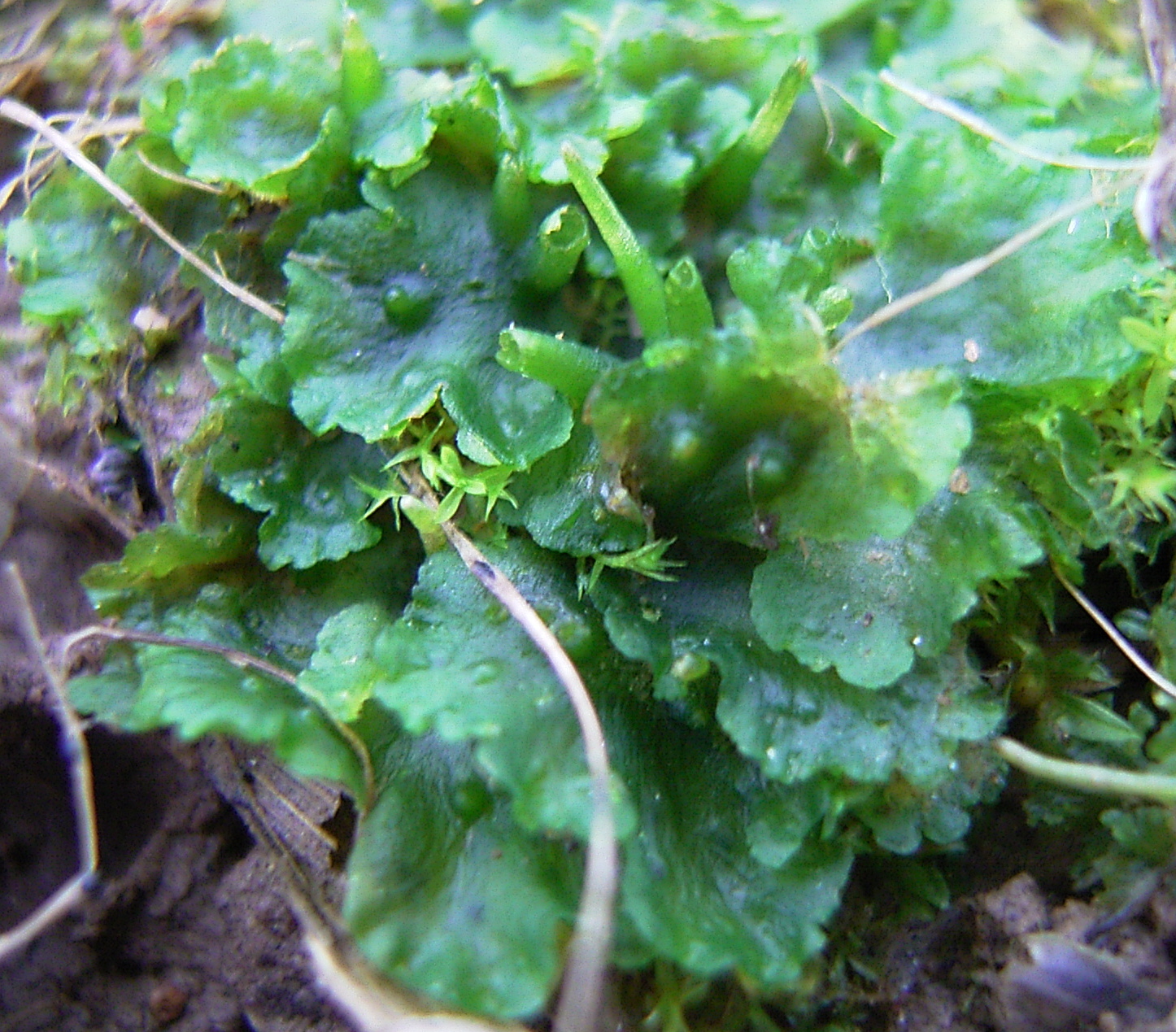
Smooth hornwort (Phaeoceros laevis) — This wide-ranging plant isn’t extinct, but a 2024 assessment of liverwort and hornwort species in Serbia calls it “possibly extinct” within that country, making it a noteworthy regional extinction.
Digitaria laeviglumis — This species of smooth crabgrass once grew in New Hampshire but was last seen in 1931 and had since almost been forgotten. A paper published this July declared it extinct. Some of the last samples of the crabgrass have sat in the University of New Hampshire’s Albion R. Hodgdon Herbarium for generations; recent DNA analysis helped to identify it as a unique species, revealing it as the first documented plant extinct in the Granite State.
“Documenting the extinction of Digitaria laeviglumis has significant implications for biodiversity conservation,” herbarium collections manager Erin Sigel said in a press release. “It highlights the vulnerability of endemic species, particularly those with very limited geographic ranges, and understanding the factors that led to the extinction of this grass can help inform conservation strategies for other at-risk species. This case underscores the vital role herbaria play in preserving specimens and providing essential data for scientific research.”
Hieracium tolstoii — This Italian plant presented scientists with some challenges. The Hieracium genus (better known as hawkweed) has more than 10,000 documented species, many of which remain under debate due to variations in their appearance and frequent hybridization, as well as a mutation process called polyploidization that can cause dramatic shifts in chromosomes. But a paper published this past September examined the records and confirms H. tolstoii (which once grew on “ancient brick walls” but hasn’t been seen since 1938) as a unique species — one that went extinct at some point in the 20th century. (Previous research had also declared it extinct but maintained some doubt it was a unique species.)
Fucus virsoides — This “glacial relict” algae species isn’t extinct, but it’s rapidly disappearing and deserves a shoutout. A paper published this past August warned that we could be heading toward “the first documented extinction of a marine macroalga in the Mediterranean Sea.” The researchers wrote that “F. virsoides could be considered functionally extinct in Istria (Croatia), critically threatened with extinction in Italy and Montenegro and locally extinct in Slovenia.” They hypothesize its decline has been caused by “a variety of anthropogenic stressors (e.g. habitat destruction, pollution, overgrazing) exacerbated by climate change,” all of which increased the Adriatic Sea’s surface temperature and salinity.
Taiwanese swallowtail butterfly (Papilio machaon sylvina) — Rumors of this butterfly’s extinction have fluttered around for years. It was last seen in 1999, before the Jiji earthquake struck Taiwan, killing more than 2,400 people, destroying the homes of 100,000 more, and causing $300 billion in damage. According to a paper published this past November, the earthquake also caused “multiple landslides” that “permanently altered” the butterfly’s habitat. Research published in 2018 and 2023 suggested the earthquake caused the butterfly’s extinction. This new research examines its morphological characteristics and DNA to confirm that it was a unique subspecies and notes that it “was well on its evolutionary track to become its own distinct lineage as a separate species.”
The paper also notes the butterfly’s importance to Taiwanese culture — “its image is imprinted on the personal ID cards of Taiwanese citizens,” the researchers write. They also suggest we keep looking for it: “Even though the butterfly has not been seen or collected since 1999, one can always hope that it still persists in the remote mountain regions in the Taiwan highlands.”
White-chested white-eye (Zosterops albogularis) — The Australian government has listed this 5-inch bird as extinct since 2000, but scientists kept looking for it for several years. The IUCN finally reassessed it as probably extinct in 2024. Native to Norfolk Island, the bird suffered most of their declines due to introduced black rats, which predated on their eggs. They were last officially observed in 1979, although possible sightings persisted into this century.
Multiple Polynesian tree snails — The IUCN listed several snail species as extinct this past year (although the scientific assessments were all done several years earlier). They include:
- Partula langfordi — Last seen in 1992, wiped out by deforestation and the predatory invasive rosy wolfsnail.
- Partula magistri — A “large, conspicuous” species observed alive just one time. The sole specimen was found in 1992 amid empty “freshly killed” shells left behind by wolfsnail predation.
- Partula dentifera — Last seen in 1972, although it persisted until at least 1991, when only empty shells were found. The rosy wolfsnail again gets the blame.
- Partula diminuta — Last seen on Tahiti in 1980, three years after the rosy wolfsnail arrived on the island. You can guess what happened next.
- Clarke’s tree snail (Partula clarkei) — Last seen in the wild in 1991, although they persisted in captivity for five more years. Wolfsnail again.
- Partula lugubris — Last officially observed in 1927, but no one looked for it again until 1991, by which time the wolfsnail had eaten them all up.
- Partula auriculata — Last seen in 1992, following the same pattern.
- Pearce-Kelly’s tree snail (Partula pearcekellyi) — Known from a single valley on Raiatea and last seen in 1991 or 1992. Guess what arrived there in 1990?
- Pohnpei ground partula snail (Partula guamensis) — Another “large, conspicuous species” last recorded in 1936. This one has deforestation and a host of introduced species to blame: the New Guinea flatworm, three rat species, and possibly the rosy wolfsnail.
邛海白魚 or Qionghai white fish (Anabarilius qionghaiensis) — A freshwater fish frequently caught and eaten by the people living around China’s Qionghai Lake for decades (if not centuries), this species was last observed around 1970. Development, pollution from pesticides and fertilizers, overfishing, introduced species, and destruction of aquatic vegetation all conspired to do this fish in.
Limnophila limnophiloides — Scientists only documented this aquatic plant once, in 1918, in India’s Bhushi lake. Extensive surveys have failed to find it, so the IUCN this year declared it extinct. We don’t know exactly why or how it disappeared, but the assessment notes that the “area is converted into high intensity tourism area and the habitat is completely altered to a small reservoir which is used for bathing, swimming and other recreational purposes by more than a lakh (100,000) of people every year.”
Vachellia polypyrigenes and V. zapatensis — These Cuban plants were last seen in 1951 and 1940, respectively. The IUCN declared them extinct in 2024, blaming urbanization and petrochemical activity for the first species, and “the expansion of human activity” for the second.
Starnberg whitefish (Coregonus renke) and Chiem whitefish (Coregonus hoferi) — Native to the lakes in southern Germany for which they were named, these fish were last seen in the late 1800s and 1940s-1980s, respectively. They were assessed as extinct by the IUCN in 2024.
Orkney charr (Salvelinus inframundus) — This Scottish cold-water fish hasn’t been seen since the 1950s. Scientists suspect dams and other engineering projects build during the 19th century “disturbed tributary streams into which this species migrated to spawn.” The IUCN listed this species as “data deficient” for years but moved them into the “extinct” category in 2024. Nonetheless, some sources say the fish or another species that looks like it has recently been observed in Loch Meallt, so…fins crossed?
This list isn’t comprehensive, in several notable ways — because it can’t be.
First, these extinctions are not reported in real time. The last days of the last members of a species are rarely observed by human eyes. They occur in the cracks beyond our perception, out of sight, the disappearance of a shadow or a sunbeam, here and then gone.
Second, even when scientists suspect a species has died out, they don’t give up hope. They keep looking — often for decades. And on a not-uncommon basis, they find them.
There’s an incentive to keep searching: Giving up too early ensures that a species won’t get the protection it deserves. Species have gone extinct simply because they were declared extinct too soon, protections were removed, and threats worsened as a result.
These endless quests aren’t easy: Tiny frogs who hide in deep jungles or plants that only flower a few nights a year don’t make themselves easily known.
It’s also hard to prove a negative: If you lay eyes on something, you know if exists. If you don’t see it, that’s not proof that it’s gone.
It’s also been a hard few years for science. Fewer researchers got into the field during the pandemic, and people still have a lot of catching up to do. Budgets have also gotten tighter or more unpredictable. We’ll see (or not see) the effects of the Trump administration’s slash-and-burn of federal research funding in the months and years ahead.
Finally, we must remember that most of the species we lose are “invisible extinctions” — species that have never been observed, documented, named, or studied by modern science. One study last year estimated that humans have caused 1,500 bird extinctions, half of which were of species we’d never documented. Another study estimated that Australia loses 1-3 invertebrate species every week. If a species doesn’t have a name and goes extinct, did it ever really exist?
Of course, it did — which is why stories of these extinct species remain so important. They’re a reminder to celebrate the diversity of life around us — and to protect it while we still can.