
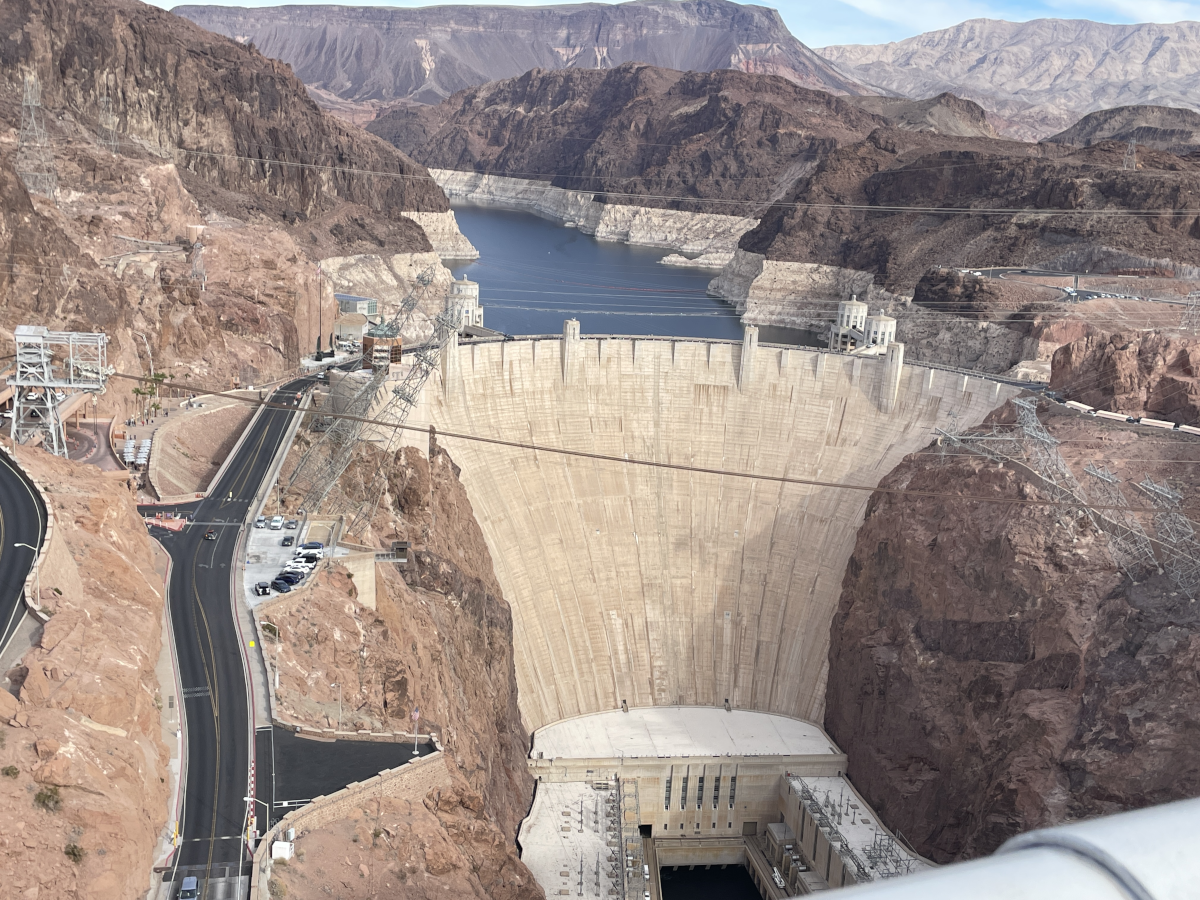
Click the link to read the article on the AZCentral website (Brandon Loomis):
February 27, 2025
Key Points
- Congress and the Biden administration committed $4 billion to Western drought relief, including money for users who agree to leave water in Lake Mead.
- The money is apparently caught in a freeze of federal funds ordered by President Donald Trump, though questions remain without a Reclamation commissioner.
- Lawmakers and Arizona’s top water official fear that without the funding, the Colorado River could be pushed deeper into drought, leading to more cutbacks in Arizona.
Facing a dwindling supply that provoked emergency actions to keep the river flowing past Hoover Dam, Congress directed $4 billion to Western drought relief, most of it aimed at shoring up Colorado River water storage. The U.S. Bureau of Reclamation signed deals with irrigators, tribes and other rights holders to forgo deliveries and save 1.5 million acre-feet of water over three years through 2025, with some extensions beyond this year. A second round of funds, which members of Congress say is also frozen, is intended to make long-term efficiency improvements, such as lining canals to stop losses when water is delivered to farms. Without the water or the agreements, some officials fear the ongoing negotiations among the seven river states could fall apart…
Officials with the Bureau of Reclamation did not respond to requests for comment or to confirm the freeze or how long it is intended to last. The administration has frozen various congressionally appropriated funds as cost-cutting aide Elon Musk’s team searches for fraud and savings. The president has not yet appointed a commissioner for the Reclamation Bureau, which manages the dams on the Colorado…
Projections for likely reservoir storage by the end of next year put Mead dangerously close to 1,050 feet above sea level, or the trigger that would cause Arizona to lose another 80,000 acre-feet, Arizona Water Resources Director Tom Buschatzke said this week…Failure to save water with the contractual deals that Reclamation made for 2025 could tip the region into that next shortage tier, he said, because the projections already assume that the water will have been saved.
“I have advocated strongly to my Arizona (congressional) delegation — the entire delegation — that that money in both the upper and lower basins that was committed needs to be spent,” Buschatzke said. “Those projects are critical to stabilizing the system as we continue to work toward a post-2026 world.”
The Biden administration inked three-year deals with about two dozen water users, including the cities of Phoenix, Tucson, Scottsdale and others, at a rate of $400 per acre-foot. California’s Imperial Irrigation District got a sweeter deal, at $777 for a one-year contract in 2023, but also has among the river’s safest rights against reductions when reservoir levels fall. Most of the water users who signed on were in Arizona, though the biggest deal, a four-year pact to leave 351,000 acre-feet in Mead, was with the Metropolitan Water District of Southern California and Paloverde Irrigation District of California. Arizona’s largest deal was with the Gila River Indian Community, for 341,000 acre-feet, according to a chart provided by Stanton’s staff. The contracts in the Lower Basin states — those downstream of Glen Canyon Dam — totaled nearly $664 million…A second batch of federal conservation funds, also reportedly frozen, is intended to make lasting water savings by, for instance, putting $87 million toward an advanced water purification plant in Tucson that will enable 56,000 acre-feet to stay in Lake Mead over a decade. A $107 million investment in the Gila River Indian Community, south of Phoenix, is projected to save 73,000 acre-feet over 10 years.
