The Southern Ute tribe has finally tapped #LakeNighthorse water. Why did it take 60 years? — Shannon Mullane (Fresh Water News) #AnimasRiver

Lake Nighthorse and Durango March 2016 photo via Greg Hobbs.

Click the link to read the article on the Water Education Colorado website (Shannon Mullane):

July 31, 2025

This summer, the Southern Ute Indian Tribe rolled out miles of temporary rubber water lines. The above-ground tubes had one job: carrying water to oil and gas operations on the reservation.

But the pipelines also represent something else: a historic moment in a drawn-out, arduous debate over water in southwestern Colorado.

In May, the Southern Ute Indian Tribe tapped into its water in the controversial Animas-La Plata Project, the first time a tribe has used its water from the project since it was authorized in 1968.

The Animas-La Plata Project has come to encapsulate long-held dreams to develop Western water — and the decades of debates, environmental concerns, local objections and Congressional maneuvering that almost made the project fail.

At the center of it all were tribal nations and the chance to, once and for all, settle all of the tribal water claims in Colorado. It took until 2011 to fill Lake Nighthorse, the main feature of a heavily scaled-down federal water project located just south of Durango. Then 14 more years for a tribe to be able to use a small slice of its water.

More barriers — tied to interstate laws, finances and infrastructure — still stand in the way of tribes and other Animas-La Plata water users taking full advantage of the multimillion-dollar project. 

“This has taken the hard work of many Tribal leaders and Tribal staff over many decades to get to where we are at now,” the Southern Ute Indian Tribe said in a prepared statement.

All Animas-La Plata Project water users can access water both in the reservoir, Lake Nighthorse, and the Animas River, but they draw from the river first. The reservoir functions like a savings account, said Russ Howard, the general manager for the Animas-La Plata Project.

This year, the tribe used water from the Animas River for oil and gas well completion activities, which wrapped up in mid-July. The tribe declined to provide more details.

It plans to use the revenue from the project to upgrade dilapidated irrigation systems, like the deteriorating federal Pine River Indian Irrigation Project, or other water-related projects, like infrastructure to access its Animas-La Plata Project water.

The Southern Ute Indian Tribe and its sister tribe in Colorado, the Ute Mountain Ute Tribe, have repeatedly brought up their lack of access to the Animas-La Plata Project in high-level conversations about tribal water access in the broader Colorado River Basin and how to manage the basin’s overstressed water supplies once key management rules expire in 2026.

The Colorado River Basin is the lifeblood of the American Southwest, providing water to 40 million people, cities from Denver to Los Angeles, industries and a multibillion-dollar agriculture industry. The Colorado River’s headwaters are in western Colorado, but its water finds its way to faucets, ditches and hoses in every corner of the state.

Tribal nations have federally recognized rights to about 26% of the Colorado River’s average flow between 2000 and 2018. But they’re not using all of this water. In some cases, they’re still going through legal processes to finalize their rights. In others, they are working on finding funding for new pipes, reservoirs and canals to access their water.

In some cases, downstream water users have become reliant on water while tribes are sorting out their water rights. But tribes say they are actively working on ways to put their water to use, which could push nontribal water users down the priority list.

“The Tribe wants everyone to understand that there currently is a reliance on undeveloped tribal water,” the Southern Ute statement said. “It is important for everyone to understand that the Southern Ute Indian Tribe has the right to develop its water resources and plans to do so.”

A big dream for the Southwest

People have been crafting different versions of an Animas-La Plata Project since at least 1904.

In the 1970s, they were drawing up maps showing a dam across the Animas River, also called El Río de las Ánimas Perdidas or the River of Lost Souls, to create the Howardsville Reservoir north of Durango. Other new reservoirs, plus hundreds of miles of canals and ditches, would provide irrigation water for both Native and non-Native farmers. The “Animas Mountain Reservoir” would provide drinking water for Durango. There would be plenty of water for irrigation, municipal and industrial users in the Southwest.

It was the age of water development in the West, led by the U.S. Bureau of Reclamation, and anything seemed possible.

Only, none of that happened.

That’s according to piles of manila folders, labeled in scrawling cursive, in the archives at Fort Lewis College’s Center of Southwest Studies. There, thousands of pages of documents reveal how, exactly, the big dream fell apart and a small, but vital, version survived.

In the 1960s, lawmakers, like Colorado Democrat Wayne Aspinall, fought in Congress to get the Animas-La Plata Project into the Colorado River Basin Project Act of 1968.

Congress authorized the project alongside others in the Upper Colorado River Basin, like the Dolores Project in southwestern Colorado, and Lower Basin goals, like the Central Arizona Project. They were supposed to be developed on the same timeline to avoid showing favoritism to one basin or another.

The Central Arizona Project came online and started sending water to growing cities, like Phoenix. The Dolores Project launched to help farmers and ranchers.

But the Animas-La Plata Project remained snared in issue after issue.

Decades of challenges

In the 1980s, the Southern Ute and Ute Mountain Ute tribes saw the Animas-La Plata Project as a way to settle their water rights in Colorado.

They agreed to stop 15 years of water-related lawsuits against the federal government — and to give up water rights claims in other local streams — in exchange for the Animas-La Plata Project and the tribal water rights that came with it.

The idea turned into the Colorado Ute Indian Water Rights Final Settlement Agreement of 1986. Getting the agreement approved by Congress, however, took two years.

Some farmers supported it: If the tribes pursued their powerful water rights on the streams, their claims would likely have priority over nontribal farmers, meaning they might not get as much water in drier years. And people in the dry Southwest needed the stability of guaranteed water storage.

Drought conditions have at times forced the Ute Mountain Ute Tribe Farm & Ranch Enterprise in southwest Colorado to operate on a fraction of the water needed to grow crops, resulting in dormant fields and irrigation systems. On a day in late May [2022] when wildfire smoke obscured the throat of an ancient volcano called Shiprock in the distance, I visited the Ute Mountain Ute farming and ranching operation in the southwestern corner of Colorado. Photo credit: Allen Best/Big Pivots

Rafting companies feared a project would hurt business. Environmentalists said it was one of the last free-flowing rivers in the Colorado River Basin. It didn’t make sense to pump water out of the Animas, over a hill and into a valley to create a reservoir, they said. That valley held protected elk habitat. It also included waste material from uranium mining. (This was eventually removed in a remediation project.)

For years, local groups fought the project’s costs, the electricity its pumps would require and the burden more irrigation water use would put on the Animas.

“I’ll actually tell you a little bit about it,” said Lew Matis, one of the volunteers organizing railroad photos in the Center of Southwest Studies on a Wednesday in July. “I was involved with the taxpayers against the Animas Project.”

Matis, a self-described “old fart of old Fort Lewis,” even wrote to The Durango Herald in the 1980s, saying the $586.5 million price tag was “approaching pie-in-the-sky aspects.”

Then there was the classic Colorado River tug-of-war between the Lower Basin and the Upper Basin: The Upper Basin tribes wanted to be able to lease their water off-reservation. Lower Basin states, like Arizona, California and Nevada, said it would conflict with state and interstate laws. They’d kill legislation that included leasing. Tribal officials said the states didn’t want to have to pay for tribal water they were already getting for free.

(Whether and how tribes can lease water between the Lower Basin and Upper Basin is still an issue today. It was one of the central problems that held up a $5 billion Arizona-tribal settlement that is languishing in Congress.)

Tribal officials traveled to Washington, D.C., to push for the settlement to pass.

“I’ve been moving this Animas-La Plata Project through, the people say well it’s not going to get funded,” said Leonard Burch, former Southern Ute Chairman, in an interview from the 1980s. “But we insist.”

A big dream and a (much) smaller reality

By 1988, Congress approved the settlement agreement with the Animas-La Plata Project at its center.

It solved all the tribal water rights claims in Colorado in one go, something that states like Arizona are still trying to do. The Ute Mountain Ute Tribe, which also has land in New Mexico and Utah, is still working to finalize some of its water claims.

Then U.S. Rep. Ben Nighthorse Campbell, in a press release from 1988, likened the settlement to “winning a gold medal.” (And he would know. Campbell won a gold medal in judo in the 1963 Pan-American Games.)

Then, in the early 1990s, the U.S. Fish and Wildlife Service found an endangered fish species, the Colorado pikeminnow, downstream from the potential project site. And the Animas-La Plata Project started to crumble.

The Colorado pikeminnow, renamed to remove a slur, can grow to nearly 6 feet in length and was the main predator in the Colorado River system. But by the late 20th century, it occupied about 25% of its natural range, and federal wildlife officials said dams and river depletions were one of its biggest threats.

The findings opened the door to questions about impacts to other species, like peregrine falcons, rare plants, bald eagles and razorback suckers.

The federal government started to question whether the project’s costs matched the benefits. The U.S. Bureau of Reclamation’s fervor for enormous Western water projects had waned, and former President Bill Clinton’s administration did not support the larger version of the Animas-La Plata Project authorized in the 1960s.

That project would have cost $744 million and built two reservoirs, 240 miles of pipelines and canals, seven water-pumping plants and 34 miles of electric transmission lines, according to local news coverage from the ’90s. It would also require the careful collection and removal of hundreds of years of cultural artifacts from different Native American bands, which was done for the final project.

After years of intense political maneuvering and fighting among all sides, Congress finally approved the final project: a dam to create a reservoir in Ridges Basin — now called Lake Nighthorse — and a pumping plant and pipes to suck up Animas River water and push it into the reservoir.

The La Plata River, which would have received Animas River water in the original version (hence its name), was left alone. The irrigation water — part of the original goal of the project — was removed from the agreement. The size of the dam shrank to 217 feet from 313 feet above the streambed. Congress dropped reservoirs and delivery pipelines for tribes. The final cost estimates ranged from $250 million to $340 million.

Looking at a description of the project from the 1980s, the project’s current manager Howard said hardly any of the plan actually happened.

“It’s unfortunate. That was the vision. Everybody was excited, and everybody supported what it was trying to do,” he said. “But ultimately, we ended up with a very, very small portion of what you’re showing in that document.”

“A whole bunch of work left” 

The final Animas-La Plata Project did achieve some of its original goals.

It settled water rights in Colorado for the Southern Ute and Ute Mountain Ute tribes.  It included about 132,000 acre-feet of water and a new recreation spot for locals. Officials responded to environmental concerns (although some may still argue that point). It secured municipal and industrial water for the Navajo Nation near Shiprock, three New Mexico communities, Durango and rural residents in the Southwest. And tribes had funding to help them develop their water resources.

But “there’s a whole bunch of work left to do,” Howard said.

So far, four of the 11 entities that have water rights in the Animas-La Plata Project have been able to put that water to use, he said. The Southern Ute Tribal Council approved the use of up to 2,000 acre-feet annually of its Animas-La Plata Project water, according to the tribe’s statement.

“It’s long overdue,” said Becky Mitchell, the state’s commissioner to the Upper Colorado River Commission. She has advocated for tribes in Colorado River negotiations. “They’ve been trying to get access and infrastructure help and be able to access water that they have rights to. This is a step in that direction.”

The Ute Mountain Ute Indian Tribe, which is located farther from the Animas River and Lake Nighthorse, is still looking for ways to access its water. Whether that is new, expensive infrastructure — pipes and reservoirs that were formerly included in the Animas-La Plata Project — or other options is still to be determined.

Simple geography is one of the biggest barriers in using their project water, said Peter Ortego, a long-time lawyer for the Ute Mountain Ute Tribe.

The Animas-La Plata Project is right next to the Colorado-New Mexico border, but it must be used within Colorado. The tribes have too much municipal water for the area’s population, and too much industrial water for the potential mining uses so close to the border. Hydraulic fracturing, the main oil and gas water use, doesn’t use much, he said.

“When it comes to the health of the Tribe’s water system, I think taking the irrigation out of that was really bad,” Ortego said. “It hurt the farmers. It hurt the Tribe.”

The Ute Mountain Ute Tribe took a major step forward in December when they finalized their repayment contract with provisions that make it easier to participate in conservation projects and to afford the federal operations and maintenance fees that are triggered upon first water use, he said.

Ben Nighthorse Campbell, now 92 and living about 25 miles from the reservoir that bears his name, still thinks the project was a success. He remembers the bitter fights with environmentalists, recalling a passing car with a bumper sticker that said, “Don’t dam the Animas, damn Campbell.”

When the project finally passed, it passed overwhelmingly, and that was the thing the opposition hated most of all, he said.

“I don’t like to be vindictive, but I felt like, ‘Gotcha, you bastards,’” Campbell said in an interview with The Colorado Sun. “It became kind of personal, you know? They threw so many barbs at me, so many shots, and I was just ready to fight back.”

Colorado has come a long way, but going forward, water managers need to focus on more ways to reuse water, said Campbell, who also served as Colorado’s U.S. Senator.

“We’ve got to find better ways of using what we have. Not producing more water that doesn’t exist,” he said.
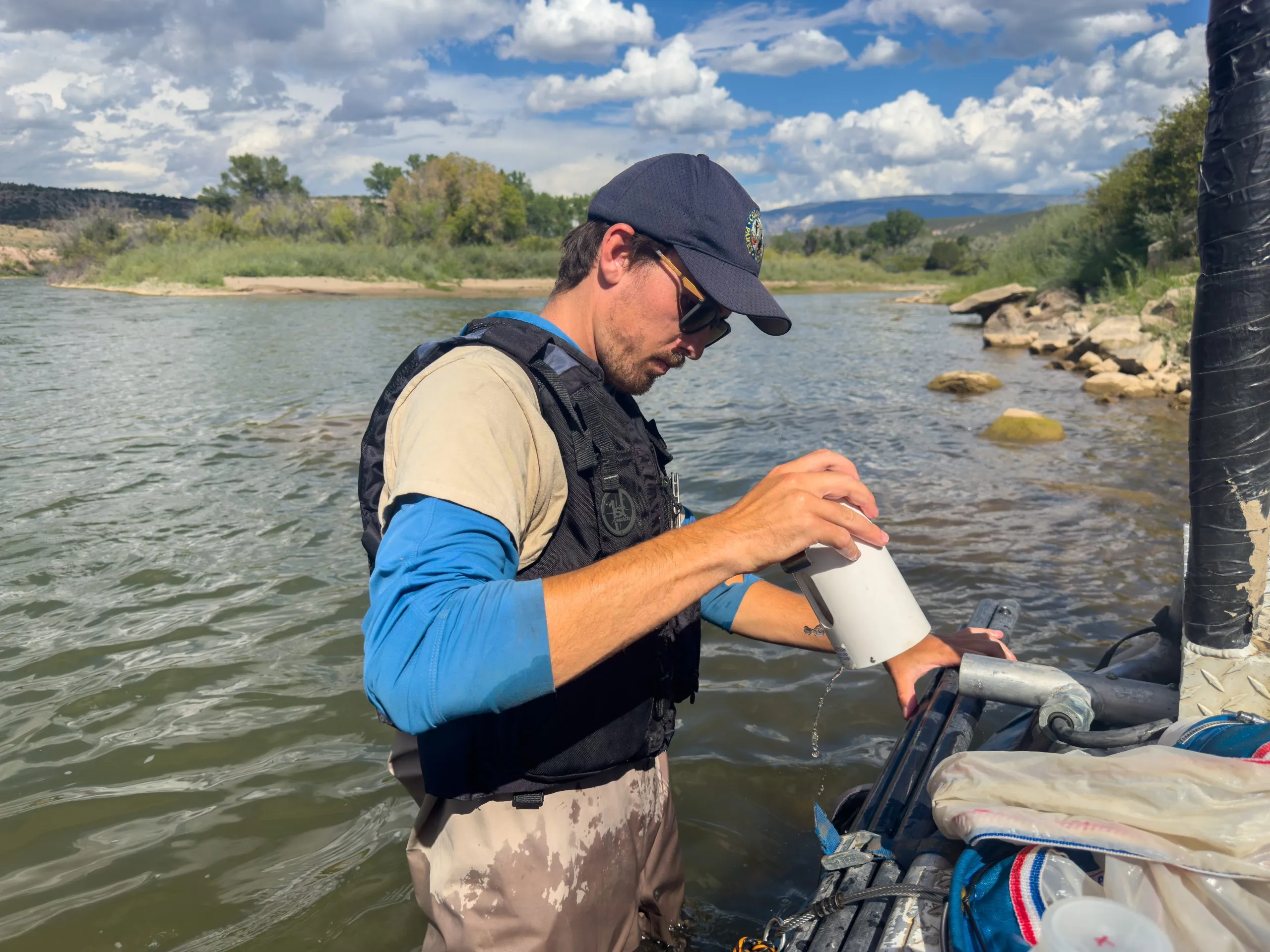
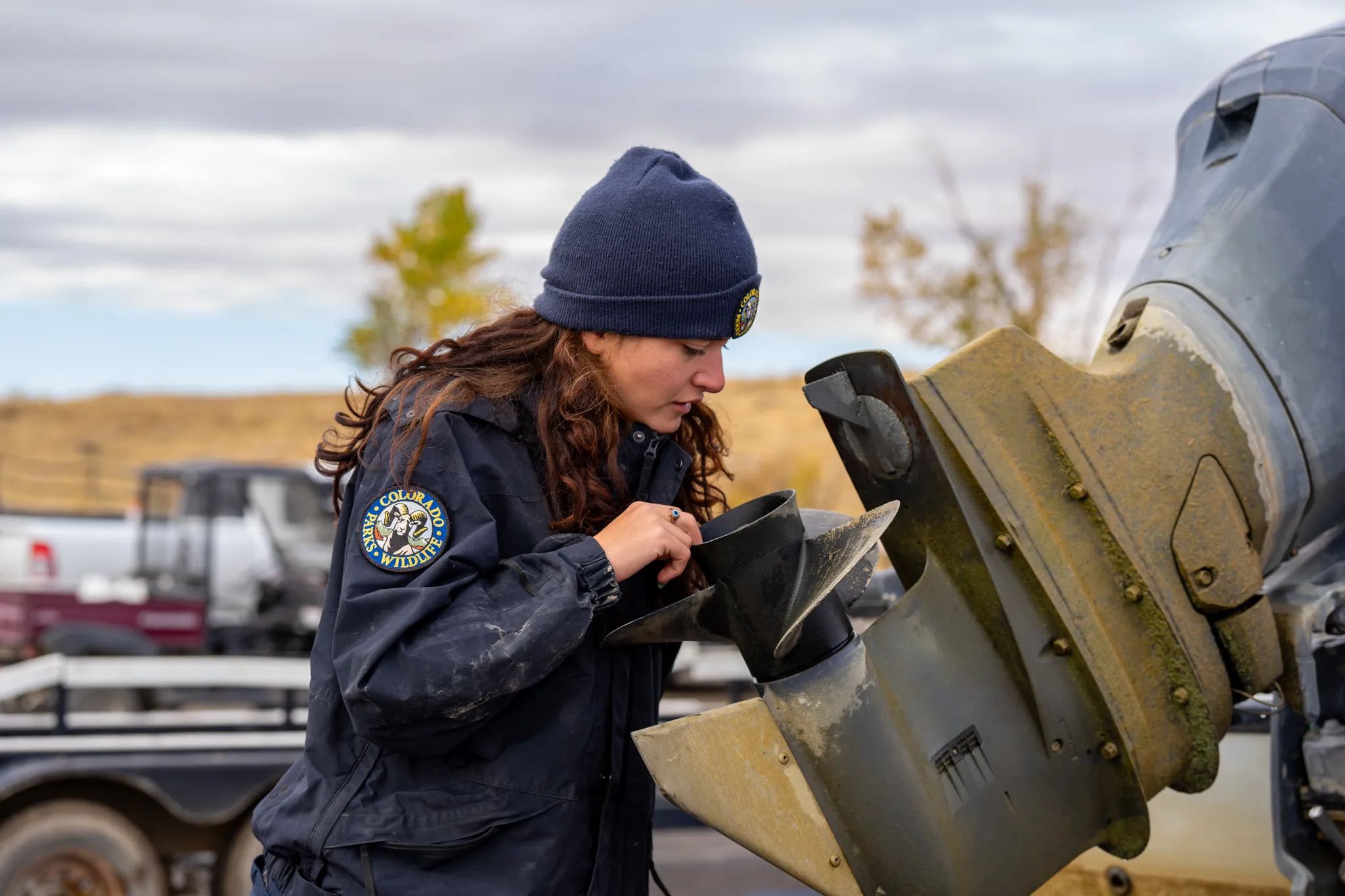
More by Shannon Mullane

Private lake in Eagle County source of zebra mussels in #ColoradoRiver: #Colorado Parks & Wildlife is continuing to monitor, mitigate — Heather Sackett (AspenJournalism.org) #COriver

CPW sampling on the Colorado River found zebra mussel veligers. The river is now considered “positive” for zebra mussels from its confluence with the Roaring Fork River to the Utah state line. CREDIT: PHOTO COURTESY OF COLORADO PARKS & WILDLIFE

Click the link to read the article on the Aspen Journalism website (Heather Sackett):

July 31, 2025

State officials may have solved the puzzle of how zebra mussels got into the Colorado River. 

On July 3, Colorado Parks and Wildlife officials discovered a large number of adult zebra mussels in a privately owned body of water in western Eagle County. On Monday, Madeline Baker, an invasive species specialist with CPW, told members of the Colorado Basin Roundtable they believe this private lake is an upstream source of the mussels that have contaminated the Colorado River, the Government Highline Canal, Highline Lake and Mack Mesa Lake. 

“We do believe this to be the primary source, but it could now have created other secondary sources downstream with locations that hold water,” Baker said. “There is a lot of speculation of could these veligers survive the journey from Eagle County down to Highline and create a new population there or is there some sort of intermediate population in between. So we still have a lot to figure out.”

Baker said that the lake’s owner is collaborating with CPW on a mitigation plan. CPW is not releasing the owner’s name or specific location of the lake.

“The property owner is unsure of how this could have happened, but is being cooperative,” she said.

Baker said there were quite a few dead shells on the shoreline of the private lake, which indicates the zebra mussel population has been there for several years. She said CPW staff found the lake by searching Google maps for bodies of water on private property near the Colorado River and then calling property owners and asking if they could inspect their lakes. An outlet from the lake was bringing zebra-mussel-infested water into the Colorado River, an issue that has since been fixed. 

“We’ve done a dye test at the reservoir to be sure that nothing more is flowing into the river, and that dye test showed us that it should be contained at this point, which will allow us to pave a path toward mitigation,” Baker said.

Zebra mussels are a prolific invasive species that if left unchecked could clog irrigation infrastructure, and strip the plankton and nutrients from the water. Once established, they are nearly impossible to eradicate. 

For the last two summers, microscopic zebra mussel larvae, known as veligers, have been found in the Colorado River at several locations. In June, they were found at the boat launch in New Castle, in Highline Lake and Mack Mesa Lake. The Colorado River is now considered “positive” for zebra mussels from the confluence with the Roaring Fork River to the Colorado-Utah border.

CPW staff inspects a boat motor at Highline Lake in 2023. The lake is infested with zebra mussels. CREDIT: PHOTO COURTESY OF COLORADO PARKS & WILDLIFE

Threat to the Grand Valley

The arrival of zebra mussels has been especially alarming for the Grand Valley, which is one of the most important agricultural areas and home to the biggest agricultural water users of Colorado River water on the Western Slope.

“At least from a Grand Valley perspective, we feel like we are under a very serious threat,” said Kirsten Kurath, a Grand Valley attorney and vice-chair of the roundtable.

Adult mussels were found in 2022 in Highline Lake near the Utah state line. Officials treated it with a form of copper that kills zebra mussels called EarthTec QZ and drained it for the 2024 boating season. The lake reopened for recreation this year but on June 10, CPW staff found more veligers in Highline Lake, which is now designated an infested body of water. Highline Lake is filled with water from the Government Highline Canal, which pulls water from the Colorado River.

“We now know that Highline Lake was continuously being reinfested with mussels after the treatment, so it’s difficult to ascertain the effectiveness of the treatment,” Baker said.

Veligers were also found last year in the Government Highline Canal, which brings water from the Colorado River to Grand Valley farms, vineyards and orchards. Realizing the mussels could be disastrous for commercial peach growers who use micro-drip irrigation, water managers sprang into action last fall, treating their systems with a copper solution that kills the mussels. 

An adult zebra mussel found at Highline Lake in 2023. The lake was treated with a copper solution and drained for the 2024 boating season in an effort to eradicate the invasive species. CREDIT: PHOTO COURTESY OF COLORADO PARKS & WILDLIFE

Grand Valley Water Users Association General Manager Tina Bergonzini said the copper treatment was successful — the irrigation company has not seen any signs of adult mussels in their system — and the Government Highline Canal has not had any more positive tests for veligers. Still, Bergonzini said GVWUA will probably do the copper treatment again this fall, and that preventing zebra mussels from becoming established is something they will be working on for the foreseeable future.

“I don’t think there is any way around [doing the copper treatment again],” Bergonzini said. “We can’t risk our infrastructure. It’s a financial hurdle for the irrigation companies because it’s very costly, but not as costly as having fouled infrastructure.”

The discovery of the source pond in Eagle County is a step in the right direction, but it doesn’t mean the fight against zebra mussels is over. CPW will continue sampling and mitigation work, Baker said.

“Finding the source was always the main focus,” Bergonzini said. “There’s no way you can win the war if you can’t figure out where they are coming from. So I think discovering that pond was huge. That gives us a really good chance.”

CPW says cleaning, draining and drying fishing gear, motorized boats and hand-launched vessels like paddle boards is key to preventing the spread of invasive species.

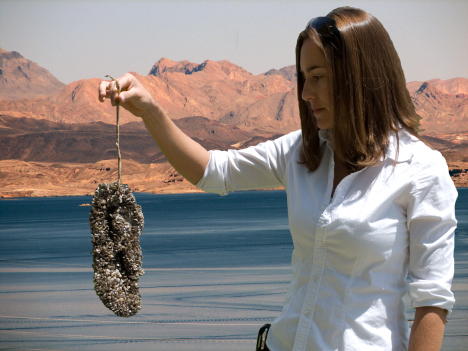
Quaggas on sandal at Lake Mead

#Drought intensifies and spreads: Also: Introducing Data Center Watch, alfalfa exports fall, federal agency trolling — Jonathan P. Thompson (LandDesk.org)

Click the link to read the article on The Land Desk (Jonathan P. Thompson):

August 1, 2025

🥵 Aridification Watch 🐫

The monsoon is on its way, apparently, but seems to be delivering more lightning than rain to many areas that are grappling with wildfires. Meanwhile, the drought is intensifying and spreading in almost all parts of the West, especially in the deep Southwest. 

Streamflows are dropping, too. The Animas River in Durango has fallen to about 200 cubic feet per second, and it’s only at about half that by the time it gets to Farmington, New Mexico’s, new surfing wave. The Rio Grande already dried up in Albuquerque a couple of weeks ago (but got a good boost from a thunderstorm early this morning). WyoFile reports that the Snake, Wind, and Bear Rivers are all at record low flows for this date, even though the snowpack was about average this winter. 

And, of course, the wildfires continue to burn. The Dragon Bravo Fire on the Grand Canyon’s North Rim has burned through 112,000 acres so far, with only 9% containment. The Monroe Canyon Fire in southwestern Utah is at 55,642 acres with 7% containment, and is causing power outages in surrounding communities. The Turner Gulch Fire northeast of Gateway is still growing “due to continuous hot and dry conditions and erratic winds.” And the Elkhorn Fire north of Durango has settled down a bit at 317 acres, but officials worry forecasted hot and dry conditions could reawaken it.

Below are some satellite moisture index maps, with blue being moist and red indicating dryness. The top image shows Dove Creek and areas south of there. This was dryland farming country for many years (Pinto Bean Capital of the World), but irrigation from McPhee Reservoir on the Dolores River was later extended out to Dove Creek. Problem is, their water rights are junior to the farmers in the Montezuma Valley near Cortez, so when reservoir levels are low, they tend to get less irrigation water. Here you can see the difference between 2023 (on the left), when snow, river, and reservoir levels were high, and this year (right), when they are not. What stands out to me is that some fields are still being irrigated this year, despite the drought, as is indicated by the circles of bright blue. But there are more fallow fields now, and the areas around the fields are especially dry.

Here are two more images showing the Ute Mountain Ute Tribe’s farms south of Ute Mountain in 2023 compared to 2025. Again, some irrigation is still reaching the fields, but apparently far less, given the number of fields that are apparently fallow.

📈 Data Center Watch 📊

The Land Desk is adding another beat to its roster, the Data Center Watch, which is just to say that I’ll be covering data centers and their economic and environmental ramifications a bit more frequently from here on out. Why? Because they currently are proliferating throughout the West: There are 93 data centers in the Phoenix area, 54 in the greater Denver area, and eight in Albuquerque, with many more on their way. And every one of them uses outsized quantities of electricity and water, straining power grids, and throwing utilities’ resource planning into disarray.

Cheyenne, Wyoming, is already home to six data centers. That doesn’t count Meta’s $800 million center that is under construction there, or energy firm Tallgrass’s proposed facility that would pull 1,800 megawatts of electricity from new, dedicated natural gas plants and renewable power installations (presumably solar and wind). Down in Tucson, city officials are considering Amazon Web Services’ proposed Project Blue, a massive complex that is poised to consume up to 2,000 acre-feet of water per year and become Tucson Electric Power’s largest single customer.

In Alaska, a company is looking to build a large data center and a dedicated natural gas plant that would run off of oilfield methane. Numerous data centers can be found along the banks of the Columbia River, drawn there in part by the relatively cheap and abundant hydropower. In Montana, a proposed data center would use all of the powergenerated by NorthWestern Energy’s existing resources. And Pacific Gas & Electric expects new data centers in Silicon Valley to drive a 10 GW increase in electricity demand over the next decade, which is about one-third of today’s forecast peak demand for California’s grid.

The biggest concern with these sprawling warehouses packed with processors is their power consumption. Each one can draw as much electricity as a small city — the proposed Cheyenne server farm would use more power than all of the state’s households. As recently as half a decade ago, most utilities weren’t expecting the speed and magnitude of the big data center buildout. Now it’s hitting hard, and coinciding with increased demand from a growing number of electric vehicles and electrified homes, and utilities are scrambling to bring new power sources online to meet the projected demand growth. This includes geothermal, wind, and solar power — each with impacts of their own — but also new natural gas plants and even small nuclear reactors. Some utilities are cancelling plans to retire coal plants to keep enough generating capacity online.

In other words, the data center boom is likely to radically reshape the energy landscape of the West, and will spur more debates over the costs of this sort of economic development and the impacts our cyber-world has on the environment and humanity.

📈 Data Dump 📊

In some ways, I guess you could say that as alfalfa is to the Colorado River, data centers are to the Western power grid: they both suck up a lot of the resources. That doesn’t make them bad. Alfalfa mostly goes to dairy cows, which make cheese and ice cream and other really good things. Data centers power annoying AI art, sure, but they also make everything internet possible, including me sending this newsletter to you.

Anyway, it’s worth tracking both — alfalfa and data centers, I mean. So here’s a quick update on hay exports from the U.S. (which includes alfalfa and other hay), as well as a look at acreage planted in alfalfa (excl. other hay) over time. Exports seem to have peaked in 2022 and are now in decline. Nevertheless, sending alfalfa and other hay overseas is big business.


🤯 Annals of Inanity 🤡

You might think that our federal agencies under Trump would be content to wreck the environment and trample civil liberties in a quiet, not-so-noticeable way. But no, of course not: They’re so proud of their racism and fetishization of fossil fuels that they plaster social media with their proclamations thereof — they are trolling us, in other words. 

Above are just two recent examples. In the first one, the Department of Energy fawns over a sparkling chunk of coal. In the other, the Department of Homeland Security posts an 1872 painting by John Gast titled “American Progress.”

Both are gross in their own way.

What the hell kind of sexualization of coal — i.e. “She is the moment” — are they going for in that first one? Friggin’ perverts, if you ask me.

As for the second, it glorifies the crimes the American military and white colonial settlers perpetrated against the Indigenous peoples in order to get more Lebensraum, one might say (it makes sense to use Hitler’s term given that he was inspired by the U.S.’s policies toward Native Americans). Not only is the use of the word “Heritage” in this way a dog whistle to white supremacists, but it’s also kind of weird to be talking about defending the “Homeland” against immigrants when, in the image, the immigrant invaders are the white settlers, and the folks trying to defend themselves and their homeland are the Indigenous people (and wildlife) fleeing from the settlers.

📸 Parting Shot 🎞️

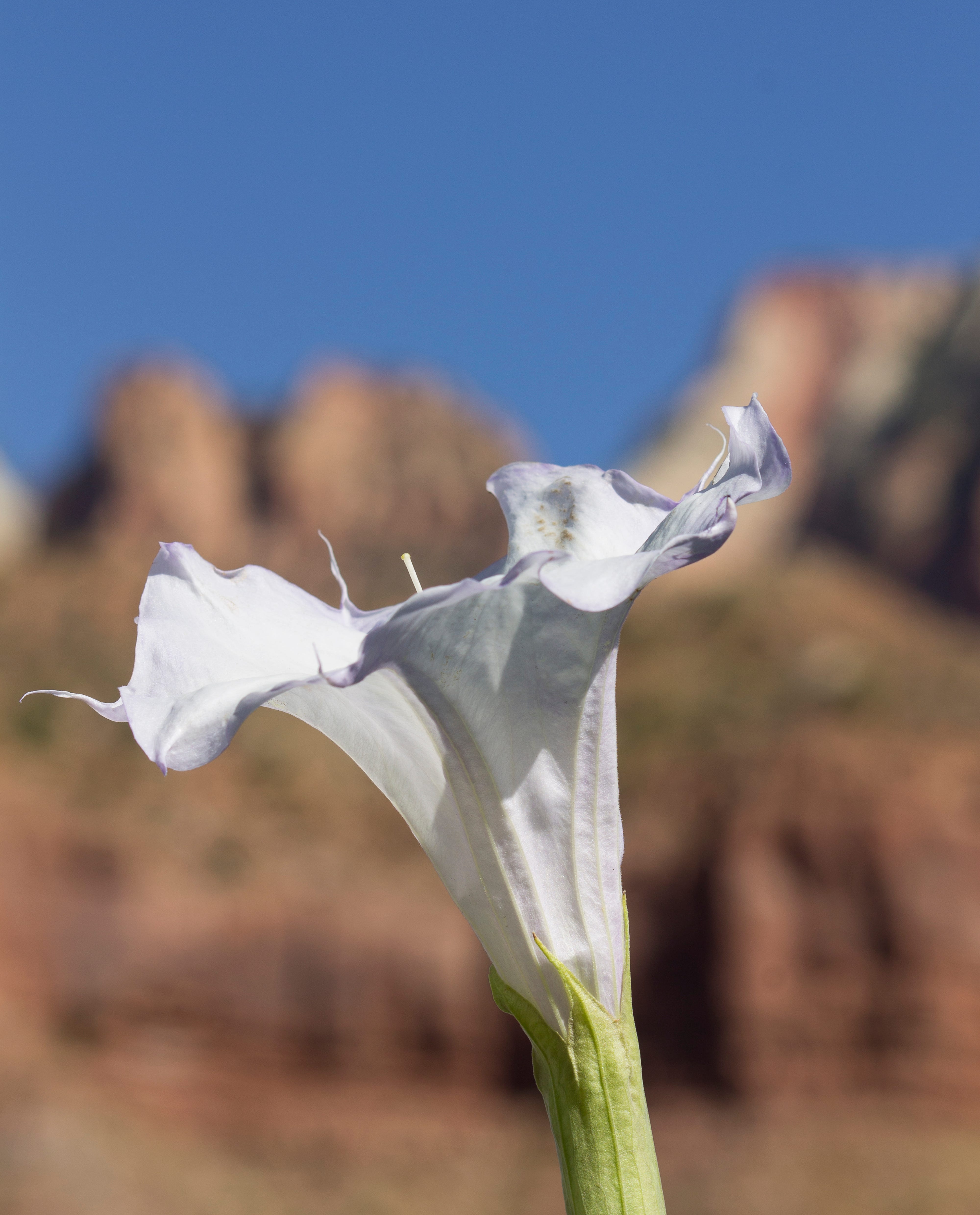
I don’t want to leave y’all with that awful taste in your mouth, so here are a couple of nicer images of one of my favorite flowers out there.

Photo credit: Jonathan P. Thompson/The Land Desk