Aspinall Unit operations update August 11, 2025

Aspinall Unit dams

From email from the Bureau of Reclamation (Conor Felletter):

On Monday, August 11 at 8pm MT, Reclamation will increase releases from Crystal Dam to 1,700 cfs from the current release of 1,650 cfs. Gunnison Tunnel diversions remain at 1025 cfs. Gunnison River flows in the Black Canyon/Gunnison Gorge, currently ~590 cfs, are anticipated to increase to ~640 cfs. 

Releases are made for the authorized purposes of the Aspinall Unit, and to maintain target base flows through the endangered fish habitat along the Gunnison River between Delta and Grand Junction. 

Reclamation conducts Public Operations Meetings three times per year to gather input for determining upcoming operations for the Aspinall Unit & Gunnison River. Input from individuals, organizations, and agencies along with other factors such as weather, water rights, endangered species requirements, flood control, hydro power, recreation, fish and wildlife management, and reservoir levels, will be considered in the development of these reservoir operation plans. In addition, the meetings are used to coordinate activities and exchange information among agencies, water users, and other interested parties concerning the Aspinall Unit & Gunnison River. The next Operations Group meeting will be held on August 21, 2025 at 1:00 p.m in Montrose, CO at the Holiday Inn Express (1391 S. Townsend Ave). This meeting is open to the public with a virtual option using Microsoft Teams. Register for the webinar at this link.

Contact Conor Felletter (cfelletter@usbr.gov or 970-637-1985) for more information regarding Aspinall operations or the Operation Group meeting.

As clock ticks on Oak Flat copper mine, judge considers late plea to block land swap — AZCentral.com

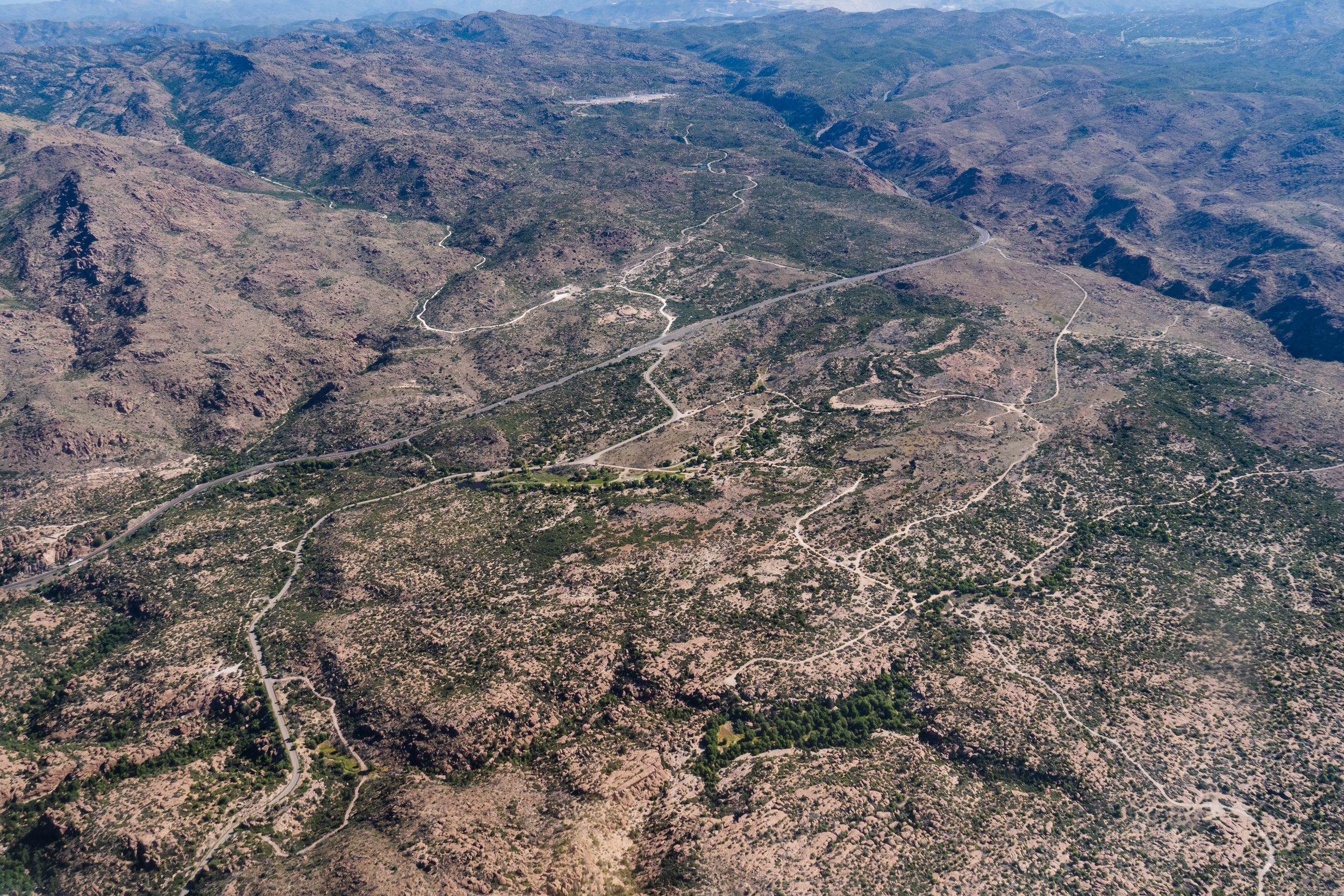
An aerial view of Oak Flat in Arizona. Credit: EcoFlight

Click the link to read the article on the AZCentral website (Debra Utacia Krol). Here’s an excerpt:

August 7, 2025

Key Points

  • The value of the copper beneath Oak Flat drew the attention of a judge hearing arguments to halt a land swap needed to build a huge mine.
  • The federal judge asked attorneys for Resolution Copper and the federal government what could stop the land exchange, which is required by law.
  • No timetable was given for a ruling in the case, but the land swap could occur as early as Aug. 19 if a court doesn’t block it.

U.S. District Court Judge Dominic W. Lanza heard arguments from the San Carlos Apache Tribe and a consortium of environmentalists on Aug. 6 as they seek to overturn a disputed land exchange between the U.S. Forest Service and Resolution Copper. Lanza likened the day’s “very complicated exercise” to pounding a square nail into a round hole. Much of the back-and-forth during the five-hour hearing centered around aĀ 2022 appraisalĀ of a 766-acre plot at Oak Flat, the Tonto National Forest campground at the heart of the struggle. Roger Flynn, who represented the environmentalists and inter tribal coalition, argued that the appraisal lacked one essential element: the value of the copper underneath the surface. Some estimates say that about 40 billion pounds of copper lie beneath Oak Flat, currently valued at $4.40 per pound…

Attorneys from the federal government and Resolution Copper, which has sought to obtain Oak Flat to mine for copper, squared off with lawyers from the Arizona Mining Reform Coalition and the San Carlos Apache Tribe, supported by the Inter Tribal Association of Arizona and several environmental organizations, including the Center for Biological Diversity and the Grand Canyon Chapter of the Sierra Club. Although there was no set date for Lanza to rule, he said he was cognizant of the need to rule soon as a 60-day review period nears an end. If no judge intervenes, the land exchange could be finalized as soon as Aug. 19.

Will There Be Enough Water to Make More Semiconductors in the U.S.? — H2ORadio

Credit: Rob Bulmahn/Flickr

Click the link to read “This Week in Water” from the H2ORadio website. Here’s an excerpt:

August 10, 2024

Last week, President Trump said he wants to impose a 100 percent tariff on imports of semiconductors and chips—but would exempt companies that make them in the United States. Details on a prospective policy were scarce—and also missing in the proposal are plans to address a concern vexing the industry—where’s all the water going to come from to manufacture chips in the U.S.?

A single fabrication facility, or fab, can use tens of millions of gallons of tap water per day, which is cleaned to become ā€œultrapureā€ by removing any particles or salts that could damage the chips. Currently, the ultrapure water is used only once to make chips. The wastewater is used to cool the buildings, which get very hot, or in scrubbers that ā€œshower offā€ gases and other chemical contaminants used in the manufacturing process. 

Several U.S. fabs are currently located in water-stressed areas such as Arizona, so can adding more plants in the country be achieved sustainably? Professor Paul Westerhoff at Arizona State University’s School of Sustainable Engineering and the Built Environment told H2O Radio that fabs can be sustainable but would require companies to invest in ways to recycle water to continuously bring it back to an ultrapure state to avoid tapping into local supplies.

He and his colleagues are researching what reuse technologies and policies would be necessary to make facilitates ā€œwater neutralā€ or at least close to it, some of which would include protecting the watersheds where manufacturers operate.

Another problem in growing the semiconductor industry in the U.S. is climate change. Making semiconductors is energy intensive, so manufacturers would need to switch to renewables instead of fossil fuels to be sustainable. Otherwise, as global temperatures rise and severe droughts increase, the water upon which fabs rely may not be there when they’re ready. 

ā€œThere’s just no water in the systemā€ — Cleave Simpson via AlamosaCitizen.com #RioGrande

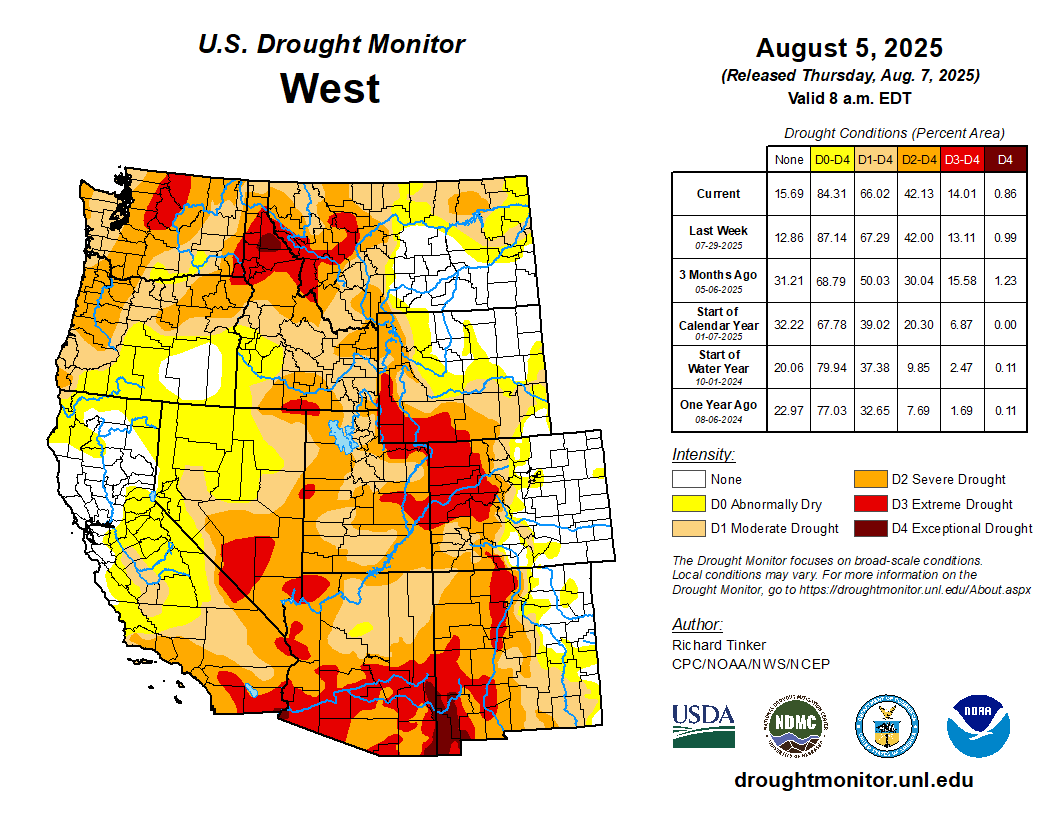
West Drought Monitor map August 5, 2025.

Click the link to read the article on the Alamosa Citizen website:

August 6, 2025

ā€œThere’s just no water in the system,ā€ said Cleave Simpson, the general manager of the Rio Grande Water Conservation District. He was talking to us on Tuesday, Aug. 5, about the startling conditions of the Upper Rio Grande Basin that showed a flow of 36 cubic-feet per second at the Alamosa County line. The river was flowing 15 cfs at the Lobatos Bridge. 

The warnings about this year’s dryness go back to February when we saw a string of 60-degree days and then more record heat back in April. Fast forward to August and what’s been a relatively dry summer with less than an inch and a half of accumulated precipitation and we see very little water in the river.

Much of the Great Basin is under intense fire restrictions. 

Rio Grande and Pecos River basins. Map credit: By Kmusser – Own work, Elevation data from SRTM, drainage basin from GTOPO [1], U.S. stream from the National Atlas [2], all other features from Vector Map., CC BY-SA 3.0, https://commons.wikimedia.org/w/index.php?curid=11218868