Click the link to read the report on the Center for Colorado River Studies website (Kathryn Sorensen1, Sarah Porter2, Anne Castle3, John Fleck4, Eric Kuhn5, Jack Schmidt6, Katherine Tara7). Here’s the executive summary and recommendations:
January 2026
As Colorado River supplies and demands reach razor-thin margins, new tools to provide adaptive capacity will play a critical role in sustaining communities across the West. We must reduce our consumption of water, while finding ways to cushion the impact. One of the most innovative tools for doing this, developed over the last two decades, is “Assigned Water” – giving users the ability to store conserved water earmarked for their own future use.
Originally developed as “Intentionally Created Surplus” in the 2007 Colorado River Interim Guidelines, Assigned Water has been revised and expanded through U.S.-Mexico Treaty Minutes and as part of the 2019 Drought Contingency Plan. While conceptually simple and demonstrably valuable – a savings bank for conserved water – it is crucial to get the policy tools right as Colorado River management rules evolve.
For agencies granted access to the tool, Assigned Water provides important adaptive capacity to prepare for and manage shortfalls on a volatile river with shrinking supplies. But nearly two decades of operational experience also have exposed unintended consequences. With Assigned Water likely to play a critical role in basin management going forward – including its potential expansion to the Upper Colorado River Basin – it is important to review the strengths of the existing program, and essential lessons learned, to guide the development of river management policies after the current operating rules expire at the end of 2026.
HOW ASSIGNED WATER WORKS
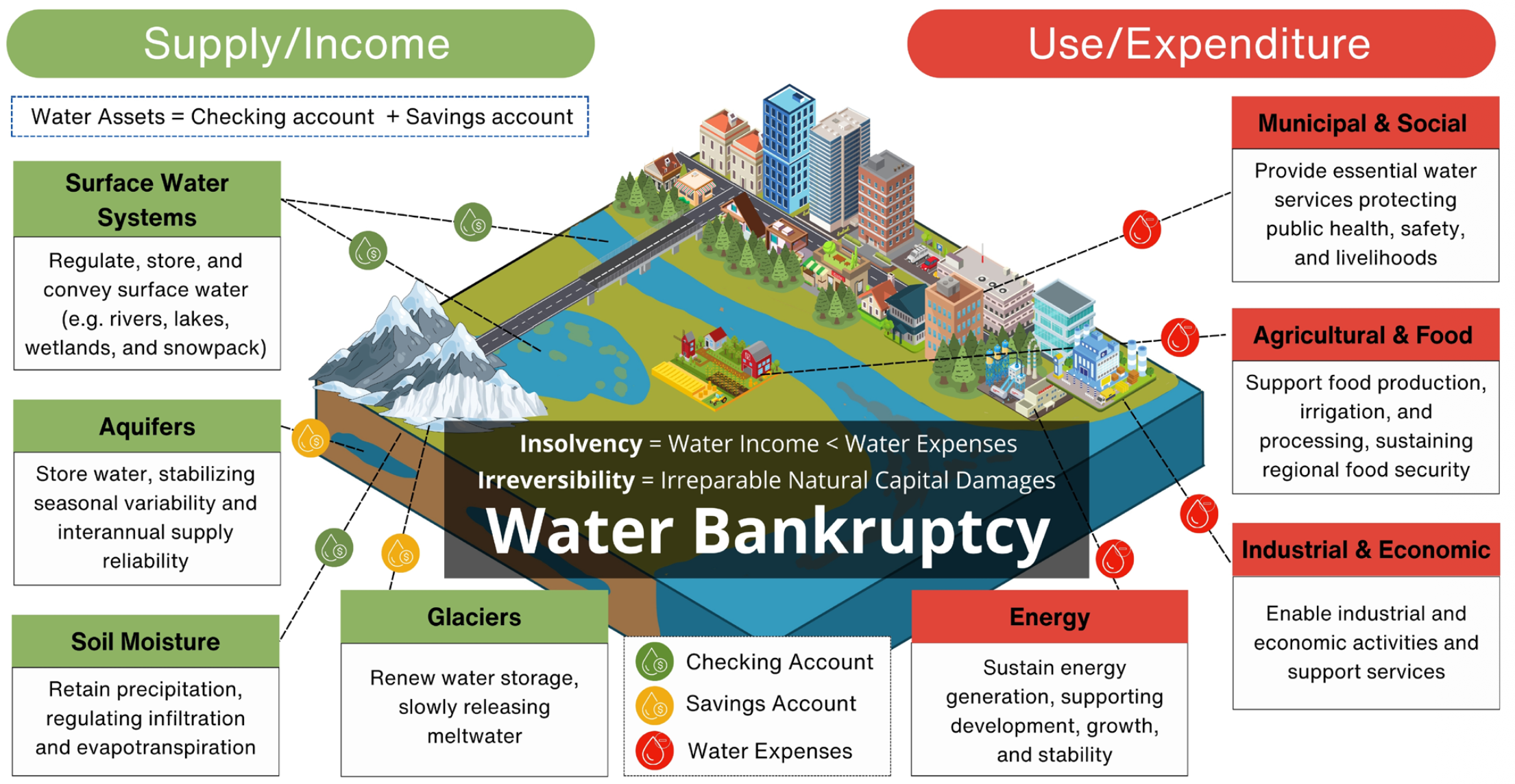
Assigned Water allows some users to either conserve water that would have been used, import some categories of tributary water to the mainstem, or to fund system improvements to conserve water that would otherwise have been lost to inefficiencies. This water is then earmarked for the creating agencies’ use, sitting outside of the priority system through which the rest of the Colorado River’s water is allocated. Agencies can pay users to take out their lawns, or fallow farm fields, banking the saved water for future use. By planning ahead, water agencies secure a reliability hedge against shortages as the river shrinks.
But at a time when overall water supplies are declining, Assigned Water creates a category of “private water,” available only to specific users, while remaining water allocated to all users under the existing priority system continues to shrink.
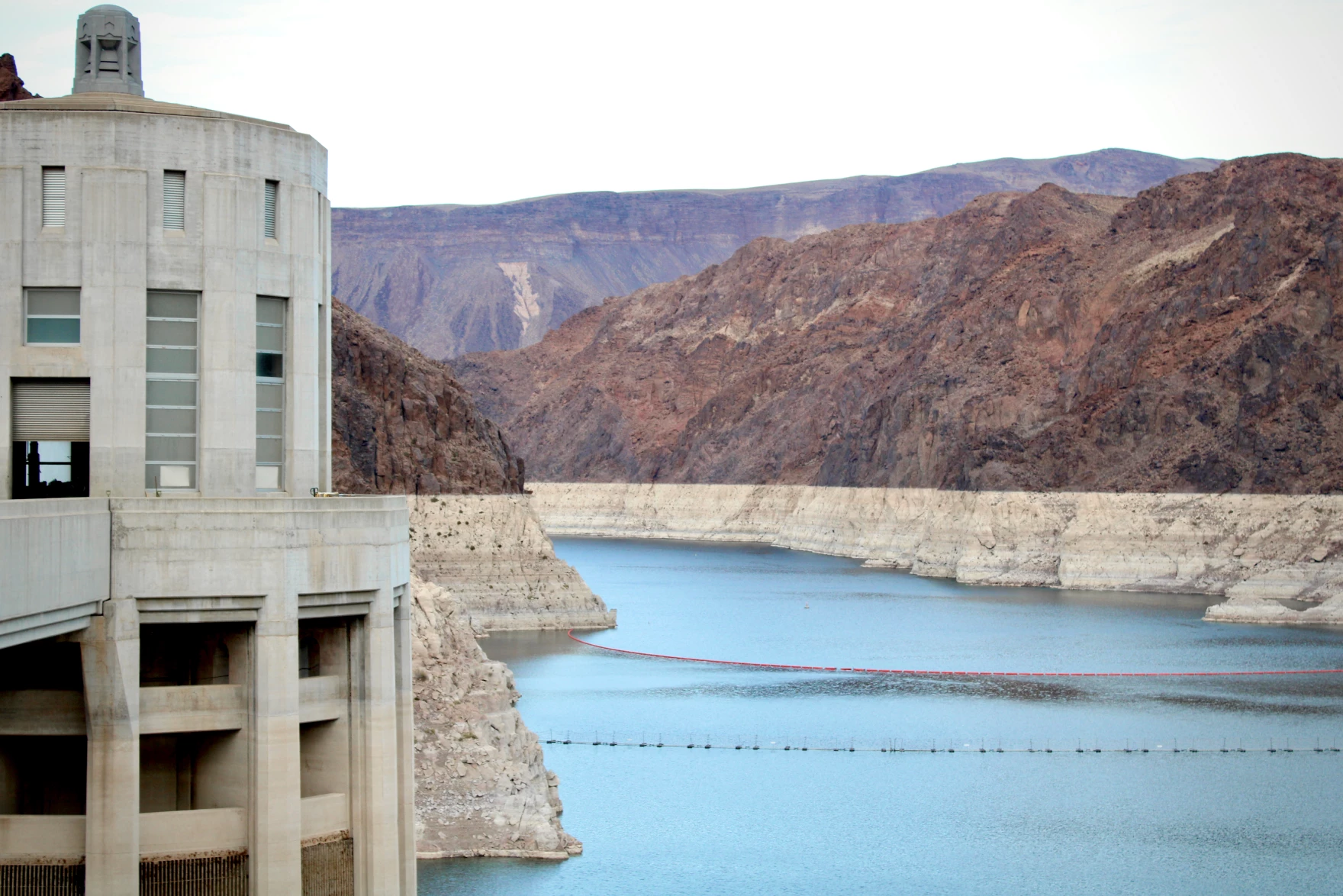
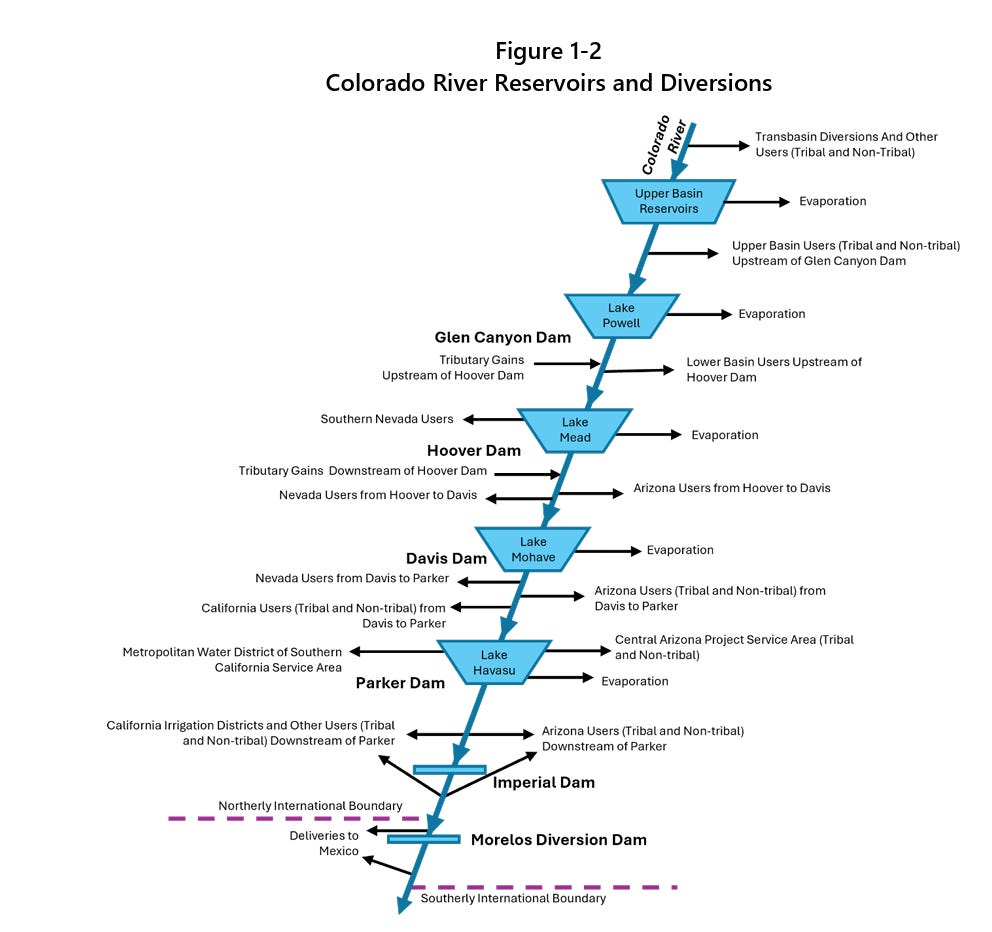
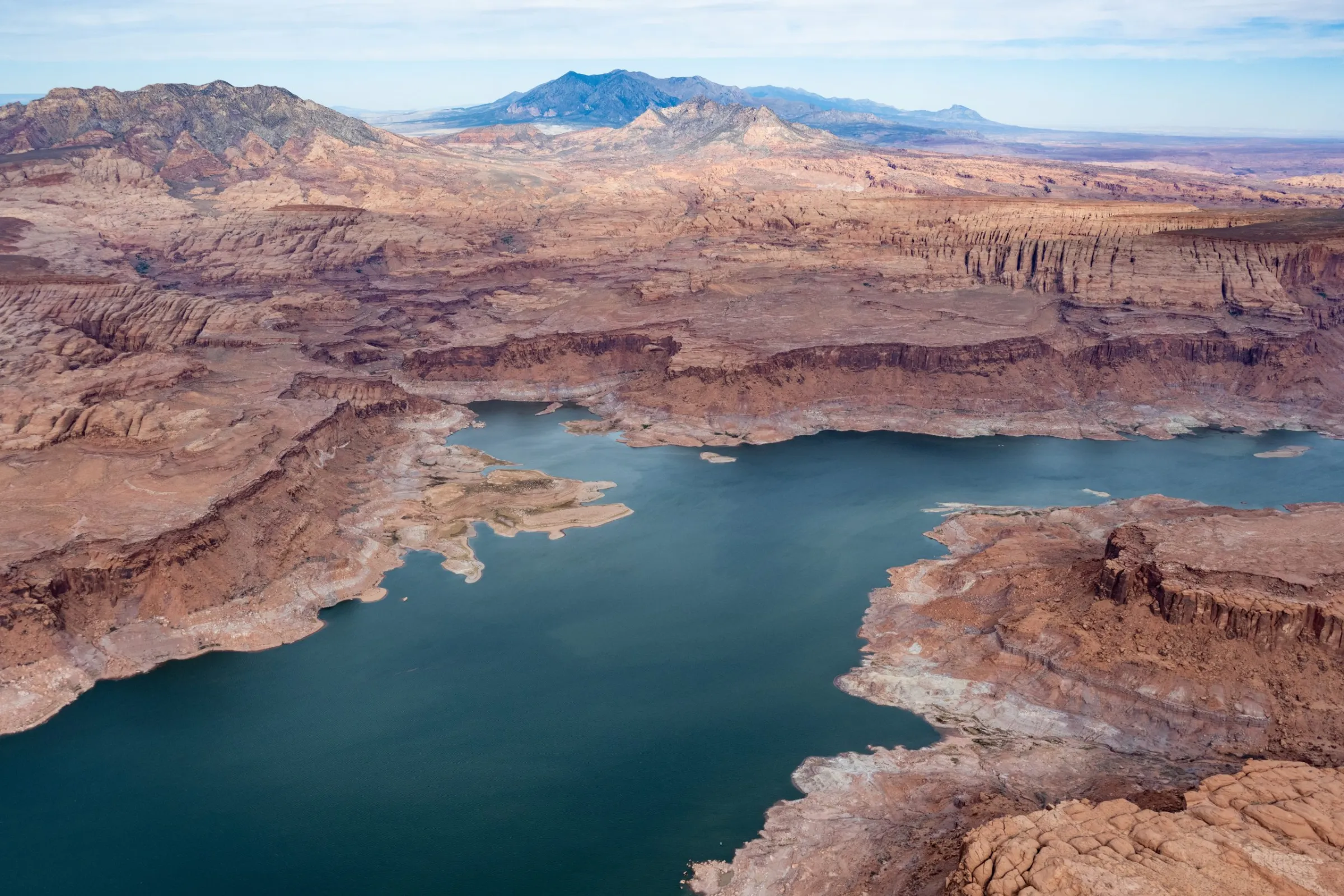
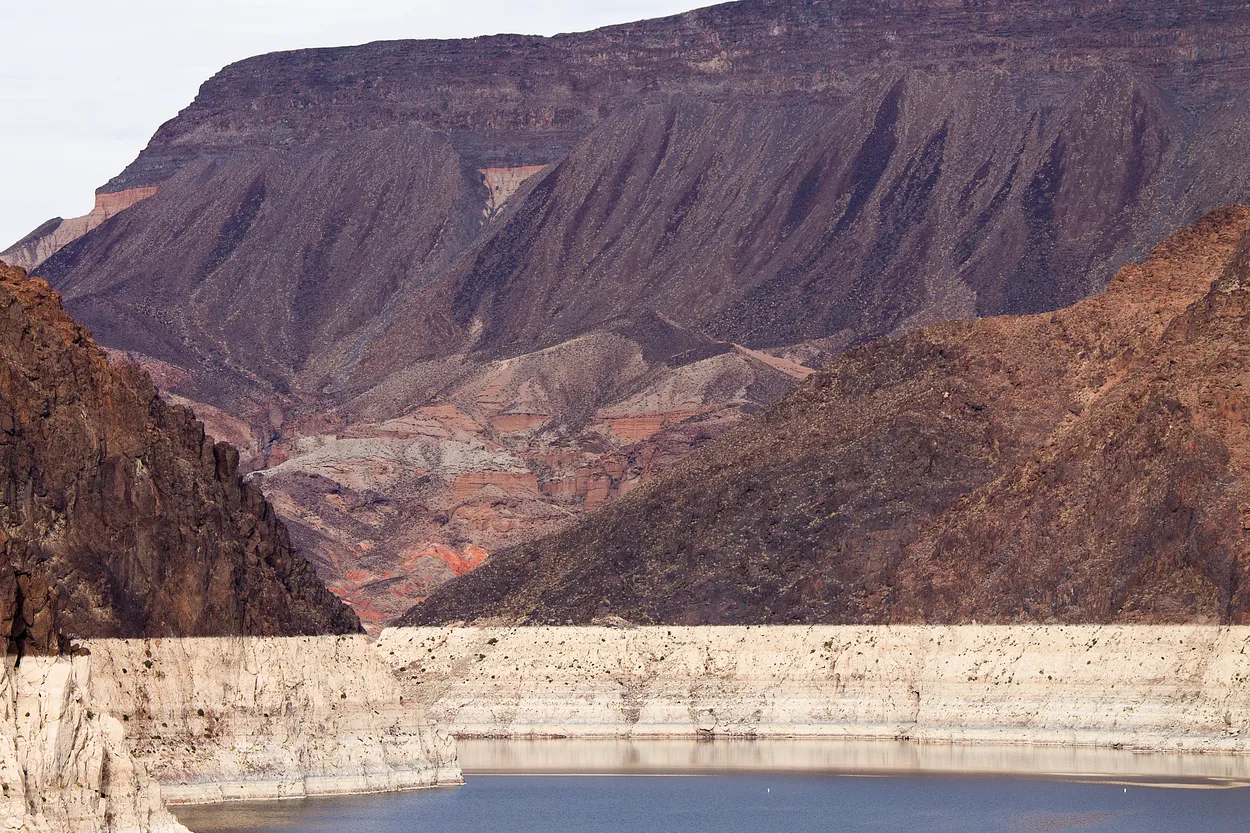
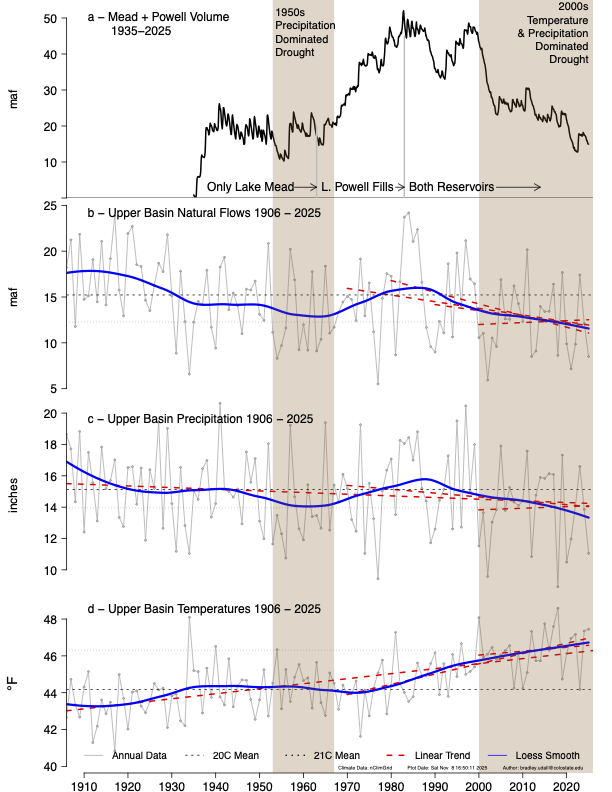
Assigned Water created a tool to overcome the “use it or lose it” problem that left little incentive for water agencies to conserve. Its usefulness and subsequent expansion have led to the existence of 3.5 million acre feet now are stored in Lake Mead, representing the bulk of the available water currently in the reservoir.
UNINTENDED CONSEQUENCES
Delaying Shortage Actions
By keeping Lake Mead levels higher than they otherwise would have been, Assigned Water delayed formal shortage declarations in the Lower Colorado River Basin. While this was an intended benefit, it has had the practical effect of putting off water use reductions to the detriment of reservoir storage.
Subsidizing Evaporation
Although current rules apply some reductions to Assigned Water accounts, they often fail to fully account for actual evaporation. This results in a subsidy for Assigned Water holders at the expense of water available to everyone else.
Crowding Out
Assigned Water creates incentives for agencies to focus their conservation efforts primarily on programs that benefit their own users, potentially at the expense of the kind of broader efforts that will ultimately be needed to bring Colorado River Basin use into balance with physical supply. We must remember that Assigned Water does not permanently reduce the use of a quantity of water; instead it stores it for later, simply deferring that use to the future.
Inequitable Access
Assigned Water is currently available only to a select group of major Colorado River water agencies, depriving other users of the program’s benefits.
KEY RECOMMENDATIONS
Operational Neutrality
Assigned Water should not be included in the reservoir levels used to make shortage declaration and determine reservoir operations.
System Assessment
Agencies granted access to Assigned Water should pay a “system assessment” for the privilege. This mechanism would credit their earmarked storage account for a portion of the conserved water while converting the remainder to “System Water,” helping to rebuild storage and meet broad Basin needs.
Evaporation Assessment
Accounting for evaporation should use the best available science, to avoid subsidizing Assigned Water accounts at the expense of the rest of the Basin’s water users.
Expand Access
A wider range of users should be given the opportunity to participate in and benefit from Assigned Water tools.
ADDRESSING THE COLORADO RIVER BASIN’S TRAGEDY OF THE COMMONS
For more than a century of development, Colorado River governance has lived under a tension between individual communities’ desires to use more water and the collective need to balance basin-scale supply and use for the benefit of the region as a whole. Incentives favoring individual communities at the expense of the collective good have brought us to the edge of the current crisis.
Going forward, Assigned Water can provide a crucial management tool, but the policies we use to implement it must find the balance between individual benefit and collective good.
GLOSSARY OF KEY TERMS
- Priority Water: Water diverted within the U.S. generally under the prior appropriation system of water allocation.
- Mexican Water: Water that flows past the international border into Mexico pursuant to the 1944 U.S.-Mexico treaty
- Assigned Water: Water resulting from water use reduction programs that is stored in Colorado River Basin reservoirs earmarked for the specific use of the users who created it, outside the normal priority system. Assigned water functions as a sort of private water savings account for those agencies granted the privilege of using the tools.
- System Water: System Water: The collective term for all water in the reservoirs, including Priority, Mexican, and Assigned Water.
- Intentionally Created Surplus: The term used for the Assigned Water initially created under the 2007 Colorado River Interim Guidelines, which became the prototype for similar programs that followed.
- System Conservation: Programs that fund reductions of water use to benefit the
- Colorado River Basin as a whole by creating System Water for rebuilding reservoir storage or general use under the priority system rather than being allocated to the accounts of specific users.
APPENDIX OF ALL RECOMMENDATIONS
NEUTRALITY
- In any newly developed operational guidelines for Lake Powell and Lake Mead, volumes of Assigned Water created after 2026 should be invisible for purposes of determining shortage conditions.
- Other than for flood control releases, volumes of Assigned Water created after 2026 should be invisible for purposes of determining surplus in Lake Mead.
- Volumes of Assigned Water in Lake Mead and Lake Powell created after 2026 should spill before all other water, a condition that also functions as a de-facto limit on total accumulation of Assigned Water.
- In any newly developed operational guidelines for Lake Powell and Lake Mead, volumes of Assigned Water created after 2026 and held in Lake Mead or Lake Powell should be invisible for purposes of calculating annual releases from Lake Powell.
EVAPORATION
- Reclamation should establish evaporation coefficients applicable to calculation of evaporation caused by storage of Assigned Water. These evaporation coefficients should be based on on-going monitoring and best available science and appropriately funded. Evaporation coefficients should be reassessed every five years, especially in light of a changing climate.
- Future volumes of Assigned Water in any reservoir should be assessed a realistic and conservatively high annual evaporative loss based on these coefficients and on the amount of Assigned Water in storage.
- Future deliveries of Assigned Water should be assessed transit losses where appropriate. Transit losses should also be estimated based on best available science, updated by monitoring and scientific studies, and revised every five years.
- Future volumes of Assigned Water in any reservoir should proportionately share the evaporative (and transit) losses that occur due to Mexican Water delivery obligations (other than for Mexican Assigned Water, which should bear its own losses) and should be assessed a realistic and conservatively high annual evaporative loss based on these coefficients and due to Mexican Water delivery obligations. The evaporative assessment should reflect the proportionate share of Assigned Water and Priority Water in storage.
- Evaporative losses should be assessed under all conditions, including shortage.
SHORTAGES AND DELIVERIES
- Deliveries of Assigned Water should be restricted if necessary to protect critical dam infrastructure.
- Alternative: The federal government should compel the sale of Assigned Water for immediate conversion to System Water during years in which reservoirs are at critically low levels.
PARTICIPATION
- In years in which System Water storage in Lake Powell and Lake Mead is deemed to be inadequate, any Assigned Water developed or acquired by the federal government in those years should immediately be converted to System Water. Use for other purposes should be allowed only in conditions in which System Water storage is adequate.
- Dedication of federally-controlled Assigned Water for purposes other than conversion to System Water should occur through a robust and transparent public process.
- Because they are among those most exposed to involuntary shortage, CAWCD subcontractors that rely on deliveries of Colorado River water to surface water treatment plants should be allowed to create, own and acquire Assigned Water.
- Entities without an entitlement to Colorado River water should not be allowed to own Assigned Water.
- The Secretary’s approval should be required for all agreements for creation, transfer, or sale of Assigned Water.
- Any Colorado River entitlement holder, with the concurrence of the Secretary, should be allowed to participate in transactions in any state to develop, own or use Assigned Water created from projects in the U.S. (So long as adequate protections are afforded Priority Water and there is agreement between the states regarding accounting for Assigned Water deliveries under the Compact).
- To avoid profiteering, the Assigned Water held by any given Colorado River entitlement-holder should be proportional to its Colorado River entitlement. The annual accumulation and balance of Assigned Water for a single entity in any reservoir should be limited to some (relatively small) multiple of its annual entitlement to Colorado River water.
- To ameliorate concerns about permanent water transfers between states, agreements to create Assigned Water from consumptive-use reductions in one state for delivery in another state should be structured such that there is reasonable means for entities within the state in which the reduction in consumptive-use derives to make use of that water within the state in the future. One means to do so would be to allow agreements to create Assigned Water from consumptive-use reductions in one state for delivery in another state only if the agreements expire after five years and do not include a provision for automatic renewal. Existing Assigned Water storage could continue beyond expiration.
- To ameliorate controversies associated with the transfer of agricultural water for municipal use, agreements to create Assigned Water from consumptive-use reductions in agriculture should include a requirement that the funder of the Assigned Water pay a tax assessed per acre-foot paid to the county or counties from which the consumptive-use reductions derive. The tax could derive from the value of the agricultural economy. Waivers could apply if the Assigned Water creation program creates a net increase in economic value in an agricultural area (e.g., crop switching or crop insurance).
ASSIGNED WATER CREATED THROUGH SYSTEM EFFICIENCIES
- The federal government should fund efficiency projects for creation of System Water up until the amount of water that results from such projects sufficiently ameliorates the impacts of the annual, national obligation to Mexico to Priority Water users.
- Thereafter, the creation of Assigned Water via efficiency projects in the U.S. should only be allowed if a) System Water storage in Lake Powell and Lake Mead is deemed to be adequate or b) the efficiency project benefits System Water over Assigned Water on a ratio of 90/10 over the ensuing five years.
- To the extent participation is offered, participation in efficiency projects in the U.S. in exchange for Assigned Water should be awarded based on an allocation method determined through an open and transparent process (e.g. highest bidder) and should be subject to any limitations on participation, total Assigned Water annual accumulation and balance for that entity.
- The federal government should hold the right of first refusal to purchase any Mexican Assigned Water up for sale and to fully fund any conservation projects in Mexico that can become Assigned Water during years in which System Water stores are deemed to be inadequate for the sole purpose of converting it to System Water.
- Mexican treaty obligations increase the risk of shortage in the Lower Division and increase the risk of a Compact call. Those in the Lower Division with lowest priority contracts and subcontracts and those in the Upper Division most at risk of curtailment due to a Compact call should be given the second right of refusal up to an amount that equals projected involuntary cuts to Priority Water for each entity over the next two years.
- Thereafter, purchase of Mexican Assigned Water should be awarded to domestic entity with the highest bid and should be subject to any limitations on participation, total Assigned Water annual accumulation and balance for that entity.
MEASUREMENT AND BASELINES
- An audit independent of Reclamation should be conducted on the existing Assigned Water program in the Lower Division and Mexico. The goals of the audit should be:
- to examine claimed savings for accuracy,
- to assemble a list of lessons learned on measurement and accounting from twenty years of program administration and
- to assemble a list of qualifying activities for reduction of consumptive use, alongside recommended terms and conditions, that can form the foundation of future agreements.
- The audit should be made available to the public with and opportunity to review and comment.
- Assigned Water in any reservoir should only be allowed under a program that accurately measures Assigned Water creation, shepherding, storage and deliveries.
- Owners of Assigned Water should be assessed an annual fee to fund robust measurement and enforcement programs.
- Assigned Water created through water savings should derive from a baseline of historic consumptive use, not entitlement or filed water right claims.
FORBEARANCE/SHEPHERDING
- Forbearance/shepherding should be based on qualifying activities, not participants. In other words, withholding of forbearance/shepherding should not be a veto used to exclude participants that would otherwise qualify for development of Assigned Water.
- The means of creating Assigned Water that meet the threshold for agreements to forbear/shepherd should be decided ahead of time. Allowing additional qualifying activities down the road increases flexibility but also potentially undermines trust in Assigned Water programs between participants and more importantly among non-participants who rely solely on the prior appropriation system.
TRANSPARENCY
- Reclamation should compile a centralized, searchable, easily accessible library of all agreements and documents associated with Assigned Water programs.
- Reclamation should develop a new Assigned Water annual report that clearly shows ownership of the several different types of Assigned Water, the status of funding agreements and the flow of dollars, transactions involving Assigned Water, Assigned Water creation by creation category, method and partner, relevant shepherding arrangements, assessments, evaporative losses, deliveries and ending balances and other relevant details.
- Graphs and charts of reservoir elevations should clearly delineate Assigned Water by ownership and method of creation.
PROGRAM LENGTH
- The ability to create or purchase Assigned Water under a given Assigned Water program should expire 20 years after program initiation, a duration long enough for bond financing of capital projects. The ability to store Assigned Water should expire no more than 5 years after expiration of the program under which it was created.
LOANS AND CONVERSIONS
- Loans against Assigned Water balances should not be allowed where default diminishes the amount of System Water in storage.
- Conversion of existing Assigned Water into another form of Assigned Water governed by different rules should only be allowed after a robust and transparent public process.
- Loans between Assigned Water owners for Assigned Water should be allowed in future programs.
- With proper guardrails, loans from Assigned Water owners to Priority Water users should be allowed, including across state lines.
- With proper guardrails, loans and/or conversions from Assigned Water to the Priority Water pool should be mandatory when Priority Water stores are deemed to be seriously inadequate.
ADDRESSING THE TRAGEDY OF THE COMMONS
- Future creation of Assigned Water should be assessed a percentage deduction that becomes System Water at the time of creation to help rebuild System Water in reservoirs.
- The assessment should be determined based on a sliding scale; a 30% assessment should apply in water years in which System Water stores are deemed to be inadequate. The assessment should then decrease incrementally to 10% as total storage increases.
- Alternative: Colorado River entitlement holders must agree to take shortages above and beyond shortage levels described in the 2007 Guidelines before being allowed to create Assigned Water.
- The amount of shortage should equal 30% of the proposed deposit in years in which System Water stores are deemed to be inadequate. The shortage should then decrease incrementally to 10% as total storage increases.
- During years in which System Water stores are deemed to be inadequate the federal government should hold the right of first refusal to purchase any Assigned Water offered up by willing sellers for the sole purpose of converting it to System Water.
ASSIGNED WATER OPPORTUNITIES IN THE UPPER DIVISION
- Where possible while still maintaining neutrality to Priority Water, and assuming agreement between the states on how to account for Assigned Water deliveries between the Divisions under the Compact, the amount of Assigned Water stored in different reservoirs should be adjusted to optimize for hydropower, environmental and recreational benefits.
- Assigned Water created in the Upper Division must be properly shepherded into the relevant downstream reservoir and assessed appropriate transit losses.
1 Director of Research, Kyl Center for Water Policy, former Director, Phoenix Water Services
2 Director, Kyl Center for Water Policy
3 Senior Fellow, Getches-Wilkinson Center, University of Colorado Law School, former US Commissioner, Upper Colorado River Commission, former Assistant Secretary for Water and Science, US Dept. of the Interior
4 Writer in Residence, Utton Transboundary Resources Center, University of New Mexico
5 Retired General Manager, Colorado River Water Conservation District
6 Director, Center for Colorado River Studies, Utah State University, former Chief, Grand Canyon Monitoring and Research Center
7 Staff Attorney, Utton Transboundary Resources Center, University of New Mexico