Click the link to read the article on The Denver Post website (John Aquilar and John Meyer). Here’s an excerpt:
July 25, 2026
The warm, snow-free weather that many in the city have enjoyed for weeks — extending the active season for cyclists, hikers and runners — is bringing less joy to the high country, where the nearly $5 billion-a-year Colorado ski industry is struggling to salvage its season…Colorado just clocked its warmest December since records started being kept in 1895, while Denver had its second-warmest final month of the year. The city broke daily temperature records seven times last month, including on Christmas Eve and Christmas Day. It also documented 21 days where the average temperature was more than 6 degrees above normal, according to the National Weather Service. The balmy days have extended into 2026, with Jan. 4 setting a new high-temperature recordof 67 degrees for metro Denver for that date.
“What makes this year so unusual is it’s been so warm for so long,” said [Russ] Schumacher, who is also a professor in the Department of Atmospheric Science at Colorado State University…
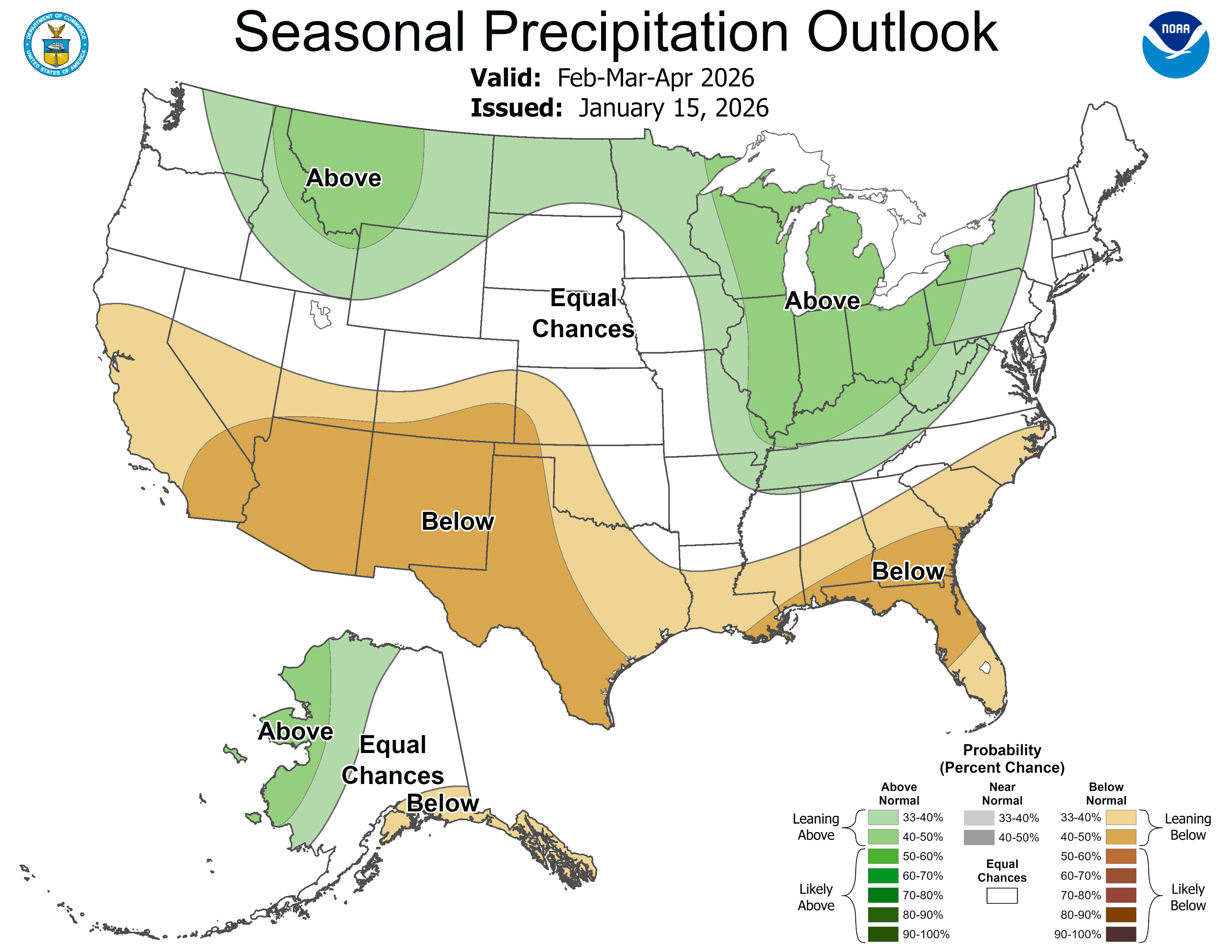
The reasons behind the rise in temperatures and the increase in dryness are fiercely debated, with a mix of focus on the impacts coming from global climate change and those that are attributable to the weather variability that has long shaped what is experienced on the ground. Globally, the 10 warmest years on record have occurred in the last decade, according to the World Meteorological Organization. The same group determined that the global average concentration of carbon dioxide in 2024 surged to the highest level since modern measurements began in 1957…According to a series of scientific studies published last year and collated by the Yale Center for Environmental Communication, researchers determined that climate change is complicit in the drying and warming of the American Southwest. The studies found emissions from the burning of fossil fuels are driving an ongoing 25-year shortfall in winter rains and mountain snows across the region. Dryness has accompanied the elevated temperatures felt by Coloradans this fall and winter, with the state tallying its 34th-driest December in 130 years of record-keeping, according to the Colorado Climate Center. Much of the state is in some level of drought, according to the U.S. Drought Monitor, though a broad swath of the Eastern Plains is not. Denver had its second-latest first accumulating snow — on Nov. 29. As of Thursday, mountain snowpack was at 56% of the median for that date, according to data collected by the U.S. Department of Agriculture’s National Water and Climate Center. The snowpack was well below the lowest level recorded at this point in the season in records that go back to 1987…
Jason Ullmann, the state engineer for the Colorado Division of Water Resources, said that despite the recent dry conditions, water storage levels across the state were in pretty good shape.
“We’re in an OK position with reservoir storage on average statewide,” he said.
But Ullmann noted that if things didn’t ramp up significantly on the storm front over the next two months or so, a different conversation could be in the offing by spring.
“It’s not time for panic — there is time for it to improve,” he said. “One of our snowiest months, March, is still to come.”