While climate change and the general lack of precipitation are the most obvious causes of the aridification of the American West, there are other factors taking place in the background that are contributing to this process.
The ever-expanding southwestern shoreline of Utah’s Great Salt Lake. Photo credit: Robert Marcos
Dust on Snow: Windblown dust from disturbed desert soils and dry lake beds—such as the Great Salt Lake—settles on mountain snowpacks. This “dark topcoat” reduces reflectivity (albedo), causing snow to absorb more solar heat and melt up to three to seven weeks earlier than clean snow. This premature runoff often reaches reservoirs when they are already full or when the ground is still too frozen for agricultural use, effectively wasting the “natural reservoir” of the snowpack.1
Vapor Pressure Deficit (VPD): Often described as the “thirst of the atmosphere,” VPD measures the difference between the moisture in the air and how much it can hold. Higher temperatures exponentially increase this demand, sucking moisture directly out of soils and plants even when precipitation levels are normal. In recent years, this “atmospheric thirst” has accounted for roughly 61% of drought severity, outweighing the impact of reduced rainfall.2
Pacific Decadal Oscillation Stagnation: The “PDO” is a long-term ocean temperature pattern that typically flips every 20 years. Since the 1990s, it has remained stuck in a “negative phase,” which brings cooler water to the eastern Pacific and pushes moisture-bearing storms farther north, away from the Southwest. Recent research suggests this prolonged “stuck” phase may be driven by human-caused aerosol and greenhouse gas emissions.3
Soil and Vegetation Feedbacks: Aridification creates a self-reinforcing cycle. As soils dry out, they lose the cooling effect of evaporation, causing solar radiation to heat the ground and the air even further. Additionally, while higher CO2 levels can make plants more water-efficient, this gain is often offset by longer growing seasons and increased plant growth, which ultimately draws more total moisture from the soil through transpiration.4
Land Use and Soil Degradation: Intensive land uses, including livestock grazing and urbanization, remove protective vegetation and destabilize soil. This not only increases wind erosion (leading to more dust-on-snow events) but also reduces the soil’s ability to absorb and retain what little moisture does fall, intensifying the “baking” of the landscape.5
Invasive plants: Cheatgrass, tamarisk, and Russian olive are invasive plants most often named as contributors to the aridification of the American West. Cheatgrass transforms diverse, deep‑rooted native shrub–grass communities into shallow‑rooted, flammable annual monocultures that dry and senesce early, it depletes shallow soil moisture sooner in the growing season, and dramatically increases fire frequency. It creates a cheatgrass–wildfire feedback loop that repeatedly removes perennial vegetation, reduces soil organic matter and carbon storage, accelerates erosion, and leaves soils warmer, drier, and less able to retain water, so landscapes lose both plant cover and hydrologic function and effectively behave more like a hotter, drier, impoverished system even when long‑term precipitation totals have not changed.6
Like much of the West, Colorado’s water future will be shaped by a warming climate, population growth, and subsequently increasing competition for finite supplies. In conversations about managing our coveted Colorado River headwater resources, it is easy to assume the most influential voices belong to the well-represented on the population-dense Front Range or the well-funded interests far downstream. Yet some of the most consequential water decisions play out in small mountain valleys, often with limited staff, limited funding, and limited political clout.
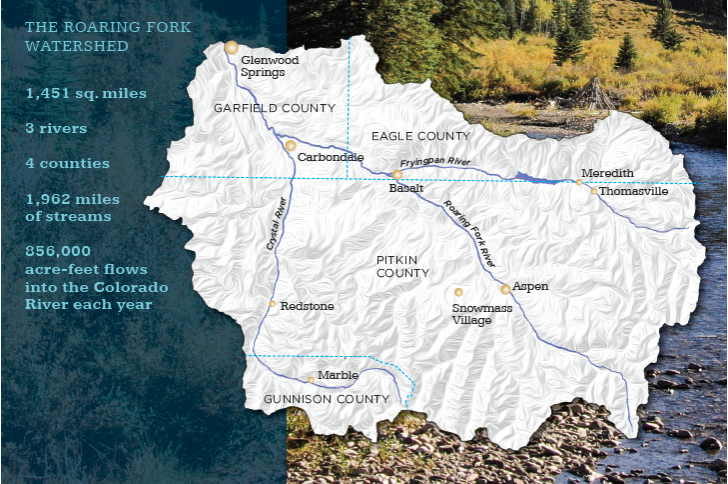
It was in that context, despite the Great Recession of 2008, that voters approved the creation of Pitkin County Healthy Rivers that November, a sales tax-funded program with a simple but ambitious mandate: protect and enhance the rivers and streams of the Western Slope’s Roaring Fork Watershed on behalf of the people and the environment.
What few imagined at the time was that this small, locally funded program would become such an effective way to ensure the people and their cherished rivers had a seat at the table in complex, high-stakes water discussions. A “seat” that is not symbolic; it’s practical, persistent and sometimes uncomfortable. Because having local voices is not a luxury — it is essential.
The Power of Showing Up
Healthy Rivers’ influence begins with showing up. Showing up ready to listen and engage, recognize partners and advance and fiscally sponsor new alliances, all while emphasizing local knowledge, data, and community-backed priorities. In basin-wide planning efforts, feasibility studies, and project negotiations, Healthy Rivers represents local, place-based interests that might otherwise get overshadowed by far more powerful players, be they up or downstream.
This has meant actively seeking valuable connections, therefore knowledge, daresay wisdom, with hopes of earning a voice that ensures headwaters perspectives are considered at these tables. Think Colorado Basin Roundtable, U.S. Forest Service, Colorado Parks and Wildlife, the Colorado Water Conservation Board, local and nearby watershed groups, and other environmental non-profits. This outreach has led to critical partnerships and heightened transparency and inclusivity on many water matters. It has also meant supporting technical analyses and funding early-stage studies — most recently for water-quality monitoring on Lincoln Creek, a tributary to the Roaring Fork — so local conditions and risks are understood before decisions are made elsewhere.
And because our funding comes directly from local voters, Healthy Rivers advocates from the position of our constituents who overwhelmingly supported its creation. That matters in rooms where water is discussed in acre-feet and complex legal terms, often far removed from community-specific values. This has allowed Healthy Rivers to elevate community priorities in negotiations around watershed health, elevating environmental values like instream flows.
Small Programs, Real Influence
One misconception about many local programs is that they are too small to matter. In practice, Healthy Rivers has demonstrated that being nimble is an advantage. Healthy River’s contributions are rarely flashy, but they have been catalytic, having a role in everything from diversion arbitration, instream flow protections, riparian habitat restoration, and water-quality monitoring.
It has done this by supporting projects like technical studies, restoration efforts, and infrastructure improvements that likely wouldn’t have happened otherwise. And by convening unlikely partners, and stepping into conversations early, before positions harden and options narrow.
For example, Healthy Rivers helped support the pursuit of a Recreational In-Channel Diversion (RICD) on the Roaring Fork River, recognizing instream flow rights alongside recreation as legitimate, community-defining values worthy of legal protection. It is supporting a Wild & Scenic designation for the Crystal River, and investing in beaver-related studies in order to inform projects that restore wetlands, reconnect floodplains, and improve late-season flows.
Translating Complexity for Communities
Another core part of having a seat at the table is translation. Colorado water law, hydrology, and planning processes are famously complex. Without intentional effort, these processes can leave local communities feeling confused, disengaged, or shut out of decisions that directly shape their rivers.
Healthy Rivers sees its role as a bridge. It translates technical concepts into plain language, not to oversimplify, but to make participation possible. This has included helping residents understand what designations like “Wild & Scenic” actually do — and don’t — mean, or explaining how instream flow rights function alongside agricultural and municipal uses.
This two-way translation strengthens outcomes. Decision-makers gain local context. Communities gain confidence. And water decisions become more durable because they reflect shared understanding, not just legal compliance.
Collaboration Over Confrontation
A seat at the table does not guarantee agreement. Some of the most meaningful work Healthy Rivers does happens in moments of tension, usually when water supply, ecological health, recreation, and private property interests collide.
Our approach is rooted in collaboration, not advocacy for advocacy’s sake. That means listening carefully, acknowledging tradeoffs, and being honest about constraints. But it also means pushing back when local values are at risk of being overlooked. In projects like renovating the Sam Caudill State Wildlife Area, Healthy Rivers worked alongside CPW, Garfield County, and development partners to balance recreation access, public safety, and river protection, demonstrating how infrastructure investments can serve both people and rivers.
Lessons for Other Communities
This role requires patience. Water decisions typically move slowly, and progress often comes in inches rather than miles. And in a basin as complex as the Colorado River system, no one wins by going it alone. Our experience has reinforced a simple truth: collaboration works best when local voices are present early and consistently, not as an afterthought.
While not every community can replicate Pitkin County’s funding model, the underlying principles are transferable:
Local funding creates legitimacy. Voter-backed programs carry weight because they represent collective priorities.
Consistency builds trust. Showing up over time and building long term relationships matters.
Data and stories belong together. Technical rigor and real-world experience are stronger together than apart.
Early engagement saves time later. Investing upstream — literally and figuratively — reduces conflict downstream.
Healthy Rivers exists to ensure that when decisions are made about the Roaring Fork Watershed, the people who know and love these rivers are part of the conversation. That seat at the table does not guarantee outcomes, but it guarantees presence. And in water, as in so many things, presence is power.
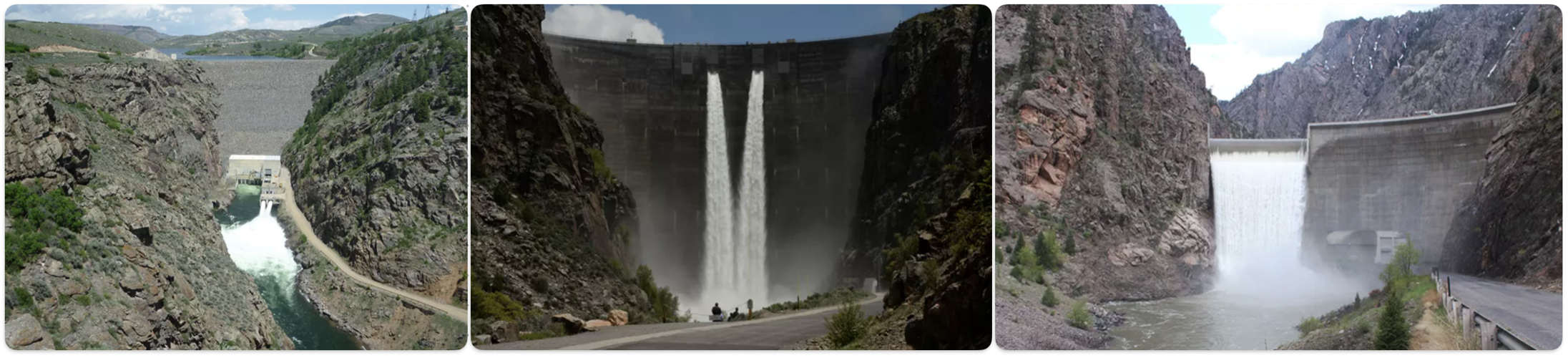
In the 1950s, the U.S. Bureau of Reclamation built the Blue Mesa, Morrow Point and Crystal dams west of Gunnison as part of the massive regional Colorado River Storage Project. The Bureau of Reclamation is currently in the process of replacing all four original valves at Blue Mesa Dam for the first time. (Photos/National Park Service)
For the first time since its completion in 1966, the Bureau of Reclamation is replacing all four original valves at Blue Mesa Dam, the largest of the three dams that make up the Aspinall Unit on the Gunnison River. This multi-year, $32 million federally funded project is a major milestone in ensuring the reliability and safety of one of Colorado’s most important water and power facilities.
Standing 390 feet tall, Blue Mesa Dam creates Blue Mesa Reservoir, the largest body of water in Colorado, with a capacity of nearly 941,000 acre-feet. Together with Morrow Point and Crystal dams, the Aspinall Unit provides water storage, flood control and hydropower generation. Blue Mesa’s power plant alone produces 86 megawatts of electricity, helping power homes and businesses across the region.
Crews help guide the removed ring follower gate to a flatbed truck so it can be transported to California for refurbishment. Reclamation photo
The project will replace two ring follower gate valves and two butterfly valves, critical components that control how water moves through Blue Mesa Dam.
Ring follower gates, located in the dam’s outlet works, allow water to bypass the turbines during maintenance or emergencies, ensuring uninterrupted flows to the Gunnison River.
Butterfly valves, located inside the penstocks, act as flow-control and isolation devices for water entering the turbines to generate hydropower.
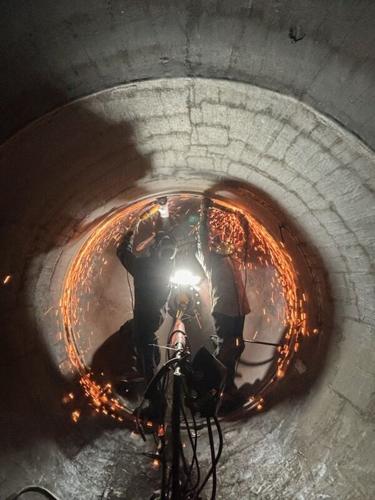
Work began in January with the removal of the first ring follower gate, a massive assembly measuring 18 feet long by 7 feet wide and weighing about 14 tons. The hydraulic hoist system adds another 12 tons. Before safely removing the gate, crews first installed a blind flange, a heavy steel plate that temporarily seals the opening and holds back water.
The gate and its components are now in California for refurbishment and will return for installation in August. Later this fall, once irrigation demands ease, the blind flange will be removed and normal operations restored. After this first gate is complete, crews will move on to the second ring follower gate, followed by the two butterfly valves.
“This work is complex,” said Blue Mesa Plant Supervisor Eric Langely. “We must maintain minimum river flows downstream, avoid disruptions at Morrow Point and Crystal dams, and manage drought-related constraints—all while working inside a dam built nearly 60 years ago.”
The project is being led by a skilled team of Reclamation engineers, plant operators, and technical specialists. Their expertise ensures this upgrade will keep Blue Mesa Dam operating safely and efficiently for decades to come.
Crews weld the temporary blind flange into place inside Blue Mesa’s penstock. Courtesy photo/USBR)