
by Robert Marcos
Devices that collect water from the air are generally called atmospheric water harvesters or atmospheric water generators. None of these actually create water, they just phase‑change or capture water that’s already in the atmosphere.
Why is this pertinent? As most of the Earth’s land areas dry out, our warming atmosphere is holding on to ever-increasing amounts of water vapor. The Lawrence Livermore National Laboratory reported that in 2024 the Earth’s atmosphere held almost 5% more water vapor than the average recorded between 1991–2020.
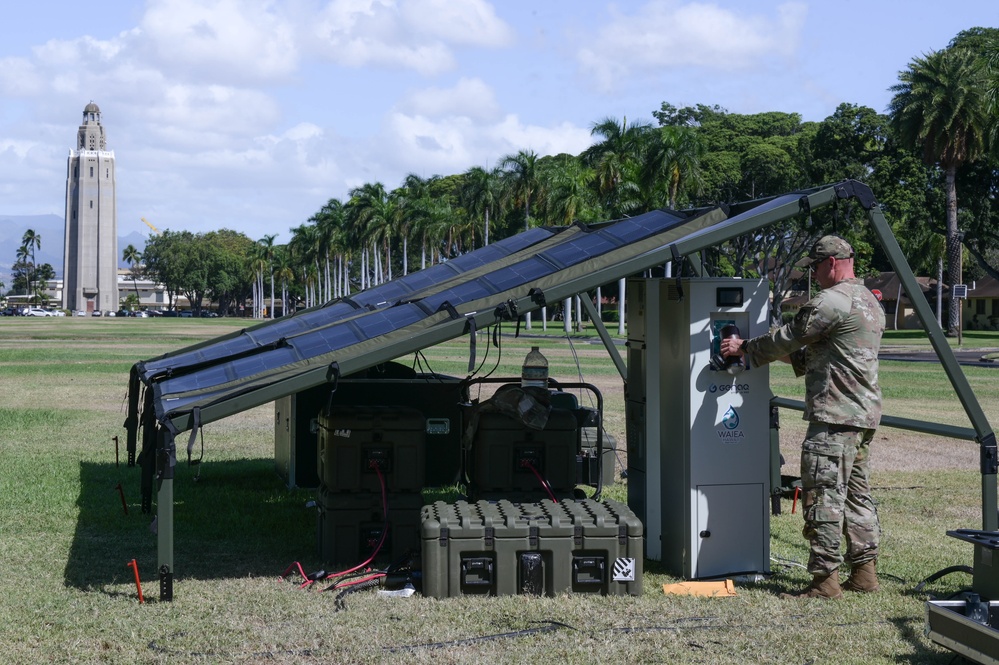
Here are the four basic types of Atmospheric Water Harvesters –
- Condensation-based systems cool air below its dew point using refrigeration or heat‑pump cycles so water vapor condenses into liquid on cold coils. Theses are essentially dehumidifiers optimized for producing potable water.
- Desiccant-based systems use hygroscopic materials (desiccants) such as salts or silica gel that absorb moisture from air, which are then are heated to release liquid water for collection.
- Adsorption based systems use porous materials like hydrogels or metal–organic frameworks that adsorb water vapor at night or when cool, then release it when warmed by the sun or low‑grade heat, with the vapor condensed on nearby surfaces.
- Fog and dew collectors are passive devices thatuse meshes or netted surfaces which collect fog droplets which collect then drain into gutters and tanks.
DARPA, the U.S.Army Research Lab, the Marine Corps, Air Force, and special operations units have all experimented with AWG technologies for desert and emergency conditions, most often at bases in the Middle East and on the African continent. The U.S. Army is actively testing and piloting atmospheric water generators (AWGs), but as of early 2026 they appear in research, demonstration, and limited field trials rather than as a fully standard, widely deployed water source for all soldiers.
Currently the U.S. Army Engineer Research and Development Center (ERDC) has signed multiple Cooperative Research and Development Agreements with companies such as Genesis Systems and AirJoule to develop fuel‑efficient, truck‑ or ATV‑mounted AWGs that can provide potable water at the point of need in austere environments. Genesis Systems’ WaterCube units have been “operationally fielded and commercially available,” and an Army–Genesis CRADA is specifically aimed at adapting this platform for mobile military use in field operations. Public descriptions of these efforts emphasize potential use to reduce water convoys and support future warfighters, which indicates a transition and experimentation phase rather than full-scale permanent deployment across the force.

Water From Air is a non-profit organization that’s specifically focused on distributing atmospheric water generators in schools, villages, and water-stressed regions primarily located in East Africa and India. Their units produce clean drinking water directly from humidity in the air, bypassing the need for wells, pipes, or rainfall. Each installed unit typically provides between 200 and 400 liters of clean drinking water daily, supporting approximately 200–400 people.
More non-profits which provide clean drinking water to disadvantaged communities –
- The Moses West Foundation A non-profit that deploys large-scale AWG systems during disaster relief efforts and in water-stressed areas globally, including Africa.
- Innovation: Africa While primarily focused on solar-powered pumped water from aquifers, they specialize in delivering Israeli-developed water technologies to remote African villages.
- Majik Water: A Kenyan-based social enterprise (start-up) that uses AWG technology to provide more than 200,000 liters of water monthly to arid regions in Kenya.
- One Drop Foundation seeks sustainable access to safe water, sanitation, and hygiene for the world’s most vulnerable communities. The foundation distinguishes itself through a unique approach called Social Art for Behavior Change™, which uses art and creativity to inspire communities to adopt healthy water-related habits and take ownership of their local infrastructure.