Click the link to read the article on the University of Colorado website (Katy Marquardt Hill):
March 11, 2026
Colorado’s snowpack is at its lowest in over 40 years this winter, raising alarms not only for skiers but for the many communities whose economies depend on outdoor recreation. While the lack of snow is highly visible on ski slopes, its effects stretch far beyond lift lines and even beyond Colorado’s borders.

Natalie Ooi, a teaching professor who is the director of the Masters of the Environment (MENV) program and leads the Sustainability in the Outdoor Industry specialization, studies sustainable tourism and recreation economies. CU Boulder Today recently spoke with Ooi about why this season stands out, how towns built around outdoor recreation can adapt, and what longer-term conversations communities across the Mountain West and beyond should be having.
How unusual is this winter’s snowpack, and what makes it significant?
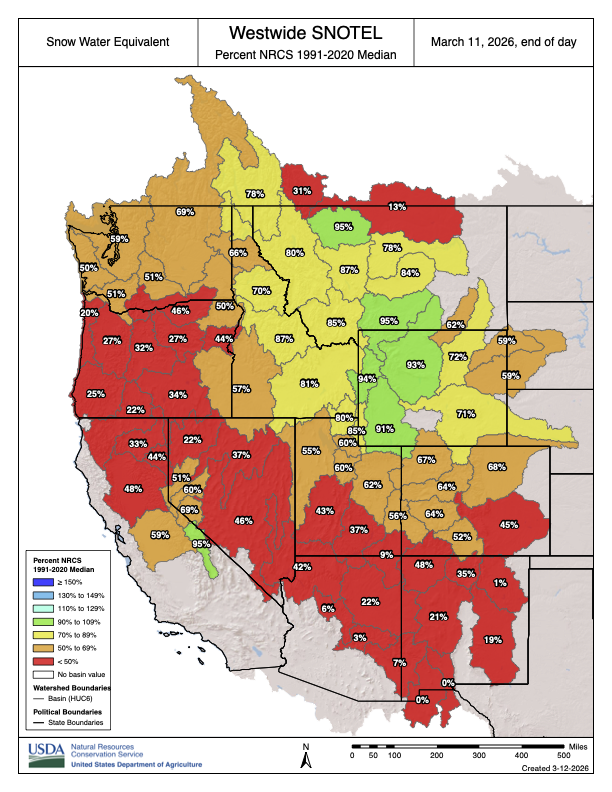
Mountain and recreation-dependent communities are seasonal by nature, so they expect some year-to-year variation and understand that weather influences visitation. But as Russ Schumacher, the state climatologist at Colorado State University, has reported, this winter’s lack of snow is the most severe since SNOTEL data began in the early-mid 1980s. (SNOTEL, which stands for snowpack telemetry, is a network of backcountry weather stations that gather and transmit snowfall data.)
One of the challenges in talking about the outdoor recreation economy is that while we often focus on mountain resort communities, there are recreation-dependent communities across the entire state. What’s unique about this season is that all of Colorado is effectively experiencing drier than normal conditions. Typically, you might see some areas below average, others at or above average. This year, it’s widespread. That scale is worth highlighting.
It’s easy to focus on mountain resorts because snow—or the lack of it—is so visible. But it’s just as important to think about river-based and other recreation-dependent communities and what this will mean for them in the spring.
Beyond skiing, which activities feel the impact of a low-snow winter?
River-dependent activities like rafting, tubing and fly fishing are also affected. At these record low snowpack levels, some rivers may limit recreation from a conservation perspective to protect aquatic species and overall river health if water levels drop too low. That creates a difficult dynamic for communities whose economies depend heavily on outdoor recreation and visitation. This isn’t just about ski towns—businesses tied to camping, backpacking, guiding, gear rental, retail and campground operations also feel the effects when visitation patterns shift.
In mountain resort and ski communities, there’s always season-to-season variation. Many ski industry managers will tell you average snowfall years are actually the best for business. Too much snow can create operational challenges and even deter some visitors. But in an average year, there’s enough snow to keep serious skiers happy while still being manageable for beginners and intermediates.
Why is this season particularly hard for ski resorts?
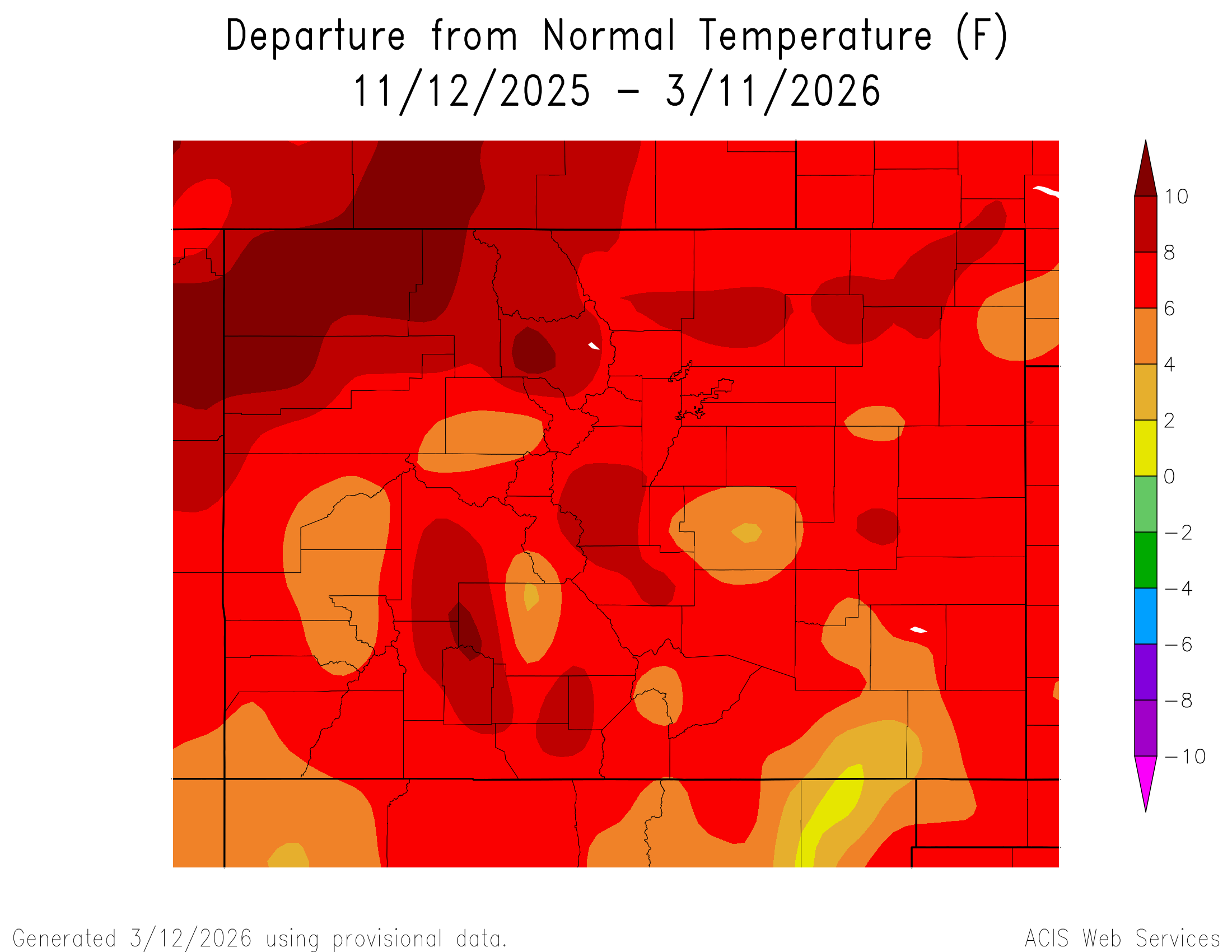
I think this season is more challenging because you have that double whammy of not just a lack of snowfall, but high temperatures as well. If it’s cold and there’s a lack of snowfall, most ski areas can make enough snow to build a solid base and open a good percentage of terrain that the majority of visitors and residents will use. They can still operate at a capacity where people continue to ski and aren’t canceling vacations.
This year, though, the combination of low snow and high temperatures makes that much harder. It’s just not feasible to make enough snow when it won’t stick around. The energy and water demands required to make snow that quickly melts simply aren’t a sound management decision.
What does low snowpack mean for spring and summer river economies?
Low snowpack affects not just total water levels but also runoff timing. Shorter, earlier runoff windows can compress rafting and fishing seasons, making it harder for outfitters to plan staffing and reservations.
How does wildfire complicate the picture?
Wildfire is a real challenge for Colorado and the West. One of the biggest issues is how far-reaching the impacts are because of smoke. There are legitimate public health and safety concerns about being outside and inhaling that level of smoke.
Even if Colorado doesn’t have a wildfire in a major tourism region, a fire in Wyoming, Utah or elsewhere can still affect the tourism season. As the climate warms and wildfire risk increases, that disruption could become more common across multiple states.
How do resorts try to adapt in the short and long term?
It’s hard to pivot in the short term. That kind of rapid adaptation is challenging. But over the years, many ski resorts have adopted diversification strategies to reduce their reliance on winter and ski tourism as their sole focus.
If you look at Alterra Mountain Company and Vail Resorts as examples, there’s a reason they own and/or manage resorts across the U.S. and internationally. This season, for instance, the East Coast is having a phenomenal year. That likely means above-average visitation and revenue there, which can help offset declines in places experiencing poor snow conditions. Geographic diversification is one key strategy.
What ripple effects are communities seeing beyond lift ticket sales?
Lift ticket revenue is obviously a key part of a ski resort’s business, but it’s not the only one. This season provides a clear illustration of that dynamic.
For example, Vail Resorts reported that season-to-date skier visits were down 20% compared to the prior year. But lift revenue was down just 1.8%. That gap is largely due to season pass sales, which provide more stable, upfront revenue.
At the same time, other categories saw much steeper declines: Ski school revenue was down nearly 15%, dining revenue down almost 16% and retail and rental revenue down about 6%.
So even when lift revenue appears relatively stable, the broader resort ecosystem is feeling much sharper impacts.
Lower visitation can also affect seasonal employment, reducing hours or shortening contracts for workers who rely on winter tourism income. That hurts resort companies, but it also impacts the supporting businesses—often mom-and-pop shops or other chains—that rely on visitation. When overall visitation drops, all of those businesses feel it. The ripple effect across the entire community is significant.
What conversations should communities be having right now?
Economic diversification is key. Outdoor recreation is a powerful way to bring in visitors and outside dollars, especially in rural places that can’t attract manufacturing or may never become the next tech hub. But communities need to think strategically about broadening their economic base and leveraging their outdoor recreation infrastructure as a quality of life attractor for other industries.
Some places are already doing this. Steamboat Springs, for example, has built out an entrepreneurial ecosystem that is rooted in outdoor recreation and the mountain lifestyle but is separate to the tourism economy. Grand Junction has leaned into mountain biking and its access to public lands, while also seeking to attract outdoor recreation brands to diversify its economy beyond traditional extractive industries. These kinds of investments help communities spread risk across seasons and industries.
It’s also about managing the visitation they do have and maximizing visitor spending. How do you encourage people not just to camp on adjacent BLM (Bureau of Land Management) land and leave, but to come downtown? How do you design trail systems so they start or end downtown, prompting visitors to buy an ice cream, a coffee or a meal?