
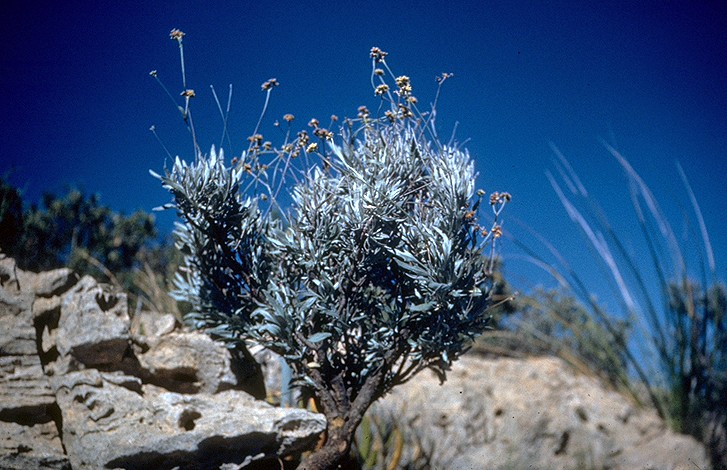
While it looks like a dusty, silver-gray desert shrub, guayule – which originated in Northern Mexico, is essentially a “living rubber factory. As of 2026 the plant gaining serious traction as a potential savior for farmers in the American Southwest—particularly in Arizona and California—who are facing catastrophic cut to their use of Colorado River water.1
Why Guayule may be a “Rescue” Crop
Farmers in the West are in a bind: water intensive crops like alfalfa, corn, and cotton are becoming nearly impossible to grow with dwindling water allotments. Guayule is stepping into that gap for several reasons:
Extreme Water Efficiency: Guayule uses roughly 50% less water than cotton or alfalfa. In Pinal County, Arizona, it’s estimated that switching to guayule could save 15% of the total agricultural water usage.2
Heat & Salt Tolerance: It doesn’t just survive the desert heat; it thrives in it. It can also handle the high-salinity soil that often plagues fields where irrigation water has evaporated over decades.
Domestic Rubber Security: Currently, almost all the world’s natural rubber comes from Hevea trees in Southeast Asia. Guayule provides a domestic, “Made in the USA” source of rubber for tires and medical supplies.3
Hypoallergenic Latex: Unlike traditional rubber, guayule latex lacks the proteins that cause “Type I” latex allergies, making it a premium material for surgical gloves.
The “Catch”
The hurdle isn’t growing the guayule; it’s the infrastructure. Farmers can’t switch overnight because they need specialized processing plants to extract the rubber from the shrub’s bark. However, companies like Bridgestone have been scaling up commercial-grade tire production using guayule, signaling that the supply chain is finally catching up to the climate reality.4
Other Resilient Contenders
While Guayule is the heavy hitter for the Southwest, a few other “underreported” crops are being trialed to rescue Western and Plains farmers in 2026:
Kernza: A perennial grain with 10-foot-deep roots. It doesn’t need to be replanted every year, preventing soil erosion and sequestering massive amounts of carbon.
Teff: An ancient Ethiopian grain that is highly drought-tolerant and serves as a high-value, water-wise forage for horses and livestock.
Amaranth: A “pseudo-cereal” that requires very little water and produces highly nutritious seeds and leaves, often used in health-food markets.
Hemp: Industrial hemp requires significantly less water per kilogram than cotton and other crops. So it can flourish with less irrigation, making it ideal for regions with scarce water resources. Hemp’s deep roots improve soil structure, which aids in water retention and prevents soil erosion and its cultivation helps to minimize agricultural runoff.